Call for Papers: Venice at Sea

Venice Street detail, photo by Maria Schnitzmeier (Wikimedia Commons)
From H-Net:
Venice and the Mediterranean 13th – End of 18th Centuries, in connection with the Third Mediterranean Maritime History Network (MMHN) Conference
Izmir, Turkey
May 5-7, 2010
Contact Professor Jean-Calude Hocquet (ruger@research.haifa.ac.il, jc-hocquet@wanadoo.fr)
Proposals are due 29 August 2009
See also the general CFPs.
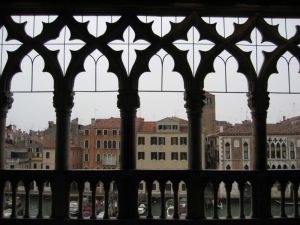
The Grand Canal from the Ca d’Oro, photo by Procsilas Moscas (Wikimedia Commons)
Call for Papers: Colonial Built Environment at SAH
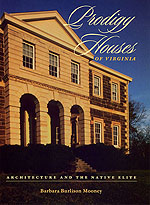 Barbara Burlison Mooney, author most recently of Prodigy Houses of Virginia: Architecture and the Native Elite – which, I should note, received a glowing review earlier this year from the Virginia Magazine of History and Biography – is chairing a session at next year’s meeting of the Society of Architectural Historians in Chicago (21-25 April 2010). She sends the following call for papers:
◊ ◊ ◊ ◊ ◊
Proposals are due 15 August 2009
Taking the Measure of New Colonial Architectural History
Arguably, the article “Impermanent Architecture in the Southern American Colonies,” the result of collaboration among architectural historians, archaeologists, and historians and published in 1981, stands as the most important work of scholarship on the built environment of America’s colonial period appearing in the last half century. By exploiting archaeological practices, the interdisciplinary authors of this article demonstrated the pervasive presence of hole-set, or earthfast, construction technology in Tidewater Virginia and Maryland and undermined the stereotyped image of extant genteel mansions that was well known through the scholarship of S. Fiske Kimball and Thomas T. Waterman, among others. Combined with critical concepts from the Annales School, the Civil Rights Movement, Feminism, and post-Formalist literary theory, “Impermanent Architecture” heralded a new, productive era of research in the field of Colonial American architectural history, which is open to diverse and challenging interpretations.
Subsequently, architectural historians and their cohorts in other disciplines have created a more nuanced image of the colonial built environment that includes African Americans, women, the so-called “middling sort,” and a greater sensitivity to discerning regional and international practices operative in early America. Scholars of the period also have become more attuned to the importance of non-British building traditions. Researchers continue to marshal new methodologies, as well as interdisciplinary and trans-Atlantic approaches, to expand our understanding of the era and its elastic boundaries. This session aims to take the current measure of the New Colonial Architectural History by inviting paper proposals demonstrating how both innovative and traditional research strategies and theoretical perspectives continue to inform the history of the early North American built envinronment. Paper proposals are invited that address new archaeological, archival, analytical, or methodological investigations in the field. Research in French, Spanish, Dutch, German, and Caribbean as well as British colonial architecture is welcome.
Send proposals by August 15, 2009 to Barbara Burlison Mooney, School of Art and Art History, W619 Seashore Hall, University of Iowa, Iowa City, IA 52242 Email: barbara-mooney@uiowa.edu Phone 319-335-1785 Fax 319-335-1774. For proposal length and other requirements, please consult the Society of Architectural Historians website.
Spring in Albuquerque
Abstracts due by September 15
At the 2009 ASECS conference in Albuquerque, March 18-21, HECAA will host two sessions, chaired by Wendy Wassying Roworth and Adrienne Childs:
HECAA New Scholars Session (Historians of Eighteenth-Century Art and Architecture) Wendy Wassyng Roworth, U. Rhode Island; (home) 112 Slater Avenue, providence, RI 02906; Tel: (401) 351-6448 (home); Fax: (401) 874-2729; E-mail: wroworth@uri.edu
This session will feature papers by graduate students and recent recipients of the doctoral degree on new research in the history of art and architecture. Papers are welcome on all aspects of art history including studies of art collecting, patronage, exhibitions, and art production in all media.
Theorizing the Decorative in Eighteenth-Century Art (Historians of Eighteenth-Century Art and Architecture) Adrienne Childs, David C. Driskell Center, 1214 Cole Student Activities Center, U. of Maryland, College Park, MD, 20742 (ATTN: ASECS Session Submission); Tel: (301) 314–2615; E-mail: alchilds@umd.edu
“Decorative” is a term that has been consistently used to describe the arts of the eighteenth century. Applied to painting, sculpture, material culture, interior design, architecture, and more, decoration evokes a feeling of luxury and abundance. In recent years scholars of eighteenth-century art have attempted to look beyond the profusion of floral motifs and arabesque lines to investigate how these seemingly innocuous motifs are part of larger social, economic, political, and cultural systems at work in the period. This paper seeks papers that engage critical and theoretical perspectives that investigate and decode the “decorative.”
In addition, there are numerous other panels that should prove interesting for art and architectural historians. You can, of course, check the ASECS website for details and a full listing, but a couple of dozen are included here: (more…)
Art & Stage Conference in Connection with Delaroche Show

Paul Delaroche, The Execution of Lady Jane Grey, 1833 (London: National Gallery)
CORRESPONDANCES
Exchanges and Tensions between Art, Theatre and Opera in France, c.1750-1850
National Gallery, London, 26-27 March 2010
in collaboration with the University of Nottingham: Institute for Research in Visual Culture (NIRVC) and Centre for Music on Stage and Screen (MOSS)
Abstracts due September 1, 2009
This conference will explore a rich field of interdisciplinary research, that of the relations between art, theatre and opera in France from the later 18C to the mid 19C. As key elements in Parisian cultural life, art, theatre and opera all underwent extensive changes during this period, adapting and responding to profound socio-political disruption and transformation from the Revolution to the Second Republic. Painting, theatre and opera all shared concerns with the representation of compelling narrative, and more specifically with choices regarding contemporary or historic subjects. One aspect of this dynamic situation was the highly permeable interface/threshold that existed between different media. (more…)
CFPs — AAH 2010 in Glasgow
15 – 17 April 2010

University of Glasgow
The 36th annual conference of the Association of Art Historians takes place next spring in Glasgow. Paper proposals should be submitted by 9 November 2009. For details and a full listing of panels, see the AAH website. Topics include
- Objects, Art History and Display
- Exhibitions as Research: Theory, Practice, Problems
- Picturing the Sensorium in Art from Antiquity to 1800
- Reading to Attention
- Imperial Tensions: Visual Cultures of Coercion, Silence and Display
- Hogarth and the Vernacular Renaissance in Eighteenth-Century Britain
- Mapping the Practice and Profession of Sculpture: The Influence of Context and Collaboration in Sculptural Practice from the 18th Century to the Present










leave a comment