Call for Papers | The Business of Art, au féminin, ca. 1660s–1945
From the Call for Papers:
The Business of Art, au féminin: Women’s Enterprise in the French Art Economy, Late 1600s to 1945
Centre André-Chastel, Institut National d’Histoire de l’Art (INHA), Paris, 26–27 September 2025
Proposals due by 16 March 2025

Waldon Fawcett, U.S. Treasurey: Two Women with Stacks of Paper Money, ca. 1907 (Washington: Library of Congress, 96510963).
Bringing together the history of art, the history of women, and economic history, this colloquium will investigate women’s role in the financing of artistic production and development in France (painting, sculpture, architecture, decorative arts, engraving, photography, etc.). Embracing an extended time frame, we intend to interrogate both continuities and transformations in their roles across a significant period, starting from the policies and practices of artistic patronage initiated by Louis XIV up to the particular circumstances of the Occupation. Across this longue durée, women will be approached as agents making and moving the money required for artistic invention and production (their own as well as others’) and as integral actors in the operation of art markets, within the bounds imposed by their marital and legal status.
The colloquium will particularly focus on strategies of adapting, circumventing, and assertion deployed by French women or women working in France to negotiate masculine circuits of capital(ists)—strategies that may have gone beyond a mere male/female coexistence to include collaboration, emulation, competition, and conflict. Determined by their access to education, knowledge, and economic information, this positioning emerges clearly in discussions about the financial and legal subordination of women, whether single, married, or widowed. We will study their ability to assemble capital, invest in their own names or via proxies, operate shops, form enterprises, and organize companies. We will also interrogate the limits of their range of action and empowerment, and inquire into the possible existence of economic practices specific to women in the arts.
Contributions will take the form of individual or collective case studies addressing, but not limited to, the following topics:
• Figures and dynasties of female merchants, gallery owners, publishers, sponsors, philanthropists, entrepreneurs, investors, shareholders, and borrowers
• Collective modes of financing (religious orders, committees of female patrons, lay women’s associations) and defense of women’s economic interests (trade unions, networks of female solidarity, etc.)
• Modes of wealth accumulation (inheritance, dowry, marriage, salaries), dissolution (sales, liquidations, bankruptcy, misappropriation), and transmission (legacies, gifts, succession)
• Financing strategies (banking, personal loans, investment) and their institutional contexts (financing specific to wartime, black markets, etc.)
• The visibility or invisibility (purposeful or not) of women at the head of businesses and in financing operations
• The spectrum and specificity of artistic domains in which women invest (for instance, favored arenas like engraving and decorative arts)
Proposals (in French or English) should be sent to the three organizers Nastasia Gallian (nastasia.gallian@sorbonne-universite.fr), Elsa Jamet (elsa.jamet@hotmail.fr), and Justine Lécuyer (justine.lecuyer@hotmail.fr) by 16 March 2025. Please include a summary of the paper (500 words maximum) and a short biographical note (300 words maximum). This call is open to students holding a MA2 and to current doctoral candidates, as well as to all established researchers. Presentations can be in French or English and will last twenty minutes. This is an in-person colloquium, though in exceptional cases the organizers may be able to accommodate virtual participation. The scientific committee will inform participants of their acceptance or rejection in early April. Publishing a volume of proceedings based on the colloquium presentations is envisioned.
Scientific Committee
• Jérémie Cerman, Professor of Modern and Contemporary Art History (France, Université d’Artois, CREHS)
• Natacha Coquery, Professor Emeritus of Early Modern History (France, Université Lumière Lyon, LAHRA)
• Clare Haru Crowston, Dean of the Faculty of Artsn Professor of History (Canada, The University of British Columbia)
• Charlotte Foucher Zarmanian, Scientist, Modern and Contemporary Art History (France, EHESS, CRAL)
• Nastasia Gallian, Associate Professor of Early Modern Art History (France, Sorbonne Université, Centre André- Chastel)
• Charlotte Guichard, Professor of Early Modern Art History (France, École normale supérieure, PSL)
• Melissa Hyde, Associate School Director, Professor and Distinguished Teaching Scholar (USA, University of Florida, College of the Arts)
• Elsa Jamet, Temporary Research and Teaching, PhD in Modern and Contemporary Art History (France, Université de Lille, IRHIS)
• Justine Lécuyer, PhD in Modern and Contemporary Art History (France, Sorbonne Université, Centre André- Chastel)
• Kim Oosterlinck, General Director of the Royal Museums of Fine Arts of Belgium, Professor of Finance (Belgium, Université libre de Bruxelles)
• Anne Perrin, Professor of Early Modern Art History (France, Université de Toulouse – Jean Jaurès / FRAMESPA)
• Élodie Vaudry, Associate Professor of Modern and Contemporary Art History (France, Sorbonne Université, Centre André-Chastel)
• Alexia Yates, Professor of Modern History, historian of economic life (Italy, Florence, European University Institute)
s e l e c t i v e b i b l i o g r a p h y
D’ERCOLE Maria Cecilia et MINOVEZ Jean-Michel (dir.), Art & économie: Une histoire partagée [actes du colloque international de l’Association française d’histoire économique, Toulouse, 18–19 novembre 2016], Toulouse, Presses universitaires du Midi, 2020.
DERMINEUR Elise, Women and Credit in Pre-Industrial Europe, Turnhout, Brepols, 2018.
DOUSSET Christine, « Commerce et travail des femmes à l’époque moderne en France », Les Cahiers de Framespa, 2, 2006, en ligne : https://journals.openedition.org/framespa/57.
DUBY Georges et PERROT Michelle (dir.), Histoire des femmes en Occident, Paris, Plon, 1991–1992, vol. 3, 4 et 5.
FONTAINE Laurence, « Espaces économiques féminins et crédit », dans L’économie morale. Pauvreté, crédit et confiance dans l’Europe préindustrielle, Paris, Gallimard, 2008, p. 134–163.
GREEN David R., OWENS Alastair, MALTBY Josephine et RUTTERFORD Janette (dir.), Men, Women, and Money: Perspectives on Gender, Wealth, and Investment, 1850–1930, Oxford, Oxford University Press, 2011.
KHAN B. Zorina, « Invisible Women: Entrepreneurship, Innovation, and Family Firms in Nineteenth-Century France », The Journal of Economic History, 76, n°1, mars 2016, p. 163–195.
LABARDIN Pierre et ROBIC Paulette, « Épouses et petites entreprises: Permanence du XVIIIe au XXe siècle », Revue Française de Gestion, 188–189, 2008, p. 97–117.
LALLIARD François, « Femmes d’argent, argent des femmes: construction du genre et monétarisation de la vie sociale dans la haute société aristocratique. L’exemple des Wagram (XIXe siècle-début du XXe siècle) », dans L’argent des familles. Pratiques et régulations sociales en Occident aux XIXe et XXe siècles, (dir. Florent Le Bot, Thierry Nootens et Yvan Rousseau), Trois-Rivières et Québec, Centre interuniversitaire d’études québécoises, 2019, p. 179–192.
LANZA Janine, From Wives to Widows in Early Modern Paris: Gender, Economy, and Law, Aldershot, Ashgate, 2007.
LAURENCE Anne, MALTBY Josephine et RUTTERFORD Janette (dir.), Women and their Money, 1700–1950: Essays on Women and Finance, New York, Routledge, 2009.
MARTINEZ Cristina S. et ROMAN Cynthia E. (dir.), Female Printmakers, Printsellers, and Print Publishers in the Eighteenth Century: The Imprint of Women, c. 1700–1830, Cambridge, Cambridge University Press, 2024.
THÉBAUD Françoise, Écrire l’histoire des femmes et du genre, Paris, ENS Éditions, 2007.
TILLY Louise A. et SCOTT Joan W., Les femmes, le travail et la famille, Paris, Rivages-Histoire, 1987 (édition originale 1978).
YATES Alexia, « The Invisible Rentière: The Problem of Women and Investment in Nineteenth-Century France », Entreprises et histoire, 2, 2022, p. 76–89.
Cat. expo. [New York, Grey Art Museum ; Montréal, Musée des Beaux-arts ; Paris, Musée de l’Orangerie, 2024–2025], Berthe Weill: Art Dealer of the Parisian Avant-Garde, Paris, Flammarion, 2024.
Call for Papers | Representing the Body
From the Call for Papers (Dorothy Johnson is slated to give a keynote address). . .
VariAbilities 2025 | Exploring Representations of the Body across Visual Disciplines
Mercy University, New York, 11–15 June 2025
Proposals due by 14 February 2025
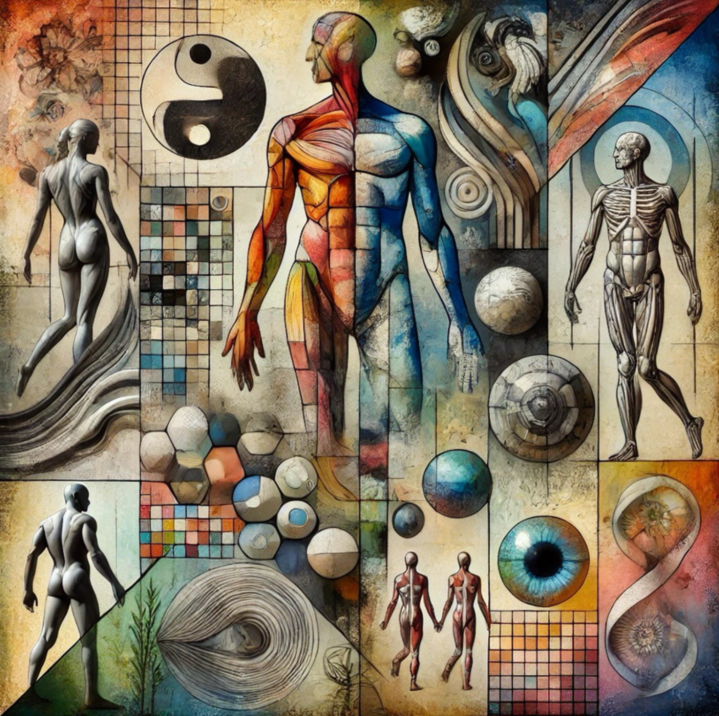 The representation of the body is a fundamental aspect of human culture, reflecting societal values, norms, and power structures. From ancient civilizations to contemporary times, various visual disciplines have been employed to create different forms of bodily representation to convey meaning, express emotions, to teach and tell stories. This conference seeks to examine a wide range of representations across multiple visual forms, and across a wide history, shedding light on the ways in which they intersect, diverge, and influence one another.
Some of the key questions we shall address might be:
• How do different visual disciplines (e.g., medical imagery and illustration, painting, photography, sculpture) represent the human body, and what are the implications of these representations?
• What role does performance play in bodily representation, and how do various forms of performance (e.g., doctor/patient interactions, dance, theatre, music) shape our understanding of the body?
• How do word-based and image-based portrayals of the body differ (e.g. literary and cinema, poetry and portraits), and what insights can be gained by comparing these approaches?
• In what ways do representations of the body reflect social attitudes towards gender, race, class, VariAbility, and other forms of identity?
These some of the many questions you may wish to explore, you may have others! Please email a 300-word proposal to Variabilities8@gmail.com by 14 February 2025. The event will take place at the Mercy University Campus in Manhattan, where there is some dorm accommodation for delegates should they choose it. There is also some scope for online presentations for those who have travel issues. Come and tell us what the ‘body’ means to you. More information is available here.
Call for Papers | Lost Cities in a Global Perspective
From ArtHist.net:
Lost Cities in a Global Perspective: Sources, Experience, and Imagery, 15th–18th Centuries
University of Campania ‘Luigi Vanvitelli’, Caserta, 16–17 October 2025
Proposals due by 15 March 2025
In conjunction with the Research Project “The Vesuvian Lost Cities before the ‘Discovery’: Sources, Experience, and Imagery in Early Modern Period” (VeLoCi)
In 1972 Italo Calvino published the book Invisible Cities, encouraging a reflection on modern megalopolises starting from the reactivation of the imaginary arising from the memory of historical cities. In “Cities and Memory 3,” Calvino states that “the city does not tell its past, it contains it like the lines of a hand, written in the corners of the streets, in the grilles of the windows, in the handrails of the stairs, in the antennas of the lightning rods, in the poles of the flags,” underlining how the knowledge of a city passes through the discovery of material elements (space) and immaterial elements (history).
More recently, Salvatore Settis (Se Venezia muore, 2014 / If Venice Dies, 2016) postulated that “Cities die in three ways: when they are destroyed by a ruthless enemy (like Carthage, which was razed to the ground by Rome in 146 BC); when a foreign people settles there by force, driving out the natives and their gods (like Tenochtitlan, the capital of the Aztecs that the Spanish conquistadores destroyed in 1521 and then built Mexico City on its ruins); or, finally, when the inhabitants lose their memory of themselves, and without even realizing it become strangers to themselves, enemies of themselves. This was the case of Athens.”
Many cities across the world have disappeared over the centuries, abandoned (but perhaps never forgotten), destroyed by natural disasters, or buried under new urban layers (Teotihuacán, Chichén Itzá, Copàn, Tulum, Angkor, Petra, Rome, Pompeii, Herculaneum, Brescia), re-emerging for different reasons. Fascinating historians, explorers, archaeologists, architects, and artists, ‘lost cities’—both literally and metaphorically—have continued to exist in literary sources, descriptions, chronicles, and sometimes in iconographic representations.
Pompeii and Herculaneum are two of the most famous cities that disappeared due to natural disasters. Despite historiographical and narrative traditions claiming that their ‘discovery’ occurred only in conjunction with the start of the Bourbon excavations in the 18th century, the VeLoCi project has demonstrated that even before the start of systematic excavations, material traces of the existence of these ancient cities had emerged and that there was no lack of literary, antiquarian, and scientific sources dedicated to their history. In other cases, cities that disappeared following catastrophes or simple stratification were not unearthed, despite their historical past being well known.
What was then the perception, the relationship of coexistence and study and knowledge with the buried/lost cities in the different cultures of the world in the early modern era? What phenomena or episodes have reactivated their systematic research? What are the operational, scientific, and epistemological approaches to the discovery of the past? What are the reasons that suggest seeking and valorising the past?
Starting from the case study of the Vesuvian cities, the international conference Lost Cities in a Global Perspective: Sources, Experience, Imagery in Early Modern Period (XV–XVIII Century) aims to investigate in an interdisciplinary and comparative way the material and imaginary dimensions assumed by lost cities before the birth of archaeology as a science in the 18th and 19th centuries. We invite scholars from a variety of disciplines, including architectural history, art and literary history, history, history of science, archaeology, cultural studies, and other related fields, to submit papers examining cases from any geographical context. Interdisciplinary approaches are particularly welcome, as are contributions that reflect on the exchange of knowledge and cultures at a global level.
Topics may include (but are not limited to):
• Travel Accounts and Exploration: the role of European explorers and missionaries in shaping the narratives of lost cities in Asia, Africa, and the Americas.
• Historiographical approaches: the role of early modern historians and intellectuals in constructing and reconstructing the idea of lost cities.
• Myth and Reality: what role did legends and fantastic narratives have in shaping lost cities and how did they intertwine with emerging archaeological or geographical knowledge.
• Visual Culture and cartography: the role of representations of lost cities in art and cartography.
• Colonialism and Cultural Exchange: the impact of colonial expansion on the perception of lost cities and the relationship with native cultures.
• Material Culture and Archaeology: proto-archaeology and antiquarian research in exploring the physical remains of lost cities and ancient civilizations.
• Literature and Lost Cities: the role of literature in constructing of the idea of lost cities, from utopian and dystopian narratives to adventure tales.
• Cultural Memory and Identity: how did the notion of lost cities has served as a tool for constructing cultural memory and national identity, and how did societies have preserved or forgotten this memory.
• Environmental Factors and Natural Disasters: what role has climate change, natural disasters, and geographical displacement played in the disappearance of cities.
The two-day conference—organised by Giulia Ceriani Sebregondi, Francesca Mattei, and Danila Jacazzi—is promoted by the PRIN 2022 research project “VeLoCi — The Vesuvian Lost Cities before the ‘Discovery’: Sources, Experience, Imagery in Early Modern Period” at the end of its duration and will be hosted at the University of Campania ‘Luigi Vanvitelli’, in Caserta, Italy. VeLoCi will organise and pay for accommodation and reimburse travel costs (economy class) for the speakers. At the end of the conference, the publication of some contributions in a peer-reviewed collective volume will be evaluated. Scientific and organisational secretariat by Giorgia Aureli and Giorgia Pietropaolo.
Participation in the conference is free of charge. The conference languages are Italian and English. Abstracts, in PDF format (maximum 1500 characters, about 250 words) in Italian or English, must include a title and a short biography (maximum 1500 characters, about 250 words). Please send the material to ve.lo.ci.prin@gmail.com by 15 March 2025. Notification of accepted proposals will be sent around 15 April. Please note that this CFP is also open to PhD students and independent scholars.
Scientific Committee
Candida Carrino, Giulia Ceriani Sebregondi, Kathleen Christian, Bianca de Divitiis, Danila Jacazzi, Francesca Mattei, Tanja Michalsky, Massimo Osanna, Francesco Sirano
Call for Applications | Baroque Summer Course: Death
From ArtHist.net:
Baroque — Death / Barock — Tod
24th Baroque Summer Course, Bibliothek Werner Oechslin, Einsiedeln, Switzerland, 22–26 June 2025
Organized by Anja Buschow Oechslin, Axel Christoph Gampp, and Werner Oechslin
Applications due by 23 February 2025
Death is omnipresent. No one can escape it; it is among us and goes about its business as it sees fit. If one takes seriously the “memento mori” that we encounter in droves on tombstones and that is addressed to us, the (still) living, then one can see that this commingling of life and death is of central importance to human culture and has always had a significant impact on its art forms.
This ubiquity and omnipresence of death was summed up in the long-popular Dance of Death: “we all die” according to the biblical saying “Omnes Morimur.” Patritius Wasserburger put this into verse for Count Sporck as “Zuschrift an das sämmtlich-menschliche Geschlecht” (“Letter to the whole human race”):
“You popes! Cardinals!
You bishops! You abbots!
You lappeted gentlemen!
You canons! You prelates!
All manner of priests,
Of high dignity, and also of lower rank. […]”
He records them all, even the “drunkards”:
“Oh you brothers of the wet stream!
Guzzle, dance, sing songs!
You are wild and tipsy, jolly: bluster, sleep around, shack up, rave!
Go on, twirl, feast, roister!
But: woe for eternity.”
Michael Heinrich Rentz illustrated this in his dramatic images and emphasized the direct partnership—and equality—of man and death. The series of images, first printed in 1753, was realized as a perfect baroque book, “full of meaning, instruction, and spirit.” And we are already amid the exuberant baroque pleasure in shaping and designing. Baroque rhetoric, with its astute precepts of “argutezza” or even “cavillatio,” takes particular pleasure in the boundaries, in the contact between life and death. Nothing is alien to this and the desire to transcend such boundaries fires the imagination. In 1774, the Archbishop and Elector of Mainz, who had been blessed with the “temporal right of sovereignty,” was mourned accordingly: “The tombstones may restrict his generous hands, but his heart allows no limits to be set, such as to work immortally in faithfulness to God, thus in love for his needy people.” After the “passing away,” as if only a small disturbance had occurred, it is all about the “denatus”; he has merely changed his condition—for the better, of course.
Glorification of human deeds in light of the future life after death, as the motto of the Duke of Brauschweig, Johann Friedrich, says: EX DURIS GLORIA. The separation through death is followed by reflection and the gain of a “better life.” Death is given this powerful, dialectical function of the historical continuation of “lived reality” by virtue of idealization. It challenges all the arts and the artifices of rhetoric, which “mediate” in all possible tones of a “heroic poem” in an “Imitatio Epica,” whether allegory, or panegyric or in the “Epicedium” particularly assigned to funeral ceremonies.
Those who focus so much on the afterlife, as was the case in the Baroque ecclesiastical world in the most pronounced way, have before their eyes all the glory that is emulated in this world with the greatest artistic effort in order to convey it to people and their sensory perceptions. This is what led someone like Karl Wilhelm Ferdinand Solger to recommend: “He who cannot reach God in his spirit should seek him in images, he will not be led astray.” To “draw God down into his sphere” was the motto and it fit best precisely where the scene is changed, as it were, with death. Friedrich Wilhelm Schelling saw it correctly: “This symbolic view is the church as a living work of art.” And there is more, something fundamental, hidden behind this paradigm of human destiny and the conditions of privileged human existence. Marsilio Ficino states this in the first sentences of his “Cristiana religione” (1474/5). If man could not distinguish between good and bad in the “lume dell’intellecto,” he would be the most miserable creature, as he, unlike other living creatures, also has to dress himself. And at the beginning of “Platonica Theologia” (1482), he formulates its essence: “Si animus non esset immortalis: nullum animal esset infelicius homine.”
Art draws its deeper justification from this and declares that no effort is too great for it, especially when it comes to the furnishings for funeral ceremonies, when entire church interiors are covered with allegorical scenes and high catafalques are erected. The unsurpassable dialectic of life and death calls for the greatest artistic invention, which is particularly desirable in “baroque” times and results in works of art that would give even someone like Wölfflin a headache. When Rudolf Wittkower opened the Guarini Congress in Turin in 1968, he had a whole repertoire of “unorthodox” forms at hand: “Paradossi ed apparenti contraddizioni, volute incongruenze”; it is much more than just “varietà” and—in the tradition of Nicholas of Cusa—also encompasses mathematics: “Famose (!) compenetrazioni di spazi diversi.” He observes the juxtaposition of “morbidi moduli ornamentali manieristici” and “forme cristalline di estrema austerità.” They are “prodigi strutturali.” And Wittkower’s insight was: “intelletto” and “emozione” are not separate, but belong together, just as—in art—life and death appear intertwined and death, if man takes his divinely inspired, spiritual life seriously, is ultimately only a gateway to another world. It is understandable that a cemetery is then described as “the Elysian Fields.” There are no limits to the imagination and to art.
The course is open to doctoral candidates as well as junior and senior scholars who wish to address the topic with short papers (20 minutes) and through mutual conversation. As usual, the course has an interdisciplinary orientation. We hope for lively participation from the disciplines of art and architectural history, but also from scholars of history, theology, theatre and other relevant fields. Papers may be presented in German, French, Italian or English; at least a passive knowledge of German is a requirement for participation. The Foundation assumes the hotel costs for course participants, as well as several group dinners. Travel costs cannot be reimbursed. Please send applications with brief abstracts and brief CVs by email to: anja.buschow@bibliothek-oechslin.ch. The deadline is 23 February 2025.
Concept / Organization: Dr. Anja Buschow Oechslin (Einsiedeln), Prof. Dr. Axel Christoph Gampp (Uni Basel, Fachhochschule Bern), Prof. Dr. Werner Oechslin (Einsiedeln)
Call for Essays | Laughter and Medicine
From ArtHist.net:
Edited Volume | Laughter and Medicine
Proposals due by 15 March 2025
We invite proposals for contributions to an edited volume exploring the interfaces between laughter and medicine. Developing from a British Academy/Wellcome Trust-funded conference held at the University of Birmingham in November 2024, this volume will put the medical humanities in dialogue with healthcare provision and the medical sciences so as to bridge the divides between the clinic, the laboratory, cultural history, literature, and the arts in Western cultures from the classical period to the present day.
The volume aims to present a transdisciplinary account of the cultural, social, diagnostic, therapeutic, and physiological implications of the laughter that characterizes—and is elicited by—real and fictional interactions among physicians, patients and the general public, inside and outside the clinic. Laughter is not always the ‘best medicine’, nor is laughter linked only to comedy and enjoyment. Without excluding the curative or the comic, this project hopes to uncover the more complex and sometimes darker aspects of the relationship between laughter (both voluntary and involuntary) and medicine that are often obscured by facile idioms and clichés. ‘Healing laughter’ differs markedly in character and effects from pathological laughter; hysterical laughter; forced or bitter laughter; laughter serving to mitigate awkwardness in, or failures of, communication; laughter intended to deceive; or laughter signifying fear, discomfort or aggression. The irony and other double-coded signifiers that abound in comic and parodic representations of medical practitioners and their patients, as well as in medical metaphors and allegories deployed in diverse discursive contexts, often reveal medicine’s paradoxical place in various cultural imaginaries and in individual and collective experience.
Submissions may respond to questions including, but not limited to, the following:
• How and why is laughter represented, elicited, and mobilized in connection with medicine in the temporal and spatial arts (literature, cinema, print and digital media, performing arts, sculpture, etc.) in particular historical and cultural contexts and moments? What ideological, aesthetic, cultural, and other issues are bound up with or thought through the nexus between laughter and medicine?
• What does synchronic and diachronic comparison reveal about the specificity of particular representations of laughter and medicine and about the historical evolution of their cultural construction? How do evolving cultural and artistic representations inform, and how are they informed by, the development of medical science and practice?
• How and why does laughter occur in the context of illness and death, as well as in routine healthcare provision? What is its significance? What functions does it serve?
• What are laughter’s causes and effects from a physiological and psychological standpoint? What does the phenomenon of laughter reveal about the relationships between mind and body and between physical, mental, and emotional health?
• How and with what stakes has the relationship between laughter and medicine been theorized at different moments in intellectual and cultural history? How does the thinking of laughter in medical contexts fit into larger cultural formations and reflect or revise scientific models?
• What are the poetic and ideological effects and stakes of the ludic medicalization, in various discursive contexts, of aspects of life and culture that are not (necessarily or customarily) imagined in medical terms?
• What are the implications of the relationship between laughter and medicine from a philosophical perspective?
• What are the sociological implications of the nexus between laughter and medicine, especially in relation to contexts and patterns of (mis)communication and to the negotiation of social identities linked to profession, class, gender, ethnicity, etc.?
• What roles does laughter play in relation to disability and disability studies?
In order to accommodate the different disciplinary norms corresponding to the diverse fields that will be represented in the volume, we will accept proposals for chapters ranging in length from 3,000 to 10,000 words. Each chapter should make a contribution in its own discipline while making an effort to remain intelligible to an interdisciplinary academic audience.
Chapter proposals should take the form of a 500-word abstract including a title; a brief overview of scholarly or scientific contexts; a concise articulation of the research question and/or aims to be addressed; the tentative theses, conclusions, and/or arguments to be advanced in the chapter; and an estimated word count for the chapter. Authors should also provide an abbreviated CV.
It is hoped that the volume proposal will be submitted in July 2025 to the Proceedings of the British Academy series, which has expressed interest in the project. Contrary to what its name might suggest, this series, currently published through Oxford University Press, produces high-quality, rigorously peer-reviewed themed volumes developing from conference projects that have earned support from very competitive British Academy grants. Following notification of the acceptance of the book proposal, contributors will be asked to submit their completed chapters within six months. Submissions should be sent to both p.barta@surrey.ac.uk and lucas.wood@ttu.edu by 15 March 2025.
Call for Papers | Desire and the Urban Imagination, 18–21st Centuries
As noted at the Groupe de Recherche en Histoire de l’Art Moderne (GRHAM) . . .
Ville désirable / ville désirée : Construire les imaginaires urbains par le visuel, XVIIIe–XXIe
Lyon, 10–11 June 2025
Proposals due by 31 January 2025
Les journées d’étude Ville désirable / ville désirée : construire les imaginaires urbains par le visuel, XVIIIe–XXIe, placent la notion de désir, jusqu’ici particulièrement investie par les études psychologiques et psychanalytiques, au cœur des interactions entre la ville et ses images. L’idée d’absence, de manque, ou d’envie à laquelle renvoie cette notion permet de relire et réinterpréter certaines productions visuelles urbaines produites entre le XVIIIème et le XXIème siècles. Si certains travaux notamment en géographie se sont intéressés à l’attractivité (Michel Lussault) ou à l’amabilité des villes (Denis Martouzet), ces journées d’étude permettront d’étudier d’autres dynamiques à l’œuvre au regard de la notion de désir. Qu’il s’agisse de portraits de ville (André Corboz, David Martens), des images du tourisme (Marie-Eve Bouillon, Valérie Perlès, Anne Reverseau), de projections de villes du futur (Marie-Madeleine Ozdoba) que nous disent les visuels dans leur rôle d’intermédiation avec la ville ? Quel rôle ces images jouent-elles dans la lecture de la ville ? Quelles sont les orientations politiques, sociales, économiques des producteurs et que nous révèlent les médias employés en termes d’intentions ? Pouvons-nous parler d’une recherche de désirabilité urbaine dans une pratique de la mise en scène du territoire ? A partir de sources visuelles variées, les journées d’étude entendent donc historiciser les relations complexes qui existent entre réception d’une image et production d’un désir, et ainsi contribuer à une histoire culturelle, sociale et visuelle de la ville.
Les journées d’études se dérouleront les 10 et 11 juin 2025 à Lyon. Les communications d’une durée de 20 minutes seront suivies d’échanges avec la salle. Les propositions de communication ne doivent pas excéder 3000 signes (espaces compris) et doivent être accompagnées d’une courte biographie précisant le rattachement institutionnel des participant.e.s. Merci de préciser à quel(s) axes(s) de l’appel votre proposition s’intègre. Elles sont à envoyer avant le 31 janvier 2025 à l’adresse mail : villedesirable@gmail.com. Une notification aux candidat.e.s les informant de la décision des organisateurs sera adressée fin février 2025.
Comité d’organisation et de sélection des propositions
• Marie Blanc (LARHRA / UGA)
• Johanna Daniel (LARHRA / Université Lyon 2)
• Loïc Sagnard (LARHRA / Université Lyon 2)
• Hugo Tardy (Framespa, Université Toulouse Jean Jaurès)
The complete Call for Papers, detailing the four axes of the study days, along with an indicative bibliography is available here»
(more…)
Call for Papers | Rome in the Nordic Countries
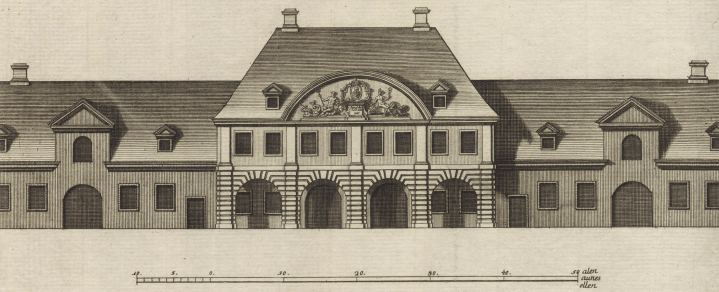
Customs House, Copenhagen.
◊ ◊ ◊ ◊ ◊
From the Call for Papers:
Rome in the Nordic Countries: Images of Ancient and Modern Architecture, 17th–18th Century
Online and in-person, Rome, late November/early December 2025
This conference will draw attention to the artistic and architectural exchanges between Rome and the Nordic countries from the seventeenth to eighteenth century, focusing on the production, marketing, use, and conservation of images, including drawings and engravings, illustrated books, and suites of prints. These works found massive transnational circulation, and their adaptability made them indispensable tools in the history of the arts, and more generally in the broader European cultural expansion. The conference addresses the artistic-architectural relations between the Nordic countries (essentially Denmark, Norway, Sweden, and Finland, but with openness to the entire transalpine world), and the Italian peninsula. The pivot is ancient and modern Rome, the recognized crossroads of cultural elaboration and the centre of a massive and varied publishing production, through which the foundations were laid for the construction of a shared European artistic-architectural language based on Classicism.
Proposals should address issues of cross-cultural exchange, among which we suggest:
Travelling across Europe
• Travelling South, Renaissance to early 18th century: artists/architects, patrons, sketchbooks, diaries
• Travelling North: migration of Italian artists and architects
Books and Prints
• Producing and marketing images of architecture: Rome and the Nordic countries in the European context
• Using and collecting architectural prints
• Vitruvius and Palladio: architectural books in the North
• Architectural libraries
Rome in the North: Functions, Techniques, Styles
• Issues of style: Classicism, Baroque, post-Baroque and early classicism in the architecture of the Nordic countries
• Festive, funerary, and military architecture
• Urban planning and infrastructures: monuments and places
• Models and monuments
Nordic Rome
• The reception of Nordic architectural culture in early modern Italy
The conference will be in Rome, in person and hybrid. Travel expenses will be partially met. Participants will be expected to submit revised and expanded versions of their papers six months after the conference for publication as an edited volume. All proposals (max 1200 words) can be written in English, French, or Italian. Proposals should be sent to nordicromeconference@gmail.com by 31st January 2025.
Scientific Committee
• Antonello Alici, Università Politecnica delle Marche, Ancona
• Mario Bevilacqua, Sapienza Università di Roma; Centro Studi sulla Cultura e l’Immagine di Roma
• Kristin Bliksrud Aavitsland, Universitetet i Oslo
• Kristoffer Neville, University of California, Riverside
• Sabrina Norlander Eliasson, Stockholms universitet; Istituto svedese di Studi classici a Roma
• Saverio Sturm, Università Roma Tre; Centro Studi sulla Cultura e l’Immagine di Roma
• Victor Plahte Tschudi, Arkitektur- og designhøgskolen i Oslo
Call for Papers | Mexican Art in Europe, 16th–21st Centuries
From ArtHist.net:
Mexican Art and Its Collections in Europe, 16th–21st Centuries: Interwoven Histories
Online, Institute of Art History at the University of Wrocław, 21 May 2025
Proposals due by 15 February 2025
The Institute of Art History at the University of Wrocław invites submissions for an international online conference examining the presence and reception of Mexican art in the European cultural context from colonial times to the present day. The conference aims to critically reflect on the complex processes of meaning-making, interpretation, and reinterpretation of Mexican art in European collections, museums, and galleries.
We welcome contributions addressing themes such as
• Postcolonial, decolonial, and transnational perspectives in studying Mexican art in Europe
• Methodologies for studying processes of cultural transfer
• Critical revision of European interpretations of Mexican art
• History of acquisition and movement of works
• Exhibition and curatorial strategies in shaping narratives about Mexican art
• Digital presence of Mexican collections
• Reception and hybridization of Mexican art in Europe
• Case studies of selected works in European collections
Selected papers will be published in a peer-reviewed conference volume following the event. The conference will be held online, and participation is free of charge. Please send inquiries and submissions—an abstract in English of approximately 250 words and a brief biographical note (up to 100 words)—to Dr. Emilia Kiecko, emilia.kiecko@uwr.edu.pl, before 15 February 2025.
Call for Articles | Spring 2026 Issue of J18: Revolution
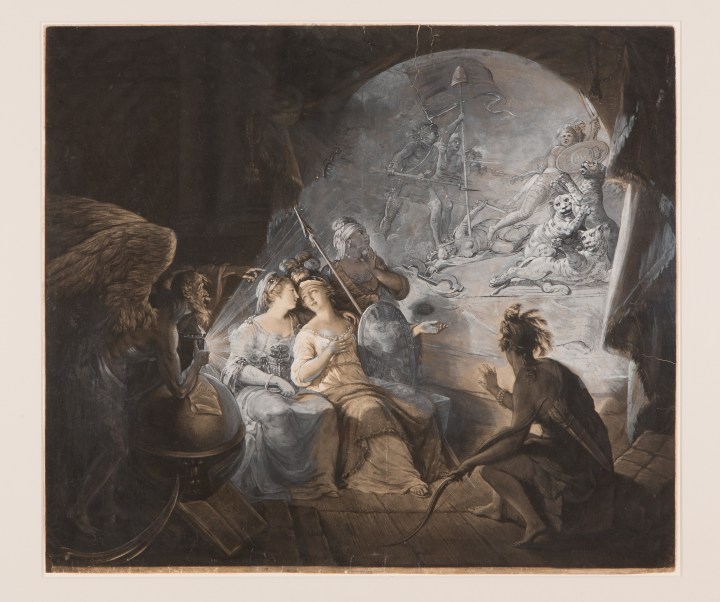
John Dixon, The Tea-Tax-Tempest (The Oracle), 1774, mezzotint with gouache, scratched proof; sheet (trimmed within plate), 52 × 59 cm
(New York: The Metropolitan Museum of Art, 83.2.2083).
◊ ◊ ◊ ◊ ◊
From the Call for Papers:
Journal18, Issue #21 (Spring 2026) — Revolution
Issue edited by Wendy Bellion and Kristel Smentek
Proposals due by 1 April 2025; finished articles will be due by 1 September 2025
July 2026 marks the 250th anniversary of the United States Declaration of Independence, a turning point in the American Revolution (1775–1783). The French Revolution (1789–1799), the Haitian Revolution (1791–1804), and the unsuccessful United Irishmen’s Rebellion (1798) followed in quick succession. For this commemorative year, this issue of Journal18 proposes to examine afresh the material and visual cultures of what historians have termed the ‘age of revolutions’.
Taking a cue from the Declaration itself—a document that interrogated the very practice (and malpractices) of representation—we invite new questions about familiar material. What images and objects, actors and artistic media, have been privileged and marginalized to date in art histories of revolution? How did visual and decorative images purporting to document the American Revolution both foreground and obfuscate the fundamental contradiction of a political freedom that depended on systems of enslavement, colonization, and Indigenous displacement?
The French revolutionary government officially promised liberty and equality for all, yet women were formally excluded from political life (while simultaneously benefiting from new measures that significantly increased their social welfare), and slavery continued until France was forced to end it, temporarily, in 1794. How were the asymmetries and inconsistencies of the French Revolution embedded or elided in its civic performances and its official and unofficial image-making campaigns, production of ephemera, and circulation of luxury goods? What about absences in the visual and material record?
How might new scholarship on the visual history of the Haitian Revolution—the most successful revolt of enslaved peoples in history—interrogate its comparative underrepresentation during the eighteenth century and within the discipline of art history, arguably contributing to what the Haitian scholar Michel-Rolph Trouillot described as its historical “silencing”? How might art history stretch beyond the Atlantic rim to consider the global contexts of the age of revolutions and the manifestations of revolution beyond Euro-America during this period?
We welcome proposals for contributions that engage these questions and related matters of revolutionary memory, violence, justice, absence, and reinvention. Submissions may take the form of full-length articles, shorter pieces focused on single objects, photo essays, interviews, or other formats.
Proposals for issue #21 Revolution are now being accepted. The deadline for proposals is 1 April 2025. To submit a proposal, send an abstract (250 words) and a brief biography to editor@journal18.org and smentek@mit.edu. Articles should not exceed 6000 words (including footnotes) and will be due for submission by 1 September 2025. For further details on submission and Journal18 house style, see Information for Authors.
Issue Editors
Wendy Bellion, University of Delaware
Kristel Smentek, MIT
Call for Papers | Textiles and the Texture of Ideas in Europe, 1589–1801
From the Call for Papers:
Textiles and the Texture of Ideas in Early Modern Europe, 1589–1801: How the Craft and Its Products Interacted with Philosophy, Literature, and the Visual Arts
Procida Island (University of Naples L’Orientale), 8–14 September 2025
Proposals due by 31 January 2025
Joint project: University of Naples L’Orientale and Université de Haute-Alsace, Mulhouse. Two joint conferences will be organized:
Conference 1 | Textiles and the Texture of Ideas in Early Modern Europe, 1589–1801: How the Craft and Its Products Interacted with Philosophy, Literature, and the Visual Arts
Procida Island (University of Naples L’Orientale), 8–14 September 2025
Conference 2 | The Circulation of Textile Designs, Patterns, Skills, and Representations in Early Modern Europe
Université de Haute Alsace – Mulhouse, June 2026
The Virgin’s chemise at Chartres Cathedral (9th century), the fabrics used as support for his paintings by Luca Pignatelli (1962–) or employed by Ann Hamilton (1956–) in her installations, and textile architecture are only a few examples of how fabrics can step out of their typical function s (e.g. as daily clothing, drapery, etc.) to enter the arts and the collective imagination in rather unique ways. Evidence of textile technology dates back to the Palaeolithic (Bender Jørgensen et al., 2023); and, according to Leonardo da Vinci, it was a craft ‘second [only] to the printing of letters’ and ‘more beautiful and subtle in invention’. If artifice has traditionally aimed at producing something ‘rare’ as opposed to ‘common’ (at least until the advent of plastic according to Roland Barthes [1972: 98]), textiles are among the artifacts through which the aspiration to create rarity has been best expressed throughout the centuries. The invention of weave patterns and dyeing techniques as well as printing pattern design prove that in the production of textiles—as indeed in all crafts according to Richard Sennett—“thinking and feeling are contained within the process of making” (Sennett 2008: 7).
For these joint interdisciplinary conferences, we invite papers with a focus on the interaction between the material and the immaterial aspects of the craft of weaving, approached from various angles, in the early modern period. The aim is to explore aspects of the interactions between textile manufacturing and its products and the individual or collective imagination, intellectual life as well as the ‘world picture’ and mental representations in the early modern period. Those interactions, although sometimes acknowledged, appear to have been understudied so far. How did the immaterial life of ideas as well as the cultural context impact on the creation of fabric designs? And, vice versa, how did textile manufacturing, in either its pre-industrial or early industrial stage, impact on the personal or collective imagination? How were early modern textile artefacts, alongside the material conditions and early modern technologies of their production, perceived by contemporaries? Were they perceived as ‘symbolic capital’, in Pierre Bordieu’s acceptation (1979)? Can the study of representations, descriptions, references, or even allusions to textiles and the textile manufacture, but also of the metaphorical usage of textile-related vocabulary in various texts—from poetry to philosophical essays—or of references to the textile world in the early modern visual arts—paintings, sketches, illustrations, plates—add to our knowledge of the early modern episteme?
The dates 1589–1801 have been chosen for their significance in the progress of textile manufacturing, but papers focusing on any period of time from the beginning of the sixteenth century to the end of the eighteenth century are welcome. 1589 was the year when William Lee invented the stocking frame knitting machine in England; only a few years later, at the beginning of the 17th century in Paris, the Gobelins manufactory was established. 1801 was the year when the Jacquard loom was first introduced; Charles Babbage’s ‘difference engine’, the early calculating machine designed and partially built during the 1820s and 1830s, was inspired by the use of punched cards in the Jacquard loom (see Essinger 2004), which testifies to the potential of textile-related creativity. Could there be more, still unknown, regions of cross-fertilisation between textile manufacturing and other realms of knowledge?
We welcome interdisciplinary papers at the crossroads of, but not limited to, any ones of the following: cultural history, social history, microhistory, history of ideas or intellectual history, the history of technology, philosophy, linguistics, literary studies, material studies, visual arts studies, crafts, aesthetics, memorial studies, intermedial studies. We especially welcome papers based on archival research and adopting a microhistorical approach—recalling here Carlo Ginzburg’s statement that “the prefix ‘micro’ is related to the microscope, so to an analytic approach to history” (Carlo Ginzburg 2015). Such analytical approach we would like to extend to the study of different texts, also for a cultural analysis of the impact of the textile world on the early modern intellectual imagination. For both conferences, we therefore invite papers aiming at uncovering references to the textile world in famous and less known, or even overlooked, written texts—for example ballads, poems and emblems, plays, diaries, commonplace books, essays, philosophical texts, pamphlets and newspapers—which may be revealing of the cross-fertilisations between material and immaterial culture in the early modern period. Another space of investigation will be the visual: were there drawings, sketches or paintings representing textile manufactures and their workers as well as the manufacturing process? Were there early modern manuals or handbooks about textile production? Did they include illustrations (of the patterns, the weaving techniques, the acts and process of making fabrics)? And, if so, how much could a study of those different texts contribute to the history of early modern culture and ideas (about the human, ingenuity, nature and technology, and so on)? Could such a study be relevant in the same way as, for example, the study of plates in early modern anatomical books has proved to be? Another area of research we invite to explore is the possible connections between textiles and book-making in early modern Europe, for example the intersection between textile manufacturing and book-printing. Textile metaphors have been extensively used by philosophers and writers alike, with the textile operating at once “as language, concept and matter” (Dormor 2020: 1); they have sometimes been used by critics too, who have suggested that in early modernity “texts could be, and were, read like tapestries” (Olson 2013: 2). We also welcome papers that look at the dissemination and uses of textile vocabulary in the early modern intellectual and philosophical spheres, the collective imagination, the literary imagination as found in individual texts and that offer analyses of their implications for the history of ideas.
More specific questions may be: how did the workers of early modern textile manufactures relate to their activity and their products? In their humdrum routine work, was there any space for relating to it in imaginative and creative ways? Were they mere animalia laborantia, to adapt Hannah Arendt’s definition? Alternatively, assuming that thinking was involved at all levels of textile production—in actual manufacturing as well as in pattern designing and/or textile printing—are there traces left of that? Did early modern workers or designers in textile craftsmanship and the textile industry leave any impressions, thoughts (in the form of written notes or sketches or other) about their craft, or which may be related to it (either inspiring or being inspired by it)? Did any of the workers keep notebooks? Is there any way one could contribute further to the history of ideas ‘from below’ beginning with archival research and looking for extant traces left by those involved at different levels in textile production—the designers, the workers, the investors, the customers and the patrons? Taking inspiration from Ginzburg (1980), we ask: would something else, atypical with respect to our present knowledge of the times, emerge? With respect to the designs, patterns or prints in the weaving craft and the textile industry, would a study of possible points of contact between technical inventions and manufacturing processes, on the one hand, and the historical—global, local and even personal—moment, on the other, add to our knowledge of the wider ideas circulating in early modern Europe? Is there any such thing as a philosophy of textile technology and design? Our aim is to relate these material aspects of the craft with the imagination and the history of ideas.
Finally, in both conferences, a special section will be site-specific: around the same years in the second half of the eighteenth century, textile manufacturing flourished in the Belvedere of San Leucio in Caserta and in Mulhouse. The hunting Lodge of San Leucio became home to the silk factory by will of Ferdinand of Bourbon; the idea and choice of place for the factory started in the 1760s, after completion of the Royal Palace in Caserta. San Leucio has been a UNESCO world heritage site since 1997 and today it hosts a museum of the textile craft of the old days. The textile industry in Mulhouse began in 1747, when the first ‘indiennerie’—a cotton printing manufacture—was set up. The industry flourished to such an extent that Mulhouse became known as the ‘French Manchester’. Today the city’s Musée de l’Impression sur Etoffes (Printed Textiles Museum) bears testimony to that significant past activity. For both conferences we welcome papers on the respective local histories of textile manufacturing.
Possible topics may include but are by no means limited to:
Cultural history, social history, microhistories
• The production of textiles 1589–1801: A cultural history
• The issue of ‘authorship’ in pattern and printing designs
• Textile design and patterns in Europe
• Ends of textiles: recycling long-lasting and short-lived fabrics in early modernity Designing textiles: inventiveness and the cultural imagination in early modernity Cloth merchants and drapers’ shops in early modern Europe
• Textile workers as readers
• A cultural and/or social history of the perception of the work and its products Memoirs of textile workers 1589–1801 and object biography: fabrics, textiles, cloth Museums today and heritage tourism: the history of textiles as cultural history
The literary imagination and beyond
• Textiles, tapestries and weaving, weavers and drapers in early modern literary texts and visual arts
• Representations of early modern textiles and/or textile workers in literary texts and the visual arts
• Recurring patterns: damasquinerie, ceramic decorations, and textile decorations
• A cultural analysis of figurative patterns in tapestries
Textiles and book-making in early modern Europe
• Books and textile practical knowledge
• Intersections beween textile manifacturing and book-printing
• The woven book: early modern printing on fabric
• Disseminating the craft: early modern books about fabrics, patterns, and techniques
Special section on San Leucio and Mulhouse: the impact of the textile industry on everyday life and the collective imagination:
• What impact did the textile industry have on the collective imagination? How did the workers feel about their jobs?
• Literacy among textile workers: did they (have time to) read? What kind of books or texts, if any, did they read? Practical texts? Others? Is it possible to trace a social history of reading among textile workers? Did they read more or less than other workers?
• San Leucio and Mulhouse in the literary imagination: are there references in then- contemporary literary texts—also ballads, songs, and so on—to the Bourbon experiment in San Leucio or the Mulhouse textile industry?
• The cultural impact of the decline of the textile tradition in San Leucio and Mulhouse The memory of the textile industry in San Leucio and Mulhouse today: museums, cultural activities and outreach. Is the textile industry of the past perceived as ‘cultural capital’ today?
Please send your paper proposals in English (300 words approximately) as well as a short biography to Anna Maria Cimitile (amcimitile@unior.it) and Laurent Curelly (laurent.curelly@uha.fr) by 31 January 2025. Responses to paper proposals will be given by 15 February 2025. Details about the conference (location, registration fees, travel information, etc.) will be provided before then.
r e f e r e n c e s
Roland Barthes. Mythologies, selected and translated from the French by Annette Levers. New York: Farrar, Straus & Giroux, 1972.
Lise Bender Jørgensen, Antoinette Rast-Eicher, and Willeke Wendrich. “Earliest Evidence for Textile Technologies,” Paléorient 49.1 (2023): 213–28.
Pierre Bordieu. Distinction: A Social Critique of the Judgement of Taste (La Distinction: Critique sociale du jugement, 1979), translated by Richard Nice. Cambridge: Harvard University Press, 1984.
Catherine Dormor. A Philosophy of Textile: Between Practice and Theory. London: Bloomsbury, 2020.
James Essinger. Jacquard’s Web: How a Hand-loom Led to the Birth of the Information Age. Oxford: Oxford University Press, 2004.
Carlo Ginzburg. The Cheese and the Worms: The Cosmos of a Sixteenth-Century Miller, translated by John and Anne Tedeschi. Baltimore: The Johns Hopkins University Press, 1980.
Carlo Ginzburg. “Microhistory,” Serious Science, https://www.youtube.com/watch?v=VFh1DdXToyE, uploaded 25 June 2015, accessed 26 April 2024.
Rebecca Olson. Arras Hanging: The Textile That Determined Early Modern Literature and Drama. Newark: University of Delaware Press, 2013.
Richard Sennett. The Craftsman. New Haven: Yale University Press, 2008.










leave a comment