Call for Submissions | Metropolitan Museum Journal
Metropolitan Museum Journal 60 (2025)
Submissions due by 15 September 2024
The Editorial Board of the peer-reviewed Metropolitan Museum Journal invites submissions of original research on works of art in the Museum’s collection. The Journal publishes Articles and Research Notes. Works of art from The Met collection should be central to the discussion. Articles contribute extensive and thoroughly argued scholarship—art historical, technical, and scientific—whereas Research Notes are narrower in scope, focusing on a specific aspect of new research or presenting a significant finding from technical analysis, for example. Articles and Research Notes in the Journal appear in print and online, and are accessible in JStor on the University of Chicago Press website. The maximum length for articles is 8,000 words (including endnotes) and 10–12 images, and for research notes 4,000 words (including endnotes) and 4–6 images.
The process of peer review is double-anonymous. Manuscripts are reviewed by the Journal Editorial Board, composed of members of the curatorial, conservation, and scientific departments, as well as scholars from the broader academic community. Submission guidelines are available here. Please send materials to journalsubmissions@metmuseum.org. The deadline for submissions for volume 60 (2025) is 15 September 2024.
Call for Papers | CAA 2025, New York
I’ve highlighted here a selection of panels related to the eighteenth century; but please consult the Call for Papers for additional possibilities. –CH
113th Annual Conference of the College Art Association
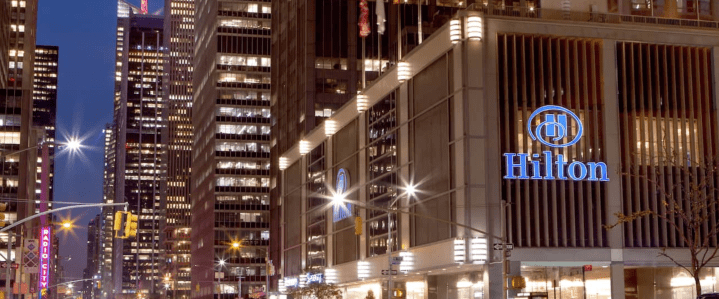
New York Hilton Midtown, 12–15 February 2025
Proposals due by 29 August 2024
The CAA 113th Annual Conference will take place at the New York Hilton Midtown, New York City, 12–15 February 2025. The conference will be held in person with a selection of hybrid sessions and events. To submit a proposal, you’ll need a CAA account—though at this step, membership is not required. Proposals should include a presentation title and an abstract (of no more than 250 words), along with a brief CV (2 pages). Additional information is available from CAA’s website.
◊ ◊ ◊ ◊ ◊
American Art and the Pyrocene (remote session)
Chairs: Thomas Busciglio-Ritter (Joslyn Art Museum) and Annika Kelsey Johnson (Joslyn Art Museum)
Coined by historian Stephen Pyne in 2015, the concept of Pyrocene defines a human-caused fire age in which burning has become synonymous both with fossil energy consumption and lasting environmental damage. In North America, fire has long stood at an ecological, cultural, and political threshold, particularly when considering the long history of Indigenous practices such as controlled burns. With the arrival of Euro-American settlers, fire became a weapon used against Native societies to ensure an unbridled exploitation of natural resources. In turn, the omnipresence of fire within the US colonial project inspired a full-fledged artistic genre as of the early 19th century, and depictions of landscapes set alight became a popular form of disaster spectacle. Fire, however, has acquired new meaning in the 21st century: faced with persistent drought and large-scale blazes exacerbated by climate change, a growing number of communities are, for instance, reconsidering prescribed burns as an ecological practice.
Examining interactions between American art and the Pyrocene across time and media, this session invites submissions from researchers, scholars, and artists at all levels who focus on:
• Visual representations of fire in American Art, from the 18th century to the present
• Material interactions between American art and fire (accidental or intentional destruction, fire as creative fuel or co-participant in artmaking…)
• Artistic involvement in the study of fire and fire management
• Artist-led environmental interventions involving fire
• Artistic approaches to Indigenous ecologies of fire in North America
• Artists’ responses to North American wildfires and the climate crisis in our time
◊ ◊ ◊ ◊ ◊
The Art of Collaboration in the Long 18th Century (HECAA)
Chairs: Yasemin Diba Altun (Duke University) and Tori Champion (University of St Andrews)
The 18th century is an era known for its joint ventures, from sweeping publications like the Encyclopédie to crowd-sourcing spaces like the Enlightenment salon. This panel invites papers that consider the group dynamics and agencies that shaped the production, distribution, and consumption of visual and material art and culture during the long 18th century (ca. 1688–1815). How did 18th-century makers and their art worlds define ‘collaboration’? Scholars have noted that this term (at least in relation to artmaking) did not arise until the 19th century. What then were earlier vocabularies and discourses used to characterize a shared creative process and its participants? Papers could engage with conventional hierarchies of fine and craft arts. They could examine divisions of labor within academic, guild, domestic, and other contexts of production, both local and global. Particularly welcome are contributions that take up the politics and (in)visibilities of collaboration: how has credit been attributed to artworks produced by more than one individual? Whose names have or have not been ascribed to such works, for instance when displayed in exhibitions, sold on the art market, or described in critical writings? How do modern and more recent ideas of authorship fit or conflict with the 18th-century realities of artistic practice, which often involved multiple people working at different sites and stages, whether in concert or competition, to realize products of visual and material culture? Ultimately, this panel seeks contributions that challenge or complicate lingering norms of individual—relatedly, male and white—authorship in 18th-century art history.
◊ ◊ ◊ ◊ ◊
Collecting Her Thoughts: Women Art Collectors across Time
Chairs: Toni Armstrong (Boston University), Danarenae Donato (Boston University), and Ilaria Trafficante (Scuola Superiore Meridionale)
In his introduction to 19’s 2021 issue on women collectors, To Stammers writes that “the renewed study of female collectors promises to reconfigure the history of art and the history of gender alike.” Across time, women’s access to the social and financial resources necessary to collect art has been different from that of their male counterparts and often more limited. Both because of and in spite of these differences, women have served as art patrons, developed ideologically and materially expansive collections, and promoted art in public arenas. Yet, women collectors have been systematically excluded from museum and curatorial studies, perhaps in part because their collections and practices may manifest differently. Discussions of major art collectors continue to prioritize men, even when women were involved as spouses in developing domestic collections, in donating to museums, and in developing legacies for themselves and their partners.
How does the study of female collectors challenge and expand existing scholarship? Who were these women, and how and why did they collect? How and in what ways did women live, work, influence, and collect in community with others? How do women’s philanthropy, art collecting, and collecting as activism intersect in and out of the museum? We invite papers that open conversations about feminist curatorial practice of the past and present, offering new methodologies for the study of collecting and women’s curatorial practice. We encourage scholars who may be early in their careers, those who may come from underrepresented backgrounds, or those who study multiply marginalized women.
◊ ◊ ◊ ◊ ◊
Gender, Sexuality, and Non-Pristine Nature in Northern European Art and Material Culture, 1350–1750 (HNA)
Chairs: Anna-Claire Powell Stinebring (The Metropolitan Museum of Art) and Sarah Walsh Mallory (The Morgan Library & Museum)
How might waste studies (or discard studies), as an emerging strain within eco-critical methodologies, be put into productive conversation with (eco)feminist and queer theory? Such a question is apt in the context of early modern northern European art and material culture, born from an age in which the adage “cleanliness is next to godliness” had a particular resonance: close observation of nature was for artists a spiritual practice, which in turn spurred them to explore new methods for depicting their world, including mundane or unseemly details. This panel will examine notions of gender, sexuality, and non-pristine nature to shed new light on the construction—or playfully subversive deconstruction—of normative social hierarchies in early modern Northern European art and material culture. We build on the work of Mary Douglas, Donna Haraway, Carolyn Merchant and on recent scholarship, including: Francesca Borgo and Ruth Ezra (Wastework conference and edited volume); Emma Capron (The Ugly Duchess: Beauty and Satire in the Renaissance); Lauren Jacobi and Daniel Zolli (Contamination and Purity in Early Modern Art and Architecture); and Vittoria Di Palma (Wastelands: A History). Relevant topics include: gender in depictions of purity and contamination; wastelands; urban or domestic environments; purity in the colonial context; and contemporary curatorial responses. We welcome papers on all artforms and material culture produced in, or in connection with, the Northern Netherlands, Southern Netherlands, or Germany between the l4th and 18th centuries. Please send a proposal and CV to Sarah Mallory (smallory@themorgan.org) and Anna-Claire Stinebring (Anna-Claire.Stinebring@metmuseum.org) by August 29th.
◊ ◊ ◊ ◊ ◊
The Incomplete in the Long 19th Century (Interdisciplinary Nineteenth-Century Studies)
Chair: Nancy Rose Marshall
The theme of our panel is art and imagery related to the concept of ‘INCompleteS’, broadly construed. Possible topics might include: Unfinished sculptures or paintings; the meaning of the sketch; art that thematized ideas of absence, the partial, the fragmented, or the dismembered; fiction or criticism treating the undeveloped or unfinished artwork; or disability studies perspectives that counter 19th-century definitions of deficiency. We are especially looking for interdisciplinary papers that consider how notions of ‘the incomplete’ might in turn shed light on the 19th-century investment in the idea of whole and the totalizing. Topics from the long 19th century of any country or culture welcome.
◊ ◊ ◊ ◊ ◊
Neoclassicism in the Extended Field
Chairs: Rebecca Yuste (Columbia University) and Faraz Olfat (Yale University)
Neoclassicism, the movement that looked to the aesthetic, philosophical and political tradition of Greece and Rome, is one of the central threads of the long 19th century, often associated with state-building projects and the rise of secular modernity. Works by Robert Adam, Jacques-Germain Soufflot, Karl Friedrich Schinkel and Abbé Laugier had a crucial influence on the evolution and theorization of the movement internationally. This was facilitated through the circulation of ideas and the growth of European colonial enterprises as Neoclassical buildings sprung up far beyond the confines of Europe, with examples in the colonial Americas, the Middle East, South Asia, and across the continent of Africa.
This panel asks what happens when Neoclassicism moves outside of its traditionally understood geographies, namely Western Europe. It examines the introduction, promotion and application of Neoclassicism in these non-western geographies in order to construct a global understanding of the movement. This panel also considers how Greco-Roman traditions intersect and interact with local archaeological legacies, as well as the relationship established between Neoclassicism and imperialism across the globe. We welcome papers that expand, complicate and contradict traditional narratives of Neoclassical architecture, from the discovery of Pompeii and Herculaneum until the first decade of the twentieth century. These might explore topics related to the circulation of Neoclassical design through colonial intervention, photography, pattern books, architectural treatises, or the prominence of the École des Beaux-arts. Examples could include but are not limited to governmental buildings, libraries, financial institutions, religious monuments, private residences, unrealized projects, and theoretical writings.
◊ ◊ ◊ ◊ ◊
New Directions in British Art and Architectural History (HBA)
Chairs: Monica Anke Hahn and Laurel Peterson (Yale Center for British Art)
The study and practice of art history in the academy and in in the museum has changed substantially in the last five years. This call invites scholars, researchers, curators, and practitioners to present their work on innovative approaches, emerging themes, and unexplored avenues in the study of British art and architectural history. We define ‘Britain’ and ‘British art’ broadly, and welcome presentations on a diverse range of topics including, but not limited to:
• Reevaluations of overlooked or underrepresented artists, architects, styles, and movements.
• Revised interpretations of established narratives and historical perspectives.
• Explorations of transnational connections and global exchanges shaping British artistic and architectural practices.
• Examinations of the intersections between British art and architecture and issues of identity, memory, and tradition.
• New curatorial approaches and interventions.
• Applications of innovative methodologies, including digital humanities, GIS mapping, and material analysis.
Especially encouraged are projects with interdisciplinary approaches, and those that consider wide geographical, social, and racial contexts. Proposals from scholars in and outside of academia, and at any stage in their programs or careers are welcome.
◊ ◊ ◊ ◊ ◊
Sculpture as a Collective Practice in the Long 19th Century
Chairs: Apolline Malevez (Ghent University) and Marjan Sterckx (Ghent University)
Collaborative practices, shared authorship and the labor of art are gaining recognition in contemporary art research, yet remain under-acknowledged in nineteenth-century art history. Taking inspiration from Howard Becker’s ‘art worlds’ [1982], this session explicitly considers sculpture as the collective practice it has traditionally been, and zooms in on the sculpture studio as a creative ecosystem, in which ‘the sculptor’ is but one of the actors involved.
Most successful sculptors hired collaborators to help with the making of their works. However, this did not mean that collaborative work was valued as such: the (male) sculptor was generally considered as the only ‘real’ creator, while the specialists who helped with the various mechanical aspects of art making (such as the production of plaster moulds, the bronze casting and/or the rough cutting) were perceived as ‘mere assistants’, and their use was sometimes criticized.
Beyond specialist practitioners, this panel also wishes to highlight other forms of hidden labor. We invite papers that draw attention to the domestic, creative and/or technical work of pointers, carvers, moulders, students, models, domestic servants and family members in the sculptor’s studio and household. We will consider questions such as: who made the time-consuming labor of sculpture possible? Who cleaned up all the dust? How should we value the artistic contribution of sculptors’ collaborators? We aim to provoke discussion around the notion of individual authorship, the rethinking of the studio as a space of hybrid (class, gender and race) relations, and the importance of care work within artistic creation.
◊ ◊ ◊ ◊ ◊
Taking and Making: Artistic Reckonings with Cultural Property Theft in the Long 19th Century (AHNCA)
Chair: Nancy Karrels (Independent Scholar and Curator)
The 19th century witnessed a plethora of incidents of cultural property theft accompanied by coercion and violence and often driven by imperial and colonial agendas. From the notorious spoliation of Beijing’s Old Summer Palace during the Opium Wars to the seizure of sacred Native American artifacts under the guise of scientific inquiry, these acts of looting left communities grappling with profound cultural losses that still reverberate today. This panel explores the complex dynamics of artistic exchange and expression engendered by these traumatic events. Drawing inspiration from Bénédicte Savoy’s transnational approach to the cultural exchanges that resulted from the French spoliation of Germanic princely collections in post-Revolutionary Europe, we aim to investigate the ways in which forcible transfers of cultural patrimony globally catalyzed shifts in artistic value and meaning during the long 19th century, and how these contentious processes sparked cross-cultural discourse and innovative avenues of creative expression among artists directly impacted by or complicit in them. From the interplay between looting and artistic production to the evolution of techniques and styles in the aftermath of plunder, we encourage contributions from diverse cultural perspectives and methodological approaches. Proposals are open to all, but once accepted, presenters will need to update their memberships in both CAA and AHNCA by the time of the conference.
◊ ◊ ◊ ◊ ◊
Trajectivity in Art: Toward a Horizontal Art History of Styles
Chair: Julie Codell (Arizona State University)
We call styles grouped by artists ‘movements’, but where do styles go? Art historians constrict movements to ‘centers’ (e.g., Paris, New York) and time periods. Considering styles’ movements in a horizontal art history [from the eighteenth century to the present], we can discover how styles’ canonicity, materiality, their artists’ reputations, and their market values are transformed across borders, oceans, and continents. ‘Trajectivity’ can mean orientation toward (Paul Virilio): artists often orient their styles toward permanence, popularity, universality, and transcendence. It may mean deraciné, ungroundedness (John Rajchman). In a horizontal art history challenging the center-periphery binary and provincializing ‘centers’, ‘peripheral’ artists can transmute, de-and re-territorialize and re-invent styles through their local conventions; peripheries are not passive recipients of styles but recreate them, denying the essentialism and universality ascribed to European styles presumably grounded in centers (Piotr Piotrowski): The Metropolitan Museum’s Surrealism Beyond Borders (2021–22) covering 45 countries and 80 years exhibited Surrealisms that absorbed local visual idioms beyond Europe.
Possible questions are (but not limited to):
• How do styles’ meanings, market values, histories, significations and authority change when styles cross borders?
• What art events (exhibitions, biennales) stimulate styles’ mobility?
• When centers are provincialized, what happens to ‘universality’ and ‘transcendence’ ascribed to centers’ styles?
• Do new traits from places they traverse adhere to styles?
• Do reputations of artists associated with centers change when styles migrate?
• What agency do artworks have to transform styles when introduced into ‘centers’ or ‘peripheries’?
• How can critical museums display and exhibit styles’ cultural exchange transformations?
• Do political events—colonialism, war, emigration—affect styles’ transmissions and transformations?
◊ ◊ ◊ ◊ ◊
Unboxing the Long 18th Century (ASECS)
Chairs: Dani Rebecca Ezor (Kenyon College) and Jennifer Germann
Boxes are objects which at once contain and extend their makers’ and users’ contact with the world. Then as now, they traveled the globe, moving between cultures and amongst sellers, consumers, and collectors. With online shopping and shipping, they have proliferated as symbols of consumerism, as fodder for YouTube and TikTok videos, and as useful nuisances, littering our landscapes. They have not, however, claimed the same space in our scholarly studies. Usually an afterthought or even discarded entirely, boxes could be luxury goods themselves, made by skilled craftspersons with significant care and attention to detail. Boxes contain, store, hide, protect, wrap, package, present, and encase, but they can also reveal, expose, manifest, exhibit, and even release. Here we turn attention to the box as a signifier and site of meaning. As noted in the Encyclopédie, “The number of assemblages that can be called a box is infinite.” (“Le nombre des assemblages auxquels on donne le nom de boîte est infini.”)
This panel invites papers that explore boxes of all kinds, including but not limited to boxes for artist’s materials; snuff boxes; powder boxes; mouche boxes; nécessaires; etuis; tea or coffee canisters; specimen boxes; trunks; coffers; caskets; and cases; as well as their representation. These objects raise issues related to interiority and exteriority, storage and display, the hidden and the revealed. Global topics from the 17th through the early 19th century that address labor, performance, the senses, empire, materiality, gender, race, and other avenues of exploration are welcome.
◊ ◊ ◊ ◊ ◊
The Visual Culture of Festivals in Germany, Scandinavia, and Central Europe (Historians of German, Scandinavian, and Central European Art and Architecture)
Chair: Michelle Oing
Mikhail Bakhtin’s foundational work on carnival has inspired countless studies on festivals around the world, and the idea of the world turned upside down. Though Bakhtin’s focus was on literature, much subsequent work on festivals has been produced by anthropologists, social historians, and theater historians, for whom the inversion of carnival provides a useful framework to consider myriad themes (social hierarchy, humor, reform, etc.).
But what makes a festival a festival? What is often most striking is their rich visual culture. In this panel we are interested in the idea of the festival broadly defined: gatherings religious or secular, parades, protests, organized events and spontaneous celebrations or revolts. From the elaborate ephemeral architecture of early modern royal entries, to Midsummer celebrations involving maypoles and bonfires, and the Krampusnacht parades of Austria and Central Europe, these festivals make full use of the visual impact of masks, puppets, floats, costumes, automata, and the manipulation of architectural and/or natural spaces. Ephemeral live events, records of festivals also often survive only in visual form, whether in photography, painting, engraving, or other forms of visual record-keeping. This panel seeks papers that consider the highly visual and spatial aspects of the festival in Germany, Scandinavia, and Central Europe through an art historical lens. We welcome submissions that blend art historical and other theoretical approaches in order to explore what the tools of art history can bring to the study of the festivals from this region, from antiquity to the present.
◊ ◊ ◊ ◊ ◊
Women and Letters
Chair: Isabel Mehl (Freie Universität Berlin)
Women reading letters is a widespread motif in art history. In the 17th century, the motif was ubiquitous in Dutch painting, became erotically charged in the French Rococo period, and was taken up again in the 19th and 20th century by Pierre-Auguste Renoir and Henri Matisse. Research has mainly focused on male artists depicting female (letter) readers whereas paintings by women artists depicting the same motif have not yet been researched (comparatively). This is surprising since women painters have employed the motif of the letter since the 19th century—prominent examples being Mary Cassatt’s The Letter (1890/1), Harriet Backers Evening, Interior (1896), or Charlotte Berend-Corinths Self-portrait (1941). In addition, the epistolary form as such has regained prominence in works by contemporary women artists working in different mediums, for instance, Sophie Calles installation Prenez-soin de vous (2007), Moyra Davey’s chromogenic prints Subway Writers (2011) or Nicole Tyson’s book Dead Letter Men (2015). This session seeks to bring together scholars whose work addresses the epistolary as motif or form in works by women artists. Artists are also invited to contribute their perspective on this topic. We will discuss issues of class, gender and race in relation to these works. In bringing together current research from different geographical contexts and historical periods this session aims at uncovering the yet untold stories of woman and letters in the visual arts.
◊ ◊ ◊ ◊ ◊
Women Artists and the Politics of Neoclassicism
Chairs: Andrea Morgan and Megan True (Art Institute of Chicago)
The history of 18th-century French painting has long been dominated by the study of canonical male artists like Jacques-Louis David, whose name is synonymous with a Neoclassical aesthetic. However, as recent scholarship has shown, from the end of the French Revolution through the Restoration women artists were more visible than generally acknowledged, such as by exhibiting in increasing numbers at the Salon and the Royal Academy and participating in the commercial market. This panel invites papers investigating how women makers responded to the dramatic social and political upheaval in France and its reverberations across Europe, Great Britain, or more broadly from the late 18th century throughout the 19th. Can any trends in subject matter chosen by women be identified within the broad umbrella that constitutes Neoclassicism? Did Neoclassicism—with its inclination toward the classical body and the genre of history painting—necessarily exclude a number of women artists who often concentrated on more ostensibly neutral subject matter such as still life or portraiture? Or were there more women like Nanine Vallain, a student of David, who actively participated in political conversations? This panel aims to explore reform, revolution, and restoration from the perspective of women—including those who were patrons of the arts—in the hopes of expanding or nuancing our collective interpretation of the Neoclassical movement, broadly defined. Papers that discuss—whether in support or repudiation of—the contested notion that there are specifically feminine or masculine characteristics to artworks are particularly welcome.
◊ ◊ ◊ ◊ ◊
Note (added 29 July 2024) — The original posting was updated to include the session on Trajectivity.
Call for Papers | Newspapers and Periodicals
From USTC, as hosted by St Andrews:
St Andrews Book Conference: Newspapers and Periodicals
Universal Short Title Catalogue Conference
St Andrews, 19–21 June 2025
Organized by Andrew Pettegree, Arthur der Weduwen, and Zachary Brookman
Proposal due by 13 December 2024
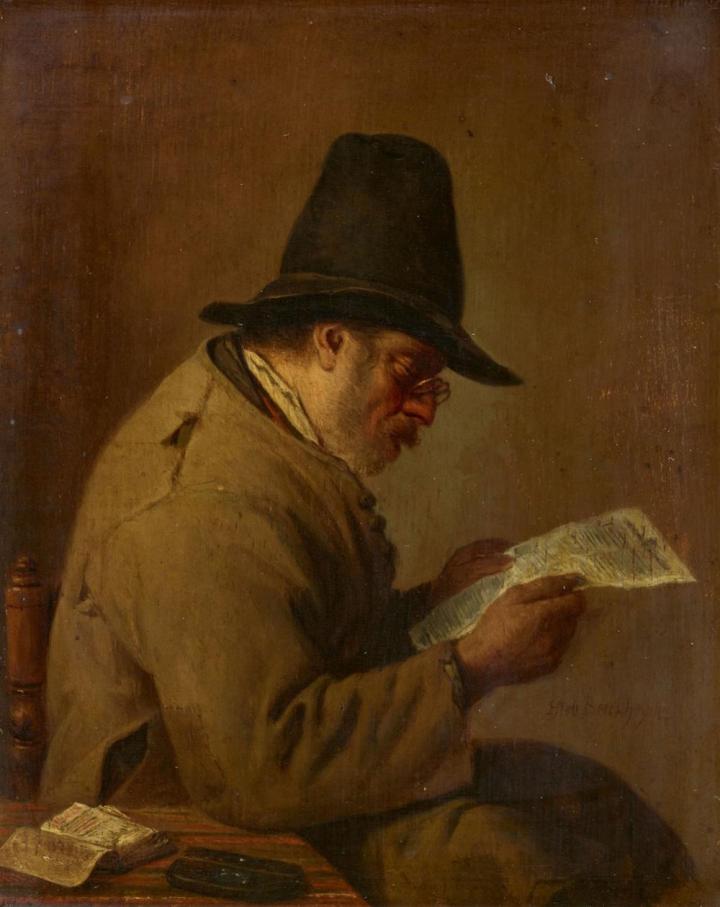
Job Adriaensz Berckheyde, A Man Reading a Newspaper, ca. 1670s, oil on panel, 17 × 14 cm.
While the basic technological underpinnings of print were unaltered from the days of Johannes Gutenberg to the invention of the steam press in the nineteenth century, one type of early modern publishing, pioneered in the early seventeenth century, would alter the printscape decisively. The rise of newspapers and other types of periodical publishing was beset by many failures and missteps, but by 1700, the genre had taken Europe by storm.
In the eighteenth century, newspapers would be at the heart of the expansion of printing presses in provincial Europe and its colonies overseas. At the same time, the range of periodical publishing on offer in Europe’s major cities would expand into every realm of printed information. While periodicals have long been the poor relation of short title catalogues and bibliographical investigations, this conference will seek to place periodical publishing where it belongs, at the heart of early modern print culture.
The conference will engage with the full diversity of periodical literature that appeared in the early modern period, from newspapers and monthly digests of current affairs to periodicals covering science, the book trade, literature, arts, husbandry, philosophy, and more. We welcome proposals for papers on research methodologies and the reconstruction of periodical ventures, key categories of periodical genres, individual titles, or prominent publishers, and other subjects.
Proposals—with a title, an abstract of up to 300 words, and a short biography of up to 150 words—should be addressed to the organisers, Andrew Pettegree, Arthur der Weduwen and Zachary Brookman, by 13 December 2024. The organisers can be reached at admp@st-andrews.ac.uk, adw7@st-andrews.ac.uk, and zb28@st-andrews.ac.uk.
Call for Papers | The Architecture of the Cassinese Congregation
From ArtHist.net:
The Architecture of the Cassinese Congregation, 15th–18th Centuries
Padua and Vicenza, 30 January — 1 February 2025
Organized by Gianmario Guidarelli with Ilaria Papa, Paola Placentino, and Riccardo Tonin
Proposals due by 31 August 2024
The University of Padua (ICEA Department), in collaboration with the Centro Internazionale di Studi di Architettura Andrea Palladio/Palladio Museum and the Abbey of Santa Giustina in Padua, is organising a three-day conference addressing the architecture of the Cassinese Benedictine Congregation, to be held in Padua and Vicenza from 30 January until 1 February 2025.
The conference is part of the PRIN 2022 research project CoenoBIuM. Art and Architecture of the Cassinese Benedictine Congregation (XV–XVIII centuries): Digital and Spatial Analysis Strategies through BIM Models, which studies the architectural and artistic practice of the Cassinese Benedictine Congregation from its foundation until the end of the 18th century from a comparative perspective and with the use of the innovative and experimental Building Information Modeling (BIM) methodology. The project is coordinated by P.I. Gianmario Guidarelli (University of Padua), is structured in three Research Units belonging respectively to the Universities of Padua, Bologna (Associated Investigator: Sonia Cavicchioli) and Brescia (Associated Investigator: Paolo Borin), and gathers a team of professors and young researchers.
The reform of monastic life instituted by Ludovico Barbo and formalized in 1419 revolutionized Benedictine monasteries by reorienting monks’ lives towards contemplation and personal prayer. This new model of monastic life entailed the transformation of cenobitic spaces of the cenobia and the introduction of new theological and iconographic themes in painting and sculpture in the congregation’s churches and monasteries. This broad topic of study was inaugurated by the studies of James Ackerman (1977), Mary-Ann Winkelmes (1996), Bruno Adorni (1998), Guido Beltramini (1995, 2007, 2013), Andrea Guerra (2006), and Tracy Cooper (2005), and then further developed in the 2017 conference Network of Cassinese Arts (organised by Alessandro Nova and Giancarla Periti, KHI Florence). The CoenoBIuM project aims to verify this hypothesis using the BIM methodology, which facilitates the management of large amounts of data of different nature (archival, bibliographic, iconographic, material, geometric-spatial) within a framework of interdisciplinary collaboration. The project will gradually extend to the study of the entire network of monasteries of the Congregation, thanks to the sharing of data (open access) and results (thematic seminars, conferences and publications).
Focusing on the building practices and architecture of the Cassinese Congregation, the conference welcomes studies on individual monasteries as well as on the following general thematic issues:
• shared building regulations
• shared building practices: site management and economy
• circulation of architects, workers, materials
• relationship with local building traditions
• relationship with the urban and territorial context
• circulation and use of architectural drawings
• relationship with treatises
• antiquarian culture: spatial models and architectural language
• spatial models of other contemporary congregations: Olivetans, Laterans…
• spatial models of reference: Cistercians, Dominicans, Canons Regular, etc.
• relations with other reformed Benedictine congregations in Europe (France, Germany, etc.)
• the Cassinese congregation as a model for the architecture of the new Counter-Reformation congregations
• architecture and monastic life: liturgy and spirituality in relation to spaces
Paper proposals, consisting of a short abstract (250 words max.) and a short CV, should be sent as an email attachment to coenobium@dicea.unipd.it by 31 August 2024. Accepted proposals will be announced by 15 September 2024. The proceedings of the conference will be published. Additional information is available here.
Call for Papers | Land and Power in Scotland
From the Call for Papers:
Land and Power in Scotland: History, Law, and the Environment
Paris-Panthéon-Assas University, 26–27 June 202
Proposals due by 30 January 2025
Breathes there the man, with soul so dead,
Who never to himself hath said,
This is my own, my native land!
Immediately after these famous lines, their author, Sir Walter Scott, went on to describe his ‘native land’ as ‘O Caledonia! stern and wild/… Land of brown heath and shaggy wood/ Land of the mountain and the flood’. Although part of a wider romantic nationalist tradition of professing love for one’s native land through love of its landscape, Scott’s words reflect the special place of the land in Scotland’s identity. Scottish landscape defines Scottishness both within and beyond its borders. Indeed, it is no coincidence that Donald Dewar chose to quote Scott’s words at the opening of the new Scottish Parliament on 1st July 1999.
There are few nations where views of the land are both so fundamental and so fraught. Historically, Scotland combined a high proportion of harsh and often marginally productive land with the need to maintain an effective warrior class to resist English expansionism. The solution was a heavily militarised aristocracy endowed with vast territorial estates and innumerable retainers, over which it exercised almost princely power. While by no means unique when it originated in the Norman period, the resulting pattern of concentrated landownership has persisted to this day, even as social, economic and legal relationships have undergone dramatic change. Most notably, the 18th- and 19th-century Clearances upended the mutual obligations that underpinned the old feudal order, as the great landowners sought to transform their estates for intensive agricultural exploitation. The Clearances’ enduring legacy of social conflict, environmental degradation, and vast material inequality has given land a uniquely complex and controverted role in Scotland’s contemporary cultural, political and legal life.
Scotland now has one of the most concentrated patterns of land ownership in the world with an estimated 432 families owning half of all private land. Reflecting this situation, land reform has, since devolution, become a key issue in Scottish politics. Successive legislative initiatives have focused mainly on ending feudal tenure and simplifying titles to land, as well as creating a celebrated ‘right to roam’ and establishing a ‘community right to buy’ from existing landowners. Further legislation, the Land Reform (Scotland) Bill, was introduced to Parliament on 14th March 2024 to, inter alia, increase the influence of local communities when large landholdings of over 1,000 hectares which represent more than 50% of Scotland’s land are being sold.
The aim of this international and pluri-disciplinary two-day conference is to explore the current concern for land reform in its social, cultural, legal and environmental contexts. The intention is to gather specialists from a range of disciplines including history, geography, law, literature, political science, economics, sociology, and the arts, as well as environmental and climate change specialists, to explore the interactions between land and power in Scotland along three main axes:
• History — historical and symbolic roots of land and identity/power in Scotland, and their past and contemporary implications, the (mis)use of history to claim or retain rights, the history of Scottish landscapes in art and science, the history of environmentalism in Scotland, etc.
• Law — land law and policy reform in Scotland, its origins and current concerns, such as the ‘right to roam’ and the Scottish Outdoor Access Code, land reform, community ownership, transmission and inheritance, the notion of ‘environmental justice’, etc.
• The Environment — eco-activism and sustainable development, for example rewilding, reforesting and repeopling, renewable energy, eco-tourism and rural development, the environment as a source of wealth and power, green nationalism, nature and Scottish identity, etc.
The conference will be held in English and French, and a selection of papers will be published in an academic publication after the conference. Please send your proposals (300 words), a title, and a short biography (in French or English) to the scientific committee by 30 January 2025:
• Clarisse Godard Desmarest, Professor at Picardie Jules Verne University,
clarisse.godarddesmarest@u-picardie.fr
• Juliette Ringeisen-Biardeaud, Associate Professor at Paris-Panthéon-Assas University
juliette.ringeisen-biardeaud@u-paris2.fr
• Aurélien Wasilewski, Associate Professor at Paris-Panthéon-Assas University,
aurelien.wasilewski@u-paris2.fr
Call for Papers | The Useful Enlightenment
From the Call for Papers:
The Useful Enlightenment: Theories, Practices, and Representations of Usefulness
Martin-Luther-Universität, Halle-Wittenberg, 26–27 June 2025
Organised by Jean-Alexandre Perras
Proposals due by 31 December 2024

Clément-Pierre Marillier, Jean-François de Troy, Allégorie de l’enseignement des Arts (Château de Pau).
“What’s the use?” is often the very first question asked of a scientific endeavour. Indeed, the notion of utility has come to dominate our understanding of knowledge in the humanities as well as in the practical and fundamental sciences. It also furnishes the criterion by which we regularly assess the relevance of scientific research, where utility is often linked to potential applications and their economic benefits. This close relationship between knowledge, utility, technological improvement, and economic advantage dates back to the Enlightenment. This period saw not only the flowering of reason and human rights but also the beginning of the industrial exploitation of natural resources and the development of the logistical and economic infrastructures necessary to profit from the forced labour of displaced populations. As this conflict suggests, the question of utility has never had a simple answer, insofar as it requires us to consider for whom something is useful and to what ends.
This conference invites researchers from a wide range of historical disciplines (including the history of philosophy, literature, institutions, economics, and the sciences) to explore the many aspects encompassed by the notions of utility, usefulness, and usage over the course of the long eighteenth century. The aim is to reconsider how the circulation of various conceptions of utility shaped the relationship between knowledge, technology, politics, and the economy and how this relationship gave rise, in turn, to the concept of ‘useful knowledge’, whose links with the historiographical idea of the ‘industrial revolution’ and the accompanying rise of capitalism have been strongly emphasised through the notion of the ‘knowledge economy’ (Mokyr 2002). This follows research over the last twenty years that has challenged these intrinsic relationships, whether by applying a gender perspective (Serrano 2022; Maerker, Serrano, and Werrett 2023), by framing approaches in the global context of the circulation, exchange, or appropriation of knowledge and commodities (Schäfer and Valeriani 2021; Berg and Hudson 2023), or by focusing on the long-term transmission of practices and knowledge (Nigro 2023).
In the wake of this research, the conference will question the special relationship that developed during the eighteenth century between utility and value, be that economic, scientific, artistic, moral, or literary. Contributions will thus shed new light on the emergence of utility as a criterion for evaluating knowledge, goods, and cultural production. Particular attention will also be paid to the relationship between utility and improvement, how this was translated into the implementation of social, agricultural, or industrial reform, and the conditions of such practical application.
During the eighteenth century, the increasing valorisation of ‘useful’ knowledge, that is to say, practical, experimental and innovative knowledge, challenged the former hierarchy between the ‘liberal’ and the applied, ‘mechanical’ arts. This shift caused significant disruption in how the sciences were viewed in relation to nature and society. It also had a significant impact on both nature and society themselves, creating new means of exploiting human and natural resources according to such new criteria as not only utility but also productivity, efficiency, and progress. These changes gave rise to the debates that animated the political and intellectual reforms of the Enlightenment in the areas of slavery, luxury, and the control of wheat prices—to name but a few examples.
If, in the course of the century, utility did indeed become a central value in the construction of modern Western societies, it is essential to question the causes of this valorisation and relativise its supposed universality, particularly from extra-European points of view or by considering dissident voices, victims, and those excluded, who have questioned or suffered from the growth model centred on the politics and economy of useful knowledge.
Contributions may focus on issues such as the following:
• The relationship in eighteenth-century thought between the notions of interest, profit, or efficiency and those of utility, usefulness, and use.
• The different criteria used to assess utility in various fields of economics, literature, science, technology, or morality and the expertise or institutions needed to carry out such assessments.
• How the usefulness of certain types of knowledge, technologies, or reform projects was evaluated, for whom they were deemed useful, and how this evaluation was carried out.
• The role of learned societies such as academies and economic, patriotic, agricultural, or improvement societies in defining, disseminating, and implementing useful knowledge.
• The importance of non-Western knowledge in the development of a global economy in the eighteenth century.
• How the notion of utility can be used to reshape and reconceptualise the Enlightenment, particularly in terms of the relationship between centre and periphery.
• Voices against the valorisation of utility: scientists, gens de lettres, religious figures; those victimised or left behind by the implementation of public interest projects; those excluded from the determination of utility (colonisation, alternative conceptions of usefulness, criticisms of utility).
• The relationship between innovation, useful arts, science, and technology.
• The evolution of the notion of utile dulci in art and literary theory; the usefulness of rhetoric; fiction and representation; ‘useful’ passions; exemplarity and morality of the arts and literature.
• Growth, progress, sustainability, and usefulness: the agricultural Enlightenment; exploitation of resources and land; agrarian profitability and the acclimatisation of (useful) exotic plants in Europe and the colonies.
• Women and useful knowledge; women and the sciences; the usefulness of women’s labour; social reform projects aimed at women.
• Scientific research deemed futile: squaring the circle, metaphysics, alchemy, etc.
• Pedagogy and usefulness: educational programmes and reforms, popular schools and education and the ‘popular Enlightenment’.
• The utility of the Enlightenment in contemporary political, historiographical, or scientific debates.
Proposals, including an abstract and a short biography and list of publications, should be sent by 31 December 2024 to jean-alexandre.perras@izea.uni-halle.de.
Organised by Jean-Alexandre Perras, Humboldt Research Fellow, with the support of the Alexander von Humboldt Stiftung, the IZEA (Martin-Luther-Universität, Halle-Wittenberg), the Voltaire Foundation (University of Oxford) and the Pôle Europe des Lumières (Sorbonne Université)
i n d i c a t i v e b i b l i o g r a p h y
Berg, M., and P. Hudson. (2023). Slavery, Capitalism, and the Industrial Revolution. Cambridge, Polity.
Böning, H., H. Schmitt and R. Siegert, eds. (2007). Volksaufklärung: eine praktische Reformbewegung des 18. und 19. Jahrhunderts. Bremen: Edition Lumière.
Brockmann, S. (2022). The Science of Useful Nature in Central America: Landscapes, Networks, and Practical Enlightenment, 1784–1838. Cambridge University Press.
Burnard, T., and G. Riello. (2020). “Slavery and the New History of Capitalism.” Journal of Global History 15.2: 225–44.
Butterwick, R., et al., eds. (2017). Peripheries of the Enlightenment. Oxford, Voltaire Foundation.
Crogiez-Labarthe, M. and A. J.-M. S. Ibeas, A., eds. (2017). Savoir et civisme: les sociétés savantes et l’action
patriotique en Europe au XVIIIe siècle: actes du colloque de Berne. Geneve, Slatkine Érudition.
de Vries, J. (2008). The Industrious Revolution: Consumer Behavior and the Household Economy, 1650 to the Present. Cambridge University Press.
Fox, C. (2009). The Arts of Industry in the Age of Enlightenment. New Haven, Yale University Press.
Hilaire-Pérez, L. (2000). L’invention technique au siècle des Lumières. Paris, Albin Michel.
Hilaire-Pérez, L., et al. (2016). L’Europe des sciences et des techniques, XVe–XVIIIe siècle: Un dialogue des savoirs. Presses universitaires de Rennes.
Holenstein, A., et al., eds. (2007). Nützliche Wissenschaft und Ökonomie im Ancien Régime. Akteure, Themen, Kommunikationsformen. Cardanaus. Jahrbuch für Wissenschaftsgeschichte 7. Heidelberg, Palatina Verlag.
Howes, A. (2023). Arts and Minds: How the Royal Society of Arts Changed a Nation. Princeton University Press.
Jacob, M. C. (2014). The First Knowledge Economy: Human Capital and the European Economy, 1750–1850. Cambridge University Press.
Jones, P. (2016). Agricultural Enlightenment: Knowledge, Technology, and Nature, 1750–1840. Oxford University Press.
Khan, B. Z. (2020). Inventing Ideas: Patents, Prizes, and the Knowledge Economy. Oxford University Press.
Klein, U. and E. C. Spary (2010). Materials and Expertise in Early Modern Europe: Between Market and
Laboratory. University of Chicago Press.
Krueger, R. (2017). The Enlightenment in Bohemia. Oxford, Voltaire Foundation.
Kühn, S. (2011). Wissen, Arbeit, Freundschaft: Ökonomien und soziale Beziehungen an den Akademien in London, Paris und Berlin um 1700. Göttingen, V&R unipress.
Kwass, M. (2022). The Consumer Revolution, 1650–1800. Cambridge University Press.
Leckey, C. (2011). Patrons of Enlightenment the Free Economic Society in Eighteenth-Century Russia. Newark, University of Delaware Press.
Lehmbrock, V. (2020). Der denkende Landwirt: Agrarwissen und Aufklärung in Deutschland 1750−1820.
Gottingen, Vandenhoeck & Ruprecht.
Lilti, A. (2019). L’héritage des Lumières : ambivalences de la modernité. Paris, Le Seuil.
Lowood, H. (1991). Patriotism, Profit, and the Promotion of Science in the German Enlightenment: The Economic and Scientific Societies, 1760–1815. New York, Garland.
MacLeod, C. (2007). Heroes of Invention: Technology, Liberalism, and British Identity, 1750–1914. Cambridge University Press.
Maerker, A., Elena Serrano, and Simon Werrett. 2023. “Enlightened Female Networks: Gendered Ways of
Producing Knowledge. 1720–1830.” Notes and Records of the Royal Society of London 77: 225–34.
McClellan, J. E. and F. O. Regourd (2011). The Colonial Machine: French Science and Overseas Expansion in the Old Regime. Turnhout, Brepols.
McClellan, J. E. and V. Saint-Louis (2010). Colonialism and Science: Saint Domingue in the Old Regime. University of Chicago Press.
McOuat, G. and L. Stewart (2022). Spaces of Enlightenment Science. Boston, Brill.
Nigro, G. (2023). Economia della conoscenza: Innovazione, produttività e crescita economica nei secoli XIII–XVIII Firenze University Press.
Melton, J. V. H. (2001). The Rise of the Public in Enlightenment Europe. Cambridge University Press.
Menon, M. (2022). “Indigenous Knowledges and Colonial Sciences in South Asia.” South Asian History and Culture 13.1: 1–18.
Mokyr, J. (2002). The Gifts of Athena: Historical Origins of the Knowledge Economy. Princeton University Press.
Mokyr, J. (2018). A Culture of Growth: The Origins of the Modern Economy. Princeton University Press.
Morel, T., et al., Eds. (2016). The Making of Useful Knowledge. Berlin, Max Planck Institute for the History of Science.
O’Brien, P. (2013). “Historical Foundations for a Global Perspective on the Emergence of a Western European Regime for the Discovery, Development, and Diffusion of Useful and Reliable Knowledge.” Journal of Global History 8.1: 1–24.
Paquette, G. B. (2009). Enlightened Reform in Southern Europe and Its Atlantic Colonies, c. 1750–1830. Farnham, Ashgate.
Rabier, C. (2007). Fields of Expertise: A Comparative History of Expert Procedures in Paris and London, 1600 to Present. Newcastle, Cambridge Scholars.
Raj, K. (2006). Relocating Modern Science: Circulation and the Construction of Knowledge in South Asia and Europe: Seventeenth to Nineteenth Centuries. Delhi, Permanent Black.
Roberts, L., et al. (2007). The Mindful Hand: Inquiry and Invention from the Late Renaissance to Early Industrialisation. Amsterdam, Koninkliijke Nederlandse Akademie van Wetenschappen.
Roy, T. (2021). “Useful & Reliable: Technological Transformation in Colonial India.” Technology and Culture
62.2: 494–520.
Schäfer, D, and Simona Valeriani. 2021. “Technology Is Global: The Useful & Reliable Knowledge Debate.” Technology and Culture 62: 327–47.
Schilling, L. and J. Vogel (2019). Transnational Cultures of Expertise: Circulating State-Related Knowledge in the 18th and 19th Centuries. München, De Gruyter Oldenbourg.
Serrano, E. (2022). Ladies of Honor and Merit: Gender, Useful Knowledge, and Politics in Enlightened Spain. University of Pittsburgh Press.
Slack, P. (1999). From Reformation to Improvement: Public Welfare in Early Modern England. Oxford, Clarendon Press.
Stapelbroek, K. and J. Marjanen (2012). The Rise of Economic Societies in the Eighteenth Century: Patriotic Reform in Europe and North America. Basingstoke, Palgrave Macmillan.
Statman, A. (2023). A Global Enlightenment: Western Progress and Chinese Science. The University of Chicago Press.
Stuber, M., et al. (2009). Kartoffeln, Klee und kluge Köpfe: Die Oekonomische und Gemeinnützige Gesellschaft des Kantons Bern OGG, 1759–2009. Bern, Haupt.
Call for Papers | Visualizing Antiquity: Fake News? Fantasy Antiquities
From ArtHist.net (which includes the CFP in German). . .
Visualizing Antiquity: On the Episteme of Early Modern Drawings and Prints —
Part IV: Fake News? Fantasy Antiquities
Bildwerdung der Antike: Zur Episteme von Zeichnungen und Druckgrafiken der Frühen Neuzeit — IV: Fake-News? Fantasie-Antiken
München, Zentralinstitut für Kunstgeschichte, 14 February 2025
Organized by Ulrich Pfisterer, Cristina Ruggero, and Timo Strauch
Proposals due by 15 September 2024
The academy project Antiquitatum Thesaurus: Antiquities in European Visual Sources from the Seventeenth and Eighteenth Centuries, hosted at the Berlin-Brandenburg Academy of Sciences and Humanities (thesaurus.bbaw.de/en), and the Zentralinstitut für Kunstgeschichte Munich (zikg.eu) are organizing a series of colloquia in 2023–2025 on the topic Visualizing Antiquity: On the Episteme of Drawings and Prints in the Early Modern Period. The significance of drawings and prints for ideas, research, and the circulation of knowledge about ancient artifacts, architecture, and images in Europe and neighboring areas from the late Middle Ages to the advent of photography in the mid-19th century will be examined.
The three previous colloquia were dedicated to the topics of the ‘unrepresentable’ properties of the depicted objects and the documentation of various states and contexts of ancient objects from their discovery to their presentation in collection catalogues. The fourth and final event will examine the problem of invented or imitated antiquities.
In fact, all types of objects from the arts and crafts of antiquity—aegyptiaca, coins and gems, statuettes and statues, objects of everyday culture from jewellery to weapons and much more —were reproduced as real artefacts and/or in graphic illustrations on all kinds of different occasions over the centuries following antiquity. The father of modern ‘forgeries’ is undoubtedly Giovanni Battista Piranesi (1720–1778), who knew how to create new objects (‘capricci’) from numerous ancient spolia, which were highly sought after, in particular by northern European collectors. But this is not about him.
In addition to the physical ‘fakes’ on the marketplace of the antiquities trade, their pictorial representations or even antiquities ‘invented’ solely on paper often played a decisive role in the dissemination of a partially distorted, tendentious or ‘false’ idea of past cultures and their materiality.
Starting from the counterfeit imitations of the early modern period, our colloquium is interested in a very broad spectrum of ‘fantastic’ antiquities or ‘forgeries’ of antiquities and their motivations. The following aspects are of particular interest, but other suggestions are also welcome:
• ‘Forgeries’ of ancient art in drawings and prints
• Historical backgrounds, intentions, and contexts of the illustrations
• Techniques and methods of ‘forgeries’ in drawing and printmaking
• The influence of ‘fakes’ on the reception of ancient art
• The role of printmaking in the dissemination of ‘fake’ antiquities
• The use of images of ‘forgeries’ in certain lines of argumentation
• The influence of images on the collective imagination of antiquity
• Debates about ‘forgeries’, their quality, and value
Solicited for the fourth colloquium are papers in English, French, German, or Italian, 20 minutes in length, ideally combining case study and larger perspective. Publication in extended form is planned. Proposals (max. 400 words) can be submitted until 15 September 2024, together with a short CV (max. 150 words) to thesaurus(at)bbaw.de keyword ‘Episteme IV’.
Hotel and travel expenses (economy-class flight or train; 2 nights’ accommodation) will be reimbursed according to the Federal Law on Travel Expenses (BRKG).
Call for Papers | EAHN 2025: Microhistories of Architecture, Zurich
From ArtHist.net:
Microhistories of Architecture: Conference of the European Architectural History Network
ETH Zurich, 12–15 June 2025
Proposals due by 15 September 2024
What can an idiosyncratic detail tell us about the history of an entire building or the people that built it? What is the importance of a single edifice for the history of a city? Can we rewrite the history of a canonical work of architecture by adopting the viewpoint of an anonymous craftsperson or a passer-by? More broadly, what does the life of one individual—perhaps an anonymous commoner, who lived centuries ago and left only scant evidence—matter for the grand narratives of history?
A few decades ago, such questions were at the centre of a historical method known as Microhistory. Microhistorians devoted their efforts to foregrounding the voices, subjectivities, mentalities and experiences of historical subalterns such as peasants, slaves or women. Around the same time, the Subaltern Studies group, pioneered by Ranajit Guha, sought ways to amplify such “small voices of history” in colonized and post-colonial contexts. The aim of all of these authors was to use marginal evidence and hyper-specific case studies as a lens through which to revisit larger historical narratives: to zoom in, in order to eventually zoom out again.
Carlo Ginzburg’s The Cheese and the Worms, first published in 1976, is often seen as a foundational work of the microhistorical method. The book opens with the evocation of a poem by Bertold Brecht, in which a “literate worker” wonders: “Who built Thebes of the seven gates?” Ginzburg adds: “The sources tell us nothing about these anonymous masons, but the question retains all its significance.” Already from its start, the method of Microhistory offered itself for investigations in architecture: who was it that actually built the famous works of architecture that make up the historical canon? Who inhabited them and how? What did these people think of the famous monuments of antiquity or the works of famed architects? Did they leave their own marks on these monuments?
This EAHN Thematic Conference engages with the methodological tradition of Microhistory as a way to both interrogate our discipline’s capacity to rethink its own canons, and to question the historiographical challenges that come from applying the microhistorical method to architecture. At a time when architectural history joins the rest of the humanities in bringing to the fore marginalized, suppressed or minoritarian voices, such questions acquire new urgency.
Rather than limiting its scope to a particular theme, period, or geography, this conference instead places emphasis on a specific method. We ask historians of architecture, cities, and landscapes to come together to discuss the promise of Microhistory for our field and its particular relevance for the current moment. We invite our participants to bring their trifles, marginalia, and scant evidence and to use these to write architectural histories from perspectives, subjectivities, and mentalities that have hitherto been excluded from our accounts. We welcome papers on any geography and chronology, from antiquity to the very recent past, but we will prioritize those that focus on under-represented geographies and periods of history, or those that shed light on previously unknown aspects of canonical projects and topoi and bring them in contact with broader narratives and historiographical traditions.
Contributions may include
• Close examinations of architectural or material details (which contradict canonical typologies, stylistic and cultural taxonomies, or periodologies).
• Close readings of text sources on architecture beyond canonical architectural discourse: accounting books, minutes of trials, ownership records, correspondence, etc.
• Close readings of marginalized voices that were involved in the making of the built environment or specific buildings, as evidenced through archival sources, but also speculative or counterfactual history and critical fabulation (albeit on the basis of historical evidence and context).
• Histories of dissonant voices or of conflict within an architectural project or the life of a building or city (particularly if they can help de-centre the voice of the architect and the patron by bringing in those of the craftsperson, labourer, servant, etc.).
• Local, vernacular, indigenous and non-academic accounts of specific buildings and cities, including non-canonical archaeologies and uses of the past and its monuments (from vernacular spolia to popular lore).
• Depictions of canonical architecture from a lay-person’s or subaltern perspective, as well as depictions of the subaltern, or of subaltern architecture in canonical works of painting, literature and art in general.
• Histories of Microhistory in architecture: how architectural writers and historians have tried to apply the method of Microhistory to the study of the built environment—whether successfully or not.
Proposals should include an abstract of no more than 400 words and an author bio (ca. 200 words per author). Abstracts will be evaluated primarily on the basis of the suggested method and their relevance to the conference theme, but also in terms of thematic originality and exploration of previously unknown or marginalized topics or perspectives. Contributions should be the result of original research and should not be previously published or in the process of being published elsewhere. Please send your abstracts and bios to gregorio.astengo@gta.arch.ethz.ch and nikolaos.magouliotis@gta.arch.ethz.ch by 15 September 2024. Authors will be notified of the committee’s decision by the end of December 2024.
Call for Papers | Sculpture between Britain and Italy, 1742–1854
From the Call for Papers:
Sculptural Models, Themes, and Genres between Britain and Italy, ca. 1742–1854
Victoria and Albert Museum, London, 16–17 May 2025
Organized by Adriano Aymonino, Albertina Ciani, and Kira d’Alburquerque
Proposals due by 30 September 2024
The University of Buckingham and the Victoria and Albert Museum are organising a two-day interdisciplinary conference on the role played by British-Italian artistic exchanges in shaping sculptural models, themes, and genres in the eighteenth and nineteenth centuries.
The conference adopts a longue durée approach, focusing on the century when these exchanges were most intense: from 1742, when Prince Hoare of Bath the Elder arrived in Rome—the first documented English sculptor to spend a period of study in the city—to the opening of the Crystal Palace in Sydenham in 1854, whose sculptural decoration was directed by the Milanese Raffaele Monti. Throughout this period, the two traditions became interdependent, developing an artistic dialogue that influenced sculptural models and themes not only in Italy and Britain but also across Europe and the territories of the expanding British Empire, from the Indian subcontinent to the Americas.
This conference adopts a typological approach, investigating how academic frameworks and patronage networks influenced the diffusion of sculptural models, themes, and genres, and how market dynamics—along with the industrial production of new materials—either reinforced or challenged these aspects. We are interested in exploring the evolution of established genres such as busts, ideal sculptures, funerary and public monuments, copies, and adaptations after the Antique, as well as the diffusion of models and themes in decorative figurative sculpture, including reliefs, medallions, chimneypieces, and in smaller artworks such as gems, cameos, impressions, ivories, or in objects produced in porcelain, earthenware, and various new artificial ‘stones’. While concentrating on sculpture, the conference embraces an interdisciplinary approach to evaluate how the development of new models, themes, and genres reflected or shaped cultural and national identities, social values, evolving canons, and shifting audiences in the different contexts of Italy and the Anglophone world.
Recent years have witnessed a surge in monographic publications and PhD dissertations by art historians, social historians, and scholars focused on material culture, examining individual artists and themes connected to this trans-national movement. This two-day conference aims to assess the current state of research and explore future directions in the discipline.
We invite proposals for twenty-minute papers on topics that could include, but are not limited to:
• The impact of the academy and academic aesthetic and pedagogical frameworks in shaping sculptural models, themes, and genres, and their diverse manifestations.
• The influence of patronage and collecting in shaping sculptural models, themes, and genres, and their diverse manifestations.
• Industry and the market’s role in the production and dissemination of ‘high art’ models, themes, and genres, as well as commercial, religious, garden, and decorative sculpture.
• The impact of casts, copies, and adaptations on reinforcing or challenging academic canons and establishing new models, themes, and genres.
• The role played by new materials (such as porcelain, biscuit, Wedgwood ‘basalt’ and Jasperware, Coade stone, Parian ware, electrotyping, etc.) in the diffusion and transformation of models, themes, and genres.
• The impact and adaptation of classical or early modern Italian models and themes in the Anglophone world and vice versa.
• The tension/dialogue between themes after the Antique and medieval or early modern themes from literature or history.
• The tension/dialogue between classical and Christian themes.
• The relationship between European and non-European models, themes, and genres.
• The relationship between painting and sculpture, and the links between making and viewing.
• The relationship between sculpture and prints in the diffusion and transformation of models, themes, and genres.
• The changing audiences of sculpture between the eighteenth and nineteenth centuries and the progressive ‘commercialisation’ of models, themes, and genres, exemplified by events such as the 1854 opening of the Crystal Palace (Sydenham).
Please submit a title and abstract of no more than 200 words, along with a short biography (about 100 words – please do not send CVs) to Albertina Ciani (2127054@buckingham.ac.uk) by noon (BST), 30 September 2024. The abstract and biography should be combined in a single Word document and submitted as an email attachment. Incomplete or late submissions will not be considered. Notification of the outcome will be communicated via email by 31 October 2024.
The conference is part of a series of events organised to celebrate the launch of a new edition of Francis Haskell and Nicholas Penny’s Taste and the Antique in October 2024.
Call for Papers | Private Collections Open to the Public
From ArtHist.net:
Emergence, Transformation, Maintenance: Private Collections Open to the Public from the 18th Century to the Present Day
Rogalin Palace Museum / Adam Mickiewicz University, Poznań, Poland, 29–31 May 2025
Proposals due by 6 September 2024
The relationship between private collecting and public museums formation has a long trajectory in the history of museums. Over the last three centuries, private collecting has developed swiftly around the world. Although initially it was an activity reserved for privileged groups, reflecting acquisitive interests of a wealthy individuals and their advisers, over the time it covered almost all circles of society.
Since the 18th century private collectors have been opening their collections to the public. Apart from the princely and aristocratic collections, in the 19th century also bankers, industrialists, art dealers and connoisseurs, as well as doctors, artists and representatives of the intelligentsia more and more often made their collections available. The existence of collections opened to the public frequently ended with the death of collectors and the subsequent sale of their property. Sometimes, however, private collection turned into a private museum, which material existence was ensured by funds left by collectors and managed by their family, heirs or a special foundation. Established in this way centuries ago, private museums often function to this day in private hands, as a part of foundations formed by the collectors themselves, or transformed into a state institution. Private collections and museums currently owned by the state and managed by public museums are often arranged with respect for the private history of the collections and the original concept of the founder. Usually, the latter are located within the collectors’ residences as to some extent, it was almost a rule that private collections were made available within collectors’ homes—in apartments, city palaces or country residences. Less often, collectors founded special buildings dedicated to gather, display and make their collections available to the public.
The conference will be dedicated to private collections open to the public. Although there are many important aspects related to the functioning of private collections, we are not interested in the history of private collections, their establishment and content, nor in the shaping of collections on the art market. Investigating the relationship between private collections and public sphere we are interested in different types of private museums, from art and science collections open to the public, to houses of famous personalities (e.g. artists’ ateliers, writers’ houses). We aim to reflect mostly on such problems as:
1 Accessibility of collections (On what terms collections were accessible and available for the public? What was the legal and organizational framework and principles of visiting the collections? How museums facilitate access to the collection and how the idea of accessibility has change over time base, since the moment of foundation of collection to the present day?).
2 Display of collections (How individual concepts of collectors are visible in a display? What was the impact of exhibitions in public museums on the arrangement of private collections? What are the methods of displaying private collections after transformation into public institution – preserving the arrangement proposed by the collector or rethinking the old concept, and opening to new exhibition trends?).
3 Collectors and their vision (How collectors’ original intentions manifested themselves in their museums and how is it maintained present day? How the original concept or a will of the collector may impact the current appearance of the collection?).
4 Work of museologists with private collections (How to research private collections in public display or transformed into public institution? How these collections evolved over time, and how have museums reinterpreted these collections to remain relevant to contemporary and diverse audiences? How museum cooperate with collector’s descendants? What is the legal situation of the collections, especially in the region of Central and Eastern Europe, where the collections were plundered and dispersed during World War II, and then nationalized during communism?).
Applicants are kindly asked to submit a brief abstract (250 words) and a short biographical note (100 words) by Friday, 6 September 2024. Please email your proposals to m.lukasiewicz@amu.edu.pl and kamila.kludkiewicz@amu.edu.pl.










 Enfilade
leave a comment