Call for Papers | Romanticism’s Colonial Legacies
From ArtHist.net:
Romanticism’s Colonial Legacies in and beyond Europe: Critical Perspectives on Art and Visual Culture
Frankfurt am Main, 10–12 October 2024
Proposals due by 29 February 2024
The study of Romanticism has been markedly imbued with a sense of heroism, an epic aura, and a novelistic ethos, ultimately culminating in a pronounced ‘romanticisation’ of that era. However, this standpoint proves insufficient to elucidate the evolution of Romanticism and its impact beyond Europe. While some studies have critically engaged with the nationalist aspects of some variants of European Romanticism, matters pertaining to race, class, expansionism, and colonialism seemed not to belong to the Romantics’ sensitivity, becoming ‘the monsters hidden in the attic’ of Romanticism studies.
Scholarship has so far neglected, for example, the role played by the Romantic generation as agents of power actively engaged in the surveying, chronicling, mapping and imaginative rendering of distant territories that either already were or were about to be colonised. Similarly, practices such as the classification and depiction of flora, fauna, and humans carried out at and beyond the boundaries of Europe in the name of Enlightenment ideals are widely praised, despite the involvement of Romantic sciences in an extensive global inventory project that, for the most part, sought the imposition of a singular and dominant conception of knowledge as part of the Western agenda of modernity.
In light of these observations, the conference seeks to expand the critical examination of late 18th- and 19th-century art and visual culture, including intermedial perspectives. We aim to challenge canonical narratives by delving into the intricate connections with wider socio-political dimensions. These encompass racialism, class, gender, evolution, Imperialism, and colonial power. We warmly invite presentations that address facets and transformations of Romantic art and, more widely, late 18th- and 19th-centuries visual cultures in the Americas, the Caribbean, Africa, Asia, and Oceania, as well as Europe and its peripheries viewed through the lenses of intersectionality, (eco-)feminism, Marxism, postcolonial theories, Indigenous epistemologies, and critical race studies.
Possible areas of focus and themes include
• Romanticism and race
• Arts and Romantic sciences
• Concepts of ‘Nature’ and ‘Landscape’
• Romantic ecology
• The Sublime and the (tropical) Picturesque
• Botanical and zoological illustrations
• Maps and cartographies
• Gender and sexuality
• Nationalism(s) and colonialism(s)
• Indigeneity and Europeanness
• Class and social relationships
The language of the conference is English. Please email abstracts (max. 300 words), a short biography (150 words) and a selected list of publications to Dr Miguel Gaete (miguel.gaete@york.ac.uk) by 29th February 2024. Total or partial travel expenses can be covered if needed.
Keynote Speaker
Professor Luciana Martins (Birkbeck University London)
Organisers
Prof. Dr. Mechthild Fend
Dr. Miguel Gaete
Prof. Dr. Frederike Middelhoff
Call for Papers | Historical Botanical Gardens
From ArtHist.net and the conference website:
2nd International Congress of Historical Botanical Gardens
Wien, 29–31 July 2024
Proposals due by 15 January 2024
 The Austrian Federal Gardens in cooperation with the Botanical Garden of the University of Vienna, the Natural History Museum Vienna, and the International Association of Botanic Gardens (IABG) look forward to an interesting continuation of the 1st International Congress of Historical Botanical Gardens held in Lisbon in 2021. The initial impulse to communicate the issues and importance of botanical gardens to a broader public, highlighting their history as well as their importance and building a common network will be continued in 2024. For more than 450 years, plants have been collected, cultivated, studied, and exhibited in Vienna. This long and continuous tradition makes Vienna one of the most important locations for current and historic plant research and conservation.
This second event will expand the focus to include conservation and preservation of plants and gardens. How can we protect historical botanical gardens and their heritage from the major threats of our time, such as lack of resources, climate change, war, and conflicts of all kinds? What can we learn from the turbulents in the past? We invite papers related to the fields of Botanical Gardens, Historical Gardens, Plant Collections, and related disciplines. Submissions from students, associations, and independent researchers are encouraged. Presentation formats include 5-minute pitch presentations and 20-minute talks, as well as posters.
Examples for potential presentations:
Session 1 | The Transition of Historical Botanical Collections
• Survival of botanical collections in times of war or crisis
• Transition of princely botanical collections into the ownership of modern republics
• Transition of colonial collections into the ownership of independent states
• Endangerment of historical botanical collections during military conflicts
• Historical botanical collections and climate crisis
• Preliminary protective measures
Session 2 | Horticulture: Challenges in Daily Horticulture Practice
• Pest control and measures
• Prevention: biological cultivation and biological treatments
• Changes in cultivation because of climate change
• Cultivation and conservation of single plants of particular high value
• Protection of the collection
• Handling and protection of plants for and during exhibitions
Session 3 | Science: Sharing of Knowledge
• Importance of traditional horticultural crafts in historical botanical gardens
• Methods to conserve and transmit (horticultural) knowledge
• Which knowledge is transmitted
• Transition of traditional knowledge and traditional techniques to modernism
• Networking: international and transdisciplinary relationships
Session 4 | Historical Botanical Gardens
• Portraits of historical botanical gardens (existing and lost)
Please send your abstract (maximum of 250 words, excluding title and affiliation) as a Word file with an indication of the topic as well as the preferred presentation format to ichbg2024@bundesgaerten.at before 15 January 2024. You will be informed about acceptance and format of the presentation by 25 March 2024. For further information, please see the conference website, and don’t hesitate to contact the organizing committee at ichbg2024@bundesgaerten.at.
Call for Papers | In Motion: La Serenissima, Abruzzo, and the Adriatic
From ArtHist.net, which include the Call for Papers in Italian:
Art, Culture, and Politics in Motion: La Serenissima, Abruzzo, and the Adriatic Regions of the Kingdom of Naples, 16th–18th Centuries
Arte, cultura e politica in movimento: La Serenissima, l’Abruzzo e le regioni adriatiche del Regno di Napoli, XVI–XVIII secolo
Università degli Studi di Teramo, 10–11 April 2024
Organized by Martina Leone and Chiara Di Carlo
Proposals due by 4 February 2024
This call for studies stems from the ongoing research of two art historians and PhD students at the University of Teramo. Given the wide historiographical gaps on the subject, they propose to the scientific community, particularly to young researchers, two study days dedicated to the cultural and artistic circulation and the political and economic relations between the Republic of Venice, Abruzzo, and the Adriatic regions of the Kingdom of Naples (16th–18th centuries). There will be special but not exclusive attention to the movement of people, goods, works of art, ideas, collections, and documents, including in relation to the other side of the Adriatic Sea.
The 20th-century historiography has partly neglected the correspondence between Abruzzo and the territories of the Serenissima, instead focusing on the flourishing and proven connections between the Florentine-Aquilan and Roman-Aquilan figurative culture. Since the early 15th century, however, numerous testimonies have been known that confirm the migrations of Venetian artists to the territories of central Italy. In Abruzzo, the work of Jacobello da Fiore in Teramo, the sculpture of Girolamo Pittoni from Vicenza, and valuable 18th-century works by the Venetian artist Vincenzo Damini, prompt us to reconsider the entire situation. To enrich even more the debate are the reverse routes. We are witnessing not only migrations from North to Central Italy, but also displacements from the territories of Abruzzo to those of the Serenissima, as proven by the case of the 17th-century painter of Campli, Giovanni Battista Boncori.
With a chronological arc extended from the 16th to the 18th century, scholars from various fields (art history, modern history, economic history, gender history, book history, etc.) are invited to present unpublished and original contributions that shed light on the scope of Venetian figurative culture in Abruzzo and vice versa; on the exchange of documents and books within the two contexts; on the circulation of people, objects, materials and ideas, such as, the presence of local craftsmen active in both geographical areas. Like the maritime routes, carpenters, goldsmiths, woodworkers, potters, and collectors, represent an excellent starting point of investigation to highlight, once again, the correspondence between economic and social phenomena with artistic practice.
The submission of each contribution must include an abstract of no more than 300 words and a short curriculum vitae et studiorum of the applicant. The proposal must be sent to mleone@unite.it and cdicarlo@unite.it no later than Sunday, 4 February 2024. Scientific contributions will be published after peer review. The organising committee will provide the speakers with food for the entire duration of the conference and special agreements at accommodation facilities of the city of Teramo. The round trip transfer Rome-Teramo is funded for speakers coming from territories outside of Italy.
Possible but not exclusive lines of studies:
• Artistic influences between the Republic of Venice, Abruzzo, and the Adriatic regions of the Kingdom of Naples
• Circulation of people, ideas, and knowledge, also in relation to the Balkan side
• Carpenters, goldsmiths, woodworkers, and potters: the minor arts and the processing of local materials
• Circulation of drawings, engravings, and models
• Circulation of books and texts and the role of printing works
• Transmission of information (political, economic, etc.): correspondence, inventories, and dispatches
• Political and religious propaganda between the Holy See, the Republic of Venice, and the Kingdom of Naples
• The formation of collections of naturalia and mirabilia
• The movement of the economy: trade and commercial routes along the Adriatic
• Circulation of cults and religious men
Scientific Committee
Prof. Massimo Carlo Giannini (University of Teramo – Complutense University of Madrid)
Prof. Luca Siracusano (University of Teramo)
Prof.ssa Francesca Fausta Gallo (University of Teramo)
Prof. Giorgio Fossaluzza (University of Verona)
Prof. Adriano Ghisetti Giavarina (University ‘G. d’Annunzio’ of Chieti-Pescara)
Prof. Michele Maccherini (University of L’Aquila)
Prof. Egidio Ivetic (University of Padua)
Call for Papers | Collecting, Growing, and Exploring
From ArtHist.net:
Collecting, Growing, and Exploring in Early Modernity
EPHE Sorbonne, Paris 11 June 2024
Organized by Maddalena Bellavitis and Catherine Powell-Warren
Proposals due by 15 January 2024
Thomas Bardwell, Portrait of a Girl in a Yellow Dress Holding a Shell, 1756, oil on canvas, 126 × 101 cm (sold at Bonhams, 2 December 2010).
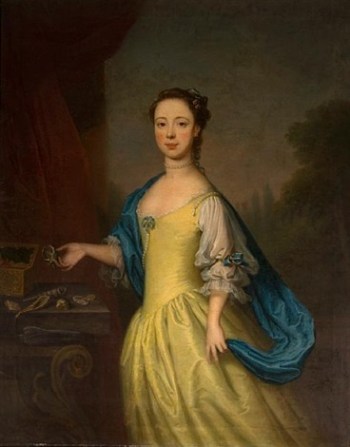
The last few decades have produced a number of studies devoted to the relationship between collecting and science, highlighting the relationship between a growing interest in botany and the fascination with the collection of naturalia, especially from the mid-sixteenth century onwards. These objects of natural origins aroused the admiration of enthusiasts and scientists alike. This passion for collecting reached various corners of society: the academic garden at Leiden University included an ambulacrum that housed dried plant specimens, fossils, and taxidermized animals (Egmond 2010); artists kept collections of rarities not only for use in the studio, but also to satisfy their personal curiosity (Rijks 2022); and Petronella de la Court’s shell collection was represented in her prized dollhouse, and mentioned several times in Georg Eberhard Rumphius’ seminal text D’Amboinsche Rariteitkamer (Powell-Warren 2023). Indeed, the interest in collecting even spawned its own genre of still life painting. The interest in such wonders of nature and the desire to possess them often went beyond the ‘simple’ collecting of specimens, dried samples, or shells obtained through exchanges and purchases. In fact, they could often go so far as to push those who possessed gardens or parks to engage in botanical experiments that led to attempts to grow tropical flowers and fruits even if it was in unfavourable climates and hostile terrain, and even to promote scientific expeditions to study and collect specimens in distant and exotic lands.
More recent scholarship has addressed several issues regarding collecting practices, the intersection between collecting and science, and even the participation of women in collecting. Among other ground-breaking works, the following spring to mind: Possessing Nature (Findlen 1994); Visible Empire: Colonial Botany and Visual Culture in the Hispanic Enlightenment (Bleichmar 2012); Objects in Motion in the Early Modern World (Bleichmar and Martin, eds.) 2015); Conchophilia (Bass et al. 2021); Rarities of these Lands (Swan 2021); and Women and the Art and Science of Collecting (Leis and Wells, eds.) 2021).
What remains un- or underexplored, however, is the extent to which—if at all—collecting and scientific experimentation and exploration were related in the early modern period. Thus, this workshop aims to focus attention on the collections of naturalia, on the one hand, and on the attempts to grow exotic plants in Europe and the adventurous journeys that the search for tropical plants and animals they encouraged, on the other. The organizers of this workshop, Maddalena Bellavitis and Catherine Powell-Warren, invite interdisciplinary contributions addressing the topic from the perspective of each discipline, from art history to material culture, from botany to gastronomy, from travel literature to cartography. Proposals that feature a female figure as protagonist are particularly encouraged, as the importance of the female contribution to this topic, although demonstrated, remains under-researched and under-published. To be considered for participation, please provide a single PDF document containing (in English) a short bio and a one-page proposal for a 20-minute presentation of original, unpublished research. Applications may be sent to maddalena.bellavitis@gmail.com by 15 January 2024. Participants will be notified at the beginning of February.
Call for Papers | Sacred, Funerary Spaces
From ArtHist.net:
Les Espaces du Sacré, 3rd Edition: Funerary Spaces
Sainte-Marie de la Tourette Convent, Eveux (near Lyon), 12 January 2024
Proposals due by 11 December 2023
The Spaces of the Sacred offers a space for reflection and debate for anyone who understands sacred spaces as laboratories for architectural, urban and landscape research. This definition includes places of worship, funerary and memorial spaces, as well as the urban spaces and landscapes that surround them. Defining sacred spaces as a laboratory means considering both their design and their potential transformation.
The ambition is to study contexts as well as project experiences, theories as well as practices, legacies, and mutations as well as orientations and prospects—in a few words, to build knowledge and culture, to learn, experiment, and develop operational tools to understand the present and enrich contemporary practices. As a complement to the historical and social studies developed around these issues, this study day places the architectural, urban, and landscape project at the heart of its concerns.
For this third edition, the day will focus on the theme of funerary spaces. We will be looking at the shape these spaces will take in the future. Several lines of thought are envisaged:
• What place do funerary spaces have in the city? Are these places dedicated to the dead destined to remain at a distance from the living? Can they be integrated into everyday life?
• Can the boundaries of the cemetery be rethought, if not completely transformed, so that the traditional perimeter wall becomes a space of permeability with the town and the landscape?
• Is it possible to envisage funerary spaces incorporating a mix of uses and opening up to other functions?
• Is the limitation of urban expansion, imposed by the ecological and climate crisis, not an invitation to rethink the density of cemeteries and design them vertically?
• Beyond questions of density, how should environmental issues lead us to rethink funeral architecture?
• Between the monumentality of the Pharaonic tombs on the Giza plateau and the horizontal spaces concealed behind their surrounding walls, how should we view the form and aesthetics of these places?
• If there are a good number of sites and places that have been converted into funerary spaces, shouldn’t we be looking at the conversion of funerary spaces?
The Spaces of the Sacred provides an opportunity to share ongoing or completed research projects and to bring together researchers working on these issues. The event is open to students, doctoral candidates, teachers, researchers, practitioners, and anyone interested in developing interdisciplinary exchanges across institutions and borders. Les Espaces du Sacré is a study day organised in partnership between the “Architectural Solutions for the Design and Reuse of Sacred Spaces” (SACRES) chair, the “Heritage, Theory and Creation” (HTC) master’s program, the Ecole nationale supérieure d’architecture de Lyon (ENSAL), the EVS-LAURe research laboratory and the Sainte-Marie de la Tourette convent (Eveux).
The conference will be in French, but proposals may also be submitted in English. Results of the selection process will be announced by email in December 2023. Researchers wishing to contribute to this day can send their proposal, including a title, an abstract (approximately 200 words), and a short biography, to sacres@lyon.archi.fr before 11 December 2023. The study day will be organise at the Sainte-Marie de la Tourette convent (Eveux) on Friday, 12 January 2024.
Scientific Direction
• Benjamin Chavardès, Arch. Dr., titulaire de la chaire SACRES, EVS-LAURe, Ecole nationale supérieure d’architecture de Lyon
• Bastien Couturier, Arch. Dr., chaire SACRES, EVS-LAURe, Ecole nationale supérieure d’architecture de Lyon
Scientific Committee
• Benjamin Chavardès, Arch. Dr., titulaire de la chaire SACRES, EVS-LAURe, Ecole nationale supérieure d’architecture de Lyon
• Julien Correia, Arch. Dr., chaire SACRES, EVS-LAURe, Ecole nationale supérieure d’architecture de Lyon
• Bastien Couturier, Arch. Dr., chaire SACRES, EVS-LAURe, Ecole nationale supérieure d’architecture de Lyon
• Charles Desjobert, architecte du patrimoine, frère dominicain, couvent Sainte-Marie de la Tourette
• Philippe Dufieux, Pr. HDR, chaire SACRES, EVS-LAURe, Ecole nationale supérieure d’architecture de Lyon
• Ricardo Gomez Val, Arch. Dr., Universitat Internacional de Catalunya
• William Hayet, Arch., chaire SACRES, EVS-LAURe, Ecole nationale supérieure d’architecture de Montpellier
• Kevin Jacquot, Dr., MAP-Aria, Ecole nationale supérieure d’architecture de Lyon
• Aïcha Sariane, Architecte DE, chaire SACRES, Ecole nationale supérieure d’architecture de Lyon
Call for Papers | Many Lives: Picture Frames in Context
From the AGO:
Many Lives: Picture Frames in Context
Art Gallery of Ontario, Toronto, 2–3 May 2024
Proposals due by 15 December 2023
Frame with Four Labours of Hercules: Hercules and the Nemean Lion, the Cerberus, the Cretan Bull, and the Ceryneian Hind, ca. 1700–25, boxwood, 21.5 × 18 × 2.5 cm (Toronto: AGO, The Thomson Collection at the Art Gallery of Ontario, 29347).
The Art Gallery of Ontario (AGO) invites submissions from conservators, curators, graduate students, and independent researchers for a two-day conference on the history and conservation of picture frames. The conference will take place at the AGO on Thursday, 2 May, and Friday, 3 May 2024.
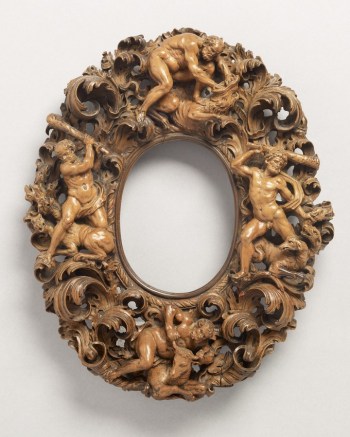
This conference is co-organized by the museum’s curatorial and conservation departments to promote inter- and multi-disciplinary dialogue. The AGO is home to an important collection of historic frames, and a project is currently underway at AGO to catalogue and conserve this collection to make the collection more accessible for study and use. In light of this project, the symposium aims to present current research that contextualizes frames in their many incarnations, including research on frame makers, framing traditions, frames’ afterlives, frame collections, pairings of frames to paintings, artists’ frames, the commercial history of framing, and related topics. Keynote lectures will be delivered by Lynn Roberts, acclaimed frame historian and publisher of The Frame Blog, and Hubert Baija, recently-retired longtime conservator of frames at the Rijksmuseum.
Applicants are requested to send a current CV and a 300-word abstract outlining the topic of a 20-minute paper to Julia.campbell-such@ago.ca by 15 December 2023.
Conference registration, accommodation in Toronto, and some meals will be covered for speakers. Further funding is available for travel for students and unaffiliated researchers. Special funding for one early-career scholar has been generously provided by the Decorative Arts Trust. Please indicate in your email with CV and abstract if you would like to apply for this funding.
Call for Papers | From the Low Countries to Sweden, 1400–1800
From ArtHist.net:
Art on Demand: Objects, Knowledge, and Ideas from the Low Countries in Sweden, 1400–1800
RKD – Netherlands Institute for Art History, The Hague, 8 May 2024
Proposals due by 20 December 2023
The risks and challenges of migration are of compelling interest today. Over the past thirty years, research on the migration of early modern artists and on cultural exchange between the Low Countries and Sweden has advanced steadily, and addressed many themes. The Dutch and Flemish artists’ communities in Stockholm, and the careers of individual artists at the Swedish court, in the service of the Swedish nobility or Dutch industrial entrepreneurs in particular, have received fresh attention, as has the history of the collecting of Netherlandish art in Sweden.
On 8 May 2024, a symposium at the RKD – Netherlands Institute for Art History will mark the launch of the heavily annotated and illustrated digital English language version of Horst Gerson’s chapter on ‘Sweden’ from his Ausbreitung und Nachwirkung der holländischen Malerei des 17. Jahrhunderts of 1942 (The Dispersal and Legacy of Dutch 17th-Century Painting). For historians of Dutch 17th-century painting, in 1942, Gerson’s study of the integration of Dutch art in Sweden was largely uncharted territory, although there were Swedish studies in the field. The launch of the translated and annotated version of Gerson’s text marks the perfect occasion to discuss, contextualize, and rethink his original ideas in the light of present and developing knowledge.
The organizers welcome unpublished contributions on a broad range of topics relating to Dutch and Flemish artists, artisans, and art production in Sweden and its then major territories. These include: painting, drawing, graphic arts, tapestry, jewellery, sculpture and architecture, collecting and the art market, the looting of Dutch and Flemish art during the Thirty Years’ War, as well as the contribution of Dutch and Flemish migrants to many forms of material culture.
Papers will be 20 minutes long, and might address the following themes and questions:
• Fresh approaches to the careers of practitioners from the Low Countries at the Swedish court, in the service of the Swedish nobility, Dutch entrepreneurs and in urban centres (including monographic studies)
• How did those interconnected fields function as hubs of cross-cultural exchange between individuals, and of production?
• Less-studied works by Dutch and Flemish artists and artisans who were active in Sweden between 1400 and 1800
• What were the workshop practices and techniques employed by Dutch and Flemish artists and artisans in Sweden, and how did these interact with local artistic traditions and impact on technical and art literature?
• What were the social networks and professional relationships that linked and supported Netherlandish and Swedish makers, art dealers and collectors?
• What was the market for Dutch and Flemish artistic goods in Sweden, and how did it develop over time?
Please submit a preliminary title, an abstract (maximum of 300 words), and a short CV to Rieke van Leeuwen (leeuwen@rkd.nl) before 20 December 2023. Speakers will be notified by 15 January 2024. Selected presentations will be considered for publication. Please contact the organizers with any questions concerning the conference and this call for papers.
Academic Committee
Alex Alsemgeest (Rijksmuseum, Amsterdam), Quentin Buvelot (Mauritshuis, The Hague), Angela Jager (RKD, The Hague), Rieke van Leeuwen (RKD, The Hague), Martin Olin (Nationalmuseum, Stockholm), and Juliette Roding (independent, previously Leiden University)
Call for Papers | The First Public Museums, 18th–19th Centuries
From ArtHist.net:
The Public of the First Public Museums: II. Literary Discourses, 18th–19th Centuries
Durham, 23–24 May 2024
Proposals due by 22 December 2023
The upcoming workshop The Public of the First Public Museums: II. Literary Discourses, 18th–19th Centuries is part of the research project Visibility Reclaimed: Experiencing Rome’s First Public Museums, 1733–1870 — An Analysis of Public Audiences in a Transnational Perspective (FNS 100016_212922).
Marking the second of three encounters, this workshop delves into the examination of literary discourses vital to understanding the experiences of early museum-goers. Travel literature has long represented a privileged source for investigating the origins of the first public museums and the practices of access to public and private collections in Europe. However, in the light of recent studies aimed at deepening the material history of the museum and the encounter of the public with the institutions, these sources deserve a closer scrutiny in both methodological and critical terms. As museums sought to define and engage their public, literature often became both a mirror and a mould, reflecting and shaping societal perceptions. With a spotlight on interdisciplinary and transnational approaches, the Durham workshop calls for a deeper probe into the visual and material realms of museums, emphasizing the interplay between literary discourses and artworks, collections, display, space, audiences ‘narrated’ in the museum and the evolving institutional norms of the 18th and 19th centuries.
Following the inaugural Rome session centred on institutional sources, the Durham workshop turns its gaze towards the rich tapestry of literary narratives with the aim of analysing them also in a comparative perspective with the primary sources. Periegetic literature—inclusive of travel accounts, artist correspondences, poetic endeavours, and Grand Tourist insights—stands as a testament to the artistic engagement with museum spaces over two defining centuries. At the heart of this exploration is the figure of the writer as a museum visitor. These writers, often esteemed poets and authors, are not just passive observers; their perspectives and critiques actively shape museum dynamics and public perceptions. Such literary visits, sometimes critical towards the museum as institution, have left a lasting impact, influencing subsequent generations of museum-goers. The writer’s dual role as a visitor and critic underscores the need to reassess these literary accounts in the broader context of museum studies.
From the poetic allure of lyrical evocations that captured the emotions of an ambient to ekphrastic descriptions which meticulously transform artworks into written words, the literature of the time offered a multifaceted view of the museum experience. Anecdotes and reported conversations in situ provided a window into the immediacy of exchanges, offering insight into contemporaneous views and reactions. Reviews in periodicals played a pivotal role, often influencing broader public perceptions, while a comparison between published and unpublished literary accounts unveils disparities in representation and reception. Erudite exploits presented readers with insightful perspectives, illustrating the convergence of art, history, and scholarly pursuits. Museums emerged as hubs of social interaction, where the intellectual and cultural elite converged but not only. The belletristic narratives wove tales that blurred the lines between fact and fiction. Each genre added a unique voice, contributing to a comprehensive and nuanced understanding of the period. We aim to broaden the horizon by drawing parallels with analogous documentation from other cultural spaces that the project seeks to study in comparative terms. This includes libraries, academies, galleries, private collections, villas, both ancient and modern monuments, archaeological sites, places of worship, theatres, ateliers, and more.
The questions presented below are designed to stimulate discussions and kindle in-depth explorations into the confluence of literature and the publics of first public museums:
1 How do literary works contribute to the construction of common themes and stereotypes associated with museum audiences?
2 How has literature influenced and shaped the evolution of the culture of the museum guides or cicerones over time, and to what extent has this literary impact altered visitor experiences and expectations in museums?
3 What are the origins, characteristics, and specificities of literary genres targeted towards museum-goers, especially concerning guides, itineraries of visits, and public lectures? How do they transform based on the evolution and variations of museum audiences themselves?
4 How do notions of time during a museum visit compare and contrast with the temporal dynamics of literary narration?
5 How do ekphrastic descriptions in literature enhance our comprehension of the visitor’s gaze when engaging with artworks, architecture, museum displays?
6 How do various literary genres, such as periegetic literature, artist correspondence, diaries and reviews, serve as either sources or models for understanding the museum experience and the role of audiences?
7 How do the narratives and insights from published literary accounts of museum visits compare and contrast with those from unpublished sources, and what implications arise from these distinctions in shaping our understanding of museum-going experiences?
8 How does the concept of a museum as a space to ‘read’ differ from its traditional perception as a space to ‘visit’, and what are the implications of this distinction in literary and museological discourses?
9 How does literature play a pivotal role in crafting horizons of expectation for museum-goers influencing their anticipation and reception of museum exhibitions?
10 How did differences in gender, religion, social status, and cultural background influence writers’ portrayals of museums, and what do these varied perspectives reveal about the socio-cultural dynamics in museum narratives?
Key points of consideration:
• To foster dialogue around the most recent research endeavours, we especially encourage submissions from doctoral candidates and early-career researchers, who are currently delving into original themes and sources resonant with the seminar’s objectives.
• Preference will be given to applications showcasing interdisciplinary research approaches. This encompasses the melding of art history with literature, visual studies, and beyond. Proposals that venture beyond the traditional realms of art and architectural history, such as linguistic history, literature, tourism studies, and geography, are particularly sought after.
• Submissions emphasizing digital humanities are highly regarded. This includes, but is not limited to, cataloguing projects, databases concerning the relating in particular to literary sources concerning the visiting experiences and audiences of the first public museum and comparisons with other institutions and places (e.g., libraries, academies, galleries, villas, ancient and modern monuments).
• We highly value case studies adopting transnational and/or transregional perspectives. Proposals exploring underrepresented geographies within the sphere of Museum Studies are particularly encouraged.
• The primary focus of this workshop is on the 18th and 19th centuries. However, topics on the 17th and the early 20th century are also welcome, provided they maintain a strong engagement with or connection to these two centuries.
Contributors are invited to submit an abstract (max. 2,000 characters, including spaces) accompanied by a brief CV (max. 1,500 characters, including spaces) and a minimum of three keywords to: visibilityreclaimed@gmail.com.
• Accepted languages: Italian, English, French, Spanish
• Deadline for abstract submission: 22 December 2023
• Notification of acceptance: 10 January 2024
For further information, please contact the organising secretaries: Gaetano Cascino and Lucia Rossi at visibilityreclaimed@gmail.com.
Direction and scientific coordination
Carla Mazzarelli (Università della Svizzera italiana, Accademia di architettura di Mendrisio, Istituto di storia e teoria dell’arte e dell’architettura), carla.mazzarelli@usi.ch
Project Partners
Giovanna Capitelli (Università di Roma Tre), Stefano Cracolici (Durham University), David Garcia Cueto (Museo del Prado), Christoph Frank (Università della Svizzera italiana), Daniela Mondini (Università della Svizzera italiana), Chiara Piva (Sapienza Università di Roma)
Call of Papers | Rimini in the 18th Century
From ArtHist.net (which also includes the Call for Papers in Italian). . .
Rimini in the 18th Century: Between Art, Science, Antiquarianism, and the Grand Tour
Rimini nel Settecento: Tra arte, scienza, antiquaria e Grand Tour
Online / Università degli Studi di Bologna, Campus di Rimini, 26 January 2024
Proposals due by 23 December 2023
During the eighteenth century, Rimini opened to Europe, becoming a destination for artists, travelers, and curious intellectuals. These visitors came to discover the archaeological and artistic testimonies of the city and to observe its rediscovered natural realities. A center of “European local learning” (Raimondi) in dialogue with Enlightenment Europe, Rimini became a necessary stop of the Grand Tour to and from Rome along the Adriatic coast. Science, art, architecture, and erudite interests acted as catalysts to spotlight the city.
Throughout the eighteenth century, Rimini was in constant relationship with Rome and Bologna, and it thrived thanks to the contribution of many scholars and scientists, including the physician Giovanni Bianchi (1693–1775), refounder of the Lincei in Rimini and papal archiatra of honor, together with his most famous disciples (such as Giovanni Antonio Battarra, Giovanni Cristofano Amaduzzi, Gaetano Marini, Giuseppe Garampi), and the architect Gianfrancesco Buonamici (1692–1759), an antiquary and man of letters, an academician of honor of the Accademia Clementina in Bologna and the Accademia di San Luca in Rome.
This international workshop will investigate the different aspects of Rimini culture and the impact of foreigners on the coastal city through original, unpublished papers. The focus of this study will encompass the testimonies of travelers and amateurs, the role of architects and artists in the exchanges between Italy and Europe. If you would like to participate in the workshop by presenting a paper (20–25 minutes), please send an abstract (as a PDF file) to ilaria.bianchi5@unibo.it and valeria.rubbi2@unibo.it before 23 December 2023. The document should contain the title of your presentation, your name and affiliation, a 300-word abstract, and a brief CV. Applicants will be notified on the acceptance of proposals by 8 January 2024.
Call for Papers | Unfolding the Coromandel Screen
Coromandel Screen, Kangxi reign (1662–1722), Qing dynasty, carved lacquer, 258 × 52 × 3.5 cm
(Art Museum, The Chinese University of Hong Kong, 2001.0660)
◊ ◊ ◊ ◊ ◊
From the City University of Hong Kong, as posted at ArtHist.net:
Unfolding the Coromandel Screen
Online and and in-person, City University of Hong Kong, 22–25 November 2024
Organized by Wang Lianming with Mei Mei Rado
Proposals due by 20 January 2024
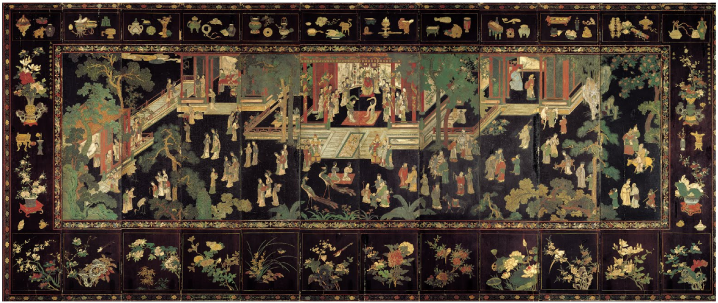
With the generous support of the Bei Shan Tang Foundation, the Department of Chinese and History at City University of Hong Kong will host a two-part academic event titled Unfolding the Coromandel Screen in celebration of the department’s tenth anniversary. This four-day event will bring together an international group of art historians, museum curators, conservators, collectors, and global historians to delve into various facets of the Coromandel screen and its intricate histories of interrelations with paintings, prints, decorative arts, palatial and interior designs, global maritime trade, and the fashion industry. The conference, organized by Wang Lianming (City University of Hong Kong) in collaboration with Mei Mei Rado (Bard Graduate Center, New York), will take place on-site at City University of Hong Kong and via Zoom on November 22–23. The keynote speech will be delivered by Jan Stuart, the Melvin R. Seiden Curator of Chinese Art at the Smithsonian National Museum of Asian Art, Washington D.C. Following the conference, participants will be invited to join a two-day traveling seminar from November 24 to 25, visiting lacquer and conservation workshops and museum collections in and around Guangzhou.
Context and Scope
During the second half of the seventeenth century, the production of the Coromandel screens, also known as kuancai (‘carved polychrome’), thrived along China’s southeast coast. These screens gained immense popularity domestically and in European markets, fostering connections between regional artisans, merchants, and prominent European figures such as royalty and nobility. In the last two decades of this century, the Coromandel screens emerged as one of China’s most frequently exported commodities, rivaling porcelain and challenging Japanese lacquerware exports. Their significance extends far beyond the general perception of being merely mass-produced craftwork of subpar quality. The conference will focus on two interconnected yet distinct lines of development: the screens encapsulated social cohesion, domestic networks, and transoceanic encounters while simultaneously becoming entwined in global histories that positioned them as coveted commodities, commemorative gifts, sites of maritime connectivity, and evocative artistic expressions originating from the Orient. Following this view, three key areas of investigation are at the forefront of discussions:
A) Transported Visions and Spatial Mobility unravels the role of the Coromandel screens in facilitating visual communication during the early modern world. Drawing inspiration from Aby Warburg’s concept of the ‘Image Vehicle’ (Bilderfahrzeuge, 1932), this inquiry delves into the dynamic and creative exchange of ideas, compositional elements, and ‘pictorial formulas.’
B) Inscribed Surfaces and Social Cohesion delves into the societal aspects of the Coromandel screens within domestic contexts. They were widely circulated as inscribed gifts among middle- and low-ranking, yet affluent, Qing officials stationed on the frontier. Their indexical nature provides a distinct perspective to unravel the interconnected social networks, political gatherings, interactions among officials and merchants, and intertextuality within and across regions.
C) Deconstruction and (Re)Framing: The Afterlives encompasses a wide range of transcultural practices applied to Coromandel screens after their removal from their original context. This scope analyzes and conceptualizes the procedural aspects of integrating Coromandel screens into new displays, such as European palatial interiors, marquetry furniture, and new works of art created by fragmenting, reassembling, refurbishing, and (re)appropriating lacquer panels.
Proposals may address, but are not limited to, the following topics:
• The mobility, intermingling, and dissemination of certain pictorial formulas through the Coromandel screen, such as the ‘Han Palace’ (estate celebration) or ‘Wenji Returning to Han’
• The interplay between various types of screens, porcelain, lacquerware, carpets, wallpaper, prints, furniture, and other decorative arts
• The interplay between various formats, materiality, and techniques along China’s southeast coast
• Regional divergences in terms of style, motif, lacquer and carving techniques, overall designs, etc.
• Recent discoveries in museum conservation
• The entangled histories with other screens produced in East Asia, such as the Nanban screen, the gilt biombo produced in Macao, and the painted screen in Korea
• Inscriptions, gift-giving, official-merchant interaction, political manifestos, social cohesion, and practices, etc.
• Sawing, reassembling, refurbishing, and (re-)appropriating lacquer panels in new contexts, and other framing practices
• Imitation and transmedial practices, such as leather imitation of the Coromandel screen
• The Coromandel screen’s entanglement with Japonisme painting, haute couture, and the fashion industry
• Theoretical discourses on the Coromandel screen’s valence in Orientalism, transculturalism, and global (art) history, etc.
Proposals from all disciplines are welcome. Please send an abstract of no more than 300 words, along with a brief bio, to unravelingcoromandel@googlemail.com by 20 January 2024. Presentations in English or Chinese (with pre-translated lecture notes required) should not exceed 20 minutes. The proposals accepted will be announced in early April 2024.
The Bei Shan Tang Foundation, in conjunction with the Department of Chinese and History of City University of Hong Kong, will cover the costs of lodging and travel. We also encourage speakers who can fund their own travel to participate. For further inquiries, please contact lianming.wang@cityu.edu.hk.
The organizers envision publishing selected conference papers in an edited volume.
Advisory Board
Ching May Bo, City University of Hong Kong
Burglind Jungmann, UCLA
Mei Mei Rado, Bard Graduate Center, New York
Anton Schweizer, Kyushu University
Wang Lianming, City University of Hong Kong
Xu Xiaodong, CUHK Art Museum










 Enfilade
leave a comment