Call for Papers | HECAA Session at UAAC, 2018
Thanks to Christina Smylitopoulos, who is again coordinating a HECAA session at this year’s UAAC Conference! Details and a full list of panels (68 in all) are available here»
◊ ◊ ◊ ◊ ◊
Universities Art Association of Canada / l’association d’art des universités du Canada
Department of Fine Arts, University of Waterloo, Ontario, 25–27 October 2018
Proposals due by 1 May 2018

Photo: Wikimedia Commons, Jason Paris, November 2011.
HECAA Open Session
The objective of this society is to stimulate, foster, and disseminate knowledge of all aspects of visual culture in the long eighteenth century. This HECAA open session welcomes papers that examine any aspect of art and visual culture from the 1680s to the 1830s. Special consideration will be given to proposals that demonstrate theoretical or methodological innovations. Please email proposals for 20-minute papers (300 words) and a short biography (150 words) to Dr. Christina Smylitopoulos (University of Guelph), csmylito@uoguelph.ca.
Call for Papers | CSECS 2018, Niagara Falls
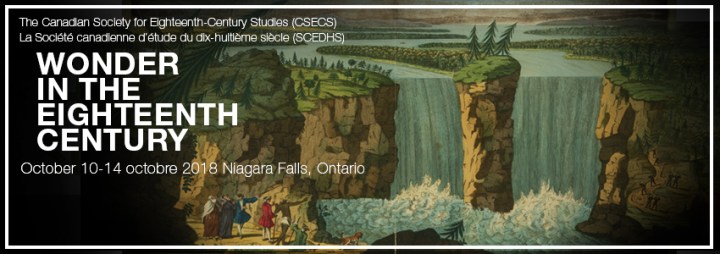
While I rarely re-post Call for Papers, I would note with this year’s CSECS that the deadline has been moved to April 15. There’s still time! –CH
Call for Papers | Portraiture
From H-ArtHist:
Portraiture: an Interdisciplinary Conference
Centre for Visual Arts and Culture, Durham University, 13–15 July 2018
Proposals due by 1 March 2018
The study of portraiture is beginning to come into its own now that old assumptions about the low status of the genre have been challenged and contextualised. The ubiquity and diversity of portraits means that they can be used as evidence to address a wide range of questions, while the very idea ‘portrait’ is immensely rich. The conference is designed to open up fresh perspectives on a potent form of visual culture that is of continuing importance yet unevenly distributed in time and place.
Proposals may deal with any period and location. Papers are especially welcome that explore the interdisciplinary potential of studying portraiture and that address the following themes:
• The ways portraits create, sustain and comment on occupational identity
• Portraits and/in institutions
• ‘Portrait’ as an idea and its metaphorical dimensions
• Portraits where the face is not present
• Portraiture in the North East of the UK
• Comparative approaches to portraiture, which might focus on place, time, occupation, race, social status, and/or gender, for example.
We invite contributions of short papers for the conference. Please send an abstract—maximum 250 words—together with a one page CV by 1 March 2018 to cvac@durham.ac.uk and include ‘portraiture conference’ in the subject line. Please note presenters of short papers will need to cover their own costs, which will be kept as low as possible. There will be no conference fee for speakers. This conference follows the summer school Visual Intersections 3 (11–13 July). Early career researchers are especially welcome at both events.
Keynote Speakers: Professor Elizabeth Cowling and Professor Viccy Coltman
Call for Papers | The Architecture of James Gibbs
As noted in Salon, the newsletter of the Society of Antiquaries of London, issue 401 (20 February 2018) . . .
The Architecture of James Gibbs
Society of Antiquaries of London, 29 September 2018
Proposals due by 28 February 2018
The Georgian Group is organising a day-long symposium on James Gibbs (1682–1754), to be held at the Society of Antiquaries at Burlington House. The symposium will reassess the work of one of the most important, but still underestimated, British architects of the 18th century, responsible for the church of St Martin-in-the-Fields in London and the Radcliffe Camera in Oxford, many other commissions throughout the British Isles, and one of the most important 18th-century architectural pattern books. Proposals are invited for 20-minute papers based on original research on any aspect of Gibbs’s work, including his training, his practice, his patrons and clients, and his influence on contemporary and subsequent architecture and design (including urban, garden, and interior design) both in Britain and within the British diaspora. Please send abstracts of no more than 250 words and a CV to Geoffrey Tyack FSA (Kellogg College, Oxford, Editor of The Georgian Group Journal: geoffrey.tyack@kellogg.ox.ac.uk) by the end of February 2018. Notifications of acceptance will be sent before the end of March, and further details will follow soon afterwards.
Call for Papers | SAHGB Architectural History Workshop, 2018
Call for Participation from SAHGB:
The Society of Architectural Historians of Great Britain
Workshop for Doctoral Students and Early Career Scholars
The Gallery, London, 17 March 2018
Proposals due by 16 February 2018
The Society of Architectural Historians of Great Britain (SAHGB) invites proposals for the 2018 Architectural History Workshop. This is our annual event for postgraduate students and early career scholars to share and develop their ideas; it aims to provide an informal space away from your own institution where you can discuss, debate, practice and enjoy the company of like-minded researchers working within the history of the built environment, broadly conceived.
We invite participation in a number of ‘lightning’ rounds, where contributors are asked to speak for no more than ten minutes in any appropriate format that engagingly explores and presents your research. This research can be at any stage from a research proposal that you wish to talk about, issues arising from your research, final work as you write-up, post-doctoral reflections, or anything in-between. Speakers from previous events are particularly welcome to update us on the progress of their work.
The event is limited to postgraduate students (full-time or part-time) and early career scholars (those who have completed their PhDs within the last 5 years). We particularly encourage participation from:
• Masters students considering doctoral study
• Doctoral students in relevant disciplines
We are interested in all periods and regions of study, and the full range of methodological approaches to architectural history. The society welcomes submissions of work relating to the history of the built environment from all disciplines, including but by no means limited to:
• Architecture
• Art History
• History (including urban, social and cultural history)
• Archaeology
• Anthropology
• Geography
On as diverse a range of themes as possible, including:
• Histories of design
• Histories of planning
• Histories of construction
• Histories of buildings in use
• Histories of interiors and interior design
• Histories of practice and professionalism
Alongside presentations, the workshop will feature a session on ‘Careers in Architectural History’ presented by a panel of invited speakers from museums, heritage bodies, architectural practices, and more. Speakers will be announced in the near future. The keynote speaker will be the Chairman of the SAHGB, Professor Anthony Geraghty (University of York).
If you are interested in making a contribution, please complete the submission form on our website. The closing date for applications is Friday, 16 February 2018. The result of all applications will be communicated by Tuesday, 20 February, with confirmation from the speakers requested by Thursday, 22 February. The workshop will take place on Saturday, 17 March at The Gallery, 70, Cowcross Street, London, EC1M 6EL. No funding is available. A contribution of £10 is requested from all attendees to cover costs (inclusive of all catering). Details of the 2017 workshop can be viewed on the Society’s website. For further information or clarification of any sort please contact the conference organizers at ahw2018@sahgb.org.uk.
Call for Papers | Artistic Mobility and Exchange in Eastern Europe
From the posting at H-ArtHist, which also includes the German and Polish versions:
Routes and Contact Zones: Artistic Mobility and Exchange in Central Eastern and North Eastern Europe from the Middle Ages to the Present
Munich, 11–13 October 2018
Proposals due by 5 March 2018
The mobility of people, objects, and ideas determined the art scene in Central Eastern and North Eastern Europe for centuries and promoted transregional exchange. In contrast, art historiography in the countries of these regions has long been influenced by nationally defined political concepts that posit clearly distinct cultural developments. If, however, art is understood as a product of cross-border, transcultural exchange, then any scholarly investigation must also consider the transfer routes and the meeting places found along them.
Trade routes by sea and by land and the networks of rail and contemporary airlines all continue to promote artistic exchange. They provide the infrastructure for the mobility not only of different actors (artists, art patrons, art dealers), but also of works of art and materials and indeed of ideas, fashions, technologies, and knowledge. Some of these road networks have developed into permanent routes of cross-border artistic communication with fixed stations, where, for example, the art trade is concentrated. However, actors and objects have not always been able to operate on the tried and tested paths: mobility and communication have been temporarily hampered by war, by political or natural blockades; the search for alternatives has then sometimes led to the emergence of new places of exchange and to a shifting of the relationship between the ‘center’ and the ‘periphery’.
This network, which is both geographical and communicative, carries the movements of both artists and works of art, and the nodes at which its transregional exchanges are concentrated play a key role. Commercial and residential cities, royal and noble courts, the offices of merchants, the studios of artists, academies, the salons of the intellectual elites, museums, galleries, and art dealer depots act in very different ways as contact zones for the arts. As such, they inspire transregional and transnational collaborations and the exchange of artistic ideas and models, as well as the transfer of knowledge, materials and techniques, and contribute to the emergence of new, hybrid artistic creations that reflect the diversity of cultures involved in their genesis. However, contact zones can also become the scene of conflict and competition between foreign and domestic artists or between various interest groups. The map of these meeting places can moreover vary according to alterations in social and economic conditions, which are in turn reflected in the changing patterns of transnational cultural transfers in space and over time.
The conference will focus on both the well-known and the hitherto less well-researched routes that led to and into Central-Eastern and North-Eastern Europe and which contributed to artistic mobility. Several questions arise: Which (infra)structures, actors and personal networks support mobility and the consequent transnational communication, and which ones block them? Which traditional methods (e.g. qualitative, source-based case analysis) and innovative methods (e.g. quantitative, computer assisted geovisualisation and network analysis) can provide new insights into the pathways of artistic transfer?
In addition to the well-known names (e.g. Prague, Krakow, Vilnius), we shall examine the hitherto less explored loci of artistic exchange in Central-Eastern and North-Eastern Europe, and question formerly dominant perspectives on ‘centers’ and ‘peripheries’. Both case studies and comparative studies documenting and analyzing the exchange processes and their impact on art production are welcome. In addition, attention should be paid not only to the traditional main actors of the art scene (artist, client), but also to the seemingly secondary ‘supporting actors’, such as merchants, material suppliers, (art) agents and dealers, or curators.
Although the geographical focus of the conference is on Central-Eastern and North-Eastern Europe, transregional perspectives addressing artistic exchange of these regions with / in other art centers within and beyond Europe are very welcome. The historical framework—from the Middle Ages to the present day—is deliberately broad to encourage synchronous and diachronic comparisons.
The 26th session of the Working Group of German and Polish Art Historians and Conservators, also designated the Homburger Colloquy of the Böckler-Mare-Balticum Foundation (Bad Homburg), is organized by the Institute of Art History of the Ludwig-Maximilian-University in Munich at the Central Institute for Art History in Munich.
Conference languages are German and English. In addition to the 20-minute papers, the format of the so-called information forum provides an opportunity for briefer, 10-minute presentations of current individual or institutional research projects on art history and monument preservation dealing with topics of cultural heritage in Central-Eastern and North-Eastern Europe.
Please send in your proposal of paper or short presentation (max. 2000 characters), together with a short CV (max 1000 characters) by 5 March 2018. Please include both your email and postal address, as well as information on your current affiliation, to Prof. Dr. Aleksandra Lipinska, Institut für Kunstgeschichte, LMU München, aleksandra.lipinska@kunstgeschichte.uni-muenchen.de.
Programme Committee
Aleksandra Lipińska, Institut für Kunstgeschichte, Ludwig-Maximilians-Universität München
Ulrike Nürnberger, Böckler-Mare-Balticum-Stiftung, Bad Homburg v.d. Höhe
Beate Störtkuhl, Arbeitskreis deutscher und polnischer Kunsthistoriker und Denkmalpfleger
Call for Papers | (Re-)Forming Sculpture

Installation view of Lynda Benglis at The Hepworth Wakefield, 6 February – 1 July 2015
Courtesy the artist and Cheim & Read, New York
◊ ◊ ◊ ◊ ◊
From the Association for Art History:
(Re-)Forming Sculpture
University of Leeds and The Hepworth Wakefield, 26–27 June 2018
Proposals due by 16 March 2018
Call for Papers for the Association for Art History’s 2-day Summer Symposium organised by the Doctoral and Early Career Research Network.
Keynote Speakers
• Martina Droth, Deputy Director of Research, Exhibitions, and Publications | Curator of Sculpture, Yale Center for British Art
• Rebecca Wade, Assistant Curator (Sculpture), Leeds Museums and Galleries, based at the Henry Moore Institute
This Association for Art History Summer Symposium is a two-day annual conference which will highlight current doctoral and early career research in the field of sculpture, within its widest art historical remits. Held between the School of Fine Art, History of Art and Cultural Studies at the University of Leeds, and The Hepworth Wakefield, this conference hopes to unite the academic and curatorial disciplines of sculptural studies. As a socio-cultural space Leeds is celebrated for the study, production and display of sculpture. Artists such as Henry Moore and Barbara Hepworth shared a gratitude to Leeds as a place of noteworthy influence on their work, and succeeded in leaving behind a significant legacy. A sustained interest in sculptural studies has continued, demonstrated by the formation of the Henry Moore Institute as the Henry Moore Centre for the Study of Sculpture within Leeds City Art Gallery in 1982, alongside associated initiatives including the Henry Moore Sculpture Studio, Dean Clough (1989), and the MA in Sculpture Studies at University of Leeds in 1990. In more recent times, 2011 witnessed the opening of the The Hepworth Wakefield, and in 2013 a partnership of the Sculpture Triangle was established between the Henry Moore Institute, Leeds Art Gallery, The Hepworth Wakefield and Yorkshire Sculpture Park.
Looking to the future, how can we best reconcile sculptural, scholarly, and curatorial practices, within Britain and further afield? This conference aims to continue to re-form previous narratives that have focused on monumental, figurative and free-standing sculpture, created in traditional ‘higher’ materials of plaster, marble, or bronze. Increased and expanded research around sculpture is embracing a re-thinking of materiality, aesthetics, the role played by gender and identity, and its nature as a critical form of representation. Since a shift towards more conceptual art practices in the 1960s onwards, and the associated opening up of medium categories and critique of the high modernist art object, scholarship has reassessed previous assumptions of what constitutes sculpture, influenced by Rosalind Krauss’s seminal work “Sculpture in the Expanded Field” (1979). Moreover, scholars have concentrated on the rethinking of the sculptural object, its siting and context, with Alex Potts’s phenomenological study of sculpture from the eighteenth to the twentieth century, The Sculptural Imagination: Figurative, Modernist, Minimalist (2000), and more recently in Penelope Curtis’s exhibition Sculpture in Painting (2009) at the Henry Moore Institute. Additionally, scholarship has taken into account the intersections between sculpture and the decorative arts, as demonstrated by the exhibition organized by Martina Droth between the Henry Moore Institute and the J. Paul Getty Museum entitled Taking Shape: Finding Sculpture in the Decorative Arts (2008–09). Considering the sculptural aspects inherent within painting, architecture, decorative arts, photography, and film, how might we think differently about sculpture as an art historical category in its own right? For example, how do wider notions of sculpture and its relationship with other art forms intersect with discourses relating to histories of collecting, display and place-making? How best can sculpture be re-formed (re-thought?) within academic and curatorial disciplines?
In light of these questions, this conference hopes to re-consider the boundaries and hierarchies of sculpture within art history and visual culture, broadening how it is understood in terms of its medium, form, materiality, and cultural significance. We welcome proposals for 20-minute papers which explore these themes or which address any other aspect of re-forming sculpture, from antiquity to the modern day. The Summer Symposium is organised by the Association for Art History’s Doctoral and Early Career Research Network. The 2018 organisers are Caroline McCaffrey-Howarth (University of Leeds) and Clare Nadal (University of Huddersfield/ The Hepworth Wakefield).
Topics can include but are not limited to
• The significance and legacies of sculptural heritage in Leeds and Yorkshire
• Hierarchies of sculpture as an art historical category
• Sculptural aspects of decorative arts, architecture, photography, painting, and film
• Non-traditional mediums for sculpture, e.g. porcelain, 3-d printing, light or digital sculpture, ephemeral or recycled material, such as dissolving clay, etc
• Histories of collecting or displaying sculpture
• Formations of private or public sculpture collections
• How sculpture is curated or framed in the modern museum or within an outdoor environment
• Practice-led or practice-based approaches to sculpture
To propose a paper, please send a Word document with your contact information, paper title, an abstract of 300 words, and a short biographical note. The submission of abstract is open to current doctoral researchers and early career researchers within 3 years of receiving their doctorate. Proposals should be sent to reformsculptureforarthistory@gmail.com by 16 March 2018.
Call for Papers | Digital Humanities for Academic and Curatorial Practice
Call for Papers from the Rome Art History Network (RAHN). . .
Digital Humanities for Academic and Curatorial Practice / per la pratica accademica e curatoriale
Biblioteca Angelica di Roma and the American Academy in Rome, 23–24 May 2018
Proposals due by 1 March 2018
The digital humanities have challenged all disciplines of art history to engage with new interdisciplinary methodologies, learn new tools, and re-evaluate their role within academia. In consequence, art historians occupy a new position in relation to the object of study. Museums have been equally transformed. The possibilities of creating virtual realities for lost/inaccessible monuments poses a new relationship between viewer and object in gallery spaces. Digital humanities interventions in museums even allow us to preserve the memory of endangered global heritage sites which cease to exist or are inaccessible (celebrated examples including the lost Great Arch of Palmyra reconstructed with a 3D printer). Curatorial practices are now trending towards a sensorial and experiential approach.
Is the role of digital humanities—in academic as well in museum settings—to ‘reveal’ the object itself, through empirical display of extant material, or to ‘reconstruct’ something of the original experience of the object to engage spectators? Can we propose a reconciliation between these two ‘poles’?
The Sixth International Day of Doctoral Studies promoted by RAHN aims to investigate the role of digital humanities by promoting a dialogue between the protection of cultural heritage sites, museology, the history of art, and the digitalization of ‘big data’. We are accepting papers that engage with particular dimensions of the dichotomy between ‘Revealing’ and ‘Reconstructing.’ Possible topics include
• How can the Digital Humanities preserve our global heritage?
• Do Digital Humanities interventions make historical material more accessible to non- specialists?
• What are the moral obligations of the Digital Humanities within the museum context?
• How is Digital Humanities changing the practice of Art History? Do they provide a more empirical alternative to connoisseur/style-based approaches? The call for papers is open to art and architectural history graduate students and those working in the field of Digital Humanities.
We invite candidates to submit 15-minute reports that, by means of study cases or theoretical observations, point to the centre of this methodological practice. The conference will take place in Italian and English, and papers will be accepted in both languages. Proposals must be submitted in abstract form (up to 400 words) together with a short CV (max. one page) by the 1st of March to romearthistorynetwork@gmail.com. The conference will take place on the 23rd and 24th of May 2018 at the Biblioteca Angelica di Roma and American Academy in Rome.
Curated by Angelica Federici (Rome Art History Network / University of Cambridge) and Joseph Williams (American Academy in Rome / Duke University)
Coordinated by Matteo Piccioni (Rome Art History Network/ Sapienza Università di Roma )
Previous Editions
• In situ / Ex situ: L’arte di esporre l’arte: relazioni nel contesto spaziale tra arte e architettura (27–28 April 2017)
• Now or (n)ever: I tempi dell’opera: temi, teorie e metodi nella storia dell’arte (28–29 April 2016)
• Tra assenza e presenza: Opere perdute e frammentarie (19–20 March 2015)
• Sopravvalutata, sacrosanta, scandalosa? La figura dell’artista nella storia dell’arte oggi (3–4 April 2014)
• La storia dell’arte tra scienza e dilettantismo: Metodi e percorsi (24 April 2012)
Call for Papers | Architectural Patronage in an Age of Reform
From H-ArtHist:
Architectural Patronage in an Age of Reform, 1760–1840
Lambeth Palace Library, London, 6–7 September 2018
Proposals due by 11 March 2018
2018 marks the bicentenary of the passing of the Church Building Act, the first nation-wide non-military exercise of architectural patronage by central government in England and Wales. To commemorate and contextualise this event and place it in global comparative perspective, there will be an international conference to be held at Lambeth Palace Library on 6–7 September 2018.
Keynote speakers represent the international scope of the conference:
• Shirine Hamadeh (Koç University, Turkey), author of The City’s Pleasures: Istanbul in the Eighteenth Century (Seattle and London: The University of Washington Press, 2007)
• Freek Schmidt (Vrije Universiteit Amsterdam), author of Passion and Control: Dutch Architectural Culture of the Eighteenth Century (Farnham: Ashgate, 2016)
• Henriette Steiner (University of Copenhagen), author of The Emergence of a Modern City: Golden Age Copenhagen 1800–1850 (London and New York: Routledge, 2014)
• Richard Wittman (University of California at Santa Barbara), author of Architecture, Print Culture, and the Public Sphere in Eighteenth-Century France (London and New York: Routledge, 2007)
20-minute papers are invited on all aspects of architectural patronage in the period 1760–1840, in Great Britain and beyond. Priority may be given to papers addressing issues of State patronage at national or local level and/or papers that look beyond case studies of individual buildings/patrons. We are also very keen for speakers to represent a range of disciplines, including history, literature, music, performance studies etc.
Questions to be addressed include, but are not limited to
• Role of new and/or non-traditional groups as patrons (professional bodies, artisan organisations, gentlemanly societies, women etc)
• Patronage of new building types
• New models of patronage (subscriptions, tontines, new forms of taxation etc)
• The role of patronage in the emergence of general contracting
• The patron/architect relationship
• Communication and decision-making among corporate patrons
• Architectural patronage as discourse and the significance of architectural patronage to those involved
• Patronage networks
• Architectural patronage in colonial contexts and/or beyond the Anglophone world
Abstracts of 300 words plus CV should be sent to Alexandrina.Buchanan@liverpool.ac.uk by 11 March 2018. The conference is supported by an AHRC Networking Grant, Architecture and Society in an Age of Reform, 1760–1840. The University of Liverpool would also like to acknowledge the support of Lambeth Palace Library and the Georgian Group.
Call for Papers | Sequitur, Issue 4 (Spring 2018): Extra
Sequitur 4.2 (Spring 2018): Extra
Submissions and Proposals due by 12 February 2018
The editors of Sequitur, a graduate student journal published by the Department of History of Art & Architecture at Boston University, invite current graduate students in art history, architecture, fine arts, and related fields to submit content on the theme of Extra for the Spring 2018 issue.
The concept of Extra can positively or negatively imply an unexpected leftover surprise or the added necessary ingredient after a deadline, limit, quality, or quantity has been reached. In the context of art making, the extra, the extraneous, and the accessory can provide much-needed solutions, present unanticipated problems, or symbolize intentional gestures meant to charm, endear, appease, or potentially destroy. As a frame for art historical inquiry, lastly, the concept of ‘extra’ might shed light on the eccentricities of artists, architects, subjects, patrons, collectors, or institutions—whether reflected in the style and content of art and architecture or their display and reception.
Possible subjects may include (but are not limited to): architectural additions; eccentric subject matter or makers; modifications to structures or works of art; accessories in fashion and design; outsider art, the avant-garde; the cult of personality; the additive, the accumulative, augmentation, the overdone, and the sensational; the sequential and/ or its disruption; and temporality studies. We welcome submissions addressing art, architecture, visual culture, or material culture from all time periods (ancient to contemporary) and geographical areas (including Asia, the Americas, and Africa). We encourage submissions that take advantage of the online format of the journal. Previous issues can be found here.
Founded in 2014, SEQUITUR is an online biannual scholarly journal dedicated to addressing events, issues, and personalities in art and architectural history. SEQUITUR engages with and expands current conversations in the field by promoting the perspectives of graduate students from around the world. It seeks to contribute to existing scholarship by focusing on valuable but oft-overlooked parts of art and architectural history.
We invite full submissions for the following pieces:
• Featured essays (1500 words) — Essays must be submitted in full by the deadline below to be considered for publication. Content is open and at the discretion of the author, but should present original material that is suitable to the stipulated word limit. Please adhere to the formatting guidelines available here.
• Visual essays — An opportunity for M.Arch. or M.F.A. students to showcase a selection of original work. The work must be reproducible in a digital format. Submissions should include jpegs of up to ten works, and must be prefaced by an introduction or artist’s statement of 250 words or less. All images must be captioned and should be at least 500 DPI.
We invite proposals (200 words max) for the following pieces :
• Exhibition reviews (500 words) — Exhibitions currently on display or very recently closed are especially sought.
• Book or exhibition catalogue reviews (500 words) — Reviews of recently published books and catalogues are especially sought.
• Interviews (750 words) — Preference may be given to those who can provide audio or video recordings of the interview.
• Field reports/Research spotlights (500 words) — This is an opportunity for students conducting research to summarize and share their findings and experiences in a more casual format than a formal paper.
All submissions and proposals are due February 12.
• Please direct all materials to sequitur@bu.edu.
• Text must be in the form of a Word document, and images should be sent as jpeg files.
• Please provide a recent CV.
• Please include ‘SEQUITUR Spring 2018’ and type of submission/proposal in the subject line, and your name, institution and program, year in program, and contact information in the body of the email.
Authors will be notified of the acceptance of their submission or proposal no later than February 23 for May 1 publication. Please note that authors are responsible for obtaining all image copyright releases prior to publication. If you have any questions, please do not hesitate to contact the SEQUITUR editors at sequitur@bu.edu. We look forward to receiving your proposals.
The SEQUITUR Editorial Team
Joseph, Alison, Kimber, Lauren, & Kelsey










leave a comment