Call for Papers | Portraiture and Biography

Left: James Boswell by William Daniell, after George Dance, published 10 April 1802 (28 April 1793), NPG D12117; right: Samuel Johnson by Thomas Trotter, published by George Kearsley, published 1782, NPG D13814.
◊ ◊ ◊ ◊ ◊
From the Paul Mellon Centre:
Portraiture and Biography
London 29–30 November 2018
Proposals due by 1 February 2018
An international conference sponsored jointly by the Paul Mellon Centre for Studies in British Art and the National Portrait Gallery.
Biography has always haunted the study of portraiture. Although in recent decades art-historians may have developed a healthy skepticism for the intuitive practice of interpreting portraits with straightforward reference to what is known about the lives of their subjects, the temptation to do so remains strong. Moreover, such is the art-form’s seductive power that even nowadays scholars can still struggle to resist the allure of reading the image of a face as the index of character or mind, and as a corollary, of gauging a portraitist’s mastery in terms of his or her ability to plumb the depths of a sitter’s psyche. These tendencies often appear in their most untrammelled form in analyses of artists’ likenesses of themselves, or of their most intimate acquaintances. Hence the occasion of a major exhibition devoted to Thomas Gainsborough’s portraits of himself and his relations, to be held at the National Portrait Gallery from 22 November 2018 until 23 February 2019, offers a particularly opportune moment to stage a related conference, where critical consideration will be given to the role(s) that the biographical archive might play in portraiture studies going forward.
With the aim of generating a lively and thought-provoking discussion, we would welcome papers that consider portraiture’s fraught relationship with biography without restrictions of time or place, and from the vantage-point of a wide range of disciplines; some of the most interesting recent art-historical work has drawn upon anthropology, microhistory, and material culture studies, for example, though our ambition is to include contributions from across the broadest possible methodological spectrum. Although we would welcome case studies dealing with particular artists or sitters, each proposal should supply clear evidence of a commitment to open up broader questions pertinent to the conference’s overarching theme.
In addition to coinciding with Gainsborough’s Family Album, the conference will take place at a key moment for the National Portrait Gallery, as it develops plans for a major refurbishment of its spaces and the first comprehensive re-presentation of its collection. There could hardly be a better opportunity for colleagues from across the field to think about the role of portraiture in evoking a nation’s history, and to help shape the development and interpretation of the new displays.
Abstracts (of no more than 500 words) for 20-minute papers should be submitted by email to efleming@paul-mellon-centre.ac.uk by 5pm on 1st February 2018. We welcome applications from emerging and established scholars. Please also include a short professional biography.
Organizing Committee: David H Solkin, Lucy Peltz, Mark Hallett, and Sarah Victoria Turner
Call for Papers | Ephemeral Exhibition Spaces, 1750–1918
From H-ArtHist:
Ephemeral Exhibition Spaces, 1750–1918
Geneva, 16–17 March 2018
Proposals due by 1 December 2017
During the last decades of the Ancien Régime and throughout the long nineteenth century, people in Europe marveled at absent worlds or past events that were reenacted visually or mentally in a variety of ephemeral exhibition spaces, like temporal museums, exhibits, (private) cabinets and, most strikingly, panoramic theaters and dioramic constructions. The latter installations or decors visually imitated reality, rather than represent it, like art would do, and with their illusory optical effects they were very popular with the big audience. They were however also criticised by those who stressed the imaginative, mental nature of vivification against forms of visual mimicry. From the very outset, reenactment in these spaces comes forward as an ambiguous, multifaceted and conflictive strategy.
In the new public and private spaces of the nineteenth century, ephemeral exhibition spaces or spaces with an exhibitional dimension par excellence fitted more encompassing epistemological and experiential strategies of reenactment. Within a wide scope of cultural practices, they provided new spatial frameworks of understanding and experiencing reality, of imagining, of identification and control. It is however still a matter of debate how the epistemological, visual and experiential dimensions of reenactment interrelated, conflicted and coincided in these spaces. Reenactment in ephemeral exhibition spaces was caught between visual and mental strategies, between material tangibility and imagination. Reenactment in these spaces was also at the same time a tool of (scientific) knowledge and of subjective experience. Imagination could in this context strongly relate to the sensation of the uncanny, to aesthetic rapture, to (ideological and political) identification and to personal memory or even, in particular cases, to solipsist isolation. These spaces, finally, precisely because of their exhibitional nature, are also revealing of a dynamic of control, of voyeurism, of a problematic dealing with otherness, difference and absence, of people, of cultures or of the past.
Our symposium intends to discuss a wide variety of ephemeral exhibition spaces or spaces with a distinctively exhibitional dimension, such as for example dépôts, derelict gardens, ruins, boudoirs, museums, exhibits, private interiors, cabinets, antique stores… against a broad cultural background and treated from various interdisciplinary angles within the humanities, including cultural history, history of art, literary studies and comparative literature, intellectual history, material culture studies, museum studies and others.
We particularly, but certainly not exclusively, welcome papers, either in English or in French, on the following topics:
• Ambiguous, multifunctional, liminal or hybrid spaces, in-between spaces, spaces between public and private uses, as well as the cultural practices they are connected with
• Imagery spaces, for example in written or visual sources (literature, catalogues, guides, travel literature, letters, art, images etc.) or material spaces that are able to stage the role of the imaginary in the construction of cultural practices
• Mediating spaces that worked as catalysts for interaction and interrelation between a number of cate- gories such as gender and social classes
There is no registration fee for the conference. Final papers, either in French or English, will be published in an edited volume with a reputable editor. Proposals (maximum 250 words) should be sent to Camilla Murgia (camilla.murgia@unige.ch) and Dominique Bauer (dominique.bauer@kuleuven.be) by December 1, 2017. Those who submitted their proposal will be notified of their acceptance by December 20.
Conveners: Dr. Camilla Murgia (University of Geneva) and Prof. Dominique Bauer (Catholic University of Leuven)
Call for Articles | Gardens and Melancholia
From H-ArtHist:
Cultural History of Europe, Issue: Garden and Melancholy in Europe
Proposals due by 15 December 2017, with finished articles due 30 April 2018
The research group ERLIS (EA 4254, University of Caen) is preparing a collective work on the theme “Garden and melancholy in Europe between the eighteenth century and the contemporary era.” The publication will take the form of a special issue of the electronic journal Cultural History of Europe, scheduled for autumn 2018.
Garden of heaven or garden of tortures, hortus conclusus or locus amoenus, utopia or idyll, mirror of society or antithesis, place of memory or place of oblivion, living place cultivated by humans, as work in progress without end or as relic, forgotten and abandoned, but alive nevertheless—the microcosm of the garden is not just the dream space par excellence, but often also a space of melancholy. In its many facets, the garden always reflects its creator. As such, the garden as research subject highlights essential aspects of the history of consciences.
Whether a work set in reality, or a representation in a creative piece, text, image, music—the garden exerts a universal fascination, for landscape architects as well as literary figures, poets, filmmakers, graphic artists, painters, philosophers and musicians. This fascination has recently undergone a renewal that goes hand in hand with an increasingly acute awareness of the climate crisis and gives new verve to both garden practices and theoretical reflection. We are witnessing a real craze, a sign of fundamental changes in society. The garden has now become a space of resistance against excessive liberalism and even, more generally, the loss of humanity.
Who says resistance, says melancholy. The garden, as ‘heterotopia’ seems in essence the place ‘where melancholy sleeps’ (Apollinaire). One can consider it in its therapeutic aim: to walk, to contemplate it soothes and releases the soul, and to take care of it means to exercise a fundamental and ‘universal’ human and social activity. Since the Enlightenment, the garden has become an element of social and sanitary policy. Medicine and psychiatry use it for therapeutic purposes. Or it can be given a place in a work of art. Here too, its role is intimately linked to melancholy: it can act as a drug, as a remedy, it can be the place of reflection, of distance from reality, it can highlight the link between beauty or death, or simply seduce by the response that its eloquent silence offers to the violence of the human world. It is always the space in which one lives at once freely its melancholy and one in which one can free oneself from it, even cure it, in which pathological melancholy can be transformed into ‘soft melancholy’, the one wherein melancholy becomes creative. The garden can even arouse the desire for metamorphosis, the desire to become a plant, for the plant becomes perceptible as the image, even the model of the force that does not aspire to power. Herein lie some thoughts around the garden and melancholy.
The special issue seeks to illuminate from various angles the link between the garden and melancholy. The goal is to gather articles from the various European linguistic fields in the following disciplines: literature, sociology, psychology, history of art and architecture, history of medicine, geography, philosophy, media sciences, visual arts and music.
The deadline for submissions is April 30, 2018. Submissions for the special issue may relate to any European cultural areas, but must be written in French, German, English, Italian or Spanish. The electronic magazine Cultural History of Europe publishes only original articles, which are evaluated through double-blind peer review. Members of both the scientific committee and the journal’s review committee will be invited to serve as reviewers. To insure anonymity during the review process, the articles themselves should not contain information that reveals the identity of the author. A cover page should be attached indicating the name, title and home institution of the author. Proposals must include a summary in French of approximately 200 words. Articles must be between 30,000 and 60,000 characters, including spaces and notes. The evaluation committee’s decision will be rendered within two months of the deadline.
The proposals for contributions (consisting of a title and abstract of about 15 lines), accompanied by a short CV, should be sent by 15 December 2017 to:
• Hildegard Haberl, hildegard.haberl@unicaen.fr
• Annette Lensing, annette.lensing@unicaen.fr
• Corona Schmiele, corona.schmiele@gmail.com
Save the Date | HECAA Conference, November 2018

Art and Architecture in the Long Eighteenth Century: HECAA at 25
Southern Methodist University, 1–4 November 2018
Please save the date for the first-ever Historians of Eighteenth-Century Art & Architecture conference, to be held November 1–4, 2018, at Southern Methodist University in Dallas, Texas. The conference will present recent research on eighteenth-century visual culture, consider questions of historiography and pedagogy, and chart paths for the future of our field. Details and a CFP to follow! Questions or comments? Contact us at hecaa25@gmail.com.
Image: Francisca Efigenia Meléndez y Durazzo, Portrait of a a Seated Girl Holding Flowers, ca. 1795, tempera on ivory, 5 × 5 cm (Dallas: Meadows Museum, SMU, MM.08.01.20).
Call for Papers | Boston University Graduate Symposium — Excess
From H-ArtHist:
34th Annual Boston University Graduate Symposium
in the History of Art and Architecture — Excess
Boston University, 2–3 March 2018
Proposals due by 1 December 2017
Excess conjures the idea of the extractable, left over, too much, or ‘extra’. Looking closely at perceptions of the extraneous reveals excess to be a historically constructed category that marks shifting notions of cultural values. Deemed peripheral, abject, deviant, and tertiary due to factors such as geographic relationships or conceptions of power at a particular moment, excess is the focal point of the 34th Annual Boston University Graduate Symposium in the History of Art and Architecture.
We invite submissions that explore themes of excess. Topics may include but are not limited to the following: opulence; decoration; the grotesque; the carnivalesque; caricature; exuberance; indulgence; exaggeration; extremes of religious or social practice and ritual; extravagant lifestyle; expressions and critiques of abundance; so-called ‘luxury arts’; the overbuilt.
Papers must be original and previously unpublished. Please send an abstract (300 words or less), a paper title, and a CV to bugraduatesymposiumhaa@gmail.com. The deadline for submissions is 1 December 2017. Selected speakers will be notified by 23 December 2017 and are expected to accept or decline the offer within a week of notification. Papers should be 20 minutes in length and will be followed by a question and answer session.
The Symposium will be held Friday, 2 March – Saturday, 3 March 2018, with a keynote lecture (TBD) on Friday evening at the Boston University Art Gallery at the Stone Gallery and graduate presentations on Saturday at the Museum of Fine Arts, Boston.
This event is generously sponsored by the Boston University Center for the Humanities; the Boston University Department of History of Art and Architecture; the Museum of Fine Arts, Boston; the Boston University Graduate Student History of Art and Architecture Association; and the Boston University Art Gallery at the Stone Gallery.
Call for Papers | Art and Audience under the Spanish Crown
From H-ArtHist:
Wider Worlds: Art and Audience under the Spanish Crown
The Frick Collection, New York, 5 April 2018
Proposals due by 12 December 2017
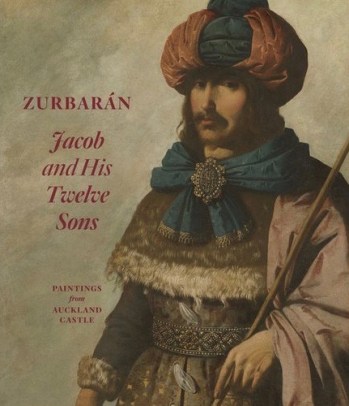 The Frick Collection is pleased to invite submissions for Wider Worlds: Art and Audience under the Spanish Crown, a public symposium inspired by the special exhibition Zurbarán: Jacob and His Twelve Sons, Paintings from Auckland Castle (on view at The Frick from 31 January to 22 April 2018). Co-organized with the Meadows Museum, in Dallas, where the paintings are currently on view, this exhibition marks the first time that Francisco de Zurbarán’s set of thirteen monumental canvases depicting the family of the biblical prophet Jacob will be displayed in the Americas.
Zurbarán’s paintings were probably commissioned in the 1640s for a monastery in colonial Spanish Peru, where the popularity of this particular iconography drew on histories positing the indigenous inhabitants of the Americas as ‘lost descendants’ of the twelve tribes of Israel. The works traveled to England and, in 1756, entered the collection of the bishop Richard Trevor, an advocate for the rights of Jewish people. This history, as well as the apocryphal story of the paintings’ seizure by pirates, prompts us to think seriously about the afterlives of objects, anticipated versus accidental receptions, and art’s capacity for generating multivalent, sometimes competing, interpretations. For Jacob and His Twelve Sons, those interpretations range from justifying the enterprises of one colonial empire to serving as symbols of religious tolerance in another.
We welcome proposals for twenty-minute papers on the status of the art object and the circulation of objects and ideas in the early modern Hispanic world. Please send a CV and 250-word abstract by Tuesday, 12 December 2017, to academic@frick.org. Submissions from emerging scholars, including early career university and museum professionals and advanced doctoral students, are particularly encouraged. Possible lines of inquiry include:
• How artists, patrons, and audiences dealt with anxieties around distance, delay, and the conveyance of meaning in the diverse and multilingual early modern Hispanic world
• Re-signification and/or halted trajectories in the biographies of objects, especially in a global context
• The imaging of origin myths and master narratives
• How Iberia’s Jewish and Islamic pasts were interrogated and reinterpreted in Catholic image practices
• The issue of workshops, masters, and authorship and their relationship to global markets
• The global and material turns in art-historical scholarship
Wider Worlds: Art and Audience under the Spanish Crown is convened by Caitlin Henningsen (The Frick Collection) and Adam Jasienski (Southern Methodist University). Susan Grace Galassi (Senior Curator, The Frick Collection) will preside.
Call for Manuscripts | Costume Society of America Book Series
Costume Society of America Book Series
Series Editor: Kimberly Chrisman-Campbell
The Costume Society of America book series has a new home at Kent State University Press. Inquiries and proposals for works on all subjects relating to the history and conservation of costume and adornment are welcome. Books chosen to be published range from scholarly to general interest and vary widely in format, from primarily textual to highly illustrated.
Although all titles must pass a rigorous review in terms of substance, not all must be scholarly. The Series also considers books that address or embrace a general readership. Titles in this category must be well written and focused on their specific subjects as well as carefully researched and substantiated, but they cannot become too deeply entrenched in theory or jargon for the average reader.
To request consideration of your proposed or completed manuscript, please send a query letter or brief prospectus to Series Editor Kimberly Chrisman-Campbell at kchrismancampbell@hotmail.com. Full details and a list of previous books in the series can be found here.
Call for Papers | The Cultural Heritage of Europe @ 2018
From H-ArtHist:
The Cultural Heritage of Europe @ 2018: Re-Assessing a Concept, Re-Defining Its Challenges
Institut national d’histoire de l’art (INHA), Paris, 4–5 June 2018
Proposals due by 10 November 2017
Today’s globalized concept of cultural heritage is often understood as a product of European modernity with its 19th-century emergence of territorially fixed nation-states and collective identity constructions. Within the theoretical overlap of the disciplines of history (of art), archaeology and architecture cultural properties and built monuments were identified and embedded into gradually institutionalized protection systems. In the colonial context up to the mid-20th century this specific conception of cultural heritage was transferred to non-European contexts, internationalized in the following decades after the WWII and taken as universal.
Postcolonial, postmodern, and ethnically pluralistic viewpoints did rightly question the supposed prerogative of a European Leitkultur. Only rather recently did critical heritage studies engage with the conflicting implications of progressively globalized standards of cultural heritage being applied in very local, non-European and so-called ‘traditional’ contexts. However, in order to bridge what academia often tends to essentialize as a ‘Western’ and ‘non-Western’ divide of opposing heritage conceptions, a more balanced viewpoint is also needed in order to update the conceptual foundations of what ‘cultural heritage of/in Europe’ means today.
The European Cultural Heritage Year 2018 — A Campaign with Unquestioned Assumptions?
Right at the peak of an identity crisis of Europe with financial fiascos of whole nation states, military confrontations, and refortified state borders at its continental peripheries with inflows of refugees from the Near East and the Global South did the European Council and Parliament representatives reach a provisional agreement to establish a European Year of Cultural Heritage in 2018. With affirmative slogans such as “We Europeans” and “Our common European heritage”, the campaign intends to “raise awareness of European history and values, and strengthen a sense of European identity” (Press release of the European Council, 9 February 2017). However, with its unquestioned core assumption of the validity of Europe’s territorial status with simply interconnected borderlines of its affiliated member states and of a given collective ‘we’-identity within the European Union, this cultural-political campaign risks to miss the unique chance of a critical re-assessment of how a ‘European’ dimension of cultural heritage can be conceptualized in today’s globalized and inter-connected reality.
The ‘Cultural Heritage of Europe’ @ 2018 — Towards a Global and Transcultural Approach
The global and transcultural turn in the disciplines of art and architectural history and cultural heritage studies helps to question the supposed fixity of territorial, aesthetic, and artistic entity called Europe, more precisely the taxonomies, values and explanatory modes that have been built into the ‘European’ concept of cultural heritage and that have taken as universal.
By taking into consideration the recent processes of the accelerated exchange and global circulation of people, goods and ideas, the conference aims to reconstitute the old-fashioned units of analysis of what ‘European cultural heritage’ could be by locating the European and the non-European in a reciprocal relationship in order to evolve a non-hierarchical and broader conceptual framework. With a focus on cultural properties (artefacts), built cultural heritage (from single architectures, ensembles and sites to whole city- and cultural landscapes etc.), and their forms of heritagization (from archives, museums, collections to cultural reserves), case-studies for the conference can address the various forms of the ‘cultural’ within heritage: its ‘social’ level (actors, stakeholders, institutions etc.), its ‘mental’ level (concepts, terms, theories, norms, categories), and, most obviously, its ‘physical’ level with a view on manipulative strategies (such as transfer and translation, reuse and mimicry, replication and substitution etc.).
Grouped along four panels in two days, cases-studies should question the concept of cultural heritage with its supposedly ‘European’ connotations and dimensions within artefacts and monuments by destabilizing at least one of its four constitutive core dimensions:
1) Place and Space – from stable sites to multi-sited, transborder contact zones and ambivalent third spaces
2) Substance and Materiality – from the monumental, homogeneous and unique of the artefact and listed monument to the transient, multiple, visual, digital, commemorated etc.
3) Time and Temporality – from objects of permanence and stability to the temporal, ephemeral, fugitive, processual
4) Identity – from the collective and cohesive to the ambivalent, contested, plural, and/or partial and fragmentary
The Host and the Network, Dates, and Deadlines
This international two-day conference in French and English will take place on 4 and 5 June 2018 at the Institut national d’histoire de l’art (INHA) and is embedded into the Laboratory of Excellence (LabEx) ‘Writing a New History of Europe—Ècrire une Histoire Nouvelle de l’Europe’ at Sorbonne University. One of its seven thematic axes—entitled ‘National Traditions, Circulation and Identities in European Art’—acts as the principle host of the event: with a special focus on geography, historiography and cultural heritage, it looks at art history in the Labex perspective of finding both elements of explanations and answers to the crisis Europe is currently going through. Is conducted by the Centre André Chastel (the Research Laboratory of Art History under the tutelage of the National Center for Scientific Research/CNRS, Sorbonne University and the Ministry of Culture) as the co-sponsor of the conference. Finally, the conference is situated within the new Observatoire des Patrimoines (OPUS) of the united Sorbonne Universities.
The conference is conceived by Michael Falser, Visiting Professor for Architectural History and Cultural Heritage Studies at Paris-Sorbonne (2018), in association with Dany Sandron, Professor of Art History at Sorbonne University/Centre Chastel and speaker of LabEx, axis 7.
Abstracts with name and affiliation of the speaker, title and 200 words abstract of the presentation are due with the deadline of 10 November. Candidates will be notified on 30 November 2017. The proposals for papers should be sent to patrimoine.europe2018@gmail.com.
Le Patrimoine Culturel de l’Europe @ 2018: Réexaminer un concept – redéfinir ses enjeux
Call for Papers | Books of Drawings, 1550–1800
From H-ArtHist:
Libri di Disegni e Album di Disegni nell’Età Moderna, 1550–1800:
Nuove prospettive metodologiche e di esegesi storico-critica
Accademia di Belle Arti di Roma, Rome, 31 May — 1 June 2018
Proposals due by 9 December 2017
La netta distinzione tipologica e terminologica tra libri di disegni e album di disegni è stata dimostrata dalla storiografia artistica contemporanea sulla base di evidenze documentarie e letterarie italiane, cinque e seicentesche. Nell’Età moderna sono gli artisti stessi o i conoscitori del calibro di Filippo Baldinucci ad utilizzare l’espressione ‘libro de’ disegni’ per indicare le raccolte rilegate della produzione grafica di pittori, scultori o architetti, ben prima che i termini taccuino, carnet, skizzenbuch, note-book e simili, venissero introdotti più tardi dal collezionismo, dalla letteratura artistica e dalla storiografia.
Nella fase attuale, con l’espressione ‘libro di disegni’, drawing-book in inglese, si tende a indicare a book of original drawings in a bound volume (book, codex), consisting of one or more quires (gatherings), which are predominantly filled with drawings, irrespective of the age, intention and profession of a draughtsman … whether the structure has been consolidated before or after the drawing process, protected by a leather binding or a simple parchement or paper cover (Elen, 1995).
Mentre i libri di disegni, integri nella loro configurazione originaria, sono piuttosto rari o poco conosciuti e studiati (non ne esiste a oggi un censimento sistematico e ragionato), molto più numerosi sono gli album di disegni, monografici o collettanei, raccolti da eruditi, conoscitori, curatori e collezionisti nei secoli XVII–XIX, all’interno dei quali sono confluiti singoli fascicoli o singoli fogli provenienti da libri di disegni più antichi. La capillare presenza di libri di disegni e album di disegni, giunti in forme più o meno frammentarie e dopo molti passaggi proprietari nelle print rooms e nelle biblioteche di tutto il mondo, invitano oggi a indagarne e analizzarne compiutamente gli sviluppi storici delle forme, dei contenuti, delle funzioni, e a studiarli anche sotto gli aspetti della fortuna critica e materiale, della storia del gusto, del mercato dell’arte e del collezionismo.
Il Workshop Internazionale si propone di porre in evidenza, attraverso i contributi originali dei maggiori specialisti dell’argomento, l’imprescindibile circolarità esistente tra la conoscenza e lo studio analitico dei ‘libri de’ disegni’ di singoli artisti e la conoscenza e lo studio analitico degli album di disegni formatisi in epoche successive, al fine di avanzare nuove e non ancora esplorate prospettive di ricerca, individuazione, classificazione tipologica, analisi storica, storico-critica, collezionistica e materiale, che possano contribuire ad ampliare la nostra comprensione del fenomeno, delle teoriche e delle prassi operative, soprattutto ma non solo di bottega e di matrice accademica, degli artisti italiani dell’Età moderna, e dei percorsi, il più delle volte molto articolati e complessi, di creazione e di costituzione delle raccolte e delle collezioni internazionali di grafica, a partire dalla dispersione del ricco patrimonio di volumi rilegati di disegni lasciati in eredità dagli artisti del passato.
Per le proposte di intervento, sono indicate di seguito alcune delle possibili linee di approfondimento:
• Questioni terminologiche e tipologiche tra fonti documentarie, letteratura artistica, prassi collezionistiche, storia dell’arte, archeologia del libro, connoisseurship;
• Codex, libro, album: disegni originali, modelli e copie d’après;
• Libri di disegni e album di disegni: forme, funzioni, temi e soggetti;
• Analisi tipologica, strutturale, tecnica, materiale di uno o più libri e/o album di disegni, tra storia dell’arte e del disegno, archeologia del libro, scienza codicologica;
• Analisi funzionale, stilistica, iconografica di uno o più libri e/o album di disegni, tra storia dell’arte e del disegno, metodo del conoscitore, scienza dell’attribuzione;
• Le collezioni pubbliche e private di libri e album di disegni: gli allestimenti originali, le filiazioni, i percorsi di ricognizione e catalogazione, i progetti di digitalizzazione;
• Ipotesi di ricostituzione virtuale di libri di disegni italiani smembrati tra raccolte pubbliche e private;
• Libri di disegni e album di disegni come fonti visive per la teorica e la pratica del disegno degli artisti italiani, tra la seconda metà del Cinquecento e il primo Ottocento;
• Libri di disegni e album di disegni come fonti visive per l’insegnamento e l’apprendimento del disegno, e per la trasmissione dei modelli e dei repertori visivi, dentro le botteghe, le accademie, gli ateliers;
• Disegni rilegati in volume e autonomia del disegno: il processo creativo dell’artista tra ricerca-ideazione autofondata e verifica-progetto dell’opera d’arte finita;
• Il ruolo di eruditi, conoscitori, collezionisti, conservatori dei secoli XVII–XIX nella formazione delle raccolte e album di disegni, tra fortuna critica e fortuna materiale, dinamiche del gusto, del mercato dell’arte e del collezionismo pubblico e privato.
Gli studiosi sono invitati a far pervenire, entro e non oltre il 9 dicembre 2017, le proposte di intervento—un abstract di max 500 caratteri (spazi inclusi) in italiano o in inglese—al seguente indirizzo di posta elettronica: drawingsbook.abaroma2018@gmail.com. Entro il 20 dicembre 2017, a seguito della selezione svolta dal Comitato Scientifico, l’accettazione degli interventi prescelti sarà comunicata via email agli interessati.
Call for Papers | Feminist Art History Conference
Feminist Art History Conference
American University, Washington, D.C., 28–30 September 2018
Proposals due by 1 December 2017
This conference builds on the legacy of feminist art-historical scholarship and pedagogy initiated by Norma Broude and Mary D. Garrard at American University. With the goal of fostering a broad dialogue on feminist art-historical practice, the event will feature papers spanning a range of chronological, geographic, and intersectional topics.
Papers may address such topics as: artists, movements, and works of art and architecture; cultural institutions and critical discourses; practices of collecting, patronage, and display; the gendering of objects, spaces, and media; the reception of images; and issues of power, agency, gender, and sexuality within visual cultures. Submissions on under-represented art-historical fields, national traditions, and issues of race and ethnicity are encouraged. We welcome submissions from established and emerging scholars of art history as well as advanced graduate students.
To be considered for participation, please provide a single document in Microsoft Word. It should consist of a one-page, single-spaced proposal of unpublished work up to 500 words for a 20-minute presentation, followed by a curriculum vitae of no more than two pages. Please name the document “[last name]-proposal” and submit with the subject line “[last name]-proposal” to feminist.ahconference@gmail.com.
Invitations to participate will be sent by 1 February 2018.
Keynote Speaker
Amelia Jones, Robert A. Day Professor in Art and Design and Vice-Dean of Critical Studies at the Roski School of Art and Design, University of Southern California
Organizing Committee
Joanne Allen, Juliet Bellow, Norma Broude, Kim Butler Wingfield, Nika Elder, Mary D. Garrard, Helen Langa, Andrea Pearson, and Ying-chen Peng
Sponsored by the Art History Program and the Department of Art, College of Arts and Sciences, American University










leave a comment