Call for Essays | Dix-huitième Siècle No 51: La Couleur des Lumières
From H-ArtHist:
Dix-huitième Siècle No 51: La Couleur des Lumières
Edited by Aurélia Gaillard and Catherine Lanoë
Proposals due by 30 November 2017; with final articles due by June 2018
Le dossier thématique de la revue DHS n° 51 sera consacré au thème de la « couleur des Lumières » et l’envisage comme suit : d’abord, qu’en est-il de la place de la couleur au 18e siècle ? Peut-on parler de ce siècle comme d’un univers coloré ? Et si oui, quelle en serait la couleur ou quelles en seraient les couleurs ? N’y aurait-il pas alors un siècle clivé en deux, l’un coloré (couleur de rose, couleur du rococo), l’autre blanc hygiénique (traités de blanchiment, blancheur des marbres classiques) ? Enfin, qu’en est-il de la couleur dans les textes littéraires ? À quel moment, dans quels textes, dans quels genres, chez quels auteurs passe-t-on de l’évocation abstraite des somptueux « ornements » et subtiles « grâces » à des descriptions colorées ? Y a-t-il par exemple des auteurs, des genres coloristes et d’autres non ? Et comment, pour des textes, des mots, penser une poétique de la couleur qui ne soit pas une rhétorique des images ?
Ainsi, si la subjectivité de l’être percevant conçu comme homme sensible à l’âge des Lumières a été une question majeure des recherches depuis ces dernières décennies, la valorisation corollaire des sensations chromatiques a été un peu délaissée. Il s’agit donc de mettre en évidence l’importance de la couleur dans le monde des Lumières : théories, débats, inventions, expériences, synesthésies, discours, représentations, poétique.
Les contributions pourront alors aborder les axes suivants relevant principalement de 4 paradigmes :
1) Un paradigme scientifique, la science de la couleur : de Newton (Opticks, 1704) à Goethe (Traité des couleurs, 1808).
2) Un paradigme médical et philosophique, sensualisme, sens et sensations colorés.
3) Un paradigme historique et anthropologique :
• Histoire matérielle de la couleur et des teintures : art de la peinture, de l’émail, du verre, de la porcelaine, des tissus, teintures, chimie, manuels d’art tinctorial, de blanchiment etc.
• « Les couleurs du corps » (Michel Delon dans Angelica Gooden dir., The Eighteenth-Century Body, Peter Lang, 2002) : la « couleur de chair », incarnat, rougeurs/blancheurs d’où surgit tout à coup par exemple le bleu des veines etc.
• La cosmétique, le fard rouge et le blanc de céruse (C. Lanoë, « La céruse dans la fabrication des cosmétiques… », Techniques et Culture, n°38, 2002 ; « le rouge des Lumières… », Sociétés et représentations, n°25, 2008), les encres bleues (Solange Simon-Mazoyer, « Le conflit entre les excès de la mode et de la santé au XVIIIe siècle : ‘l’habillage’ du visage », dans V. Barras et M. Louis-Courvoisier dir., La médecine des Lumières, Georg Éd., 2001)
4) Un paradigme esthétique, un visuel coloré : à la suite de la Querelle du Coloris (de Piles), on assiste à une apologie de la couleur, du stuc, de l’illusion (J. Lichtenstein, La couleur éloquente, Flammarion, 1989). Le coloriste Charles La Fosse devient recteur de l’Académie royale de Peinture et Sculpture en 1702. Diderot développe ses « Petites idées sur la couleur » (Essais sur la peinture, 1765). Mais le 18e siècle est aussi celui de l’invention de la couleur « rose », qui reste nommée pendant tout le siècle par le nom de la fleur (couleur de rose).
Pour recevoir l’appel à contribution complet, contacter Aurélia Gaillard. Les propositions de contributions uniquement en français sont à adresser simultanément à Aurélia Gaillard (aurelia.gaillard@gmail.com) et Catherine Lanoë (catherine_lanoe@hotmail.com) sous forme d’un titre et d’un résumé d’une quinzaine de lignes avant le 30 novembre 2017. Les articles définitifs seront à rendre pour juin 2018.
Call for Papers | Interior Design and Style Cohabitation
From H-ArtHist:
Interior Design and Style Cohabitation from the Eighteenth to the Twentieth Century
Institut National d’Histoire de l’Art, Paris, 19 March 2018
Proposals due by 6 November 2017
This study day will question the adaptation in domestic spaces, as a common and pragmatic custom, of objects that originally were not destined to meet, playing despite or with their differences. This theme was recently addressed by the Galerie des Gobelins with the exhibition À table avec le mobilier national, where eighteenth-century paintings, paperboards, and wall hangings from the royal manufacture oversaw fifty years of furniture creation by the Atelier de Recherche et de Création (1964–2014).
While it is common in the field of art history to encounter examples of interiors where the decorative harmony was conceived according to the ideal of a ‘total work of art’, the opposite will be examined. The assortment in a common space of objects from different periods and the ensuing reflections brought up by these unexpected, sometimes surprising, convergences will be our object of interest. When, for example, was it intended for eighteenth-0century furniture to be associated and fit in with an Impressionist painting? Was this type of seemingly insignificant practice theorized ahead of time or retrospectively?
This subject is linked to the history of taste. While a few publications devoted to collectors’ arrangements of domestic spaces have pointed out some individuals who wished to harmonize old furniture to a modern art collection, on the contrary, examples of modern furniture confronted with old works of art could be discussed during this study day.
Far from the historically based mechanism, already well studied for the nineteenth century for example (Antiquity, neo-gothic or neo-Renaissance decor and furniture), the debate here will focus on the practical necessity for a collector, dealer, or individual to design an interior with modern paintings and old furniture—or inversely—that is elements apparently disparate by their age, forms, and uses.
This thematic raises questions relating to the flexibility of fine arts and decorative arts and confronts the values and/or practices associated with the work of art, considered as a decorative element, as well as a utilitarian object of art, equally appreciated for its plastic qualities.
While composing an interior can extend to the private space, the artist’s studio, or demonstrations of domestic spaces in art galleries and department stores, the study can even include how these spaces were spread to the public by images. We will aim to define what type of media participated in this transmission. The literature and the press play for example a significant role in the circulation of these interior views and the values to which they are linked.
The study day suggests—but is not limited to—several topics:
• Paintings’ or art objects’ adaptability, flexibility or modular nature
• Migration or confusion of values and contemplative behaviors and practices when faced with paintings and furniture
• Authorship and collectors’ and decorators’ creative and recreational motivations
Proposals that extend their analysis to other types of objects and collections, particularly to sculpture, will also be reviewed with the greatest interest. Please submit an individual proposal of no more than 500 words and a CV to barbara.jouves@univ-paris1.fr and hadrien.viraben@gmail.com by 30 November 2017.
Organization: Claire Hendren (Ph.D. candidate, Université Paris-Nanterre), Barbara Jouves (Ph.D. candidate, Université Paris 1 Panthéon-Sorbonne), and Hadrien Viraben (Ph.D. candidate, Université de Rouen and Université Paris-Nanterre)
Call for Session Proposals | SAH 2019, Providence
From SAH:
Society of Architectural Historians 72nd Annual Conference
Rhode Island Convention Center, Providence, 24–28 April 2019
Proposals due by 16 January 2019
Conference Chair: Victoria Young (University of St. Thomas)
Local Co-Chairs: Dietrich Neumann (Brown University) and Itohan Osayimwese (Brown University)
The Society of Architectural Historians will offer a total of 36 paper sessions at its 2019 Annual International Conference in Providence, Rhode Island. The Society invites its members, including graduate students and independent scholars, representatives of SAH chapters and partner organizations, to chair a session at the conference. As SAH membership is required to chair or present research at the annual conference, non-members who wish to chair a session will be required to join SAH next August 2018 when conference registration opens for Session Chairs and Speakers.
Since the principal purpose of the SAH annual conference is to inform attendees of the general state of research in architectural history and related disciplines, session proposals covering every time period and all aspects of the built environment, including landscape and urban history, are encouraged.
Sessions may be theoretical, methodological, thematic, interdisciplinary, pedagogical, revisionist or documentary in premise and ambition and have broadly conceived or more narrowly focused subjects. Sessions that embrace cross-cultural, transnational and/or non-Western topics are particularly welcome. In every case, the subject should be clearly defined in critical and historical terms. Proposals will be selected on the basis of merit and the need to create a well-balanced program. Topics exploring the architecture of the Providence and the greater region are encouraged.
Since late submissions cannot be considered, it is recommended that proposals be submitted well before the deadline. Last-minute submissions that fail posting in the online portal or are sent in error via email cannot be considered. Session proposals must be submitted online by 5:00pm CST, Tuesday, January 16, 2018. The submission portal will close automatically at this time, and no further proposals will be accepted. Proposals will be reviewed and selected by a committee chaired by SAH Conference Chair Victoria Young.
Additional information is available here»
Call for Papers | Artist Immigrants to the Baltic Sea Area, 1554–1721
From H-ArtHist:
Successful Immigrants: Artist Immigrants
to the Baltic Sea Area in Times of the Nordic Wars, 1554–1721
Leibniz Institut für die Geschichte und Kultur des östlichen Europas, 8–9 February 2018
Proposals due by 31 October 2017
Movement and mobility have always been important engines for innovation and development in the arts. Together with artists, also new ideas, concepts, styles, and techniques traverse boundaries and mix up with traditional and constricted habits at their place of arrival. Long hikes to foreign countries implied a high risk in early modern times since knowledge about far regions was limited and traveling arduous. Nevertheless, a surprisingly high activity of migration can be observed in artistic professions. This workshop seeks to explore the latter phenomenon in the Baltic Sea area.
The Baltic Sea in early modern times wasn’t only a barrier as which it was observed in the further course of history, but also a contact zone. Its neighbouring countries were intertwined in various forms of relations—trade, diplomacy, and also wars gave rise to more exchange and thus encouraged migration movements. This workshop aims to shape a more differentiated picture about the dynamics of artistic transfer processes and labour conditions in the Baltic region. The workshop will focus not only on major cities like Gdansk, which had a special appeal on artists, or Dutch artists and craftsmen, which represented the largest group of immigrants to the Baltic region. Rather, the workshop will target different groups and individuals as well as the entire Baltic Sea area: the Kingdoms of Poland, Denmark and Sweden (including its Baltic provinces), the Duchy of Courland, and cities like Stockholm, Riga, and Reval.
The following questions can serve as opening questions: What reasons motivated the artists to migrate and what goals did they pursue? What made a place attractive for the arrivals? Did the artists stay in their new domains, did they return home or did they continue traveling? How did the artistic development proceeded and how did they integrate in their new home places? Any project that concerns individual artist careers, rewarded with success or failed, will be of interest for the workshop. The workshop also welcomes papers offering an overview, focusing on protagonists, cities, or routes. Furthermore, proposals concerning traveling writers may be included as possible comparison group. Please send your one-page proposal and short CV to Agnieszka Gąsior at agnieszka.gasior@leibniz-gwzo.de by October 31st 2017.
Organized by Agnieszka Gąsior, Leibniz-Instituts für Geschichte und Kultur des östlichen Europa (GWZO)
Erfolgreiche Einwanderer: Künstlerimmigration im Ostseeraum während der Nordischen Kriege, 1554–1721
Call for Papers | AAH 2018, London
Here are some of the thematic offerings proposed for the AAH 2018 conference that could include eighteenth-century papers. Be sure to consult the conference website for things I’ve overlooked. –CH
44th Annual Association of Art Historians Conference
Courtauld Institute of Art and King’s College London, 5–7 April 2018
Proposals due by 6 November 2017
The 2018 Annual Conference for art history and visual culture will be co-hosted by the Courtauld Institute of Art and King’s College London. Academic sessions that papers will respond to the idea of ‘looking outwards’. This international 3-day event will look at art history in the broadest sense, and will incorporate a diverse range of speakers and perspectives.
The close collaboration between the two institutions—involving numerous other museums and cultural partners in London—will set the tone for a conference oriented around ‘looking outwards’. On one hand, we will be encouraging art historians and researchers to think about their disciplinary relationships with other affiliated subjects in the arts and humanities (as indeed beyond). On the other, we will be inviting new perspectives on international collaborations within the field (particularly important in the wake of recent political events…). We aim to incorporate an ambitious range of perspectives—from university academics and doctoral researchers, to educators, curators, heritage partners, and not least artists themselves. We hope to deliver an event with the widest possible remit and reach.
The 2018 conference will host 40 academic sessions, over 3 days (approximately 13–14 sessions each day). Each session will generally consist of between 4 and 8 papers (minimum 4, maximum 8); papers are usually 25 minutes, presented in 35-minute slots to allow for questions and movement between sessions. We will also accommodate alternative session formats—such as world-cafe, round-table, or open discussions. Sessions will respond to the idea of ‘looking outwards’ by engaging with art history and visual culture in the broadest sense. A listing of the 2018 academic sessions and abstracts (as a pdf file) is available here.
Please email paper proposals directly to the session convenors. You will need to provide a title and abstract (250 words maximum) for a 25-minute paper (unless otherwise specified), your name, and institutional affiliation (if relevant). Please make sure the title is concise and reflects the contents of the paper because the title is what appears online, in social media, and in the printed programme.
Conference Convenors
Joanna Woodall and Katie Scott (Courtauld Institute of Art)
Michael Squire (King’s College London)
Conference Coordinator
Cheryl Platt (Association for Art History)
◊ ◊ ◊ ◊ ◊
Art and Religion: Theology, the Sacred, and Visual Culture
Ben Quash (King’s College London), ben.quash@kcl.ac.uk; and Ayla Lepine (University of Essex), ayla.lepine@gmail.com
When art enters religious territory it can open new spaces of encounter that provoke, illuminate, challenge, and disturb. The attachments of religious conviction, meanwhile, can discomfit the disinterested analysis of the scholar of material culture. When scholarship in art history connects with research in religious studies and theology, dialogues necessarily open outwards, therefore, onto debates regarding religion and the sacred in visual culture and in public and private life. Building on recent scholarship by voices in theology, religion and the arts including Sally Promey, Graham Howes, Gretchen Buggeln and Christopher Pinney, this session encourages new perspectives on diverse meetings worldwide between the sacred and the arts. Across the past decade, art historians and theologians have begun to probe new zones of common ground and collaborate fruitfully. As an example, Stations 2016, staged in London during Lent 2016, was a remarkable but almost uncategorisable event. It created a route across London which connected works of art hanging in museum spaces (Jacopo Bassano’s Christ on the Way to Calvary in the National Gallery, for example, or a Limoges enamel sequence in the Wallace Collection) with works of art in church spaces (many of them newly commissioned, temporary installations), and also with works of art in public and ostensibly ‘neutral’ spaces (like a statue of Mahatma Gandhi in Parliament Square). It clearly showed that contexts are not only physical spaces; they are also human uses. The Bassano in the National Gallery could, at the very same instant that Lent, have been gazed upon by a tourist spending a morning enjoying art for art’s sake, and a pilgrim en route with Christ to Golgotha. This session encourages papers from art historians and theologians in fields that explore any tradition or period in which art and religion interlace to produce new experiences and understandings of holiness and the sacred. We particularly welcome submissions that break new ground in relation to liturgy and ritual, interdisciplinary methodologies and cross-fertilizations between theology and art history, the unique status of religious objects in museums and cultural institutions, interactions between sacred scripture and the arts, religious implications for representational and abstract art, diverse intersections of gender, identity, and religious art, and studies that challenge and even break boundaries regarding conventional understandings of ‘religion’ and ‘faith’.
◊ ◊ ◊ ◊ ◊
Beyond Boundaries: Artistic Inquiries into Borders and Their Meanings
Mey-Yen Moriuchi (La Salle University), moriuchi@lasalle.edu; and Lesley Shipley (Randolph College), lshipley@randolphcollege.edu
Borders have played a critical role in the development and distribution of culture, often acting as frameworks that help or hinder our ability to ‘look outwards’. In The Location of Culture, Homi Bhabha calls attention to the value of interstitial spaces, where borders, frames, and other locations ‘in-between’ become ‘innovative sites of collaboration and contestation in the act of defining the idea of society itself.’ Other philosophical considerations of borders, such as Martin Heidegger’s concept of gestell, or enframing, Jacques Derrida’s deconstruction of Enlightenment aesthetics vis-à-vis the parergon, and Victor Stoichita’s analysis of framing devices in early modern ‘meta-painting’, have demonstrated the transformative power of edges, frames, borders, and boundaries in art.
This session will focus on works of art, artistic practices, and art historical perspectives that think critically and creatively about borders and their meaning(s). The goal is to expand our understanding of borders, whether physical or conceptual, historical or theoretical. In the spirit of pushing beyond boundaries of convention and ‘looking outwards’, we welcome papers that focus on any medium, art historical period, or curatorial practice. Papers may address, though are not limited to: art that explores the significance of borders to migrants, immigrants, diasporic communities or other groups residing (both literally and figuratively) ‘in-between’; activist art that interrogates borders and their meaning(s); the role of public art, public space, and social media in thinking beyond boundaries; the metaphorical and/or literal framing of a work of art and its effects; the symbolic purpose or meaning of frames in various cultural contexts (for instance, the role of framing in religious spaces or objects, such as tabernacles, wall niches, icon paintings, and marginalia).
◊ ◊ ◊ ◊ ◊
Body as Architecture / Architecture as Body
Kelly Freeman (University College London), k.freeman.11@ucl.ac.uk; and Rebecca Whiteley (University College London), rebecca.whiteley.12@ucl.ac.uk
Just as the head, foot, and indeed any member must correspond to each other and to all the rest of the body in a living being, so in a building … the parts of the whole body must be so composed that they all correspond to one another. –Leon Battista Alberti, De re aedificatoria (c. 1450)
There has, since classical antiquity, been a complex set of correspondences between the human body and the designed building. Such interactions spring from the enduring art- theoretical ideal whereby art and architecture should imitate nature, as well as from broader cultural, medical and anatomical thinking wherein the body is described in terms of architecture and domestic arrangement. Throughout recorded history, architects have turned to the proportions, structures, processes, and narratives of the human body when designing built spaces. Likewise, artists and writers working in anatomy, medicine, politics and literature, to name a few, have turned to the shape, design and spaces of the building when discussing and explaining the body.
Our panel will explore how this enduring correspondence has been expressed and shaped by visual culture. We encourage papers that treat as broad an array of visual and theoretical material as possible: from art theory and architecture to anatomical print. Papers may wish to address one of the following themes: the body’s architecture, organic and anatomical theories and representations in architecture, metaphors of bodies and buildings, the (gendered) materiality and form of the body and of architecture. We intend to set no limits on geography or period, and to convene a session with as wide a scope as possible. In response to the theme of ‘Look out!’, we hope to bring together a variety of disciplines—from art history and architecture, to literature, history of science and medicine—and to bring different theoretical and disciplinary approaches into conversation.
◊ ◊ ◊ ◊ ◊
Dangerous Bodies – Look out! Fashioned Bodies on the Boundaries
Royce Mahawatte (Central Saint Martins, London), r.mahawatte@csm.arts.ac.uk; and Jacki Willson (University of Leeds), j.m.willson@leeds.ac.uk
This panel explores the cultural intersection between bodies, fashion and transgression. Bodies are political players in culture. What role do fashioned bodies play in resistance, in meeting governmental boundaries or institutional power? Fashion is an aspect of modern warfare. Style can defend and attack in cultural space. How do fashioned bodies occupy the grey area between social control and the resistance to power? In relation to Judith Butler and Athena Athanasiou’s idea of the ‘performative in the political’ (2013) this session would like to consider how fashioned bodies—which are ‘revolting’, ‘laughing’, ‘unruly’, ‘grotesque’, ‘contaminating’, explicit, or silent and still—enact resistant strategies of protest.
We welcome readings of historical fashion media. How do governmental changes find embodiment in 18th-century masquerade, 19th-century fashion cultures, Modernist imagery? How does fashion intersect with race and gender discourses where colonialism, capitalism and embodiment are inextricably linked? To this end, this session would also like to consider the way that dress has been used emblematically to symbolise specific recent activist moments—for instance the woman in the flowing black dress in the Black Lives Matter demonstration in July 2016 or the ‘woman in red’ who became a symbol of protest in Turkey in 2013. How do acts of fashioned stillness (not passivity), play, refusal or rage mediate conflict, and challenge, critique or attack violent regimes? In what way does the artistic and deliberate use of fashion and the transgressive body differ from digital exposure which is not a deliberate part of a discursive framework? We welcome multi-disciplinary papers that engage with this topic from Art History and Critical Practice, Cultural Studies, Fashion Critical Studies, Film and Literary Studies, Performance Studies, Politics and International Studies, Sociology, Gender, Queer, LGBTI, and Critical Race Studies.
◊ ◊ ◊ ◊ ◊
Dangerous Portraits in the Early Modern World
Jennifer Germann (Ithaca College), jgermann@ithaca.edu; and Melissa Percival (University of Exeter), M.H.Percival@exeter.ac.uk
Portraiture was a dynamic and, at times, disruptive artistic practice in the early modern period. Portraits could and did undermine, reconfigure, or otherwise step outside the bounds of social propriety. Rather than upholding or reinforcing existing hierarchies and/or maintaining the status quo, these portraits challenged the expectations of spectators and consumers. Dangerous portraits could disavow normative behavioural expectations, challenge the political order either openly or privately, or imagine and even generate new identities. How were social expectations engaged and subverted in portraits? Where and in what forms were dangerous portraits consumed or shared? How did artists, spectators, critics, and/or markets respond to these challenges? This session seeks papers that consider early modern portraits that pushed beyond the bounds of social norms and expectations. It engages the theme ‘look out!’ by allowing for reflection on identities traditionally viewed as ‘outside’ the bounds of the normative or desirable in terms of gender, race, class, geography, etc., produced between 1500 and 1800. Papers are welcomed from diverse cultural traditions around the globe, which address the impact of cross-cultural exchange, consider media beyond painting and sculpture, and by scholars, curators, and artists who work outside of the discipline of art history.
◊ ◊ ◊ ◊ ◊
Dialogues: Things and Their Collectors
Nicole Cochrane (University of Hull), Cochrane@2014.hull.ac.uk; Lizzie Rogers (University of Hull), E.J.Rogers@2012.hull.ac.uk; and Charlotte Johnson (Victoria and Albert Museum), ch.johnson@vam.ac.uk
Acts of acquiring, collecting, curating and reception of the object, are generally understood as reciprocal relations between the collector and the object of desire, whether institutional or individual, art or artefact. However, the content of that exchange or dialogue has often been taken for granted. Collecting for display and social advancement, collecting as speculation, collecting for love etc. have too often been accepted as self-explanatory, diverting academic enquiry elsewhere, and obscuring the complexities at the heart of collecting practice. This panel seeks to build on the recent development of scholarship in this field, exploring the push and pull between things and collectors, artists and institutions. It questions how dialogues between parties transform the status, values, identity and character of each.
We propose an object-based approach, focused upon these ‘conversations’, conversations that we invite from any historical moments and geographical location. We encourage participants to engage with issues of class, gender and race as they relate to collecting and especially to the dialogue between collecting and identity. Particularly welcome are collaborative papers from artistic practitioners, academics and museum professionals, that address these issues from their respective vantage points, and papers from those based in scientific and ethnographic collections.
Dialogues between individual collectors and their things could include: provocation and comfort, artistic inspiration and practice, tactical or impulsive, therapeutic or detrimental, sameness and difference, temporality and permanence, lived or fixed, animate or inanimate. Dialogues between stakeholders and institutions could explore: exchanges between collector/donor and museum, boundaries between public and private modes of display, academic approval and the canon, natural history collections and modes of knowledge, national pride.
◊ ◊ ◊ ◊ ◊
Figuring Change: The Early Modern Artistic Reception of Ovid’s Metamorphoses
Lydia Hamlett (University of Cambridge), lkh25@cam.ac.uk; and Philip Hardie (University of Cambridge), prh1004@cam.ac.uk
This session—co-convened by a classicist and an art historian—explores the art-historical legacy of Ovid’s Metamorphoses and its underlying myths of classical transformation. It seeks papers that extend the chronological and geographical remit of Ovid’s visual cultural reception, as well as those that relate shifts in art historical reception back to the Ovidian metapoetics of transformation. We seek to attract papers on a wide range of case studies—not just sculpture and painting, but also tapestries, murals, music, architecture, and performance; we are likewise interested in papers that ‘look out’ to the intersection of art history with, for example, changes in social history, politics and the history of science. Individual papers might be diachronic and transhistorical in scope, or else home in on the visual culture of specific times and places.
The visual reception of episodes from the Metamorphoses has long been studied by art historians; likewise, recent work on the text by classicists has focused on the aesthetics and politics of the gaze, the ecphrastic challenge to the artist and the transformative power of art. There are nonetheless some important lacunae where an interdisciplinary approach might prove instructive—for example, in the case of Britain during the 17th and early 18th centuries (a particularly rich lens for thinking about how early modern readers and viewers looked at, and thought with, the traditions of Greece and Rome). What should we look out for in terms of the visual treatments of Ovidian subjects? Are images of Ovidian tales of metamorphosis merely entertainment and titillation? Or do they point to important changing moral, cultural and political ideas?
We are particularly interested in papers that focus on lesser-known aspects of Ovidian reception, or which to build new modes of interdisciplinary exchange. Topics might include differing receptions of the Metamorphoses in Britain and on the Continent; editions of Ovid in country house libraries and how and by whom they were read within the context of wider collections; traditions of illustrating Ovid; the appropriation of Ovid in public and private spheres, across court, country and city; the representation of material change, including alchemy and apotheosis; and ideas of intermedial translation between words and images.
◊ ◊ ◊ ◊ ◊
Interdisciplinary Entanglements: Towards a ‘Visual Medical Humanities’
Fiona Johnstone (Birkbeck, University of London); and Natasha Ruiz-Gómez (University of Essex)
This roundtable conversation will consider how the disciplines of art history and visual culture might cultivate a mutually productive relationship with the interdisciplinary field of medical humanities. Situated predominantly in departments of English Literature or History (and increasingly, the Social Sciences), the medical humanities have, to date, been dominated by the written or spoken word, with visual culture yet to take centre stage. This may be changing: recent developments suggest that it might be possible to speak of a ‘visual turn’ within the medical humanities. Arts-based methodologies have been proposed as one possible alternative to an overemphasis on narrative techniques in healthcare; there has been a renewed interest in art therapy and the arts-in-health movement, in the efficacy of arts-based interventions in clinical settings, and in potential therapeutic and/or diagnostic applications of art and art-making. Several medical schools now run elective modules aimed at developing students’ visual literacy skills through exposure to artworks; in other programmes, artists are engaged to teach students ‘soft’ skills such as empathy and communication techniques. Despite these encouraging developments, scholars of art history and visual culture have yet to convincingly articulate the contribution their discipline can make to this rapidly expanding field.
To address this, panellists will be invited to imagine the possibility of a ‘visual medical humanities’. We suggest that this must do more than simply offer analyses (historical or otherwise) of iconographies of illness or injury. At its most productive, a visual medical humanities could raise searching questions about the social, political and ethical conditions of visibility and spectatorship; query how certain types of bodies come to be more visible than others; consider how medical identities are visually as well as linguistically constructed; and think critically about the way in which images and objects are used and displayed in (for example) textbooks and research papers, public health campaigns, and medical museums and art galleries. Acknowledging that ‘the space where one speaks’ and ‘the space where one looks’ operate according to different sets of rules (Foucault, 1970), a visual medical humanities might advocate for an increased sensitivity to the potential of the visible (and invisible) to articulate that which may not be expressed in words. Finally, a visual medical humanities would recognise that visual practice has a vital role to play in the construction of knowledge (as opposed to simply the dissemination of it).
The ramifications of this panel go beyond the specific relationship between art history, visual culture and medical humanities and speak directly to ongoing debates about the complexities of interdisciplinary research. Participants will consider how different disciplines can enrich each other, how we might use the tensions between disciplines constructively, and how the ‘messiness’ of interdisciplinarity might offer a valuable space for critical collaboration and productive entanglement.
◊ ◊ ◊ ◊ ◊
In/visibility and Influence: The Impact of Women Artists and Their work
Helen Draper (Institute of Historical Research, University of London), helen.draper@postgrad.sas.ac.uk; and Carol Jacobi (Tate), carol.jacobi@tate.org.uk
The assumption that ‘influence’ is something that can be traced backwards (or even forwards, as Baxandall argued in Patterns of Intention) is an issue for feminist art history. A feminist art history, that is, that seeks to avoid implicitly patriarchal genealogies and fully to acknowledge the effects of women artists and their work in artistic realms theoretically constituted in masculine terms and traditionally dominated by men. This session aims to review the the age-old issue of ‘the anxiety of influence’ through the lens of feminism and the agency of women artists.
Whitney Chadwick’s edited book Significant Others (1996), which focused on the relationships between artist-couples, and Lisa Tickner’s essay ‘Mediating Generation: The Mother–Daughter Plot’ (OAJ, 2002), which examined the way in which women artists ‘thought through’ their mothers, are important contributions to this revision. This session aims to expand the discussion through evidence-based papers relating to periods and cultures in which the experience of women was or is structurally different from that of men. We welcome papers that retrieve and analyse the hidden or suppressed agency of women artists and their works, and/or demonstrate the effects they have had through conversations, inter-relationships, collaborations, negotiations, networks, pedagogical interventions and other personal and material interactions. Our aim is to contribute to alternative cultural maps and historical accounts that pinpoint and more adequately describe the ‘influence’ of women artists and their works. We invite 250-word abstracts for 25-minute papers, short films, or 250-word interventions.
◊ ◊ ◊ ◊ ◊
Just Looking? Art, Pedagogy, and the Object Lesson in the Long 19th Century
Elena Chestnova (Università della Svizzera Italiana), elena.chestnova@usi.ch; and Andrea Korda, (University of Alberta), korda@ualberta.ca
The popularity of object lessons in the 19th century attests to the fact that looking at things was not taken for granted as a straightforward or innate activity. Vision was to be educated. Its formation was embedded in a complex of senses and ‘mental faculties’, which meant that seeing involved more than just the eye; it was both multi-sensorial and multi-dimensional. Looking was not always aimed solely outwards, and the path between the subject and the object was not necessarily a direct line.
This session aims to examine the history of the object lesson—a pedagogical approach that relies on first-hand engagement with artefacts and phenomena—by inviting contributions that investigate its ‘messy’ instances. The growth of both general and artistic education in the 19th century saw the methodology of learning through things expand into new media, with images increasingly used as learning aids. Teaching activities of artists and historians led to the introduction of object lessons into artistic practices and art historical writing, and in some instances, artworks themselves became object lessons. How can we understand 19th-century object lessons in view of this growing complexity? And what are the implications for our conceptualisation of vision, which indeed ‘has a history’? The ongoing scholarly interest in the history of education and growing attention to popular forms of art history resonate with the concerns of this session. We invite paper proposals from a range of disciplines including but not limited to the history of art.
◊ ◊ ◊ ◊ ◊
Looking Out and In: Reflecting, Remaking, and Reimagining Historical Interiors from Contemporary Viewpoints
Helen McCormack (Glasgow School of Art), h.mccormack@gsa.ac.uk; Anne Nellis Richter, anne.nellis@gmail.com; and Jennifer Gray (Edinburgh College of Art), Jennifer.Gray@ed.ac.uk
Recent research on the history of the domestic interior has highlighted the significance of meanings embedded in the architecture, decoration and objects that comprise the furnishings and fittings of houses and homes. Such increasingly rich and diverse investigation has demonstrated an expansive reach, encompassing grand, architectural schemes and minute inventoried, personal belongings. Despite this development, often the interpretative and communicative aspects of art and design that make up the social meanings of these spaces is misrepresented or can be overly speculative. Therefore, in reflecting, remaking and reimagining historical interiors, the contributions of artists, designers and craftspeople might best be foregrounded in constructing ideas of authenticity, transparency, and materiality in the making process, alongside scholarly study. This panel explores such ideas by reflecting on how historical interiors are remade and reimagined by looking in and out; at how a reassembling of spaces ought to avoid ‘a shrinking definition of the social itself’ (Latour, 2005).
Surveying a range of interior ‘types’ from a number of historical periods, the panel welcomes papers that investigate how meaning is made in refashioning domestic and social spaces in, for example, the homes of 18th-century naturalists and collectors, the colonial governor’s house or plantation mansion, the 17th-century artisan’s house or the 19th-century mogul’s glittering halls. Palatial to austere, we invite papers from researchers and practitioners currently working on these reimagined spaces that explore how historical interiors are made meaningful from a contemporary viewpoint, explaining how they might be embedded in the social and grounded in the present.
◊ ◊ ◊ ◊ ◊
Remembering and Forgetting the Enlightenment
Hans Christian Hönes (The Warburg Institute), hoenes@bilderfahrzeuge.org; and Daniel Orrells (King’s College London), daniel.orrells@kcl.ac.uk
Art history is often considered a child of the Enlightenment: its methodological roots—aesthetics and historicism—are commonly associated with towering figures of the 18th century. Winckelmann and Kant loom large, and their influence on the development of the discipline is uncontested. And yet, numerous art writers have been virtually forgotten, even though their contribution to and influence on 18th- and 19th-century discourses on art was probably just as important as the theories of the better-known German grandees. Pierre d’Hancarville or Jørgen Zoega are just two names, representative of those whose work has not stood the test of time. More often than not, these writers belong to what has been called the ‘Super-Enlightenment’: their thinking is infused with mystical and occult ideas and is often interested more in history and myth than in beauty and style.
That art history turned a blind eye might be surprising, given recent attempts to reinvigorate approaches open to ‘unreason,’ in order to develop new ways for explaining the power of images. The renaissance of the work of Aby Warburg is notable here. This panel aims to evaluate these selection processes in the historiography and epistemology of art history and aesthetics: where and why do art historians, from the 18th to the 21st century, acknowledge the Enlightenment legacies of their discipline and when is it swept under the carpet? Does this canon formation in art history differ from other disciplines, such as classics and archaeology? Where has the ‘Super-Enlightenment’ left its traces in art historical thinking?
◊ ◊ ◊ ◊ ◊
Seeing and Hearing the ‘Beyond’: Art, Music, and Mysticism in the Long 19th Century
Michelle Foot (University of Edinburgh), mfoot@exseed.ed.ac.uk; and Corrinne Chong (Independent Researcher), corrinnecareens@gmail.com
This interdisciplinary session will explore the dialogue between art and music in addressing the subject of mysticism in the long 19th century (1789–1918). To counteract the positivist current that gained momentum during the period, artistic circles gravitated towards mystical means that initiated the beholder and listener into truths that transcended the world of external appearances. The session seeks to gauge the scope of different interpretations of mysticism and to illuminate how an exchange between art and music may unveil an underlying stream of metaphysical, supernatural, and spiritual ideas over the course of the century.
The multiple facets of mysticism manifested across a diverse range of styles, aesthetics, and movements. As esotericism saturated America, Europe and Britain, the Romantics and Symbolists responded to mystical beliefs expressed in Swedenborgianism, Spiritualism, Theosophy and Occultism, while drawing on exposures to Eastern religions. Reinterpretations of pagan mysticism prompted the rediscovery of Folkloric primitivism. Meanwhile, Catholic and evangelical revivals, alongside renewed interest in Medievalism, revitalised Christian themes. In practice, the proliferation of occult revivals at the fin-de-siècle permeated the thematic programmes of artists and composers. Wagner’s operas underscored the link between music, myth, and mysticism through the synthesis of the arts: the Gesamtkunstwerk. Subsequently, Syncretism in mystical philosophies was paralleled by formal correspondences in the visual arts, especially in their ‘rhythmical’ qualities. Synesthesia would instigate the development of abstraction.
This session invites submissions that extend these ideas by investigating how the interconnectedness between art and music was able to evoke and be inspired by mysticism. Papers drawn from other periods that examine the origins, and newer forms of mystical appropriations, will be considered, and those which incorporate perspectives across the spectrum of visual culture and musicology are particularly welcome.
◊ ◊ ◊ ◊ ◊
Soundscapes: New Challenges, New Horizons
Margit Thøfner (University of East Anglia), m.thofner@uea.ac.uk; and Tim Shephard (Sheffield University)
There is a long and fruitful scholarly tradition of exploring the relationships between art and music. Amongst other things, the study of both entails working with objects, spaces and practices that are profoundly embodied, sensory and emotional. To work with and between art and music means becoming acutely attuned to the visceral as much as to the analytical. Yet there is still more to be gained. Recently, when commenting on the relationship between art history and musicology, Jonathan Hicks speculated that ‘it may be precisely in attending to the locations of expressive culture—whether noisy, spectacular, or a combination of these and more—that our disciplines might find most common ground’.
Our strand will explore this proposition. What may be learned from focusing on how music and sound—or even the silent evocation of sound—is framed by places, spaces, objects, rituals and other performative contexts and vice versa? More broadly, how does this common ground helps us to map out and explore the problems and challenges currently facing art historians who work with music and musicologists working with art? For example, is it still a problem that many of our current methods of enquiry have come from studies of European modernism? What happens when they are applied to earlier periods and/or different cultural contexts? We welcome papers that address these and cognate issues, whether by engaging with broader methodological problems or by exploring specific soundscapes from any period and anywhere.
◊ ◊ ◊ ◊ ◊
Textility
Mechthild Fend (UCL), m.fend@ucl.ac.uk; and Anne Lafont (Institut National d’Histoire de l’Art, Paris), anne.lafont@inha.fr
Technologies associated with textile production—such as weaving, knitting, spinning, embroidering or dying—have often served as models for processes of art making and colouring. Painting and weaving have been aligned since antiquity, during the early modern period the mythical weaver Arachne could serve as an allegory of colourist painting, and dying became a model to think through colour printing. In the 19th-century, architectural theorist Gottfried Semper declared weaving an ur-technology that is the basis of all building work, and artists such as Millet, Van Gogh, or Liebermann drew, in their paintings and graphic work, comparisons between weaving and assembling brush strokes or between spinning and drawing lines. This panel would like to newly explore such associations of textile production with artistic processes by joining them with recent anthropological theorisations of the ‘Textility of making’ (Tim Ingold) or with approaches that ‘look for the traces of the process that generated the work’ (Jean-Paul Leclercq). By doing so, it proposes to raise the question of the ways in which a focus on textility might pose a challenge to notions of the agency of objects. At the same time, it would also like to reconnect with earlier feminist approaches to textiles and textile production that aimed to destabilise traditional hierarchies of media by highlighting not only women’s involvement in textile production but also the paradigmatic character of techniques such as weaving. Finally, we are interested in the way in which crafted fabrics serve as models for the human body and its visualisation, be it in the use of metaphors like ‘tissue’ or the association of dyes and body colour. We invite papers dealing with art theory or art practices and forms of fabrication (including, but not restricted to, textiles) that mobilise and reflect ‘textility’ as a theoretical proposition.
This panel is ‘looking out’ as it engages with interdisciplinary methodologies and encourages global perspectives on fabrics and their fabrication as models for thinking about practices of making. In addition to the academic session we are planning a panel visit to the V&A Textile Collections at the Clothworkers’ Centre at Olympia, in collaboration with Lesley Miller, Senior Curator (Textiles) at V&A.
◊ ◊ ◊ ◊ ◊
The National in Discourses of Sculpture in the Long Modern Period (c. 1750–1950)
Tomas Macsotay (Universitat Pompeu Fabra, Barcelona), tomas.macsotay@upf.edu; and Roberto Ferrari (Columbia University, New York), rcf2123@columbia.edu
Are specific histories of national ‘schools’ of sculpture premised by the codifying of national identities? What role has been reserved for modern European languages and their historical networks of cultural transfer in enabling or inhibiting this circulation of nationalism in sculpture criticism? From the veneration of Greek art by Winckelmann, to the Romantic idea of a Northern spirit in the work of Thorvaldsen; from the imperial narratives of display at the World’s Fairs, to constructions of allegory in French Third Republic art; from monuments to fallen heroes after World War I, to Greenberg’s and Read’s critical biases for national sculptors—varieties of imaginary geographies in the long modern period have congealed into a fitful history where sculpture is entrenched in projections of the national. Discourses of exclusion and inclusion became part of how sculptors were trained, public spaces were ornamented, and audiences were taught to read sculpture. These discourses also played a role in the strengthening (and dissimulation) of increasingly border-crossing networks of industrial production, globalised art trade, and patterns of urban infrastructure and design.
This panel seeks papers that offer critical explorations of the national and its tentative ties to the cosmopolitan in sculptural discourse, or consider a transdisciplinary dialogue between sculpture and its texts (e.g. art school writings, criticism, memoirs and biographies, etc.). We particularly welcome papers addressing the role of translation and circulation in fledgling modern criticism, as well as papers engaging recent accounts of cultural transfer in the construction of national and modern artistic identifiers (e.g. Michel Espagne, Béatrice Joyeux-Prunel).
◊ ◊ ◊ ◊ ◊
The Weaver’s Workshop: Materiality, Craft, and Efficacies in the Art of Tapestry
Katja Schmitz-von Ledebur (Kaiserliche Schatzkammer Wien), katja.ledebur@khm.at
Tapestry is a complex and expensive medium. From the Middle Ages production of tapestry incorporated precious stuffs, including silk, fine wool, gold, and silver thread. To this rich materiality it added a complicated and costly manufacturing process that involved diverse media (drawing and weaving), and which therefore required multi-professional teams of artists, both local and international, to endow these artefacts with a variety of motifs in elaborate compositions. At its peak in the Renaissance and the Baroque, production was both local and international, the complexity of the product necessitating the support of an international network of workshops and agents acting on behalf of customers all over Europe and beyond.
Tapestry is easily folded or rolled up, making the work of art highly mobile. Owners were thus able to present tapestries in different places and for a host of diverse occasions. It thus lent itself to a variety of purposes, both public and private, as both symbol and sign and as instrument and image of power and object of desire. Tapestry was thus an exceptional mobile that invites questions about the relationship between technology, power, propaganda, representation, and aesthetics
This session will investigate specific aspects of tapestry, both as an artwork and as a high-end product of industrial production via discussion that is interdisciplinary in its look out. We invite papers that consider the development and innovations in tapestry production arising from changes in technology and in aesthetic taste, such as, for example, colour treat. Papers could ask, for example, what kinds of technological challenges were involved in Raphael’s ‘Italian’ designs for the Brussels workshops or, more generally, how weavers responded to changes in disegno. We are also interested in the question of how such alterations impacted on the function of tapestries, whether they were the cause of the declining interest in and status of tapestry as art in industrial revolution, and how we can explain tapestry’s revival in Modernism.
Call for Papers | Hazardous Objects
Hazardous Objects: Function, Materiality, and Context
Winterthur Museum, Garden, and Library, Wilmington, Delaware, 26–28 April 2018
Proposals due by 10 November 2017
The Center for Material Culture Studies at the University of Delaware invites submissions for papers to be given at the Fifteenth Material Culture Symposium for Emerging Scholars. We invite papers that identify and consider the production and use of hazardous material culture. Whether through composition or intended function, objects are hazardous or may become hazardous. Certain materials, organic or artificial, exist as hazards to humans. Additionally, hazards are often embedded in the material environment and affect our experience of domestic, institutional and public space.
What makes an object hazardous? What cultural, social, and transhistorical processes create hazards? How are materials and material culture used in hazardous ways? In concept and in practice, hazards affect the everyday awareness of danger, risk, or contamination. Alternatively, humans create hazards through the use or subversion of objects and materials. What level of complicity should one assume for their creation or maintenance?
This symposium is not bound by any temporal or geographical limits. Possible topics include, but are not limited to:
• Designing Hazards
• Intentional Hazards
• Accidental Hazards
• Social hazards
• Hazards in historical perspective
• Responding to hazards – defining and regulating hazards, handling hazardous objects.
We invite panel submissions in addition to individual submissions.
Finally, we encourage papers that reflect upon and promote an interdisciplinary
approach to hazards and hazardous material culture. Disciplines represented at past symposia have included American studies, anthropology, archaeology, consumer studies, English, gender studies, history, museum studies, and the histories of art, architecture, design, and technology. We welcome proposals from graduate students, postdoctoral scholars, and those beginning their teaching or professional careers.
Proposals should be no more than 300 words and include the focus of your object-based research and the significance of your project. Relevant images are welcome. Programs and paper abstracts from past symposia are posted here. Send your proposal, with a current CV of no more than two pages, to emerging.scholars@gmail.com.
Proposals must be received by 5pm on Friday, 10 November 2017. Speakers will be notified of the committee’s decision in January 2015. Confirmed speakers will be asked to provide digital images for use in publicity and are required to submit their final papers by 15 March 2018. Travel grants will be available.
2018 Emerging Scholars Co-Chairs
Erica Lome (History of American Civilization)
Kiersten E. Mounce (Art History)
Allison Robinson (Winterthur Program in American Material Culture)
Victoria Sunnergren (Art History)
University of Delaware
Call for Proposals | History of Collecting Seminars
History of Collecting Seminars
The Wallace Collection, London, 2018
Proposals due by 11 September 2017
The seminar series was established as part of the Wallace Collection’s commitment to the research and study of the history of collections and collecting, especially in the eighteenth and nineteenth centuries in Paris and London. In 2018, as in previous years, we plan to organise a series of 10 seminars.
The Wallace Collection will be celebrating the bicentenary of Sir Richard Wallace’s birth in 2018. To mark the occasion we hope that the seminars will have a special emphasis on collecting in Paris and London during the second half of the nineteenth century. We are also keen, though, to encourage wider contributions for 2018, covering all aspects of the history of collecting, including:
• Formation and dispersal of collections
• Dealers, auctioneers and the art market
• Collectors
• Museums
• Inventory work
• Research resources
The seminars, which are normally held on the last Monday of every month during the calendar year, excluding August and December, act as a forum for the presentation and discussion of new research into the history of collecting. Seminars are open to curators, academics, historians, archivists, and all those with an interest in the subject. Papers are generally 45–60 minutes long, and all the seminars take place at the Wallace Collection between 5.30 and 7pm. If interested, please send a short text (500 words), including a brief CV, indicating any months when you would not be available to speak, by 11 September 2017. For more information and to submit a proposal, please contact: collection@wallacecollection.org. Please note that we are able to contribute up to the following sums towards speakers’ travelling expenses on submission of receipts:
• Speakers within the UK, £80
• Speakers from Continental Europe, £160
• Speakers from outside Europe, £250
The 2017 programme is available here»
Call for Papers | Art and Work, A Graduate Symposium
Art and Work, A Graduate Symposium
Northwestern University, Evanston, 8 February 2018
Proposals due by 1 October 2017
The Department of Art History at Northwestern University will hold a one-day graduate symposium on Thursday, 8 February 2018 on the topic of art and work. The symposium will span historical periods and geographic regions to investigate the history, politics, and aesthetics of artistic labor. Our proposal is grounded by historical and theoretical concerns with the social positions of art making, the artist, and work more generally. How do the social and technical conditions of labor in a given society determine the possibilities of its art, and how do artistic imaginaries of work help shape struggles around these very social conditions? What kinds of skills, expertise, discourses, or knowledge come to distinguish an artist from an artisan, engineer, or maker, or from a teacher, political official, or social worker? How and where do these distinctions emerge or dissolve both visually and historically, and how do they relate to other predominant social markers such as race, gender, and class? We see these questions as resonating across boundaries of period and national tradition, and are excited to see what might be learned from thinking within a wide historical frame wherein both art and work are contested terms.
We welcome papers that consider, among other topics, the aesthetics of work and/or non-work; the social position of the artist; the problem of aesthetic autonomy; or spaces of production and their representations—from the artist’s studio to the collaborative workshop, the laboratory, the home, the factory, and beyond. We are also interested in how representations of artistic production and exercises in (or negations of) artistic technique mediate ongoing processes of social transformation. We invite papers from any time period or geographic region by graduate students in art history as well as related disciplines.
Possible topics might include
• Depictions of studio, workshops, factories, spaces of production
• Craft labor and handwork
• Treatises and technical manuals
• Artistic readymades or the absence of work
• Histories of deskilling and automation
• Aesthetics and political economy
• Anti-work politics and aesthetics
• Global precarity and flexible labor regimes
• Reproductive labor, domestic work
• Affective and care-based labor
• Post-Marxist approaches to ‘immaterial labor’
• Community and public art
Symposium speakers who do not reside locally will receive roundtrip economy airfare to Chicago/Evanston, accommodation for two nights in Evanston, and a travel stipend to cover ground transportation to and from the airport. Please email proposals to laurelgarber2015@u.northwestern.edu and brianleahy2020@u.northwestern.edu by October 1, 2017. Include in your proposal a 300-word abstract and a brief CV in a single PDF file. Selections will be announced in mid-October.
Keynote lecture by Jasper Bernes, author of The Work of Art in the Age of Deindustrialization (Stanford University Press, 2017).
Call for Papers | New Orleans, Global City, 1718–2018

Gerard Van Keulen, Carte de la Nouvelle France ou se voit le cours des Grandes Rivieres de S. Laurens & Mississippi…
(Amsterdam, 1720)
◊ ◊ ◊ ◊ ◊
From the 18th- and 19th-Century Studies Network:
New Orleans, Global City, 1718–2018: The Long Shadow of John Law and the Mississippi Company
Inaugural Conference of the 18th- and 19th-Century Studies Network
University of Colorado Boulder, 26–28 April 2018
Proposals due by 17 September 2017
It has been almost three hundred years since the first international stock market crash took place in France, Britain, and the Netherlands. A spate of cross-disciplinary conferences and publications have added greatly to our understanding of the impact of the Mississippi and South Sea Bubbles and the Dutch windhandel (trade in wind) on European economies and cultures. The colonial, global, and oceanic dimensions of these events have not been studied as closely. Meant to coincide with the foundation of New Orleans in 1718 by the Compagnie des Indes (aka the Mississippi Company), this interdisciplinary conference will focus on the immediate to long-term impact of Law’s System and the Mississippi Company on the cultures, economies, and environments of New Orleans and surrounding areas. The focus will be on the eighteenth and nineteenth centuries, but we shall also consider proposals that deal with earlier or later developments so long as they take into account their broader historical context.
We particularly welcome proposals that
• consider the direct and indirect impact of French (and other) joint-stock companies and state-sponsored monopolies on the economies, cultures, ecologies, soundscapes, and sensescapes of New Orleans and the Mississippi River Delta;
• bring into dialogue indigenous, European, and American economic and cultural studies; and/or
• approach the history of New Orleans and the Mississippi River Delta from a global or oceanic perspective.
Sub-topics might include
• Global capitalism and the making of New Orleans
• New Orleans in the global imagination
• The impact of colonial settlements on indigenous and on metropolitan and colonial French, Spanish, and British economies and cultures
• Relations among indigenous peoples, Spaniards, Canadians, Acadians, French, Africans, and Germans
• Relations with France, Britain, Spain, and their colonies
• Trade routes and migration patterns
• Cross-cultural / comparative studies of slavery and colonialism
Linguistic creolization
• 1718 / 1720 as origin myth in French and American cultures
• The impact of the Mississippi Bubble on New Orleans, Lower Louisiana, New France, and the West Indies
• Economic, ecological, and cultural dimensions of natural and financial disasters
The deadline for the submission of individual paper proposals is September 17, 2017. Please send an abstract (300–600 words) along with a brief curriculum vitae (2–3 pages) to catherine.labio@colorado.edu. Abstracts and cv may be in English or French, although all presentations will be in English. If you do not receive an acknowledgment by September 22, please email catherine.labio@colorado.edu. Proposals will be selected by an interdisciplinary scientific committee. Notifications will go out by October 15, 2017. Papers (due April 9) will be pre-circulated. Presentations will be brief to leave plenty of time for discussion.
The 18th- and 19th-Century Studies Network was created in Fall 2016 with support from the Department of English at the University of Colorado Boulder. Its core mission is to foster intellectual exchanges within the University of Colorado and at the regional, national, and international levels. The Network is open to faculty and students from across the CU System and to all other scholars in the area. All geographical, disciplinary, and methodological approaches are welcome.
Call for Papers | Crafting an Enlightened World: Patronage & Pioneers
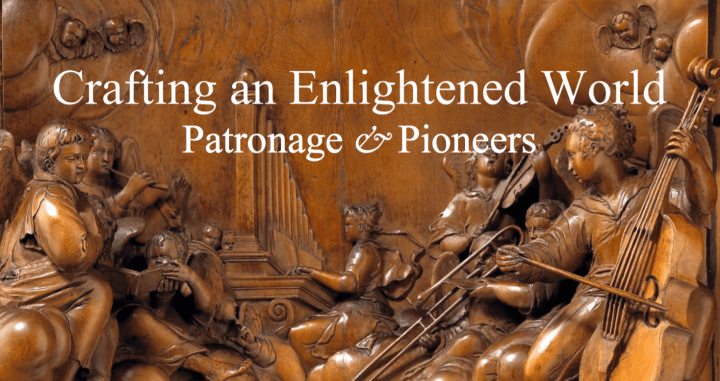
Grinling Gibbons, detail from the King David panel, ca. 1670, boxwood
(York: Fairfax House)
◊ ◊ ◊ ◊ ◊
2017 Fairfax House Georgian Studies Symposium
Crafting an Enlightened World: Patronage & Pioneers
Fairfax House, York, 19–20 October 2017
Proposals due by 8 September 2017
York, from the late seventeenth to the early nineteenth century, was amongst the key centres in Britain where ideas, innovation, experimentation, and invention flourished, contributing to what is now referred to as the ‘era of Enlightenment’. Indeed, York was to play host to nationally and internationally celebrated astronomers, historians, clockmakers, scientists, painters, sculptors, architects, and cabinet-makers, as well as leading anti-slavery campaigners and enlightened mental health providers. The interdisciplinary nature of the talent which converged in vibrant hubs across the country such as York, reflected the spirit of the age in which scholars could simultaneously delve into religion, philosophy, natural sciences, mathematics, history, and the arts, seemingly without conflict. These progressive environments were key in sustaining and nurturing talented—often providing vibrant nexus points through which talented thinkers, scientists, artists, and craftspeople traversed, trained, worked, and often decided to permanently reside.
Crafting an Enlightened World: Patronage and Pioneers will be Fairfax House’s Fifth Symposium in Georgian Studies. Held in conjunction with the exhibition Made in York: Inventing & Enlightening the Georgian City, it aims to delve deeper into the theme of ‘Crafting an Enlightened World’ during the long eighteenth century (c.1680–1830), examining its roots and legacy. The symposium will focus on the driving forces behind creating an enlightened world and in turn how the Enlightenment fed and helped forge the environment in which pioneering craftsmanship in Britain during this period took flight.
Drawing on the breadth and diversity of enlightened talent which flourished in Britain during the era, the symposium hopes to offer a re-examination of the period, moving away from the London-centric narratives which have dominated analysis of the era, to a more nuanced yet holistic view of this period which also takes account of the regional Georgian urban realm.
The symposium will take place over two days. Day One will explore the contexts which emerged and fostered ‘enlightened’ creativity in the period. Echoing the eclectic interests of enlightened polymaths, we hope this first day will be broad and varied in the range of topics discussed and may include (though not limited to): studies focusing on the ‘enlightenment’ in the public, private and urban realms, clubs and societies, intellectual networks, the tools used in the dissemination of ideas and inventions, patronal networks, collecting, connoisseur and antiquarianism, issues of class and gender in Enlightenment practice, taxonomy, the historiography of the enlightenment, or the enlightenment as a literary phenomenon.
Building upon this, Day Two will primarily focus on ‘enlightened craftsmanship’, in its many varied forms and expressions. We hope to examine the processes of invention, creation, and crafting which gave physical expression to the phenomenon of the ‘enlightenment’. Considering its pioneers and patrons, topics could include but are not limited to: the influence of ‘enlightenment’ ideas on the arts, the synergy which existed between the sciences and the arts, the emergence of academies and centres of excellence, the role of religion, and regionality.
In the light of Fairfax House’s recent acquisition of Grinling Gibbons’s first-known, made-in-York artwork, the King David panel, a key part of Day Two will be devoted to his work, and we encourage in particular papers which look at the intersection of Gibbons, pioneering craftsmanship, and the Enlightenment.
Contributions in the form of papers not exceeding 20 minutes in length are invited addressing relevant topics. We are keen to encourage participation from the widest possible range of disciplines and backgrounds: museum professionals and volunteers, scholars and students in higher education, artists, craftspeople, and other practitioners. Please send proposals of around 200 words, accompanied by a brief one-paragraph biography, to fairfaxhousesymposium@gmail.com by Friday 8 September 2017. Any queries about the symposium should be sent to the same email address.
For the past five years Fairfax House has brought together world-class researchers from the academic and museum worlds for its annual Symposium in Georgian Studies. The symposia have provided a forum for the sharing of new and emerging scholarship into the long eighteenth century and the collaboration of academics and museum professionals in presenting this research to a public audience. As part of this ongoing commitment to expanding the reach of eighteenth-century scholarship, Fairfax House is excited to present its Cabinet of Curiosities. This addition to Fairfax House’s public-facing website will encompass fully-credited scholarly articles based on content from past exhibitions held at Fairfax House as well as articles from academics and museum professionals with interests in the long eighteenth century. A wide range of aspects of eighteenth-century life are to be covered from national to regional levels including consumption, fashion, revolution, urban life, Georgian households, architecture, enlightenment, and leisure. It is anticipated that the scholarship shared at the symposia will be disseminated through this site to a broader public audience and we therefore hope that speakers will consider contributing their papers to the Cabinet of Curiosities.










leave a comment