Call for Papers | The Romantic Eye, 1760–1860 and Beyond
From the YCBA:
The Romantic Eye, 1760–1860 and Beyond
Yale University, New Haven, 17–18 April 2015
Proposals due by 2 February 2015
This symposium examines Romanticism as a shape-shifting cultural phenomenon that resists easy categorization. Focusing on the period from 1760 to 1860, the symposium embraces the amorphousness that has been ascribed to Romanticism historically by eschewing any limiting definition of it, seeking instead to explore the broad range of art and visual culture characterized as ‘Romantic’ during this hundred-year span. We are interested in what the Romantic ‘eye’ pursued and perceived, and how it set itself the task of recording those perceptions. In addition to interrogations of the relationship between the visual arts and Romanticism, we welcome papers on writers, composers, scientists, and philosophers whose projects engaged the visual. Papers also are sought for a special panel that will address the legacies of Romanticism in contemporary art.
This symposium coincides with a major collaborative exhibition organized by the Yale Center for British Art and the Yale University Art Gallery, The Critique of Reason: Romantic Art, 1760–1860, which opens March 6, 2015. The exhibition comprises more than three hundred paintings, sculptures, medals, watercolors, drawings, prints, and photographs by such iconic artists as William Blake, John Constable, Honoré Daumier, David d’Angers, Eugène Delacroix, Henry Fuseli, Théodore Géricault, Francisco de Goya, John Martin, and J. M. W. Turner. Talks that respond explicitly to works in the collections of the Yale Center for British Art or the Yale University Art Gallery are particularly encouraged, as are cross-disciplinary and comparative studies.
We are seeking presentations of thirty minutes in length. Graduate students and early career scholars are particularly encouraged to apply. Travel and accommodation costs will be covered by the organizers. Please e-mail abstracts of no more than three hundred words and a short CV or bio (no more than two pages) by February 2, 2015, to romanticism2015@gmail.com.
The symposium is co-sponsored by the Department of the History of Art at Yale University, the Yale Center for British Art, the Yale University Art Gallery, and the Yale Student Colloquia Fund.
Call for Papers | Echoes—Reflections: German Studies Conference
From the conference website:
Echoes—Reflections: German Studies Graduate Conference
Brown University, Providence, Rhode Island, 24–25 April 2015
Proposals due by 31 January 2015
Keynote Speaker: Professor Avital Ronell, New York University
Ich kann Dich noch sehn: ein Echo.
Ertastbar mit Fühl-
wörtern, am Abschieds-
grat. –Paul Celan, “Ich kann Dich noch sehen”
At the ridge of language, language resounds as an echo—an echo that is the other of and in language, resounding in repetitions and transformations, always already endangered to be forgotten in impending silence. Silence haunts the end of each line break, each seismic shift, in the first stanza of Celan’s poem “Ich kann Dich noch sehen” (1967), which addresses the echo as an aesthetic phenomenon at the outer limit of presence. The outer limit of presence marked by the echo is never one of merely sound or speech, but towards and for a lost presence that has ceased to be hearable as well as visible. Such an interrelation of voice and reflection is also central to Ovid’s classical rendition of the myth about the nymph Echo: she is forced to repeat the words of her vis-à-vis, while Narcissus, at the brim of a well, falls in love with his own image.
Since the 18th century, the evasive echo has been a point of reflection in German literature and philosophy. From Lessing to Herder and Kant, aesthetic re-flection attempted to correct, enrich, and complement ethical and political discourse, whether as a subjective faculty, Besinnung, or the counterpart of conceptual knowledge. Between loss and intensification, echoes of thought and language reverberate through Hegel’s speculative logic, the Romantics’ idea of art as a medium of reflection, Nietzsche’s Genealogy of Morals, and Adorno’s Aesthetic Theory. In the 20th century, during which concepts such as history and historical time were continuously challenged, the echo allowed for a rethinking of nonlinear and discontinuous forms of correspondence, interruption, and similarity. While Walter Benjamin emphasizes the translator’s task of perceiving the “echo of the original,” Heidegger, Celan, and others, in turn, take up the concern of how the pursuit of such an origin remains enmeshed in questions of historical specificity, politics, and rhetoric. (more…)
Call for Papers | Discovering Dalmatia
From H-ArtHist:
Discovering Dalmatia in 18th- and 19th-Century Travelogues, Pictures, and Photographs
Institute of Art History – Center Cvito Fiskovic in Split, Croatia, 21–23 May 2015
Proposals due by 28 February 2015
The idea of the Grand Tour, which began in the 17th century, gained extreme popularity throughout the 18th and 19th centuries. Although the Grand Tour originally focused on Rome, the exploration of the Ancient World, in which the origins of the Neoclassical period lay, its reach widened to further areas once part of the Roman Empire, among which Dalmatia held a prominent position. Drawings and literary works by travel writers-artists from that period are treasured in prestigious European museums and libraries and together constitute a priceless portion of the European cultural heritage.
There are two fundamental reasons why Dalmatia became a major destination of the European Grand Tour in the 18th and the 19th centuries: it presented a fountainhead of Ancient forms, knowledge of which helped in the quest for a universal language of architecture, and in addition it was almost an uncharted territory inspiring Enlightenment intellectuals to discover and get to know the world.
Ancient architecture presented the dominant cultural infrastructure of that period in Europe. The outline of the European Grand Tour embraces places which preserved the traces of those idealised times. However, travel writers also collected information of another kind; on the topography and customs, language and religion and in short a general representation of the area they wanted to come to know and write about.
The overall aim of the conference is to identify, problematise and integrate the issues related to the phenomenon of description of space, predominantly Dalmatian. This phenomenon was a formative factor in the development of European Neoclassicism and Romanticism in literature, the arts and architecture. Invited to the conference, accordingly, are art historians, literature comparatists, historians, architecture historians and theorists and experts from cognate disciplines to contribution to the research into the role of Dalmatia in the European Grand Tour in all its aspects.
The conference arises out of the research project Dalmatia: A Destination of European Grand Tour in the 18th and the 19th Century (2014–2017) of the Institute of Art History, under the aegis of the Croatian Science Foundation. Please visit our website to learn more about the project.
We welcome proposals for 20-minute papers. Proposals should consist of a 250-word abstract and 1-page CV, sent via email as a pdf attachment to asverko@ipu.hr by 28 February 2015. Notification of acceptance will be sent by 9 March 2015. If you have questions about the conference, please contact the organizing committee at asverko@ipu.hr.
Academic Committee
Josko Belamaric (Institute of Art History – Centre Cvito Fiskovic Split)
Cvijeta Pavlovic (University of Zagreb, Faculty of Humanities and Social Sciences)
Milan Pelc (Institute of Art History Zagreb)
John A. Pinto (Princeton University)
Ana Sverko (Institute of Art History – Centre Cvito Fiskovic Split)
Elke Katharina Wittich (Fresenius University of Applied Sciences, AMD Hamburg)
Organizing Committee
Josko Belamaric (Institute of Art History – Centre Cvito Fiskovic Split)
Cvijeta Pavlovic (University of Zagreb, Faculty of Humanities and Social Sciences)
Milan Pelc (Institute of Art History Zagreb)
Ana Sverko (Institute of Art History – Centre Cvito Fiskovic Split)
Important Information
• Registration fee is 50 euros.
• The registration fee includes: welcome reception on 20/05/2015 evening; conference material; lunches and refreshments during the scheduled breaks.
• Registration fee can be paid by bank transfer. The invoice of the participation fee will be sent to the participants by e-mail within 5 days of the notification of acceptance.
• The organizers could arrange accommodation for the participants.
• The organizers are not able to pay the travel expenses of the participants.
• Conference languages: English and French.
• The duration of a spoken contribution should not exceed 20 minutes. Contributions will be divided into sections according to topics. Each section will be followed by discussion.
• Selected papers will be published in the conference proceedings. Please send final written version by 31/08/2015.
Call for Papers | The Baroque in Light of the Cold War
From H-ArtHist:
Baroque for a Wide Public: Popular Media and Their
Constructions of the Epoch on Both Sides of the Iron Curtain
Barock für ein breites Publikum. Konstruktionen der Epoche
in populären Medien diesseits und jenseits des Eisernen Vorhangs
Humboldt University Berlin, 11–13 June 2015
Proposals due by 15 February 2015
Organised by Prof. Dr. Michaela Marek, Chair of Art History of Eastern Europe at the Institute of Art and Visual History of Humboldt University Berlin
Histories of art and artists have found a mass public, especially since the 1950s, with the rise of magazines and illustrated books, radio, fictional and documentary films as well as large photo and art exhibitions. Intended for a broad public, they allow to detect the ideas of art and cultural heritage, and connected to that, interpretive models of historic developments in the tension of traditional historic interpretations and current interests. Nevertheless, the significance of pop-cultural art histories (Doris Berger) has not yet been researched thoroughly—particularly by comparative studies—against the background of the competing systems.
This is particularly obvious when forms of communicating art historical knowledge on earlier epochs like the Baroque are studied. While its construction as an epoch of absolutism and of Counter-Reformation initially rather strained its perception in state socialism, exhibitions in Austria advertised the Baroque as a national style serving identity policies (Andreas Nierhaus).
The question is what meanings were attached to the term ‘Baroque’. How were art works and buildings of the 17th and 18th centuries—a time characterised by a Europe-wide circulating of creative ideas—presented in exhibitions, illustrated books, films, travel guides, object-related brochures, school books or in literature on local history? How did predominant national paradigms of art historiography find expression in them, how the existence of the ‘Iron Curtain’? What concepts of historiography were constructed in these media, what images of the epoch were outlined? Did the exhibitions and popular literature differ regarding the intended domestic or foreign public? What were the (new) focuses, evaluations, symbolic charges and attributions to integrate or exclude ‘precarious’ monuments? What relation existed between academic and popular art histories, for which not rarely leading members of the discipline had a share of the responsibility? What role played international exchange and cooperation in the Cold War, as e. g. regarding travelling exhibitions? And which influence did current social incidents and developments exert on the communication of Baroque art in the countries in question during the decades of the division of Europe?
The aim of the symposium as well as of the research project Asymmetrische Kunstgeschichte? Erforschung und Vermittlung ‘prekärer’ Denkmälerbestände im Kalten Krieg (Asymmetrical Art History? Research and Communication of ‘Precarious’ Monuments in the Cold War) in the frame of which the conference will take place is to fathom comparative approaches to art histories and their popularizations as an East-Western intertwined history of discourse. In this context, the focus will be intentionally not the preservation of the objects, but the concepts expressed in texts and images of this period of art between ideological role models and creative interpretation.
Please send us a proposal (one A4-page maximum) of your (unpublished) contribution of 20 minutes as well as a short CV by 15 February, 2015. Conference languages are German and English.
Contact addresses for papers and queries:
Prof. Dr. Michaela Marek, michaela.marek@culture.hu-berlin.de
Eva Pluharová-Grigiene, pluharova@culture.hu-berlin.de
Renata Choinka, choinka@hu-berlin.de
New Journal | Royal Studies Journal
We are delighted to announce that the first issue of the Royal Studies Journal is out now. This issue features articles by Carole Levin, Cinzia Recca, and Nadia van Pelt as well as six book reviews of recent publications in the field of royal studies.
The Royal Studies Journal is a peer-reviewed, open access, interdisciplinary and international journal for the field of Royal Studies and will be published twice a year. Articles can be submitted in French, Spanish, Portuguese, and German, although English is preferred. Book reviews will also be featured. Shorter notices, news items, and conference reports will be on our official blog.
Please visit our website to find out more about the journal and how to submit articles to the RSJ. If you wish to contact us with any queries about the journal, suggestions of upcoming/recent works in the field to review or the submissions process, please email us at info.rsj@winchester.ac.uk.
◊ ◊ ◊ ◊ ◊
Royal Studies Journal 1.1 (2014)
Articles
Carole Levin, “Elizabeth’s Ghost: The Afterlife of the Queen in Stuart England”
Cinzia Reccia, “Maria Carolina and Marie Antoinette: Sisters and Queens in the Mirror of Jacobin Public Opinion”
Nadia Therese van Pelt, “Teens and Tudors: The Pedagogy of Royal Studies”
Book Reviews
Carey Fleiner, “Review: Lott, Death and Dynasty in Early Imperial Rome”
Stephen Donnachie, “Review: Perry, John of Brienne: King of Jerusalem”
Sean McGlynn, “Review: Richardson, The Field of Cloth of Gold”
Elena Woodacre, “Review: Cruz and Galli (eds.), Early Modern Hapsburg Women”
Estelle Paranque, “Review: Knecht, Hero or Tyrant? Henri III, King of France”
Charlotte Backerra, “Review: Aikin, A Ruler’s Consort in Early Modern Germany”
Call for Papers | Global France, Global French
From H-ArtHist:
Global France, Global French
Humanities Research Centre, Australian National University, Canberra, 21–23 October 2015
Proposals due by 5 March 2015
Confirmed keynotes
Professor Dominic Thomas, University of California, Los Angeles
Professor Charles Forsdick, University of Liverpool
In the eyes of many, France was the centre of the world throughout the modern age. Home of the Revolution and the Rights of Man, heart of a vast colonial empire, capital of the literary, fashion and art worlds, France, and Paris in particular, was at once historical and mythical. Today, following upon a sequence of ‘turns’, from the postcolonial to the global, this centre has given way to multiple centres, to conflicting and complementary sites of physical, economic and cultural exchange. As France has transitioned from a colonial power to a central member of the European Union, it has been forced to negotiate immigration policies, the rise of political extremism and the growing unrest over the linguistic, cultural and spatial borders that divide French society. Debates about French national identity rage in political and cultural sectors: while some seek to bolster a weakened idea of ‘Frenchness’, others, for example the signatories of the 2007 Littérature-monde manifesto, aim to redefine or ‘world’ that identity.
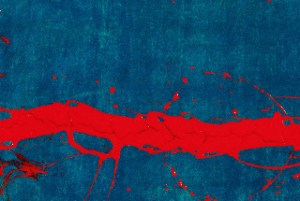
Art work by Fabienne Verdier
At the same time, the ‘global turn’ in French studies has encouraged scholars to re-examine French literature, language, culture and history through a new, decentred perspective. Recent criticism in literature and history, for example, has returned to early modern literary texts and spaces as well as to major historical events like the French Revolution, exploring the ways in which these traditions and events were not determined in a cultural vacuum, but, as Peter Hulme has noted, ‘were the product[s] of constant, intricate, but mostly unacknowledged traffic with the non-European world’.
The goal of this colloquium is to offer an image of global France and global French, past, present and future. How have French culture and politics been shaped by encounters with European neighbours and with the non-European world? How do contemporary migratory patterns and networks between France and the wider world compare to historical ones? How have neo-colonial practices been reshaped by globalized markets and transnational capital? How have various art forms allowed for the articulation of displacement, community and solidarity throughout French history and into the global present? In short, is the global a new horizon, or one that we are just discovering?
Our aim is to generate an interdisciplinary discussion among colleagues in a wide range of fields, including literature, film, linguistics, cultural studies, history, art history, philosophy, music and digital humanities. Topics for papers/panels include but are not limited to:
• Global vs. local (cultures, histories, languages, art forms)
• Migration: patterns and networks
• Migration: language and policy
• The European Union and French national identity
• Multicultural, multilingual, multiethnic France/Paris
• Colonial, postcolonial, neo-colonial flows and encounters
• Translation among languages, cultures, media
• The circulation of bodies, capital, ideas, linguistic forms, art forms
• Borders: visible and invisible, inner and outer, real and imagined, linguistic and geopolitical
• Travel, tourism, trade
• Diasporas, past and present
Please send an abstract of 300 words and a CV (max 2 pages) to Leslie.Barnes@anu.edu.au. Papers can be in English or French. The deadline for abstracts is 5 March 2015.
Call for Papers | Re-imagining Childhood: Images and Objects
From H-ArtHist:
Re-imagining Childhood: Images, Objects and the Voice of the Child
Centre for the Study of Play and Recreation, University of Greenwich, 9 May 2015
Proposals due by 1 March 2015
The Society for the Study of Childhood in the Past
This conference aims to stimulate interdisciplinary debate on the question of what images and material objects can tell us about the subjective experience of being a child in the past. It will explore the ways in which non-written evidence—in particular that which comes under the heading ‘material culture’ and ‘visual culture’—can be used to open up new possibilities for the study of the history of childhood.
As Peter Stearns indicated in his “Challenges in the History of Childhood” (The Journal of the History of Childhood and Youth, 2008), no one interested in the importance of history as a way to understand the human condition, can ignore the importance of historical perspectives about childhood. The history of childhood has been shaped by the concerns of the world in which its historians live. Although the discipline that we understand today as ‘history of childhood’ is less than 100 years old, it is a field of growing interest, as reflected in the ever-greater number of publications dealing with the subject. Childhood and children are increasingly present on the bookshelves, in documentaries and in exhibitions, and there seems to be an almost inexhaustible consumption of the values and ideas that children and childhood represent. Thus we find ourselves at a fascinating time for considering what it is that adults seek in the image of the child. What attracts us? What disturbs us? What is at play in the gaze of the child?
One could claim that all histories written about children are related, in one way or another, to the book that is considered to represent the origin of the discipline: Centuries of Childhood (L’Enfant et la Vie Familiale sous l’Ancien Régime), which Philippe Ariès wrote in 1960. Ariès’ great success was to convince almost all his readers that childhood has a history and that, across time and in different cultures, both ideas about childhood and the experience of being a child have changed. While Aries’ evidence was wide-ranging, he has been much criticised for failing to subject it to proper scrutiny. In particular, he has been accused of ‘reading’ images too literally. As a result, historians became very cautious about the use of non-written evidence which has only recently started to make a renewed and welcome impact. It is clear that most approaches to the history of childhood depend heavily on textual sources, but this approach can lead to a distorted understanding, in so far as many experiences of the past are not reflected in those texts. Other paths could be—and must be—explored.
Re-imagining Childhood attempts to go beyond this limitation by arguing that the history of childhood—or, at least, any history of childhood which purports to cover more than a limited historical period—is possible only through a multidisciplinary exercise that adds evidence from visual or material culture to the study of published sources. The study of the material and visual culture of childhood provides a way to contribute to a better understanding of earlier concepts of childhood. These additional sources also help us to tap into children’s experiences and they thereby serve as helpful tools in unravelling the ‘voice of the child’.
We welcome original studies that focus on any historical period, carried out within the arts and humanities or the social sciences, that shed light on the power of objects and images to bring children back into the history of childhood. An abstract of no more than 300 words for a 20-minute presentation, along with the title, name and affiliation, should be send to Leticia Fernández-Fontecha Rumeu (playandrecreation@greenwich.ac.uk) by March 1st. Applicants whose papers are accepted will be notified by March 15th.
Call for Papers | Art and Science in the Early Modern Low Countries
From the call for papers:
Art and Science in the Early Modern Low Countries
Amsterdam, 17–18 September 2015
Proposals due by 15 April 2015

Anatomical studies of a human heart, attributed to Jan l’ Admiral, 1700–1750 (Amsterdam: Rijksmuseum).
Anticipating plans for a future exhibition on Art and Science in the Early Modern Low Countries (ca 1550–1730), the Rijksmuseum and the Huygens Institute for the History of the Netherlands (Royal Dutch Academy of Arts and Sciences) organize a preliminary, two-day conference. This event will take place at the Rijksmuseum (September 17th) and the Trippenhuis (September 18th) in Amsterdam.
The Low Countries were flourishing in the early Modern Period, influenced by developments in Northern Italy and Southern Germany. First Antwerp and later Amsterdam emerged as centers of artistic and scientific innovation and creativity, and as nodal points in the exchange of goods, knowledge and skills. It is certainly no coincidence that a high level of artistic productivity in the Low Countries coincided with the so-called ‘Scientific Revolution’. Seen from a contemporary point of view, ars and scientia were complementary concepts, rather than opposites.
The aim of the conference is to explore the possibilities, prospects and also the pitfalls of the conjunction of ‘art and science’, and to contribute to the developing conversation between historians of art, historians of science and everyone interested in the visual and material culture of the sixteenth- and seventeenth-century Low Countries. The organizers look forward to receiving original submissions that address the relationships between art and science on both a material and a conceptual level.
Proposals which take objects, works of art, images, or illustrated texts as their point of departure are particularly welcomed. These may include ‘borderline’ topics—cross-overs between art and science, such as decorated shells, maps, models, pop-up books or anatomical preparations. Although the focus of the conference will be the Low Countries—both the South and the North—proposals which make reference to developments elsewhere shall certainly be considered, so long as the overall relevance for the main theme is clear.
Topics for discussion may include, but are not limited to
• the fluid borders between art and nature, both in theory and in practice (e.g. life casting techniques, strategies of display),
• the influence and use of new theories and instruments of visual representation (e.g. the use of perspective, anatomical analysis, the telescope, microscope and camera obscura),
• the processes and techniques that artists used for the visual representation of the increasing body of traditional and new knowledge, such as different print media and the use of color, multi-sheet and interactive prints.
• the mediation of direct observation by visual conventions and the specific demands of illustrations concerned with the production of new knowledge (for instance with regard to previously unknown flora, fauna and peoples, and to anatomical and astronomical discoveries),
• the emergence in visual materials of new conceptions of objectivity and trustworthiness (e.g. the meaning of ‘ad vivum’ and its cognates; the character and use of illustrations in natural histories and ‘scientific’ treatises),
• spaces where scholars, craftsmen and artists cooperated, discussed and produced new knowledge, such as cabinets of curiosities, the workshop, the anatomical theatre and the botanical garden,
• the role of religion in the definition and construction of knowledge and its influence on the visualization of knowledge.
We invite proposals for 20-minute and 10-minute papers, presenting the results of new or ongoing research. A 300-word abstract (preferably including an image or reference to a work of art), together with a short curriculum vitae, should be sent to both Jan de Hond (j.de.hond@rijksmuseum.nl) and Eric Jorink (eric.jorink@huygens.knaw.nl). Proposals should be submitted no later than April 15, 2015. The selection of proposals will take place during the following month.
Call for Papers | The Enlightenment of the Senses
From the Calgary-based Enlightenment Group:
The Enlightenment of the Senses
Mount Royal University, Calgary, Alberta, 6 March 2015
Proposals due by 30 January 2015
For its third symposium, The Enlightenment Group at Mount Royal University invites paper propositions on the enlightenment of the senses. This symposium is also open to undergraduate and graduate students.
The publication of Locke’s Essay Concerning Human Understanding in 1690 rejuvenated the relationship between thought and senses by rejecting the concept of innate ideas and establishing sense experience as the basis of knowledge. While the senses were no longer seen as the cause of errors or illusions, this new empiricism was difficult to reconcile with long privileged themes such as the nature of the soul and of the real essence of things. Voltaire and others would make use of those tensions in their critiques of orthodox theology. The work of writers such as Condillac would prolong the effect of Locke’s empiricism throughout the eighteenth century.
Given the influence of this epistemological revolution in Europe across philosophy, science, literature and the arts, this symposium aims at examining the notion of sensualism in the Enlightenment through the lens of various disciplines in order to map out the similarities and the differences in the reception and application of sensualism in the Enlightenment world.
Topics may include, but are not limited to
• Empiricism and science
• Arts and senses
• Sensualism and literature
• Senses and philosophy
• Taste and sensibility
• Social dynamics of sensibility and taste
Please submit abstracts of 250 words by January 30, 2015 to Antoine Eche (aeche@mtroyal.ca)
STUDENTS: submit your abstract by February 17, 2015.
The Enlightenment Group is an interdisciplinary group of MRU scholars engaged in the study of the Eighteenth Century.
Call for Papers | Crash and Burn: Destruction in American Art
As posted at H-ArtHist:
Crash and Burn: Destruction in American Art
The Courtauld Institute of Art, London, 5–6 June 2015
Proposals due by 15 February 2015
Destruction has long occupied a central position in the construction of an American national image. From Cotton Mather’s description of Boston as ‘the City of Destruction’ to the 9/11 attacks and Hurricane Katrina, the sheer visual force of destruction has repeatedly left an indelible mark on the collective psyche. As historians such as Richard Slotkin and Kevin Rozario have demonstrated, violent and destructive episodes have been inextricably linked with the apparently opposing forces of creation and regeneration so central to American self-imaging. This symposium will elaborate on such historical accounts to examine how the idea of destruction has shaped and been shaped by American art and visual culture.
Whether through the kind of dramatic cataclysm predicted in Thomas Cole’s The Course of Empire, or the ruined aftermath captured by the post-industrial landscapes of photographer Lewis Baltz, images of destruction in American art have often engaged with the most pressing historical questions of their time. Intensifying the paradoxes between artistic creation and destruction, American art has sometimes been directly engaged in the destructive act itself. As the recent ground-breaking exhibition Damage Control: Art and Destruction Since 1950 made clear, the efforts of conceptual artists to incorporate destruction as an artistic technique not only threatened to destroy the art object, but offered a powerful comment on contemporary social phenomena including urban renewal and ecological devastation. The capacity of artworks from earlier periods to embody such social and environmental concerns is a subject that merits increased scholarly attention.
The symposium will attempt to establish a genealogy for the destructive impulse as it was specifically activated in American art, charting its evolution from the colonial era to the present. How do American artists reconcile destruction with their own processes of creation? What motivated artists to incorporate destruction into their art, and how have these contextual meanings changed over time? The symposium will interrogate destruction as a theme addressed by artists through their work, but also consider those external forces that have seen the artwork itself subjected to the forces of destruction. Papers can consider works of art of all mediums and periods, as well as a wider range of visual and material culture.
Please submit abstracts of 150–200 words in English, along with a short biography of approximately 100 words to destructionsymposium@gmail.com by 15 February 2015. Speakers and attendees alike will be invited to submit proposals to present further work in a related workshop to be held at Tate later in 2015, as part of their Refiguring American Art initiative.
Organised by Hélène Valance, Terra Foundation for American Art Postdoctoral Fellow, The Courtauld Institute of Art, and Alex J. Taylor, Terra Foundation Research Fellow in American Art, Tate.










leave a comment