Call for Papers | Creatures of Comfort, 1650–1950
Rienzi’s 15th Anniversary Symposium | Creatures of Comfort, 1650–1950
Museum of Fine Arts, Houston, 19–21 September 2014
Proposals due by 1 May 2014
Rienzi, the Museum of Fine Arts Houston’s house museum for European decorative arts, celebrates its 15th anniversary as a public collection with the symposium, Creatures of Comfort, 1650–1950. By examining the period from 1650 to 1950, how and why did the concept of comfort evolve and become an important part of European and American cultures? What objects, inventions, aesthetic or cultural changes improved ones’ physical or emotional well-being simply by making life more comfortable?
Rienzi houses a significant European collection of paintings, sculpture, furniture, porcelain, and silver from the mid-17th to mid-19th centuries. Built in 1953 as a residence and now a house museum, Rienzi evokes the fine European country houses of the 18th century with formal, yet comfortable, furnishings, entertaining and private spaces, and rooms specifically designed for the enjoyment of family and friends. Rienzi also retains many modern amenities such as central air conditioning, a dishwasher, an elevator and other luxurious essentials that defined the ultimate comforts in America in the 1950s.
The Creatures of Comfort, 1650–1950 symposium offers academics and emerging scholars an opportunity to explore the ever-changing role of comfort in European and American cultures. The symposium will take place at the Museum of Fine Arts, Houston, from Friday, September 19, 2014, through Sunday, September 21, 2014.
We invite masters, doctorial students and emerging scholars to submit a 400-word abstract outlining a twenty-minute presentation, along with a current CV by May 1, 2014. Please direct all submissions to rienzisymposium@mfah.org. Selected participants will be notified by July 1, 2014. Participants will be offered a $600 travel and lodging stipend. All presentations will be given on Saturday, September 20, and Sunday, September 21, at the Museum of Fine Arts, Houston.
Possible themes of investigation may include, but are not limited to: interiors, design, architecture, dining, privacy, leisure activities, etiquette, gender, costume, travel, technology, and economics.
The keynote address will be given on Friday, September 19, 2014 by Dr. Joan DeJean, Cultural Historian and Trustee Professor of Romance Languages at the University of Pennsylvania. Her research includes the cultural history and the material culture of late 17th- and early 18th-century France. She is the author of ten books on French literature, history, and material culture, including, The Essence of Style, How the French Invented High Fashion, Fine Food, Chic Cafes, Style, and Sophistication, The Age of Comfort: When Paris Discovered Casual and the Modern Home Began, and her most recent publication, How Paris Became Paris: The Invention of the Modern City.
Call for Papers | French Seventeenth-Century Studies
For those of you working in the long seventeenth century. From SE17:
33rd Annual Conference | Society for Interdisciplinary French Seventeenth-Century Studies
University of Western Ontario, London, Canada, 16–18 October 2014
Proposals due by 30 March 2014
Conference Organizer / Organisateur du colloque
Jean Leclerc, University of Western Ontario, jlecler@uwo.ca
Scholars from all disciplines are invited to submit abstracts in French or English (300 words maximum) for presentations relating to the session themes listed below. Please send abstracts by email directly to session chairs by March 30, 2014. Presentations will be of 20 minutes’ duration.
Les chercheurs de toutes disciplines sont invités à soumettre des propositions de communication (en français ou en anglais) relatives aux thèmes annoncés ci-dessous. Les propositions ne doivent pas dépasser 300 mots et sont à envoyer par courriel directement aux présidents de séance avant le 30 mars 2014. Les interventions devront se limiter à 20 minutes.
1. Economy and spending / Économie et dépenses
Chair / Présidente de session : Nathalie Freidel, Université Wilfrid Laurier, nfreidel@wlu.ca
2. Center and margins / Centre et marges
Chair / Président de session : Jean-Vincent Blanchard, Swarthmore College, jblanch1@swarthmore.edu
3. Old and New France / Ancienne et Nouvelle France
Chair / Présidente de session : Marie-Christine Pioffet, York University, mpioffet@yorku.ca
4. Spaces and perspectives / Espaces et perspectives
Chair / Président de session : Francis Assaf, University of Georgia, fassaf@uga.edu
5. Disappearances and endings / Disparitions et fins
Chair / Présidente de session : Charlotte Trinquet, University of Central Florida, ctrinquet@gmail.com
6. Dazzling, stunning, sublime / Éblouissement, sidération, sublime
Chair / Président de session : Gilles Declercq, Université Sorbonne Nouvelle, gilles.declercq@univ-paris3.fr
7. Pedagogy / Pédagogie
Chair / Présidente de session : Sylvaine Guyot, Harvard University, guyot@fas.harvard.edu
Further information concerning the conference will be available starting in March on the Society’s website / Des informations complémentaires seront disponibles dès le mois de mars sur le site Web de la Société.
Call for Papers | Trade in Animals in the Indian Ocean World
It’s not an art history conference, but thinking about possible correlations between representations of animals and the actual trade in animals would seem fruitful. And maybe some of you are already doing that. -CH
From McGill’s Indian Ocean World Centre:
Trade in Animals and Animal Products in the Indian Ocean World
Indian Ocean World Centre, McGill University, Montreal, 23–24 October 2014
Organized by Omri Bassewitch Frenkel
Proposals due by 1 May 2014
Recently, much public attention has focussed on the lucrative yet often illegal trade in the Indian Ocean world (IOW) of animal parts, including elephant tusks, rhinoceros horns, and tiger skins. However, the trade in exotic animals and animal parts in the IOW, from Africa to China, is not a modern phenomenon. Its roots can be traced back centuries and is reflected in the traditions, folklore, medicinal practices and religious beliefs of many different societies across the IOW. It has also impacted on the environment. By exploring the long-distance trade in animals and animal products as economic, cultural, and ecological phenomenon, this conference will seek to interrogate the concept of the Indian Ocean as a ‘world’. The conference will consider the trade in all land and sea animals as well as birds.
A wide range of relevant issues will be given consideration, but prospective participants are asked to give special consideration to the following themes:
• Trade in exotic animals
• Trade in animal parts
• Trade in animal products
• Impact of the trade on the environment of the source regions
• Finance and structure of the trade
• Prices and profits
• Demand and consumption patterns
• Legal and religious prescriptions governing the hunting/collection and consumption of animals and animal parts
Papers should be in English or French. Deadline for submission of abstracts (title and 1–2 paragraphs) is 1 May 2014. The review process will be completed by 1 June 2014. Papers should be a maximum of 9,000 words (including footnotes). We anticipate that selected papers will be published in a volume to appear in Palgrave Macmillan’s Indian Ocean World Studies series. A registration fee of $200 USD ($60 USD for students) is payable by 1 September 2014. The late registration fee (after 1 September 2014) is $250 USD and $100 USD for students. Registration is payable by cash, personal cheque or money order. Credit card payments are not accepted. All those interested in participating should complete the conference registration form and return it by email to the IOWC (iowc@mcgill.ca). All queries should be sent to the conference organizer, Omri Bassewitch, omri.bassewitchfrenkel@mail.mcgill.ca.
Call for Articles | The Eighteenth-Century Bird in Literature
Edited Volume | The Eighteenth-Century Bird in Literature, 1660–1830
Proposals due by 1 July 2014
A great deal of scholarly effort has been made over the years to gather together, analyze, and anthologize eighteenth-century bird poetry, paintings, and other material cultures that describe and represent birds in this period. Very few publications, however, have attempted to bring together the wide range of different approaches that scholars have adopted. This new project, The Eighteenth-Century Bird in Literature, 1660–1830, accordingly aims to further extend the discussion of the eighteenth-century bird and bring incisive, new critical approaches to the topic of birds and the representations of birds in eighteenth-century literature and cultural life. The editors are particularly interested in ways in which a deeper understanding of the bird in eighteenth-century cultural life shapes our twenty-first century notions of birds, our behaviors towards birds, and towards the environments that birds inhabit.
Chapters may include (but are not limited to) engagement with additional perspectives on eighteenth-century birds. These are just a few suggested topics:
• The eighteenth-century bird in the visual arts of the period
• Natural histories and the eighteenth-century bird
• Print cultures and the eighteenth-century bird
• Animal welfare and animal rights discourses around eighteenth-century birds
• Figurative birds
• The languages of eighteenth-century birds
• The exotic, the local, and the eighteenth-century bird
• The eighteenth-century bird as pet
• Ecocriticism and the eighteenth-century bird
• Science, culture, and the eighteenth-century bird
• Animal studies and the eighteenth-century bird
• Co-evolutions: the eighteenth-century bird and other animals (human and non-human)
• Eighteenth-century bird habitats, land-use transformations, and cultures
• Migrations, diasporas, and the eighteenth-century bird
We ask that anyone interested in contributing to this volume submit a one page CV (including previous publications) and an abstract of no more than 500 words by July 1, 2014 in docx or pdf format. Please send abstracts and direct any questions to the volume editors: Anne Milne (anne.milne@utoronto.ca), Brycchan Carey (brycchan@brycchancarey.com) and Sayre Greenfield (sng6@pitt.edu).
Call for Participation | British Print Culture in a Transnational Context
Call for Participation from The Paul Mellon Centre for Studies in British Art:
Graduate Summer Seminar | British Print Culture in a Transnational Context, 1700–2014
The Paul Mellon Centre for British Art, London, 21–25 July 2014
Applications due by 10 March 2014
In July 2014, the Paul Mellon Centre for Studies in British Art will offer a week-long graduate student seminar focusing on British print culture. This is open to doctoral candidates who are working on related topics, or whose research would benefit from a deeper knowledge of the subject. There is a substantial body of literature on British prints that takes the form of survey publications, monographic studies of individual printmakers, and studies of individual techniques, and a number of scholars and doctoral students are currently undertaking research related to these topics. However, the broad field of British print culture still remains relatively underexplored, and its importance for those working in other areas of British visual culture tends to be underestimated. Two related areas, in particular, have been neglected and offer rich possibilities for further study: the reproductive print and the transnational aspect of the British print. The now canonical division between reproductive and ‘original’ prints has tended to elevate the latter category at the expense of the former, and the long-held perception of the status of professional engravers working in Britain as inferior to the artists whose work they translated has obscured appreciation of the collaborative relationships between artist and engraver, and so inhibited our understanding of the complexities of British artistic production. Secondly, Stephen Bann’s research on Anglo-French exchange in nineteenth-century reproductive printmaking has provided an important model for investigating the transnational nature of the British print trade, the various different manifestations of which include: British engravers working elsewhere in the world; foreign engravers working in Britain; the circulation of British prints around the world; the appropriation of imagery from non-British prints in Britain and vice-versa; and indeed the emergence of global modes of representation transmitted by way of prints throughout the former British empire.
The seminar will engage with the development of British print culture, in a transnational context, from 1770 to the present day. It will offer an opportunity for consideration of the state of the field, through a series of sessions taught at the Paul Mellon Centre and at various print rooms in central London, including the British Museum, the Courtauld Institute of Art, University College London, and the V & A Museum. Students will have the chance to see and discuss a wide range of primary materials. The seminar will also offer an introduction to the different techniques of printmaking in relation to their historical development, and includes a visit to a print studio. (more…)
Call for Papers | Perversions of Paper
While it’s a symposium especially geared toward book studies, it seems like some of you working on prints would have exciting examples of “papery aberrations.” -CH
Perversions of Paper
Birkbeck Material Texts Network and the Archive Futures Network
Keynes Library, Birkbeck College, University of London, 28 June 2014
Proposals due by 30 March 2014
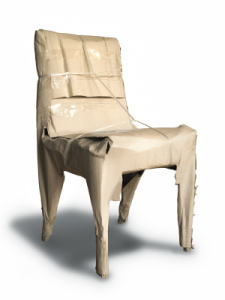 Perversions of Paper is a one-day symposium investigating the outer limits of our interactions with books and with paper. It considers unorthodox engagements with texts, from cherishing or hoarding them to mutilating and desecrating them, from wearing them to chewing them, and from inhaling their scent to erasing their content.
‘Perversion’ may apply to deviations from normal usage but also to our psychological investments in paper. To talk of having a fetish for books is common, but is there more to this than merely well-worn cliché? What part do books and other written artefacts play in our imaginary and psychic lives, and what complex emotional attachments do we develop towards them? Also, how might literary studies or cultural history register these impulses and acts; what kind of methodologies are appropriate?
This symposium invites reflections on perverse uses of—and relationships with—paper and parchment. We welcome proposals from a range of historical periods and disciplinary backgrounds, and from postgraduate students, as well as from more established academics. Contributors are invited to consider bookish and papery aberrations from any number of angles, including but not limited to: (more…)
Call for Papers | Fifth Annual Feminist Art History Conference
Fifth Annual Feminist Art History Conference
American University, Washington, D.C., 31 October — 2 November 2014
Proposals due by 15 May 2014
This annual conference builds on the legacy of feminist art-historical scholarship and pedagogy initiated by Norma Broude and Mary D. Garrard at American University. To further the inclusive spirit of their groundbreaking anthologies, we invite papers on subjects spanning the chronological spectrum, from the ancient world through the present, to foster a broad dialogue on feminist art-historical practice. Papers may address such topics as: artists, movements, and works of art and architecture; cultural institutions and critical discourses; practices of collecting, patronage, and display; the gendering of objects, spaces, and media; the reception of images; and issues of power, agency, gender, and sexuality within visual cultures. Submissions on under-represented art-historical fields, geographic areas, national traditions, and issues of race and ethnicity are encouraged.
To be considered for participation, please provide a single document in Microsoft Word. It should consist of a one-page, single-spaced proposal of unpublished work up to 500 words for a 20-minute presentation, followed by a curriculum vitae of no more than two pages. Please name the document “[last name]-proposal” and submit with the subject line “[last name]-proposal” to fahc5papers@gmail.com.
Submission Deadline: May 15, 2014. Invitations to participate will be sent by July 1.
Keynote speaker: Professor Lisa Gail Collins, Vassar College
Sponsored by the Art History Program and the Department of Art, College of Arts and Sciences, American University. Organizing committee: Kathe Albrecht, Juliet Bellow, Norma Broude, Kim Butler Wingfield, Mary D. Garrard, Helen Langa, Andrea Pearson, and Ying-chen Peng.
Call for Papers | Tracing the Heroic through Gender: 1650, 1750, 1850
Tracing the Heroic through Gender: 1650, 1750, 1850
Collaborative Research Cente 948, University of Freiburg, 26–28 February 2015
Proposals due by 28 March 2014
In most societies the heroic is in many ways gendered. Attributes of masculinity might first come to mind. Yet, from a historical perspective it becomes apparent that heroizations often also have feminine connotations. The social and cultural production of the heroic cannot be analyzed exclusively in terms of masculinity (and masculinity-studies), nor can we regard women or femininity simply as exceptions in this field. Rather, the relational character of the category gender needs to be taken seriously.
The fundamental relationality, the ‘constructedness’, and the historicity of gender are among the core assumptions in gender studies today. Based on this and by interdisciplinary cooperation the conference will examine forms, mediums and processes of heroization as well as discourses of heroic transgression, exceptionality or veneration for certain periods in time.
In order to give adequate consideration to the complexities of the historical entanglement between gender and heroization, we would like to use gender as an analytical tool in a new way. Speaking metaphorically, one might understand gender as a ‘tracer’ that ‘leads’ us, which way we may uncover new aspects of heroic ideas and concepts.
In today’s natural sciences, a tracer is a substance that helps with the exploration of certain organisms or environments. In experiments, the tracer passes through these environments and reacts to each of them in a different way. Hence, the tracer itself is not the object of study; rather a third element distinguishable from the tracer is explored. Therefore we propose to use gender systematically to ‘trace’ various historical ‘environments’ of the heroic. We are interested in gender relations, men and women as heroes or heroines and their (intersectionally differentiated) construction. Primarily, however, we are interested in
a. the heroic itself,
b. the historical contexts which shape the heroic,
c. its medial and performative manifestations and
d. its spatiotemporal trends and transformations.
We welcome scholars from all fields of the humanities and social sciences. The conference focusses on areas of European culture at three different points in time—1650, 1750 and 1850—which are to be discussed from the viewpoints of different disciplines. Proposals including an abstract of a maximum 2000 characters and a one-page
CV should be submitted by March 28, 2014 to gender@sfb948.uni-freiburg.de. The conference will be held in English. A collection of essays based on selected presentations from the conference is to be published. An extended version of the call for papers with further conceptual research questions can be found here.
Call for Papers | Art as Cultural Diplomacy: Eastern and Western Europe
Art as Cultural Diplomacy: (Re)Constructing Notions of Eastern and Western Europe
Berlin, 28–29 March 2014
Proposals due by 25 February 2014
Panel Organizer: Cassandra Sciortino, University of California, Santa Barbara
As part of the Third Euroacademia International Conference Re-Inventing Eastern Europe to be held in Berlin, the panel Art as Cultural Diplomacy seeks papers that explore the function of art (in its broadest definition) as an instrument of cultural diplomacy by the state and, especially, by nongovernmental actors. The main theme of the session is the question of art and diplomacy in Europe before and after the fall of the Berlin Wall. Papers are welcome that explore issues related to the role of art, diplomacy and the politicization of the European Union and its candidate countries, as are those which consider how the arts have pursued or resisted East-West dichotomies and other narratives of alterity in Europe and worldwide. The panel seeks to combine a wide range of interdisciplinary perspectives to explore how art—its various practices, history, and theory—are an important area of inquiry in the expanding field of cultural diplomacy. Selected papers will be invited for publication in a book.
Some examples of topics include:
• How can art serve as a neutral platform for exchange to promote dialogue and understanding between states?
• How can art, including organized festivals (i.e. film, art, music), cultivate transnational identities that undermine dichotomies of East and West, and other narratives of alterity in Europe and beyond it?
• The implications for art as an instrument of diplomacy in a postmodern age where geopolitics and power are increasingly mobilized by image-based structures of persuasion
• How has/can art facilitate cohesion between European Union member states and candidate states that effectively responds to the EU’s efforts to create ‘unity in diversity’?
• The politics of mapping Europe: mental and cartographic
• Community-based art as a social practice to engage issues of European identity
• The difference between art as cultural diplomacy and propaganda
• The digital revolution and the emergence of social media as platforms for art to communicate across social, cultural, and national boundaries?
• Diplomacy in the history of art in Europe and Eastern Europe
• Artists as diplomats
• Art history as diplomacy—exhibitions, post-colonial criticism, global art history, and other revisions to the conventional boundaries of Europe and its history of art
• The international activity of cultural institutes
If interested in participating, please send an abstract (maximum of 300 words) together with the details of your affiliation until 25th of February 2014 to cassandra.sciortino@berkeley.edu and application@euroacademia.eu. More information is available here
Call for Papers | Family Patronage in Genoa, Rome, and Venice
Family Patronage in Early Modern Genoa, Rome, and Venice, 1500–1750
Bibliotheca Hertziana—Max-Planck-Institut für Kunstgeschichte, Rome, 8 September 2014
Proposals due by 15 April 2014
Among the increasingly monarchic arena of Early Modern Europe, the powerful Italian cities of Genoa, Rome, and Venice are exceptional. Genoa and Venice, the largest remaining republics in Italy, predominated the financial, mercantile, and military spheres of the Mediterranean. Rome’s religious authority and historical cachet, along with its sizable territory, were the foundations of its leading position. All three of these cities stand out for their oligarchic
power structures; while Genoa and Venice were led by governments elected from a restricted book of families, Rome fostered an aristocracy both parallel to and participating in the electoral principle of the Papal court. Therefore, in the absence of hereditary lords, power and prestige was shared among the ruling families. As a result, in all of these cities, the families could remain powerful even as the government changed.
Central challenges for these cities’ aristocratic families were how to figure their relationships to local power structures and balancing their own interests against those of the communal state. The particular social-political contexts nurtured different forms and strategies of representation than those deployed in monarchic and ducal societies. The oligarchic aristocracy had to submit to an abstract concept shaped by values and virtues such as equality and liberty rather than to a dynastic authority. Each of these societies experienced turning points when their political structures shifted and opened to new families—be they from outside the city or from non-noble stock—and their ruling classes sought new methods of representation and patronage to assert their role in the changed social scene. The reforms of 1576 to Genoa’s oligarchic government, the rising status of papal families in seventeenth-century Rome, and the opening of the Libro d’Oro in the context of Venice’s wars against the Ottoman Turks in the late seventeenth century were all moments from which such changes arose.
Against this background, this study day seeks to compare the demands and strategies of art and architectural patronage among these non-dynastic aristocratic groups. Although Genoa and Venice have often been mentioned in chorus, they have never been directly and critically compared. Because of their diverse political alliances and statuses, the differences in their governmental structures, as well as their differing territorial dispositions, two distinct types of an early modern republic developed. Furthermore, the exemplary role of Rome for the non-monarchic sphere—its permeable system of social ascension—still asks for a more differentiated view. While scholarship often focuses on the Papacy of Rome and likens it to a monarchy, we seek to understand the strategies of the ruling class while not in power.
We invite abstracts from scholars in all stages of their careers addressing key aspects and questions such as the following:
– How did individual families present themselves vis-a-vis rival families or the state?
– How and when did these representations take place?
– What were the spaces used for representation and how were they marked?
– How did these strategies change or shift through time or across political changes?
– Can we identify instances of collective patronage or patterns of patronage?
– Are there collective representations or patterns of representation?
– Did strategies differ between sacred and secular contexts? If so, how?
– How do we conceive of the dialectic of public / private in these societies?
Proposals for 25-minute papers should include the title of the paper, a 250– to 300-word abstract, the author’s institutional affiliation, a one-page CV, and full contact information. Papers may be submitted in English, French, German, and Italian. Proposals should be sent to both: Benjamin Eldredge (Bibliotheca Hertziana) eldredge@biblhertz.it and Bettina Morlang-Schardon (Bibliotheca Hertziana), morlangschardon@biblhertz.it.










leave a comment