Exhibition | Laurent Amiot: Canadian Master Silversmith
Now on view at the National Gallery of Canada:
Laurent Amiot: Canadian Master Silversmith
National Gallery of Canada, Ottawa, 11 May — 23 September 2018
Curated by René Villeneuve
 Laurent Amiot: Canadian Master Silversmith brings together an exceptional selection of silver pieces from the collection of the National Gallery of Canada, as well as from various public and private collections around the world. Considered one of the most influential Canadian silversmiths of the 18th and 19th centuries, Laurent Amiot (1764–1839) completely redefined his craft, turning it into an art form. Visitors to the National Gallery of Canada can explore the brilliance and delicacy of his work through the presentation of nearly a hundred key works, most exhibited for the first time. In addition to religious vessels, accessories, and commemorative and domestic objects, the exhibition features a unique set of preparatory drawings by the artist, as well as several portraits of patrons and paintings providing further context for Amiot’s life and work.
More information is available here»
René Villeneuve, Laurent Amiot: Canadian Master Silversmith (Vancouver: Figure 1 Publishing, In partnership with the National Gallery of Canada, 2018), 240 pages, ISBN: 978-1773270418, $50. Also available in French.
Laurent Amiot was born in Quebec City in 1764, and after a first apprenticeship stayed in Paris for five years, just before the French Revolution, to perfect his artistic training. He returned to his hometown in the spring of 1787, acquainted with the latest European stylistic trends, mastering the art of composition and possessing a solid technique. He opened a workshop in the Old City the following year, inaugurating a fruitful practice that spans five decades. This illustrated catalog, containing some 80 works on display, is published on the occasion of the presentation of the first retrospective devoted to the artist. Three chapters highlight the fundamental role of Amiot’s contribution to the development of art in Canada. The first two scrutinize his training, his practice, the operation of the workshop, the role of the collaborators and relationships with patrons. The third analyzes the work, trying to advance knowledge of the society in which it blossomed.
Exhibition | Masterpieces of French Faience
Press release for the exhibition opening this fall
Masterpieces of French Faience: Selections from the Sidney R. Knafel Collection
The Frick Collection, New York, 9 October 2018 — Autumn 2019
Curated by Charlotte Vignon
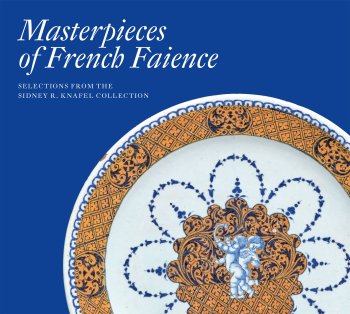 This fall, an exhibition at the Frick will draw from the holdings of Sidney R. Knafel, who has one of the world’s finest and most comprehensive private collections of French faience. With seventy-five objects, the presentation in the Portico Gallery tells the fascinating and complex history of an aspect of European decorative arts that warrants greater attention. The production of faience, a colorful tin-glazed earthenware, spans a vast history of more than two centuries. The earliest French examples were made in Lyon in the sixteenth century, while works from France’s Golden Age of production were made in Nevers and Rouen in the seventeenth and early eighteenth centuries. Production in the eighteenth century expanded to other locations, including Marseille, Moustiers, Sinceny, and Moulins. Comments Charlotte Vignon, the Frick’s Curator of Decorative Arts and organizer of the exhibition, “Faience was largely commissioned by a local regional aristocracy, and the result is another wonderful chapter in the history of ceramics that developed quite apart from the centers of political power and artistic innovation in Versailles and Paris. The Frick has never before exhibited such a large and impressive body of French faience, and we are delighted to illuminate the topic through such a distinguished collection.” The exhibition will be accompanied by a catalogue published in hard and softcover editions by the Frick, in association with D Giles Ltd.
As with other types of earthenware, faience remains porous after firing and therefore must be covered with a glaze. The glazes used include a tin oxide that creates the opaque white surface that covers the color of the underlying clay and also creates a stable surface for painting. The Knafel Collection comprises pieces decorated exclusively with the grand feu (literally, “ high fire”) technique, in which metal oxides are mixed with water and applied to the tin-glazed surface before firing at a temperature of about 1650° F. The palette is necessarily limited to those oxides that can withstand such extreme heat: cobalt (blue), antimony (yellow), manganese (purple and brown), iron (red-orange), and copper (green).
The production of faience in France corresponds to the arrival in Lyon, during the second half of the sixteenth century, of several Italian maiolica potters and painters seeking opportunities outside Italy. This influence is reflected in the French word faience, which derives from the northern Italian city of Faenza, an important center of maiolica production during the Renaissance. French faience draws inspiration from multiple sources, with decoration simultaneously indebted to Italian maiolica, Asian porcelain, and contemporary engravings, while the forms derived mostly from European ceramics and silver.
The function of a piece of French faience depended on the nature of the commission, the patron who first owned it, and its price. During the late sixteenth and seventeenth centuries, objects in faience were costly and therefore acquired, collected, and gifted exclusively by those at the highest levels of French society. Consequently, earlier pieces from Lyon and Nevers in the Knafel Collection were originally intended only for display, to be admired by their owners and guests. The spread of faience workshops in Nevers, Rouen, and elsewhere in France during the eighteenth century inevitably changed the status of these objects and hence their function. One of the most important changes was the later use of faience as dishware, on which to eat or serve food. To ensure the success of their workshops, French potters—beginning with those in Rouen—closely followed the culinary developments occurring in France at the time. Multiple dishes in different shapes and sizes were created in response to the requirements of the service à la française, which necessitated serving various dishes of a particular course at the same time. As the eighteenth century progressed, faience was increasingly used at all times of the day. In the morning, small faience boxes and jars stored pomades, powders, and other accessories of make up, alongside silver and porcelain vessels on a dressing table for ‘la toilette’.
Charlotte Vignon, Masterpieces of French Faience: Selections from the Sidney R. Knafel Collection (London: D. Giles, 2018), 72 pages, ISBN: 978-1911282310.
Exhibition | Fray Manuel Bayeu
Now on view in Huesca, with a 24-page press kit, which includes a checklist arranged according to the major sections of the exhibition, available as a PDF file here:
Friar Manuel Bayeu: Carthusian, Painter, and Witness of His Time
Sala de exposiciones de la Diputación Provincial de Huesca, 21 July — 4 November 2018
Curated by José Ignacio Calvo Ruata
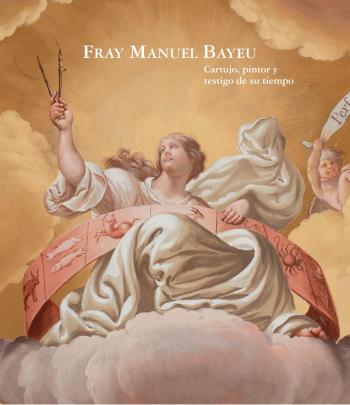 Desde el año 2015 la Diputación Provincial de Huesca es propietaria de la cartuja de Nuestra Señora de las Fuentes (Sariñena, Huesca), declarada Bien de Interés Cultural y uno de los principales monasterios de Aragón. Aunque fundada en 1507, el monumento tal como hoy lo conocemos fue levantado de nueva planta en el siglo XVIII. Posee un extenso conjunto de pinturas murales que cubren los muros y bóvedas de sus dependencias más nobles, indisolublemente unidas a los valores arquitectónicos del monasterio. Fueron realizadas por el cartujo y pintor fray Manuel Bayeu Subías (Zaragoza, 1740–¿1809?). La revalorización que vive hoy la cartuja y el interés que suscita el pintor invita a acercarnos a su obra y a su figura a través de una exposición monográfica.
Hermano de los afamados pintores de cámara Francisco y Ramón Bayeu y cuñado del universal Francisco de Goya, Manuel se formó como ellos en el lenguaje del barroco tardío, que mantuvo dentro de un estilo personal bastante estable a lo largo de toda su producción. Una concisa selección de obras de aquellos artistas y de otros como José Luzán, Corrado Giaquinto, Manuel Eraso y Diego Gutiérrez nos hablan en la exposición de las raíces artísticas de Manuel Bayeu.
De la actividad del artista en la cartuja monegrina dan cuenta algunos bocetos preparatorios para los grandes murales con arreglo a una manera metódica de trabajar que era habitual en la época. También realizó para su casa de profesión numerosos cuadros de caballete, como los que ilustran la vida de san Bruno, fundador de la Orden Cartujana. Autor muy prolífico y con enorme capacidad de trabajo, acometió asimismo muchos encargos para el exterior, entre los que destacan varios lienzos para la catedral de Huesca y la iglesia de Chodes o la decoración del nuevo ábside mayor de la catedral de Jaca, de cuyas trazas arquitectónicas también se hizo cargo y cuyos bocetos se han conservado en su totalidad. De todas estas obras da cuenta la exposición.
El conocimiento que tenemos de Manuel Bayeu nos brinda un atractivo añadido que es su faceta personal. A través de los documentos se adivina que fue hombre campechano y expansivo, y su condición de hermano cartujo no le impidió viajar y entablar relaciones muy cordiales con gentes diversas. Especial mención merece su amistad con Martín Zapater, el rico comerciante zaragozano que fue íntimo amigo de Goya. Manuel Bayeu le escribió numerosas cartas que conserva el Museo del Prado, doce de las cuales han sido seleccionadas para la exposición para retratar su perfil más humano a través de multitud de asuntos y anécdotas. También se conocen testimonios de las relaciones que tuvo con los hermanos Comenge de Lalueza, generosos benefactores de la cartuja, con algunos canónigos de Jaca, con la familia Ric de Fonz y con las monjas de Sijena, entre otras. Sin olvidar que con motivo de su viaje a Mallorca para pintar en la cartuja de Valldemosa mantuvo afectuoso trato con Gaspar Melchor de Jovellanos, eminente figura de la Ilustración española. No son pocos los cuadros de tema religioso, retratos y pinturas de otros géneros que surgieron precisamente en el marco de las amistades cultivadas por el artista cartujo.
La exposición dedicada a fray Manuel Bayeu no se limita a una selección de lienzos, sino que incluye grabados, documentos, libros, esculturas y otros objetos al servicio de recrear un contexto que contribuye a ofrecer una visión globalizadora del personaje y a poner de relieve su cualidad de atento espectador del mundo que le tocó vivir, más allá de lo meramente artístico.
José Ignacio Calvo Ruata (Zaragoza, 1959), doctor en Historia del Arte. Dedicó su tesis al estudio de la vida y la obra del pintor fray Manuel Bayeu (Universidad de Zaragoza, 1998). Es especialista en pintura del siglo XVIII. Sus libros, artículos y conferencias abarcan también temas diversos de arte aragonés. Ha comisariado exposiciones, entre ellas las que llevan por título genérico Joyas de un patrimonio, dedicadas al patrimonio restaurado de la Provincia de Zaragoza, y recientemente la exposición Goya y Buñuel. Los sueños de la razón. Ha sido becario de investigación del Instituto de Estudios Altoaragoneses y profesor asociado de Historia del Arte de la Universidad de Zaragoza. Es Jefe de la Sección de Restauración de Bienes Muebles de la Diputación Provincial de Zaragoza, académico correspondiente de la Real Academia de Bellas Artes de San Luis, Patrono de mérito de la Fundación Goya en Aragón, Director de Centro de Investigación y Documentación de la Fundación Goya en Aragón y miembro de Vestigium (grupo de investigación consolidado de la Universidad de Zaragoza).
José Ignacio Calvo Ruata, Elena Barlés Báguena, Carlos E. de Corbera y Tobeña, and Juan Carlos Lozano López, Fray Manuel Bayeu: Cartujo, pintor y testigo de su tiempo (Huesca: Diputación Provincial de Huesca, 2018), 300 pages, ISBN: 978-8492749676, 30€ / $70.
• Prólogo
• José Ignacio Calvo Ruata, Semblanza de fray Manuel Bayeu, cartujo y pintor
• Juan Carlos Lozano López, Pintar en los claustros (siglos XVII y XVIII)
• Elena Barlés Báguena, El siglo de oro de la cartuja de Nuestra Señora de las Fuentes
• José Ignacio Calvo Ruata, Fray Manuel Bayeu en la cartuja de Nuestra Señora de las Fuentes
• José Ignacio Calvo Ruata, El monasterio de Sijena y la familia Ric en las andanzas de fray Manuel Bayeu
• Carlos E. de Corbera y Tobeña, Heráldica y genealogía en la pintura de fray Manuel Bayeu
• José Ignacio Calvo Ruata, Obras de fray Manuel Bayeu en exposición
• Catálogo general de la exposición
• Bibliografía
Exhibition | Gainsborough and the Theatre
This fall at The Holburne Museum:
Gainsborough and the Theatre
The Holburne Museum, Bath, 5 October 2018 — 20 January 2019
Curated by Hugh Belsey and Susan Sloman

Thomas Gainsborough, Portrait of Mrs, Siddons, 1785 (London: The National Gallery).
By bringing together some of Thomas Gainsborough’s finest portraits of his friends in the theatre, this exhibition will create a conversation between the leading actors, managers, musicians, playwrights, designers, dancers, and critics of the 1760s–80s. Gainsborough and the Theatre explores themes of celebrity, naturalism, performance, and friendship through some of the most touching likenesses by ‘the most faithful disciple of Nature that ever painted’. The exhibition will include 37 objects, including 15 oil portraits by Gainsborough, works on paper (including satires, views of theatres, and playbills), and ephemera from public and private collections across the UK.
Following the Restoration of the Monarchy in 1660, theatre became an increasingly popular pastime, with existing playhouses enlarged and others newly commissioned throughout London and the provinces—particularly in Bath, where the Holburne Museum is located. In 1759, 32-year-old Gainsborough arrived in Bath, accompanied by his wife and two daughters. Having already garnered a reputation as a skilled portraitist, he soon found a keen clientele among Bath’s fashionable (and well-off) visitors. Gainsborough’s arrival in the West Country coincided with the rising wealth and social status of leading actors, such as James Quin and David Garrick, both of whom he painted. His friendship with the pair opened more doors for him, both in Bath and then later in London. The two actors also enabled Gainsborough to explore naturalism in portraiture, just as they and their contemporaries were turning to less artificial forms of performance in theatre, music, and dance.
Gainsborough & the Theatre is supported by Bath Spa University, Gainsborough Bath Spa Hotel, and a publications grant from the Paul Mellon Centre for Studies in British Art—with Farrow and Ball as the exhibition paint partner.
Hugh Belsey and Susan Sloman, Gainsborough and the Theatre (London: Philip Wilson, 2018), 112 pages, ISBN: 978-1781300664, $20.
Based on new research this book draws together a group of works from public and private collections to examine, for the first time, the relationship that Gainsborough had with the theatrical world and the most celebrated stage artists of his day. His advocate Henry Bate, editor of the Morning Herald, wrote one of the most successful theatrical afterpieces of the period.
Thomas Gainsborough (1727–1788) was linked with the stage through personal friendships with James Quinn, David Garrick and Sarah Siddons, the most renowned actors of the eighteenth century. He painted notable portraits of these and twenty others, including dramatists, dancers and composers.
Not long after Gainsborough moved from Bath to London in 1774 the management of the Drury Lane Theatre passed to the artist’s friends Richard Brinsley Sheridan and Thomas Linley. At this period London’s theatres were undergoing regular refurbishment to take account of technical innovations in lighting and stage machinery. At the King’s Theatre in Haymarket in 1778 the ‘elegant improvements’ included frontispiece figures emblematic of Music and Dancing painted in monochrome by Gainsborough.
The book establishes the artist’s place within Bath and London’s theatrical worlds. It will show why the art of ballet, and in particular Gainsborough’s sitters Gaetan Vestris, Auguste Vestris, and Giovanna Baccelli rose to prominence in 1780, and examines parallels between Gainsborough’s much admired painterly naturalism and the theatrical naturalism of David Garrick and Mrs. Siddons.
Hugh Belsey formed a collection of the artist’s work at Gainsborough’s House in Sudbury much of which was published in Gainsborough at Gainsborough’s House (2002). During his time at the museum he organised many exhibitions most notably Gainsborough’s Family (1988) and, with Felicity Owen, From Gainsborough to Constable (1991).
Susan Sloman is an independent researcher and writer. Since her first article on Gainsborough in 1992 she has contributed new research on the painter in The Burlington Magazine and published Gainsborough in Bath (2002) and Gainsborough’s Landscapes (2011) and has contributed to both Sensation and Sensibility (ed. Ann Bermingham, 2005) and Gainsborough’s Family (ed. David Solkin, 2018).
Exhibition | On a Pedestal
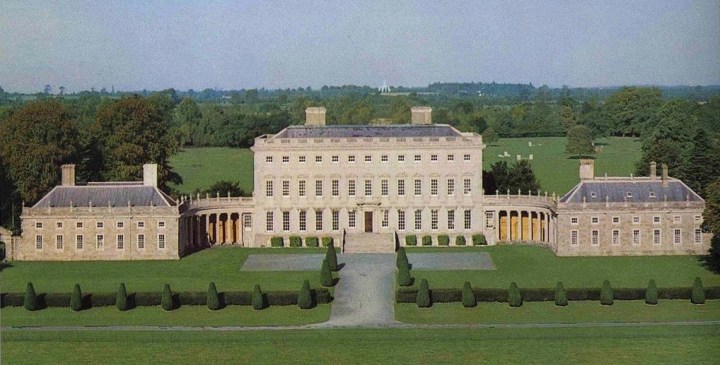
Alessandro Galilei and Edward Lovett Pearce, Castletown House, Celbridge, County Kildare, ca. 1722–29, built for William Conolly, Speaker of the Irish House of Commons; extensive rennovations were made by Lady Louisa Conolly starting in 1759 (Photo: Wikimedia Commons).
◊ ◊ ◊ ◊ ◊
Now on view at Castletown:
On a Pedestal: Celebrating the Contemporary Portrait Bust
Castletown House, Celbridge, County Kildare, 1 July – 31 August 2018
Dublin Castle, 8 September — 4 November 2018
Curated by Mary Heffernan, Hélène Bremer, and Nuala Goodman
Inspired by the classical busts in Castletown’s Long Gallery, this exhibition brings together works from an international group of contemporary artists who explore the genre of the portrait bust in a variety of media: from wood to stone, from marble to ceramics, from stainless steel to more ephemeral materials such as sugar. Initiating a dialogue between past and present, classic and modern art, the diversity of materials and techniques used by the artists represented in the exhibition will inspire visitors this summer.
Among those included in the exhibition are Irish artists Ursula Burke, Janet Mullarney and Kevin Francis Gray. International artists include Sir Tony Cragg, Giulio Paolini, and Ah Xian. Curated by Mary Heffernan, General Manager Castletown House; Helene Bremer, Dutch art historian and curator; and Nuala Goodman, Milan-based Irish artist and curator.
Mary Heffernan, Hélène Bremer, and Nuala Goodman, eds., On a Pedestal: Celebrating the Contemporary Portrait Bust in the 21st Century (Dublin: Office of Public Works, 2018), 95 pages, ISBN: 978-1406429862.

Installation view of the exhibition On a Pedestal: Celebrating the Contemporary Portrait Bust at Castletown House.
◊ ◊ ◊ ◊ ◊
From Aidan Dunne’s article for The Irish Times (3 July 2018). . .
This year, observes Mary Heffernan, the general manager of Castletown House, is the 275th anniversary of the birth of “the great heroine of the story of Castletown,” Lady Louisa Connolly. On a Pedestal, an exhibition of portrait busts at Castletown, is intended as an homage to Louisa, and “the magical Long Gallery she created.”

Anne Valerie Dupond, ‘Lady Louisa Connolly’, 2018.
In 1743 Louisa was born into privileged circumstances: her father was the second Duke of Richmond, and her childhood was spent in great houses, including Richmond House in Whitehall, Goodwood House in Sussex and, after her parents died within a year of each other, Carton House in Co Kildare. She married Thomas Connolly of Castletown, the wealthiest man in Ireland, in 1758.
Inspired by the many houses she knew and loved, she set about making changes to Castletown, including a new cantilevered staircase, La Franchini plasterwork, the print room, diningroom and the Long Gallery. The gallery, which she referred to as her livingroom, housed her library with busts and murals of classical writers, philosophers, gods and goddesses, including the nine muses. Compare it to the collection in the Long Gallery in Trinity College Dublin, initiated in 1743, which historian Hélène Bremer describes as the most significant single influence on Louisa’s project .…
The full article is available here»
◊ ◊ ◊ ◊ ◊
Note (added 24 August 2018) — The original posting did not include details of the catalogue.
Exhibition | Woven Strands: The Art of Human Hair Work
The exhibition, now on view at The Mütter Museum, presents mainly nineteenth-century objects, though there are several striking eighteenth-century works, too; it’s a fascinating exploration of palette, table work, dissolving hair, and gimp techniques.
Woven Strands: The Art of Human Hair Work
The Mütter Museum, The College of Physicians of Philadelphia, 19 January — 16 September 2018
Curated by Emily Snedden Yates, John Whitenight, and Evan Michelson
 A favored folk art of the 18th and 19th centuries, hair art was a sentimental expression of grief and love, usually created by women whose identities have become anonymous over time. Human hair—from both living and deceased persons—was used to form flower bouquets, wreaths, braided jewelry chains, weeping willows, and painted scenes of mourning. Considered to be a form of portraiture, these were cherished tokens to preserve the memory of a deceased loved one, chart a vibrant family tree of the living, or to be traded as friendship keepsakes. It is rare to view such pieces publicly as they were created in domestic settings, for home display. Drawing from six private collections, the Mutter Museum together with John Whitenight and Evan Michelson has assembled an exquisite group of hair art and jewelry as well as accompanying materials that discuss the social expectations of Victorian-era mourning rituals that ruled 19th-century society with strict standards.
A Brief History of Hair Art as Seen in Woven Strands: The Art of Human Hair Work at the Mütter Museum (Philadelphia: Mütter Museum, 2018), 80 pages, $17.
Exhibition | Herculaneum and Pompeii: Visions of a Discovery
Exhibition formerly in Chiasso, now on view at the National Archaeological Museum in Naples (MANN):
Herculaneum and Pompeii: Visions of a Discovery
m.a.x. Museum, Chiasso, Switzerland, 25 February — 6 May 2018
Museo Archeologico Nazionale di Napoli, 28 June — 30 September 2018
Curated by Pietro Giovanni Guzzo, Maria Rosaria Esposito, and Nicoletta Ossanna Cavadini
 The 280th anniversary of the discovery of Herculaneum and the 270th anniversary of that of Pompeii are here celebrated with a completely original approach, by exploring the media and the methods with which the discoveries of the two sites were communicated through the visionary expressions of those who immediately intuited the implications of the discoveries and sought to promote the progress of the excavations and research into them. From the late eighteenth century to the early twentieth, from Goethe to Stendhal, William Gell, Giovanni Battista and Francesco Piranesi, and many drafters, engravers, and lovers of antiquity down to the Alinari brothers, this is an account of the passion for the excavations and precious archaeological finds and the desire to make known the discoveries through letters, hand-coloured sketchbooks, engravings, lithographs, drawings, reliefs, copperplates and gouaches, the first postcards, and daguerreotype photographs.
Pietro Giovanni Guzzo, et al., Ercolano e Pompei: Visioni di una scoperta / Herculaneum and Pompeii: Visions of a Discovery (Milan: Skira, 2018), 392 pages, ISBN: 978-8857238630 (Italian-English text), €38 / $68.
Exhibition | Montepulciano and the Eternal City
Now on view in Montepulciano:
Montepulciano and the Eternal City: Landscapes and Views from the Aesthetics of the Grand Tour to the Mid-Twentieth Century
Museo Civico – Pinacoteca Crociani di Montepulciano, 15 June — 7 October 2018
Curated by Roberto Longi
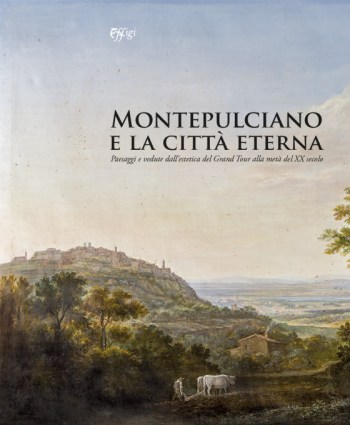 The exhibition, on view in the Crociani Civic Museum and Picture Gallery of Montepulciano from July 14th to October 7th, compares Rome and the Roman countryside with Montepulciano and its rural outskirts, through more than one hundred oil paintings, drawings, watercolours, and engravings by artists such as Labruzzi, Pacetti, Sartorio, Petrassi, Ranieri Rossi, and Ettore Roesler Franz. Of particular interest are works depicting the views of Rome and the Montepulciano countryside by foreign artists who saw the Grand Tour as a paradigm shift—the Spanish Juan Gimenez Martin, the English Samuel Prout, the Bavarian Karl Lindemann-Frommel, and the Swiss watercolourist Salomon Corrodi, who painted several views for Tsar Nicholas I and Queen Victoria.
In addition to the paintings, the exhibition includes a selection of materials which, carried by a servant, accompanied tourists on their long journeys, providing records of a time and a lifestyle: a travel writing desk, portable inkwells, medicine chests—essential in times of malaria—and tools used to prepare snacks for the journey. The noble traveller had to be perfect on all occasions; hence an iron for ties, a jewelry box, and a fragrance holder, as well as a scale for weighing coins and a travel chessboard to enliven any boring evenings at inns. A walking stick could serve as a good defense weapon or preserve a secret reserve of fine liqueur. The final section of the exhibition presents the working tools of the travelling artists: oil colours and watercolours boxes, palettes and materials for graphic techniques, travel sketchbooks, and folders. The exhibition relies on two important Roman collections and several private collections from Montepulciano.
Roberto Longi, Montepulciano e la Città Eterna: Paesaggi e vedute dall’estetica del Grand Tour alla metà del XX secolo (Rome: C&P Adver Effigi, 2018), 160 pages, ISBN: 978-8864339054, $43.
Exhibition | Furniture and Cabinetmakers at the Savoy Court
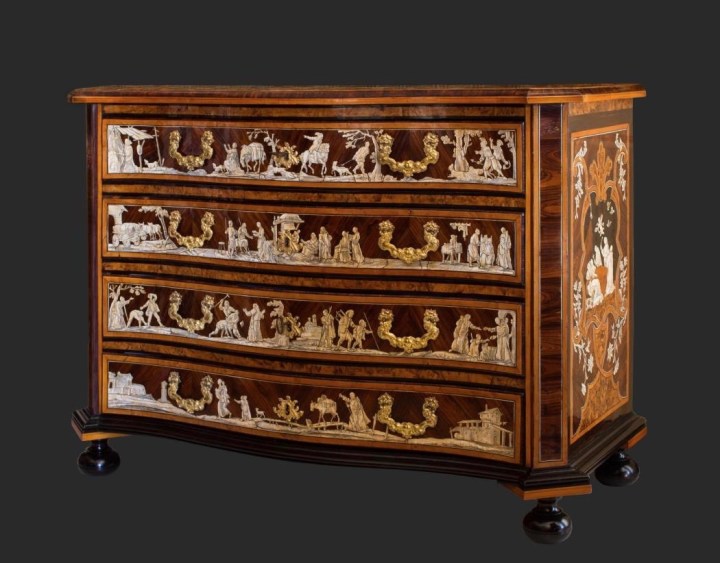
Luigi Prinotto, Chest with four drawers, depicting stories of Saint Bruno and the foundation of the Carthusian Order, 1736
(Private Collection)
◊ ◊ ◊ ◊ ◊
The exhibition at the Palace Venaria, near Turin, closed in June, but the catalogue is available from ArtBooks.com:
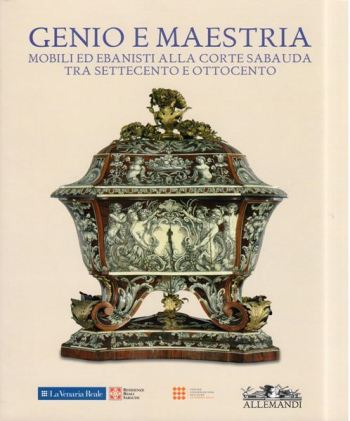
Genius and Skill: Furniture and Cabinetmakers at the Court of Savoy
Venaria Reale, Torino, 17 March — 15 June 2018
The exhibition aims to better define the history of furniture making in Piedmont between the 18th and 19th centuries through a display of 130 exceptional pieces crafted by the finest cabinet-makers and sculptors of the time—Luigi Prinotto, Pietro Piffetti, Giuseppe Maria Bonzanigo, and Gabriele Capello known as ‘Il Moncalvo’—some of which will be presented for the first time thanks to loans from important Piedmontese and international museums and collections.
 The purpose of the exhibition is to familiarize the public with precious cabinetmaking and inlay works, emphasizing their significance, use, and transformations with technical and scientific insights and multimedia installations. The exhibition tells the story of an elegant, cultivated, and complex craft that developed in Turin to cater to the needs of important royal and aristocratic patrons, in conjunction with other arts.
Special care has been adopted to design a display that is accessible to disabled visitors, including scale models, touch tablets, olfactory islands, and an Italian Sign Language video-guide. Moreover, description panels and labels are written in the EasyReading font, which is highly readable and facilitates reading for dyslexic persons.
Organizing and Scientific committee: Cesare Annibaldi, Roberto Antonetto, Clelia Arnaldi di Balme, Elisabetta Ballaira, Enrico Colle, Stefania De Blasi, Silvia Ghisotti, Luisa Papotti, Carla Enrica Spantigati
Coordinated by Carlo Callieri
Cesare Annibaldi, Roberto Antonetto, et al, Genio e Maestria: Mobili ed Ebanisti alla Corte Sabauda tra Settecento ed Ottocento (Turin: Allemandi, 2018), 304 pages, ISBN: 978-8842224594, $70.
Exhibition | Triumph of the Baroque, Painting from 1600 to 1800
Now on view at the Hofburg:
Triumph des Barock: Malerei von 1600 bis 1800 / Il Trionfo del Barocco: Pittura dal 1600 al 1800
Diocesan Museum, Hofburg (Bishop’s Palace), Brixen / Bressanone, Italy, 28 April — 31 October 2018
 Barocke Kunst ist triumphale Ausdruckskunst. So auch in der Malerei. Die Ausstellung schöpft aus dem umfangreichen Bestand der Hofburg und zeigt Gemälde von den frühen Anfängen um 1600 bis in die Spätphase um 1800. Eine Schaulust für das Auge.
Nie waren den Menschen der Himmel und das Leben mit den Himmlischen so vertraut wie in der Barockzeit. Erzählungen aus der Bibel, Schilderungen aus dem Leben von Heiligen, Darstellungen von Maria mit dem Jesuskind—sie alle führen das Auf und Ab des Lebens vor Augen. Berühmte Maler aus Tirol sowie überregional bedeutende Künstler schufen Altarbilder für Kirchen und sakrale Gemälde zur privaten Andacht. Eine Auswahl ihrer Werke ist in der Ausstellung zu sehen, darunter Bilder von Stephan Kessler, Johann Georg Grasmair und Ulrich Glantschnigg, von Martin Theophil Polak, Karl Skreta und Johann Lingelbach. Auch Gemälde der in Wien zu Ruhm gelangten Tiroler Barockmaler, wie Paul Troger, Michael Angelo Unterberger und Josef Ignaz Mildorfer, sind ausgestellt.
Kopien nach berühmten Meistern spielten in der barocken Malerei eine große Rolle. Sie vermittelten das gedankliche Konzept des Originals nahezu ungeschmälert und trugen wesentlich zur Beliebtheit einzelner Bildmotive dar. Eine Auswahl hochwertiger Kopien wird in der Ausstellung gezeigt.
Neben Altarbildern und religiösen Werken sind auch Porträts zu sehen, einige von ihnen zum ersten Mal. Porträts stellten Macht und Reichtum, Bildung und Stand der Dargestellten zur Schau. Sie stehen für Inszenierung und Selbstdarstellung von Klerus, Adel und Bürgertum.
Johann Kronbichler, Die barocken Gemälde der Hofburg Brixen (Brixen: Hofburg, 2018), 396 pages, ISBN: 978-8888570235, $75.
 Zur Ausstellung erscheint ein Bestandskatalog. Dieser enthält—über die in der Ausstellung gezeigten Werke hinaus—alle barocken Gemälde aus der Schausammlung und den Depots sowie die Gemälde und Wandmalereien der barocken Ausstattung der Hofburg. Mit seinen knapp 700 vorgestellten Werken und dem umfangreichen Bildmaterial stellt der von Johann Kronbichler verfasste Bestandskatalog ein unverzichtbares Grundlagenwerk zur Barockkunst in Südtirol dar. Der Katalog, Band 4 der Veröffentlichungen der Hofburg Brixen, ist in der Hofburg und im Buchhandel erhältlich.










leave a comment