Exhibition | Furniture and Cabinetmakers at the Savoy Court
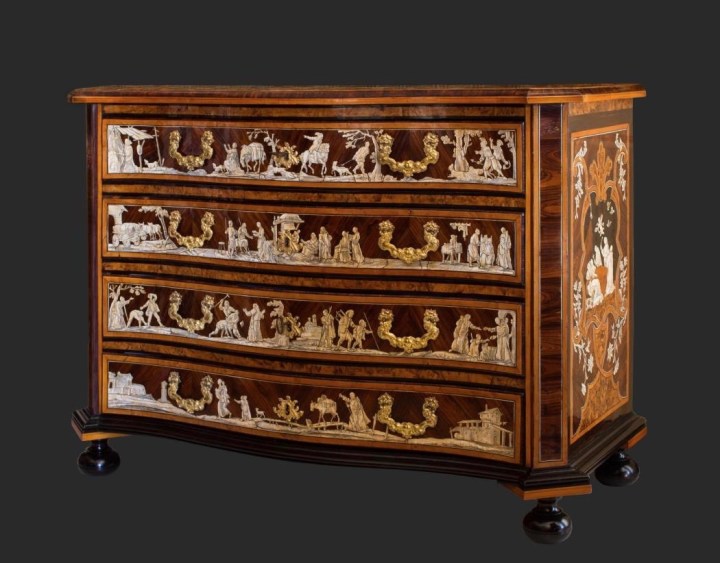
Luigi Prinotto, Chest with four drawers, depicting stories of Saint Bruno and the foundation of the Carthusian Order, 1736
(Private Collection)
◊ ◊ ◊ ◊ ◊
The exhibition at the Palace Venaria, near Turin, closed in June, but the catalogue is available from ArtBooks.com:
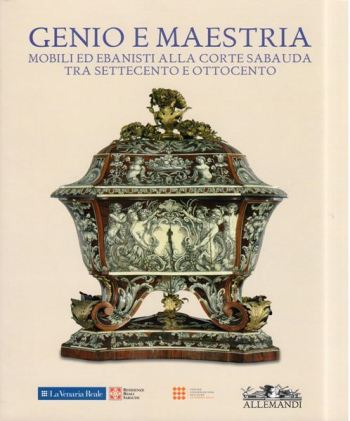
Genius and Skill: Furniture and Cabinetmakers at the Court of Savoy
Venaria Reale, Torino, 17 March — 15 June 2018
The exhibition aims to better define the history of furniture making in Piedmont between the 18th and 19th centuries through a display of 130 exceptional pieces crafted by the finest cabinet-makers and sculptors of the time—Luigi Prinotto, Pietro Piffetti, Giuseppe Maria Bonzanigo, and Gabriele Capello known as ‘Il Moncalvo’—some of which will be presented for the first time thanks to loans from important Piedmontese and international museums and collections.
 The purpose of the exhibition is to familiarize the public with precious cabinetmaking and inlay works, emphasizing their significance, use, and transformations with technical and scientific insights and multimedia installations. The exhibition tells the story of an elegant, cultivated, and complex craft that developed in Turin to cater to the needs of important royal and aristocratic patrons, in conjunction with other arts.
Special care has been adopted to design a display that is accessible to disabled visitors, including scale models, touch tablets, olfactory islands, and an Italian Sign Language video-guide. Moreover, description panels and labels are written in the EasyReading font, which is highly readable and facilitates reading for dyslexic persons.
Organizing and Scientific committee: Cesare Annibaldi, Roberto Antonetto, Clelia Arnaldi di Balme, Elisabetta Ballaira, Enrico Colle, Stefania De Blasi, Silvia Ghisotti, Luisa Papotti, Carla Enrica Spantigati
Coordinated by Carlo Callieri
Cesare Annibaldi, Roberto Antonetto, et al, Genio e Maestria: Mobili ed Ebanisti alla Corte Sabauda tra Settecento ed Ottocento (Turin: Allemandi, 2018), 304 pages, ISBN: 978-8842224594, $70.
Exhibition | Triumph of the Baroque, Painting from 1600 to 1800
Now on view at the Hofburg:
Triumph des Barock: Malerei von 1600 bis 1800 / Il Trionfo del Barocco: Pittura dal 1600 al 1800
Diocesan Museum, Hofburg (Bishop’s Palace), Brixen / Bressanone, Italy, 28 April — 31 October 2018
 Barocke Kunst ist triumphale Ausdruckskunst. So auch in der Malerei. Die Ausstellung schöpft aus dem umfangreichen Bestand der Hofburg und zeigt Gemälde von den frühen Anfängen um 1600 bis in die Spätphase um 1800. Eine Schaulust für das Auge.
Nie waren den Menschen der Himmel und das Leben mit den Himmlischen so vertraut wie in der Barockzeit. Erzählungen aus der Bibel, Schilderungen aus dem Leben von Heiligen, Darstellungen von Maria mit dem Jesuskind—sie alle führen das Auf und Ab des Lebens vor Augen. Berühmte Maler aus Tirol sowie überregional bedeutende Künstler schufen Altarbilder für Kirchen und sakrale Gemälde zur privaten Andacht. Eine Auswahl ihrer Werke ist in der Ausstellung zu sehen, darunter Bilder von Stephan Kessler, Johann Georg Grasmair und Ulrich Glantschnigg, von Martin Theophil Polak, Karl Skreta und Johann Lingelbach. Auch Gemälde der in Wien zu Ruhm gelangten Tiroler Barockmaler, wie Paul Troger, Michael Angelo Unterberger und Josef Ignaz Mildorfer, sind ausgestellt.
Kopien nach berühmten Meistern spielten in der barocken Malerei eine große Rolle. Sie vermittelten das gedankliche Konzept des Originals nahezu ungeschmälert und trugen wesentlich zur Beliebtheit einzelner Bildmotive dar. Eine Auswahl hochwertiger Kopien wird in der Ausstellung gezeigt.
Neben Altarbildern und religiösen Werken sind auch Porträts zu sehen, einige von ihnen zum ersten Mal. Porträts stellten Macht und Reichtum, Bildung und Stand der Dargestellten zur Schau. Sie stehen für Inszenierung und Selbstdarstellung von Klerus, Adel und Bürgertum.
Johann Kronbichler, Die barocken Gemälde der Hofburg Brixen (Brixen: Hofburg, 2018), 396 pages, ISBN: 978-8888570235, $75.
 Zur Ausstellung erscheint ein Bestandskatalog. Dieser enthält—über die in der Ausstellung gezeigten Werke hinaus—alle barocken Gemälde aus der Schausammlung und den Depots sowie die Gemälde und Wandmalereien der barocken Ausstattung der Hofburg. Mit seinen knapp 700 vorgestellten Werken und dem umfangreichen Bildmaterial stellt der von Johann Kronbichler verfasste Bestandskatalog ein unverzichtbares Grundlagenwerk zur Barockkunst in Südtirol dar. Der Katalog, Band 4 der Veröffentlichungen der Hofburg Brixen, ist in der Hofburg und im Buchhandel erhältlich.
Exhibition | The American Revolution: A World War

Louis-Nicolas Van Blarenberge, The Siege of Yorktown, 1786; gouache on panel, 24 × 37 inches
(Private Collection of Nicholas Taubman)
◊ ◊ ◊ ◊ ◊
Van Blarenberghe’s two Yorktown paintings were on view last year at Philadelphia’s Museum of the American Revolution. Press release (21 June 2018) from The National Museum of American History:
The American Revolution: A World War
Smithsonian’s National Museum of American History, Washington, D.C., 26 June — 9 July 2019
Curated by David Allison
A global lens is placed on the story of American independence in the exhibition The American Revolution: A World War, open June 26 through July 9, 2019, at the Smithsonian’s National Museum of American History. The focal point of this one-year exhibition, on view in The Nicholas F. and Eugenia Taubman Gallery, centers on two historical paintings that depict the culminating events at Yorktown in 1781, which ended the war on American soil, and a portrait of General George Washington.

Charles Willson Peale, Washington at Yorktown, 1780–82, painted for French General Comte de Rochambeau.
The American Revolution: A World War explores the Franco-American partnership during the Revolution and the extent to which international relations shaped the formation of the United States. General Jean-Baptiste Donatien de Vimeur, Comte de Rochambeau, led the French forces at Yorktown. Two of the paintings were created by Louis-Nicolas Van Blarenberghe and are copies he made for Rochambeau of paintings presented to King Louis XVI. The Washington portrait is by Charles Willson Peale. All three once hung in Rochambeau’s home as reminders of his partnership with Washington that resulted in the American victory.
“The American colonies had no hope of winning their independence alone,” said David Allison, project director and senior curator of the exhibition. “They had to gain support from other European powers, most importantly from France and Spain and the involvement of these nations would affect not only the history of the new United States of America, but their own histories as well.”
The Siege of Yorktown and The Surrender of Yorktown, both painted in 1786, and the Washington portrait painted in 1780–82 are united for the first time in a national museum since they were displayed together in the 1700s in Rochambeau’s chamber. The Van Blarenberghe paintings will each be augmented by an interactive computer, allowing visitors to examine enlargements of the paintings and to read eyewitness accounts of the events.
Other artifacts to be displayed include a pistol given to Washington by British General Edward Braddock during the Seven Years War; a cannon used at Yorktown, representing how the French supplied weapons, soldiers, funding and warships to America; Washington’s Yorktown siege map drawn after the conflict; a ship model of Admiral de Grasse’s Ville de Paris, which led the French fleet that blocked British ships; and an almanac and memorabilia commemorating the Marquis de Lafayette’s visit to the United States near the 50th anniversary of Independence. In addition to Peale’s Washington, images of the other three leaders involved in the American Revolution will be on display: Rochambeau, the Marquis de Lafayette of France and General Charles Cornwallis of Great Britain.
Americans often think that the American Revolution ended with the Siege of Yorktown in 1781, but, in fact, war continued around the world as European powers fought to defend their interests. These wider conflicts ultimately determined the terms Britain accepted in the 1783 treaty granting the United States its independence. Britain also had to negotiate treaties with France, Spain and the Dutch Republic before the wider war connected to the American Revolution finally concluded in 1784.
The exhibition is made possible through the generous support of Ambassador Nicholas F. and Eugenia L. Taubman with additional support from Jeff and Mary Lynn Garrett and Susan and Elihu Rose. A number of objects are on loan from private collections, museums and other institutions, including the Society of the Cincinnati, Winterthur and the Musée de l’Armée in Paris. The exhibition will open in the recently transformed wing of the museum’s second floor, which is themed The Nation We Build Together and features exhibitions that tell the story of America’s founding and future as a country built on the ideals and ideas of freedom and opportunity.
A book to accompany the exhibition will be published in November:
David Allison and Larrie Ferreiro, eds., The American Revolution: A World War (Washington, D.C.: Smithsonian Books, 2018), 272 pages, ISBN: 978-1588346339, $30.
 The American Revolution: A World War argues for the importance of understanding the American Revolution in a global context. The illustrated companion volume to the Smithsonian National Museum of American History exhibition of the same name, this book posits that it is not possible to fully understand the Revolution if it is seen as a solely American conflict. Instead, American motivations and contributions must be considered alongside those of the British, French, Spanish, and Dutch. Highlighting the often overlooked international nature of the Revolution while grounding it in its origins—the fight for independence from Great Britain—this collection of essays from leading writers on the Revolution touches on such topics as European diplomacy, overseas empires, economic rivalries, supremacy of the seas, and more. Together the book’s incisive text, full-color images, and topical sidebars underscore that America’s fight for independence is most clearly comprehended as one of the first global struggles for power.
David K. Allison is Senior Scholar at the Smithsonian’s National Museum of American History. Larrie D. Ferreiro teaches history and engineering at George Mason University in Virginia, Georgetown University in Washington, D.C., and the Stevens Institute of Technology in New Jersey. He is the author of Brothers at Arms: American Independence and the Men of France and Spain Who Saved It, a finalist for the Pulitzer Prize.
Exhibition | Storytelling: French Art from the Horvitz Collection
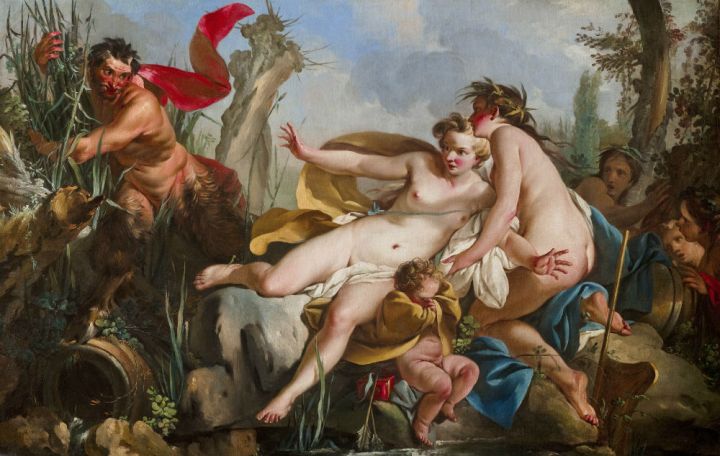
Jean-Baptiste-Marie Pierre, Pan and Syrinx, 1746, oil on canvas, 90 × 141 cm
(Boston: The Horvitz Collection, P-F-57).
◊ ◊ ◊ ◊ ◊
Now on view at the Cummer Museum:
Storytelling: French Art from the Horvitz Collection
Cummer Museum of Art & Gardens, Jacksonville, Florida, 25 May — 29 July 2018
John and Marble Ringling Museum of Art, Sarasota, Florida, 9 September — 2 December 2018
Fairfield University Art Museum, Fairfield, Connecticut, 25 January — 29 March 2019
Curated by Alvin Clark
Storytelling: French Art from the Horvitz Collection combines two exhibitions: Imaging Text: Drawings for French Book Illustration and Seventeenth- and Eighteenth-Century French Paintings, from one of the world’s finest private collections of French art. Created between the 16th and 19th centuries, and ranging from mythological and biblical studies to more playful imagery, the 80 works included in the exhibition vary in terms of style, genre, and period. Captured in crisp and swift pen strokes, finely modulated chalk, or brilliant colors, these captivating compositions were produced by some of the most prominent artists of their time, such as Charles Le Brun (1619–1690), Charles-Nicolas Cochin, the younger (1715–1790), and Jean-Honoré Fragonard (1732–1806).
The exhibition is curated by Alvin L. Clark, Jr, Curator, The Horvitz Collection, Department of Drawings, Division of European and American Art, Harvard Art Museums.
Alvin Clark and Elizabeth M. Rudy, Imaging Text: French Drawings for Book Illustration from The Horvitz Collection (Boston: The Horvitz Collection, 2018), 76 pages, ISBN: 978-0991262533, $15.
◊ ◊ ◊ ◊ ◊
Note (added 10 January 2018) — The posting was updated to included Fairfield University Art Museum.
Exhibition | Pastels at the Louvre
Now on view at the Louvre:
Pastels in the Musée du Louvre: The 17th and 18th Centuries
Musée du Louvre, Paris, 7 June — 10 September 2018
Curated by Xavier Salmon
 The Louvre holds an unrivaled collection of European pastels from the 17th and 18th centuries. Mostly dating from the reigns of Louis XV and Louis XVI, these extremely fragile works, created with a colored powder that has often been compared to that of a butterfly’s wings, introduce us to Enlightenment society and illustrate the genius of its most celebrated artists: Rosalba Carriera, Maurice Quentin de La Tour, Jean-Baptiste Siméon Chardin, Jean-Baptiste Perronneau, Jean Étienne Liotard, Jean-Marc Nattier, and Élisabeth Louise Vigée Le Brun, together with lesser known artists such as Marie-Suzanne Giroust, Adélaïde Labille-Guiard, Joseph Boze, and Joseph Ducreux.
These pastels illustrate the genius of the artists who produced them as artworks in their own right rather than preparatory studies enhanced with color. Many of them still have their original frame, and sometimes their original glass.
Thanks to the support of American Friends of the Louvre and Joan and Mike Kahn, the more than 150 works in the collection were systematically conserved and remounted to protect them from dust—a long-term project which provided an opportunity for new research on the collection. The results are included in a comprehensive annotated inventory, published in French and English with the support of the Joan Kahn Family Trust.
The exhibition takes a new look at masterpieces such as Maurice Quentin de La Tour’s Portrait of the Marquise de Pompadour and features new acquisitions such as Simon Bernard Lenoir’s portrait of the actor Lekain. It is also an opportunity to compare these works by French artists with others by eminent international pastel artists such as Rosalba Carriera in Venice, Jean-Étienne Liotard in Geneva, and John Russell in London.
The exhibition is curated by Xavier Salmon, director of the Départment des Arts Graphiques and general heritage curator at the Musée du Louvre.
The catalogue, in French and English editions, is published by Hazan and distributed by Yale UP:
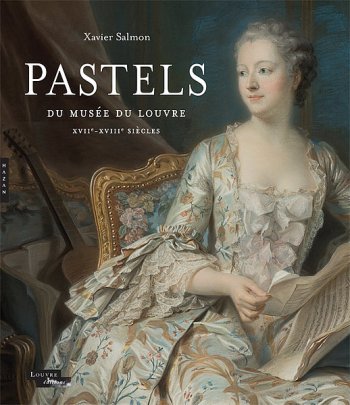
Xavier Salmon, Pastels du musée du Louvre, XVIIe XVIIIe siècle (Paris: Hazan, 2018), 384 pages, ISBN: 978-2754114547 (French) / ISBN: 978-0300238631 (English), €59 / $75.
Exhibition | Fashioned from Nature
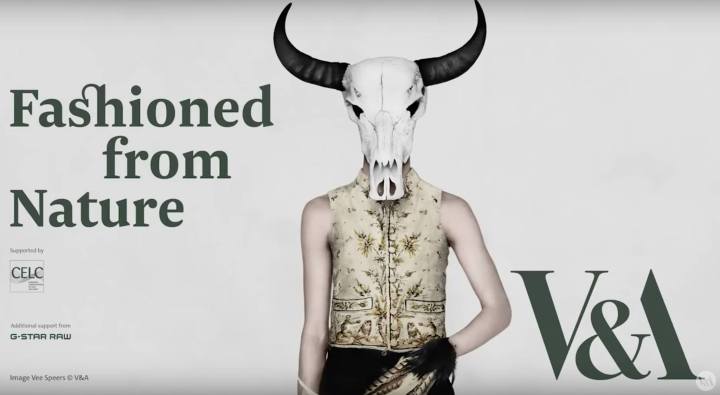
Press release for the V&A exhibition:
Fashioned from Nature
Victoria and Albert Museum, London, 21 April 2018 — 27 Jan 2019
Curated by Edwina Ehrman
A pineapple fibre clutch-bag, Emma Watson’s Calvin Klein dress made from recycled plastic bottles, and a cape of cockerel feathers are amongst the 300 beautiful, intriguing and unsettling objects from the V&A’s most recent major fashion exhibition. Fashioned from Nature traces the complex relationship between fashion and the natural world since 1600. It shows how fashionable dress recurringly draws on the beauty and power of nature for inspiration, with exquisite garments and accessories from Christian Dior, Dries van Noten, and Philip Treacy. It explores how fashion’s processes and constant demand for raw materials damage the environment, featuring campaigners and protest groups that have effectively highlighted this issue such as Fashion Revolution and Vivienne Westwood. It looks at the role of design in creating a better, more sustainable fashion industry.

Waistcoat, 1780–89, France (London: Victoria and Albert Museum, T.49-1948).
The exhibition showcases contemporary designers of desirable, creative and sustainable popular fashion. Menswear and womenswear from Stella McCartney, known for a commitment to and success in developing new alternative sustainable materials, is displayed alongside an upcycled dress by Christopher Raeburn. At the 2016 Met Gala, actor Emma Watson wore a Calvin Klein look made from recycled plastic bottles. With separate parts, it was intended to be re-worn in different ways. The look was created as part of the ‘Green Carpet Challenge’ with Eco-Age, an initiative to pair sustainability with glamour. It is shown with a floral dress from Erdem’s Green Carpet Challenge collection. Fashioned from Nature draws attention to the use of innovative fabrics. Vegea use grape waste from the wine industry to form a leather-substitute and their Grape gown is on show, as is a Ferragamo ensemble made from ‘Orange Fiber’ derived from waste from the Italian citrus industry and an H&M Conscious dress made from recycled shoreline plastic.
The exhibition looks to the past 400 years of fashion to explore what we can learn from fashion practice in the past, with objects dating to the early 1600s. Items include an 1875 pair of earrings formed from the heads of two real Honeycreeper birds—a hugely popular item sold in enormous volume at the time—and a 1860s muslin dress decorated with the iridescent green wing cases of hundreds of jewel beetles. They are shown alongside natural history specimens to indicate the ways fashion has used animal materials in its designs and production.
The natural world has always provided rich inspiration for beautiful fashion. This is shown in displays of exquisite garments from the historic to the contemporary. They range from a 1780s man’s waistcoat, expertly embroidered with a pattern of playful Macacque monkeys, to Gucci’s contemporary bag decorated with stag beetle motifs. One of the earliest pieces in the exhibition, a women’s jacket from the early 1600s, is intricately embroidered with designs of pea-shoots and flowers. A 2016 Giles Deacon haute-couture dress features a pattern of delicate bird’s eggs, whilst gowns from Jean Paul Gaultier (1997) and Busvine (1933–34) both feature leopard print.
 The exhibition also focuses closely on the raw materials used in the production of fashion. Arranged chronologically, it introduces the main fibres used in the 17th and 18th centuries—silk, flax, wool, and cotton—as well as now controversial materials like whalebone, demonstrated by an x-ray by Nick Veasey of a pair of 1780s stays, and turtle shell, used in a fan from 1700. It goes on to chart the expansion in international trade, import of precious materials, and later introduction of man-made materials, which brought fashionable dress to the masses but also contributed to the air and water pollution to which the textile industry is such a significant contributor.
A bold display of posters, slogan clothes, and artworks show how protest movements have helped draw attention to the harmful side of fashion. Figures like Vivienne Westwood have popularised these issues and a mannequin pays homage to an outfit worn by her whilst protesting against climate change. A man’s outfit from Katharine Hamnett’s 1989 ‘Clean Up or Die’ collection is on show alongside posters from Fashion Revolution, a collective aiming to change the way clothes are sourced, produced and consumed. Customising and re-wearing clothes are highlighted through a vintage outfit and a jacket customised by London designer Katie Jones for fashion writer and editor Susie Lau to wear during Fashion Revolution Week 2015.
The exhibition presents a range of solutions to reducing fashion’s impact on the environment from low water denim and using wild rubber to more conceptual and collaborative projects. These include a dress grown from plant roots by the artist Diana Scherer, who uses seed, soil, and water to train root systems into textile-like material, a bio-luminescent genetically- engineered silk dress created by Sputniko!, the MIT Lab and the National Institute of Agricultural Science (NIAS), South Korea, and a tunic and trousers made from synthetic spider silk from Bolt Threads x Stella McCartney.
Fashioned from Nature is curated by Edwina Ehrman, Curator of Textiles and Fashion at the V&A. She also curated the exhibition The Wedding Dress: 300 Years of Bridal Fashions. She was a co-author of The London Look: Fashion from Street to Catwalk (2004) and a contributor to The Englishness of English Dress (2002).
Centre for Sustainable Fashion (CSF) at London College of Fashion, UAL, present two interactive installations which explore ‘Fashion Now’ and ‘Fashion Future.’ ‘Fashion Now’ takes five iconic contemporary fashion pieces and using sensors, visitors are able to explore the unseen impact on nature of the construction, making, wearing and discarding of each item. ‘Fashion Future’ immerses viewers into the fashion world of the future, inviting us to question what fashion means and show us a future we are yet to imagine. The CSF installations are curated by Professor Dilys Williams, founder and Director of CSF, and Ligaya Salazar, Director, Fashion Space Gallery with help from London College of Fashion MA Fashion Futures students.
Edwina Ehrman, Fashioned From Nature (London: V&A Publishing, 2018), 192 pages, ISBN: 978-1851779451, £25 / $40.

Mantua, 1760s, France (London: Victoria and Albert Museum, T.252 to C-1959).
Exhibition | Jean Cotelle (1646–1708): Gardens and Gods
From Versailles:
Jean Cotelle (1646–1708): Gardens and Gods
Grand Trianon, Château de Versailles, 12 June — 16 September 2018
Curated by Béatrice Sarrazin with Clara Terreaux
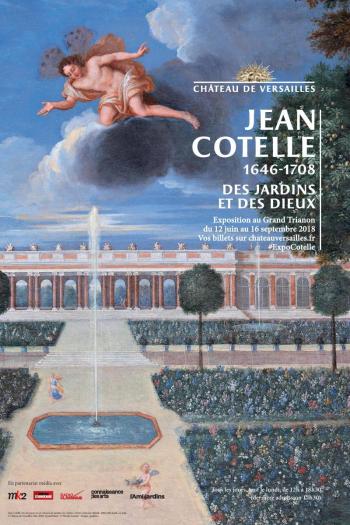 Jean Cotelle (1646–1708): Gardens and Gods, the first exhibition dedicated to the painter, will honour an artist who was very popular in his time, featuring some 120 works: paintings, drawings, engravings, miniatures, and sculptures from public and private collections. Jean Cotelle the Younger belonged to the generation of painters called upon by Louis XIV to decorate the Grand Trianon, a pleasure palace secluded from the hustle and bustle of the court.
For the Trianon Gallery, which overlooks the gardens and connects the Cool Room and the Garden Room, Cotelle was entrusted with the largest portion of the commission: twenty-one paintings. In order to adapt to the setting, he painted in vertical format, rather unusual for landscape painting, to create topographical representations of the Versailles gardens. He adorned the scenes with characters from mythology or fables arranged in two registers (earthly and heavenly), modelled upon the bucolic landscapes of Bolognese painter Albani.
This cycle, completed by three paintings by Jean-Baptiste Martin and Etienne Allegrain, represents a unique ensemble, providing insight into the king’s taste for his gardens which had recently been created by André Le Notre. Hidden by vegetation, the groves served as a backdrop for the portrayal of the loves and pleasures of the gods.
The exhibition will feature the twenty-four restored paintings following a restoration campaign that lasted several years. Along with the large format canvases, the fifteen gouaches created by the artist, masterpieces of miniature painting, will also be displayed. Additionally, a selection of lead sculptures will be included in the exhibition to evoke the decoration of the groves which have since disappeared, in relation to Cotelle’s paintings.
While the Trianon commission represents one of the highlights of Cotelle’s career, retracing the various stages of his work nevertheless reveals different aspects of his talent and his varied career in Saint-Cloud and Versailles as well as in Provence.

Jean Cotelle, Fountain Scene with Alpheus Pursuing Arethusa, 1689–91 (Château de Versailles, Dist. RMN/Jean-Marc Manaï).
Jean Cotelle the Younger was born into a cultured family in Paris in 1646. He grew up in the company of artists, especially painters, including his father Jean Cotelle the Elder, painter to the King, decorator and ornamental painter. He most likely received his early training from the portrait painter Claude Lefèvre. Jean Cotelle the Younger then visited Rome, where he stayed from 1665 until 1670 at his own expense.
His notable works from 1675 and the years which followed include miniatures to illustrate The Campaigns of Louis XIV as well as a large-format May for Notre-Dame in 1681 representing The Marriage at Cana. Cotelle also worked on other decorative commissions, in particular in Saint-Cloud where he created the jewellery cabinet as part of the decoration depicting the story of Venus and Aeneas.
The most important commission he received was a commission in 1688 from Louis XIV to decorate the Trianon gallery also called the Cotelle gallery. Cotelle painted twenty-one topographical representations of the gardens of Versailles, which he adorned with mythological and literary characters. At the same time, he carried out a series of twenty gouaches representing the Trianon Gallery in miniature.
In 1693, he left Paris for Provence, first making a stop in Lyon, where he created the decoration on the ceiling of the great hall for the Château de la Damette. From 1695 to 1700, he lived in Marseille and became the co-director of the opera with Duplessis. He also created ephemeral decorations such as The Entry of the Duke of Burgundy and the Duke of Berry into the City of Avignon. Jean Cotelle the Younger returned to Paris in 1703 where he continued his work for the Academy until his death in 1708.
Beatice Sarazin, ed., Jean Cotelle (1646–1708): Des Jardins et des Dieux (Paris: Liénart, 2018), 240 pages, ISBN: 978-2359062366, 39€ / $68.
◊ ◊ ◊ ◊ ◊
In preparation for the exhibition on Jean Cotelle, the Palace of Versailles launches a research notice for three works attributed to the painter: two gouaches and a drawing. These works disappeared from the public eye in the 1980s for two of them and soon after the year 2000 for the last one. However, reproductions and publications confirm that they exist (see the Château de Versailles website for images).
The works are:
• La Toilette de Vénus, drawing
• Vue du Château de Choisy du côté des parterres et la famille de Louvois, gouache
• Eliezer et Rebecca au Puits, gouache
Once found, their identification would enrich the corpus of the artist and the value of these works, which could be displayed in the exhibition. Internet users are invited to spread this search as far as possible with the hashtag: #ExpoCotelle. People having information about these works can contact the Palace of Versailles through: cotelle@chateauversailles.fr.
Exhibition | Splendours of the Subcontinent

Payag, Jahangir Presents Prince Khurram with a Turban Ornament (12 October 1617), detail, 1656–57 (London: Royal Collection Trust, RCIN 1005025.an), from the Padshahnama (‘Book of Emperors’), an illuminated manuscript recording the reign of the Mughal Emperor Shah-Jahan, which was sent to George III by the ruler of Awadh in 1799. More information on the Christian iconography of the wall paintings is available from the Royal Collection website.
◊ ◊ ◊ ◊ ◊
Press release (7 June 2018) from the Royal Collection Trust:
Splendours of the Subcontinent: Four Centuries of South Asian Paintings and Manuscripts
The Queen’s Gallery, Buckingham Palace, London, 8 June — 14 October 2018
Curated by Emily Hannam
Two exhibitions at The Queen’s Gallery, Buckingham Palace bring together some of the finest examples of craftsmanship and literary and artistic production from the Indian subcontinent. Both are drawn entirely from the Royal Collection, which contains one of the world’s greatest and most wide-ranging collections of material from the region. Exploring the long-standing relationship between the British Monarchy and South Asia, Splendours of the Subcontinent: Four Centuries of South Asian Paintings and Manuscripts presents 150 works from India, Pakistan, and Bangladesh, most of which are on public display for the first time. In the complementary exhibition Splendours of the Subcontinent: A Prince’s Tour of India 1875–6, gifts given to Albert Edward, Prince of Wales go on display in London for the first time in 130 years.
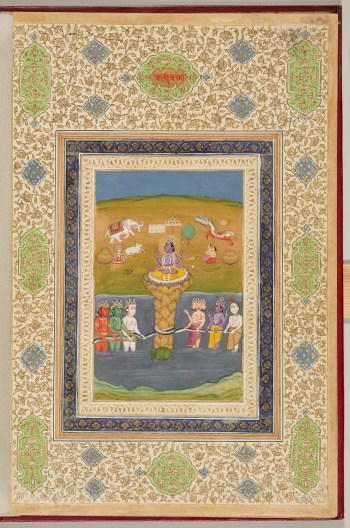
Indian School, Kurma, the Second Incarnation of Vishnu, ca 1790, 41 × 27 cm, page dimensions (Royal Collection Trust, RCIN 1005115.e).
Since the early 17th century, diplomatic gift-giving has played a crucial role in the development of the relationship between the British Monarchy and rulers of South Asia. Among the most important gifts received from the subcontinent is the Padshahnama (‘Book of Emperors’), an illuminated manuscript from 1656–57 recording the reign of the Mughal Emperor Shah-Jahan, sent to George III by the ruler of Awadh in 1799. Ten paintings from the Padshahnama, the only contemporary illustrated imperial volume to survive, are shown in the exhibition.
The Khamsa (‘Quintet’) of Nava’i, 1492, and the Gulistan (‘Rose Garden’) of Sa’di, 1584, also presented to George III, are among the finest examples of manuscripts that combine intricate calligraphy with exquisite illuminations. Sacred religious texts were also presented as gifts, including the 3.5m-long Quran Scroll, thought to have been given to George IV by one of the rulers of the Carnatic. All 114 chapters of the Quran are written on the scroll’s 5cm-wide surface in a miniscule naskh script, known as ghubar (‘dust’).
Queen Victoria acquired many South Asian books and manuscripts, including a volume of her own published journals, The Queen’s Travels in Scotland and Ireland, translated into Hindi by the Maharaja of Benares. Victoria’s interest in South Asian culture continued throughout her life, and her studies of the Hindustani language, undertaken in her seventies with her Indian secretary Abdul Karim, are recorded in her Hindustani diaries, which are shown in the exhibition with her Hindustani phrasebook.
Less well known are the paintings and manuscripts given to, and bought by, King George V and Queen Mary during their two tours of South Asia in the early 20th century. The King and Queen acquired contemporary works, such as Queen Tissarakshita, 1911, by Abanindranath Tagore, founder of the Bengal School of Art, as well as historic paintings reflecting the diverse cultures, history and religions of South Asia. These include a series of 16 paintings from the Pahari region, c.1775–90, depicting the story of the boy Prahlada as told in the seventh book of the Bhagavata Purana, one of the great Hindu sacred texts.
 King George V’s father, King Edward VII, was only the second member of the royal family to visit the subcontinent, undertaking a four-month tour in 1875–76 when Prince of Wales. Travelling almost 10,000 miles and meeting more than 90 local rulers in an effort to establish personal and diplomatic links, the Prince was presented with over 2,000 examples of Indian design and craftsmanship as part of the traditional exchange of gifts. The visit gave the Prince the opportunity to experience first-hand the magnificence of the Indian courts. Many of the gifts he received were ceremonial items connected to courtly customs, such as a pair of enamelled peacock feather fans, which play an important role in the spectacle of a durbar (audience). A ten-piece gold service, given by the Maharaja of Mysore, contains an attardan (perfume holder), rosewater sprinklers and a paandan (betel-nut holder), items associated with welcoming guests to an Indian court.
Traditional arms and armour form the largest group of gifts received by the Prince. These presentation pieces, intended to display their maker’s skill and creativity, include a dagger incorporating loose pearls that travel along a channel in the blade when tilted, and a gold punch dagger embellished with rubies and emeralds, fitted with a single flintlock pistol on both sides of the blade. Enamelled jewellery and decorative items from Jaipur were highly sought after by European visitors. An enamelled gold and diamond perfume holder, presented by Ram Singh II, Maharaja of Jaipur, took five years to produce. It opens like a lotus flower to reveal a hidden cup and cover, and is decorated with scenes of Jaipur’s great palaces.
The Prince recognised the significant cultural and artistic value of the gifts he had received. On his return to Britain he made arrangements for the items to be placed on public display, first at the South Kensington Museum (now the Victoria and Albert Museum) and then at the Bethnal Green Museum, followed by exhibitions in Paris, Copenhagen, and across the UK. Between 1876 and 1880 more than two million people in Britain alone saw the collection, which brought the wonders of Indian art to the British public and played an instrumental role in the intertwined narrative of British and Indian design.
Published by the Royal Collection Trust, catalogues for the two exhibitions are distributed in the USA and Canada by The University of Chicago Press:
Kajal Meghani, Splendours of the Subcontinent: A Prince’s Tour of India, 1875–6 (London: Royal Collection Trust, 2017), 200 pages, ISBN: 9781909741423, $40.
Emily Hannam, Eastern Encounters: Four Centuries of Paintings and Manuscripts from the Indian Subcontinent (London: Royal Collection Trust, 2018), 256 pages, ISBN 978-1909741454, £30 / $60.
 The Royal Library, Windsor Castle, is home to one of the most important collections of South Asian paintings and manuscripts in the world. This publication brings together highlights of these superb works, many of which have never before been publically displayed or published. From dazzling Mughal poetic texts to modern masterpieces, they span a geographical expanse from Kashmir to Kerala and for a period of more than 400 years.
This publication presents new scholarship exploring the history of how these works entered the Royal Collection, tracing the long-standing relationship between the British Crown and South Asia. Beautifully illustrated and meticulously researched, Eastern Encounters: Four Centuries of Paintings and Manuscripts from the Indian Subcontinent provides a fascinating insight into his rich and hither-to underexplored aspect of the Royal Collection.
Emily Hannam is Assistant Curator of Islamic and South Asian Collections, Royal Collection Trust. She curated Splendors of the Subcontinent: Four Centuries of South Asian Paintings and Manuscripts at the Queen’s Gallery, Buckingham Palace, and featured on the BBC series Art, Passion and Power. She holds degrees in art history from the Universities of Edinburgh and Oxford, specialising in the art of the book in South Asia.
Exhibition | Afro-Atlantic Histories
From ArtForum:
Histórias Afro-Atlânticas / Afro-Atlantic Histories
Museu de Arte de São Paulo (MASP) and concurrently at Instituto Tomie Ohtake, São Paulo, 28 June — 21 October 2018
Curated by Adriano Pedrosa, Ayrson Heráclito, Hélio Menezes, Lilia Schwarcz, and Tomás Toledo
In the most violent and uncertain times of its recent history, Brazil is revisiting the origins of its racial frictions: the slave trade. Histórias afro-atlânticas (Afro-Atlantic Histories) is a massive, 380-work survey of African, Latin American, and European art from the past five centuries, chronicling the largest diaspora in modern history. Nearly half of all Africans captured by slave traders were brought to Brazil, from the time the Portuguese arrived, in the sixteenth century, all the way through the nineteenth century. The show is a sequel to Histórias mestiças (Mestizo Histories), staged four years ago at the Instituto Tomie Ohtake, the cultural center that is also cohosting the current exhibition. Its scope is far-reaching, with pieces by colonial-era Dutch master Albert Eckhout and modern greats Théodore Géricault and Paul Cézanne, as well as contemporary art-world darlings Glenn Ligon, Kara Walker, and Hank Willis Thomas. A fully illustrated catalogue and companion reader will help sharpen our perspective on it all.
As noted in the May–August 2018 bulletin from the Yale Center for British Art, the YCBA has loaned six works including four paintings by Agostino Brunias (1728–1796).
Note (added 14 October 2018) — Reviewing the exhibition for The New York Times (12 October 2018), Holland Cotter describes it as “a hemispheric treasure chest, a redrafting of known narratives, and piece for piece one of the most enthralling shows I’ve seen in years, with one visual detonation after another.” The full review is available here.
Exhibition | Lost Treasures of Strawberry Hill
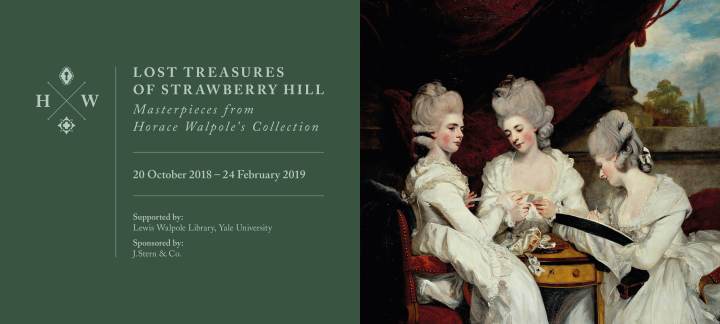
Joshua Reynolds, Portrait of the Ladies Waldegrave, 1780-81, oil on canvas, 143 × 168 cm (Edinburgh: National Galleries of Scotland, purchased with the aid of The Cowan Smith Bequest and the Art Fund 1952).
◊ ◊ ◊ ◊ ◊
This fall at Strawberry Hill:
Lost Treasures of Strawberry Hill
Strawberry Hill House & Garden, Twickenham, 20 October 2018 — 24 February 2019
Curated by Silvia Davoli and Michael Snodin
This exhibition brings back to Strawberry Hill some of the most important masterpieces in Horace Walpole’s famous and unique collection for a once-in-a-lifetime exhibition. Horace Walpole’s collection was one of the most important of the 18th century. It was dispersed in a great sale in 1842. For the first time in over 170 years, Strawberry Hill can be seen as Walpole conceived it, with the collection in the interiors as he designed it, shown in their original positions.
Strawberry Hill was filled with a celebrated collection of paintings, furniture, sculptures, and curiosities: great portraits by Sir Joshua Reynolds, Sir Peter Lely, Allan Ramsay, Rubens, Van Dyck, Hans Holbein, and Clouet; miniature portraits by Isaac and Peter Oliver, Hilliard and Petitot, a carved Roman eagle from the 1st century AD; fine furniture including a Boulle cabinet, fabulous Sèvres pieces as well as some oddities such as a lime-wood cravat, carved by Grinling Gibbons, a lock of Mary Tudor’s hair and a ‘magic mirror’ (an obsidian disc) which Dr Dee, Queen Elizabeth I’s necromancer, had used for conjuring up the spirits.
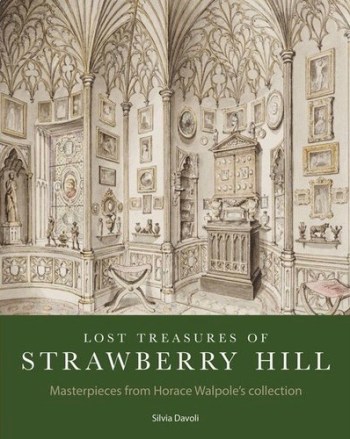 In 1842, the collection was dispersed worldwide in a 28-day ‘sale of the century’. From the 1920s to the ‘70s, Walpole scholar and consummate collector Wilmarth S. Lewis, who edited and published with Yale University Press the 48-volume Yale Edition of Horace Walpole’s Correspondence (New Haven, 1937–83), assembled the largest private collection of Walpoliana, including many pieces from Strawberry Hill, which he and his wife bequeathed to Yale University in 1980 as the Lewis Walpole Library, with whose help the Strawberry Hill Trust is delighted to be mounting this exhibition.
Walpole left detailed descriptions of the displays in each of the main rooms of his villa, so that nearly all the works can be shown in their original positions. In The Great Parlour, a display of portraits of Walpole’s family includes the famous Reynolds’s painting of Walpole’s nieces, The Ladies Waldegrave, (now in the National Gallery of Scotland). The Tribune will house the famous rosewood cabinet designed by Walpole, owned by the V&A, together with a display of exquisite portrait miniatures. Walpole’s gilded, crimson Gallery will be once again house the impressive Roman sculpture of an eagle and be hung with life-size portraits, including The Family of Catherine de Medici by Clouet.
Silvia Davoli, Lost Treasures of Strawberry Hill: Masterpieces from Horace Walpole’s Collection (London: Scala Arts & Heritage Publishers, 2018), ISBN: 9781785511806, £15.










leave a comment