New Book | Portrait Miniatures
As noted by Adam Busiakiewicz, at Art History News; from Michael Imhof:
Bernd Pappe and Juliane Schmieglitz-Otten, eds., Portrait Miniatures: Artists, Functions, Manufacturing Aspects, and Collections (Petersberg: Michael Imhof Verlag, 2025), 288 pages, ISBN: 978-3731915096, €40.
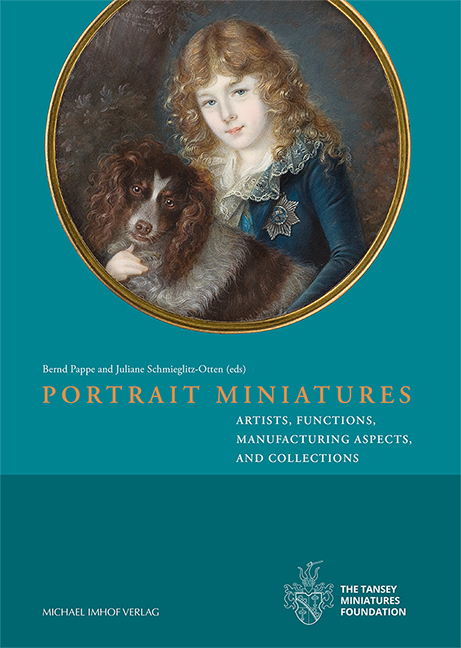 Twenty-two renowned experts from nine countries present the miniature portrait from different perspectives, discussing the private use of miniatures, special depictions, and messages conveyed by miniatures. Significant but little-known museum collections are introduced alongside insightful information about the living conditions of the artists active at the time. Lastly, aspects regarding the production techniques for miniatures are examined.
This fourth volume publishes the presentations given at the 2024 conference held by the Tansey Miniatures Foundation. Interested individuals from all over the world come together in Celle every two to three years at these conventions on the portrait miniature to discuss this special genre of portrait painting.
The table of contents can be seen here»
Huntington Library Quarterly, Summer 2024 | Exhibitions in London
This special issue of HLQ arises from a conference held at the Huntington Library in September 2023:
Huntington Library Quarterly 87.2 (Summer 2024)
Paintings, Peepshows, and Porcupines: Exhibitions in London, 1763–1851
Edited by Jordan Bear and Catherine Roach
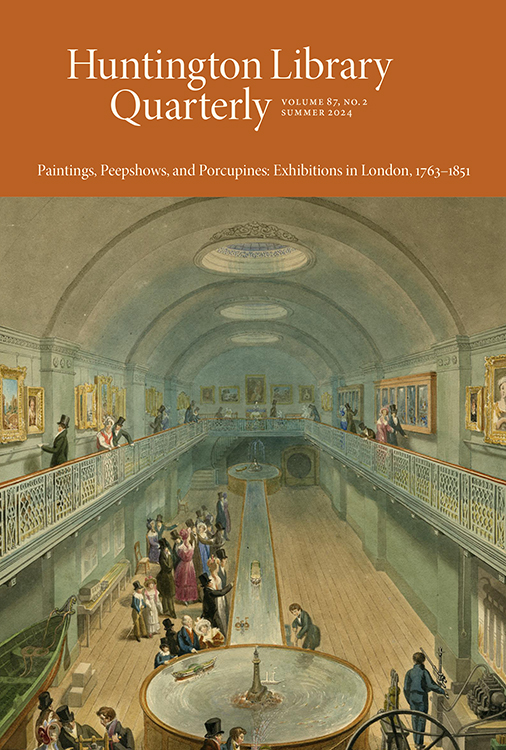 Dazzling variety characterized exhibitions in eighteenth- and nineteenth-century Britain: boxing matches, automata, contemporary art shows, panoramas, dog beauty contests, and menageries all contributed to a flourishing display culture. Despite their differences, these attractions shared both techniques for engaging audiences and widely reverberating themes. All of the essays in this volume work across multiple sites of display. By examining the varied terrain of exhibitions collectively, this issue illuminates cultural preoccupations of the time, including the multifarious impact of empire and the productively ambiguous boundaries between the cultural expressions that were deemed low and those that were deemed high.
c o n t e n t s
• Jordan Bear and Catherine Roach, “Introduction: Exhibitions in London, 1763–1851,” pp. 153–63.
• Adam Eaker, “The Art of Marring a Face: Exhibiting Boxers in Georgian London,” pp. 165–82.
• Nicholas Robbins, “The Circumference of the Subject: Figuring Race at Egyptian Hall,” pp. 183–205.
• Rosie Dias, “Making Space for Empire: India in Panoramas and Dioramas, 1830–1851,” pp. 207–31.
• Holly Shaffer, “Provisioners, Cooks, Coffeehouses, and Clubs: Exhibiting Taste in Calcutta and London in the Early Nineteenth Century,” pp. 233–54.
• Jordan Bear, “The Sea Serpent of Regent Street: On the Evidentiary Strategies of Nineteenth-Century Exhibitions,” pp. 255–71.
• Catherine Roach, “Dog Shows: Porcelain Pugs and Pre-Raphaelite Painters in Thomas Earl’s Art and Nature,” pp. 273–90.
• Alison FitzGerald, “Centers and Peripheries: Exhibiting London’s ‘Marvels’ in Britain’s ‘Second City’,” pp. 291–311.
• John Plunkett, “An Early Moving Picture Industry? Exhibition Networks and the Panorama, 1810–1850,” pp. 313–35.
New Book | Travel Stories and the Eastern Adriatic
From The Institute of Art History at Zagreb:
Katrina O’Loughlin, Ana Šverko, and Elke Katharina Wittich, eds., Travel Stories and the Eastern Adriatic with a Section about the Travels of Thomas Graham Jackson (Zagreb: The Institute of Art History, 2025), 296 pages, ISBN: 978-9537875466, €20.
 Travel Stories is the fourth collection of selected papers from a series of annual academic conferences held at the Institute of Art History – Cvito Fisković Centre in Split, which began in 2014. The current volume is a direct continuation of the book Discovering Dalmatia: Dalmatia in Travelogues, Images, and Photographs, published in 2019. The same editorial team and volume reviewers have this time grouped the selected papers from the Split conferences into two sections.
The first section, “Travellers and Travel Narratives,” brings together five papers related to travel narratives and the Eastern Adriatic over a broad timeline. These papers are authored by individuals from various backgrounds and discuss sources that include a variety of different media (lectures, drawings, books, photographs, diaries, letters), contributing to the exploration of the range of media used in travel narratives within this multimedia genre. The second section follows the Victorian architect Thomas Graham Jackson (1835–1924) on his journey along the eastern Adriatic coast, focusing on selected episodes from this trip, as described in his renowned three-volume work Dalmatia, the Quarnero, and Istria with Cettigne in Montenegro and the Island of Grado (Oxford, 1887), which is dedicated to the architectural and artistic heritage of this region.
The editorial process and publication of this book coincides with the first year of a new project funded by the Croatian Science Foundation, dedicated to Dalmatia and travel writing, ‘Where East Meets West’: Travel Narratives and the Fashioning of a Dalmatian Artistic Heritage in Modern Europe (c. 1675–1941), (Travelogues Dalmatia 2024–27).
c o n t e n t s
Acknowledgments
Ana Sverko — Preface: Exploring Genre, Place, and Travellers within the Travel Narrative
Section 1 | Travellers and Travel Narratives
• Frances Sands — Sir John Soane’s Lecture Drawings: A Virtual Grand Tour
• David McCallam — Carlo Bobba, Souvenirs d’un voyage en Dalmatie (1810): Travel, Empire, and Hospitality in the Early Nineteenth-Century Adriatic
• Ante Orlović — A Photographic Album with a Description of His Majesty the Emperor and King Franz Joseph I’s Tour through Dalmatia in 1875
• Boris Dundović and Eszter Baldavári — The Balkan Letters by Ernő Foerk: A Travelogue Mapping the Architectural Trajectories of Ottoman and Orthodox Heritage
• Dalibor Prančević and Barbara Vujanović — Ivan Meštrović’s Reflections from His Travels to the Middle East
Section 2 | Thomas Graham Jackson and the Eastern Adriatic
• Mateo Bratanić — Travellers, Historians, and Antiquaries: How Thomas Graham Jackson Wrote History in Dalmatia, the Quarnero, and Istria
• Krasanka Majer Jurišić and Petar Puhmajer — Thomas Graham Jackson and the Island of Rab
• Ana Torlak — Thomas Graham Jackson and Salona
• Sanja Žaja Vrbica — The Portrait of Dubrovnik by Thomas Graham Jackson
• Mateja Jerman — The Church Treasuries of Dalmatia and the Bay of Kotor through the Eyes of Thomas Graham Jackson
List of Illustrations
List of Contributors
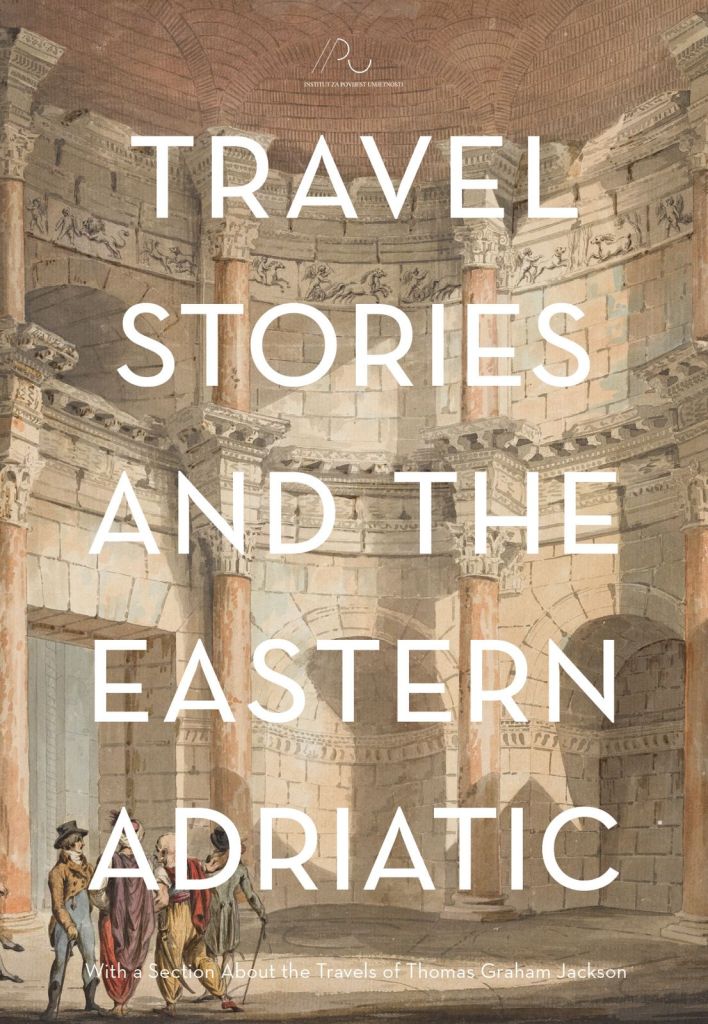
Cover image: Soane office hand: Detail of a Royal Academy Lecture Drawing Showing an Interior View of the Temple of Jupiter at Diocletian’s Palace, Spalatro (Split), after Robert Adam, Ruins of the Palace of the Emperor Diocletian at Spalatro in Dalmatia (London 1764, plate 33), 1806–19 (London: Sir John Soane’s Museum, SM 19/11/1; Ardon Bar-Hama).
The Art of the Ephemeral in 18th-Century France
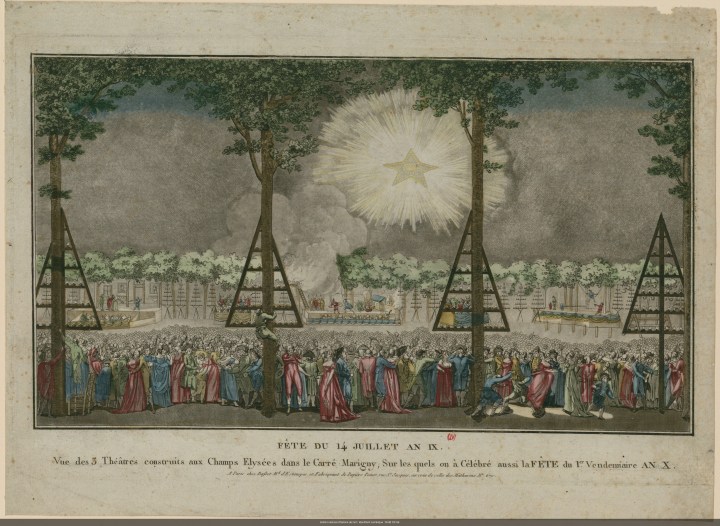
Paul-André Basset, Fête du 14 Juillet An IX, ca. 1801, hand-colored engraving, 28 × 44 cm (Paris: Bibliothèque de l’Institut National d’Histoire de l’Art). The print depicts the national holiday, as celebrated on the Champs-Élysées and organized by Chalgrin, commemorating the storming of the Bastille in 1789.
◊ ◊ ◊ ◊ ◊
All contents from this special issue of Status Quaestionis are available as free downloads:
Here Today, Gone Tomorrow?
The Art of the Ephemeral in Eighteenth-Century France
Status Quaestionis: Language, Text, Culture 28 (2025)
Edited by Elisa Cazzato
This monographic issue of Status Quaestionis explores the notion of ephemerality in French artistic culture during the long eighteenth-century. The volume is highly interdisciplinary, featuring articles from art and theatre history, costume-making, and performance studies, extending the notion of the ephemeral to a wide range of examples. The authors investigate how, in order to exist, ephemerality needs materiality, since any creative process intersects with the material requirement that both artworks and performances need: materials, locations, settings, scripts, costumes, and bodies. This dichotomy enables historians to further analyse the cultural and political meanings of the ephemeral, connecting artworks to social contexts, dance costumes to movements, and public festivals to human reception. Rather than focusing solely on aesthetics, the volume interrogates how the ephemeral was experienced, recorded, and remembered and how its traces persist in artworks, texts, and collective memory. The contributions question the boundary between presence and absence, visibility and oblivion, reflecting on the long-term cultural implications of transience. In seeking what remains of the ephemeral, the volume challenges dominant narratives and reconsiders the politics of cultural memory.
This special issue was inspired by the intellectual discussions that took place during the international conference organised at Ca’ Foscari University of Venice in June 2023. The conference was part of the research project SPECTACLE, funded by the European Union’s Horizion 2020 research and innovation programme under the Marie Skłodowska-Curie grant agreement no. 893106.
t h e m a t i c a r t i c l e s
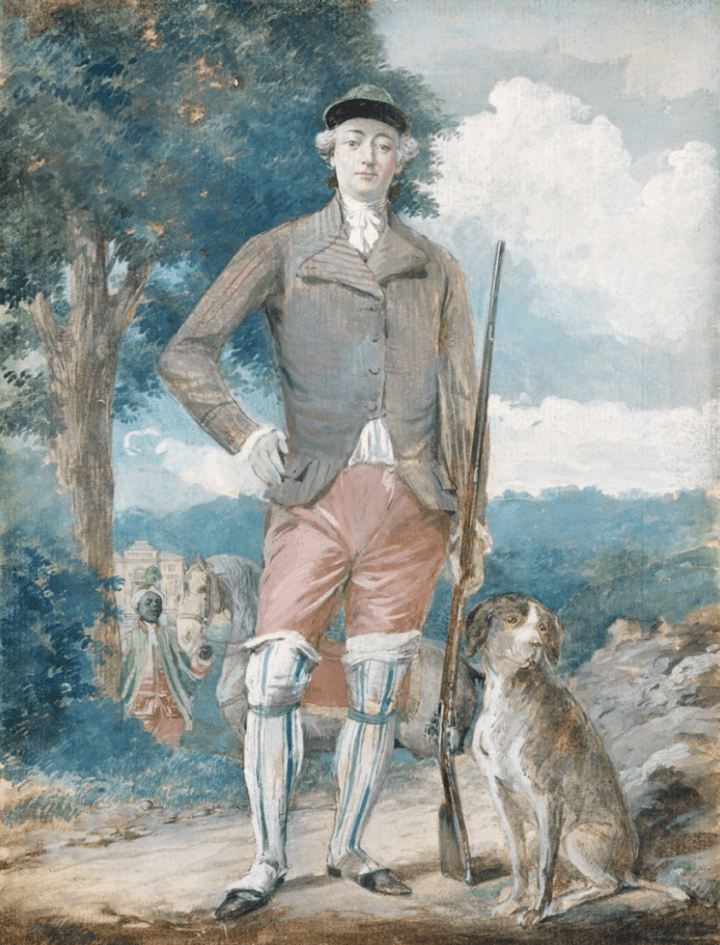
Jean-Baptiste-Philibert Moitte, The Comte d’Artois as a Hunter, ca. 1777, gouache on paper, 22.9 × 30 cm (Amiens, Musée de Picardie). Figure 1 from the article by Noémie Étienne and Meredith Martin.
• Introduction: Here Today, Gone Tomorrow? The Art of the Ephemeral in Eighteenth-Century France — Elisa Cazzato
• ‘Mais, le lendemain matin’: Residues of the Ephemeral in Eighteenth-Century French Art — Mark Ledbury
• Spectacular Blindness: Enslaved Children and African Artifacts in Eighteenth-Century Paris — Noémie Étienne and Meredith Martin
• L’art du comédien au tournant des Lumières: Conscience de l’éphémère et sensibilité mémorielle — Ilaria Lepore
• L’expérience éphémère d’Ériphyle (Voltaire, 1732): Matériaux tangibles et réécritures d’une dramaturgie passagère — Renaud Bret-Vitoz
• Un événement unique: Le théâtre de la Révolution entre surgissement et disparition — Pierre Frantz
• Ephemeral Emblem: Jacques-Louis David and the Making of a Revolutionary Martyr — Daniella Berman
• Les feux d’artifices des frères Ruggieri à l’intérieur d’un théâtre: L’autonomie de l’éphémère dans le Paris du XVIIIe siècle — Emanuele De Luca
• Tra utopia e ricerca del consenso: Fuochi e apparati effimeri di epoca napoleonica a Milano tra il 1801 e il 1803 — Alessandra Mignatti
• Witnesses of the Past: Costumes as Material Evidence of the Ephemeral Performance — Petra Zeller Dotlačilová
• Noverre’s Lament: Inscription, Posterity, and the Ephemeral Art of Dance — Olivia Sabee
• Ephemerality on the Fringe: Exploring the Venues Hosting Power Quadrilles in Brussels on the Eve of Waterloo and Beyond (1814–1816) — Cornelis Vanistendael
Miscellaneous articles and reviews are available here»
◊ ◊ ◊ ◊ ◊
Elisa Cazzato is research fellow at the University of Naples Federico II. She holds a PhD in art history from the University of Sydney, and she is a former Marie Skłodowska-Curie Global Fellow. For her project SPECTACLE she was a visiting scholar at the CELLF of the Université Sorbonne and in the New York University’s Department of Art History. Her publications include articles in the peer-review journals Studi Francesi, Dance Research, Humanities Research Journal, and RIEF. She is currently writing her first book on the life and career of Ignazio Degotti.
J18 | Provocations from HECAA@30
A selection of J18 Notes & Queries essays responding to the 2023 conference:
Elizabeth Saari Browne and Dana Leibsohn, eds., “Provocations from HECAA@30,” Journal18 (October 2024).
Responses
• Jennifer Van Horn — Absence and Abundance: Thinking Ahead from HECAA@30
• Karen Lipsedge — The Power of Storytelling and Story-Listening: Reflections on HECAA@30
• Emily C. Casey and Matthew Gin — Everything in Between: Reflections on HECAA@30
• Deepthi Murali —The Ethics of Study and Display of Ivory Objects
• Dawn Odell — Who (or What) Speaks in a Global History of Art?
• Kathryn Desplanque —Material Art History and Black Feminist Pedagogies
From the introduction by Elizabeth Saari Browne and Dana Leibsohn:
 In October 1725, a Jiwere (Otoe) leader named Aguiguida found himself at Versailles watching the fountains play. Invited by French men eager to secure allies amongst those who lived on the Central Plains of North America, this visit had been designed to impress. Along with a tour of Parisian sites and a meeting with the king, Aguiguida and his fellow travelers received gifts aplenty: dress coats with silver ornaments, plumed hats, royal medallions; also rifles and swords, and a painting depicting their audience with the monarch. The visitors had meant to offer their own gifts, but most of these were lost in a shipwreck off the coast of America.[1] Today, no material creations from their trip exist, neither those meant for Louis XV nor those offered the delegates.
By the 1720s, people had been traveling from the Americas to European courts for centuries. Itineraries varied, but when Aguiguida met Louis, it was as much trope as history. So why does this story still surprise? Indeed, who does it still surprise? These kinds of questions surfaced at the recent 30th-anniversary convening of HECAA (Historians of Eighteenth-Century Art and Architecture) in October 2023, Environments, Materials, and Futures. This particular eighteenth-century narrative circles around colonial and imperial histories and how creations of earthen and animal materials, of voyages across (and art lost to) land and sea, and of material cultures of global exchange and of war are implicated in such enterprises. But Aguiguida’s trans-Atlantic voyage and visit also pose other questions for historians of art and architecture: about archival absences, affective relationships, and presumed and real (im)balances of power embedded in materials, in pedagogical relationships, and in the Academy. It is these themes the following essays address. . .
Elizabeth Saari Browne is Assistant Professor of Art History and Women’s Studies at the University of Georgia in Athens.
Dana Leibsohn is the Alice Pratt Brown Professor of Art at Smith College in Northampton, Massachusetts.
The full introduction and all essays are available here»
Sculpture Journal, November 2023
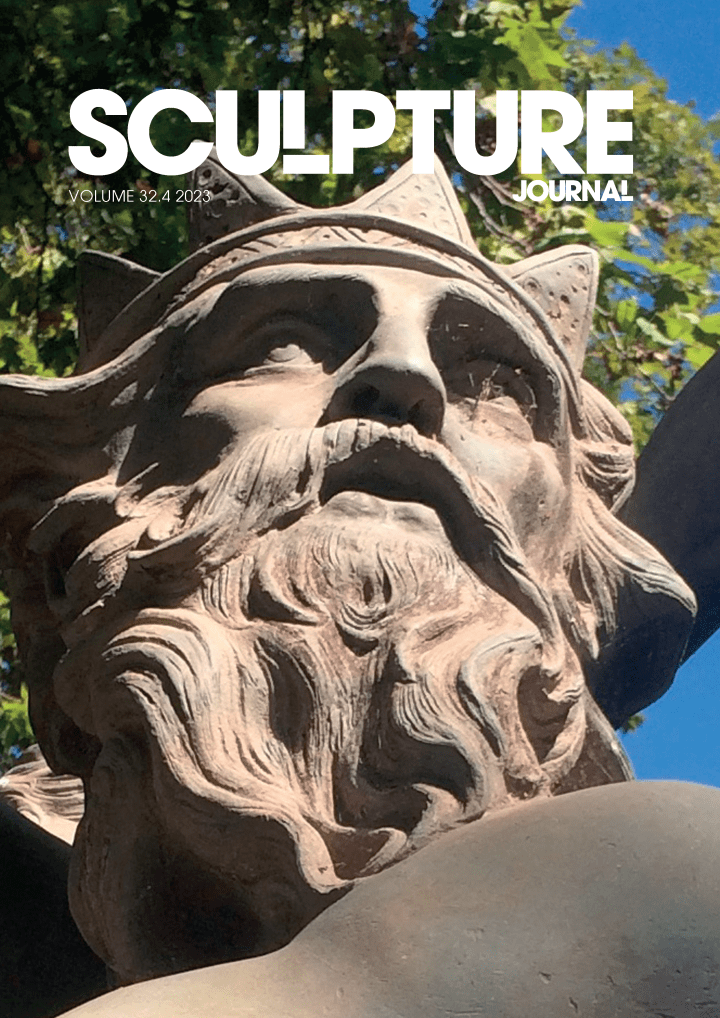
The latest issue of the Sculpture Journal is dedicated to the long eighteenth and nineteenth centuries:
Sculpture Journal 32.4 (November 2023)
 • Samantha Lukic-Scott and Charlotte Davis, “Valuing Sculpture: Art, Craft, and Industry, 1660–1860,” pp. 409–16.
Responding to the many useful and intriguing discussions that arose over the two days of the Valuing Sculpture: Art, Craft and Industry, 1660–1860 conference held in July 2021, this special issue explores new directions for scholarly research. This introduction considers the usefulness of the classifications of art, craft, and industry, and in doing so presents this collection’s methodology of expanding dialogues by reaching across medial, dimensional, geographical, and categorical boundaries.
• M. G. Sullivan, “Valuing Sculpture in the Long Eighteenth Century: Materials and Technology,” pp. 417–32.
In 1712 the sale catalogue of John Nost’s studio defined the value of sculpture as lying in the intrinsic value of materials, the performance of the artist, and the costs and complexity of sculptural production. This article looks at how these values of materials and making shifted over the course of the following 150 years through specific examples of materials—lead and granite—that gained and then lost value; and how production processes that streamlined sculptural production, notably James Tulloch’s marble works, were first celebrated and then seen as anathema to sculptural value. The article argues for the malleability of sculptural value systems in the long eighteenth century, and the need to understand sculptural value in materials and production in relation to economic and technological history.
• Caroline Stanford, “‘Peculiarly Fit for Statues’: The Contribution of Coade’s Fired Artificial Stone to Sculpture in the Eighteenth Century,” pp. 433–50.
This article considers the enduring ‘value’ of Coade stone as artefact. Using insights from Alois Riegl’s The Modern Cult of Monuments, it examines the contribution of fired artificial stone as a key enabler of the eighteenth-century passion for sculpture in Britain, as replicated sculptural forms entered interiors, gardens, and architecture. This durable stoneware first crossed into statuary in the 1720s. From 1769, Eleanor Coade (1733–1821) became its figurehead, successfully positioning Coade stone as superior to natural stone. Formulation and production were collaborative processes dependent upon specialist, often overlooked fabricating skills. This article considers factors that led to the success of Coade stone, as well as its composition and production. It concludes with a brief case study of the Coade stone caryatids that Sir John Soane took as a personal motif.
• Rebecca Wade, “The Young Naturalist by Henry Weekes: Intermediality, Industry, and International Exhibitions,” pp. 451–68.
The Young Naturalist by Henry Weekes (1807–77) was first presented in plaster at the Royal Academy of Arts in 1854. Beginning as an object located firmly in the domain of the fine arts through its modes of production and sites of display, the sculpture encountered industry through a series of international exhibitions in Paris, London and Manchester during the 1850s and 1860s. Not only was the work in proximity to industrial objects, processes and collectors, it was fundamentally transformed by them, resulting in a collaboration between Weekes and the Birmingham-based manufacturer Elkington & Co. This article charts the changing status of sculpture and labour in the second half of the nineteenth century, with its increasing visibility and availability to new markets through both emerging and established technologies of reproduction.
• Liberty Paterson, ” ‘Wider than the Realm of England’: The Hosack Family Heritage, Atlantic Slavery, and Casting Mary, Queen of Scots for the Nation,” pp. 469–92.
In 1871 the Scottish-born magistrate John Hosack (1809–87) was described as ‘the chivalrous and most recent defender’ of Mary, Queen of Scots. After writing a popular historical account of her life, he had presented a plaster cast bust of her Westminster effigy to London’s National Portrait Gallery, which it then used to create an electrotype sculpture with the help of Elkington & Co. This article interrogates the ‘value’ of this sculpture as a cultural heritage object by retracing its history. It places Hosack’s desire to replicate and commemorate Scottish heritage alongside his family ties to Jamaica, including the parallel life of his half-brother William and the wealth John derived from his father’s sugar profits, which relied on African enslavement. It argues the importance of understanding how such legacies enabled individuals to participate in cultural philanthropy in the Victorian period, which simultaneously distanced them from their Atlantic pasts. It also considers how, in its transformation into an electrotype, Hosack’s cast became part of a wider effort by museums and galleries to replicate national heritage using manufacturing methods indebted to the industrial economy intertwined with the British Empire. Sculpture offered a powerful medium through which to fortify national history, but its commemorative capacity can, and should, be unpicked to better understand British legacies of enslavement and colonialism.
• Justine Gain, “Valuing Ornament: Jean-Baptiste Plantar (1790–1879) between Art, Craft, and Industry,” pp. 493–511.
In the nineteenth century, as European countries reacted to industrialization, art, and burgeoning industries intertwined in a myriad of new ways. From this union, several major changes occurred in building construction, decorative arts, and sculpture. The career and oeuvre of Jean-Baptiste Plantar, French ornamentalist and sculptor des Bâtiments du Roi, illustrate the new relationships forged between traditional architectural patterns and industrial artistic production. Despite holding a central role in their establishment, Plantar has been largely unheeded both by his contemporaries and later writers. This article reasserts Plantar’s significance in the creation of a visual—essentially Parisian—landscape in the first half of the nineteenth century.
• Patricia Monteiro, “The Art of Stucco in Southern Portugal: Morphologies, Value Judgements, and the Prejudice of Conservation,” pp. 513–29.
The Portuguese artistic production of stucco is part of a long tradition of decorative techniques that form part of a shared visual and cultural legacy in southern Europe. However, little is understood of local idiosyncrasies within this legacy. By focusing on stucco artworks in the peripheral area of Alentejo, away from the cultural capitals of Europe, this article explores the emergence of an original and distinct formal and functional interplay over the course of several centuries. This article re-evaluates the morphologies of Alentejo’s stucco sculptures and assesses the degree to which such morphologies express common artistic practices and constitute a distinct art form. Finally, the article identifies the deleterious ramifications that have arisen from such considerations not being taken account of during the conservation of these works.
• David Mark Mitchell, “Fabricating Enchantment: Antoine Benoist’s Wax Courtiers in Louis XIV’s Paris,” pp. 531–44.
Antoine Benoist’s Cercle royal was an exhibition of life-size wax figures on display in Louis XIV’s Paris. In the absence of extant objects from the exhibition itself, this article focuses on the corpus of sources that attest to its reception. It concentrates on the Cercle royal’s initial recognition, beginning in the 1660s, when the exhibition centred on French royalty’s courtly entourage. Alternately celebrated as vivid miracles or derided as deceitful trivialities, Benoist’s wax figures provide an informatively problematic case for considering questions of sculptural craft and the decorum of its display in this era. In tracing the discord of wax portraiture’s reception, this article demonstrates that vexed questions of artisanal stature were embedded within aesthetic debates about illusionistic verisimilitude.
• Jennifer Dudley, Review of the exhibition If Not Now, When? Generations of Women in Sculpture in Britain, 1960–2022 (Hepworth Wakefield, 2023), pp. 545–48.
New Book | American Latium: American Artists and Travelers
From the Accademia Nazionale di San Luca:
Christopher M.S. Johns, Tommaso Manfredi, and Karin Wolfe, eds., American Latium: American Artists and Travelers in and around Rome in the Age of the Grand Tour (Rome: Accademia Nazionale di San Luca, 2023), ISBN: 978-8897610373.
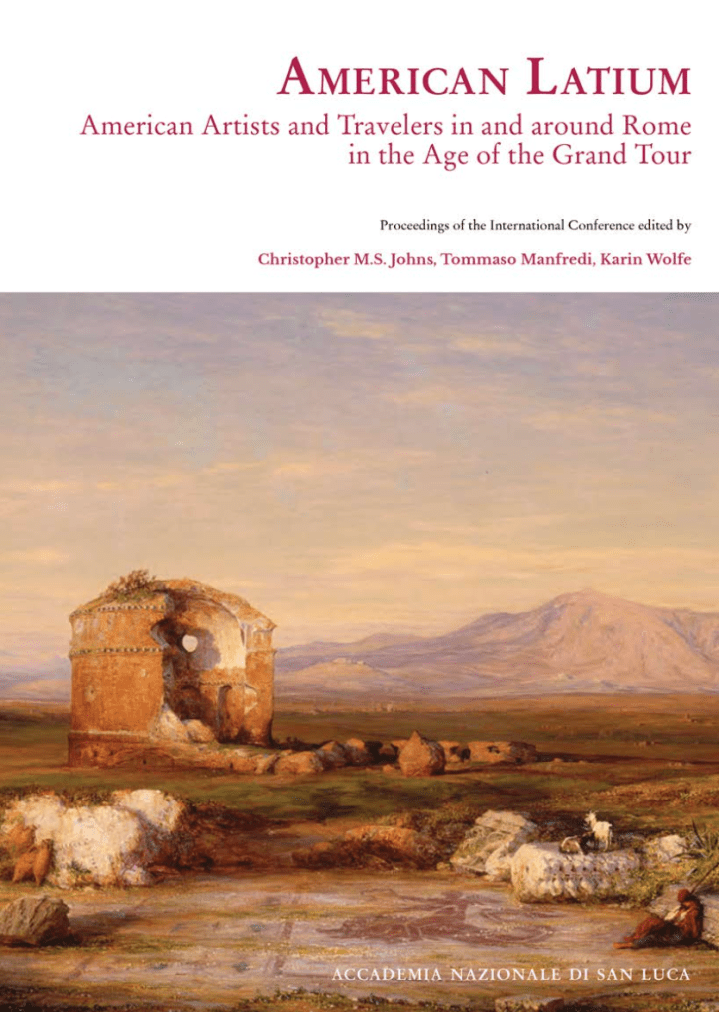 This volume brings together the proceedings of the international conference American Latium: American Artists and Travelers in and around Rome in the Age of the Grand Tour, sponsored by the Accademia Nazionale di San Luca and hosted by the Centro Studi Americani in Rome on the 7–8 June 2018, convened by Christopher M.S. Johns, Tommaso Manfredi, and Karin Wolfe. The conference examined the concept of cultural exchange between America and Rome and its surrounding territory not as a bilateral transfer of culture, but rather as an entangled and reciprocal history of cultural transmission, including the importance of London with its powerful art academies as an intermediate destination for Americans making their way to the continent. Travel to Rome engaged American artists, collectors, scientists, writers, and diplomats in dialogue with a network of European artists, intellectuals, and statesmen. The remarkable degree of cosmopolitanism found in Rome signalled its importance not simply as a cultural destination, but as a place of experiment and creativity for travelers of differing nationalities who gathered there—a place where ancient history and tradition was cross-pollinated with the experience of the modern. American Latium addresses the pioneering origins of the artistic relations between America, Rome, and its environs from the eighteenth century up until 1870. Interdisciplinary in nature, these proceedings present new, and at times unexpected, research on the experience of reciprocal cultural exchange.
C O N T E N T S
Introduction — Karin Wolfe
The American Grand Tour: From Old Masters to the New World
• Copying Old Masters for the New World: American Painters in Eighteenth-Century Rome — Jonny Yarker
• James Bowdoin III and Ward Nicholas Boylston in Italy: American Collectors in the Later Eighteenth Century — Sarah Cantor
• John Singleton Copley in Rome: The Challenge of the Old Masters Accepted — Christopher M.S. Johns
• London Between America and Continental Europe: Art and Academies — Martin Postle
• The Prince and the President: Antonio Canova and Benjamin West at the Royal Academy in London — Francesco Moschini
• John Neal, the Old Masters, and the American Muse — Francesca Orestano
• ‘In the Beginning There Was the Word’: American Writings on Raphael from the Founding Fathers to the Gilded Age — Linda Wolk-Simon
American Latium: Sites and Itineraries in and around Rome
• American Itineraries in Rome and the Campagna — Fabrizio Di Marco
• A Grave in a Foreign Land: Early American Presence at the Protestant Burying-Ground in Rome — Nicholas Stanley-Price
• Thomas Cole and the Aqueducts: Plein Air Painting in the Roman Campagna — Lisa Beaven
• Thomas Cole, Desolation, and the Ruins of Rome — David R. Marshall
• Scenery Found: John Gadsby Chapman and Open- Air Oil Sketching in and around Rome, 1830–1882 — Mary K. McGuigan
• American and European Artists and Intellectuals in Nineteenth-Century Latium: The ‘School of the Castelli Romani’ and the Locanda Martorelli in Ariccia — Francesco Petrucci
• Living and Creating in Antiquity: Roman Residences and Studios of Thomas Gibson Crawford, William Wetmore Story, and Moses Jacob Ezekiel — Pier Paolo Racioppi
Americans and the Artistic Culture of Rome: Toward an American Art
• Americans on the Grand Tour and Angelica Kauffman in Rome — Wendy Wassyng Roworth
• Championing Liberty: The Roman Sculptor Giuseppe Ceracchi in Britain and in America — Karin Wolfe
• The Rome of Charles Bulfinch — Tommaso Manfredi
• Thomas Jefferson: Rome in America — Maria Cristina Loi
• A Painter and Diplomat: The Two Careers of James Edward Freeman and Their Correspondences — John F. McGuigan Jr
• Forgotten Fervor: Paul Akers in Rome — Arlene Palmer
• Undressing America: Nineteenth-Century Expatriate Sculptors in Rome and the Problem of Nudity — Kevin Salatino
Bibliography
In Memoriam and Acknowledgements
New Book | Piranesi@300
From Artemide Edizioni:
Mario Bevilacqua and Clare Hornsby, eds., Piranesi@300 (Rome: Artemide Edizioni, 2023), 296 pages, ISBN: 978-8875754327, €48.
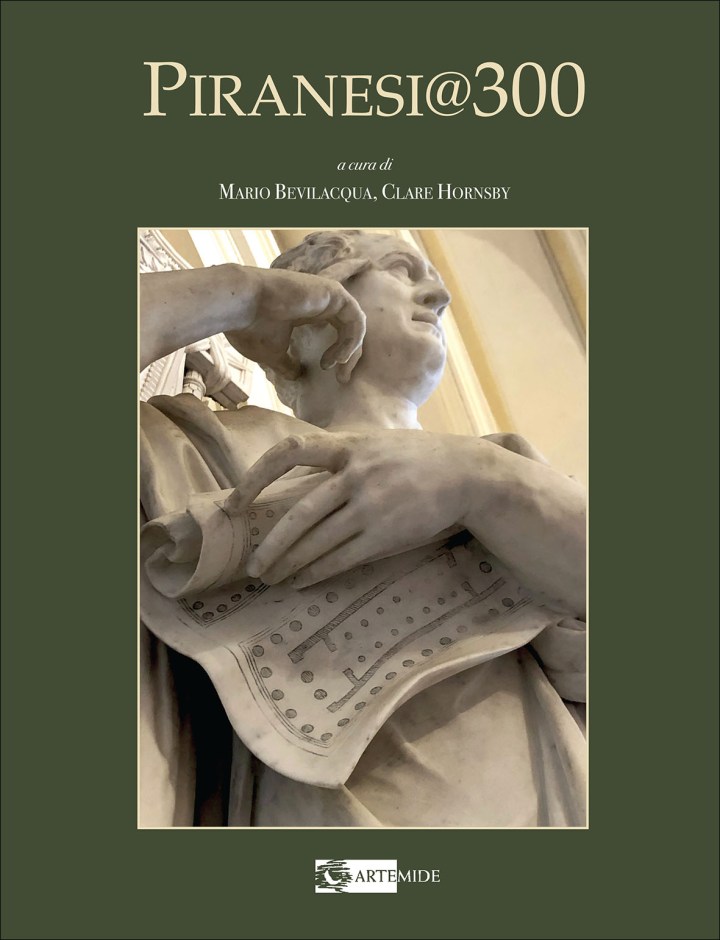 A volume of essays celebrating the 300th anniversary of the birth of Giovanni Battista Piranesi (1720–1778).
Piranesi: printmaker, architect, antiquarian, art theorist, art dealer, and polemicist, passionate in his praise of the greatness of Rome. He was a protagonist in 18th-century European arts and letters, a brilliant artistic innovator, and a controversial and exuberant personality, universally celebrated and admired. The 26 essays in this volume—from a wide range of authors writing in Italian, English, and French—include the contributions to the 2021 conference celebrating the 300th anniversary of his birth, a collaboration between architectural historian Mario Bevilacqua, director of the Centro di Studi sulla Cultura e l’Immagine di Roma, and art historian Clare Hornsby, Research Fellow at the British School at Rome; they are also the editors of this volume published by Artemide Edizioni. The essays represent new research on the artist, on the collecting of his work internationally, and on his profound and long lasting influence in Europe and beyond, from the age of the Grand Tour until now.
C O N T E N T S
Piranesi incisore, architetto, antiquario e teorico
• Ginevra Mariani — Progetto Piranesi: il catalogo generale delle matrici di Piranesi, 2010–2020. Riflessioni e nuovi dati
• Lucia Ghedin — Deduzioni e ipotesi sulla tecnica incisoria di Piranesi
• Giovanna Scaloni — Piranesi riflette su Montano: la genesi della pianta del Campo Marzio
• Maria Grazia D’Amelio, Fabrizio De Cesaris — Giovanni Battista Piranesi e l’architettura pratica
• Paolo Pastres — Fantasia al potere: Piranesi, Algarotti e la lezione di Antonio Conti
• Lola Kantor-Kazovsky — Piranesi’s Invenzioni capric di carceri and the Cartesian concept of dream
• Silvia Gavuzzo-Stewart — La dedica di Piranesi a Lord Charlemont nella tavola II delle Antichità Romane
• Adriàn Fernàndez Almoguera — Rêver le Nil depuis le Tibre: le regard de Piranèse sur la question égyptienne
• Eleonora Pistis — The thinkability of architecture: Piranesi without images
• Heather Hyde Minor — Piranesi’s Epistolic Art
Collezionare Piranesi
• Ebe Antetomaso — Materiali piranesiani nella collezione Corsini: appunti dai bibliotecari
• Georg Schelbert, Charleen Rethmeyer — Piranesi in Prussia: spotlights on a variable relationship
• Gudula Metze — 1720–1778: Giovanni Battista Piranesi and the Kupferstich-Kabinett Dresden
• Delfin Rodríguez Ruiz — Piranesi e la Spagna: rapporti culturali, artistici e architettonici durante l’illuminismo spagnolo
L’influenza di Piranesi: Europa e oltre
• Clare Hornsby — Piranesi’s Ichnographiam Campi Martii Antiquae Urbis: an investigation into its sources and innovations and its influences on the work of Robert Adam
• Valeria Mirra — Dalla fortuna di Giovanni Battista Piranesi in Francia allo stabilimento dei Piranesi frères a Parigi
• Olga Medvedkova — La Dévideuse italienne ou habiter la Ruine
• Aleksander Musiał — Beyond capriccio: Piranesi’s transgressive classicism and its Eastern European receptions
• Mario Bevilacqua — Piranesi in eighteenth-century America
• Angela Rosch Rodrigues — Piranesi at the Brazilian National Library: a trajectory of the ruine parlanti from Rome to Rio de Janeiro
• Helena Perez Gallardo — Sotto il cielo di Parigi: Piranesi negli incisori e fotografi francesi nel 1850
• Hiromasa Kanayama — Piranesi nel Giappone dell’Ottocento: le vicende della collezione Kamei
Piranesi XX–XXI secolo
• Victor Plahte Tschudi — Carceri and Cubism
• Giacomo Pala — Architetto postumo, o il postmoderno e ‘Piranesi’
• Angelo Marletta — Forma Urbis forma Architecturae: Piranesi, Kahn e i frammenti di Roma
• Jeanne Britton, Michael Gavin, Zoe Langer, Jason Porter — The Digital Piranesi
Thematic Route | Women as Art Promoters and Patrons at the Prado
This thematic route is one tangible result of a symposium held in March of this year, which focused on the period 1451 to 1633; a second symposium addressing the seventeenth and eighteenth centuries is scheduled for 6–7 March 2023 (see the note at the end of this posting and a separate posting).
El Prado en femenino
The Female Perspective: The Role of Women as Promoters and Patrons of the Arts at the Prado
Museo Nacional del Prado, Madrid, 14 December 2022 — 9 April 2023
Developed with Noelia García Pérez
In collaboration with the Ministry of Culture’s Institute for Women, from today (14 December 2022) until 9 April 2023 the Museo Nacional del Prado is offering a new perspective on its permanent collection through a thematic route devised with the academic supervision of Noelia García Pérez, associate professor of art history at the University of Murcia. The result is a fresh viewpoint and one that encourages us to focus on the role of women as promoters and patrons of the arts.
Among all European museums, the Prado is probably the one in which women have played the most decisive role with regard to its configuration, either as collectors and promoters or through their key contribution to its foundation and existence. Works such as Van der Weyden’s Descent from the Cross, Titian’s Charles V at the Battle of Mühlberg, the superb bronze sculptures of Philip II and Mary of Hungary commissioned from Pompeo and Leone Leoni, and The Holy Family with Saints by Rubens would not be present in the Prado’s collection without women’s involvement.
The works included in this thematic route are associated with women who were not only notable for their activities as patrons but also in the promotion of the artists who worked in their service. One particularly notable example is that of Isabel Clara Eugenia (1566–1633). The Prado houses dozens of works directly resulting from her patronage, in addition to the fact that the Museum’s close connections with Rubens is particularly allied to the promotion and dissemination of his career on the part of the Archduchess, who was governor of the Southern Netherlands. This explains why the Prado houses the largest collection of works by Rubens in the world.
The Female Perspective reflects the first edition of the symposium Key Women in the Creation of the Prado’s Collections: From Isabella I of Castile to Isabel Clara Eugenia (Protagonistas femeninas en la formación de las colecciones del Prado: De Isabel I de Castilla a Isabel Clara Eugenia), which took place in March this year and will be followed by Key Women in the Creation of the Prado’s Collections, Part II: From Elisabeth of France to Mariana of Neuburg (Protagonistas femeninas en la formación de las colecciones del Museo del Prado II: De Isabel de Borbón a Mariana de Neoburgo), to be held on 6 and 7 March 2023.
The full press release is available here»
The Female Perspective: Women Art Patrons of the Museo del Prado (Madrid: Prado, 2022), 160 pages, €10.
Call for Papers | G.L.F. Laves and Colleagues, 1770–1860
From the Call for Papers:
G.L.F. Laves and Colleagues: Architects as Designers of Interiors and Furniture, 1770–1860
Museum August Kestner, Hanover, 17–18 March 2023
Proposals due by 12 September 2022
Georg Ludwig Friedrich Laves (1788–1864), among the most important representatives of classicism in Germany, decisively shaped the image of the city of Hanover with his urban-planning designs and structures. Numerous secular buildings, including the Leineschloss in the city centre—the residence of the kings of Hanover from 1837 to 1866 and today the seat of the Landtag of Lower Saxony—as well as the reconstructed Schloss Herrenhausen and private palace, are reminders of this court architect of the Kingdom of Hanover. Building alterations and new constructions based on his designs have survived in various places in what is now Lower Saxony, including Schloss Derneburg and the Schloss Celle. As part of these projects, Laves also designed the corresponding interiors, which put him in line with his famous contemporaries Karl Friedrich Schinkel (Berlin), Leo von Klenze and Jean-Baptiste Métivier (Munich), and Johann Conrad Bromeis (Kassel). A majority of the interiors designed by Laves were destroyed in World War II—such as the representative halls of the Leineschloss (1834–36) and the living quarters of the royal family in the Palais an der Leinstrasse (ca. 1818 and later)—and the furniture scattered. Based on the research project of Thomas Dann, who has a comprehensive view of designs for furniture and interiors thanks to his many years of archival work and research around surviving furniture, the Museum August Kestner is showing the exhibition G. L. F. Laves—ein Hofarchitekt entwirft Möbel from 6 November 2022 to 26 March 2023. For the first time in Hanover, a selection of Laves’s drawings for furniture and interiors will be on view, together with examples of furniture created according to his designs.
Parallel to the exhibition, mobile – Gesellschaft der Freunde von Möbel- und Raumkunst e.V., the Museum August Kestner, and the Deutsches Forum für Kunstgeschichte Paris are organizing an international conference that seeks to place Laves’s furniture and interior designs in a larger historical and cultural context. Among the well-known architects who were frequently encountered in the 19th century and who—like Laves in Hanover—designed interiors as well as furniture were the English architects Jeffry Wyatville, John Nash, and Thomas Hope, along with Charles Percier, Pierre François Léonard Fontaine, and Jakob-Ignatz Hittorff in France, and Pelagio Palagi in Italy. It is this special aspect of his work that is the focus of the conference Georg Ludwig Friedrich Laves and Colleagues: Architects as Designers of Interiors and Furniture, 1770–1860, with particular emphasis on the furniture designs. From an expanded European perspective, the question of the defining characteristics of architects’ furniture will be taken up.
Further themes and questions might include:
• What sources of inspiration/role models are called upon and what materials are preferred for the execution?
• What role do surrogate materials play, such as decoration in stucco or sheet iron and zinc?
• How did the transfer of knowledge transnationally between the architects and craftsmen work?
• What is the relationship between architect and client when it comes to the design of interior spaces?
• What sources are there on the collaboration between designers and the executing tradesmen?
The conference will take place on 17–18 March 2023 in the Museum August Kestner in Hanover and is geared towards junior and early career scholars. Proposals for a 20-minute presentation (abstract of 300 words maximum; the conference languages are German and English) together with a short biography (including email and physical address as well as institutional affiliation) should be emailed to the following address by 12 September 2022: laves@dfk-paris.org. You will be informed of the outcome of your submission by the beginning of October 2022 at the latest.
Conference Organizers
Mirjam Brandt (Museum August Kestner, Hanover), Andreas Büttner (Städtisches Museum Braunschweig), Jörg Ebeling (Deutsches Forum für Kunstgeschichte Paris), Martin Glinzer (art historian, Berlin), Henriette Graf (Stiftung Preußische Schlösser und Gärten Berlin-Brandenburg), Petra Krutisch (Germanisches Nationalmuseum, Nuremberg), and Sally Schöne (Museum August Kestner, Hanover)
◊ ◊ ◊ ◊ ◊
Note (added 27 March 2023)— A summary of the conference (in German) by Meinrad von Engelberg can be found at ArtHist.net.










 Enfilade
leave a comment