Conference | La Chiesa di San Rocco

Scuola Grande di San Rocco and Chiesa di San Rocco, Venice
(Wikimedia Commons; September 2017)
◊ ◊ ◊ ◊ ◊
From ArtHist.net:
La Chiesa di San Rocco: Spazio Sacro Confraternale e Centro di Culto
Auditorium Santa Margherita, Chiesa di San Rocco, Venice, 2–4 December 2021
Organized by Maria Agnese Chiari Moretto Wiel and David D’Andrea
The church of San Rocco is the only Venetian church that is both a confraternal devotional space and a ‘sanctuary’ that houses the body of the titular saint, who was translated to Venice in 1485 and located in the main altar since 1520. Belief in the miraculous power of San Rocco to heal and protect those afflicted with the plague made the church a popular pilgrimage destination and site of international devotion. The church was adorned with rich artwork and musical space (an organ and choir gallery) designed to focus religious devotion on the altar-reliquary. The original church, built in 1489, was heavily renovated by Giovanni Scalfarotto between 1726 and 1733. The rebuilt façade, completed by Bernardino Maccaruzzi in 1769, unifies the confraternity’s ritual space, which encompasses the square and the adjacent streets.
The conference proposes to examine, in a broad chronological span and with an interdisciplinary approach, the significant aspects of this devotional space, where processions, festivals, and pilgrimages reaffirmed the status of the confraternity and the healing power of San Rocco both in Venetian life and in universal Catholic devotion. Papers will discuss the origins of the cult of San Rocco in Venice, the foundation of the Scuola, the construction of the church and the relationship between the church and confraternity. The altars and devotional images of the fifteenth- and sixteenth-century church and the later seventeenth- and eighteenth-century renovations will be analyzed in relationship with the other confraternal churches in Venice. Particular attention will be dedicated to ritual spaces, music, objects of devotion (the relic of San Rocco, the miraculous Crucifix, the miraculous image of Christ Carrying the Cross; devotion to the Holy Eucharist), and festivals, including changes introduced by new religious devotions and spaces (the Redentore and Madonna della Salute) associated with the plague.
The conference—part of the Churches of Venice: New Research Perspectives project—will consist of two days in the classroom (Auditorium Santa Margherita) and a final session on site in the church. Places are limited, and the required registration can be completed here. In addition, the sessions will be recorded and made available on the ‘Chiese di Venezia’ YouTube channel. For more information, please email chiesedivenezia@gmail.com.
2 D E C E M B E R 2 0 2 1
9.30 Welcome
9.45 Introduction by Maria Agnese Chiari Moretto Wiel, David D’Andrea
10.15 Session 1: Gli inizi del culto di San Rocco nel Veneto, la Scuola e la chiesa veneziana
Chair: David D’Andrea
• Claudia Salmini (Scuola Grande di San Rocco, già Archivista di Stato a Venezia), Alla ricerca delle fonti sulla chiesa di San Rocco
• Rachele Scuro (Università degli Studi di Milano Bicocca), Il culto di san Rocco e la presenza ebraica a Venezia e nello Stato veneto nel Rinascimento
• Francesco Bianchi (Università degli Studi di Padova), San Rocco in ospedale (secc. XV–XVI)
• Adelaide Ricci (Università di Pavia), Le opere e i segni: san Rocco nel progetto narrativo della Scuola di Venezia
13.00 Break
15.00 Session 2: La chiesa quattro-cinquecentesca: gli apparati decorativi e il messaggio dei teleri
Chair: Paola Marini
• Gianmario Guidarelli (Università degli Studi di Padova), L’architettura della chiesa di San Rocco
• Maria Agnese Chiari Moretto Wiel (Wake Forest University), L’arredo della chiesa quattro-cinquecentesca e le sue trasformazioni nel corso del Seicento: proposta
• Diana Gisolfi (Pratt Institute), L’organo rinascimentale della chiesa di San Rocco
• Lorenzo Lazzarini (Laboratorio di Analisi dei Materiali Antichi, Università Iuav di Venezia), Le pietre e i marmi della chiesa di San Rocco
• Louise Marshall (University of Sydney), St Roch Between North and South: Understanding Artistic and Confraternal Choices in Tintoretto’s Narratives at the Chiesa di San Rocco
• Ewa Rybalt (Indipendent Scholar; Lublino), ‘San Rocco cura gli appestati’ di Tintoretto e la disputa tra Valerio Superchio e Vettor Trincavello
3 D E C E M B E R 2 0 2 1
10.00 Session 3: I rapporti della Scuola e della chiesa con il popolo
Chair: Martina Frank
• David D’Andrea (Oklahoma State University), From the Renaissance to the Grand Tour: The Church of San Rocco in the Eyes of Spiritual and Cultural Pilgrims
• Giulia Zanon (University of Leeds), Relazioni sociali e devozionali nella chiesa di San Rocco tra Cinque e Seicento
• Matteo Casini (University of Massachusetts, Boston), Liturgia urbana, di Stato, di gruppi
• Fabio Tonizzi (Facoltà Teologica dell’Italia Centrale), La chiesa di San Rocco: un santuario? Aspetti giuridici e devozionali
13.00 Break
15.00 Session 4: Il culto di San Rocco e la vita religiosa tra XVI e XVIII secolo
Chair: Fabio Tonizzi
• Christopher Nygren (Center for Advanced Study in the Visual Art, National Gallery / University of Pittsburgh), Il Cristo portacroce della Scuola di San Rocco, tra antropologia dell’immagine e storia dell’arte
• Alexandra Bamji (University of Leeds), The Church of San Rocco between Venetian Piety and Post-Tridentine Devotion
• Andrea Savio (Università degli Studi di Padova), La festa di San Rocco a Venezia dopo la pestilenza del 1630
• William Barcham (Fashion Institute of Technology, State University of New York, emeritus), La trasformazione della facciata di San Rocco, ca. 1756–1769
• Federica Restiani (Istituto Veneto per i Beni Culturali), Giuseppe Angeli e il rinnovato ciclo pittorico della cupola del presbiterio. Contributi dal cantiere di restauro
• Jonathan Glixon (University of Kentucky), The Choir of San Rocco and Its Music
4 D E C E M B E R 2 0 2 1
10.00 Session 5: Trasformazioni, restauri, nuove prospettive
Chair: Demetrio Sonaglioni
• Maria Agnese Chiari Moretto Wiel (Wake Forest University) and Melissa Conn (Save VeniceInc.), Ultime trasformazioni interne della chiesa: dal XVIII secolo ad oggi
• Amalia Donatella Basso (Scuola Grande di San Rocco, già Soprintendenza per i Beni Architettonici e Paesaggistici di Venezia e Laguna), Rileggendo i dipinti di Tintoretto nella chiesa confraternale di San Rocco. Considerazioni e riflessioni
• Mario Piana (Università Iuav di Venezia), La cantoria
• David D’Andrea (Oklahoma State University), Sintesi dei temi del convegno
Online Colloquium | Celebrating the Illustrious in Europe, 1580–1750
From the programme for the conference:
La célébration des Illustres en Europe (1580-1750) : vers un nouveau paradigme?
Celebrating the Illustrious in Europe, (1580–1750): Towards a New Paradigm?
Online, 25–26 November 2021
Organized by Antoine Gallay, Carla Julie, and Matthieu Lett
Colloque organisé conjointement par l’UNIL (Section d’Histoire de l’art) et par l’Université de Bourgogne (LIR3S CNRS UMR 7366) avec le concours de la Conférence universitaire de Suisse occidentale (CUSO)
Le colloque se propose d’explorer une partie des productions biographiques d’une période usqu’alors peu étudiée sous cet angle. Les deux journées ont pour objectif de mieux comprendre comment se transformèrent, entre 1580 et 1750, les modes de célébration de la gloire des illustres, tant par l’écrit que par l’image, en tenant compte de l’ensemble des médiums que constituent le livre, l’estampe, la peinture, la sculpture ou encore la médaille.
Organisation
• Antoine Gallay (Université de Tel Aviv – The Cohn Institute), antgallay@hotmail.com
• Carla Julie (Université de Lausanne – Université de Bourgogne), carla.julie@unil.ch
• Matthieu Lett (Université de Bourgogne – LIR3S), matthieu.lett@u-bourgogne.fr
Comité scientifique
• Jan Blanc, professeur d’histoire de l’art de la période moderne (Université de Genève)
• Estelle Doudet, professeure de littérature française (Université de Lausanne)
• Laurence Giavarini, maîtresse de conférences HDR en littérature des XVIe et XVIIe siècles (Université de Bourgogne – LIR3S)
• Christian Michel, professeur d’histoire de l’art de la période moderne (Université de Lausanne)
• Frédéric Tinguely, professeur de littérature française (Université de Genève)
Lien du colloque:
https://unil.zoom.us/j/92708025500
ID de réunion : 927 0802 5500
J E U D I , 2 5 N O V E M B R E 2 0 2 1
9.15 Accueil
9.30 Introduction
• Antoine Gallay, Carla Julie, Matthieu Lett
10.00 Session 1: Nouveaux Illustres
Président de séance : Matthieu Lett
• Rémi Jimenes (Université de Tours) et Estelle Leutrat (Université Rennes 2) — Gabriel-Michel de La Rochemaillet, Jean Le Clerc et Les pourtraicts de plusieurs hommes illustres qui ont flory en France depuis l’an 1500
• Paula Almeida Mendes (CITCEM – Université de Porto) — Les ‘femmes illustres’: représentations littéraires et culturelles au Portugal, XVIe–XVIIIe siècles
• Malcolm Baker (University of California, Riverside) — How did images make modern authors illustrious?
12.30 Pause déjeuner
14.00 Session 2: Nouveaux Régimes de Célébration
Président de séance : Frédéric Tinguely
• Marion Deschamp (Université de Lorraine) — En être, ou pas. Conversions, redéfinitions et exclusions de l’économie des grandeurs dans les recueils protestants d’hommes illustres, XVIe– XVIIe siècles
• Pascale Cugy (Université Rennes 2) — Le monde du spectacle dans les portraits en mode parisiens (1690–1710) : à propos de la célébration gravée de quelques noms de la Comédie-Française et de l’Opéra
• Sophie-Luise Mävers (Universität zu Köln) — A faceless gallery of illustrious scientists and artists? Sébastien Leclerc’s orchestration of an institutional utopia
• François Lavie (Université Paris 8) — Recueillir les bons mots des « personnes illustres » dans la France moderne : pratiques de compilation et célébration de l’esprit des grands hommes, 1680–1750
V E N D R E D I , 2 6 N O V E M B R E 2 0 2 1
9.30 Session 3: Desseins Politiques
Président de séance : Laurence Giavarini
• Stanis Perez (Maison des sciences de l’homme Paris-Nord) — La Gallerie des femmes fortes : de la collection historiographique au miroir politique
• Margaux Prugnier (Université Paris Nanterre) — De la célébration des Grands à celle des Lorrains : les œuvres de Dom Calmet (1672–1757) au gré des évolutions de la France de la première moitié du XVIIIe siècle
• Craig Hanson (Calvin University, Grand Rapids) — Thomas Birch’s Heads of Illustrious Persons (1743–1751). Collecting Art, Collecting National Histories
12.00 Pause déjeuner
13.30 Session 4: De la Collection à la Célébration
Président de séance : Antoine Gallay
• Clarisse Evrard (Université de Lille) — Regard d’un illustre sur ses pairs : l’Armamentarium Heroicum, de la collection d’armures au théâtre de papier
• Carla Julie (Université de Lausanne – Université de Bourgogne) — Curieux d’estampes et Illustres dans la France du XVIIe siècle : autour de Michel de Marolles
• Maxime Martignon (Université Paris Nanterre) — Choisir les Illustres : Michel Bégon et le projet biographique
16.00 Conclusion
• Christian Michel (Université de Lausanne)
Online Workshop | Cotsen Textile Collection: From India to the World
From The George Washington University Museum:
The Cotsen Textile Traces Global Roundtable: From India to the World
Online, 17–18 November 2021

Panel fragment, painted and resist dyed, India, ca. 1770, 96 × 46 cm (Cotsen Textile Traces Study Collection T-2021, The George Washington University Museum and The Textile Museum).
More than 200 textiles from India form a cornerstone of the Cotsen Textile Traces Study Collection at The George Washington University Museum and the Textile Museum in Washington, D.C. They testify to cross-cultural exchanges, offer a rich resource for artistic inspiration and cross-disciplinary research, and serve as the inspiration for the Center’s second annual Cotsen Textile Traces Global Roundtable. On November 17, the theme is ‘Embroidered Textiles’; on November 18, ‘Painted and Printed Textiles’.
The Cotsen Textile Traces Study Collection represents a lifetime of collecting by business leader and philanthropist Lloyd Cotsen (1929–2017). Comprised of nearly 4,000 fragments from all over the world, the collection offers insights into human creativity from antiquity to the present. Cornerstones of the collection include fragments from Japan, China, pre-Hispanic Peru, and 16th- to 18th-century Europe. The entire collection is available online.
To join us for the roundtable, please register early to reserve your space. Once you have registered, we will email you links and details for joining each day of the roundtable on Zoom. We will also email registered participants a full program with a detailed schedule.
This program is made possible through funding from the Cotsen Textile Traces Study Collection Endowment, as well as support from Barbara Tober in honor of Dr. Young Yang Chung.
W E D N E S D A Y , 1 7 N O V E M B E R 2 0 2 1
Embroidered Textiles
9.00 Welcome and Introduction to Indian Embroidered Textiles from the Cotsen Textile Traces Study Collection
• Lori Kartchner, curator of education
• John Wetenhall, director
• Marie-Eve Celio-Scheurer, academic coordinator for the Cotsen Textile Traces Study Center
9.20 Keynote Conversation: Indian Textiles: Conversing with the Transcendent
• Ghiora Aharoni, Cotsen Studio artist-in-residence
• Mayank Mansingh Kaul, independent curator and writer, New Delhi
10.00 Panel 1: Chikankari and Inspiration for Today’s Fashion
• Shalini Sethi, creative head, Good Earth, New Delhi
• Paola Mandfredi, independent researcher and consultant, Milano, Italy
• Jaspal Kalra, social entrepreneur, design educator, executive director of Kalhath Institute, Lucknow, India
11.00 Panel 2: Kantha, Then and Now
• Ruchira Ghose, former director, National Crafts Museum, New Delhi
• Niaz Zaman, advisor, Department of English and Modern Languages, Independent University, Dhaka, Bangladesh
• Pika Ghosh, visiting associate professor, Haverford College, Haverford, Pa.
Noon Panel 3: Embroidered Traditions From Kashmir and Beyond
• Monisha Ahmed, independent anthropologist, Mumbai, India
• Asaf Ali, co-founder of the Kashmir Loom Company, New Delhi and Srinagar, Jammu and Kashmir
1.00 Reflections on Day 1
• Maximiliano Modesti, craft and fashion entrepreneur, Paris and Mumbai, India
• Attiya Ahmad, associate professor of anthropology and international affairs, George Washington University, Washington, D.C.
T H U R S D A Y , 1 8 N O V E M B E R 2 0 2 1
Painted and Printed Textiles
9.00 Introduction to Indian Painted and Printed Textiles from the Cotsen Textile Traces Study Collection
• Lori Kartchner, curator of education
• Marie-Eve Celio-Scheurer, academic coordinator for the Cotsen Textile Traces Study Center
9.15 Keynote Lecture: Indian Printed and Painted Textiles, a Global Phenomenon
• Lee Talbot, curator, The Textile Museum Collection
• Ben Evans, editor, Hali Publications, London
• Rosemary Crill, former senior curator, Victoria and Albert Museum, London
10.00 Panel 1: Hand Painted and Printed in India Today
• Brigitte Singh, artist, artisan and designer, Jaipur, India
• Renukha Reddy, artist, Red Tree Studio, Bangalore, India
• Sufiyan Ismail Khatri, Ajrakh craftsman, Kutch, India
11.00 Panel 2: From India to the World (Asia and Africa)
• Sae Ogasawara, professor emeritus, Japan Women’s University, Tokyo
• Ruth Barnes, curator, Yale University Art Gallery, New Haven, Conn.
• Sarah Fee, senior curator of global fashion and textiles, Royal Ontario Museum, Toronto
Noon Panel 3: From India to the World (Europe and America)
• Helen Bieri Thomson, director, Musée national suisse, Zürich, Switzerland
• Sylvia W. Houghteling, assistant professor, Department of History of Art, Bryn Mawr College, Bryn Mawr, Pa.
• Amelia Peck, Marica F. Vilcek Curator of American Decorative Arts and supervising curator of the Antonio Ratti Textile Center, The Metropolitan Museum, New York
Online Workshop | Insects and Colours between Art and Natural History
From ArtHist.net:
Insects and Colours between Art and Natural History
Online, 29–30 November 2021
Organized by V. E. Mandrij and Giulia Simonini
This two-day online workshop addresses the issue of recording colours in entomology during the 17th and 18th centuries. Because of the bewildering variety of insect colours, artists and naturalists had difficulty describing and reproducing them with pigments. Some early modern scholars disapproved of using colours to depict insects in entomological illustrations. Other naturalists instead collaborated with artists to document the colours and shapes of insects.
Centuries later, this cooperation continues. Although irrelevant for the study of their anatomy, colour was significant for the identification of different species. However, artists and naturalists had different ways of tackling the problem of recording the appearances and names of the chromatic variety that exists in the insect world. Despite the variety of approaches and techniques used or proposed to record the colors of insects, this issue has not received the scholarly attention it deserves.
This workshop investigates the relationship between colours and insect images and aims to answer questions such as: Why in entomology, more than in any other discipline, were so many different approaches developed to address the problem of recording colours? Why did painters and scholars not agree on one unique method? To what extent did their subjectivity play a role in their choice of approach?
Speakers from several fields will discuss the topic of recording the colours of insects in art and natural history. They will touch on topics such as the significance of entomology in the development of color standardization practices, new artistic techniques (such as lepidochromy) and optical theories.
To attend the online workshop and receive the zoom-link, please register by emailing the organisers Giulia Simonini (giulia.simonini[at]tu-berlin.de) and V.E. Mandrij (v.e.mandrij[at]uni-konstanz.de). The maximum number of participants is 40. Listed times correspond with Central European Time (CET).
M O N D A Y , 2 9 N O V E M B E R 2 0 2 1
14.00 Zoom room opens
14.15 Introduction
Giulia Simonini (she) and V. E. Mandrij (they), Translating Natural Colours of Insects
15.00 Break
15.10 Depicting Insects and Colouring Practices
Panellist: Florike Egmond
• Erma Hermens, Painting Insects in 17th-Century Netherlands: Written Instruction and Practice
• Giulia Simonini, Painting by Numbers and Entomology
• Beth Tobin, Colouring Drawings of Insects at Home and Abroad
17.10 Break
17.20 Colours of Insects
Panellist: Hanneke Grootenboer
• Kay Etheridge, The Biology of Colour
18.00 Break
18.10 Aperitivo
T U E S D A Y , 3 0 N O V E M B E R 2 0 2 1
14.00 Zoom room opens
14.05 Entomologists and Colours
Panellist: Friedrich Steinle
• Katharina Schmidt-Loske, Observation and Depiction: Maria Sibylla Merian’s Individual Style of Drawing Insects and Plants
• Stefanie Jovanovic-Kruspel, The Somber and Opaque Colors of Butterflies: Schiffermüller and His Attempt of a Colour System
15.25 Break
15.35 Lepidochromy
Panellist: Karin Leonhard
• V.E. Mandrij, ‘Butterflies Truer-to-nature than Paintings’: Colours in Lepidochromy Technique
• Grace Touzel, Lepidochromy at the Natural History Museum (London): Butterfly Wings as a Printing Medium
16.55 Break
17.05 Colours of Insects
Panellist: Hossein Rajaei
• Brian Ogilvie, Catching the Rainbow: Iridescent Insects Before Iridescence
17.45 Break
18.00 Final Discussion with Dominik Hünniger
Online Workshop | Antiquitatum Thesaurus
From the BBAW:
Antiquitatum Thesaurus: Antiken in den Wissensspeichern der Frühen Neuzeit und heute
Online, Berlin-Brandenburgische Akademie der Wissenschaften, 10 November 2021, 8pm
Registration due by 9 November 2021
Please join us for the inaugural online event of the Antiquitatum Thesaurus project, a long-term project initiated at the beginning of 2021 at the Berlin-Brandenburg Academy of Sciences and Humanities and devoted to documenting the tradition of antique material culture in visual sources from the 17th and 18th centuries. Under the direction of Elisabeth Décultot, Arnold Nesselrath, and Ulrich Pfisterer, the project aims to study a large corpus of diverse source material ranging from printed books to drawing collections and culminating in Bernard de Montfaucon’s L’Antiquités expliquée et représentée en figures in order to contribute to our understanding of the early modern views of the remains of Antiquity throughout Europe and the Mediterranean by identifying and cataloguing objects that—beyond ancient literary texts—served as reference points for antiquarians. All the information gathered in the process will be stored in a digital research platform that will illustrate and visualize the complex relationships between objects, sources, places, and people over time.
Register here»
P R O G R A M M
Grußworte
• Christoph Markschies (Akademiepräsident)
• Tonio Sebastian Richter (Sprecher des Zentrums Grundlagenforschung Alte Welt Akademiemitglied, Freie Universität Berlin)
Der Antiquitatum Thesaurus
• Elisabeth Décultot (Projektleitung, Martin-Luther-Universität Halle-Wittenberg)
• Arnold Nesselrath (Projektleitung, Rom / Berlin)
• Ulrich Pfisterer (Projektleitung, Ludwig-Maximilians-Universität München Zentralinstitut für Kunstgeschichte)
Investigating Cassiano dal Pozzo’s ‘Paper Museum’: Lights and Shadows
• Eloisa Dodero (Musei Capitolini, Rom)
Thesauri antiquitatum: storie e sfide
• Elena Vaiani (Pisa)
Paris–Province (XVIIIe–XIXe siècle): à chacun son Antiquité?
• Véronique Krings (Université de Toulouse – Jean Jaurès)
Antiquitatum Thesaurus – Fallstudie und digitale Strategie
• Cristina Ruggero (BBAW)
• Timo Strauch (BBAW)
Online Symposium | Hidden Hands: Untold Stories of the Object

Plate 419, Silver-plating in L’Enclopédie, ou Dictionnaire Raisonné des Sciences, des Arts et des Métiers by Denis Diderot.
◊ ◊ ◊ ◊ ◊
From the MFAH:
Hidden Hands: Untold Stories of the Object
Rienzi Biennial Symposium
Online, Rienzi, The Museum of Fine Arts, Houston, 6 November 2021
Geographic exploration and colonial expansion led to the introduction of new materials and technological innovation in the early modern period. These developments created an increased demand for goods made of ceramics, glass, exotic woods, textiles, and metals. The refining of raw materials and the production of these goods depended upon a diverse labor force made up of men, women, and children from across the globe. Despite the integral roles played by these workers in all of these varied enterprises, their names and contributions have often been lost to history. Who were these people? How did they interact and engage with these new materials and goods? What social, political, and economic forces contributed to the exclusion of their narratives? The symposium invites scholars to reconsider established ideas of craftsmanship and artistic authorship through the telling of these ‘hidden’ stories.
The symposium will be held in conjunction with the exhibition Hidden Hands: Invisible Workers in Industrial England, on view at Rienzi from 1 September 2021 to 3 January 2022.
Registration for the symposium is available here»
P R O G R A M M E
10.00 Session 1: Industry and Craft
• Misty Flores (Assistant Curator, Rienzi), Hidden Hands: Invisible Workers in Industrial England
• Javier Fernández Vázquez (PhD Candidate, Universidad Autónoma de Madrid), All the Names: Recovering the Ignored Authorship of Metal-Casting Patterns
• Daichi Shigemoto (PhD Student, The University of Texas at Austin), Hidden Hands for Frank Lloyd Wright’s Imperial Hotel in Tokyo
• Q&A
11.10 Break
11.40 Session 2: Cultural Exchanges in the Americas
• Alfredo A. Ortega-Ordaz (Conservator, National Museum of Anthropology, Mexico City), Lightweight Sculpting: About Admiration and Exclusion
• Marco Díaz-Güemez (Research Professor, Escuela Superior de Artes de Yucatán), The Yucatan Hammock as a Product of Mayan Women: Tradition, Adaptation, and Resistance
• Philippe Halbert (PhD Candidate, Yale University), A Toilette in Their Fashion: Indigenizing the Dressing Table in the French Atlantic World
• Q&A
12.55 Break
1.05 Session 3: Movement of People and Ideas
• Lindsay Alberts (Professor, SCAD), Mustafa di Ramadano: Slavery Hidden in the Hardstones of the Cappella dei Principi
• Jordan Smith (Assistant Professor, Widener University), The Caribbean Origins of European Craftsmanship: A Case Study in Rum
• Bindy Barclay (Freelance Writer and Researcher), Unraveling Cook’s Voyage: Repopulating the Colonial Exotic
• Q&A
Colloquium | Watteau and His Universe: Networks and Influences

Jean-Antoine Watteau / Jean-Baptiste Pater, Fête champêtre (Pastoral Gathering), 1718–21, oil on panel, 49 × 65 cm
(Art Institute of Chicago, Max and Leola Epstein Collection, 1954.295)
◊ ◊ ◊ ◊ ◊
From Fine Arts Paris:
L’univers de Watteau: Réseau(x) et influence(s) autour d’Antoine Watteau (1684–1721)
Auditorium du Petit Palais, Musée des Beaux-Arts de la Ville de Paris, 6–7 November 2021
This symposium, Watteau and His Universe: Networks and Influences of Antoine Watteau (1684–1721), aims to study the figures gravitating around the painter who made him a central figure in eighteenth-century century French art. Close investigation of fellow painters, printmakers, merchants, collectors, amateurs, and friends is necessary in order to further our knowledge of Watteau.
Réservation conseillée par email à rsvp@finearts-paris.com. Les personnes ayant réservé auront accès en priorité aux sièges disponibles. Pass sanitaire requis et port du masque obligatoire dans l’auditorium.
S A M E D I , 6 N O V E M B R E 2 0 2 1
10.00 Introduction
• Louis de Bayser (Président de Fine Arts Paris) et Pierre Rosenberg (de l’Académie française)
10.15 Conférence inaugurale
• Martin Eidelberg (Pr. Emeritus, Rutgers University, New Jersey), Watteau and His Circle
10.45 Réseaux artistiques autour de Watteau, Premières formations
• Jennifer Tonkovich (Eugene and Thaw Curator of Prints and Drawings, The Morgan Library & Museum, New York), When Watteau Met Gillot
• Bruno Guilois (Centre André Chastel, Paris Sorbonne Université), “De ce nombre sont, entre autres, MM. de Saint-Pol, du Mesnil, Dieu, Spoede […]” : cercles et réseaux parisiens autour du jeune Watteau, dans les premières années du XVIIIe siècle
• Turner Edwards (collaborateur scientifique, musée des Arts Décoratifs, Paris), Watteau, Gillot, Lancret et les femmes graveuses de la rue Saint-Jacques : dans la sphère du clan Cochin
• Christophe Guillouet (Chercheur indépendant, Paris), Scènes militaires et figures de fantaisie : Watteau, Bonnart et les genres mineurs à Paris
13.00 Déjeuner
14.30 Réseaux artistiques autour de Watteau, Collaborateurs directs et indirects
• Hugo Coulais (Doctorant, Paris Sorbonne Université), Les paysages oubliés de Jean Forest
• Gérard Migliore (Chercheur indépendant), “Acis et Galathé”, hypothèse de rapprochement avec un dessin de Michel Corneille le Jeune
• Marianne Paunet (Galerie Descours, Paris), Antoine Dieu, Antoine Watteau et le milieu de l’image imprimée pour point de contact
• Maud Guichané (assistante de conservation, Fondation Custodia, collection Frits Lugt), “Watho pour peindre les figures” : les peintres d’architecture Philippe Meusnier et Michel Boyer, collaborateurs d’Antoine Watteau ?
16.10 Réseaux artistiques autour de Watteau, Juste après Watteau
• Margaret Morgan Grasselli (Visiting Senior Scholar for Drawings, Harvard University), The Use of Wash in Drawings by Watteau
• Florence Raymond (attachée de conservation, Palais des Beaux-Arts, Lille), Dessiner d’après les maîtres : Antoine Watteau, Jean-Baptiste Pater et Nicolas Lancret, une culture matérielle au service de l’art de la citation ?
• Mary Tavener Holmes (chercheuse indépendante, New York), The Portraits of Nicolas Lancret
• Yuriko Jackall (Head of Curatorial & Curator of French Paintings, The Wallace Collection, Londres), On Influence and Inspiration: Watteau and Pater
D I M A N C H E , 7 N O V E M B R E 2 0 2 1
9.45 Accueil des participants
10.00 Réseaux artistiques autour de Watteau, Juste après Watteau
• Christoph Martin Vogtherr (directeur général, Stiftung Preussische Schlösser und Gärten Berlin-Brandenburg), Watteau, Caylus et le principe de hasard
• Franziska Windt (conservatrice des peintures françaises et italiennes, Stiftung Preussische Schlösser und Gärten, Berlin- Brandenburg), Antoine Watteau in Prussia: Object of Collection and Model for Painting
• Sarah Sylvester Williams (Visiting Assistant Professor of Art History, Director, Museum Studies Program, Millsaps College, Jackson, Mississippi), Watteau, Lancret, and the Château de Condé
• Remi Freyermuth (chercheur indépendant, Paris), Boucher, élève de Watteau
11.40 Watteau et sa société – Regards culturels
• David Pullins (Associate Curator, The Metropolitan Museum of Art, New York), African Figures in Watteau’s Circle
• Yohan Rimaud (conservateur des collections Beaux-Arts, Besançon, musée d’art et d’archéologie), Réception de la chinoiserie dans le premier tiers du XVIIIe siècle
• Guillaume Faroult (conservateur en chef en charge des peintures françaises du XVIIIe siècle et des peintures britanniques et américaines, musée du Louvre, Paris), L’iconographie libertine de Watteau et ses émules
13.00 Déjeuner
14.30 Watteau et sa société – Watteau et l’Europe
• Enrico Lucchese (professeur d’histoire de l’art, Univerza v Ljubljani et Università degli Studi di Udine), Celestial Conjunctions in Watteau’s Universe: A Perusal on Relations with « Venetians »
• Nicolas Lesur (chercheur indépendant, Paris), Une diffusion italienne de Watteau : le cas de Carlo Spiridione Mariotti
• Christophe Janet (Marchand d’art et chercheur indépendant, Bruxelles), Le séjour de Watteau à Londres : nouveautés, précisions et questions
• Louis-Antoine Prat (Président de la Société des Amis du Louvre, Paris), Dessins de Watteau : des attributions erronées aux faux intentionnels
• Lionel Sauvage (collectionneur), Collectionner et mécéner Watteau
16.30 Conclusions générales
• Axel Moulinier (doctorant en histoire de l’art, École du Louvre, Paris, Université de Bourgogne-Franche-Comté, Dijon)
Colloquium | Sculpteurs et sculptures du XVIe au XIXe siècle
From Fine Arts Paris:
Du palais au jardin, de l’atelier au cabinet de l’amateur : Sculpteurs et sculptures du XVIe au XIXe siècle / Hommage au travail de Geneviève Bresc-Bautier
Auditorium du Petit Palais, Musée des Beaux-Arts de la Ville de Paris, 8 Novembre 2021
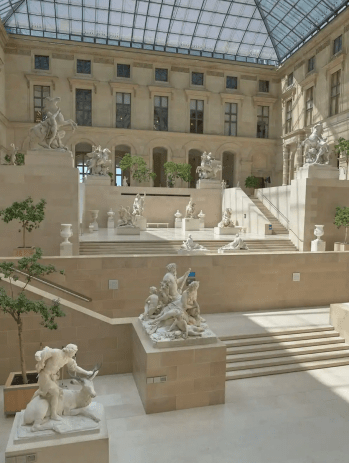 Fine Arts Paris organise en collaboration avec le département des Sculptures du musée du Louvre un colloque et une publication en hommage au travail de Mme Geneviève Bresc-Bautier.
Des historiens de l’art qui comptent pour Geneviève Bresc-Bautier, pour avoir été ses élèves ou pour avoir été associés à ses recherches ou à ses expositions, lui présentent un ensemble de communications en écho à ses centres d’intérêt : la Renaissance française, la sculpture de jardin, les bronzes, les moulages d’après l’Antique, le décor du palais du Louvre, le statut et la formation des sculpteurs…
Ce premier florilège préfigure les futurs Mélanges offerts à Geneviève Bresc-Bautier, dont la souscription sera ouverte à cette occasion et dont la parution est prévue en 2022. Cet ouvrage, coordonné par le département des Sculptures du musée du Louvre, réunira les textes présentés le 8 novembre et bien d’autres, proposés par des conservateurs, universitaires, restaurateurs et historiens de l’art de diverses générations, dont les recherches sur la sculpture du Moyen Âge au XIXe siècle et sur l’histoire du Louvre, ont été marquées par son exemple.
Réservation conseillée par email à rsvp@finearts-paris.com. Les personnes ayant réservé auront accès en priorité aux sièges disponibles. Pass sanitaire requis et port du masque obligatoire dans l’auditorium.
P R O G R A M M E
14.00 Accueil et introduction, présentation du volume d’articles réédités
• Sophie Jugie, directrice du département des Sculptures du musée du Louvre
14.15 Sculpture du XVIe au XVIIIe siècle
• Marion Boudon-Machuel (professeur d’histoire de l’art moderne à l’Université de Tours), Geneviève Bresc-Bautier, le ciseau sous la plume : contributions à l’Histoire de la sculpture de la Renaissance en France
• Pascal Julien (professeur d’Histoire de l’Art moderne à l’Université de Toulouse II), Satyres en Arcadie : méditation et séductions dans la sculpture de jardin, XVIe–XVIIe siècles
• Françoise de La Moureyre (historienne de l’art), Un portrait du roi sculpté à Rome par Clérion
• Sophie Mouquin (maître conférences en histoire de l’art moderne à l’Université de Lille), « Cette piété là est le véritable amour » : une allégorie virtuose et savante d’Aubert Parent
15.45 Pause
16.15 Histoire des moulages
• Elisabeth Le Breton (conservatrice au département des Antiquités grecques, étrusques et romaines, chargée de la gypthotèque du musée du Louvre), Académie de France à Rome : un plâtre daté de 1686
16.35 Histoire du Louvre
• Guillaume Fonkenell (conservateur en chef au musée de la Renaissance à Ecouen), Scibec de Carpi au Louvre
• Sophie Picot-Bocquillon (responsable du pôle documentaire de la Conservation des Œuvres d’Art Religieuses et Civiles de la Ville de Paris), Un sculpteur à l’ombre du Louvre : Francisque Duret et les décors architecturaux du palais
17.30 Conclusions et remerciements
Un ouvrage est consacré à la réédition d’un ensemble d’articles consacrés, entre 1979 et 2012, à ces sculpteurs méconnus que Geneviève Bresc-Bautier s’est attachée à faire connaître, en l’occurrence des sculpteurs actifs à Paris dans la première moitié du XVIIe siècle : Francesco Bordoni (1574–1654), Jean Séjourné (mort en 1614), Christophe Cochet (connu depuis 1606- mort en 1634), Hubert Le Sueur (connu de 1596 à 1658), Toussaint Chenu (connu depuis 1621-mort en 1666) et Thomas Boudin (vers 1570–1637). Une édition de Fine Arts Paris et In Fine Éditions, 25€.
Online Conference | Buying Art and Antiquities in 18th-Century Italy
From the conference program:
Buying Art and Antiquities in Eighteenth-Century Italy
La compra de arte y antigüedades en la Italia del siglo XVIII
Online, UNED, Madrid, 4, 11, 18, 23 November and 2 December 2021
Organized by Pilar Diez del Corral Corredoira and David Ojeda Nogales

Jean-François Sablet, In the Antiquities Shop, Rome, 1788 (Private Collection)
The third meeting of the international conference series Transnational Relations and the Arts will address the issue of art and antiquities markets in eighteenth century. With the Grand Tour at its peak, men from all over Europe and beyond flooded into the cities of Italy, mainly Rome but also Naples, Venice, and Florence. These grand tourists fed an already flourishing art market and were also active agents of the spread of ancient marbles and vases, Old Master paintings, ancient coins, and medals back to their homelands, not to mention the diffusion of an international ‘buon gusto’ among the middling and upper classes. For virtual access via Zoom, please email dojeda@geo.uned.es and diezdelcorral@geo.uned.es. The conference is also available for streaming (without registration) here.
This conference is part of the results of the I+D+i project (PID2020-117326GB-I00), FAKE- La perdurabilidad del engaño: Falsificación de Antigüedades en la Roma del siglo XVIII, and the Ramón y Cajal research Project (2017-22131), Academias artísticas, diplomacia e identidad de España y Portugal en la Roma de la primera mitad del siglo XVIII, both funded by the Ministerio de Ciencia e Innovación.
First Session — Agents and Art Markets
4 November 2021, 15.00 (Madrid Time)
• Sascha Kansteiner (Curator of Greek and Roman sculpture, Staatliche Kunstsammlungen, Dresden), Cavaceppi: Sculptor, Restorer, Dealer, Publisher, and Forger
• Jeffrey Laird Collins (Professor of Art History and Material Culture, Bard Graduate Center, New York), The Pope, the Curator, the Milord, and his Dealer: Rome’s Red-Hot Antiquities Market in Theory and in Practice.
• Heiner Krellig (Independent Scholar, Venice and Berlin), Preliminary Notes for a History of the Art Market in Eighteenth-Century Venice
• Paola D’Alconzo (Universidad de Nápoles Federico II), Il mercato di antichità nel Regno di Napoli nel XVIII secolo: quadro normativo e alcuni casi esemplari
• Alexandre Vico Martori (Universidad de Gerona), ‘Quattro quadri dipinti per il traverso dipinti in tavola’: El redescubrimiento de Sandro Botticelli y la adquisición de las spalliere del Palazzo Pucci
Second Session — Agents and Art Markets, part 2
11 November 2021, 15.00 (Madrid Time)
• Paweł Gołyźniak (Institute of Archaeology, Jagiellonian University), Philipp von Stosch (1691–1757) and His Dominant Position in Terms of Trade, Collecting, and Research of Engraved Gems in Eighteenth-Century Italy
• Tara Zanardi (Hunter College of the City University of New York), Isabel de Farnesio, Filippo Juvarra, and the Modern Interior at La Granja
• Mercedes Simal (Unversidad de Jaén), Troiano Acquaviva y el mercado artístico romano: un agente al servicio de los reyes de España y Nápoles
• Elena Dmitrieva (Department of the Classical Antiquities, The State Hermitage Museum), Russian Buyers of Antique and Modern Gems in the Italian Art Market in the Second Half of the Eighteenth Century
• Odile Boubakeur (Ecole du Louvre / Université Paris-Saclay), ‘Italy, Garden of the World’…or ‘jardin à l’anglaise’? British Supremacy on the Italian Antique Art Market through the Eighteenth Century
Third Session — Collectors and Their Collections
18 November 2021, 15.00 (Madrid Time)
• Tracy L. Ehrlich (Associate Teaching Professor, Parsons School of Design / The New School, New York), Alessandro Albani and European Practices of Collecting and Display in the Era of the Grand Tour
• Fabrizio Federici (Independent Scholar), Dispersing a Collection in Eighteenth-Century Italy: The Paintings and Statues of the Cybo Malaspina Family
• John E. Davies (FRHistS, former County Archivist Carmarthenshire Archive Service, independent scholar), An Examination of the Art Collecting of the First Baron Cawdor
• Theresa Kutasz Christensen (Exhibitions Researcher, Prints, Drawings, and Photographs, Baltimore Museum of Art), The King is Dead, Long Live the King’s Things: The Transformation of Private Pleasures into Public Propaganda in Gustav III of Sweden’s Museum of Antiquities
• Alexander V. Kruglov (Independent Scholar, New York), The Russian Grand Tour: Sculptures Purchased by Count and Countess of the North in Rome in 1782
Fourth Session — Collectors and Collections
23 November 2021, 15.00 (Madrid Time)
• Daniela Roberts (Assistant Professor, Institute of Art History, University of Würzburg), Grand Tour Pickings: Antiquities for Georgian Gothic Houses
• Maureen Cassidy-Geiger (Independent Scholar), Bringing Rome Home: Souvenirs and Gifts for Crown Prince Friedrich Christian of Saxony/Poland during His Sojourn in the Eternal City, 1738–39
• José Antonio Vigara Zafra (UNED), El Grand Tour del VI conde de Fernán Núñez: un ejemplo de cultura cortesana en la Europa de la Ilustración
• Domenico Pino (University College London), Gems Never Seen Before: William Hamilton, Vesuvius, and the Rising Taste for Precious Marble in Europe, c. 1770
• Ginevra Odone (Université de Lorraine / La Sapienza Università di Roma / Society for the History of Collecting, Italian Chapter), From Rome to London: Expertise, Dealer, and Buyer for Two Antique Hands
Fifth Session — Works of Art
2 December 2021, 15.00 (Madrid Time)
• Max Kunze (Professor at the University of Mannheim), Winckelmann and the Venus Menophantus or Emphatic Aspects of Restored Sculptures in the Eighteenth Century
• Alexis R. Culotta (Professor of Practice, Tulane University), Commemorating Italy?: The Walpole and Brand Cabinets as Grand Tour Souvenirs of Elsewhere
• David Ojeda (UNED), Forgeries in the Eighteenth Century and Classical Art: A Methodological Conundrum
• Julio C. Ruiz (Universidad Rovira i Virgili, Tarragona), Sobre un torso masculino con indumentaria militar en el Museo del Prado
• Lorenzo Ebanista (Independent Scholar), La felloplastica napoletana nel XVIII secolo tra scenografie presepiali, souvenirs del Grand Tour e rappresentazioni naturalistiche
• Eliška Petřeková (Masaryk University Brno), Between a Souvenir and Archeological Documentation: The Cork Model of the Paestum Temple in the Chancellor Metternich‘s Collection
Online Series | Graphic Landscape
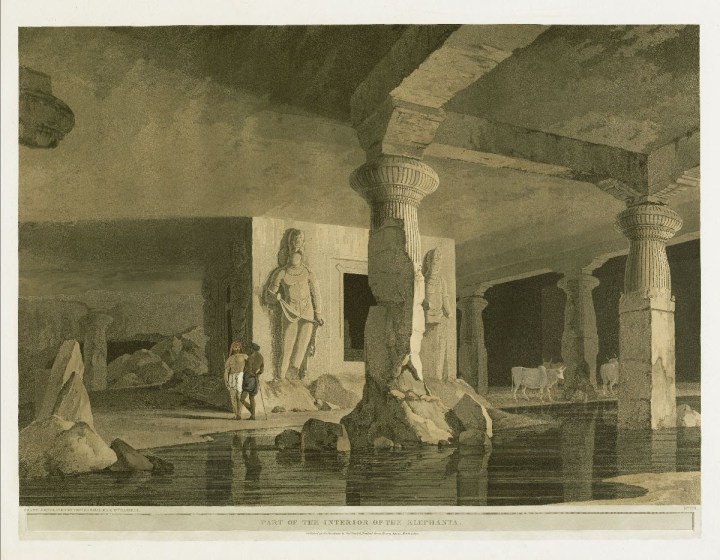
‘Part of the Interior of the Elephanta’, from Thomas and William Daniell, Antiquities of India, Oriental Scenery, aquatint, 1795.
◊ ◊ ◊ ◊ ◊
From the Paul Mellon Centre:
Graphic Landscape: The Landscape Print Series in Britain, 1775–1850
Online, Paul Mellon Centre and the British Library, 2, 4, 9, 11 November 2021
Organized by Mark Hallett and Felicity Myrone
Graphic Landscape: The Landscape Print Series in Britain, 1775–1850 is a four-day programme of online webinars taking place between 2 and 11 November 2021, presented jointly by the Paul Mellon Centre for Studies in British Art and the British Library.
Landscape and topographical print series proliferated in the late eighteenth century and in the first decades of the nineteenth century. Indeed, the format seems to have enjoyed an artistic and commercial boom in this period. Some examples of these series, such as Turner’s Liber Studiorum (1807–19) and Constable’s English Landscape Scenery (1830–33), are extremely well known. Many others, however, have still to receive sustained and critical attention. This programme of four online seminars is designed to look afresh at the late Georgian and early Victorian landscape print series and to stimulate new research on this important strand of graphic art. Participants will bring a wide range of perspectives to bear on the topic and address works in a variety of graphic media.
Graphic Landscape: The Landscape Print Series in Britain, 1775–1850 is co-convened by Mark Hallett at the Paul Mellon Centre and Felicity Myrone at the British Library.
Additional information—including paper abstracts, speaker biographies, specific times, and registration links—can be found here.
T U E S D A Y , 2 N O V E M B E R 2 0 2 1
Day 1 | 12.00–14.00
12.00 Print, Politics, and Industrialisation
• Introduction by Mark Hallett (Director, Paul Mellon Centre) and Felicity Myrone (Lead Curator, Western Prints and Drawings, British Library)
• Amy Concannon (Senior Curator, Historic British Art, Tate), ‘A Captur’d City Blazed’: Printmaking and the Bristol Riots of 1831
• Lizzie Jacklin (Keeper of Art, Tyne & Wear Archives & Museums), Mining Landscapes: Thomas Hair’s Views of the Collieries
• Morna O’Neill (Associate Professor of Art History, Art Department, Wake Forest University), John Constable, David Lucas, and Steel in English Landscape
T H U R S D A Y , 4 N O V E M B E R 2 0 2 1
Day 2 | 12.00–14.00
12.00 Print and Property
• Introduction by Richard Johns (Senior Lecturer in History of Art at the University of York)
• John Bonehill (Lecturer, History of Art, University of Glasgow), Picturing Property: The Estate Landscape and the Late Eighteenth-Century Print Market
• Kate Retford (Professor of Art History, Birkbeck, University of London), Views of the Lakes at the Vyne
• James Finch (Assistant Curator, 19th-Century British Art, Tate Britain), Amelia Long’s Views from Bromley Hill
T U E S D A Y , 9 N O V E M B E R 2 0 2 1
Day 3 | 12.00–14.00
12.00 Revisiting the Canon
• Introduction by Cora Gilroy-Ware (Associate Professor, History of Art, University of Oxford)
• Greg Smith (Independent Art Historian), Engaging with the Voyage Pittoresque de la France: Thomas Girtin’s Picturesque Views in Paris and Their Appeal to the ‘Most Eminent in the Profession’
• Timothy Wilcox (Independent Scholar), John Sell Cotman’s Architectural Antiquities of Normandy: A Catastrophic Miscalculation?
• Gillian Forrester (Independent Art Historian, Curator and Writer), A Glossary for the Anthropocene? Turner’s Liber Studiorum in the Era of Climate Change
T H U R S D A Y , 1 1 N O V E M B E R 2 0 2 1
Day 4 | 14.00–16.00
14.00 A Wider View: From Collaboration to Empire
• Introduction by Mark Hallett (Director, Paul Mellon Centre) and Felicity Myrone (Lead Curator, Western Prints and Drawings, British Library)
• Sarah Moulden (Curator of 19th-Century Collections, National Portrait Gallery), Creative Collaboration: Cotman’s Norfolk Etchings
• Eleanore Neumann (PhD Candidate, University of Virginia), Translating Topography: Women and the Publication of Landscape Illustrations of the Bible (1836)
• Alisa Bunbury (Grimwade Collection Curator, Ian Potter Museum of Art, University of Melbourne), Taken From Nature: Printed Views of Colonial Australia
• Douglas Fordham (Professor of Art History, University of Virginia), Travel Prints or Illustrated Books?










 Enfilade
leave a comment