Conference | The Pictorial Evidence of Ruins
From ArtHist.net:
The Pictorial Evidence of Ruins: From Rome to Homs
Istituto Svizzero di Roma / Academia Belgica, Rome, 14–15 November 2019
The questions of ruins and their images oscillate in the history of art between the vanitative interpretations related to the early modern period and the aesthetic categories of romanticism, while for the cultural studies the theoretical reflection on the ambiguities of memory and oblivion stands in the foreground. The conference goes beyond this topic range and raises questions about the importance of a ruin as an anachronistic symbol, a visual indicator of historical difference, and a critical touchstone of modernity.
How did ruins turn into an independent figurative metaphor regarded as the epitome of transience? To what extent were the ancient Roman ruins transformed in the early modern period into iconic images of symbolic and aesthetic value and what is the relevance of this long process of transference—the elevation of the ruin to a sovereign image—for the way in which we view today’s Syrian war ruins from a distance? In this context, one needs to differentiate between natural disintegration and planned ruination: what distinguishes the archaeological from the iconoclastic dimension of a ruin?
The instrumentalization of the ruins of Palmyra which themselves became victim to a media-related iconoclasm in 2015 and the elevation of their void space after devastation into a social icon give reason to think critically about how the reception of ruins and the depiction of ruination combine anachronism with aesthetics and affect. Following these issues, we shall ask: What is the pictorial evidence of ruins and that of their images? In how far can images of ruins iconically convey or translate the nature of a catastrophe? To what extent does the aesthetic familiarity of the ruins of Rome as a visual paradigm of a ruined city raised by art since the 16th century contribute to our understanding of the new media-related impact of factual destruction today? Does aesthetics have an anaesthetic effect in this case?
With these questions, the conference seeks to contribute to the critical analysis of a pictorial concept of ruins from the early modern period to the present—spanned between destruction, restoration, and construction—and to ask how the issue of the media topicality of ruins can be dealt with today.
T H U R S D A Y , 1 4 N O V E M B E R 2 0 1 9
Istituto Svizzero di Roma
15.00 Welcome by Adrian Brändli (Istituto Svizzero di Roma))
15.15 Afternoon Session
• Mateusz Kapustka (University of Zurich/FU Berlin), Ruins, Ruination, and Anachronism: An Introduction
• Henri de Riedmatten (University of Geneva), Recoding Fragmented Figures: Dynamics of Restoration in Early Sixteenth-Century Rome
• Jumana Al Asaad (University of Heidelberg), The Iconization and Medialisation of the Syrian Cultural Heritage in the Ongoing Armed Conflict
F R I D A Y , 1 5 N O V E M B E R 2 0 1 9
Academia Belgica
9.00 Welcome by Sabine van Sprang (Academia Belgica)
9.15 Morning Session
• Maarten Delbeke (ETH Zurich), Getting Rid of the Ruins.: Remnants as Sources of Knowledge and Confusion in the Late Seventeenth Century
• Dirk De Meyer (Ghent University), Palmyra to Europe and Back: Architectural Ruins and their Mediatization
• Stanislaus von Moos (University of Zurich/Getty Research Institute), Constructivist Ruins? On Frank Lloyd Wright and Peter Blume
12.00 Lunch break
13.00 Closing Session
• Robert Harbison (London), Ruins and Fragments in Modern Sculpture
Concept
Mateusz Kapustka
Organization
Adrian Brändli
Ralph Dekoninck
Mateusz Kapustka
Tristan Weddigen
Contacts
Istituto Svizzero di Roma
Via Ludovisi 48, 00187 Rome
Adrian Brändli, info@stitutosvizzero.it
Academia Belgica
Via Omero 6, 00196 Rome
Charles Bossu, info@academiabelgica.it
Bibliotheca Hertziana – Max Planck Institute for Art History
Via Gregoriana 28, 00187 Rome
Mara Freiberg Simmen, freiberg@biblhertz.it
Exhibition | The Moon
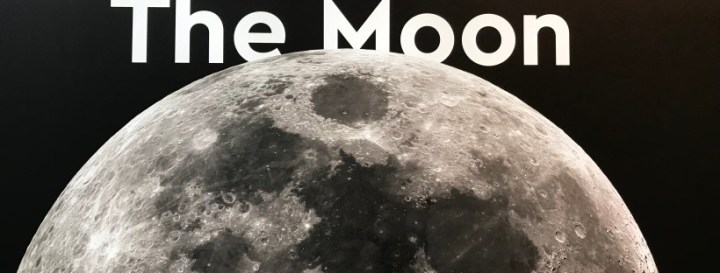
From the press release (4 April 2019) for the exhibition:
The Moon
National Maritime Museum, Greenwich (London), 19 July 2019 — 5 January 202
Curated by Melanie Vandenbrouck, Megan Barford, Louise Devoy, and Richard Dunn
To celebrate 50 years since NASA’s Apollo 11 mission landed the first humans on the Moon, the National Maritime Museum (NMM) stages The Moon, the UK’s biggest exhibition dedicated to Earth’s nearest celestial neighbour. Featuring over 180 objects from national and international museums and private collections, the exhibition presents a cultural and scientific story of our relationship with the Moon over time and across civilisations. Through artefacts, artworks and interactive moments, the exhibition will enable visitors to reconnect with the wonders of the Moon and discover how it has captivated and inspired us.
The exhibition will explore how humans have used, understood and observed the Moon from Earth. Visitors will get the chance to relive the momentous events of the Space Race and the Moon landings before discovering the motivations behind 21st-century lunar missions.
 Significant objects on display include Apollo mission artefacts that travelled to the Moon, loaned from the Smithsonian National Air and Space Museum in Washington D.C. The ‘Snoopy Cap’ Communications Carrier, worn by astronaut Edwin ‘Buzz’ Aldrin during Apollo 11, will be exhibited alongside the Hasselblad camera equipment that captured some of the most recognisable and iconic images of the 20th century.
Lunar samples collected from NASA’s Apollo missions and the Soviet Union’s Luna programme, will be accompanied by a rare lunar meteorite from the Natural History Museum’s collection. This will give visitors to the NMM’s exhibition a unique opportunity to get close to such a diverse range of moon rocks and discover how researching these specimens continues to advance our understanding of the Moon.
Historical and contemporary artworks will illustrate how the Moon has long inspired artists, acting as a metaphor for the human condition. Moonlit scenes by J.M.W. Turner and John Constable will be displayed alongside contemporary pieces by Katie Paterson, El Anatsui, Chris Ofili, and Leonid Tishkov. Artworks by Cristina De Middel, Aleksandra Mir, and Larissa Sansour will consider our relationship with the Moon through the lenses of gender and nationhood.
In the exhibition’s opening section, visitors will discover ways in which the Moon has been embedded in human culture, spiritually, practically, and artistically, with its changing phases used to mark time in religion, navigation, and medicine. The oldest object on display, a Mesopotamian Tablet from 172 BCE on loan from the British Museum, shows how lunar eclipses were considered to be bad omens. Detailed Islamic and Chinese calendars highlight the continuing importance of using the Moon to set the date for key festivals such as Chinese New Year and Ramadan. Examples of historic medical texts, such as a 1708 pamphlet by the English Doctor Richard Mead show how the position of the Moon was once believed to influence our physical and mental health.
The exhibition will explore how new technologies, such as 17th-century telescopes, 19th-century cameras and remote equipment for space photography and mapping in the 20th century brought increasing understanding of the lunar surface and the Moon’s origins. A selection of maps, paintings, photographs, models, and drawings from the 17th century to the present will emphasise humanity’s continuing desire to understand more about the Moon. Examples include the earliest-known drawing of the lunar surface made from telescopic observations by British astronomer Thomas Harriot in 1609 and the detailed pastel drawings of the Moon by 18th-century Royal Academician John Russell.
From classic science fiction through to the defining events of the Space Race, visitors will see how the Moon went from being a distant object of observation and place of imagination to a destination that was within human reach. The Moon looks at key moments within the Space Race, highlighting how a number of Soviet ‘firsts’ were ultimately overshadowed by Neil Armstrong’s century-defining ‘one small step’ in July 1969. Video artist Christian Stangl will show a new and exclusive version of his film ‘Lunar’, in which animated photographs from Apollo missions allow visitors to experience the Moon landings through the eyes of the astronauts. Apollo objects will sit alongside film posters, books, comics, and magazines that celebrated and questioned these momentous events.
In 1969, the Apollo 11 astronauts left a plaque on the Moon claiming, “we came in peace for all mankind.” Today, there is renewed drive to return to the Moon, reflected in future projects from China, Europe, India, Israel, Japan, Russia, and the United States. No longer the domain of superpowers, international space agencies, private companies, and entrepreneurs are all part of this 21st-century race for the Moon. Scientists, lawyers, artists, and architects are considering the practical, psychological, and ethical implications of human exploration and settlement on the Moon. The closing chapter of the exhibition will look at these contemporary motivations for Moon travel, leaving visitors to contemplate whether the Moon will become a theatre for exploitation and competition or remain a peaceful place for all humankind.
Melanie Vandenbrouck, Megan Barford, Louise Devoy, and Richard Dunn, eds., The Moon: A Celebration of Our Celestial Neighbour (London: Collins, 2019), 256 pages, ISBN: 978-0008282462, £20.
From ArtHist.net:
Art and Science of the Moon
Royal Museums Greenwich, London, 14–15 November 2019
With contributions from academics, artists, and curators exploring the interface between art, in its widest sense, and science, this conference will consider various creative responses to our cosmic companion. In keeping with RMG’s interest in interrogating the collision of science, history and art, The Art and Science of the Moon will explore how the Moon’s motions and phases have influenced human activities, beliefs, and behaviours; how sustained scrutiny of the lunar surface have enabled us to understand more about ourselves; how attempts, imaginary and real, to reach this other world have fostered creativity and technological progress; and how in the 21st century we are rethinking our relationship with the Moon.
The provisional programme is available here»
Study Day | Understanding Stone Cantilevered Stairs
From The Georgian Group:
Study Day: Understanding Stone Cantilevered Stairs
Somerset House, London, 16 October 2019
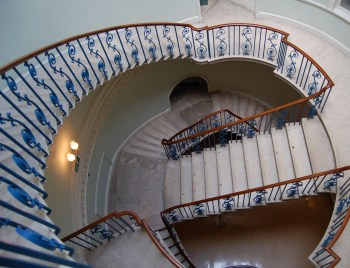
Staircase of he Navy Office, Somerset House, London.
The Georgian Group is holding a study day at Somerset House that will explore stone cantilevered stairs as a characteristic feature of Georgian architecture. The day is aimed at owners and custodians of buildings containing stone cantilevered stairs, as well as architects, surveyors, and structural engineers involved in the repair of existing stairs or the construction of new ones.
The study day will cover three broad areas:
History: The origins and development of stone cantilevered stairs and their importance to Georgian architecture
Structure: Why they work and how they are built
Repairs: What can go wrong, common problems and how they can be repaired
Speakers
• Russell Taylor — Principal of Russell Taylor Architects, an architect in the Classical tradition who has made a special study of the subject
• Sam Price — Founding Partner of Price and Myers, the leading structural engineer on stone cantilevered stairs, the author of several articles on the subject
• Helen Rogers — Engineer at Price and Myers, a specialist engineer and lecturer on stone cantilevered stairs
• Adam Stone — Managing Director of Chichester Stoneworks, a masonry contractor with wide experience in stone design, not least in cantilevered stairs, several of which have won awards
The event is open to all (members and non-members) and includes lunch and refreshments, £135. Doors open at 9am, lectures begin at 9.30am.
Symposium | Ornamenta Sacra, 1400–1800

From ArtHist.net:
Ornamenta Sacra: Late Medieval and Early Modern Liturgical Objects in a European Context, 1400–1800
Brussels and Leuven, 24–26 October 2019
We are pleased to invite you to Ornamenta Sacra: Late Medieval and Early Modern Liturgical Objects in a European Context, 1400–1800 October 24–26 in Brussels and Leuven. The symposium is organised in the framework of a Brain-Belspo funded project, led by Ralph Dekoninck (GEMCA, UCLouvain), Barbara Baert (IRG/Illuminare, KU Leuven), and Marie-Christine Claes (KIK-IRPA). You can confirm your participation by registering here.
The symposium is dedicated to the iconological and anthropological study of late medieval and early modern liturgical objects (1400–1800), once known as ornamenta sacra. This notion encompasses a wide range of objects made of various materials and techniques (such as chalices, censers, and chasubles), which are not only essential for the rites, but also hold a central position in the religious artistic production of the past. Yet, a large portion of recent studies related to the connections between art and liturgy mainly focuses on paintings and sculptures, leaving aside other cult objects. The few studies that take these ritual instruments into account are primarily devoted to the Middle Ages. The late Middle Ages and the early modern period have attracted far less attention, whereas liturgy underwent profound transformations. Although studies limited to certain collections or types of objects are available, we are still in need of a broader analysis instigated by recent methodological trends in historical anthropology and iconology, which have renewed our understanding of images and art objects. We have therefore invited an international group of scholars, experts in their fields and specialized in exactly these methodologies. As a result, the symposium will contribute to this broader analysis and will offer new insights on the material dimension of objects, the place of works of art within a network of relationships, the history of senses and the sensible, and the way in which ornamentation affects meaning.
T H U R S D A Y , 2 4 O C T O B E R 2 0 1 9
Royal Institute for Cultural Heritage (KIK-IRPA), Brussels
9:30 Coffee and tea
9:50 Welcome by Hilde De Clercq (dir. KIK-IRPA) and Georges Jamart (Belspo)
10:00 Introduction by Ralph Dekoninck (UCLouvain), Barbara Baert (KU Leuven), and Marie-Christine Claes (KIK-IRPA)
10:30 Morning Papers
• Eric Palazzo (Université de Poitiers), Le Christ énergétique, la spirale et la monstrance
• Frédéric Tixier (Université de Lorraine), Voir et entendre ou entendre et voir? Les objets liturgiques en procession (XIIIe–XVIIe s.)
12:30 Lunch
14:00 Afternoon Papers
• Cynthia Hahn (Hunter College and Graduate Center CUNY, New York), Reliquaries as Mediation in Liturgy and Ecclesiastical Space
• Frédéric Cousinié (Université de Rouen-Normandie) and Alysée Le Druillenec (Université Paris 1 Sorbonne-Panthéon), Objets de dévotions: Figures de la liaison au divin
• Michele Bacci (Université de Fribourg), Western Liturgical Vessels and the Byzantine Rite in the Late Middle Ages
• Sébastien Bontemps (Ecole du Louvre, Université de Bourgogne), Le trophée d’église: Système décoratif et illustration de la liturgie en France au XVIIIe siècle
• Caroline Heering (UCLouvain), Ornamenta Sacra: De l’ornement des objets aux objets comme ornements
F R I D A Y , 2 5 O C O T O B E R 2 0 1 9
Royal Institute for Cultural Heritage (KIK-IRPA), Brussels
9:00 Coffee and tea
9:30 Morning Papers
• Herman Roodenburg (Vrije Universiteit Amsterdam and Meertens Instituut), The Eucharist and not so sensuous worship: Shedding tears among the Modern Devout
• Anne-Laure Van Bruaene (Universiteit Gent), Viglius’s Mitre: Clerical Self-fashioning in Sixteenth-century Ghent
• Anne-Clothilde Dumargne (Université de Versailles, Saint-Quentin-en-Yvelines), Ornamenta ou ministeria? Statut et fonction des chandeliers en alliages de cuivre dans l’espace ecclésial de la fin du Moyen Âge à l’époque moderne
• Wendy Wauters (KU Leuven), Smellscapes and Censers: Strategies behind their Ritual Use and Iconographic Meaning
12:30 Lunch
14:00 Afternoon Papers
• Marie Lezowski (Université d’Angers), Le corps du délit: Les objets liturgiques volés dans les sources inquisitoriales (Italie, XVIIe–XVIIIe siècles)
• Emmanuel Joly (KIK-IRPA), Financer et entretenir les ornements liturgiques: Le cas des paroisses rurales du diocèse de Liège, 1400–1700
• Soetkin Vanhauwaert (KU Leuven), Worthy of Imitation: The Holy Sacrament and the Relic Cult of the Forerunner in Mechelen
• Anne Lepoittevin (Université Paris-Sorbonne), Les Agnus Dei en cire: Des objets de culte?
• Nicole Pellegrin (CNRS-ENS, Paris), Chapes en Révolution: Quelques traces d’abandons, destructions, réemplois et mutations, 1790–1820
S A T U R D A Y , 2 6 O C T O B E R 2 0 1 9
Katholieke Universiteit (KU), Leuven
9:00 Coffee and tea
9:30 Morning Papers
• Ethan Matt Kavaler (University of Toronto), The Netherlandish Carved Altarpiece as Miniature
• Kamil Kopania (The Aleksander Zelwerowicz National Academy of Dramatic Art, Warsaw), Animated Sculptures of the Crucified Christ in Context of Liturgical Space, Objects, and Gestures
• Ruben Suykerbuyk (Universiteit Gent), The Ritual Use of Memoria Monuments in the Low Countries, ca. 1520–85
• Charles Caspers (Titus Brandsma Instituut, Nijmegen), Wax and the Ghent Altarpiece: A New Interpretation
12:10 Discussion and concluding remarks
12:30 Lunch
14:30 Visit to the exhibition Borman and Sons at Museum M, Leuven
Journée d’étude | Les sources d’une histoire de l’antiquarisme
From the study day programme:
Les sources d’une histoire de l’antiquarisme
Forum Antique, Bavay (Nord), 3 October 2019
Pour faire suite à l’exposition Curieux antiquaires: Les débuts de l’archéologie à Bavay, 1716–1830, le Forum antique de Bavay organise, le jeudi 3 octobre 2019, une journée d’étude sur Les sources d’une histoire de l’antiquarisme. La dimension de cette rencontre est essentiellement méthodologique. Il s’agit de faire dialoguer des spécialistes de l’histoire de l’antiquaire autour de la question des sources, de leur croisement et de leur mise en résonance, et de permettre aux étudiants présents d’approcher les questions relatives à la construction d’un objets ainsi qu’à l’invention des corpus.
Le format de cette journée sera celui d’un atelier. Chacun des quatre thèmes mobilisera deux intervenants. Afin de donner à l’exposé des questions de méthode et aux échanges toute leur place, le jour de la rencontre, chaque exposant disposera de 15 minutes pour résumer la teneur de sa contribution, après quoi un modérateur lancera et dirigera une discussion de 30 minutes.
P R O G R A M M E
 9.00 Bus Valenciennes-Bavay affrété par le Forum antique de Bavay
9.30 Accueil-Café au Forum antique de Bavay
10.00 Introduction autour de la notion d’antiquaire, Véronique Beirnaert-Mary
10.15 Construction/Déconstruction de la figure de l’antiquaire par l’écrit, Marco Cavalieri, Professeur, Président INCA, Université de Louvain (modérateur)
• Parler de soi et des autres : les sources d’une histoire de la représentation (correspondances, préfaces, notices nécrologiques…), Véronique Krings
• La littérature comme source pour une histoire de la réception de la figure de l’antiquaire, Odile Parsis-Barubé
11.15 Pause
11.30 Construction de la figure de l’antiquaire par l’image, Odile Cavalier, Conservatrice du Musée Calvet, Avignon (modératrice)
• L’antiquaire au travail sur le terrain et dans son cabinet, Alain Schnapp, Professeur émérite des universités, Université Paris I-Panthéon-Sorbonne, CNRS, UMR 7041, ArScan
• Les portraits d’antiquaire, Véronique Beirnaert-Mary
12.30 Déjeuner au musée offert par le Forum antique de Bavay (sur inscription)
14.00 Vie sociale des objets chez l’antiquaire, Fleur Morfoisse, Conservatrice du département antiquités et objets d’art au Palais des beaux-arts de Lille (modératrice)
• La nécessaire authenticité de la preuve. Faux et expertise antiquaire, Delphine Morana-Burlot
• L’étude matérielle des objets comme source de leur histoire, Cécile Colonna, Conseillère scientifique, INHA-DER, Histoire de l’art antique et de l’archéologie
15.00 Pause
15.15 Les sources d’une histoire de la diffusion et de la réception des travaux antiquaires, Chantal Grell, Professeur des universités, Université de Versailles Saint-Quentin-en-Yvelines (modératrice)
• Les enquêtes prosopographiques et la reconstitution des réseaux antiquaires. Quelles sources pour une étude de la circulation des savoirs antiquaires ?, Bruno Delmas, Directeur d’étude émérite de classe exceptionnelle à l’école national des Chartes et Odile Parsis-Barubé
• Quelles sources pour mesurer la diffusion des savoirs antiquaires ?, François Guillet, Historien
16.15 Conclusion, Odile Parsis-Barubé
16.45 Discussion finale
17.30 Bus Bavay-Valenciennes affrété par le Forum antique de Bavay
Comité scientifique
• Véronique Beirnaert-Mary, Directrice du Forum antique de Bavay, musée archéologique du Département du Nord
• Odile Parsis-Barubé, Maître de conférences HDR (Institut de Recherches Historiques du Septentrion)
• Véronique Krings, Maître de conférences en histoire ancienne, Université Toulouse-Jean Jaurès, PLH (EA 4601)
• Delphine Morana-Burlot, Maître de conférences en histoire de l’art et de l’archéologie, Université Paris 1-Panthéon Sorbonne, EA 4100 – HiCSA (Histoire culturelle et sociale de l’art)
Conference | Late Venetian Fortification
From ArtHist.net:
Late Venetian Fortification
Split City Museum, 4 October 2019
Until now, research on Venetian fortifications has given considerable more attention to Cinquecento works than to the achievements of the following centuries. This is why the aim of the conference is to focus on the later period. New material and insights are expected on the period starting with the War of Candia. Relevant topics include but are not limited to important fortification sites and projects (Morea, Corfu, Corinto, Dalmatia etc.), activities of military engineers, procedures and institutions involved in the construction of fortifications, Schulenburg’s involvement in fortification construction.
More information is available here»
P R O G R A M M E
9:00 Morning Papers
• Andrej Žmegač — Late Venetian Fortification: An Introduction
• Josip Pavić — The State of War: Reflections Regarding War Management in the Stato da Mar
• Ivo Glavaš — Barone and St. John’s Fortresses above the town of Šibenik
• Elisabetta Molteni — Filippo Verneda (c.1617–1692): Un maestro della fortificazione nella Venezia del XVII secolo
• Snježana Perojević — Military Engineers and the Fortification of Split in the 17th Century
• Antonio Manno — ‘La porta dell’Adriatico’: Il ruolo di Corfù nel sistema difensivo della Repubblica di Venezia
• Christian Ottersbach — The Fortresses of Palamidi and Corfu in their European Context: Testimonies of a Revolution in Military Architecture
13.00 Lunch break
14.00 Afternoon Papers
• Nikolaos A. Lianos — Military Engineers in the Morea during the Second Venetian Domination
• Eric G. L. Pinzelli — Modon, the Eye of the Republic
• Darka Bilić — Le circostanze del soggiorno del maresciallo Schulenburg in Dalmazia e Albania veneta
• Federico Bulfone Gransinigh and Alberto Pérez Negrete — Dopo Candia e Corfù: Niccolò Erizzo e le influenze al fortificare nell’ammodernamento dei forti lagunari della Serenissima, 1716–18
• Andrej Žmegač — The Venetian Military Engineer Antonio Giancix: Chronology and Evaluation
Conference | Fürstliche Feste
From Art-Hist.net (11 September 2019) . . .
Fürstliche Feste
Schloss Sondershausen, 25–26 October 2019
Höfisches Feiern diente der Manifestation von Herrschaftsbeziehungen. Offizielle Feste waren und sind ein wichtiges Medium der Repräsentation gesellschaftlicher und politischer Ordnung, aber auch ihrer spielerischen Reflexion. Die Inszenierung von Festen forderte insbesondere im Zeitalter des Barock das ganze Aufgebot der Künste von der Architektur über die bildende Kunst und das Kunsthandwerk bis zu Musik und Theater. Nicht umsonst betrauten Herrscher oft ihre Hofkünstler mit der Regie dieser Gesamtkunstwerke, die häufig in Wort und Bild dokumentiert und mit großem Interesse weit über den Teilnehmerkreis hinaus rezipiert wurden. Neben dem kulturhistorischen Schwerpunkt schlägt die Tagung den Bogen in die Gegenwart.
Wir bitten um Anmeldung mit Antwortbogen (Download Interneseite) oder unter veranstaltungen@thueringerschloesser.de und Überweisung der Tagungsgebühr bis 14. Oktober 2019 unter Angabe des Namens auf das Konto der Stiftung bei der Kreissparkasse Saalfeld-Rudolstadt:
IBAN: DE03 8305 0303 0000 0001 24
BIC: HELADEF1SAR
Damit gilt die Anmeldung als verbindlich. Bei Absage der Teilnahme ist eine Rückerstattung nicht möglich.
Tagungsgebühr für die Vortragsreihe an beiden Tagen: 65€ inkl. Kaffeepausen (ermäßigt 35€ für Arbeitslose, Schwerbeschädigte, Schüler und Studenten); Tageskarte Freitag 40€ (ermäßigt 20€); Tageskarte Samstag 25€ (ermäßigt 15€)
Veranstalter
Stiftung Thüringer Schlösser und Gärten
Schloßbezirk 1 07407 Rudolstadt
T 0 36 72 – 4 47 0 F 0 36 72 – 44 71 19
stiftung@thueringerschloesser.de
gemeinsam mit
Prof. Dr. Michael Maurer
Friedrich-Schiller-Universität Jena, Seminar für Volks-
kunde/Kulturgeschichte, Professur für Kulturgeschichte
Zwätzengasse 3 07743 Jena
vkkg-sekretariat@uni-jena.de
F R E I T A G , 2 5 O K T O B E R 2 0 1 9
10.00 Begrüßung und Einführung, Doris Fischer
10.30 Michael Maurer (Friedrich-Schiller-Universität Jena), Welche Funktionen erfüllen höfische Feste? Ein Überblick aus kultur- und sozialgeschichtlicher Perspektive
11.00 Jörn Steigerwald (Universität Paderborn), Das Fest der Feste – Die Plaisirs de l’Île Enchantée oder Versailles als Maßstab
11.30 Andrea Sommer-Mathis (Österreichische Akademie der Wissenschaften, Wien), Feste im Machtzentrum des Heiligen Römischen Reichs – der Wiener Hof
12.00 Diskussion
12.15 Mittagspause mit Gelegenheit zu Führungen
14.00 Ines Elsner (Berlin), Zwischen Alltagsphänomen und Ausnahmezustand: Feste am Berliner Hof Friedrichs III./I. von Brandenburg-Preußen, 1688–1713
14.30 Christian Quaeitzsch (Bayerische Verwaltung der Staatlichen Schlösser, Gärten und Seen, München), Reflexionen französischer Festkultur am Hof der Wittelsbacher
15.00 Harriet Rudolph (Universität Regensburg), Fest und Status. Feste als Medium fürstlicher Repräsentation in der Hierarchie des Heiligen Römischen Reichs
15.30 Diskussion
15.45 Kaffeepause
16.15 Susan Baumert (Friedrich-Schiller-Universität Jena), Dynastie und Individuum – Lebensfeste am Weimarer Hof
16.45 Hendrik Bärnighausen (Dresden), Festkultur am Hof der Fürsten von Schwarzburg-Sondershausen
17.15 Hendrik Ziegler (Philipps-Universität Marburg), „Alla Turca“ – Der Osmane als Bezwungener oder als Bezwinger im höfischen Fest des Barock
17.45 Diskussion
18.15 Enrico Brissa (Leiter des Protokolls beim Deutschen Bundestag), Manieren und Protokoll. Zur Fernwirkung höfischer Kultur. Enrico Brissa liest aus seinem Buch „Auf dem Parkett. Kleines Handbuch des weltläufigen Benehmens“
S A M S T A G , 2 6 O K T O B E R 2 0 1 9
9.30 Hildegard Wiewelhove (Museum Huelsmann, Bielefeld), Feste im Garten und Gärten im Fest. Gartenfeste im Spiegel ihrer medialen Verbreitung
10.00 Marc Jumpers M.A. (Bayerisches Landesamt für Denkmalpflege, München), Weltliche und sakrale Festinszenierungen der geistlichen Wittelsbacherprinzen im Nordwesten des Alten Reiches
10.30 Tobias C. Weißmann (Johannes-Gutenberg-Universität Mainz), Vom Entwurf zum Ereignis. Der Künstler als Festregisseur und die Festindustrie im barocken Rom
11.00 Kaffeepause
11.30 Sebastian Werr (Bayerische Staatsbibliothek München), Klangstrategien. Musik bei Münchner Hoffesten
12.00 Franz Nagel (Stiftung Thüringer Schlösser und Gärten, Rudolstadt), Feste in Stuck und Farbe. Hauptsäle in Thüringen
12.30 Abschlussdiskussion
13.00 bis 17.00 Tag der offenen Tür im Schlossmuseum mit Sonderführungen, musikalischer Umrahmung und künstlerischen Darbietungen
Conference | The American Revolution

From the Museum of the American Revolution:
2019 International Conference on the American Revolution
Museum of the American Revolution, Philadelphia, 3–5 October 2019
The Museum of the American Revolution, the Pritzker Military Museum & Library, and the Richard C. von Hess Foundation are pleased to present the 2019 International Conference on the American Revolution. This event will bring noted historians, writers, and curators from Ireland, Scotland, England, and the United States together to explore military, political, social, and artistic themes from the Age of Revolutions.
The conference will coincide with the opening of Cost of Revolution: The Life and Death of an Irish Soldier, the Museum’s first international loan exhibition. With more than one hundred works of art, historical objects, manuscripts, and maps from lenders across the globe, Cost of Revolution will explore the Age of Revolutions in America and Ireland through the life story of an Irish-born artist and officer in the British Army, Richard Mansergh St. George (1750s–1798).
Program highlights include an opening keynote by Dr. Eliga Gould, speaking on “Making Peace in Britain, Ireland, and America: 1778 to 1783,” and a closing keynote by Martin Mansergh, noted historian and former Irish diplomat and Fianna Fáil politician who played a key role in the Northern Ireland peace process. In addition to two days of engaging talks, panel discussions, and tours of Cost of Revolution, conference guests may register for an optional one-day guided bus trip to follow the footsteps of Richard St. George through the Philadelphia Campaign of 1777.
The full conference packet is available here»
Note (added 29 September 2019) — The posting has been updated to reflect the change in keynote speakers; originally Linda Colley was scheduled to speak but was forced to cancel due to unforeseen circumstances. The museum hopes to host her in the future.
Symposium | Scholarly Editing of Literary Texts
From the Lewis Walpole Library:
Scholarly Editing of Literary Texts from the Long Eighteenth Century
Lewis Walpole Library Symposium
The Graduate Club, Yale University, New Haven, 21 September 2019
Scholarly editions are fundamental to the development of scholarship for their respective authors, and their shelf-life is far longer than for many other academic texts. They provide the authoritative and annotated text to which readers and scholars ultimately refer, and the research required to produce them often results in the discovery of additional manuscript material or other bibliographical evidence, and the reconsideration of questions of attribution. This symposium will provide an opportunity to consider their past achievements, current issues in methodology and production, and their future prospects.
Given Yale’s association with the recently completed edition of the works of Samuel Johnson (1958–2018) and the ongoing work of The Yale Edition of the Private Papers of James Boswell (1950–), it is an appropriate venue for a symposium on the editorial issues and the future of scholarly editions of the collected works and correspondences of British writers from the long eighteenth century.
Chair: Katie Gemmill, Assistant Professor of English, Vassar College
Speakers
• Stephen Clarke, Curator of the Lewis Walpole Library’s 40th anniversary exhibition, Rescuing Horace Walpole: The Achievement of W.S. Lewis, and Honorary Research Fellow of the University of Liverpool (The Yale Edition of Horace Walpole’s Correspondence)
• Robert DeMaria Jr., Henry Noble MacCracken Professor of English, Vassar College (The Yale Edition of the Works of Samuel Johnson)
• Elaine Hobby, Professor of Seventeenth-Century Studies, University of Loughborough (Editing Aphra Behn in the Digital Age)
• Peter Sabor, Canada Research Chair, Director of the Burney Centre, Professor of English, McGill University (Editing Frances Burney’s Journals and Letters, 1972–2019)
• Michael F. Suarez, S.J., Director of Rare Book School, Professor of English, University Professor, University of Virginia (The Collected Works of Alexander Pope)
• Gordon Turnbull, General Editor of The Yale Editions of the Private Papers of James Boswell (Yale Boswell Editions)
Registration is requested for catering and space-planning purposes. Space is limited.
Conference | Goldsmiths and Bankers as Collectors
From the conference flyer and registration page at Eventbrite:
Goldsmiths and Bankers as Collectors
Goldsmiths’ Hall, London, 28 October 2019

Jan Steen, The Wrath of Ahasuerus, ca. 1668–1670 (University of Birmingham: The Barber Institute of Fine Arts).
This conference will bring together academics and curators to seek patterns of patronage amongst goldsmiths and bankers, an influential and diverse social grouping that has contributed significantly to both our architectural and artistic heritage. It will identify the range of social, economic, and political motivations for their participation in high material culture and explore case studies of particular individuals, objects, and places to illustrate the sheer variety of manifestations of the goldsmith and banker as collector and patron.
Two of the key National Trust examples—Osterley and Stourhead—will set the scene in papers by James Rothwell and Dr John Chu. Dr Tarnya Cooper, Professor Malcolm Airs, and Anthony Hotson will then examine aspects of art and architectural patronage in the 16th and 17th centuries. The role of print collections amongst 18th-century goldsmiths in the southern Netherlands will be analysed by Dr Wim Nys; and there will be papers on the collections, collecting habits, and artistic pursuits of Stephen Alers Hankey, Lionel de Rothschild, and James Walker Oxley by Robert Wenley, Diana Davis, and James Lomax. Dr Dora Thornton will focus on the gift to the Goldsmiths’ Company in 1919 by James Pierpont Morgan of an Elizabethan double bell salt in silver, and Dr Irene Galandra Cooper will present the collecting of the 20th- and early 21st-century banker, Bruno Schroder, through his Goldsmiths’ Court cup by Kevin Coates. The keynote address by Dr Perry Gauci, of Lincoln College, Oxford, will explore the interrelation of the commercial and cultural activities of London private bankers before bringing together strands explored throughout the day and opportunities for further work.
This conference—organised by the National Trust, with the support of Waddesdon Manor and the Goldsmiths’ Company—will be held in the magnificent surroundings of Goldsmiths’ Hall in the City of London on Monday, 28 October 2019. Registration: £60 including lunch, or £40 without lunch (but with tea and coffee). Information and enquiries (including dietary requests) should be sent to richard.ashbourne@nationaltrust.org.uk.
◊ ◊ ◊ ◊ ◊
Note (added 9 October 2019) — The programme is available as a PDF file here.










 Enfilade
leave a comment