Exhibition | Revealing the Feminine: Fashion and Appearances
Opening soon at the Cognacq-Jay:
Révéler le Féminin: Mode et Apparences au XVIIIe Siècle
Musée Cognacq-Jay, Paris, 25 March — 20 September 2026
Curated by Pascale Gorguet Ballesteros, Adeline Collange-Perugi, and Saskia Ooms
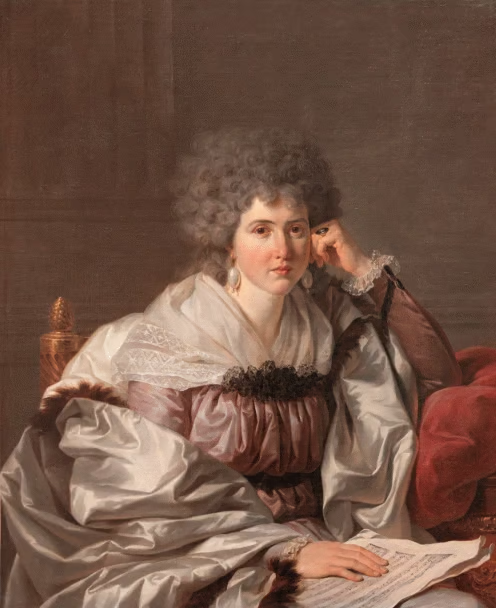
Jean-Charles Nicaise Perrin, Portait of Madame Perrin, 1791 (Musée des Arts et de l’Archéologie de Valenciennes; photo by Thomas Douvry).
Présentée au musée Cognacq-Jay en collaboration avec le Palais Galliera, l’exposition Révéler le féminin: Mode et Apparences au XVIIIe siècle propose une immersion dans l’univers fascinant des féminités au siècle des Lumières.
Portraits, scènes galantes et pièces textiles historiques dialoguent pour explorer la diversité des représentations de la féminité telles qu’elles se déploient dans les mises en scène du XVIIIe siècle. L’exposition souligne l’essor d’un style français dont l’élégance séduit alors les cours et l’aristocratie européennes, révélant une histoire du costume à la fois ancrée dans une réalité matérielle et nourrie par l’imaginaire.
Au cœur de cette époque, la France s’impose comme le théâtre incontournable du raffinement et du prestige. Les artistes tels que Maurice Quentin de La Tour, Jean-Marc Nattier, Adélaïde Labille-Guiard, ou encore Élisabeth Vigée Le Brun excellent à traduire l’éclat des étoffes comme la profondeur des âmes, offrant à leurs modèles une aura de grâce et de pouvoir. Le parcours de l’exposition, qui met en lumière ces œuvres virtuoses, s’enrichit de portraits marqués par une dimension psychologique nouvelle, où l’intimité et le naturel prennent une place centrale, sous l’influence anglaise. En parallèle, les pastorales de François Boucher et les fêtes galantes d’Antoine Watteau façonnent une féminité idéalisée et poétique.
Enfin, des photographies contemporaines de Steven Meisel, Esther Ségal, ou encore Valérie Belin, ainsi qu’une création Chanel par Karl Lagerfeld, suggèrent en contrepoint une réflexion sur la persistance des codes et l’héritage du XVIIIe siècle dans la mode actuelle, entre exigence sociale et imaginaire de la beauté.
Commissariat
• Pascale Gorguet Ballesteros, conservateur général du patrimoine, responsable des départements mode XVIIIe et Poupées au Palais Galliera
• Adeline Collange-Perugi, conservatrice du patrimoine et responsable de la collection art ancien, Musée d’arts de Nantes
• Saskia Ooms, attachée de conservation au musée Cognacq-Jay
Révéler le Féminin: Mode et Apparences au XVIIIe Siècle (Paris: Paris Musées, 2026), 112 pages, ISBN: 978-2759606382, €25.
Exhibition | Fashion in the 18th Century: A Fantasized Legacy
Opening soon at the Palais Galliera:
Fashion in the 18th Century: A Fantasized Legacy
La Mode du 18e Siècle: Un Héritage Fantasmé
Palais Galliera, Paris, 14 March — 12 July 2026
Curated by Émilie Hammen, with Pascale Gorguet-Ballesteros and Alice Freudiger

Polish-style Dress and Skirt, ca. 1770–75 (Palais Galliera / Paris Musées).
Fashion in the 18th Century: A Fantasized Legacy looks at the characteristics of women’s fashion during the Age of Enlightenment and its numerous reinterpretations throughout fashion history up until the present day. Marked by an unprecedented creative energy, the eighteenth century may be characterized by its diverse silhouettes, rich fabrics, and exuberant accessories and hairstyles. It also marked the end of a model of women’s dress inherited from previous centuries, thus paving the way for a new conception of the body and the appearance.
From the Second Empire onwards, women’s fashion drew largely on the aesthetics of the Enlightenment as a plentiful source of inspiration. In a context of political and social upheaval, the eighteenth century appeared as the epitome of elegance and a lost paradise that evoked a strong sense of nostalgia. After the Second World War, French couture, seeking legitimacy in order to establish itself on the international market, once again turned to the techniques and expertise developed in the eighteenth century by the luxury industry. The massive and widespread circulation of images through the press, cinema, and entertainment transformed this heritage into a visual code that was immediately embraced by popular culture. Gradually, eighteenth-century fashion became more than just a historical reference but a distinct aesthetic in its own right. This exhibition offers a reflection on how fashion and collective memory shape, transform, and project this past, creating a still-vibrant aesthetic, cultural, and symbolic narrative. Constantly reinvented and idealized, the eighteenth century resonates with the aspirations of each new epoch. Today, this aesthetic flirts with the world of the kitsch, camp, and queer.
Bringing together over seventy silhouettes, accompanied by fashion accessories, textiles, graphic arts, and photographs, the exhibition highlights masterpieces like Queen Marie Antoinette’s corset. Visitors can compare the silhouettes of the eighteenth-century with those of later centuries, through a selection of iconic contemporary pieces from the collections of Chanel, Christian Dior, Louis Vuitton, Christian Lacroix, Vivienne Westwood, Dries van Noten… Surveying three centuries of creation, the Palais Galliera examines how eighteenth-century fashion has been reinterpreted—between historical heritage, aesthetic fantasy, and creative freedom.
General curator
Émilie Hammen, director of the Palais Galliera
Commissariat scientifique
Pascale Gorguet-Ballesteros, Head of collections, Clothes from the 17th and 18th century and dolls, assisted by Alice Freudiger
Exhibition | Colonial Williamsburg: The First 100 Years
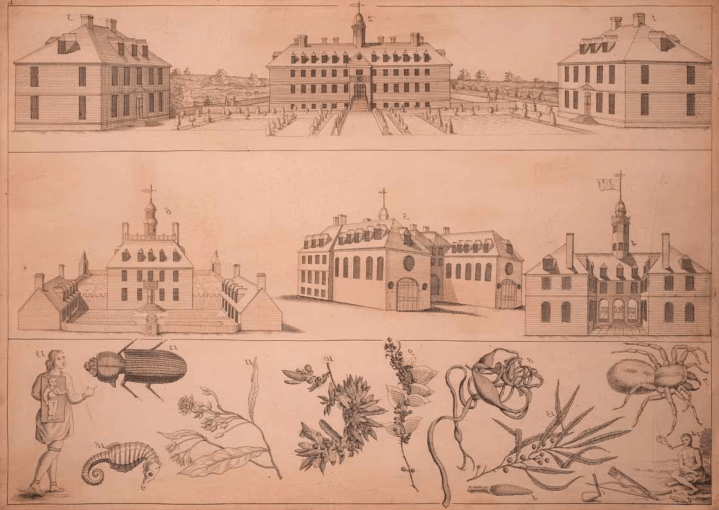
Illustration of Williamsburg Buildings, Flora, and Fauna, ca. 1740, copper plate 10 × 13.5 inches, possibly commissioned by William Byrd II
(Colonial Williamsburg, gift of the Bodleian Library, No. 1938-196)
◊ ◊ ◊ ◊ ◊
From the press release (12 February 2026) for the exhibition:
Colonial Williamsburg: The First 100 Years
Weldon Gallery, Colonial Williamsburg, 28 February — 31 December 2026
Developed by Margaret Pritchard, Neal Hurst, and Katie McKinney
As the nation observes its semiquincentennial in 2026, The Colonial Williamsburg Foundation is also celebrating its own 100-year history —a story that reflects a century of change in America itself. A new exhibition at the Art Museums of Colonial Williamsburg, entitled Colonial Williamsburg: The First 100 Years, explores the origins, evolution, and impact of this unique organization that today operates the world’s largest U.S. history museum.
From its groundbreaking preservation efforts to its evolving interpretations of America’s rich shared history and founding ideals, Colonial Williamsburg has often mirrored—and sometimes led—national conversations. One constant has driven the Foundation throughout its history: Everything it produces is grounded in ongoing research. Colonial Williamsburg: The First 100 Years explores the Foundation’s journey through that same lens using primary documents, objects and archival imagery to bring Colonial Williamsburg’s own history to life.
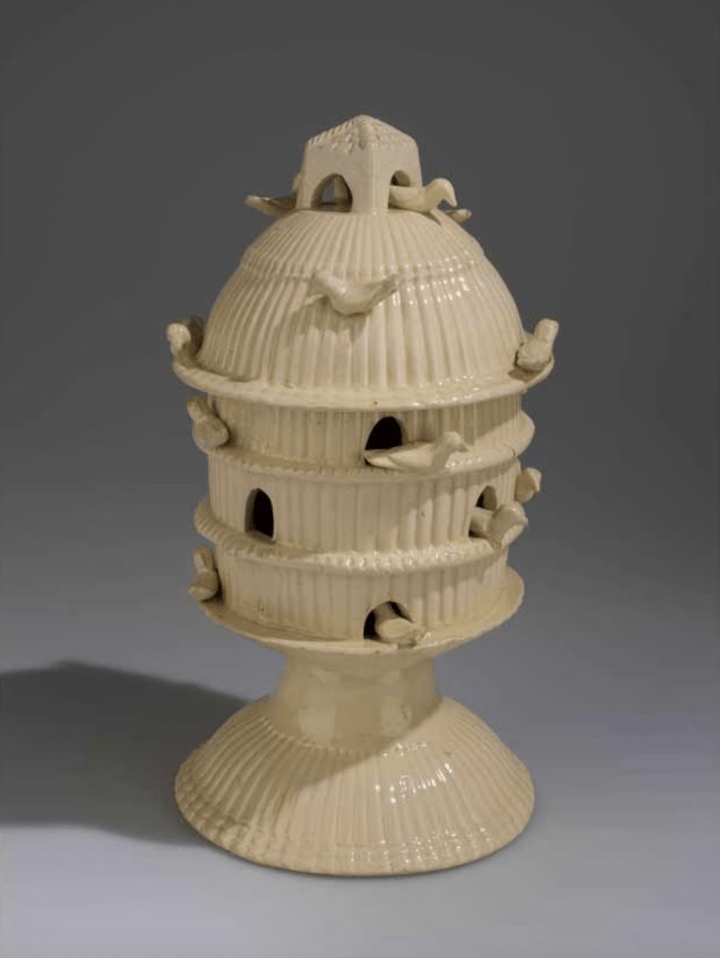
Dovecote, ca. 1770, made in England, Staffordshire or Yorkshire, lead-glazed earthenware (cream-colored earthenware / creamware), 8.5 inches high (Colonial Williamsburg, museum purchase, No. 1936-628).
The exhibition opens in the Art Museums’ 2500-square-foot Weldon Gallery on 28 February 2026, and will showcase more than 200 objects including decorative art, folk art, and archival material. Highlighting 100 years of history in one exhibition took Neal Hurst, curator of textiles and historic dress, and Katie McKinney, the Margaret Beck Pritchard Curator of Maps, several years. They took over the project, which former Deputy Chief Curator Margaret Pritchard began in 2021, continuing work on the exhibition after Pritchard’s retirement in 2024.
“It has been a joy to research, seek out objects, rediscover Colonial Williamsburg’s history, and talk to people who have worked for the Foundation, all of which culminates in this exhibition. Like any exhibit, space is always limited, but visitors will walk away with an understanding of The Colonial Williamsburg Foundation’s impact on public history, as well as its influence on preservation, collecting and education around the world,” Hurst said.
Added McKinney, “After 100 years, Colonial Williamsburg has become historic in its own right. Our colleagues across the Foundation, past and present, made this exhibition a reality. They shared their stories, expertise and lent objects. We were fascinated by how we continue to build upon the foundations laid out by the work of our predecessors. Time and again we were reminded of our motto: ‘That the future may learn from the past.’ Ultimately, the exhibition is about the people who have nurtured and built upon the Rev. Dr. W.A.R. Goodwin’s dream for the past century.”
Designed to be experienced chronologically, the exhibition begins with a look at communities and institutions who called Williamsburg home after Virginia’s capital was moved to Richmond in 1780. It offers a look at what inspired the Rev. Dr. W.A.R. Goodwin to envision Williamsburg’s restoration to its 18th-century appearance and John D. Rockefeller Jr.’s decision to support the project. Beginning with Rockefeller’s initial purchase of the Ludwell-Paradise house in 1926, the exhibition traces Colonial Williamsburg’s evolution from a patriotic preservation project to its current iteration as a premier educational organization that operates the world’s largest U.S. history museum. The exhibition explores Colonial Williamsburg’s research in interpretation, trades, preservation techniques and other aspects of the Foundation’s work over the decades. Each section includes maps, prints, and photographs from Colonial Williamsburg’s extensive archival collection, including aerial images of Williamsburg during the early years of the restoration and pictures of the men and women who restored and reconstructed the colonial capital city.
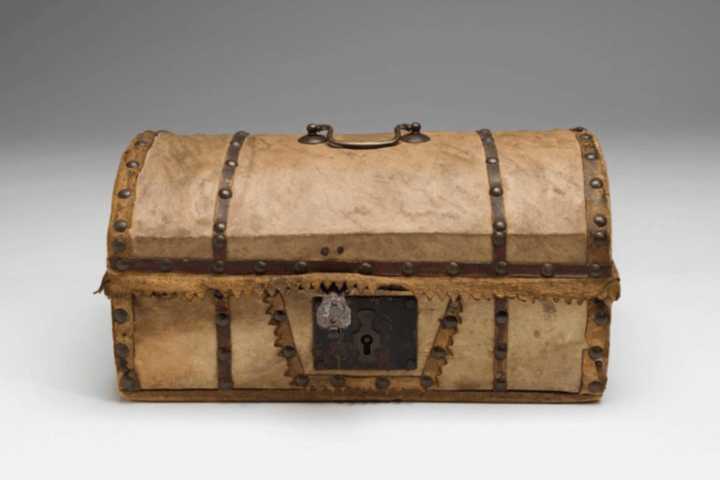
Document Box, ca. 1843, basswood (Tilia, Spp. by micro id), calfskin, leather, brass, iron, paper, textile, and paint, 6 × 7 × 12 inches (Colonial Williamsburg, gift of Catherine H. Latane, No, 2011-26). Owned by a formerly enslaved woman in Williamsburg at the end of the 19th century who lived with the Edwin and Isabel Beale family on Duke of Gloucester Street (on the site of the Orlando Jones House), where the family operated a hardware store.
◊ ◊ ◊ ◊ ◊
Curators sourced objects from archaeological, architectural, and museum collections, as well as ordinary objects from across the Foundation. Among those featured is the Bodleian Plate, known as ‘the cornerstone of the restoration’, which was discovered in England in the 1920s and helped guide the reconstruction of the Capitol and Governor’s Palace; Dr. Goodwin’s cane; George III’s coat of arms, which was once displayed in the Governor’s Palace; a document box that once held the treasured possessions of a formerly enslaved resident of Williamsburg; and a window sash removed during the preservation of the Williamsburg Bray School.
Other notable items on display:
• Ceramic objects from the collection that were buried in sand inside barrels for their safekeeping during WWII
• A mid-20th-century brick mold used to manufacture bricks in support of the restoration
• A paint chip board displaying Colonial Williamsburg’s signature colors that was originally installed in the Foundation’s paint shop in 1950
• An exhibit that explores the evolution of the interiors of the Governor’s Palace supper room, including samples of Chinese-painted wallpaper and ornate furnishings that had a major influence on American interior design
• A view of the Ludwell-Paradise House, where in 1935 an exhibition of American folk art loaned by Abby Aldrich Rockefeller went on view, including Washington and Lafayette at the Battle of Yorktown
• A vignette from the Anderson House Archaeological Exhibit (1975–83), which was designed to demystify the relatively new field of historical archaeology championed by the Colonial Williamsburg Foundation
The exhibition also includes several captioned videos and a touchscreen that allows guests to access short segments of several films produced by the Foundation to showcase its work in the digital space. Visitors familiar with Colonial Williamsburg’s history will recognize props from the film Story of a Patriot; Felicity Merriman, the American Girl doll whose story is set in 18th-century Williamsburg; and several of the Foundation’s numerous Emmy Awards won for its educational video productions.
“The Foundation has led the field of public history for a century, and Colonial Williamsburg: The First 100 Years traces that journey. As we celebrate America’s 250th anniversary and Colonial Williamsburg’s 100th, we welcome the nation—and the world—to join us throughout 2026 in honoring the past, engaging the present, and inspiring the future,” said Ron Hurst, chief mission officer for the Foundation and chief curator for the Art Museums of Colonial Williamsburg.
Exhibition | Seeds of Exchange
Now on view at the Garden Museum:
Seeds of Exchange: Canton and London in the 1700s
Garden Museum, London, 11 February — 10 May 2026
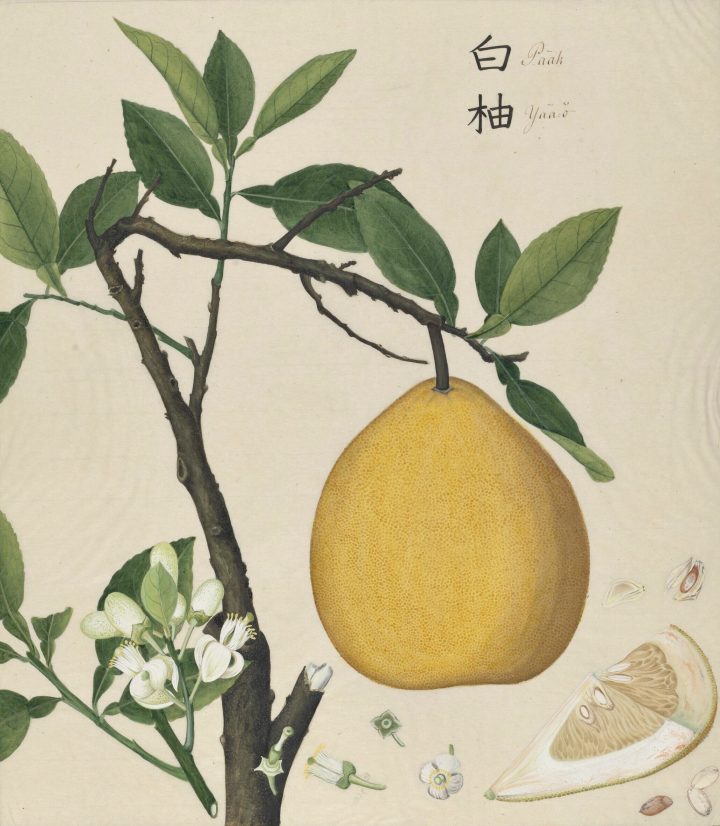
Mak Sau (Mauk-Sow-U) 麥秀, Citrus Maxima, 1771 (Upperville, VA: Oak Spring Garden Foundation).
Discover the relationship between John Bradby Blake (1745–1773), an English botanist who worked as a supercargo for the East India Company in the 1770s, his Chinese interlocutor Whang At Tong 黃遏東, and Mak Sau 麥秀, the botanical artist Bradby Blake commissioned to document plants native to Canton.
The exhibition explores the exchange of botanical knowledge shared between Canton (now Guangzhou) and London between 1766 and 1773, displaying a collection of Chinese botanical art and research for the first time in Britain since it was commissioned 235 years ago. Featuring 30 botanical paintings by the artist Mak Sau together with herbals, maps, models, a portrait of Whang At Tong by Sir Joshua Reynolds (1723–1792), and watercolours and drawings of Canton from the V&A, Seeds of Exchange tells the story of a little-known international botanical collaboration.
Bradby Blake worked in Canton in the late 1760s until his death in 1773, during which time he commissioned more than 150 botanical paintings of Chinese plants, the makings of an unfinished ‘Compleat Chinensis’. In his garden in Canton, he grew local plants such as Camellia japonica, Kumquat (Citrus japonica), and tangerines from seeds and cuttings, documenting and recording information about seed germination and growing conditions and sending seeds and plants to England. The exhibition brings together Bradby Blake’s archive of Chinese herbals and research material, reuniting the botanical paintings they inspired for the first time in 235 years.
The exhibition is produced in collaboration with the Oak Spring Garden Foundation in Virginia, where Bradby Blake’s archive is now held.
Exhibition | Philadelphia, China Trade, and the Making of America
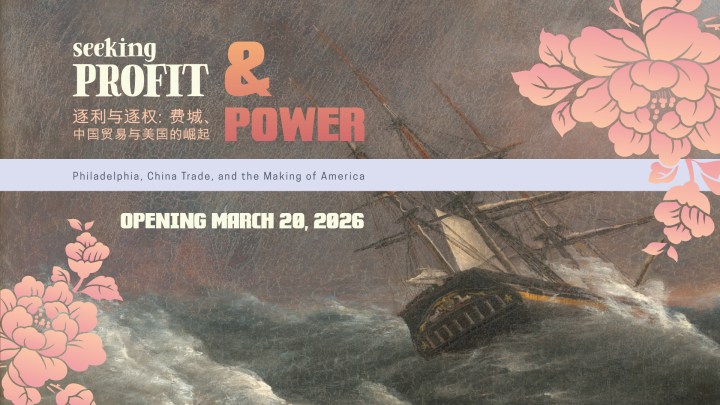
From the press release (2 February 2026) for the exhibition . . .
Seeking Profit and Power: Philadelphia, China Trade, and the Making of America
Independence Seaport Museum, Philadelphia, 20 March — 3 January 2028
Curated by Susan Gail Johnson and Brett Palfreyman
Eager to prove itself worthy of trading on the world stage as a newly formed nation 250 years ago, America—and especially Philadelphians—embarked on the risky venture of trading with China by entrusting private citizens with the work of establishing trade and diplomatic relationships with the Chinese. Merchants saw dramatic opportunities to make money, building some of the fortunes that helped expand Philadelphia’s role as a major port and city. To celebrate the country’s 250th anniversary, Independence Seaport Museum presents Seeking Profit and Power: Philadelphia, China Trade, and the Making of America, a new exhibition informed by the latest scholarship and featuring approximately 150 unique, rarely seen objects from its collection ranging from ship logs and cargo manifests to examples of rare Chinese export porcelain, Chinese silks and sample books, to portraits of American and Chinese merchants, some of which will be exhibited for the first time. Additionally, museums and private collections, including George Washington’s Mount Vernon, The Society of The Cincinnati, The Dietrich American Foundation, and Andalusia Historic House and Gardens have also loaned important objects for Seeking Profit and Power. While other institutions can tell different aspects of this story, ISM is uniquely positioned to share it through its mission and location on the Delaware River, where Philadelphia’s China trade vessels launched and their cargo was unloaded.
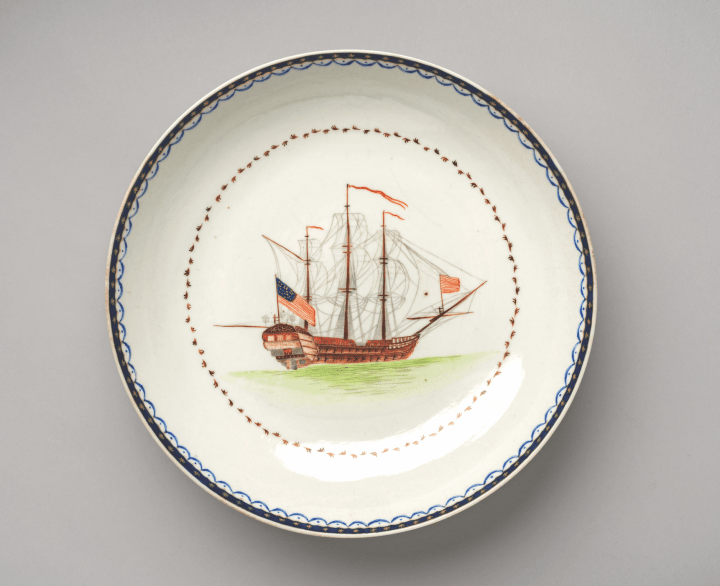
Bowl Depicting a Ship with American Flag, ca. 1790s, porcelain manufactured for the export market in Jingdezhen, decorated in Canton (Philadelphia: Independence Seaport Museum, acquired through exchange, courtesy of Friends of the Museum, 2023.038).
“This exhibition tells the story of a critical moment in the history of our nation,” said Peter Seibert, president and CEO of Independence Seaport Museum. “When the United States declared its independence from Great Britain, we also separated ourselves from the rules and regulations that governed overseas trade. As we came together as a nation 250 years ago, we also stepped out on the world’s stage for the first time. The ISM team, consisting not only of our curatorial, exhibition and education staff and an exceptional panel of outside scholars, have brought together an amazing assemblage of objects that tell the story of our look to the East as a new global trading power.”
Organized by guest curators Susan Gail Johnson and Brett Palfreyman, Seeking Profit and Power will explore five essential themes. “Making a Nation” focuses on why the United States opened direct trade with China. “Making it Work” illustrates the tremendous technical and logistical feat traveling the route from Philadelphia to China. “Making Money” shows the array of commodities the new nation could trade for sought-after Chinese tea, porcelain, and other goods. “Encountering Each Other” explains how the two cultures learned about one another through the goods that they traded. The final section, “The Old China Trade,” explores the end of the era and the place it still holds in American memory.
“Our goal for the exhibition is to show visitors that a teacup is more than just a teacup—it is an object that tells a story about sailing halfway around the world, America’s taste for luxury goods, and how the nation’s founders imagined that trade with China might help establish the newly independent nation as a player on the world stage,” said Susan Gail Johnson. “We hope visitors will never look at a teacup the same way again.”
The full press release with details about specific objects is available here»
Exhibition | The First Salute
From the press release for the exhibition:
The First Salute: An Untold Story of the American Revolution
Weitzman National Museum of American Jewish History, Philadelphia, 23 April 2026 — April 2027
Curated by Josh Perelman, with Jonathan Sarna, Pamela Nadell, and Laura Leibman
“Had it not been for… this infamous island, the American rebellion could not possibly have subsisted.”*
This landmark exhibition marking America’s 250th will take you on an adventure through America’s fight for freedom as you’ve never seen it before—where Jewish faith, courage, and persecution collided on the high seas to change the course of history. The First Salute: An Untold Story of the American Revolution is the first-ever major museum exhibition to explore the little-known story of a small group of Jewish merchants in the Caribbean whose outsized contributions to the cause of American Liberty tipped the scales in the fight for American Independence.
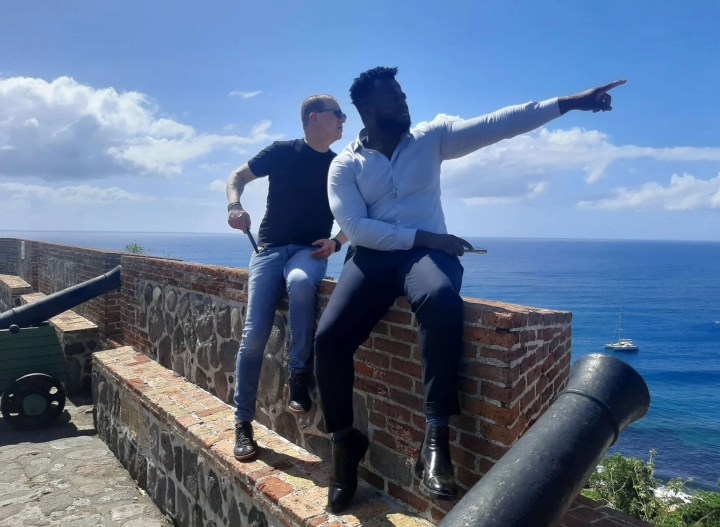
Exhibition curator Josh Perelman (left) with Heritage Inspector Raimie Richardson (right) on St. Eustatius (known locally as ‘Statia’) (Photo by Avida Linvy, November 2025).
The First Salute is the high-stakes, true story sparked by two key moments on the high seas that tipped the scales of the American Revolution and its founding principles. Set against the backdrop of the tiny Caribbean island of St. Eustatius, this riveting tale explores how religious liberty, Jewish trade merchants, and the cruelty toward the Jewish community by a debt-ridden British admiral converged at a pivotal time in world history, and impacted the trajectory of the Revolutionary War.
From Jewish expulsion from Spain and Portugal in the 15th century, to secret shipments of gunpowder disguised as tea by a network of Jewish merchants in the Caribbean in the 18th century, this tale of resilience, ingenuity, survival, and the promise of freedom still resonates today. This semiquincentennial exhibition features original films, rarely seen artifacts, storytelling, and an immersive video experience that situates visitors within three of the four original walls of St. Eustatius’s synagogue and Jewish cemetery that still stand today. The exhibition expands the understanding of the American Revolution by including the greater Atlantic World and illustrating the connections between North American and Caribbean Jewish communities, offering new insights into people and events that helped secure America’s independence.
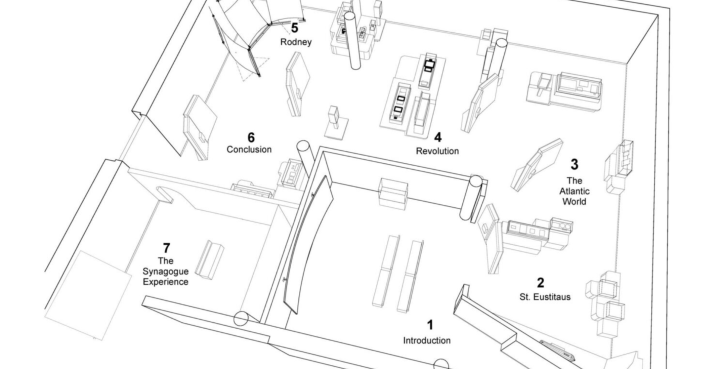 “The First Salute reminds us that America’s strength lies in its enduring commitment to religious liberty,” said Dan Tadmor, President and CEO of The Weitzman. “Two hundred and fifty years after America’s founding, this exhibition connects historical events to present-day challenges. We hope that visitors walk away considering the roles of faith, community, and discrimination — in both historical and contemporary contexts.”
The First Salute is made possible with financial assistance provided by the Commonwealth of Pennsylvania, Honorable Josh Shapiro, Governor; support from Lilly Endowment Inc. through its Religion and Cultural Institutions Initiative which propelled this exhibition’s development; and The Pew Center for Arts & Heritage. Additional funding has been provided by the Maimonides Fund, Mayor Cherelle L. Parker & the City of Philadelphia, America250PA, Betsy and Philip M. Darivoff, and other generous individuals.
The full press release is available here»
*Header quote: Admiral Sir George Rodney in a letter to Rear Admiral Sir Peter Parker in 1781 that “had it not been for that nest of vipers… this infamous island, the American rebellion could not possibly have subsisted.”
Installation | Tradition and Celebration across the Jewish Calendar
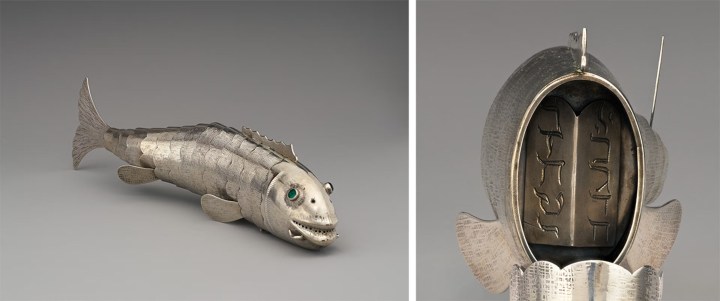
Fish-form Spice Container (Besamim), 1813, Vienna, silver, foil-backed glass, 8 × 34 × 7.6 cm, 450g
(New York: The Metropolitan Museum of Art, New York, 2025.104)
◊ ◊ ◊ ◊ ◊
Riva Arnold describes the seven works in this installation from The Met’s Department of European Sculpture and Decorative Arts:
Tradition and Celebration across the Jewish Calendar
The Metropolitan Museum of Art, New York, on view until 3 March 2026
Tucked within the galleries of the Department of European Sculpture and Decorative Arts (ESDA) is a special display of new acquisitions and objects that have never been on view before. The seven works in this temporary installation are part of a rotating exhibit of case studies organized by the department’s curators, fellows, and researchers. The current selection—on view until March 3, 2026—highlights craftsmanship, materials, and community celebrations from the Jewish populations of Austria, Italy, France, and the Netherlands between the sixteenth and nineteenth centuries.
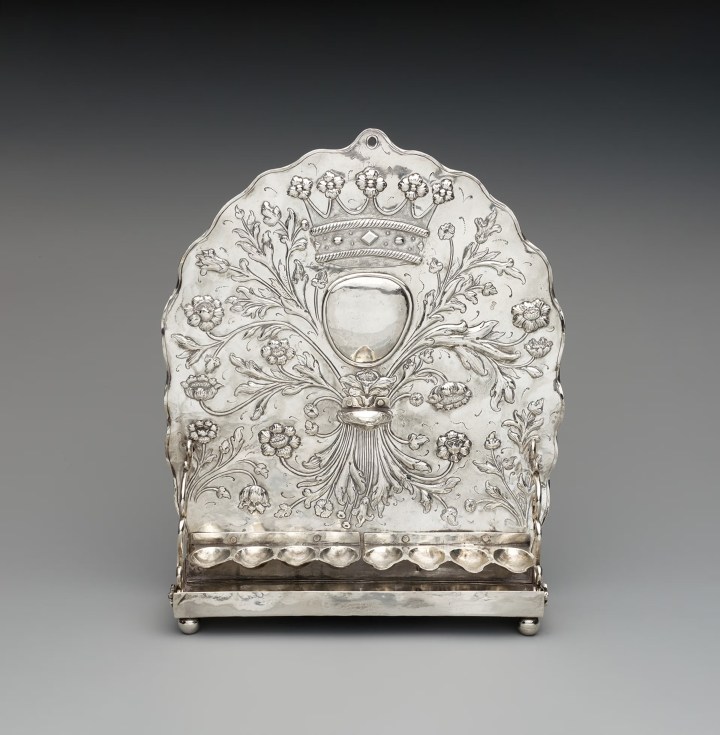
Johannes van der Lely, Hanukkah Lamp, 1706, Leeuwarden, silver, 31 × 26 cm (New York: The Metropolitan Museum of Art, 2025.585).
For over a decade, ESDA has been acquiring Judaica objects connected to Jewish life, culture, and religion. The selected items represent universal themes related to special days in the Jewish calendar, which follows a lunisolar cycle. This means that the days and months are based on the cycles of the moon, with each day beginning at sunset;[1] a leap month is added every few years to ensure that holidays are observed in their correct season. For example, Rosh Hashanah, associated with the new year, is celebrated in the fall, and Passover, associated with renewal, is in the spring.
Joyful holiday traditions and domestic milestones, such as the birth of a new baby or a wedding, kept communities together despite societal upheaval and economic fluctuations. Judaica produced in the Rococo or Baroque periods displayed extravagant decorative motifs typical of that era, with outstanding craftsmanship that evidences a material culture spanning metalwork, porcelain, leather, and enamel. . .
The full essay is available here»
Exhibition | French Drawings in Portuguese Collections
Now on view at Portugal’s National Museum Soares dos Reis, with an English summary from the Instagram account of Trois Crayons:
The presence of many French artists in Portugal from the beginning of the 18th century to the beginning of the 20th century—and their impact on the development of Portuguese art, especially the decorative arts—is the great revelation of this selection of works.
◊ ◊ ◊ ◊ ◊
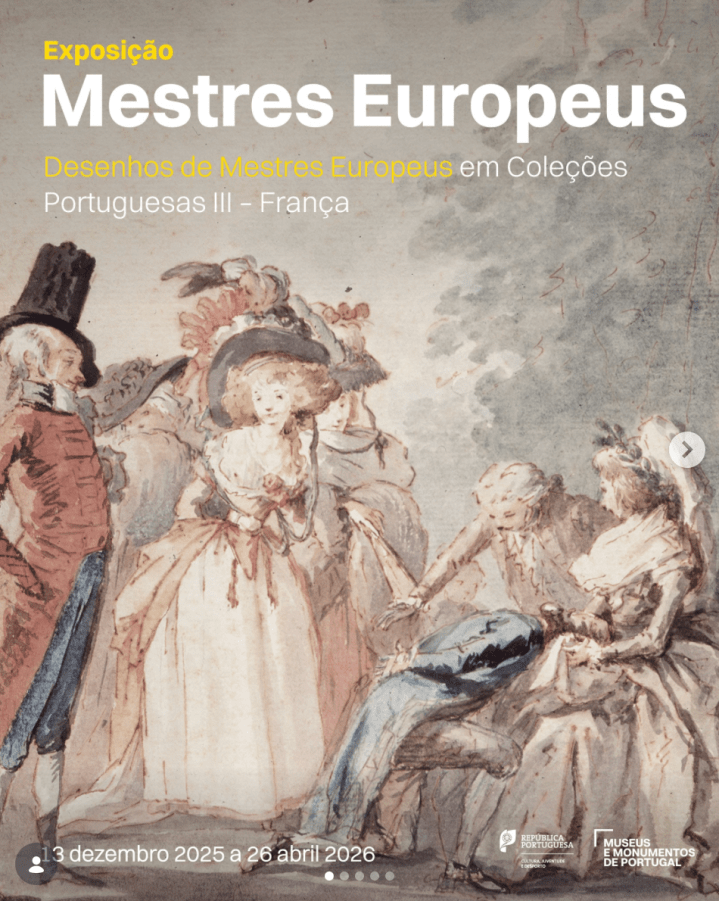
Drawings by European Masters in Portuguese Collections III: France
Desenhos de Mestres Europeus em Coleções Portuguesas III: França
Museu Nacional Soares dos Reis, Porto, 13 December 2025 — 26 April 2026
Curated by Nicholas Turner
Com mecenato do BPI | Fundação La Caixa e apoio das Tintas CIN, esta é a primeira exposição dedicada a desenhos franceses de coleções públicas e privadas portuguesas, e a terceira e última de uma série de exposições organizadas com o intuito de divulgar o pouco conhecido acervo de desenhos de antigos mestres conservado no nosso país.
 A primeira exposição, Desenhos de Mestres Europeus em Coleções Portuguesas (2000–01), apresentou aos visitantes obras de referência de todas as escolas, enquanto a segunda, Desenhos de Mestres Europeus em Coleções Portuguesas II: Itália e Portugal (2021), se centrou na influência da arte italiana no desenvolvimento da arte portuguesa desde o século XVI até ao início do XIX.
Com a exposição Desenhos de Mestres Europeus em Coleções Portuguesas III: França pretende-se mostrar que a história da influência do desenho francês em Portugal é diferente, apesar de acidentada e sujeita a flutuações políticas. De facto, a presença de muitos artistas franceses em solo nacional desde o início do século XVIII até ao início do século XX—e o seu impacto no desenvolvimento da arte portuguesa, especialmente das artes decorativas—é a grande revelação da presente seleção de obras.
Quer fugindo de ambientes políticos difíceis ou evitando a forte concorrência na corte francesa, pelo menos meia dúzia de émigrés franceses, como Pierre-Antoine Quillard, Pierre Massart de Rochefort ou Jean-Baptiste Pillement, representados nesta exposição, deixaram a sua marca—e os seus desenhos—em Portugal. Este legado torna-se claro a partir de uma grande variedade de pinturas, desenhos e obras ilustradas que foram executadas no nosso país.
Com curadoria de Nicholas Turner, um dos mais prestigiados especialistas internacionais na área do desenho, a exposição Desenhos de Mestres Europeus em Coleções Portuguesas III: França, inclui 88 obras, quatro das quais em formato de livro, ficando patente ao público até 26 abril 2026.
Nicholas Turner, Desenhos de Mestres Europeus em Coleções Portuguesas III: França (Porto: Blue Book, 2026), 216 pages, ISBN: 978-9899223318, €40.
Digital Exhibition | Reframing, Refocusing, Reimagining Disability
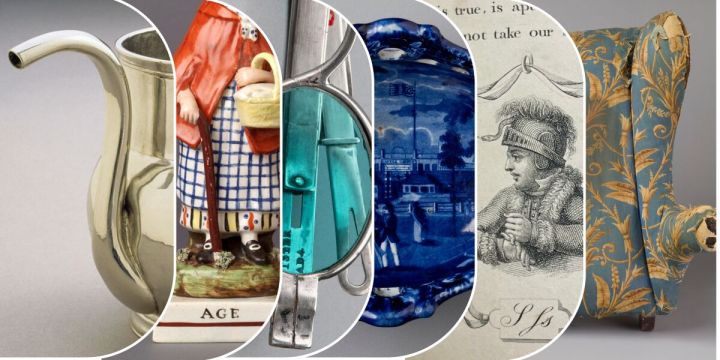
Now available online from Winterthur:
Reframing, Refocusing, Reimagining Disability
Winterthur Museum, Garden & Library Collections
We are very excited to announce a new digital exhibit. Reframing, Refocusing, Reimagining Disability engages with select artifacts from the Winterthur Museum & Library collections created by disabled makers, for disabled users, or about disabled people.
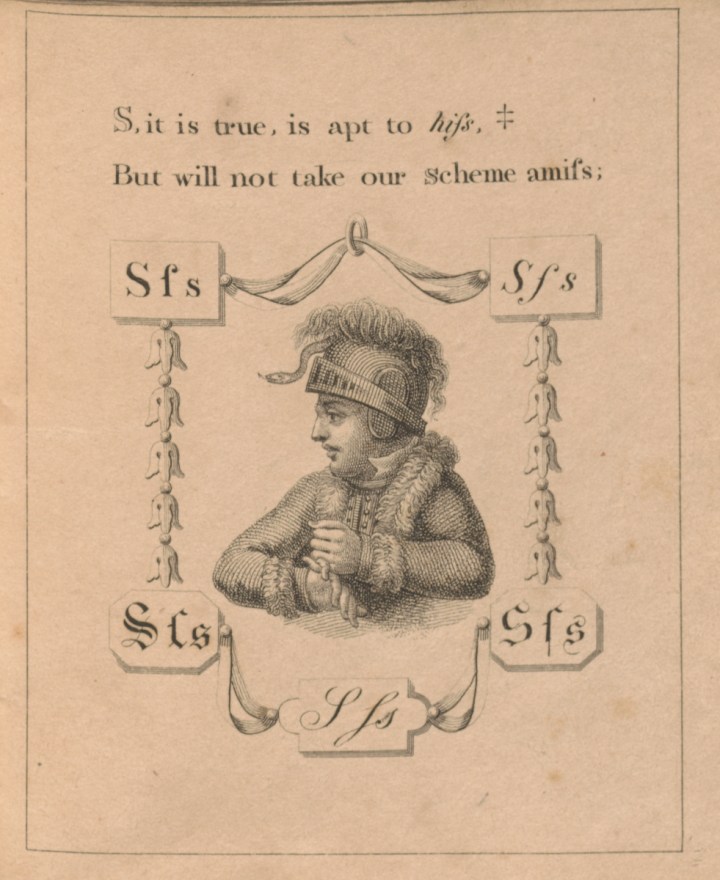
Page from The Invited Alphabet, or Address of A to B: Containing His Friendly Proposal for the Amusement and Instruction of Good Children (London: 1809 / Winterthur Library, PZ6 R7in).
In three thematic sections, the exhibit shares stories about caretaking, aging, and disability education with artifacts that date from the seventeenth, eighteenth and nineteenth centuries that were used or made in North America. From Shaker walkers to silver mugs and eyeglasses, disability stories are everywhere in Winterthur’s collection and beyond. Co-curated by graduate students enrolled in a University of Delaware Art History seminar, along with collaborators within and beyond Winterthur Museum, Garden & Library, this digital exhibit prioritizes access and inclusion through visual description, audio recordings, and alt-text. The student co-curators hope Reframing, Refocusing, Reimagining Disability will foster conversations about how access, inclusion, and disability histories are fundamental to the study of art history, and will enable artworks and objects at Winterthur Museum & Library to testify to past disabled persons’ experiences, connections, and communities. We invite you to visit, respond to, teach with, and share the exhibit widely.
This exhibition was co-curated and co-authored by graduate students enrolled in the “Disability and American Art Histories” seminar in the Department of Art History at the University of Delaware during the 2025 fall semester. Led by Dr. Jennifer Van Horn, and undertaken in partnership with Winterthur Museum & Library, graduate curators include: Phoebe Caswell, Gabrielle Clement, Sydney Collins, Sandra James, Cameron ‘Joey’ Koo, Bella Lam, Sheng Ren, Julia Rinaudo, Lauren Teresi, and Madeleine Ward-Schultz.
This digital exhibit was made possible thanks to the generous participation of our Advisory Council, the Interdisciplinary Humanities Research Center at the University of Delaware, the Department of Art History, and Winterthur Museum, Garden & Library.
Exhibition | Rome and Milan as Capitals of Neoclassicism
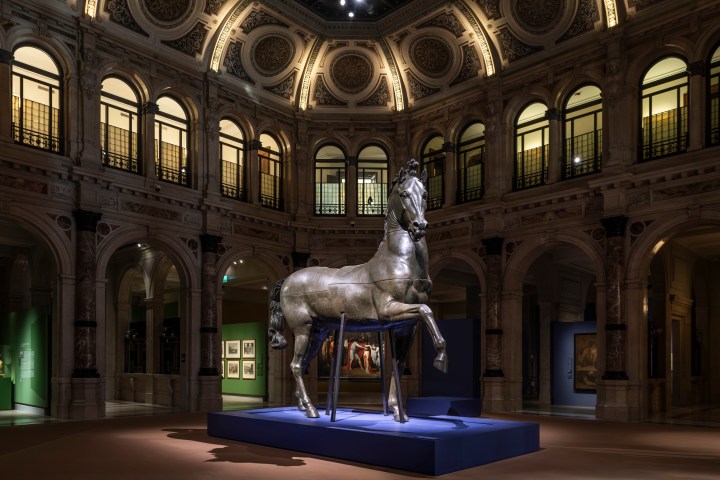
Installation view of the exhibition Eterno e Visione: Roma e Milano Capitali del Neoclassicismo
(Milan, Gallerie d’Italia, 2025)
◊ ◊ ◊ ◊ ◊
Now on view at the Gallerie d’Italia in Milan:
Eterno e Visione: Roma e Milano Capitali del Neoclassicismo
Gallerie d’Italia, Milan, 28 November 2025 — 6 April 2026
Curated by Francesco Leone, Elena Lissoni, and Fernando Mazzocca
From 1796, the year of Napoleon’s descent into Italy, until 1815, marked by the defeat at Waterloo and the Congress of Vienna, a radical political, economic, and social change took place on the peninsula. The momentous turning point of the Napoleonic Age also significantly involved the artistic scene. Only Rome and Milan escaped the decadence of major artistic centres like Florence, Venice, Genoa, and Naples. The Eternal City persisted as the universal capital of the arts due to the abundance of its heritage, from both antiquity and the Renaissance of Raphael and Michelangelo. Artists from all over the world continued to flock to Rome to learn their trade, and the city’s economy profited greatly from the presence of their studios and the activity of various workshops, which produced internationally appreciated bronzes and mosaics. The exhibition aims to evoke this exceptional creative season, comparing the highest level of artistic production of these two ‘capitals’, projected towards modern Europe while remaining firmly attached to the greatness of the past.
The leading artists in the exhibition are two brilliant men who were close friends: Antonio Canova, one of the most important artists of all time, and Giuseppe Bossi, an extraordinary painter, great connoisseur of Leonardo, and a sophisticated collector, as well as founder of the Pinactoca di Brera. Visitors can admire Antonio Canova’s masterpiece—previously thought to have been lost—the large model of a horse currently undergoing exceptional restoration. Other masterpieces by Bossi, Canova, and Andrea Appiani illustrate the creation of the image of Italy, in its well-known and then more popular iconography, due precisely to their genius.
The exhibition also highlights of one of history’s most ambitious architectural projects, conceived by the Bolognese architect Giovanni Antonio Antolini: the famous Foro Bonaparte, which, although never realised, had a major influence on the transformation of Napoleonic Milan into a modern city inspired by the magnificence of antiquity. With this utopian and visionary undertaking, Milan aspired to become the new Rome, pursuing the great ideal dream of classicism. Equally fascinating will be the re-enactment of Napoleon’s coronation as King of Italy in Milan Cathedral, through the exhibition of the so-called Italian Honours: the cape, crown, sceptre, and other splendid objects used during the ceremony, all of which underwent major restoration by Intesa Sanpaolo for the 19th edition of “Restituzioni” in 2022.
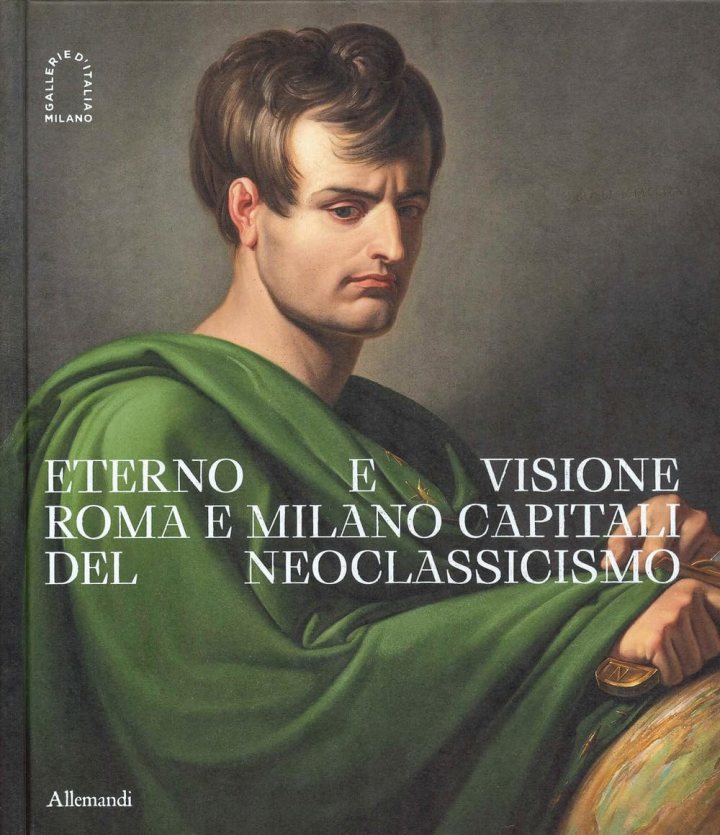
Roberto Bizzocchi, Elisa Baccini, Fernando Mazzocca, Francesco Leone, Elena Lissoni, Charles-Eloi Vial, et al., Eterno e Visione: Roma e Milano Capitali del Neoclassicismo (Turin: Allemandi, 2025), 368 pages, ISBN: 978-8842227137, €39.










 Enfilade
leave a comment