Exhibition | Goya: Mad Reason
From The Blanton Museum:
Goya: Mad Reason
Blanton Museum of Art, University of Texas, Austin, 19 June — 18 September 2016
Almost 200 years after the artist’s death, the work of Spanish court painter Francisco Goya (1746–1828) remains powerful, arresting, and pertinent. Addressing abuses of power and the ravages of war, Goya’s work shows his hope for Enlightenment principles (progress, liberty, tolerance) as well as his dismay at the movement’s failures, especially its inability to prevent war and oppression. Goya: Mad Reason explores these dynamics across much of the artist’s printmaking career, highlighting his mastery of both idea and artistic expression. The exhibition features superb editions from Goya’s print series, including Los desastres de la Guerra (The Disasters of War), La tauromaquia, (The Art of Bullfighting), and Los disparates (The Follies or Absurdities) from the collection of Yale University Art Gallery.
Press release (added 19 June 2016) . . .
The Blanton Museum of Art at The University of Texas at Austin presents Goya: Mad Reason, an exhibition of nearly 150 prints and paintings by renowned Spanish court painter Francisco de Goya. The series of prints comprising the exhibition—borrowed from Yale University Art Gallery’s distinguished Arthur Ross Collection—illustrate the artist’s mastery of forms and concepts as he grappled with the changing political and intellectual landscape of his native Spain in the early nineteenth century. Yale chose the Blanton as a partner for its Ross Collection sharing initiative, and the Blanton in turn selected Yale’s superb and affecting Goya prints as a foundation for this exhibition. Select paintings on loan from the Kimbell Art Museum, the Meadows Museum, and the Museum of Fine Arts Houston further punctuate Goya: Mad Reason thematically and visually, offering new and insightful ways of understanding the artist’s prints.
“We are honored to partner with Yale University Art Gallery to bring selections from the renowned Arthur Ross Collection to Austin,” remarked Blanton Director Simone Wicha. “This project has also afforded us the opportunity to borrow paintings from other key institutions across Texas, offering further insight into the remarkable works of Francisco de Goya, an artist whose oeuvre touches on the very fabric of human nature, and whose profound creativity remains an inspiration centuries after his death.”
Among Spain’s most celebrated artists, Francisco de Goya (1746–1828) is sometimes considered to be among the first truly modern artists. Edouard Manet, Pablo Picasso, Salvador Dalí and many other artists from the nineteenth and twentieth centuries looked to Goya’s art for inspiration, and he continues to serve as a touchstone for contemporary artists like Yinka Shonibare and Enrique Chagoya. Goya is known for his penetrating characterization of the human condition, his insightful criticisms of ignorance and oppression, and his unflinching look at the inhumanity of war.
Goya: Mad Reason highlights the artist’s treatment of war, bullfighting as a national pastime, and the instability of reason itself. His work makes visible the great transformations and unrest of Europe during his lifetime. Goya’s images manifest his hope for social progress as well as his disappointments. Against the traditions and vested interests of the populace, Church, and nobility, and influenced by French and English ideas, Spain’s liberal elites sought and achieved limited economic and educational reforms throughout the 1700s. Fears of the French Revolution spreading instability, and Napoleon Bonaparte’s subsequent 1808 invasion of Spain, halted much of that progress. After the war, the reign of Ferdinand VII led to regression and repression. In 1824, Goya left Spain for a self-imposed exile in Bordeaux, France.
Goya’s art belongs to this history, yet it remains relevant for today’s viewers due, in part, to the themes explored in his works as well as his unique visual expression. The works exhibited in Goya: Mad Reason also reveal a shifting tension between objectivity, or reason, and irrational emotion. The partitioning of knowledge that flourished in Goya’s lifetime, as modern scientific thought emerged, underlies this development and persists as a basis of our own worldviews today. Goya: Mad Reason explores these issues across the artist’s prints and paintings, examining their historical and social power as well as the artist’s mastery across the media of painting and printmaking.
Highlights of the exhibition include:
· Portrait of the Matador Pedro Romero (ca. 1795–98): Goya painted Pedro Romero, one of the greatest toreadors of all time, shortly before he retired from the bullring. Goya’s study of the works of Diego Velázquez is evident in the skilled brushwork of Romero’s costume and muted tones of the painting’s background.
· La tauromaquia [The Art of Bullfighting] (1815–16): A series of etchings chronicling Goya’s idea of the evolution of bullfighting in Spain, including the practice’s history as well as the rituals and styles of famous bullfighters of the eighteenth and nineteenth centuries.
· Los desastres de la guerra [The Disasters of War] (1810–ca. 1815): One of Goya’s most well-known series, Los desastres de la guerra (first published posthumously in 1863) is often viewed as a visual protest against the violence of the 1808 Dos de Mayo Uprising, the subsequent Peninsular War of 1808–14, and the Bourbon Restoration of 1814.
· Los disparates [Follies] (1815–24): Los disparates, also known as Los proverbios [The Proverbs], was Goya’s last major intaglio print series, and was not published until after the artist’s death. The works depict dark and dream-like scenes, and they have been variously related to political issues, the Spanish carnival, and traditional proverbs—though they are far more complex puzzles than any one solution may answer.
Exhibition | City of the Soul: Rome and the Romantics
Opening in June at The Morgan Library:
City of the Soul: Rome and the Romantics
The Morgan Library & Museum, New York, 17 June — 11 September 2016
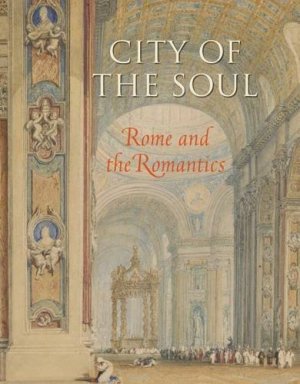 Rome exists not only as an intensely physical place, but also as a romantic idea onto which artists, poets, and writers project their own imaginations and longings. City of the Soul examines the evolving image of Rome in art and literature with a display of books, manuscripts, prints, photographs, and drawings.
This groundbreaking exhibition considers the ever-evolving identities of Rome during a pivotal period in the city’s history, 1770–1870, when it was transformed from a papal state to the capital of a unified, modern nation. Venerable monuments were demolished to make way for government ministries and arteries of commerce. Building projects and improvements in archaeological techniques revealed long forgotten remnants of the ancient metropolis. A tourist’s itinerary could include magnificent ruins, ecclesiastical edifices, scenic vistas, picturesque locales, fountains, gardens, and side trips to the surrounding countryside.
The exhibition juxtaposes a century of artistic impressions of Rome through a superb selection of prints and drawings by recognized masters such as Giovanni Battista Piranesi (1720–1778), J. M. W. Turner (1775–1851), and Edward Lear (1812–1888) along with lesser known artists whose work deserves greater attention.
The invention of photography also influenced the image of the city. Photographers consciously played on the compositions of Piranesi and earlier masters of the veduta tradition, while at the same time exploiting the expressive potential of this new medium. As the meditative, measured pace of the Grand Tour gave way to the demands of organized tourism, they supplied their new clientele with nostalgia as well as novelty in their views of the Eternal City.
John Pinto, City of the Soul: Rome and the Romantics (Lebanon, New Hampshire: University Press of New England, 2016), 224 pages, ISBN: 978-0875981710, $50.
Rome, described by Byron as the ‘City of the Soul’, has always inspired fervid imaginings and visionary renderings of itself and its past. It has existed not only as an intensely physical place but also as a romantic idea onto which artists and writers projected their own imaginations and longings. City of the Soul illuminates how the spirit of Romanticism (the term itself invokes Rome)—its passion, imagination, individuality, transcendence, nonconformity—thrived in the artistic community of Rome in the century between 1770 and 1870.
The expansive artistic response to Rome during that period reflected the timeless yet changing city, when visitors experienced the transition from the Grand Tour to the onset of mass tourism and history witnessed Rome’s dramatic transformation from papal enclave to the capital of a newly unified Italy. Rome in the Romantic era attracted extraordinary writers and visual artists, and, as it had for centuries, facilitated vibrant artistic exchange among them. The records of these encounters—in the form of letters and diary entries, poems, novels, prints, drawings, watercolors, oil sketches, and the exciting new medium of photography—collectively constitute the portrait of a very particular place, a city that touched the very soul.
John A. Pinto taught for twenty-five years at Princeton University in the Department of Art and Archaeology. His research interests focus on the architecture of eighteenth-century Rome and on the relationship between the architecture of classical antiquity and that of the Renaissance. He currently resides in New York City.
Exhibition | Unbounded: The Eighteenth Century Mirrored by the Present
Now on view in Sweden at the Gothenburg Museum of Art:
Unbounded: The Eighteenth Century Mirrored by the Present / Gränslöst: 1700-tal speglat i nuet
Göteborgs Konstmuseum, Gothenburg, 4 May — 13 November 2016
 The major exhibition of the spring is based on unexpected encounters. Here, art from the eighteenth century is shown alongside crafts, fashion, design, and popular culture, in order to let visual expressions from different periods of time clash against each other, creating friction and new perspectives. The exhibition highlights the boundless and boundary transcending, with a focus on conceptions of gender, man’s relation to nature and the West’s image of China. These themes all touch on areas where norms and values are in a process of renegotiation. The exhibition is a collaboration between the Gothenburg Museum of Art, the Röhsska Museum, and the University of Gothenburg.
Kristoffer Arvidsson, ed., Gränslöst. 1700-tal speglat i nuet / Unbounded: The Eighteenth Century Mirrored by the Present (Gothenburg: Göteborgs Konstmuseums Skriftserie, 2016), 376 pages, ISBN: 978-9187968969.
Call for Papers | A Year’s Art: The Royal Academy Summer Exhibition
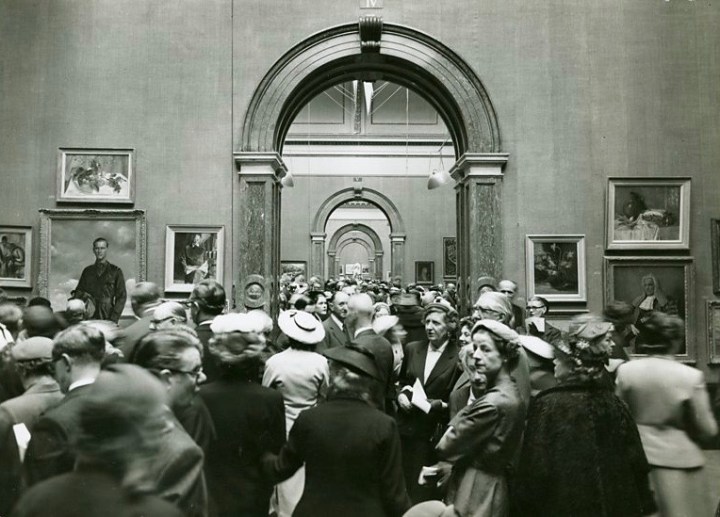
The Main Galleries of the Royal Academy of Arts during the Summer Exhibition, 1956 (unidentified photographer working for Keystone Press Agency Ltd. Photo credit: © Royal Academy of Arts, London)
◊ ◊ ◊ ◊ ◊
From the PMC:
A Year’s Art: The Royal Academy Summer Exhibition, 1769–2016
The Paul Mellon Centre for Studies in British Art, London, 29–30 September 2016
Proposals due by 17 June 2016
2018 will see the opening of a major exhibition devoted to the history of the Royal Academy’s annual Summer Exhibition. Provisionally entitled The Great Spectacle: The Royal Academy and Its Summer Exhibitions, 1769–2018, this display is planned to take place in what will be the Academy’s newly expanded and interconnected premises in Burlington House and Gardens. Forming part of the Academy’s 250th Anniversary celebrations, the exhibition will be curated by Mark Hallett and Sarah Turner of the Paul Mellon Centre, with the assistance of the Academy’s Per Rumberg and the PMC’s Jessica Feather.
Alongside the exhibition and its accompanying catalogue, the PMC members of the team are planning to develop an extensive, multi-authored online chronicle of the RA Summer Exhibition’s histories. This will take the form of a series of 250 short, illustrated texts—of around 1000 words each—that will focus on every individual exhibition in turn, beginning with the first such display, held in 1769. Featuring a wide range of scholarly and critical voices telling a multitude of stories about the exhibition, the chronicle will be developed in tandem with an ambitious digitisation programme that will place historic and contemporary summer exhibition catalogues online. This innovative project is designed to offer scholars, students, and exhibition-visitors with an intellectually lively online resource for research and learning, long after the exhibition itself closes. Whilst focusing on the Academy’s summer exhibitions, it will also contribute to the growing field of study on exhibition histories more broadly. As the longest running exhibition of contemporary art in the world, the Royal Academy Summer Exhibition offers an extremely rich focus for this area of research.
In advance of the 2018 Great Spectacle exhibition, the Paul Mellon Centre is organising and hosting a two-day event that is designed to highlight and develop new perspectives on the Academy’s display. The conference will take place on 29th–30th September 2016.
In the spirit of our planned online chronicle, the conference will be structured around groupings of short papers dealing with individual years in the exhibition’s history. It is designed to be fast-moving, provocative, and surprising, and to feature time both for speedy feedback and extended discussion. We invite proposals for 1000-word papers that, through focusing on an individual year, enable us to think afresh about the Royal Academy’s summer exhibition, and that do so from different art-historical perspectives. The premium on such papers will be to deliver pithy, refreshing, and original insights into the exhibition: to offer an illuminating art-historical snapshot, alighting on a particular work or artist, or a prominent theme to come out of an individual year.
We are especially keen to showcase new research into the histories of the exhibition and into its contemporary character, appeal, and function. We invite proposals that deal with the different kinds of objects that have been exhibited at the Academy, including sculpture, drawings, prints, and architectural models, as well as the paintings that have been the mainstay of the display since its inception. Proposals might focus on the summer exhibition as a venue of artistic competition and collaboration; on its status as an entertaining form of urban spectacle; on the interaction of works of art within its walls; on its fluctuating critical fortunes and its shifting status within the British art world; on the role of women artists within its history; on its position within the London social scene; on the function and impact of its selection and hanging committees; on its engagement with the themes of war, empire and celebrity; on the kinds of art-criticism it has generated; and on a wide range of other topics. We especially welcome applications from junior scholars and researchers, as well as from experienced academics, curators, critics and independent art-historians. Cross-disciplinary, comparative and collaborative studies are also very welcome.
Please submit proposals, of no more than 250 words, together with a short cv to Ella Fleming (efleming@paul-mellon-centre.ac.uk) by Friday, 17th June 2016. We will accept up to three proposals from individual applicants, and we would encourage multiple proposals to be on non-sequential years. Travel and accommodation will be provided for speakers travelling from outside the London area.
Exhibition | Madame de Pompadour: Patron and Printmaker
◊ ◊ ◊ ◊ ◊
Press release (16 February 2016) from The Walters
Madame de Pompadour: Patron and Printmaker
The Walters Art Museum, Baltimore, 28 February — 29 May 2016
Curated by Susan Wager
Madame de Pompadour (1721–1764) is known for being the influential mistress of King Louis XV of France and an enthusiastic patron of the arts, but few know that she was also a printmaker. An unexpected finding in the Rare Books Collection of the Walters Art Museum uncovered an extremely rare first-edition set of etchings she created in the early 1750s. Her intellectual and artistic prowess are highlighted in the exhibition Madame de Pompadour, Patron and Printmaker.
Suite of Prints Engraved by Madame the Marquise de Pompadour after the Carved Gems of Jacques Guay, ca. 1755 (Baltimore: The Walters Art Museum/Ariel Tabritha/Kimber Wiegand)
On display are seven selections from the Suite of Prints Engraved by Madame the Marquise de Pompadour after the Carved Gems of Jacques Guay. Museum founder Henry Walters acquired the Suite in 1895 from a Parisian book dealer. The set comprises more than 50 detailed etchings of gems carved with diverse images, including portraits of the crown prince and the royal mistress’s spaniel, Bébé. About 20 of these rare first-edition sets were produced around 1755, and the copy at the Walters is the only complete set to survive.
Complementing the selection of prints are 18 objects that touch on aspects of Pompadour’s wide-ranging patronage. Over time, she accumulated paintings, sculpture, porcelain, tapestries, metalwork, and other sumptuous objects for her many personal residences. Included are works she likely owned, such as two pairs of Sèvres vases and a pair of French-mounted Asian porcelains.
“The works on view show that she was thinking about these objects and images in a very sophisticated way,” says Susan Wager, curator of the exhibition. “I hope that comes through when visitors see her prints and the objects that she was drawn to as a collector.”
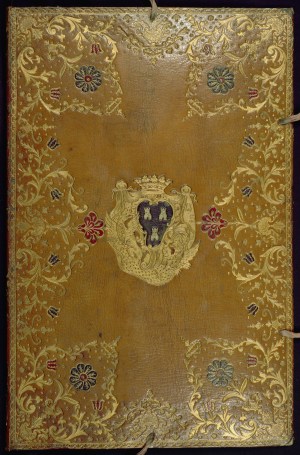
Formerly the Andrew W. Mellon postdoctoral curatorial fellow in the Department of 18th- and 19th-Century Art, Wager discovered the volume after an object listed in the museum’s database as a late posthumous edition caught her eye. The etchings had remained unrecognized for more than a century. The Suite is contained in an 18th-century leather portfolio emblazoned with Pompadour’s coat of arms and, unlike other editions, contains a handwritten table of contents.
Susan Stamberg reported on the exhibition for NPR’s Morning Edition on 10 May 2016 (the site includes additional images). Details of the discovery will be published by Wager in a forthcoming article for The Burlington Magazine.
Exhibition | Turner and Color

J.M.W. Turner, Bonneville, Savoy with Mont Blanc, exhibited at the Royal Academy, 1803, oil on canvas, 92.1 x 123.2 cm (Dallas Museum of Art)
◊ ◊ ◊ ◊ ◊
Press release (via Art Daily) for the exhibition:
Turner et la couleur
Centre d’Art de l’Hôtel de Caumont, Aix-en-Provence, 4 May — 18 September 2016
Turner Contemporary, Margate, 8 October 2016 — 8 January 2017
Following the success of the exhibitions, Canaletto—Rome, London, Venice and The Collections of the Prince of Liechtenstein, the Hôtel de Caumont Centre d’Art in Aix-en-Provence presents a new exhibition, paying tribute to the work of Joseph Mallord William Turner (1775–1851), undoubtedly one of the most iconic English painters of the 19th century. The exhibition entitled Turner and Colour was organized in partnership with the Turner Contemporary of Margate (England) and benefits from the remarkable generosity of the Tate Gallery London, which provided over thirty of the masterpieces bequeathed by the artist to the British nation. With over 120 watercolours, gouaches and oils on display coming from some of the most prestigious English and international museums—the Royal Academy of London, the Ashmolean Museum of Oxford, and the Dallas Museum of Art, among others—this exhibition also provides the public with an opportunity to discover previously unseen works coming from private collections, as well as some ensembles of watercolours shown together for the first time.
With its emphasis on colour—the very essence of Turner’s creation—the exhibition invites visitors to rediscover the life and work of this great artist from a perspective that had gone unexplored in most of the major retrospectives devoted to the artist to date. In an exhibit organized by chronology, theme and geography, the public can follow the evolutions in Turner’s palette.
The first canvases and watercolours show how the young self-taught painter explored the work of the great colourists of the past, from Rembrandt to Poussin and from Titian to Claude Lorrain, before perfecting a uniquely personal technique thanks to his keen observation of natural phenomena and their endless chromatic variations, painted from life, in the open air.
One of the rooms of the exhibition space recreates the atmosphere of the artist’s studio, allowing the public to gain a greater insight into his way of working through the palettes, pigments and tools on display. Turner’s interest for scientific and philosophical theories on colour, from Newton to Goethe, is evident in this room, as well as his avant-gardist use of pigments and unusual techniques. While his bold experimentation resulted in harsh criticism from his contemporaries, it also earned him the admiration of some of the greatest art connoisseurs of the time.
A large section of the exhibition is devoted to the artist’s travels throughout Europe and illustrates the variety and lyricism of his golden sunsets, his seascapes in hues of blue, and the remarkable landscapes that are typical of his oeuvre. If Venice proved to be an ideal subject, thanks to the luminous reflections of the water in the lagoon, Provence was no less fascinating for the artist. Attracted by the warm light and the blue skies of the region, he immortalized his landscapes in an ensemble of watercolours and sketches which find, deservedly so, an important place in this exhibition in Aix-en-Provence.
From the delicate tones that colour the sketches executed during his travels to the powerful hues that fill some of the most famous of his later canvases, colour in Turner’s work reveals, from room to room of the exhibition space, the public and private face of this controversial artist, who was at once a mysterious figure and an adventure-loving explorer. The public will be struck by the qualities of this prodigious colourist and talented connoisseur of the visual and emotional effects of colour, to the extent that Claude Monet once described him as knowing “how to paint with his eyes open.” The major impact of his oeuvre on later generations of artists cannot be contested and indeed would have an influence, some decades later, on the Impressionist movement.
Focusing on the painter’s widespread travels, part of the exhibition however is also devoted to the time Turner spent in Margate, on the Kent coast in England. Towards the end of his life, Turner would spend much time in this small coastal village, attracted by the unique quality of its light. In Margate, Turner created some of his most beautiful pictorial experiments, and it is here that the exhibition can be seen from 8 October 2016 to 8 January 2017 at the Turner Contemporary.
Key figures of the exhibition
• 133 items exhibited, including 19 oil paintings, 99 watercolours and works on paper, 1 portrait, and 1 caricature of Turner, as well as archives, books, and painting materials once belonging to the artist
• 36 works lent by the Tate Gallery, London
Exhibition | Yinka Shonibare MBE

Yinka Shonibare MBE, The British Library. Courtesy the artist and Stephen Friedman Gallery, London, Co-commissioned by HOUSE 2014 and Brighton Festival, Photographer: Jonathan Bassett.
◊ ◊ ◊ ◊ ◊
Now on view at Turner Contemporary:
Yinka Shonibare MBE
Turner Contemporary, Margate, 22 March — 30 October 2016
As part of the 14-18 NOW programme of World War 1 Centenary Art commissions, Turner Contemporary’s Sunley Gallery is transformed by two major works by leading contemporary artist Yinka Shonibare MBE. Coinciding with the gallery’s fifth anniversary, Shonibare’s powerful work explores themes of conflict, empire and migration in the centenary year of The Battle of the Somme, poignantly shown at Turner Contemporary against the dramatic backdrop of the North Sea.
Co-commissioned by Turner Contemporary and 14-18 NOW, Shonibare’s newest sculptural work End of Empire explores how alliances forged in the First World War changed British society forever, and continue to affect us today. The new work features two figures dressed in the artist’s signature bright and patterned fabrics; their globe-heads highlighting the countries involved in the First World War. Seated on a Victorian see-saw, the entire work slowly pivots in the gallery space, offering a metaphor for dialogue, balance and conflict, while symbolising the possibility of compromise and resolution between two opposing forces.
Presented alongside this new commission is Shonibare’s The British Library, a colourful work, celebrating and questioning how immigration has contributed to the British culture that we live in today. Shelves of books covered in colourful wax fabric fill the Sunley Gallery, their spines bearing the names of immigrants who have enriched British society. From T.S. Eliot and Hans Holbein to Zaha Hadid, The British Library reminds us that the displacement of communities by global war has consequences that inform our lives and attitudes today.
Accompanying the exhibition, Shonibare discussed his exhibition and artistic practice in conversation broadcaster and journalist Kirsty Lang, with writer and broadcaster Barnaby Phillips, and SOAS Lecturer in International Relations Dr Meera Sabaratnam at Turner Contemporary on Tuesday 22 March at 6.30pm. End of Empire is co-commissioned by 14-18 NOW and Turner Contemporary The British Library was a HOUSE 2014 and Brighton Festival co-commission.
Exhibition | Yinka Shonibare MBE
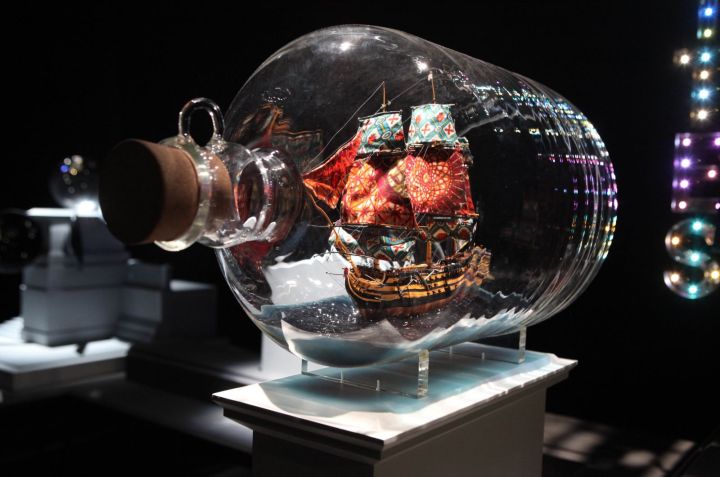
Yinka Shonibare MBE, Nelson’s Ship in a Bottle (maquette), 2007, as installed in the exhibition Fourth Plinth: Contemporary Monument (London: ICA, 2012–13).
◊ ◊ ◊ ◊ ◊
From the YCBA:
Yinka Shonibare MBE
Yale Center for British Art, New Haven, 1 September — 11 December 2016
Curated by Martina Droth
The contemporary British Nigerian artist Yinka Shonibare is best known for his explorations of the legacies of colonialism through sculpture, installations, film, and photography. This display, which coincides with the Center’s exhibition Spreading Canvas: Eighteenth-Century British Marine Painting, will focus on Shonibare’s interest in the British historical figure Admiral Lord Nelson, whom he uses as an emblem of Britain’s imperial history. An important feature of Shonibare’s work is the consistent use of colorful, wax-printed cotton fabrics, which are associated with Africa but originated in Indonesia and Holland, a product of global trade and imperial markets. The fabric sums up the themes at the heart of Shonibare’s work.
Yinka Shonibare MBE will be curated by Martina Droth, Deputy Director of Research and Curator of Sculpture, Yale Center for British Art.
Exhibition | Spreading Canvas

Charles Brooking, Shipping in the English Channel, ca. 1755, oil on canvas (New Haven: Yale Center for British Art, Paul Mellon Collection)
◊ ◊ ◊ ◊ ◊
From the YCBA:
Spreading Canvas: Eighteenth-Century British Marine Painting
Yale Center for British Art, New Haven, 15 September — 4 December 2016
Curated by Eleanor Hughes
This is the first major exhibition to survey the tradition of marine painting that was inextricably linked to Britain’s rise to prominence as a maritime and imperial power, and to position the genre at the heart of the burgeoning British art world of the eighteenth century. The demand for marine paintings—and the prints made after them—in the eighteenth century, from ship launches to shipwrecks, naval battles to serene coastal views, reflects Britain’s absolute dependence on the sea. In an age when Britain claimed to rule the waves, marine paintings found a new importance and helped the island nation tell its stories of triumph and disaster. This exhibition will reconstruct the full array of representational modes—pictorial, planimetric, narrative, and plastic—that were deployed throughout the century to represent the maritime exploits of the nation. Drawn primarily from the collections of the Yale Center for British Art and augmented by spectacular loans, Spreading Canvas will demonstrate that marine painting was both ubiquitous and fundamental to eighteenth-century British culture.
Spreading Canvas: Eighteenth-Century British Marine Painting has been organized by the Center and will be curated by Eleanor Hughes, Deputy Director for Art & Program at the Walters Art Museum. The organizing curator at the Center is Matthew Hargraves, Chief Curator of Art Collections and Head of Collections Information and Access.
◊ ◊ ◊ ◊ ◊
From Yale UP:
Eleanor Hughes, ed., with essays by Eleanor Hughes, Richard Johns, Geoff Quilley, Christine Riding, and Catherine Roach and contributions by Sophie Lynford, John McAleer, and Pieter van der Merwe, Spreading Canvas: Eighteenth-Century British Marine Painting (New Haven: Yale Center for British Art, 2016), 312 pages, ISBN 978-0300221572, $75.
 Spreading Canvas takes a close look at the tradition of marine painting that flourished in 18th-century Britain. Drawing primarily on the extensive collections of the Yale Center for British Art and the National Maritime Museum in Greenwich, London, this publication shows how the genre corresponded with Britain’s growing imperial power and celebrated its increasing military presence on the seas, representing the subject matter in a way that was both documentary and sublime. Works by leading purveyors of the style, including Peter Monamy, Samuel Scott, Dominic Serres, and Nicholas Pocock, are featured alongside sketches, letters, and other ephemera that help frame the political and geographic significance of these inspiring views, while also establishing the painters’ relationships to concurrent metropolitan art cultures. This survey, featuring a wealth of beautifully reproduced images, demonstrates marine painting’s overarching relevance to British culture of the era.
Exhibition | Moving Earth
From the YCBA:
Moving Earth: ‘Capability’ Brown, Humphry Repton, and the Creation of the English Landscape
Sterling Memorial Library, Yale University, New Haven, 7 March — 3 June 2016
Curated by Elizabeth Morris
Approximately one hundred objects from the Center’s collection are represented in this exhibition, which is on view at Yale’s Sterling Memorial Library. Curated by Beth Morris, Assistant Librarian at the Center, the exhibition includes items from the Reference Library and Archives, and reproductions from the Rare Books and Manuscripts, Prints and Drawings, and Paintings collections. Featured here are representations of work by Nathaniel Dance-Holland (Portrait of Lancelot ‘Capability’ Brown, 1773), William Taverner (Classical Landscape, ca. 1760), and Humphrey Repton (Sketches and hints on landscape gardening [London: W. Bulmer and Co., 1794]).
More information is available at the exhibition website.










 Enfilade
leave a comment