Exhibition | In the Library: Growth and Development of the Salon Livret

Explication des peintures, sculptures, et autres ouvrages, de messieurs de l’Académie royale (Paris, 1767). Washington, D.C.: National Gallery of Art Library, David K. E. Bruce Fund.
◊ ◊ ◊ ◊ ◊
Press release (31 May 2016) from the NGA:
In the Library: Growth and Development of the Salon Livret
National Gallery of Art, Washington D.C., 20 June — 16 September 2016
Curated by Yuri Long
Documenting the history of the Paris Salon from its emergence in the late 17th century through its decline during the early 20th century, In the Library: Growth and Development of the Salon Livret presents over 60 examples of literature related to the Paris Salon drawn from nearly 250 years of exhibitions. On view in the East Building Study Center, the exhibition includes a variety of publications that document the rise and fall of the Académie Royale de Peinture et de Sculpture and its exhibition, which came to be known as the Salon.
Beginning as a checklist for the works on view, the livret (‘little book’ or catalog) was first published for the Salon of 1673. Appearing then as little more than a pamphlet in decorative wrappers, the livret developed over time into a full catalog. During the latter half of the 19th century livrets included not only additional entries but also supplemental information about the juries, the artists, and the rules of the organization. And throughout the 19th century, new printing technologies—from lithography to photography—allowed for the inclusion of increasingly more faithful reproductions of exhibited works in the livrets.
Developments beyond the academy can also be seen in the growing amount of literature surrounding Salon exhibitions. Art criticism, a new type of writing in the 18th century, evolved alongside the official exhibition livrets as authors began writing commentaries about the Salon. Later, the political upheavals of and following the French Revolution affected the administration of the Salon, whose own controversies, such as the dissatisfaction of member artists, persisted through the 19th century. By the early 20th century, independent exhibitions, each with its own published catalog, had become more frequent and contributed to the declining influence and importance of the official Salon.
Coinciding with the exhibition, the National Gallery of Art Library will publish Documenting the Salon: Paris Salon Catalogs, 1673–1945, compiled and edited by librarian John Hagood. As a bibliography, it lists the publications in the library by and about the organizations that hosted Salons in Paris. Two essays analyze the form and function of Paris Salons and Salon publishing in the ancien régime and in the 19th century. Written by Yuriko Jackall, assistant curator, department of French paintings, and Kimberly A. Jones, associate curator, department of French paintings, they reveal the history and taste of collecting as well as how the Paris Salon grew from a forum for elite, privileged artists and viewers into a more inclusive event. Documenting the Salon is made possible by a grant from The Florence Gould Foundation and will be distributed to museums, libraries, and art research organizations in the US around the world.
Organized by the National Gallery of Art and curated by Yuri Long, rare book librarian, the exhibition is open from 10:00 a.m. to 5:00 p.m., Monday through Friday.
The National Gallery of Art Library contains more than 400,000 books and periodicals, including more than 15,000 volumes in the rare book collection, with an emphasis on Western art from the Middle Ages to the present. The National Gallery of Art Library was founded in 1941, the year the Gallery opened to the public. In 1979, with the move to a seven-story facility in the Gallery’s new East Building and the establishment of the Center for Advanced Study in the Visual Arts (CASVA), the library broadened its purpose and the scope of its collection. Its goal has been to establish a major national art research center, serving the Gallery’s curatorial, educational, and conservation staff, CASVA members, interns, visiting scholars, and researchers in the Washington art community.
Exhibition | The Shogun’s World: Japanese Maps
On view at AIC:
The Shogun’s World: Japanese Maps from the 18th and 19th Centuries
Art Institute of Chicago, 25 June — 6 November 2016

Revised Complete Map of Japanese Roads and Lands, 1840. Japan (MacLean Collection)
Maps are practical tools for understanding the world we inhabit, but they are not only visual representations of a particular place and time; their presentations can be strikingly beautiful as well. Japanese mapmaking is particularly distinct, even within the broader context of East Asia’s unique traditions. A multi-directional view, the use of map designs on ceramic plates, and the integration of Western practices like the compass rose, bird’s eye view, and latitude are all part of Japan’s approach to cartography in the 18th and 19th centuries.
A first for the Art Institute’s Japanese print gallery, this exhibition of maps showcases the beauty of Japanese printmaking. The maps on view feature the world, the Japanese archipelago, and major cities, including Osaka, Yokohama, Edo, Nagasaki, and Kyoto. Highlights include works from trustee Barry MacLean’s comprehensive collection, such as a Buddhist map of the world that translates spiritual forces into physical locations. A blue and white “map plate,” also from the MacLean Collection, features a relief map of Japan divided into provinces, with additional land masses and mythical locations such as “the land of women” circling the edge of the plate. An 1861 aerial view of Yokohama from the Art Institute’s collection is made up of six standard-sized prints presented as one image, with important buildings and sections of the foreign settlement labeled for ease of use. In every map presented, Japan is the focus. Sometimes the geography is of lands that are concrete and known, and sometimes it is a gateway to the realm of the imagination.
Exhibition | Divine Pleasures: Painting from India’s Rajput Courts
Press release (14 June 2016) from The Met:
Divine Pleasures: Painting from India’s Rajput Courts—The Kronos Collections
The Metropolitan Museum of Art, Fifth Avenue, New York, 14 June — 12 September 2016
Curated by Navina Haidar and Courtney Stewart

Detail of The Village Beauty. Probably painted by the artist Fattu (active ca. 1770–1820). Illustrated folio from the dispersed ‘Kangra Bihari’ Sat Sai (Seven Hundred Verses). Punjab Hills, kingdom of Kangra, ca. 1785. Opaque watercolor, ink, and gold on paper; narrow yellow and white borders with black inner rules; dark blue spandrels decorated with gold arabesque; painting 18.7 x 13.2 cm, page 20.6 x 14.9 cm. Promised Gift of the Kronos Collections, 2015 (SK.082).
Compelling episodes from the epic and poetic literature of the Indian subcontinent dominate the nearly 100 masterful paintings—most a 2015 promised gift by Steven M. Kossak from his family’s Kronos Collections—on display at The Metropolitan Museum of Art. Created mainly between the 16th and the early 19th century for the royal courts of Rajasthan and the Punjab Hills in northern India, the works on view in the exhibition Divine Pleasures: Painting from India’s Rajput Courts—The Kronos Collections are meant to move the soul and delight the eye. Suffused with the powerful imagery of the myths of the past, Indian painting expressed a new way of seeking the divine through bhakti, or personal devotion. The collection was assembled over nearly four decades by Mr. Kossak, formerly a curator in The Met’s Department of Asian Art.
“We are delighted to present this exhibition of Steve Kossak’s generous promised gift,” said Thomas P. Campbell, Director and CEO of The Met. “These distinguished paintings constitute one of the premier collections of this material in private hands, and their eventual addition to The Met collection will transform the Museum’s holdings of Rajput painting. It is a significant addition to Steve’s legacy at The Met after serving for two decades as a curator.”
The exhibition is organized into three major sections: Early Rajput and Rajasthan, early Pahari (Punjab Hills), and later Pahari. Within each room, the paintings will be shown in relation to the literary traditions of Indian Hinduism. Rajput court painting was mainly intended for royal delectation, to amplify through the artistic fantasy manifest in the pictures, well-known religious, quasi-religious, and secular texts and subjects. The power and magic of the images transcends the subjects they portray.
Under the patronage of their Rajput rulers, many of the principalities of north India developed and nurtured a distinctive painting style. This galaxy of stylistic expression is amply demonstrated in the exhibition through compelling examples of the Early Rajput Style; the later schools of Bikaner, Bundi, Kishangarh, Kota, and Mewar; as well as many of the small courts of the Punjab Hills: Bahu, Bahsoli, Bislalpur, Chamba, Guler, Kangra, Mandi, Mankot, and Nurpur.
Painted on paper in opaque watercolor and ink, they are often heightened with gold and silver. Whites are often raised to simulate pearls and reflective beetle-wing casings stand in for emeralds. Many of the paintings have never before been exhibited publicly.
Concurrent with the exhibition is a small, thematically related display, Poetry and Devotion in Indian Painting: Two Decades of Collecting (June 15–December 4, 2016) in the Florence and Herbert Irving Galleries for the Arts of South and Southeast Asia, Indian Painting Gallery, Gallery #251. Recognizing the contributions of Mr. Kossak to the Department of Asian Art, where he was a curator from 1986 to 2006, it features 22 of the dozens of Rajput and Pahari paintings that were acquired during his tenure, including a large intricately painted and printed cloth pichwai (temple hanging).
The exhibition was organized by Navina Haidar, Curator, and Courtney Stewart, Senior Research Assistant, of The Met’s Department of Islamic Art. Exhibition design is by Daniel Kershaw, Exhibition Design Manager; graphics are by Constance Norkin, Graphic Design Manager; and lighting is by Clint Ross Coller and Richard Lichte, Lighting Design Managers, all of the Museum’s Design Department.
◊ ◊ ◊ ◊ ◊
The catalogue is distributed by Yale UP:
Terence McInerney, with essays by Steven Kossak and Navina Najat Haidar, Divine Pleasures: Painting from India’s Rajput Courts—The Kronos Collections (New York: The Metropolitan Museum of Art, 2016), 272 pages, ISBN: 978-1588395900, $50.
 This splendidly illustrated publication features over 90 important paintings from the predominantly Hindu Rajput tradition of Indian painting, and are highlights from the Kronos Collection, one of the finest holdings of Indian art. These remarkable works—most of them published and illustrated here for the first time—were painted between the 16th and 18th centuries for the Indian royal courts in Rajastan and the Punjab Hills. Many of the paintings are characterized by their brilliant colors and vivid depictions of scenes from Hindu epics, mystical legends, and courtly life. Along with an informative entry for every work and a personal essay by expert and collector Steven M. Kossak, the book contains an extensive essay by Terence McInerney that outlines the history of Indian painting, with a special emphasis on the Rajput courts, and provides an overview of the subject with fresh insights and interpretations.
Terence McInerney is an independent scholar, dealer, and author of numerous articles on Indian painting. Steven M. Kossak is a former curator in the Department of Asian Art at The Metropolitan Museum of Art and a distinguished collector.
Exhibition | The Recovery of Antiquity
Press release for the exhibition closing this weekend at the MMFA:
The Recovery of Antiquity: From the Renaissance to Neoclassicism in France and Italy
Le retour à l’antique: de la Renaissance au néoclassicisme, en France et en Italie
Musée des beaux-arts de Montréal, 12 January — 26 June 2016

Jean‑Baptiste Lallemand (1716–1803), Classical Ruins, gouache on paper mounted on cardboard. 61.1 × 44.6 cm (MMFA, Lady Davis Bequest)
In connection with the exhibition Pompeii (on view until September 5), the Montreal Museum of Fine Arts presents The Recovery of Antiquity, revealing the keen interest of artists from the sixteenth to the early nineteenth century for antiquities. This selection of graphic works from the Museum’s collection features over fifty prints and drawings, including several new acquisitions. It features works by French masters like François Boucher, Jean-Baptiste Greuze, and Anne-Louis Girodet, as well as several Italian artists. Some of these works are being exhibited for the first time.
The discoveries in Rome at the turn of the sixteenth century of the Apollo Belvedere and the Laocoön—the latter praised as a masterpiece by Pliny the Elder in the first century—occurred precisely when that city was emerging from its medieval conditions and becoming once again the international centre of art, culture, and political influence in Europe, with artists like Bramante, Raphael and Michelangelo transforming and re-envisioning Rome at the forefront of a Christian humanism deeply rooted in its Imperial Roman artistic heritage. The rediscovery at this same period of Nero’s great villa at the heart of the city, the Domus Aurea, with some of its frescoed interior spaces intact, seemed to confirm this mission.

Charles Michel-Ange Challe (1718–1778), Interior View of an Ancient Temple with the Figure of a Goddess, ca. 1742–49 (MMFA, gift of Dr. Sean B. Murphy)
A distinct aesthetic appreciation of Greek art dates back to the latter fifteenth century, when the Venetian Empire encompassed the Greek peninsula and islands, as well as Crete and Cyprus. Collectors, especially Venetians, prized the more generalized and less veristic character of classical and Hellenistic Greek art. It reached an apogee in the mid-eighteenth century in Rome, when Johann Joachim Winckelmann, the celebrated aesthete and historian in Rome, elevated the artistic accomplishments of the Greeks above those of the Romans, creating animated controversy among other aestheticians and the artistic community. In counterpoint, Piranesi’s prints recorded in dramatic and inspiring terms the legacy of Roman Antiquity. It was precisely at this same moment, in 1748, that excavations were revealing to an enthralled public the ancient cities of Pompeii and Herculaneum, buried in the cataclysm of the eruption of Mount Vesuvius in 79 A.D. Two generations later, influenced by these archaeological discoveries, Napoleon adopted Roman imperial emblemata and styles to advance his own political and imperial ambitions.
From the engravings of Marcantonio Raimondi after designs by Raphael to the spectacular eighteenth-century etchings of Giovanni Battista Piranesi exalting the still-visible remains of ancient Rome to the early nineteenth-century illustrations after designs by Anne- Louis Girodet for works written by ancient authors, we can see the constant reinterpretation and changing visions of different generations regarding their own interface with Antiquity.
Exhibition | Bountiful Invention: Drawings by Oppenord and Meissonnier
Press release (27 May 2016) for the exhibition now on view at Waddesdon:
Bountiful Invention: Drawings by Gilles-Marie Oppenord (1672–1742) )
and Juste-Aurèle Meissonnier (1695–1750)
Waddesdon Manor, Buckinghamshire, 8 June — 23 October 2016
Curated by Juliet Carey

Gilles-Marie Oppenord, Design for a headpiece or title-page, with the Arms of the Marquis de Torcy, ca. 1725 (Waddesdon: Rothschild Collection / National Trust; photo: Mike Fear)
An exhibition exploring the work of two of the most innovative draughtsmen and designers of the 18th century, including spectacular presentation sheets, as well as drawings for workshop use; designs for interiors, fountains and grottoes, both real and fantastical; and an important group of designs for churches and ritual objects.
Born during the reign of Louis XIV, at a time of unprecedented interest in drawing and extraordinary artistic innovation, Oppenord and Meissonnier are two of the greatest names associated the development of the distinctively French style that reached its peak in the reign of Louis XV, now known as Rococo.
This exhibition of 45 drawings, mostly from Waddesdon’s own collections acquired in Paris in the 19th century by Baron Edmond de Rothschild (1845–34), is complemented by two loans: a spectacular Meissonnier design for a projected church for the Order of the Holy Ghost from the V&A and a red chalk Oppenord from the Courtauld Gallery. The majority of these drawings have never previously been shown.

Gilles-Marie Oppenord, Design for a Garden Fountain, ca. 1720–30; black ink on paper; 439 x 291mm (Waddesdon: Rothschild Collection / National Trust; photo: Mike Fear)
The drawings on display include experimental studies and highly finished presentation sheets, drawings for workshop use, others for student instruction, and copies made as part of the process of translating a design into print. There are designs for personal accessories such as gold boxes, furniture and interiors, for real and fantastical palaces, fountains and grottoes as well as an important group of ecclesiastical works. Many would go on to be realised in a variety of materials by builders, masons, carpenters, plasterers, goldsmiths, instrument makers, and other craftsmen; others exist only on paper. This exhibition demonstrates the breadth and variety of Oppenord’s and Meissonnier’s creativity and skill, both valued by collectors and connoisseurs even during the artists’ lifetimes. Prints of their drawings spread their ideas throughout Europe and further afield and were copied by other artists and designers long after their designs went out of fashion in France.
Exhibition | Geminiano Cozzi and His Porcelain
Now on view at Ca’ Rezzonico:
Geminiano Cozzi and His Porcelain / Geminiano Cozzi e le Sue Porcellane
Ca’ Rezzonico, Museo del Settecento Veneziano, Venice, 9 March – 12 July 2016
Curated by Marcella Ansaldi and Alberto Craievich
 Porcelain is perhaps the material that best embodies the spirit and aesthetic of the eighteenth century: glossy and light, it naturally lends itself to the creation of objects characterised by elegant, flowing lines. For long kept a secret by Chinese manufacturers, it was re-created in Europe in the second decade of the eighteenth century at the Saxon court of Augustus the Strong and from there gradually spread across the continent, despite desperate attempts to hide the formula. During the eighteenth century, the Venetian Republic was the only state to have no less than four porcelain factories, all of them opened by private initiative. One of these was that of Geminiano Cozzi (1728–1798), born in Modena but Venetian by choice. It is to his extraordinary activity as an entrepreneur ante litteram that the Fondazione Musei Civici di Venezia is now dedicating the first ever retrospective, 250 years after the privilege granted to him by the Republic in 1765 (and which marks the real birth of the Cozzi manufacture).
It is no coincidence that the exhibition should be presented in the pòrtego on the first floor of Ca’ Rezzonico, the Museo del Settecento Veneziano, a venue that in terms of its form and history is the best-suited to celebrating one of the most fascinating aspects of eighteenth-century art. Curated by Marcella Ansaldi and Alberto Craievich, the exhibition features over six hundred pieces from Italian and foreign museums, including the few items to have a firm date and the many still in private collections and hitherto difficult of access to the public and to scholars, a circumstance that has not helped the fortune critique of Cozzi: only today is his work as artist and manufacture being being its due recognition within the European scene. Unfolding in a development that is both chronological and thematic, the exhibition shows the evolution of Cozzi’s manufacture and of the types of decoration and various items, highlighting on the one hand one of the most fascinating art-historical events of the eighteenth century, and on the other by presenting an overview of a manufacturing activity of the period that includes items of surprising modernity.
The development of the art of porcelain in the eighteenth century in the Venetian Republic was undertaken by figures who were controversial, stubborn and fascinating. One of these was the Giovanni Vezzi, goldsmith and merchant, who in 1720 started his own production in Venice. Another was Nathaniel Friederich Hewelcke, a Saxon merchant who emigrated in 1757 from Meissen because of the closure of the factory during the Seven Years War; he requested and obtained a twenty-year privilege to manufacture “Saxon porcelain of any and all types” in Venice. And aside from the aforementioned Geminiano Cozzi, we might also mention Giovanni Battista Antonibon, who in 1762 started production in Nove (VI) thirty years after obtaining the privilege from the Serenissima’ “Savi della Mercanzia” for the production of high-quality majolica quality for twenty years without having to pay taxes (1732). Their destiny, however, despite the qualitatively extraordinary work, was not so lucky: after a few years, Vezzi and Hewelcke were obliged to abandon their businesses because of debts, and only Antonibon in Nove and Cozzi in Venice were able to establish long-lasting businesses, despite encountering difficulties on the way.
Marcella Ansaldi and Alberto Craievich, Geminiano Cozzi e le Sue Porcellane (Crocetta del Montello: Antiga Edizioni, 2016), 384 pages, ISBN: 978-8897784890, $72.
Exhibition | Emperors’ Treasures: Chinese Art from Taipei

Press release (2 May 2016) from the Asian Art Museum:
Emperors’ Treasures: Chinese Art from the National Palace Museum, Taipei
Asian Art Museum, San Francisco, 17 June — 18 September 2016
Museum of Fine Arts, Houston 23 October 2016 — 22 January 2017
Curated by Jay Xu and Li He
The centerpiece of the Asian Art Museum’s 50th anniversary year, Emperors’ Treasures: Chinese Art from the National Palace Museum, Taipei, presents nearly 150 imperial masterworks, many of which are making their North American debut. Visitors will discover a trove of exquisite paintings, ceramics, jades and more from one of the world’s greatest collections of Chinese art. The exhibition offers audiences a chance to behold the prized possessions of eight emperors and an empress, passed from dynasty to dynasty and once sheltered in Beijing’s Forbidden City. A glimpse into the artistic life inside an imperial palace, the exhibition showcases how family collections were refined over generations, showcasing rare pieces created by emperors themselves in private moments of inspiration.

Leng Mei, Illustrations of Farming and Weaving, ca. 1696; Qing dynasty (1644–1911), reign of Emperor Kangxi (1662–1722). Album leaves, colors on silk (Taipei: National Palace Museum)
“This is the absolute ‘best of the best’ of Chinese imperial art,” says Jay Xu, director of the Asian Art Museum. “By exploring how artistic taste was cultivated and evaluated—which created standards of beauty and elegance across Chinese culture—the exhibition reflects the museum’s mission of connecting audiences today with the great arts and traditions of Asia.”
The meticulously crafted public identities and carefully guarded private lives of each ruler will be told in a story narrated by the artworks of their eras, from the dignified Song to the bold yet subtle Yuan, from the celebrated brilliance of the Ming to the last days of the dazzling Qing dynasty.
While the National Palace Museum, Taipei, is renowned among Chinese art enthusiasts, historically its collection has not been widely accessible to the American public. Displays have traveled to the U.S. only a handful of times: in the 1960s and again in 1995–1996 for an exhibition presented by both The Metropolitan Museum of Art in New York and the Asian Art Museum—an exhibition that Xu also participated in organizing during his time as a junior research fellow there. “It’s exactly 20 years later,” Xu notes. “However, there are many works that haven’t been seen outside Asia before. In terms of the objects and time periods, it’s a fresh perspective for American audiences since the imperial court surrounded itself with the most important, avant-garde works of its time.”
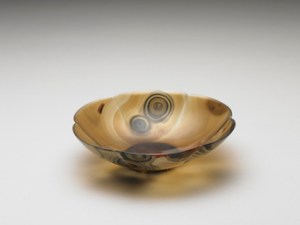
Imperial Workshop, Beijing, Hibiscus-shaped bowl; Qing dynasty, reign of Emperor Yongzheng (1723–1735). Agate (Taipei: National Palace Museum)
Organized around the lives of nine rulers—eight emperors and one empress who reigned from the early 12th through the early 20th centuries—the exhibition will explore how taste and connoisseurship as both personal virtues and statements of political power evolved over 800 years. By examining the distinct contributions of each subject, the rich styles and the variety of craftsmanship they prized, the exhibition outlines how Chinese art developed and flourished under Han Chinese, Mongol and later Manchu regimes. Through this exceptional selection of objects, Emperors’ Treasures presents a unique occasion for audiences to connect with powerful historical figures through their most cherished belongings, relating to them on an intimate, human scale that only art can express.
Emperors’ Treasures unfolds chronologically, allowing audiences to gauge how imperial tastes evolved from within China or due to external pressures, looking backward to ancient examples or blazing forward with new ideas. The exhibition flows through four galleries on the museum’s first floor.
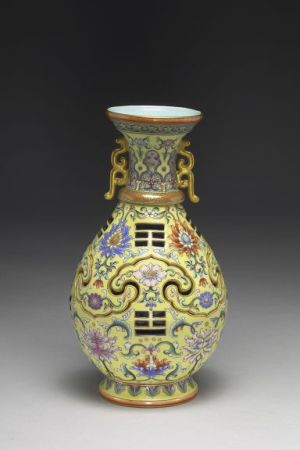
Vase with revolving core and eight-trigram design, ca. 1744. Jingdezhen, Jiangxi province, Qing dynasty, reign of Emperor Qianlong (1736–1795). Porcelain with golden glaze, multicolor decoration, and appliquéd sculpture. (Taipei: National Palace Museum)
Opening in the large Osher Gallery, audiences are introduced to the Song emperors (960–1279), celebrated for leading a renaissance in Chinese art more than 800 years ago. Here, visitors will discover the masterful landscapes and calligraphy of Emperor Huizong, recognized for his distinctive, influential ‘slender-gold’ script. Alongside these elegant works are the robust art pieces and an imposing portrait demanded by the mighty Yuan-dynasty (1271–1368) ruler Kublai Khan. Also in this gallery are legendary Ming porcelains (1368–1644), the pinnacle of ceramic art in China. Highlights include a rare cloisonné vessel; one of only two surviving blue-and-white Ming vases depicting West Asian entertainers; and the ‘holy grail’ of Chinese porcelains—a wine cup with a cock and hen design like the example recently sold at Sotheby’s for more than $36 million.
The adjacent Hambrecht Gallery features an overview of illustrious Qing-dynasty accomplishments (1644–1911). During this period, a dozen imperial workshops across the Chinese Empire were opened to fulfill the Forbidden City’s relentless appetite for lacquers, enamels and carved jade, like the paper-thin hibiscus-shaped bowl from the early 1700s, sculpted from a single piece of glowing, nut-brown agate.
Next door is the Lee Gallery, which paints an intimate portrait of the 18th-century Qianlong Emperor, known as the ‘Old Man of Ten Perfections’ and admired as the most prolific poet-monarch in Chinese history. Through a selection of paintings, carvings and other treasures, audiences will see how a single ruler caused a seismic shift in the creative output of China. While many of the masterworks remain quietly breathtaking in their elegance, others certainly call out to the interests of today. The White Falcon hanging scroll by Italian Jesuit Giuseppe Castiglione introduces visitors to an intriguing European figure who spent decades in the Qing court, serving under Emperors Kangxi, Yongzheng, and Qianlong. Having his Chinese name as Lang Shining, Castiglione’s collaboration on court portraits and paintings underscores a tradition of East-West cultural exchange that continues in the current globalized art arena.
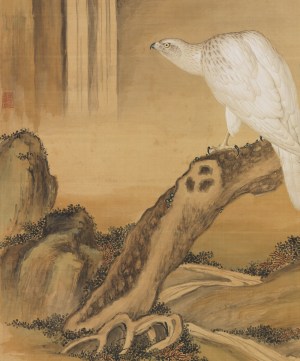
Lang Shining (Giuseppe Castiglione, Italian, 1688–1766), White Falcon; Qing dynasty, reign of the Qianlong emperor (1736–1795). Hanging scroll, colors on silk (Taipei: National Palace Museum)
The exhibition concludes in the museum’s Resource Room with a focus on the Empress Dowager Cixi, a Manchu concubine who rose to become the long-ruling power behind the final Qing emperors. Cixi recruited female artists to her ‘Studio of Great Elegance’, where, under her personal direction, the coterie combined traditional symbols and patterns with botanical study, setting a foundation for modern Chinese aesthetics.
An icon of the National Palace Museum, Taipei, the celebrated Qing-dynasty ‘Meat-shaped stone’ will also be traveling to the U.S. for the first time. The stone—a hunk of jasper carved and dyed to resemble a portion of braised pork belly fresh from the pot—exemplifies how the enduring appeal of traditional Chinese cooking has long inspired devotion. When on view in Japan in 2014, the stone was seen by an average of 6,000 people a day and generated a mini-boom in dongpo rou, the classic dish it closely resembles. In honor of the stone’s unusual appeal, a special edition of the Asian Art Museum’s popular Thursday evening programs will feature innovative new dishes inspired by the Meat-shaped stone and prepared by four local chefs. Their dishes—from street carts to haute cuisine—will be presented to the public on July 7. Additionally, from June 17 to July 18, more than a dozen San Francisco chefs, both up-and-coming and established, will feature versions of the mouthwatering, slow-simmered ‘priceless pork belly’ in their restaurants. Another take on the delicious dish developed by Melinda Quirino, chef at the museum’s own Cafe Asia, will be available for visitors to enjoy throughout the exhibition’s run.

Meat-shaped stone; Qing dynasty (1644–1911). Jasper, golden stand (Taipei: National Palace Museum)
“Emperors’ Treasures is about looking forward and starting the museum’s next 50 years on the right note,” says Xu. “We not only share and present exceptional works of art, but we help people understand their context, significance and relevance.”
Emperors’ Treasures was made possible by a generous grant from Presenting Sponsor, The Robert H. N. Ho Family Foundation. “This important support from The Robert H. N. Ho Family Foundation enables the Asian Art Museum to curate and present Emperors’ Treasures, which will expose a global audience to the beauty and depth of Chinese art and culture,” said Xu.
Ted Lipman, CEO of The Robert H. N. Ho Family Foundation, noted: “This exhibition marks the third collaboration between the Asian Art Museum and The Robert H. N. Ho Family Foundation. A key mission of the Foundation is to promote Chinese culture and the arts to Western audiences to increase understanding and appreciation of this ancient legacy. Nowhere does the 5,000 years of Chinese history manifest itself more beautifully and comprehensively than the exquisite imperial collection, which has been lovingly conserved and displayed at the National Palace Museum, Taipei. Through support for this significant exhibition, the Foundation seeks to provide visitors with an unprecedented opportunity to witness China’s vibrant cultural heritage first-hand.”
Emperors’ Treasures: Chinese Art from the National Palace Museum, Taipei is co-organized by the Asian Art Museum of San Francisco and the National Palace Museum, Taipei. The exhibition is curated by Asian Art Museum Director Jay Xu and Li He, associate curator of Chinese art.
◊ ◊ ◊ ◊ ◊
Jay Xu and He Li, eds., Emperors’ Treasures: Chinese Art from the National Palace Museum, Taipei (San Francisco, Asian Art Museum, 2016), 272 pages, ISBN: 978-0939117734, $50.
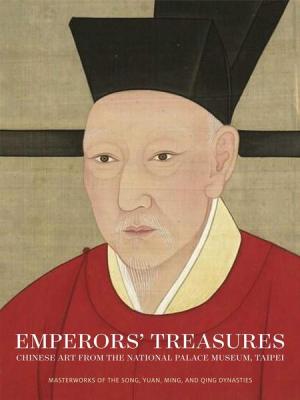 Emperors’ Treasures features artworks from the renowned National Palace Museum, Taipei. It encompasses paintings, calligraphy, bronzes, ceramics, lacquer ware, jades, and textiles exemplifying the finest craftsmanship and imperial taste. The exhibition catalog explores the identities of eight Chinese rulers—seven emperors and one empress—who reigned from the early 12th through early 20th centuries. They are portrayed in a story line that highlights artworks of their eras, from the dignified Song to the coarse yet subtle Yuan, and from the brilliant Ming until the final, dazzling Qing period. Emperors’ Treasures examines each ruler’s distinct contribution to the arts and how each developed his or her aesthetic and connoisseurship.
With contributions by Fung Ming-chu, Jay Xu, Ho Chuan-hsin, Alfreda Murck, Tianlong Jiao, Li He, and curators from the National Palace Museum and the Asian Art Museum.
Jay Xu is Executive Director of the Asian Art Museum of San Francisco. He is the first Chinese American director at a major US art museum and the first Asian American museum director elected to the American Academy of Arts and Sciences.
Li He is associate curator of Chinese Art at the Asian Art Museum of San Francisco and a visiting research fellow at the Palace Museum, Beijing. She is the author of Chinese Ceramics: A New Comprehensive History from the Asian Art Museum of San Francisco.
Exhibition | The English Rose: Feminine Beauty
Now on view at The Bowes Museum:
The English Rose: Feminine Beauty from Van Dyck to Sargent
The Bowes Museum, Barnard Castle, County Durham, 14 May — 25 September 2016
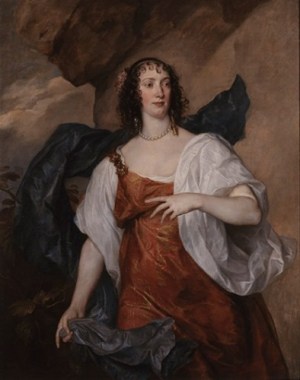
Anthony van Dyck, Portrait of Olivia Porter, ca. 1637 (The Bowes Museum)
The catalyst for The English Rose: Feminine Beauty from Van Dyck to Sargent—a salute to 400 years of society beauties—is a portrait recently acquired by The Bowes Museum via Arts Council England, in lieu of inheritance tax from the estate of the Duke of Northumberland. Olivia, Mrs. Endymion Porter, by court painter Van Dyck, was painted ca. 1637, when the artist was at the height of his career. One of his finest female portraits, it depicts Mrs. Porter, a lady-in-waiting to Queen Henrietta Maria—whose portrait also features in the show—in shift and pearls, displaying the ‘careless romance’ that is evident in many of Van Dyck’s images. Whilst this is an intimate domestic portrait commissioned by her husband, it also demonstrates his wealth, status, and prestige by the fact that he could afford to engage the King’s painter.
The exhibition’s themes centre on the artists represented, their sitters, and fashions and will follow a chronological order from the 17th to the 20th century. Alongside The Bowes Museum’s two Van Dyck’s will feature paintings by Gainsborough, Reynolds, George Romney, John Singer Sargent, and Peter Lely, loaned from galleries around the UK including the National Gallery, the V&A Museum, Dulwich Picture Gallery, The Holburne Museum, and the National Galleries of Scotland.

Thomas Gainsborough, Portrait of Elizabeth and Mary Linley, ca.1772, retouched 1785 (Dulwich Picture Gallery)
Many of the sitters are as famous as those engaged to paint them. Mrs. Sarah Siddons, the outstanding ‘tragic’ actress of her time, most famous for her dramatic portrayal of Lady Macbeth, reportedly had Gainsborough experiencing difficulties with her nose, leading him to exclaim, “Confound the nose, there’s no end to it.”
Fascinating beauties Elizabeth and Mary Linley, part of the famous 18th-century musical family known as ‘The Nest of the Nightingales’, also sat for Gainsborough, in the only known painting depicting both sisters together. The former had a colourful life: betrothed to a man of her father’s choice, a duel was fought between him and a then penniless Richard Brinsley Sheridan, soon to become a leading playwright, with Sheridan eventually winning her hand. Although the sisters’ extraordinary talents saw them perform privately for royalty and publicly at Covent Garden, both were forbidden to sing in public after marriage.
While female artists were thin on the ground in the 17th century, Mary Beale is represented in a self-portrait, ca. 1675—not unusual in those days, as there were few models to sit for them. Holding an artist’s palette, she is depicted as determined to challenge society’s intended role for her.
Adrian Jenkins, Director of The Bowes Museum, said: “We are delighted to celebrate the gift of this wonderful Van Dyck portrait, which will be central to our forthcoming exhibition. We also thank the Arts Council for their decision to retain this important painting in the North of England, where it will enhance The Bowes Museum’s permanent collection.”
Programming information is available here»
Exhibition | Catherine the Great: Self-Polished Diamond
Now on view at the Hermitage Amsterdam:
Catherine the Greatest: Self-Polished Diamond of the Hermitage
Catharina, de Grootste: Zelfgeslepen diamant van de Hermitage
Hermitage Amsterdam, 18 June 2016 — 15 January 2017
 Two hundred and fifty years after Catherine the Great founded the Hermitage, the Hermitage Amsterdam presents her life story in a sumptuous exhibition on Europe’s longest-reigning empress. Her name has always been surrounded with stories and superlatives, often about her private life and court intrigues. Some of these stories belong to the realm of myth, but others are perfectly true.
At the age of fourteen, the German princess Catherine (1729–1796) was married off to the Russian tsar. She later overthrew her husband, Peter III, and claimed the throne for herself. Catherine would become the greatest tsarina of all times. She had ambitious plans to reform the whole empire and acted with great foresight. Although she encountered setbacks, her achievements were astounding.
Catherine had a tremendous passion for art and contributed more than anyone else to the world’s greatest art collection. She was an enlightened despot, corresponding with Voltaire and Diderot. She added a new territory to her empire as large as France, and including the Crimea. And in all her endeavours, she had a sharp eye for talented people who could help her, such as the Orlov brothers and her most influential lover, Potemkin. She was a diamond of her own making.
After her death, Catherine was central to hundreds of books, films, and plays, and she inspired great actresses like Marlene Dietrich, Bette Davis, Hildegard Knef, Catherine Deneuve, and Julia Ormond.
Aided by her memoirs and those of her contemporaries, we present more than 300 objects from the Hermitage in St Petersburg, which invite visitors into Catherine’s world. The exhibition unravels her life story and sketches her personality. It is also an exhibition like a jewellery box, with magnificent personal possessions such as dresses, bijoux, cameos, and snuff boxes, as well the finest art works from her vast collection: paintings, sculptures, exquisite crafts, and portraits of her friends and loved ones.
The poster reproduces a detail of Vigilius Eriksen’s Portrait of Catherine the Great on Horseback, 1762 (St Petersburg: State Hermitage Museum)
Exhibition | Out of Their Heads: Building Portraits of Scottish Architects
Press release, via Art Daily:
Out of Their Heads: Building Portraits of Scottish Architects
Scottish National Portrait Gallery, Edinburgh, 11 June 2016 — 5 February 2017
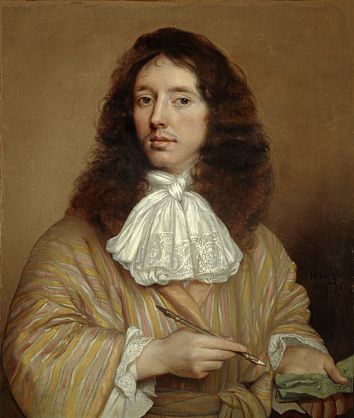
John Michael Wright, Portrait of Sir William Bruce, ca. 1664 (Edinburgh: National Galleries of Scotland, purchased 1919; photo by Antonia Reeve)
Some of Scotland’s most stunning buildings and the achievements of the country’s most distinguished architects are being celebrated this summer at the Scottish National Portrait Gallery in an innovatively-presented exhibition that explores the key figures who have helped to shape Scotland’s world-renowned architectural heritage. Out of Their Heads: Building Portraits of Scottish Architects, organised by the Royal Incorporation of Architects in Scotland (RIAS) and the Scottish National Portrait Gallery and supported by the Scottish Futures Trust, is a headline event of the year-long Festival of Architecture 2016 and the Year of Innovation, Architecture and Design. It features a series of 12 special constructions, based upon the profiles of key buildings, drawn by Edinburgh artist Ian Stuart Campbell Hon FRIAS. On each has been installed a portrait of an architect—paintings, photographs, drawings and busts are drawn from the collections of the SNPG and RIAS.
Internationally recognised names, such as Charles Rennie Mackintosh (1868–1928) and Robert Adam (1728–1792) feature. The exhibition also introduces some architects perhaps less familiar but whose buildings are very well known, such as Jack Coia (1898–1981) and Sir Robert Matthew (1906–1975). Coia was responsible for many of Scotland’s finest Roman Catholic churches, while Matthew’s practice was behind buildings including London’s Royal Festival Hall and the Royal Commonwealth Pool, Edinburgh.
Scotland has produced an impressive array of architect pioneers. The dozen selected architects in Out of Their Heads span a range of styles and a long chronology, beginning with Sir William Bruce (about 1625–1710, depicted in a vivid portrait by John Michael Wright), who almost single-handedly introduced neo-classicism to Scottish architecture in the 17th century, and culminating with the late Kathryn Findlay (1954–2014), former Associate Professor of Architecture at Tokyo University and avant-garde architect of the surrealist, Salvador Dalí-inspired, Soft and Hairy House (1994) in Tsukuba, Japan.
Kathryn Findlay forged a strong career in Japan, producing neo-expressionistic homes alongside her husband Eisaku Ushida (b. 1954). In 2012, Findlay collaborated with the artist Anish Kapoor, on the striking ArcelorMittal Orbit tower in the London’s Olympic Park. Two years later, Findlay was awarded the prestigious Jane Drew prize by the Architects Journal for her “outstanding contribution to the status of women in architecture,” tragically announced on the same day as she passed away.
Other architects featured include Sir Basil Spence (1907–1976), designer of Glasgow University’s Natural Philosophy building—on display is a photograph of Spence by the renowned photojournalist Lida Moser; James Craig (1739–1795), responsible for the lay-out of Edinburgh’s New Town, and Sir Robert Lorimer (1864–1929), creator of the magnificent Scottish National War Memorial at Edinburgh Castle.
Margaret Brodie (1907–1997) was site architect for much of the building of the Glasgow Empire Exhibition of 1938 and was the first female student to graduate from the Glasgow School of Architecture with First Class Honours.
Also represented is Sir Robert Rowand Anderson (1834–1921), the architect responsible for the red-sandstone Gothic Scottish National Portrait Gallery and the founder in 1916 of the Royal Incorporation of Architects in Scotland (RIAS).
One of Scotland’s leading Victorian architects, Anderson enjoyed an outstanding architectural career, with the highlight being the Portrait Gallery. The Gallery was completed in 1890, the first specially built portrait gallery in the world. Among his many other commissions were the Dome of Old College, The Faculty of Medicine and McEwan Hall at Edinburgh University, the Catholic Apostolic Church in Edinburgh, Glasgow Central Station Hotel and Mount Stuart House on the Isle of Bute. Anderson also restored many churches, cathedrals and abbeys, namely Dunblane Cathedral and Paisley Abbey.
Also featured is the great Modernist Peter Womersley (1923–1993), who lived in the Scottish Borders but also worked in Singapore.
As Scotland’s most famous architect and a massively influential figure worldwide, Charles Rennie Mackintosh secured his international reputation upon completion of the stunning Glasgow School of Art in 1909. In the exhibition, he is wonderfully captured in a very personal portrait by his friend and patron Francis Newbery, the Head of Glasgow School of Art.
This year, Scotland’s achievements in innovation, architecture and design will be showcased across the globe through a range of events and activity. The Festival of Architecture 2016 is a key to this exciting year-long celebration with hundreds of events across the length and breadth of the country.
To also mark the Festival of Architecture 2016 and running alongside Out of Their Heads, a series of celebrity photographic portraits have been commissioned by the RIAS from Broad Daylight (Tricia Malley and Ross Gillespie), to showcase and document the world class architecture of Scotland. Each portrait features a celebrity along with a commentary on their favourite Scottish building.
Christopher Baker, Director of the Scottish National Portrait Gallery, said: “The variety and outstanding quality of Scotland’s architecture is a key element of its distinctive culture and international profile. This exhibition celebrates the extraordinary achievements of Scottish architects, ranging from the brilliant seventeenth-century innovator Sir William Bruce to great contemporary figures, such as Kathryn Findlay. It seems fitting that their work should be highlighted within one of Edinburgh’s finest buildings—Sir Robert Rowand Anderson’s spectacular Scottish National Portrait Gallery. We are immensely grateful to the RIAS and Scottish Futures Trust for supporting the project so generously.”










leave a comment