Exhibition | From Poussin to Monet: The Colors of France
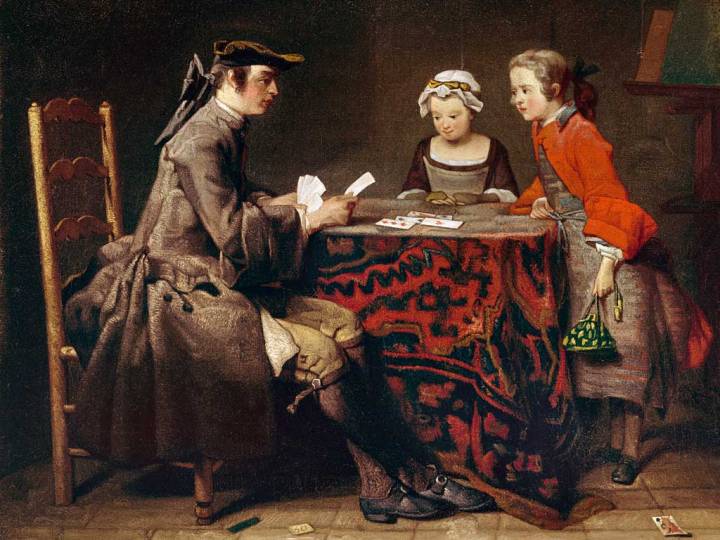
Jean-Siméon Chardin, Les Tours de Cartes (Card Tricks), ca.1735, oil on canvas, 31 x 39 cm
(Dublin: National Gallery of Ireland, NGI.478)
◊ ◊ ◊ ◊ ◊
Press release (via Art Daily) from the Bucerius Kunst Forum:
From Poussin to Monet: The Colors of France
Arp Museum Bahnhof Rolandseck, Remagen, 22 March — 6 September 2015
Bucerius Kunst Forum, Hamburg, 10 October 2015 — 17 January 2016
In the seventeenth century, French painting began to set the standards for all of Europe. Values in France during the Enlightenment began to shift toward a bourgeois society where painters were exposed to new themes and new artistic experiments. The French Revolution, the prototype of all struggles for liberation, marked a new era that became deeply entrenched in the development of French painting. The exhibition From Poussin to Monet: The Colors of France focuses on the effect that this dramatic social upheaval had on art.
During Poussin’s time, an argument broke out regarding the role of color in painting. Sensory experience and subjective perception became increasingly important until color was freed entirely by the Impressionists at the end of the nineteenth century. Paul Cézanne viewed nature as an arrangement of planes of color. Paintings no longer told a narrative; instead they gave to see. Color no longer depicted light; it became light. The exhibition demonstrates France’s path to modern art with paintings and drawings by Poussin, Watteau, Chardin, Delacroix, Corot, Courbet, Monet, Renoir, Cézanne, Van Gogh and others.
In cooperation with the National Gallery of Ireland in Dublin, and the Collection Rau for UNICEF at the Arp Museum Bahnhof Rolandseck in Remagen, Germany, where the exhibition ran from March 22 to September 6, 2015 under the title Revolution of Image: From Poussin to Monet.
Exhibition | Works from the Nationalmuseum in Stockholm

François Boucher, The Triumph of Venus, 1740, oil on canvas, 130 x 162 cm
(Nationalmuseum, Stockholm)
◊ ◊ ◊ ◊ ◊
Press release (24 December 2015) from The Morgan (with information for the show at the Louvre available here):
Paintings and Drawings from the Nationalmuseum in Stockholm (title forthcoming)
Musée du Louvre, Paris, 20 October 2016 — 16 January 2017
The Morgan Library & Museum, New York, 5 February — 14 May 2017
Seventy-six masterpieces of painting and drawing from the Nationalmuseum in Stockholm will make a rare appearance in New York beginning February 5, 2017 at the Morgan Library & Museum. The Nationalmuseum is Sweden’s largest and most distinguished museum, and it is lending to the Morgan outstanding works by Dürer, Raphael, Rubens, Rembrandt, Antoine Watteau, and François Boucher, among many celebrated artists. It is the first collaboration between the two institutions in almost fifty years.
“We are delighted to host this exhibition of treasures from the Nationalmuseum of Stockholm,” said Colin B. Bailey, director of the Morgan Library & Museum. “The selection of paintings and drawings is of extraordinary quality. Fine examples of work from the Italian, French, and Northern European schools are represented, with a group of sixty master drawings forming the heart of the show. We are deeply grateful to the museum’s director general Berndt Arell and his curatorial staff for making this collaboration possible.”
The exhibition will run through May 14, 2017 and continues a tradition at the Morgan of presenting drawings and other work from some of Europe’s most august institutions. Over the last several years, the Morgan has featured critically acclaimed shows from the Uffizi in Florence, the Louvre, and the Staatliche Graphische Sammlung in Munich.
The Nationalmuseum’s core holdings were assembled by Count Carl Gustav Tessin (1696–1770), a diplomat and one of the great art collectors of his day. The son and grandson of architects, Tessin held posts in Vienna, Berlin, and Paris, where he came into contact with the leading Parisian artists of the time and commissioned many works from them. By the time he left Paris in 1742, he had amassed a truly impressive collection of paintings and drawings.
Among the fourteen paintings in the exhibition are three commissioned by Tessin and exhibited at the 1740 Parisian Salon. These include Boucher’s Triumph of Venus, Jean-Baptiste Oudry’s Dachshound Pehr with Dead Game and Rifle, and a Portrait of Count Tessin by Jacques-André Joseph Aved, in which the collector is shown among his art, books, and medals. The group of paintings will also include six works by Jean-Siméon Chardin.
The drawings in the exhibition include works by Italian masters such as Domenico Ghirlandaio, Raphael, Giulio Romano, and Annibale Carracci. Northern European artists are represented by Dürer, Hendrik Goltzius, Peter Paul Rubens, Rembrandt, and Anthony van Dyck, among others. The French drawings begin with Primaticcio and practitioners of the Fountainebleau school and include works by Jacques Callot and Nicholas Poussin, as well as Count Tessin’s French contemporaries, Boucher, Chardin, and Antoine Watteau.
In the years following his return from France, Tessin encountered financial difficulties and was forced to sell much of his collection, with many of the finest works being acquired by the Swedish royal family. After the Count’s death, Swedish King Gustav III purchased most of his remaining works. Tessin’s holdings thus formed the nucleus of the Royal Museum of Sweden when it was created in 1794. It was later renamed the Nationalmuseum.
Exhibition | Enigmas: The Art of Bada Shanren

Bada Shanren (Zhu Da), Lotus and Ducks (detail), ca. 1696, Qing dynasty; hanging scroll, ink on paper
(Freer Gallery of Art, Smithsonian, F1998.45)
◊ ◊ ◊ ◊ ◊
Press release (18 June 2015) for the exhibition now on view at The Freer:
Enigmas: The Art of Bada Shanren (1626–1705)
Freer Gallery of Art, Washington, D.C., 20 June 2015 — 3 January 2016
Born a prince of the Ming imperial house, Bada Shanren survived the military conquest of his dynasty and lived as a Buddhist monk for 30 years before emerging into fame as a professional artist. His storied life leaves many questions unanswered, and his masterpieces of painting and calligraphy are renowned in Chinese art for their daring idiosyncratic approaches to style, composition and meaning. On view from June 20, 2015 until January 3, 2016, at the Smithsonian’s Freer Gallery of Art, Enigmas: The Art of Bada Shanren (1626–1705) features 43 of the artist’s works, on public display for the first time in more than a decade. Enigmas is the final exhibition of the Freer’s celebrated collection of Chinese paintings before the museum closes for major renovations in 2016.

Bada Shanren (Zhu Da), Two Geese, ca. 1700, Qing dynasty; hanging scroll, ink on paper, 184.1 x 90.6 cm (Freer Gallery of Art, Smithsonian, F1998.47)
“The Freer Gallery of Art owns the largest, most diverse and arguably the most significant collection of Bada Shanren’s art outside China,” said Stephen Allee, associate curator for Chinese painting and calligraphy at the Freer and Sackler Galleries. “The enigmatic quality of Bada Shanren’s work brings one back to his art again and again. Trying to fathom some ambiguous aspect of a painting or calligraphy, one is convinced there is a key to unlocking the mysteries, cracking the code and that maybe this will be the time one stumbles across it. Of course, one never really finds the answer—Bada Shanren is too self-contained an artist for that—but the quest is always rewarding, as each careful viewing invariably yields new pleasures and discoveries.”
Particularly significant among the artist’s surviving works is the album Scripture of the Inner Radiances of the Yellow Court from 1684, which bears his earliest known signature using the name ‘Bada Shanren’. Similarly, Lotus is a rare early album done ca. 1665 while the artist was still a Buddhist monk. Its ingenuity of composition foretells the stylistic developments of his later works.
Bada Shanren developed a unique visual vocabulary full of personal symbolism and artistic gesture, and he frequently included unusual elements and juxtapositions that were deliberately jarring or obscure. Many works possess great graphic power, but the meaning behind them is elusive, leaving viewers puzzled and intrigued. Although outwardly playful at times, some paintings reveal a troubled psychological edge, an innately dark outlook on his own fortunes and the condition of the world at large, that he concealed behind a surface of simplicity and humor.
In Enigmas, visitors have an opportunity to view a broad selection of Bada Shanren’s work from his time as a monk in the 1660s, through his peak professional years in the 1680s and ’90s, to his late period in the early 1700s, when he became a hermit seeking solitude and harmony with the natural order.
◊ ◊ ◊ ◊ ◊
A catalogue from a 2003 exhibition was republished in 2013 by Orchid Press:
Joseph Chang, Bai Qianshen, and Stephen Allee, In Pursuit of Heavenly Harmony: Paintings and Calligraphy by Bada Shanren (Hong Kong: Orchid Press, 2013), 222 pages, ISBN: 978-9745240308, $60.
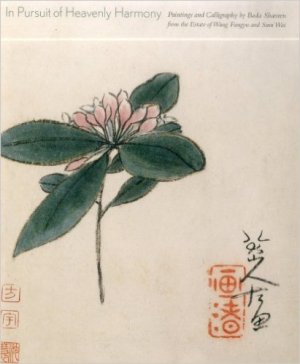 Bada Shanren, the enigmatic, eccentric monk-painter also known as Zu Da, created a wealth of beautiful and important paintings and calligraphy over the course of his life (1626–1705). A princely descendent of the Ming dynasty (1368–1644) imperial house, Bada Shanren developed a distinctive, evolving individual style of painting that had a profound and lasting influence on other calligraphers. Two prominent collector-scholars, Wang Fangyu and Sum Wai, were devoted to the collection and study of Bada Shanren’s oeuvre. Their gift to the Freer Gallery of Art of twenty superb works by Bada Shanren and an extensive research collection of around 1,900 items, together with a further purchase of thirteen works from their collection, have made the Freer the unrivaled center for the exhibition and study of Bada’s art. In the spring of 2003, an exhibition of these works will be on display in the Freer Gallery of Art; this book accompanies the exhibition and will have a life well beyond it, as it documents an important part of the museum’s permanent collection. Text in English, with glossary and detailed descriptions of exhibits in bilingual English/Chinese.
Exhibition | Under the Guillotine: James Gillray

◊ ◊ ◊ ◊ ◊
From Metropolitan State University of Denver:
Under the Guillotine: James Gillray and Contemporary Counterparts
Center for Visual Art, Metropolitan State University of Denver, 18 December 2015 — 19 March 2016
Curated by Arthur Gilbert and Cecily Cullen
The Center for Visual Art, for the first time in its history, is presenting work that dates back more than two hundred years in Under the Guillotine: James Gillray and Contemporary Counterparts. Over 60 original hand-colored etchings will be shown from the collection of Arthur Gilbert, professor at the University of Denver. London artist James Gillray (1756–1815), hailed as the father of modern caricature, was not reserved in his biting critique of European politics and social norms of his day. In this work we see Gillray’s dark humor unleashed at the expense of the royal family, the institution of marriage and healthcare, among other current issues.
Although Gillray’s etchings date back over 200 years, the themes are familiar to contemporary society, highlighting the cyclical nature of history. In response to the ongoing relevance of Gillray’s subject matter, a contemporary take on political satire is presented by the work of three living artists, Molly Crabapple, Chris Dacre, and Deb Sokolow. These artists wield wit and irony in their critique of today’s political and social norms.
New York artist and writer Molly Crabapple is a contributing editor for VICE magazine. Her illustrations take a line from Gillray’s brand of satire, pointing out the ridiculous and unjust with irreverence. Illustrations in the exhibition draw from her press tour of Guantanamo Bay prison and other articles in VICE and Vanity Fair, in which she targets Donald Trump and ISIS. Crabapple’s memoir, Drawing Blood, will be released in December 2015.
The work of Chris Dacre reflects upon his own experience in the US military. Shining a light on the hypocrisy of war glorification and recruiting techniques targeted at the naïve, Dacre’s toy-sized porcelain tanks and pirouetting soldiers beckon the curious to play at the game of war. His installation also includes lithographs depicting war scenes emblazoned with commands to “Be A Man!” or “Do Something for Once in Your Life,” sentiments felt if not heard once the game of war becomes reality.
Chicago-based artist Deb Sokolow combines fiction and humor to create work that parallels real life events and characters. For this exhibition, Sokolow is contributing text-based works focused on the conspiracy theories swirling around Denver International Airport and the shady campaign strategy of a fictional politician.
The work of James Gillray was curated by Arthur Gilbert and CVA Managing Director and Curator Cecily Cullen. The contemporary response was curated by Cecily Cullen.
Exhibition| Salon Style: French Portraits
From the National Museum of Women in the Arts:
Salon Style: French Portraits from the Collection
National Museum of Women in the Arts, Washington, D.C., 29 January — 22 May 2016

Elisabeth Louise Vigée-LeBrun, Portrait of Princess Belozersky, 1798 (National Museum of Women in the Arts)
The biennial Salon of the Royal Academy of Painting and Sculpture in Paris was the preeminent exhibition venue for artists in the 18th century. In order to exhibit their work, artists had to be members of the Academy. Artists were voted in by other members after being presented formally by a current academician. For women, this was doubly challenging: their work had to be found as worthy as that of their male peers despite not having equal access to artistic training, and the total number of female members allowed at any one time was limited to four.
Élisabeth Louise Vigée-LeBrun and Adélaïde Labille-Guiard made history on May 31, 1783, when they were both admitted into the Academy. However, while Labille-Guiard was accepted via the standard application process, Vigée-LeBrun’s acceptance came about under different circumstances. The Academy was compelled to admit her under an edict from King Louis XVI, whose wife, Marie Antoinette, employed Vigée-LeBrun as a portraitist. With the admission of Labille-Guiard and Vigée-LeBrun in 1783, the Academy reached its quota for women artists, together with the portrait and still-life painter Anne Vallayer-Coster and miniaturist Marie-Thérèse Reboul Vien.
Perhaps unsurprisingly, works by women who exhibited in the Salon were compared and judged against one another, as were their characters. By placing themselves in the public sphere, Vigée-LeBrun, Labille-Guiard, and other women artists risked upsetting societal expectations, which held that virtuous women belonged solely to the private, domestic sphere. Despite this risk, these artists persisted in exhibiting in the Salon throughout the rest of the 18th century. This focus exhibition examines these women and their art as well as their artistic legacies—particularly that of Élisabeth Louise Vigée-LeBrun.
Exhibition | Coffee in Kütahya Tiles and Ceramics
From the Pera Museum (part of Google’s Cultural Institute Art Project) . . .
Coffee Break: The Adventure of Coffee in Kütahya Tiles and Ceramics
Online exhibition, Pera Müzesi, Istanbul

French School, Enjoying Coffee, first half of the eighteenth century, oil on canvas, 112 x 102 cm (Istanbul: Pera Museum)
Discovered in Ethiopia as the ‘magic fruit’ and reaching the land of the Ottomans through Yemen in the 15th century, coffee soon assumed its place as a prestigious beverage in the palace and wealthy households. Over time, coffee not only generated its own rituals and ceremonies, but also played an instrumental role in the development of social life. This unique selection from the Suna and İnan Kıraç Foundation Kütahya Tiles and Ceramics Collection investigates the various routines, rituals, and relationships centered on coffee, as well as concepts associated with modernism, such as public space, social roles, and economics, through an examination of coffee culture and Kütahya ceramic production, which largely contributed to its development.
As the second most important center of ceramic production after İznik during the Ottoman era, Kütahya witnessed intensive ceramic production in the Phrygian, Hellenistic, Roman, and Byzantine periods, and has upheld this art form to date with traditional methods. Having reached its zenith in the 17th and 18th centuries in terms of creativity, creativity, the ensuing years witnessed a decline in variety and production rate of Kütahya tiles and ceramics. It was once again revived in the late 19th century and, standing somewhere between İznik and Çanakkale ceramics as ‘urban art’ became an integral part of the Ottoman art mosaic with its broad product range and continuity.
Enter the online exhibition here»
Exhibition | Strength and Splendor: Wrought Iron

Florist’s Sign and Bracket, 18th century, France, wrought iron and rolled iron, cut, polychromed, and gilded; fastened with rivets and rings. Sign: 28 × 21 × 5 inches (71.5 × 52.6 × 12.5 cm), bracket: 33 × 52 × 2 inches (84 × 132.5 × 6 cm) (Rouen: Musée Le Secq des Tournelles, inv. LS 2011.0.199)
◊ ◊ ◊ ◊ ◊
Now on view at The Barnes Foundation:
Strength and Splendor: Wrought Iron from the Musée Le Secq des Tournelles, Rouen
The Barnes Foundation, Philadelphia, 19 September 2015 — 4 January 2016
Curated by Judith Dolkart with Anne-Charlotte Cathelineau
The world’s most important collection of wrought iron objects—door knockers, garden implements, jewelry, keyhole escutcheons, locks, bas reliefs, signs, strongboxes, surgical tools—from the Musée le Secq des Tournelles, Rouen will complement one of the most intriguing collections at the Barnes Foundation: the 887 pieces of European and American metalwork that punctuate the Foundation’s signature wall arrangements of old master and modern paintings.

Escutcheon, 18th century, France, wrought iron and rolled iron, stamped and with openwork, 19.3 × 16.4 × 0.8 cm (Musée Le Secq des Tournelles, Inv. LS S.N.3)
Albert C. Barnes underscored the formal affinities that these objects shared with the “motives and arabesques” in the paintings in his Gallery, neither identifying individual objects nor explaining their use. Often, he combined disparate objects—shoe buckles and door hinges, ladles and hasps—to create new forms. In a 1942 letter to the American artist Stuart Davis, Barnes noted that the anonymous craftsman of such functional items was “just as authentic an artist as a Titian, Renoir, or Cézanne.”
This exhibition will explore the fabrication, function, and intricate ornamentation of approximately 150 masterworks from the Musée Le Secq des Tournelles, Rouen. They range in date from the Middle Ages to the early 20th century, and they show iron as unexpectedly versatile, with its capacity to convey both masculine heft and an impossibly fragile delicacy that is hard to square with its industrial image. Objects ennobled with silver and gold inlays show iron as more than base metal. Some are deadly serious in their efficacy; others delight as much by their wit as by their exquisite intricacy—locks that represent their own function, for example, one with a built-in faithful guard dog or one with spring-loaded manacles ready to catch a lock-pick—an 18th-century sign in the shape of a greyhound that looks like something Calder might have made two centuries later, an early electrified bat-shaped night-light.
Assembled in the 19th century by Jean-Louis-Henri Le Secq Destournelles (1818–1882), the celebrated photographer of French architectural monuments, and his son Henri (1854–1925), the Le Secq collection was shown to great acclaim at the Exposition Universelle in 1900 and installed until the 1920s at the Musée des arts décoratifs in Paris. In the early 1920s, Le Secq acquired the deconsecrated church of Saint-Laurent in Rouen, where he lived and arranged his extensive collection of European and Middle Eastern objects by type, in distinctive, often symmetrical, wall arrangements and in custom-made vitrines. Barnes, who traveled frequently to France as he built his collection, is believed to have visited Rouen to see this impressive holding. The exhibition will be accompanied by a catalogue containing an essay on Barnes’s collecting of metalwork, one on the collection at Musée Le Secq des Tournelles, and short essays on groups of works, and an illustrated glossary of technical terms.
The exhibition is curated by Judith F. Dolkart, the Mary Stripp & R. Crosby Kemper Director of the Addison Gallery of American Art at Phillips Academy, Andover, MA, and former Deputy Director of Art and Archival Collections and Gund Family Chief Curator at the Barnes Foundation. An expert on the art and culture of 19th-century France, Dolkart graduated from Phillips Exeter Academy in 1989 and received an A.B. in fine arts in 1993 from Harvard-Radcliffe College, where she examined the work of Frank Stella for her thesis. In 1997, she earned an M.A. from the University of Pennsylvania. During her 2013 fellowship at the Center for Curatorial Leadership, Dolkart was mentored by the director of the Harvard Art Museums and had a week-long residency with the director of the Metropolitan Museum of Art. She is currently a Ph.D. candidate in the history of art at the University of Pennsylvania.
Anne-Charlotte Cathelineau, curator in charge of the objets d’art at the Musée Le Secq des Tournelles, selected the objects included in Strength and Splendor and authored the catalogue’s essay on the holdings in Rouen, as well as several entries on individual objects.
◊ ◊ ◊ ◊ ◊
The catalogue is available from The Barnes Foundation:
Anne-Charlotte Cathelineau, with contributions by Richard Wattenmaker, François Boyenval, Hélène Thomas, and Bruno Varin, Strength and Splendor: Wrought Iron from the Musée le Secq des Tournelles, Rouen (Philadelphia: The Barnes Foundation, 2015), 175 pages, ISBN: 978-0984857869, $65.
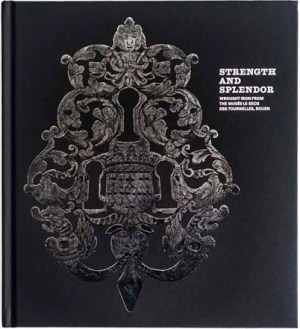 The Le Secq collection is the most important holding of wrought iron in the world, combining artistic virtuosity, technological innovation, and whimsy. It was created by Jean-Louis Henri Le Secq Destournelles (1818–1882) and his son Henri-Jean Le Secq des Tournelles (1854–1925). The older Le Secq focused on masterpieces—exceptional objects. The younger Le Secq inherited his father’s enthusiasm and assembled an encyclopedic array of adornments, instruments, and tools, which he catalogued like natural history specimens. He gave the collection to the city of Rouen, where it has been spectacularly displayed in the deconsecrated church of Saint-Laurent since 1921. This catalogue covers some 150 of the most magnificent objects in the Le Secq collection, classed in ten categories—including locks and keys, decorative plaques, and everyday objects—with essays on the history of the Le Secq collection and on the place of
metalwork in the Barnes Foundation.
Exhibition | Transparent Art: Rock Crystal Carving
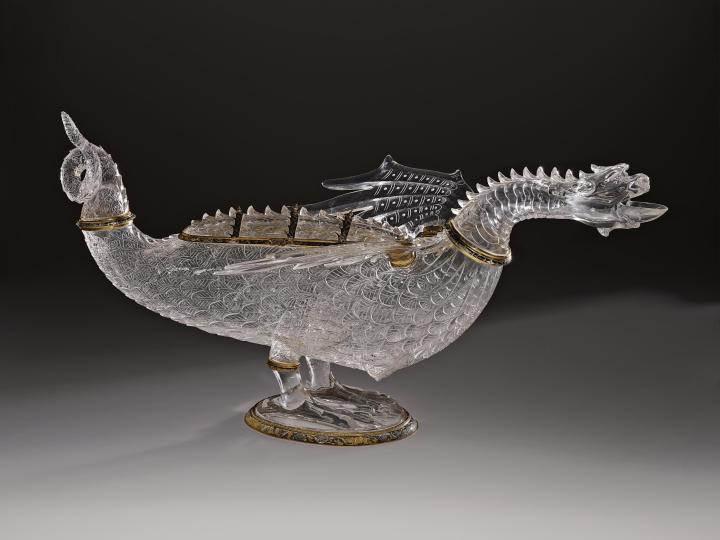
Vase in the shape of a dragon or ‘caquesseitão’; Milan, workshop of the Miseroni, possibly Gasparo Miseroni (act. 1550–70) (?) Rock crystal; second half of the 1500s (Madrid: Museo Nacional del Prado)
◊ ◊ ◊ ◊ ◊
Now on view at the Prado, this exhibition of sixteenth-century carved rock crystal includes items from the collection of the Grand Dauphin (1661–1711). The show also provides a convenient occasion to draw attention to the Prado’s newly designed website, which particularly showcases images. While such a feature might seem obvious for a museum website, it’s hardly been true in most cases to date (the press release detailing the site’s key features is available here).
From the Prado:
Transparent Art: Rock Crystal Carving in Renaissance Milan
Museo Nacional del Prado, Madrid, 14 October 2015 — 10 January 2016
Curated by Letizia Arbeteta Mira
The present exhibition offers visitors a unique opportunity to see a little known chapter in art history, namely that of carving hyaline quartz or rock crystal, a technique for which Milan was particularly celebrated in the second half of the 16th century. Due to their value, both material and artistic, these works were only within the reach of monarchs and the highest ranks of the European aristocracy.
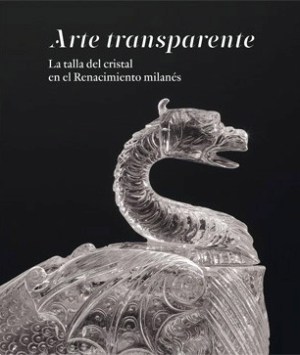 The exhibition includes six magnificent examples loaned from two of the most important historical collections: that of the Medici, now in the Museo degli Argenti in Florence, and the collection of Louis XIV, now in the Musée du Louvre in Paris. Another fourteen splendid pieces, now in the Prado, come from the collection assembled by the Grand Dauphin of France, son of Louis XIV, which was in part inherited by Philip V, the first Spanish Bourbon monarch, in 1711. The latter group, known as ‘The Dauphin’s Treasure’, entered the Prado in 1839. Although somewhat reduced over the course of its eventful history, it still includes important objects, particularly those in rock crystal. In total it has 47 hyaline quartz vessels, 2 in citrine quartz and 1 in smoky quartz. Various academic studies have attributed these pieces to leading workshops and masters, almost all of them Milanese.
Letizia Arbeteta Mira, Arte transparente: La talla del cristal en el Renacimiento milanés (Madrid: Museo del Prado, 2015), 160 pages, ISBN: 978-8484803362, 39€.
Exhibition | Two Extraordinary Women
Opening next month at UVA:
Two Extraordinary Women: The Lives and Art of Maria Cosway and Mary Darby Robinson
The Fralin Museum of Art, The University of Virginia, Charlottesville, 29 January — 1 May 2016
Curated by Diane Boucher
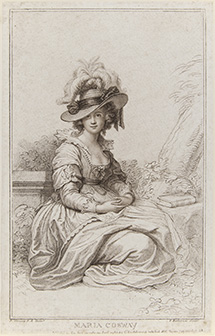
Francesco Bartolozzi, Maria Cosway (after Richard Cosway), 1786; stipple and engraving, 9 1/2 x 6 in (Langhorne Collection, 2014.EL.1.5)
Two Extraordinary Women: The Lives and Art of Maria Cosway and Mary Darby Robinson examines the intersecting careers of two remarkable women who rose to prominence during the late eighteenth century. One of them, the artist, musician, and educator, Maria Cosway, is now best known as the woman with whom Thomas Jefferson fell in love while serving as American ambassador to France in 1786. The other, Mary Darby Robinson, was a celebrated English actress, former royal mistress, fashion icon, and one of the leading literary figures of her day. Both women were politically active Whig supporters and part of a proto-feminist movement that emerged at the end of the eighteenth century. Their ideas were stimulated by the same beliefs in freedom, equality, and democracy that informed the French and American revolutions.
In 1800, Cosway and Robinson collaborated on The Wintry Day, an illustrated poem that contrasted “the evils of poverty with the ostentatious enjoyment of opulence” in Regency England. The publisher, Rudolph Ackermann, described the subject of the poem and its illustrations: “The intention of the designs is to contrast the evils of poverty with the ostentatious enjoyment of opulence.” The exhibition will show how the lives of these two talented women closely resembled the idealized scenes of opulence and luxury in The Wintry Day. However, by juxtaposing these scenes with ones of abject poverty, Cosway and Robinson create a harsh critique of their times, which is in tune with their support of French and American revolutionary ideas on liberty and equality and their proto-feminist ideas on women’s education and the equality of the sexes.
Exhibition | American and European Embroidered Samplers
Now on view at The Met:
American and European Embroidered Samplers, 1600–1900
The Metropolitan Museum of Art, New York, 16 November 2015 — 15 February 2016

Maria Boil, Shaker sampler (detail), 1844. American, Shaker Village of Pleasant Hill, Kentucky. Silk and cotton embroidery on linen/cotton; 13 x 12 inches (New York: The Metropolitan Museum of Art, 2008.453)
The embroidered samplers in this installation were chosen for their practical character: each displays skills and knowledge acquired during the educational process and preserves this expertise for future reference. While these are notably functional samplers, even with more decorative examples, the maker’s skill and creativity were tempered by her adherence to traditional patterns, passed down over the years by means of earlier samplers, patterns books, or instructional manuals.
Samplers were made as part of a young woman’s education, either at a formal school or under informal tutelage at home. Through most of the eighteenth century, in both Europe and America, most girls were expected to learn only practical skills—basic reading, writing, and sums, along with sewing and cooking—to prepare them for their roles as wives, mothers, and homemakers.
The Museum has more than eight hundred samplers from Europe and North America. The survival of so many of these embroideries indicates a continuing appreciation for the skill they demonstrate, for their charming variations on a theme, and, perhaps most of all, for the names of the makers, which were proudly added to many of these pieces when their work was done. For many, these samplers are the only remaining trace of the lives they lived.










leave a comment