Exhibition | Marie-Gabrielle Capet: Une Virtuose de la Miniature
From the Musée des Beaux-Arts de Caen:
Marie-Gabrielle Capet: Une Virtuose de la Miniature
Musée des Beaux-Arts de Caen, 14 June — 21 September 2014
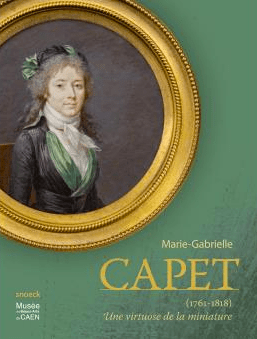 L’exposition d’été du musée des Beaux-Arts de Caen dépend étroitement du chiffre 3 : 3 artistes (deux portraitistes et un paysagiste), 3 siècles (les XVIIIe, XIXe et XXe), 3 époques, 3 temps de l’histoire de l’art mais aussi de l’histoire du musée des Beaux-Arts de Caen.
Robert Le Vrac Tournières (1667–1752) et Marie-Gabrielle Capet (1761–1818) furent de ramarquables portraitistes, chacun dans leur genre : Tournières fut un des grands maîtres du portrait au temps de Louis XV et Capet porta le genre de la miniature (précieux portraits peints sur ivoire) à un point éblouissant. Joan Mitchell (1925–1992), quant à elle, demeure l’un des grands peintres abstraits de la seconde moitié du XXe siècle.
La muséographie des trois salles est spécialement conçue pour chaque artistes : elle met en valeur les compositions de Tournières, suggére l’atmosphère d’un cabinet d’amateur pour les miniatures de Capet et joue des vastes espaces lumineux pour les paysages de Mitchell. Il se trouve aussi que chacun de ces artistes tient une place importante dans l’histoire du musée pour des raisons très différentes. Tournières, car des oeuvres insignes de ce maître sont récemment entrées dans les collections. Capet, car ce qui est probablement son chef-d’oeuvre est conservé au musée après y avoir été volé puis restitué. Joan Mitchell est un temps fort des collections contemporaines de Caen. Ces trois peintres sont le point de départ de trois expositions au cours desquelles sont évoqués leur histoire, leur oeuvre, leur art. Une façon de réconcilier le hasard et la raison.
Marie-Gabrielle Capet: Une Virtuose de la Miniature
L’an dernier, le musée a pu retrouver, presque par miracle, une miniature volée en 1925 : le Portrait de Jean-Antoine Houdon sculptant le buste de Voltaire, chef-d’oeuvre de la grande miniaturiste Marie-Gabrielle Capet (1761–1818). Avec comme prétexte cet heureux évènement, l’exposition se propose de rassembler le meilleur de la production de l’artiste ; des miniatures, mais aussi des tableaux issus de collections publiques et privées, françaises et étrangères, qui permettront d’illustrer un style qui fascina son époque, exactitude illusionniste de la touche et rendu vibrant de la lumière. L’ensemble permet d’évoquer l’influence capitale de ses maîtres, Adélaïde Labille-Guiard et son époux François-André Vincent.
Marie-Gabrielle Capet (1761–1818): Une Virtuose de la Miniature (Cologne: Snoeck Verlagsgesellschaft, 2014), 2014) 104 pages, ISBN: 978-9461611659, 18€.
Exhibitions | The Glorious Georges

George I, followed by the future George II and Queen Caroline.
Photo by Miles Willis from a shoot at Hampton Court,
© Miles Willis 2014
◊ ◊ ◊ ◊ ◊
Press release (20 February 2014) from Historic Royal Palaces:
The Glorious Georges
Hampton Court Palace, Kensington Palace, Kew Palace, 17 April — 30 November 2014
Throughout 2014, Historic Royal Palaces will bring the Georgian court and its intriguing cast of royal characters to life, in celebration of the 300th anniversary of the Hanoverian accession to the British throne. These three unlikely monarchs, George I, his son George II, and great-grandson George III, presided over a remarkable era of British history which transformed society and saw the emergence of much that remains ‘quintessentially British’ today. At the very heart of this flourishing nation, within the walls of magnificent royal palaces, sat the Court. Elegant, yet decadent and riven with intrigue and scandal, it captured the imagination of the 18th-century British public and the printing press, making celebrities of the Georgian monarchs and their courtiers.
Visitors to Hampton Court, Kensington and Kew Palaces will be able to step back 300 years, and experience the sights, sounds and even smells of the Georgian age, to celebrate these often overlooked Kings and Queens, and the fascinating era in which they lived. The 18th century court has also inspired an exciting programme of events. Visitors of all ages can explore the music, the fashions and the food and even the fireworks of the Georgian court throughout 2014.
At Hampton Court Palace, meet King George I, who arrived in London in 1714 with a limited grasp on the English language, and a complicated family history. Join his court as tensions brew between the King and his son, the Prince of Wales, forcing courtiers to choose sides. A stunning re-presentation of the Queen’s State Apartments will explore who the Hanoverians were, how they came to rule Britain and how their extraordinary bitter family rows played out in public.
 The story continues at Kensington Palace, where the glittering court of George II and Queen Caroline burst onto the scene in 1727. Their arrival heralded a new era of culture, music and fashion at the British court. The stories of court will brought to life against the backdrop of William Kent’s beautifully restored King’s State Apartments. In 2014, visitors to these fabulous spaces can explore a feast for the senses, featuring Georgian music, court gossip, and lavish fashion, the displays at Kensington will explore the intellectual pursuits of Queen Caroline and her circle. Visitors will be able to meet the Queen in person, in a morning ‘levee’, as she is dressed by her rival, the King’s mistress, Henrietta Howard.
Finally, at Kew Palace, the little known younger years of King George III (later infamous for his bouts of ‘madness’) will be uncovered in a dazzling new display for 2014. A series of fascinating objects will illuminate his education at Kew Palace and highlight many of the interests and influences which shaped a young King who went on to be the first Hanoverian monarch to truly glorify in his Britishness.
Lucy Worsley, Chief Curator, Historic Royal Palaces, said: “These Georgian kings, with all their extraordinary family rivalries, and complex, intriguing courts, have become something of a footnote in British history, often over-shadowed by more glamourous predecessors, and by the tumultuous period of history in which they lived. The Glorious Georges season at Historic Royal Palaces in 2014 is about putting them back on the map. Immersed in the world of the Georgian court, within the walls of their Palaces, visitors will discover that the Hanoverian dynasty presided over a dramatic century in style, preserving the monarchy, and eventually transforming themselves into a very British royal family.”
◊ ◊ ◊ ◊ ◊
Note from the Editor
 In the midst of HRP’s robust marketing, descriptions of the installations and actual objects on display are sometimes overshadowed. Based on my visit earlier this month in connection with the Enlightened Princesses conference, I’m glad to recommend a visit for the summer festivities (I’m also glad to report that the conference was immensely stimulating thanks to terrific talks and, as a bonus, fabulous music from Arcangelo).
Each time I’m at Hampton Court, the palace makes a little more sense even as I’m confused by new things. My basic framework of juxtaposing the grand Tudor country-house-turned-palace with the never-quite-finished building campaign of William and Mary is now complicated by a fuller appreciation of the Georgian layer. It’s particularly interesting to see the future George II and Caroline sharing the Queen’s Apartments during the reign of George I (who, of course, didn’t need the quarters for his own queen whom he divorced and imprisoned back in Hanover). Access to the servants’ and courtiers’ staircase came as a small, deeply satisfying revelation for me. And included in the dining room is an installation of folded linen by Catalonian artist Joan Sallas, who last year produced an installation for Waddesdon Manor, detailed in the video below. For the Hampton Court work, think less heraldry and more animals to be eaten (rabbit, shellfish, fowl, &c.) strewn across the table. Absolutely stunning.
-Craig Hanson
Exhibition | A Royal Collecting Passion: Wilhelm I of Württemberg
From the Staatsgalerie Stuttgart:
A Royal Collecting Passion: Wilhelm I of Württemberg
Staatsgalerie Stuttgart, 18 July — 26 October 2014

Gottlieb Schick, Apollo among the Shepherds, 1806–08, (Staatsgalerie Stuttgart)
As a regent, Wilhelm Friedrich Karl von Württemberg (1781–1864) gave the young kingdom of Württemberg a historical identity; his multifarious initiatives as a collector and patron, however, have all but sunk into oblivion. The holdings of the Staatsgalerie, which opened in 1843, were expanded by artworks in royal ownership as well as by personal gifts. Wilhelm I moreover initiated the acquisition of the Barbini-Breganze collection, which today forms the core of the Staatsgalerie Stuttgart’s holdings in the area of Italian Baroque painting. The royal gifts, still present in our museum’s collection in their near entirety, are now to be presented to the public for the first time in many decades. Numerous furnishings from Wilhelm I’s private residences as well as masterpieces from his private painting collection—disbanded after 1918—will be on view. On the basis of the records at the Staatsarchiv Baden-Württemberg, which have been preserved almost in full, light will also be shed on the history of the royal purchases. The exhibition is being realized in cooperation with the Staatliche Schlösser und Gärten Baden-Württemberg.
More information (in German) is available here»
◊ ◊ ◊ ◊ ◊
The catalogue, published by Nicolai Verlag, is available from ArtBooks.com:
Königliche Sammellust: Wilhelm I. von Württemberg als Sammler und Förderer der Künste (Berlin: Nicolai, 2014), 208 pages, ISBN: 978-3894798727, 35€ / $68.
Exhibitions | The Hanoverians on Britain’s Throne, 1714–1837
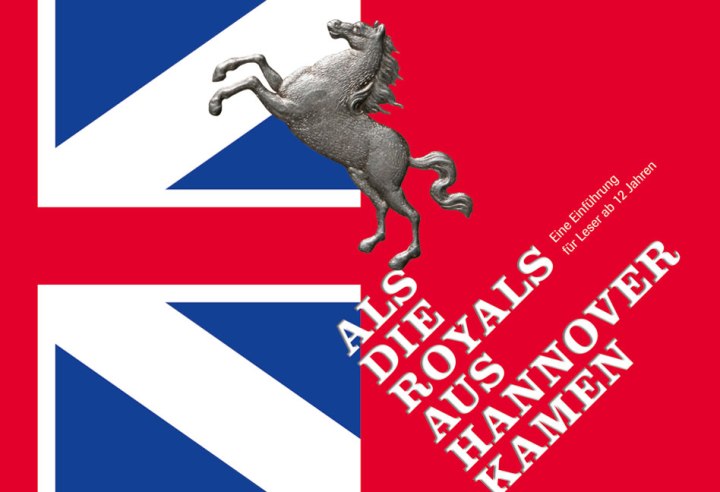
Exhibitions observing the Hanoverian tercentennial just keep coming (and forgive the use of an image used to mark materials appropriate for kids twelve and older; it’s simply the best high-resolution version I could find of a logo that appears in various guises throughout the marketing of the exhibitions). Comparing the exhibitions in Britain with those in Germany would seem interesting; for anyone interested in George II’s illegitimate son, Reichsgraf Johann Ludwig von Wallmoden-Gimborn, I think you’ll do much better in Hanover. –CH
From the exhibition website:
Als die Royals aus Hannover kamen
Hanover, 17 May — 5 October 2014
For 123 years, the Electorate of Hanover and the Kingdom of Great Britain were linked by a single monarch. This important historical period is the theme of the Lower Saxony State Exhibition 2014. From 17th May to 5th October 2014 five exhibitions in palaces and museums in Hanover and Celle will be dedicated to the numerous facets and interactions that characterised the personal union. We invite you to discover the time when the royals came from Hanover.
◊ ◊ ◊ ◊ ◊
The Hanoverians on Britain’s Throne, 1714–1837
Lower Saxony State Museum Hanover, 17 May — 5 October 2014

State Crown of George I, 1715 (Royal Collection Trust / © Her Majesty Queen Elizabeth II, 2014)
The major central exhibition in the Lower Saxony State Museum Hanover provides an overview of the whole period of the personal union. Based on the biographies of George I, George II, George III, George IV, and William IV, the life and works of the five rulers, as well as important historical events from this time, such as the Seven Years’ War, the battle for independence of the American colonies, and the Napoleonic Age, are explored. Visitors also learn what effect the connection between the two unequal empires had on the fields of art, culture, science and society.
The pomp and ceremony of the court in London is addressed, as is the founding of the University of Göttingen, the significance of George Friedrich Handel and the influence of English fashion in Hanover. Topics such as travel, horses, tea or language and portraits of important characters from this time, including Gottfried Wilhelm Leibniz, Jonathan Swift and Jane Austen, paint a multi-faceted picture of the time when the royals came from Hanover. Visitors can view some 450 outstanding exhibits from German, British and international museums, including the State Crown of George I and numerous other precious items on loan from the Royal Collection of Her Majesty Queen Elizabeth II. They are attractively displayed and supplemented by audio and multimedia exhibits.
◊ ◊ ◊ ◊ ◊
The Hanoverians on Britain’s Throne, 1714–1837
Museum Herrenhausen Palace, Hanover, 17 May — 5 October 2014
To be staged in the wings of the rebuilt Herrenhausen Palace that house the museum, the exhibition recounts the story of the new Electorate of Hanover on the eve of the personal union and during its early years. The show not only reveals the essential elements of representative court life around the turn of the 18th century but also brings together a fascinating selection of fine exhibits ranging from Baroque pomp to the simple everyday court life of the Guelphs of Hanover.
In the west wing of the former Guelph summer residence, the visitor encounters the unique collection of Reichsgraf Johann Ludwig von Wallmoden-Gimborn (1736–1811). As the illegitimate son of George II, he was born and grew up in England, brought his passion for art from the island to Hanover, and established an important collection of antiques and paintings here. Dispersed by auction in 1818, now over 200 years later, some highlights of the large number of treasures from international museums are on show in Hanover for the first time again.
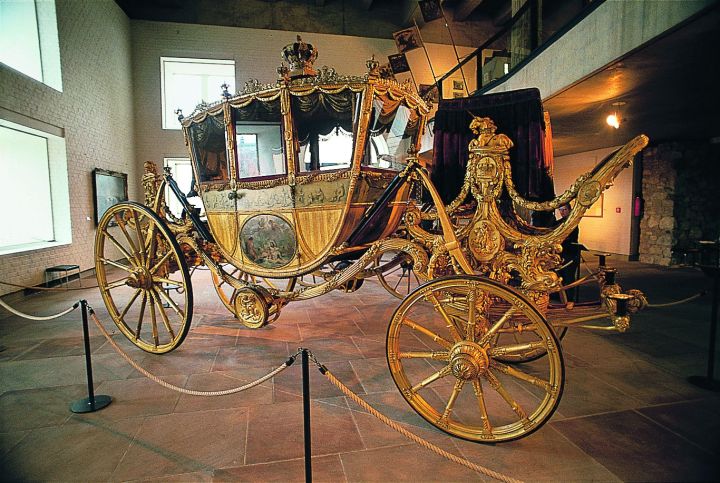
State Carriage of Prince of Wales Georg IV, built in 1782
and since 1814 state carriage no. 1 for the kings in Hannoverc
(Loan SKH Prinz Ernst August von Hannover)
◊ ◊ ◊ ◊ ◊
One Coach and Two Kingdoms: Hanover and Great Britain, 1814–1837
Historisches Museum Hannover, 17 May — 5 October 2014
The Royal State Coach is the centrepiece of this exhibition. This impressive coach was built in 1782 for the Opening of Parliament ceremony in London. In 1814, following victory over the Napoleonic troops and the elevation of Hanover to a Kingdom, the coach was brought over to the mainland. The coach was used in 1821 on the occasion of King George IV’s long awaited trip to Hanover. The exhibition tells the story of the Royal State Coach, which serves as a unique illustration of the personal connection between Great Britain and Hanover. In addition, the exhibition portrays the young Kingdom of Hanover against the background of British world power: the Guelph rulers and their local representatives, the political debates about the Constitution and land reforms, the extensive traditional economy, as well as Hanover as a royal seat, which was given a grandiose new face by Georg Ludwig Friedrich Laves, master builder to the court.

John Hamilton Mortimer, A Caricature Group, ca. 1766
(New Haven: Yale Center for British Art, Paul Mellon Collection)
◊ ◊ ◊ ◊ ◊
Royal Theatre: British Caricatures from the Time of the Personal Union and the Present Day
Wilhelm Busch – Deutsches Museum für Karikatur und Zeichenkunst, Hannover, 17 May — 5 October 2014
In the thematic exhibition in the Wallmoden Palace, the era of the Personal Union is scrutinized in detail: with some 250 high quality exhibits, the exhibition presents a lively picture of the English monarchy and society at the time of the Personal Union, while also making the connection between the single sheet caricatures of 300 years ago and caricatures in the press today. Then, just as they do now, caricatures criticised parliamentary policies, commentated with glee on court scandals and intrigues, and entertained the public with society gossip. Even the Kings of the House of Hanover had to put up with the mockery of the caricaturists, just as Queen Elizabeth II has to today. Items on loan from international, predominantly British, museums and collections as well as from contemporary cartoonists supplement the already impressive collection of the museum Wilhelm Busch – Deutsches Museum für Karikatur und Zeichenkunst.
◊ ◊ ◊ ◊ ◊
Ready for the Island: The House of Brunswick-Lüneburg on the Path to London
Residenzmuseum in Celle Castle, 17 May — 5 October 2014

Attributed to Jacques Vaillant, Sophie Dorothea with Her Children Georg August (the future George II) and Sophie Dorothea, ca. 1690 (Residenzmuseum im Celler Schloss / Bomann-Museum Celle)
How does one get ‘Ready for the Island’? Glorious wars and magnificent festivals present the power and glory of the Guelphs to the world. Even today, the works of art from this period are greeted with wonder. However, behind the gleaming facade, family intrigues and tragedies were played out. Daughters toppled their fathers from the throne; sons were imprisoned by their own father. In the historic setting of the original locations in the Residenzmuseum in the Celle Palace we take a look not only at the attractive outward image, but also at the reality behind the facade. It quickly becomes clear that the Guelphs systematically engineered their rise to power through marriage, wars and festivals. Unique exhibits from home and abroad bring this exciting history back to life once more.
Additional images are available here»
Exhibition | Masks, Masquerades, and Mascarons

Claude Gillot , The Two Coaches, 1712–16
(Paris: Musée du Louvre)
From the Louvre:
Masques, Mascarades, Mascarons
Musée du Louvre, Paris, 19 June — 22 September 2014
Organized by Françoise Viatte, Dominique Cordellier, and Violaine Jeammet
The exhibition presents approximately one hundred artworks showing the paradoxical function of the mask, an emblem of illusion that consists of “disguising and producing a double.” Masked men have existed in the West since ancient times. The mask hides the face in favor of its double, concealing one to reveal the other, in an act that gives shape to mystery. It belongs to the sacred and the profane, truth and vanity, reality and fiction. It horrifies and seduces, imitates and misleads.
Drawings, sculptures, paintings, and engravings demonstrate its religious role in Greek theater, its playful and rather diabolical force of expression in feasts, balls, and Italian comedies, its funereal presence on the deathbed, and its lasting and protective force on the tombstone. The duplicity of the mask in the world of allegory will also be explored, along with its presence in decoration through the mascaron which appears to be simply an avatar of Medusa’s head cut off by Perseus and placed on Athena’s shield to retain its astonishing power.
◊ ◊ ◊ ◊ ◊
The catalogue is published by Officina Libraria:
Françoise Viatte, Dominique Cordellier, and Violaine Jeammet, Masques, Mascarades, Mascarons (Milan: Officina Libraria, 2014), 272 pages, ISBN: 978-8897737377, 32€.
 L’exposition évoque, à travers une centaine d’oeuvres, la fonction paradoxale du masque, emblème de l’illusion, qui consiste à « dérober et produire un double ».Dessins, sculptures, peintures, gravures montreront son rôle religieux dans le théâtre grec, sa force expressive, ludique et quelque peu diabolique dans la fête, le bal ou la comédie italienne, son empreinte funèbre au lit de mort et sa force pérenne et protectrice au tombeau. Seront aussi abordées la duplicité du masque dans le monde de l’allégorie, sa présence dans l’ornement sous la forme du mascaron qui ne semble rien d’autre qu’un avatar de la tête de la Gorgone coupée par Persée et placée sur les armes d’Athéna pour y conserver son pouvoir sidérant.
Exhibition | Duke Herzog Anton Ulrich, A Collector’s Travels
Founded in 1754, the Herzog Anton Ulrich Museum in Braunschweig explores the origins of its foundation collection on the 300th anniversary of Anton Ulrich’s death:
Fürst von Welt: Herzog Anton Ulrich—Ein Sammler auf Reisen
Herzog Anton Ulrich Museum, Braunschweig, 10 April — 20 July 2014
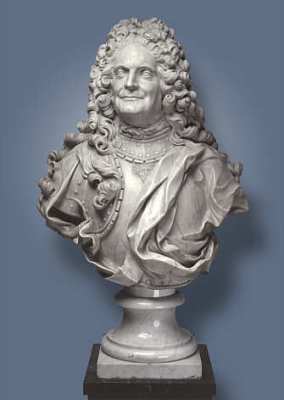
Balthasar Permoser (1651–1732), Bust of Duke Herzog Anton Ulrich (Braunschweig: Anton Ulrich Museum)
Anlässlich des 300. Todestages Anton Ulrichs von Braunschweig-Lüneburg (1633–1714) präsentiert das Herzog Anton Ulrich-Museum die Kabinett-Ausstellung Fürst von Welt. Herzog Anton Ulrich—ein Sammler auf Reisen vom 10. April bis zum 20. Juli 2014 in der Kemenate der Burg Dankwarderode. Die Sonderschau würdigt den vielseitig begabten Herzog, der angeregt durch seine Liebe zur Kunst den Grundstein für eine der bedeutendsten Kunstsammlungen Deutschlands legte.
Die Ausstellung in der Burg Dankwarderode führt in sechs Kapiteln die Besucherinnen und Besucher durch die verschiedenen Lebensstationen des schillernden Sammlungsgründers, beginnend mit seinem humanistisch-intellektuell geprägten Elternhaus bis hin zu regelmäßig aufgesuchten Reiseorten in Frankreich, Italien, den Niederlanden und im Deutschen Reich.
Anton Ulrichs Kavalierstour, die fester Bestandteil der Erziehung zukünftiger Monarchen war, führte ihn 1655 nach Paris und gab den Anstoß für seine intensive Sammeltätigkeit. Hier kaufte er erstmalig einige Kunstobjekte wie Gemälde, Kupferstiche und Münzen. Bis an sein Lebensende sollten Anton Ulrichs Reiseunternehmungen von zahlreichen Ankäufen erlesener Kunstwerke geprägt sein.
Die Sonderausstellung zeigt eine Auswahl von rund 40 Kunstwerken aus den Bereichen der Malerei, Skulptur, Grafik und Angewandten Kunst, die entweder von Anton Ulrich selbst angekauft oder durch seine Agenten ausgesucht wurden.
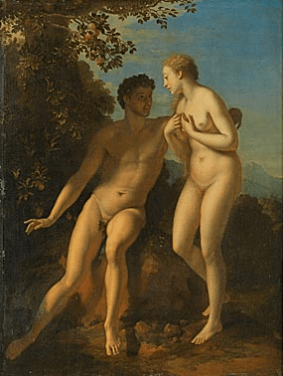
Adriaen van der Werff, Adam and Eve, ca. 1711
(Braunschweig: Anton Ulrich Museum)
Der Welfenherzog, der sich zeitlebens auch als Dichter und Mäzen von Theater- und Opernhäusern einen Namen machte, begeisterte sich im Besonderen für Kunstwerke mit erzählerischen Elementen. Als Beispiel für diesen Umstand gilt das Gemälde Die Auffindung des Moses (1650), ein Spätwerk des neapolitanischen Künstlers Bernardo Cavallino (1616–1656), das Anton Ulrichs Interesse vermutlich vor allem durch seine raffinierte Erzählweise geweckt hat. Der Erwerb der französischen Bronze Diana mit Hirsch (Ende d. 17 Jh.) sowie der römischen Antiken Herakles und Dionysos, die mit neuzeitlichen Ergänzungen bestückt wurden, zeugen vom herzoglichen Interesse für mythologische Geschichten.
Die Präsentation einer virtuellen Rekonstruktion des ehemaligen Lustschlosses Salzdahlum, das Herzog Anton Ulrich nach dem Vorbild niederländischer und italienischer Schloss- und Villenarchitektur erbauen ließ, führt in dreidimensionaler Hinsicht den seit dem 19. Jahrhundert nicht mehr existenten Ausstellungsort für seine Kunstsammlungen vor Augen.
Im Rittersaal der Burg Dankwarderode können im Rahmen der Meisterwerke-Ausstellung Epochal weitere 50 herausragende Kunstobjekte betrachtet werden, die durch Anton Ulrichs Kaufinitiative in seine Sammlung gelangten. Darunter befinden sich neben Ostasiatika auch Objekte aus dem einzigartigen Bestand italienischer Majolika sowie Gemälde von Rubens, Rembrandt und Vermeer, die den exquisiten Geschmack des herzoglichen Sammlers nachdrücklich belegen. Besucherinnen und Besucher können zu ausgewählten Objekten interessante Hintergrundinformationen mit dem eigenen Smartphone abrufen.
◊ ◊ ◊ ◊ ◊
From Michael Imhoff Verlag:
Jochen Luckhardt, „… einer der größten Monarchen Europas“?! Neue Forschungen zu Herzog Anton Ulrich (Petersberg: Michael Imhoff Verlag, 2014), 208 pages, ISBN 978-3731900559, 30€.
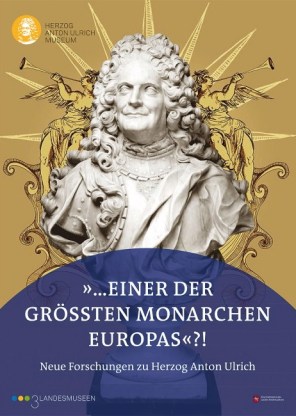 Die Jubiläumspublikation zum 300. Todesjahr des bedeutenden Sammlers und Dichters Herzog Anton Ulrich präsentiert Forschungsergebnisse europäischer Wissenschaftler aus Wien, Paris, Venedig und Amsterdam. Der Welfenherzog aus der Linie Braunschweig-Wolfenbüttel wird hier erstmals aus der Sicht von Außen betrachtet – seine Reisen in europäische Länder stehen dabei ebenso im Fokus wie seine Kunstankäufe und Beziehungen zu tonangebenden Fürstenhäusern. Der Anspruch Anton Ulrichs, sich als Monarch innerhalb der Führungsriege zu positionieren, wird mit den Beiträgen, auch zu Zeremoniell und Geschenkewesen der Barockzeit, verständlich—wenn man diese Ambitionen auch mit dem etwas ironisch klingenden Ausspruch Liselottes von der Pfalz sehen muss: „Wenn Verdienste und Wünsche gelten sollten, so würde der Herzog einer der größten Monarchen seyn.“
Exhibition | Ships, Clocks, and Stars: The Quest for Longitude
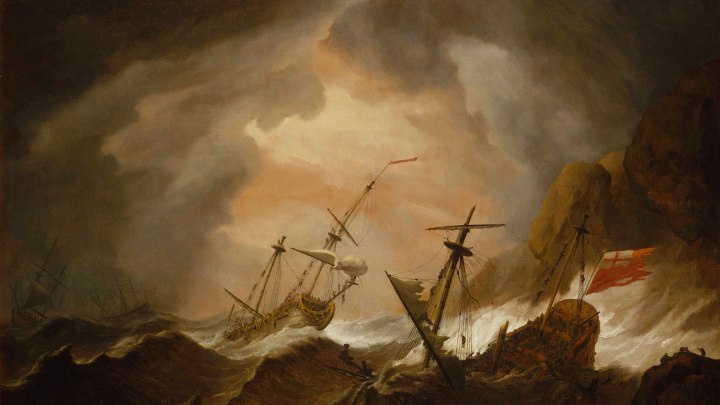
Willem van de Velde, the Younger, Two English Ships
Wrecked in a Storm on a Rocky Coast, ca. 1700
(London: National Maritime Museum)
Press release (21 March 2014) for the current exhibition:
Ships, Clocks, and Stars: The Quest for Longitude
National Maritime Museum, Greenwich, 11 July 2014 — 4 January 2015
Mystic Seaport, Mystic, Connecticut, 19 September 2015 — 28 March 2016
Curated by Richard Dunn and Rebekah Higgitt
To mark the tercentenary of the Longitude Act of 1714, Ships, Clocks, and Stars: The Quest for Longitude, a major new exhibition at the National Maritime Museum, tells the extraordinary story of the race to determine longitude at sea and how one of the greatest technical challenges of the eighteenth and nineteenth centuries was eventually solved. The exhibition draws on the latest research to shed new light on the history of longitude—one of the great achievements of the Georgian age—and how it changed our understanding of the world.

John Harrison, H1 Marine Timekeeper, 1730–35
(London: National Maritime Museum)
In recent years, John Harrison has been cast as the hero of the story, not least in Dava Sobel’s seminal work Longitude: The True Story of a Lone Genius Who Solved the Greatest Scientific Problem of His Time. Ships, Clocks, and Stars provides a new perspective on this famous tale. While John Harrison makes a good story and his marine sea-watch was vital to finally solving the problem of longitude, this was against a backdrop of almost unprecedented collaboration and investment. Famous names such as Galileo, Isaac Newton, James Cook, and William Bligh all feature in this fascinating and complex history. Crucially, it was Astronomer Royal Nevil Maskelyne’s observations at the Royal Observatory in Greenwich, his work on the Nautical Almanac and the Board of Longitude that demonstrated the complementary nature of astronomical and timekeeper methods, ultimately leading to the successful determination of longitude at sea.
Highlights from the exhibition include all five of John Harrison’s famous timekeepers. H1, H2, H3 and H4 will move from the Royal Observatory Greenwich to be displayed in the National Maritime Museum for the first time in nearly 30 years. H5 is being loaned from the Worshipful Company of Clockmakers. Also featured is the original Longitude Act of 1714, which has never been on public display before; an intricate 1747 model of the Centurion, the ship which carried out the first proper sea trial of Harrison’s H1, and the elegant, padded silk ‘observing suit’ worn by Nevil Maskelyne at the Royal Observatory during the 1760s.
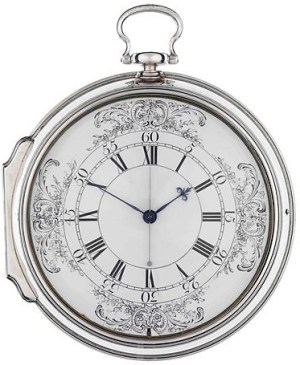
John Harrison, H4 Marine Timekeeper, 1755–59
(London: National Maritime Museum)
Passed by the British government in July 1714, the Longitude Act aimed to solve the problem of determining a ship’s longitude (east-west position) at sea. For a maritime nation such as Britain, investment in long distance trade, outposts and settlements overseas made the ability to determine a ship’s longitude accurately increasingly important. As different nations, including Spain, the Netherlands and France, sought to dominate the world’s oceans, each offered financial rewards for solving the longitude problem. But it was in Britain that the approach paid off. With life-changing sums of money on offer, the challenge became the talk of London’s eighteenth-century coffee-houses and captured the imaginations and talents of astronomers, skilled artisans, politicians, seamen and satirists; many of whom came up with ingenious methods and instruments designed to scoop the Board of Longitude’s tantalising rewards and transform seafaring navigation forever.
The Royal Observatory in Greenwich was founded in 1675 specifically to carry out observations ‘to find out the so much desired longitude of places for the perfecting of the art of navigation’. Under the 1714 Longitude Act, successive Astronomers Royal became leading voices on the Board of Longitude, judging proposals and encouraging promising developments.
As solutions were developed, the Royal Observatory also became a testing site for marine timekeepers and the place at which the astronomical observations needed for navigational tables were made. The significance of this work eventually lead to Greenwich becoming the home of the world’s Prime Meridian in 1884.
◊ ◊ ◊ ◊ ◊
The catalogue is published by Harper Collins:
Richard Dunn and Rebekah Higgitt, Ships, Clocks, and Stars: The Quest for Longitude (London: Collins, 2014), 256 pages, softcover ISBN: 978-0007940523, £15 / hardcover, ISBN: 978-0062353566, $75.
 A tale of eighteenth-century invention and competition, commerce and conflict, this is a lively, illustrated, and accurate chronicle of the search to solve ‘the longitude problem’, the question of how to determine a ship’s position at sea—and one that changed the history of mankind.
Ships, Clocks, and Stars brings into focus one of our greatest scientific stories: the search to accurately measure a ship’s position at sea. The incredible, illustrated volume reveals why longitude mattered to seafaring nations, illuminates the various solutions that were proposed and tested, and explores the invention that revolutionized human history and the man behind it, John Harrison. Here, too, are the voyages of Captain Cook that put these revolutionary navigational methods to the test.
Filled with astronomers, inventors, politicians, seamen, and satirists, Ships, Clocks, and Stars explores the scientific, political, and commercial battles of the age, as well as the sailors, ships, and voyages that made it legend—from Matthew Flinders and George Vancouver to the voyages of The Bounty and The Beagle. Featuring more than 150 photographs specially commissioned from Britain’s National Maritime Museum, this evocative, detailed, and thoroughly fascinating history brings this age of exploration and enlightenment vividly to life.
Richard Dunn is Senior Curator and Head of Science and Technology at Royal Museums Greenwich. Rebekah Higgitt is Lecturer in History of Science at the University of Kent.
◊ ◊ ◊ ◊ ◊
Note (added a few hours after the original posting appeared) — I should have noted that Jeremy Wear plans to chair a session on the theme of longitude at the 2015 ASECS conference in Los Angeles. –CH
(more…)
Exhibition | Longitude Punk’d

◊ ◊ ◊ ◊ ◊
In connection with the exhibition Ships, Clocks, and Stars: The Quest for Longitude; from the Royal Museums Greenwich:
Longitude Punk’d
National Maritime Museum, Greenwich, 10 April 2014 — 4 January 2015
Steampunk artists have taken over the Royal Observatory! Let madcap inventors, stargazing scientists, and extremely elegant explorers take you on an adventure into a world where scientific convention and the laws of nature have been re-written. Their fabulous narrative lavishly reinterprets the science and drama of the 18th-century quest to find longitude at sea, inspired by the 300th anniversary of the Longitude Act
Explore this exclusive exhibition of eccentric inventions specially created by steampunk luminaries including award-winning novelist Robert Rankin—exuberantly blurring the boundaries between art and science, fact and fiction. Don’t miss this chance to see something completely unique, never tried before and in the last place you would expect to see it. Meet time-travelling Astronomer Royal Nevil Maskelyne, observe Martian goings-on through our Victorian telescope, or come to a themed Steampunk film screening in our Punk’d events season (including The Adventures of Baron Munchausen).
Longitude Punk’d is part of Royal Museums Greenwich’s Longitude Season, celebrating the tercentenary of the Longitude Act with exhibitions, special events, and planetarium shows.
Exhibition | The Art and Science of Exploration, 1768–80

William Hodges, A View of the Monuments of Easter Island (Rapanui), ca.1776
(London: National Maritime Museum, BHC1795)
◊ ◊ ◊ ◊ ◊
Press release (17 June 2014) from the Royal Museums Greenwich:
The Art and Science of Exploration, 1768–80
Queen’s House, Greenwich, from 7 August 2014
This August The Art and Science of Exploration, 1768–80 opens in the newly refurbished rooms at the centre of the Queen’s House. Exploring the crucial role of artists on Captain Cook’s three voyages of discovery, the exhibition will be the first time that Stubbs’s Portrait of a Large Dog (Dingo) and The Kongouro from New Holland (Kangaroo) will be on display since they were acquired by the National Maritime Museum in November 2013.
When Cook’s first expedition to the South Pacific returned to Britain in 1771, he brought back accounts and images of extraordinary lands, people, flora and fauna. Returning twice more over the following decade, Cook established a pattern for voyages of discovery that combined scientific investigation with artistic response. The newly-acquired Stubbs paintings will be joined by portraits, landscapes and scenes of encounters with Pacific islanders by William Hodges and John Webber as well as botanical prints and original drawings by Sydney Parkinson.
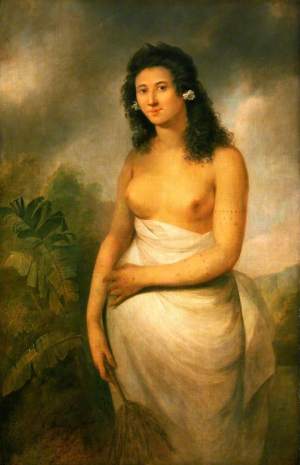
John Webber, Poedua, the Daughter of Orio, ca.1784 (London: National Maritime Museum, BHC2957)
Artists played an essential role on Captain Cook’s three voyages, producing both scientific records and imaginative responses to the unfamiliar lands that they encountered, forever influencing how the British public saw the Pacific. William Hodges was to become the first professional English painter to meet people previously unaffected by European contact, whilst John Webber’s painting of Poedua, the Daughter of Orio is one of the earliest portraits of a Polynesian woman by a European painter. The artists’ works were crucial to how places and discoveries were brought back and interpreted by those in Britain. Hodges’s paintings, particularly Tahiti Revisited, show how artists adapted the techniques and styles learnt in Europe to depict these exotic scenes for a British audience.
The middle section of The Art and Science of Exploration, 1768–80 looks at the work of Hodges, the artist who experimented and developed the most during his explorations with Cook and shared an interest in climate with the scientific men on board. He produced bright, vibrant studies that were on-the-spot responses to his environment with none of the classical allusion added to his later finished paintings. On display is Hodges’s A View of the Cape of Good Hope, Taken on the Spot, From On Board the Resolution, exhibited at the Free Society of Artists before he returned, along with eight of his small sketches, including the last oil study made on the second voyage, View of Resolution Bay in the Marquesas.
The third aspect of the exhibition focuses on the 30,000 dried plants and 955 botanical drawings by Sydney Parkinson that were brought back from Cook’s first voyage. The sheer quantity of new plants recorded was a defining feature of this expedition. Parkinson died during the return journey but his patron, the naturalist Joseph Banks planned to produce a book, employing a large group of artists to complete watercolours and engravings based on Parkinson’s sketches. However, it was not until the 1980s that all 743 prints were made. On display will be Parkinson’s original drawing, the watercolour, copper plate, engraving proof (all on loan from the Natural History Museum), and final print of two specimens collected at Endeavour River, Northern Queensland in 1770.
This exhibition shows the important role that artists had on the Cook voyages and on the European understanding of these faraway lands. They produced extraordinary images which worked both as scientific records of carefully planned exploration, as well as sensitive representations of an unfolding new world.
◊ ◊ ◊ ◊ ◊
Note (added 19 August 2014) — In April 2015 George Stubbs’s The Kongouro from New Holland will start a 12-month tour to four UK museums: The Horniman Museum and Gardens in London, The Captain Cook Memorial Museum in Whitby, The Grant Museum of Zoology at UCL, and the Hunterian Museum in Glasgow.
Exhibition | The Art of Golf: The Story of Scotland’s National Sport
Press release (11 July 2014) for the current exhibition:
The Art of Golf: The Story of Scotland’s National Sport
The Scottish National Gallery, Edinburgh, 12 July — 26 October 2014

David Allan, William Inglis (ca. 1712–1792), Surgeon and Captain of the Honourable Company of Edinburgh Golfers (Scottish National Gallery)
The Scottish National Gallery is delighted to take part in the sporting celebrations taking place this summer in Scotland with The Art of Golf: The Story of Scotland’s National Sport. The exhibition will overlap with two important events: the Commonwealth Games, Glasgow (23 July–3 August) and the Ryder Cup, Gleneagles (23–28 September), the biennial competition played between teams of professional golfers representing the United States and Europe. The Art of Golf explores golf as a subject of fascination for artists from the seventeenth century to the present day, with a particular emphasis on the emergence of the sport in Scotland.
The Art of Golf will bring together around 60 paintings and photographs—as well as a selection of historic golfing equipment—with works by artists such as Rembrandt van Rijn (1606–1669), Sir Henry Raeburn (1756–1823), Hendrick Avercamp (1585–1634) and Paul Sandby (1731–1809) illustrating the origins of the game. Other highlights will include Sir John Lavery’s (1846–1951) beautiful 1920s paintings of the golf course at North Berwick, a coastal resort 25 miles east of Edinburgh, and colourful railway posters for popular destinations such as Gleneagles, which illustrate the boom in golfing tourism in the inter-war years. Stunning images of golf courses from Brora to the Isle of Harris by contemporary photographer Glyn Satterly and spectacular aerial shots by artist and aviator Patricia Macdonald will bring the exhibition up to present day. Generous loans from a number of famous Scottish golf clubs, the British Golf Museum in St Andrews and private collectors have been secured for this exhibition.
The centrepiece of the show will be the greatest golfing painting in the world, Charles Lees’s 1847 masterpiece The Golfers. This commemorates a match played on the Old Course at the Royal and Ancient Golf Club, St Andrews, by Sir David Baird and Sir Ralph Anstruther, against Major Hugh Lyon Playfair and John Campbell of Saddell. It represents a veritable ‘who’s who’ of Scottish golf at that time and was famously reproduced in a fine engraving which sold in great quantities. Lees (1800–80) made use of photography, at a time when it was in its infancy, to help him design the painting’s overall composition. The image in question, taken by photography pioneers D O Hill & Robert Adamson, will be included in the show and Lees’s preparatory drawings and oil sketches will also be displayed alongside the finished painting to offer visitors further insight into the creation of this great work. Impressions of The Golfers are now in many of the greatest golf clubhouses around the world. The painting is jointly owned by the National Galleries of Scotland and the Royal and Ancient Golf Club of St Andrews.

David Allan, The Prize of the Silver Golf: Officer Carrying a Decorated Golf Club, Two Soldiers with Drums behind Him, ca. 1785 (Scottish National Gallery)
Golf has been played in Scotland since at least the fifteenth century. Whilst its origins are obscure, it is undoubtedly close to the Netherlandish game of ‘colf’, which was played over rough ground or on frozen waterways, and involved hitting a ball to a target stick fixed in the ground or the ice. ‘Colvers’ playing on the frozen canals are seen in Dutch seventeenth-century paintings which form the earliest part of the show. In Scotland the game is often played over ‘links’ courses, originally rough common ground where the land meets the sea. The majority of Scotland’s famous old courses, such as St Andrews or North Berwick, are links courses. In Edinburgh, the early links courses of Bruntsfield, Leith and Musselburgh are shown in works by Sandby and Raeburn.
Michael Clarke, Director of the Scottish National Gallery, said: “This show is designed to be fun and to bring together two publics, lovers of art and lovers of golf. Where better to do this than in this world-class gallery, with its great Old master and Scottish paintings, which is situated in Scotland’s beautiful capital city of Edinburgh, and through which so many golfers pass on their way to our internationally renowned courses.”
◊ ◊ ◊ ◊ ◊
From ACC Distribution:
Michael Clarke and Kenneth McConkey, The Art of Golf (Woodbridge: Antique Collectors Club, 2014), 72 pages, ISBN: 978-1906270674, £13.
 The Art of Golf illustrates how the noble game has been depicted in European art from the seventeenth century to the present day. This fascinating story is told by images in a variety of media, from paintings and prints to photographs and posters. The centrepiece is Charles Lees’s The Golfers, 1847, which depicts a match played on the Old Course at St Andrews in 1847, and is one greatest golfing painting in the world. In his essay Michael Clarke, director of the Scottish National Gallery, outlines the story behind the development of the game, while art historian Kenneth McConkey discusses the series of paintings of golf at North Berwick made by Sir John Lavery in the years following the Great War.
Michael Clarke is Director of the Scottish National Gallery in Edinburgh. He has published widely, including books on English watercolours, the landscape painter Camille Corot, and his second, revised edition of The Oxford Concise Dictionary of Art Terms was published in 2010. Most recently he co-curated the international exhibition Impressionist Gardens (2010–11) and wrote the exhibition catalogue of French Drawings in the Scottish National Gallery (2011). Kenneth McConkey is Professor of Art History and Dean of the Faculty of Arts and Design, the University of Northumbria at Newcastle. He has written extensively about late Victorian and Edwardian painting.
◊ ◊ ◊ ◊ ◊
The politics of gender, golf, and Scottish identity will soon go to the polls. On September 18 (the same day, Scots vote to stay or secede from Britain), members of the Royal and Ancient Golf Club (roughly 2500 men) will vote on the question of whether women may be admitted. As reported by The New York Times, for Louise Richardson, the principal of the University of St. Andrews, the discriminatory policy is also a “workplace hurdle.” Karen Crouse’s article, “In St. Andrews, a Heavy Knock on a Neighbor’s Door: First Female President of University of St. Andrews Fights for Admittance at Royal and Ancient Golf Club,” appeared in the paper on 11 July 2014.
Update (added 22 September 2014) — As Crouse reports in The New York Times (18 September 2014). . .
The Royal and Ancient Golf Club voted overwhelmingly to admit its first female members. . . . Peter Dawson, the secretary of the club, announced the results of a postal balloting of the club’s 2,400 male members, many of whom were on site in matching blue jackets and patterned blue ties. About three-quarters of the members participated in the voting, he said, with 85 percent of them opting to accept women. . .










leave a comment