Exhibition | Le Bivouac de Napoléon: Luxe impérial en campagne
From the Palais Fesch:
Le Bivouac de Napoléon: Luxe impérial en campagne
Palais Fesch, Musée des Beaux Arts, Ajaccio, 13 February — 12 May 2014
 Napoléon Ier passe une grande partie de son existence en campagne ou en voyage. Il possède pour ses déplacements et ses bivouacs, une organisation particulière reproduisant pour partie l’étiquette impériale. Ses tentes de campagne sont de véritables palais tissés mobiles, ses bagages, – lit, table, fauteuil, écritoire, nécessaire ou encore chaise d’affaires – constituent un ameublement pliant et luxueux en boite. Les nombreuses voitures qui transportent les effets de l’empereur en campagne, escortées et conduites par un personnel de service nombreux, forment un véritable convoi.
Cet ouvrage, sous la direction de Jehanne Lazaj, conservatrice au Mobilier national, entend montrer l’ingéniosité d’objets prestigieux tout comme la somptuosité de l’artisanat d’Empire à travers l’étude de plus de 70 œuvres qui sont autant d’éléments de campements, de contexte ou de documents iconographiques. Le lecteur s’installe, ainsi, sous le tente de Napoléon pour appréhender une vision la plus
complète possible de la vie des bivouacs, les soirs de
victoire comme de défaite.
Exhibition | Richard Wilson
To mark the opening of Richard Wilson and the Transformation of European Landscape Painting, curators Robin Simon and Martin Postle will be in New Haven this evening (5:30, Wednesday, 5 March 2014) for a session entitled “Putting Wilson on the Spot: Landscape, Art, and Location.” Exhibition press release from the YCBA:
Richard Wilson and the Transformation of European Landscape Painting
Yale Center for British Art, New Haven, 6 March — 1 June 2014
National Museum Cardiff, 5 July — 26 October 2014
Curated by Robin Simon and Martin Postle
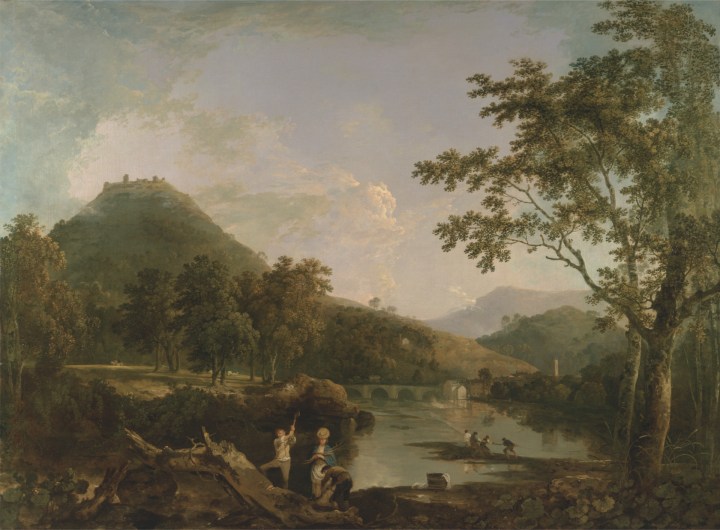
Richard Wilson, Dinas Bran from Llangollen, 1770–71, oil on canvas,
Yale Center for British Art, Paul Mellon Collection
◊ ◊ ◊ ◊ ◊
This spring, the Yale Center for British Art presents the first major exhibition in more than thirty years devoted to Welsh painter Richard Wilson (1714–1782), considered by many to be the father of British landscape painting. Richard Wilson and the Transformation of European Landscape Painting, opening on March 6, 2014, will demonstrate the extent of Wilson’s influence throughout Europe and explore his work in its international context. The exhibition will focus on the nearly seven years he spent working in Rome in the 1750s, a transformational period for Wilson and for European landscape art.
The exhibition will feature many of Wilson’s greatest paintings and drawings alongside works by European masters who preceded Wilson, contemporaries whose practice directly influenced his, and artists who were in turn taught or influenced by him. Other artists in the exhibition will include the old masters Claude Lorrain and Gaspard Dughet, as well as many of Wilson’s contemporaries such as Claude-Joseph Vernet, Pompeo Batoni, and Anton Raphael Mengs. Also presented will be works by many of Wilson’s pupils and followers, including the little-known artists Robert Crone and Adolf Friedrich Harper—both of whom studied with Wilson in Italy, as well as major figures such as John Constable and J. M. W. Turner.
As part of a cosmopolitan group of artists in Rome, Wilson pioneered a serious and powerfully original approach to landscape that reflected the nascent neoclassicism being advanced by his friends Anton Raphael Mengs and Johann Winckelmann. Wilson’s pupils in Rome transmitted his style across northern Europe. Setting up in London after his Italian sojourn, he established a large and successful studio and gained a European reputation with grand historical landscapes—such as The Destruction of the Children of Niobe (1760)—which were featured at the new public art exhibitions in London and widely disseminated through popular engravings. His treatment of British landscapes, particularly of his native Wales, borrowed their conceptual framework from the paintings of the seventeenth-century masters Claude Lorrain and Gaspard Dughet, but with a specificity of lighting conditions and weather that was an enduring legacy to the British landscape school.
Wilson’s great success during the 1760s slipped away in the following decade, as there was less demand for his work and his health deteriorated. By the time of his death he was largely forgotten. However, within a few years his critical reputation began to revive, and by the early nineteenth century he was celebrated as a pioneering figure of the British school. His innovations in landscape painting were crucial to the development of the genre during the romantic period, which saw its greatest expression in the work of J. M. W. Turner and John Constable, both profound admirers of Wilson.
This is the first exhibition the Center has co-organized with Amgueddfa Cymru– National Museum Wales. The exhibition has been co-curated by Robin Simon, Honorary Professor of English, University College London, and Editor, The British Art Journal, and Martin Postle, Deputy Director of Studies, The Paul Mellon Centre for Studies in British Art, London. The organizing curator at the Center is Scott Wilcox, Chief Curator of Art Collections and Senior Curator of Prints and Drawings; and, at Amgueddfa Cymru–National Museum Wales, Oliver Fairclough, Keeper of Art.
◊ ◊ ◊ ◊ ◊
From Yale UP:
Martin Postle and Robin Simon, eds., with contributions by Steffen Eggle, Oliver Fairclough, Jason Kelly, Ana María Suárez Huerta, Lars Kokkonen, Kate Lowry, Paul Spencer-Longhurst, Jonathan Yarker, Scott Wilcox, and Rosie Ibbotson. Richard Wilson and the Transformation of European Landscape Painting (New Haven: Yale University Press, 2014), 416 pages, ISBN: 978-0300203851 $80.
 Long known as the father of British landscape painting, Richard Wilson (1713–1782) was in fact at the heart of a profound conceptual shift in European landscape art. This magnificently illustrated volume not only situates Wilson’s art at the beginning of a native tradition that would lead to John Constable and J. M. W. Turner, but compellingly argues that in Rome during the 1750s Wilson was part of an international group of artists who reshaped the art of Europe. Rooted in the work of great seventeenth-century masters such as Claude Lorrain but responding to the early stirrings of neoclassicism, Wilson forged a highly original landscape vision that through the example of his own works and the tutelage of his pupils in Rome and later in London would establish itself throughout northern Europe.
Martin Postle is assistant director of the Paul Mellon Centre for Studies in British Art. Robin Simon is honorary professor of English at University College
London, and editor of The British Art Journal.
Portraits and Other Pictures Return to Osterley
From the UK’s National Trust:
Rare portraits and Other Works of Art Now on Display at Osterley Park and House in West London
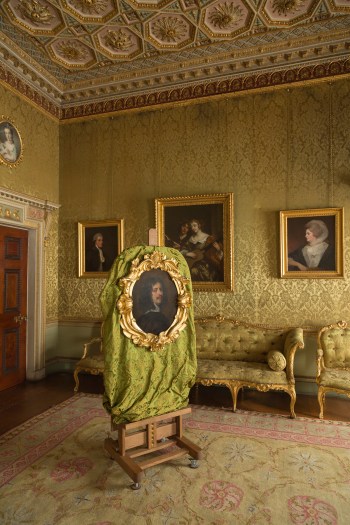
William Dobson’s self-portrait on display at Osterley together with the portraits of Robert and Sarah Child and The Music Lesson by Sir Peter Lely. ©National Trust/Chris Lacey
Once described by Horace Walpole as the ‘palace of palaces’, Osterley Park and House’s spectacular interiors were created in the 18th century by the Child family, the owners of Child’s Bank. But for over sixty years their portraits have been absent. Now a major ten-year loan marks the return of the Child family to the house they so lovingly transformed with rare items of furniture and over twenty paintings including many portraits of family members. Among the most famous artworks to return is a self-portrait by William Dobson (1611–1646), court painter to King Charles I, which was bought by the family in the early 18th century and has not been on public display at Osterley since 1949.
The family portraits
•Francis Child III — He succeeded to Osterley in 1756 and began transforming the house with the help of fashionable architect Robert Adam.
•Robert Child — Francis’ brother, he inherited Osterley Park and House in 1763 and continued to employ Adam who worked at Osterley until 1781.
• Sarah Jodrell — Robert’s wife and a woman of many accomplishments which included her exquisite embroidery, examples of which can be seen at Osterley Park and House.

Alan Ramsay, Portrait of Francis Child III (1735-63). ©National Trust/John Hammond
• Sarah Anne Child — Robert and Sarah’s beloved daughter and a talented musician, whose harpsichord is still on display in the house. She was disinherited from her father’s fortune for eloping to Gretna Green to marry the Earl of Westmorland.
Claire Reed, Osterley’s House and Collections Manager explains: “This is an exciting moment as it really feels as though the family are returning to Osterley. We have beautiful interiors and fascinating objects at the house but until now visitors couldn’t see the faces behind the names of those who made this such a wonderful place.”
Other art works include The Music Lesson by Sir Peter Lely and a large painting of Temple Bar, a detailed London scene depicting the area close to the location of Child’s Bank. Rare pieces of lacquer furniture and other treasured family objects will also be on display, telling stories of the fashions and tastes for collecting in the 18th century.
Osterley Park and House was first opened to the public by the 9th Earl of Jersey in 1939 following a steady stream of requests to see inside the house. It was then transferred to us in 1949. This ten-year loan has been made by the trustee of the Earldom of Jersey Trust, following consultation and backing from the 10th Earl of Jersey.
Also see the posting at Emile de Bruijn’s Treasure Hunt (27 February 2014)»
Exhibition | Art and Appetite: American Painting
In comparison to the nineteenth century, the eighteenth-century offerings are slim, but it’s still hard to tell this story without the latter. Press release (11 December 2014) from the Amon Carter:
Art and Appetite: American Painting, Culture, and Cuisine
The Art Institute of Chicago, 12 November 2013 — 27 January 2014
Amon Carter Museum of American Art, Fort Worth, Texas, 22 February — 18 May 2014
Curated by Judith A. Barter

John Greenwood, Sea Captains Carousing in Surinam, ca.1752–58
(Saint Louis Art Museum)
◊ ◊ ◊ ◊ ◊
This spring, the Amon Carter Museum of American Art invites visitors to feast their eyes on the rich tradition of food in American art with the opening of the exhibition Art and Appetite: American Painting, Culture, and Cuisine. Exploring the many meanings and interpretations of eating in America, Art and Appetite brings together 65 paintings from the 18th through the 20th centuries to demonstrate how depictions of food have allowed American artists to both celebrate and critique everything from trends in the national diet to the broader issues of society and politics. Featuring many iconic works by such noted artists as Edward Hopper, Norman Rockwell and Andy Warhol, the exhibition is on view from February 22 through May 18, 2014. Art and Appetite is organized by the Art Institute of Chicago; admission is free.
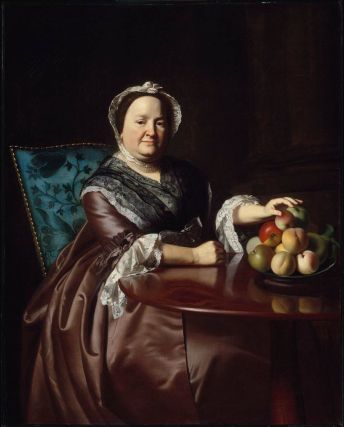
John Singleton Copley, Portrait of Mrs. Ezekiel Goldthwait (Elizabeth Lewis), 1771 (Boston: Museum of Fine Arts)
Art and Appetite takes a different approach to the subject of food in American art, contextualizing works to rediscover the meanings they held for their makers and their audiences. Despite the prevalence of works about food, research has rarely focused on the cultural significance of the objects depicted in these paintings, nor has it addressed how these images embodied changing ideals throughout the nation’s history. Thematically and chronologically organized, Art and Appetite breaks with the traditional histories of the genre to explore how these works illuminate American attitudes about patriotism and politics, identity and gender, progress and history, and production and consumption. The exhibition examines 250 years of American art, from the agricultural bounty of the “new world” to Victorian-era excess, debates over temperance, the rise of restaurants and café culture, the changes wrought by 20th-century mass production, and much more.
From the earliest years of the newly established United States, American artists such as Raphaelle Peale used still-life painting to express cultural, political and social values, elevating the genre to a significant aesthetic language. Later, in the antebellum era, depictions of food highlighted abundance, increasing wealth and changing social roles, while elegant decanters of wine and spirits in still-life paintings by John F. Francis reflect the prevalence of drinking and the mid-century debates over temperance. During the Gilded Age, despite the implications of the term, American artists moved away from excess and eschewed high Victorian opulence in favor of painting the simple meal. Many artists, such as William Harnett and De Scott Evans, also used images of food to serve up biting political commentary that addressed the social and economic transformations of the 1880s and 1890s.
In the 20th century new ways of eating and socializing began to change depictions of food in art. Restaurant dining—still novel in the United States in the late 19th century—became a common subject in the works of William Glackens, John Sloan and others. Café and cocktail culture, described in the work of Stuart Davis and Gerald Murphy, became increasingly important even as Prohibition banned the consumption of alcohol. Modern artists employed food in their radically new explorations of pictorial form, all the while challenging national ideals of family and home. Finally, during the 1950s and 1960s, Pop artists, among them Andy Warhol and Roy Lichtenstein, addressed the ways in which mass production and consumption dramatically altered the American experience of food. Hamburgers, fries and cakes were depicted as objects of mass-produced foodstuffs without human referent. Artists employed new means to explore the visual power of advertising, the standardization of factory-produced meals and the commercialization of American appetites.
Today, as professional and home chefs increasingly turn toward local, organic food and American society ponders its history as a fast-food nation, this exhibition offers visitors the chance to look at depictions of American food and culture with new meaning and fresh eyes.
Art and Appetite: American Painting, Culture, and Cuisine was organized by the Art Institute of Chicago. It is supported in part by generous contributions from Central Market, the Fort Worth Promotion and Development Fund, and the Ben E. Keith Foundation.
Also, see the online cookbook from The Art Institute of Chicago.
◊ ◊ ◊ ◊ ◊
From Yale UP:
Judith A. Barter, ed., with essays by Judith A. Barter, Annelise K. Madsen, Sarah Kelly Oehler, and Ellen E. Roberts, Art and Appetite: American Painting, Culture, and Cuisine (New Haven: Yale University Press, 2013), 248 pages, ISBN: 978-0300196238, $50.
 Food has always been an important source of knowledge about culture and society. Art and Appetite takes a fascinating new look at depictions of food in American art, demonstrating that artistic representations of edibles offer thoughtful reflection on the cultural, political, economic, and social moments in which they were created. Artists used food as prism through which they could celebrate and critique their society, expressing ideas relating to politics, race, class, and gender. With a focus that ranges from Colonial still lifes of the 18th century through the Pop artists of the 20th century, this lively publication investigates the many interpretations of eating in America.
Art and Appetite features still-life and trompe l’oeil painting, sculpture, and other works by such celebrated artists as John Singleton Copley, Raphaelle Peale, Lilly Martin Spencer, William Michael Harnett, William Merritt Chase, Elizabeth Paxton, Norman Bel Geddes, Stuart Davis, Edward Hopper, Alice Neel, Wayne Thiebaud, and Roy Lichtenstein, among others. Essays by leading experts address topics including the horticultural and botanical underpinnings of still-life painting, the history of alcohol consumption in the United States, the cultural history of Thanksgiving, and the commercialization of food in the world of Pop art. In addition to the images and essays, this book includes a selection of vintage recipes for all-American dishes.
Judith A. Barter is the Field-McCormick Chair and Curator, Department of American Art, at the Art Institute of Chicago.
Exhibition | Think Pink
From the exhibition press release (24 September 2013) . . .
Think Pink
Museum of Fine Arts, Boston, 3 October 2013 — 26 May 2014
◊ ◊ ◊ ◊ ◊
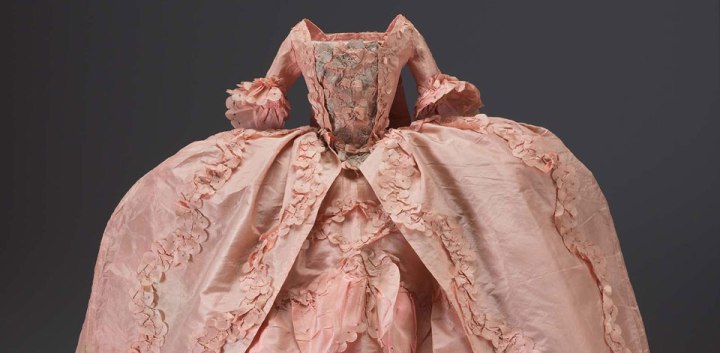
An evening dress blooming with roses, fuchsia designer heels, and a glittering pink topaz brooch are among the fashions on view in Think Pink, opening October 3 at the Museum of Fine Arts, Boston (MFA). To mark the exhibition opening and honor Breast Cancer Awareness Month, the MFA will host an Illumination Ceremony on the evening of October 2, and light the Museum pink each evening for the remainder of the month. Think Pink features approximately 70 objects, including dresses, suits, jewelry, and accessories by designers such as Christian Dior, Dolce & Gabbana, Ralph Lauren, Christian Louboutin, and Oscar de la Renta and is complemented by graphic illustrations, photography, and paintings. On view through May 26, 2014 in the Museum’s Loring Gallery, Think Pink will also highlight dresses and accessories from the personal collection of the late Evelyn H. Lauder, who was instrumental in creating awareness of breast cancer by choosing the color as a visual reference. . .
“We are pleased to present this unique exhibition that traces the evolution of the color pink, illustrated with spectacular examples of high fashion throughout history,” said Malcolm Rogers, Ann and Graham Gund Director of the MFA. “The exhibition features, among other treasures, a recent gift of clothing and accessories from the late Evelyn Lauder, a great friend of the Museum whose collection shines in the context of fashion and accessories from the MFA’s collection.”
Drawn from across the MFA collections and complemented by a selection of loans and recent acquisitions, Think Pink presents rarely seen objects that explore the color’s social impact as its popularity ebbed and flowed over time. Closely tied to modern fashion and femininity, the color pink carries a unique level of social significance. By exploring the history and changing connotations of the color in fashion and visual culture from the 18th century to the present, Think Pink sheds light on changes in style, the evolution of pink for girls/blue for boys and advances in color dyeing techniques. The iconic color came into fashion during the 17th century and was worn by both men and women through the 18th century, as seen in pieces such as a dashing Man’s formal suit (1770–80) or a silk Stomacher (1700–30) for a dress. The Gem-set brooch with pendant drop (about 1850) features a stunning pink topaz stone, showing off the timeless popularity of pink accessories and jewelry. (more…)
Four Centuries of Massachusetts Furniture

◊ ◊ ◊ ◊ ◊
Press release (21 May 2013) for the collaboration Four Centuries of Massachusetts Furniture:
A first-time collaboration among eleven founding institutions and numerous other organizations throughout the state, Four Centuries of Massachusetts Furniture highlights Massachusetts furniture-making, from the 1600s to the present day, through a series of exhibitions, symposia, public programs, and a dedicated website. Founding institutions consist of the Colonial Society of Massachusetts; Concord Museum; Fuller Craft Museum; Historic Deerfield; Historic New England; Massachusetts Historical Society; Museum of Fine Arts, Boston; North Bennet Street School; Old Sturbridge Village; Peabody Essex Museum; and Winterthur Museum, Garden and Library. Never before have so many renowned institutions in the Northeast joined forces to exhibit, study, and promote a single topic in the field of American Decorative Art. Four Centuries of Massachusetts Furniture is an unprecedented celebration of the Bay State’s remarkable furniture-making legacy. From the earliest products of newly arrived immigrants in the 1600s, to the outstanding work of present-day studio furniture-makers, Massachusetts holds one of the most prominent places in American furniture-making history.
Four Centuries of Massachusetts Furniture will include seven museum exhibitions, each focusing on a different aspect of Massachusetts furniture-making. The Massachusetts Historical Society will mount a display of documented Boston furniture from private collections, supplemented with rarely seen items in the Society’s collection, including relevant paintings, prints, account books, and ledgers. The exhibition at Historic Deerfield will take a fresh look at two centuries of furniture-making in western Massachusetts, showcasing a wealth of objects, many of which are new acquisitions. The Concord Museum’s exhibition will explore the remarkable life and career of William Munroe through the objects he made and a rare collection of shop records and Old Sturbridge Village will explore the career of prominent Federal-period artisan Nathan Lombard. The exhibition at the Fuller Craft Museum will feature contemporary studio furniture from the Bay State over the past half century and the final exhibition, slated to open at the Peabody Essex Museum in 2014, examines the career of eminent Salem cabinetmaker Nathaniel Gould. In addition, Winterthur Museum has installed fifty of its finest pieces of Boston furniture in an exhibition titled Boston Furniture at Winterthur and numerous other institutions throughout the state will highlight key pieces of Massachusetts furniture in their collections. (more…)
Exhibition | Genius and Grace
From the exhibition press release:
Genius and Grace: Franҫois Boucher and the Generation of 1700
Cincinnati Art Museum, 14 February — 11 May 2014
Curated by Esther Bell

François Boucher, Venus Presenting Aeneas to Jupiter and Juno, 1747, black chalk, pen with brown ink, and brush with brown wash and touches of white gouache on tan antique laid paper (Boston: The Horvitz Collection)
◊ ◊ ◊ ◊ ◊
This spring, the verve, grace, and exuberance of 18th-century French drawings will be on display at the Cincinnati Art Museum. The Cincinnati Art Museum will show drawings by the talented group of artists responsible for an unprecedented level of artistic and cultural production in the France of Louis XV in an exhibition titled Genius and Grace: Franҫois Boucher and the Generation of 1700, on view from February 14 to May 11, 2014. Franҫois Boucher, Charles-Joseph Natoire, Carle Vanloo, and their contemporaries, born in or around 1700, executed virtuoso compositions whose refined elegance epitomizes the French grand manner. Along with Boucher, Natoire, and Vanloo, the exhibition will also celebrate lesser known but equally talented figures such as Louis-Gabriel Blanchet and Joseph Franҫois Parrocel, as well as several pastels, including a rare example by Jean-Baptiste-Siméon Chardin. More than seventy master drawings, many of which have never before exhibited or published, will be on view.
This exhibition is organized by the Horvitz Collection in Boston—the preeminent private collection of early French art in the United States. Twenty-nine of the most distinguished artists of this period will be featured, along with a fully illustrated catalogue edited by Alvin L. Clark, Curator of the Horvitz Collection and the J.E.Horvitz Research Curator, Department of Drawings, Harvard Art Museums/Fogg Museum. The Cincinnati Art Museum venue for Genius and Grace: François Boucher and the Generation of 1700 is organized by Dr. Esther Bell, Curator of European Paintings, Drawings, and Sculpture; it is the first old master drawings exhibition to take place at the Cincinnati Art Museum in more than thirty years. “These are some of the most beautiful and sexiest images the Old Masters ever produced,” commented Cincinnati Art Museum Director Aaron Betsky. “They are stunning in their display of talent and the sensuality they convey.”

François Boucher, Recumbent Female Nude, ca. 1742–43, red chalk, heightened with white chalk (Boston: The Horvitz Collection)
◊ ◊ ◊ ◊ ◊
Sixteen of the works on view were created by Franҫois Boucher, who an eighteenth-century critic called “the painter of voluptuousness and grace.” One of the artist’s drawings, Recumbent Nude, depicts a luscious female figure. This may, at first, seem to be a provocative and erotically charged image, but it may have simply developed from a figure study intended to be used when painting a sea nymph or other historical subject. Also part of the exhibition is Carle Vanloo’s Saint Augustine Disputing with the Donatists, which has never before been exhibited. This masterpiece is remarkable for its heavy contours and energetic forms encased within a scene of monumental Italian architecture.
According to Cincinnati Art Museum Curator Dr. Esther Bell, “A selection of master drawings was selected that best tell the story of the unfolding eighteenth century. Not only will visitors be able to enjoy the sumptuous forms of the high Rococo, but also the virtuoso drawings that resulted from rigorous academic training and the cool and classicizing manifestations of these artists’ Italian journeys.”
◊ ◊ ◊ ◊ ◊
From Artbooks.com:
Alvin Clark, ed., Genius and Grace: Franҫois Boucher and the Generation of 1700 (Boston: The Horvitz Collection, 2014), 151 pages, ISBN: 978-0991262502, $34.
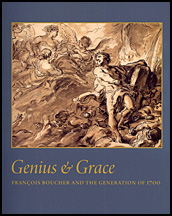 Genius and Grace: Franҫois Boucher and the Generation of 1700 features over seventy master drawings from the Horvitz Collection, Boston—widely considered the preeminent collection of French art in the United States. The exhibition features works by a group of artists known as the Generation of 1700. This talented group of artists born in or around the year 1700, such as François Boucher, Charles-Joseph Natoire, Carle Vanloo, and their contemporaries, will be celebrated for their virtuoso compositions whose curvilinear elegance epitomizes the French grand manner. From Boucher’s sumptuous reclining female nude, to a rare, early pastel by Jean-Baptiste-Siméon Chardin, to Director of the French Academy Charles Coypel’s mature self portrait—the works on view celebrate Dezallier d’Argenville’s comment of 1745: “A painter’s way of drawing is as distinctive as handwriting and more so than a writer’s style.” Includes: A. Clark, “The Generation of 1700: Draftsmen, Drawings, and Questions”; F. Joulie, “Reflections on the Early Drawings of Boucher and His Contemporaries”; and E. Bell, “Charles Coypel and the Age of Eclecticism.”
Exhibition | Anglo-American Portraiture in an Era of Revolution
From the Louvre:
Anglo-American Portraiture in an Age of Revolution
Musée du Louvre, Paris, 1 February — 28 April 2014
Crystal Bridges Museum of American Art, Bentonville, Arkansas, 17 May — 15 September 2014
High Museum of Art, Atlanta, 28 September 2014 — 18 January 2015
Curated by Guillaume Faroult
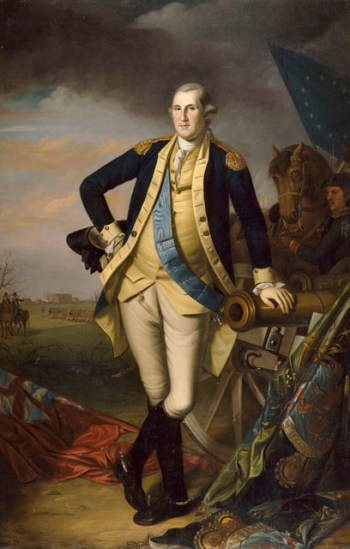
Attributed to Charles Wilson Peale, George Washington after the Battle of Princeton, 3 January 1777, ca. 1779 (National Museum of the Palace of Versailles and the Trianons)
The Louvre continues its exploration of the history of painting in America with a third special exhibition that compares and contrasts five Anglo-American portraits from 1780 to 1800 and slightly later, produced in the midst of a revolution that would lead to the independence and creation of the United States of America. The selected artworks revolve around the guardian and emblematic figure of General George Washington (1732–1799), elected first president of the United States in 1789.
The exhibition features three portraits of the Father of the Country, including one attributed to Charles Wilson Peale (1741–1827) depicting him as Commander in Chief of the Continental Army, on special loan from the Musée du Château de Versailles. Portraits of the opposing belligerents, notably a stunning, newly restored portrait of Captain Robert Hay of Spot by Scottish painter Sir Henry Raeburn (1756–1823), are presented in response to the magnificent portrait of Washington as president of the young nation painted in 1797 by Gilbert Stuart (1755–1828)—one of the most talented American portrait artists—on loan from the Crystal Bridges Museum.
This special exhibition is part of a long-term partnership with the Crystal Bridges Museum of American Art, the High Museum of Art, Atlanta, and the Terra Foundation for American Art, and was made possible through their generous support.
Exhibition | The First Georgians: Art & Monarchy 1714–1760
Press release (29 January 2014) from The Royal Collection:
The First Georgians: Art & Monarchy 1714–1760
The Queen’s Gallery, Buckingham Palace, London, 11 April — 12 October 2014

◊ ◊ ◊ ◊ ◊
In 1714 Georg Ludwig, Elector of Hanover in Germany, acceded to the British throne as George I, the country’s first constitutional monarch. Despite many stronger genealogical claims to the crown than his, the 1701 Act of Settlement had declared that the choice of sovereign was the gift of Parliament alone and that only a Protestant could sit on the British throne. With this unprecedented decision, the Georgian era began, ushering in an unbroken line of succession to Her Majesty Queen Elizabeth II.
Marking the 300th anniversary of the Hanoverian succession, The First Georgians: Art & Monarchy 1714–1760 explores the reigns of George 1 (r.1714–27) and his son George II (r.1727–60), shedding light on the role of this new dynasty in the transformation of political, intellectual and cultural life. Through over 300 works from the Royal Collection, it tells the story of Britain’s emergence as the world’s most liberal, commercial and cosmopolitan society, embracing freedom of expression and the unfettered exchange of ideas.
The Hanoverians’ right to rule was fiercely disputed by the Jacobites, supporters of the Stuart claim to the throne. The ‘Old Pretender’, Prince James Francis Edward Stuart, set up a rival court in Paris and Rome, and his son, Prince Charles Edward—Bonnie Prince Charlie—led an uprising in 1745–46 on behalf of his father’s cause. The continuous threat to Hanoverian rule, both at home and overseas, is reflected in the exhibition’s military maps and battle plans. They include a draft order of battle at Culloden, thought to have been produced by George II’s son, the Duke of Cumberland, who led the King’s troops to victory in 1746.
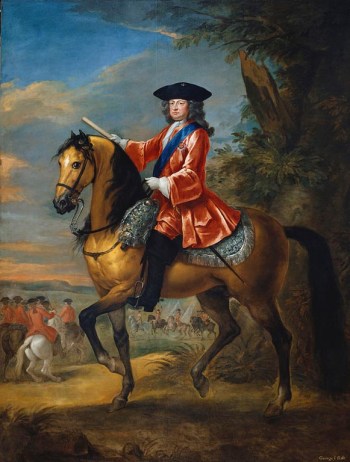
Vanderbank, Equestrian Portrait of George I, 1726
(Royal Collection 404412)
Although St James’s Palace remained the principal royal residence, the newly installed George I focused his artistic attention on Kensington Palace–its location outside London provided some shelter from the scrutiny of his more sceptical subjects. Here he appointed William Kent to decorate a new suite of State Rooms. The King filled Kensington with the best British furniture of the day, including pieces by James Moore and Old Master paintings, such as Don Roderigo Calderón on Horseback, 1612–15, and The Holy Family with St Francis, 1620–30, by Peter Paul Rubens.
The reigns of both Georges were fraught with familial strife. In 1717 George I expelled the Prince of Wales, the future George II, from St James’s Palace. Far from enduring a humiliating exile, the Prince established an alternative court, hosting ‘drawing rooms’, evening parties and balls, and regularly dining in public. Some 20 years later, George II’s son, Frederick, Prince of Wales (whose son George William Frederick became George III) was similarly banished and set up rival headquarters. Furnishing his private residences, the Prince could indulge his enthusiasm for the Old Masters. Among his acquisitions were Guido Reni’s Cleopatra with the Asp, c.1628, Anthony van Dyck’s Thomas Killigrew with an unidentified Man, c.1630, and ‘The Jealous Husband’, c.1660, by David Teniers.
Frederick presented himself as a fashionable man about town, entertaining freelyand informally—a typical supper party offered a menu of larks, pigeons, partridges, truffles, veal, turkey, lamb, turbot, salmon, teal, blackbird, asparagus, broccoli, sweetbreads, coffee cream and jelly. To dress his table, he commissioned dining plate in the new Rococo style, including the spectacular marine service by Paul Crespin and Nicholas Sprimont. Frederick’s mother, Queen Caroline, despised her son’s relaxed manner: “popularity always makes me sick,” she is reported to have said, “but Fretz’s popularity makes me vomit.”
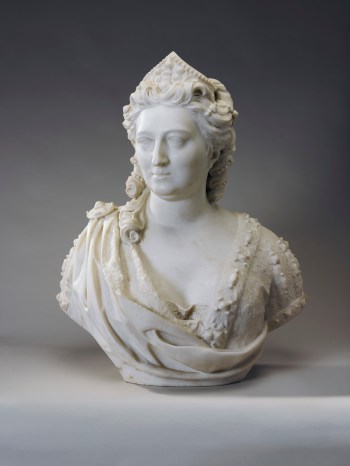
After John Michael Rysbrack and Joseph Highmore, Posthumous Portrait of Queen Caroline, Consort of George II, 1739
(Royal Collection, 31317)
Queen Caroline, consort of George II, was the most intellectual member of the Hanoverian dynasty. Her interests combined art, genealogy and a passion for gardening. She undertook major landscape projects at Kensington Palace and at her private retreat in Richmond, where she commissioned Charles Bridgeman to lay out the new gardens, complemented by follies created by William Kent. The most remarkable of these was the Hermitage, a picturesque temple devoted to British scientists and theologians, encapsulating Caroline’s belief in the interdependence of science and religion.
During the course of the 18th century, the focus of British cultural life began to shift away from court. Artists achieved success and fame through their own efforts, without the traditional support of a royal patron. William Hogarth’s portrait of David Garrick and his Viennese dancer wife, Eva-Marie Veigel, captures one of the most high-profile couples of the age. When the portrait was painted, in c.1757–64, Garrick had already combined great financial success as an actor-manager with international celebrity. Hogarth himself was not only a prominent artist, but
also a writer on art and a noted philanthropist.
The favourite genre of the early Georgian period was satire, both pictorial and literary. In 1724, its greatest practitioner, William Hogarth, published The Bad Taste of the Town, ridiculing British taste for foreign forms of art, such as Italian opera. London’s leading exponent of Italian opera was the German composer George Frideric Handel, who was employed in many royal roles. He was music teacher to George II’s daughter, Princess Anne, who is seen playing the cello with her two sisters and brother, Frederick, Prince of Wales, in Philippe Mercier’s The Music Party, 1733.

Meissen, Tea and coffee service with chinoiserie figures, 1720s
(Royal Collection, 5000106)
The desire for fashionable luxury goods drove Britain’s commercial enterprise and turned London into the most important trading city in the world. The Chelsea porcelain works, one of several new ventures set up to compete with the newly established Meissen factory in Germany, typified the entrepreneurialism of the time. With the emergence of a new leisure class came an explosion of coffee houses, gaming haunts, assembly rooms, theatrical entertainments and pleasure gardens. In the painting St James’s Park and the Mall, c.1745, all elements of cosmopolitan Georgian society mix together, with Frederick, Prince of Wales at the centre, rubbing shoulders with his future subjects.
◊ ◊ ◊ ◊ ◊
The catalogue is published by the Royal Collection and distributed by the University of Chicago Press:
Desmond Shawe-Taylor, ed., The First Georgians: Art & Monarchy 1714–1760 (London: Royal Collection Trust, 2014), 496 pages, ISBN 978-1905686797, £45 / $90.
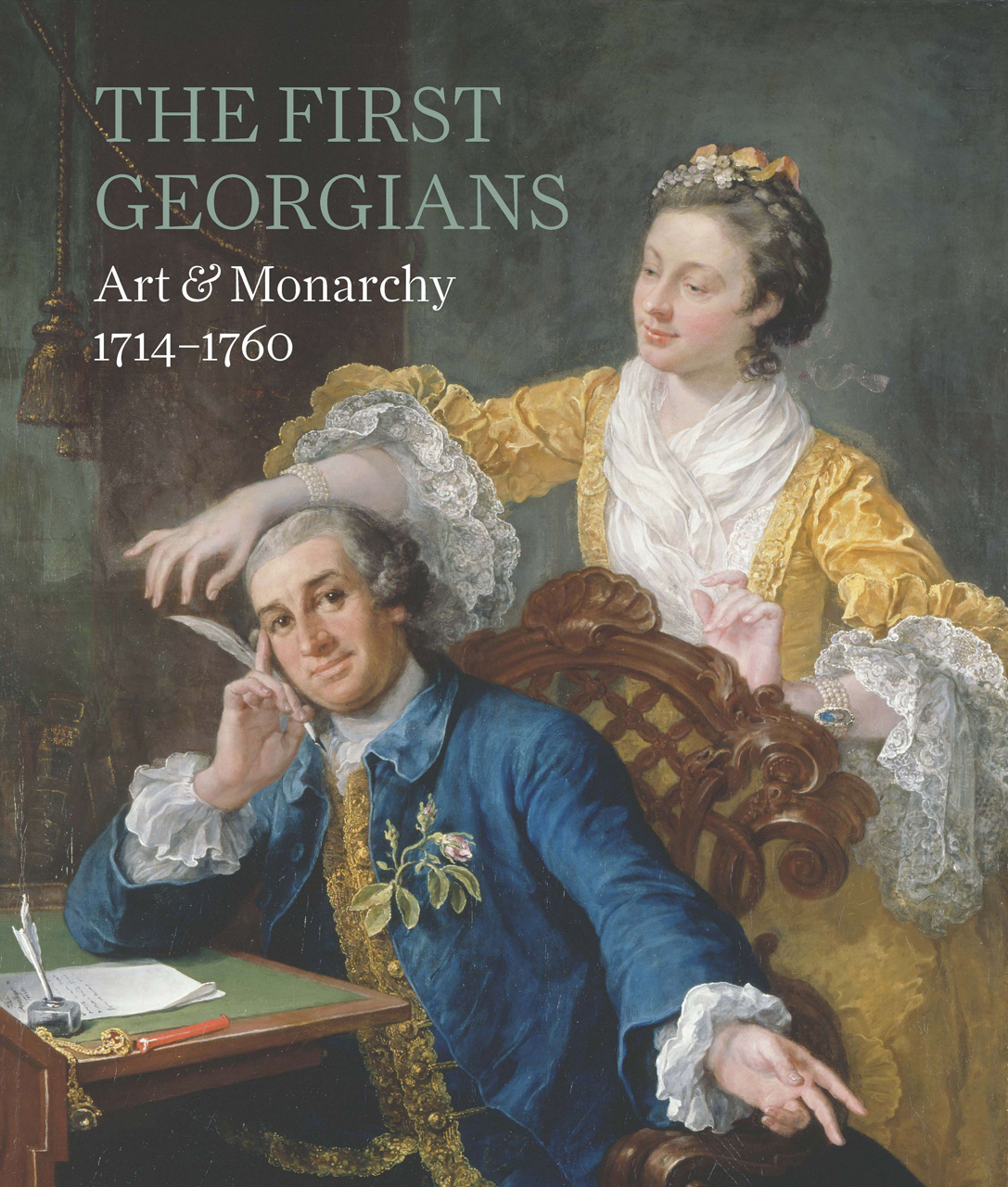 2014 marks the three-hundredth anniversary of the succession of the House of Hanover to the British throne. In celebration of this historic milestone, The First Georgians explores the rich artistic culture of the early Hanoverian period.
This publication showcases more than three hundred of the finest works of this period, many of which have never been on public display before. Created in Germany, France, and Britain during one of the most dramatic periods of change across all aspects of political, intellectual, and cultural life, they reflect changing views of science, politics, and art throughout the early to mid-eighteenth century—the period when modern Britain was coming into being.
Exhibition | Shells: Magic and Science
From the MIA:
Shells: Magic and Science
Minneapolis Institute of Arts, 23 November 2013 — 8 June 2014
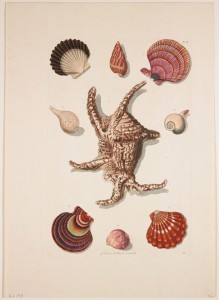
George Wolfgang Knorr, Plate B. II., from Deliciae Naturae Selectae, 1750–72, etching, hand-colored.
Shells are common yet precious, abundant yet desirable—among the first things a child instinctively collects. From prehistoric shacks to the courts of Baroque Europe, their translucent texture and fantastical forms have been integrated into everyday objects, decoration, and an incredible variety of art. They are also as central to modern studies of the natural world as the discovery of new lands, their perfection embodying—and ultimately resolving—the dilemma of creation and evolution. This importance is reflecting in the mania for shell collecting, particularly during the late 16th and early 17th centuries when nautilus and conches were mounted in precious metals, adorned with gems, and displayed in magnificent Wunderkammern—the “wonder rooms” or “cabinets of curiosities.”
This exhibition encompasses our passion for shells throughout the ages, gathering treasures from such Twin Cities institutions as the Wangensteen Historical Library, the James Ford Bell Library, the Bell Museum of Natural History, and the MIA itself. Together, they comprise an intriguing patrimony
of prints and precious antique books on natural history, while testifying to
the still-burning fever of shell-collecting.










 Enfilade
leave a comment