Exhibition | An Indiscreet Look at the Mechanics of Fashion
Sarah Moroz provides a summary of the exhibition for The Daily Beast (5 July 2013). From the Musée des Arts Décoratifs:
La Mécanique des Dessous: Une Histoire Indiscrète de la Silhouette
Behind the Seams: An Indiscreet Look at the Mechanics of Fashion
Musée des Arts Décoratifs, Paris, 5 July — 24 November 2013
Bard Graduate Center, New York, 3 April — 26 July 2015
Curated by Denis Bruna

Panier à coudes articulé, vers 1770, et corps à baleines, vers
1740-60, Paris, Les Arts Décoratifs, Collection Mode et
Textile et dépôt du musée de Cluny, © Patricia Canino
◊ ◊ ◊ ◊ ◊
This exhibition explores the ‘underworld’ of female and male undergarments such as the fly, the pannier, the corset, the crinoline, the bustle, the pouf, the stomach belt, the bra and other vestimentary devices fashioning the body by means of whalebones, hoops and cushions according to the changing dictates of fashion. Modelling the body sometimes to extremes, these ‘mechanical garments’ enabled the wearer to artificially attain the ideal of beauty of the time. This exploration is full of surprising discoveries since, contrary to common belief, these artifices were by no means a 19th-century speciality. Recourse to these concealed architectures has been constant since at least since the 14th century until the present day. Illustrating the diversity of artifices and their mechanics with museum pieces rarely shown to the public, this exhibition – the first of its kind – takes us ‘backstage’, into another, behind-the-scenes history of clothing and fashion.
La Mécanique des dessous. Une histoire indiscrète de la silhouette (Paris, Musée des Arts Décoratifs, 2013), 272 pages, ISBN : 978-2916914428, 55€.
◊ ◊ ◊ ◊ ◊
Exhibition Press release:

Robe de cour, vers 1760, Lyon, musée des Tissus, achat, 1913
© Lyon, musée des Tissus, photo Pierre Verrier.
L’exposition La mécanique des dessous, une histoire indiscrète de la silhouette présentée aux Arts Décoratifs du 5 juillet au 24 novembre 2013 se propose d’explorer les artifices utilisés par les femmes et les hommes, du XIVe siècle à nos jours, pour dessiner leur silhouette. Ce projet original peut être appréhendé comme une longue histoire des métamorphoses du corps soumis aux diktats des modes successives. Quels sont les mécanismes qui ont contraint les corps des femmes afin d’obtenir des tailles resserrées jusqu’à l’évanouissement, des gorges pigeonnantes contrebalançant un fessier rehaussé à l’extrême, des hanches elargies, ou bien applati des seins et des ventres ?
Comment les hommes eux-mêmes ont-ils poussé leur virilité en bombant artificiellement les torses, en rajoutant des formes aux mollets, ou aux braguettes ? Toutes ces structures faites de fanons de baleine, de cerceaux de rembourrage, mais plus encore de laçages, de charnières, de tirettes, de ressorts ou de tissus élastiques dissimulés sous l’habit sont exposés dans une scénographie de Constance Guisset. Près de deux cents silhouettes rassemblant paniers, crinolines, ceintures d’estomac, faux-cul, gaines, « push up » issus des collections publiques et privées françaises et étrangères permettent, pour la première fois, d’aborder une lecture insolite de la mode liée au corps.
Tout d’abord, l’univers masculin et sa quête de la virilité sont évoqués avec les pourpoints étonnamment rembourrés du XIVe au XVIe siècle ainsi qu’avec les braguettes proéminentes de la Renaissance. Le XVIIIe siècle est caractérisé par les vestes matelassées provoquant des torses arqués. Les amplificateurs de mollets, les ceintures d’estomac et les slips-gaines sont révélateurs de la période XIXe-XXIe siècles. Les femmes, quant à elles, ont de tout temps rivalisé d’imagination et d’artifices avec les premiers corsages baleinés, les vertugadins (premières jupes renforcées de cerceaux de rotin ou de métal), les paniers, les crinolines, les tournures, les corsets, les gaines et les push-up d’aujourd’hui. Cet insolite défilé de mode n’oublie pas non plus les enfants qui ont porté des corsets au moins depuis le XVIIe siècle. Renforcées d’armatures et d’autres mécanismes, toutes ces pièces de vêtement permettaient la rectitude, la verticalité tant attendue par une aristocratie, puis par une puissante bourgeoisie, toutes deux soucieuses d’un idéal de supériorité.
Le parcours tant insolite que didactique donnera la part belle au XIXe siècle. En effet, sous le Second Empire et la Troisième République principalement, le corset règne en tyran pour répondre à l’exigence de la « taille de guêpe » accentuée par l’évasement excessif des crinolines. Après 1870, ce jupon à baleines disparaît et se voit remplacé par la tournure – dite aussi le « fauxcul », la « queue d’écrevisse » ou encore le strapontin – qui donne aux femmes un étrange et sinueux profil d’oie. Au XIXe siècle, les sous-vêtements n’ont jamais été aussi abondants et cachés à la fois. Si, au fil de l’histoire de la mode, les formes évoluent et les techniques s’affinent, le dessein du vêtement mécanique est récurrent : effacer le ventre, comprimer la taille jusqu’à la creuser, maintenir la poitrine, rehausser les seins – parfois les aplatir –, arrondir les hanches. Bref, le confort a souvent cédé le pas à l’apparence jusqu’à ce que, vers 1900, Nicole Groult, Paul Poiret et Madeleine Vionnet instaurent, pour un temps, le goût de la ligne «naturelle».
L’exposition se poursuit avec le soutiengorge, la gaine (et ses exemples masculins). Si le souci du soutiengorge n’est plus de comprimer ou de rehausser les seins mais de les emboîter et les séparer, a-t-il perdu pour autant le rôle essentiel des vêtements baleinés d’autrefois : modeler la silhouette ? De nos jours, les soutiens-gorge « ampliformes » et pigeonnants en vue de créer un effet plongeant même sur les silhouettes les plus menues, répondent encore aux diktats des canons de beauté à une époque où l’on façonne moins son corps par des vêtements que par des régimes, le body building et la chirurgie.
Toutefois, l’histoire du corset, de la crinoline ou de la tournure n’est pas révolue pour autant puisque des créateurs comme Thierry Mugler, Jean Paul Gaultier, Rei Kawakubo pour Comme des Garçons, Christian Lacroix ou Vivienne Westwood, etc. ont livré d’étonnants exemples permettant de clamer que les XXe et XXIe siècles ont fait du dessous d’autrefois un dessus expérimental.
Parallèlement aux deux-cents dessous présentés – et habits complets formés grâce à ces structures dissimulées –, l’exposition montre des mannequins couverts de reconstitutions de paniers, de crinolines ou de tournures, etc., toutes animées afin de saisir l’ingéniosité des mécanismes. De plus, un espace du parcours est spécialement dédié à l’essayage de corsets, de paniers du XVIIIe ou de crinolines, tous spécialement faits à l’identique, afin que le visiteur puisse porter et comprendre ces structures qui ont joué un rôle essentiel dans l’histoire de la mode et des usages vestimentaires.
◊ ◊ ◊ ◊ ◊
Note (added 14 January 2015) — The Bard Graduate Center venue was not part of the original posting; more information is available here»
Exhibition | Fashioning Switzerland
From The Fitzwilliam:
Fashioning Switzerland: Portraits and Landscapes by Markus Dinkel and His Contemporaries
The Fitzwilliam Museum, Cambridge, 4 June — 15 September 2013
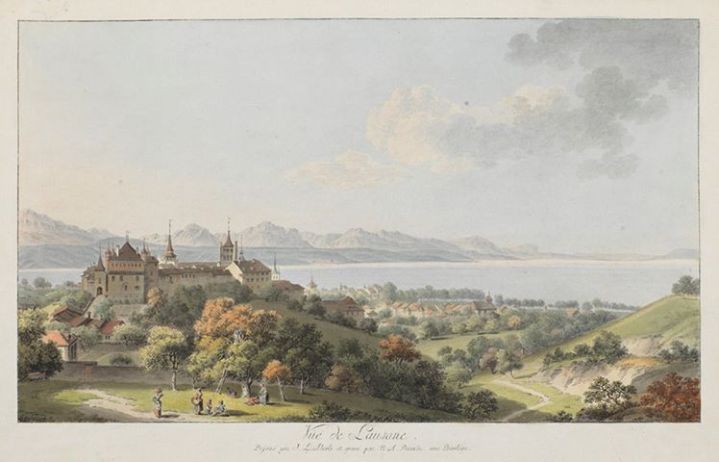
Vue du Lausane (Cambridge: The Fitzwilliam Museum)
◊ ◊ ◊ ◊ ◊
An exhibition of Swiss watercolours and prints featuring a rare selection of finely drawn and coloured portraits of Swiss women in regional costume, by the Bernese artist Markus Dinkel (1762–1832). These are accompanied by other artists’ picturesque views of the Swiss landscape, largely etched and each one delicately hand finished in watercolours.
The prints and drawings on show were made in the century before the establishment of the Swiss federal state in 1848, at a time when foreign tourists were discovering the delights of the various cantons (districts). The images show an affectionate attachment to Swiss landscapes and culture, felt not only by those native to the country, but by the many foreign visitors who collected them as permanent reminders of their travels.
◊ ◊ ◊ ◊ ◊
From Averil King’s review of the exhibition for Apollo Magazine ( 28 June 2013) . . .
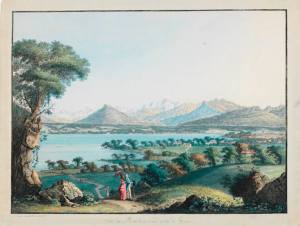
Carl Ludwig Hackert, Vue du Montblanc et Une Partie de Genéve, 1781 (Cambridge: The Fitzwilliam Museum)
Fashioning Switzerland is built around two bequests to the Fitzwilliam Museum: one, in 1910, by the Master and Fellows of Trinity College, Cambridge, of works by the Swiss watercolourist Markus Dinkel (1762–1832); and a later donation, by the Reverend Alfred Valentine-Richards of the Cambridge University Alpine Club, of a number of early views of Swiss mountain scenery. While we may be aware of Swiss artists such as Arnold Böcklin, Jean-Étienne Liotard, Félix Vallotton and Giovanni Giacometti, Dinkel’s name is not a familiar one, and this exhibition, showing his engaging watercolours of Swiss women in regional costume alongside landscapes by his contemporaries, comes as an agreeable surprise. . .
By the late 18th century the formidable mountain chain comprising the Mönch, Eiger and Jungfrau, in the Bernese Alps, was already becoming a tourist destination. So too was the nearby Chamonix (Mont Blanc) range, situated in south-eastern France but clearly visible from the Swiss city of Geneva (as shown in Carl Ludwig Hackert’s View of Mont Blanc and Part of Geneva, 1781). For sightseers, often English Grand Tourists wanting to extend their journeys, the Bernese ‘Three Sisters’ would in time become truly iconic, being portrayed by artists as diverse as Ferdinand Hodler and Emil Nolde. . .
Exhibition | Mengs & Azara: Portrait of a Friendship
Press release (3 July 2013) from The Prado:
Mengs & Azara: Portrait of a Friendship / El Retrato de una Amistad
Museo Nacional del Prado, Madrid, 3 July — 13 October 2013
Curated by Stephen Schröder and Gudrun Maurer
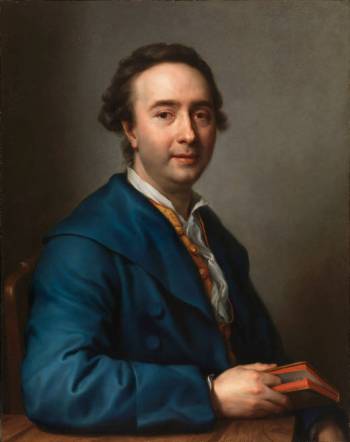
Rafael Mengs, José Nicolás de Azara, oil on panel, 77 x 61.5 cm, 1774 (Madrid, Museo Nacional del Prado)
To mark the Museum’s recent acquisition of one of Mengs’s finest portraits, his Portrait of José Nicolás de Azara, the Prado has recreated the friendship and close collaboration between the Neo-classical painter and his sitter, a leading exponent of the Spanish Enlightenment. This small exhibition, on display in Room 38 of the Villanueva Building until 13 October, consists of 24 works – paintings, sculptures, prints, medals and books – from the Museum’s own holdings or loaned from private collections. The addition of this work to the Prado’s collections will enrich the Museum’s holdings of 18th-century paintings and add to its group of portraits by Mengs.
The recent acquisition by the State and its entry into the Prado of the remarkable Portrait of José Nicolás de Azara, painted in 1774 by Anton Raphael Mengs, has led to the organisation of this small exhibition, which evokes the friendship and close collaboration that existed between the two men: Mengs, the
Neoclassical painter from Bohemia, and Azara, one of
the leading names of the Spanish Enlightenment.
Portrait of José Nicolás de Azara by Mengs
This intimate and strikingly simple image, painted in Florence in early 1774, is an outstanding example of Mengs’s particular classicism and is considered one of his finest portraits. It is also important due to the identity of the sitter, who was one of the most prominent representatives of the Spanish Enlightenment.
Mengs’s portrait conforms to the taste of the time in its use of a pure Neo-classical mode, of which the artist was one of the principal exponents. Azara is depicted with a sublime dignity and naturalness that suggest his intellectual integrity. He has none of the accessories normally used to evoke power and authority but is portrayed with a psychological depth that reveals his character. Particularly striking is his lyrical expression, with its slight smile conveyed through the “gentle movement of the mouth and eyes” that Azara considered the Ancient Greeks to have used to represent the movements of the soul. His expression transmits his friendship with Mengs, his sensibility and his passion for literature. The latter is also indicated by the book that he holds, which he momentarily sets aside in order to focus on the artist with a spontaneity of the kind newly fashionable in 18th-century portraits.
The Exhibition
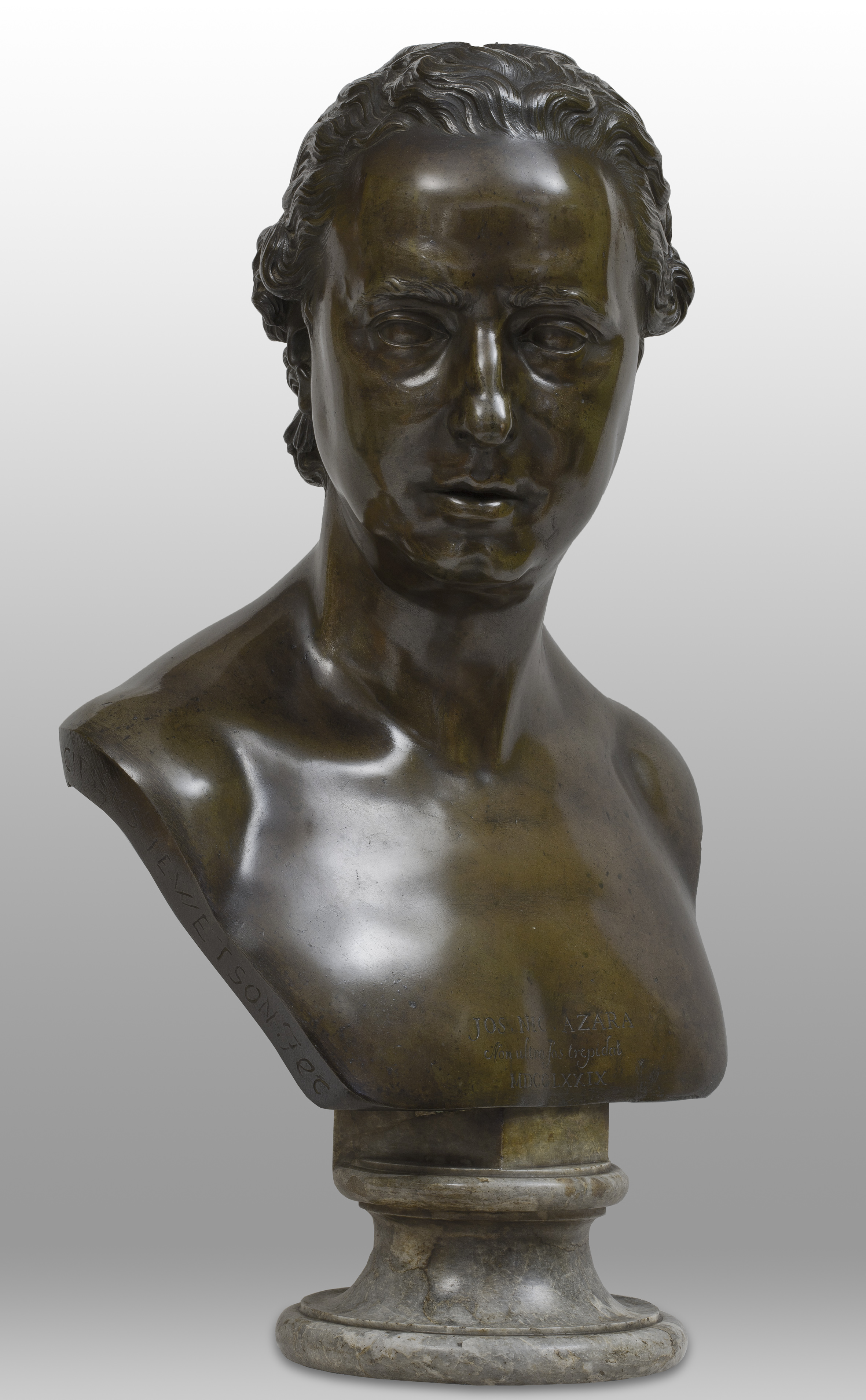
Christopher Hewetson, José Nicolás de Azara, bronze, 52 x 39 x 29 cm, 1779 (Private collection)
The exhibition focuses on the friendship between Mengs and Azara, the affinities between their aesthetic ideas and their close artistic collaboration. It also looks at the way they were depicted in portraits, Azara’s collecting activities, and his role in the promotion and dissemination of Mengs’s works.
In addition to the recently acquired painting, other eloquent proofs of the friendship between the artist and his patron are the two bronze busts of Azara and Mengs of 1779 by the Irish sculptor Christopher Hewetson. The exhibition also includes a Self-portrait by Mengs (ca.1761–1765) dating from the time he first met Azara and their collaboration on the production of a medal to commemorate the marriage of the Prince and Princess of Asturias, which is also on display. Another later Self-portrait of around 1774–1776 was the primary model for the dissemination of the artist’s image in Spain. It is present here through a copy in pastel by Mengs’s daughter, Ana María, and a print after it by Ana María’s husband, Manuel Salvador Carmona.
As examples of the affinity between the two men’s aesthetic ideas, the exhibition includes a drawing by Mengs of the classical sculpture of Antinous as Osiris (original in the Vatican Museums), and a print after a drawing by Mengs of one of the mural paintings in the
Villa Negroni.

Christopher Hewetson, Anton Raphael Mengs, bronze, 51 x 38 x 26 cm, 1779 (Madrid, Museo Nacional de Artes Decorativas)
In 1779 Azara initiated an excavation project in Tivoli near Rome. Following the discovery of fifteen portraits of Greek philosophers and poets and other small sculptures in the so-called Villa dei Pisoni, Azara began to collect classical portraits and sculptures, possessing around 70 examples by the end of his life. His collection, which is now divided between the Real Casa del Labrador in Aranjuez and the Museo del Prado, is represented here by sculpted portraits of the poets Homer and Menander, the Epicurian philosopher Hermarcus and the Attic general Miltiades, in addition to a statue of a Dacian from Trajan’s Forum in Rome and one of Fortuna.
Also on display is a copy of the Life of Cicero by Conyers Middleton, edited and translated by Azara and illustrated with prints of sculptures from his own collection. Azara’s role in protecting and disseminating Mengs’s artistic legacy is conveyed in the exhibition through a print of his portrait by Mengs, engraved by Domenico Cunego; a commemorative medal of the “philosopher painter” by Caspar Joseph Schwendimann, in which Azara included his own image; Las Obras de D. Antonio Rafael Mengs, edited and with commentaries by Azara, published in Parma and Madrid in 1780; and the first biography of the artist written in 1780 by Ludovico Bianconi and illustrated with a print relating to Azara’s homage to Mengs after his death when he installed a bust of him by Hewetson in the Pantheon in Rome.
Finally, Azara’s friendship with Napoleon arising from his diplomatic mission of 1796 is documented through two works: a commemorative gold medal issued that year by the Senate in Rome in honour of Azara and his negotiation of the Armistice of Bologna; and a medal with a portrait of Napoleon that commemorates the Peace of Amiens, which Azara signed in 1802 as the representative of the Spanish monarch.
Stephen Schröder and Gudrun Maurer, Mengs & Azara: El Retrato de una Amistad (Madrid: Museo Nacional del Prado, 2013), 48 pages, ISBN: 978-8484802648, 10€.
The exhibition is accompanied by an essay-catalogue written by the curators, Stephen Schröder, Head of the Department of Classical and Renaissance Sculpture, and Gudrun Maurer, Curator in the Department of 18th-century Spanish Painting and Goya, both at the Museo del Prado.
Azara and Mengs
The relationship between the two men yielded its first artistic results in 1765 when Azara requested the collaboration of Mengs in the design of a medal to commemorate the marriage of the Prince and Princess of Asturias.
José Nicolás de Azara (Barbuñales, 1730 – Paris, 1804) became widely known in Spain from the time of his first appointment as a civil servant in the Government Office in 1760. He subsequently achieved international renown through his diplomatic post in Rome, where he remained for more than thirty years, followed by Paris from 1798 to 1803 as Spanish ambassador at a delicate period in the last decade of the 18th century and early years of the following century. Among Azara’s numerous friendships with leading cultural and political figures were those with Winckelmann, the theoretician of classical art, the famous typographer Bodoni, Pope Pius VI and politicians such as Godoy in Spain and Napoleon and Talleyrand in France.
Anton Raphael Mengs (Aussig, 1728 – Rome, 1779) initially trained with his father Ismael Mengs in Dresden then went to Italy to study the works of the Italian masters including Raphael, Michelangelo, Carlo Maratti, Correggio, the Carracci, and Titian. In 1751 he was appointed painter to the privy chamber by the Elector of Saxony, Frederick August II. During his time in Rome from 1752 to 1761, where he met the German archaeologist Johann Joachim Winckelmann, Mengs evolved the theories that formed the basis of his writings on ideal beauty and the recovery of the perfection of art through the study of the great models of the ideale classico. After painting the fresco of the Parnassus in the Villa Albani, which can be considered the embodiment of Neo-classical art, Mengs was summoned to Madrid by Charles III, the Elector of Saxony’s son-in-law, to supervise the decoration of the Royal Palace.
Appointed painter to the privy chamber in 1766, he introduced the new artistic trends into Spain and supported Spanish painters such as Maella, the Bayeu brothers and Goya. Due to poor health, Mengs returned to Rome in 1769. As a commission from Charles III, in 1770 in Florence he painted the portraits of the families of the Grand Dukes of Tuscany (Museo Nacional del Prado), at which point he made plaster casts of the most important classical and Renaissance sculptures in their collection, which he used for teaching purposes. In Rome the artist was appointed director of the Academy of Saint Luke and received important commissions for paintings for the Museo Clementino and the basilica of Saint Peter’s. Having returned to Madrid in 1774 he went to Rome again in 1776, where he died of tuberculosis in 1779. Mengs’s output encompasses history paintings, religious works, frescoes on religious, mythological and allegorical subjects, and an important group of portraits.
A checklist of the 24 works on display is available at the end of the press release.
Exhibition | From Colony to Nation: 200 Years of American Painting
Press release (6 June 2013) from the New-York Historical Society:
From Colony to Nation: 200 Years of American Painting
New-York Historical Society, New York, 7 June — 8 September 2013
Curated by Linda S. Ferber

Charles Peale, The Peale Family, 1773–1809, 57 x 90 inches
(New York-Historical Society)
Capturing the spirit of the United States through two centuries of artistic expression, From Colony to Nation: 200 Years of American Painting features more than eighty works dating from 1720 to 1918, drawn from the New-York Historical Society’s large holdings of American paintings. On view June 7 through September 8, 2013, the exhibition interweaves art history and American history into a richly textured visual panorama, with subjects ranging from early Colonial portraits to urban Impressionism. The exhibition also highlights the story of the artists, patrons, and collectors whose contributions informed the history of New-York Historical.
Many works in From Colony to Nation will be exhibited for the first time in decades, following conservation of both the paintings and their period frames. Among the exhibition highlights is John Singer Sargent’s portrait Mrs. Jacob Wendell (1888), a recent gift to the New-York Historical Society from The Roger and Susan Hertog Charitable Fund and Jan and Warren Adelson. The first painting by Sargent in New-York Historical’s collection, the work was created during the young expatriate artist’s first professional foray on American soil.
The exhibition is organized into six overarching themes that interweave art history and American history into a richly textured national narrative beginning in the early 18th century and ending in the early 20th. Colonial Painting: Faces, Places & a Bible Story features a number of New-York Historical’s early portraits of the men, women and children who comprised the thriving populations of colonial New York and Philadelphia. Among the treasures on display are seven Beekman family portraits, dating from the 1760s and still in their original frames—a rare instance of an entire suite of portraits of a prominent family represented in a single collection. Also on view is Charles Willson Peale’s monumental The Peale Family (1773–1809), which brings together several generations in the artist’s studio for one of the most ambitious group portraits of the 18th century. The Peale family saga is played out over several decades and generations, coming to a close when the elderly Peale added a memorial portrait of his beloved dog Argus. Another exhibition highlight is the recent acquisition The Finding of Moses (ca. 1720), a rare scripture painting attributed to Gerardus Duyckinck. The Dutch community valued such Biblical narrative paintings for their religious content and as a reflection of their political experience, identifying with the exiled Israelites in their own struggles against the domination of Spain in the Netherlands and the English in New York.
Artists featured in the exhibition are also well-represented in New-York Historical’s portrait collection—The World of the American Artist features a selection of these likenesses, along with depictions of noted art collectors and patrons. Expatriate artist Benjamin West’s London studio was the destination for a first generation of aspiring Colonial painters, including Gilbert Stuart, Charles Willson Peale, and Abraham Delanoy, who painted West in 1766 at the height of the artist’s early fame as a history painter. Portraits of Asher B. Durand and Thomas Cole represent a later generation of American masters who focused upon the American landscape. Important collectors and patrons depicted in the exhibition include Luman Reed and Thomas Jefferson Bryan, whose collections formed the early core of New-York Historical’s collection.
The Early Republic: Patriots, Citizens & Democratic Vistas features founding fathers, New York merchants and Pennsylvania farmers, with several joined by their wives to create charming pairs. Iconic portraits of Washington, Jefferson, Hamilton, and Lafayette portray the heroes of the Revolutionary generation. Gilbert Stuart portrays the dashing Schulyers as a newly married couple (1807), and Jacob Eichholtz’s captures the genteel charm of Pennsylvania country gentry in his portraits of Mr. and Mrs. Frederick Eichelberger (ca. 1819). Scenic wonders of the new nation include John Trumbull’s 1808 epic panoramas of Niagara Falls, contrasted with the 1818 record of a lively transportation hub at the New York waterfront captured by visiting Swiss painter J.H. Jenny. (more…)
Exhibition | Surveying George Washington
From Crystal Bridges:
Surveying George Washington
Crystal Bridges Museum of American Art, Bentonville, Arkansas, 29 June — 30 September 2013
◊ ◊ ◊ ◊ ◊
This summer, Crystal Bridges will mount the second of an ongoing series of exhibitions featuring historical documents pertaining to the Museum’s mission and collection. This year’s exhibition focuses on George Washington, and features an assortment of documents written by Washington himself, or by contemporaries who knew him, on loan from the Harlan Crow Library in Dallas, TX. The aim is to provide a look at Washington that provides insight into his life as a real person, not just a historical figure.
The exhibition will feature documents spanning the breadth of Washington’s life, including, among others, a land survey prepared by Washington at age 19; a copy of the broadside recruiting poster mustering troops for what would become a regiment under Washington’s command during the French & Indian War; a hand-written letter to General John Cadwalader of the Pennsylvania militia, appealing to him for troops to continue the push against British outposts in New Jersey during the War for Independence; and a hand-written letter by Washington’s private secretary Tobias Lear, announcing Washington’s death in 1799. Also included is a first edition of George Washington’s Last Will and Testament, printed from the record of the County Court of Fairfax, 1800.
Exhibition | Princely Treasures from the House of Liechtenstein
From the National Museum of Singapore:
Princely Treasures from the House of Liechtenstein
National Museum of Singapore, 27 June — 29 September 2013
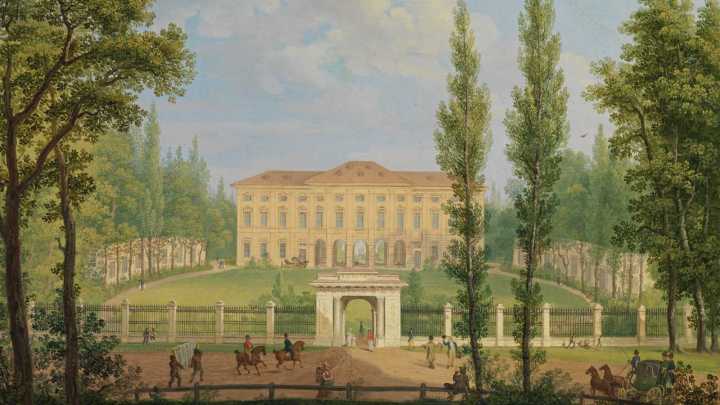
Copy after Ferdinand Runk (1764–1834), The Liechtenstein
Summer Palace in the Rossau Quarter, © Liechtenstein,
The Princely Collections, Vaduz–Vienna
◊ ◊ ◊ ◊ ◊
Collected over 500 years, over 90 masterpieces from the exquisite art collection of the Prince of Liechtenstein will be travelling to Singapore for the first time. This exhibition is exemplary of the highly cultivated choice in art, with artworks ranging from paintings, prints, tapestries, sculptures to rare decorative art objects. Significant works by important Flemish artists like Rubens and Anthony van Dyck, as well as those by other renowned European masters such as Raphael and Lucas Cranach the Elder, will be showcased to celebrate the High Renaissance, Baroque, Neo-classical and Biedermeier that span from the late 15th century to the mid 19th century, all of which characterise the European way of articulating authority, power and wealth of the ruling houses.
In addition, a selection of 16 oil paintings from the National Collection will be displayed to draw links to the art of portraiture in Singapore’s historical context, exploring how it was an important representational mode between the late 19th and mid 20th century.
◊ ◊ ◊ ◊ ◊
From one of the sponsors, LGT Prviate Banking:
 With a history dating back to its inception in 1887, the National Museum is Singapore’s oldest museum with a progressive mind. It is custodian of the 12 National Treasures, and its Singapore History and Living Galleries adopt cutting-edge and multi-perspective ways of presenting history and culture to redefine conventional museum experience.
A cultural and architectural landmark in Singapore, the Museum hosts innovative festivals and events all year round – the dynamic Night Festival, visually arresting art installations, as well as amazing performances and film screenings – in addition to presenting thought-provoking exhibitions involving critically important collections of artefacts. The National Museum of Singapore celebrated its 125th anniversary in 2012.
Additional information about the exhibition is available here»
Exhibition | Secrets of the Royal Bedchamber
Press release for the exhibition at Hampton Court:
Secrets of the Royal Bedchamber
Hampton Court Palace, 27 March — 3 November 2013
Curated by Sebastian Edwards
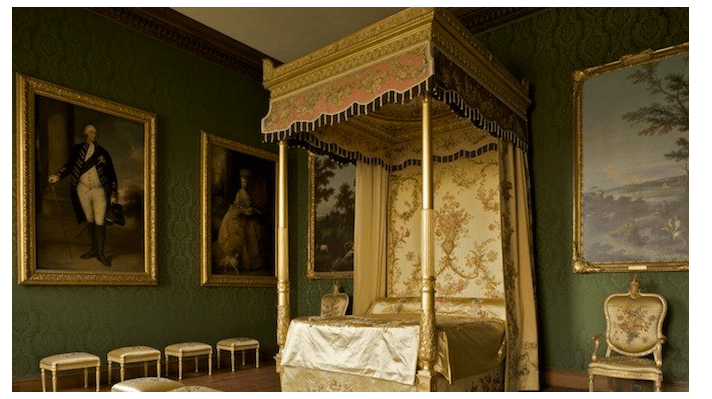
Queen Charlotte’s embroidered state bed, displayed in the
Prince of Wales’s Bedchamber at Hampton Court Palace
◊ ◊ ◊ ◊ ◊
This spring independent charity, Historic Royal Palaces, has transformed Hampton Court’s Baroque Palace with a special exhibition full of intrigue, drama and surprise. At its heart are six magnificent, royal beds. For the first time the world’s largest and rarest collection of early state beds are presented in one dramatic display, telling the story of how and why the bedchamber became the most public and important destination in the Palace. The exhibition also offers a chance to view architect John Vanbrugh’s Prince of Wales’s Apartments, opened for the first time in 20 years.
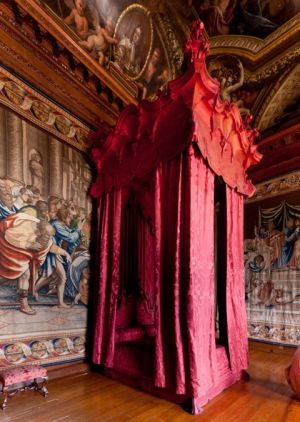
Bed of George and Caroline, Prince and Princess of Wales, ca. 1715, displayed in the Queen’s State Bedchamber at Hampton Court Palace
Through the stories of their royal owners and servants, visitors are able to explore the elaborate, sometimes bizarre bedchamber rituals and unusual sleeping arrangements. Discover what took place where heirs were born, marriages consummated, monarchs were struck down and died – all while important affairs of state were conducted in this most personal of rooms. Most strange of all, these events took place before an audience of courtiers, politicians and family members, who turned everyday life for the monarch into a grand performance.
Inspired by the French fashion of the levée, the monarch would meet courtiers and ministers during an elaborate morning ceremony, during which the most privileged of his servants, woke, washed and dressed the king. Courtiers would fight for the illustrious and intimate positions of ‘groom of the stool’ or the ‘necessary woman’ to get close to the monarch. For an extraordinary century, the state bedchamber became the most sought after room in the palace for the rich and the powerful, where privileged access brought honour or the king’s favour. At its heart was the great, state bed, from where the monarch could conduct affairs of state.
These remarkable state beds have undergone extensive conservation and restoration over some fifty years. Each bed has a dramatic, and often poignant, tale to tell. For the first time the tragic story behind Queen Anne’s magnificent velvet state bed is revealed. Ordered by a dying queen in her final year, childless after many sad losses, she faced the prospect of her dynasty ending with her death; left unused and forgotten, it was described by the thrifty George III as a ‘venerable old relic’. Another splendid bed featured is the infamous ‘Warming Pan Bed’, the state bed of James II’s Queen, Mary of Modena, and the scene of the royal birth that sparked the quiet revolution that led to the end of the Stuart line.
An exceptional but modest survivor is the unique ‘travelling bed’ of George II which comes apart into 54 pieces, a testament to a time when the king and his court were often on the move. King Georg took his bed as far afield as his second home in Hanover and even to the battlefields of Europe. Each state bed reveals the intense competition between monarchs, and their courtiers, who expressed their taste and magnificence through their beds — the largest and most expensive objects in their homes. These beds could cost the price of a London townhouse and yet, incredibly, might never have been slept in!
This new exhibition, supported by Savoir Beds, creates an experience which takes a contemporary twist on the distinctive Baroque style of the palace. Through new research and interpretation, visitors are plunged into an immersive, interactive world of the Stuart Court, showcasing rarely displayed and amazing objects from the Royal Collection and other important lenders, all within the backdrop of the beautiful architecture of the State Apartments.
Historic Royal Palaces’ exhibition curator, Sebastian Edwards, said, “Visitors to the exhibition will discover that, far from being restful places of privacy, the state bedchamber was the seat of power – the equivalent of the modern day boardroom, from which the business of the Kingdom was conducted. Events which took place in and around these beds had enormous consequences for society, politics and history. Courtiers were knighted, wars were brokered, marriages consummated and mistresses wooed all in the shadow of the royal bed. These are extraordinary beds – but not as we know them today.”
Exhibition | Anton Graff: Faces of an Era
The exhibition opened last weekend on the two-hundredth anniversary of the artist’s death (22 June 1813). From the Museum Oskar Reinhart:
Anton Graff: Gesichter einer Epoche
Museum Oskar Reinhart, Winterthur, 22 June — 29 September 2013
National Gallery in Berlin, 25 October 2013 — 23 February 2014
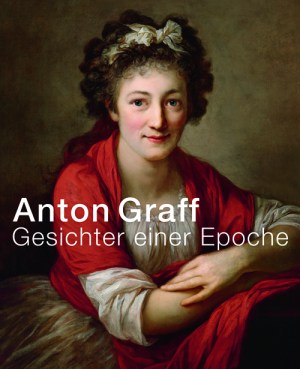 Anton Graff, who was born in Winterthur, was the most important portrait painter in the German-speaking world around 1800. He influenced the image of the bourgeoisie and nobility and the image of poets and thinkers on the brink of Modernism like no other. When he died in 1813, he left behind around 1800 portraits depicting a panorama of transitioning European society.
In celebration of the 200th anniversary of his death, the Museum Oskar Reinhart in Winterthur and the National Gallery in Berlin are honouring the work of Anton Graff in a comprehensive exhibition for the first time in 50 years. After a first stop at the Museum Oskar Reinhart from 22 June to 29 September 2013, the exhibition will be able to be seen in the National Gallery in Berlin between 25 October 2013 and 23 February 2014. The exhibition and the richly illustrated catalogue, which will be published by the Munich-based Hirmer Publishers, came about thanks to the cooperation of both institutions.
Marc Fehlmann and Birgit Verwiebe, eds., Anton Graff: Gesichter einer Epoche (Munich: Hirmer Publishers, 2013), 336 pages, ISBN: 978-3777420509, 40€.
◊ ◊ ◊ ◊ ◊
From Berlin’s Alte Nationalgalerie:
Bis in das Innere der Seele“ zu schauen, darin bestand, den Worten des Philosophen Johann Georg Sulzer zufolge, die Meisterschaft des großen Porträtisten Anton Graff. Der überaus produktive Künstler zählt zu den herausragenden Bildnismalern des späten 18. und frühen 19. Jahrhunderts. Sein größtes Verdienst war, die Berühmtheiten seiner Epoche zu porträtieren. Ihm ist das Panorama des deutschen Geistes zu danken, das die Bildnisse der bedeutendsten Dichter und Denker umfasst, wie etwa Lessing, Nicolai, Mendelssohn, Sulzer, Wieland, Gellert, Herder und Schiller.
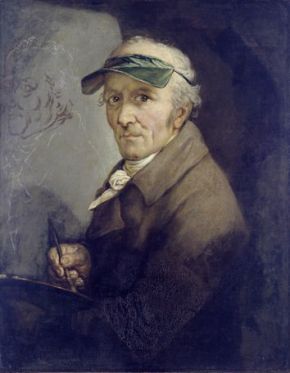
Anton Graff, Self-portrait with the Green Eye-shade, 1813 (Staatliche Museen zu Berlin, Nationalgalerie)
Graff wurde 1736 in Winterthur geboren und nahm dort seinen ersten Kunstunterricht. In Augsburg, Ansbach und Regensburg bildete er sich weiter. 1766 – 30jährig – wurde er in Dresden kurfürstlich-sächsischer Hofmaler und Mitglied der Akademie. Regelmäßig führten ihn Reisen nach Berlin, Leipzig und in die Schweiz. Gegen Ende seines Lebens wurde Graff gleichsam zu einer Symbolfigur für den Kreis junger Romantiker in Dresden. 1813, mit 76 Jahren, starb der Maler.
Graff hat seine Zeitgenossen nicht im Gestus der Repräsentation festgehalten. Vielmehr lag ihm daran, das Wesen des Einzelnen auszuloten, seine Individualität zu entdecken, seine seelischen und geistigen Qualitäten wiederzugeben. Auch heute noch spricht die innere Gestimmtheit der aufgeklärten geistigen Elite in Deutschland unmittelbar aus Graffs meisterhaften Werken. Mit Bildnissen von Königen und Fürsten, vom aufstrebenden Bürgertum, von Staatsmännern, Gelehrten, Künstlern, Kaufleuten, Geistlichen schuf er eine Galerie der deutschen Gesellschaft an der Schwelle zur Moderne.
Ein halbes Jahrhundert hat es keine Ausstellung zum Werk Graffs gegeben. Nun, anlässlich des 200. Todestages, wird sein Werk wieder umfassend präsentiert.
Die Retrospektive „Anton Graff. Gesichter einer Epoche“ entstand in Kooperation mit dem Museum Oskar Reinhart, Winterthur. Dort sind rund 80 Werke vom 22. Juni bis 29. September 2013 zu sehen. In der Alten Nationalgalerie Berlin wird die Ausstellung anschließend in erweiterter Form mit rund 140 Werken vom 25. Oktober 2013 bis 23. Februar 2014 gezeigt.
Exhibition | Candida Höfer at the Borghese Gallery
As noted at Art Daily (23 June 2013) . . .
Candida Höfer per La Galleria Borghese
Villa Borghese, Rome, 20 June — 15 September 2013
Curated by Mario Codognato, Anna Coliva, and Marina Minozzi
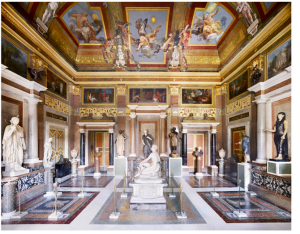
Candida Höfer, Villa Borghese Roma I, 2012. C-print. Print size: 71 x 86 inches (180 x 217.2 cm). © Candida Höfer/VG Bild-Kunst, Bonn© Candida Höfer by SIAE 2013.
The famous Galleria del Lanfranco hosts seven works by the artist Candida Höfer portraying the original reconstruction of the Borghese collection, recently restored for the I Borghese e lʼAntico exhibition (December 2011 – April 2012, curated by Anna Coliva and Marina Minozzi for Galleria Borghese and by Jean-Luc Martinez and Marie Lou Fabréga-Dubert for the Louvre) which brought back to the Gallery the most important ancient masterpieces that once belonged to the collection, mostly collected by Cardinal Scipione Borghese at the beginning of the seventeenth century and currently making up the core of the Paris Louvre Museum antiques collection, following the sale imposed by Emperor Napoleon Bonaparte on his brother-in-law Camillo Borghese in 1807. Candida Höferʼs work therefore represents the only existing evidence of the collection in its original setup, which will never be replicated again: some kind of miracle that will never repeat itself.
The underlying concept of the exhibition is that out of the reconstruction of an art masterpiece such as the Galleria Borghese collection in its original makeup, another work of art was created. In that occasion Candida Höfer – known for her incomparable way of perceiving places and reproducing them through her camera – had therefore documented the mounting of the exhibition halls through the photos that are now in display in their original location, the Galleria itself. The exhibition curated by Mario Codognato, Anna Coliva and Marina Minozzi is a unique event, enabling visitors to virtually walk through the halls of “the most beautiful villa in the world” — Antonio Canovaʼs definition — and experience the fascinating atmosphere generated by the exceptional return to their place of origin of the masterpieces of one of the most distinguished and prestigious archaeological collection of all times.
Candida Höfer features among the most relevant artists of German contemporary photography. She was born in Eberswalde, Germany, in 1944 and is a leading exponent of ‘the School of Dusseldorf’. She started her artistic career in 1975 taking part in several international exhibitions, such as Documenta in Kassel in 2002 and Biennale in Venice in 2003, where she exhibited her work in the German Pavillion. Her works feature in the collections of many international museums, such as Centre Pompidou in Paris, Centro de Arte Reina Sofia in Madrid, Kunsthalle in Hamburg, Museum of Modern Art in New York, Kunthalle in Basel. Höfer is renowned for her shots of public spaces, such as museums, libraries, archives, theatres, offices, banks, waiting rooms, underground stations and other culturally and socially crowded places which however stand out due to the total absence of human presence. As a matter of fact, it is a ‘non-presence’ rather than an absence: the portrayed locations seem to be suspended, waiting, ready to welcome the human being, the real protagonist, enjoying those museums and frequenting those libraries. In her pictures Candida Höfer exclusively uses natural light. This peculiarity turns the picture of a place from a mere documentation to a true portrait by personifying it, interpreting its surfaces as if they were a live element, devoid of any human presence and captured in a single moment that will survive forever thanks to her work.
The seven large-size photos – roughly 180 x 200 centimeters – exhibited in the Lanfranco Hall, portray the Villa and reproduce the setting of the seventeenth and eighteenth century when sculptures belonging to the celebrated Borghese archaeological collection were still displayed in the Museum halls. Masterpieces such as The Three Graces and The Sleeping Hermaphroditus feature in Höfer’s photos alongside modern masterpieces such as the The Rape of Proserpina by Gian Lorenzo Bernini and the famous Pauline Bonaparte as Venus Victrix by Antonio Canova. However, the true protagonists of these pictures are not only these extraordinary sculptures but also the Galleria as a whole: its history, its furniture, its works: all these elements make Candida Höferʼs photographs unique and the exhibition a one-off opportunity. Hoferʼs photos stir emotions thanks to their historical background, their perspective and the brightness of the place itself, defining its original aspects and raising the images to an eternal, absolute dimension.
◊ ◊ ◊ ◊ ◊
Exhibition | Master Drawings
From The Ashmolean:
Master Drawings
The Ashmolean Museum, Oxford, 25 May — 18 August 2013
Curated by Christopher Brown, Jon Whiteley, and Catherine Whistler

Thomas Gainsborough, Study of a Woman, seen from the back, chalk and stump on paper, 1760-70 (Oxford: Ashmolean Museum)
The Ashmolean announces one of its major summer exhibitions, Master Drawings, as part of the celebrations to mark the founding of the Museum in 1683. The exhibition, drawn from one of the world’s greatest collections of works on paper, will display a selection of the Ashmolean’s treasures of western art including works by Michelangelo and Raphael; Dürer and the artists of the Northern Renaissance; through the centuries to Rubens and Rembrandt; Turner, Degas and Pissarro; up to Gwen John and David Hockney.
Master Drawings will survey seventy-two drawings of all types: figure studies, composition sketches, landscapes and portraits. Many are working drawings; others were made as works of art in their own right. Michelangelo will be represented by a study for the Sistine ceiling, drawn with the robust energy of youth, along with two profoundly poetic works drawn for friends, and a late, contemplative image of the Virgin and the risen Christ. Raphael will be represented by a series of studies ranging from one of his earliest works – a figure of the kneeling Magdalen delicately outlined in silverpoint – to one his last studies, the powerful and famous image of the hands and the heads of two apostles, drawn shortly before his death in 1520.
The history of landscape drawing will be explored from its beginnings with Dürer’s View of the Cembra Valley made in 1494; to watercolour sketches made by JMW Turner from opposite ends of his career. The seventeenth century will be represented in drawings by Rembrandt and Rubens; Guercino; and Claude Lorrain. The story will continue through the following centuries with studies by several of Europe’s greatest draughtsmen: Watteau, Boucher, Fragonard, Tiepolo, Goya, Ingres, Degas and Cézanne.
A full list of artists included is available here»
◊ ◊ ◊ ◊ ◊
From ACC Distribution:
Jon Whiteley and Catherine Whistler, Master Drawings: Michelangelo to Moore (Oxford: Ashmolean Museum, 2013), 160 pages, ISBN: 978-1854442789, £20.
 The collection of drawings in the Ashmolean is one of the greatest treasures of the University of Oxford. It began spectacularly in 1843 when a group of drawings by Raphael and Michelangelo that had previously belonged to the portrait painter, Sir Thomas Lawrence, was bought by subscription. Lawrence’s collection was one of the greatest collections of Old Master drawings ever assembled and its dispersal was much regretted. The Raphaels and Michelangelos, however, were the jewels in its crown. Following their arrival in Oxford, their fame attracted a number of gifts and bequests of drawings and watercolours by Dürer, Claude Lorraine, Brueghel, J. M. W Turner, Henry Moore and many others.
This is a story not only of Old Masters but of benefactors – Francis Douce, Chambers Hall, John Ruskin and their successors – whose different tastes account for the variety of the drawings in the modern Print Room. It is a story also of the curators who bought them. In particular, it is the story of Sir Karl Parker who arrived at the museum in 1934 and left a collection when he retired in 1962 that comprehensively covered the history of the art of drawing in Europe from its origins to the present day. The exhibition, Master Drawings: Michelangelo to Moore, celebrates this history. It includes many of the finest drawings in Oxford, representing the work of many different artists: Raphael and Michelangelo; Dürer and the artists of the Northern Renaissance; Guercino and Rubens; Boucher and Tiepolo; German Romantics; J. M. W. Turner; Degas and Pissarro; the artists of the Ballets Russes; British twentieth-century artists from Gwen John to Hockney; and much else.
Jon Whiteley is a Senior Assistant Keeper in the Department of Western Art, specialising in paintings, drawings and musical instruments.
Catherine Whistler is a Senior Assistant Keeper in the Department of Western Art, specialising in Italian and Spanish paintings and drawings.










 Enfilade
leave a comment