Exhibition | Hubert Robert: Les Jardins du Temps
From The National Museum of Western Art:
Hubert Robert: Les Jardins du Temps
The National Museum of Western Art, Tokyo, 6 March — 20 May 2012
Fukuoka Museum of Art, Fukuoka, 19 June — 29 July 2012
Shizuoka Municipal Museum of Art, Shizuoka, 9 August — 30 September 2012
Curated by Hélène Moulin-Stanislas and Megumi Jingaoka
 In 18th-century Europe, enthralled by the discoveries at the sites of Pompeii and Herculaneum, Hubert Robert (1733-1808) was a French landscape painter became known later by the nickname Robert des ruines (Robert of the Ruins), for his many works on these ancient sites. During his studies in Italy, Robert depicted fascinating landscapes that incorporated ancient motifs enhanced by his own fanciful imagination. His images brought to life the architecture and sculpture of ancient times, contrasting with the scenes of trees, flowing streams and the lively everyday world of ordinary people. These images developed in an age newly fascinated with antiquity. Robert’s arts with their uniquely lyrical expression attracted a great number of people, inspiring dreams of the flow of time, nature and the power of the arts.
The painter of these fantastic scenes was also the creator of numerous famous landscape-style garden designs, under his title of Designer of the Royal Gardens. Robert’s placement of ancient architectural forms and man-made waterfalls and grottoes amidst actual scenery adds all the more fascination to his works. This exhibition focuses on about 80 drawings in red chalk, selected from the world-renowned Robert Collection of the Musée de Valence, as it introduces Japanese audiences to Robert’s oeuvre, dating from his earliest production to his final years. Works by Robert’s teachers and colleagues, including Piranesi and Fragonard, from other collections round out the display of approximately 130 oil paintings, drawings, prints and furnishings. The natural and the man-made, fiction and fact, and the jumbled memories of happiness and imaginary futures, all present the secrets of Arcadia, as created in the midst of this artist’s paintings and gardens.
◊ ◊ ◊ ◊ ◊
Addition information is available at the Art Media Agency; the complete exhibition checklist (as a PDF file) is available here (in both English and Japanese).
Exhibition | The Prisons by Giovanni Battista Piranesi
From The National Museum of Western Art:
The Prisons by Giovanni Battista Piranesi
The National Museum of Western Art, Tokyo, 6 March — 20 May 2012

Giovanni Battista Piranesi, "The Prisons (Le Carceri," Round Tower 2nd edition, 1st Publication: 1761 G.1987-425 (Tokyo)
Giovanni Battista Piranesi was a major 18th-century Italian print artist. The Prisons [Carceri d’invenzione], a series of prints, are amongst his most famous works. Amidst the rise of Romanticism at the beginning of the 19th century, this series stimulated the imaginations of a number of writers. In the intervening decades and centuries, this series has continued to exert an influence in architecture, literature and film, as well as fine art. As indicated by its title, this series presents various views of prisons. But these images are not depictions of actual prisons; rather they are images of a fantastic, imaginary world. Giant pillars, beams, chains and torture implements, along with prisoners, are depicted amongst bold compositions made up of powerful lines. The NMWA collection includes a set of the first state of the Prisons, along with the second state, which involved considerable reworking of the first, plus two additional prints. The second state was made by Piranesi in 1761, the year in which he established his own printing studio, and is characterized by its stronger light-dark contrast and its more dramatic impression. Piranesi sought the full expressive range of the print in this series, at times going so far as to use his own finger and
the palm of his hand to achieve desired results.
This exhibition presents approximately 30 works from both the first and second states, allowing visitors a chance to compare the two states and the changes in Piranesi’s conception of the prints. We hope that you will enjoy these many prints with their powerful impact.
◊ ◊ ◊ ◊ ◊
The exhibition checklist (as a PDF) is available here (in Japanese and English).
Exhibition | Gainsborough’s Landscapes
From the Holburne Museum in Bath . . .
Gainsborough’s Landscapes: Themes and Variations
Holburne Museum, Bath, 24 September 2011 — 22 January 2012
Compton Verney, Warwickshire, 11 February — 10 June 2012

Thomas Gainsborough, Landscape with a View of a Distant
Village, ca. 1750 (Edinburgh: National Gallery of Scotland)
◊ ◊ ◊ ◊ ◊
Gainsborough’s Landscapes: Themes and Variations is the first exhibition in fifty years devoted solely to his landscape paintings and drawings, bringing together remarkable works from public and private collections, many of them little known and some not previously exhibited. For Gainsborough, if portraiture was his business, landscape painting was his pleasure, and his landscape paintings and drawings reveal his mind at work, the extraordinary breadth of his invention and the dazzling quality of his technique.
Thomas Gainsborough (1727-1788) sold relatively few of his landscape paintings, and none of his drawings, but he regarded them as his most important work. His paintings do not represent real views, but are creations ‘of his own Brain’, as he put it. A limited number of rural subjects exercised his imagination from one decade to the next, changing as he developed an increasingly energetic ‘hand’, or manner of painting, and becoming ever grander in conception.
The exhibition includes some of his most famous and popular works including The Watering Place from the National Gallery (the most famous of all his landscape compositions in his life-time) and less well-known works such as the little-seen but ravishing Haymaking from Woburn. The paintings have been selected to represent six landscape themes; the remarkable drawings and prints show Gainsborough returning to these themes and demonstrate the longevity of each theme and the degree of experimentation that was involved in the search for the perfect composition.
The evolution of Gainsborough’s style is traced from early naturalistic landscapes in the Dutch manner, enlivened with small figures (pictured above), to grand scenery that is dramatically lit and obviously imaginary, such as the Romantic Landscape from the Royal Academy of Arts. In the Girl with Pigs, from the Castle Howard Collection, a rustic figure takes centre stage: fancy figures of this kind are, in Gainsborough’s art, closely integrated with his landscape practice.
◊ ◊ ◊ ◊ ◊
Accompanying publication: Susan Sloman, Gainsborough’s Landscapes: Themes and Variations (London: Philip Wilson Publishers, 2011), ISBN: 9780856676970, £14.99
Exhibition | Botanical Watercolours from the the Van Berkhey Collection
On at NCB Naturalis, as noted by Hélène Bremer:
Passion for Flowers: Drawings from the Van Berkhey Collection
NCB Naturalis, the Netherlands Centre for Biodiversity, Leiden, 29 March — 8 July 2012
 Johannes le Francq van Berkhey (1729-1812) was a man of the Enlightenment. His love for the arts, antiquities, literature and the natural sciences was reflected in his being an artist, collector, writer and lector in Natural History. He obtained a doctorate in medicine in his beloved home town of Leiden for his thesis on botanical studies. Over a period of forty years he assembled a magnificent and wide-ranging collection of natural history objects, including a remarkable collection of drawings and engravings, intended as a classified version of the entire living nature. Having a wide interest in his time, he could not keep himself out of politics. After being denounced for his political ideas, he was forced to sell his collections at auction in order to pay for his defence in court in 1785. The Spanish Royal Cabinet for Natural History realised the value of Van Berkhey’s collection and acquired it to advance the knowledge of natural history.
At Naturalis, for the first time, we present a careful selection of 41 of his botanical illustrations, meticulously preserved in Madrid’s Royal Botanic Gardens. The species represented include clovers,
lilies, peonies, roses, bamboos, chrysanthemums, asters, poppies and a flowering branch of a cherry or plum tree; species that typically started being introduced into European gardens during the 18th century.
Passie voor bloemen is on view until 8 July 2012.
◊ ◊ ◊ ◊ ◊
NCB Naturalis, the Netherlands Centre for Biodiversity, was launched on 28 January 2010. The centre is the result of cooperation between Amsterdam University (Amsterdam Zoological Museum), Leiden University and Wageningen University and Research Centre (National Herbarium Nederland) and the National Natural History Museum Naturalis in Leiden. The partners’ collections will come together at NCB Naturalis into a collection totalling over 37 million objects. In terms of collection size, NCB Naturalis is one of the top five natural history museums in the world.
Exhibition | Lux in Arcana: The Vatican Secret Archives
Thanks to Hélène Bremer for drawing my attention to this exhibition in Rome. If only things revealed themselves! -CH
Lux in Arcana: The Vatican Secret Archives Reveals Itself
Musei Capitolini, Rome, 1 March — 9 September 2012

It will be the first and possibly the only time in history that they leave the confines of the Vatican City walls. And they will do so in order to be housed and displayed in the beautiful halls of the Capitoline Museums in Rome. One hundred original and priceless documents selected among the treasures preserved and cherished by the Vatican Secret Archives for centuries. The exhibition which is conceived for the 4th Centenary of the foundation of the Vatican Secret Archives aims at explaining and describing what the Pope’s archives are and how they work and, at the same time, at making the invisible visible, thus allowing access to some of the marvels enshrined in the Vatican Secret Archives’ 85 linear kilometers of shelving; records of an extraordinary historical value, covering a time-span that stretches from the 8th to the 20th century.
The name, Lux in arcana, conveys the exhibition’s main objective: the light piercing through the Archive’s innermost depths enlightens a reality which precludes a superficial knowledge and is only enjoyable by means of direct and concrete contact with the sources from the Archive, that opens the doors to the discovery of often unpublished history recounted in documents. The exhibition is enriched by multimedia installations, guided by an intriguing but rigorous historical narration, to allow the visitor to experience some famous events from the past and to “re-live” the documents, that will come to life with tales of the context and the people involved.
The 100 documents, chosen among manuscript codices, parchments, strings and registers, will remain at the Capitoline Museums for nearly seven months, from 1st March till September 2012. An extremely prestigious location, chosen to host this memorable event since it underlines the profound bond existing between the city of Rome and the Papacy since medieval times; the origins of both institutions involved in the event trace their roots back to Sixtus IV’s artistic sensibility; however, at the same time, the history enshrined in the Vatican Secret Archives is intertwined with the history of Italy, Europe and the World as a whole.
The Vatican Secret Archives represent a cultural world heritage centered in the city of Rome; for this very reason the exhibition has been conceived in cooperation with Roma Capitale, Assessorato alle Politiche Culturali e Centro Storico – Sovraintendenza ai Beni Culturali di Roma and Zètema Progetto Cultura. This memorable exhibition is already creating great expectations, fuelled by the mysterious fascination that the Vatican Secret Archives generate in the collective imagination. All of the above will make Lux in arcana – The Vatican Secret Archives reveals itself an event of unprecedented scientific and media importance.
◊ ◊ ◊ ◊ ◊
An eighteenth-century sample from the exhibition:
A Note from Prison by Marie Antoinette of France, ca. 1792-93
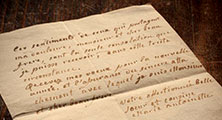 The feelings of those who share my sorrow, my dear brother-in-law, are the only consolation I can receive in this sad circumstance. Please receive my wishes for the new year and reassurance of my sincere devotion, that I am, my dearest brother-in-law, your affectionate sister-in-law and cousin Marie Antoinette.
A note with no date, just over ten lines in French, written in a clear and tidy script on a small sheet of paper, signed by the last queen of France. The contents of this dispirited message that bears no official character suggest it may have been written during one of the gloomiest periods in Marie Antoinette’s existence: between December 1792 and January 1793, just after the revolutionary tribunal’s death sentence against her husband Louis XVI, desacralized as “Citoyen Louis Capet”, and just before his execution on January 19, 1793. Marie Antoinette was held prisoner with all the royal family at the Tour du Temple, an ancient fortress built by the knights Templar in the 13th century. Anxious over her husband’s dire fate and certainly foreseeing her own death, the queen wrote this message to an unknown recipient, possibly Louis XVI’s brother, Charles Philippe, count of Artois and future king Charles X of France. Ten months after this note’s supposed date, Marie Antoinette’s curse fate unfolded: early on October 16, 1793, she was taken to the guillotine on a squalid barrow . . .
The full entry is available here (click on the letter on the far right side, second from the top).
Display | The Comte de Vaudreuil: Courtier and Collector
From the National Gallery of Art:
The Comte de Vaudreuil: Courtier and Collector
National Gallery, London, 7 March — 12 June 2012
 The Comte de Vaudreuil (1740–1817) was one of the leading courtiers and collectors of paintings in Paris during the 1780s. This display features Dutch and Flemish Old Master paintings in the National Gallery’s collection that were once owned by Vaudreuil or were in Parisian collections at that time. Vaudreuil’s collection provides an example of the decoration of wealthy homes in pre-Revolution Paris. Reflecting the fashion of the time, the paintings are hung according to their size and symmetry rather than by subject or chronology.
The Paintings
The display features paintings from the Comte’s collections by artists Jan Wijnants, Jacob van Ruisdael, Jan Steen and Adriaen van Ostade. Alongside these are works that were in French collections in the same period by artists Nicolaes Berchem, Aelbert Cuyp, Willem van de Velde and Gabriel Metsu. The paintings show a variety of subjects, from portraits of peasants to social life in 17th-century Holland to landscapes with ruined castles.
April 2012 Issue of ‘Apollo Magazine’
Eighteenth-century offerings from the latest Apollo Magazine (for the full text of each article, click on the images below). . .
◊ ◊ ◊ ◊ ◊
Anne Kapeller, “A Unique Heritage: Treasures of the Swiss National Museum in Nyon,” Apollo Magazine (April 2012).
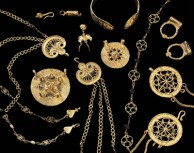 . . . In 1741, the curate Johann Georg Sulzer carried out a series of excavations at Lunnern, in the Reuss Valley near Zurich, leading to the discovery of a Roman temple, baths and a necropolis. On 17 November, he uncovered a hoard consisting of 17 pieces of gold jewellery and 84 silver coins, hidden in a recess. Three days later news of the sensational discovery reached Zurich. The painter Johann Balthasar Bullinger was commissioned to visit the site and produce a picture of the excavations. It was preserved along with the jewels in the art collection of the Wasserkirche in Zurich, before becoming part of the collections of the SNM. . .
◊ ◊ ◊ ◊ ◊
Lucy Davis & Christoph Martin Vogtherr, “A Taste for Blue,” Apollo Magazine (April 2012).
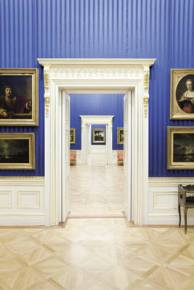 The Wallace Collection is famous for its exceptional group of works from the French 18th century. A smaller collection of around 150 Dutch 17th-century paintings is of equally fine quality, including masterpieces by Frans Hals, Rembrandt, Gerard ter Borch, Pieter de Hooch, Jan Steen, Gabriel Metsu, Caspar Netscher, Jacob van Ruisdael, Nicolaes Berchem, Philips Wouwermans and other leading painters of the Golden Age. It is particularly rich in genre paintings, landscapes by the Dutch Italianates and the work of some outstanding artists – Rembrandt first of all, but also Steen, Metsu, Willem van de Velde, Meindert Hobbema and Willem van Mieris. The resulting view of Dutch art does not provide a systematic overview but follows the personal preferences of the collectors and the typical view of Dutch art during the 18th and early 19th centuries. Artists such as Jan van Goyen, Hercules Seghers and Vermeer, but also the earlier periods before Rembrandt, are hardly represented. They were only admitted to the canon
at a time when the Hertford family had stopped collecting Dutch art. . .
◊ ◊ ◊ ◊ ◊
Juliet Carey, “A House of Cards: Taking Time,” Apollo Magazine (April 2012).
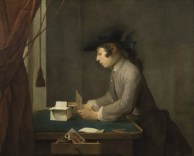 Waddesdon Manor is temporarily home to a small but extraordinarily beautiful group of works by one of the most revered of all French painters. The exhibition Taking Time: Chardin’s ‘Boy Building a House of Cards’ and Other Paintings is prompted by the recent acquisition of one of four works by Jean-Siméon Chardin (1699–1779) of a subject that particularly fascinated him. The last to enter the public domain, the Waddesdon canvas, is united for the first time with three other variations on the theme, on loan from national collections in France, Britain and the United States. . .
◊ ◊ ◊ ◊ ◊
Humphrey Wine, “The Art of a Connoisseur: Review of Pierre Rosenberg and Laure Barthélemy-Labeeuw, Les Dessins de la Collection de Pierre-Jean Mariette (2011),” Apollo Magazine (April 2012).
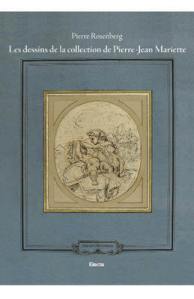 Soon after the death of Pierre-Jean Mariette (1694–1774) his heirs had Pierre François Basan organise a sale of his collection. It included paintings (among them Poussin’s Nurture of Bacchus, c. 1628, now in the National Gallery, London), terracottas, antique marbles, bronzes and engraved gems; the bulk of the sale, however, comprised some 9,000 Italian, Dutch, Flemish and French drawings. It was not only size that distinguished Mariette’s collection of drawings – the earlier collection of Pierre Crozat, built with Mariette’s advice, had been twice as large – but also its quality and comprehensive nature. . . .
Exhibition | The Art of German Stoneware
From the Philadelphia Museum of Art:
The Art of German Stoneware
Philadelphia Museum of Art, 5 May — 5 August 2012
Curated by Jack Hinton

Inkstand and Candleholder with Musicians, Animals, and a Griffin, ca. 1740. German Salt-glazed stoneware with painted decoration, roughly 20 x 10 x 7 in. (Philadelphia Museum of Art)
From the fourteenth through eighteenth centuries, stoneware ceramics from Germanspeaking centers in modern-day Germany and the Low Countries were valued and widely traded throughout northern Europe. In the 1600s—the heyday of stoneware production—they found an enthusiastic market in colonial North America. The medium’s success is due to its stonelike durability and imperviousness to liquid, making it perfect for cooking, storage, and drinking vessels. The social aspect of stoneware ceramics explains the crisp relief decoration on sixteenth- and seventeenth-century pieces, which feature moralizing images or political figures and their coats of arms; later pieces often eschew such ornament for floral or geometric patterns inspired by Far Eastern porcelains imported to Europe. Inkstand and Candleholder with Musicians, Animals, and a Griffindemonstrates the inventiveness and artistry of stoneware potters, even when faced with a dwindling market for their works in the homes of the well-to-do. This exhibition examines German stoneware from its origins to later revivals in the nineteenth-century and celebrates its long-standing relationship with the city of Philadelphia. It features selections from the Museum, seventeenth-century Dutch pictures demonstrating the high status of stoneware, and a generous promised gift of around forty pieces of German
stoneware from Dr. Charles W. Nichols. The exhibition is accompanied by an
illustrated publication by Jack Hinton, Assistant Curator of European Decorative
Arts and Sculpture.
◊ ◊ ◊ ◊ ◊
From Yale UP:
Jack Hinton, The Art of German Stoneware, 1300-1900 From the Charles W. Nichols Collection and the Philadelphia Museum of Art (New Haven: Yale University Press, 2012), 60 pages, ISBN: 9780300179781, $20.
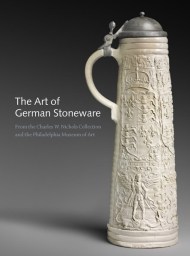 Beautiful and eminently useful, stonewares produced in the German-speaking lands from the Middle Ages onward were highly valued for their durability and suitability for a range of domestic and social uses. Widely traded throughout Europe, they were also among the first European ceramics to reach colonial North America. During the Renaissance the addition of brilliant salt glazes—s well as relief imagery that communicated with the user—raised the status of these wares. Later examples introduced abstract floral or geometric decorations and more unusual, original forms, which retained broad cultural significance.
About ninety fine stoneware pieces from the Philadelphia Museum of Art and a promised private collection testify here to the success, artful decoration, and fascinating variety of this medium. Jack Hinton describes the developments in stoneware through these notable examples, and beautiful color images bring
their details vividly to life.
Exhibition | Nicholas Hawksmoor: Architect of the Imagination
From the Royal Academy of Arts:
Nicholas Hawksmoor: Architect of the Imagination
Royal Academy of Arts, London, 4 February — 17 June 2012

Nicholas Hawksmoor, Drawing for a detached chapel, Greenwich Hospital, 1711
© The Samuel Courtauld Trust, The Courtauld Gallery, London
◊ ◊ ◊ ◊ ◊
350 years after his birth, the architecture of Nicholas Hawksmoor (1662–1736) continues to inspire and provoke the imagination. This exhibition brings Hawksmoor’s legacy to life by juxtaposing a range of images with quotes from architects, writers and critics, all relating to or inspired by Hawksmoor and his work. Represented are a diverse a range of figures including Sir John Soane RA, Charles Dickens, Peter Ackroyd, John Piper, Alan Moore and Leon Kossoff, along with film interviews with architect Ptolemy Dean, novelist Philip Pullman and poet Iain Sinclair, to dramatically bring to light the imaginative legacy of this most original architect.
Exhibition | Landscape, Heroes, and Folktales: German Romanticism
My apologies, this exhibition almost slipped by me completely. Thanks, however, to a brief extension, these prints and drawings (all from the private collection of Charles Booth-Clibbor) are up for another week. -CH
Landscape, Heroes, and Folktales: German Romantic Prints and Drawings
British Museum, London, 23 September 2011 — 9 April 2012
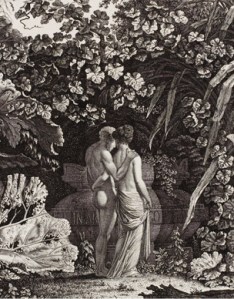
Carl Wilhelm Kolbe, "I too was in Arcadia" (detail). Etching, 1801. Private collection.
German Romanticism was a philosophical and artistic movement in the late 18th and 19th centuries which was highly influential across the whole of Europe. Key figures included composers Beethoven, Schubert and Brahms, philosophers Hegel and Schlegel, and literary giants Goethe and Schiller. Artists in 19th-century Germany were seeking a cohesive national identity that had not existed before – through works often inspired by the German landscape, mythology and Germany’s ancient past.
The prints and drawings on display capture beautiful, poetic scenes, exploring landscapes and wildlife to heroes and folktales. Romantic artists took inspiration from earlier artists, including Albrecht Dürer and Raphael. The works show high standards of draughtsmanship, depict an amazing variety of subject matter and use a range of sophisticated print techniques, including the recently invented technique of lithography. Artists featured in the exhibition include Caspar David Friedrich, Philipp Otto Runge, Wilhelm Tischbein, Carl Wilhelm Kolbe, Julius Schnorr von
Carolsfeld, Friedrich Overbeck, Peter Cornelius, Karl-Friedrich Schinkel
and Johann Christian Reinhart.










 Enfilade
leave a comment