An Eighteenth-Century Collection in Leipzig
From the website of the Museum der Bildenden Künste:
Spuren: Die Sammlung Gottfried Winckler
Museum der Bildenden Künste, Leipzig, 3 September — 10 November 2009

Anton Graff, "Carl Gottfried Winckler," 1769
Die bedeutendste Leipziger Kunstsammlung des 18. Jahrhunderts war die von Gottfried Winckler d. J. (1731–1795). Als der Kaufmann Winckler 1795 starb umfasste sein „Kabinett“ ca. 1.300 Gemälde, 2.469 Handzeichnungen, 80.000 Kupferstiche, eine Bibliothek von 6.842 Bänden und eine beachtliche Anzahl von Gemmen.
Es gehört zu den Zufällen der Geschichte, dass der Großteil von Wincklers Sammlung sich in seinem Elternhaus in der Katharinenstraße 22 aufbewahrt wurde, an der Stelle, an der sich heute das Museum der bildenden Künste befindet. Nach Wincklers Tod wurde die Sammlung von seinen drei Söhnen versteigert und damit in alle Winde zerstreut.
Die Rekonstruktion der verschwunden Sammlung ist ein Puzzlespiel. In Leipzig ist nur wenig geblieben: Durch einige „vorzüglich gute“ Stücke – etwas über zwei Dutzend Gemälde – konnte zum Beispiel Maximilian Speck von Sternburg seine Sammlung vermehren. Dennoch gehört Gottfried Winckler zu den Großen in der Kulturgeschichte der Stadt, über den Goethe schrieb, dass er die „einsichtsvolle Freude, die er an seinen Schätzen hegte, sehr gern mit Anderen teilte“. Die Ausstellung wird unterstützt durch die Maximilian Speck von Sternburg Stiftung und ist ein Beitrag zum 600-jährigen Jubiläum der Universität Leipzig.
◊ ◊ ◊ ◊ ◊
For additional information, see this news story on the exhibition (also in German).
Painting in Eighteenth-Century Constantinople
As noted on the website for CODART: Dutch and Flemish Art in Museums Worldwide:
Jean Baptiste Vanmour: A Painter from Valenciennes in Constantinople
Musée des Beaux-Arts de Valenciennes, 3 October 2009 – 7 February 2010
Curated by Emmanuelle Delapierre
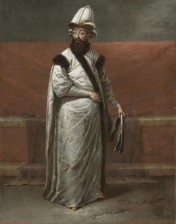
Vanmour, "Grand Vizier Nevsehirli Damat Ibrahim Pasa" (Rijksmuseum)
Jean Baptiste Vanmour (1671-1737) was born in Valenciennes but moved to Constantinople in 1699, where he would live and work for the rest of his life. In Constantinople he painted cityscapes and daily life in the city. He portrayed famous Ottomans such as Sultan Ahmed III and his grand vizier Nevsehirli Damat Ibrahim Pasa. Furthermore, he recorded important ceremonies at the sultan’s court.
From the museum website: 03-05-2009:
Jean Baptiste Vanmour et Valenciennes
Jean Baptiste Vanmour naît à Valenciennes le 9 janvier 1671. Les archives municipales conservent son acte de naissance, ainsi que la trace de sa famille relevée lors du recensement des habitants de la ville en 1699. L’emplacement de la maison natale de Vanmour est également bien connu. Son père et son frère sont comme lui artistes: le premier est ébéniste, le second peintre. Jean Baptiste et son frère reçoivent leur première formation artistique aux Académies de la Ville, célèbres pour la qualité de leur enseignement. Mais à la différence de son frère, Jean Baptiste ne peut pas rester à Valenciennes, faute des autorisations nécessaire pour exercer son métier de peintre, délivrées par la puissante Guilde de Saint-Luc. Contraint par un procès que lui intente la Guilde à quitter la ville, l’artiste part d’abord à Paris, puis à Constantinople, sans doute à l’invitation de l’ambassadeur de France, M. de Ferriol.
Scènes de vie en Turquie au XVIIIe siècle
Arrivé à Constantinople autour de 1699, Jean Baptiste Vanmour y mourra le 22 janvier 1737, sans jamais revenir dans son pays natal. Dans cette contrée d’adoption qui est désormais la sienne, il peint des vues panoramiques des rives du Bosphore, des scènes de la vie quotidienne – rentrée des classes, mariages – et représente encore les principales communautés étrangères de la ville, Arméniens, Grecs, Français, Hongrois… Il nous livre ainsi une témoignage rare de la vie du chaque jour, dans cette cité ô combien cosmopolite. Mieux, il pénètre les rituels de la Cour du Sultan, nous offrants les portraits de Ahmed III, de son Grand Vizir, des plus grands dignitaires, recevant à l’occasion de somptueuses réceptions les ambassadeurs venus d’Europe. Enfin, au-déla des temps protocolaires, Vanmour pénètre encore pour nous le secret des harems ou des repas des Derviches.
L’atelier d’un peintre
Les oeuvres de Jean Baptiste Vanmour consistent essentiellement en de petits tableaux – paysages, portraits, grandes réceptions ou épisodes de la vie quotidienne- peints à l’huile avec un abondance de détails pittoresques. Soigneusement composées, ces scènes étaient souvent préparées par des dessins rehausées de craie blanche et de sanguine. Cette attention n’était certainement pas superflue, de nombreuses commandes émanant des ambassadeurs européens. Jean Baptiste Vanmour répomd à leur souhaits grâce à l’aide de son atelier. Le peintre est assisté de nombreux disciples, originaires de la cité ottomane, qui participent pleinement à la création des tableaux signés par la maître. Aux oeuvres attestées de Jean Baptiste Vanmour Vanmour s’ajoutent ainsi celles produites avec ou par son atelier, mais encore de nombreuses copies plus tardives. Grâce à des photographies de tableaux en cours de restauration, à des radiographies, à des diagrammes, l’exposition du musée de Valenciennes s’attachera pour la première fois à donner les clés d’identification des oeuvres de Vanmour.
◊ ◊ ◊ ◊ ◊
An exhibition dedicated to Vanmour appeared in 2003 and 2004 at the Topkapi Sarayi Müzesi in Istanbul and the Rijksmuseum in Amsterdam. For details of the previous show, including the exhibition catalogue, click here»
Small Exhibitions Now at the V&A
From the V&A’s website:
Europe and the English Baroque: English Architecture 1660-1715
Victoria & Albert Museum, London, 1 May — 9 November 2009

Model for Easton Neston, Northamptonshire, Nicholas Hawksmoor, ca. 1694
Centred on the RIBA’s recently acquired model of Nicholas Hawksmoor’s baroque jewel Easton Neston (1694), this display will look at how continental buildings influenced architecture in Britain between the Restoration in 1660 and the publication in 1715 of the first volume of Colen Campbell’s Vitruvius Britannicus (often taken as the symbolic opening of the Palladian revival). The influence was mostly through the medium of books and engravings as few English architects travelled abroad (exceptions were Christopher Wren, Roger Pratt and William Winde, and, at the beginning of the period, Balthasar Gerbier); consequently there was surprisingly little knowledge of continental architecture gained at first hand, and some of the translations from engraved plate to English buildings could be very surprising.
The display will contain architectural drawings by such luminaries as Christopher Wren, Nicholas Hawksmoor, William Talman and John Vanbrugh, taken partly from the RIBA’s own collection and augmented by loans from a number of British institutions including All Souls, the Queen’s College, Oxford, King’s College, Cambridge, Sir John Soane’s Museum and other institutional and private collections. The display is curated by Roger White and Charles Hind.
◊ ◊ ◊ ◊ ◊
Objects of Luxury: French Porcelain of the Eighteenth Century
Victoria & Albert Museum, London, 18 September 2009 — March 2010

Sugar basin and cover, Saint-Cloud, ca. 1700-20 (V&A: no. 487-1909)
During the eighteenth century France dazzled the rest of Europe through the brilliance of its court. The rich and fashionable lived in a world of unparalleled refinement, fuelling an insatiable market for luxury goods. However, the eighteenth century was also a time of intense scientific enquiry and innovative research which witnessed, throughout Europe, marvellous achievements in this sphere. One of the most exciting discoveries, after centuries of wonder and captivation, was the successful production of porcelain. Known as ‘white gold’, porcelain was produced for use in all aspects of fashionable public and private life; from banquets to boudoirs, from tea drinking to the toilette.
In the absence of known deposits of kaolin (the key ingredient in making true, or ‘hard-paste’, porcelain), a glassy-bodied, artificial, or ‘soft-paste’, porcelain had been produced in France since the end of the 17th century. It was more costly to make than the ‘hard paste’ but its sensuous charm soon earned it universal admiration. Its soft, easily fusible, wax-like glaze allowed colours to fuse deep within it, and its lower firing temperature allowed the use of a much broader range of colours. Of all the factories in France, the most renowned was the Royal Porcelain Manufacture at Sèvres. The protection of Louis XV and the patronage of his mistress, Madame de Pompadour, drew to Sèvres the best alchemists, designers and artists in Europe. The porcelain they produced was unequalled in quality, design and decoration. This display introduces the visitor to the major French factories and demonstrates the wide variety of objects they could provide for their fashionable clientele.
◊ ◊ ◊ ◊ ◊
An 18th-Century Enigma: Paul de Lamerie and the Maynard Master
Victoria & Albert Museum, London, 11 May 2009 — May 2010
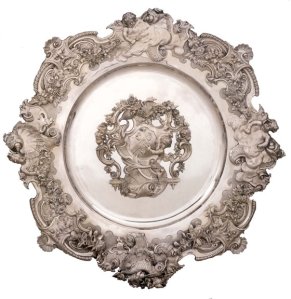
The Maynard Dish, 1736–37 (V&A: on loan from the Cahn family foundation)
Paul de Lamerie (1688-1751) was the greatest silversmith working in England in the 18th century. A Huguenot (French Protestant), he came to London with his parents, fleeing persecution in France. His success lay in his own exceptional creativity in producing stunning objects, but also in his ability as a businessman, retailing some astonishingly spectacular silver using the most effective and innovative suppliers in the trade.
The silver shown here is associated with de Lamerie’s most brilliant craftsman, whose identity is still a mystery, who worked from 1737 to 1745. He is known as the Maynard Master, named after the dish made for Grey, 5th Baron Maynard now in the Cahn family collection. Other masterpieces marked by de Lamerie are from the collection of Sir Arthur Gilbert and this display celebrates the opening of the Rosalinde and Arthur Gilbert Galleries at the V&A in 2009.
For more information about the V&A’s collection of silver by Paul de Lamerie, visit the Paul de Lamerie pages on the website. From there you can also download and print a trail to bring with you to the V&A, to help you find the highlights of the de Lamerie permanent collection across the galleries.
Collecting in Eighteenth-Century Vienna
From Andrew Ayers’s summary of exhibitions in Paris this fall, as reported in Art Info:
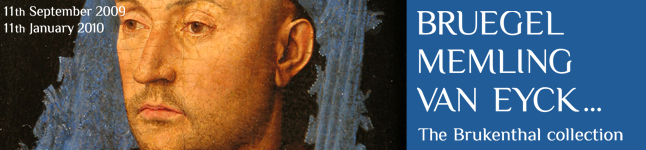
Bruegel, Memling, Van Eyck … The Brukenthal Collection
Musée Jacquemart-André, Paris, 11 September 2009 – 11 January 2010
A favorite of the Austrian Empress Maria Theresa, Samuel von Brukenthal (1721–1803) was an insatiable collector, amassing over 16,000 books, hundreds of objets d’art, and more than 1,200 paintings. In 1777, he became governor of his native Transylvania, where, in present-day Sibiu, Romania, he built a palace to house his collections that became a museum after his death. For the first time in France, about 50 major works from the Muzeul National Brukenthal are being shown. The curators’ selection highlights the Flemish paintings, dating from the 15th to the 17th centuries, which were much sought after in mid-18th-century Vienna. Besides the quartet mentioned in the exhibition title (for there were two Pieter Bruegels, father and son), artists such as Jacob Jordaens, David Teniers II, and Titian also feature in the show. Key works include Bruegel the Younger’s copy of his father’s Massacre of the Innocents in Bethlehem (Elder’s: circa 1567; Younger’s: circa 1586–90), Van Eyck’s Man in a Blue Turban (circa 1430), and Titian’s Ecce Homo (1560).
◊ ◊ ◊ ◊ ◊
From the Brukenthal Museum’s website:

Brukenthal Palace in Sibiu, Romania, 1778-1788
Baron Samuel von Brukenthal (1721-1803) was the only representative of the Transylvanian Saxon community who acceded to high public office in the Austrian Empire under the Empress Maria Theresa (1717 – 1780), the first such office being that of Chancellor of Transylvania. The years spent in Vienna, in this capacity, were the years when the Baron started acquiring his collection of paintings, mentioned in Almanach de Vienne (1773) as being one of the most valuable private collections and generally admired by the cultivated Vienna public of the time. Baron’s initial collections (comprising the collection of paintings, a collection of prints, a library and a coin collection) were mostly put together in the period between 1759 and 1774. We have scant information as to how they came into being, the earliest records in the Brukenthal family being the archive concerning acquisition of paintings dating from 1770 (by which time the core of the collection of paintings must have been acquired). Appointed Governor of the Principality of Transylvania, a position that he occupied between 1777 and 1787, Samuel von Brukenthal built a Late Baroque palace in Sibiu, modelled on the palaces in the imperial capital.
Call for Papers: Rosa in Britain (witches and magic!)
Conference: Salvator Rosa in Britain
Dulwich Picture Gallery, London, 18 October 2010
Proposals Due by 30 December 2009

Salvator Rosa, "Soldiers Gambling," ca. 1658 (Dulwich Picture Gallery)
The Paul Mellon Centre for Studies in British Art will be hosting a conference, Salvator Rosa in Britain, on October 18th, 2010, at Dulwich Picture Gallery, London, to accompany the exhibition Salvator Rosa (1615-1673): Bandits, Wilderness and Magic, to be held there from 15 September – 28 November 2010. Rosa has always had a double importance for art in Britain, as both painter and phenomenon, and the conference aims to explore his vast impact on both painters and writers. Possible themes might include
- collectors and collecting
- Rosa and concepts of the sublime, both in landscape and in magic, prophecy and enchantment
- the afterlife of some outstanding works once or still in Britain, such as the Democritus, Belisarius, Atilius Regulus, or Empedocles Leaping into Etna
- Rosa and the concepts of Romantic genius and the freedom of the artist
- the myths woven around Rosa’s biography
- bandits and witches.
Please send a 250 to 500-word outline of your proposal for a twenty-five minute presentation, along with a CV and a list of publications to Helenlangdon@hotmail.com.
Drawings from the Frits Lugt Collection at the Frick
From the Frick’s website:
Watteau to Degas: French Drawings from the Frits Lugt Collection
Frick Collection, New York, 6 October 2009 – 10 January 2010
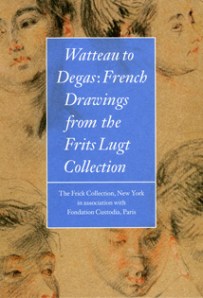
Colin Bailey, Susan Grace Galassi, Mària van Berge-Gerbaud, $60
Frederik Johannes Lugt (1884–1970) was a Dutch art historian, connoisseur, and collector. His fame in scholarly circles derives from two pioneering publications, still in use today: his Les marques de collections de dessins et d’estampes, published in 1921, which identifies the collectors’ marks found on Old Master prints and drawings, and the Répertoire des catalogues de ventes publiques intéressant l’art ou la curiosité, a comprehensive listing of nearly 90,000 auction catalogues from sales occurring between 1600 and 1925, published in four volumes between 1938 and 1987.
Frits Lugt, as he was known, was a born collector. By the age of eight, he had sold his shell collection to the natural history department of Amsterdam’s Royal Zoo; at fifteen, he acquired his first drawing. In his thirties, he began to collect in a more serious and systematic way, specializing in Dutch and Flemish drawings and prints, always his chief interest. During the 1920s, the decade in which he made his most important acquisitions, he also bought fifteenth-century Italian drawings and eighteenth-century French sheets.
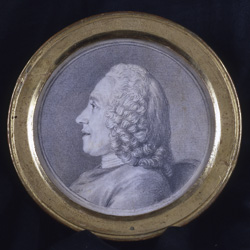
Charles-Nicolas Cochin, "Portrait of Pierre-Jean Mariette," Graphite with stumping, 1756
Lugt was among the founders and principal supporters of the Rijksbureau voor Kunsthistorische Documentatie (RKD), the institute devoted to the study of Netherlandish art and artists, established in The Hague in 1930. In 1947, he created the Fondation Custodia in Paris, to care for and to add to his collection of 6,000 Old Master drawings and 30,000 prints. The Frits Lugt Collection is widely regarded by specialists as one of the finest of its kind, but it is less well known to the general public.
Curators at The Frick Collection were invited to select for the exhibition and its accompanying catalogue Lugt’s finest eighteenth- and nineteenth-century French drawings, and the sixty-four works featured in the exhibition illuminate both Lugt’s taste and that of his successors. Included are drawings and watercolors by well-known masters of the French School such as Watteau, Boucher, Fragonard, David, Ingres, and Degas, as well as by important figures who are less familiar to the general public. This is the first time that a group of French master drawings from the Fondation Custodia has traveled to New York.
◊ ◊ ◊ ◊ ◊
Stijn Alsteens (Metropolitan Museum of Art, NY), Frits Lugt: Connoisseur and Collector of Drawings
Wednesday, 18 November 2009, 6pm
Colin Bailey (Frick Collection), Eighteenth-Century French Drawings from The Frits Lugt Collection
Saturday, 9 January 2010, 2pm
◊ ◊ ◊ ◊ ◊
The show’s illustrated checklist (available here) includes more than thirty eighteenth-century drawings. The Frick’s website also includes podcasts on the exhibition by Colin Bailey and Susan Galassi.
A Dutch Collection in New York
Dutch New York between East and West: The World of Margrieta van Varick
Bard Graduate Center, New York, 18 September 2009 — 3 January 2010
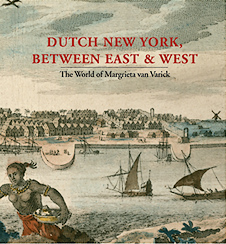
Edited by Deborah Krohn and Peter Miller with Marybeth De Filippis, $75
This autumn the Bard Graduate Center will participate in a state-wide celebration of the 400th anniversary of Henry Hudson’s voyage and the legacy of Dutch culture in New York with a landmark exhibition, Dutch New York Between East and West: The World of Margrieta van Varick. Organized by the BGC and the New-York Historical Society and curated by Marybeth De Filippis and Deborah Krohn, Dutch New York will make a major contribution to the quadricentennial and to the scholarship of colonial New York by focusing on the life and times of a woman who during the seventeenth century lived in the rural village of Flatbush on eastern Long Island, a neighborhood still known by that name in the borough of Brooklyn today. The exhibition helps elucidate what the historian Russell Shorto has called the “forgotten colony” in his book The Island at the Center of the World. Indeed, the British roots of New York City are recognized far more widely than the Dutch, despite the city’s visible connections to the Dutch founders, most evident in street names such as Amsterdam Avenue and Varick Street.

Covered Bowl from Batavia (present-day Jakarta, Indonesia), early 18th century, silver (Gemeentemuseum, The Hague)
Dutch New York offers an innovative approach to exhibition practice by using the probate inventory of Margrieta van Varick’s possessions compiled in 1696 as a means of examining life and culture in colonial New York. Born in Amsterdam in 1649, Margrieta spent several years at the other end of the Dutch colonial world in the Far East, primarily in Malacca (present day Malaysia) before returning to The Netherlands with her minister husband Rudolphus. In 1686 Margrieta and her family crossed the Atlantic to settle in Flatbush where Rudolphus was minister of the Dutch Reform Church and where she opened a textile shop, having brought with them an astonishing array of Eastern and European goods.
This exhibition is organized in five sections, each delineating a theme relevant to Margrieta van Varick’s life as well as exploring the wide range of goods in her possession when she died in late 1695. The exhibition first examines the inventory as a document of historical research and curatorial practice. A digital film (also available online) features an interview with renowned historian Natalie Zemon Davis in which she considers the various challenges confronting historians who use inventories for research purposes, as well as the role of women in the seventeenth century.
For the full description of the exhibition, click here»
◊ ◊ ◊ ◊ ◊
Lecture — Inventory: Text and Context, Bernard Herman
Thursday, 19 November 2009, 6-8 pm ($25 / $17)
RSVP required to 212.501.3011, programs@bgc.bard.edu
What can an inventory tell us? How can we use an artifact of the legal system to tease out relationships between people and their relationship to things? How does such a document translate into an exhibition? Bernard Herman, a leading scholar of American material culture, will draw on his vast knowledge of both things and people in a conversation with cultural historian Catherine Whalen and exhibition co-curator Deborah Krohn. The conversation will be followed by an exhibition viewing and reception. Bernard Herman is Edward F. and Elizabeth Goodman Rosenberg Professor of Art History, University of Delaware. Deborah Krohn is associate professor and coordinator for history and theory of museums at the Bard Graduate Center as well as co-curator of the Dutch New York exhibition. Catherine Whalen is assistant professor at the Bard Graduate Center.
◊ ◊ ◊ ◊ ◊
Study Day — Reflecting on Silver: Manufacture, Markets, and Meaning in Early New York
Friday, 20 November 2009 ($125 / $100 discount)
RSVP required to 212.501.3011, programs@bgc.bard.edu
This study day will focus on silver in New York in the late seventeenth and early eighteenth centuries, as an object signifying wealth, cultivation, and mastery. Concentrating on works by silversmiths Benjamin Wynkoop, Cornelius Kierstede, and Peter Van Dyck, curators Marybeth De Filippis, Beth Carver Wees, and Debra Schmidt Bach will consider aspects of stylistic influence, marketing of silver, and workshop practices. A visit to the studio of master silversmith Ubaldo Ubaldo “>Ubaldo “>Vitali in Maplewood, New Jersey, will provide an examination of the technical knowledge and cultural influences surrounding the production of silver through the centuries. Admission to the study day includes lunch and round-trip transportation to the Ubaldo Vitale studio. Marybeth De Filippis is assistant curator of American art at the New-York Historical Society as well as co-curator of the Dutch New York exhibition. Beth Carver Wees is curator in the Department of American Decorative Arts at the Metropolitan Museum of Art. Debra Schmidt Bach is assistant curator of decorative arts at the New-York Historical Society and a PhD candidate at the BGC. Ubaldo Vitali is a fourth-generation Roman silversmith, conservator, and art historian.
◊ ◊ ◊ ◊ ◊
A helpful article about the exhibition written by Marybeth De Filippis appears in the September issue of The Magazine Antiques.
Strawberry Hill
The Walpole show at the YCBA opened yesterday in New Haven with a lecture by Michael Snodin (Senior Research Fellow at the V&A). From the museum’s website:
Horace Walpole’s Strawberry Hill
Yale Center for British Art, New Haven, 15 October 2009 — 3 January 2010
Victoria & Albert Museum, London, 6 March — 4 July 2010

Ed. by Michael Snodin (Yale University Press), $85
Horace Walpole (1717–1797) was the youngest son of Robert Walpole, first earl of Orford and prime minister under both George I and George II. Horace’s birthright placed him at the center of society and politics, and of literary, aesthetic, and intellectual circles. His brilliant letters and other writings have made him the best-known commentator on social, political, and cultural life in eighteenth-century England. In his own day, he was most famous for his personal collections, which were displayed at Strawberry Hill, his pioneering Gothic-revival house on the banks of the Thames at Twickenham, outside London, and through which he constructed narratives of English art and history.
This groundbreaking exhibition seeks to evoke the breadth and importance of Walpole’s collections at Strawberry Hill by reassembling an astonishing variety of his objects, including rare books and manuscripts, antiquities, paintings, prints and drawings, furniture, ceramics, arms and armor, and curiosities. These will be drawn frominternational public and private collections as well as those of the Center and Yale’s Lewis Walpole Library in Farmington, Connecticut.
Horace Walpole’s Strawberry Hill has been organized by the Center, The Lewis Walpole Library, and the Victoria and Albert Museum. The exhibition will be accompanied by a fully illustrated catalogue with contributions by an array of distinguished international scholars. The Center is the only U.S. venue. The exhibition has been generously supported by the Samuel H. Kress Foundation and the Andrew W. Mellon Foundation.
◊ ◊ ◊ ◊ ◊
Michael Snodin, Discovering Strawberry Hill
Wednesday, 14 October, 5:30pm
Peter Inskip, Revealing Strawberry Hill House
Tuesday, 20 October, 5:30pm
Cynthia Roman, Works of Genius: Amateur Artists at Strawberry Hill
Wednesday, 11 November, 5:30pm
Drawings at the Getty
From the Getty’s website:
Capturing Nature’s Beauty: Three Centuries of French Landscapes
Getty Center, Los Angeles, 28 July – 1 November 2009
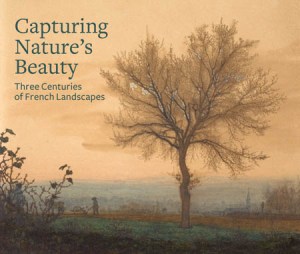
Édouard Kopp, exhibition catalogue (Getty, 2009) $19.95
This selection of over 40 drawings from the collections of the J. Paul Getty Museum and the Getty Research Institute highlights key moments in the French landscape tradition, from its emergence in the 1600s to its preeminence in the 1800s. The exhibition showcases drawings by some of the masters of the genre, including Nicolas Poussin, Claude Lorrain, François Boucher, Jean-Honoré Fragonard, Camille Pissarro, and Vincent van Gogh. Together these works reveal a tension between a passion for the real and the quest for an ideal. They demonstrate different facets of the relationship between the artist and the land: from simple record to creative transformation, if not pure invention. . . .

Fragonard, "Ruins of an Imperial Palace," 1759
Jean-Honoré Fragonard made this accomplished drawing while he was a student at the French Academy in Rome. The curriculum was relatively unusual because it actively promoted the practice of sketching outdoors, a sign of landscape’s increasingly elevated status as an artistic genre. In this view of the Palatine Hill as seen from the Roman Forum, the artist adopted a low viewpoint and a wide angle that allowed him to create a bold, forceful composition. Using red chalk, he brilliantly rendered the complex formal interaction between buildings and nature.
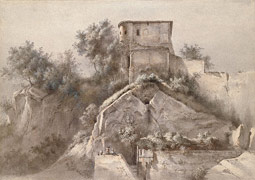
Boissieu, "Château Galliard," 1796
Jean-Jacques de Boissieu is best known for his large and delicately washed picturesque views. A trip to Italy inspired his practice of illuminating his compositions with bright sunlight. Yet his palette—dominated by grays—and meticulous attention to detail are reminiscent of earlier Dutch landscape drawings. This style enabled de Boissieu to work quite independently from the artistic trends of his time, exemplified by the works of Fragonard and Hubert Robert. The draftsman carefully framed his motif: an abandoned fortified house in Lyon, his native city, perched on a craggy hill and overgrown by nature. While capturing the atmosphere of the locale, Boissieu rendered the variety of textures with a compelling sense of materiality.
Furniture at the Wallace
The Wallace Collection highlights the cabinet-maker, Johann Gottlob Fiedler with a small exhibition and study day. From the museum’s website:
Study Day: Johann Gottlob Fiedler, Eighteenth-Century German Cabinet Maker
Wallace Collection, London, Thursday 15 October 2009 (£7)
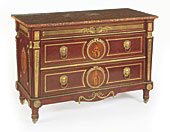
Johan Gottlob Fiedler, Commode, ca. 1786 (Wallace Collection)
Achim Stiegel, Curator of Furniture at the Kunstgewerbe Museum Berlin, will present latest research on the cabinet making of Johann Gottlob Fiedler and the small group of cabinets made for patrons such as Crown Prince Friedrich Wilhelm of Prussia, later King Friedrich Wilhelm II. Jürgen Huber, Senior Furniture Conservator, Wallace Collection, will discuss the recent conservation of the Collection’s superb Fiedler commode from c.1786 and the innovative features in its construction. See the commode in a special exhibition in the Conservation Gallery,
Vorsprung durch Technik: The Innovative Work of the Cabinet-maker Johann Gottlob Fiedler (6 June – 29 November 2009).










 Enfilade
leave a comment