Exhibition | Health in the Press
Now on view at the Sainte-Geneviève Library; from the exhibition booklet:
La santé dans la presse: Livres, journaux et publics au 18e siècle
Bibliothèque Sainte-Geneviève, Paris, 20 April — 17 July 2021
Organized by Maria Conforti and Yasmine Marcil
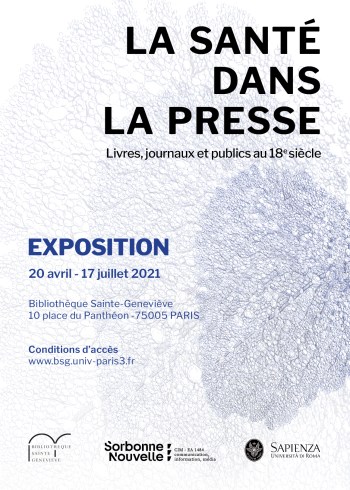 Cette exposition porte avant tout sur des questions de santé hors des milieux médicaux, auprès d’un public non spécialiste. En s’appuyant sur les fonds de la bibliothèque Sainte-Geneviève, il s’agit de montrer l’importance des périodiques et des livres imprimés dans la mise à disposition de savoirs et des nouvelles sur la santé, ainsi que de souligner la visibilité des ouvrages de médecine auprès du grand public.
83 documents sont présentés dans 7 parties thématiques:
• L’essor de la presse en Europe au 18e siècle
• Les débats sur l’inoculation
• Santé et voyage : le scorbut et la navigation
• La vogue du mesmérisme
• Les livres de médecine pour tous
• Les maladies des femmes, l’accouchement, l’allaitement
• Le succès de l’anatomie
Les journaux généralistes et spécialisés qui se multiplient en Europe durant le siècle des Lumières sont attentifs à l’actualité des publications et deviennent pour certains d’entre eux des lieux de débat, notamment par le biais du courrier de lecteurs. Certaines propositions thérapeutiques suscitent de larges débats tandis que l’on observe un intérêt nouveau pour les maladies des femmes ou le soin des enfants. Le goût pour l’anatomie, tout comme pour les sciences en général, se traduit par des propositions diversifiées, plus particulièrement à Paris, allant des cours aux démonstrations anatomiques et aux visites de cabinets de curiosité. Ces formations et ces activités attirent un public plus large que celui des seuls étudiants. Au-delà de ce public cultivé, des livres souvent rédigés par des médecins, comme Tissot et Buchan, apportant des conseils thérapeutiques, s’adressent à un vaste lectorat, comme en témoigne le succès de certains d’entre eux à l’échelle européenne. L’exposition place donc en regard périodiques et livres, ainsi que quelques gravures afin de montrer le rôle des imprimés dans l’élargissement du public et l’importance d’envisager ensemble livres et journaux.
Cette exposition a été conçue par Maria Conforti (Istituto e Museo di Storia della Medicina, Sapienza Università di Roma) et Yasmine Marcil (laboratoire CIM, Institut de la communication et des médias, Université Sorbonne Nouvelle).
Exhibition | Tables of Power: A History of Prestigious Meals

Jacques Roëttiers, Ornamental Centerpiece, Surtout de table, 1736 (Paris: Musée du Louvre). Additional information and exceptional details are available here.
◊ ◊ ◊ ◊ ◊
Comprised of five sections, the exhibition traces the history of elite dining conventions from ancient Mesopotamia and Egypt to the present. The fourth section focuses on eighteenth-century France.
Les tables du pouvoir: Une histoire des repas de prestige
Musée du Louvre-Lens, 19 May — 26 July 2021
Organized by Zeev Gourarier with Michèle Bimbenet-Privat, Hélène Bouillon, Alexandre Estaquet-Legrand, Christine Germain-Donnat, and Marie Lavandier
Chapitre 4 : du service à la française au service à la russe
 Le 18e inaugure de nouvelles manières d’envisager les plaisirs de la table. La forme trop protocolaire du Grand Couvert laisse si peu de place à la convivialité que, pour y échapper, on invente au sein des « petits appartements » à Versailles et dans les résidences privées du roi, la salle à manger puis la table à manger, de forme ronde. Dans le cadre des Soupers fins, on peut alors s’adonner en toute liberté et en bonne compagnie aux plaisirs d’une gastronomie en pleine effervescence. Le service offert par l’Impératrice Marie-Thérèse d’Autriche à Madame Geoffrin, qui tient l’un des plus célèbres salons artistiques et littéraires parisiens d’alors, rappelle l’atmosphère raffinée des repas consommés dans les toutes premières salles à manger au temps des Lumières.
À partir de 1740, la fabrique de Vincennes—transférée à Sèvres en 1756—met au point un procédé complexe de double cuisson qui permet d’obtenir une pâte onctueuse et translucide, la porcelaine tendre. L’exposition présente l’un des premiers services de table réalisés, à fond bleu céleste et décor de fleurs, offert à Louis XV. Ces pièces exceptionnelles font la renommée de la France dans toute l’Europe et créent une véritable diplomatie des services de Sèvres, abondamment offerts en cadeaux par le roi. Dès son instauration en 1804, le Premier Empire en devient un commanditaire majeur. Le Service Olympique fait partie des premiers services en porcelaine livrés à Napoléon. Il décore la table de fête au palais des Tuileries à l’occasion du mariage de son frère, Jérôme Bonaparte. La table du Cardinal Fesch, oncle de Napoléon, se déploie également au milieu du parcours. Sur un fond bleu lapis, imitant la pierre dure, le décor de portraits d’empereurs antiques à la manière des camées est un hommage subtil à Napoléon lui-même, qui lui offre ce service.
Au gré des régimes, la Manufacture de Sèvres habille les tables du pouvoir. À l’instar de la Présidence de la République, les ministères d’État disposent de leur propre vaisselle, passant commande aujourd’hui encore. Une table en miroir fait ainsi dialoguer le service des Départements (19e siècle) et son décor floral, au service Diane du ministère de la Culture, conçu vers 1960 et dont le décor est renouvelé en 2007 par l’artiste Fabrice Hyber.
 À sa création à la fin du 18e siècle, la manufacture royale du Danemark rejoint la prestigieuse compétition que se livrent les différentes manufactures de porcelaine d’Europe. Elle réalise l’un des plus surprenants et opulents services de table de cette époque, le Flora Danica. Composé de plus de 1800 pièces à l’origine, il aurait été initialement destiné à l’impératrice de Russie Catherine II, grande amatrice de porcelaine, mais n’est jamais livré. Les motifs s’inspirent directement des planches illustrées du Flora Danica (« Flore du Danemark »), et forment comme un grand atlas botanique, avec plantes, champignons et autres lichens. Le service est aujourd’hui encore utilisé à la cour du Danemark lors des grandes occasions.
Dans le cadre de la pièce désormais réservée aux repas, la salle à manger, l’ordonnance du repas continue d’évoluer pour aboutir en un siècle à notre service actuel, dit « service à la russe ». Ce nouveau dispositif témoigne des transformations des modes de vie et de la culture alimentaire au début du 19e siècle. Il implique un nouvel ordonnancement des mets. Les plats ne sont plus présentés de manière harmonieuse et foisonnante en services successifs, mais sont désormais servis individuellement, simultanément à tous les convives. Ces dispositions permettent notamment à tous de manger chaud et réduisent le nombre de domestiques autour de la table. Les verres se multiplient et ne sont plus disposés sur des dessertes mais sur la table, et les couverts individuels s’alignent autour de l’assiette—tels que nous les connaissons aujourd’hui.
Zeev Gourarier, ed., Les tables du pouvoir: Une histoire des repas de prestige (Paris: Réunion des musées nationaux, 2021), 320 pages, ISBN: 978-2711878635, 40€.
A list of contents is available here»
Print Quarterly, June 2021
The eighteenth century in the latest issue of Print Quarterly:
Print Quarterly 38.2 (June 2021)

Jeanne-Elisabeth Chaudet, Portrait of a Young Girl, traditionally Identified as Madame Villot, née Barbier, Carrying Her Father’s Sabre, oil on canvas, likely shown at the Salon in 1817 (Private Collection).
A R T I C L E S
Claire Brisby, “Orthodox Prints in the Samokov Painter’s Archive”
Addressing the distinctive category of religious prints produced for the Orthodox Christian market from 1698 to 1864, Brisby’s article focuses on prints that once formed the image archive of the painter Christo Dimitrov and his son and other family members in Samokov, Bulgaria—prints that have received limited scholarly attention. The article discusses various sites of print production and explores the use of prints in workshops as models for frescoes and paintings.
N O T E S
F. Carlo Schmid, “Prints after the Antique up to 1869”
The exhibition catalogue Phönix aus der Asche: Bildwerdung der Antike – Druckgrafiken bis 1869 / L’Araba Fenice: L’Antico Visualizzato nella Grafica a Stampa fino al 1869, reviewed here by F. Carlo Schmid, explores the development of printed images concerning architecture, sculpture, and objects of everyday life of classical antiquity. The prints date from the fifteenth to the second half of the nineteenth century and relate to works from, but not limited to, Egypt, Greece, and the Roman Empire. Of particular interest to eighteenth-century scholars, Schmid highlights that the original project out of which the exhibition and catalogue grew concerned Hadrian’s Villa at Tivoli as a “space of artistic interaction” in the eighteenth and nineteenth centuries.
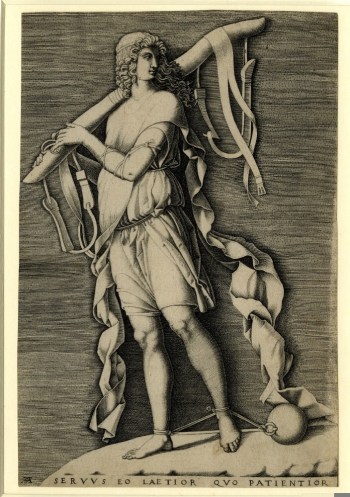
Adamo Scultori (Ghisi), Young Prisoner, 1566–80, engraving.
Francisco J. R. Chaparro, “Spanish Drawing Books”
A note on the exhibition catalogue El Maestro de Papel reviewed here by Francisco J. R. Chaparro, presents a comprehensive review of the scholarly attention directed towards Spanish drawing books. Chaparro makes reference to the Matías de Irala 1731 work and mentions the poor survival of the books. Chaparro tracks the appearance and reappearance of Jusepe Ribera’s etchings dated 1622 to highlight the further issue of cross-reference in these works. The note provides a critique of the exhibition while firmly situating it as a cornerstone for further research on the field of Spanish prints and drawings.
Ellis Tinios, “Surimono from the Virginia Shawan Drosten and Patrick Kenadjian Collection”
A laudatory note by Ellis Tinios on the catalogue The Private World of Surimino presents a brief analysis of surimono prints and notes, for instance, the importance of adequate lighting in revealing the complexities of blind printing and reflective inks.
David Ekserdijan, “A Portrait by Jeanne-Elisabeth Chaudet and Its Source”
David Ekserdijan presents the unusual artistic inspiration behind Jeanne-Elisabeth Chaudet’s painting A Portrait of a Young Girl of 1817, which sold in a 2006 Sotheby’s auction. The note features a side-by-side comparison with Adamo Scultori’s Young Prisoner or An Allegory of Servitude of 1566–80.
New Book | Dandy Style
The related exhibition is scheduled to open later at the Manchester Art Gallery, but the publication, from Yale UP, is available now:
Shaun Cole and Miles Lambert, Dandy Style: 250 Years of British Men’s Fashion (New Have: Yale University Press, 2021), 168 pages, ISBN: 978-0300254136, $35.
 Celebrating 250 years of male self-expression, investigating the portraiture and wardrobe of the fashionable British man
The style of the dandy is elegant but bold—dedicated to the perfection of taste. This meticulously choreographed look has a vibrant history; the legacy of Beau Brummell, the original dandy of Regency England, can be traced in the clothing of urban dandies today. Dandy Style celebrates 250 years of male self-expression, investigating the portraiture and wardrobe of the fashionable British man. Combining fashion, art, and photography, the historic and the contemporary, the provocative and the respectable, it considers key themes in the development of male style and identity, including elegance, uniformity, and spectacle. Various types of dandy are represented by iconic figures such as Oscar Wilde, Edward VIII as Prince of Wales, and Gilbert & George. They appear alongside the seminal designs of Vivienne Westwood, Ozwald Boateng, and Alexander McQueen; and portraits by Thomas Gainsborough and David Hockney.
Shaun Cole is associate professor in fashion at Winchester School of Art, University of Southampton. Miles Lambert is curator of costume at Manchester Art Gallery.
C O N T E N T S
Christopher Breward — Foreword: Dandy Style
Alistair Hudson — Director’s Preface
Shaun Cole and Miles Lambert — Introduction
1 Miles Lambert — Creative Collecting: How Museums Acquire Men’s Fashion
2 Ben Whyman — The Life Stories of Men’s Clothes
3 Joshua M. Bluteau — The Devil Is in the Detail: Why Men Still Wear Suits
4 Shaun Cole, Miles Lambert, and Rebecca Milner — Painting Men’s Style: Portraying an Image
5 Kate Dorney — Performing the Dandy
6 Miles Lambert — Extravagance and Flamboyance: Decorated Men’s Fashion
7 Shaun Cole — Casual Subversion
8 Jay McCauley Bowstead — Contemporary British Menswear: Hybridity, Flux, and Globalisation
Notes
Select Bibliography
Index
Acknowledgments
List of Contributors
Exhibition | Artists as Collectors
From the press release for the exhibition now on view at The Getty:
Artists as Collectors
Getty Center, Los Angeles, 25 May — 12 September 2021
Curated by Casey Lee
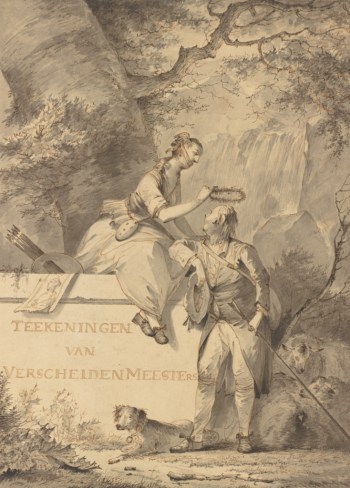
Gerard van Nijmegen (1735–1808), Allegory of Painting and Drawing, 1801, graphite, gray and brown ink, and gray wash, 38 × 27 cm (Los Angeles: The J. Paul Getty Museum, 2008.31).
Artists were among the earliest and greatest collectors of drawings. Celebrated European painters including Edgar Degas, Joshua Reynolds, and Giorgio Vasari were passionate collectors, and their appetites for drawings by old and contemporary masters compelled them to acquire exceptional examples of draftsmanship by artists such as Delacroix, Raphael, and Rembrandt. These drawings were valued as intellectual property, powerful status symbols, and works of art in their own right. This exhibition, featuring objects from the Getty’s permanent collection, reveals how artists gathered, used, and cared for their drawings.
An artist’s ability to acquire objects depended on his or her social network and the development of a market for drawings. The first works any artist owned came from their own hand, and favorite pupils or studio assistants obtained pieces by their teachers. By the end of the 15th century, when a market for drawings began to develop, it became easier for artists to acquire artwork from their peers, thereby increasing the scope of their collections.
Drawings were kept and treasured for a variety of reasons. They were used to train students and as reference material for an artist in search of inspiration. Certain sheets were valued for sentimental reasons, while others conferred status by confirming the wealth, power, and knowledge of the collector.
“Artists were among the first to recognize and appreciate drawings’ informative and aesthetic qualities, which is why they are among the first and greatest collectors of drawings,” says Casey Lee, curator of the exhibition. “By declaring their ownership through inscriptions and personalized stamps, the collectors make it possible to reconstruct aspects of a drawing’s life and reception.”
On Tour | Jan van Huysum Visits
From the National Gallery’s press release (May 2021). . .

Jan van Huysum, Flowers in a Terracotta Vase, 1736–37, oil on canvas, 134 × 92 cm (London: The National Gallery, NG796).
Following the positive response to Artemisia Visits (2019), the National Gallery is delighted to announce Jan van Huysum Visits which will see Van Huysum’s magnificent Flowers in a Terracotta Vase (1736–37) travel to six locations across the United Kingdom in summer 2021.
The painting will visit Cornwall, Norfolk, the East Midlands, South Yorkshire, Scotland, and Northern Ireland. Each display will explore one of six ‘Ways to Wellbeing’: Connect, Be Active, Take Notice, Keep Learning, Give, and Care (for the Planet). Flowers in a Terracotta Vase will be on tour for approximately three months, from early June.
In each region, the painting will pop up in an unusual or unexpected non-museum venue; locations include a food bank and community library, a covered market, a former department store and community centres. The tour will promote ways in which art and culture can support wellbeing and reach audiences who have been disproportionately affected by Covid-19 and the UK lockdown.
At the heart of Jan van Huysum Visits is engagement with local communities. In each setting the Gallery is working closely with the venue as well as a local museum or gallery to ensure that as many people as possible can engage with the painting and make it come alive in new and different ways.
Jan van Huysum (1682–1749) was a native of Amsterdam and the last of the distinguished still-life painters active in the Northern Netherlands in the 17th and early 18th centuries, an internationally celebrated artist in his lifetime. His spectacular Flowers in a Terracotta Vase—which shows over 30 species of flowers and plants in bloom, unfurling in exquisite detail—is no shy, hide-in-a-corner painting. It’s meant to dazzle and it does. Van Huysum is after, and achieves, excess: a celebration of nature, an entertaining puzzle, and a display of wealth, culture, and fashion.
The vase towers above the viewer who is placed firmly below, looking up at it in a niche suitable for a Classical sculpture. The vase overflows with all types of flowers, from florid roses, peonies, mauve and red poppies to the humbler primroses, apple blossom and bachelor’s buttons. In the Dutch Republic, horticulture was a subject of national pride. This is a rich man’s bouquet made to look winsome and natural, but in reality, it’s carefully orchestrated, displaying not only a passion for flowers but an immense knowledge and understanding of them. Butterflies, a yellow ant, a fly, and hothouse fruit are added to the exotic mix, bringing the garden into the house as was the fashion in interior decoration. But one or two of the luscious grapes are past their best, perhaps suggesting the brevity of life but more likely indicating that a painted picture lives on long after the insects and flowers have vanished. Crystal drops of cool water, feathery leaves, delicate petals breathing their scent, the quivering wings of the red admiral butterfly all evoke the senses of touch, of smell, even of taste.
Flowers in a Terracotta Vase celebrates the longevity of the painted image and enduring impact art can have on our hearts and minds. The Gallery invites audiences from across the nation to engage with this splendid picture during the longer, brighter days that summer will bring. The vibrancy and abundance of Flowers in a Terracotta Vase will resonate with so many who have sought comfort and hope in the natural world during a trying year. Whether it be tending to their own gardens, enjoying the beauty and wildlife of national parks and woodlands, or simply pausing to notice the dewy petals of fresh blooms, visitors will find echoes of that in the vivid colours of Flowers in a Terracotta Vase.
Jan van Huysum Visits is part of the National Gallery’s national touring exhibitions programme, which aims to share paintings across the UK, creating a range of ways for the widest possible audience to explore and be inspired by the collection.
National Gallery Director, Dr Gabriele Finaldi, says, “This astounding, large flower painting will make an unexpected appearance in unexpected venues across the country. I hope it will make people think about art and the beauty of nature, encourage their own creativity, and inspire them to visit their own local museum or art collection.”
Napoleon Two Centuries Later

Two centuries after his death (the anniversary of which arrived last week on May 5), Napoleon’s legacy remains combustible. From the Musée de l’Armée:
Napoléon n’est plus / Napoleon Is No Nore
Musée de l’Armée Invalides, Paris, 31 March — 31 October 2021
The death of Napoleon I on 5 May 1821—although it went relatively unnoticed in the eyes of the world—was extremely well documented by his companions in exile. Despite the abundance of memories, letters, sketches, relics, and stories, this history nevertheless includes grey areas, uncertainties, contradictions. In this exhibition, we examine the major themes surrounding the death of Napoleon by changing the perspectives. By calling in new scientific disciplines (archaeology, medicine, chemistry) in order to complete already known historical sources and material evidence of this history, the musée de l’Armée provides visitors with all the necessary elements to enable them to conduct the investigation by themselves.
This exhibition is part of the 2021 Napoleon Season organised to celebrate the bicentenary of the Emperor’s death. The musée de l’Armée will present a rich and varied cultural offering evoking the end of Napoleon’s personal adventure, while opening up to the topicality and the current reality of his legacy to the world. . . .
Napoléon n’est plus (Paris: Gallimard, 2021), 296 pages, ISBN: 978-2072931604, 35€.
From the Musée de l’Armée:
Napoleon? Encore!
Musée de l’Armée Invalides, Paris, 7 May 2021 — 13 February 2022
Curated by Éric de Chassey and Julien Voinot
This contemporary art tour evokes the figure of Napoleon as well as his legacy. Thirty contemporary artists received carte blanche to question this symbolic and historical figure.
Echoing the commemorations of the bicentenary of the death of the Emperor, the musée de l’Armée is presenting, for the first time in its history, a contemporary art tour at Les Invalides. The presentation of pre-existing works and specially commissioned orders entrusted to renowned or emerging artists, from France and abroad, evokes the figure of Napoleon as well as the impact of his action in today’s world. Presented in conjunction with the exhibition Napoleon Is No More, the curation of this contemporary tour was entrusted to Éric de Chassey, Director of the Institut National d’Histoire de l’Art, and Julien Voinot, Collections Manager in the Department of 19th-Century and Symbolic Art of the musée de l’Armée.
◊ ◊ ◊ ◊ ◊
From The New York Times:
Roger Cohen, “France Battles over Whether to Cancel or Celebrate Napoleon,” The New York Times (5 May 2021). President Emmanuel Macron laid a wreath at the emperor’s tomb on the 200th anniversary of his death, stepping into a national debate over the legacy of Napoleon.
Jacques Chirac couldn’t stand him. Nicolas Sarkozy kept his distance. François Hollande shunned him. But on the 200th anniversary this week of Napoleon Bonaparte’s death, Emmanuel Macron has chosen to do what most recent presidents of France have avoided: honor the man who in 1799 destroyed the nascent French Republic in a putsch.
By choosing to lay a wreath Wednesday at Napoleon’s tomb under the golden dome of Les Invalides, Mr. Macron stepped into the heart of France’s culture wars. Napoleon, always a contested figure, has become a Rorschach test for the French at a moment of tense cultural confrontation.
Was Napoleon a modernizing reformer whose legal code, lycée school system, central bank and centralized administrative framework laid the basis for post-revolutionary France? Or was he a retrograde racist, imperialist, and misogynist?
By paying his respects to Napoleon, Mr. Macron will please a restive French right dreaming of lost glory and of a moment when, under its turbulent emperor, France stood at the center of the world. The French obsession with the romantic epic of Napoleon’s rise and fall is undying, as countless magazine covers and talk shows have underscored in recent weeks. But in the current zeitgeist, Napoleon’s decisive role as founder of the modern French state tends to pale beside his record as colonizer, warmonger and enslaver. . . .
The full article is available here»
◊ ◊ ◊ ◊ ◊

Rendering from Pascal Convert of his Memento Marengo as envisioned at Les Invalides in Paris.
◊ ◊ ◊ ◊ ◊
From Apollo Magazine:
Laura O’Brien, “The Celebrity Horse That’s Putting Napoleon in the Shade,” Apollo Magazine (6 May 2021).
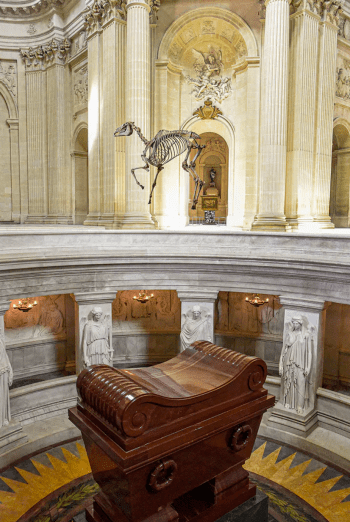 On a cold December day in 1840, Napoleon Bonaparte’s body made its final journey through the streets of Paris for reburial at the Dôme church at Les Invalides. Nineteen years after his death on Saint Helena, on 5 May 1821, the former emperor’s remains had been repatriated to France. The procession to Les Invalides included a lone, riderless white horse. In the emotionally charged atmosphere of that day, some witnesses even believed for a moment that this was the emperor’s most famous mount: Marengo.
Now, 200 years after Napoleon’s death, Bonaparte and Marengo are to be reunited, albeit temporarily. As part of Napoleon? Encore!, an exhibition of contemporary art responding to Napoleon’s image and complex legacies [on view from 7 May 2021 to 13 February 2022], the French multimedia artist Pascal Convert has created Memento Marengo: a life-sized, 3D-printed copy of the skeleton of the Arab horse said to have been Napoleon’s favourite—or one of his favourites, at least. Convert had originally hoped to use the real skeleton, which is usually on display at London’s National Army Museum, but its fragility made this impossible. Memento Marengo will hang from the ceiling of the Dôme church, the equine skeleton suspended a few metres above the enormous red quartzite tomb of its ex-master. On 5 May, President Emmanuel Macron placed a wreath of red, white, and blue flowers at the foot of the tomb, as part of the official commemorations—not celebrations, as the Élysée Palace has carefully insisted—of Napoleon’s death. Memento Marengo was not in place during the solemn ceremonies at Les Invalides, but with these now completed, the artwork can be installed ahead of the planned reopening of the museum later this month. . . .
The full article is available here»
Exhibition | Vicereines of Ireland
Opening at the end of this month in the State Apartment Galleries at Dublin Castle:
Vicereines of Ireland: Portraits of Forgotten Women
Dublin Castle, 31 May – 5 September 2021 (dates subject to Covid-19 restrictions)
Curated by Myles Campbell
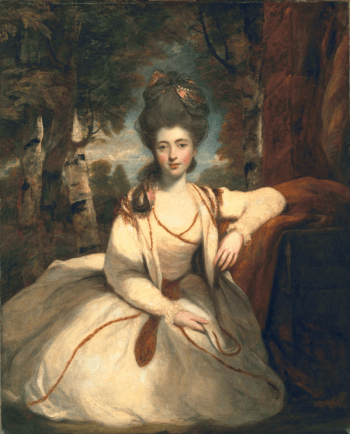
Joshua Reyolds, Frances Molesworth, later Marchioness Camden, 1777, oil on canvas, 56 × 45 inches (San Marino: The Huntington Library, Art Museum, and Botanical Gardens).
Fabrics shimmer, flowers blossom, and pearls glint in the painted world of the vicereines of Ireland. But who were the women behind these genteel portraits? Discover their untold story in this landmark exhibition.
As the wives of Ireland’s viceroys, the vicereines were once the fashionable figureheads of social and cultural life at Dublin Castle. Often sympathetic but sometimes apathetic, their attitudes and activities offer fresh insights into the workings of the British administration in Ireland. Campaigns to develop hospitals, relieve poverty, promote Irish fashions, and, in some cases, mitigate what they described as the injustices of British rule in Ireland, are just some of their overlooked initiatives. Featuring works by masters such as Sir Joshua Reynolds, Thomas Gainsborough, John Singer Sargent, and Sir John Lavery, together with intimate personal objects, this exhibition shines a light on these activities to create new and illuminating portraits of forgotten women.
The exhibition is curated by Dr Myles Campbell, Research and Interpretation Officer, Dublin Castle. Lending institutions include the National Gallery of Ireland, National Trust, Royal Collection Trust, Trinity College Dublin, and Chatsworth House.
◊ ◊ ◊ ◊ ◊
From the Irish Academic Press:
Myles Campbell, ed., Vicereines of Ireland: Portraits of Forgotten Women (Dublin: Irish Academic Press, 2021), 328 pages, ISBN: 978-1788551335, €35 / $45.
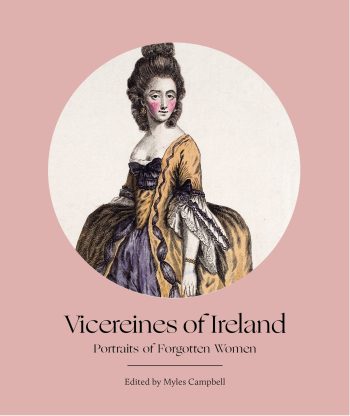 By exploring previously unknown or rarely seen artworks by prominent Irish and British artists of the eighteenth and nineteenth centuries, Vicereines of Ireland tells the untold story of the women who were the faces of the British administration in Ireland. Featuring essays by leading scholars and based on original sources, including diaries and letters, this beautifully illustrated book brings together text and image to create new and illuminating portraits of forgotten women.
Myles Campbell is now Research and Interpretation Officer (Curator) for the Office of Public Works at Dublin Castle, where he has curated several exhibitions. In 2017 he was co-editor of Making Majesty: The Throne Room at Dublin Castle, A Cultural History (Irish Academic Press), research for which earned him the inaugural George B. Clarke Prize.
C O N T E N T S
Foreword by Mary Heffernan, OPW
Editor’s Introduction
1 ‘The Goverment of the Familie’: The First Duchess of Ormonde’s Understanding of the Role of Vicereine ~ Naomi McAreavey
2 ‘That Caballing Humour, which has Very Ill Effects’: Frances Talbot, Jacobite Duchess of Tyrconnell and Vicereine of Ireland ~ Frances Nolan
3 ‘She Made Charity and Benevolence Fashionable’: Mary, Marchioness of Buckingham, Vicereine of Ireland ~ Janice Morris
4 ‘An Admirable Vice-Queen’: The Duchess of Rutland in Ireland, 1784–87 ~ Rachel Wilson
5 ‘A Subject for History’: Maria, Marchioness of Normanby as Vicereine of Ireland, 1835–39 ~ Myles Campbell
6 Lacing Together the Union: How Theresa, Marchioness of Londonderry’s Unionist Endeavours were at the Heart of her Viceregal Tenure in Ireland, 1886–89 ~ Neil Watt
7 ‘One of the Sincerest Democrats of her Caste’: Lady Ishbel Aberdeen’s Crusade against Tuberculosis in Ireland ~ Éimear O’Connor
Online Talk | Alec Cobbe, Birds, Bugs and Butterflies
Tomorrow, from The Decorative Arts Trust:
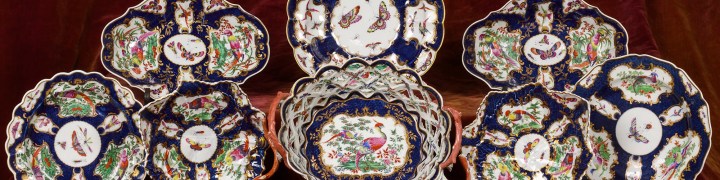
Recounting the Life of the ‘Peacock’ Worcester Service (1763)
Alec Cobbe, joined with Leslie Fitzpatrick
Online, Monday, 10 May 2021, 1.00pm (ET)
Join us as we learn about some incredible ceramics from Ireland with artist, designer, and collector Alec Cobbe. Alec will share an illustrated talk about the creation, dispersal, and recovery of the ‘Peacock’ Worcester service of 1763, the largest mid-18th-century service recorded from any British porcelain manufacturer. Thomas and Lady Betty Cobbe of Newbridge House, County Dublin, acquired the service after becoming acquainted with Dr. Wall’s porcelain factory in Worcester as they traveled from Dublin to Bath.
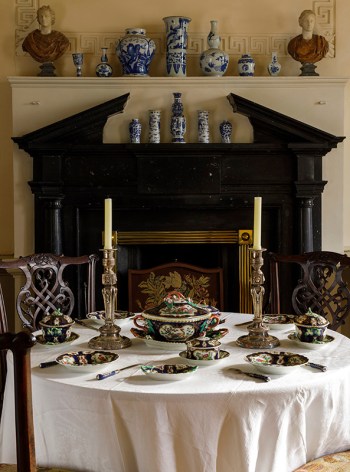 This lecture features scholarship that is part of a recent publication and exhibition Birds, Bugs and Butterflies: Lady Betty Cobbe’s ‘Peacock’ Worcester Porcelain composed by Alec and shown at Dublin Castle (October 2019 to February 2020).
After his presentation, Alec will be joined in conversation with Leslie Fitzpatrick, who previously served as the Samuel and M. Patricia Grober Associate Curator of European Decorative Arts at the Art Institute of Chicago.
This program is dedicated in memory of Christopher Monkhouse, a recipient of the Decorative Trust’s Award of Merit, whose extraordinary 2015 exhibition and publication Ireland: Crossroads of Art and Design, 1690–1840 continue to serve as a testament to the incredible material culture of Ireland.
Participants will receive an email with the event link after registering. If you have any questions about this or other programs, please email carrie@decorativeartstrust.org.
Registration is available here (pay what you can)
◊ ◊ ◊ ◊ ◊
From Boydell and Brewer:
Alec Cobbe, Birds, Bugs and Butterflies: Lady Betty Cobbe’s ‘Peacock’ China: A Biography of an Irish Service of Worcester Porcelain (London: Boydel Press, 2019), 143 pages, ISBN: 9781783274727, £45 / $80.
A major contribution to our knowledge of the Worcester porcelain factory in its early years, based on a single large and elaborate dinner service commissioned by an Irish family.
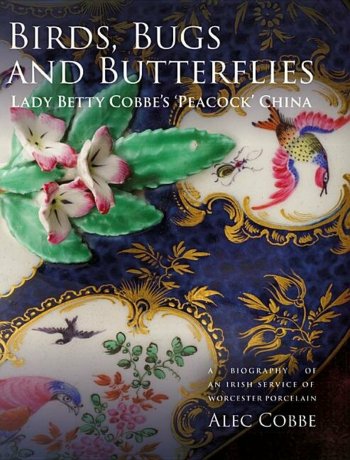 2020 Winner of the American Ceramic Circle Book Award
The early years of the famous Worcester porcelain factory established by Dr Wall have always been a little mysterious, owing to the destruction of the records of the business for this period. Alec Cobbe’s discovery of family papers listing the purchases over a period of years of a particularly beautiful and ornate table set have enabled him to give a vivid glimpse of how the factory interacted with its customers. He is able to describe the commissioning of perhaps the largest service of first period Worcester porcelain on record by Thomas and Lady Betty Cobbe for Newbridge House Co. Dublin. It was bought in stages from 1763 as the family travelled from Dublin to Bath each year, stopping at Worcester en route, as other Irish gentry did. The Cobbe service, uniquely in the context of British porcelain, was accompanied by a full set of Irish silver and steel cutlery fitted with Worcester porcelain handles matching the service. The various pieces of porcelain and their historical context are described as well as their painted decoration, and the sources for it. The later history of the service is outlined and its gradual dispersal in the nineteenth century, culminating in a final sale of the remaining pieces lot by lot in a Christie’s sale in 1920. This book celebrates Cobbe’s reassembly of more than 160 pieces of the original service over a period of more than thirty years and their return to Newbridge following their exhibition in the State Apartments at Dublin Castle. Overall, the book gives an important insight into Irish social life and patronage in the mid-eighteenth century.
Alec Cobbe was born in Ireland and still resides in Newbridge House, Co. Dublin, where his ancestors have lived since it was built in the middle of the eighteenth century. He practises as an artist and designer. As a passionate collector, he added to his family’s historic collections and assembled the world’s largest group of composer-owned keyboard instruments.
C O N T E N T S
Foreword
Preface and Acknowledgements
Beginnings
‘Snuff for Dr Walls’: The Cobbes in Worcester and London
Plans for Collecting and Entertaining
The Peacock Service and Its Cutlery
The Decoration of the Original Peacock Service
The Service through Later Centuries, Sale, and Reassembly
Appendices
I. Transcripts from Worcester and Cobbe archives, accounts, and inventories
II. Hypothetical tally of the original Peacock Service
III. Transcript of Christie’s 1920 sale catalogue
IV. Known destinations of Cobbe pieces
V. A note on the nomenclature of Worcester porcelain pieces
VI. Inventory of Worcester blue-scale porcelain from the original service and re-assembled pieces in Lady Betty’s pattern of birds, insects, and butterflies
Call for Papers | American Popular Graphic Arts, Yesterday and Today
From The Library Company of Philadelphia:
Collecting, Curating, and Consuming American Popular Graphic Arts Yesterday and Today
The Library Company of Philadelphia, 25 March 2022
Proposals due by 2 August 2021
A symposium held in conjunction with the exhibition Imperfect History: Collecting the Graphic Arts Collection at Benjamin Franklin’s Public Library in commemoration of the fiftieth anniversary of the Graphic Arts Department at the Library Company of Philadelphia
In 1876, during the exhibition in Philadelphia in honor of the 100th anniversary of the birth of the republic, Philadelphia Evening Telegram art critic John V. Sears noted, “in Philadelphia today, the scion of art culture … has taken deep root in the homes of the people … Not so cosmopolitan as New York, nor so thoroughly local in character as Boston, Philadelphia represents American institutions and the progress of American civilization more perfectly than any other of our older cities ….”
Today, nearly one hundred and fifty years later, Philadelphia and the country inhabit a world in which our “art culture” is influenced and inspired by rhetoric and current events challenging our perception, trust in, and inherent understanding of what we see in our daily lives, and in public and private spaces. In this climate, creators, stewards, and collectors of fine and popular art representing and documenting American civilization have begun to question and address their role in a conflicted and diverse democratic society in a tenuous condition. How can a public library founded by Benjamin Franklin and with significant holdings of historical and popular American graphic arts confront this critical period in the history of our country’s evolving democratic principles and art culture?
In response to this salient question and to commemorate the fiftieth anniversary of the establishment of the Graphic Arts Department, the Library Company will display Imperfect History: Curating the Graphic Arts Collection at Benjamin Franklin’s Public Library, September 20, 2021 – April 8, 2022. Imperfect History explores the development of the Library’s graphics art collection as it relates to historical and cultural biases within American history. The exhibition is a candid exploration of the evolution of American graphic arts curatorship and collections in one of the oldest cultural institutions in the country. The Library’s graphic arts collection, including prints, photographs, original works of art, and ephemera primarily dated between the late 18th and mid-20th-century is vital to the understanding of the nation’s complex visual history.
Collecting, Curating, and Consuming American Popular Arts Yesterday and Today continues the conversation started through Imperfect History. The symposium seeks to examine changing and innovative directions in how historical popular graphic art (i.e., art not traditionally classified as fine art, that is representative of popular culture, and/or is mass produced and consumed) is curated, interpreted, and used and understood by those who produced, viewed, and consumed it. Collecting, Curating, and Consuming asks how does historical American popular graphic art act as a mirror, bridge, and barrier in facilitating our visual conceptions of our past and present?
We invite proposals for twenty-minute papers that will foster broad and interdisciplinary discussions about historical American popular graphic arts collected by individuals or institutions; the evolving meaning of the term curator; (un)conscious bias in the creation, collection, and curation of popular graphic arts; and the contemporary and historicized role of the visual consumer of mass-produced art. Submissions from a wide range of scholars, practitioners, and specialists are encouraged. We seek proposals from art historians, historians, artists, curators, conservators, emerging scholars, and other voices within the humanities, arts, and cultural communities.
Possible topics might include:
• Popular graphic art collectors and/or their collections
• History and evolution of the institutional role of the curator of American graphic arts
• Visual literacy and an engaged citizenry
• Politics of art
• Digital humanities projects based on popular graphic arts collections
• Remediation projects in the description and access of visually harmful historical graphic arts in institutional collections
• Art libraries and libraries of art
• Racialized/Black/gendered/queer gaze
Proposals should include an abstract of no more than 300 words and a two-page CV or resume. Joint proposals and illustrated proposals are welcome. Please email your proposals with the subject line “IH 2022” as a Word or PDF document to epiola@librarycompany.org. Submissions should be received by Monday, August 2. Selected participants will be notified via email by early October 2022. Any questions may be directed to Erika Piola epiola@librarycompany.org.










 Enfilade
leave a comment