Exhibition | Artful Nature: Fashion and Theatricality, 1770–1830
Opening next week at the Lewis Walpole Library:
Artful Nature: Fashion and Theatricality, 1770–1830
Lewis Walpole Library, Farmington, CT, 6 February — 22 May 2020
Curated by Laura Engel and Amelia Rauser
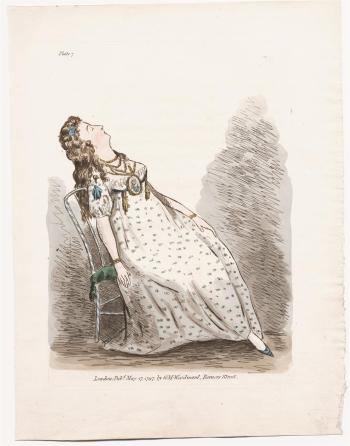
G. M. Woodward, ‘The Art of Fainting in Company’, 1797, hand-colored etching, Plate 7 from ‘An Olio of Good Breeding: With Sketches Illustrative of the Modern Graces!!’ (London, 1797).
Between 1770 and 1830, both fashionable dress and theatrical practice underwent dramatic changes in an attempt to become more ‘natural’. And yet this desire was widely recognized as paradoxical, since both fashion and the theater were longstanding tropes of artifice. In this exhibition, we examine this paradox of ‘artful nature’ through the changing conception of theatricality during these decades, as mirrored and expressed in fashionable dress. Theater and performance practices in the late eighteenth-century, including the vogue for private theatricals, reinforced the blurred lines between the theater and everyday life. Classical sculpture became a reference point for women, as its artistic excellence was acclaimed precisely because it seemed so ‘natural’. But when actresses, dancers, painters, or just regular fashionistas posed themselves as classical statues come to life, they acted as both Pygmalion and Galatea, both the genius artist and the living artwork. ‘Artful Nature’ refers simultaneously to the theatricality and deception typically attributed to fashionable women in the late eighteenth century, and at the same time to the potential survival strategies employed by women artists, authors, and actresses to craft their own parts. The exhibition is curated by Laura Engel, Professor of English at Duquesne University, and Amelia Rauser, Professor of Art History at Franklin & Marshall College.
P R O G R A M M I N G
Joseph Roach, Fashionable Enemies: Glamour as Argument, 1770–1830
Yale Center for British Art, New Haven, Thursday, 6 February, 5.30pm
Joseph Roach, Sterling Professor Emeritus of Theater and Professor Emeritus of English, Yale University, will deliver a keynote lecture in association with the opening of the exhibition Artful Nature: Fashion and Theatricality, 1770–1830.
Amelia Rauser and Laura Engel, Artful Nature
Lewis Walpole Library, Farmington, Wednesday, 13 May, 7.00pm
Amelia Rauser and Laura Engel, the curators of Artful Nature: Fashion and Theatricality, 1770–1830, discuss the exhibition. The talk is presented in collaboration with the Farmington Libraries. Space is limited, and registration is required.
Performance: Mary Berry’s Fashionable Friends
Cowles House, Lewis Walpole Library, Farmington, Friday, 15 May
Under the direction of Laura Engel, a performance based on Mary Berry’s Fashionable Friends, acted as an amateur theatrical at Strawberry Hill in November 1801, is planned for May 15, 2020 in the newly restored eighteenth-century Cowles House on the campus of The Lewis Walpole Library in Farmington, Connecticut.
Exhibition | Ukiyo-e Prints from the Mary Ainsworth Collection

Katsushika Hokusai (Japanese, 1760–1849), Fuji in Clear Weather (Red Fuji), from the series Thirty-six Views of Mt. Fuji, early 1830s
(Allen Memorial Art Museum, Oberlin College, Ainsworth Bequest, 1950.711)
◊ ◊ ◊ ◊ ◊
Press release for the exhibition (via Art Daily). . .
Ukiyo-e Prints from the Mary Ainsworth Collection
Chiba City Museum of Art, 13 April — 26 May 2019
Shizuoka City Museum of Art, 8 June — 28 July 2019
Osaka City Museum of Fine Arts, 10 August to 29 September 2019
Allen Memorial Art Museum, Oberlin College, Ohio, 14 January — 14 June 2020
Curated by Kevin Greenwood
In 1950, the Allen Memorial Art Museum received a surprise gift of more than 1,500 Japanese woodblock prints featuring actors, courtesans, and landscapes of the ‘floating world’ of 17th- to 19th-century Japan. This bequest became a cornerstone of the Allen’s renowned Asian art collection, and 200 of the works traveled back to Japan last year for a tour of museums in Chiba (near Tokyo), Shizuoka, and Osaka. Now more than 100 of these prints are on view in Ukiyo-e Prints from the Mary Ainsworth Collection, an Oberlin exhibition that runs through June 14, 2020.
Mary Andrews Ainsworth (1867–1950) graduated from Oberlin College in 1889 and made her first sea voyage to Japan in 1906. The country had recently emerged from centuries of isolation and was beginning a period of rapid industrial development. Ainsworth, however, was attracted to an earlier Japan: that of the Edo period (1603–1868). In this more peaceful era, a world of entertainment arose—ephemeral pursuits made even more popular through the wide distribution of color woodblock prints known as ukiyo-e, or ‘pictures of the floating world’.
“The Ainsworth collection represents the history and evolution of Japanese woodblock printmaking, with high-quality examples of the major subjects, styles, and artists of ukiyo-e. Together, they convey much of the richness and complexity of Japan’s print tradition,” said Kevin R. E. Greenwood, the Allen’s Joan L. Danforth Curator of Asian Art. “We were approached by one of Japan’s leading ukiyo-e scholars to do this exhibition, which confirms the importance of Ainsworth’s collection,” he said. “In the process of working together, we discovered some impressions not known in any other collections.”
Ukiyo-e Prints from the Mary Ainsworth Collection is presented in four sections that span the history of the medium. Early prints (1680–1770) were monochrome, often with hand-coloring added; the carbon-black ink was made from pine soot. Around 1745, with the invention of a way to register, or align, wooden blocks, artists such as Ishikawa Toyonobu began printing in two colors: red and green. These benizuri-e prints, or ‘crimson-printed pictures’, sometimes included a third color, yellow, brown, or indigo. In the 1760s, Suzuki Harunobu was the first major producer of prints using more than three blocks.
The second part of the show, Beauties and Actors (1770–1800), includes works by Kitagawa Utamaro, Chobunsai Eishi, and other artists who helped to popularize the many theaters, tea houses, and celebrities of the pleasure district in Edo (now Tokyo). Ukiyo-e artists not only made prints for sale to Japan’s growing merchant class, but also were hired to produce posters and advertisements for theatrical performances.
The third section, Hokusai and Kuniyoshi (1780–1850), highlights the rise of landscapes in Japanese printmaking, which was due in part to the introduction of a chemical pigment called Prussian blue. Six prints from Katsushika Hokusai’s series Thirty-six Views of Mt. Fuji are included, along with Utagawa Kuniyoshi’s prints of bridges, ferries, and heroes from history and legend.
The final section (1830–1858) is devoted to prints by Utagawa Hiroshige I. Works by this prolific artist comprise more than half of the Ainsworth collection. The exhibition presents thirty-six works by Hiroshige I, including nine from his 1830s series Fifty-three Stations of the Tōkaidō and thirteen from his 1857 series One Hundred Famous Views of Edo—prime examples of some of the finest woodblock prints ever produced in Japan.
“This extensive exhibition and its accompanying catalogue have been years in coming to fruition,” said Andria Derstine, John G. W. Cowles Director of the Allen. “We are thrilled to present, for the first time in decades, such a large portion of our Ainsworth collection, both at the Allen and to enthusiastic audiences in Japan.”
Organized by Kevin R. E. Greenwood, Joan L. Danforth Curator of Asian Art, with Masako Tanabe and Marie Matsuoka, Chiba City Museum of Art; Saori Oishi, Shizuoka City Museum of Art; Eri Yoshida, Weikado Bunko Art Museum; Tatsuya Akita and Yasuko Kikuchi, Osaka City Museum of Fine Arts; Hiromi Sone, Mangosteen, Inc.; and Luoying Sheng ’20, AMAM curatorial assistant in Asian art education.
Exhibition | In Profile: A Look at Silhouettes

Kara Walker, Maquette for The ‘Katastwóf Karavan’, 2017, painted laser-cut stainless steel
(Private collection)
◊ ◊ ◊ ◊ ◊
Now on view at the New-York Historical Society:
In Profile: A Look at Silhouettes
New-York Historical Society, 7 January — 5 April 2020
Curated by Roberta Olson
This winter, the New-York Historical Society presents an exhibition and a special installation that take a fresh look at traditions of remembrance. The exhibition In Profile: A Look at Silhouettes traces the development of the late 18th- and 19th-century art form and how artists are reinventing the silhouette today. The special installation Life Cut Short: Hamilton’s Hair and the Art of Mourning Jewelry displays jewelry featuring human hair that was used as tokens of affection or memorials to lost loved ones.
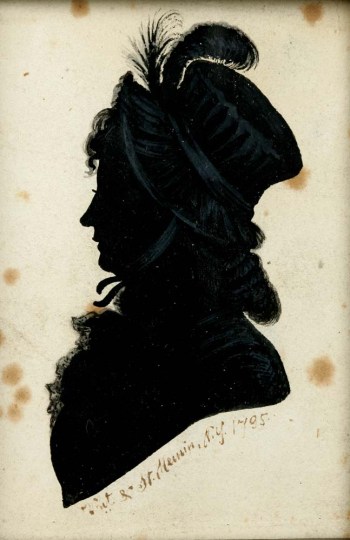
Thomas Bluget de Valdenuit (1763–1846) and Charles Balthazar Julien Févret de Saint-Mémin (1770–1852), Silhouette portrait of an unidentified woman, 1795, black ink, gouache, and graphite on paper laid on thin card (New-York Historical Society, Purchase, The Louis Durr Fund, 1945.344).
“New-York Historical is taking a deep dive into our expansive collection to explore 19th-century traditions of portraiture and remembrance,” said Dr. Louise Mirrer, president and CEO of the New-York Historical Society. “The art of silhouettes has long been popular, and this exhibition traces both its history and how gifted, contemporary artists are currently revitalizing the art form. Mourning jewelry may have fallen out of fashion, but this installation showcases how it was once the height of elegance.”
The art of silhouettes—at first, black profiles either cut from paper or painted—emerged as a popular form of portraiture in 19th-century America when there were few trained portrait painters. Drawn mostly from New-York Historical’s significant collection, In Profile: A Look at Silhouettes traces the development of this popular art form and explores its contemporary revival. The exhibition showcases works by professional practitioners, like master of the genre Augustin Edouart, Charles Willson Peale, and Moses Williams—a Peale family slave who earned his freedom and worked producing silhouettes at the Peale Museum. Also featured are self-trained artists such as the Danish writer Hans Christian Andersen and Martha Anne Honeywell—a woman born without arms and only three toes, who created intricate paper cut-outs, needlework, and penmanship in works that played with contradictions between ability and disability. Contemporary works by Béatrice Coron, James Prosek, Kumi Yamashita, and Kara Walker, who uses silhouettes to investigate the legacy of slavery, reveal the art form’s powerful reemergence.
Roberta J. M. Olson is curator of drawings at the New-York Historical Society and professor emeritus of art history at Wheaton College in Massachusetts. She is the author of Fire and Ice: A History of Comets in Art.
Exhibition | Life Cut Short

Mourning ring containing lock of Alexander Hamilton’s hair presented to Nathaniel Pendleton by Elizabeth Hamilton, 1805, gold and hair
(New-York Historical Society, Gift of Mr. B. Pendleton Rogers, 1961.5a)
◊ ◊ ◊ ◊ ◊
From the press release for the exhibition now on view at the New-York Historical Society:
Life Cut Short: Hamilton’s Hair and the Art of Mourning Jewelry
New-York Historical Society, 20 December 2019 — 10 May 2020
Curated by Debra Schmidt Bach
This special installation looks at the history of hair and other mourning jewelry through a display of approximately 30 bracelets, earrings, brooches, and other accessories drawn from New-York Historical’s collection by Curator of Decorative Arts Dr. Debra Schmidt Bach. Because hair decomposes slowly, miniatures and other jewelry decorated with hair became symbolic of mourning. These personal mementos provided solace while also being fashionable and socially appropriate. The objects on display illustrate the fascinating history of hair jewelry, with a particular focus on its manufacture and use in New York.

John Ramage, Back of a miniature case containing a portrait of Elizabeth Pintard (1765–1838), 1787, watercolor on ivory, gold, hair (New-York Historical Society, Gift of George Hancock Servoss, 1906.3).
Highlights of the installation are a gold mourning ring containing a lock of founding father Alexander Hamilton’s hair, clipped by his wife, Elizabeth, as a keepsake while he was on his deathbed; and a Tiffany & Co. mourning bracelet featuring hair, gold, silver, and diamonds (ca. 1854), one of many mourning items sold by the famed New York City jeweler. Also on display is artist and naturalist John James Audubon’s facial hair, given to New-York Historical by his widow, Lucy Bakewell Audubon.
Miniaturist John Ramage’s hair-working tools and ivory sample cards with selections of hair designs point to the rising popularity of mourning jewelry in late 18th-century America. Active in New York from 1777 to 1794, Ramage created many miniatures that incorporated ‘hair painting’ or curled or woven locks of hair secured under glass within elaborate gold cases. Also featured in the display are period advertisements, instruction and etiquette books, and illustrations of hair-braiding patterns.
◊ ◊ ◊ ◊ ◊
In connection with the exhibition, the museum also notes this book, though it’s something else altogether:
Robert McCracken Peck, with photographs by Rosamond Purcell, Specimens of Hair: The Curious Collection of Peter A. Browne (New York: Blast Boosk, 2018), 176 pages, ISBN: 978-0922233496, $40.
 To a nineteenth-century amateur naturalist named Peter A. Browne, hair was of paramount importance: he believed it was the single physical attribute that could unravel the mystery of human evolution. Thirty years before Charles Darwin revolutionized understanding of the descent of man, Browne vigorously collected for study what he called the ‘pile’ (from the Latin word for hair, pilus) of as wide a variety of humans (and animals) as possible in his quest to account for the differences and similarities between groups of humans. The result of his diligent, obsessive work is a fastidious, artfully assembled twelve-volume archive of mammalian diversity. Browne’s growing quest for knowledge became an all-consuming specimen-collecting passion. By the time of his death in 1860, Browne had assembled samples from innumerable wild and domestic animals, as well as the largest known study collection of human hair. He obtained hair from people from all parts of the globe and all walks of life: artists, scientists, abolitionist ministers, doctors, writers, politicians, financiers, military leaders, and even prisoners, sideshow performers, and lunatics. His crowning achievement was a gathering of hair from thirteen of the first fourteen presidents of the United States. The pages of his albums, some spare, some ornately decorated, many printed ducit amor patriae―’led by love of country’―are distinctly idiosyncratic, captivating, and powerfully evocative of a vanished world. Browne’s albums have been sequestered in the archives of the Academy of Natural Sciences in Philadelphia to which Brown bequeathed them, narrowly escaping destruction in the 1970s. They are a unique manifestation of the avid collecting instinct in nineteenth-century scientific endeavors to explain the mysteries of the natural world.
Robert McCracken Peck is a naturalist, writer, and historian with a special interest in the intersection of science, history, and art. As Senior Fellow of the Academy of Natural Sciences of Philadelphia (now part of Drexel University), he has chronicled historical and contemporary scientific research expeditions. Among Peck’s most recent books are The Natural History of Edward Lear and A Glorious Enterprise: The Academy of Natural Sciences of Philadelphia, co-authored with Patricia Stroud.
Exhibition | Piranesi Drawings: Visions of Antiquity
Opening next month at The British Museum, with a catalogue from Thames & Hudson:
Piranesi Drawings: Visions of Antiquity
The British Museum, London, 20 February — 9 August 2020
Curated by Sarah Vowles
 Celebrating the 300th anniversary of the birth of Giovanni Battista Piranesi (1720–1778), Piranesi Drawings: Visions of Antiquity explores the artist’s celebrated skill as a draftsman. The Venetian-born artist is best known for his dramatic etchings of the architecture and antiquities of his adopted home city of Rome and for his extraordinary flights of spatial fancy, such as Le Carceri (‘Prisons’). This exhibition, however, presents the Museum’s complete collection of Piranesi’s drawings, exploring the formidable quality of his pen and chalk studies and tracking his artistic evolution.
Sarah Vowles is the Hamish Swanston Curator of Italian and French Prints and Drawings at the British Museum. Hugo Chapman is the Simon Sainsbury Keeper of Prints and Drawings at the British Museum.
Sarah Vowles, with an introduction by Hugo Chapman, Piranesi Drawings: Visions of Antiquity
(London: Thames & Hudson, 2020), 144 pages, ISBN: 978-0500480618, £20 / $30.
◊ ◊ ◊ ◊ ◊
Press release (via Art Daily) . . .
Virtuosic and turbulent, Giovanni Battista Piranesi (1720–1778) was a visionary printmaker, architect, antiquarian, and dealer. These varied aspects of his career were based on his practice of drawing, which has received comparatively little attention. The British Museum will mark the 300th anniversary of Piranesi’s birth through a new exhibition focusing on his work as a draughtsman. Piranesi Drawings: Visions of Antiquity will examine his draughtsmanship through the quality and impact of his pen and chalk studies, as well as examining how the Venetian artist’s style developed throughout his career. This exhibition is the British Museum’s first to focus on Piranesi as a draughtsman and celebrates the extraordinary richness of its collections of his drawings, which is one of the largest groups in the world.
Through over 50 works, Piranesi drawings looks at his practice broadly chronologically with sections focusing on four different themes that preoccupied him throughout his career: Venice and Rome, The Carceri, The Glory of Rome, and Architect & Antiquarian. The exhibition also allows visitors to see the way in which his style and interests as a draughtsman evolved over time. The works on display will range from the scene designs and Venetian fantasies of his youth to the prison scenes and dramatic views of Rome that he produced in his artistic maturity. Additionally, the British Museum’s first Piranesi figure drawing will be on display for the first time, a new acquisition from 2019 collected especially for this exhibition.
The exhibition begins with one of the most impressive drawings by Piranesi in the British Museum’s collection, Fantastical Façade of an Antique Building with Columns, Heads, and Sphinxes, c. 1765–69. The drawing dates from later in Piranesi’s career and is not only visually appealing but captures many of the themes explored throughout this exhibition, from his antiquarian flair to his interest in archaeology and his fantastical, extravagant spirit. Piranesi’s melange of architectural elements from Roman, Egyptian, and Etruscan cultures, exemplifies his belief in combining motifs into new and visionary creations.
A notable work featured in the section on The Glory of Rome, The Meeting of the Via Appia and the Via Ardeatina, Seen at the Second Milestone outside the Porta Capena, c. 1750–56, is a magnificent preparatory drawing for one of the secondary frontispieces of the Antichità Romane, published in 1756. Piranesi depicts the junction of two great antique roads, the Via Appia and the Via Ardeatina, outside Rome, but forgoes archaeological exactitude in favour of an elaborate fantasy of Roman sculptures and monuments. A striking and unusual drawing is a Frontispiece Design with Two Skeletons, in Front of a Tomb, c. 1746–47. Made during a visit to his native Venice, it highlights Piranesi’s skill in using pen and wash to create airy and playful visions of light and tone.
Piranesi’s drawings are given context by a selection of related prints along with a pair of fragmentary Roman sculptures from the museum’s collection, purchased by Charles Townley from Piranesi in the 18th century. Visitors are encouraged to explore his influence beyond the gallery by visiting the British Museum’s permanent collection, where the Piranesi Vase and the Trentham Laver can be found in the centre of The Enlightenment Gallery (Room 1).
Piranesi Drawings: Visions of Antiquity offers a rare opportunity to celebrate Piranesi’s influence as a draughtsman. His drawings demonstrate how he brought together his various passions to create magnificent imaginary buildings throughout his life as the architect of a fantastical, imaginary world.
Sarah Vowles, the Smirnov Family Curator of Italian and French Prints and Drawings at The British Museum said: “Many people will be familiar with Piranesi’s evocative prints, but his brilliant and powerful drawings are less well known. He drew compulsively throughout his life, using his sketches and studies as a way to explore, innovate, and invent. The British Museum’s collection of Piranesi drawings is one of the richest in the world, including drawings from throughout his career and giving us insights into all aspects of his varied activity. By presenting the group in its entirety in this focused exhibition, we hope visitors will gain a holistic sense of Piranesi, not only for his influential views of ancient Rome, or his thrillingly gloomy ‘Carceri’ prints, but also appreciating his work as antiquarian, architect, and relentlessly creative visionary.”
Hugo Chapman, The Simon Sainsbury Keeper of Prints & Drawings at The British Museum said: “Piranesi’s etchings of Rome and of fantastical architecture are well known, but far less familiar is the scintillating brilliance of his drawings in which he rehearsed and honed his graphic talents. This exhibition is the first to concentrate on the British Museum’s remarkable collection of over fifty drawings by Piranesi that map the course of his career in Rome as he established his name internationally as one of the great graphic artists of his age. The drawings are remarkable for their dashing speed of execution as Piranesi’s pen strained to keep pace with the tumbling rush of his ideas. They register the dynamic force of his imagination as he transformed the ruins and shattered artefacts of ancient Rome into buildings and works of epic scale and magnificence. Through drawing, Piranesi shaped and perfected his vision, giving us a sense of his transformative imagination. Such is the power of his singular vision that it continues to excite and inspire architects, filmmakers, video game designers, and other creative minds to this day.”
◊ ◊ ◊ ◊ ◊
Note (added 20 February 2020) — The original posting did not include the press release.
Exhibition | Open-Air Painting in Europe, 1780–1870
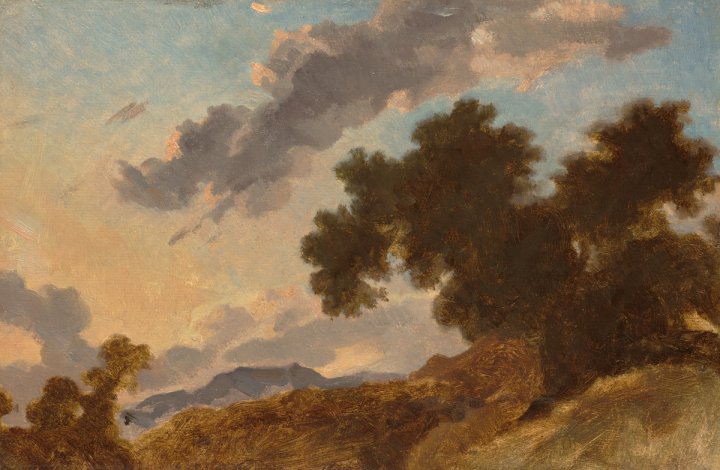
Jean Honoré Fragonard, Mountain Landscape at Sunset, ca. 1765, oil on paper, 8 × 13 inches
(Washington, D.C.: National Gallery of Art, Chester Dale Fund, 1997.22.1)
◊ ◊ ◊ ◊ ◊
From the press release (6 December 2019) for the exhibition:
True to Nature: Open-Air Painting in Europe, 1780–1870
National Gallery of Art, Washington D.C., 2 February — 3 May 2020
Fondation Custodia, Paris, 13 June — 13 September 2020
Fitzwilliam Museum, Cambridge, 3 May — 29 August 2022
Curated by Mary Morton, Ger Luijten, and Jane Munro
An integral part of art education in the late 18th and early 19th centuries, painting en plein air (‘in the open air’) was a core practice for artists in Europe. Intrepid painters—developing their abilities to quickly capturing effects of light and atmosphere—made sometimes arduous journeys to study landscapes at breathtaking sites, ranging from the Baltic coast and Swiss Alps to the streets of Paris and ruins of Rome. True to Nature: Open-Air Painting in Europe, 1780–1870 presents some 100 oil sketches made outdoors across Europe by artists such as Carl Blechen, Jules Coignet, André Giroux, Anton Sminck Pitloo, Carl Frederik Sørensen, and Joseph Mallord William Turner. On view in the West Building of the National Gallery of Art, Washington, from February 2 through May 3, 2020, the exhibition presents dozens of recently discovered studies and explores issues of attribution, chronology, and technique.
 “The Gallery is fortunate to have one of the finest public collections of landscape sketches by 18th- and 19th-century European painters, largely due to acquisitions made by the late Philip Conisbee during his time as the Gallery’s senior curator of European paintings from 1993 to 2008,” said Kaywin Feldman, director, National Gallery of Art, Washington. “True to Nature builds on recent scholarship as well as the discovery of paintings that have come to light since the 1996 exhibition organized by Conisbee, In the Light of Italy: Corot and Early Open-Air Painting. That exhibition sparked curatorial and collector interest in this genre, and True to Nature continues to expand our understanding of this relatively unstudied, yet central, aspect of European art history. The Gallery is grateful to work with the Fondation Custodia, Collection Frits Lugt, and the Fitzwilliam Museum to bring together highlights from the best collections of European landscape sketches from this period.”
True to Nature begins as European artists would have in the late 18th and early 19th century—in Rome. The study of ancient sculpture and architecture, as well as of Renaissance and baroque art, was already a key part of an artist’s education, but Pierre-Henri de Valenciennes’s influential treatise on landscape painting, published in 1800, went further to recommended that young artists develop their skills by painting oil sketches out of doors. Valenciennes advised exploring the Roman countryside, as he had in Study of Clouds over the Roman Campagna (c. 1782/1785). This section includes examples by a range of European artists who followed his advice, such as Michel Dumas, Christoffer Wilhelm Eckersberg, and Johan Thomas Lundbye. Also included is The Island and Bridge of San Bartolomeo, Rome (1825/1828) by Jean-Baptiste-Camille Corot. Corot was a key figure in 19th-century landscape painting, bringing the practice of open-air painting back to France and inspiring a younger generation of impressionist painters.
Other sections focus on both natural and man-made features that proved challenging to painters, such as waterfalls, trees, skies, coastlines, and rooftops. Examples include rare studies by well-known artists such as John Constable’s Sky Study with a Shaft of Sunlight (c. 1822, Fitzwilliam Museum), Jean Honoré Fragonard’s Mountain Landscape at Sunset (c. 1765), and Odilon Redon’s Village on the Coast of Brittany (1840–1916, Fondation Custodia) as well as sketches by lesser-known painters like Louise-Joséphine Sarazin del Belmont, one of the few known women artists active during this period. True to Nature illustrates how pervasive plein-air painting became across Europe with examples by many Belgian, Danish, Dutch, German, Swiss, and Swedish artists who studied in Italy before returning home to paint their native surroundings. Sketches by Carl Blechen include an example from his time in Italy, View of the Colosseum in Rome (1829, Fondation Custodia), as well as a study made at home in Germany, View of the Baltic Coast (1798-1840), Fondation Custodia).
The exhibition is organized by the National Gallery of Art, Washington, the Fondation Custodia, Collection Frits Lugt, Paris, and the Fitzwilliam Museum, Cambridge. The exhibition is curated by Mary Morton, curator and head of the department of French paintings, National Gallery of Art, Washington; Ger Luijten, director, Fondation Custodia, Collection Frits Lugt, Paris; and Jane Munro, keeper of paintings, drawings and prints, Fitzwilliam Museum, Cambridge.
Ger Luijten, Mary Morton, and Jane Munro, eds., with additional contributions by Michael Clarke, Ann Hoenigswald, and Anna Ottani Cavina, True to Nature: Open-Air Painting in Europe, 1780–1870 (London: Paul Holberton Publishing, 2020), 256 pages, ISBN: 978-1911300786, £45 / $55.
◊ ◊ ◊ ◊ ◊
Note (added 29 June 2022) — The original Fitzwilliam dates (6 October — 31 January 2021) were updated.
Exhibition | Witnessing Terror: French Revolutionary Prints, 1792−94

Jean-Joseph-François Tassaert, after Fulchran Jean Harriet, The Night of the 9 and 10 Thermidor, Year II, ca. 1794–1805
(London: UCL Art Museum, LDUCS-10581)
◊ ◊ ◊ ◊ ◊
Opening next week at UCL:
Witnessing Terror: French Revolutionary Prints, 1792−94
UCL Art Museum, London, 14 January — 12 June 2020
Curated by David Bindman, Colin Jones, and Richard Taws
The period of the French Revolution known as the Terror, which lasted from 1792 until 1794, gave rise to many of the most memorable and dramatic images of this crucial moment in modernity. These images were central to revolutionary attempts to regenerate all aspects of life—from clothing and speech to money and maps, and with the introduction of the Republican Calendar, to remake even time itself. In our contemporary political context, in which ‘Terror’ has taken on a variety of disturbing meanings, and in which the proliferation of images plays an increasingly significant role in how we comprehend acts of political violence, it is ever more important to examine this radical period in French history.
 Tracing the tumultuous period from the trial and execution of Louis XVI to the fall of Robespierre, Witnessing Terror includes a variety of printed images representing key events and personae. From portraits of revolutionary martyrs to dramatic scenes of Parisian crowds, these prints give us insight into how people understood life during the Terror. As well as a number of caricatures, street scenes, and more overtly artistic prints, the exhibition displays everyday objects, such as paper money, well-worn passports, and playing cards. Drawing out the contemporary relevance of this revolutionary iconography, Witnessing Terror also shows work by the renowned conceptual artist, poet, and gardener Ian Hamilton Finlay (1925−2006) that engages with the long-term legacy of the Terror.
The Terror remains a vexed term that has for many become synonymous with the French Revolution, clouded by myths that emerged in the years that followed. A system of political institutions and practices, the Terror was accompanied by new rhetorical and cultural strategies. It did not happen overnight but developed as a tactical response to a series of military crises, rumours, and fears. Images played a crucial role in the operation of Terror, as well as in its subsequent representation. This exhibition considers what it means to witness Terror, then and now. In particular, it features extracts from the recently discovered letters of Catherine-Innocente de Rougé, duchesse d’Elbeuf (1707−1794), who maintained a correspondence with an unknown friend throughout the Revolution. Living in her private residence, the Hôtel d’Elbeuf, which was located only metres from government offices during the Terror, the duchesse d’Elbeuf commented freely on the situation in Paris in a way that would have sent her to the guillotine, had her correspondence been found.
This exhibition is part of a programme of ongoing engagement with UCL Art Museum’s unique holdings of prints related to the French Revolution, acquired via the Cultural Gifts Scheme. It follows Revolution under a King: French Prints, 1789−92 (UCL Art Museum, 2016) and Rousseau 300: Nature, Self and State, an exhibition in collaboration with UCL Centre for Transnational History (UCL Art Museum, 2012).
Exhibition | Dutch Drawings of the Eighteenth Century
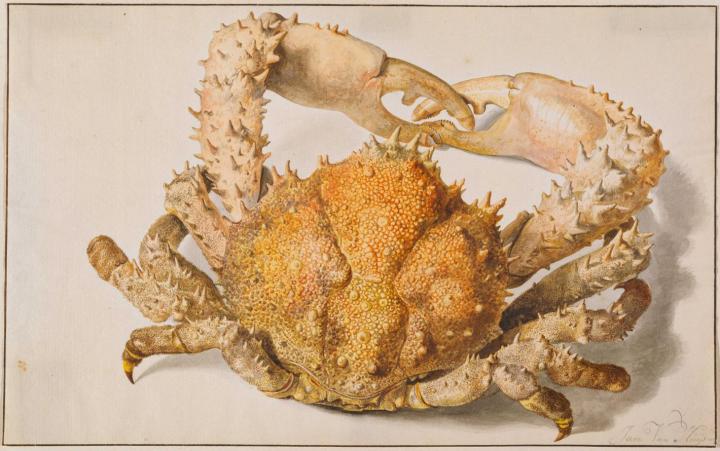
Jan van Huysum (1682–1749), A Crab, 18th century, watercolour and pencil on laid paper, 18 × 29 cm
(Frankfurt am Main: Städel Museum)
◊ ◊ ◊ ◊ ◊
Opening in the fall at the Städel Museum:
Passion for Pictures: Netherlandish Drawings of the Eighteenth Century
Städel Museum, Frankfurt am Main, 1 October 2020 — 10 January 2021
Curated by Annett Sandfort
With nearly 600 works, the Städel Museum has one of the most extensive and artistically significant collections of eighteenth-century Dutch drawings outside the Netherlands. From 1 October 2020 to 10 January 2021, the Stadel is for the first time dedicating an exhibition to this valuable collection. On display will be eighty representative drawings by artists who are hardly known today, but who were often very successful in their time, as well as by art-loving amateurs who drew at a high level. The exhibition will bring together preparatory drawings for large-format wall and ceiling decorations by Jacob de Wit; book illustrations by Bernard Picart; Dutch topographies by Cornelis Pronk, Paulus Constantijn la Fargue, and Hendrik Schepper; atmospheric landscape drawings by Jacob Cats, the brothers Jacob and Abraham van Strij, and Franciscus Andreas Milatz; decorative floral and fruit still lifes by Jan van Huysum and his numerous successors; as well as depictions of exotic animals by Aert Schouman and satirical genre scenes by Cornelis Troost and Jacobus Buys. The selected works impressively illustrate the revaluation and emancipation of the drawing in the Netherlands in the eighteenth century, as well as the preference for picturesquely executed, coloured drawings and the repeatedly sought-after examination of the art of the seventeenth century, the Netherlands’ Golden Age. The exhibition and accompanying catalogue of holdings impressively illustrate the spectrum and quality of the collection of eighteenth-century Dutch drawings in the Städel Museum.
The exhibition was curated by Annett Sandfort (Collection of Prints and Drawings, Städel Museum), with support from the Stiftung Gabriele Busch-Hauck.
Note (added 7 October 2020) — The original version of this posting included the provisional titles: Dutch Drawings of the Eighteenth Century / Niederländische Zeichnungen des 18. Jahrhunderts. The exhibition press release is available here.

Cornelis Troost (1696/1697–1750), Suijpe Steijn, 1742, gouache paint on laid paper, 41 × 62 cm
(Frankfurt am Main: Städel Museum, photo by U. Edelmann)
Exhibition | The Gosford Wellhead
Opening in the summer at The Met:
The Gosford Wellhead: An Ancient Roman Masterpiece
The Metropolitan Museum of Art, New York, 1 June 2020 — 14 February 2021
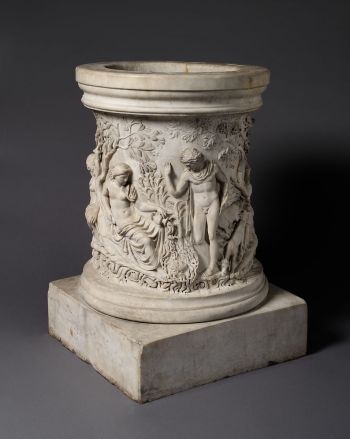
Puteal (wellhead) with Narcissus and Echo, and Hylas and the Nymphs, 2nd century, Roman, marble, 41 inches hight (New York: The Metropolitan Museum of Art, 2019.7).
An ancient Roman marble wellhead (puteal) of the second century AD is the focus of an exhibition—along with some two dozen works, primarily from The Met collection—that will explore a wide range of topics, including virtuoso Roman sculpture; the Roman adaptation of Greek art and mythology; Greek and Latin literature; early excavations of Rome and its port; the restoration of antiquities in the late eighteenth century; the Grand Tour and the British collecting of antiquities in the late eighteenth and nineteenth centuries; and the rediscovery of a masterpiece that was lost to scholars for centuries. Excavated in the Roman port of Ostia in 1797, the wellhead entered a private collection in the nineteenth century and was recently acquired by The Met. The acquisition is part of The Met’s 2020 Collections Initiative in celebration of the Museum’s 150th anniversary.
The press release (17 May 2019) announcing the acquisition is available here»
Exhibition | Goya: Avant-Garde Genius, the Master and His School

Francisco José de Goya y Lucientes, Woman with a Fan, detail, ca. 1805–10
(Paris: Musée du Louvre)
◊ ◊ ◊ ◊ ◊
Now on view in Agen, as described in the press kit:
Goya: Avant-Garde Genius, the Master and His School
Musée des Beaux-Arts, Agen, 8 November 2019 — 10 February 2020
Curated by Adrien Enfedaque, Juliet Wilson-Bareau, and Bruno Mottin
The City of Agen and its Fine Arts Museum, located between Bordeaux and Toulouse in the southwest of France, will present, over the winter of 2019–2020, an outstanding exhibition with a fresh and unexpected view on Francisco de Goya y Lucientes (1746–1828) and his work. Through a selection of works in several media (paintings, drawings, engravings), the exhibition will demonstrate the essential characteristics that remain constant in Goya’s work and reveal the role played by his collaborators in his studio.
The Museum’s scientific team is assisted in this project by one of the specialists of Goya’s work Juliet Wilson-Bareau and the event has received personal support from the French Minister of Culture. Nearly 90 works loaned by museums and private collections around the world (France, Germany, Hungary, Spain, Switzerland, UK, USA) will be on display in the Jacobins’ Church (Église des Jacobins), an Agen architectural jewel and an emblematic place for the Museum’s temporary exhibitions.
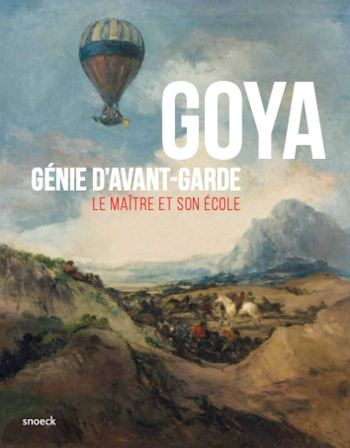 In the late nineteenth-century, Count Damase de Chaudordy (1826–1889) bequeathed a substantial collection to his birthplace Agen. As French ambassador to the court of Madrid, he bought many works, such as five of six paintings by Goya from the private collection of Federico de Madrazo, former first painter of the queen and director of the Prado Museum. These paintings had already been catalogued by Charles Yriarte in 1867 and came directly from the collections of Goya’s son Don Xavier (1784–1854) and grandson Don Mariano (1806–1874) Marquis of Espinar.
This ambitious project is reminiscent of the blockbuster exhibition organized in 1993 From Fortuny to Picasso, which attracted more than 25,000 visitors. It was the first major exhibition at the Jacobins’ church and the result of a collaboration with the Prado Museum in Madrid. It has been the origin of precursory research on Spanish painters of the 19th century. The curator at the time, Yannick Lintz, now Head of the Department of Islamic Arts at the Louvre museum, keeps a benevolent eye on Agen’s projects and supports this exhibition.
As part of the Catalog of Desires, a device set up by the Ministry of Culture to facilitate the circulation in France of iconic works of national collections, the Agen Museum has been designated as a pilot museum. It has the honour to present to the public Woman with a Fan, a famous painting by Goya which has been on loan from the Louvre since April 27, 2019. In the picture, the artist depicts a buxom young woman with great subtlety. The minimalist shades of gray, celadon greens, and whites are remarkable, especially in the delicate work of the long mittens. The identity of the young woman remains uncertain today. The painting is original in its intimate approach focusing on the character’s psychology.
Goya: Avant-Garde Genius, the Master and His School is based on research from the Louvre and the Research and Restoration Centre of the Museums of France (C2RMF). The exhibition benefits from the technical and scientific advice of this latter institution, where two paintings of Goya’s followers (Goyesques) from the Museum of Agen are currently being studied and restored for the exhibition. It is a new approach to Goya’s work that will be proposed to better underline the singularity of his art and his way of working, from drawing to painting. This project could, in the long term, better define the artistic approach of Goya and the implication of the collaborators in his workshop. The aim of the exhibition is to provide both the large public and the painting connoisseurs with a unique opportunity to enjoy and admire many masterpieces that will also be analyzed in detail (through documentation and technical analysis).
General Commission
Adrien Enfedaque (Curator of the Museum of Fine Arts)
Scientific Advisers
Juliet Wilson-Bareau (Art Historian, London)
Bruno Mottin (Chief Curator of Heritage, Research and Restoration Centre of the Museums of France)
Goya: Génie d’avant-garde, le maître et son école (Paris: Snoeck Édition, 2020), 224 pages, ISBN: 978-9461615602, 25€.
For additional coverage, see Dalya Alberge’s article from The Observer (28 December 2019), available here»










 Enfilade
leave a comment