A New Model for Publishing Art History Articles
Kunstgeschichte: Open Peer Reviewed Journal — http://www.kunstgeschichte-ejournal.net/
Transparent Reviewing and Prompt Interaction
Following the motto “Democratization of scientific communication,” this international and cross-epochal scholarly journal for art history was launched in January 2009. Papers submitted to the e-journal are first put up as ‘Discussion Papers’ for public peer assessment over a period of six months. After this stage, the authors have the option of revising their work according to the public comments. Only then will the definitive papers be published as ‘Journal Articles’. By proceeding thus we capitalize on the specific possibilities of the internet: It allows scholars to interact immediately, and to contribute comments, criticism, and additional information online to the papers published in Kunstgeschichte: Open Peer Reviewed Journal.
Contributions for the period from October-December 2009
A) New Research
- Frank Zöllner, ‘Kanon und Hysterie: Primavera, Mona Lisa und die Sixtina im Chaos der Deutungen’
- Sylvia Diebner, ‘Kunst am Bau: Die Scuole centrali antincendi in Rom-Capannelle (1941)’
- Steffen Krämer, ‘Charles Jencks und das Prinzip der Doppel-, Mehr- und Überkodierung: Kommunikation und Interpretation der postmodernen Architektur’
- Jürgen Tabor, ‘Zur sozialen Logik der Kunstindustrie’
B) Reconsidered
- Hans Sedlmayr, ‘Die macchia Bruegels [1934]’
C) Comments
- Tanja Michalsky, Hans Sedlmayr, ‘Die macchia Bruegels [1934]’ (Kunstgeschichte. Texte zur Diskussion 2009-54)
- Lambert Wiesing, Kommentar zu Martina Sauer: Wahrnehmen von Sinn vor jeder sprachlichen oder gedanklichen Fassung? Frage an Ernst Cassirer (Kunstgeschichte. Texte zur Diskussion 2008-6)
- Renate Prochno, Bemerkungen zu Anastasia Dittmann: ‘Imitation is the means, not the end, of art: Peter Paul Rubens und Sir Joshua Reynolds über die Grammatik antiker Skulptur’ (Kunstgeschichte. Texte zur Diskussion 2009-35) (more…)
In the Latest ‘Art Bulletin’
The December issue of The Art Bulletin 91 (2009) includes the following items addressing the eighteenth century:
Emma Barker, “Imaging Childhood in Eighteenth-Century France: Greuze’s Little Girl with a Dog,” pp. 426-45.
Author’s Abstract: “During the artist’s lifetime, A Child Playing with a Dog was one of Jean-Baptiste Greuze’s most admired and best-known works. The painting represent the physical, instinctual nature of the child in a manner unprecedented in French art. The image of childhood that it offers has close parallels in the scientific and medical discourse of the later eighteenth century. Like many contemporary commentators, Greuze evokes not simply the innocence of children but also their vulnerability, above all, that of little girls. He thereby implicates the viewer in the child’s fate, both for good and ill.”
Meredith Martin, review of Diplomatic Tours in the Gardens of Versailles under Louis XVI by Robert Berger and Thomas Hedin (University of Pennsylvania Press, 2008)) and Carmontelle’s Landscape Transparencies: Cinema of the Enlightenment by Laurence Chatel de Brancion (J. Paul Getty Museum, 2008), pp. 511-15.

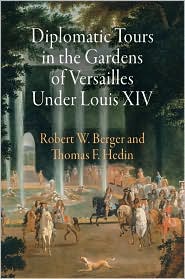 “Both Diplomatic Tours and Carmontelle’s Landscape Transparencies attempt to shed light on an underexplored aspect of French gardens and how they were portrayed in the ancien régime. As in a growing number of garden history books, the authors foreground questions of reception and use and treat these landscapes as a dynamic field of social relations — in other words, as a contested terrain. Both books also share an inclination to animate the garden as a kinetic experience by way of descriptive texts and visual images. . .” (512).
Finding the Perfect Gift
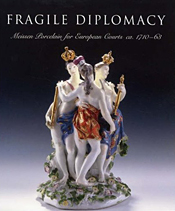
Edited by Maureen Cassidy-Geiger
Just Published
The Court Historian 14.2 (December 2009), published by The Society for Court Studies
Special Issue: Gift-Giving in Eighteenth-Century Courts — Papers from the conference Fragile Diplomacy: Meissen Porcelain for European Courts, c. 1710-1763, held at the Bard Graduate Center, New York, 17 November 2007, in conjunction with the eponymous exhibition (reviewed at artnet by N. F. Karlins).
◊ ◊ ◊ ◊ ◊
Table of Contents
 Andrew Morrall (Bard Graduate Center), Introduction
- Cordula Bischoff (State Art Collections, Dresden), Complicated Exchanges: The Handling of Authorised and Unathorised Gifts
- Christopher M. S. Johns (Vanderbilt University) The ‘Good Bishop’ of Catholic Enlightenment: Benedict XIV’s Gifts to the Metropolitan Cathedral of Bologna
- John Whitehead, Royal Riches and Parisian Trinkets: The Embassy of Saïd Mehmet Pacha to France in 1741-42 and Its Exchange of Gifts
- Michael Yonan (University of Missouri-Columbia), Portable Dynasties: Imperial Gift-Giving at the Court of Vienna in the Eighteenth Century
- Guy Walton, Emeritus (New York University), Ambassadorial Gifts: An Overview of Published Material
- Maureen Cassidy-Geiger (Cooper-Hewitt Museum/Parsons School of Design), Afterthoughts on Fragile Diplomacy: Meissen Porcelain for European Courts, c. 1710-1763
- Book Reviews / Exhibition Reviews

‘For Pembroke: Statues, dirty Gods, and Coins’

Thomas Herbert, 8th Earl of Pembroke
 Not for himself he sees, or hears, or eats;
Artists must choose his Pictures, Music, Meats:
He buys for Topham, Drawings and Designs,
For Pembroke, Statues, dirty Gods, and Coins;
Rare monkish Manuscripts for Hearne alone,
And Books for Mead, and Butterflies for Sloane
– Alexander Pope, “Epistle IV, to Lord Burlington” (“On Taste”), 1730s
For Pope – taking aim at those he saw as pretenders to taste – collectors such as Thomas Herbert, the 8th Earl of Pembroke (ca. 1656-1733), stood out as important models, easily aped but rarely emulated in a meaningful manner.

Lenos Sarcophagus (Wilton House Collection)

King's Closet at Wilton House
The current issue (July/August) of Apollo Magazine is dedicated to the Earls of Pembroke and their seat at Wilton House. Francis Russell surveys the paintings of the 8th Earl, Elizabeth Angelicoussis focuses on four Roman sarcophagi from his collection, and John Martin Robinson addresses a set of early eighteenth-century furniture acquired for Wilton House by Catherine Woronzow, the Russian wife of the 11th Earl, in the early nineteenth century from Wanstead House, Essex.










1 comment