New Book | A Biographical Dictionary of RA Students, 1769–1830
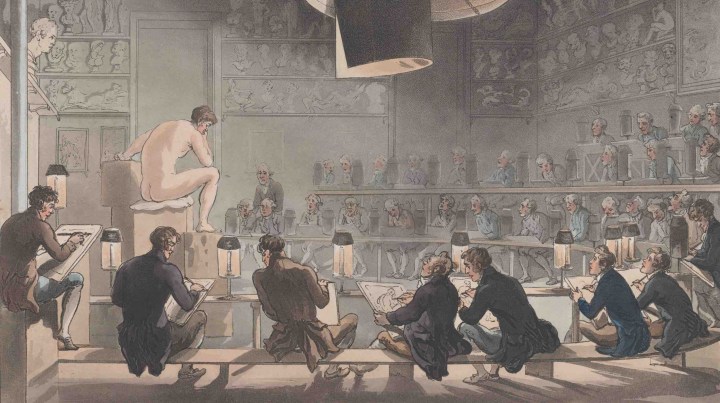
Thomas Rowlandson, Auguste Charles Pugin, and John Bluck, Drawing from Life at the Royal Academy, (detail), 1808, hand-coloured etching and aquatint, sheet: 28 × 34 cm (New York: The Metropolitan Museum of Art, New York, Elisha Whittlesey Collection, 59.533.2084).
◊ ◊ ◊ ◊ ◊
Recently published by The Walpole Society:
Martin Myrone, “A Biographical Dictionary of Royal Academy Students, 1769–1830,” The Walpole Society 84 (2022).
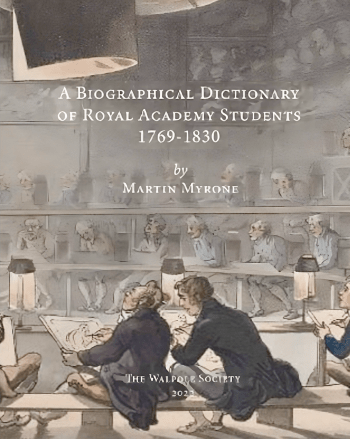 An essential new reference work for students of 18th- and 19th-century British art, Martin Myrone’s A Biographical Dictionary of Royal Academy Students 1769–1830 records every student known to have attended the RA schools in London during its first six decades. The book contains 1,800 biographical entries and draws on extensive new archival research, offering a comprehensive account of the extraordinarily diverse life stories of former RA students and an unprecedented overview of British art during the Romantic period. It provides a revealing new context for such familiar figures as John Constable, William Blake, and J.M.W. Turner, and a wealth of fresh information about three generations of obscure, forgotten, or previously unknown British painters, sculptors, engravers, and architects. As the first national art school, enjoying Royal patronage, prestige, and prominence, the Royal Academy has a pivotal role in British art history, with almost every notable figure of the era passing through its walls.
Martin Myrone is Head of Grants, Fellowships, and Networks at the Paul Mellon Centre for Studies in British Art, London.
A Biographical Dictionary of Royal Academy Students 1769–1830 is for sale to the general public exclusively through Thomas Heneage Art Books, London. It is also available free online and to download for members of the Walpole Society via their newly launched website, where a growing number of volumes can be found in a dedicated member’s area. Members of the Walpole Society support the research and publication of British art history; membership subscriptions—starting at only £20 annually for a student membership—contribute to the cost of producing new volumes, and, in return, members receive a free copy of the current year’s volume, either as a digital file or a hardback book.
The Walpole Society was formed in 1911 chiefly through the efforts of Alexander Finberg (1866—1939), who had been employed to arrange the paintings in the bequest of J.M.W. Turner. In the course of his work, Finberg saw that many artists of the 18th century lay unrecognised, and established the Society to address this lack of knowledge and to shine a light on earlier periods which were then entirely neglected. The Society was named after Horace Walpole (1717—1797), who published the first history of art in Britain, basing his work on the manuscript notebooks of George Vertue (1684—1756), which he had acquired. One of the first goals of the Walpole Society was to publish the notebooks in their original form, which included much material that Walpole omitted. This took up six volumes as well as an index volume, and was finally completed in 1950. This publication is the single most important source of information concerning art collections, artists, architects, and craftsmen working in Britain before the mid-18th century. They form part of more than 80 volumes that the Society has so far published containing articles, catalogues, and editions of original documents.
Call for Articles | Thresholds 52: Disappearance
From the Call for Papers via e-flux:
Thresholds 52: Disappearance, Spring 2024
Edited by Samuel Dubois and Susan Williams
Submissions of about 3000 words due by 15 June 2023 (extended from 1 June 2023)
Thresholds, the annual peer-reviewed journal produced by the MIT Department of Architecture and published by MIT Press, is now accepting submissions to be published Spring 2024.
 Some disappearances are pointedly more conspicuous than others. In 1983, magician David Copperfield ominously dropped a curtain revealing an empty black sky, having just made the Statue of Liberty vanish from sight. As Lady Liberty’s disappearance was watched with amazement by television viewers, Copperfield cautioned his audience: “Sometimes we don’t realize how important something is until it is gone.” Constructing illusions, playing tricks, and deceiving audiences, magicians challenge what is real, imagined, or just an illusion of the eye. But even a playful disappearance in a magic trick can reveal deeper implications.
Thresholds 52: Disappearance will explore the ways art and architecture negotiate the elusive topic of disappearance. We seek contributions that aim to discover how disappearances are spatially manifested (material/symbolic, living/non-living, human/non-human) and how the appearances of certain things have led to the disappearances of others. Submissions can address any time period or geographic setting. We are interested in scholarly articles and other artistic and intellectual contributions that engage the notion of disappearance by clarify, complicate, and challenge our collective understandings of architecture, art history, and other related disciplines and practices.
Disappearance is an ambiguous term—an occurrence, a process, or an outcome. While a disappearance can stay within the binary state of visibility to invisibility, it can also make something become less common through a slow process towards non-existence. If disappearance itself is a fascinating subject, what enables something to survive after its raison d’être disappears may be just as intriguing. Scientific determinism tells us that, materially speaking, nothing actually disappears. The law of mass conservation establishes that while matter can neither be created nor destroyed, it can be rearranged in space. But this scientific truth becomes convoluted when the lived spatial and visual experiences of humans are accounted for. How can these two opposing views exist—or not exist—within the same world?
Disappearances can be manifested in various ways, scales, and contexts:
• stolen art and historical artifacts
• start and end of various artistic movements or media
• visualization and spatial design as strategies of tracking disappearance
untraceable actions of internet culture
• phantasmagoric vanishing experiences in haunted spaces
• dematerialization of analog skills in architectural design and practice
• concealed or implied structural systems over real structures
• construction sites intrinsically being replaced with actual buildings
• disappearance of materials and techniques when better ones emerge
• sinking of coastal cities
• evaporating biodiversity
• or just anything or anyone hidden in plain sight
Please send your submission to thresh@mit.edu. Written submissions should be in English, approximately 3000 words in length, and formatted in accordance with the current Chicago Manual of Style. All submissions should include a cover letter (maximum of 200 words) as well as a biography (maximum of 50 words) and contact information for each author. Text submissions should be sent as .doc files. Where applicable, images should be submitted at 72 dpi as uncompressed .tif files. All scholarly submissions are subject to a double-blind peer review. Other creative proposals are not limited in size, medium, or format.
Call for Essays | Studi Neoclassici
From ArtHist.net:
Studi Neoclassici: Rivista internazionale 11 (2023)
Submissions due by 30 June 2023
The journal Studi Neoclassici—created to publish the results of the activity promoted by the ‘Istituto di ricerca per gli studi su Canova e il Neoclassicismo’ (‘Research Institute for Studies on Canova and Neoclassicism’) of Bassano del Grappa—has been a tool for disseminating research of the Edizione Nazionale delle Opere di Antonio Canova (‘’National edition of the works of Antonio Canova’), that converges in the critical editions of the enormous Canova’s epistolary, with the historical, biographical, stylistic insights that matter requires. The major scholars of Neoclassicism constitute the scientific and editorial council of the journal. The magazine proposes itself to the attention of scholars in various fields of research, from history to literature, from archeology to art history, from the history of culture to art criticism to the history of collecting, from the history of music to that of dance and costume. Journal articles follow the same methodological approach that characterized the “Canovian Weeks”, that is connecting different artistic and cultural experiences, from literature to art history, to history and to other arts included in the historical period between second half of the eighteenth and the first decades of the twentieth century, with the intention of proposing a complete and not only specialized picture of the theme.
Studi Neoclassici publishes monographic numbers and free topic numbers relating to the historical period of the journal, the texts of which, selected through a Call for Papers procedure, are all—except for rare and justified exceptions—subject to peer review by a ‘double blind’ procedure. In the case of the aforementioned exceptions it is the management, in its collegiality, that after careful examination assumes the responsibility of accepting the texts. Issue number 11 (2023) will host free articles and one / two reviews of volumes relating to the period covered by the magazine, edited in 2021 and 2023.
The editorial rules are available here. Texts can be presented in Italian, German, French, English, or Spanish; must not exceed 35,000 characters (spaces and notes included); and must be sent by 30 June 2023 to the journal’s scientific directors: giuliana.ericani@gmail.com and gianpavese@gmail.com.
The Burlington Magazine, April 2023
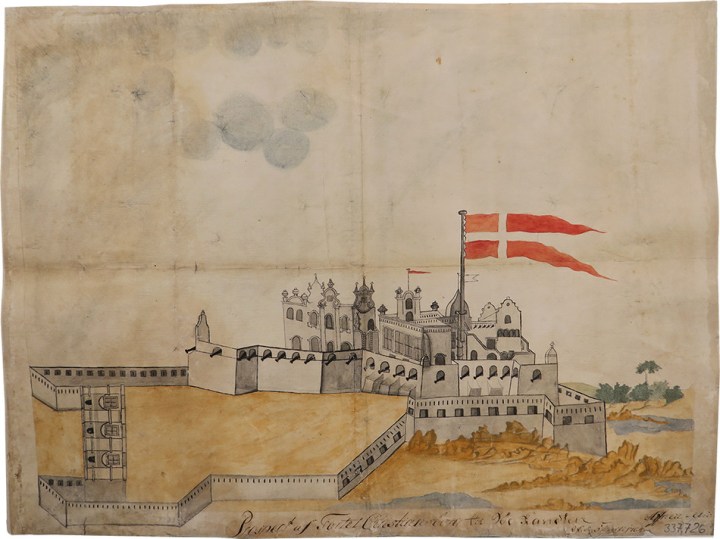
View of Fort Christiansborg [Christiansborg Castle, Osu] from the Shore, March 1764, ink and coloured wash on paper
(Danish National Archives)
◊ ◊ ◊ ◊ ◊
The eighteenth century in the April issue of The Burlington . . .
The Burlington Magazine 165 (April 2023)
A R T I C L E S
• Gauvin Alexander Bailey, “The Design of Cape Coast Castle and Dixcove Fort, Ghana,” pp. 378–93.
The first analysis of the design of two of the principal eighteenth-century British slave castles and forts of the Gold Coast reveals the Western engravings used as prototypes but also acknowledges these buildings’ engagement with African cultures and forms. Identifying the people who built them and assessing the forts’ association with the coastal African community challenges the popular misconception that they were no more than European transplants.
R E V I E W S
 • Morlin Ellis, Review of the exhibition Spain and the Hispanic World: Treasures from the Hispanic Society Museum and Library (Royal Academy of Arts, 2023), pp. 442–45.
• Simon Jervis, Review of the exhibition catalogue, Reinier Baarsen, Process: Design Drawings from the Rijksmuseum 1500–1900 (Rotterdam: 2022), pp. 456–58.
• Philip Ward-Jackson, Review of the exhibition catalogue, Yvette Deseyve, ed., Johann Gottfried Schadow: Embracing Forms (Hirmer Verlag, 2023), pp. 463–66.
• Thomas P. Campbell, Review of Helen Wyld, The Art of Tapestry (Philip Wilson Publishers, 2022), pp. 472–75.
• Charles Saumarez Smith, Review of András Szántó, Imagining the Future Museum: 21 Dialogues with Architects (Hatje Cantz, 2022), pp. 482–83.
• John Martin Robinson, Review of Dudley Dodd, Stourhead: Henry Hoare’s Paradise Revisited (Head of Zeus, 2021), pp. 484–85.
O B I T U A R I E S
• Christopher Wood, Obituary for Hans Belting (1935–2023), pp. 486–88.
British Art Studies, March 2023
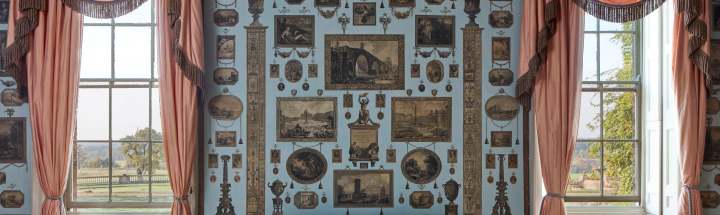
West Wall of the Print Room at Woodhall Park, Hertfordshire, created in 1782 by R. Parker.
Photographed in 2023 Matthew Hollow.
◊ ◊ ◊ ◊ ◊
The long eighteenth century in the latest issue of British Art Studies (lots of fascinating material; I’m especially taken by the videos that accompany Kate Retford’s article: they’re fabulous, particularly the one on ‘Making the Print Room’. –CH)
British Art Studies 24 (March 2023)
“Monuments Must Fall,” a ‘Conversation Piece’ convened by Edwin Coomasaru, with responses by Jodie Dowd and Nathan mudyi Sentance, Sasanka Perera, Wendy Bellion, Chrislyn Laurie Laurore, Stacy Boldrick, Joan Coutu, Emma Mahony, Nomusa Makhubu, Nickolas Lambrianou, and Raqs Media Collective.
‘Conversation Piece’ is a British Art Studies series that draws together a group of contributors to respond to an idea, provocation, or question.
Monumentality is an aesthetic form of social antagonism. . . . Many monuments are erected to do controversial work, and while they may proclaim a matter resolved or a problem consolidated, the reactions to them (sometimes long after they have been placed on pedestals) actually demonstrate the opposite is often the case. Monuments are not solely statues. Monumentality is the discursive space that surrounds certain public sculptures, including demands they be pulled down or protected, which can erupt into spontaneous or managed removal. Such a discursive space is inherently unstable, which is why most monuments ultimately must fall, physically or conceptually: either by being toppled or by having their original intentions obliterated and reimagined. . . .
Monuments are not simply physical structures, nor empty symbols, but are shaped by either social support systems that erect and conserve them, or by forms of social conflict which contest and topple them. The discursive space around a public statue, from protest to press coverage, and its translation into material conditions, is the making of its monumentality. . . .
Edwin Coomasaru’s essay and the ten responses are available here»
Kate Retford, “Cutting and Pasting: The Print Room at Woodhall Park.”
This article explores the exemplary surviving print room at Woodhall Park in Hertfordshire, created in 1782 for Sir Thomas Rumbold. A professional named “R. Parker” pasted more than 350 prints around the walls of this interior; the results were then carefully recorded in a catalogue and set of elevation diagrams. The first section, ‘Space’, analyses the print room within the broader context of the house, in order to connect exterior and interior, explore the relative qualities of ‘public’ and ‘private’ space, and consider neoclassical style as worked out in various media. The second, ‘Display’, unpacks the pasted scheme, looking at the relationship between ‘background’ images and ‘starring’ works, and that between iconography and pattern-making. The final part explores ‘Making’, analysing the processes by which prints were selected, trimmed, given paper borders, and arranged around the walls. This discussion considers both the degree to which the intermedial object of the reproductive print was translated into a trompe l’œil painting or sculpture in such schemes, and the creative work of collaging at play. The analysis in this article weaves together textual discussion with still and moving images, film, and animation. Combining these techniques, it aims to provide full documentation and analysis of the scheme, and to engage with embodied, mobile, and temporally determined viewing experience in both the house and the print room.
Article available here»
Melissa L. Gustin, “Do Sleeping Shepherds Dream of 3D-Printed Sheep: John Gibson, Oliver Laric, and Digital Neoclassicism.”
This article considers the relationship between John Gibson’s neoclassical sculpture The Sleeping Shepherd Boy [designed 1818] and Oliver Laric’s installations for the 2016 Liverpool Biennial using 3D models and prints of the Shepherd. These bodies of work allow us to think about their similarities in attitude towards imitation, the significance of the ‘neoclassical’ across different historic moments, and the cultures of copying or reproduction. It looks at the reproductive technologies of 3D scanning, printing, CNC milling, and digital remixing alongside historical reproductions such as casts and copies. These offer new potentially disruptive—but not destructive—opportunities within the legacy of neoclassical practices. The intellectual and artistic inheritance of neoclassical sculpture as an imitative practice after Greek and Roman antiquity informs Laric’s sculptural work. I draw on Alexander Nagel and Christopher Wood’s Anachronic Renaissance (2010) and George Kubler’s The Shape of Time (1968) to discuss Laric’s modular, large-scale 3D prints, which point towards issues of replacement, imitation, and wholeness. The open-source 3D models he produces as part of his practice are then used by other artists, including Zachary Eastwood-Bloom in his Divine Principles series, and the author, for making research objects.
Article available here»
The Burlington Magazine, March 2023
The eighteenth century in the March issue of The Burlington . . .
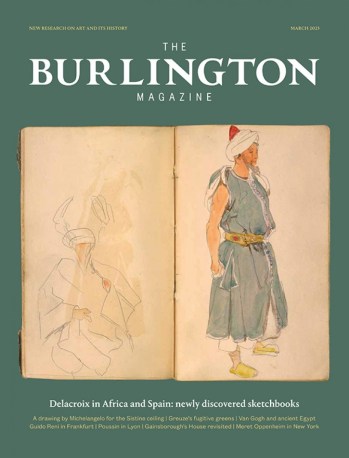
The Burlington Magazine 165 (March 2023)
 E D I T O R I A L
• “Omai,” p. 219.
Given his undisputed central place in the history of British art, it is surprising that the three-hundredth anniversary of the birth of Joshua Reynolds is not being celebrated this year with more éclat. The principal tribute will be an exhibition Reframing Reynolds: A Celebration (24 June – 29 October 2023) at the Box in Plymouth, the city where Reynolds made his reputation—he was born on 16th July 1723 at Plympton, on its outskirts. The exhibition will explore the patronage he enjoyed from the Eliot family of Port Eliot, St Germans, and will be supplemented by the museum’s collection of paintings by Reynolds, the largest outside London.
Reynolds’s reputation rests largely on his portraits, so it might have been expected that the museum that contains the largest number, the National Portrait Gallery, London (NPG), would have marked the occasion with an exhibition of its own, but given that it has been closed for the past three years for a comprehensive redevelopment and redisplay, due to be unveiled on 22nd June, it has had other priorities. Yet any disappointment that the NPG is neglecting Reynolds in his anniversary year was allayed by the announcement last August that it is seeking to raise £50 million to acquire one of his greatest paintings, the full-length portrait of Omai, the first Polynesian to visit Britain. Universally praised ever since it was first seen in public, at the Royal Academy of Arts in 1776, it is a work both of great beauty and of compelling historic interest as a document of the earliest European encounter with Pacific cultures. . . Keep reading here»
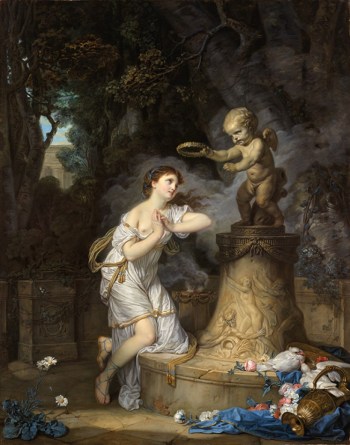
Jean-Baptiste Greuze, A Young Woman Praying at the Altar of Love (Votive Offering to Cupid), 1767, oil on canvas, 146 × 113 cm (London: The Wallace Collection).
A R T I C L E S
• Yuriko Jackall, Barbara H. Berrie, John K. Delaney, and Michael Swicklik, “Greuze’s Greens: Ephemeral Colours, Classical Ambitions,” pp. 268–79.
Jean-Baptiste Greuze was criticized in his lifetime for the unduly muted palette of some of his paintings. New technical analysis, combined with the recent discovery of a list in his handwriting of pigments he used, has revealed that his greens have faded because they incorporate fugitive yellow lakes, a practice Greuze continued even after its disadvantages were obvious.
R E V I E W S
• Roko Rumora, Review of the exhibition Chroma: Ancient Sculpture in Color (The Metropolitan Museum of Art, 2022–23), pp. 312–15.
• Desmond Shawe-Taylor, Review of the newly opened, expanded Gainsborough’s House (Sudbury), pp. 322–25.
• Friso Lammertse, Review of the newly renovated Royal Museum of Fine Arts, Antwerp (KMSKA), pp. 332–35.
• Simon Swynfen Jervis, Review of Jean-Pierre Fournet, Cuirs dorés, ‘Cuirs de Cordoue’: un art européen (Éditions d’art Monelle Hayot, 2019), pp. 342–43.
• Gauvin Alexander Bailey, Review of Aaron Hyman, Rubens in Repeat: The Logic of the Copy in Colonial Latin America (Getty Research Institute, 2021), pp. 343–44.
• Stephen Bann, Review of Joanthan Ribner, Loss in French Romantic Art, Literature, and Politics (Routledge, 2022), pp. 344–45.
• Charlotte Gere, Review of Julius Bryant, Enriching the V&A: A Collection of Collections, 1862–1914 (Lund Humphries and V&A Publishing, 2022), pp. 345–46.
• Jennifer Johnson, Review of Sam Rose, Interpreting Art (UCL Press, 2022), p. 350.
Print Quarterly, March 2023
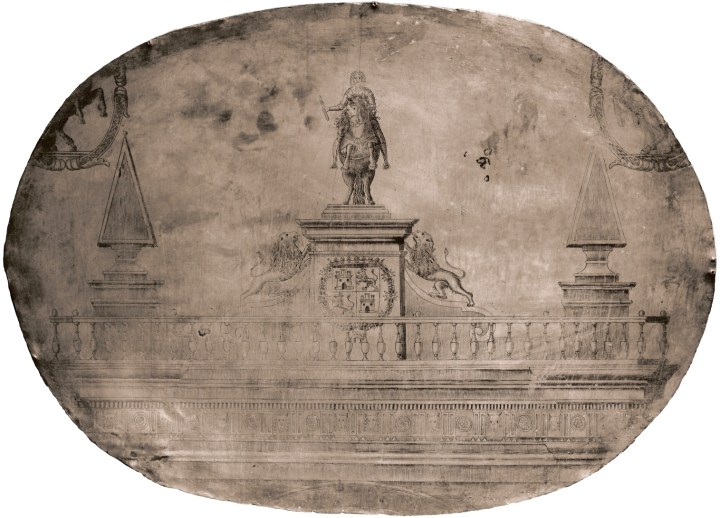
Juan Francisco Rosa, Equestrian Monument to Philip V, ca. 1738–45, engraved copper-plate, 26 × 36 cm (Chicago: Carl and Marilynn Thoma Foundation). The plate was cut into an oval, likely from what was originally a rectangle, and used as a support for an oil painting; on the other side is The Christ Child with St Joseph.
◊ ◊ ◊ ◊ ◊
The long eighteenth century in the latest issue of Print Quarterly:
Print Quarterly 40.1 (March 2023)
A R T I C L E S
• Emily C. Floyd with Suzanne Stratton-Pruitt, “Juan Francisco Rosa: Engraver to the Elite in Eighteenth-Century Lima,” pp. 33–51.
This article explores the life and works of the limeño engraver Juan Francisco Rosa (active in Lima, Peru, 1735–1756), with in-depth discussions pertaining to popular themes in his prints, patrons and contributions to the historic documentation of events and lost works in Lima. It adds two remarkable works to his oeuvre—a copperplate, now cut in two, and an illumination associated with a patent of nobility. The plate documents a famous statue of Philip V that was placed in 1738 on the bridge over the river Rímac and soon destroyed in the 1746 earthquake. The article demonstrates that Rosa produced important commissions for powerful organizations and individuals in the viceregal hierarchy, suggesting his prominence as an artist in mid-eighteenth-century Lima.
N O T E S A N D R E V I E W S
• Antony Griffiths, “Altered Plates,” pp. 63–66. Drawing attention to an anecdote in a 1726 biography of the London publisher, newspaper editor, and controversialist Abel Roper, this note charts the chronology of an altered plate by William van de Passe depicting the Duke of Buckingham on horseback in the first state, published 1625. The plate was then modified around 1630/32 in the second state to represent James, 1st Duke of Hamilton, before being transformed again in the third state of 1654–58 to portray Oliver Cromwell as Lord Protector. The plate is documented to have been subjected to a fourth “very profitable” change, altered to portray William III, though no impression has yet been found.

Romeyn de Hooghe, Les Monarches Tombants (James II falls off the back of a unicorn at left, Louis XIV on a globe at right, while William III is raised on a shield in the background), 1689, etching, sheet includes letterpress text below the image (Amsterdam: Rijksmuseum).
• Peter van der Coelen, Review of Meredith McNeill Hale, The Birth of Modern Political Satire: Romeyn de Hooghe (1645–1708) and the Glorious Revolution (Oxford University Press, 2020), pp. 66–68. Peter van der Coelen is persuaded by Hale’s argument that the satires De Hooghe produced between 1688 and 1690 were decisive for the development of political satire as a genre and that the birth of the genre should therefore be located not in eighteenth-century England but in the Dutch Republic of the late seventeenth century.
• Helmut Gier, Review of Eckhard Leuschner and Friedrich Polleross, eds., “Der Augsburger Kupferstecher und Verleger Johann Ulrich Kraus (1655–1719),” in Frühneuzeit-Info 32 (2021), pp. 68–71. A review of nine conference papers addressing Johann Ulrich Kraus, one of whose most important contributions to the history of art was the reception and dissemination in central Europe of the art favoured at the court of Louis XIV.
• Stephen Salel, Review of Timothy Clark, Hokusai: The Great Picture Book of Everything (British Museum Press, 2021), pp. 71–73.
• Janis A. Tomlinson, Review of the exhibition catalogue, Véronique Gerard, ed., Goya: Génie d’Avant-Garde. Le Maître et son École (Musée des Beaux-Arts and Éditions Snoeck, 2020), and “Goya peintre,” in Technè 53 (2022), pp. 73–75. Did Goya have a workshop? Whereas Goya’s prints seem to be a well-defined body of work, whose technique has been well-studied, as have their preparatory drawings and visual and historical sources, the paintings are another matter. Imitations, copies and forgeries began to circulate within a decade of Goya’s death and continue to complicate our understanding of his oeuvre. . . [These] two contributions . . . address some of these questions in very different ways.
• Heather Hyde Minor, Review of Ginevra Mariani, ed., Giambattista Piranesi: Matrici incise 1743–1753 (Edizioni Gabriele Mazzotta, 2010); Giambattista Piranesi: Matrici incise 1756–1757. Le Antichità Romane Lettere di giustificazione 2 (Edizioni Gabriele Mazzotta, 2014); Giambattista Piranesi: Matrici incise 1761–1765 (Editalia, 2017); and Giambattista Piranesi: Matrici incise 1762–1769 (De Luca Editori d’arte, 2020), pp. 102–06. This review explores the four-volume series of publications dedicated to cataloguing and discussing the 964 autograph printing plates by Giovanni Battista Piranesi in the collection of the Istituto Centrale per la Grafica in Rome. Further Matrici incise volumes are expected to be published in due course.
• Roger Kneebone, Review of the exhibition catalogue, Monique Kornell, ed., Flesh and Bones: The Art of Anatomy (Getty Research Institute, 2022), pp. 106–11. This review highlights the complex intersections between artists, engravers, anatomists and clinicians over four centuries. Worthy of note are the ways multiple perspectives from different kinds of parties informed the appearance of anatomical illustrations depending on their purpose and audience, resulting in images that were not always neutral in their ‘factual’ representations.
Metropolitan Museum Journal 2022
The eighteenth century in the latest issue of The Met’s journal , and a reminder that digital copies are free!
Metropolitan Museum Journal 57 (2022)
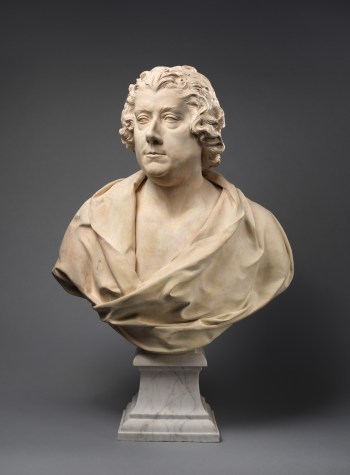
Louis François Roubiliac, Francesco Bernardi, known as ‘II Senesino’ (ca. 1686–1758), ca. 1735, terracotta with later marble base, bust: 62 × 55 × 23 cm (New York: The Metropolitan Museum of Art, Purchase, Gift of Irwin Untermyer by exchange, 2016.47).
A R T I C L E S
• Malcolm Baker, “Sculpting Reputation: A Terracotta Bust of Senesino by Roubiliac,” pp. 25–39.
• Ronda Kasl, “Witnessing Ingenuity: Lacquerware from Michoacán for the Vicereine of New Spain,” pp. 40–56.
• Wendy McGlashan, “John Kay’s Watercolor Drawing John Campbell (1782),” pp. 57–66.
• Kimberly Chrisman-Campbell, “A Tale of Two Chapeaux: Fashion, Revolution, and David’s Portrait of the Lavoisiers,” pp. 67–84.
R E S E A R C H N O T E S
• Ludmila Budrina, “Malachite Networks: The Demidov and Medici Vases-Torchères (1821–23) in The Met,” pp. 148–59.
6th Annual Ricciardi Prize from Master Drawings
From Master Drawings:
Sixth Annual Ricciardi Prize from Master Drawings
Submissions due by 15 November 2023

Édouard Manet, Woman Writing, brush and black ink on paper (Clark Art Institute, MA).
Master Drawings is now accepting submissions for the Sixth Annual Ricciardi Prize for Young Scholars. The $5,000 award is given to the best new and unpublished article on a drawing topic (of any period) by a scholar under the age of 40. The winning submission will be published in a 2024 issue of Master Drawings. Information about past winners and finalists is available here.
The average article length is between 2,500 and 3,750 words, with five to twenty illustrations. Submissions should be no longer than 10,000 words and have no more than 100 footnotes. Please note that all submissions must be in article form, following the format of the journal. We will not consider submissions of seminar papers, dissertation chapters, or other written material that has not been adapted into the format of a journal article. Written material that has been previously published, or is scheduled for future publication, will not be eligible. Articles may be submitted in any language. Be sure to include a 100 word abstract outlining the scope of your article with your submission, along with a current CV or resume, as well as your birth date. Please submit your application online by 15 November 2023. If the file is too large, please use Wetransfer.com addressed to administrator@masterdrawings.org.
The Art Bulletin, December 2022
The eighteenth century in the latest issue of The Art Bulletin 104 (December 2022), along with the methodological ‘perspective’ conversation from Fricke and Flood:
A R T I C L E S
 • Beate Fricke and Finbarr Barry Flood, “Premodern Globalism in Art History: A Conversation,” pp. 6–19.
A conversation took place in 2021 between two art historians whose research focuses on different regions of the premodern world and who have recently collaborated on a project dealing with early histories of globalism. The discussion considers the potential archival value of ‘flotsam’—that is, extant artifacts and images lacking extensive textual metadata—for (re)constructing transcultural and transregional histories of circulation and reception. It addresses divergences in the nature of the available archival materials and the ethical and methodological challenges this poses. The discussants consider the need to move beyond earlier, largely celebratory narratives of the global to engage the ways in which transregional and transcultural networks intersected with more rooted or regional traditions of art making and material culture.
• Paris A. Spies-Gans, “Why Do We Think There Have Been No Great Women Artists? Revisiting Linda Nochlin and the Archive,” pp. 70–94.
In 1971 Linda Nochlin published her quickly canonical “Why Have There Been No Great Women Artists?” (ARTnews 69, no. 9). She offered a powerful narrative, claiming that Western institutional structures and a lack of access to vital educational opportunities had historically prevented women from becoming ‘great’ artists—indeed from even having the potential to achieve greatness. I suggest new visual and textual lenses through which we can update Nochlin’s narrative and reconsider women artists on their own societies’ terms, arguing that by returning to the archive, we can identify greatness and professionalism where they have eluded us before.
R E V I E W S
• Amy Knight Powell, Review of Aaron Hyman, Rubens in Repeat: The Logic of the Copy in Colonial Latin America (Getty Publications, 2021), pp. 120–23.
• Amanda Lahikainen, Review of Joseph Monteyne, Media Critique in the Age of Gillray: Scratches, Scraps, and Spectres (University of Toronto Press, 2022), pp. 123–26.










 Enfilade
leave a comment