Lecture | Mei Mei Rado on European Tapestries at the Qing Court
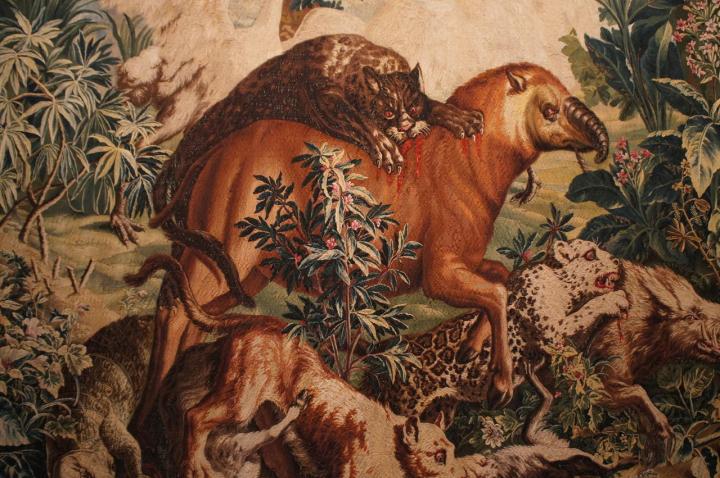
Designed by Jean Jans, the Younger (active 1668–1723), after Albert Eckhout (c. 1610–1666), The Battle of the Animals, detail, Gobelins Manufactory, ca. 1723 (Oxford: Ashmolean Museum, WA1901.1).
◊ ◊ ◊ ◊ ◊
Next week at Harvard:
Mei Mei Rado | European Tapestries at the Qing Court: Global Textiles and a Cross-cultural Medium
Department of History of Art and Architecture, Harvard University, Cambridge, 7 November 2023, 6pm
This presentation draws from Dr. Rado’s forthcoming book The Empire’s New Cloth: Cross-cultural Textiles at the Qing Court (Yale University Press, early 2025). Large-scale pictorial tapestries ranked among the most precious art forms in the early modern period. While their circulations and functions among European courts have been well studied, less known are their journeys to China and subsequent roles in stimulating new developments in Qing imperial arts.
The first part of this talk uncovers the history of French tapestries that entered the Qing court during the eighteenth century as diplomatic gifts and trade goods, including the first and second Tentures chinoises woven by the Beauvais Manufactory and the Tenture des Indes made by the Gobelins Manufactory. Their trajectories reconstructed from both the French and Qing sides offer a window into the complexity of global networks and contingency of cultural encounters. These tapestries’ themes, marked by idealized exoticism compressing distance and time, functioned as a kind of diplomatic lingua franca adaptable to express divergent cultural and political visions. The second part of the presentation examines how European tapestries gave rise to a new type of textile art form in the Qing imperial workshops and an innovative mode for furnishing the palace interiors. The medium’s architectonic tension and interactive visual potential enabled the Qianlong emperor to envision his own physical presence in relation to the tapestry in space and offered him new ways to reenact narratives charged with imperial significance.
Mei Mei Rado is Assistant Professor at the Bard Graduate Center, specializing in textile and dress history, with a focus on China and France from the 18th through early 20th century. Before joining BGC, Dr. Rado was Associate Curator of Costume and Textiles at LACMA, having previously held fellowship positions at The Metropolitan Museum of Art, the Smithsonian’s National Museum of Asian Art, and the Palace Museum in Beijing.
Online Lectures | David Pearson on Cambridge Bookbinding, 1450–1775
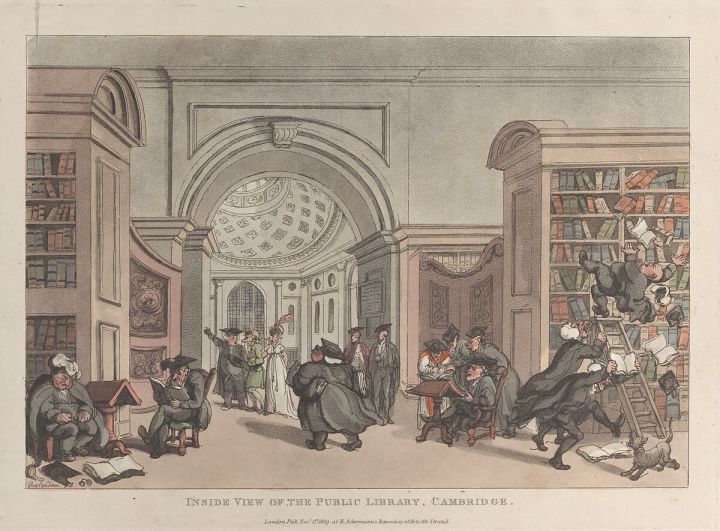
Thomas Rowlandson, Inside View of the Public Library, Cambridge, published in London by Rudolph Ackermann, 9 November 1809, hand-colored etching and aquatint, plate: 23 × 32 cm (New York: The Metropolitan Museum of Art, 59.533.1635).
◊ ◊ ◊ ◊ ◊
As recently announced on the SHARP listserv (Society for the History of Authorship, Reading, and Publishing) . . .
David Pearson | Cambridge Bookbinding, 1450–1775
Online and in-person, Robinson College, Cambridge, 21–23 November 2023
The Sandars Readership in Bibliography is one of the most prestigious honorary posts to which book historians, librarians, and researchers can be appointed. Those elected deliver a series of lectures on their chosen subject. This year’s Reader, Dr David Pearson, will address the topic of Cambridge bindings.
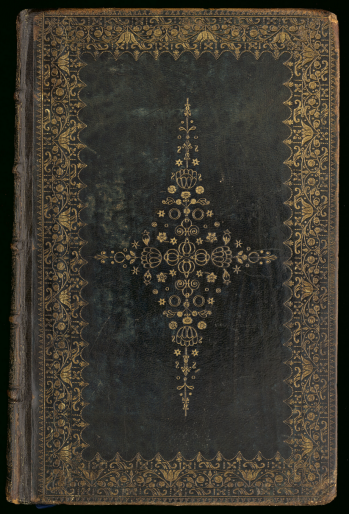
The Book of Common Prayer, and Administration of the Sacraments. . . together with the Psalter (Cambridge: John Baskerville for B. Dod in London, 1761), with gilt-tooled binding from the workshop of Edwin Moore, ca.1761–65 (TC.77.1), pasteboards, covered with black goatskin, gilt-tooled; rebacked, preserving most of the original gilt-tooled spine.
Cambridge has been a leading centre for binding books (as well as for printing and selling them) for many centuries, and books bound in Cambridge are found all over the world. How do we recognise them, and what can they tell us? The 2023 lectures will build on a project aiming, for the first time, to produce a comprehensive overview of Cambridge binding work through the early modern period. They will explore the evolution of the craft in its broader context, and the questions we should ask when we identify books bound in Cambridge. Cambridge Bookbindings 1450–1770, featuring 45 bookbindings in Cambridge during the handpress period using the collections of Cambridge University Library, is available on the Cambridge Digital Library.
The three lectures will be held in-person at Robinson College, live-streamed, and recorded. Click on the lectures below for more information and to register (please register for each lecture you hope to attend).
• Tuesday, 21 November, 5pm, followed by a drinks reception at the University Library
• Wednesday, 22 November, 5pm
• Thursday, 23 November, 5pm
David Pearson was formerly Director of Culture, Heritage, and Libraries for the City of London Corporation. He is a Senior Fellow of the Institute of English Studies at the University of London, was Lyell Reader in Bibliography at Oxford (2017–18), and teaches regularly on the Rare Book Schools in London and Virginia. His books include Provenance Research in Book History (new edition, 2019), English Bookbinding Styles, 1450–1800 (2005), Book Ownership in Stuart England (2021), and Speaking Volumes: Books with Histories (2022). In 2020 he launched the Book Owners Online database.
◊ ◊ ◊ ◊ ◊
Of the binding of The Book of Common Prayer pictured above, Dr Pearson writes,
The name which is most immediately associated with Cambridge bookbinding work of the middle decades of the eighteenth century, and whose workshop produced many handsomely-decorated bindings, is Edwin Moore. . . The ornamental design which became fashionable in England for upmarket binding work, from about 1720, is what has come to be known as ‘Harleian style’, characterised by a large central lozenge-shaped pattern made up of small tools symmetrically arranged, surrounded by a wide border of rolls and/or other tools around the perimeters. Moore’s better quality work conformed very much to this idea, and numerous bindings like this survive, made from the 1740s, 50s and 60s. . .
York Georgian Society Lecture Series

J.M.W. Turner, The Arch of the Old Abbey, Evesham, 1793, brush and wash, watercolor, and pen and ink over graphite on paper
(Providence: RISD Museum, 69.154.60).
◊ ◊ ◊ ◊ ◊
Upcoming lectures from the York Georgian Society:
Jane Grenville | Revisiting Pevsner’s Yorkshire, North Riding: Updating a Classic
York Medical Society, Saturday, 21 October 2023, 2.30pm
Dr Jane Grenville will discuss Pevsner’s research methods and show how the explosion of architectural historical research in the intervening half century and the appearance of the internet have enabled a hugely expanded second edition. She will then present selected highlights of Georgian architecture in the county, including a discussion of Forcett Park, whose mysteries remain, to some extent, intact—and the pleasures and pains of updating Pevsner’s entry on Castle Howard in the light of so much subsequent research.
Jane Grenville’s transition from dirt archaeologist to buildings research was inspired by working as a teenager with Dr Harold Taylor (Anglo-Saxon Architecture). After research on churches and parish formation in pre-Conquest Lincolnshire (unfinished), she joined the Listed Buildings Re-Survey for Yorkshire in 1984, and her knowledge expanded to all periods. Like Pevsner, she became a ‘GP’ in the field. She worked in professional conservation until joining the Archaeology Department at York, where she initiated undergraduate standing buildings modules and an MA—and then ensured the continuation of the famous MA in Conservation Studies after the demise of the Institute of Advanced Architectural Studies. She retired in 2015 after a spell in senior management. Pevsner was the perfect retirement project.
Registration is available here»
◊ ◊ ◊ ◊ ◊
Nicholas Tromans | ‘Put Up a Picture in Your Room’: Art at Home in Earlier 19th-Century Britain
York Medical Society, Saturday, 11 November 2023, 2.30pm
The early nineteenth century saw the opening up of a fabulous array of collections of paintings to the public—both in dedicated museums and in galleries attached to grand private residences. But what about pictures in more modest homes? This lecture asks about the theory and practice of displaying pictorial art in middle-class domestic settings, taking its cue and title from an 1834 essay by the Romantic writer Leigh Hunt. What was the purpose of the domestic picture? Who was it for? How should it be hung and in which rooms of the house? By opening up the private lives of pictures, and considering relationships between paintings, prints and urban interiors, it becomes possible to gain a new perspective on the everyday experience of art.
Nicholas Tromans in an independent art historian based in London. He has worked in universities, museums and auction houses. A specialist in nineteenth-century British art, he has written or edited books on David Wilkie, Orientalist painting, Richard Dadd, G. F. Watts and (with Susan Owens) Christina Rossetti. His most recent book, on which this lecture is based, is The Private Lives of Pictures: Art at Home in Britain 1800–1940 (Reaktion, 2022). His current project is a book about the relationship of art to psychiatry since the late eighteenth century.
Registration is available here»
◊ ◊ ◊ ◊ ◊
Bennett Zon | ‘O Come All Ye Faithful’: A Musical Mystery Tour
York Medical Society, Saturday, 25 November 2023, 2.30pm
Beloved by Christians and non-Christians alike, Christmas carols are amongst the few musical genres to transcend religious and cultural differences. Uniting people through the magic of seasonal song, carols help us share our feelings and communicate the true meaning of Christmas. But what is the true meaning of Christmas? And what was the true meaning of Christmas when Christmas carols became popular in the eighteenth century? This paper tries to find out by telling the true but shocking story of the meaning behind Britain’s most popular carol “Adeste Fideles,” otherwise known as “O Come All Ye Faithful.” Join Bennett Zon for a ‘Musical Mystery Tour’ tracing its history from the 1740s to the present, through London Embassy chapels, recusant houses, Protestant churches, and Catholic cathedrals.
Bennett Zon is Professor of Music at Durham University, and Director of the International Network for Music Theology. He is also Director of Durham’s Centre for Nineteenth-Century Studies and the Centre for Nineteenth-Century Studies International, and was recently elected President of the International Nineteenth-Century Studies Association. He is general editor of Nineteenth-Century Music Review (Cambridge) and the book series Music in Nineteenth-Century Britain (Routledge), and editor of the Yale Journal of Music and Religion. Zon researches music, religion, and science in the long nineteenth-century. Recent publications include Evolution and Victorian Musical Culture (2017) and the co-edited volume Victorian Culture and the Origin of Disciplines (2019). Zon is one of two general editors of the forthcoming five-volume Oxford Handbook of Music and Christian Theology, and is currently writing No God, No Science, No Music, a history using music to explore the relationship between religion and science from the Big Bang to the present.
Registration is available here»
◊ ◊ ◊ ◊ ◊
David Adshead | The History, Role, and Future of the Georgian Group
York Medical Society, Saturday, 13 January 2024, 2.30pm
The lecture will explore the history, role, and future goals of The Georgian Group, including its objectives to preserve Georgian buildings and landscapes and encourage public understanding and appreciation of Georgian architecture, town planning, and taste as demonstrated in the applied arts, design, and craftsmanship.
David Adshead is Director of The Georgian Group. Formerly Head Curator and Architectural Historian of the National Trust, he is a past chairman of the Society of Architectural Historians of Great Britain and has published widely on British architecture and historic houses and their collections.
Registration is available here»
◊ ◊ ◊ ◊ ◊
Adam Bowett | Mapping the Mahogany Trade in the 18th and 19th Centuries
York Medical Society, Saturday, 10 February 2024, 2.30pm
This lecture charts the growth of the mahogany trade from its small beginnings in the early 18th century to its global peak in the late 19th. The trade was shaped both by British colonial policy and by Britain’s relations with the other European colonial powers, with successive wars against France and Spain being the most potent drivers of change. It was initially centred on the British Caribbean islands, especially Jamaica, but rapidly expanded to encompass Central America, Cuba, and Hispaniola. In the process, furniture making in Britain was transformed, and in the 19th century mahogany was the world’s most commercially important high-class furniture wood. By the early 20th century the mahogany stocks of most Caribbean islands and large parts of Central America were dangerously depleted, and all three species are now protected under the CITES agreements.
Adam Bowett is an independent furniture historian and chairman of the Chippendale Society. Since 1992 he has also worked as an advisor on historic English furniture to public institutions and private clients in both Britain and North America, including The National Trust, English Heritage, Arts Council England, the Victoria and Albert Museum, The Metropolitan Museum of Art, the Strawberry Hill Trust, The Wallace Collection, and numerous British regional museums. Dr Bowett lectures widely and teaches furniture history at the Victoria and Albert Museum. He publishes work in both popular and academic journals and is the author of several books on English furniture and furniture-making.
Registration is available here»
◊ ◊ ◊ ◊ ◊
Hannah Rose Woods | Reflections on Decayed Magnificence: Nostalgia in Georgian Britain
York Medical Society, Saturday, 9 March 2024, 2.30pm
This talk will explore the ways in which people in Georgian Britain looked back to the past. While we might look back today with our own retrospect and picture the Georgian era as an elegant heyday of stateliness and stability, people throughout the long eighteenth century often characterised the age in which they were living as one of disorienting transformation. From yearning for a vanished ‘Merry England’ of rural community, to landscaping Arcadian idylls inside the grounds of stately homes, or else dreaming about the grandeur of the Roman Empire, nostalgia could be a profoundly reassuring coping mechanism. The ways in which they created these idealised or imagined pasts gives us a unique insight into how people viewed the changes that were defining their own age, and how they felt about the societies in which they lived.
Hannah Rose Woods is a cultural historian who is particularly interested in the history of people’s emotional lives. Her first book Rule, Nostalgia: a Backwards History of Britain (Penguin, 2022) explored nostalgia for a rose-tinted national past over five centuries of British history, from the present day to the Reformation of the sixteenth century. She has a PhD from the University of Cambridge, where she taught eighteenth- and nineteenth-century British history, and is now an independent writer and researcher. She is a columnist for The New Statesman, and has written on history, politics and culture for publications including The New York Times, The Sunday Times, The Guardian, London Review of Books, and History Today.
Registration is available here»
◊ ◊ ◊ ◊ ◊
All are welcome to YGS lectures. Admission is free to members and students, and a suggested donation from non-members of £5.
Online Conversation | The Van de Veldes at the Queen’s House
In connection with the exhibition at Greenwich; from The Warburg Institute:
Curatorial Conversation | The Van de Veldes at the Queen’s House, Greenwich
Online, 17 October 2023, 5.30pm
Curators Allison Goudie and Imogen Tedbury in conversation with Bill Sherman (Warburg Institute Director) and Gregory Perry (CEO, Association for Art History)
For almost 20 years in the late 17th century the Queen’s House at Greenwich was the studio address of the marine painters Willem van de Velde the Elder (1610/11–1693) and his son, Willem the Younger (1633–1707). Although the building itself bears little trace of the Van de Veldes’ presence, in the 20th century the Queen’s House once again became a home for their work, as the dedicated art gallery of the National Maritime Museum, custodian of the world’s largest collection of works by the Van de Veldes. Spanning scores of oil and pen paintings, a tapestry, and some 1,500 drawings, the collection is unique in what it can tell us about how a 17th-century artist’s studio functioned. The physical evidence provided by this collection proved invaluable for the evocation of the Van de Velde studio that forms a centrepiece of the current exhibition, The Van de Veldes: Greenwich, Art, and the Sea, marking 350 years since the Van de Veldes moved to England from the Dutch Republic. Showcasing major conservation projects on important works in the Greenwich collection that have their origin point in the Queen’s House studio, and notwithstanding a select number very generous loans, the exhibition was also a pragmatic solution to some of the challenges facing museums as they emerged from Covid, particularly how to make an event out of a permanent collection.
Online attendance is free, with advanced booking available here»
Allison Goudie is Curator of Art (pre-1800) at Royal Museums Greenwich. Before coming to Greenwich, she was Curator of Kenwood House and previously held curatorial positions at the National Gallery and the National Trust. She completed her PhD on the subject of royal portraiture during the Revolutionary and Napoleonic wars at the University of Oxford in 2014. She is the recipient of a Getty Paper Project grant to bring to life the collection of Van de Velde drawings at Greenwich and is leading on RMG’s programme in 2023 marking 350 years since the Van de Veldes arrived in England, the centrepiece of which is the exhibition in the Queen’s House co-curated with Imogen Tedbury.
Imogen Tedbury is an art historian and curator. She has held curatorial positions at Royal Holloway, University of London, the National Gallery, London, and the Queen’s House, Royal Museums Greenwich, where she was the co-curator of The Van de Veldes: Greenwich, Art, and the Sea. Her PhD (2018) explored the reception of Sienese painting, and her research has been supported by fellowships and grants from the Getty Research Institute, the Metropolitan Museum of Art, the Paul Mellon Centre, and the Warburg Institute. She is currently undertaking research for the early Italian paintings catalogue of the Norton Simon Museum.
This event is organised by the Association for Art History in conjunction with The Warburg Institute, University of London. Curatorial Conversations invites museum directors and makers of recent exhibitions at world-leading museums and galleries to the Warburg to discuss their work. The conversations, led by academics at the Warburg Institute, discuss the issues of setting the directorial or curatorial agenda and staging meaningful encounters with objects. The series is designed to draw out discussion of the discoveries made, challenges tackled and the lessons learned in heading a collection and putting together internationally renowned exhibitions.
Online Talks from The Library Company of Philadelphia
Two upcoming online events from the Visual Culture Program of The Library Company of Philadelphia:
Prints of a New Kind: Political Caricature in the United States, 1789–1828
A book talk by Dr. Allison Stagg
Friday, 20 October 2023, 1.30pm ET
Prints of a New Kind details the political strategies and scandals that inspired the first generation of American caricaturists. It examines the caricatures that mocked events reported in newspapers and politicians, the reactions captured in personal papers of the politicians being satirized, and the lives of the artists who satirized them.
Allison M. Stagg is a specialist in 18th- and 19th-century American and British visual culture and has published widely on the subject of American historical caricature. She was the Library Company 2017–18 William H. Helfand Fellow in American Visual Culture.
More information and registration details are available here»
◊ ◊ ◊ ◊ ◊
The Complexities of Phillis Wheatley’s Portrait
A guest lecture by Dr. Jennifer Chuong
Wednesday, 25 October 2023, 1.00pm ET
In the fall of 1773, Phillis Wheatley became the first Black woman to publish a book in the transatlantic world. Poems on Various Subjects, Religious and Moral features an engraved frontispiece portrait of the author. This portrait aimed to portray an enslaved person who, by virtue of her intelligence, erudition, and imagination, exploded slavery’s foundational claim that enslaved persons were objects to be bought and sold. This talk explores how the portrait both supports and undercuts this aim.
Jennifer Y. Chuong is an art historian whose research centers on the art, architecture, and material culture of the transatlantic world in the 18th and 19th centuries as they relate to histories of environment and race.
More information and registration details are available here»
Rosenberg Lecture | Aaron Wile on Inventing Genius
From the DMA:
Aaron Wile | Enlightened Inspiration: Inventing Genius in the First Age of Celebrity
Annual Rosenberg Lecture
Dallas Museum of Art, 2 November 2023, 7.00pm

François-André Vincent, Portrait of Pierre-Jean-Baptiste Choudard (called Desforges), 1789, oil on canvas (DMA, 32.2019.2).
In connection with the DMA’s annual Rosenberg Fête celebrating French painting and sculpture, Dr. Aaron Wile will present a lecture on Enlightened Inspiration: Inventing Genius in the First Age of Celebrity. Focusing on François André Vincent’s Portrait of Pierre-Jean-Baptiste Choudard (called Desforges), among other works in the Michael L. Rosenberg Collection, the talk will explore how the question “What does genius look like?” took on new urgency in the 18th century. It was during this period that our modern understanding of genius, as an individual endowed with exceptional powers of creativity and insight, emerged. Not coincidentally, it was also during this period that modern celebrity culture took shape. For the first time, thinkers, writers, and scientists became public figures, as new forms of mass media and consumerism fueled fascination with their lives and an unquenchable demand for their images. Artists responded by creating new kinds of portraits that helped define the attitudes and attributes of genius. Remarkably intimate images made for public consumption and scrutiny, these portraits raised new questions about the nature of authenticity, autonomy, and selfhood.
Aaron Wile is Associate Curator of French Paintings at the National Gallery of Art, Washington, DC. A specialist in 17th- and 18th-century French art, he earned his MA and PhD in the History of Art and Architecture from Harvard University and has held fellowships from the Centre allemand d’histoire de l’art, the Frick Collection, the Metropolitan Museum of Art, and the USC Society of Fellows in the Humanities. His publications have appeared in several major journals and have received awards from the American Society of Eighteenth-Century Studies and the Association of Art Museum Curators. He is currently working on an exhibition on the celebrity portrait in 18th-century London and Paris.
a d d i t i o n a l p r o g r a m m i n g
Art Activity in the Galleries
6.00–6.45pm, European Art Galleries, Level 2
Pick up a pencil and sketch pad and re-create your favorite work from the Rosenberg Collection of French painting and sculpture.
Opera in the Galleries
6.00–6.45pm, European Art Galleries, Level 2
As you browse the European Art galleries enjoy an opera performance of French arias and art songs by opera singer Amy Canchola and pianist Diane Camp.
Yvan Loskoutoff on the Medallic History of the Sun King
A lunchtime lecture at the Society of Antiquaries:
Yvan Loskoutoff, The Medallic History of the Sun King
In-person and online, Society of Antiquaries of London, 7 November 2023, 1–2pm
The Sun King and his councilors considered his medals as the summit of his propaganda. The reason is simple: they thought that, like Roman coins, the medals would last more than other media to perpetuate the royal memory. More than 300 were coined to celebrate the great events of Louis XIV’s reign (1638–1715), and a luxurious folio book was printed by the Royal Press in two editions of 1702 and 1723 (the lecturer being happy to own a duplicate copy of king George III, 1702, he might bring it to show, provided there are no customs problems). A group of about ten scholars, writers, and artists—the so-called Small Academy—looked after the medals and the book. From 1694 to 1702, they gathered twice a week in the palace of the Louvre dealing only with this subject. The proceedings of their meetings are preserved in the Académie des Inscriptions et Belles-Lettres. This lecture will address the Small Academy, the medals, and the book. Most medals were inspired by Imperial Roman coins. Some of them deal with events in relation with the United Kingdom (which produced satirical medals as an answer). A set of the medals is owned by the British Museum and another one by the Duke of Northumberland. Presently the leading specialists on the subject are English: Sir Mark Jones FSA for the medals and Professor James Mosley (Reading University) for the book. Professor Loskoutoff has directed two volumes on the subject in which they participated (Presses Universitaires de Rouen et du Havre in 2016 and 2023).
Presented both online and in-person at Burlington House, the event is free and open to the public. Please reserve tickets here.
18th-Century Hearth Cooking at the Queens County Farm Museum
From Eventbrite and Queens County Farm Museum:
Chris Lord-Barry, 18th-Century Hearth Cooking
Queens County Farm Museum, Floral Park, New York, Saturday, 4 November / 11 November 2023, 11am — 2pm
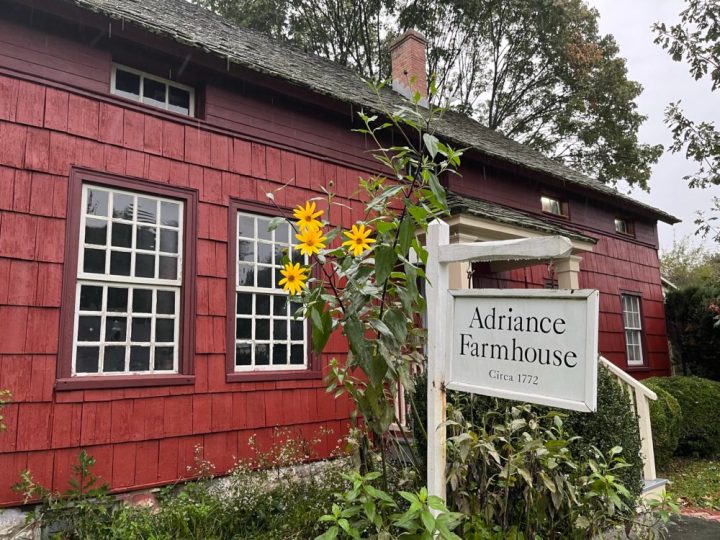
Join us in the kitchen of the Adriance Farmhouse at Queens County Farm Museum to learn how settlers prepared food over an open hearth.
 Original 18th-century recipes, seasonal ingredients, traditional cooking utensils, and the warm embers of the fire will bring history to life as participants assist in preparing and sampling several delightful dishes. Participants will receive modern adaptations of all recipes to try at home. Advance online tickets ($53) are required as space is limited. The class is part of the Public Education Program at Queens Farm and is open to ages 18 and up. In the fall the session is offered on November 4 and then repeated on November 11.
Chris Lord-Barry is an educator with over 20 years of experience, who specializes in teaching 18th-century cooking. Over the past 10+ years, she has studied historic cookery and foodways specific to early America and has designed this popular class to share her passion for early American recipes with others.
The Queens County Farm Museum is a New York City Landmark, is on the National Register of Historic Places, and is a member of the Historic House Trust of New York City. Dating back to 1697, it occupies New York City’s largest remaining tract of undisturbed farmland and is one of the longest continuously farmed sites in New York State. The site includes historic farm buildings, a greenhouse complex, livestock, farm vehicles and implements, planting fields, an orchard, and an herb garden. Queens Farm connects visitors to agriculture and the environment through the lens of its 47-acre historic site, providing learning opportunities and creating conversations about biodiversity, nutrition, health and wellness, climate change and preserving local history. The centerpiece of the farm complex, the Adriance Farmhouse was first built as a three-room Dutch farmhouse in 1772. The house and surrounding area mirror the evolution of this unique tract of land from a colonial homestead to a truck farm that served the needs of a growing city in the early twentieth century. . .
Printmaking for Change: Past and Present

Thomas Rowlandson, The Contrast (detail), 1793, hand-coloured etching and letterpress, 25 × 35 cm
(London: The British Museum)
◊ ◊ ◊ ◊ ◊
From the Paul Mellon Centre:
Printmaking for Change: Past and Present
In-person and online, London, 2–12 October 2023
Join us for a festival of free events exploring how different communities have used, and continue to use, printmaking to enact change, share knowledge, and challenge ideas. With talks, workshops, and behind-the-scenes visits, the two-week festival will explore the potential of printmaking as both a means of mass communication and a radical art form. From the fifteenth century to the present day, the programme will cover a broad range of topics from gender, sexuality and race, to politics, activism, and health. The programme is an introduction to the subject and is open to all. Talks and workshops will take place at the Paul Mellon Centre, the British Museum, PageMasters, and the Royal College of Physicians. Talks at the Paul Mellon Centre will be streamed live via Zoom. Off-site workshops will be in person only.
Registration (required) via Eventbrite opens 8 September.
◊ ◊ ◊ ◊ ◊
Monday, 2 October, 6–8pm
Introductory Session | Printmaking for Change, with Ben Thomas and Marcelle Hanselaar at the Paul Mellon Centre
Prints are multiple yet individual, unpredictable and hard to regulate, often critical, funny, ephemeral, frightening, irreverent, angry or just plain weird. They can be popular or obscure, sophisticated or clumsy, beautiful or ugly or, when responding to market demand, repetitive and dull. They are hard to define and categorise and for that reason tend to be ignored by curators in their displays, yet every national art collection will have far more prints than paintings. Prints are also cheap by comparison with other artworks and can be collected by ordinary people, disseminating their message widely. In this introductory session, art historian Ben Thomas and painter and printmaker Marcelle Hanselaar will discuss the properties of prints that challenge our expectations, and how as an artform they can be democratic, undisciplined and consequently forces for change.
Wednesday, 4 October, 2–4pm
Collections Visit | Printmaking and Politics, with Esther Chadwick and Richard Taws at the Prints and Drawings Study Room of The British Museum
Go behind the scenes at the British Museum to experience a selection of prints from the eighteenth and nineteenth centuries that explore the varied and complex relationships between printmaking and politics. We will look at prints designed to persuade and effect political change and consider printmaking as a link between politics and ‘high art’. Ranging from woodcut to lithography, line engraving to aquatint, our selection will also highlight how print was used around the world at a time of social, political, and economic unrest.
Saturday, 7 October, 10am–12.30pm or 1.30–4pm
Risograph Workshop | Printmaking and Protest at PageMasters, Lewisham
This workshop will introduce you to risograph printing—a technique often described as a cross between screen printing and photocopying, which uses spot colours and stencils to create multiple prints. Taking place at PageMasters in Lewisham, the session will begin with an introduction to risograph and tour of the studio. This will be followed by an exploration of PageMasters’ archive of protest prints and the opportunity to create your own two-colour A4 print to take home.
Monday, 9 October, 10.30am–noon and 1–2.30pm
Collections Visit | Printmaking and Health, with Jack Hartnell and Katie Birkwood at the Royal College of Physicians
Using the fascinating early print collections of the Royal College of Physicians, this session will explore the roles played by printing, printers and print technology in the world of health. From diagrams in surgical manuals to moveable flap books demonstrating the body’s inner anatomical workings, printed objects have long helped medics debate how to care for changing bodies. The Royal College of Physician’s materials will provide us with a window into how bodies past were understood by artists, physicians, midwives and surgeons alike.
Tuesday, 10 October, 6–8pm
Talk | Mezzotint Engraving and the Making of Race, with Jennifer Chuong, Martin Myrone, and Mechthild Fend at the Paul Mellon Centre
How have prints shaped our understanding of bodies and, specifically, our understanding of race as a bodily attribute? In this session we will explore how a particular print technique, mezzotint engraving, contributed to racial theories between the sixteenth and eighteenth centuries. The mezzotint, which can produce smooth tonal areas with dots or lines, became hugely popular in Britain in the second half of the eighteenth century as a means of reproducing portraits. We will discuss how this technique resonated with new anatomical and racial ideas in this period and subsequently how we can better understand print’s role in developing ideas of race and the body.
Thursday, 12 October, 6–8pm
Talk | Printmaking and LGBTQIA+ Communities, with Zorian Clayton at the Paul Mellon Centre
Join V&A curator of prints, Zorian Clayton, to explore LGBTQIA+ liberty and visibility through the varied history of printmaking. Via seventeenth-century radicals, eighteenth-century flamboyance, and nineteenth-century scandal, to contemporary understandings around diverse gender and sexuality, prints and ephemera, Zorian will provide a unique snapshot into a rich and radical history. Through looking at portraits and zines celebrating pioneering activists, writers and artists, as well as highlighting significant Queer spaces in Britain through the centuries, this session will provide an overview of the considerable contribution to printmaking made by the LGBTQIA+ community and its many ancestors.
Book Launch in Honour of Peter Borsay
From Eventbrite:
Book Launch in Honour of Peter Borsay
Online and in-person, University of Leicester, 29 September 2023, 3pm
The Centre for Urban History at the University of Leicester will mark the publication of Peter Borsay’s last book, The Invention of the English Landscape c. 1700–1939, with a symposium in honour of the late professor, who passed away in 2020. Free and open to all, the event will take place on Friday, 29th September 2023, from 15.00 until 17.00, via Teams Live and in person in the Attenborough Film Theatre. Please contact hypirfinance@le.ac.uk with any questions.
The symposium will be chaired by Professor Rosemary Sweet with the following panel of speakers:
• Penelope J. Corfield (President of the International Society of Eighteenth-Century Studies)
• Richard Coopey (Emeritus Senior Lecturer, Department of History & Welsh History, Aberystwyth University)
• Katy Layton Jones (School of History, Open University)
• Keith Snell (Emeritus Professor of English Local History, University of Leicester)










leave a comment