Lecture | Kimberly Chrisman-Campbell on Bigwigs
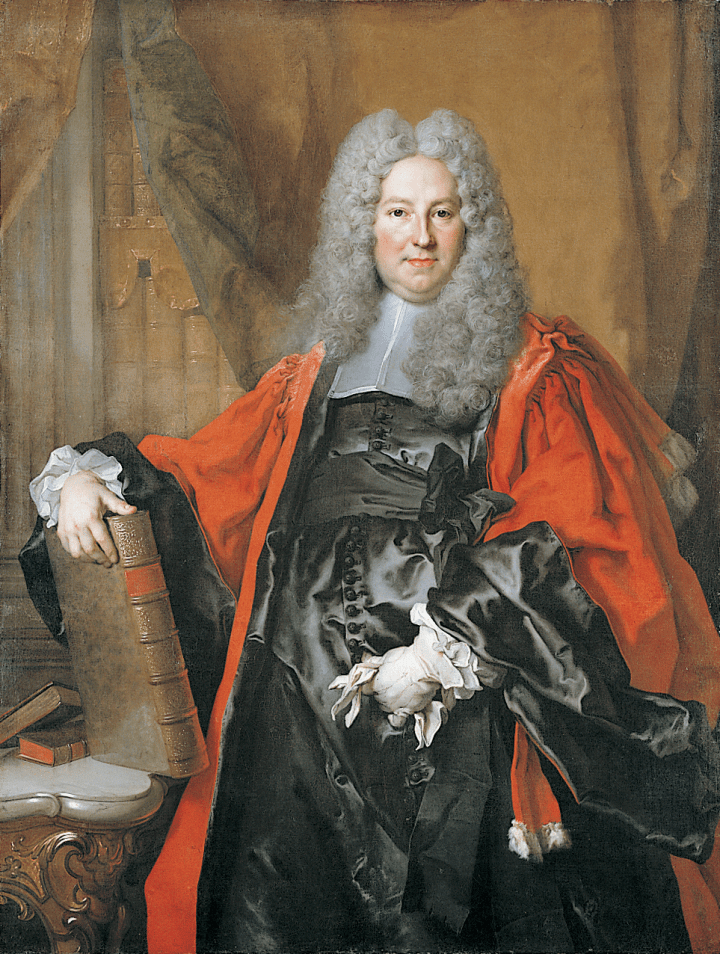
Nicolas de Largillière, Portrait of Barthélemy-Jean-Claude Pupil, 1729
(San Diego: Timken Museum)
◊ ◊ ◊ ◊ ◊
From the Timken:
Kimberly Chrisman-Campbell
Bigwigs: Hair, Fashion, and Power in the 18th-Century Portrait
Timken Museum of Art, San Diego, Monday, 10am, 9 June 2014
Lecture | Melissa Hyde, Painted Women
From the Sydney Intellectual History Network:
Melissa Hyde, Painted Women in the Age of Madame de Pompadour
Art Gallery of New South Wales, Sydney, 10 June 2014
Co-presented with the Art Gallery Society New South Wales

François Boucher A young lady holding a pug dog (presumed portrait of Madame Boucher) mid 1740s
Professor Melissa Hyde considers the role cosmetics played in the court politics and social identities of women at the court of Versailles. For artists like François-Hubert Drouais and Elisabeth Vigée-Lebrun, who portrayed Pompadour, Du Barry (and Marie-Antoinette after them), the problem of depicting an unpainted, natural face through inherently artificial painterly means presented something of a paradox. This lecture will also look at how artists grappled with that paradox and will demonstrate how the painterly performance of the natural was a perfect vehicle for portraying Du Barry’s own performance as a natural woman.
10.00am Coffee
10.30–11.30 Lecture
More information is available here»
Lecture | Richard Taws, The Dauphin and his Doubles
From the Sydney Intellectual History Network:
Richard Taws, The Dauphin and his Doubles:
Visualizing Royal Imposture after the French Revolution
The University of Sydney, 10 June 2014
Co-presented with the Sydney Intellectual History Network (SIHN)
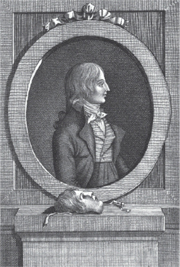
Portrait of Jean-Marie Hervagault, from Le Faux Dauphin actuellement en France, ou histoire d’un imposteur, se disant le dernier fils de Louis XVI (Paris: Lerouge, 1803)
This lecture considers the authenticating agency attributed to images of the dauphin Louis-Charles, the son and heir of Louis XVI and Marie-Antoinette, as they circulated globally in the late eighteenth and nineteenth centuries. Louis-Charles died at the age of ten in the Temple prison in 1795; yet, rumours soon spread that he had been freed in a secret royalist escape plot and continued to live somewhere, most probably in the French colonies or North America. During the course of the nineteenth century the numerous images of Louis-Charles produced before, during and after the French Revolution were invoked regularly as the primary standard of proof against which to judge the many imposters who subsequently came forward from around the world, accompanied by lurid tales of adventure, to announce themselves the ‘lost’ dauphin.
The appropriation of eighteenth-century images of Louis-Charles by these pretenders, as well as the paintings, prints and photographs they had made of themselves, were, in a rapidly transforming media ecology, closely connected to competing claims about the utility of different media in the production of the French past.
Richard Taws teaches eighteenth- and nineteenth-century European art, with a particular interest in the visual culture of the French Revolution and its aftermath. He taught previously at McGill University, Canada, and has been a Getty Postdoctoral Fellow (2006–07) and a Member of the School of Historical Studies at the Institute for Advanced Study, Princeton (2010). He is a member of the editorial board of Art History and the current recipient of a Philip Leverhulme Prize (2013–15). Richard’s recent research focuses on everyday, ephemeral and obsolete forms of visual culture and related issues to do with time, materiality and value in the late eighteenth and early nineteenth centuries. His first book, The Politics of the Provisional: Art and Ephemera in Revolutionary France (2013), examines how provisional images and objects made in 1790s France mediated both the Revolution’s memory and its future, with important implications for how citizens became constructed as political subjects.
Wednesday, 10 June 2014, 6.00–7.30pm
Law School LT 106
Level 1, Sydney Law School Annex
Eastern Avenue
The University of Sydney
Registration information for this free event is available here»
Paul Mellon Centre Research Lunches, Summer 2014
From The Paul Mellon Centre:
The Paul Mellon Centre, Research Lunches, Summer 2014
The Paul Mellon Centre for Studies in British Art, London, Fridays, 12:30–14:00
The spring programme of research lunches is geared to doctoral students and junior scholars working on the history of British art and architecture. They are informal events in which individual doctoral students and scholars talk for half-an-hour about their projects, and engage in animated discussion with their peers. A sandwich lunch, will be provided by the Centre. Sessions are free, but places are limited so you must book a place in advance by emailing Ella Fleming at events@paul-mellon-centre.ac.uk
9 May: Cora Gilroy-Ware (Tate Britain)
“A song the sweeter for a taste of pain”: the cult of the nymph in early nineteenth-century Britain
23 May: Jamie Mulherron (National Museums Scotland)
Being and Nothingness: Perceptions of Lace 1550–1850
6 June : Sarah Longair (British Museum)
Mskiti ya Bwana Sinclair: Designing a museum in British colonial Zanzibar
20 June: Nick Grindle (University College London)
George Morland: in the Margins
4 July: Catherine Spencer (University of St Andrews)
Prunella Clough’s ‘Structures of Mysterious Purpose’: Abstraction and Post-Industrialization
Paul Mellon Centre Research Seminars, Summer 2014
From The Paul Mellon Centre:
The Paul Mellon Centre, Research Seminars, Summer 2014
The Paul Mellon Centre for Studies in British Art, London, Wednesdays, 18:00–20:00
Our research seminars will feature papers given by distinguished historians of British art and architecture. Seminars typically take the form of hour-long talks, followed by questions and drinks, and are geared to scholars, curators, conservators, art-trade professionals and research students working on the history of British art. All seminars are free, but places are limited so you must book a place in advance by emailing Ella Fleming at events@paul-mellon-centre.ac.uk.
30 April: Jonathan Foyle (World Monuments Fund)
Paradise Regained: The Rediscovered State Bed of Henry VII and Elizabeth of York as Royal Self-Image in 1485
14 May: Kate Retford (Birkbeck College, University of London)
‘Bonds of unity and friendship’: Kinship and the Conversation Piece in Eighteenth-Century England
28 May: Morna O’Neill (Wake Forest University)
The Decorative Art of Display: The Case of Hugh Lane
11 June: Sandy Helsop (University of East Anglia)
Symmetry, Antithesis and Empathy in the St Albans Psalter
25 June: One Object, Three Voices, Mark Catesby’s Natural History: The Art, the Science, the Publication
Charles Jarvis (Natural History Museum)
Leslie K. Overstreet (Smithsonian Institution, Washington)
Henrietta McBurney Ryan (Senior Fellow, PMC)
Book Discussion | Basile Baudez on Architecture et tradition académique
From the École Nationale des Chartes:
Basile Baudez on Architecture et tradition académique, with Katie Scott
École Nationale des Chartes, Paris, 29 March 2014
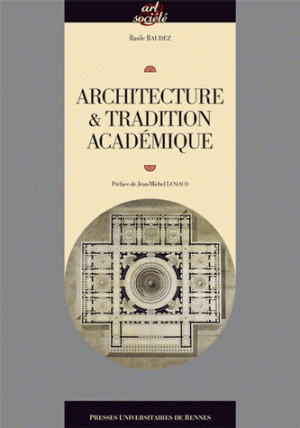 Basile Baudez, Architecture & tradition académique au temps des Lumières (Presses Universitaires de Rennes, 2013), 390 pages, ISBN: 978-2753521223, 24€.
Issu d’une thèse de doctorat soutenue à l’Éphé sous la direction de Jean-Michel Leniaud, cet ouvrage, constitue la première synthèse jamais publiée traitant des rapports entre l’architecture, les architectes et l’institution académique au XVIIIe siècle en Europe.
Adoptant une méthode comparatiste, ce livre permet d’interroger la pertinence d’un modèle élaboré dans l’Italie humaniste et transformé au XVIIe siècle pour servir la politique culturelle de Louis XIV. Le succès considérable de cette forme institutionnelle dans l’Europe des Lumières s’explique en grande partie par sa souplesse, à l’opposé de son évolution au XIXe siècle et sa capacité à organiser de manière efficace les rapports entre certains artistes, le pouvoir et le public.
Étudier l’histoire de l’architecture sous l’angle de la tradition académique, c’est mettre au jour la naissance de la profession architecturale telle qu’on la connait aujourd’hui. L’appartenance à une académie sanctionnée par le pouvoir politique permet en effet de définir les critères au nom desquels l’exercice de la profession était possible, d’une part, et la relation du milieu de l’architecture au pouvoir, d’autre part, la soif de reconnaissance et de protection à la fois.
L’auteur
Archiviste paléographe (prom. 2000), Basile Baudez est agrégé d’histoire, maître de conférences en histoire du patrimoine moderne et contemporain à l’Université Paris-Sorbonne et travaille sur l’histoire de l’architecture européenne au XVIIIe siècle ainsi que sur l’histoire des institutions artistiques.
Le discutant
Katie Scott travaille au Courtauld Institute of Art with et s’est spécialisée dans les représentations du quotidien en particulier à travers les arts éphémères. Sa récente étude est dédiée à ce sujet, plus particulièrement dans le Paris du XVIIIe siècle : Trade and the Ephemeral Everyday in Eighteenth-century Paris.
La conférence se déroulera à 17 h, en grande salle de cours de l’École nationale des chartes, au 19, rue de la Sorbonne (Paris Ve).

Lecture | Nina Dubin on Painting ‘The Papered Century’
From The Newberry:
Nina Dubin | Love, Trust, Risk: Painting ‘The Papered Century’
The Newberry Library, Chicago, 19 April 2014
The eighteenth-century vogue for pictures of women perusing love letters not only marked the age’s affection for epistolarity, it also emblematized the “papered century,” named for the period’s unprecedented proliferation of monetary notes and credit instruments. Dwelling upon the fragility of paper promises, epistolary pictures vivify the precariousness of trust and the romanticization of risk on the eve of modernity.
Saturday, April 19, 2:00–4:00pm
The Newberry Library Eighteenth-Century seminar is designed to foster research and inquiry across the scholarly disciplines in eighteenth-century studies. It aims to provide a methodologically diverse forum for work that engages our ongoing discussions and debates along this historical and critical terrain. Attendance at all events is free and open to the public but in order to receive the pre-circulated paper, participants must register online in advance via this link. A reception follows each presentation. It is also the custom of the seminar to gather at a restaurant in the Newberry neighborhood to continue our conversation. If you would like to join us for dinner after any session, please email Lisa Freeman at lfreeman@uic.edu.
Timothy Campbell, University of Chicago
Lisa A. Freeman, University of Illinois at Chicago
John Shanahan, DePaul University
Helen Thompson, Northwestern University
Lecture | Rica Jones on Allan Ramsay’s Technique
From the UK’s Institute of Conservation (ICON). . .
Rica Jones on Ramsay’s Technique in Context and Perspective
Grand Robing Room, Freemason’s Hall, London, 16 April 2014
Allan Ramsay took London’s art world by storm when he set up his painting practice in Covent Garden in the late 1730s, and his work remained fashionable for the next two decades. One aspect of his portraiture was much commented on—he painted the faces in shades of red before applying the more naturalistic flesh tones. This paper was first written for the catalogue of the exhibition Allan Ramsay: Portraits of the Enlightenment at The Hunterian Museum and Art Gallery, Glasgow (October 2013 to January 2014). The author will illustrate this feature of Ramsay’s work, examine its significance to Ramsay, and place it in the context of the times.
Rica Jones trained as an art historian before studying the conservation of paintings. Until 2012 she worked as a conservator at the Tate Gallery and published extensively on techniques of painting in Britain from the 16th through the 18th centuries. She continues to work in both fields in the private sector.
Wednesday, 16 April 2014 in the Grand Robing Room at Freemason’s Hall, 60 Great Queen Street London WC2B 5AZ. Close to both Covent Garden and Holborn Tube Stations. Doors open at 6pm. Talk 6.30–8pm. Tickets: ICON members: £10, non-members: £15. Students £5 (student card required to be shown on the door). Free wine and cheese including in price of ticket.
Please register by sending your name and stating if you are an ICON member. Your name must be on the security list no later than Monday, 14 April 2014. RSVP Clare Finn +44 20 7937 1895 or finnclare@aol.com.
Exhibition and Lectures | Diverse Maniere: Piranesi, Fantasy and Excess
From the Soane Museum:
Diverse Maniere: Piranesi, Fantasy and Excess
Sir John Soane’s Museum, London, 7 March — 31 May 2014
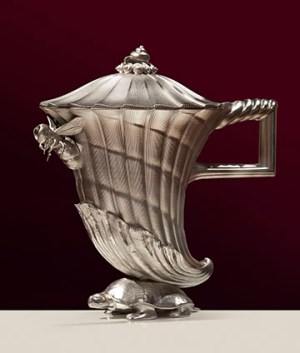
Coffee pot from Piranesi’s Diverse maniere d’adornare i cammini… (1769), cast in silver from digitally modeled elements © Factum Arte.
Sir John Soane’s Museum has one of the richest holdings of graphic work by Piranesi and this exhibition continues the exploration of Soane’s interest in Piranesi. Diverse Maniere will focus upon Piranesi’s engagement with the decorative arts. The displays will consist of meticulous three dimensional reproductions of the objects, such as coffee pots, chairs, chimneypieces and antique candelabra, tripods and altars imagined by Piranesi in such publication as Diverse Maniere or Vasi, Candelabri, Cippi etc…, but never actually realised physically. Now using the latest scanning and 3-dimensional printing technologies Factum Arte has realised Piranesi’s vision as a designer. Bronze Tripods, porphyry altars and marble candelabra will embellish the rooms of No 13 Lincoln’s Inn Fields, whilst in the Soane Gallery a display of Piranesi’s related etchings and explication of Factum Arte’s work will accompany the show. Surely, Sir John Soane, with his love of new technologies, his collections of plaster ‘reproductions’ after the antique, and his fascination with Piranesi’s boundless imagination would find this a particularly appropriate exhibition.
As part of our programme of events, three panel discussions, involving architects, designers, artists and academics, will look at how different disciplines approach these issues and what they might tell us about architectural and design practice in the past and how it has evolved today. All talks will begin at 6pm and take place at the Royal College of Surgeons, WC2A 3PE. Early bird ticket offer: purchase tickets for all three talks for £40. Individual lecture tickets, £15. Click here to find out more or to purchase tickets.
Visualising Design Ideas, 10 March 2014
Speakers: Michele de Lucchi, Ross Lovegrove and Adam Lowe
Using Objects as Evidence of Themselves, 18 March 2014
Speakers: Jerry Brotton, Lisa Jardine and Grayson Perry
Casts, Copies & the Dissemination of Design Ideas, 19 May 2014
Speakers: Adriano Aymonino and Sam Jacob
IFA’s Rendez-Vous Seminars, March and April 2014
Rendez-vous: An International Seminar on French Art, 18th–20th Centuries
Rendez-vous is a seminar on French art (18th–20th centuries) held monthly throughout the 2013–14 academic year at the Institute of Fine Arts, NYU. International scholars are invited to present their research in an informal and creative setting for approximately 30 minutes, followed by an open discussion with students and colleagues. Rendez-vous focuses on French art in the broadest sense: ‘French’ is interpreted in an extensive way, including global exchanges, political dimension and colonial history, and ‘Art’ includes painting, architecture and sculpture, but also material and visual culture. Rendez-vous offers an occasion to learn about current innovative research by international and engaging scholars. The seminar aims to open up an exchange of methodologies, thoughts and ideas in a participatory atmosphere.
Rendez-vous is organized by Noémie Etienne, IFA/Mellon Postdoctoral Fellow (2013–15). These lectures begin at 12:30pm in the Loeb room at the Institute of Fine Arts. They are open to the public, but RSVPs are required.
◊ ◊ ◊ ◊ ◊
Frédérique Baumgartner | Women Artists in Hubert Robert’s Views of the Louvre’s Grande Galerie
Institute of Fine Art, New York University, Friday, 14 March 2014
Hubert Robert (1733–1808), one of the most versatile artists of his generation, managed to combine the careers of a painter and museum curator during the French Revolution. Using his painter’s talent to express his curatorial vision, Robert painted numerous views of the Louvre’s Grande Galerie, which opened to the public for the first time in 1793. This paper examines the place that Robert attributed to women artists in these views, in light of the rules and regulations that he and other Louvre curators were in the process of developing for this new public space. In doing so, it aims to assess how the Revolution’s gendered discourse pervaded the construction of the museum space and the degree to which Robert’s representation of women artists in the Grande Galerie challenged this discourse.
Frédérique Baumgartner is a lecturer and the director of MA in Art History in the Department of Art History and Archaeology at Columbia University. She received her PhD from Harvard University in 2011 and was a Postdoctoral Mellon Fellow at Columbia in 2011–13. Her research focuses on eighteenth- and nineteenth-century European art, with a particular emphasis on the convergence of art and politics. Her current book project, stemming from her dissertation, examines the politicization of the art of Hubert Robert during the French Revolution in relation to notions of cultural experience.
Open to the public, RSVP required. For reservations click here
◊ ◊ ◊ ◊ ◊
Jessica Fripp | Caricature and Rebellion in Rome in the Eighteenth Century
Institute of Fine Arts, New York University, Tuesday, 8 April 2014
Winning the Prix de Rome was the capstone in an aspiring artist’s career in eighteenth-century France. But alongside the professional training a stay in the Eternal City offered, studying abroad also provided artists an opportunity to escape the hierarchy and competition of the Royal Academy and forge friendships with other young artists from all over Europe. This paper examines the effect of these new networks on artistic practice in Rome. It focuses on a group of caricatures produced by the French painter François-André Vincent, the French sculptor Jean-Baptiste Stouf, and the Swedish sculptor Johan-Tobias Sergel. These caricatures were copied, etched, and exchanged between the artists represented in them, and served to define these artists as a group of friends. Fripp argues that caricature was a form of representation well-suited to memorializing the homosocial bonds formed in Rome, and an act of rebellion for these young artists as they transitioned from students to full-fledge artists.
Jessica Fripp is a Post Doctoral Fellow in Material and Visual Culture at Parsons the New School for Design. She received her MA from Williams College and a PhD from the University of Michigan with a dissertation entitled “Portraits of Artists and the Social Commerce of Friendship in Eighteenth-Century France.” Her work examines the intersection between visual culture and sociability in the eighteenth century, focusing on the role art played in creating, defining, and sustaining personal relationships.
Open to the public, RSVP required. For reservations click here










leave a comment