Talk | Paris Spies-Gans on Sophie Fremiet’s Portrait of a Woman
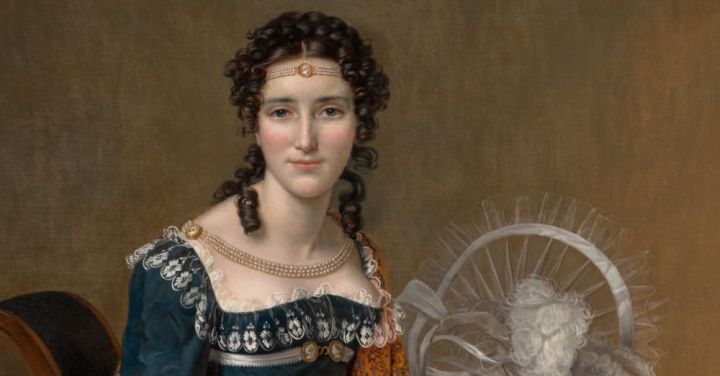
Sophie Frémiet (later Rude), Portrait of a Woman, detail, 1818, oil on canvas, 64 × 46 inches
(Los Angeles: Getty Museum, 2024.25).
◊ ◊ ◊ ◊ ◊
Upcoming at the Getty (which acquired the painting in 2024), as we all watch the fires with ache and concern . . .
Paris Spies-Gans | Breaking Barriers: Sophie Frémiet and the Rise of Women Artists in Europe
Online and in-person, Getty Center, Los Angeles, 4 May 2025, 2pm (originally scheduled for 26 January)
Around the turn of the 18th century, over a thousand women contributed more than 7,000 works to London’s and Paris’ premier exhibitions. It was a transformative moment for women artists in Europe, who exhibited and sold their art in unprecedented numbers. In this context, Sophie Fremiet painted her luminous Portrait of a Woman (1818). Paris Spies-Gans delves into this era to upend longstanding assumptions about women’s opportunities and wrongly forgotten triumphs. Tickets are free, but required for event entrance. Your event ticket will also serve as your Center entrance reservation. To watch online, please register via Zoom.
Paris A. Spies-Gans is a historian of art with a focus on women, gender, and the politics of artistic expression. Her first book, A Revolution on Canvas: The Rise of Women Artists in Britain and France, 1760–1830 (Paul Mellon Centre in association with Yale University Press, 2022), was named one of the top art books of 2022 by The Art Newspaper and The Conversation. It also received several prizes in the fields of British history, art history, and 18th-century studies. She is currently working on her second book, A New Story of Art (US/Doubleday and UK/Viking).
◊ ◊ ◊ ◊ ◊
Note (added 21 January 2025) — The posting has been updated with the rescheduled date.
Talk | Stephanie O’Rourke on John Martin and Romantic Extraction
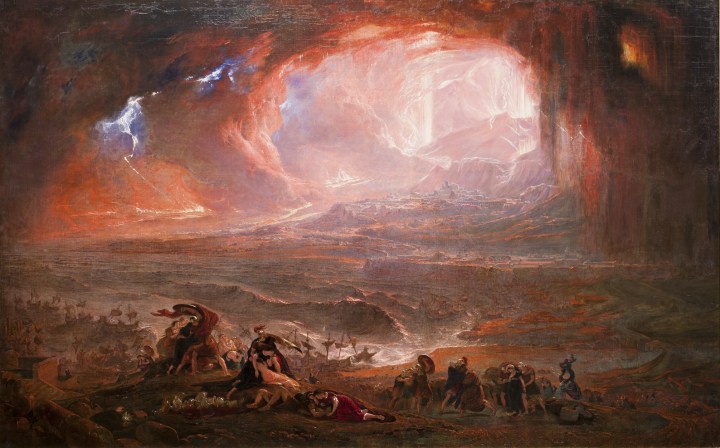
John Martin, The Destruction of Pompeii and Herculaneum, 1822, oil on canvas, 162 × 253 cm
(London: Tate, N00793).
◊ ◊ ◊ ◊ ◊
From the Mellon Centre:
Stephanie O’Rourke | John Martin and Romantic Extraction
Online and in-person, Paul Mellon Centre, London, 22 January 2025, 5pm
The early nineteenth-century artist John Martin bore witness to a rapidly carbonising Britain. Although he is most famous for his dramatic portrayals of epic, historical narratives, Martin was also exceptionally attuned to the transformations visited upon his environment by the rise of industrial resource extraction. His was a world characterised by the subterranean flows of dangerous substances such as noxious gases and sewage, by the desired inflow of natural resources such as water to urban centres and by the invisible spread of less-material phenomena across Britain’s imperial boundaries. In this paper, O’Rourke explores some of the many flows that shaped Martin’s world and his art. We often assume it was J.M.W. Turner’s paintings that best captured the arrival of steam-powered modernity in early nineteenth-century Britain through their explosive treatment of colour and their formal irresolution. But what if it were Martin’s work? What could we come to understand about the conditions of fossil-powered modernity and about romanticism if we took Martin as our guide?
Book tickets here»
Stephanie O’Rourke is a senior lecturer in Art History at the University of St Andrews specialising in eighteenth- and nineteenth-century art. Her second book Picturing Landscape in an Age of Extraction: Europe and its Colonial Networks 1780–1850 (University of Chicago Press, 2025) charts the relationship between landscape and resource extraction in the first half of the nineteenth century. Her prize-winning first book, Art, Science, and the Body in Early Romanticism (Cambridge UP, 2021), examines the changing evidentiary authority of the human body in European romantic thought. She has published widely on the relationship between art and resource extraction, scientific knowledge, and media technologies.
Online Talk | Vanessa Sigalas on Meissen Figures
As noted at Events in the Field:
Vanessa Sigalas | All Walks of Life: Meissen Porcelain Figures of the 18th Century
Online, Connecticut Ceramics Circle, 9 December 2024, 2pm (EST)
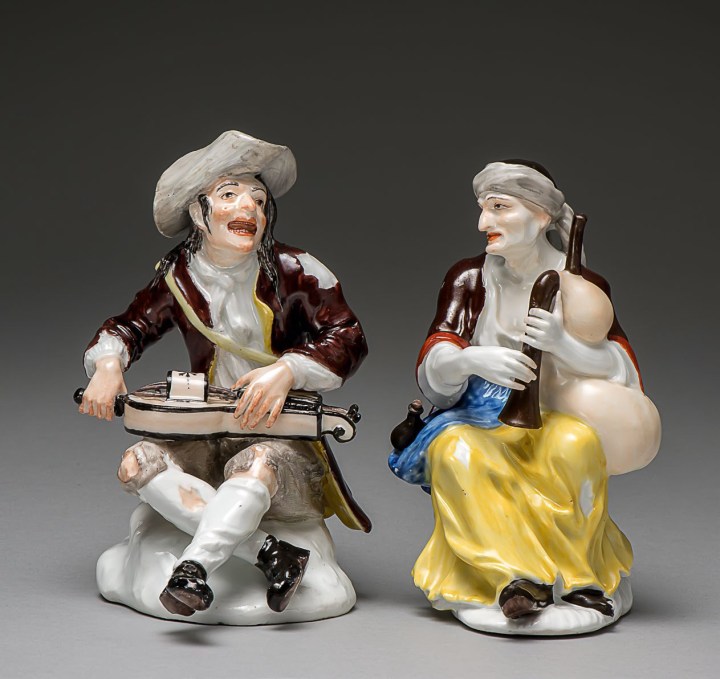
Pair of Figures of Beggar Musicians, German, Meissen Porcelain Manufactory, models by Johann Joachim Kaendler (1706–1775). Original year of modelling: ca. 1736; beggar-woman reworked later. Date of porcelain paste: both ca. 1730–65; date of decoration: both 18th century. Hard-paste porcelain. Man: Blue crossed swords mark on base; woman: no marks. Heights: man 13.4 cm; woman 13 cm. Model no. man: 918; woman: 915. Shimmerman Collection nos. MPBP_16 & 17.
Dr. Vanessa Sigalas will guide the audience through a captivating exploration of 18th-century life in Saxony, Paris, London, and St. Petersburg, using Meissen porcelain sculptures from the Alan Shimmerman Collection in Toronto, Canada, as well as the Wadsworth Atheneum’s collection in Hartford, Connecticut. Renowned master modeler Johann Joachim Kaendler, in collaboration with his fellow modelers at Meissen, portrayed glimpses of daily existence, meticulously capturing even the minutest details. From the carefully arranged trinkets of a street vendor to the intimate script of a love letter and the culinary tools of a cook preparing a hare, Kaendler’s work unveils the richness of ‘All Walks of Life’.
The Alan Shimmerman Collection, with its emphasis on groups of criers (street sellers) and artisans, offers a fresh perspective on the inception, production, and dissemination of Meissen porcelain. Dr. Sigalas’s lecture is based on her recently published collection catalogue bearing the same title, providing an immersive journey into the intricate world of 18th-century European society as depicted through these masterfully crafted sculptures.
Vanessa Sigalas holds a Dr. phil. in Art History from the Eberhard-Karls-Universität Tübingen, Germany. She joined the Wadsworth Atheneum in 2011, As an art historian, Sigalas specializes in European art from the 17th to the first half of the 20th centuries, especially 18th- and 19th-century German porcelain. One of her research interests is the connection between ivory and porcelain, particularly at the Dresden Court of Augustus the Strong (1670–1733). At the Wadsworth, she works with American and European decorative arts and sculpture from the ancient to the modern worlds, but also explores the collections of non-Western art. Despite her deep love for books and archives, Sigalas has always enjoyed the hands-on work with objects. In 2013, she assisted with the Storage Renovation and Relocation Project, and in 2015 she was part of the team to reinstall the European art collections, where she assisted the curatorial team and led the installation team of decorative arts.
She has published in a variety of journals, exhibition catalogues, and books. Her latest book, All Walks of Life: A Journey with the Alan Shimmerman Collection (2022), focuses on Meissen porcelain figures from the 18th century. She has taken on the role of editor for several publications, with her most recent work being Morgan—The Collector: Essays in Honor of Linda Roth’s 40th Anniversary at the Wadsworth Atheneum Museum of Art, co-edited with Jennifer Tonkovich. Additionally, she served as the managing editor of the American Ceramic Circle Journal from 2015 to 2023. Sigalas has curated exhibitions in Germany and the US. Her most recent exhibitions at the Wadsworth include, in conjunction with director Matthew Hargraves, Between Life & Death: Art and the Afterlife (Fall 2023), as well as the community-focused and staff-curated exhibition, Styling Identities: Hair’s Tangled Histories, which was on view until August 2024.
Online Talks | Pets and Portraiture / Art and the Portuguese Court
The final seminar of the series takes place on Wednesday:
Luba Kozak and Diogo Lemos | Pets, Portraiture, and Identity
Online, Material and Visual Culture Research Cluster, Edinburgh, 4 December 2024
 Each week we hear from two speakers, sharing their research on, and approaches to, the study of seventeenth- and eighteenth-century material and visual culture. We aim to make a space in which these rich histories can be explored from varied disciplines to enhance our research practices. We meet on Wednesdays, 5–6pm GMT, online using Zoom; registration closes 1 hour before seminar start time.
Luba Kozak | Pet Animals as Connectors: Exploring the Role of Pet Animals in Shaping British Identity and Colonial Encounters in 18th-Century British Portraiture
This paper explores the role of pet animals in shaping British identity and colonial encounters as portrayed in eighteenth-century British portraiture. Through an analysis of John Eccardt’s Portrait of Lady Grace Carteret, Countess of Dysart with a Child, Black Servant, Cockatoo, and Spaniel (1740) and Johann Zoffany’s Colonel Blair and his Family with an Indian Ayah (1786) as case studies, I investigate how pet animals reveal power structures and hierarchies within the domestic sphere, exposing deeper tropes of colonisation and race (Braddock; Bocquillon). Ultimately, I propose that pet animals act as critical contact points between the British aristocracy and enslaved individuals in these artworks, bridging cultural, racial, and species divides.
Recognising the need to address the material presence of animals in art and their marginalisation in the field of art history, I analyse these paintings through more inclusive theoretical frameworks including ecocriticism and post-colonialism. Building on the scholarship of Ingrid Tague and Erin Parker, who discuss the domestication of animals within British households, I examine how these animals negotiated status and place within elite homes as depicted in visual culture. This approach repositions non-human figures as active subjects rather than pictorial accessories. Adopting an interdisciplinary perspective, this paper is at the intersection of art history, animal studies, philosophy, and ethics. Amidst growing concern for animal ethics and the Anthropocene, this timely research offers a broader understanding of the complexities of human-animal relations, relevant in historical and contemporary.
Luba Kozak is a third-year Ph.D. student at the University of Regina, Saskatchewan (Canada).
◊ ◊ ◊ ◊ ◊
Diogo Lemos | Spreading the Icon: Visual Culture and Royal Patronage under the Reign of John V, King of Portugal
During his reign (1707–1750), John V recognized the importance of emulation and identifying the most renowned masterpieces of his time. By so, he instructed his diplomats to collect copies of certain artworks from various courts. The most iconic among them served as vital iconographic sources for artworks commissioned by the king, executed by artists trained in Europe’s leading apprenticeship circuits, who later disseminated these same iconographic references in other courts. This talk aims to highlight a set of artworks produced within European courts which played a pivotal role in shaping the image of the Portuguese court.
The primary goal is to decipher the mechanisms of ‘promotion’ of these artworks; to grasp the processes and means (ex. the press but also espionage) used to transform them into true icons. Relating this context with the Portuguese court, documentation will also reveal the mechanisms—and circles of influences—used by John V to know and acquire them. Furthermore, the project seeks to intersect these artworks (primarily portraits) with the material culture of both the Portuguese and European courts in which France plays an important role. Nevertheless, rather than solely emphasizing France as the primary influencer, the intention is to accentuate the nuances and distinctiveness of the artistic and material cultures within these courts, moreover, highlighted by Portuguese court itself. In short, focusing on the iconology of the Catholic Kings, this proposal aims to unveil and decode a curated collection of artworks commissioned by King John V, providing new insights into the cultural (and political) milieu of the era and demonstrating how certain iconic masterpieces (yet often underestimated) not only reflected cultural exchanges between nations during the reign of John V but also shaped European visual culture during this period.
Diogo Lemos is a researcher at the Centre for the History of Society and Culture of the University of Coimbra, where he is developing an art history PhD project in the Faculty of Arts and Humanities for which he was awarded a fellowship by the Portuguese Foundation for Science and Technology.
PMC Book Night | Esther Chadwick, Ian Dudley, and Mark Laird

Coming up at the Mellon Centre:
Book Night with Esther Chadwick, Ian Dudley, Mark Laird
Paul Mellon Centre, London, 11 December 2024
Please join us for Book Night at the Paul Mellon Centre, where we will celebrate some of our latest publications by asking authors to discuss their research and answer questions about their books. Each author will give a short talk discussing the research behind their book. Afterwards, there will be drinks, canapes, and a chance to meet the authors.
• Esther Chadwick, The Radical Print: Arts and Politics in Late Eighteenth-Centry Britain
• Ian Dudley, Aubrey Williams: Art, Histories, Futures
• Mark Laird, The Dominion of Flowers: Botanical Art & Global Plant Relations (remoting in)
Book tickets here»
Esther Chadwick is a lecturer in art history at the Courtauld, where she specialises in eighteenth-century British art. She studied art history at the University of Cambridge and completed her doctorate at Yale University in 2016. Before joining the Courtauld, she was a curator in the Department of Prints and Drawings at the British Museum. Esther’s research addresses the materiality and agency of printed images, the role of art in the age of revolutions and the visual culture of the circum-Atlantic world. She is working on a book that examines the formative role of printmaking in the work of British artists of the late eighteenth century. Exhibition projects have included Figures of Empire: Slavery and Portraiture in Eighteenth-Century Atlantic Britain (Yale Center for British Art, 2014) and A Revolutionary Legacy: Haiti and Toussaint Louverture (British Museum, 2018).
Ian Dudley is a Visiting Fellow in Art History at the University of Essex. His research focuses on relationships between histories of art and empire from the early modern period to the present. Recent work includes a study of Olmec colossal heads in the paintings of Aubrey Williams, published in Art History, and an examination of slavery visualisation in the sculpture of Stanley Greaves, published in Third Text. His 2017 doctoral thesis investigated Edward Goodall’s Sketches in British Guiana within the context of colonial geography and anthropology during the 1830–40s. He also curated the exhibition Southern Press: Prints from Brazil, Paraguay and Chile with the Essex Collection of Art from Latin America (ESCALA) at Firstsite gallery, Colchester.
Mark Laird is professor emeritus at the University of Toronto and former faculty member at Harvard University. He is the author of The Flowering of the Landscape Garden and A Natural History of English Gardening—recipient of an Elisabeth Blair MacDougall Award. He has been historic planting consultant to Painshill Park Trust, English Heritage and Strawberry Hill Trust.
Research Lunch | Jessie Park and Catherine Roach, Naming Rights
Later this month at the Mellon Centre:
Jessie Park and Catherine Roach | Naming Rights: Sir Joshua Reynolds, Sitters of Colour, and the Limits of Knowledge
Paul Mellon Centre, London, 29 November 2024, 1pm
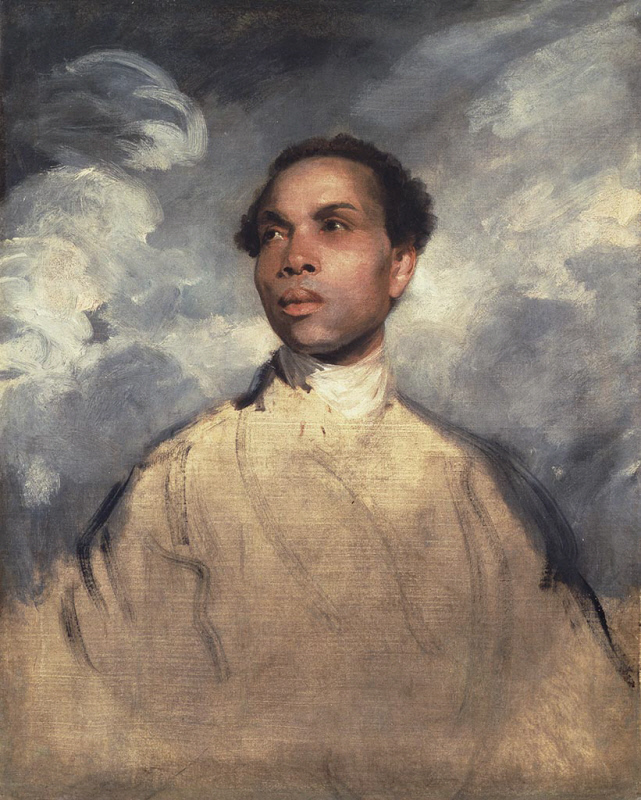
Joshua Reynolds, Portrait of a Man, perhaps Francis Barber, ca. 1770, oil on canvas, 79 × 64 cm (Private Collection).
Recent interest in recovering historical images of people of colour by Europeans raises important methodological questions. How can we address the potentials and limits of the traditional art historical toolkit in investigating this type of work? And how can we acknowledge that which may never be known?
This paper focuses on two pictures by Sir Joshua Reynolds that made their public debut together, hanging as pendants in the Reynolds retrospective at the British Institution in 1813. Each poses a different type of scholarly quandary: one subject has no name; the other, too many. One canvas represents an unidentified Black Briton. In the absence of secure historical data, the subject has been variously attributed: a servant of the artist; Francis Barber, heir to the writer Samuel Johnson; or even George Washington’s cook. Recent discoveries by researchers at the London Metropolitan Archives raise the tantalising possibility that Reynolds’s servant was named John Shropshire. But it remains an object in search of a name, a subject in search of a biography. In contrast, the second canvas represents a securely identified subject, the Polynesian traveller now known as Mai, who bore many names over his lifetime. He came to fame in Britain as ‘Omai’ or ‘Omiah’, a British misunderstanding of a Tahitian honorific that he reportedly bestowed on himself. Rather than presenting definitive answers, this paper explores how to navigate the limits of historical knowledge in the quest to name pictures and their subjects correctly.
Book tickets here»
Jessie Park is the Nina and Lee Griggs Assistant Curator of European Art at the Yale University Art Gallery. She specialises in early modern Netherlandish art, with a secondary area of expertise in the visual and material culture of global exchange from the late sixteenth to the early nineteenth century. She served as the Rousseau Curatorial Fellow in European Art at the Harvard Art Museums and held curatorial positions at the J. Paul Getty Museum in Los Angeles and the Huntington in San Marino, California. Her scholarship has appeared in The Art Bulletin and in an edited volume, Charles V, Prince Philip and the Politics of Succession: Festivities in Mons and Hainault, 1549.
Catherine Roach is an associate professor of art history at Virginia Commonwealth University, specialising in the art and exhibitions of eighteenth- and nineteenth-century Britain. Her scholarship has appeared in Art History, British Art Studies, and the American Art Journal, among others. She has been awarded fellowships by the Huntington Library and the National Humanities Center to support work on her second book, The Shadow Museum: A History of the British Institution, 1805–1867.
Online Lecture | Charles O’Brien and Simon Bradley on Pevsner
From the Paul Mellon Centre for Studies in British Art:
Charles O’Brien and Simon Bradley | Celebrating Pevsner: Reflections on the Completion of the Buildings of England
Online, 14 November 2024, 6.00pm (London time)
The editors of the Pevsner Architectural Guides will be in conversation, reflecting on the revision of the Buildings of England series from 1983 to 2024, lately completed with the new Staffordshire volume. Simon Bradley and Charles O’Brien will consider the development and updating of the guides over forty years, the expansion of their content and the challenges both of research and writing and of maintaining the spirit and ambition of Pevsner’s original vision for the books. They will also reflect on their own contributions as authors of the new and revised editions, spanning their time with Penguin Books and Yale University Press. The event will be chaired by Jeremy Musson.
Book tickets here»
Jeremy Musson is an architectural historian; he studied at UCL and the Warburg Institute and was an assistant curator for the National Trust and architectural editor at Country Life, 1998–2007. He is the author of a number of books on the country house, including English Country House Interiors (2011) and The Drawing Room (2014), and was co-writer and presenter of BBC2’s The Curious House Guest. A heritage consultant since 2007, Jeremy has worked on projects including Hardwick Hall and St Paul’s Cathedral. He is editor of The Victorian and teaches on the building history masters course at the University of Cambridge; a senior research fellow of the Humanities Research Institute of the University of Buckingham; and a supervisor of students at New York University (NYU) in London. He is also a trustee of the Historic Houses Foundation. He was a contributing author to the revision of the Buildings of England: Sussex West with Elizabeth Williamson, Tim Hudson, and Ian Narin.
Charles O’Brien FSA is Listing and Architectural Research Director at Historic England. Until 2022 he was joint Series Editor of the Pevsner Architectural Guides. He joined the series in 1997, where he worked full time on the research, writing, and editing of the new editions. As author and co-author he has written the revised volumes London 5: East; Bedfordshire, Huntingdonshire, and Peterborough; Hampshire: South; and Surrey. He is a former Commissioner of Historic England and former Chair of their London Advisory Committee.
Simon Bradley FSA joined the Pevsner series in 1994. His own revised volumes include London 1: The City of London; London 6: Westminster; Cambridgeshire; and Oxfordshire: Oxford and the South East. He has also published on the Gothic Revival, drawing on his PhD thesis, and on railways and railway buildings including St Pancras Station (2006), The Railways: Nation, Network, and People (2015), and Bradley’s Railway Guide: A Journey Through Two Centuries of British Railway History, 1825–2025 (2024).
Online Course | British Furniture Abroad in the 18th Century
From British and Irish Furniture Makers Online and The Furniture History Society:
British Furniture Abroad in the Eighteenth Century: Impacts and Influence
BIFMO-FHS Online Autumn Course: 12, 19, and 26 November 2024

Side chair, attributed to Benjamin Randolph, possibly carved by Hercules Courtenay, ca. 1769 (New York: The Metropolitan Museum of Art, 1974.325).
Join us online on three consecutive Tuesdays this November, when curators and historians will explore the influence of British furniture abroad and the ways furniture makers in other countries both copied and transformed these models to suit local traditions and tastes. This series of specialist lectures will look at the diaspora of British furniture in the eighteenth century, providing insights into the traditions of design and furniture making in other countries. Each session will deal with a slightly different stylistic phase in the eighteenth century with three expert speakers dealing with the impact of British furniture design on different countries.
Tickets may be purchased for individual sessions or for the entire course, but you will benefit from a discount if all three sessions are bought together. Don’t worry if you cannot attend the sessions live because they will be recorded and links to the recording will be sent to ticketholders. These recordings will not be available to purchase after the course has ended. FHS members and ECD members will receive a discount on all tickets. For further information and to purchase tickets, please go to the Eventbrite listing. If you have any questions, please email bifmo@furniturehistorysociety.org.
Times each week: 5.30–8pm (GMT) / 12.30–3pm (EST)
Week 1 | Tuesday, 12 November
British Furniture Abroad in the Early Eighteenth Century
• Amy Lim — Daniel Marot and the Influence of His Design
• Henriette Graf — Furniture Design in Germany, 1700–1760
• Alyce Englund — The Influence of Chippendale’s Designs in the Americas
Week 2 | Tuesday, 19 November
British Furniture in Germany, Portugal, and Spain
• Wolfram Koeppe — Abraham and David Roentgen: The Chippendale Connection
• João Magalhães — Portugal and English Furniture
• Mario Mateos Martín — English Influences in Spain: The Royal Collections as a Case Study
Week 3 | Tuesday, 26 November
The Influence of British Furniture in Germany and Italy
• Enrico Colle — British Models for Italian Craftsmen during the Eighteenth Century
• Ulrich Leben — Molitor and English Design
• Daniel Ackermann — Title forthcoming
Lecture | Margaret Grasselli on Neoclassical Drawings
Upcoming at the AIC:
Margaret Morgan Grasselli | Neoclassical Drawings—What’s Old Is New Again
Art Institute of Chicago, Saturday, 2 November 2024, 2pm
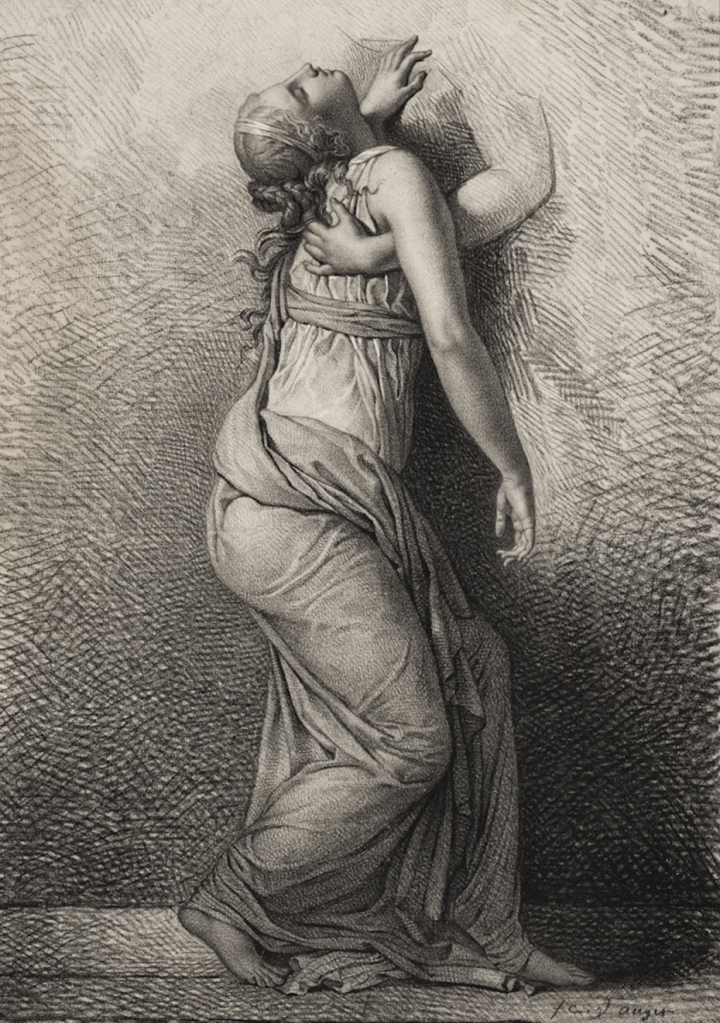
Adrien Victor Auger after Jacques-Louis David, Fainting Young Girl (Wilmington: Horvitz Collection).
Discover the defining features of Neoclassicism in this exploration of the origins and characteristics of the ‘new classical’ style that dominated Europe, especially France, in the late-18th century. With an eye towards the drawings featured in Revolution to Restoration: French Drawings from the Horvitz Collection, Margaret Morgan Grasselli, a leading expert in the field of French drawings, documents the movement’s roots: the careful study of Roman antiquities, the development of an austerely dramatic, visually striking pictorial style, and the depiction of subjects from both ancient and modern history.
Margaret Morgan Grasselli worked for 40 years in the department of graphic arts at the National Gallery of Art in Washington, 30 of them as curator of Old Master drawings. An expert on French drawings, especially those of the 18th century, she organized many major exhibitions, most notably Watteau, 1684–1721 in 1984; Renaissance to Revolution: French Drawings from the National Gallery of Art, 1500–1800 in 2009; and Hubert Robert in 2016. After retiring from the National Gallery in 2020, Meg spent three years as visiting senior scholar for drawings at the Harvard Art Museums, where she also served as visiting lecturer in the department of history of art in the faculty of arts and sciences.
Lecture | Black Genius: The Extraordinary Portrait of Francis Williams
From the V&A:
Fara Dabhoiwala | Black Genius: Science, Race, and the Extraordinary Portrait of Francis Williams
Online and in-person, Victoria & Albert Museum, London, 16 October 2024, 7pm (2pm ET)

Unidentified painter, Portrait of Francis Williams of Jamaica, ca. 1740, oil on canvas, 76 × 64 cm (London: V&A).
Join historian Fara Dabhoiwala for the captivating story behind one of the V&A’s most fascinating portraits.
In 1928, the V&A acquired a previously unknown portrait. It shows the Black Jamaican polymath Francis Williams (c. 1690–1762), dressed in a wig, surrounded by books and scientific instruments. In all of the previous history of Western art, there is no other image like this: a man who had been born into slavery, shown as a gentleman and scholar. The museum presumed it was a satire—but who had made it, when, where, and why, has remained a puzzle ever since. Join Fara Dabhoiwala as he reveals the astonishing story of the painting’s true meaning, its connections to the greatest scientists of the Enlightenment—and Francis Williams’s extraordinary message to posterity. This talk will be streamed on Zoom, and all ticketholders will receive a link to view the morning of the event.
The talk is in association with the London Review of Books.










 Enfilade
leave a comment