New and Forthcoming Books from Ashgate
From Ashgate’s website:
Denise Amy Baxter and Meredith Martin, eds., Architectural Space in Eighteenth-Century Europe: Constructing Identities and Interiors (Aldershot: Ashgate, 2010), ISBN: 9780754666509.
 Architectural Space in Eighteenth-Century Europe: Constructing Identities and Interiors explores how a diverse, pan-European group of eighteenth-century patrons – among them bankers, bishops, bluestockings, and courtesans – used architectural space and décor to shape and express identity. Eighteenth-century European architects understood the client’s instrumental role in giving form and meaning to architectural space. In a treatise published in 1745, the French architect Germain Boffrand determined that a visitor could “judge the character of the master for whom the house was built by the way in which it is planned, decorated and distributed.”
This interdisciplinary volume addresses two key interests of contemporary historians working in a range of disciplines: one, the broad question of identity formation, most notably as it relates to ideas of gender, class, and ethnicity; and two, the role played by different spatial environments in the production – not merely the reflection – of identity at defining historical and cultural moments. By combining contemporary critical analysis with a historically specific approach, the book’s contributors situate ideas of space and the self within the visual and material remains of interiors in eighteenth-century Europe. In doing so, they offer compelling new insight not only into this historical period, but also into our own.
Contents: Introduction: constructing space and identity in the 18th-century interior, Denise Amy Baxter; Section I Crossing Boundaries, Making Space: The ascendancy of the interior in 18th-century French architectural theory, Meredith Martin; ‘Très belle, agréable, et bien meublée’: the Electoral palace at Saint-Cloud in the early 18th century, Max Tillman; In the right place at the right time: political propaganda in the Archiepiscopal palace of Würzburg, Csongor Kis; Getting plastered: ornamentation, iconography, and the ‘desperate faction’, Katherine R.P. Clark. Section II The Interior as Masquerade: Salon as stage: actress/courtesans and their homes in late 18th-century Paris, Kathryn Norberg; Fashioning bluestocking conversation: Elizabeth Montagu’s Chinese room, Stacey Sloboda; The space of the mask, from stage to ridotto, Marc J. Neveu. Section III The Politics of Display: Improving taste in the private interior: gentlemen’s galleries in post-Napoleonic London, Anne Nellis Richter; A nation of statues: museums and identity in 18th-century Rome, Jeffrey Collins; (Re)constructing an 18th-century interior: the value of interiority on display, Daniel Brewer; Bibliography; Index.
About the Editors: Denise A. Baxter is an Assistant Professor in the School of Visual Arts at the University of North Texas. Meredith S. Martin is Assistant Professor of Eighteenth- and Nineteenth-Century Art in the History of Art Department at Wellesley College.
◊ ◊ ◊ ◊ ◊
John Potvin and Alla Myzelev, eds., Material Cultures, 1740–1920: The Meanings and Pleasures of Collecting (Aldershot: Ashgate, 2009), ISBN: 9780754661443.
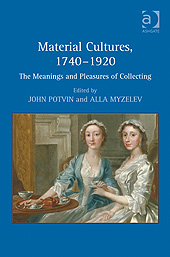 Interweaving notions of identity and subjectivity, spatial contexts, materiality and meaning, this collection makes a significant contribution to debates around the status and interpretation of visual and material culture. Material Cultures, 1740–1920 has four primary theoretical and historiographic lines of inquiry. The first is how concepts of otherness and difference inform, imbricate, and impose themselves on identity and the modes of acquisition as well as the objects themselves. The second concern explores the intricacies of how objects and their subjects negotiate and represent spatial narratives. The third thread attempts to unravel the ideological underpinnings of collections of individuals which inevitably and invariably rub up against the social, the institutional, and the political. Finally, at the heart of Material Cultures, 1740–1920 is an intervention moving beyond the disciplinary ethos of material culture to argue more firmly for the aesthetic, visual, and semiotic potency inseparable from any understanding of material objects integral to the lives of their collecting subjects. The collection argues that objects are semiotic conduits or signs of meanings, pleasures, and desires that are deeply subjective; more often than not, they reveal racial, gendered, and sexual identities. As the volume demonstrates through its various case studies, material and visual cultures are not as separate as our current disciplinary ethos would lead us to believe.
Contents: Introduction: the material of visual cultures, John Potvin and Alla Myzelev; Porcelain bodies: gender, acquisitiveness and taste in 18th-century England, Stacey Sloboda; Women’s home-crafted objects as collections of culture and comfort 1750–1900, Clive Edwards; Spatializing the private collection: John Fiott Lee and Hartwell House, Anastasia Filippoupoliti; ‘Everyone to his taste’ or ‘truth to material’?: the role of materials in collections of applied arts, Nadine Rottau; Collecting/painting harem/clothing, Joan DelPlato; ‘Chinamania’: collecting Old Blue for the house beautiful c 1860–1900, Anne Anderson; From specimen to scrap: Japanese textiles in the British Victorian interior, 1875–1900, Elizabeth Kramer; Indian crafts and imperial policy: hybridity, purification and imperial subjectivities, Julie F. Codell; Collecting peasant Europe: peasant utilitarian objects as museum artifacts, Alla Myzelev; Collecting intimacy one object at a time: material culture, perception and the spaces of aesthetic companionship, John Potvin; Collecting the sublime and the beautiful: from romanticism to revolution in Celtic revival jewellery, Joseph McBrinn; Index.
About the Editors: John Potvin is Assistant Professor of European Art and Design History at the University of Guelph, Canada. He is the author of Material and Visual Cultures Beyond Male Bonding, 1880–1914: Bodies, Boundaries and Intimacy (2008) and editor of The Places and Spaces of Fashion, 1800–2007 (2009). Alla Myzelev is an Assistant Professor of Art History at the University of Guelph, Canada. She has published on the relationship between Russian and Ukrainian avant-garde and craft, the role of women in the Arts and Crafts Movement as well as the representation of material culture in museums and private collections.
◊ ◊ ◊ ◊ ◊
Tom Dunne and William Pressly, eds., James Barry, 1741–1806: History Painter (Ashgate, 2010), ISBN: 9780754666349.
 Bringing into relief the singularity of Barry’s unswerving commitment to his vision for history painting despite adverse cultural, political and commercial currents, these essays on Barry and his contemporaries offer new perspectives on the painter’s life and career. Contributors, including some of the best known experts in the field of British eighteenth-century studies, set Barry’s works and writings into a rich political and social context, particularly in Britain.
Among other notable achievements, the essays shed new light on the influence which Barry’s radical ideology and his Catholicism had on his art; they explore his relationship with Reynolds and Blake, and discuss his aesthetics in the context of Burke and Wollstonecraft as well as Fuseli and Payne Knight. The volume is an indispensable resource for scholars of eighteenth-century British painting, patronage, aesthetics, and political history.
Contents: Foreword: Barry studies from a bicentennial perspective, William L. Pressly; Introduction: James Barry’s ‘moral art’, and the fate of history painting in Britain, Tom Dunne; From oddity to odd man out: James Barry’s critical legacy, 1806–66, David H. Solkin; James Barry’s ‘hairbreath niceties’: risk, reward, and the reform of culture around 1770, Martin Myrone; James Barry: a history painter in Paris in the 1760s, Fionnuala McManamon; ‘Glowing thoughts on glowing canvas’: James Barry’s Venus Rising from the Sea, Margaret W. Lind; Barry, Reynolds and the British school, Martin Postle; Barry and Fuseli: Milton, exile and expulsion, Asia Haut; The politics of envy: Blake and Barry, David Bindman; Reform and revolution: James Barry’s writings in the 1790s, John Barrell; History painting and aesthetics: Barry and the politics of friendship, Liam Lenihan; No 36 Castle Street East: a reconstruction of James Barry’s house, painting and printmaking studio, and the making of The Birth of Pandora, Michael Phillips; Crowning the Victors at Olympia: the great room’s primary focus, William L. Pressly; Barry’s Bosseut in Elysium: Catholicism and counter-revolution in the 1790s, Daniel R. Guernsey; ‘A monument to perpetuate his memory’: James Barry’s Adelphi cycle revisited, David G.C. Allan; Select bibliography; Index.
About the Editors: Tom Dunne is Professor Emeritus of History at University College Cork, Ireland. William Pressly is a Professor in the Department of Art History & Archaeology at the University of Maryland, College Park.
◊ ◊ ◊ ◊ ◊
Alden Cavanaugh and Michael Yonan, eds., The Cultural Aesthetics of Eighteenth-Century Porcelain (Aldershot: Ashgate, 2010), ISBN: 9780754663867.
During the eighteenth century, porcelain held significant cultural and artistic importance. This collection represents one of the first thorough scholarly attempts to explore the diversity of the medium’s cultural meanings. Among the volume’s purposes is to expose porcelain objects to the analytical and theoretical rigor which is routinely applied to painting, sculpture and architecture, and thereby to reposition eighteenth-century porcelain within new and more fruitful interpretative frameworks. The authors also analyze the aesthetics of porcelain and its physical characteristics, particularly the way its tactile and visual qualities reinforced and challenged the social processes within which porcelain objects were viewed, collected, and used.
The essays in this volume treat objects such as figurines representing British theatrical celebrities, a boxwood and ebony figural porcelain stand, works of architecture meant to approximate porcelain visually, porcelain flowers adorning objects such as candelabra and perfume burners, and tea sets decorated with unusual designs. The geographical areas covered in the collection include China, North Africa, Spain, France, Italy, Britain, America, Japan, Austria, and Holland.
Contents: Introduction, Alden Cavanaugh and Michael Yonan; Rethinking the Arcanum: porcelain, secrecy, and the 18th-century culture of invention, Glenn Adamson; The nature of artifice: French porcelain flowers and the rhetoric of the garnish, Mimi Hellman; Igneous architecture: porcelain, natural philosophy, and the rococo cabinet chinois; Michael Yonan Marketing Celebrity: Porcelain and Theatrical Display; Heather McPherson; Balancing act: Andrea Brustolon’s ‘La Forza’ and the display of imported porcelain in 18th-century Venice, Erin J. Campbell; The Queen’s nécessaire, Alden Cavanaugh; Porcelain, print culture and mercantile aesthetics, Dawn Odell; Sugar boxes and blackamoors: ornamental blackness in early Meissen porcelain, Adrienne L. Childs; Ties that bind: relations between the Royal Academy of San Fernando and the royal porcelain factory of the BuenRetiro, Andrew Schulz; Selected bibliography; Index.
About the Editors: Alden Cavanaugh is Associate Professor of Art History at Indiana State University. Michael E. Yonan is Assistant Professor of Eighteenth- and Nineteenth-Century Art at the University of Missouri-Columbia.
◊ ◊ ◊ ◊ ◊
Nebahat Avcioglu, Turquerie and the Politics of Representation, 1728-1876 (Aldershot: Ashgate, 2010), ISBN: 9780754664222.
In this first full-length study of Turkish-inspired architecture in Western Europe in the eighteenth and nineteenth centuries, Nebahat Avcioglu offers a new reading of the notion of cultural frontiers as rapport of heterogeneities rather than separations. Reclaiming turquerie from the confines of inconsequential exoticism and reframing it as cross-cultural art in its own right, Avcioglu analyses hitherto neglected images, designs and constructions linking Western interest in the Ottoman Empire to issues of self-representation and national politics. Investigating how and why Europeans turned to the Turks for inspiration she provides a far-reaching reinterpretation of architectural thought and culture in this period.
Organised as a series of case studies focusing on three specific buildings types — kiosks, mosques, and baths — each representing the first manifestation of their genre to be erected in Western Europe, the study delves into the politics of architectural forms and styles. Avcioglu argues that the appropriation of these types was neither accidental nor merely reflected European domination of another culture but that its process was essentially dialectical and contributed to transculturation in both the West and the East.
Contents: Introduction: toward a cross-cultural interpretation of art; Part I The Kiosk: Stanislas Leszczynski as Ahmed III or the union of the crown and the turban; ‘The Turkish Paradise or Vaux-hall Gardens’. Part II The Mosque: Kew Gardens: the Turkish mosque and the representation of empire. Part III The Hammam: The Turkish bath in Europe. Conclusion: Turquerie from imperial gardens to the Exposition Universelle; Bibliography; Index.
About the Author: Nebahat Avcioglu is Research Coordinator at Columbia University Institute for Scholars in Paris. And Maître de conférence at Sciences-Po (Institut d’Etudes Politiques de Paris).
Hip, hip, hooray and a hearty congratulations!
As noted by The Art History Newsletter, the 2010 Guggenheim Fellowships include an interesting representation of art scholars. It’s encouraging to see the eighteenth century represented:
Gauvin Alexander Bailey (Professor of Renaissance Art and Baroque Art, King’s College, University of Aberdeen), “Rococo art and spirituality in South America.”
Mary D. Sheriff (W. R. Kenan Jr. Distinguished Professor of Art History, University of North Carolina, Chapel Hill), “Picturing the allure of conquest in 18th-century France.”
Conference for Walpole and Delany Exhibitions in London
From the Paul Mellon Centre:
Curious Specimens: Enlightenment Objects, Collections, Narratives
Victoria & Albert Museum, London, 15-17 April 2010
A conference organized by Birkbeck, University of London; the Victoria & Albert Museum; the Yale Center for British Art; the Lewis Walpole Library. Supported by the Paul Mellon Centre.

Miniature cabinet from Strawberry Hill, rosewood 1743 (London: V&A)
This conference brings together academic and museum scholars to present and discuss new perspectives on eighteenth-century practices of collecting, using as its focus two exhibitions, Horace Walpole and Strawberry Hill (V&A, 6 March-4 July 2010) and Mrs Delany and her Circle (Sir John Soane’s Museum, 19 February-1 May 2010). Horace Walpole (1717-1797) was a central figure in eighteenth-century social and cultural life and the most important collector of English historical artifacts and objects, including manuscripts, rare books, ceramics, portrait miniatures, prints, paintings, antiquities, armour and other curiosities, which he arranged in his Gothic villa at Strawberry Hill. Mary Delany (1700-1788) is best known for her cut-paper collages of botanically accurate flowers and floral embroidery designs, which connect the world of natural history with court culture and in particular the collections of the Duchess of Portland. This conference will address eighteenth-century pre occupations with the ordering of both the natural world and material culture, which required new ways of thinking about the classification of objects. Papers will examine issues of collecting, collectors and their circles; the creation of artisanal productions as forms of collecting; and intersections and tensions between antiquarian, aesthetic, and scientific cultures of collecting.
Thursday, 15 April — Lincoln Inns Fields
5:00 Keynote Lecture (at the Royal College of Surgeons)
- Pamela Smith (Columbia): ‘Curious Modes of Production: Making Objects in the Early Modern World’
6:30 Reception at Sir John Soane’s Museum and viewing of Mrs Delany exhibition
Friday 16 April — Victoria & Albert Museum
10:00 Registration
10:30 Welcome from Directors/Organizers
10:45 Panel 1: Walpole and Delaney
- Michael Snodin (V&A)
- Alicia Weisberg Roberts (The Walters Art Museum)
12:00 Panel 2: Collectors, Predisciplinarity, Divisions of Knowledge I
- Elizabeth Eger (KCL): ‘Quills and Other Feathers: Elizabeth Montagu and the Matter of Friendship’
- Janice Neri (Boise State University, Idaho): ‘Paper Kingdoms: Mary Delany, the Duchess of Portland, and the Consequences of Collage’
1:30 Lunch
2:30 Panel 3: Collectors, Predisciplinarity, Divisions of Knowledge II
- Stacey Sloboda (Southern Illinois University, Carbondale): ‘Material Displays: Porcelain and Natural History in the Duchess of Portland’s Museum’
- Adriano Aymonino (Independent Scholar, London): ‘A Mirror of the Enlightenment: The Collections of Elizabeth Seymour Percy, first Duchess of Northumberland’’
- Craig Hanson (Calvin College, Michigan): ‘Collecting Virtue: The Patronage and Acquisitions of Dr Richard Mead in Early Georgian London’
4:15 Tea
4:45 Plenary Lecture
- Stephen Bann (University of Bristol), ‘Curiosity Future and Past: Siting Horace Walpole’
6:00 Reception and viewing of Strawberry Hill exhibition
Saturday 17 April — Strawberry Hill
10:00 Welcome: Michael Snodin
10:30 Keynote Lecture
- Malcolm Baker (U. California Riverside): ‘Walpole and Sculpture’
12:00 Panel 4: Aesthetic and/or Antiquarian Collecting
- Cynthia Roman (Lewis Walpole Library, Yale): ‘Collecting Copies, Surrogates, and Misattributions’
- Rosemary Sweet (Leicester): ‘Contrary to my System and my Humour: Horace Walpole and Antiquarian Collecting in the 18th Century’
- George Haggerty (U. California, Riverside): ‘Eccentric Collectors: Walpole, Beckford, and the Erotics of Things’
1:30 Lunch
2:30 Visits to Strawberry Hill (every 15 minutes, 1 hour per visit)
4:00 Tea
4:30 Roundtable Discussion: Museums, Collecting, Predisciplinarity
- Malcolm Baker, Tim Knox, Kim Sloan, Michael Snodin
Rethinking the Rococo within the Social History of Art
Histoire sociale de l’art, histoire artistique du social / 1680-1730: Amsterdam, Paris
Institute national d’histoire de l’art, Paris, Thursday 29 January 2010
Under the direction of Philippe Bordes, France’s INHA (Institute national d’histoire de l’art) has embarked upon a program to reconsider the relationship between art and society within the context of the social history of art. An anthology of key texts will be published later this spring (along with an extensive bibliography to be made available online), and in December 2010 the INHA will host a final symposium to wrap up the project. This week the fourth workshop in the series tackles the subject through the eighteenth century, 1680-1730: Amsterdam, Paris (the site includes a PDF with useful bibliographies).
Session A
2:00 Philippe Bordes (INHA), Introduction
2:10 Mary Sheriff (University of North Carolina, Chapel Hill), “What is the Interpreter’s Desire? Rococo Art, Society, and the Social History of Art”
2:40 Discussion with Jean-François Bédard (Syracuse University), Magnus Olausson (Nationalmuseum, Stockholm), and questions from the audience
3:10 Charlotte Guichard (laboratoire IRHIS de l’Université de Lille 3), “Coquilles: objets frontières et communautés de goût”
3:25 Anne Perrin-Khelissa (Centre allemand d’histoire de l’art, Paris), “le miroir: objet de luxe, objet de consommation privée, objet soumis à la critique artistique”
3:40 Malcolm Baker (University of California, Riverside), “Histories and Societies in the plural : Francis van Bossuit and the endurance of art”
4:10 Discussion with Jean-François Bédard, Magnus Olausson, and questions from the audience
Session B
5:00 Melissa Hyde (University of Florida), “Rosalba Carriera and Quentin de la Tour, or What is the Matter with Rococo Pastel Portraiture?”
5:20 Jan Blanc (Université de Lausanne), “Réflexions sur les espaces sociaux dans la Hollande du XVIIème siècle: le cas des maisons de poupées”
5:35 Katie Scott (Courtauld Institute), “Histoire rocaille du social?”
5:55 Discussion with Jean-François Bédard, Magnus Olausson, and questions from the audience
New Book on the Dilettanti
Jason Kelly, The Society of Dilettanti: Archaeology and Identity in the British Enlightenment (London: Paul Mellon Centre for Studies in British Art, 2010), 9780300152197, $75.
 In 1732, a group of elite young men, calling themselves the Society of Dilettanti, held their first meeting in London. The qualification for membership was travel to Italy where the original members had met each other on the grand tour. These noblemen’s youthful indulgences while on the Continent and upon their return to London were often topics of public discussion, and ribald and licentious tales about the group circulated in the press. Originally formed as a convivial dining society, by the middle of the eighteenth century the Dilettanti took on an influential role in cultural matters. It was the first European organization fully to subsidize an archaeological expedition to the lands of classical Greece, and its members were important sponsors of new institutions such as the Royal Academy and the British Museum. The Society of Dilettanti became one of the most prominent and influential societies of the British Enlightenment. This lively and illuminating account, based on extensive archival research, is the most detailed analysis of the early Society of Dilettanti to date. Not simply an institutional biography, three themes dominate this history of the Dilettanti: eighteenth-century debates over social identity; the relationships between aesthetics and archeology; and the meanings of natural philosophy. Connecting the world of the grand tour to the sociable masculinity of London’s taverns, this book reveals that the trajectory of British classical archeology was as much a consequence of shifting notions of politeness as it was a product of antiquarian discoveries and elite tastes. The book places the Society of Dilettanti at the complex intersection of international and national discourses that shaped the British Enlightenment, and, thus, it sheds new light on eighteenth-century grand tourism, elite masculinity, sociability, aesthetics, architecture and archeology.
Note: — The book is not available in the U.S. until February, but I saw a copy a few days ago while browsing in Galignani, just across the street from the Louvre (I’m here in Paris, teaching a two-week January term). I’m glad to report that it’s stunning — and high on my wish list (I’m afraid I’m already returning with too many books to fit this one into my suitcase, and the pre-order price at Barnes & Noble or Amazon is especially attractive). –C.H.
Thinking Globally
Member News
Elisabeth Fraser, author of Delacroix, Art and Patrimony in Postrevolutionary France (Cambridge University Press, 2004), has two articles appearing in the near future:
• “‘Dressing Turks in the French Manner’: Mouradgea d’Ohsson’s Tableau général de l’Empire Othoman,” in a special issue of Ars Orientalis on the topic of ‘Art and Mobility: Globalism in the Eighteenth Century’, edited by Nebahat Avcioglu and Barry Flood (2010)
• “Images of Uncertainty: Delacroix, Morocco, and the Art of Nineteenth-Century Expansion,” chapter in Cultural Contact and the Making of European Art since the Age of Exploration, edited by Mary Sheriff (University of North Carolina Press, 2010). [For more information, click here»]
In 2008, she published “Books, Prints, and Travel: Reading in the Gaps of the Orientalist Archive,” Art History 31 (June 2008): 342-67.
Abstract: By 1780 a thriving publishing industry for travel accounts developed in France, but its rich visual component has not been closely analysed. Taking Auguste de Forbin’s Voyage dans le Levant (1819) and Marie-Gabriel de Choiseul-Gouffier’s Voyage pittoresque de la Grèce (1782) as paradigmatic examples, I reconsider illustrated travel books in light of new theories of reading generated by historians of the book. The multifarious nature of these books – juggling word and image and coordinating the work of a large number of writers, researchers, artists, and printmakers – provides a radically alternative model for interpreting travel representation in the age of expansion.
Fraser is also working on a book project, Mediterranean Encounters: Artists and Other Travelers in and around the Ottoman Empire, 1780-1850, for which she received an NEH Fellowship.
In the Latest ‘Art Bulletin’
The December issue of The Art Bulletin 91 (2009) includes the following items addressing the eighteenth century:
Emma Barker, “Imaging Childhood in Eighteenth-Century France: Greuze’s Little Girl with a Dog,” pp. 426-45.
Author’s Abstract: “During the artist’s lifetime, A Child Playing with a Dog was one of Jean-Baptiste Greuze’s most admired and best-known works. The painting represent the physical, instinctual nature of the child in a manner unprecedented in French art. The image of childhood that it offers has close parallels in the scientific and medical discourse of the later eighteenth century. Like many contemporary commentators, Greuze evokes not simply the innocence of children but also their vulnerability, above all, that of little girls. He thereby implicates the viewer in the child’s fate, both for good and ill.”
Meredith Martin, review of Diplomatic Tours in the Gardens of Versailles under Louis XVI by Robert Berger and Thomas Hedin (University of Pennsylvania Press, 2008)) and Carmontelle’s Landscape Transparencies: Cinema of the Enlightenment by Laurence Chatel de Brancion (J. Paul Getty Museum, 2008), pp. 511-15.

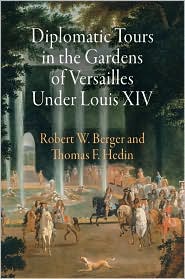 “Both Diplomatic Tours and Carmontelle’s Landscape Transparencies attempt to shed light on an underexplored aspect of French gardens and how they were portrayed in the ancien régime. As in a growing number of garden history books, the authors foreground questions of reception and use and treat these landscapes as a dynamic field of social relations — in other words, as a contested terrain. Both books also share an inclination to animate the garden as a kinetic experience by way of descriptive texts and visual images. . .” (512).
Mary Vidal Awards Announced and a Year-End Appeal
As 2009 comes to an end, I hope that you’ll consider joining the Historians of Eighteenth-Century Art and Architecture, renewing your membership for 2010, or making an additional contribution. Among other things, your dues help fund the Dora Wiebenson Prize and the Mary Vidal Memorial Fund. Within the latter category, HECAA is pleased to announce awards for the following young scholars:
- Amber Ludwig (Ph.D. candidate, Boston University) will be using funds to defray costs incurred in presenting her research on Emma Hamilton at CAA and ASECS in 2010.
- Sally Grant (Ph.D. student, University of Sydney) will use funds to defray expenses as she travels to ASECS in Albuquerque to present her paper “The World in the Venetian Countryside: The Tiepolos at the Villa Valmarana ai Nani.”
- Anne-Louise Gonçalves Fonseca (Ph.D. University of Montréal, 2008) will be able to defray costs for travel to ASECS, where she will present her paper “Mythological Painting in Eighteenth-Century Portugal: Models, Nudity, and Patronage.”
So please take a moment now to renew your membership or make an additional contribution. You can submit memberships and donations via PayPal by clicking here or via check made payable to ‘HECAA’ and mailed to me at the following address. Best wishes for a festive (and productive) holiday season and new year!
Denise Baxter, HECAA Treasurer
College of Visual Arts and Design
University of North Texas
1155 Union Circle, #305100
Denton, Texas 76203-5017
New & Forthcoming Books
Here’s a selection of new titles from the December 15th issue of the Michael Shamansky catalogue. Shamansky – online as artbooks.com – specializes in monographs, guides, and exhibition catalogues imported from European publishers.
◊ ◊ ◊ ◊ ◊
 Item #104324 – Mary Sheriff, ed., Cultural Contact and the Making of European Art since the Age of Exploration (Chapel Hill: University of North Carolina Press, 2010), ISBN: 9780807833667, $35.
Art historians have long been accustomed to thinking about art and artists in terms of national traditions. This volume takes a different approach, suggesting instead that a history of art based on national divisions often obscures the processes of cultural appropriation and global exchange that shaped the visual arts of Europe in fundamental ways between 1492 and the early twentieth century. Essays here analyze distinct zones of contact–between various European states, between Asia and Europe, or between Europe and so-called primitive cultures in Africa, the Americas, and the South Pacific–focusing mainly but not exclusively on painting, drawing, or the decorative arts. Each case foregrounds the centrality of international borrowings or colonial appropriations and counters conceptions of European art as a “pure” tradition uninfluenced by the artistic forms of other cultures. The contributors analyze the social, cultural, commercial, and political conditions of cultural contact–including tourism, colonialism, religious pilgrimage, trade missions, and scientific voyages–that enabled these exchanges well before the modern age of globalization. Contributors include: Claire Farago, Elisabeth A. Fraser, Julie Hochstrasser, Christopher Johns, Carol Mavor, Mary D. Sheriff, and Lyneise E. Williams.
◊ ◊ ◊ ◊ ◊
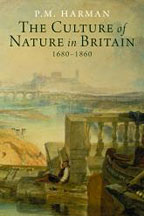 Item #100864 – P. M. Harman, The Culture of Nature in Britain, 1680-1860 (New Haven: Yale University Press, 2009), ISBN: 9780300151978, $65.
This wide-ranging book investigates the emergence of modern ideas about the natural world in Britain from 1680–1860 through an examination of the cultural values common to the sciences, art, literature, and natural theology. During this critical period, spanned by Newtonian science, natural theology, Darwin’s Origin of Species, and Ruskin’s Modern Painters, the fundamental conception of nature and humanity’s place within it changed. P. M. Harman calls for a new understanding of the varied ways in which the British comprehended natural beauty, from the perception of nature as a “design” flowing from God’s creative power to the Darwinian naturalistic aesthetic. Harman connects a variety of differing views of nature deriving from religion, science, visual art, philosophy, and literature to developments in agriculture, manufacturing, and the daily lives of individuals. This ambitious and accessible book represents intellectual history at its best.
◊ ◊ ◊ ◊ ◊
 Item #104097 – Giuseppe Pavanello, ed., Rosalba Carriera, 1673-1757: Atti del convegno 26-28 aprile 2007, Fondazione Cini, Venezia (Verona: Scripta, 2009), ISBN: 9788896162088, $75.
Thanks to the initiatives promoted by the Veneto Region and the Giorgio Cini Foundation through the Regional Committee for the celebrations of the 250th anniversary of the death of Rosalba Carriera (1757-2007), it was possible to render due homage to a painter who rose to be a leading artist on the European scene. This prominent role, highlighted by the exhibition Rosalba Carriera: prima pittrice de l’Europa held in the Palazzo Cini in 2007, has now been emphasised again with the publication of the proceedings of the Conference held at the Giorgio Cini Foundation and in Chioggia in the spring of the same year. The papers in the book cast new light on Rosalba’s activities in the Venetian art world and on the European scene. One specific enquiry was focused on the topic of collecting Rosalba Carriera works, which was dealt with in a conference session and also finds a place in the proceedings. For the first time (and in Italian) the remarkable Dresden collection has been examined and illustrated with exhaustive images as never before. One gem from the Dresden museum, the Portrait of Giambattista Recanati in Abbot’s Dress, was chosen for the cover of the book: the sitter is depicted immersed in thought with a hand over his chest, an allusion to his heart. This ‘portrait in grey’ is a forerunner of the celebrated masterpieces of the late 18th century painted in a single colour tone.
◊ ◊ ◊ ◊ ◊
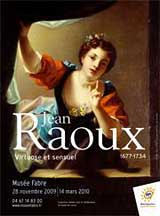 Item #104119 – Jean Raoux, 1677-1734, exhibition catalogue (Paris: Somogy, 2009), ISBN: 9782757202876, $58.95.
Jean Raoux (1677-1734) is, along with Sébastien Bourdon, Joseph-Marie Vien, François-Xavier Fabre and Frédéric Bazille, one of the great French artists born in Languedoc. The painter, a contemporary of Antoine Watteau, actively participated in the revival of French painting during the Regency. Virtuoso, sensual, elegant, Jean Raoux truly merits that his home town dedicates a major exhibition to him. This first-ever retrospective reunites the artist’s most beautiful masterpieces, on loan from the great French museums as well as from collections in Germany, Austria, Italy, Britain, America and Russia. Rarely shown and with prestigious provenance, the paintings in this exhibition reveal the extent of his talent as portraitist of the aristocracy, of the world of performance, of historical and religious subjects, as well as a painter of genre scenes in the Dutch style. His artistry exalts the beauty of women, whether as a mythological heroine or a coquettish woman going about her everyday occupations. This selection highlights the multiple facets of Raoux, famous in his time and highly esteemed by Voltaire.
◊ ◊ ◊ ◊ ◊
 Item #104322 – Philip Conisbee, ed., French Paintings of the Fifteenth through the Eighteenth Century: The Collections of the National Gallery of Art Systematic Catalogue (Princeton: Princeton University Press, 2010), ISBN: 9780691145358, $99.
Georges de La Tour’s haunting depiction of a repentant Mary Magdalen gazing into a mirror by candlelight; Jean Siméon Chardin’s perfectly balanced image of a young boy making a house of cards; Jean Honoré Fragonard’s monumental suite of landscapes showing aristocrats at play in picturesque gardens–these are among the familiar and beloved masterpieces in the National Gallery of Art, which houses one of the most important collections of French old master paintings outside France. This lavishly illustrated book, written by leading scholars and the result of years of research and technical analysis, catalogues nearly one hundred paintings, from works by François Clouet in the sixteenth century to paintings by Élisabeth Louise Vigée Le Brun in the eighteenth. French art before the revolution is characterized by an astonishing variety of styles and themes and by a consistently high quality of production, the result of an efficient training system developed by the traditional guilds and the Royal Academy of Painting and Sculpture, founded in 1648 by King Louis XIV. The National Gallery collection reflects this quality and diversity, featuring excellent examples by all the leading painters: ideal landscapes by Claude Lorrain and biblical subjects by Nicolas Poussin, two artists who spent most of their careers in Rome; deeply moving religious works by La Tour, Sébastien Bourdon, and Simon Vouet; portraits of the grandest format (Philippe de Champaigne’s Omer Talon) and the most intimate (Nicolas de Largillierre’s Elizabeth Throckmorton); and familiar scenes of daily life by the Le Nain brothers in the seventeenth century and Chardin in the eighteenth. The Gallery’s collection is especially notable for its holdings of eighteenth-century painting, from Jean Antoine Watteau to Hubert Robert, and including marvelous suites of paintings by François Boucher and Fragonard. All these works are explored in detailed, readable entries that will appeal as much to the general art lover as to the specialist.
◊ ◊ ◊ ◊ ◊
 Item #104006 — Les Cahiers d’Histoire de l’Art, n.7 (2009), ISBN: 9782953301410, $58.50. Includes:
- S. Gopin / M. Eidelberg, “Jean Baptiste Vanmour 1671-1737 ‘Peintre ordinaire du Roy et en Levant'”
- Y. Jackall “Recovering the work of Marie-Genevieve Bouliar 1763-1825: The invention of self in Revolutionary France”
- M. T. Caracciolo “Jean Baptiste Wicar (Lille, 1762 – Rome, 1834) – Catalogue raisonné des peintures, Premiere partie: peintures historiques et religieuses,” etc.
◊ ◊ ◊ ◊ ◊
Item # 102894 – Edmond and Jules Goncourt, L’Art du XVIIIe siècle, edited and annotated by Jean-Louis Cabanès, 2 vols. (Tusson: De Lerot, 2007), ISBN: 9782355480089, $160.
- Volume I: Watteau, Chardin, Boucher, La Tour, Greuze, Les Saint-Aubin
- Volume II: Gravelot, Cochin, Eisen, Moreau, Debucourt, Fragonard, Prudhon
◊ ◊ ◊ ◊ ◊
Item Number: 104080 — Elena Marenghi, Ignazio Stern: (1679-1748), l’opera di un pittore tedesco in Romagna (Imola: Associazione culturale San Macario, 2007), $77.50.
Finding the Perfect Gift
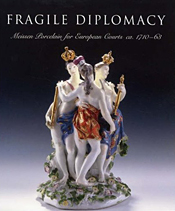
Edited by Maureen Cassidy-Geiger
Just Published
The Court Historian 14.2 (December 2009), published by The Society for Court Studies
Special Issue: Gift-Giving in Eighteenth-Century Courts — Papers from the conference Fragile Diplomacy: Meissen Porcelain for European Courts, c. 1710-1763, held at the Bard Graduate Center, New York, 17 November 2007, in conjunction with the eponymous exhibition (reviewed at artnet by N. F. Karlins).
◊ ◊ ◊ ◊ ◊
Table of Contents
 Andrew Morrall (Bard Graduate Center), Introduction
- Cordula Bischoff (State Art Collections, Dresden), Complicated Exchanges: The Handling of Authorised and Unathorised Gifts
- Christopher M. S. Johns (Vanderbilt University) The ‘Good Bishop’ of Catholic Enlightenment: Benedict XIV’s Gifts to the Metropolitan Cathedral of Bologna
- John Whitehead, Royal Riches and Parisian Trinkets: The Embassy of Saïd Mehmet Pacha to France in 1741-42 and Its Exchange of Gifts
- Michael Yonan (University of Missouri-Columbia), Portable Dynasties: Imperial Gift-Giving at the Court of Vienna in the Eighteenth Century
- Guy Walton, Emeritus (New York University), Ambassadorial Gifts: An Overview of Published Material
- Maureen Cassidy-Geiger (Cooper-Hewitt Museum/Parsons School of Design), Afterthoughts on Fragile Diplomacy: Meissen Porcelain for European Courts, c. 1710-1763
- Book Reviews / Exhibition Reviews











 Enfilade
leave a comment