Opening in December 2015: V&A’s ‘Europe 1600–1815’ Galleries
From the V&A press release:

Writing cabinet, 1750s, possibly by Michael Kimmel, or Kümmel (1715-1794) a cabinet-maker in Dresden (London: V&A, Purchased by H.M. Government from the estate of the 6th Earl of Rosebery and allocated to the Victoria and Albert Museum, W.63-1977)
The V&A’s Europe 1600–1815 galleries will open to the public in December 2015, following the transformation of seven galleries for the redisplay of the Museum’s unrivalled collection of 17th- and 18th-century European art and design. A major part of the V&A’s ongoing redevelopment programme known as FuturePlan, the £12.5m project will complete the restoration of the entire front wing of the Museum for the display of more than 1,100 objects.
In its prominent position next to the V&A’s grand entrance, Europe 1600–1815 will continue the story of art and design that begins in the award-winning Medieval & Renaissance Galleries (opened 2009). Four large galleries will introduce the story in chronological sequence, alternating with three smaller galleries that focus on specific activities: collecting in the Cabinet, enlightened thought in the Salon and entertainment and glamour in the Masquerade. In addition, three period rooms will invite visitors to imagine life in the personal spaces of the time including a 17th-century French bedroom, Madame de Sérilly’s cabinet and a mirrored room from 18th-century Italy.
The collection comprises some of the most magnificent works held by the V&A, including spectacular examples of textiles and fashion, painting and sculpture, ceramics and glass, furniture and metalwork, prints and books. Many objects were made in Europe by its finest artists and craftsmen for the period’s most discerning leaders of taste such as Louis XIV, Marie Antoinette, Catherine the Great and Napoleon.
Martin Roth, V&A Director, said: “These new galleries are a major development in our ambitious programme to renew the architecture of the V&A for the 21st century and, at the same time, re-examine and re-present our collection for our visitors. At a time when roles and relationships within Europe and the world are under scrutiny, it is interesting to explore the objects, makers and patrons of a period that was so influential upon the habits and lifestyle of Europe today.”
A large, highly ornate Rococo writing cabinet made for Augustus III and acquired in 1977 from the celebrated sale of Mentmore Towers, Buckinghamshire will be exhibited for the first time since its recent conservation. Another newly conserved highlight on display will be a grand 18th-century bed from the Parisian workshop of George Jacob. A supplier to royal courts across Europe, Jacob survived the French Revolution and later made furniture for Napoleon.
The displays will demonstrate how France succeeded Italy as the undisputed leader of fashionable art and design in Europe in the second half of the 17th century. They will also show how—for the first time ever—Europeans systematically explored, exploited and collected resources from Africa, Asia and the Americas.
The collection includes several outstanding bequests, notably from John Jones, a military tailor who left his exceptional collection of French decorative arts to the Museum in 1882 and who is the subject of a special display within the galleries. A number of significant new acquisitions will be exhibited for the first time at the Museum including a 17th- century Venetian table by Lucio de Lucci, acquired after a temporary export ban in 2012. The magnificent oil painting The Château de Juvisy, by Pierre-Denis Martin, a rare, accurate depiction of the architecture and bustling life of an estate near Paris in the 17th century, will be a centrepiece of the gallery exploring the rise of French cultural dominance during the period. The work was secured for the nation in 2014 thanks to a major public appeal and donations from the Friends of the V&A and the Art Fund.
Preparation for the reopening is underway with a full reinterpretation of the collection and important objects undergoing conservation: several large tapestries have been cleaned at De Wit Royal Manufacturers of Tapestries in Mechelen, Belgium, including the Gobelins tapestry after the Poussin painting The infant Moses tramples on Pharoah’s crown manufactured in Paris in the 1680s. Fashion garments, furniture and textiles have been conserved in the V&A’s world- renowned studios and a Meissen table fountain has been meticulously researched and rebuilt for the first time since its acquisition in 1870.
The V&A is working with architectural practice ZMMA on the redesign of the galleries. The project will see the complete removal of the interior cladding added in the 1970s and will reclaim back of house storage space. The combined effect will enlarge the galleries by almost a third to 1,550 square meters. Natural light will be returned to the spaces by uncovering windows previously obscured. Environmental controls will be upgraded to provide sustainable and stable conditions for the collection and new state-of-the-art cases that meet modern environmental and security requirements will be installed.
The Europe 1600-1815 galleries are being made possible thanks to a generous £4.75m lead grant from the Heritage Lottery Fund with further support from many other Trusts, Foundations and individuals.
Lesley Miller is lead curator and Joanna Norman is project curator of Europe 1600–1815. To mark the opening of the new galleries, the V&A will publish The Arts of Living: Europe 1600–1815, edited by Elizabeth Miller and Hilary Young.
Dawn Hoskin provides details (with photos) at the V&A’s Blog»
◊ ◊ ◊ ◊ ◊
From the V&A press release:
The V&A has commissioned the artist collective Los Carpinteros to create a contemporary installation for the Museum’s new Europe 1600–1815 galleries, opening to the public in December 2015. Established in 1992, Los Carpinteros have received international acclaim for their sculptural pieces. The duo work between Madrid and Havana, and this will be their first major project for a London museum.
Charged with devising a large-scale, imaginative and thought-provoking piece that would sit within the gallery examining the Enlightenment, Los Carpinteros proposed The Globe. It is a curved architectural sculpture made from a lattice of engineered beech that will form a ‘room within a room’ at the heart of the new Europe displays. Occupying a pivotal space—both architecturally and in terms of the narrative of the galleries—it will offer visitors an opportunity to pause and reflect, as well as encourage engagement with the complex concept of the Enlightenment. Seating up to 30 people, The Globe will also be used as a space for programmed salons, events and discussions.
The period represented the triumph of intellectual curiosity and enquiry, a culture of increasing literacy and debate, and a desire to acquire and classify knowledge. This is encapsulated in one of the most important publications of the 18th century, Diderot and Alembert’s Encyclopedia (1751–1772). A vast collaborative project involving many of the leading thinkers of the day, it aimed to gather all available knowledge, to examine it critically and rationally, and to bring it to a wide public. Bernard and Picart’s Religious Ceremonies and Customs of All the Peoples of the World (1723–1743) will be on display in the gallery. A number of sculptural busts from the period will be placed in dialogue around The Globe and be visible from inside the installation, recalling the intellectual environment and salon culture, and making connections between past and present.
Lesley Miller, lead curator for Europe 1600–1815, said: “Bringing alive the Enlightenment is a challenge for a curator—how might we represent intellectual thought and debate in a gallery? Los Carpinteros’ work, set among sculpture and books from the period, creates a fundamentally different experience for visitors—inviting them into a contemplative, calm place to reflect and think. The design of The Globe reflects not only the world but also, in its bookshelf, cell-like construction, the organisation of knowledge—central to Enlightenment thought. It also creates space for intellectual debate in a relatively informal setting—the V&A’s own 21st-century take on an 18th-century salon, if you like.”
Los Carpinteros said: “Our commission for the V&A is the culmination of a 20-year fascination with the idea of the ‘panopticon’. First devised in the 18th century by Jeremy Bentham, these structures promoted surveillance and control and were originally intended for prisons. The Globe reinterprets this format as an observation point midway through the Museum’s new galleries. It is a station for rest, contemplation and discussion that will relate closely to the objects that surround it. Our work to date has mainly been with museums and galleries dedicated to contemporary art, so it has been very exciting to work in the context of the V&A’s historical collection of objects, fine art and design; a world with which our practice has many familiarities and connections. Here our work as artists, craftsmen, designers and carpenters has a rare practical utility and function alongside its symbolism—with pleasingly ambiguous results.”
The V&A has an established reputation for working with contemporary artists and designers to respond to the permanent collections. Past collaborations have included site-specific commissions from Elmgreen & Dragset, Cornelia Parker, Edmund De Waal, Felice Varini, rAndom International, and Troika. . . .
Los Carpinteros (The Carpenters) are Marco Antonio Castillo Valdes (b. 1971) and Dagoberto Rodríguez Sanchez (b. 1969). A Havana-based collective, they have created some of the most important work to emerge from Latin America in the past decade. Formed in 1992 (with Alexandre Arrechea until his departure in June 2003), Los Carpinteros took their name in 1994, deciding to renounce the notion of individual authorship and refer back to an older guild tradition of artisans and skilled craftsmen. Merging architecture, design, and sculpture in unexpected and often playful ways, their work negotiates between the functional and the non-functional. Their carefully crafted drawings and installations use wit to set up contradiction between object and function as well as practicality and uselessness. Their work is in the permanent collections of many leading international museums and galleries.
The V&A invited proposals for “the creation of an imaginative, exciting and thought provoking work, or concept, that not only challenges and engages the audience but which also introduces them to a different kind of aesthetic experience”. The commission was conceived as a way of drawing visitors to the space and of encouraging visitors to engage with the challenging ideas of the Enlightenment.
The Globe has been made and installed by Tin Tab, a specialist creative engineering group and producers of highly innovative furniture and staircases. With the V&A and Los Carpinteros, they designed, engineered and manufactured hundreds of components out of Beech Multiply, worked on by hand and machine and completed like a giant 3D puzzle. Tin Tab has been established for over 17 years. Based in Newhaven, East Sussex, Tin Tab’s workshop has a team of 15 expert designers and makers from multi-disciplinary backgrounds.
Acquisitions | Set of Five Ivories by Le Marchand Bought for Scotland
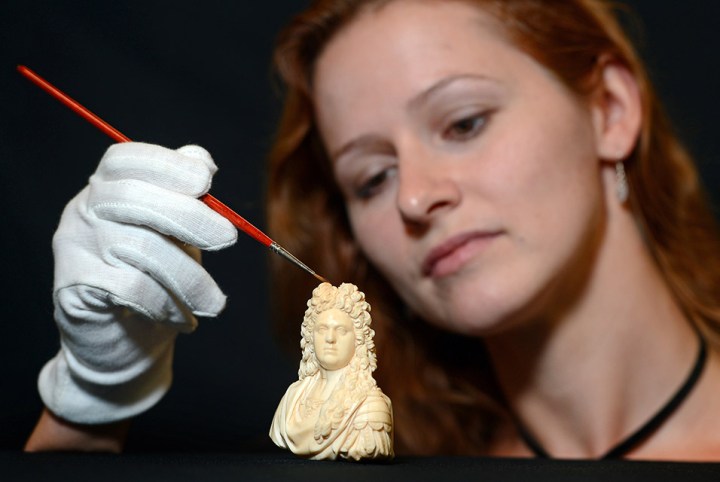
Lydia Messerschmidt, assistant conservator at National Museums Scotland, works on one of five ivories.
Photo: © Neil Hanna
◊ ◊ ◊ ◊ ◊
From the Art Fund:
David Le Marchand (1674–1726) was one of the most prominent ivory carvers and one of the most influential portraitists of his day in Britain. His works were highly prized for his extraordinary skill in rendering likeness and for the sheer expense of the ivory, his chosen specialist material. For Le Marchand, ivory held a nostalgic significance. He was born in 1674 in the northern French port of Dieppe, a town famed for its long tradition in ivory carving. However, following the edict of Nantes, which saw the ensuing persecution of French Protestants, Le Marchand fled his native France. Still in his early twenties, he settled in Edinburgh and was given a licence to practise the art of ivory cutting on the condition that he trained Scottish apprentices in the craft.
National Museums Scotland has acquired a rare group of five ivories by Le Marchand. The set was commissioned by the Mackenzie family and comprises of four medallions and a miniature bust. One of the medallions depicts Sir James Mackenzie of Royston and is dated 1696, the year Le Marchand arrived in Scotland suggesting that the ivories are likely to be the very first that he carved in Britain.
Stephen Deuchar, director of the Art Fund, said: “This interesting group of ivories, with its excellent provenance and rich object biographies, is an ideal fit for National Museums Scotland, particularly given the Museum’s interest in Scottish identity and its relationship with the rest of the world. Scotland now has a meaningful presence of works by Le Marchand, which will appeal to scholars, students, artists and families alike. I look forward to seeing them in the new galleries.”
The ivories will go on display in one of the ten new galleries opening next summer at the National Museum of Scotland.
Two Paintings Returned to the Deutsches Historisches Museum
Press release (14 August 2015) from the Gemäldegalerie:

Frans Lütgert, The Margrave of Bayreuth, Officer of the Dragoon Regiment, 1734
(Berlin: Deutsches Historiches Museum)
The Gemäldegalerie in Berlin is returning two paintings, originally from the Zeughaus (Armoury) holdings, to the Deutsches Historisches Museum. The eighteenth-century portraits had been placed in safekeeping at the Gemäldegalerie, as works of unknown provenance. The Deutsches Historiches Museum, which is now responsible for the Zeughaus collections, believed the paintings had been lost in the war.
The portrait entitled The Margrave of Bayreuth, Officer of the Dragoon Regiment was painted by the artist Frans Lütgert in 1734. It shows Friedrich III of Brandenburg-Bayreuth wearing a short powdered wig and a uniform of the period of Friedrich Wilhelm I. The second work, painted in 1770, is a portrait of Albrecht Christian von Oheimb, Lieutenant General of the Cavalry and Governor of Rinteln. He wears the Order of the Golden Lion of the House of Hesse and the Hessian Order of Military Merit ‘Pour la vertu militaire’. The identity of the artist is unknown.
Staff members of the Deutsches Historisches Museum came across entries for the two works while searching the Lost Art database of the Deutsches Zentrum Kulturgutverluste (German Lost Art Foundation). On the basis of its own catalogue of items of unknown provenance, the Stiftung Preussischer Kulturbesitz had placed the works in the keeping of the Gemäldegalerie. A comparison with the catalogue of works lost by the Berlin Zeughaus confirmed their identification and they have now been returned to the Deutsches Historisches Museum.
For both institutions, the return of the paintings is a success story for provenance research, which includes the identification of works which museums hold but do not own. The Stiftung Preussischer Kulturbesitz attempts to trace the origins of such items and restore them to their rightful owners. All works which are held by the Stiftung but which are not its legal property are being documented in a series of publications by the Staatliche Museen zu Berlin: the first catalogue, for the Gemäldegalerie, appeared in 1999, the volume for the Nationalgalerie was published in 2008, and a volume for the Antikensammlung is now in production.
The Deutsches Historisches Museum has made its digitalised collections available to the public on-line since 1992. So far, 600,000 data records can be accessed via the museum’s website and are thus available to support provenance research.
Marie-Stéphanie Delamaire Joins Winterthur as Associate Curator
As reported last week at Art Daily:
 Winterthur Museum, Garden & Library announced that Marie-Stéphanie Delamaire, Ph.D., will join the Museum July 13, 2015, as Associate Curator of Fine Art. Dr. Delamaire will be responsible for curating the Museum’s collection of nearly 5,000 prints, paintings, and sculpture from the 17th, 18th, and 19th centuries. In addition to her curatorial responsibilities, Dr. Delamaire will teach in University of Delaware’s graduate level Winterthur Program in American Material Culture.
“Stephanie joins the Winterthur curatorial department as the Associate Curator of Fine Art to oversee an important and growing part of the collection,” said Dr. David Roselle, Director of Winterthur. “We are confident that Stephanie will soon make Winterthur’s substantial collection of prints, paintings, maps, photographs, and sculpture be an added attraction for the many persons who visit our well known decorative arts collection.”
Linda Eaton, the John L. and Marjorie P. McGraw Director of Collections and Senior Curator of Textiles, said, “With a background both in the arts and the sciences, Stephanie brings a wide range of experience to Winterthur. We look forward to seeing where her fresh eye and keen mind will take her as she works with our collection, which includes iconic works of art by important artists such as Benjamin West and John Singleton Copley, among others.”
Dr. Delamaire earned her Ph.D., in Art History from Columbia University, where she also worked as a lecturer in the Department of Art History and Archaeology. She also holds a master’s degree in Egyptian Archaeology from l’Ecole du Louvre. While her studies began in France, her interests turned to American art, and her primary field of expertise is the history of American art from the Colonial era to World War I. In particular, Delamaire has investigated how translation developed in 19th-century American art with the expansion of the publishing industry and the formation of an American school of painting. Her research has been supported by the Andrew W. Mellon Foundation, the National Endowment for the Humanities, the Caroline and Erwin Swann Foundation for Caricature and Cartoon, the American Historical Print Collectors Society, the Smithsonian American Art Museum, and the Terra Foundation for American Art.
In addition to her research, Dr. Delamaire served on the advisory committee for the preparation of the exhibition New Eyes on America: the Genius of Richard Caton Woodville at The Walters Museum of Art in Baltimore, Maryland, and as the curatorial research assistant for the New-York Historical Society exhibition Group Dynamics: Family Portraits & Scenes of Everyday Life at the New-York Historical Society.
Galleries Reopen at the Bayerisches Nationalmuseum

◊ ◊ ◊ ◊ ◊
From the Bavarian National Museum:
Barock und Rokoko
Bayerisches Nationalmuseum, Munich, open from 9 July 2015
Seit dem 9. Juli 2015 ist der zum Englischen Garten gelegene Westflügel des Bayerischen Nationalmuseums nach mehrjähriger Sanierung wieder für den Besucher zugänglich. Auf rund 1500 m² werden mehr als 600 einzigartige kunst- und kulturhistorische Glanzstücke des 17. und 18. Jahrhunderts in neuem Licht präsentiert. Skulpturen, Möbel, Gemälde, Uhren, Porzellan, Goldschmiedewerke, Prunkwaffen und Tapisserien künden von Vorlieben, Alltag und Entwicklungen jener Epoche.
 Im Hauptgeschoss des Museums wird damit der kunst- und kulturhistorische Rundgang fortgesetzt, der sich in erster Linie an bayerischen Kurfürsten Maximilian I., Ferdinand Maria, Max Emanuel und Karl Albrecht und ihren Kunstvorlieben orientiert. Erstmals präsentiert sind große Teile der Kunstsammlung des Kurfürsten Johann Wilhelm von der Pfalz, dessen Kunstschätze aus Düsseldorf und Mannheim um 1800 nach München kamen. Bei den nun neu ausgestellten Werken handelt es sich um einen Großteil der Objekte, die das Haus Wittelsbach dem Museum kurz nach dessen Gründung 1855 übergeben hat.
Ein eigener Saal widmet sich Facetten des barocken Gartens und dem von der Natur inspirierten Kunsthandwerk. Ein weiterer Raum, das sogenannte Landshuter Zimmer aus dem Stadtpalais der Freiherren von Stromer in Landshut, veranschaulicht die Wohnwelt des Adels im 18. Jahrhundert. Einen weiteren Schwerpunkt der Sammlung bilden schließlich die Skulpturen des Barock und Rokoko, allen voran die Werke von Johann Baptist Straub und Ignaz Günther.
In der Vermittlung beschreitet das Museum neue Wege. Medienstationen mit Touchscreens ermöglichen den Besuchern spannende Blicke hinter verschlossene Schranktüren oder auf tickende Uhrwerke.
Additional images are available here»

◊ ◊ ◊ ◊ ◊
The catalogue, published by Sieveking Verlag, is available from Artbooks.com:
Renate Eikelmannn, Barock und Rokoko: Meisterwerke des 17. und 18. Jahrhunderts (München: Sieveking Verlag, 2015), 248 pages, ISBN: 978-3944874364, 25€ / $45.
The collections of Baroque and Rococo art at the Bayerisches Nationalmuseum are among the most important in Europe. Many of the works created by the international artists and craftsmen represented at the museum are outstanding achievements. Sculptures, furniture, paintings, clocks, porcelain objects, goldsmith work, sumptuously decorated weapons, and tapestries bear witness to the tastes and trends of the era. The succession of rulers who had a profound impact on Bavaria between the Thirty Years’ War and the French Revolution provides the chronological focus for this catalogue of selected works: Bavarian electors Maximilian I, Ferdinand Maria, Max Emanuel, and Karl Albrecht, as well as Elector Palatine Johann Wilhelm, whose art collection arrived in Munich by way of family succession. The publication also includes a look at the domestic environments of the nobility and the eighteenth-century passion for gardens. Baroque and Rococo sculptures constitute a cornerstone of the museum’s collections, especially works by Munich sculptors Johann Baptist Straub and Ignaz Günther. Their masterpieces, produced for churches and monasteries as well as for aristocratic patrons, are now considered quintessential examples of southern German Rococo.
Funding the Larson Historic Fashion Collection for the FIDM Museum
$4 for 400 Years of Fashion: Helen Larson Social Media Fundraising Campaign
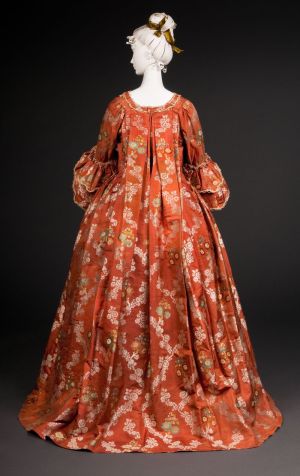
Robe volante, France, ca. 1745 (Helen Larson Historic Fashion Collection)
The Fashion Institute of Design and Merchandising Museum is fundraising to acquire a truly remarkable collection of rare historical fashion, ranging from a man’s red velvet jerkin dating to 1600 to stunning couture creations of the twentieth century. These pieces were collected by Helen Larson, a collector and successful entrepreneur who understood the importance of fashion history. The Helen Larson Historic Fashion Collection encompasses more than 1,400 pieces representing 400 years of history—but this critically important collection could be broken up and lost forever. The Museum has until the end of 2015 to raise the remaining $2 million needed to purchase the collection for our institution. Without these funds, the collection will be dispersed or absorbed into another private collection, inaccessible to students, researchers, and the general public.
On August 4, 2015, the FIDM Museum will launch the #4for400 project, a social media fundraising campaign to keep the Larson Collection at a public institution. The Museum’s Facebook, Twitter, and Instagram accounts will ask supporters to text MUSEUM to 243-725 and donate just $4 to save more than 400 years of fashion. Our hope is that a momentum will build, resulting in #4for400 posts being shared, liked, re-tweeted, and re-grammed, creating a flurry of donation activity. In conjunction with the launch, the Museum will host an Open House event from 3–7 pm, allowing the public to join in the excitement of the fundraising campaign with refreshments, raffles, music, and gallery tours.
The #4for400 campaign has the power to keep this one-of-a-kind cultural treasure at an academic institution in downtown Los Angeles, where it can be appreciated by museum visitors and used for research and inspiration by generations to come.
You can also donate by clicking here»
Peabody Essex Museum Announces $650Million Advancement Plan
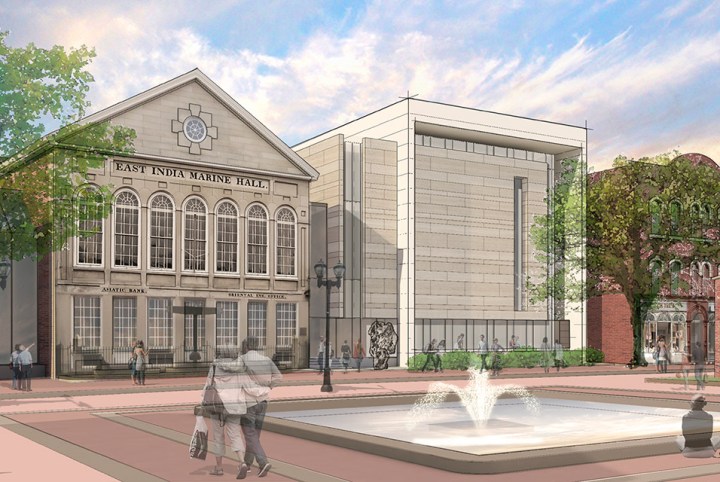
Rendering of the planned expansion of the Peabody Essex Museum in Salem, Massachusetts from Essex Street.
Photo: ©Ennead Architects
◊ ◊ ◊ ◊ ◊
Press release (9 July 2015) from PEM:
The Peabody Essex Museum (PEM) is pleased to announce an updated expansion and facilities plan, an array of infrastructure improvements and new programmatic initiatives as elements of PEM’s landmark $650 million Advancement Campaign, one of the largest art museum campaigns in the country.
“PEM’s Advancement Campaign defines a new model for museum finance, fundraising and operations. The updated plan emphasizes long-term financial stability through substantially increased endowment. By right-sizing facility and infrastructure investments, PEM gains a rare degree of freedom to advance our mission through sustained innovation and focus on new and enhanced programmatic initiatives,” said Dan Monroe, the Rose-Marie and Eijk van Otterloo Director and CEO of PEM.
Sam Byrne and Sean Healey, Co-Chairs of PEM’s Board of Trustees added, “We balanced priorities for this Campaign by allocating $350M to endowment, $200M to facility expansion, and $100M to various infrastructure improvements. To maintain these priorities we have restructured expansion plans to meet our highest priority facility needs, avoid overinvestment in bricks and mortar, and maintain our commitment to long-term financial sustainability and programs.” (more…)
Graham Beal Retires from the Detroit Institute of Arts
Press release (8 January 2015) from the DIA: 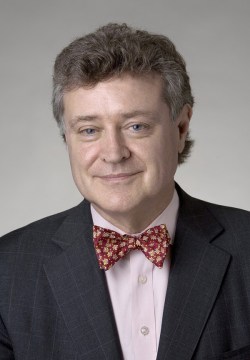 The Detroit Institute of Arts announced that Director Graham W. J. Beal will retire as of June 30, 2015, after serving as director, president and CEO for nearly 16 years. Since joining the DIA, Beal has presided over some of the most significant accomplishments in the museum’s history, including a tremendously successful reinvention of presenting art to the public; passage of a tri-county regional millage to support museum operations; and the DIA participation in the historic and unprecedented grand bargain initiative, which secured for future generations’ the DIA’s widely acclaimed art collection while also successfully facilitating resolution of the Detroit bankruptcy. Beal has overseen two major capital campaigns, has built on the museum’s outstanding reputation with regard to art acquisitions and exhibitions, has greatly increased attendance and expanded the DIA’s community outreach and awareness through programming and innovative art installations. Under Beal’s leadership, the DIA has co-organized outstanding exhibitions such as Van Gogh: Face to Face in 2000, Magnificenza! The Medici, Michelangelo and the Art of Late Renaissance Florence in 2003 and organized the highly anticipated Diego Rivera and Frida Kahlo in Detroit. . . The full press release is available here» Michael Hodges reports on the story for The Detroit News (29 June 2015), available here»
Progress Report on the New Berliner Stadtschloss

Belvedere © Berlin Palace–Humboldtforum Foundation /
Franco Stella
◊ ◊ ◊ ◊ ◊
As reported this past weekend by AFP (via ArtDaily). . .
The German capital celebrated a milestone Friday [12 June 2015] in the rebuilding of its Prussian-era royal palace that is set to house a world history museum billed as the country’s top cultural project. From 2019 the ‘Berliner Stadtschloss’ or Berlin City Palace replica will be the home of the Humboldt Forum global collection, to be curated by the British Museum’s outgoing chief Neil MacGregor, dubbed the “pop star of the museum world” by local media. On Friday, government ministers and culture officials met at what is now a raw concrete and steel structure for the so-called topping-out ceremony that marks the end of the major structural work which started two years ago. MacGregor, who was reportedly hand-picked for the job by German Chancellor Angela Merkel, hopes to “tell the story of humanity” with artefacts from Berlin’s many rich collections, ranging from European antiquity to East Asian arts.
The 590-million-euro ($660 million) domed venue is a reconstruction of a historical jewel of Baroque architecture located on the city’s Unter den Linden boulevard, near the Protestant Berlin Cathedral and Humboldt University. The original palace was badly damaged in World War II and its remains blown up by East Germany’s communist regime, which replaced it with its 1970s Palace of the Republic, a giant block with orange tinted windows that housed its assembly and a cultural and recreation centre. After the Berlin Wall fell in 1989 and Germany reunited the following year, bitter debate long raged about whether to keep the communist monument or raze it to rebuild Berlin’s original palace—with the latter option approved by the German parliament in 2007.
The replica, designed by Italian architect Franco Stella, will now be fitted on three sides with baroque sandstone facades recalling the old Hohenzollern palace built between the 15th and 18th centuries, and a fourth modern front facing the Spree River. The Humboldt Forum will house artefacts from Berlin’s Ethnological Museum, Asian Art Museum as well as Humboldt University, libraries and cultural centres. . . .
The full article is available here»
Commemorating the Aboriginal Warrior Pemulwuy

This engraving by Samuel John Neele of James Grant’s image of ‘Pimbloy’ is believed to be the only known depiction of Pemulwuy. It was published in Grant’s The Narrative of a Voyage of Discovery, Performed in His Majesty’s Vessel the Lady Nelson, of Sixty Tons Burthen, with Sliding Keels, in the Years 1800, 1801 and 1802, to New South Wales, 1803 (State Library of New South Wales Q80/18).
◊ ◊ ◊ ◊ ◊
Press release (20 March 2015) from the National Museum of Australia in Canberra:
Defining Moment in Australia’s History
National Museum Honours Aboriginal Warrior Pemulwuy
The life of Aboriginal warrior Pemulwuy is commemorated today at the National Museum of Australia as part of its Defining Moments project, which explores key dates that have defined the country’s history over more than 50,000 years.
As Australia’s first Aboriginal resistance leader and a member of the Bidjigal people, Pemulwuy fought the British at Sydney from 1792 by leading attacks on farms, burning crops and dispersing stock in an attempt to starve the settlers out. After surviving a number of battles he was finally killed by settlers in June 1802 at the age of about 52 years. His body was dishonoured with the removal of his head, which was sent to the naturalist Joseph Banks in England. It has yet to be found. The National Museum is working in collaboration with the Ministry for the Arts Museums and Repatriation unit, to undertake research into the possible whereabouts of Pemulwuy’s remains.
The National Museum today [20 March 2015] unveils a plaque in its Main Hall, commemorating Pemulwuy’s campaign of resistance.
The Minister for Education and Training, Christopher Pyne, representing the Australian Government at the ceremony, said Pemulwuy was a figure of Aboriginal defiance, and his legacy remains an important part of Indigenous culture in Australia. “For some years I have been working with Alex Hartman, a member of the National Museum of Australia Council to help find and repatriate the remains of Pemulwuy,” Pyne said. “Pemulwuy’s story is an important one and he deserves to be commemorated in this way.”
National Museum director Mathew Trinca said Pemulwuy was a hero to Aboriginal people. “Pemulwuy’s daring leadership impressed enemies and comrades alike and the story of his concerted campaign of resistance against British colonists should be more widely known,” said Trinca.
Bidjigal elder Uncle Vic Simms said, “What the Museum is doing is so important for getting the history right about Pemulwuy as a Bidjigal man, who resisted and rebelled against the settlers and stood up against them when they were giving blackfellas such a hard time.”
Defining Moments is a National Museum project supported by patrons, the Hon Michael Kirby AC CMG and Mr Michael Ball AM. Under the project, the National Museum is releasing online content for an initial list of 100 Defining Moments and is encouraging people to contribute their own ideas on historical dates of importance. The Museum’s list is a starting point for discussions and is not intended to be definitive.










 Enfilade
leave a comment