Cultural Heritage Magazine, October 2023

Detail from one of a pair of Spanish-colonial screens depicting a landscape in the Japanese style, possibly made in Mexico City, perhaps 1660s, pigments on paper embellished with embossed and gilded clouds and arches, each screen 249 × 340 cm (Ham House, Surrey, NT 1139576, photograph by Leah Ban).
◊ ◊ ◊ ◊ ◊
Cultural Heritage Magazine is published twice each year, in May and October by the National Trust:
Cultural Heritage Magazine, issue 3 (October 2023)
4 Welcome — John Orna-Ornstein, the National Trust’s Director of Curation and Experience, introduces the autumn issue
6 Briefing: News, events, and publications, plus research and conservation round-ups
Taking the plunge | Archaeological excavations in the basement below Bath Assembly Rooms have revealed the remains of a rare 18th-century cold bath. It is thought to be the only one of its kind located in a historic assembly room, which in the 18th and 19th centuries was a popular place of entertainment, conversation, dancing, and gambling in fashionable towns. In the 18th century, medical practitioners recommended cold bathing as beneficial for various physical and mental ailments, including gout. As a result, plunge pools and cold baths surged in popularity . . . (7).
14 In Conversation — James Rothwell talks to John Benjamin about the National Trust’s under-explored jewellery collections
24 Textile Transmissions — James Clark and Emma Slocombe on repurposing church vestments in the Reformation

Nostell, West Yorkshire, neo-classical lodge, designed by Robert Adam, 1776–77, sandstone ashlar (purchased with HLF funds, 2002). Included in 60 Remarkable Buildings of the National Trust.
34 Set in Stone — George Clarke and Elizabeth Green discuss their shared love of built heritage
Preview of Green’s 60 Remarkable Buildings of the National Trust (National Trust Cultural Heritage Publishing, 2023), which includes an introduction by Clarke.
42 Modern Lives — John Chu and Sean Ketteringham on new research into 20th-century art collections
50 Election Threads — Helen Antrobus on dress, domesticity, and politics
60 Borrowing a Landscape — Emile de Bruijn on a Japanese-style folding screen at Ham House
Preview of de Bruijn’s Borrowed Landscapes: China and Japan in the Historic Houses and Gardens of Britain and Ireland (National Trust and Bloomsbury, 2023).
68 Acquisitions: Selected highlights, 2022–23
Acquisition of an important group of items historically associated with Chirk Castle, Wrexham (acquired by purchase, 2023) . . . The acquisition includes four important early 18th-century landscape paintings depicting the Chirk estate, three by the artist Pieter Tillemans (1684–1734) and one by John Wootton (c.1682–1764); family portraits by artists including Sir Godfrey Kneller and Sir Peter Lely; rare 17th-century furniture in the Servants’ Hall; estate documents including a manuscript of 1563 that shows the first known depiction of Chirk; Neo-classical furniture by Ince and Mayhew; and historic artefacts including items associated with the English Civil War and a rare 17th-century Puritan hat (69).
74 Meet the Expert, Heather Caven, Head of Collections Management and Care
18th-Century Hearth Cooking at the Queens County Farm Museum
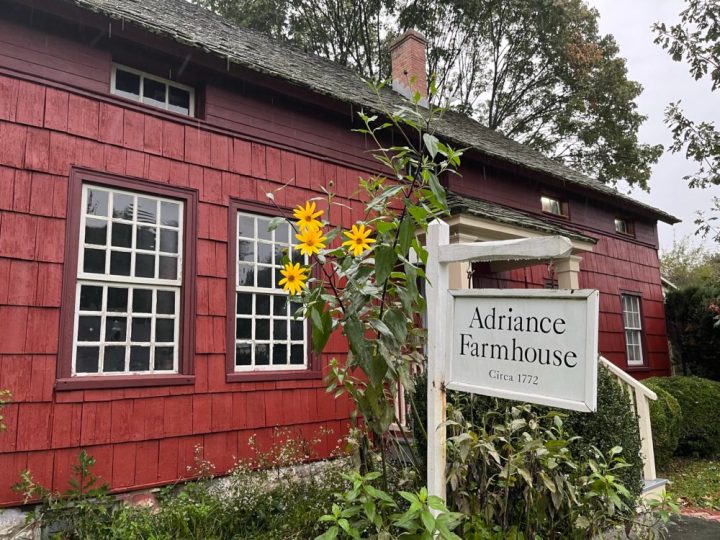
From Eventbrite and Queens County Farm Museum:
Chris Lord-Barry, 18th-Century Hearth Cooking
Queens County Farm Museum, Floral Park, New York, Saturday, 4 November / 11 November 2023, 11am — 2pm
Join us in the kitchen of the Adriance Farmhouse at Queens County Farm Museum to learn how settlers prepared food over an open hearth.
 Original 18th-century recipes, seasonal ingredients, traditional cooking utensils, and the warm embers of the fire will bring history to life as participants assist in preparing and sampling several delightful dishes. Participants will receive modern adaptations of all recipes to try at home. Advance online tickets ($53) are required as space is limited. The class is part of the Public Education Program at Queens Farm and is open to ages 18 and up. In the fall the session is offered on November 4 and then repeated on November 11.
Chris Lord-Barry is an educator with over 20 years of experience, who specializes in teaching 18th-century cooking. Over the past 10+ years, she has studied historic cookery and foodways specific to early America and has designed this popular class to share her passion for early American recipes with others.
The Queens County Farm Museum is a New York City Landmark, is on the National Register of Historic Places, and is a member of the Historic House Trust of New York City. Dating back to 1697, it occupies New York City’s largest remaining tract of undisturbed farmland and is one of the longest continuously farmed sites in New York State. The site includes historic farm buildings, a greenhouse complex, livestock, farm vehicles and implements, planting fields, an orchard, and an herb garden. Queens Farm connects visitors to agriculture and the environment through the lens of its 47-acre historic site, providing learning opportunities and creating conversations about biodiversity, nutrition, health and wellness, climate change and preserving local history. The centerpiece of the farm complex, the Adriance Farmhouse was first built as a three-room Dutch farmhouse in 1772. The house and surrounding area mirror the evolution of this unique tract of land from a colonial homestead to a truck farm that served the needs of a growing city in the early twentieth century. . .
Exhibition | The Petit Trianon during the Empire
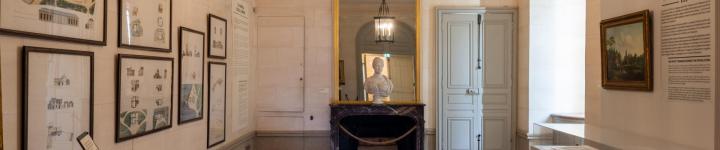
Installation view of The Petit Trianon during the Empire, 2023
(Photo by Sebastien Giles)
◊ ◊ ◊ ◊ ◊
On view this summer at the Château de Versailles:
The Petit Trianon during the Empire
Petit Trianon, Château de Versailles, 13 May — 17 September 2023
Presented by the Palace of Versailles, The Petit Trianon during the Empire tells the story of the restoration undertaken to turn Trianon into a country residence for Napoleon and Marie-Louise. The exhibition explains the work ordered by the emperor to restore the houses in the Hamlet, the farm, and the orangery—work that had become essential after twenty years of neglect.
During the Empire, the Petit Trianon was chosen as a country residence by Napoleon Bonaparte and his wife, Marie-Louise of Habsburg. Two decades of neglect, however, had left the houses in the Hamlet, the farm, and the orangery in urgent need of restoration. The work was carried out between 1805 and 1811, overseen by the architect Guillaume Trepsat and his assistant, Alexandre Dufour.

Installation view of The Petit Trianon during the Empire, 2023 (Photo by Sebastien Giles).
The working dairy, the barn, and the farmer’s cottage were all demolished. The farm was converted into a guard house, while the rest of the structures were restored and the thatched rooves repaired. The external staircases were removed, apart from the spiral staircase on the Queen’s House, which was replaced by a straight, covered staircase. The houses in the Hamlet reverted to the same use as under the Ancien Régime, with all the furniture and wall hangings replaced by classical, Empire-style pieces made by the cabinet-makers Jacob-Desmalter and Marcion, and the bronze-worker Galle.
Napoleon and Marie-Louise hosted several parties at the theatre and in the French Garden between 2 and 11 August 1810, and again, the following year, on 25 August, in the English Garden and the restored Hamlet, to celebrate the birth of their son. These parties harked back to the wonderful celebrations organised by Marie-Antoinette. The restoration work meant the heritage of the Petit Trianon was both protected and revived.
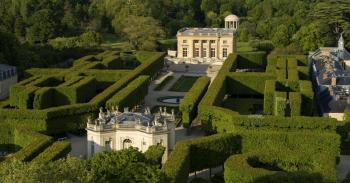
The Petit Trianon with the French Pavilion in the foreground at the left (Photo: Thomas Garnier).
During the French Revolution, from 1792, the Petit Trianon and the Queen’s Hamlet were emptied of their inhabitants and all their contents. The furniture, artworks, and everyday household items, such as mattresses, sheets, and cookware, as well as the fish in the lakes, were all auctioned off. The palace was rented to a restaurateur, while the garden became a public recreation area. The French Pavilion was turned into a café, the farm was rented to and worked by a farmer, and another restaurateur moved into the Queen’s House in the Hamlet.
By the beginning of the 19th century, the Hamlet was overgrown and decrepit. The roofs of several of the houses had collapsed and the external staircases were rotten. Two of the agricultural buildings—the barn and the working dairy—lay in ruins and the farm had been partially destroyed by fire. Sketches made by the English traveller and draughtsman John Claude Nattes in 1802 illustrate this state of neglect.
New Installation | Joana Vasconcelos’s Wedding Cake at Waddesdon
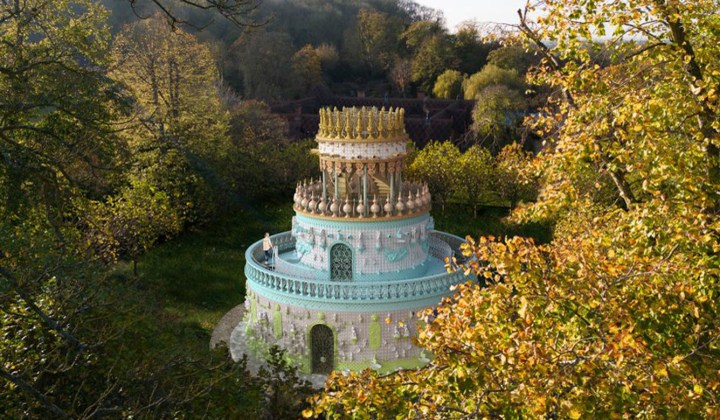
Joana Vasconcelos, Wedding Cake, at Waddesdon Manor in Aylesbury, installed 2023.
◊ ◊ ◊ ◊ ◊
From the press release for the new installation at Waddesdon:
Joana Vasconcelos: Wedding Cake at Waddesdon
The Dairy at Waddesdon Manor, open from 8 June 2023, with tours available until 26 October
Wedding Cake—a 12-metre-high sculptural pavilion in the form of a three-tiered wedding cake, clad entirely in ceramic tiles—is a major new work at Waddesdon by celebrated Portuguese artist Joana Vasconcelos (b. 1971). Almost five years in the making, Wedding Cake was commissioned by the Rothschild Foundation for Waddesdon, prompted by the relationship between visionary collector Lord Rothschild and Vasconcelos.
Part sculpture, part architectural garden folly, Wedding Cake is an extraordinary, enormous, fully immersive sculpture that combines pâtisserie and architecture. Gleaming and icing-like outside and in, it offers an intricate and richly sensory experience—glazed in pale pinks, greens, and blues, beset with sculptural ornament, and complete with the sounds of trickling water and a site-specific lighting scheme. Wedding Cake is Vasconcelos’s most ambitious commission to date, described by the artist as “a temple to love” celebrating festivity and marriage.
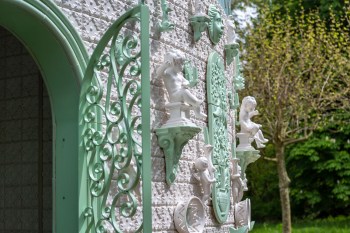
Joana Vasconcelos, Wedding Cake, at Waddesdon, detail of the ground level.
The history of the wedding cake is long and varied, full of symbolism and tradition—from ancient Rome where bread was broken over the bride’s head to bring good fortune to the couple, to contemporary confections that embody celebration and social status. Vasconcelos’s Wedding Cake is a playful addition to this rich history. Inspired by the exuberant Baroque buildings and highly decorative ceramic traditions of Lisbon—where Vasconcelos lives and works—the work is also a contemporary response to the great Rothschild traditions of hospitality with echoes of 18th-century garden pavilions.
At Waddesdon Wedding Cake will stand in a grove of trees alongside the 19th-century Dairy, built by Baron Ferdinand de Rothschild to entertain and charm guests at his famous house parties, and described by contemporaries as “a treasure house of what is beautiful, curious, or ancient.” It reminds us of the long European history of placing fanciful buildings in gardens and landscapes and forms part of a growing collection of significant contemporary and historic sculpture, brought together by Lord Rothschild. Today, the Dairy is still a much sought-after entertaining space, and the presence of the Wedding Cake, a symbol of love and happiness, is a perfect complement.
Wedding Cake is emblematic of Vasconcelos’s practice. She is deeply influenced by the artistic traditions of her home country, and the way in which she combines her materials reflects international influences on Portuguese culture over centuries—born from a history of exploring and seafaring, from Chinese and Japanese ceramics to Brazilian carnival, incorporating colour and light. Her work is often playful, manipulating scale to dramatic effect and using familiar daily objects in surprising, charming, and inventive ways. On a deeper level, her work explores notions of domesticity, femininity, empowerment, and the tension between private and public realms.
Vasconcelos’s work often challenges the assumptions of traditional hierarchies of ‘noble’ materials, such as marble, used frequently to embellish grand structures and often set above more everyday substances like ceramics and textiles. Her practice champions traditional, hand-made objects and techniques, and the ceramics for Wedding Cake have been made by the Viúva Lamego manufactory, which has been operating in Sintra for 170 years. The company’s standard 14×14cm tiles determined the size of the overall structure of Wedding Cake, whose 11m diameter is the smallest circle that can be made with whole tiles.
At Waddesdon, this combination of materials and the exploration of scale and technique is a perfect fit. The house is famous for its ceramics, particularly Sèvres and Meissen porcelain. The fashions and traditions of 18th- and 19th-century dining, entertaining, and festivity are also deeply embedded in the collections, whether a silver dinner service made for King George III, an 18th-century book recording the festivities laid on to mark a royal wedding, or a manual illustrating sugar sculpture. The sumptuous decoration of the Wedding Cake also speaks to the architecture of the house, itself covered in ornament and designed to complement the collections inside and the carefully laid out garden and landscape. These include the fanciful buildings in Waddesdon’s grounds like the Dairy, Flint House, and the Aviary, all intended to surprise and delight visitors.
According to Joana Vasconcelos, “An enormous project such as this one could only happen with the vision and encouragement provided by a generous and extraordinary patron such as Lord Rothschild. He could see its dreamlike potential, believe in it, and provide the means to make it come true. I have been addressing the subject of love through my career for almost 30 years now, but this is my biggest challenge so far. Many artists have the ‘impossible project’ and this is mine. I wanted people to have three different approaches to it: looking from the outside, enjoying the surroundings from the different levels or balconies, and rising to the top, finally completing the artwork with their presence. Above all, I always thought of it as a temple to love.”
Lord Rothschild says, “We are delighted to be collaborating again with Joana Vasconcelos, whose work is already magnificently represented at Waddesdon by her giant candlesticks, Lafite. The vision, imagination, and ambition exemplified in the Wedding Cake is a perfect match for the passion which drove Baron Ferdinand, the creator of Waddesdon, to build the Manor and the Dairy, where he intended that his many friends would be surprised and delighted at every turn. I am sure that the Wedding Cake will have just as great an impact on visitors and wedding guests today.”
Pippa Shirley, Director of Waddesdon says, “Waddesdon was built to entertain; so, what better way to mark the continuity today of that spirit of hospitality, artistic creativity, and Rothschild family patronage than through the commission of this magical object, an emblem of love and celebration. Projects like this require a leap of faith from both artist and patron, and we are proud to have been a partner in this innovative work.”
Recipe for Wedding Cake
• 1 creative artist
• 1 visionary patron
• 2 international teams
• Pinch of experts
• 3500 wrought iron parts
• 21,815kg iron sheet
• Approximately 25,150 Viúva Lamego ceramic tiles (99 different types) and 1,238 Viúva Lamego ceramic pieces (52 different types). Ceramic tile area: 365 m2
• Plethora of ornaments — mermaids, dolphins, candles, globes, etc
• Indoor and outdoor lights — 350 glass flames receiving optical fiber (about 3,000 meters)
• 592 light points
• Rivers of glaze
• Sprinklings of water
• Hope, belief, and effort
Blend the circa 50 tons with generous amounts of creativity and patience. Bind into different panels; raise tier by tier to height of 12 meters. Assemble at Waddesdon. Serve with love.
Joana Vasconcelos’s Lafite, two giant candlesticks made of illuminated Chateau Lafite Rothschild magnums (commissioned in 2015 by the Rothschild Foundation in celebration of the family associations with the world of great Bordeaux wine), will be moving to the Dairy. In 2012, her Pavillon de Thé, a giant wrought-iron tea pot, was the focal point of House of Cards, a contemporary sculpture exhibition in the gardens, and in 2016 her Cup Cake (2011) was exhibited on the North Front.
Vasconcelos’s work is also represented in major collections around the world, such as those of Calouste Gulbenkian, François Pinault, and the Louis Vuitton Foundation. She has exhibited regularly since the mid-1990s. Her work became known internationally after her participation in the 51st Venice Biennale in 2005, with the work A Noiva [The Bride] (2001–05). She was the first woman and the youngest artist to exhibit at the Palace of Versailles, in 2012. Other highlights of her career include a solo exhibition at Guggenheim Museum Bilbao (2019); the project Trafaria Praia for the Pavilion of Portugal at the 55th Venice Biennale (2013); the participation in the group exhibition The World Belongs to You at the Palazzo Grassi/François Pinault Foundation, Venice (2011); taking part in Un Certain Etat du Monde? A Selection of Works from the François Pinault Foundation at the Garage Center for Contemporary Culture in Moscow (2013); and her first retrospective Sem Rede held at the Museu Coleção Berardo, Lisbon (2010). Her solo show Time Machine was on view at Manchester Art Gallery in 2014; in London she exhibited at Royal Academy of Arts’ Summer Exhibition in 2018; and she was given a major show at the Yorkshire Sculpture Park, Beyond in 2021.
Visitors to Waddesdon will be able to visit Wedding Cake on a guided tour that will include the impressive collection of contemporary sculpture situated in the Water Garden at the Dairy. Wedding Cake tours will run from 8 June until 26 October on Thursdays and selected Sundays.
Cultural Heritage Magazine, May 2023

Cultural Heritage Magazine is published twice each year, in May and October by the National Trust:
Cultural Heritage Magazine, issue 2 (May 2023)
4 Welcome — Tarnya Cooper, the National Trust’s Curatorial and Conservation Director introduces the spring issue
6 Briefing: News, Events, and Publications, Plus Research and Conservation Round-ups
A la Ronde Interiors: The major project to conserve and repair this unique 18th-century property has now begun in earnest, with specialists working to secure the fragile and intricate decorative features. A la Ronde is a 16-sided house designed to catch the natural daylight through its unusual diamond-shaped windows as the sun moves around the building. The creation of Jane and Mary Parminter, two dynamic and well-travelled cousins who commissioned the house following their travels across Europe, it originally sat within a wider estate containing almshouses, gardens, a chapel and orchards.
14 In Conversation — John Orna-Ornstein talks to Tristram Hunt about design, creativity and the heritage sector today
24 Treasured Connections, Treasured Possessions: The Formation of Margaret Greville’s Collection — Richard Ashbourne, James Rothwell, and Alice Strickland
Treasured Possessions: Riches of Polesden Lacey — A major exhibition marking 80 years since Dame Margaret Greville left Polesden Lacey and her collection to the National Trust (1 March — 29 October 2023).
34 Dynamic and Resonant: The Sculpture of Anthony Twentyman at Dudmaston — Brendan Flynn
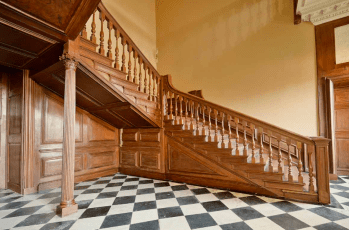
Old Staircase of Dyrham Hall, in 2019 after restoration, with old paint removed and completed graining (Photo: National Trust/David Evans).
40 Dyrham Transformed: Revealing Hidden Schemes and Re-examining Historic Narratives — Eilidh Auckland, Amy Knight-Archer and Claire Reed
Crossing the threshold back in 2015, there was a sense that something had been lost. Rooms and staircases had been painted white, decorative surfaces had deteriorated and spaces that had once glittered in candlelight seemed dimly lit and uninspiring. The National Trust’s project to transform the house, recently completed, has attempted to recapture something of its original vibrancy and dynamism and to enable visitors to step inside the world of the late 17th century. Historic schemes and historic narratives have been uncovered and unpicked, and the project concluded with the installation of new interpretation in January 2023. . . Senior National Curator Rupert Goulding’s research of the Blathwayt archives, which are scattered around the world, fuelled the core narrative.
Following this extensive research and preparation, those schemes that were anachronistic or failing were selected for re-presentation, with the aim of recreating the interiors of 1692–1710. This was the period in which the current house was built and furnished by William Blathwayt, then at the peak of his career.
As work to the main body of the house progressed, the stories it had to tell came into sharper focus. The building of the house at Dyrham Park took place in the early years of the transatlantic slave trade and William Blathwayt was one of the key colonial figures of that time. As Surveyor and Auditor General of Plantations, Blathwayt accounted for income due to the Crown from different royal colonies. He received part of his salary from colonies that were economically reliant on slavery—Barbados and Virginia each contributed £150 per year (the equivalent of around £18,000 today). Blathwayt’s house reflected his colonial connections. . .

From Melchisédech Thévenot, The Art of Swimming (1699) (National Trust Images/ Leah Band).
50 Sink or Swim: An Intriguing Manual from Kedleston’s Library — Nicola Thwaite
Melchisédech Thévenot (c.1620–92), a French diplomat fluent in several languages, was appointed Royal Librarian to Louis XIV in 1684. . . . Thévenot’s L’art de Nager—published posthumously in 1696—was largely based on De Arte Natandi by the English clergyman Everard Digby (d.1605), although there is only a brief acknowledgement of this in Thévenot’s preface. An English translation—The Art of Swimming—was published only three years later in two issues and both French and English editions were reissued over the next century, indicating a contemporary demand for instruction on the subject.
54 Shaped by Love and Loss: A Collection of Ancient Greek Vases at Nostell Priory — Abigail Allan
Nostell is full of treasures. Among the less well-known items is a group of painted Greek vases made in Athens and South Italy c.500–300BC, which were collected by John Winn (c.1794–1817) and his younger brother Charles (1795–1874). Mistakenly called ‘Etruscan’ until the mid-19th century, these 12 vases once belonged to a collection of over 130 at Nostell, sold at Christie’s in 1975 and 1998, before some were repurchased by the National Trust.
62 Loans: Selected Highlights, 2023
68 Meet the Expert: Lottie Allen, Head Gardener at Hidcote Manor, Gloucestershire
Colonial Williamsburg in 2023

The Foundations of the Governors Palace in 1930. (Visual Resources, John D. Rockefeller Jr. Library, The Colonial Williamsburg Foundation; photo by Thomas Layton). As Jennifer Scheussler writes, Colonial Williamsburg is now “a 301-acre complex consisting of more than 60 restored or reconstructed 18th-century buildings, 30 gardens, five hotels, three theaters, two art museums and a long, tangled history of grappling with questions of authenticity, national identity and what it means to get the past ‘right’.”
◊ ◊ ◊ ◊ ◊
Schuessler’s feature article on Williamsburg is useful for both the history of the Foundation and its present-day vision and commitments. –CH
Jennifer Schuessler, with photographs by Matt Eich, “Building a Better Colonial Williamsburg,” The New York Times (8 May 2023). Virginia’s reconstructed colonial capital, long criticized as presenting an idealized image of the American Revolution, brings its history into the 21st century.
“. . . After decades of declining attendance and financial instability, the Colonial Williamsburg Foundation, the private entity that owns and operates the site, is rethinking not just some of its structures, but also the stories it tells, adding or expanding offerings relating to Black, Native American, and L.G.B.T.Q. history.
And it’s doing so amid a fierce partisan battle over American history, when the date “1776”—emblazoned on souvenir baseball hats on sale here—has become a partisan rallying cry.
Some conservative activists have accused Colonial Williamsburg of going “woke,” a charge also lobbed against Monticello and Montpelier, James Madison’s home. But Cliff Fleet, a former tobacco executive who took over as the foundation’s president and CEO in early 2020, firmly rejects it. Fleet describes his approach as leaning into Colonial Williamsburg’s longtime mission of presenting “fact-based history,” grounded in rigorous research. “That’s true to our brand,” he said. “Everything is going to be what actually happened. That’s who we are.”
Recounting “what actually happened” is no simple matter, as any historian will tell you. But when it comes to the state of contemporary Colonial Williamsburg, some facts speak powerfully.
In 2021, the foundation raised a record-breaking $102 million, up 42 percent from the previous high in 2019. To date, it has collected more than $6 million for the excavation and reconstruction of the First Baptist Church, home to one of the earliest Black congregations in the United States (founded in 1776), and more than $8 million for the restoration of the Bray School, which educated free and enslaved Black children in the 1760s and ’70s.
Those projects have won support across the political spectrum, including from Gov. Glenn Youngkin. In February, the governor—a Republican who on his first day in office signed an executive order banning the teaching of critical race theory and other “inherently divisive concepts” in public schools—spoke at an event for the Bray School, citing the need “to teach all of our history, all of it, the good and the bad.”
For some longtime Williamsburg-watchers, the institution’s leadership has deftly steered through today’s choppy political waters by staying true to the past.
“It’s a remarkable shift, but in some ways a return to C.W.’s original mission,” said Karin Wulf, a historian and the former executive director of the Omohundro Institute, an independent research group at the College of William & Mary. “The scholarship of decades has shown us this fuller, richer picture of Early America,” Wulf said. “It’s diverse, it’s complex, it’s violent. But it’s the real thing.” . . .
After World War II, Colonial Williamsburg became a patriotic shrine and “symbol of democracy in the troubled world,” as a top executive put it. The Bicentennial brought a new boom, with annual paid attendance peaking in the mid-1980s at 1.1 million visitors, many of whom bedded down in period-style inns (or snapped up authorized colonial-style home products).
But not everyone appreciated the tastefully spic-and-span aesthetic. Writing in The New York Times in 1963, the architecture critic Ada Louise Huxtable called it a “superbly executed vacuum,” which fostered “an unforgivable fuzziness between the values of the real and the imitation.”
The carefully tended history also stirred criticism, particularly as social history, with its emphasis on ordinary people and marginalized groups, surged in the academy.
In the 1770s, more than half of the town’s 1,800 residents were Black, though visitors to the modern-day recreation would not always have known it. . . .
“True” is a word heard often at Williamsburg, where interpreters—including one portraying Oconostota, an 18th-century Cherokee diplomat who came to Williamsburg in 1777—regularly break character to explain the evidence behind their stories.
The foundation’s audience research, Fleet said, indicates that showing your work helps built trust. “One of the most important things to do, particularly in this age of polarization, is to let them know how you know,” he said.
The First Baptist Church project exemplifies how Colonial Williamsburg’s storytelling is literally built from the ground up, and rooted in discoveries—and rediscoveries—on site. . . .
The full article is available here»
Summer Seminar | Material Religion in Early America
From the American Antiquarian Society:
Material Religion: Objects, Images, Books
2023 CHAViC-PHBAC Summer Seminar
American Antiquarian Society, Worcester, Massachusetts, 25–30 June 2023
Led by Christopher Allison and Sonia Hazard
Applications due by 17 April 2023
 Scholars of religion have taken a material turn, delving into the study of images, objects, monuments, buildings, books, spaces, performances, and sounds. What do these inquiries look like in the context of early America, and how did religious materialities shape early American worlds? The goal of this seminar is to explore this area’s exciting archives, theories, and methods, enabling participants to bring together religion and materiality in their own work in fresh ways.
The American Antiquarian Society provides an exceptional site for hands-on inquiries into the material worlds of early American religions. Collections at AAS furnish materials relating to religion before 1900 in North America, including Islam, Judaism, Mormonism, Catholicism, Protestantism, metaphysical religions, African-inspired religions, South Asian religions, and civil religion as well as collections that support studying religious hybridity and forms of Christianity as practiced in Hawaiian, Caribbean, and Indigenous nations and groups.
Topics will include lived religion, materialisms (old and new), sensory culture, books as objects, animisms and animacies, iconoclasm, visual piety, the ontological turn, residual transcription, and sacred objects in archival contexts. The seminar will be held from Sunday, June 25, through Friday, June 30, 2023, at the American Antiquarian Society in Worcester, Massachusetts. Co-leaders for the seminar will be Chris Allison and Sonia Hazard. Guest speakers will include Solimar Otero, Professor of Folklore and Ethnomusicology, Indiana University, Bloomington and Anthony Trujillo, doctoral candidate in American Studies, Harvard University.
Participation is intended for faculty, museum and library professionals, and graduate students. It welcomes researchers across fields such as art history, religious studies, history, anthropology, American studies, music, and literature. It is co-sponsored by the Center for Historic American Visual Culture (CHAViC) and the Program in the History of the Book in American Culture (PHBAC).
The format of the seminar will be select readings, highly interactive seminar discussion, collections explorations and archival sessions, individual research time with the collection, and site visits to notable collections and religious sites in the area, including the Worcester Art Museum, burial grounds, and sacred sites. The syllabus is available online. Information on access to the readings will be emailed to students.
Tuition for the seminar is $600, which includes lunch each day and some evening meals. Some financial aid is available for graduate students. The cost of housing is not included in the tuition fee. Housing is available at two nearby hotels.
Faculty
• Sonia Hazard is Assistant Professor of Religion at Florida State University. Her book, Building Evangelical America: How the American Tract Society Laid the Groundwork for a Religious Revolution, is forthcoming from Oxford University Press. She did her graduate work at Harvard Divinity School and Duke University.
• Christopher Allison is Director of the McGreal Center for Dominican Historical Studies, Department of History, Dominican University. He is the author of the forthcoming book, Protestant Relics: Capturing the Sacred Body in Early America, under contract with the University of Chicago Press. He did his graduate work at Yale Divinity School and Harvard University.
Guest Speakers
• Solimar Otero is Professor of Folklore and Ethnomusicology at Indiana University, Bloomington. She is the author of Archives of Conjure: Stories of the Dead in Afrolatinx Cultures (Columbia University Press, 2020).
• Anthony Trujillo is a doctoral candidate in American Studies at Harvard University. He works at the confluence of Native American and Indigenous studies, history, religious studies, anthropology, and the arts.
Masterclass in Palermo | European Collectors as Patrons
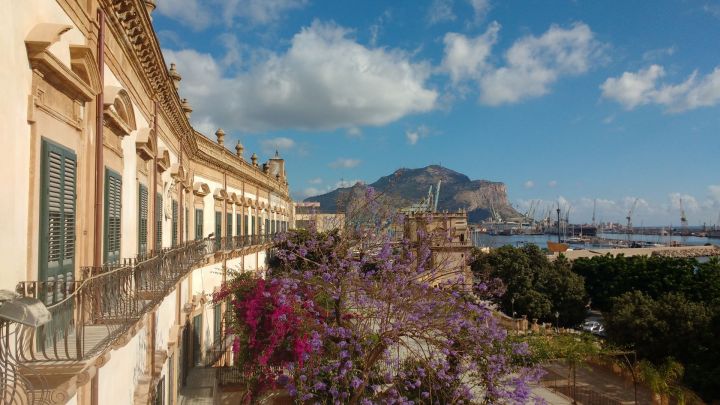
The oldest portions of the Palazzo Butera date to the early eighteenth century, when the Duke of Branciforti constructed a grand house according to designs produced by the Palermo architect Giacomo Amato. In 1759, fire destroyed a portion of the palazzo. Prince Butera responded by acquiring the adjacent property and rebuilding, doubling the size of the Palazzo Butera. More information is available here»
◊ ◊ ◊ ◊ ◊
From ArtHist.net and the Palazzo Butera:
Masterclass in Palermo: European Collectors as Patrons
Palazzo Butera, Palermo, 28–30 June 2023
Applications due by 30 April 2023
European Collectors as Patrons is a three-day masterclass based in Palermo, Sicily focused on how patronage supports and defends artistic and cultural activity. Bertrand du Vignaud and Claudio Gulli will outline how over the last three centuries a range of historical and current European patrons have advocated for art and culture by building their own private collections. These individuals have contributed both to social progress and urban development. Examples will include the Roman Cardinals Alessandro Albani and Pietro Ottoboni, along with the English amateur-architects Lord Burlington and Sir John Soane, and the Spanish Count Alexandre Aguado. From more recent history, we will consider Harry Kessler, Vittorio Cini, and Calouste Gulbenkian. Professors Andrea Rurale and Piergiacomo Mion, of the SDA Bocconi School of Management, will discuss the economic longevity and long-term impact of these enterprises.
During these three days, lectures will take place at Palazzo Butera, and visits across the city will include both well-known and lesser known places. In the evenings, private dinners have been arranged in historic houses and other places of significant cultural importance. The dinners are designed as an integral part of the masterclass allowing for a greater depth of understanding. They also offer time for discussion and reflection on the days’ experiences and learning.
The use of Palazzo Butera as host to this masterclass is intentional as it represents a fine example of the sort of enlightened patronage being discussed. This eighteenth-century seafront palace, once the home of the Branciforti family, was purchased by Francesca and Massimo Valsecchi in 2016. The new owners privately undertook a complete restoration of the building and have transferred their art collection to the palazzo. Since the 1960s the Valsecchi’s collecting has been guided by a fascination in cultural exchanges and the cross-pollination of ideas. Assembled quietly over decades of intense research, the collection opened to the public in the spring of 2021. The main works in the collection arrived in Palermo after long-term loans to the Fitzwilliam Museum in Cambridge and the Ashmolean Museum in Oxford (2016–2020).
Classes will be held in English. The course fee, excluding dinners, is €350; including dinners, the cost is €700. It is possible to receive a grant to cover €350 (applicants will be selected by Bertrand du Vignaud and Claudio Gulli). Lunch is included in the price, except on June 29, when lunch will take place at Villa Tasca. Registration is open to anybody, there is no age limit, and an educational qualification is not a requirement. To register, please send an email to info@palazzobutera.it. For those applying for a grant, please include your CV and a personal statement. We also advise staying in Palermo, if possible, some days prior to or after the course, so as to visit the city’s main points of interest.
W E D N E S D A Y , 2 8 J U N E 2 0 2 3
10.00 Visit to the Francesca and Massimo Valsecchi Collection
12.00 Meet with Francesca and Massimo Valsecchi
15.00 Lecture by Bertrand du Vignaud and Claudio Gulli — European Collectors as Patrons, Part 1
18.30 Visit to the Chiaramonte Bordonaro Collection
Dinner at Villa Chiaramonte Bordonaro (optional)
T H U R S D A Y , 2 9 J U N E 2 0 2 3
10.00 Visit to Villa Tasca
15.00 Lecture by Bertrand du Vignaud and Claudio Gulli — European Collectors as Patrons, Part 2
19.00 Visit to Palazzo Mazzarino
Dinner at Palazzo Mazzarino (optional)
F R I D A Y , 3 0 J U N E 2 0 2 3
10.00 Lecture by Bertrand du Vignaud — Heritage at Risk
11.00 Lecture by Andrea Rurale — Art Orientation vs Market Orientation
12.00 Lecture by Piergiacomo Mion — A New Model for Cultural Business: Key Issues Faced by Art Managers
15.00 The Financing of Restorations, Museums, and Heritage. Attended by Bertrand du Vignaud, Claudio Gulli, Andrea Rurale, and Piergiacomo Mion (open to the public)
16.15 Walking Tour of Palermo’s Historical Center: Restored Churches and Churches To Be Restored, curated by Claudio Gulli
17.30 Gallery of Francesco Pantaleone
18.15 Meeting with Alexandre Giquello and Cocktails
S I T E S
Villa Chiaramonte Bordonaro alle Croci
In 1892, Ernesto Basile designs an extension for Gabriele Chiarmonte Bordonaro’s (1835–1914) villa to house his art collection. Assembled at the end of the 19th century, it included works by Giotto, Botticelli, and Van Dyck. Today you can still see many of these works here, even though the collection was divided in three parts in 1950.
Villa Tasca
The origins of Villa Tasca date from the 16th century, though it was restored with its current decorations beginning in 1855. It has since been called the ‘Villa Borghese of Palermo’ because of the eight hectares of surrounding park, preserved to this day. It includes a swan lake and a temple to Ceres. Richard Wagner was a long-time guest of the villa and during his stay in Palermo wrote much of Parsifal. The park opened to the public in 2020. The visit will be guided by Giuseppe Tasca owner and CEO of Villa Tasca.
Palazzo Mazzarino
Within walking distance of Teatro Massimo, Palazzo Mazzarino, belongs to Marquis Berlingieri. Historically it has been one of the city’s most important palazzi, because of its links to the Lanza family. In the Minerva Hall, where a sculpture of Valerio Villareale towers, you will also find butterfly paintings by Damien Hirst. The palazzo is a showcase for this type of cross-pollination between new and old. The visit will be guided by Marialda Berlingeri.
FPAC
Contemporary art gallery founded in Palermo by Francesco Pantaleone in 2003, located at the Quattro Canti.
House of Alexandre Giquello
Alexandre Giquello is co-owner of the Parisian auction house Binoche-Giquello and president of Drouot. He owns an apartment in Palermo at the Quattro Canti.
L E C T U R E R S
Art historian Bertrand du Vignaud has been Chairman of Christie’s Monaco and Vice-Président of Christie’s France. Passionate about the safeguarding the world cultural heritage, he has been President of the World Monuments Fund organisations for Europe, France, and Italy. Currently, he advises the Fondation Evergète in Geneva and is the scientific advisor of Dassault Histoire et Patrimoine in France and is the President of the Comité International des Amis de la Bibliothèque Vaticane in Rome. For more than 40 years, he has launched numerous projects to save and restore masterpieces of cultural heritage in danger or in urgent need of work around the world: from baroque churches in Peru, Brazil, and Austria, to the Queens’ Theatre at Trianon, from the Carracci Gallery in Rome to the Palace of Dario in Persepolis; the most original and iconic of these was the reinstallation of the spectacular decors of an 18th-century mansion, the Hôtel de Voyer d’Argenson, or Chancellerie d’Orléans, in Paris. He is also a great nephew of the painter Henri de Toulouse-Lautrec, and through his writing and lectures, works to make the little-know aspects of this artist’s life better known to the public. His last book, Les Thellusson. was published in French and English by In Fine in 2021 and is dedicated to an important European family of collectors and art patrons.
Claudio Gulli was born in Palermo in 1987. He read History of Art at the Università degli Studi di Siena and gained his PhD at the Scuola Normale Superiore in Pisa, with a thesis on the late-nineteenth century Chiaramonte Bordonaro collection (published by Officina Libraria in 2021). Between 2009 and 2011, he worked in the Paintings Department of the Louvre Museum in Paris, where his contributions to the research on Leonardo da Vinci focused on the literary popularity of the master’s Saint John the Baptist (2009) and Saint Anne (2011). He is involved in the project of Palazzo Butera in Palermo, where he is now director, since the acquisition of the building by Francesca and Massimo Valsecchi
Andrea Rurale is a Lecturer at the Department of Marketing at Università Bocconi. At SDA Bocconi, he is the Director of the Master in Arts Management and Administration (MAMA). He has conducted research and education projects with major enterprises. His research activities focus on cultural marketing, consumer behaviour, experiential marketing, CRM, and marketing communication. He is the author of books and articles on his topics of interest. His works have been published in Psychology and Marketing. He has been a Visiting Professor in many international universities, including Simon Fraser in Vancouver (Canada), Tinsgua University in Beijing (China), SMU in Dallas (USA), UTS in Sydney (Australia), and Universidad de Aguascalientes (Mexico). He is President of the Istituto musicale superiore Monteverdi Conservatory in Cremona. Andrea earned a degree from Università Bocconi and a PhD in Marketing from Universitat de València. He is President of the Lombardy Delegation of FAI – Fondo Ambiente Italiano.
Piergiacomo Mion Dalle Carbonare is SDA Junior Lecturer of the Government, Health and Non-Profit Division and Coordinator of the Master in Arts Management and Administration (MAMA) at SDA Bocconi School of Management. He is Deputy Director of the Master of Science in Economics and Management for Arts, Culture, Media, and Entertainment (ACME) at Bocconi University where he also teaches courses related to Cultural Policies, Public Management, and Territorial Marketing. He holds a PhD in Marketing from the University of Valencia. He has been visiting scholar at SMU Dallas. Piergiacomo is also Head of the Milan Delegation of FAI – Fondo Ambiente Italiano.
Online Talk | Beckfords and the Transatlantic Slave Trade
From The Salisbury Museum and Eventbrite:
Amy Frost, The Beckfords and the Transatlantic Slave Trade
Online, Thursday, 16 March 2023, 7.30pm (GMT)
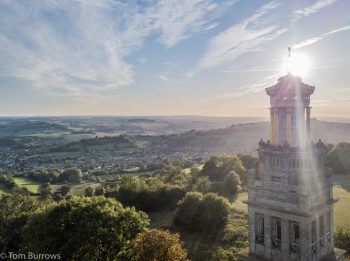
Beckford’s Tower, 1826–27 (photo by Tom Burrows).
From the purchase of Fonthill in Wiltshire by William Beckford in 1744 to the death of his son in Bath 100 years later, the social advancements and retreats of the Beckford family relied upon the profits of transatlantic slavery. This talk will explore the extensive collecting and architectural creations of the Beckfords, and highlight how they were made possible by a vast fortune built from the stolen labour of thousands of enslaved Africans. This is a fundraising talk for The Salisbury Museum: £12 (£9 members).
Dr Amy Frost is an expert on the life and work of William Beckford and curator of Beckford’s Tower in Bath.
◊ ◊ ◊ ◊ ◊
Press release (7 March 2023) from the Bath Preservation Trust:
Alex Wheatle and State of Trust Join Forces with Beckford’s Tower
As part of the ‘Our Tower’ regeneration plan, Beckford’s Tower and State of Trust join forces with author Alex Wheatle to deliver interpretive dance performance of Wheatle’s prize-winning 2020 novel Cane Warriors.
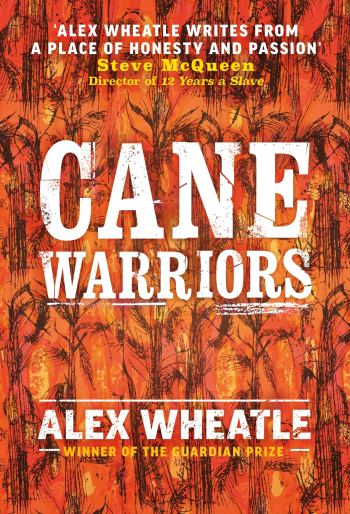 Cane Warriors tells the story of Tacky’s Rebellion, an uprising of Akan people fighting for their freedom that took place in Jamaica in 1760, and included enslaved people on a plantation owned by the Beckford family. The new project will put a spotlight on the link between the Beckford family and the rebellion and engage with a wide cross section of people in the process, particularly young people in the community and online, in order to develop an interpretive dance performance of the novel. The research and development will build a team of exceptional performers. New choreography, music, photography, and film will be created, and there will also be a virtual gallery and film archive for future use.
The resulting performances will take place in March 2024. Beckford’s Tower will host one performance, with the other two to be held in other Bath and Bristol venues. The new production has been supported by The National Lottery Heritage Fund, thanks to money raised by National Lottery players.
The performance, which will be filmed for posterity, will encourage attendees to engage with one of the most troubling aspects of William Beckford’s legacy: his claiming in ownership enslaved people, which funded his lifestyle and his vast collections. The aim is to build awareness around the effects of enslavement and colonialism on the culture and psyche of modern Britain and improve community relations through greater understanding of the shared history.
Built between 1826 and 1827, Beckford’s Tower was intended to house the collections of books, furniture, and art that were owned by William Beckford, whose wealth was gained from his ownership of plantations and enslaved people in Jamaica. Beckford would ride up to the Tower from his townhouse in Bath’s Lansdown Crescent every morning before breakfast, and enjoyed its solitude and the panoramic views from the Belvedere at the top.
Today Beckford’s Tower is owned and run by Beckford Tower Trust, part of Bath Preservation Trust. The landmark is a Grade 1 listed monument and is the only museum in the world dedicated to the life and work of William Beckford. In 2019, the Tower was added to the National ‘At Risk’ Register, sparking a major project to raise the necessary funds to repair and restore the Tower, transform the museum, open up the landscape and create opportunities for volunteering, formal learning and community engagement. In 2022, thanks to a £3million grant from The National Lottery Heritage Fund, the fundraising target of £3.9 million was reached. £480,000 of partnership funding had already been secured, with support from Historic England, Garfield Weston Foundation, The Medlock Charitable Trust, Historic Houses Foundation, Pilgrim Trust, and several other organisations, as well as £50,000 in public donations. This second grant of £100,000 will enable Beckford’s Tower to deliver the Cane Warriors project, which will compliment the wider work taking place at the Tower.
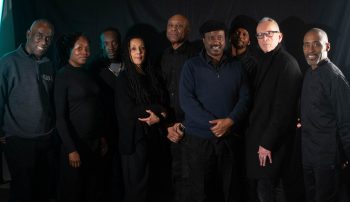
State of Trust Cane Warriors Meeting
Commenting on the new project, Director of Museums Claire Dixon said: “One of our main priorities at Beckford’s Tower is to ensure the transparent and sensitive portrayal of William Beckford’s troubling legacy; as his building and collecting was funded through his ownership of plantations it is vital that this is made clear in the regeneration of the Tower and its new exhibition. We approached State of Trust owing to their reputation for delivering powerful performances that tackle challenging social themes, and we look forward to working with them on this exciting project. It will enable us to explore more creative and artistic events, engage new and more diverse audiences, and embed this approach in the new museum programme when it opens in 2024. I would like to thank The National Lottery Heritage Fund and National Lottery players for their support in helping us to fully contextualise and reconfigure the story of Beckford’s Tower for a modern-day audience.”
Deborah Baddoo MBE and Steve Marshall, the Directors at State of Trust and State of Emergency Limited, said: “We are delighted that Heritage Lottery has agreed to fund the R&D phase of Cane Warriors. When Alex Wheatle first approached us, nearly three years ago, with a view to our making a dance interpretation of his novel, we didn’t realise what an uphill struggle it would be to achieve funding. Thanks to Bath Preservation Trust, and the synergy between the story and the history of Beckford’s Tower, we are now able to start working on what we believe will be an important work of African contemporary dance theatre. This production will allow us to pursue a long-term artistic vision, which began with the foundation of State of Emergency Limited in 1986, and to hone our skills as directors and performers. For us Cane Warriors is the natural progression of all that has gone before. Working alongside the history of Beckford’s Tower, this project can make the connection between historic buildings in our local communities and the transatlantic slave trade, and reveal their hidden histories. We feel it is very important to reach and engage with people, particularly young people, on this subject, and through a range of activities, including workshops in schools, and online events, we know we can make a difference. Through the media of dance, music, and film, we aim to bring the story to life, to animate history in a way that is relevant and impactful to our contemporary lives, to get beyond the facts and to achieve a level of understanding and truth.”
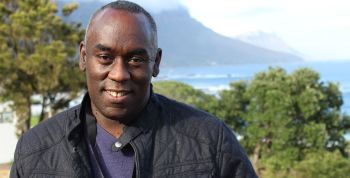
Alex Wheatle MBE
Alex Wheatle MBE, author of Cane Warriors, said: “The real story of Chief Tacky’s rebellion has been passed down through generations of my mother’s family who resided in Richmond, St Mary’s parish in Jamaica—very close to the plantations where Chief Tacky and his Cane Warriors toiled and planned their Easter rebellion in 1760. I was simply compelled to relate this story to the wider world, and I’m very proud that State of Emergency will tell the story in the art form of dance. Indeed, the Cane Warriors will be honoured.”
Stuart McLeod, Director England – London & South at The National Lottery Heritage Fund, said: “Inclusive heritage is very important to us at The National Lottery Heritage Fund which is why we are proud to support projects that engage people with the complexity of our history. This project will help broaden everyone’s understanding of Beckford and tell his story and its significance to Bath. Our history can teach us a great deal about ourselves and who we want to be, and we encourage people to explore, understand, and learn from it.”
Conference | Rethinking British and European Romanticisms
From ArtHist.net and Friedrich-Schiller-Universität Jena:
Rethinking British and European Romanticisms in Transnational Dimensions
Friedrich-Schiller-Universität Jena, Rosensäle, 28–30 March 2023
Organized by Elisabeth Ansel, Johannes Grave, Richard Johns, Christin Neubauer, and Elizabeth Prettejohn

J.M.W. Turner, A Paddle-steamer in a Storm, ca. 1841, watercolor, graphite, and scratching out on medium, slightly textured, cream wove paper (New Haven: Yale Center for British Art, Paul Mellon Collection, B1977.14.4717).
The workshop is a first-time cooperation between the History of Art Departments of the University of York and the Friedrich Schiller University Jena. Considering the institution’s main research areas, the event aims to discuss the different concepts of Europe present in the art and culture of Romanticism.
In recent years, national tendencies have challenged the European idea, exemplified by the wake of Brexit and its aftermath. In this context, the question arises to what extent European and national identity concepts can be reconciled. Today’s debate between Britain and Europe still roots in the divergent notions of national identity that manifested in several European countries in the 1800s. This workshop, therefore, addresses the relationship between visual images and constructions of nationality and questions how European Romanticism can be understood. In contrast to literary studies, investigating transnational transfer processes of Romantic movements has been a desideratum in art historical research. Considering transcultural methods, the participants will reflect national patterns of thought and Romantic identities not as fixed but as processual and hybrid phenomena within the framework of the binational exchange. Based on individual case studies, the event aims to reevaluate the complex interplay of alterity and reciprocity of the relations between cultural spaces. For questions or more information, please contact, europaeischeromantik@uni-jena.de.
Funded by the Deutsche Forschungsgemeinschaft (DFG, German Research Foundation)
T U E S D A Y , 2 8 M A R C H 2 0 2 3
9.00 Welcome and Introduction — Elisabeth Ansel and Christin Neubauer
9.30 Introductory Lecture
• Johannes Grave (Jena) — Romantic Temporalities
10.15 Early Romantic Relations
• Johannes Rößler (Jena) — Towards a Modern Theory of Illustration: August Wilhelm Schlegel on John Flaxman
• Tilman Schreiber (Jena) — Gavin Hamilton and the Aesthetics of Dilettantism
12.15 Transcultural Romanticism and Peripheries
• Helena Cox (York) — Bohemian Romanticism
13.00 Lunch
14.30 Transcultural Romanticism and Peripheries, continued
• Elisabeth Ansel (Jena) — Visual Ossianism: Artistic Circulations, Transculturality, and Romanticism
• Rhian Addison (York) — George Morland’s ‘Emblematic Palette’: The Afterlives of Self-Fashioning Landscape Artist
• Lars Zieke (Jena) — Becoming Watteau: Artistic Self-Definition and Painted Art Theory in Turner’s Watteau Study by Fresnoy’s Rules
17.15 Evening Lecture
• Richard Johns (York) — Art of the Living Dead
20.00 Dinner
W E D N E S D A Y , 2 9 M A R C H 2 0 2 3
9.15 Greeting
9.30 Aesthetic Discourses and Translation Processes
• Sonja Scherbaum (Jena) — ‘Great Beyond All Comparison’: The Sublime as a Comparative Aesthetic Experience
• Miguel Gaete Caceres (York) — The German Picturesque: Between a (British) Landscape Aesthetic Category, a Scientific Method, and a Racial Label
11.00 Coffee
11.30 Origins and Afterlives
• David Grube-Palzer (Jena) — Copy and Self-Repetition in the Age of Genius: Using the Example of Caspar David Friedrich
• Sammi Lukic-Scott (York) — Images into Objects: Reproductions and Translations
13.00 Lunch
14.30 Romanticism in the Context of New Turns
• Marte Stinis (York) — Depicting Romantic Music-Making
• Mira Claire Zadrozny (Jena) — European Romantic Ruins? The ‘Architectural Uncanny’ in Nineteenth-Century French and British Landscape Painting
• Caitlin Doley (York) — Venerable Vulnerability? Violence against Animals in Romantic Artwork
18.30 Reception at Schillers Gartenhaus, home of the poet, ca. 1800
T H U R S D A Y , 3 0 M A R C H 2 0 2 3
9.15 Greeting
9.30 The Late Romantics
• Nicholas Dunn-McAfee (York) — Breath, Flesh, Warmth: The Pre-Raphaelite Brotherhood’s Immortal Keats
• Kayleigh Williams (York) — Picturing John Keats
• Christin Neubauer (Jena) — The Romantic Embodiment in Pre-Raphaelite Visual Art
12.15 Concluding Discussion
Afternoon Field Trip to Weimar
14.30 Graphische Sammlung, Vulpius-Galerie, Herzogin Anna Amalia Bibliothek
18.00 Goethes Wohnhaus, Goethe’s home from 1782 until his death in 1832
20.00 End of Workshop
◊ ◊ ◊ ◊ ◊

Herzogin Anna Amalia Bibliothek, Rokokosaal (Photo by Maik Schuck).
The Herzogin Anna Amalia Bibliothek in Weimar was named in 1991 for Anna Amalia who in the 1760s moved the ducal book collection to the newly constructed Rococo library—famous since then for its oval hall—within the Grünes Schloss (‘Green Palace’). The Vulpius Gallery honors Goethe’s wife, Christiane Vulpius, and brother-in-law, Christian August Vulpius, the latter having worked at the library from 1797 to 1826. Much of the library was destroyed by fire in 2004; it reopened in October 2007 following an $18million restoration. –CH










leave a comment