Call for Applications | Histories and Futures of Indigenous Print Cultures
From the American Antiquarian Society:
Paper Relations: Histories and Futures of Indigenous Print Cultures
A Summer Seminar in the History of the Book Led by Kathryn Walkiewicz and Kelly Wisecup
American Antiquarian Society, Worcester, Massachusetts, 21–26 June 2026
Applications due by 3 April 2026
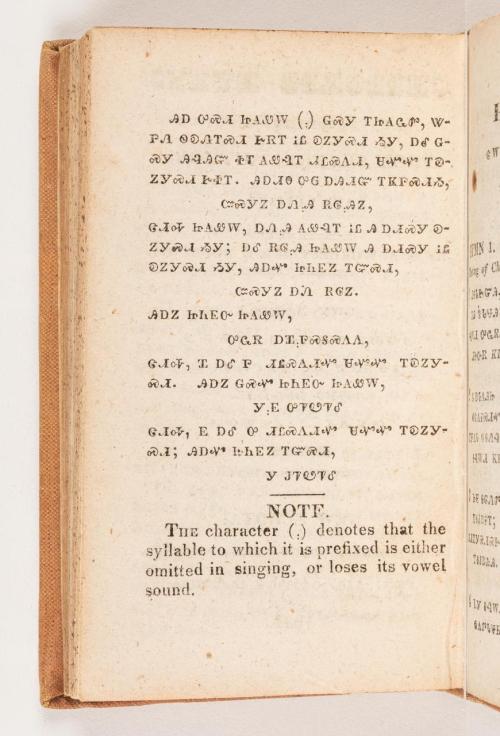
Cherokee Hymns (New Echota, 1833) (Worcester: American Antiquarian Society, Worcester, #226669).
What relationships are necessary to make Indigenous books? What relations are held in paper, bindings, and ink? And what relations are generated by the circulation and use of Indigenous print?
This seminar will examine Indigenous cultures of print between the seventeenth and nineteenth centuries. Our focus on relations extends from collaborations with publishers, patrons, and printers to considering plants, trees, animals, and rags in paper and bindings―as well as the complex connections books have to the archives where they are held. Specific topics will be driven by participants’ interests but may include periodical networks, relations between Black and Indigenous print cultures, environmental histories of the book, Indigenous language revitalization, Tribal nations’ acts of archival creation and activism, and more.
Throughout the seminar, participants will examine both conceptual and methodological questions using AAS’s vast holdings of Indigenous printed materials. Using readings drawn from Indigenous studies and history of the book scholarship, we will consider how this scholarship might be put in conversation with Indigenous peoples’ use of print and the book. Building on influential research that has recovered histories of Indigenous writing and challenged the oral-literacy binary, we will ask how Indigenous books manifest, contest, and make relations with living beings, with other books, and with communities.
Guest speakers for the seminar include Ellen Cushman (Northeastern University), David Aiona Chang (University of Minnesota Twin Cities), and Kimberly Toney (Brown University). Paper Relations coincides with the James Russell Wiggins Lecture in the History of the Book in American Culture, which will be given by Phillip Round (University of Iowa) on 24 June 2026.
Participants will be encouraged to think about how to take insights from the seminar into their own classrooms, libraries, and communities, as well as to their networks for mentoring and collegial support. Early career scholars, library and museum professionals, and Tribal staff are especially encouraged to apply.
PHBAC is committed to creating an environment that welcomes all people and meets their access needs. The AAS library and classroom facilities are wheelchair accessible. Other accommodations may be available upon advance request. Participants are encouraged to indicate any accessibility needs in their applications.
Tuition for the five-day seminar is $1000. This includes meals throughout the week and a guided field trip to the Hassanamesit Woods in Grafton, Massachusetts. Two tuition scholarships to attend the seminar are generously funded by the Bibliographical Society of America. Additional scholarships are available for students and scholars specializing in Indigenous studies, including community members or staff affiliated with Tribal organizations. See the application form for more information about scholarships to attend the seminar. The cost of housing is not included in the tuition fee. Participants will have the option of staying in dormitory housing on the Worcester Polytechnic Institute campus (within easy walking distance of AAS) for approximately $80 per night.
For questions about the seminar, please contact John J. Garcia, AAS director of scholarly programs and partnerships, at jgarcia@mwa.org. Applications can be submitted here»
Kathryn Walkiewicz (enrolled citizen, Cherokee Nation/ᏣᎳᎩᎯ ᎠᏰᎵ) is an associate professor of literature and faculty director for the Indigenous Futures Institute at the University of California, San Diego. Walkiewicz is the author of Reading Territory: Indigenous and Black Freedom, Removal, and the Nineteenth-Century State (University of North Carolina Press, 2023) and co-editor of The People Who Stayed: Southeastern Indian Writing after Removal (University of Oklahoma Press, 2010). Their research and teaching interests include Native American and Indigenous studies, print culture, early American literature and culture, nineteenth-century American studies, Southern studies, speculative fiction, and horror. Walkiewicz held an AAS-National Endowment for the Humanities Long-Term Fellowship in 2021 and was elected to AAS membership in 2022.
Kelly Wisecup is the Arthur E. Andersen Teaching and Research Professor in the Department of English at Northwestern University, where she is also an affiliate of the Center for Native American and Indigenous Research. Her research brings together early American studies, Native American and Indigenous Studies, and histories of books and archives. She is the author of Assembled for Use: Indigenous Compilation and the Archives of Early Native American Literature (Yale University Press, 2021) and is principal investigator for the Ojibwe Muzzeniegun Digital Edition Project, a project to create a collaborative digital edition of the nineteenth-century literary magazine made by the Ojibwe poet Jane Johnston Schoolcraft and her family. Wisecup was a Peterson Fellow at AAS in 2014–15 and was elected to membership in the Society in 2022.
9th Annual Ricciardi Prize from Master Drawings
From Master Drawings:
Ninth Annual Ricciardi Prize from Master Drawings
Submissions due by 15 November 2026
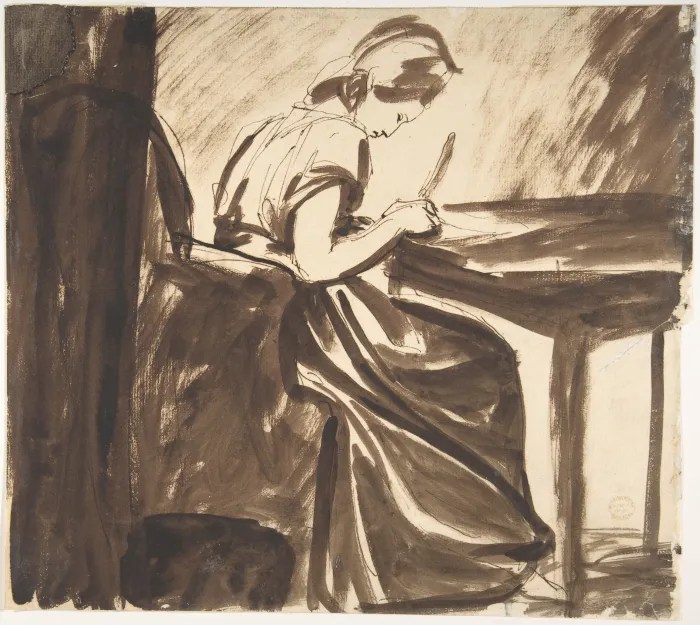
George Romney, Lady Seated at a Table (recto); pen and brown ink, brush and brown wash (NY: The Metropolitan Museum of Art, 11.66.3).
Master Drawings is now accepting submissions for the 9th Annual Ricciardi Prize of $5000. The award is given for the best new and unpublished article on a drawing topic (of any period) by a scholar under the age of 40. Candidates are also eligible for a $1000 runner-up prize and publication. Prize winners are eligible for reimbursement of costs associated with obtaining image publication permissions. They will be invited to present their research at a symposium held during Master Drawings Week in New York (January 2027). Information about essay requirements and how to apply can be found here. Information about past winners and finalists is available here.
The average length is between 2500 and 3750 words, with five to twenty illustrations. Submissions should be no longer than 7500 words and have no more than 75 footnotes. All submissions must be in article form, following the format of the journal. Please refer to our Submission Guidelines for additional information. We will not consider submissions of seminar papers, dissertation chapters, or other written material that has not been adapted into the format of a journal article. Written material that has been previously published, or is scheduled for future publication, will not be eligible. Articles may be submitted in any language. Please be sure to include a 100-word abstract outlining the scope of your article with your submission.
Call for Applications | Painted Wall Preservation Scholarship
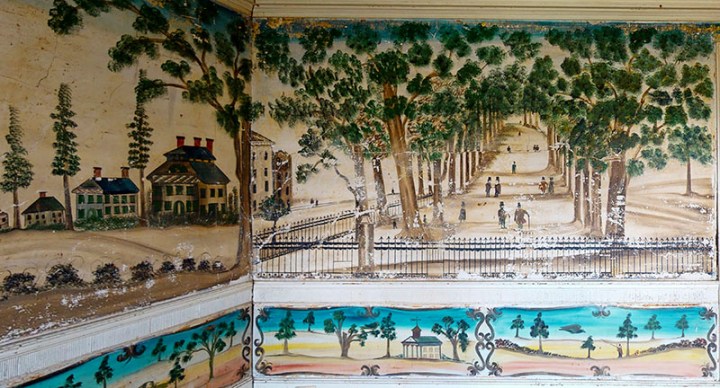 Interior of the Hersey-Whitten House, which was constructed in the late-18th or early-19th century in the village of Center Tuftonboro, New Hampshire. Originally built for the Copp family, it was once a dance hall and inn. Learn more from The Center for Painted Wall Preservation»
◊ ◊ ◊ ◊ ◊
From the scholarship announcement:
The Center for Painted Wall Preservation Scholarship
Applications due by 30 April 2026
The Center for Painted Wall Preservation (pwpcenter.org) invites undergraduate and graduate students, independent scholars, and artisans, whether established or in training, to apply for this scholarship, which aims to develop educational projects that further our mission through documentation, conservation, and preservation—where art, history, craft, and science meet.
This year’s scholarship of $2000 will be awarded to the individual whose proposal for an educational, scholarly project is deemed best designed to further the stated mission of our organization—to further the study, understanding, and appreciation of paint-decorated plaster walls and associated interior colorized items of the 18th and early 19th centuries in New England and New York, and to educate the public about this unique and vulnerable cultural heritage. Interested parties may apply for an Application Process Summary and Application Form by contacting info@pwpcenter.org with ‘Scholarship Fund’ in the subject line. Applications will be accepted from 1 January until midnight, 30 April 2026.
The Center for Painted Wall Preservation is a nationally recognized 501(c)(3) Nonprofit Organization.
Funding | Burlington Bursaries for Researching Drawings
From ArtHist.net:
The Burlington Magazine’s Travel Bursaries for Researching European Drawings
Applications due by 1 February 2026
We are delighted to announce a new initiative: The Burlington Magazine Travel Bursaries, generously funded by the Rick Mather David Scrase Foundation. These bursaries are designed to support emerging art historians undertaking research on old master drawings. The awards will fund travel to major collections worldwide to study works of Western art on paper from the Renaissance to 1900.
Typical awards will range from £2,000 to 2,500 for travel within Europe and £3,000–3,500 for intercontinental travel. Applications are welcomed from postgraduate and curatorial researchers worldwide. The deadline for applications is Sunday, 1 February 2026. Further details and application guidelines can be found at The Burlington website.
Attingham Courses in 2026
Attingham offerings for 2026:
The Study Programme | Sweden: Stockholm and Its Hinterland
Led by David Adshead with Beatrice Goddard, 8–14 June 2026
Applications due by 30 January 2026
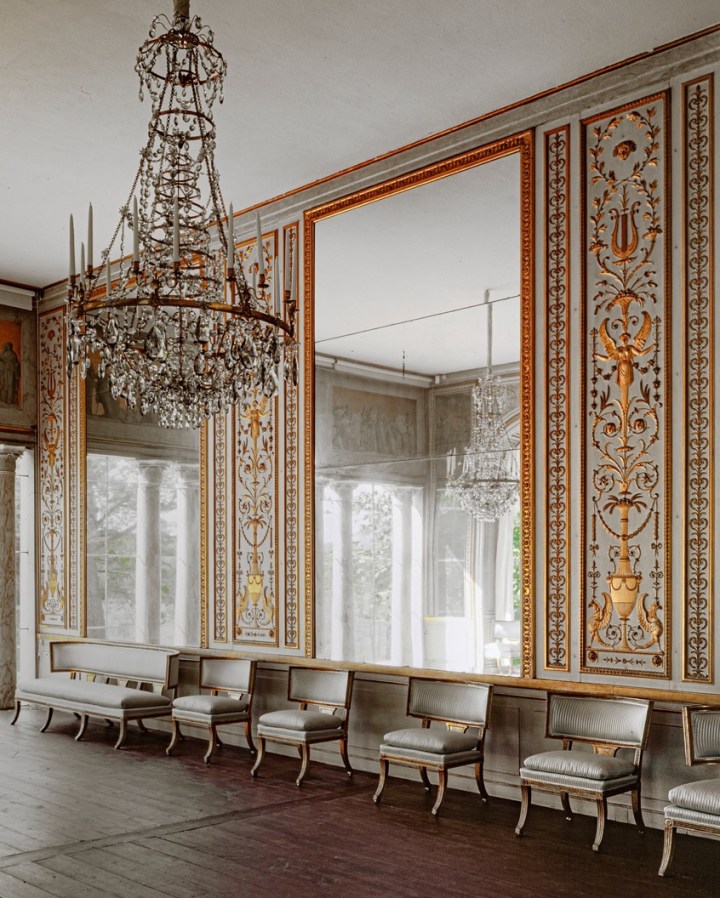
The Hall of Mirrors, Gustav III’s Pavilion at Haga Park. The Royal Palaces, Sweden (Photograph: ©Jens Markus Lindhe).
This intensive seven-day course will study the patronage of successive Swedish royal dynasties and that of the nobility and wealthy merchant class, in Stockholm’s palaces and the castles and country houses of its hinterland—Svealand, the nation’s historic core. With earlier outliers, it will focus on the arts and architecture of the mid 17th to early 19th centuries, encompassing the Baroque, Rococo, neo-Classical and ‘Empire’ styles.
For more than a hundred years, from the accession of Gustavus Adolphus in 1611 to its loss of territory at the end of the Great Northern War in 1721, Sweden was a European military superpower and enjoyed an ‘Age of Greatness’, its fortunes reflected in the richness of buildings, interiors, and collections of fine and decorative arts, particularly those of the monarchy. A new political compact with power-sharing between government and parliament—the so-called ‘Age of Liberty’—subsequently encouraged a flowering of the arts and sciences and the further influence of all things French. During the following ‘Gustavian Age’, led by the energetic but latterly autocratic, Gustav III, Sweden’s elegant interpretation of neo-Classicism reached its apogee.
In Stockholm, visits will be made to the Riddarhuset, Riddarholmskyrkan, the Royal Palace, and Gustav III’s Museum of Antiquities. Outside Stockholm, in addition to a number of private houses, visits will include, Tullgarns Palace, Drottningholm Palace, Svartsjö Palace, the English landscape park at Haga, Rosersberg Palace, Svindersvik a summer residence, Gripsholm Castle, the manor house at Grönsöo, and Skokloster Castle. For the last two nights we will be staying in the town of Mariefred on the south-west tip of Lake Mälaren.
◊ ◊ ◊ ◊ ◊
The 73rd Summer School
Led by David Adshead and Tessa Wild, with Sabrina Silva, 27 June — 12 July 2026
Applications due by 30 January 2026
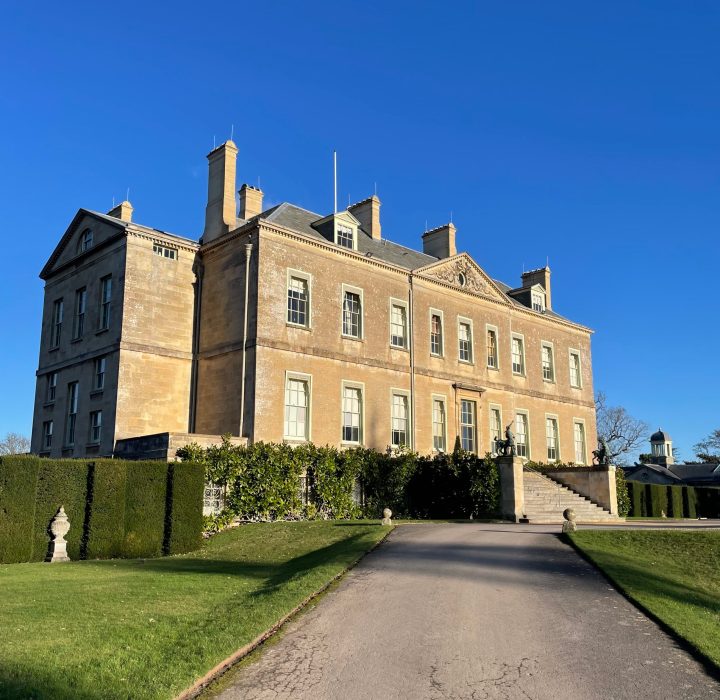
Buscot Park, Faringdon, Oxfordshire, 1780–83.
The 73rd Attingham Summer School, a 16-day residential course will visit country houses in Sussex, Derbyshire, Nottinghamshire, Buckinghamshire, and Oxfordshire. From West Dean, our first base, we will study, amongst other houses and gardens: Petworth House, where the patronage of great British artists such as Turner and Flaxman enrich its Baroque interiors; Parham, a fine Elizabethan house in an unrivalled setting; and Standen, an Arts and Crafts reinterpretation of the country house.
In the Midlands, a series of related houses will be examined: Hardwick Hall, unique amongst Elizabethan houses for its survival of late 16th-century decoration and contents; Bolsover Castle, a Jacobean masque setting frozen in stone; and Chatsworth, where the collections and gardens of the Cavendishes and Dukes of Devonshire span more than four centuries. Other highlights include Robert Adam’s crisp neo-Classical interior and Fishing Pavilion at Kedleston Hall.
The final part of the course will focus on the rich estates and collections of Oxfordshire. Our itinerary will include Broughton Castle, a moated and fortified manor house with a chapel first consecrated for Christian worship in 1331, and Buscot Park, with its superb collection with works by Rembrandt, Botticelli, Rubens, Edward Burne-Jones and Dante Gabriel Rossetti, and furniture by Robert Adam and Thomas Hope. While at Buscot we will have the opportunity to explore one of the country’s finest water gardens, designed by Harold Peto in 1904 and extended from 1911–13, and a surviving country house theatre created in 1936 for the 2nd Lord Faringdon. We will also visit the much more modest 17th-century stone-built, Kelmscott Manor, the beloved country home of William Morris and his family, and the place that he described as ‘Heaven on Earth’.
◊ ◊ ◊ ◊ ◊
Royal Collection Studies
Led by Helen Jacobsen, with Beatrice Goddard, 6–15 September 2026
Applications due by 15 February 2026

James Roberts, The Pavilion Breakfast Room at Buckingham Palace (known by 1873 as the Queen’s Luncheon Room), 1850, watercolour and bodycolour with gum arabic, paper: 26 × 38 cm (RCIN 919918).
The Royal Collection is one of the world’s leading collections of fine and decorative art, with over one million works from six continents, many of them masterpieces. Working in partnership with The Royal Collection Trust, this ten-day residential course offers participants the opportunity to study the magnificent holdings of paintings, furniture, metalwork, porcelain, jewellery, sculpture, arms and armour, books, and works on paper and to examine the architecture and interiors of the palaces which house them. Based near Windsor, the course also examines the history of the collection and the key roles played by monarchs and their consorts over the centuries. Combining a mixture of lectures and tutorials, visits to both the occupied and unoccupied palaces in and around London and close-up object study, Royal Collection Studies aims to give experienced professionals in the heritage sector a deeper understanding of this remarkable collection.
◊ ◊ ◊ ◊ ◊
From College Library to Country House
Led by Andrew Moore, with Rita Grudzien, 7–11 September 2026
Applications due by 15 February 2026
This course is conceived from the perspective of the British aristocracy and gentry whose education centred upon preparing them to run their country estate, including the house and collections, and argues for the importance of the library and the book collection in this process. Too often in country house studies the architecture, interior design, and art collections have held sway; this course aims to foreground the College book collections at the disposal of tutors and the subsequent development of the country house library. Libraries reveal not only the intellectual or recreational interests of past generations, but also how books manifest taste, fashion, and opportunities for display. Book historians and tutors well known in their respective fields will conduct the course, attending to a broad variety of subjects including book binding, the development of the idea of rare books and of book collections, library portraiture, and questions of spatial analysis and mobility—all in the context of the collections housed in some of the oldest and most complete book rooms in Britain.
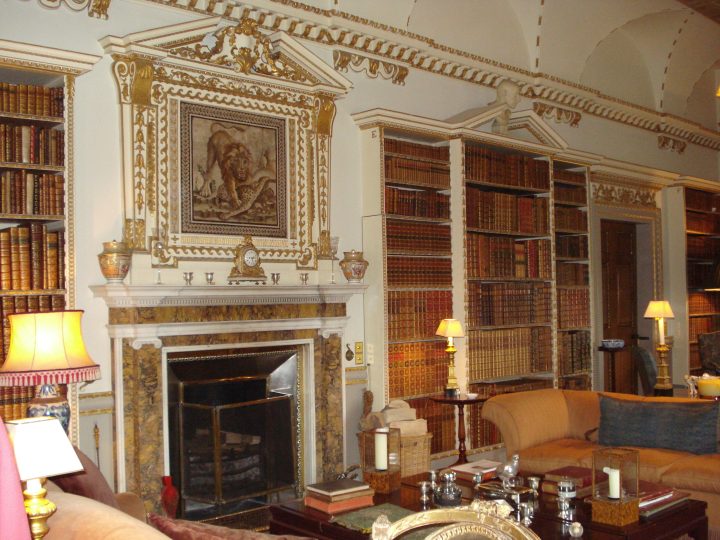
Library at Holkham Hall.
This intensive residential five-day course is based in the exceptional surroundings of St Catharine’s College, a constituent college of the University of Cambridge. Directed by Dr Andrew Moore, the programme plans to visit a series of iconic libraries. These include the historic private library of Houghton Hall, created by Robert Walpole, and Holkham Hall, home to one of the greatest private manuscript and printed book collections in Britain, housed today in three of the country’s most important country house library rooms. The course will also visit the library designed by James Gibbs for Edward Harley, Earl of Oxford at Wimpole Hall in Cambridgeshire, and the Braybrooke library rooms at Audley End, of considerable interest for being reconstituted from dressing rooms into the 3rd Lord Braybrooke’s library, incorporating the inherited Neville family books. The library at Audley End functioned as an informal family sitting room, with the adjacent study (the South Library) still displayed as it looked in the early 19th century.
The course includes the Old Libraries of St John’s College and Queens’ College; the Wren Library, Trinity; the Perne Library at Peterhouse; the Parker Library at Corpus Christi; and the Founder’s Library at the Fitzwilliam Museum. Additional seminars will take place in the context of the historic book collections in the Cambridge University Library designed by Giles Gilbert Scott (1880–1960). St Catharine’s College will host a seminar on the medical book collection of John Addenbrooke (1680–1719), founder of Addenbrooke’s Hospital, Cambridge.
◊ ◊ ◊ ◊ ◊
Note (added 14 January 2026) — From Attingham’s Instagram account (6 January 2026) . . .
We are thrilled to congratulate Annabel Westman on being awarded an MBE in the New Year Honours “for services to heritage, particularly to The Attingham Trust and historic textiles.” Annabel’s time as Director of the Attingham Summer School (1993–2005) and Executive Director of The Attingham Trust (2005–2021) helped shape Attingham into the vibrant, welcoming, and extraordinary community it is today. Alongside this, her distinguished career as a textile historian and consultant has enriched the understanding and restoration of historic interiors worldwide. This honour is richly deserved, and we are so proud to celebrate Annabel and all she continues to give to the field.
Walpole Library Fellowship and Travel Grants for 2026–27
From the Lewis Walpole Library:
Lewis Walpole Library Visiting Fellowships and Travel Grants, 2026–2027
Applications due by 1 November 2025
Applications are invited for 2026–2027 Lewis Walpole Library Visiting Fellowships (four weeks) and Travel Grants (two weeks). The Lewis Walpole Library is a department of Yale University Library with collections that focus on all aspects of British life in the long eighteenth century.
Fellowship and Travel Grant awards include round trip travel from the recipient’s home institution and the library, a per diem allowance, reimbursement for car rental or local travel expenses between the library’s Farmington campus and the main Yale campus in New Haven, Connecticut, and accommodation in the Timothy Root House, an eighteenth-century residence adjacent to the main library building.
Applicants must fill out an application form, submit a statement describing the project and its dependence on the Lewis Walpole Library’s collections as well as the project’s importance to the field, a list of specific Lewis Walpole Library collection materials to be consulted, a CV of no more than 3 pages, and two confidential letters of recommendation. The application deadline is November 1. The fellowship or travel grant must be taken between 1 June 2026 and 31 May 2027. Full details, expectations, and a link to the application can be found here.
Questions? Email walpole@yale.edu. Come join our community of scholars!
Mellon Centre Funding Opportunities
From the Mellon Centre:
Paul Mellon Centre for Studies in British Art
Funding Opportunities for Autumn 2025
Applications due by
The Paul Mellon Centre’s autumn 2025 round of funding opportunities is now open for applications. This round is primarily designed to support organisations undertaking research, projects and activities concerned with British art or architectural history and the opportunities we offer for organisations this year are as follows:
• Curatorial Research Grants: designed to support the costs of employing an individual (full or part time) to undertake a large-scale research project which often results in an exhibition.
• Collaborative Project Grants: support the early days of a research project between two or more organisations, providing funding to facilitate meetings, research trips and workshops for participants.
• Conservation Research Project Grant: helps support an organisation when undertaking a project concerning conservation research and technical analysis.
• Digital Project Grants: designed to support the costs of employing an individual to undertake innovative and large-scale projects that use digital media.
• Digitisation Grants: designed to support organisations wishing to digitise materials and assets from their own collections, and make them available to a wide online audience.
• Event Support Grants: supporting costs incurred by an organisation when hosting an event or series of events (including workshops, symposiums and lectures).
• Exhibition Publication Grants: designed to support the costs of publishing written material relating to an exhibition.
We also have some grants on offer for individuals which include:
• Andrew Wyld Research Support Grants: a grant to support individuals who wish to travel to see works on paper and in person which is funded by the Andrew Wyld Fund.
• Author Grants (Large): amounts that range from £2,001–£6,000 to help support costs incurred by individuals when publishing books.
• Author Grants (Small): amounts of up to £2,000 to help support costs incurred by individuals when publishing articles or books.
• Research Support Grants: support costs relating to undertaking travel for research purposes.
If you are interested in applying to any of our funding opportunities we recommend reading our FAQ page and our Grant Making Policy first. Our Grants and Fellowships Manager is also available if you have any questions or if you would like to arrange a pre-application discussion
Call for Applications | Getty Residential Grants, 2026–27
The Getty Research Institute is pleased to invite applications for 2026–27 residential grants for predocs, postdocs, and scholars. Applications are due by 1 October 2025 at 5pm PT.
Getty Scholars Program | Provenance
For the 2026–2027 year, the Getty Scholars Program invites innovative proposals for projects that explore provenance and adjacent research areas, including but not limited to the history of collecting, the study of the art market, and broader explorations around the ownership of art objects. Relevant to all periods and areas of art production, the scholar cohort will be invited to examine and critique the arena of provenance studies while also envisioning its future, situated between the practices and demands of source communities, art historians, museums, and the market. Digitization and databases, such as the Getty Provenance Index, have also opened up the interdisciplinary possibilities of provenance research and laid the ground for art restitution efforts and other forms of reparation. Applicants are invited to propose projects, either individual or collaborative, that reflect upon the ownership, transfer, and movement of art objects from all world regions and time periods.
For this year, the Getty Scholars Program aims to link scholars with Getty resources and researchers and foster a lively community around the study of provenance—an increasingly significant domain of art historical and curatorial practice that centers the histories of both objects and people. While in residence, scholars will have the opportunity to delve into the Getty Research Institute’s vast collections of rare materials that support provenance research and explore the newly remodeled Getty Provenance Index, which lays the ground for cutting-edge computational approaches to the field.
Please find the full call for applications and theme text on the Getty Scholars Program and Getty Pre- and Postdoctoral Fellowships webpages.
Alixe Bovey Appointed Editor-in-Chief at British Art Studies
From the Paul Mellon Centre announcement (16 June 2025) . . .
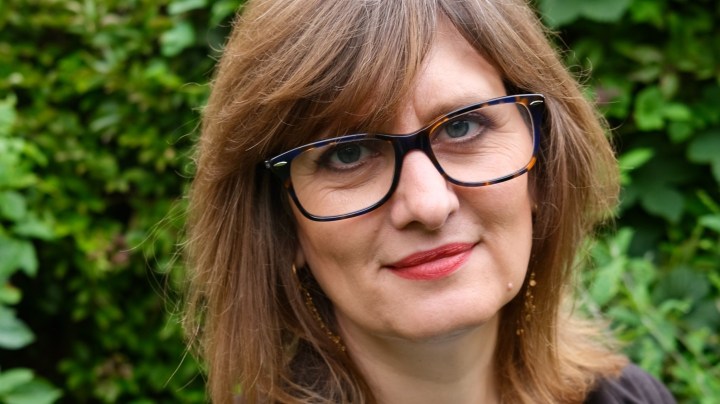 Alixe Bovey has been appointed to the position of British Art Studies (BAS) Editor-in-Chief. In this role she will lead on the development of material for publication in the journal, commission new articles and projects, and work collaboratively with authors. BAS is an innovative space for new peer-reviewed scholarship on all aspects of British art, co-published by Paul Mellon Centre for Studies in British Art and the Yale Center for British Art.
Alixe is Professor of Medieval Art History at The Courtauld, where she specialises in the art and culture of the Middle Ages. Her particular interests include illuminated manuscripts, visual storytelling and the relationship between myth and material culture across historical periods and geographical boundaries. Her publications explore a variety of medieval and early Renaissance topics, including Gothic art and immateriality (2015), monsters (2002, 2013), English genealogical rolls (2005, 2021), and monographic studies including Jean de Carpentin’s Book of Hours (Paul Holberton Press, 2011). Following a ten-year stint as Head of Research then Executive Dean and Deputy Director of The Courtauld, she is currently at work on a new book exploring the vibrant culture of storytelling in word and image in fourteenth-century London. Alongside her historical research, she is keenly interested in the creative relationship between practice and art history, and has organised a variety of programmes that bring works of art, artists and art historians together.
Sarah Victoria Turner, Director of PMC, comments: “We are so excited to have Alixe leading British Art Studies and I know she will do this with huge curiosity and commitment to publishing original research on British art. She has been an advocate for the journal and our approach to digital publishing.”
Alixe took up the role in June 2025 with a tenure of two years. Researchers interested in publishing with BAS are warmly encouraged to contact Alixe with questions, ideas or manuscripts for submission at baseditor@paul-mellon-centre.ac.uk.
Decorative Arts Trust, Research Grant Recipients, 2025
From The Decorative Arts Trust:
In 2025, the Decorative Arts Trust celebrates another record-breaking year for our Research Grants program, with 16 recipients receiving travel funding to study objects and archival records.
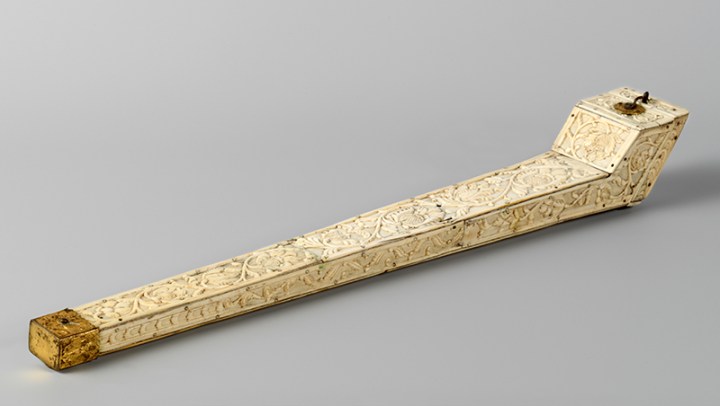
Nur’Ain Taha is studying ivory pipe cases. Pictured: Pipe case from Ceylon, 1799–1825, Sri Lanka, ivory, tropical wood, copper (Amsterdam: Rijksmuseum, NG-453).
The Trust congratulates the 2025 Research Grant recipients:
• Carson L. Beauman, MA Student, Georgia Southern University, the curriculum of Boston schools run by women, 17th–18th centuries
• Anna Flinchbaugh, PhD student, University of Southern California, embroidery’s intersection of craft and industry in the Britain and the United States, late 19th–early 20th centuries
• Kathryn Griffith, PhD student, University of Southern California, Italian goldwork in textiles and the decorative arts, 15th–16th centuries
• Julia LaPlaca, PhD student, University of Michigan, tapestries in European altar environments, 14th–16th centuries
• Jasper Martens, PhD student, University of California Santa Barbara, Netherlandish portrait miniatures with translucent mica overlays, mid-17th century (The Decorative Arts Society of Orange County Grant)
• Fiona Owens, MA student, Winterthur Program in American Material Culture, University of Delaware, the framing of Pre-Raphaelite artist Mary Macomber’s paintings, late 19th century (The Marie Zimmermann Grant)
• Emma Piercy-Wright, PhD student, University of Exeter, mother-of-pearl in French decorative arts, late 17th–early 19th centuries
• Sarah Rapoport, PhD student, Yale University, French transfer-printed ceramics, late 19th century
• Servane Rodie-Dumon, PhD student, Universite d’Artois, the career of French architect-decorator Émile Peyre, late 19th century
• Joseph Semkiu, PhD student, University of Southern California, materiality of radio chassis, mid-20th century
• Arielle Suskin, PhD student, Case Western Reserve University, Roman figural balsamaria, 3rd century BCE – 3rd century CE
• Nur’Ain Taha, PhD student, Utrecht University, ivory pipe cases that connect the early Dutch Republic and Ceylon, 17th century
• Ashley Vernon, MA student, Winterthur Program in American Material Culture, University of Delaware, ‘paper home’ collages crafted by women, late 19th century
• John White, PhD student, Princeton University, walrus and narwhal ivory in Germanic decorative arts, 15th–17th centuries
• Natalie Wright, PhD student, University of Wisconsin-Madison, The Functional Fashions Line of the Clothing Research and Development Foundation, late 20th century
• Rebecca Yuste, PhD student, Columbia University, the importation of Neoclassical style to New Spain, late 18th century
The application deadline for Research Grants is April 30 annually. For more information on grants and scholarships from the Decorative Arts Trust, read about our Emerging Scholars Program, generously supported by Trust members and donors. For deadline reminders, sign up for our e-newsletter and follow us on Facebook and Instagram. The deadline for institutions to apply for the 2025 Prize for Excellence and Innovation is approaching on June 30.










 Enfilade
leave a comment