Six-Week Online Course | The Gothic Revival, 1700–1850
◊ ◊ ◊ ◊ ◊
From Open Education:
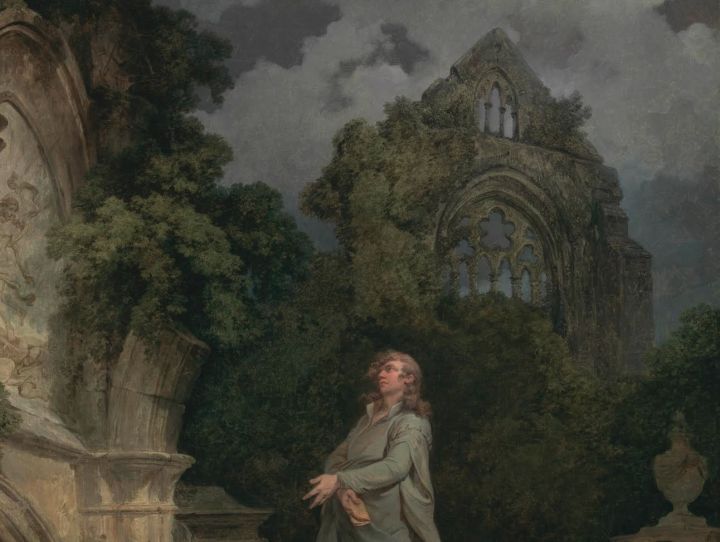
Six-Week MOOC | The Gothic Revival, 1700–1850: Interdisciplinary Perspectives
Beginning 29 February 2016
Taught by Dale Townshend and Peter Lindfield
Designed for the non-specialist learner, this six-week course is intended as an introduction to the inter-disciplinary dimensions of the Gothic Revival in British culture of the long eighteenth century (1700–1850). Over 6 weekly sessions, you will be guided by acknowledged experts in the field of Gothic studies through the following topics:
1 Introduction, and the Meanings of the Term ‘Gothic’ in the Eighteenth Century
2 An Introduction to Gothic Literature: Horace Walpole’s The Castle of Otranto (1764)
3 Gothic Literature after Walpole
4 The Gothic Revival in Architecture
5 Gothic Interiors in the Eighteenth Century
6 Gothic in Eighteenth-Century Visual Art
The MOOC commences on Monday 29 February 2016. Each session consists of three mini-lectures, quizzes, the use of reflective diaries, and peer discussion. Your tutors will be available for a one-hour live Question and Answer session per week. Further details about this will follow in due course.
Prerequisites: None, other than an abiding interest in the early Gothic aesthetic.
Time Commitments: Approximately 1 hour of formal instruction time per week, excluding your own personal study and reading.
Rules of Progression: Each successive week will only become available to you once you have completed the quiz for the previous week. Although these weekly exercises to do not count towards your certificate of completion, you are encouraged to complete them in preparation for the final quiz.
Certificates of Completion: Proof of having successfully completed the MOOC will be available at the end of the course. In order to qualify for a certificate, you will have to have scored at least 50% in the final quiz, an informal test comprised of a selection of questions encountered in earlier sessions.
Instructors: Dale Townshend (Senior Lecturer in Gothic and Romantic Studies Division of English Studies, University of Stirling) and Peter Lindfield (Postdoctoral Research Fellow, Literature and Languages, University of Stirling)
◊ ◊ ◊ ◊ ◊
Redwood Library Acquires Collection of Early Modern Architecture Books

Redwood Library and Athenaeum in Newport, Rhode Island, with Harrison’s Mirror mounted on the front pediment of the 1750 building, designed by Peter Harrison; the mirror was one element of the installation exhibition To Arrive Where We Started by Peter Eudenbach (July 2012 — July 2013).
◊ ◊ ◊ ◊ ◊
From Art Daily (17 February 2016) . . .
The Redwood Library and Athenaeum—a hybrid historic site, museum, rare book repository, and the oldest continuously operating lending library in America (1747)—has acquired a comprehensive collection of seventeenth- and eighteenth-century British architecture books and building manuals from the antiquarian bookseller Charles Wood. Comprising 53 titles, the collection deepens the Library’s already significant holdings of material devoted to early modern architecture and design, one of its cornerstone collecting areas. The acquisition was made possible by a grant from the B.H. Breslauer Foundation, as well as from donations from a number of local and national benefactors.
 “By virtue of what the Redwood is—the country’s oldest public Neo-Classic structure and a touchstone of the nation’s architectural patrimony—we are duty bound to remain a center for the study of early American architecture,” said Benedict Leca, Executive Director of the Redwood Library. “This collection dovetails perfectly with our existing holdings, notably the Cary Collection of supremely rare eighteenth-century pattern books, and exemplifies our commitment to the scholarly interpretation of our own building and those of colonial Newport.”
Newport’s historic center of learning and a designated national landmark, the Redwood Library has been serving New England and beyond as a resource supporting the range of intellectual pursuit for nearly three hundred years. In a city especially known today as a hub of historic preservation, garden design and place making, the Redwood endures as a locus of research in these domains through a constellation of related collections, making this acquisition especially pertinent.
The Redwood’s Newport Collection, an indispensable trove when researching Newport and Aquidneck Island, comprises over 5,000 books and hundreds of archives and manuscripts. The Doris Duke Preservation Collection focuses on New England colonial and nineteenth-century architecture, with an emphasis on the preservation and restoration of both the exterior architectural structure, including windows, doors and moldings, and on interior decorative elements, such as wallpaper and textiles. The Dorrance Hamilton Gardening Collection currently holds over 500 titles of landscape architecture, classic ‘how-to’ guides by important historic designers, such as Geoffrey Jellicoe and Lancelot ‘Capability’ Brown, as well as a number of discerning treatments of historic world gardens. The Cynthia Cary Collection, collected over decades by Mr. and Mrs. Guy Fairfax Cary, Sr., contains nearly 200 fifteenth- to mid-nineteenth-century English and continental pattern books of furniture, decoration, and ornament. All of these collections are a resource for scholars from all over the world, and continue to grow through the acquisition of primary works and authoritative scholarly titles.
“This outstanding collection is particularly noteworthy as it is a blend of builder’s manuals on one hand, and of illustrated, so-called gentlemen’s folios on the other,” specified Benedict Leca. “It gives us a window not only on period building techniques, but also on the diffusion of architectural knowledge, its styles and fashions, by way of some real rarities. The Scamozzi Mirror of Architecture, for example, was often used practically by builders and thus literally consumed; for this reason it rarely survives complete. Of appeal to the connoisseur rather than the builder is a very rare suite of nine copperplate engravings of Chinese lattice designs by William Halfpenny, with the only two other known copies at the British and Avery libraries.”
Further highlights from the collection include a number of rare manuals and pamphlets, including Henry Cook’s Patent artificial slate manufactory (1786), one of only three copies listed in the National Union Catalog (NUC); Abraham Fletcher’s The Universal Measurer (1766), one of only six copies on OCLC; and The Rudiments of Architecture or the Young Workman’s Instructor (1775), one of only two known copies, the Redwood’s having an eighteenth-century Boston provenance. The folios include a copy of the now scarce pattern book produced by Abraham Swan, The British architect or the builder’s treasury of stair-cases (1765?); and Christopher Wren Jr’s Parentalia: or memoirs of the family of Wrens (1750), an exceptional copy complete with the often-missing mezzotint frontis portrait of Wren.
Display | John Cornforth, A Passion for Houses
Now on view at the Paul Mellon Centre:
John Cornforth, A Passion for Houses: Material on the
Georgian Town House from the Cornforth Library Donation
Paul Mellon Centre for Studies in British Art, London, 8 February — 27 May 2016
Curated by Charlotte Brunskill, Frankie Drummond Charig, Emma Floyd, and Jenny Hill
The second Drawing Room Display, curated by Research Collections staff, focuses on material donated to the Paul Mellon Centre from the Estate of John Cornforth. The display concentrates on the town house in the 18th century and will run from February until May 2016.

Bookplate for John Cornforth, designed by Reynolds Stone (1909–1979).
John Lawley Cornforth (1937–2004) was an architectural historian who wrote numerous articles for Country Life from 1961 to 1993 and worked for the National Trust for many years. His specialism was the 17th- and 18th-century country house, but he also wrote extensively on the town house and its interiors. John Cornforth’s personal working library was donated to the Paul Mellon Centre, through the auspices of the National Trust, in August 2004, shortly after his death. This collection, from which staff selected nearly 800 books and journals, increased the Centre’s already extensive holdings on the history of the town and country house and added considerably to the previously small collection on eighteenth-century decorative arts. He also donated to the Centre’s Photographic Archive the collection of photographs taken for his book, Early Georgian Interiors, published posthumously by Yale University Press for the Paul Mellon Centre in 2004.
The display consists largely of materials donated from Cornforth’s collection but will also include a number of works about John Cornforth or written by him drawn from the rich holdings of the Centre’s library. The holdings relating to John Cornforth are just one of the many points of entry to study the town house of the 18th century in the Research Collections. The Centre’s Archive holds relevant material in, for example, the Oliver Millar Archive and the Brinsley Ford Archive on interiors and architects for this period.
This display is the second in a series featuring material drawn from the Paul Mellon Centre’s own Research Collections. Display and accompanying booklet produced by Charlotte Brunskill, Frankie Drummond Charig, Emma Floyd and Jenny Hill.
The 24-page booklet is available here»
New Appointment for Margaret Michniewicz
Margaret Michniewicz Appointed Visual Arts Acquisition
Editor at Bloomsbury
 Having worked at Ashgate Publishing since 2011, Margaret Michniewicz recently joined Bloomsbury’s New York office as Visual Arts Acquisition Editor. In addition to welcoming proposals for book projects, she is currently focused on launching new series and invites inquiries and ideas from prospective series editors. Open to a wide array of subject matter, including interdisciplinary approaches and work addressing issues of gender and race, Michniewicz will be commissioning projects in art history and visual culture from the eighteenth century onward.
Kevin Ohe, US Academic Publishing Director at Bloomsbury, underscores the possibilities that lie ahead: “Bloomsbury is thrilled to welcome Margaret Michniewicz to our Editorial team. She brings with her deep experience working with a cohort of tremendous authors. She’ll help us add strength to our already robust publishing program in the visual arts, and we’re looking forward to working with the authors she’ll bring to our list and the new series she’ll create.”
The long list of books she edited at Ashgate includes Materializing Gender in Eighteenth-Century Europe edited by Jennifer Germann and Heidi Strobel; Mariette and the Science of the Connoisseur in Eighteenth-Century Europe by Kristel Smentek; and Académie Royale: A History in Portraits by Hannah Williams. Proposals for edited collections will still be welcome, and Bloomsbury has the capacity to offer both hardback and paperback editions.
In April, Michniewicz will be attending the Association of Art Historians conference in Edinburgh and is currently making appointments for meetings with prospective authors and editors. You can reach her by email at Margaret.michniewicz@bloomsbury.com and follow her on Twitter at BburyViaAshg8.
With her characteristic enthusiasm, Michniewicz comments on her new position: “As an art historian myself, I feel the stars have aligned: I have this opportunity to continue the work I love by developing Bloomsbury’s new research monographs program in art history and visual culture, expanding upon Bloomsbury’s already vibrant visual arts publishing. This is very good news for all art historians!”
New Appointment for Erika Gaffney
Erika Gaffney Appointed Senior Acquisitions Editor in Early Modern Studies for MIP and Arc Medieval Press
 Medieval Institute Publications (MIP) and Arc Medieval Press, together with its partner, Amsterdam University Press (AUP), are delighted to announce the appointment of Erika Gaffney as Senior Acquisitions Editor in Early Modern Studies. Gaffney established her reputation as an acquisitions editor at Ashgate, where she worked for more than 20 years.
A sample of books on which she worked includes Melissa Hyde and Jennifer Milam, eds., Women, Art and the Politics of Identity in Eighteenth-Century Europe (2003); Daniel Guernsey, The Artist and the State, 1777–1855: The Politics of Universal History in British and French Painting (2007); Carole Paul, The Borghese Collections and the Display of Art in the Age of the Grand Tour (2008); Dorinda Evans, Gilbert Stuart and the Impact of Manic Depression (2013); and Gauvin Alexander Bailey, The Spiritual Rococo (2014).
In terms of future acquisitions, her interests for the early modern period will continue to include eighteenth-century European history and culture through the lens of art history and visual culture. Scholars wishing to renew their working relationship with Erika or new scholars interested in submitting not-yet-contracted volumes (or new series) should email her at erika.gaffney@arc-humanities.org to ask for a Proposal Form.
Exhibition and Blog | Mended Ways: The Art of Inventive Repair
The exhibition closed last weekend, but anyone interested in the topic should have a look at Andrew Baseman’s blog Past Imperfect: The Art of Inventive Repair.
Mended Ways: The Art of Inventive Repair from the Collection of Andrew Baseman
The New York Ceramics and Glass Fair, 21–24 January 2016
 Before the invention of Krazy Glue, broken household items were brought back to life with flair and ingenuity. Mended Ways: The Art of Inventive Repair takes you back to a time when necessity was truly the mother of invention, as seen in Andrew Baseman’s collection of over 500 examples of 17th- to mid 20th-century mended ceramics and glassware.
A variety of early repair techniques shown will include metal staple/rivets, perfected in China by itinerant ‘china menders’; tinkers’ replaced handles, lids, and spouts on mugs, teapots and jugs; intricate and detailed silversmiths’ repairs, which only the wealthy could afford.
Extraordinary pieces include a 17th-century Dutch delft ewer with a replaced jeweled metal spout and handle; an American blown and cut crystal candlestick from the early 1900s incongruously stuck into a block of wood; a c. 1850 English lustreware creamer with tin straps and handle; and a set of six delicately painted early 18th-century Chinese export plates held together with enough hand forged metal staples to keep Frankenstein’s monster intact.
Other fascinating repairs include a Chinese Yixing teapot, c. 1700, with a magnificently carved replacement handle and engraved silver mounts; an 1830s transfer-printed jug from England with woven wicker handle; and an 18th-century Chinese export teapot with a record number of repairs including a sterling silver spout, metal rivets supporting the handle, and a replaced hand-painted lid with chain attached to handle. To illustrate what some of the pieces looked like before they took a tumble, intact examples will be shown for a side-by-side comparison.
Andrew Baseman writes the blog, Past Imperfect: The Art of Inventive Repair, which chronicles Baseman’s world-renowned collection of antique ceramics with inventive repairs, also known as ‘make-do’s’. His collection was featured in a cover story for the Home & Garden section of The New York Times. He is an expert on the subject and has lectured in the US and abroad. His lifelong passion for collecting and selling antiques began at an early age and continues to inspire his design work today.
For over 20 years, Baseman worked as a designer, decorator and stylist on diverse film and television projects including The Nanny Diaries, Eat, Pray, Love, The Americans, Gotham and The Normal Heart, working with notable directors Ryan Murphy, Bill Condon, Jane Campion, and others. In 2003, he founded Andrew Baseman Design, Inc., an interior design firm specializing in upscale residential interiors, creating luxurious homes for clients in the visual arts, including film and theatrical producers, fashion designers, and others. He is the author of The Scarf (Stewart, Tabori & Chang, 1989), the classic illustrated art book chronicling the history of the printed scarf that reflects both his expertise and love of textiles.
Congratulations to Pierre-Henri Biger
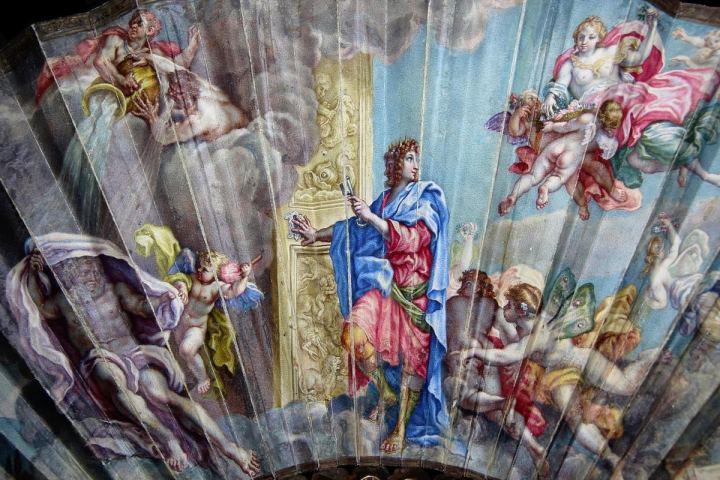
Eighteenth-century fan, after Carlo Maratta, showing Janus at the Door of the New Year
(C&PHB Collection)
◊ ◊ ◊ ◊ ◊
Along with so many fabulous readers, Enfilade has become what it is thanks to fabulous contributors. There are many. But today, I’m glad to single out Pierre-Henri Biger, who defended his PhD thesis in October (at, he tells me, the spry age of 64). Congratulations Pierre-Henri, and we look forward to seeing what comes next! –CH
Pierre-Henri Biger, “Sens et sujets de l’éventail européen de Louis XIV à Louis-Philippe,” Université Rennes 2.
Abstract : Nowadays fans are often kitsch and for tourists. Associated with fashion, these fragile feminine objects have been misjudged and remain unknown. Built for this thesis from public and private collections and public sales, an eclectic database is capable, thanks to a statistical approach, to query and study 2350 items. This study deals mainly with the topics on fan leaves during a very long eighteenth century. Twenty monographs are focusing on objects of the various determined categories. Statistics and monographs, informed by the observation of contemporary art and society, enter into dialogue. The fan appears as a reflection of art through myths, sacred and ancient history, and morality painting. But it is also a witness or an actor in the social, political, and theatrical life, and even used for promoting economic projects or for caricature. Almost all fans carry a meaning, even those ‘without history’, adorned with pastoral scenes, seemingly only mirrors of fashion or occasions of entertainment. This meaning has long been obscured because of the social transformations of the nineteenth century, perhaps for the reason that fans were originally an area of freedom and power of women – even going to libertinism? – For this objet d’art, both public and private, speaks, through the subjects that adorn it, a real speech (largely related to marriage but to love as well). Woman was both recipient and speaker. Studying these objects and learning to decipher their messages would improve their understanding and benefit various disciplines.
More information, including how to download a copy is available here
The UK’s Carriage Foundation

Samuel Butler (designed by William Chambers), Gold State Coach, 1762 (Royal Collection, 5000048). The panels were painted by Giovanni Cipriani. (Photo: Wikimedia Commons, July 2009).
◊ ◊ ◊ ◊ ◊
From Salon: Society of Antiquaries Online Newsletter 352 (2 November 2015) . . .
Julian Munby FSA, Head of Buildings Archaeology at Oxford Archaeology (and, he says, “a Fellow who has written about Queen Elizabeth’s carriages, and studied the English coach in the Kremlin”), writes about a new venture to record historic carriages:
“Historic carriages are a curiously neglected part of our heritage, while they include some of the most superbly designed and decorated examples of furniture on wheels, whether in museums or private collections. The newly launched Carriages of Britain (COB) project aims to create an online database of all historic horse-drawn carriages in collections throughout the UK. On Friday 30 October, in a truly glittering event at the Royal Mews, standing beside the Gold State Coach (1762), Colin Henderson, lately the Queen’s Head Coachman, announced that The Carriage Foundation, founded by enthusiasts for horse-drawn vehicles in 1991, has become a registered charity to promote interest and expertise in carriages through educational resources, publications and study days. In addition to developing historical information through the COB database, the foundation will also explore the foundation of a national carriage museum. Those interested in supporting through membership and donation can contact The Carriage Foundation.”
◊ ◊ ◊ ◊ ◊
From In Harness (August/September 2015), p. 5:
[The Carriage Foundation] now aims to manage, support and seek funding for various carriage related projects. Initially a website will be created which will host the first major project: Carriages of Britain. The project will consist of a searchable and illustrated database of carriages within UK collections, essays, and a photographic archive. Initial work has identified over 1200 carriages in publically accessible collections which will all have an entry on the database. Carriages of Britain will become the first port of call for anyone wishing to research horse drawn vehicles. Further developing our work, The Carriage Foundation are hosting a series of study days through the winter as well as the two established study tours. Long term plans are to explore the possibility of founding a National Carriage Museum.
For more information, contact thecarriagefoundation@yahoo.co.uk.
Online Learning | Sexing the Canvas: Art and Gender

Giovanni Battista Tiepolo, The Banquet of Cleopatra, 1744
(Melbourne: National Gallery of Victoria)
◊ ◊ ◊ ◊ ◊
Now in progress through Coursera (directed by Jeanette Hoorn with familiar faces including Jennifer Milam). . .
Coursera: Sexing the Canvas: Art and Gender
Directed by Jeanette Hoorn, 26 October — 13 December 2015
What do paintings tell us about sex? How is art gendered? Here we get up close to some of the great paintings in the world’s most famous museums, giving you insight into how art speaks to us about sex, sexuality and gender.
This course teaches masterpieces through the lens of sex and gender. We take you to the rich collections of New York’s Museum of Modern Art, Melbourne’s National Gallery of Victoria and California’s Huntington Library giving you access to outstanding works from the western tradition and expert tuition from specialist curators and renowned art historians.
Each unit will examine the circumstances in which paintings are produced and received, and how contemporary spectators and consumers of art view them. Why do works of art made centuries ago continue to speak so profoundly to us today? What do art historians mean when they talk about ‘the gaze’? Are Matisse’s paintings ‘sexy’? What do the nude and the sleeping gypsy signify in Henri Rousseau’s extraordinary pictures? Why do viewers find Frida Kahlo’s small and very personal paintings so powerful? What do Gainsborough’s portraits tell us about masculinity and sensibility in eighteenth century Britain? How is the Australian ‘dreaming’ gendered? These are some of the intriguing questions you will study in Sexing the Canvas: Art and Gender.
Course Syllabus
The course is taught over 7 weeks and is made up of 9 modules:
1 Introduction: Tiepolo’s Cleopatra: Painting, Agency and the Gaze
2 The Culture of Sensibility and the ‘Man of Feeling’: Thomas Gainsborough’s Portrait of the Officer of the Fourth Regiment of Foot
3 Gainsborough at the Huntington: The Role of Music, Costume, Theatre, Charity and Passion in the Gendered Culture of Sensibility
4 Sexual Codes in French Courtly Painting of the Eighteenth Century
5 Orientalism, Gender and Display: Painting in Morocco
6 Henri Rousseau: Challenging the Myth of the Passive Woman
7 Henri Matisse, Paul Cezanne and Max Dupain: Modernism, Gender and the Science of Movement
8 Sexuality and Dissonance: Frida Kahlo and the Struggle to Paint
9 What is Women’s Business?: Australian Indigenous Art and the Dreaming
Recommended Background
No background is required; all are welcome. Visit your local art museum or gallery and look at some paintings.
Suggested Readings
All readings needed to successfully complete the course will be supplied. A rich list of resources will also be supplied within the course to assist you with you study for this subject.
Course Format
The class will consist of lecture videos, which are between 8 and 12 minutes in length. Each unit has key readings, which, with the lectures, provide the content for the short weekly quizzes based on a multiple choice format.
Newly Refurbished Paul Mellon Centre Opens to the Public
From the Paul Mellon Centre (27 October 2015) . . .
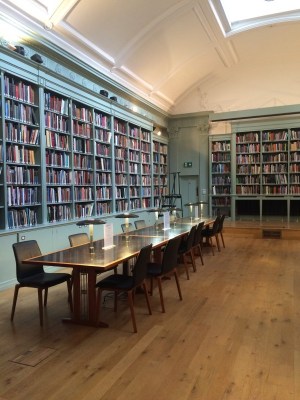 After our ten-month-long refurbishment and expansion project, the Paul Mellon Centre for Studies in British Art has re-opened its doors.
One of the jewels in the Centre’s crown is the Public Study Room (PSR), which, newly decorated, is once again open to readers from 10am to 5pm, Monday to Friday. Users of our PSR will enjoy improved, highly-convenient open-shelf access to the books that provide the mainstay or our rich library collections, and that cover all periods of British art and architecture. However, some of our Research Collection material is not yet installed on the premises; this includes journals, auction catalogues, rare books, and all of our archive and photographic archive collections. We hope that all of this material will be fully integrated into our collections, and available for use by readers, over the next few months. Please call 020 7580 0311 or email collections@paul-mellon-centre.ac.uk for further information.
◊ ◊ ◊ ◊ ◊
In addition to the renewed Public Study Room, the renovation project—completed by Wright and Wright—has doubled the size of the Centre’s listed Grade I premises with the acquisition of the lease of 15 Bedford Square, just next door. Bedford Square (built between 1775 and the 1780s) has been home to the Centre since 1996 (the Centre having previously been based at 20 Bloomsbury Square). The space that now serves as the Study Room had been heavily reworked in the 1920s; and as noted at the Mellon’s Centre’s website, based on “the evidence of the plaster ‘proscenium arch’ at the north end,” it “may well have been designed as a private cinema.” After nearly two decades, the unforgettable green room has been reborn, with this clever video showing the books going back onto the newly painted shelves. I can’t wait until my next visit. –CH
◊ ◊ ◊ ◊ ◊










 Enfilade
leave a comment