The Sound of Paris in the Eighteenth Century
◊ ◊ ◊ ◊ ◊
Audio Reconstruction of Eighteenth-Century Paris
A team from Université Lyon-2, led by Mylène Pardoen (Department of Music and Musicology), has reconstructed the soundscape of eighteenth-century Paris.
From Le Journal CNRS (Centre national de la recherche scientifique). . .
La musicologue Mylène Pardoen a reconstitué l’ambiance sonore du quartier du Grand Châtelet à Paris, au XVIIIe siècle. Présenté au salon de la valorisation en sciences humaines et sociales, à la Cité des sciences et de l’industrie, son projet associe historiens et spécialistes de la 3D.
Paris comme vous ne l’avez jamais entendu ! C’est l’expérience que propose la musicologue Mylène Pardoen, du laboratoire Passages XX-XXI, à travers le projet Bretez. Un nom qui n’a pas été choisi par hasard : la première reconstitution historique sonore conçue par ce collectif associant historiens, sociologues et spécialistes de la 3D1, a en effet pour décor le Paris du XVIIIe siècle cartographié par le célèbre plan Turgot-Bretez de 1739 – Turgot, prévost des marchands de Paris, en étant le commanditaire, et Bretez, l’ingénieur chargé du relevé des rues et immeubles de la capitale.
70 tableaux sonores
C’est plus précisément dans le quartier du Grand Châtelet, entre le pont au Change et le pont Notre-Dame, que la vidéo de 8 minutes 30 transporte le visiteur. « J’ai choisi ce quartier car il concentre 80 % des ambiances sonores du Paris de l’époque, raconte Mylène Pardoen. Que ce soit à travers les activités qu’on y trouve – marchands, artisans, bateliers, lavandières des bords de Seine… –, ou par la diversité des acoustiques possibles, comme l’écho qui se fait entendre sous un pont ou un passage couvert… » S’il existe déjà des vidéos sonorisées, c’est la première fois qu’une reconstitution en 3D est bâtie autour de l’ambiance sonore : les hauteurs des bâtiments comme les matériaux dans lesquels ils sont construits, torchis ou pierre, tiennent compte des sons perçus – étouffés, amplifiés… – et inversement. . . .
More information is available here»
Romantic Illustration Network

◊ ◊ ◊ ◊ ◊
From RIN:
The Romantic Illustration Network (RIN) restores to view the importance of book illustration and visual culture in the Romantic period, but also across the eighteenth and nineteenth centuries. RIN brings together scholars working on poetry, prose, the printed book, visual culture, and painting from roughly 1750–1850 to share research and to develop new models for understanding the relationship between word and image in the period, between large and small scale work, and between painting, print and illustration.
We are collaborating with Tate Britain to enhance the Tate’s collection of literary prints and paintings. RIN will foreground artists who have been unduly ignored, and return attention to well-known artists in unfamiliar roles. We aim to recapture lost cultures of looking and of reading, restoring the link between word and image not only in book illustration but in the wider literary and visual culture. Our programme of events will take as starting point in turn the artist, the author, the gallery and the economics of print. We will produce an edited collection of essays and it is hoped that this network will form the basis for a longer research project.
The RIN blog is available here»
Georeferencing the British Library’s Map Collection
◊ ◊ ◊ ◊ ◊
A recent posting at at the British Library’s Maps and Views blog (25 March 2015) describes the latest phase of the project to georeference the BL’s map collection. As a crowdsourcing project, it’s fascinating. And even if you’re not interested in contributing your time, there are lots of resources already available (to search for maps previously georeferenced, use the map portal Old Maps Online, which searches across numerous online map collections, including the British Library). The video below provides an effective introduction to the basic concept of georeferencing. –CH
◊ ◊ ◊ ◊ ◊
From the BL’s Georeference Home:
Help! British Library needs 50,000+ maps georeferenced
 You can join the latest phase of our project, which features over 50,000 more maps from the British Library collections. Help us identify accurate locations for these historic maps! Bear in mind that some places have changed significantly or disappeared completely, creating a puzzle that reveals an exciting contrast.
Your name will be credited, and your efforts will significantly improve public access to these collections. Contributors can see the results of their work, as well as the progress of the pilot and other participants, and the top contributor will be publicly announced.
Newly Formed ANZSECS
Australian and New Zealand Society for Eighteenth-Century Studies

Jean-Baptiste Joseph Pater, The Fair at Bezons, ca. 1733 (New York: Metroplitan Museum of Art)
The newly formed Australian and New Zealand Society for Eighteenth-Century Studies (ANZSECS) exists to promote the study of the culture and history of the long eighteenth century within Australia and New Zealand. The Society encourages research in eighteenth-century studies on a broad interdisciplinary basis—its members work in fields including art history, history, literature, philosophy, bibliography, and the history and philosophy of science. It is an affiliate of ISECS, the International Congress for Eighteenth-Century Studies.
Established in December 2014, the Society draws on a distinguished history of eighteenth-century scholarship in Australia and New Zealand. It advances the exchange of information and ideas among researchers engaged in eighteenth-century studies through various activities and events, including the 3–4 yearly David Nichol Smith Seminar. For more information about the Society, membership, and related events, please visit our website.
Working Group | Home Subjects, ca. 1750–1900

Arthur Devis, The John Bacon Family, 1742–43, 30 x 52 inches (76.2 x 131.1 cm), oil on canvas (New Haven: Yale Center for British Art, Paul Mellon Collection).
◊ ◊ ◊ ◊ ◊
Thanks to Historians of British Art for sponsoring the “Home Subjects” panel at the 2015 meeting of the College Art Association last week in New York. The panel kicked off a series of activities that the organizers of Home Subjects are planning over the course of the next few years in an attempt to bring together scholars interested in the display of art in the the private or domestic interior. Our hope is to make connections across traditional period boundaries in order to encourage and facilitate research and discussion about the role art played in the decoration of the private interior and, in turn, how the display of art in the private interior shaped the direction of contemporary art. Further information about the topics Home Subjects would like to address can be found on our blog. We also encourage anyone interested in participating or sharing ideas to sign up for our email list at homesubjects@gmail.com. Stay tuned for blog posts, calls-for-papers, and more!
Melinda McCurdy, The Huntington Library, Art Collections and Botanical Gardens, San Marino, CA
Morna O’Neill, Wake Forest University, Winston-Salem, NC
Anne Nellis Richter, Independent Scholar and part-time faculty, American University, Washington, DC
Travel Diaries of Crown Prince Friedrich Christian, 1738–40
I imagine many Enfilade readers will be interested to learn of Maureen Cassidy-Geiger’s transcriptions of the unpublished diaries of Crown Prince Friedrich Christian, documenting his travels in Italy from 1738 to 1740. –CH
◊ ◊ ◊ ◊ ◊
From Cassidy-Geiger’s introduction to the project:
Incognito: The ‘Comte du Lusace’ on the Grand Cure in Italy, 1738–40 — The unpublished travel accounts of Crown Prince Friedrich Christian (1722–63) of Saxony/Poland, a disabled tourist traveling in Italy in 1738–40 as ‘Comte de Lusace’, and related documentation and research by Maureen Cassidy-Geiger.
The Prince and I
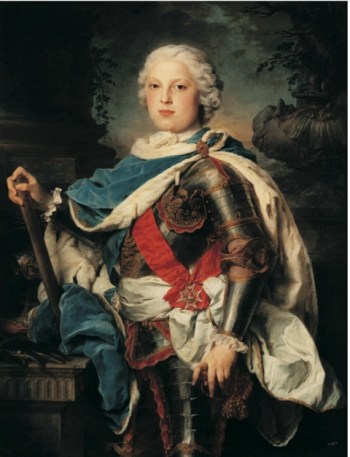
Pierre Subleyras, Portrait of Prince Friedrich Christian of Saxony, 1739 (Dresden, Gemäldegalerie)
I first met Friedrich Christian, Crown Prince of Saxony/Poland, in 2004 in the State Archives in Dresden. I was gathering material for a book and stumbled across the handwritten travel diaries of his Italian odyssey in 1738–40. Sixteen years old and crippled by scoliosis and what was termed “palsy” (probably cerebral palsy), his Grand Tour was less a gap year than an all-out effort to find a cure for his condition in medicine or religion and safeguard the succession. Crowned Elector in 1763, he died prematurely from smallpox, aged 41, after reigning for 74 days. Thus he ended up a footnote in history books instead of a legend. And in 2004, I adopted him as my subject, hero and muse. . . .
The handwritten journals of his two-year odyssey are the guidebooks for this journey of mine, of his. The prince wrote daily, in school-boy French, in the words of a dutiful and obedient child on the uncertain road to manhood. A Catholic crown prince of a Protestant state held tight by the Jesuits and buttressed by the Bohemian mysticism of the court of Vienna, he sat at the center of an able-bodied swirl, incognito as Comte
de Lusace though hardly anonymous. . . .
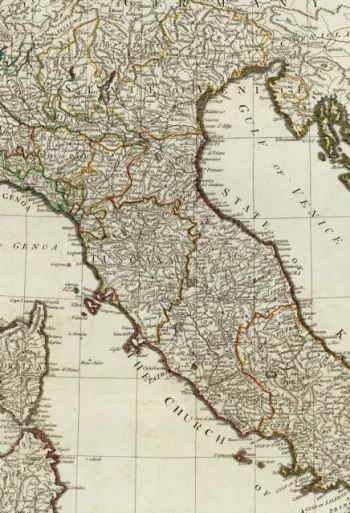
A New Map of Italy . . . from Monsr. D’Anville (London, Robert Sayer, 1790)
To date, I have twice driven the historic itinerary and have conducted research in situ in Dresden, Naples, Rome and Venice, towards an annotated publication. For the moment, however, this WordPress blog is an experimental platform for sharing the contemporary accounts with interested colleagues. The transcriptions retain the inaccuracies, idiosyncrasies and misspellings of the originals and await thorough proofreading and corrections; autocorrect has also introduced inadvertent errors, for which I apologize. . . .
The site is available here»
Research Project | Marrying Cultures: Queens Consort, 1500–1800
This HERA-funded research project on queens consort will be of interest to many readers. Upcoming events are scheduled to take place throughout Europe: Wolfenbüttel, Berlin, Oxford (in conjunction with Kensington Palace), Warsaw, and Stockholm. –CH
Marrying Cultures: Queens Consort and European Identities, 1500–1800
Marrying Cultures is a three-year research project funded by HERA (Humanities in the European Research Area) focusing on the foreign consort as agent of cultural transfer. The case studies to be investigated are the Polish princesses Katarzyna Jagiellonka, Duchess of Finland and Queen of Sweden (1526–83), and Zofia Jagiellonka, Duchess of Braunschweig-Wolfenbüttel (1464–1512); Hedwig Eleonora of Schleswig-Holstein-Gottorp, Queen of Sweden (1636–1715), and Charlotte Amalie of Hessen-Kassel, Queen of Denmark (1650–1714); the Portuguese princess Catarina of Braganza, Queen of Great Britain (1638–1705); Maria Amalia of Saxony, Queen of the Two Sicilies and Queen of Spain (1724–1760); and Luise Ulrike of Prussia, Queen of Sweden (1720–82).
Working with colleagues in historic palaces, museums and libraries (including Kensington Palace, the Victoria and Albert Museum and the National Portrait Gallery, London; the Royal Armoury, Stockholm, and the Duke August Library, Wolfenbüttel), the project members will also consider how it is that certain consorts become embedded in national cultural memory and others do not.
Partners
Historic Royal Palaces (Kensington Palace, London): Dr Joanna Marschner
National Portrait Gallery, London: Dr Catharine Macleod
Victoria and Albert Museum, London: Dr Julius Bryant
Livrustkammaren (The Royal Armoury), Stockholm: Dr Malin Grundberg
The Museum of Polish History, Warsaw: Monika Matwiejczuk
Supportive Institutions
Herzog August Bibliothek, Wolfenbüttel: Professor Hellwig Schmidt-Glintzer
Hochschule für Musik, Theater und Medien, Hannover: Professor Susanne Rode-Breymann
Husgerådskammaren (The Royal Collections), Stockholm: Dr Lars Ljungström
Turku Castle and Historical Museum: Olli Immonen

Editorial | Digital Textbooks / Thomas Buser’s History of Drawing

Jacques-Louis David, The Intervention of the Sabine Women, 1794. Black chalk, pen and black ink, gray wash with white heightening on two sheets and five fragments of paper pasted together, 25.7 x 34 cm (Paris: Louvre; photo: T. Le Mage).
Click here for more information.
◊ ◊ ◊ ◊ ◊
As someone regularly faced with assigning new editions of textbooks that seem increasingly overpriced, I wonder how long it will be until resources such as the basic art history survey text are available digitally for free. Yes, these are choppy waters—pedagogically, methodologically, ideologically, and as business practice—further complicated by recent legislation, primarily from California: SB48 signed into law in 2010 along with SB 1052 and SB 10532 signed in 2012. But I think the stakes are high in our getting this right.
Thomas Buser’s History of Drawing, which surveys Western drawing from the fifteenth to twentieth centuries, seems worth noting to me as an early example of what we might see more of in the coming years. I imagine most instructors would assign pieces in conjunction with other materials, but the price (free) facilitates such flexibility. If students in a studio drawing course are introduced to eighteenth-century artists they otherwise wouldn’t know about, that seems useful to me. In the context of a survey, I can imagine building one or two individual class sessions around the topic of drawing with this as a starting point for students. While there aren’t notes—an all too common and unfortunate characteristic of the textbook genre that could be rectified in the digital realm—there is a reasonably extensive bibliography, excluding (at least presently) the twentieth century.
With permissions an ever moving target, we’ve made huge strides during the last decade toward more open policies. Buser has adopted an approach that likely wouldn’t work with publishers (or profits) involved, but again this strikes me as a gain. If the image selection is admirable, in most cases the image quality is not. On the other hand, Buser’s text is also a work in progress, one of the biggest advantages of this new format.
I don’t usually voice opinions too loudly here (I try not to voice many opinions even softly and I’m certainly not speaking on behalf of HECAA), but here’s my concern: if art history—and I have in mind a discipline much larger than the eighteenth century—doesn’t move toward more affordable digital options, we will be further marginalized, characterized as an intellectual luxury, available only to a small, elite segment of higher education. At least at its best, the museum as an institution is premised on public access; it’s time we find some way to extend this vision to introductory art history texts.
–Craig Hanson
◊ ◊ ◊ ◊ ◊
From Busser’s History of Drawing:
History of Drawing is a textbook and reference book available free to anyone who loves drawings. . . .Thomas Buser earned his doctorate in Art History from NYU’s Institute of Fine Arts in 1974. He taught courses in Baroque Art and the course History of Prints and Drawings at the University of Louisville until his retirement in 2005. He has published Religious Art in the Nineteenth Century in Europe and America (two volumes, 2002) and the textbook Experiencing Art Around Us (second edition, 2006).
The French Sculpture Census Now Online
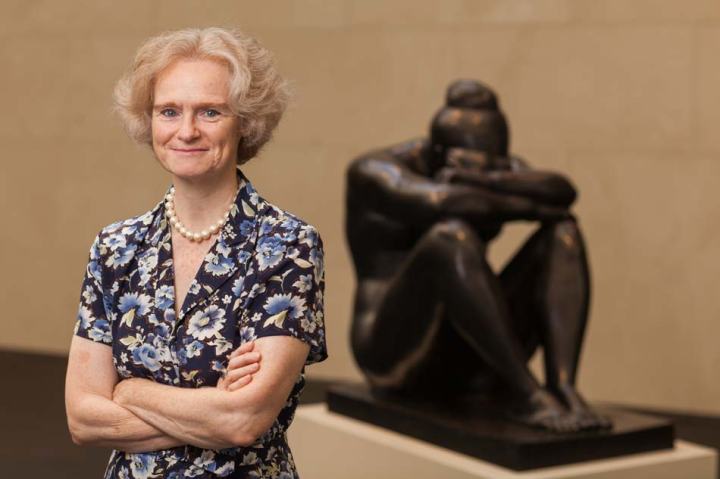
The brainchild of Laure de Margerie, the French Sculpture Census came online in December 2014 with its first 7,000+ records. Hosted by the Nasher Sculpture Center in Dallas with funding from a variety of institutions, the website aims to provide a list of French sculpture produced between 1500 and 1960 that can now be found in American public collections, museums, public buildings, historic homes, or displayed in public space. The completed census is expected to include between 15,000 and 20,000 records. More information is available here»
◊ ◊ ◊ ◊ ◊
From the Nasher Sculpture Center:
Stories from the French Sculpture Census
Nasher Sculpture Center, Dallas, 21 February 2015
From beloved works by Matisse and Rodin in museum collections to American icons like the Statue of Liberty, French sculpture has had a rich and indelible impact on the cultural landscape of the United States. In celebration of a new website that reveals the extent of this shared creative history, Laure de Margerie and panelists from the project’s international partner institutions will share stories of favorite works drawn from the database of the French Sculpture Census.
Laure de Margerie, Director of the French Sculpture Census, was Senior Archivist and head of the Sculpture Archives at the Musée d’Orsay in Paris, from 1978 through 2009. In this position she curated several exhibitions including Facing the Other: Charles Cordier (1827–1905), Ethnographic Sculptor (Paris, Quebec City, New York, 2004/05). She was part of the team who installed the sculpture collection at the opening of the museum in 1986 and co-authored the collection catalogue (1986). De Margerie also worked as archivist in charge of historic buildings in Normandy in Rouen (1983–1985) and oversaw rights and reproductions at the National Archives in Paris (1991–1992). She was awarded a fellowship at the Clark Art Institute, in Williamstown, MA (2000/01), and was the Sculpture and Decorative Arts Department guest scholar at the J. Paul Getty Museum in Los Angeles, CA (Fall 2011).
The Census of French Sculpture in American Public Collections is the first comprehensive catalogue of French sculpture in the United States. It lists all existing French sculpture, dating from 1500 to 1960, in American public collections. Not only does it take account of works in museums, but also in historic houses, government buildings (the White House, for example), corporate collections, and public space. The scope of the census is vast, both in space and time, and currently includes 7,500 works by 680 artists in 305 locations.
Hosted by the Nasher Sculpture Center and supported by a consortium of institutions in the U.S. and France, the French Sculpture Census will be the largest existing website solely dedicated to sculpture. The Census of French Sculpture in American Public Collections is a project of the University of Texas at Dallas and the Nasher Sculpture Center, Dallas, in coproduction with the Institut National d’Histoire de l’Art (INHA), Paris, the Musée d’Orsay, Paris, and the Musée Rodin, Paris, with the participation of the Ecole du Louvre, Paris.
Historic New England’s Wallpaper Collection Now Available Digitally
◊ ◊ ◊ ◊ ◊
Press release via Art Daily (29 December 2014). . .
Thanks in part to a grant from the Institute of Museum and Library Services, Historic New England announces the completion of a digitization project that makes its extensive wallpaper collection more accessible. For the past two years, Historic New England has been cataloguing and digitizing its wallpaper collection. Now, more than 6,000 samples have been electronically catalogued and are available at WallpaperHistory.org. The collection includes rolled, flat, oversize, and three-dimensional materials, which each require unique handling and digitization methods.
The project makes accessible a collection that spans three centuries and ranges from very early imported items to William Morris designs to vinyl wallpapers from mid-1960s. The entire Waterhouse Archive of Historic Wallpapers has been newly catalogued and digitized, and there are upgrades and a redesign to 4,800 additional records that improve image quality and data content.
“Now the collection is searchable by date, location, and manufacturer, and by keywords like color and type of pattern”, says cataloguer Peggy Wishart. “You can zoom in to see every detail.”
Historic New England extensive wallpaper collection contains individual samples, historic photographs of wallpaper in situ, and ephemera dealing with the wallpaper industry. The wallpapers range from pristine examples with complete repeats to small fragments that are part of a sequence in a particular room and also includes scrapbooks, borders, bandboxes, fireboards, and scenic panels, many of which are accessible online for the first time. Historic New England is the oldest, largest, and most comprehensive regional heritage organization in the nation. We bring history to life while preserving the past for everyone interested in exploring the New England experience from the seventeenth century to today. Historic New England owns and operates thirty-six historic homes and landscapes spanning five states. We share the region’s history through vast collections, publications, programs, museum properties, archives, and family stories that document more than 400 years of life in New England.
More information is available here»










 Enfilade
leave a comment