Online Resource | James Gillray: Caricaturist

James Gillray, A Cognocenti Contemplating ye Beauties of ye Antique, 1801 (London: The British Museum)
James Gillray: Caricaturist
For those of you interested in eighteenth-century caricature and particularly James Gillray, there is a new online resource: James Gillray: Caricaturist. The site includes a chronological catalogue of Gillray’s known prints, a list of major museums and archives where his work can be seen, information about him and his methods and techniques, and links to short biographical sketches of some of the people he caricatured.
The work of Jim Sherry, who has written on the modes of caricature as well as the humor of Thomas Rowlandson, the site continues to grow as Jim adds commentaries on individual Gillray prints (48 so far).
Göttingen Summer School | Academic Collecting and Knowledge
From H-ArtHist:
Göttingen Spirit Summer School
Academic Collecting and the Knowledge of Objects, 1700–1900
Lichtenberg-Kolleg, Historic Observatory, University of Göttingen, 5–10 September 2016
Applications due by 1 May 2016
Experts/Speakers
Anne Mariss, University of Tuebingen
Maria Rentetzi, National Technical University of Athens, Lise Meitner fellow, University of Vienna
Kim Sloan, British Museum London
Emma Spary, University of Cambridge
Early modern cabinets of curiosities/Wunderkammern can be considered as an important space especially for those developing sciences that wanted to transcend text based scholasticism and base their knowledge solely on experience. Scholarly engagement with collections laid the foundations for knowledge production that was based on experiment and research with and on objects. Since this development took shape during the 17th century, collecting, storing, ordering, and the presentation of objects has become a strong concern for many academic disciplines.
Accordingly, technologies that transformed things into objects of knowledge and rendered them accessible and sustainable are equally practical as well as epistemological techniques. Current research in the history of science and knowledge focuses increasingly on practices of collecting, ordering and presenting. Thus highlighting how scientific research and its results are intertwined with and rely upon different cultures of materiality and the handling of objects is the main concern of the summer school.
In addition to questions concerning the role of objects and collections in the processes of knowledge production, we would also like to address the state and development of object based research in the humanities. How can humanities research be enhanced by engaging with objects? Which methods and theories can be successfully employed in order to achieve meaningful knowledge about these processes on a medium and larger scale? Each day of the summer school will be dedicated to a specific topic where four PhD candidates will present their research and give an introduction to their projects, with one expert commenting and leading the discussion for each project.
As we acknowledge the epistemic value of engaging with objects, visits to the relevant academic collections at the University of Göttingen are an integral part of the program. Two of our experts, Kim Sloan and Emma Spary, will also give keynote lectures on Monday and Wednesday respectively. On Thursday evening, Anne Mariss will introduce her recent book ‘A World of New Things’: Praktiken der Naturgeschichte bei Johann Reinhold Forster (Johann Reinhold Forster and the Practices of Natural History), thereby reflecting on her process of writing a thesis on praxeological aspects of knowledge production and engaging with material culture.
The four thematic sections are:
From encyclopaedic to specialised collecting: Practices of collecting and exhibiting, the role of collectors and things // Kim Sloan, British Museum
During the two centuries between 1700 and 1900, a far-reaching transformation took place that influenced both the scientific practices related to objects and the role of collectors. Burgeoning university collections differed considerably from most private or courtly cabinets of curiosities regarding their claims to establish order, classification and systematic comparison: the typical and the ordinary gradually replaced the rare and the unique, and the learned collector became the collecting scholar. The 18th century can be seen as a period of transition and the nineteenth 19th century was a threshold in the process of the differentiation of academic disciplines. This also influenced the collections, which were separated as well and thereby shed new light on the objects and thus eventually led to new ways of knowledge production. Accordingly, we especially invite presentations that address continuities and discontinuities in practices of collecting and the role of the collectors, as well as the actual order, presentation and spatial distribution of objects in the collections. Additionally, presentations that engage with wider epistemological, cultural, social and political contexts are equally welcome.
‘Putting nature in a box’ The material order of things: shelves, cabinets, boxes and other furniture of order // Maria Rentetzi, NTU Athens, University of Vienna
Furniture that helps to order and to store collections is an important part of the social world of collecting and is embedded in the epistemic practices surrounding collections as well. Material appliances influence the rules of the handling of objects and permit as well as prohibit certain practices. Thus, they are not neutral vessels but material conditions of possibilities regarding what and what cannot be known at a particular time and space. Which role do these vessels play concerning the development of object centred sciences in the18th and 19th century, especially concerning the production of knowledge and its contents? How did cabinets and other storage systems help natural historians to organise knowledge, and how did they help to create knowledge about the natural world? How did boxes become multifunctional tools in transferring the collected material into systematics? Could this furniture be regarded as a kind of laboratory that decontextualized and re-contextualised objects in changing spatial-systematic vicinities?
Networks, actors and objects // Emma Spary, Cambridge University
Current research in the history of science and knowledge no longer focuses solely on individual collectors and well-known collections, but also on complex and far-reaching networks of collecting that mobilised and thereby often transformed objects, actors and inscriptions. This approach lead to the decentralisation of the persona of the collector and collections were conceptualised in the Latourian framework as ‘centres of calculation’. Special emphasis was laid on the analysis of the diverse spaces within which objects of knowledge were constituted and circulated. This panel wants to address the complicated movements of objects, materials, specimen and living creatures (both humans and other animals) within these wide and heterogeneous networks. Studies that address their itineraries between various spaces of encounter, e.g. academic collections, the marketplace, the scholars’ houses, lecture halls, hospitals, etc. are especially welcome. Additionally, we are interested in the multitude and diversity of the actors in these spaces. Extending the research beyond the scholar as the classical focus in the history of science, we want to know about artisans, merchants and, very importantly, the members of the source communities from where the objects originated. It will be interesting to see if these diversities also produced different kinds of knowledge. Besides well-studied analytical and systematic forms of knowledge, other kinds, especially corporeal, implicit and tacit knowledge as well as technological, practical and artisanal competence—that all of these actors applied in one way or another—will be the focus of this panel. Calculation, Ordering and Classification are only three possible practices that would highlight these processes, and we are equally looking forward to presentations addressing further practices.
The long road to the image: strategies of visualisation in collections // N.N.
Images are also part of the transformation processes surrounding objects but they exemplify a special form of inscription in their claim to be mimetic. Current history of science and interdisciplinary visual culture studies have shown that the road from object to image is not as straightforward and simple as previously acknowledged. In order to understand the visual representation of collections, objects, and collectors, the manifold processes that lead from object/subject to image have to be analysed thoroughly. Traditions and conventions of image making have to be studied in order to show how social, epistemic and affective contexts of image production and presentation have influenced these processes.
Applications and selection procedure
The summer school will be held in English and welcomes PhD candidates or advanced postgraduates to apply. Up to 16 applicants will be admitted. Interested applicants are asked to send a cover letter, a CV and a research exposé (1500–2000 words/approx. 3–5 pages) preferably via e-mail as one pdf file to summerschool@kustodie.uni-goettingen.de by 1st of May 2016. The cover letter should address to which of the four sections the project would correspond to. Ideally, it should already mention a special interest in one or more academic collections from Göttingen, as well as contain a short explanation why the certain collection(s) would be interesting for the PhD or postgraduate project. The selection will be conducted by the convenors, the experts and the academic advisory board of the Zentrale Kustodie. Successful candidates will be informed early in June, and will then be asked to send in a more developed research exposé (up to 8000 words/approx. 15–20 pages) within 6 weeks of the invitation. These texts will be circulated among all participants of the summer school and will be the basis for the experts‘ commentaries and the discussions during the summer school. We ask all applicants to address not only the research content of their projects but also to include references to concepts and methodologies and an explication of their research agenda and the sources employed. A discussion on how objects and collections feature in the research project is very much appreciated.
Thanks to the generous support of the Goettingen Spirit Summer School program at the University of Göttingen, we are able to provide board and lodging for all participants. The participation fee is 50€. For further information and questions, please contact Christian Vogel (summerschool@kustodie.uni-goettingen.de).
Convenors
Marie Luisa Allemeyer (Zentrale Kustodie, University of Göttingen)
Dominik Hünniger (Lichtenberg-Kolleg, University of Göttingen)
Christian Vogel (Zentrale Kustodie, University of Göttingen)
◊ ◊ ◊ ◊ ◊
M O N D A Y , 5 S E P T E M B E R 2 0 1 6
5:00 Arrival and registration
6:30 Keynote lecture by Kim Sloan
8:00 Opening dinner
T U E S D A Y , 6 S E P T E M B E R 2 0 1 6
From encyclopaedic to specialised collecting: Practices of collecting and exhibiting, the role of collectors and things / Kim Sloan
9:30 Presentation of the chair
10:00 Two project presentations
1:30 Visit of a collection
4:00 Two project presentations
6:30 Guided tour Historic Observatory
8:00 Dinner
W E D N E S D A Y , 7 S E P T E M B E R 2 0 1 6
‘Putting nature in a box’: The material order of things: shelves, cabinets, boxes and other furniture of order / Maria Rentetzi
9:30 Presentation of the chair
10:00 Two project presentations
1:30 Visit of a collection
4:00 Two project presentations
6:30 Keynote lecture by Emma Spary
8:00 Dinner
T H U R S D A Y , 8 S E P T E M B E R 2 0 1 6
Networks, Actors and Objects / Emma Spary
9:30 Presentation of the chair
10:00 Two project presentations
1:30 Visit of a collection
4:00 Two project presentations
6:30 Book presentation by Anne Mariss
8:00 Dinner
F R I D A Y , 9 S E P T E M B E R 2 0 1 6
The long road to the image: strategies of visualisation in collections / N. N.
9:30 Presentation of the chair
10:00 Two project presentations
1:30 Visit of a collection
4:00 Two project presentations
6:30 Anthropology performance
8:00 Dinner
Summer Workshop | Visualizing Venice: The Ghetto of Venice

◊ ◊ ◊ ◊ ◊
From H-ArtHist, with more information available from Venice International University:
Visualizing Venice Workshop: Mapping and Modeling the Ghetto of Venice
Venice International University, 8–20 June 2016
Applications due by 31 March 2016
With the support of The Getty Foundation as part of its Digital Art History initiative, The Wired! Lab at Duke University, Università Iuav di Venezia, the University of Padua, and Venice International University are collaborating on a summer workshop that will train art, architectural, and urban historians with the digital media that can enhance or transform their research questions and their capacity to communicate narratives about objects, places, and spaces to the public.
This fifth annual 12-day workshop teaches a range of digital skills in mapping, 3D modeling, mobile application and web development, and time based media authorship to enable participants to engage historical questions with emerging digital tools. The course will engage with the Ghetto of Venice on the 500th anniversary of its creation as case study for training with a variety of technologies and applications. Instruction will be given in English by faculty and staff from Duke University’s Wired! Lab and Università Iuav di Venezia.
The workshop is designed for PhD or post doctoral participants in the interpretive humanities (including cultural patrimony, history of art, architecture and urbanism, history, geography, architecture, archaeology, and other relevant disciplines). Preference will be given to PhD students and recent PhD graduates in the history of art, architecture, and urbanism. The workshop is taught at Venice International University on the island of San Servolo in the Venetian Lagoon. Participants can live in the housing facilities of the island of San Servolo or arrange for accommodation in the city of Venice. Tuition fees are 1,000€ (+22%VAT). Scholarships are available in order to support tuition, travel, board, and accommodation expenses thanks to the generosity of The Getty Foundation.
Six-Week Online Course | The Gothic Revival, 1700–1850
◊ ◊ ◊ ◊ ◊
From Open Education:
Six-Week MOOC | The Gothic Revival, 1700–1850: Interdisciplinary Perspectives
Beginning 29 February 2016
Taught by Dale Townshend and Peter Lindfield
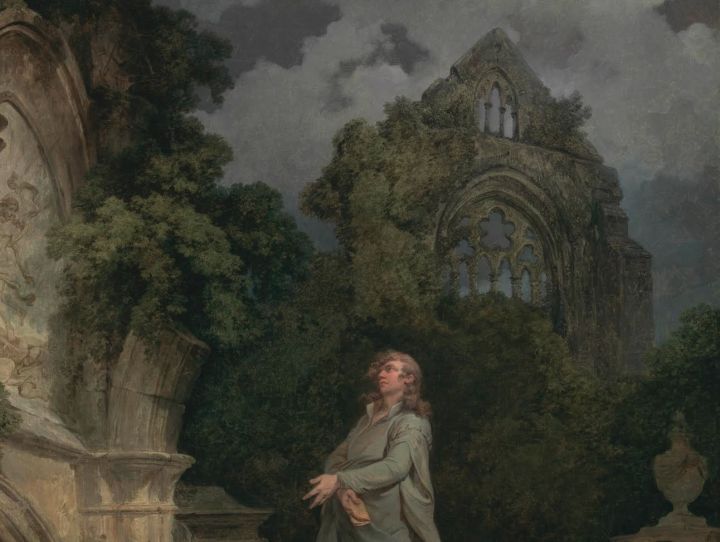
Designed for the non-specialist learner, this six-week course is intended as an introduction to the inter-disciplinary dimensions of the Gothic Revival in British culture of the long eighteenth century (1700–1850). Over 6 weekly sessions, you will be guided by acknowledged experts in the field of Gothic studies through the following topics:
1 Introduction, and the Meanings of the Term ‘Gothic’ in the Eighteenth Century
2 An Introduction to Gothic Literature: Horace Walpole’s The Castle of Otranto (1764)
3 Gothic Literature after Walpole
4 The Gothic Revival in Architecture
5 Gothic Interiors in the Eighteenth Century
6 Gothic in Eighteenth-Century Visual Art
The MOOC commences on Monday 29 February 2016. Each session consists of three mini-lectures, quizzes, the use of reflective diaries, and peer discussion. Your tutors will be available for a one-hour live Question and Answer session per week. Further details about this will follow in due course.
Prerequisites: None, other than an abiding interest in the early Gothic aesthetic.
Time Commitments: Approximately 1 hour of formal instruction time per week, excluding your own personal study and reading.
Rules of Progression: Each successive week will only become available to you once you have completed the quiz for the previous week. Although these weekly exercises to do not count towards your certificate of completion, you are encouraged to complete them in preparation for the final quiz.
Certificates of Completion: Proof of having successfully completed the MOOC will be available at the end of the course. In order to qualify for a certificate, you will have to have scored at least 50% in the final quiz, an informal test comprised of a selection of questions encountered in earlier sessions.
Instructors: Dale Townshend (Senior Lecturer in Gothic and Romantic Studies Division of English Studies, University of Stirling) and Peter Lindfield (Postdoctoral Research Fellow, Literature and Languages, University of Stirling)
◊ ◊ ◊ ◊ ◊
Redwood Library Acquires Collection of Early Modern Architecture Books

Redwood Library and Athenaeum in Newport, Rhode Island, with Harrison’s Mirror mounted on the front pediment of the 1750 building, designed by Peter Harrison; the mirror was one element of the installation exhibition To Arrive Where We Started by Peter Eudenbach (July 2012 — July 2013).
◊ ◊ ◊ ◊ ◊
From Art Daily (17 February 2016) . . .
The Redwood Library and Athenaeum—a hybrid historic site, museum, rare book repository, and the oldest continuously operating lending library in America (1747)—has acquired a comprehensive collection of seventeenth- and eighteenth-century British architecture books and building manuals from the antiquarian bookseller Charles Wood. Comprising 53 titles, the collection deepens the Library’s already significant holdings of material devoted to early modern architecture and design, one of its cornerstone collecting areas. The acquisition was made possible by a grant from the B.H. Breslauer Foundation, as well as from donations from a number of local and national benefactors.
 “By virtue of what the Redwood is—the country’s oldest public Neo-Classic structure and a touchstone of the nation’s architectural patrimony—we are duty bound to remain a center for the study of early American architecture,” said Benedict Leca, Executive Director of the Redwood Library. “This collection dovetails perfectly with our existing holdings, notably the Cary Collection of supremely rare eighteenth-century pattern books, and exemplifies our commitment to the scholarly interpretation of our own building and those of colonial Newport.”
Newport’s historic center of learning and a designated national landmark, the Redwood Library has been serving New England and beyond as a resource supporting the range of intellectual pursuit for nearly three hundred years. In a city especially known today as a hub of historic preservation, garden design and place making, the Redwood endures as a locus of research in these domains through a constellation of related collections, making this acquisition especially pertinent.
The Redwood’s Newport Collection, an indispensable trove when researching Newport and Aquidneck Island, comprises over 5,000 books and hundreds of archives and manuscripts. The Doris Duke Preservation Collection focuses on New England colonial and nineteenth-century architecture, with an emphasis on the preservation and restoration of both the exterior architectural structure, including windows, doors and moldings, and on interior decorative elements, such as wallpaper and textiles. The Dorrance Hamilton Gardening Collection currently holds over 500 titles of landscape architecture, classic ‘how-to’ guides by important historic designers, such as Geoffrey Jellicoe and Lancelot ‘Capability’ Brown, as well as a number of discerning treatments of historic world gardens. The Cynthia Cary Collection, collected over decades by Mr. and Mrs. Guy Fairfax Cary, Sr., contains nearly 200 fifteenth- to mid-nineteenth-century English and continental pattern books of furniture, decoration, and ornament. All of these collections are a resource for scholars from all over the world, and continue to grow through the acquisition of primary works and authoritative scholarly titles.
“This outstanding collection is particularly noteworthy as it is a blend of builder’s manuals on one hand, and of illustrated, so-called gentlemen’s folios on the other,” specified Benedict Leca. “It gives us a window not only on period building techniques, but also on the diffusion of architectural knowledge, its styles and fashions, by way of some real rarities. The Scamozzi Mirror of Architecture, for example, was often used practically by builders and thus literally consumed; for this reason it rarely survives complete. Of appeal to the connoisseur rather than the builder is a very rare suite of nine copperplate engravings of Chinese lattice designs by William Halfpenny, with the only two other known copies at the British and Avery libraries.”
Further highlights from the collection include a number of rare manuals and pamphlets, including Henry Cook’s Patent artificial slate manufactory (1786), one of only three copies listed in the National Union Catalog (NUC); Abraham Fletcher’s The Universal Measurer (1766), one of only six copies on OCLC; and The Rudiments of Architecture or the Young Workman’s Instructor (1775), one of only two known copies, the Redwood’s having an eighteenth-century Boston provenance. The folios include a copy of the now scarce pattern book produced by Abraham Swan, The British architect or the builder’s treasury of stair-cases (1765?); and Christopher Wren Jr’s Parentalia: or memoirs of the family of Wrens (1750), an exceptional copy complete with the often-missing mezzotint frontis portrait of Wren.
Display | John Cornforth, A Passion for Houses
Now on view at the Paul Mellon Centre:
John Cornforth, A Passion for Houses: Material on the
Georgian Town House from the Cornforth Library Donation
Paul Mellon Centre for Studies in British Art, London, 8 February — 27 May 2016
Curated by Charlotte Brunskill, Frankie Drummond Charig, Emma Floyd, and Jenny Hill
The second Drawing Room Display, curated by Research Collections staff, focuses on material donated to the Paul Mellon Centre from the Estate of John Cornforth. The display concentrates on the town house in the 18th century and will run from February until May 2016.

Bookplate for John Cornforth, designed by Reynolds Stone (1909–1979).
John Lawley Cornforth (1937–2004) was an architectural historian who wrote numerous articles for Country Life from 1961 to 1993 and worked for the National Trust for many years. His specialism was the 17th- and 18th-century country house, but he also wrote extensively on the town house and its interiors. John Cornforth’s personal working library was donated to the Paul Mellon Centre, through the auspices of the National Trust, in August 2004, shortly after his death. This collection, from which staff selected nearly 800 books and journals, increased the Centre’s already extensive holdings on the history of the town and country house and added considerably to the previously small collection on eighteenth-century decorative arts. He also donated to the Centre’s Photographic Archive the collection of photographs taken for his book, Early Georgian Interiors, published posthumously by Yale University Press for the Paul Mellon Centre in 2004.
The display consists largely of materials donated from Cornforth’s collection but will also include a number of works about John Cornforth or written by him drawn from the rich holdings of the Centre’s library. The holdings relating to John Cornforth are just one of the many points of entry to study the town house of the 18th century in the Research Collections. The Centre’s Archive holds relevant material in, for example, the Oliver Millar Archive and the Brinsley Ford Archive on interiors and architects for this period.
This display is the second in a series featuring material drawn from the Paul Mellon Centre’s own Research Collections. Display and accompanying booklet produced by Charlotte Brunskill, Frankie Drummond Charig, Emma Floyd and Jenny Hill.
The 24-page booklet is available here»
New Appointment for Margaret Michniewicz
Margaret Michniewicz Appointed Visual Arts Acquisition
Editor at Bloomsbury
 Having worked at Ashgate Publishing since 2011, Margaret Michniewicz recently joined Bloomsbury’s New York office as Visual Arts Acquisition Editor. In addition to welcoming proposals for book projects, she is currently focused on launching new series and invites inquiries and ideas from prospective series editors. Open to a wide array of subject matter, including interdisciplinary approaches and work addressing issues of gender and race, Michniewicz will be commissioning projects in art history and visual culture from the eighteenth century onward.
Kevin Ohe, US Academic Publishing Director at Bloomsbury, underscores the possibilities that lie ahead: “Bloomsbury is thrilled to welcome Margaret Michniewicz to our Editorial team. She brings with her deep experience working with a cohort of tremendous authors. She’ll help us add strength to our already robust publishing program in the visual arts, and we’re looking forward to working with the authors she’ll bring to our list and the new series she’ll create.”
The long list of books she edited at Ashgate includes Materializing Gender in Eighteenth-Century Europe edited by Jennifer Germann and Heidi Strobel; Mariette and the Science of the Connoisseur in Eighteenth-Century Europe by Kristel Smentek; and Académie Royale: A History in Portraits by Hannah Williams. Proposals for edited collections will still be welcome, and Bloomsbury has the capacity to offer both hardback and paperback editions.
In April, Michniewicz will be attending the Association of Art Historians conference in Edinburgh and is currently making appointments for meetings with prospective authors and editors. You can reach her by email at Margaret.michniewicz@bloomsbury.com and follow her on Twitter at BburyViaAshg8.
With her characteristic enthusiasm, Michniewicz comments on her new position: “As an art historian myself, I feel the stars have aligned: I have this opportunity to continue the work I love by developing Bloomsbury’s new research monographs program in art history and visual culture, expanding upon Bloomsbury’s already vibrant visual arts publishing. This is very good news for all art historians!”
New Appointment for Erika Gaffney
Erika Gaffney Appointed Senior Acquisitions Editor in Early Modern Studies for MIP and Arc Medieval Press
 Medieval Institute Publications (MIP) and Arc Medieval Press, together with its partner, Amsterdam University Press (AUP), are delighted to announce the appointment of Erika Gaffney as Senior Acquisitions Editor in Early Modern Studies. Gaffney established her reputation as an acquisitions editor at Ashgate, where she worked for more than 20 years.
A sample of books on which she worked includes Melissa Hyde and Jennifer Milam, eds., Women, Art and the Politics of Identity in Eighteenth-Century Europe (2003); Daniel Guernsey, The Artist and the State, 1777–1855: The Politics of Universal History in British and French Painting (2007); Carole Paul, The Borghese Collections and the Display of Art in the Age of the Grand Tour (2008); Dorinda Evans, Gilbert Stuart and the Impact of Manic Depression (2013); and Gauvin Alexander Bailey, The Spiritual Rococo (2014).
In terms of future acquisitions, her interests for the early modern period will continue to include eighteenth-century European history and culture through the lens of art history and visual culture. Scholars wishing to renew their working relationship with Erika or new scholars interested in submitting not-yet-contracted volumes (or new series) should email her at erika.gaffney@arc-humanities.org to ask for a Proposal Form.
Exhibition and Blog | Mended Ways: The Art of Inventive Repair
The exhibition closed last weekend, but anyone interested in the topic should have a look at Andrew Baseman’s blog Past Imperfect: The Art of Inventive Repair.
Mended Ways: The Art of Inventive Repair from the Collection of Andrew Baseman
The New York Ceramics and Glass Fair, 21–24 January 2016
 Before the invention of Krazy Glue, broken household items were brought back to life with flair and ingenuity. Mended Ways: The Art of Inventive Repair takes you back to a time when necessity was truly the mother of invention, as seen in Andrew Baseman’s collection of over 500 examples of 17th- to mid 20th-century mended ceramics and glassware.
A variety of early repair techniques shown will include metal staple/rivets, perfected in China by itinerant ‘china menders’; tinkers’ replaced handles, lids, and spouts on mugs, teapots and jugs; intricate and detailed silversmiths’ repairs, which only the wealthy could afford.
Extraordinary pieces include a 17th-century Dutch delft ewer with a replaced jeweled metal spout and handle; an American blown and cut crystal candlestick from the early 1900s incongruously stuck into a block of wood; a c. 1850 English lustreware creamer with tin straps and handle; and a set of six delicately painted early 18th-century Chinese export plates held together with enough hand forged metal staples to keep Frankenstein’s monster intact.
Other fascinating repairs include a Chinese Yixing teapot, c. 1700, with a magnificently carved replacement handle and engraved silver mounts; an 1830s transfer-printed jug from England with woven wicker handle; and an 18th-century Chinese export teapot with a record number of repairs including a sterling silver spout, metal rivets supporting the handle, and a replaced hand-painted lid with chain attached to handle. To illustrate what some of the pieces looked like before they took a tumble, intact examples will be shown for a side-by-side comparison.
Andrew Baseman writes the blog, Past Imperfect: The Art of Inventive Repair, which chronicles Baseman’s world-renowned collection of antique ceramics with inventive repairs, also known as ‘make-do’s’. His collection was featured in a cover story for the Home & Garden section of The New York Times. He is an expert on the subject and has lectured in the US and abroad. His lifelong passion for collecting and selling antiques began at an early age and continues to inspire his design work today.
For over 20 years, Baseman worked as a designer, decorator and stylist on diverse film and television projects including The Nanny Diaries, Eat, Pray, Love, The Americans, Gotham and The Normal Heart, working with notable directors Ryan Murphy, Bill Condon, Jane Campion, and others. In 2003, he founded Andrew Baseman Design, Inc., an interior design firm specializing in upscale residential interiors, creating luxurious homes for clients in the visual arts, including film and theatrical producers, fashion designers, and others. He is the author of The Scarf (Stewart, Tabori & Chang, 1989), the classic illustrated art book chronicling the history of the printed scarf that reflects both his expertise and love of textiles.
Congratulations to Pierre-Henri Biger
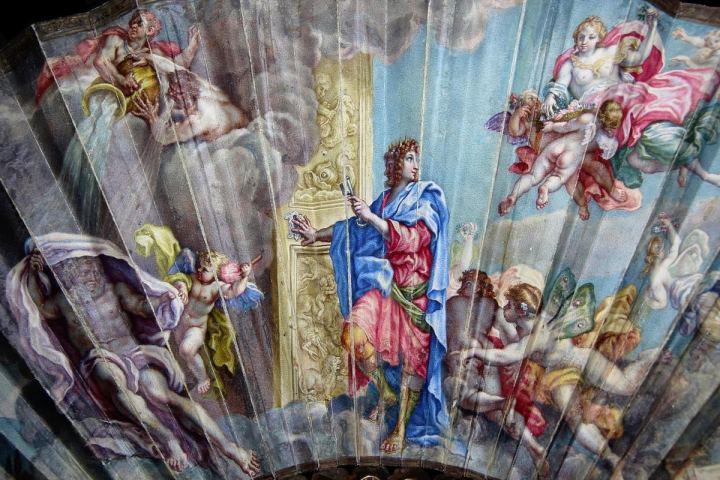
Eighteenth-century fan, after Carlo Maratta, showing Janus at the Door of the New Year
(C&PHB Collection)
◊ ◊ ◊ ◊ ◊
Along with so many fabulous readers, Enfilade has become what it is thanks to fabulous contributors. There are many. But today, I’m glad to single out Pierre-Henri Biger, who defended his PhD thesis in October (at, he tells me, the spry age of 64). Congratulations Pierre-Henri, and we look forward to seeing what comes next! –CH
Pierre-Henri Biger, “Sens et sujets de l’éventail européen de Louis XIV à Louis-Philippe,” Université Rennes 2.
Abstract : Nowadays fans are often kitsch and for tourists. Associated with fashion, these fragile feminine objects have been misjudged and remain unknown. Built for this thesis from public and private collections and public sales, an eclectic database is capable, thanks to a statistical approach, to query and study 2350 items. This study deals mainly with the topics on fan leaves during a very long eighteenth century. Twenty monographs are focusing on objects of the various determined categories. Statistics and monographs, informed by the observation of contemporary art and society, enter into dialogue. The fan appears as a reflection of art through myths, sacred and ancient history, and morality painting. But it is also a witness or an actor in the social, political, and theatrical life, and even used for promoting economic projects or for caricature. Almost all fans carry a meaning, even those ‘without history’, adorned with pastoral scenes, seemingly only mirrors of fashion or occasions of entertainment. This meaning has long been obscured because of the social transformations of the nineteenth century, perhaps for the reason that fans were originally an area of freedom and power of women – even going to libertinism? – For this objet d’art, both public and private, speaks, through the subjects that adorn it, a real speech (largely related to marriage but to love as well). Woman was both recipient and speaker. Studying these objects and learning to decipher their messages would improve their understanding and benefit various disciplines.
More information, including how to download a copy is available here










leave a comment