Editorial | Digital Textbooks / Thomas Buser’s History of Drawing

Jacques-Louis David, The Intervention of the Sabine Women, 1794. Black chalk, pen and black ink, gray wash with white heightening on two sheets and five fragments of paper pasted together, 25.7 x 34 cm (Paris: Louvre; photo: T. Le Mage).
Click here for more information.
◊ ◊ ◊ ◊ ◊
As someone regularly faced with assigning new editions of textbooks that seem increasingly overpriced, I wonder how long it will be until resources such as the basic art history survey text are available digitally for free. Yes, these are choppy waters—pedagogically, methodologically, ideologically, and as business practice—further complicated by recent legislation, primarily from California: SB48 signed into law in 2010 along with SB 1052 and SB 10532 signed in 2012. But I think the stakes are high in our getting this right.
Thomas Buser’s History of Drawing, which surveys Western drawing from the fifteenth to twentieth centuries, seems worth noting to me as an early example of what we might see more of in the coming years. I imagine most instructors would assign pieces in conjunction with other materials, but the price (free) facilitates such flexibility. If students in a studio drawing course are introduced to eighteenth-century artists they otherwise wouldn’t know about, that seems useful to me. In the context of a survey, I can imagine building one or two individual class sessions around the topic of drawing with this as a starting point for students. While there aren’t notes—an all too common and unfortunate characteristic of the textbook genre that could be rectified in the digital realm—there is a reasonably extensive bibliography, excluding (at least presently) the twentieth century.
With permissions an ever moving target, we’ve made huge strides during the last decade toward more open policies. Buser has adopted an approach that likely wouldn’t work with publishers (or profits) involved, but again this strikes me as a gain. If the image selection is admirable, in most cases the image quality is not. On the other hand, Buser’s text is also a work in progress, one of the biggest advantages of this new format.
I don’t usually voice opinions too loudly here (I try not to voice many opinions even softly and I’m certainly not speaking on behalf of HECAA), but here’s my concern: if art history—and I have in mind a discipline much larger than the eighteenth century—doesn’t move toward more affordable digital options, we will be further marginalized, characterized as an intellectual luxury, available only to a small, elite segment of higher education. At least at its best, the museum as an institution is premised on public access; it’s time we find some way to extend this vision to introductory art history texts.
–Craig Hanson
◊ ◊ ◊ ◊ ◊
From Busser’s History of Drawing:
History of Drawing is a textbook and reference book available free to anyone who loves drawings. . . .Thomas Buser earned his doctorate in Art History from NYU’s Institute of Fine Arts in 1974. He taught courses in Baroque Art and the course History of Prints and Drawings at the University of Louisville until his retirement in 2005. He has published Religious Art in the Nineteenth Century in Europe and America (two volumes, 2002) and the textbook Experiencing Art Around Us (second edition, 2006).
The French Sculpture Census Now Online
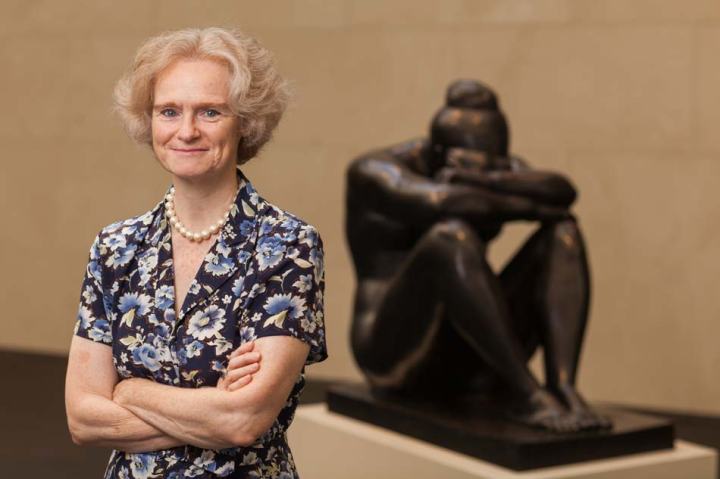
The brainchild of Laure de Margerie, the French Sculpture Census came online in December 2014 with its first 7,000+ records. Hosted by the Nasher Sculpture Center in Dallas with funding from a variety of institutions, the website aims to provide a list of French sculpture produced between 1500 and 1960 that can now be found in American public collections, museums, public buildings, historic homes, or displayed in public space. The completed census is expected to include between 15,000 and 20,000 records. More information is available here»
◊ ◊ ◊ ◊ ◊
From the Nasher Sculpture Center:
Stories from the French Sculpture Census
Nasher Sculpture Center, Dallas, 21 February 2015
From beloved works by Matisse and Rodin in museum collections to American icons like the Statue of Liberty, French sculpture has had a rich and indelible impact on the cultural landscape of the United States. In celebration of a new website that reveals the extent of this shared creative history, Laure de Margerie and panelists from the project’s international partner institutions will share stories of favorite works drawn from the database of the French Sculpture Census.
Laure de Margerie, Director of the French Sculpture Census, was Senior Archivist and head of the Sculpture Archives at the Musée d’Orsay in Paris, from 1978 through 2009. In this position she curated several exhibitions including Facing the Other: Charles Cordier (1827–1905), Ethnographic Sculptor (Paris, Quebec City, New York, 2004/05). She was part of the team who installed the sculpture collection at the opening of the museum in 1986 and co-authored the collection catalogue (1986). De Margerie also worked as archivist in charge of historic buildings in Normandy in Rouen (1983–1985) and oversaw rights and reproductions at the National Archives in Paris (1991–1992). She was awarded a fellowship at the Clark Art Institute, in Williamstown, MA (2000/01), and was the Sculpture and Decorative Arts Department guest scholar at the J. Paul Getty Museum in Los Angeles, CA (Fall 2011).
The Census of French Sculpture in American Public Collections is the first comprehensive catalogue of French sculpture in the United States. It lists all existing French sculpture, dating from 1500 to 1960, in American public collections. Not only does it take account of works in museums, but also in historic houses, government buildings (the White House, for example), corporate collections, and public space. The scope of the census is vast, both in space and time, and currently includes 7,500 works by 680 artists in 305 locations.
Hosted by the Nasher Sculpture Center and supported by a consortium of institutions in the U.S. and France, the French Sculpture Census will be the largest existing website solely dedicated to sculpture. The Census of French Sculpture in American Public Collections is a project of the University of Texas at Dallas and the Nasher Sculpture Center, Dallas, in coproduction with the Institut National d’Histoire de l’Art (INHA), Paris, the Musée d’Orsay, Paris, and the Musée Rodin, Paris, with the participation of the Ecole du Louvre, Paris.
Historic New England’s Wallpaper Collection Now Available Digitally
◊ ◊ ◊ ◊ ◊
Press release via Art Daily (29 December 2014). . .
Thanks in part to a grant from the Institute of Museum and Library Services, Historic New England announces the completion of a digitization project that makes its extensive wallpaper collection more accessible. For the past two years, Historic New England has been cataloguing and digitizing its wallpaper collection. Now, more than 6,000 samples have been electronically catalogued and are available at WallpaperHistory.org. The collection includes rolled, flat, oversize, and three-dimensional materials, which each require unique handling and digitization methods.
The project makes accessible a collection that spans three centuries and ranges from very early imported items to William Morris designs to vinyl wallpapers from mid-1960s. The entire Waterhouse Archive of Historic Wallpapers has been newly catalogued and digitized, and there are upgrades and a redesign to 4,800 additional records that improve image quality and data content.
“Now the collection is searchable by date, location, and manufacturer, and by keywords like color and type of pattern”, says cataloguer Peggy Wishart. “You can zoom in to see every detail.”
Historic New England extensive wallpaper collection contains individual samples, historic photographs of wallpaper in situ, and ephemera dealing with the wallpaper industry. The wallpapers range from pristine examples with complete repeats to small fragments that are part of a sequence in a particular room and also includes scrapbooks, borders, bandboxes, fireboards, and scenic panels, many of which are accessible online for the first time. Historic New England is the oldest, largest, and most comprehensive regional heritage organization in the nation. We bring history to life while preserving the past for everyone interested in exploring the New England experience from the seventeenth century to today. Historic New England owns and operates thirty-six historic homes and landscapes spanning five states. We share the region’s history through vast collections, publications, programs, museum properties, archives, and family stories that document more than 400 years of life in New England.
More information is available here»
Figaro Unbound: Culture, Power, and Revolution at Play
Readers in the Los Angeles area as well as those planning to attend ASECS may find this series from LA Opera of interest. The associated programming is extensive. –CH
Figaro Unbound: Culture, Power, and Revolution at Play
Various venues in the Los Angeles area, January — April 2015

After Jean-Marc Nattier, Portrait of Pierre-Augustin Caron de Beaumarchais, ca. 1755 (Institution: Comédie-Française)
From February 7 through April 12, 2015, LA Opera will produce three operas inspired by the works of the French playwright Pierre-Augustin Caron de Beaumarchais (1732–1799). Beaumarchais was a man of many talents: a playwright, watchmaker, inventor, musician, diplomat, fugitive, spy, publisher, horticulturalist, arms dealer, satirist, financier and revolutionary (both French and American). His trilogy of Figaro plays—The Barber of Seville (1775), The Marriage of Figaro (1784) and The Guilty Mother (1792)—captured staggering changes in social attitudes of the late 18th century. These plays and their characters have been subsequently adapted into operas (some more successful than others) by Paisiello, Salieri, Massenet and Milhaud to name a few.
LA Opera’s programming of the “Figaro Trilogy”—John Corigliano’s The Ghosts of Versailles, Rossini’s The Barber of Seville and Mozart’s The Marriage of Figaro—within the 2014/15 season will immerse audiences in the world of a character who created a sensation in the years leading up to the French Revolution. The lasting legacy of the free-thinking barber will be explored in Figaro Unbound, a three-month celebration of the revolutionary spirit.
With a variety of programming for all ages, Figaro Unbound will investigate the ongoing relevance of Figaro and the Beaumarchais trilogy. There will be performances of alternate musical adaptations of Figaro’s story and opportunities to examine his lasting influence on American political and cultural life. Figaro Unbound partners include ArcLight Cinemas, the Hammer Museum, Opera UCLA, A Noise Within, LA Theatre Works, FIDM Museum, the Huntington Library, LACMA, the Norton Simon Museum, the Getty Museum, and the Opera League of Los Angeles, among others.
Seventeenth- and Eighteenth-Century Funiture, Pegs and ’Tails
For anyone who’s ever dreamed of being able to look over the shoulder of someone who understands eighteenth-century furniture at the level of materials, design, construction, and afterlife, I’m glad to recommend Pegs and ‘Tails, the blog of Jack Plane, a retired antiques dealer and self-taught woodworker, formerly from the UK who now lives in Australia.
His reproduction pieces are fascinating, and he’s especially helpful for things at auction (the good and the bad). His blog includes a fine bibliography, and there’s a book is in the works. –CH
◊ ◊ ◊ ◊ ◊
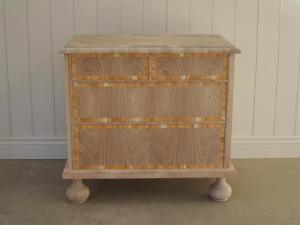
The first chest of drawers is typical of small four-drawer William and Mary chests made around 1695. The carcase is made of pine and veneered with walnut, and the drawer fronts are additionally crossbanded with yew. Jack Plane.
. . . I now believe a monograph on late seventeenth- and eighteenth-century chests of drawers would be a better introduction to those with an interest in case pieces and all manner of furniture from this period. The book’s contents may vary as I work my way through it, but the projected chapters are as follows:
• The Development of the Chest of Drawers
• A William and Mary Walnut Veneered Chest, circa 1695
• A Queen Anne Walnut Veneered Chest, circa 1705
• A George I Virginia Walnut Chest, circa 1720
• A George II Mahogany Chest, circa 1740
• A George III Mahogany Chest, circa 1765
• Reproduction finishing
◊ ◊ ◊ ◊ ◊
The blog began 14 September 2009 with this inspired posting:
It’s on a somewhat gloomy note that I begin this blog…
Q. Traditionally speaking, what are the principal differences between carpenters, joyners and cabinetmakers?
A. Nails, pegs and dovetails!
Sadly, carpenters predominantly employ air-powered ‘phittunks’ these days, joyners have largely disappeared from the vernacular and cabinetmakers assemble built-in bathroom, bedroom and kitchen units from man-made board.
Looking up ‘cabinetmakers’ in the ‘phone directory and Google reveals numerous entries for kitchen fitters and very few makers of fine furniture. It seems makers of fine furniture are now known as ‘woodworkers’—a very unhappy reflection and a far cry from the eighteenth-century heyday when cabinetmakers ranked second only to upholsterers in the furniture trades hierarchy.
This is my blog concerning pegs and dovetails.
Jack Plane.
Pure Judgment
After five years, I hope you’ll indulge me as I ask a small favor that has nothing to do with HECAA or the eighteenth century. A former student and now friend of mine has recently launched a blog, and I would be grateful if you have a look. Pure Judgment—related to the eighteenth century only in owing its title to Kant—reports on juried awards in a variety of cultural fields, with an emphasis on the arts. The site’s editor, Anna Hanchett, was good enough to put up with me in a handful of classes, including January term trips to Venice and London. She’s currently working as an assistant to a particularly fine bookbinder (and in this capacity does handle an enviable share of eighteenth-century material culture). –CH
Here’s the link and more information:
 In contrast to the thousands of blogs built around highlighting an individual’s tastes, preferences, and recommendations, Pure Judgment reports on juried standards of excellence. Covering a wide range of cultural production—including literature, the visual arts, music, fashion, film and food—the site aims to inform readers of people whose work has been recognized by experts within a given field as outstanding. Among the award-winners recently highlighted are David Titlow (Taylor Wessing Prize), Uxua Casa Hotel (Smith Hotel Award), Richard Flanagan (Man Booker Prize), Paper Airplanes (CinefestOz Film Award), and Iris Van Herpen (Andam Prize).
While other sites report on particular areas of cultural production, Pure Judgment is exceptional for its expansive scope . . . because you shouldn’t have to know about a particular award to care about the category or the winner. Pure Judgment aims to broaden the horizon for all of us.
Ruling on the Warburg Institute
Press release (6 November 2014) from Bates Wells Braithwaite and the Warburg Institute:
To the benefit and relief of scholars worldwide, the High Court has rejected the University of London’s claims that all additions to the Warburg Institute since 1944 belong to the University, and instead agreed that they form part of the Institute. Furthermore, the judge, Mrs Justice Proudman, held that the University is obliged to provide funding for the activities of the Warburg Institute.
Leticia Jennings of Bates Wells Braithwaite, who advised the Advisory Council of the Warburg Institute, commented: “This decision ensures that the wealth of important material housed within the Institute will remain available, as before, in its entirety, and that the University will not be free to in any way restrict the access of the many scholars who use and rely on the Institute’s outstanding resources.”
The Institute grew out of the private library of the art historian Aby Warburg (1866–1929), who collected books in art history, literature, intellectual history, religion and the history of science and magic. As a Jewish institution based in Germany, the Institute was forced to close, and its very existence was threatened by the Nazi-organised book-burnings of April 1933. To escape destruction, the entire library of 60,000 books, as well as photographs, papers and furniture, were shipped to the safe-haven of London in December 1933. Many of the Institute’s staff also transferred to London.
After years of negotiation involving members of the Warburg Family, the University of London, distinguished scholars and philanthropists, the University of London became trustee of the Warburg Institute, to hold it on charitable trust pursuant to the terms of a 1944 Trust Deed*. The Institute has since grown into a world class teaching and research institute, much respected and sought after by academics worldwide.
The Trust Deed obliges the University to maintain and preserve the Warburg library in perpetuity, to house it, and to keep it adequately equipped and staffed as an independent unit. Leticia Jennings stated: “The contemporaneous evidence leading up to the signing of the Trust Deed shows that the transfer to the University of London was on the condition that the University accepted these obligations. This judgment has confirmed that the University must maintain the Institute as ‘an independent unit’, and that the University is not entitled to use the name and prestige associated with the Warburg Institute to obtain funds, but to then apply those funds to the University’s general purposes.”
In recent years the University had charged a proportion of its total estate expenditure to the Warburg Institute, meaning that the once solvent Institute was left with a significant deficit as it was used, in effect, to subsidise the University’s corporate property. The judge held that the University’s conduct in this regard is not permissible and “flies in the face” of the terms of Trust Deed.
Two More Waddesdon Manor Treasures Now Online
Le Ballet Royal de La Nuit and Jean de La Fontaine’s Fables choisies, two treasures of Waddesdon Manor’s library collected by Ferdinand de Rothschild (1848–1898) are now accessible via the online collection catalogue.

Jean de La Fontaine, Fables choisies, (Paris, 1755–59); Waddesdon, The Rothschild Collection (The National Trust) Bequest of James de Rothschild, 1957; acc. 3681.1-4. Photo by Mike Fear © The National Trust, Waddesdon Manor.
Le Ballet Royal de La Nuit at Waddesdon was probably produced as a gift for Louis Hesselin (1602–1662) as a reward for the successful staging of the ballet, first performed at the French court on 23 February 1653. It contains material from three distinct sources: the booklet of the ballet printed by Robert Ballard in 1653, a poem called Le Docteur Muët, and 129 original designs depicting costumes and scenes from the ballet now attributed to Henry Gissey (c. 1621–1673). Reproductions of the bindings; inscriptions by a previous owner, Baron Jérome Pichon (1812–1896); as well as the designs are available online, accompanied by commentaries based on the publication: Michael Burden and Jennifer Thorp (eds), Ballet de la Nuit: Rothschild B1/16/6 (Hillsdale; Pendragon Press; 2009).
Also now online are entries for four volumes of Jean de La Fontaine’s (1621–1695) Fables choisies, published in Paris between 1755 and 1759 by Desaint and Saillant. This edition is considered to be the most magnificent illustrated book made before the advent of modern printing. The binding of the Waddesdon example, by Louis Douceur (d. 1769), is decorated with specially-cut tools also illustrating the fables. The dolphin which occurs on the spine panels of the Waddesdon volumes may indicate that these were bound especially for the Dauphin Louis (1729–1765), son of Louis XV. Details of the location and sizes of the illustrations in all four volumes, along with a transcription of the title and names of the designer and engraver of each print, are included in the online entries.
Both books can also be explored further in the newly published catalogue by the late Giles Barber, The James A. de Rothschild Bequest: Printed Books and Bookbindings (The Rothschild Foundation, 2013). The Waddesdon collection is one of the finest of its kind in the world, and the published catalogue along with the online entries allows for many of these treasures to be revealed to the public for the first time. For more information about the printed catalogue, please visit the website.
Richard Wilson Online Catalogue Now Available
 The Richard Wilson Online catalogue raisonné has been compiled by Dr Paul Spencer-Longhurst (Senior Research Fellow) with the collaboration of Professor David Solkin (Curator of the exhibition, Richard Wilson: The Landscape of Reaction, 1982–83) and Kate Lowry (formerly Chief Conservator at the National Museum Wales, Cardiff), with the assistance of Maisoon Rehani (Project Coordinator) and Peter Thomas (Technical Project Consultant).
Richard Wilson Online is the outcome of intensive ongoing research undertaken since 2009 to re-establish Richard Wilson’s (1713/14–1782) status and redefine his output in celebration of the tercentenary of his birth. The website is launched as a work-in-progress designed to provide an up-to-date and freely accessible record of Wilson’s autograph paintings and works on paper. It complements and extends the public interest in and academic focus on his achievements stimulated by the exhibition, Richard Wilson and the Transformation of European Landscape Painting, on show at the Yale Center for British Art, New Haven, USA, and Amgueddfa Cymru – National Museum Wales, Cardiff in 2014.
Accessing Richard Wilson Online
Internet Archive Book Images Now Available via Flickr Commons
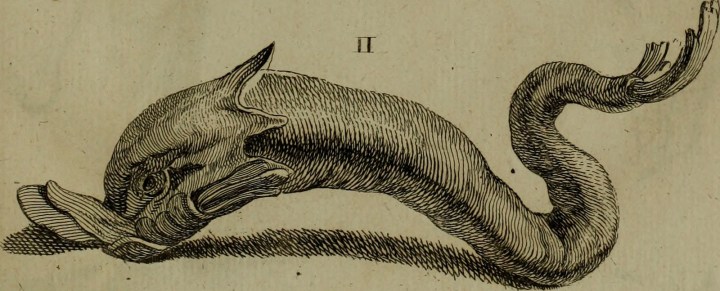
Image from page 274 of Comte de Caylus, Recueil d’antiquités égyptiennes, étrusques, greques et romaines (Paris : Desaint & Saillant, 1752). More information is available here»
◊ ◊ ◊ ◊ ◊
As noted here at Enfilade in December, the British Library made available over a million images from the pages of seventeenth-, eighteenth- and nineteenth-century books via Flickr Commons. The BBC now reports that Georgetown University Fellow in Residence Kalev Leetaru has uploaded 2.6 million pictures sourced from books digitized by the Internet Archive. Publication dates range from 1500 to 1922. All images are tagged and available for free download. A quick search for Caylus turned up the image shown above. Search options are limited, and it took me a few moments just to work out how to search only within the Internet Archive Book Images, as opposed to all of Flickr (proof only of my own clumsiness; once you start typing in the main search box in the upper right hand corner, you should see a photostream option appear just below). How useful this resource is will depend upon what sort of search you’re attempting, but the possibilities seem extraordinary. In addition to the news story excerpted below, the Flickr Blog provides further information. –CH
◊ ◊ ◊ ◊ ◊
Leo Kelion, “Millions of Historic Images Posted to Flickr,” BBC News (29 August 2014).
An American academic is creating a searchable database of 12 million historic copyright-free images.
Kalev Leetaru has already uploaded 2.6 million pictures to Flickr, which are searchable thanks to tags that have been automatically added. The photos and drawings are sourced from more than 600 million library book pages scanned in by the Internet Archive organisation. The images have been difficult to access until now. Mr Leetaru said digitisation projects had so far focused on words and ignored pictures.
“For all these years all the libraries have been digitising their books, but they have been putting them up as PDFs or text searchable works,” he told the BBC. “They have been focusing on the books as a collection of words. This inverts that. . . .”
The full BBC story is available here»

◊ ◊ ◊ ◊ ◊
More about the Internet Archive, from the Wikipedia entry on the organization:
 The Internet Archive is a non-profit digital library with the stated mission of “universal access to all knowledge.”[2][3] It provides permanent storage of and free public access to collections of digitized materials, including websites, music, moving images, and nearly three million public-domain books. As of October 2012, its collection topped 10 petabytes.[4][5] In addition to its archiving function, the Archive is an activist organization, advocating for a free and open Internet. . .
N O T E S
2. “Internet Archive Frequently Asked Questions.” Internet Archive. Retrieved April 13, 2013.
3. “Internet Archive: Universal Access to all Knowledge.” Internet Archive. Retrieved April 13, 2013.
4. “10,000,000,000,000,000 bytes archived!” Internet Archive Blogs. October 26, 2012. “On Thursday, 25 October, hundreds of Internet Archive supporters, volunteers, and staff celebrated addition of the 10,000,000,000,000,000th byte to the Archive’s massive collections.”
5. Brown, A. (2006). Archiving Websites: A Practical Guide for Information Management Professionals. London: Facet Publishing. p. 9.










 Enfilade
3 comments