Final Week of Free Access to ECCO & Burney Collection
As noted here on August 27, the Burney Collection of seventeenth- and eighteenth-century newspapers is available on a free trial basis through Early Modern Online Bibliography until the end of October. Anna Battagelli usefully points out that Gale’s Eighteenth-Century Collection Online (ECCO) is similarly available (also until October 30). Along with simply making these extraordinary resources available for a limited time, EMOB hopes the increased access will present opportunities for a more widespread and rigorous discussion of these tools. Art historians are encouraged to chime in!
A Warm Welcome to a New Journal
From the Editor
Last week, the Art History Newsletter noted the premier of a new online journal, Republics of Letters: A Journal for the Study of Knowledge, Politics, and the Arts. The posting concentrates on the editorial by Dan Edelstein addressing the question of theory’s role in the humanities today. For the issue of eighteenth-studies, the larger news is simply that such a journal now exists! With support from Stanford University and contributions for the first issue from the likes of Anthony Grafton, Paula Findlen, Peter Miller, and Margaret Jacob, the journal is positioned to garner considerable credibility and respect. It also seems to open up the possibility for thinking about the eighteenth century not in isolation but in relationship to the early modern period generally. Any number of changes occurred over the course of the seventeenth and eighteenth centuries, but in my own work, I have argued that we must be able to think of them together (at least from time to time) even if only to understand more fully the character of the changes that happened. That this new journal seems well placed to handle issues of both continuity and change is evident from Antoine Lilti’s contribution, “The Kingdom of Politesse: Salons and the Republic of Letters in Eighteenth-Century Paris,” in which he challenges Dena Goodman’s reliance upon the Republic of Letters as a way of understanding salon culture:
Using the notion of the Republic of Letters, however, to think about the salons is misguided because it leads us to misinterpret both the historical significance of the salons and the social history of the Enlightenment. It induces us to consider salons as literary or intellectual venues, whereas they were, above all, the social spaces of elite leisure. Moreover, it entails odd consequences: that eighteenth-century salons had nothing to do with their predecessors of the age of Louis XIII and Louis XIV or with their nineteenth-century successors; that they stood totally apart from the royal court; that women who received guests in their homes were moved by the desire to contribute to an intellectual endeavor. The aim of this paper is to show that it is much more effective to think about the salons as the main institution of cultural sociability for social elites, and then to understand why the philosophes spent so much time there. . . .
As a site for sociability, they [Parisian salons] were, above all, venues of entertainment for polite elites, and were deeply rooted in court society. The ideal which guided the writers who attended these salons—Morellet, Thomas, Marmontel, and many others—was not the Republic of Letters, but Parisian high society (le monde), where some men of letters, polite and successful, were welcomed because they conformed to aristocratic norms. In other words, they were dreaming about the kingdom of politesse rather than the Republic of Letters.
Whether one is convinced by the argument is, of course, a separate matter. Personally, though, I’m thrilled that there’s now a space so well-suited for such scholarly debates.
-Craig Hanson
Raphael Drawing and Its Eighteenth-Century Provenance
As reported this week by various news outlets (including The Guardian, The Telegraph, and Reuters), a drawing by Raphael is up for auction in December. The Financial Times notes that “it comes to the block after the Fitzwilliam Museum in Cambridge was unable to raise funds over the summer to purchase the drawing by Private Treaty Sale.” As reported by Artdaily.org:
 LONDON — Christie’s will offer an exceptional drawing by Raphael (1483-1520) at the Old Masters and 19th Century Art Evening Sale on Tuesday, December 8, 2009 in London. Head of a Muse was drawn by the artist as a study for a figure in Parnassus, one of the series of four frescoes in the Stanza della Segnatura in the Vatican which was commissioned by Pope Julius II and which was executed between 1508 and 1511. This series is widely considered to be the artist’s greatest masterpiece. The drawing will be offered at public auction for the first time in over 150 years at Christie’s in December and is expected to realize £12 million to £16 million. The current record price for an old master drawing sold at auction is £8.1 million which was realized by Michelangelo’s Risen Christ at Christie’s in July 2000, and by Leonardo da Vinci’s Horse and Rider, also at Christie’s, in July 2001. . . .
The drawing was first recorded in 1725 when it was engraved by Bernard Picart to be published in Impostures Innocentes. At the time it belonged to the celebrated Dutch collector Gosuinus Uilenbroeck (d.1741) who assembled one of the most important private libraries of the period, together with a number of splendid old master drawings. The drawing was subsequently in the collections of Sir Thomas Lawrence (1769-1830), the distinguished painter who was also one of the most celebrated old master drawing collectors, and the future King William II of Holland (1792-1849) who assembled one of the finest art collections in Europe.
◊ ◊ ◊ ◊ ◊
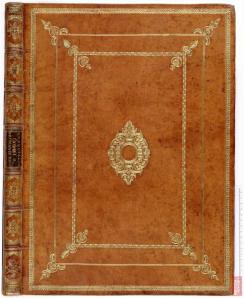
Carolus de Aquino, "Sacra exequialia in funere Jacobi II. Magne Brittanniae Regis" (Rome, 1702)
From an eighteenth-century vantage point, it’s the provenance that’s especially interesting. Lawrence’s ownership is notable, but my hunch is that the “celebrated” Dutch collector, whose name is more commonly spelled Gosuinus Uilenbroek, is largely unknown even to dixhuitièmistes. Perhaps the sale of the drawing will help make him more familiar. The British Library’s Database of Book Bindings — a remarkable resource, incidentally — includes several examples from Uilenbroek’s library.
— Craig Hanson
Fellowships in Cartography
J.B. Harley Research Fellowships in the History of Cartography
Applications due by November 1
Funded by the J. B. Harley Research Trust, the Harley Fellowships provide support of up to four weeks (normally at GBP 400 per week) for those, from any discipline, doing the equivalent of post-graduate level work in the historical map collections of the United Kingdom.
Harley-Delmas Fellowships in the History of Cartography
Applications due by November 1
For the period 2007-2011, in addition to the normal J. B. Harley Fellowships, there are also Harley-Delmas Fellowships funded by the Gladys Krieble Delmas Foundation. Successful applicants researching the history of cartography during the European Renaissance to the Enlightenment c.1400-c.1800 will be eligible for a Harley-Delmas Fellowship. All applicants, however, should apply for a J. B. Harley Fellowship. Eligibility for a Harley-Delmas award will be decided by the Selection Committee of the Trustees.
The Fellowship website includes an Application page that should provide all the necessary information as well as answering many frequently asked questions. It would be helpful if you could say where you saw this notice.
Back from Summer Break (Fall officially begins tomorrow)
The Art History Newsletter resumed publication on September 8. Editor Jonathan Lackman is a Ph.D. candidate at NYU working on nineteenth-century art criticism in France. He’s written for Slate, Harper’s, and The New Yorker. Contributors include Daniel Belasco, Anne Byrd, Allyson Drucker, Ross Finocchio, and Benjamin Lima. Over the past two weeks, postings have addressed Vincent Scully’s decision not to return to the classroom at Yale (he actually retired in 1991 but has continued teaching until now), recent additions to the Dictionary of Art Historians, tenure decisions at Harvard, and the upcoming renovations at the Musée d’Orsay (starting in November the museum will be closed for a year).
Burney and ECCO available through EMOB
As noted here on August 27, the Burney Collection of seventeenth- and eighteenth-century newspapers is available on a free trial basis through Early Modern Online Bibliography until the end of October. Anna Battagelli usefully points out that Gale’s Eighteenth-Century Collection Online (ECCO) is similarly available (also until October 30). Along with simply making these extraordinary resources available for the next few weeks, EMOB hopes the increased access will present opportunities for a more widespread and rigorous discussion of these tools. Art historians are encouraged to chime in!
17th and 18th Century Burney Collection Newspapers from Gale
As noted by Anna Battigelli at Early Modern Online Bibliography, Gale’s Burney Collection is available free of charge until October 30 for EMOB readers. To access the collection, visit the blog here. For a description of this extraordinary resource (drawn from the Gale website), see below:
 The newspapers and pamphlets gathered by the Reverend Charles Burney (1757-1817) represent the largest single collection of 17th and 18th century English news media available anywhere. The 1,270-title collection includes a wide range of pamphlets, proclamations, newsbooks and newspapers from the period, covering more than 200 years of accounts from newspapers from England, Ireland, Scotland and a handful of papers from British colonies in the Americas and Asia.
The original Burney volumes are now in fragile condition and have been restricted from ordinary reading room use. Until now, the only access to this unprecedented collection has been through microfilm. This digital collection, made possible by a partnership with the British Library, puts these early newspapers into the hands of scholars and researchers and is an invaluable research tool for all disciplines.
Specifically, historians interested in this period of U.K. history will find the cultural trends, political currents and social problems reflected in these newspapers — and their advertisements — especially useful as they give freshness and immediacy to historical events.
Update on the Conway and Witt Libraries at the Courtauld
The following letter was posted to the CAAH List earlier today:
◊ ◊ ◊ ◊ ◊
Sent on behalf of Professor Deborah Swallow:
I am writing with an important update on the opening times and service provided by the Witt and Conway Libraries. The Courtauld is pleased to confirm that the Witt and Conway Libraries will remain open to the public five days a week and the Photographic Survey collections will continue to be accessible by appointment, contrary to concerns recently expressed by some members of the art community. Please see the attached notice for further details. As you may be aware, The Courtauld, like other higher education institutions worldwide, has had to review all its operational activities and services in the light of the current economic climate. Those activities that are critical to its higher education function must be provided in the most cost-effective way, and those areas with a negative budget impact managed efficiently and the net cost minimized. It is with sincere regret that, as a result, 6 posts (5.1 FTE) in the Witt and Conway Libraries and Photographic Survey will become redundant from 4 September 2009 and the management structure of these libraries will change.
The Witt and Conway Libraries are unique visual resources for the serious study of art history. They are regarded by The Courtauld as an important dimension of its work as a teaching and research institute and as a valuable asset for students, scholars and researchers. By instigating these changes, and by working together with our supporters and the wider art community, we intend to ensure that these valuable resources will not only be efficiently managed but will also remain available for generations to come.
I would be grateful if you could note the forthcoming temporary closure period for the Witt and Conway libraries which will be closed from 7 September and will reopen on 2 November – as well as the adjusted opening times once it reopens of 11am to 4pm (subject to the usual Bank Holidays).
Professor Deborah Swallow
Märit Rausing Director
Cuts Said to be Considered at Courtauld’s Conway & Witt
The following message from Colum Hourihane regarding the Conway and Witt photographic libraries in London went out the CAAH list last Thursday: [N.B. Please also see the follow-up post, added August 25, here.]
◊ ◊ ◊ ◊ ◊
Urgent: Courtauld Photographic Libraries under Threat

Somerset House, home of the Courtauld Institute (Wikimedia Commons)
In response to the current economic downturn The Courtauld Institute is looking to make savings. The Conway and Witt photographic libraries have been identified as areas in which savings could be made without affecting the core activities of the Institute. There is currently a brief consultation period-which ends in the next few days.
If no satisfactory alternative can be found it is possible that the Conway and Witt will be frozen, their staff made redundant, and access limited to one day per week. Silence from the scholarly community on this topic is likely to be taken as acquiescence in whatever plan is finally decided upon. (more…)
Conservation in the Eighteenth Century
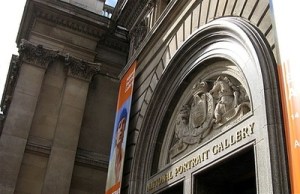 Among the various useful online resources available through the National Portrait Gallery of London, there is a directory of British Picture Restorers, 1630-1950. The first edition appeared in March of 2009, and the database is to be updated regularly (there is also a helpful Resources and Bibliography section that introduces various archival materials, many with links). Contributions and corrections should be sent to Jacob Simon at jsimon@npg.org.uk. The following description comes from NPG website:
◊ ◊ ◊ ◊ ◊
This is a directory of leading picture, paper and sculpture restorers, active in Britain before 1950, who worked on major collections or who advertised extensively in art periodicals. Many worked in London but others were based in Bath, Derby, Dublin, Edinburgh, Hull, Leamington, Manchester, Nottingham and Plymouth. Picture restoration only became a specialised trade during the course of the 19th century. As such, this directory includes dealers such as John Anderson and John Bouttats and print publishers including Thomas Gaugain and Robert Guéraut. It also includes the few artists such as Arthur Pond, William Kent, Joshua Reynolds and Joseph Wright of Derby, to highlight the role of the artist. But it excludes most artists’ suppliers and framemakers who only offered an occasional restoration service. The collections covered in some depth in this directory include the Royal Collection, the National Gallery, the National Portrait Gallery, the Wallace Collection, the Soane Museum and the Iveagh Bequest, Kenwood. It is hoped to treat the Tate Gallery, the Victoria and Albert Museum and National Trust properties in more detail in a subsequent edition.










leave a comment