Free Access to ‘Early English Books Online’ until March 12
Anna Battigelli, of Early Modern Online Bibliography, sends the following announcement:
 Thanks to the generosity of Proquest, readers of EMOB will have free access to Early English Books Online from February 22 to March 12. We are hoping that this temporary access will generate discussion about EEBO, as it is used both in scholarship and the classroom.
◊ ◊ ◊ ◊ ◊
According to the ProQuest website:
Early English Books Online contains digital facsimile page images of virtually every work printed in England, Ireland, Scotland, Wales and British North America and works in English printed elsewhere from 1473-1700 — from the first book printed in English by William Caxton, through the age of Spenser and Shakespeare and the tumult of the English Civil War.
Details regarding access can be found here»
A Blog about Georgian London

Think you know what it is? Click above to see.
Any idea what this might be?
This curious bucket was recently included as a ‘Mystery Object’ on the blog, Georgian London. Written by Lucy Inglis, it’s a terrific site that’s received various awards including ‘History Website of 2009’ from the online readers of History Today Magazine and the 2009 Cliopatria Award for ‘Best Individual Blog’ and ‘Best New Blog’. Inglis is, in her own words, particularly interested in “the immigrant population and the artisan communities of London during the 18th century, as well as day to day trivia and the more bizarre aspects of London life three centuries ago.” Topics range from Huguenots in London, to counterfeit coins, to menstruation, to fan etiquette. I found Georgian London through Dr. Crystal Lake’s blog, a fine example incidentally of an individual scholar’s website. –C.H.
State Bed at Calke Abbey
 Yesterday’s posting at Style Court includes exceptionally good photos of the Calke State Bed. I’ve included one here, but for the much larger images, you’ll have to visit Courtney Barnes’s stimulating site:
For a long time now I’ve been contrasting grand centuries-old canopied beds with some of the more lavish beds that occasionally pop up in the pages of Elle Decor. After my recent post about Marla Mallett’s Chinese textiles, a very kind person from the National Trust shared these colorful, wonderfully detailed images of the silk-laden 18th-century Calke State Bed. . . .
Academics and the F-Word
One might imagine any number of interesting permutations on that F-word, but here I’m thinking of an even more fraught notion for academics: fashion. Nearly two decades ago, Valerie Steele made the point in her 1991 Lingua Franca essay, “The ‘F’ Word”:
Valerie Steele, Director and Chief Curator of the Museum at the Fashion Institute of Technology in New York
Once, when I was a graduate student at Yale, a history professor asked me about my dissertation. “I’m writing about fashion,” I said.
“That’s interesting. Italian or German?”
It took me a couple of minutes, as thoughts of Armani flashed through my mind, but finally I realized what he meant. “Not fascism,” I said. “Fashion. As in Paris.”
“Oh.” There was a long silence, and then, without another word, he turned and walked away.
The F-word still has the power to reduce many academics to embarrassed or indignant silence. Some of those to whom I spoke while preparing this article requested anonymity or even refused to address the subject; those who did talk explained that many of their colleagues found it “shameful to think about fashion.” One professor explained the “denial” of fashion this way: “People say that they don’t care about fashion, but that may be because they aren’t self-conscious enough to envision a personal style. Style is what most academics don’t have.”
Academics may be the worst-dressed middle-class occupational group in the United States. But they do wear clothes. So I set out to discover what professors choose to wear (the clothes don’t grow in their closets), what they think about fashion (even when they claim not to think about it), and, well, why they tend to dress so badly. . .
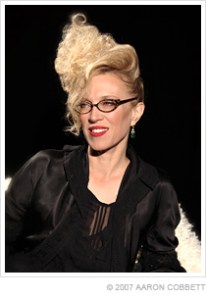
For the full essay, click here»
◊ ◊ ◊ ◊ ◊
With the spring conference season here once more, many of us will soon find ourselves rummaging in the closet with an open suitcase on the floor, asking ourselves what an art historian should look like now (I recall one CAA several years ago in which the hotel was also hosting a cheerleading conference: lots of black clothing, scarves, and serious eyewear on the one side with plenty of exuberant hair-styling, makeup, and shiny sportswear on the other — quite the contrast).
The Sartorialist has brilliantly demonstrated how the intersection of high fashion, street fashion, and engaging photography can make for an internationally successful blog (and now book). In a more targeted manner, Academic Chic offers a fascinating glimpse at the unique challenges professors and college instructors face. In the site’s own words: “Three feminist PhD candidates at a Midwest university, on a crusade against the ill-fitting polyester suit of academic yore.” They continue:
We are three Ph.D. candidates in the humanities, who believe that academia and fashion are not at odds. When beginning graduate school we each had an existential wardrobe crisis. What does one wear in grad school anyway? We recognized that our undergraduate hoodies and jeans were no longer appropriate but were unwilling to accept the shoulder-padded khaki polyester suit that was ubiquitous among our female professors. As feminist scholars, we were also forced to reconcile the perceived-superficiality of our interest in style with our academic commitment to questioning gender and class essentialisms.
Today, in the face of all our eye-rolling colleagues, we defiantly wear dresses, fitted jackets, and pointy toe shoes. To teach in. And sometimes just to the library!
But don’t worry. We’ve done our research on this one too. Cultural critic Fred Davis calls fashion “a visual language, with its own distinctive grammar, syntax, and vocabulary.” Theorist Judith Butler, in Gender Trouble, points to the power of clothing to create and constantly recreate identity. And even philosopher Charles Baudelaire praised cosmetics and garments for creating beauty where nature fails. In short, fashion is a powerful tool for creating identity, subverting class or gender norms, performing self, and appreciating aesthetic beauty.
This won’t be our dissertation, but it might keep us sane in the mean time. With this project we hope to inspire other academics to embrace their love of clothes, to create unique and beautiful outfits, and to engage in a metadialogue about the art, literature, and garments that can move us all.
A site like Academic Chic suggests that a lot has changed since 1991 when Steele surveyed the American college campus (imagine trying to explain the blogosphere to anyone in 1991). And yet . . . many of her observations still seem remarkably familiar. . . –C.H.
Indexing Art History Websites
As Christian Fuhrmeister recently noted on the Consortium of Art and Architectural Historians listserv (CAAH) — so faithfully moderated by Marilyn Lavin — ART-Guide usefully indexes thousands of art history websites. The Guide is available in English and German and currently features some 4300 sites. As described on the site itself:
ART-Guide provides access to art history websites, such as subject gateways, image databases, search engines, or mailing lists. The websites are of high quality and academic relevance; for they are reviewed according to criteria concerning the quality of content and form before admission into the collection. The collection covers the full range of European medieval, modern, and contemporary art history, and aesthetics. The websites are recorded following library bibliographic, objective, and systematic standards, and are provided with an abstract. The collection of art history websites is updated frequently by link checkers. Research in the database can be made using the basic “Search” or the “Advanced Search”, in which detailed search parameter can be entered. Additional browsing entrances provide systematic access. and the WWW-SearchSpace Art History permits full-text searching within the art history internet sources of ART-Guide.
ART-Guide is a service of Heidelberg University Library and Dresden Saxon State and University Library. The database is under construction. It is part of arthistoricum.net – The Virtual Library for Art History, which is a joint-project of Zentralinstitut fuer Kunstgeschichte in Munich and Heidelberg University Library, funded by the German Research Foundation (DFG). Within the scope of the project the database is constructed, expanded, and updated by the team in Heidelberg. An inventory of internet resources on contemporary art, made available by the ART-Guide Dresden, has been in the database integrated. The Guide in Dresden exists since 2002 as a module of ViFaArt, the Virtual Library of Contemporary Art, which is also funded by the German Research Foundation (DFG) and was constructed by the SLUB Dresden. . .
For the full description, click here»
ART-Guide is searchable by full-text, subject, region, time period, institutions, and sourcetype. There are nearly 200 sites presently included for the eighteenth century.
Printing Fabric
Today’s “site of interest” at Style Court is The Zucchi Collection, “home to 56,000 printing blocks used to produce handprinted fabric over the course of three centuries from 1785 to 1935. . . ” As outlined on the Zucchi site itself:

This series reproduces the so-called “Palma” motif which modern historians have determined as being typical of damask fabrics (click on image for more information)

A symmetrical handblock from a monochromatic pair in wood and felt, England, 1790, 46cm x 24cm (Milan: Zucchi Collection)
In 1987, Giordano Zucchi, a textile group director sensitive to changing tastes in the art of furnishing, came into possession of a handblock of wood and pewter which had formerly been used for the production of hand-printed fabrics. It was only one among many to have been found in a certain factory in Gloucestershire. These handblocks had been the property of the prestigious English textiles company David Evans & Co. who, for more than 150 years, had been gathering them from Europe’s major printing houses. Giordano Zucchi was not one to let an opportunity pass him by and in 1988, this important legacy was renamed “The Zucchi Collection.” Its value was further enhanced by the addition of special copper plates used to create the characteristic “batik” design. Today it is considered to be one of the biggest collections of handblocks for printed fabrics in the world. The cultural value of the Collection gained official recognition in 1997 when it received the Guggenheim Award.
Fellowship Opportunities for Americanists
American Antiquarian Society Visiting Academic Fellowships, 2010-2011
Applications due by 15 January 2010
The American Antiquarian Society (AAS) invites applications for its 2010-11 visiting academic fellowships. At least three AAS-National Endowment for the Humanities fellowships will be awarded for periods extending from four to twelve months. Long-term fellowships are intended for scholars beyond the doctorate; senior and mid-career scholars are particularly encouraged to apply. Over thirty short-term fellowships will be awarded for one to three months. The short-term grants are available for scholars holding the Ph.D. and for doctoral candidates engaged in dissertation research, and offer a stipend of $1850/month. Special short-term fellowships support scholars working in the history of the book in American culture, in the American eighteenth century, and in American literary studies, as well as in studies that draw upon the Society’s preeminent collections of graphic arts, newspapers, and periodicals. Accommodations are available for visiting fellows in housing owned by AAS.
The AAS is a research library whose collections focus on American history, literature, and culture from the colonial era through 1876. The Society’s collections are national in scope, and include manuscripts, printed works of all kinds, newspapers and periodicals, photographs, lithographs, broadsides, sheet music, children’s literature, maps, city directories and almanacs, and a wide range of ephemera. Of particular interest to members of SHARP is our extensive collection of materials related to the history of publishing and the book trades in the U.S. and Canada.
◊ ◊ ◊ ◊ ◊
A selection of the ASA’s print holdings can be seen in the following collection, as described on the association’s website:
The Charles Peirce Collection of Social and Political Caricatures and Ballads originally consisted of a bound volume of 65 mounted prints of British and American origin dating from the years 1796-1807. The prints were disbound from their album, individually foldered and treated by AAS Conservation in 1992. The folders are not organized by date, place, subject or artist, but instead preserve the original order the prints appeared in the Charles Peirce album. Those of American origin have bibliographic records in the Catalogue of American Engravings [CAEP]. Prints of a British origin have their British Museum number listed which was supplied by the Catalogue of Prints and Drawings in the British Museum (AAS Call number: BIB Prints Brit C870). The box list of the entire collection, which also serves as an inventory, is fully illustrated.
Supplied in this inventory is the sheet size, title of print, publisher/artist information and year in addition to a brief description. Researchers interested in viewing additional British prints can consult the collection of European Political Prints where the British Museum prints are arranged chronologically. While thumbnail images and 150 dpi scans are available for every work, those interested in ordering higher quality reproductions may visit the Society’s Rights and Reproductions page.
Mapping the Republic of Letters and the Electronic Enlightenment
As described by Cynthia Haven in her article for the Stanford Report (17 December 2009), a project at Stanford maps thousands of letters exchanged in the eighteenth century:
The road back to Paris was paved with letters. Lots of them. The author of Candide wrote about 15,000 during his 83-year life, many from his base in Ferney, near the Swiss border. Voltaire’s life was superbly successful – but it was a life with sorrows, too. Voltaire’s famously acerbic tongue caused his banishment on more than one occasion. “His whole life, in a way, was an effort to get back to Paris,” said Dan Edelstein, assistant professor of French. The French Enlightenment’s leading philosophe eventually achieved a pyrrhic victory, returning to Paris a few months before his death in 1778.
So what does this correspondence have to do with the colorful images, lines and maps on the computer screen of the “collaboration room” in the Humanities Center? Edelstein, principal investigator for “Mapping the Republic of Letters” with history Professor Paula Findlen, has mapped thousands of letters that were exchanged during the period of the Enlightenment to uncover hidden truths about the “Republic of Letters.” The latter is “a shorthand that scholars use to refer to writers and philosophers and clergymen and other early modern intellectuals who corresponded across Europe and even across the world,” said Edelstein. On the computer screen, a map of Voltaire’s correspondence shows a complex geometry of red lines to major European cities – but the heavy yellow line, showing the most frequent correspondence – connects directly to the heart: Paris. . . .
According to Edelstein, “We tend to think of networks as a modern invention, something that only emerged in the Age of Information. In fact, going all the way back to the Renaissance, scholars have established themselves into networks in order to receive the latest news, find out the latest discoveries and circulate the ideas of others. We’ve known about these correspondences for a long time – some of them have been published – but no one has been able to piece together how these individual networks fit into a complete whole, something we call the Republic of Letters.” . . .
For the full article, click here»
◊ ◊ ◊ ◊ ◊
The Stanford project includes a sophisticated imaging dimension. As noted on the website for The Visualization of Republic of Letters,
the new challenges posed by an exponentially growing corpus of online historical data also present an opportunity for collaborations with computer scientists interested in data visualization, interpretation, and human-computer interaction. Computer scientists are deeply interested in how users interact with visualization tools to explore, explain, and engage with data to create meaning. We engaged in an iterative, collaborative effort that brought together historians, computer scientists, and an academic technology specialist to design data visualizations to represent the intellectual network of the Republic of Letters.
A brief video with Edelstein provides a useful demonstration:
◊ ◊ ◊ ◊ ◊
Information for the Stanford project is drawn from the Electronic Enlightenment, an online subscription database available from Oxford University Press. According to a PDF available here, it
allows users to search and discover the digitised correspondence between the greatest thinkers and writers of the long 18th century (1688 to 1834) and their families and friends, bankers and booksellers, patrons and publishers through rich interlinking and crosssearching. The database includes over 53,000 letters in a variety of languages by over 6,000 different individuals. Content currently in the database is drawn from published documentary editions, and so includes almost 230,000 scholarly annotations explaining the context and significance of the material. The resource provides value to users not just through enabling them to search and locate digitised correspondence – something which is unique today, but which could be replicated through mass digitization initiatives eventually – but also through giving users the ability to move among and between letters related to one another in a wide variety of ways.
The Electronic Enlightenment was the brainchild of Robert NcNamee (the EE Director) and Robert Darnton (Director of the Harvard University Library and the author most recently of The Case for Books). In February 2009, Rachel Lee noted the resource on The Cynic Sang. It would be nice to see a thorough review of the EE by a similar outside party, especially one that addresses its potential for art historians. Any takers?
New Website for British Archives to Appear Soon
London Lives, 1690-1800
De Havilland Campus, University of Hertfordshire, 5-6 July 2010
Proposals due by 28 February 2010
A call for papers and short presentations for a two-day conference to mark the launch of: http://www.londonlives.org. This new website will provide access, using an integrated search facility, to primary sources containing 240,000 pages of manuscripts sources and 3.2 million names, reflecting the history of eighteenth-century London. It includes the eighteenth-century material from the Old Bailey Online; the manuscript records of quarter sessions, three London parishes, Bridewell, St Thomas’s Hospital, and the Carpenter’s Company; datasets from the Westminster Pauper Biographies Project; and several datasets formerly deposited with the Arts and Humanities Data Service.
Conceived as an unconference, this event is designed to allow as many participants as possible to contribute in as many ways as possible. Contributions are invited from anyone whose research will benefit from use of the site. The schedule will include a few formal papers, but most sessions will consist of either short papers, of up to eight minutes, with slides (rigorously timed), or workshops in which specific historical questions are explored in small groups using both the London Lives website, and the wider infinite archive of the internet. There will also be some panel discussions comprising related 20-minute papers with opportunities for debate and shout outs. You may propose to participate in any of the ways described above. To do so, please submit a brief description of your work (not more than 150 words) to t.hitchcock@herts.ac.uk by 28 February 2010, with an indication of whether you would like to do an 8-minute presentation, a workshop, or a 20-minute paper.
Early access to the site will be arranged for those submitting a contribution. Although not finalised, we anticipate the cost (including accommodation) for this two-day event to be in the region of £120, with a discount for those contributing to the programme.
Speaking of Blake and the Morgan
As posted on C-18L:

William Blake, "The Ancient of Days," 1794 (London: BM); Wikimedia Commons
The William Blake Archive is pleased to announce the publication of the electronic edition of Europe a Prophecy copy G, from the Morgan Library and Museum. Europe, extant in nine copies, is dated 1794 on its title plate. The first six copies were color printed that year; four of these copies were printed on both sides of the leaves and two were printed on one side only. Copy G belongs to the former issue and joins in the Archive copy E from the same issue and copy B, more heavily printed, from the latter. It also joins copy H, the only monochrome copy, printed in 1795, and copy K, from the last printing session, c. 1821. With each printing session represented in the William Blake Archive, users can trace the full printing history of Europe.
Like all the illuminated books in the Archive, the text and images of Europe copy G are fully searchable and are supported by our Inote and ImageSizer applications. With the Archive’s Compare feature, users can easily juxtapose multiple impressions of any plate across the different copies of this or any of the other illuminated books. With our new Related Works feature, launched last month, users can access related materials through active links on the work index pages and in the Show Me menu on the object view pages. New protocols for transcription, which produce improved accuracy and fuller documentation in editors’ notes, have been applied to all copies of Europe in the Archive.
With the publication of this copy of Europe, the Archive now contains fully searchable and scalable electronic editions of seventy-one copies of Blake’s nineteen illuminated books in the context of full bibliographic information about each work, careful diplomatic transcriptions of all texts, detailed descriptions of all images, and extensive bibliographies. In addition to illuminated books, the Archive contains many important manuscripts and series of engravings, sketches, and water color drawings, including Blake’s illustrations to Thomas Gray’s Poems, water color and engraved illustrations to Dante’s Divine Comedy, the large color printed drawings of 1795 and c. 1805, the Linnell and Butts sets of the Book of Job water colors and the sketchbook containing drawings for the engraved illustrations to the Book of Job, the water color illustrations to Robert Blair’s The Grave, and all nine of Blake’s water color series illustrating the poetry of John Milton.
As always, the William Blake Archive is a free site, imposing no access restrictions and charging no subscription fees. The site is made possible by the University of North Carolina at Chapel Hill, the continuing support of the Library of Congress, and the cooperation of the international array of libraries and museums that have generously given us permission to reproduce works from their collections in the Archive.
Morris Eaves, Robert N. Essick, and Joseph Viscomi, editors
Ashley Reed, project manager, William Shaw, technical editor
The William Blake Archive










leave a comment