Conference | On Paper
International Catalogue Raisonné Association Annual Conference, On Paper
Royal Academy, London, 5 December 2023
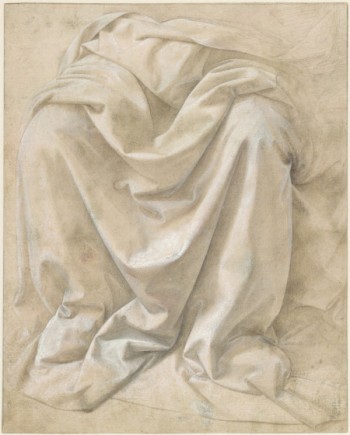
Lorenzo di Credi, Study of Drapery for a Seated Figure, detail (Paris: Fondation Custodia, Collection Frits Lugt).
The International Catalogue Raisonné Association (ICRA) is pleased to host its forthcoming annual conference, titled On Paper, at The Royal Academy London on 5 December 2023. The day-long conference will present unique perspectives from leading professionals in the field on all aspects of paper—from cataloguing, curating and conservation, to materials, techniques and artists’ innovative use of paper across the centuries from Old Masters to present day. On Paper will provide deep insight into the questions and challenges posed by paper both as a support and medium. Ticket are available at eventbrite; £150 for ICRA members, £250 for non-members. Discounted tickets are available for art historians and academics; send an email to Esme at esme.constanti@icra.art for further information.
p r o g r a m m e
9.00 Registration
9.30 Welcome — Teresa Krasny (ICRA Chair)
9.35 Introduction to the Royal Academy’s Collection of Works on Paper — Annette Wickham (Curator of Works on Paper, RA, London)
9.45 A Brief History of Paper-Making — Susan Catcher (Senior Paper Conservator, V&A, London)
10.15 The Art of Cataloguing Works on Paper — Gregory Rubinstein (Head of Old Master Drawings Department, Sotheby’s, London) and Fabienne Ruppen (Assistant Curator, Kunstmuseum Basel)
11.15 Coffee and Tea
11.30 The Legacy of a Works on Paper Collector and Art Historian: Frits Lugt — Rhea Blok (Curator, Fondation Custodia, Paris)
12.00 Spotlight on Pastel — Leila Survage (Paper Conservator, Rijksmuseum, Amsterdam) with Margaret Zayer (la Maison du Pastel, Paris)
12.30 Lunch and visit to the RA’s exhibition Impressionists on Paper: From Degas to Toulouse-Lautrec
2.00 Prints: The Unique versus the Multiple
Moderator Daniel Herrmann (Curator of Modern & Contemporary Projects, The National Gallery and author of the forthcoming catalogue raisonné of Eduardo Paolozzi’s prints)
Alan Cristea (20th- and 21st-century gallerist and print dealer, London) and Kari Greve (Paper Conservator, National Museum Oslo and author of the forthcoming catalogue raisonné of Nikolai Astrup’s prints)
3.00 Pushing the Boundaries of Paper: Radical Approaches
Moderator: Yuval Etgar (author, The Ends of Collage and Vitamin C+: Collage in Contemporary Art)
Claudine Grammont (Head of Cabinet d’art graphique, Centre Pompidou, Paris) and Eric Robertson (Professor of Modern French Literary and Visual Culture, Royal Holloway, University of London)
4.00 Coffee and Tea
4.15 Rethinking the Role of Paper in an Artist’s Legacy
Moderator: Andrea Rose (art historian and editor of Leon Kossoff: Catalogue Raisonné of the Oil Paintings)
Adam Greenhalgh (lead author of the catalogue raisonné Mark Rothko: The Works on Paper and Associate Curator at the National Gallery of Art, Washington DC), Kira Kofoed (Head of Archives, Thorvaldsen Museum), and Sewon Kang (Archivist, The Easton Foundation/Louise Bourgeois Archive and Cataloguer, Louise Bourgeois: The Complete Prints & Books)
5.15 Keynote Presentation — Claudette Johnson (artist)
Currently the subject of a major exhibition, Claudette Johnson: Presence at The Courtauld Gallery (29 September 2023 — 14 January 2024), Johnson will share key insights into her practice over the past three decades.
5.45 Closing Remarks — Teresa Krasny (ICRA Chair)
Exhibition | Untold Stories of a Monumental Pastel
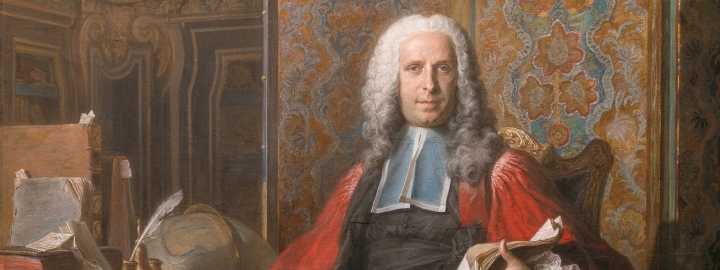
Maurice Quentin de La Tour, Portrait of Gabriel Bernard de Rieux (detail), 1739–41, pastel and opaque watercolor on blue paper, laid down on canvas, unframed: 200 × 150 cm (Los Angeles: Getty Museum, 94.PC.39).
◊ ◊ ◊ ◊ ◊
Now on view at The Getty:
Untold Stories of a Monumental Pastel
Getty Center, Los Angeles, 3 October 2023 — 20 October 2024
One of the largest pastels made in the 18th century, Maurice Quentin de La Tour’s Portrait of Gabriel Bernard de Rieux is an astonishing object. In this colossal portrait, the ambitious La Tour (1704–1788) pushed pastel to new heights, capturing his sitter’s likeness and surrounding de Rieux with the trappings of his wealth: fine furniture, an extensive library, imported porcelain, and a globe turned to display the West coast of Africa. This focused exhibition highlights both La Tour’s technical achievement and the global reality that financed and furnished de Rieux’s world.
New Book | Liotard: A Portrait of Eighteenth-Century Europe
In October, Christopher Baker was announced as the incoming editor of The Burlington Magazine (replacing Michael Hall, who has held the position since 2017). Baker’s book on Liotard has just been published in the UK by Unicorn and will be available in the US market soon.
Christopher Baker, Liotard: A Portrait of Eighteenth-Century Europe (Lewes: Unicorn Publishing Group, 2023), 176 pages, ISBN: 978-1911397595, £30 / $45.
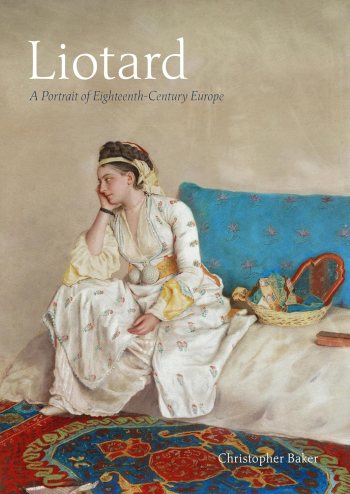 Jean Etienne Liotard (1702–1789) was one of the most accomplished, idiosyncratic, and witty artists of eighteenth-century Europe. Born in Geneva, he pursued a remarkable career, travelling across the continent and the Near East, portraying a riveting cross-section of society. Liotard worked in Paris, London, Amsterdam, Venice, Constantinople, and Vienna and excelled as a specialist in the delicate art of pastel. He became renowned for the uncanny realism of his portraits as well as the beauty of his drawings, while also experimenting with watercolour, oil painting, printmaking, and enamels. In Britain he enjoyed notoriety because of his exotic persona, and received commissions from royalty, aristocrats, grand tourists, and celebrities. Liotard: A Portrait of Eighteenth-Century Europe plots the career and practice and reputation of an extraordinary artist who deserves to be better known. This new study throws light on the wider cultural environment he navigated, illuminating connected themes, including fashion history, orientalism, and the promotion and display of portraits in the public and private spheres of Enlightenment Europe.
Christopher Baker is an art historian, curator, and author; he has been a Director at the National Galleries of Scotland and worked at Christ Church, Oxford, and the National Gallery in London. Christopher has also held Visiting Fellowships at Yale University and the British School in Rome and organised numerous highly successful exhibitions, chiefly on 18th- and 19th-century British and European art and the history of collecting.
The Burlington Magazine, November 2023
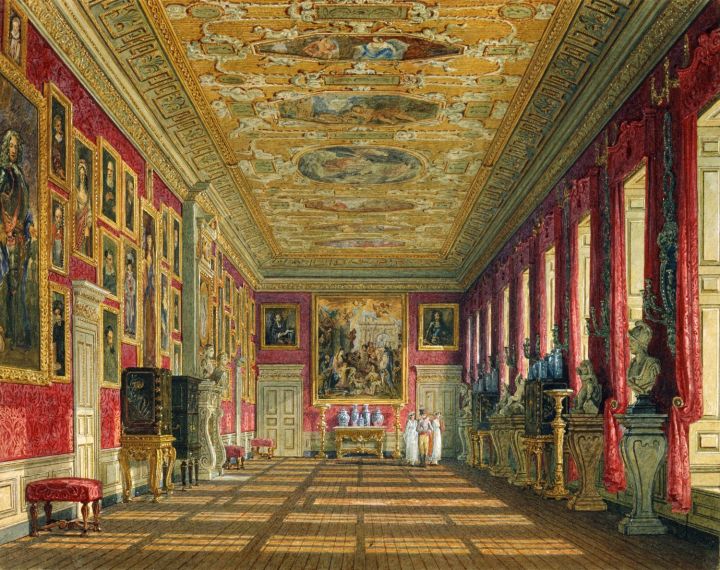
Charles Wild, Kensington Palace: The King’s Gallery, 1816, watercolour with touches of bodycolour over etched outlines, 20 × 25 cm c
(Royal Collection Trust, 922158)
◊ ◊ ◊ ◊ ◊
The eighteenth century in the November issue of The Burlington, which focuses on sculpture:
The Burlington Magazine 165 (November 2023)
e d i t o r i a l
• History of Art after Brexit, p. 1171.
It is probably fair to say that the United Kingdom’s withdrawal from the European Union in 2020 as a consequence of the referendum of 2016 was not greeted with much enthusiasm by professional art historians. The subject as it has developed over the past century is by its very nature transnational in outlook.
 a r t i c l e
• Jonathan Marsden, “George I’s Kensington Palace: The Sculptural Dimension,” pp. 1196–1205.
William Kent’s decoration of the new state rooms at Kensington Palace, London, for George I in 1722–27 has long been recognised as a pioneering exercise in neo-Palladianism. It was also an early example of the use of Classical sculpture in English interiors, a development in which Michael Rysbrack played a larger role than has formerly been recognised.
s h o r t e r n o t i c e
• Nicola Ciarlo, “Domenico Guidi in Padula: A Rediscovered Annunciation,” pp. 1206–09.
r e v i e w s
• Adriano Aymonino, “Albanimania,” pp. 1214–19.
A series of recent publications has turned the spotlight on Cardinal Alessandro Albani—described by Winckelmann as ‘the greatest patron in the world’—his villa in Rome, and collection of Classical antiquities, which have become newly accessible to scholars and the public after decades of seclusion.
• Heather Hyde Minor, Review of the exhibition catalogue, Victor Plahte Tschudi, Piranesi and the Modern Age (Nationalmuseum, Oslo / MIT Press, 2022), pp. 1239–41.
• Adam Bowett, Review of Ada De Wit, Grinling Gibbons and His Contemporaries (1650–1700): The Golden Age of Woodcarving in the Netherlands and Britain (Brepols, 2022), pp. 1247–49.
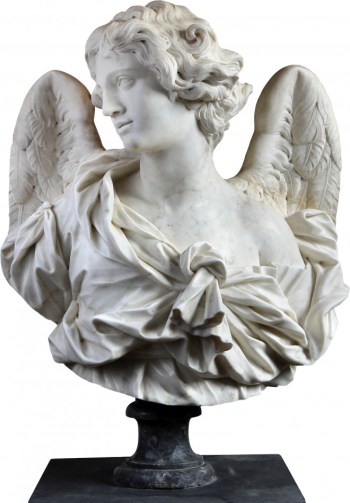
Archangel Gabriel, attributed by Nicola Ciarlo to Domenico Guidi, ca.1699–1701, marble, 94 × 81 × 39 cm, with socle (Padula: Charterhouse of S. Lorenzo).
• Marjorie Trusted, Review of Jan Zahle, Thorvaldsen: Collector of Plaster Casts from Antiquity and the Early Modern Period, 3 volumes (Thorvaldsens Museum and Aarhus University Press, 2020), pp. 1249–50.
• Natacha Coquery, Review of Iris Moon, Luxury after the Terror (Pennsylvania State University Press, 2022), pp. 1254–56.
• Joshua Mardell, Review of Jane Grenville, Pevsner’s Yorkshire, North Riding (Yale University Press, 2023), pp. 1256–57.
o b i t u a r y
• Paul Williamson, Obituary for Michael Kauffmann (1931–2023), pp. 1258–60.
Keeper of the Department of Prints & Drawings and Paintings at the Victoria and Albert Museum and subsequently Director of the Courtauld Institute of of Art, Michael Kauffmann was a scholar with a remarkable breadth of interest, as well as a widely respected and sensitive administrator and manager.
s u p p l e m e n t
• “Recent Acquisitions (2007–2023) of European Sculpture at the Victoria and Albert Museum, London,” pp. 1261–68.
Seventeen years have passed since the publication of the last supplement in this Magazine describing the recent sculpture acquisitions made by the Victoria and Albert Museum, London (V&A). The present supplement therefore highlights a selection of the most noteworthy works acquired in the intervening years.
Call for Papers | Sacred, Funerary Spaces
From ArtHist.net:
Les Espaces du Sacré, 3rd Edition: Funerary Spaces
Sainte-Marie de la Tourette Convent, Eveux (near Lyon), 12 January 2024
Proposals due by 11 December 2023
The Spaces of the Sacred offers a space for reflection and debate for anyone who understands sacred spaces as laboratories for architectural, urban and landscape research. This definition includes places of worship, funerary and memorial spaces, as well as the urban spaces and landscapes that surround them. Defining sacred spaces as a laboratory means considering both their design and their potential transformation.
The ambition is to study contexts as well as project experiences, theories as well as practices, legacies, and mutations as well as orientations and prospects—in a few words, to build knowledge and culture, to learn, experiment, and develop operational tools to understand the present and enrich contemporary practices. As a complement to the historical and social studies developed around these issues, this study day places the architectural, urban, and landscape project at the heart of its concerns.
For this third edition, the day will focus on the theme of funerary spaces. We will be looking at the shape these spaces will take in the future. Several lines of thought are envisaged:
• What place do funerary spaces have in the city? Are these places dedicated to the dead destined to remain at a distance from the living? Can they be integrated into everyday life?
• Can the boundaries of the cemetery be rethought, if not completely transformed, so that the traditional perimeter wall becomes a space of permeability with the town and the landscape?
• Is it possible to envisage funerary spaces incorporating a mix of uses and opening up to other functions?
• Is the limitation of urban expansion, imposed by the ecological and climate crisis, not an invitation to rethink the density of cemeteries and design them vertically?
• Beyond questions of density, how should environmental issues lead us to rethink funeral architecture?
• Between the monumentality of the Pharaonic tombs on the Giza plateau and the horizontal spaces concealed behind their surrounding walls, how should we view the form and aesthetics of these places?
• If there are a good number of sites and places that have been converted into funerary spaces, shouldn’t we be looking at the conversion of funerary spaces?
The Spaces of the Sacred provides an opportunity to share ongoing or completed research projects and to bring together researchers working on these issues. The event is open to students, doctoral candidates, teachers, researchers, practitioners, and anyone interested in developing interdisciplinary exchanges across institutions and borders. Les Espaces du Sacré is a study day organised in partnership between the “Architectural Solutions for the Design and Reuse of Sacred Spaces” (SACRES) chair, the “Heritage, Theory and Creation” (HTC) master’s program, the Ecole nationale supérieure d’architecture de Lyon (ENSAL), the EVS-LAURe research laboratory and the Sainte-Marie de la Tourette convent (Eveux).
The conference will be in French, but proposals may also be submitted in English. Results of the selection process will be announced by email in December 2023. Researchers wishing to contribute to this day can send their proposal, including a title, an abstract (approximately 200 words), and a short biography, to sacres@lyon.archi.fr before 11 December 2023. The study day will be organise at the Sainte-Marie de la Tourette convent (Eveux) on Friday, 12 January 2024.
Scientific Direction
• Benjamin Chavardès, Arch. Dr., titulaire de la chaire SACRES, EVS-LAURe, Ecole nationale supérieure d’architecture de Lyon
• Bastien Couturier, Arch. Dr., chaire SACRES, EVS-LAURe, Ecole nationale supérieure d’architecture de Lyon
Scientific Committee
• Benjamin Chavardès, Arch. Dr., titulaire de la chaire SACRES, EVS-LAURe, Ecole nationale supérieure d’architecture de Lyon
• Julien Correia, Arch. Dr., chaire SACRES, EVS-LAURe, Ecole nationale supérieure d’architecture de Lyon
• Bastien Couturier, Arch. Dr., chaire SACRES, EVS-LAURe, Ecole nationale supérieure d’architecture de Lyon
• Charles Desjobert, architecte du patrimoine, frère dominicain, couvent Sainte-Marie de la Tourette
• Philippe Dufieux, Pr. HDR, chaire SACRES, EVS-LAURe, Ecole nationale supérieure d’architecture de Lyon
• Ricardo Gomez Val, Arch. Dr., Universitat Internacional de Catalunya
• William Hayet, Arch., chaire SACRES, EVS-LAURe, Ecole nationale supérieure d’architecture de Montpellier
• Kevin Jacquot, Dr., MAP-Aria, Ecole nationale supérieure d’architecture de Lyon
• Aïcha Sariane, Architecte DE, chaire SACRES, Ecole nationale supérieure d’architecture de Lyon
The San José in the News
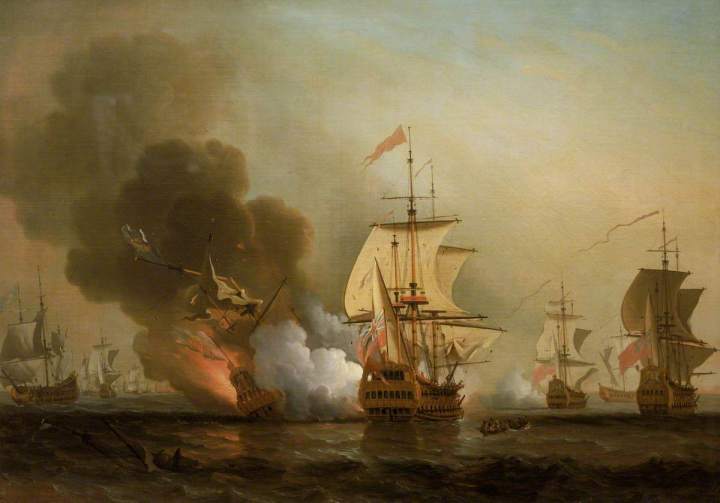
Samuel Soctt, Action off Cartagena, 28 May 1708, 1740s, oil on canvas (Greenwich: National Maritime Museum, BHC0348). Under the leadership of Commodore Wager, the Expedition (shown in the center) fires on the San José (left of center).
◊ ◊ ◊ ◊ ◊
In 1708, during the War of Spanish Succession, the San José was destroyed by a British squadron under Charles Wager (for whom a ship was named in the 1730s, that ship again made famous by David Grann’s recent best-seller). From The New York Times:
Remy Tumin and Genevieve Glatsky, “A Treasure May Be off the Coast of Colombia, but Who Can Claim It?” The New York Times (10 November 2023). The San José galleon was destroyed in 1708, sinking with goods now worth billions. Colombia’s government is planning a recovery, but not everyone wants to see the shipwreck brought to the surface.
When the San José made its final voyage from Seville, Spain, to the Americas in 1706, the Spanish galleon was considered to be one of the most complex machines ever built.
But in an instant, the armed cargo vessel went from a brilliant example of nautical architecture to what treasure hunters would come to consider the Holy Grail of shipwrecks. The San José was destroyed in an ambush by the British in 1708 in what is known as Wager’s Action, sinking off the coast of Cartagena, Colombia, with a haul of gold, jewels, and other goods that could be worth upward of $20 billion today.
Some experts say that number is extraordinarily inflated. But the myth built around the San José has prompted the Colombian government to keep its exact location a secret as a matter of national security.
Now Colombia’s president, Gustavo Petro, wants to accelerate a plan to bring the ship and its contents to the surface—and everyone wants a piece of it. It is the latest maneuver in a decades-long drama that has pitted treasure hunters, historians and the Colombian government against one another. . . .
Archaeologists and historians have condemned the effort, arguing that disturbing the ship would do more harm than good. Multiple parties, including Colombia and Spain, have laid claim to the San José and its contents. Indigenous groups and local descendants of Afro-Caribbean communities argue they are entitled to reparations because their ancestors mined the treasure.
Perhaps the largest, most enduring conflict is in the hands of an international arbiter in London. . . .
The full article is available here»
Postdoctoral Fellowship | Decay, Loss, and Conservation in Art History
From the Max Planck Institute for Art History:
Postdoctoral Fellowship | Decay, Loss, and Conservation in Art History
Lise Meitner Research Group, Bibliotheca Hertziana – Max Planck Institute for Art History in Rome
Applications due by 15 January 2024; position starts September 2024
The Lise Meitner Research Group Decay, Loss, and Conservation in Art History led by Francesca Borgo at the Bibliotheca Hertziana – Max Planck Institute for Art History in Rome seeks to appoint a Postdoctoral Fellow (M/F/D). The deadline for application is 15 January 2024, 12pm CEST. This is a full-time position of one year with the possibility of renewal. The start date is 1 September 2024 or as soon as possible thereafter.
The Postdoctoral Fellow will conduct their own original research project within the overall framework of the Research Group. Excellence in research, commitment to pursue new insights through original scholarship, and willingness to become part of a group of young, international scholars are essential. The successful candidate will actively participate in the Group’s activities and is expected to contribute to its publication output while benefiting from editorial and image licensing support. They will be responsible for planning and organizing seminars, workshops, visits and fieldtrips in collaboration with other team members and under the supervision of the Principal Investigator. Candidates should have excellent written and spoken English and be conversant in Italian and/or German.
For more information on the post and how to apply, please see the full listing on the Bibliotheca Hertziana opportunities page.
The Met | Look Again: European Paintings 1300–1800

Details of European paintings in The Met Collection.
◊ ◊ ◊ ◊ ◊
After a five-year infrastructure project to replace the skylights, The Met’s newly installed galleries of European paintings will open to the public on Monday. For the 18th century, some significant changes have been made to the French, Italian, and British galleries, addressing issues of race, gender, class, and colonialism. A good time to revisit old friends, formulate fresh questions, and discover new favorites! –CH
From The Met:
Look Again: European Paintings 1300–1800
The Metropolitan Museum of Art, New York, opening 20 November 2023
The reopened galleries dedicated to European Paintings from 1300 to 1800 highlight fresh narratives and dialogues among more than 700 works of art from the Museum’s world-famous holdings. The newly reconfigured galleries—which include recently acquired paintings and prestigious loans, as well as select sculptures and decorative art—will showcase the interconnectedness of cultures, materials, and moments across The Met collection.
The chronologically arranged galleries will feature longstanding strengths of the collection—such as masterpieces by Jan van Eyck, Caravaggio, and Poussin; the most extensive collection of 17th-century Dutch art in the western hemisphere; and the finest holdings of El Greco and Goya outside Spain—while also giving renewed attention to women artists, exploring Europe’s complex relationships with New Spain and the Viceroyalty of Peru, and looking more deeply into histories of class, gender, race, and religion.
The reopening of the suite of 45 galleries at the top of the Great Hall staircase (galleries 600–644) follows a five-year project to replace the skylights. This monumental infrastructure project improves the quality of light and enhances the viewing experience for a new look at this renowned collection.
Major support for Look Again: European Paintings 1300–1800 is provided by Candace K. and Frederick W. Beinecke.
Conference | Fischer von Erlach and His Contemporaries
From ArtHist.net:
Court Architects in Europe, ca. 1700: Johann Bernhard Fischer von Erlach and His Contemporaries
Theatermuseum im Palais Lobkowitz, Vienna, 30 November — 2 December 2023
Registration due by 27 November 2023
Scholarly research has described Johann Bernhard Fischer von Erlach (1656–1723) early on as an outstanding artistic personality and has endeavored to contour his built, drawn, and printed oeuvre, which can safely be described by his own word as ungemein (‘extraordinary’). Even if scholars have increasingly been concerned with integrating Fischer into the architectural culture of his time, it has rightly and repeatedly been emphasized that the question of his international profile still requires a broader perspective that takes into account the relationship to his contemporary ‘colleagues’ as well as structural questions. In this sense, the conference aims to examine Fischer’s activities in a broader European context by means of selected thematic fields, thus attempting to sharpen his profile. Registration requested to irina.morze@wienmuseum.at by 27 November.
Organizers
• Institute for Habsburg and Balkan Studies (IHB) der Österreichischen Akademie der Wissenschaften
• Wien Museum
• Institut für Kunstgeschichte der Universität Münster
Concept
Herbert Karner, Jens Niebaum, Andreas Nierhaus
t h u r s d a y , 3 0 n o v e m b e r 2 0 2 3
13.00 Welcome and Introduction
13.30 Section 1 | Architects of Great Courts: Conditions, Scope, Hierarchies
• Anna Mader-Kratky — Fischer von Erlach als kaiserlicher Oberbauinspektor und die institutionellen Rahmenbedingungen des Wiener Hofbauamtes
• Simon Thurley — Sir Christopher Wren and His Contemporaries at Court: British Royal Architects and Architecture, 1660–1714
• Benjamin Ringot — Jules Hardouin-Mansart, from Architect to Administrator: Becoming Louis XIV’s Superintendent of Royal Buildings
• Martin Olin — Architect, Courtier, Police Minister: Nicodemus Tessin the Younger in the Service of Royal Absolutism
• Konrad Ottenheym — Jacob Roman, Hofarchitekt der Oranier um 1700
17.30 Discussion
f r i d a y , 1 d e c e m b e r 2 0 2 3
9.00 Section 2 | Drawing and Prints: Media of Visualisation, Transfer, and Knowledge Production
• Werner Oechslin — „…das Auge zu ergötzen, und denen Künstlern zu Erfindungen Anlass zu geben…“: Fischer von Erlachs Zeichnungen für die Historische Architektur
• Jasenka Gudelj — Fischer von Erlach’s Dalmatian Connection: Drawing the Diocletian Palace in Split
• Elisabeth Kieven — Fischer von Erlach und Juvarra: Zeichnungen im Vergleich
• Kristina Deutsch — Jean Marot und die druckgraphische Architekturdarstellung zur Zeit Ludwigs XIV. in Frankreich
12.00 Lunch Break
13.30 Section 2 | Drawing and Prints, continued
• Jonas Nordin — The People beyond the Mountains: Erik Dahlbergh’s Images of Swedish Architecture and Topography
• Peter H. Jahn — „Inventées … par Mathieu Daniel Pöppelmann Premier Architecte de Sa Majesté“ – das Dresdner Zwingerstichwerk von 1729 als publizistische Statusbekundung eines Hofbaumeisters
14.40 Discussion
16.15 Section 3 | Paths to Architecture: Court Architects and Their Education around 1700
• Anna-Victoria Bognár — Das akademische Studium der Architektur in der Frühen Neuzeit. Zur Entwicklung von Studienzahlen, Studienorten und Inhalten
• Giuseppe Bonaccorso — The Roman Training of Johann Bernhard and Joseph Emanuel Fischer von Erlach between Carlo Fontana and Emissaries from European Courts
• Alexandre Gady — Becoming Jules Hardouin-Mansart, the Sun King’s First Architect
s a t u r d a y , 2 d e c e m b e r 2 0 2 3
9.00 Section 3 | Paths to Architecture, continued
• Kristoffer Neville — Nicodemus Tessin’s Autobiography
• Matthew Walker — Christopher Wren: From Science to Service
• Tommaso Manfredi — Studying Architecture in Rome between the 17th and the 18th Centuries: From Fischer von Erlach to Juvarra
• Giuseppe Dardanello — Practicing with Goldsmithing, Perspective Views, Stage Design: Filippo Juvarra Shaping His Own Visual Design Culture
• Freek Schmidt — Renewing Court Architecture in a Republic: The Professional Advancement of Pieter de Swart
13.00 Discussion
Call for Papers | Many Lives: Picture Frames in Context
From the AGO:
Many Lives: Picture Frames in Context
Art Gallery of Ontario, Toronto, 2–3 May 2024
Proposals due by 15 December 2023
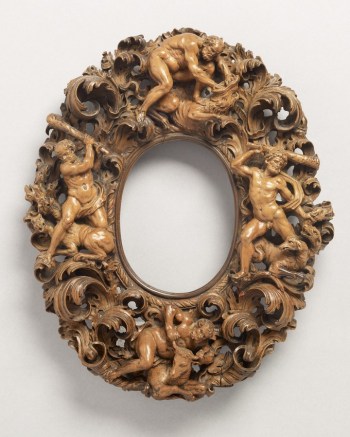
Frame with Four Labours of Hercules: Hercules and the Nemean Lion, the Cerberus, the Cretan Bull, and the Ceryneian Hind, ca. 1700–25, boxwood, 21.5 × 18 × 2.5 cm (Toronto: AGO, The Thomson Collection at the Art Gallery of Ontario, 29347).
The Art Gallery of Ontario (AGO) invites submissions from conservators, curators, graduate students, and independent researchers for a two-day conference on the history and conservation of picture frames. The conference will take place at the AGO on Thursday, 2 May, and Friday, 3 May 2024.
This conference is co-organized by the museum’s curatorial and conservation departments to promote inter- and multi-disciplinary dialogue. The AGO is home to an important collection of historic frames, and a project is currently underway at AGO to catalogue and conserve this collection to make the collection more accessible for study and use. In light of this project, the symposium aims to present current research that contextualizes frames in their many incarnations, including research on frame makers, framing traditions, frames’ afterlives, frame collections, pairings of frames to paintings, artists’ frames, the commercial history of framing, and related topics. Keynote lectures will be delivered by Lynn Roberts, acclaimed frame historian and publisher of The Frame Blog, and Hubert Baija, recently-retired longtime conservator of frames at the Rijksmuseum.
Applicants are requested to send a current CV and a 300-word abstract outlining the topic of a 20-minute paper to Julia.campbell-such@ago.ca by 15 December 2023.
Conference registration, accommodation in Toronto, and some meals will be covered for speakers. Further funding is available for travel for students and unaffiliated researchers. Special funding for one early-career scholar has been generously provided by the Decorative Arts Trust. Please indicate in your email with CV and abstract if you would like to apply for this funding.










 Enfilade
leave a comment