New Book | Appropriation and Invention
Published by Hirmer and distributed by The University of Chicago Press:
Jorge Rivas Pérez, ed., Appropriation and Invention: Three Centuries of Art in Spanish America (Munich: Hirmer Verlag, 2023), 296 pages, ISBN: 978-3777439686, $50. With contributions by O. I. Acosta Luna, Luisa E. Alcalá, E. Arroyo Lemus, Carla Aymes, Michael A. Brown, James M. Cordova, Gustavo Curiel, C. Fernández Salvador, Raphael Fonseca, Philippe Halbert, Ricardo Kusunoki, Natalia Majluf, F. M. Neff, J. Rodríguez Nóbrega, Sofia Sanabrais, and L. E. Wuffarden Revilla.
 A bilingual guide to the Denver Art Museum’s permanent collection of Latin American art, covering masterpieces from three centuries of art in Spanish America.
Drawing from the renowned collection of Latin American Art at the Denver Art Museum, this bilingual catalog examines the processes of appropriation and invention in the arts of Spanish America from the 1520s to the 1820s. The book highlights Latin American masterpieces, including paintings, sculptures, and decorative arts, made shortly after the conquest and before the independence movements. Arranged regionally, the book’s essays explore how artists found artistic freedom under colonial authority. The book shows that while still pleasing clients, many artists of Indigenous and African descent also reclaimed and reshaped the arts for themselves and their new colonial realities. Essays that consider modern and contemporary trends round out the volume.
Jorge F. Rivas Pérez is the Frederick and Jan Mayer Curator of Latin American Art at the Denver Art Museum. He is the co-editor of Revisión: A New Look at Arts in the Americas.
Online Catalogue | The Nelson-Atkins Museum of Art, French Paintings

From The Nelson-Atkins:
The Nelson-Atkins Museum of Art
French Paintings Catalogue
Learn more about the remarkable French paintings and pastels at the Nelson-Atkins Museum of Art. View the entire collection online, delve into recent scholarly insights and technical discoveries, or read about the history of collecting French art in Kansas City. Art historians and conservators provide fresh perspectives on the French collection, and comprehensive research sheds new light on the provenance (ownership history), exhibition history, and publication history of each work. Whether you are seeking a quick overview or deep dive, the French Paintings Catalogue is the perfect place to explore and learn more.
The French Paintings Catalogue is generously supported by The Marion and Henry Bloch Family Foundation, The National Endowment for the Humanities, Adelaide Cobb Ward in honor of Donald J. Hall’s retirement, The Mellon Endowment for Scientific Research, The National Endowment for the Arts, The James Sight Fund, and The Samuel H. Kress Foundation.
C O N T E N T S
Publication Installments
Director’s Foreword — Julián Zugazagoitia
Preface and Acknowledgments — Aimee Marcereau DeGalan
Timeline — Meghan L. Gray and Glynnis Stevenson
The Collecting of French Paintings in Kansas City — Aimee Marcereau DeGalan
Conservation Introductory Essay — Mary Schafer, Rachel Freeman, and John Twilley
Notes to Reader
Seventeenth Century, 1600–1699
Eighteenth Century and Pre-Revolution, 1700–1789
Neoclassicism and Romanticism, 1790–1860
Nineteenth Century, Realism, Barbizon, 1830–1890
Impressionism, 1860–1900s
Post-Impressionism, 1886–1900s
A Modern World, 1900–1945
Appendix I: Other Works in the Bloch Collection of The Nelson-Atkins Museum of Art
Appendix II: Other French Works in the Collection of The Nelson-Atkins Museum of Art
Glossary
About
Contributors
Photograph Credits
Anne Helmreich Named Director of the Archives of American Art
From the press release (15 December 2022) . . .

Anne Helmreich, the incoming director of the Smithsonian’s Archives of American Art (Photo by Loli Kantor).
Anne Helmreich has been named the director of the Smithsonian’s Archives of American Art, effective 27 February 2023. Helmreich is currently the associate director of grants programming at the Getty Foundation and brings 35 years of experience in higher education and arts administration to this new role.
The Archives of American Art fosters advanced research by accumulating and disseminating primary sources that document more than 200 years of the nation’s artists and art communities. Helmreich will oversee its Washington, D.C., headquarters and research center, New York City research center, and Lawrence A. Fleischman Gallery. She will also oversee its collections development, exhibitions, and publications, including the Archives of American Art Journal, the longest-running scholarly journal in the field of American art. Additionally, Helmreich will lead the Archives’ digitization program and the stewardship of its holdings consisting of some 30 million items and an oral-history collection of more than 2,500 audio and video interviews, the largest accumulation of in-depth, first-person accounts of the American art world.
“Anne understands how effective and impactful art can be in recording and expressing the American story,” said Kevin Gover, the Smithsonian’s Under Secretary for Museums and Culture. “Her track record as a successful administrator, educator and user of the Archives of American Art made her the obvious choice to conserve this vital collection and to make its holdings even more accessible to the art world and beyond.”
As associate director of grants programming at the Getty Foundation, Helmreich supports individuals and institutions committed to advancing the greater understanding and preservation of the visual arts in Los Angeles and throughout the world. Through strategic grant initiatives, it strengthens art history as a global discipline, promotes the interdisciplinary practice of conservation, increases access to museum and archival collections and develops current and future leaders in the visual arts.
She also represents the Getty Foundation in the LA Arts Recovery Fund, which supports small to mid-sized arts organizations in Los Angeles.
Helmreich has been awarded over two dozen grants, published two books, edited five collections, written 19 book chapters, published 20 scholarly papers, and contributed to over half a dozen exhibition catalogs. At the Archives of American Art, Helmreich aims to expand its digital offerings, foster an inclusive and diverse culture that represents the many communities and histories that make up the United States and establish the Archives as America’s preeminent storyteller for the arts.
“I am very excited to help move the Archives of American Art into the future by making it more accessible to more researchers from all backgrounds and by expanding public engagement,” Helmreich said. “The Archives’ unique collections have helped generations of art historians record and study American art, and by digitizing and diversifying our collections and our programming for new audiences, we will continue to reflect the history and future of America through this important lens.”
Previously, Helmreich served as the inaugural co-chair of the Getty DEAI Council, the associate director of digital initiatives at the Getty Research Institute, the dean of the College of Fine Arts at Texas Christian University, and director of the Baker-Nord Center for the Humanities and associate professor of art history at Case Western Reserve University. Helmreich holds a Bachelor of Arts from Dickinson College, a Master of Arts in art history from the University of Pittsburgh, and a doctorate in art history from Northwestern University.
Liza Kirwin, deputy director of the Archives of American Art, has served as interim director.
Mei Mei Rado Joins Bard Graduate Center as Assistant Professor
From the BGC press release (11 November 2022). . .
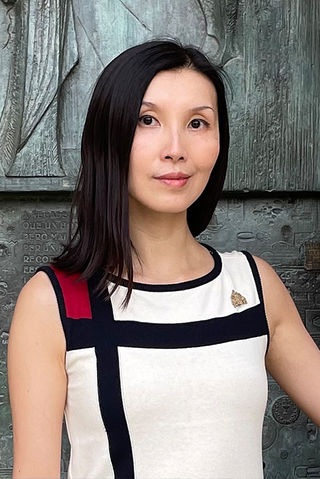 Bard Graduate Center (BGC) announces the appointment of Assistant Professor Dr. Mei Mei Rado, who will begin teaching at BGC on 1 January 2023. Drawing on her specialties in textiles, dress, and decorative arts in both China and France, Dr. Rado’s research and teaching at BGC will focus on the history of East Asian and European textiles and dress in broader transcultural contexts, featuring deep object-based knowledge and a global perspective. Dr. Rado’s expertise complements the interdisciplinary research of Bard Graduate Center’s faculty and will help expand BGC’s programs in textile and fashion history, Chinese art and material culture, and European decorative arts and design history.
“Dr. Rado brings extraordinary intellectual energy and seriousness to the study of dress, textiles, and fashion,” said Peter N. Miller, Dean of Bard Graduate Center. “She also firmly establishes East Asia as a center of curricular and research strength. But her interest in cross-cultural communication adds still further depth to something BGC does very well.”
Mei Mei Rado stated, “One of my goals is to champion BGC’s diverse, interdisciplinary research and teaching. I look forward to collaborating with faculty in different fields and approaching textiles and dress from multiple academic angles and cultural perspectives. BGC’s unique exhibition program also enables me to continue and expand my curatorial practice. I am grateful to BGC Director and Founder Susan Weber and Dean Peter Miller for this opportunity, and I’m honored to continue the legacy of BGC Professor Emerita Michele Majer, who has trained generations of textile and fashion scholars, including myself.”
Dr. Rado has lectured and published on 1920s French textiles and fashion, chinoiserie and Japonisme fashion, twentieth-century Chinese textiles and fashion, eighteenth-and nineteenth-century Qing court arts, and interior draperies in eighteenth-century France. Her forthcoming book The Empire’s New Cloth: Western Textiles at the Eighteenth-Century Qing Court investigates European silks and tapestries that entered the Chinese court and Qing imperial productions inspired by European models. It recounts a multipolar story from both cultural ends, showing how objects, styles, and images traveled in multiple directions replete with reinvented meanings.
Before joining BGC, Dr. Rado was the Associate Curator of Costume and Textiles at LACMA. She also held fellowship positions at the Metropolitan Museum of Art, Smithsonian’s National Museum of Asian Art, and the Palace Museum, Beijing. Dr. Rado earned her B.A.at Nanjing University, her M.A.at the University of Chicago, and her Ph.D. from Bard Graduate Center.
Call for Fellowship Applications | Center for Netherlandish Art, 2023–24
From CNA:
Center for Netherlandish Art Fellowships, 2023–24
Museum of Fine Arts, Boston
Applications due by 15 January 2023
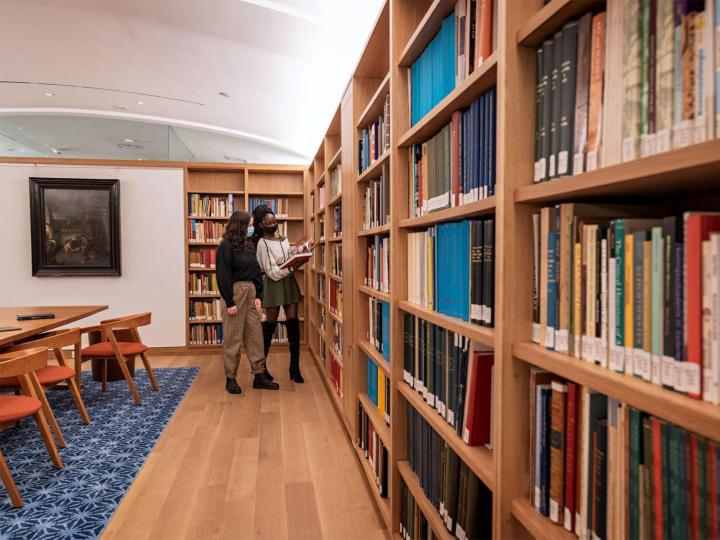 The CNA’s call for 2023–24 academic year fellowship applications is now open. Apply for a fellowship through the MFA’s job portal here. Applications are accepted on a rolling basis until 15 January 2023. Candidates are encouraged to apply early.
CNA fellowships provide opportunities for talented individuals at different stages of their careers—from recent MA graduates to emerging scholars at the postdoctoral level—to conduct independent research connected to the MFA’s collection of Netherlandish art. This may include preparation for submission of a PhD proposal, dissertation research and writing, and preparing a publication, among other research activities. To encourage creative thinking and new scholarship, the program is open to individuals in all professional and academic fields. Fellows are drawn from a highly competitive international application pool and receive a workspace in the CNA Library. Compensation includes a salary and travel allowance, as well as a generous benefits package.
Fellows are fully incorporated into the work of the MFA and may consult on projects related to their research. They also share their research through the CNA’s and MFA’s public programs and online platforms to benefit a range of audiences.
Call for Papers | Community/Collaboration in Dutch and Flemish Art
From the Call for Papers:
Community and Collaboration in Dutch and Flemish Art, 1560–1800
Center for Netherlandish Art, Museum of Fine Arts, Boston, 12 May 2023
Organized by Rachel Kase and Sarah Mallory
Proposals due by 1 February 2023
The Center for Netherlandish Art (CNA) seeks 20-minute papers from emerging scholars that critically and creatively engage with the theme of Community and Collaboration in Dutch and Flemish Art in the long 17th century (ca. 1560–1800), with a particular interest in topics that explore new methods or histories.
Topics might include but are not limited to:
• Visualizations of artists’ studios and other spaces of cooperation
• Physical and psychological isolation and exile within and beyond the Dutch Republic and Flanders
• Artists as community leaders
• The role of gender and gender identity in community
A total of three papers will be selected for presentation during the 2023 CNA Colloquium, scheduled for Friday, 12 May 2023. This daylong event offers a platform for selected emerging scholars to share original research with the international community of experts in the field. The program will be held in a hybrid format, allowing for both in-person and virtual participation. Further event details will be shared closer to the event date.
We invite contributions from MA students, PhD candidates, and postdoctoral researchers with less than five years of working experience. Individuals of all nationalities may apply. As we amplify our efforts toward becoming truly inclusive, ensuring that diversity and equity are lived values, we actively encourage candidates from traditionally underrepresented backgrounds to submit proposals.
Please submit a title and abstract (500 words maximum) and a CV in one single PDF file to cna@mfa.org, with ‘Call for Papers’ included in the email’s subject line. Submissions are accepted on a rolling basis through February 1, 2023. Selected participants will be notified by 17 February 2023. Selected candidates will have the opportunity to workshop their papers during a rehearsal presentation one week prior to the event.
Scholarship and museum exhibitions have long recognized the artistic achievements of individual artists like Rembrandt, Vermeer and Rubens, but in the 17th-century Netherlands collaboration, partnership, and studio practices fueled artistic creativity and production. Studio practices, such as those described by Rembrandt’s pupil Samuel van Hoogstraten, could also reinforce and reflect power and hierarchy. Likewise, Rubens and his pupil Anthony van Dyck together shaped—and re-shaped—visual convention for aristocratic portraiture. Artists reached outside the studio to engage with collaborators in other professions, forming partnerships that resulted in various types of printed, visual, and performing arts. Artist studios, guilds, chambers of rhetoric, marketplaces, universities, churches, and private homes—to name a few places—also served as sites of artistic mentorship, teaching, and innovation.
On the other hand, long periods of travel and infrequent correspondence made it difficult to forge lines of communication or connection. Though many artists were active in creative and commercial centers, some were not. Some may have experienced uncomfortable isolation—phases of boredom and restlessness, social confinement, or geographic remoteness—not dissimilar to the experience that many people had early in the COVID-19 pandemic.
The work of Frans Post and Albert Eckhout demonstrates some ways in which Dutch artists attempted to represent ideas of community and isolation beyond the Republic, while Dutch and Flemish artists such as the Bamboccianti and Bentvueghels sought the companionship of their countrymen even while pursuing new ideas and experiences in Rome. Gender, political beliefs, religious affiliations, and other aspects of personal identity also informed artistic collaboration and a sense of community; as much as some artists were embraced for their abilities and beliefs, others were exiled. From Pieter Bruegel the Elder and Jan Steen’s crowded and lively scenes of taverns and domestic life, to the isolation seen in Rembrandt’s later self-portraits—works of art from this period show a spectrum of collaboration and community throughout the period.
Organized by Rachel Kase and Sarah Mallory, with support from the Center for Netherlandish Art at the Museum of Fine Arts, Boston.
New Book | Jena 1800: The Republic of Free Spirits
From Macmillan:
Peter Neumann, Jena 1800: The Republic of Free Spirits, translated by Shelley Frisch (New York: Farrar, Straus and Giroux, 2022), 256 pages, ISBN: 978-0374178697, $27.
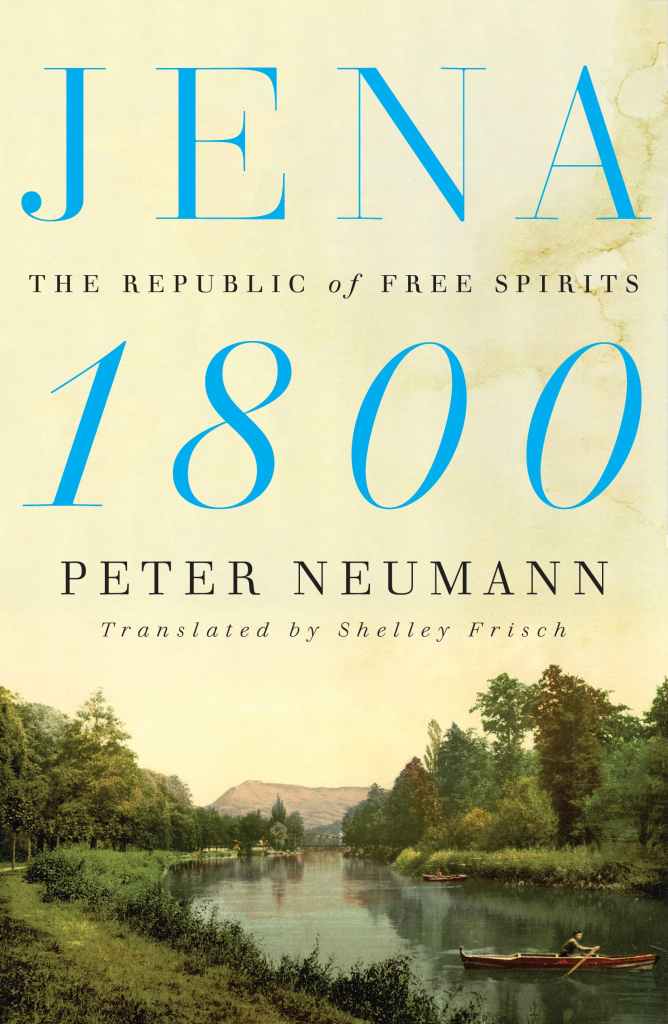 Around the turn of the nineteenth century, a steady stream of young German poets and thinkers coursed to the town of Jena to make history. The French Revolution and the Napoleonic Wars had dealt a one-two punch to the dynastic system. Confidence in traditional social, political, and religious norms had been replaced by a profound uncertainty that was as terrifying for some as it was exhilarating for others. Nowhere was the excitement more palpable than among the extraordinary group of poets, philosophers, translators, and socialites who gathered in this Thuringian village of just four thousand residents.
Jena became the place for the young and intellectually curious, the site of a new departure, of philosophical disruption. Influenced by Johann Wolfgang von Goethe, then an elder statesman and artistic eminence, the leading figures among the disruptors—the translator August Wilhelm Schlegel; the philosophers Friedrich ‘Fritz’ Schlegel and Friedrich Schelling; the dazzling, controversial intellectual Caroline Schlegel, married to August; Dorothea Schlegel, a poet and translator, married to Fritz; and the poets Ludwig Tieck and Novalis—resolved to rethink the world, to establish a republic of free spirits. They didn’t just question inherited societal traditions; with their provocative views of the individual and of nature, they revolutionized our understanding of freedom and reality. With wit and elegance, Peter Neumann brings this remarkable circle of friends and rivals to life in Jena 1800, a work of intellectual history that is colorful and passionate, informative and intimate—as fresh and full of surprises as its subjects.
Peter Neumann studied philosophy, political science, and economics in Jena and Copenhagen. He holds a PhD in philosophy and writes for the weekly newspaper Die Zeit. He is the author of the poetry collections secure and areas & days, which have been awarded several prizes and scholarships.
Shelley Frisch’s translations from the German―which include biographies of Friedrich Nietzsche, Albert Einstein, Leonardo da Vinci, Marlene Dietrich/Leni Riefenstahl (dual biography), and Franz Kafka―have been awarded numerous translation prizes. She lives in Princeton, New Jersey.
New Book | Magnificent Rebels: The First Romantics
From Penguin Random House:
Andrea Wulf, Magnificent Rebels: The First Romantics and the Invention of the Self (New York: Knopf, 2022), 512 pages, ISBN: 978-0525657118, $35.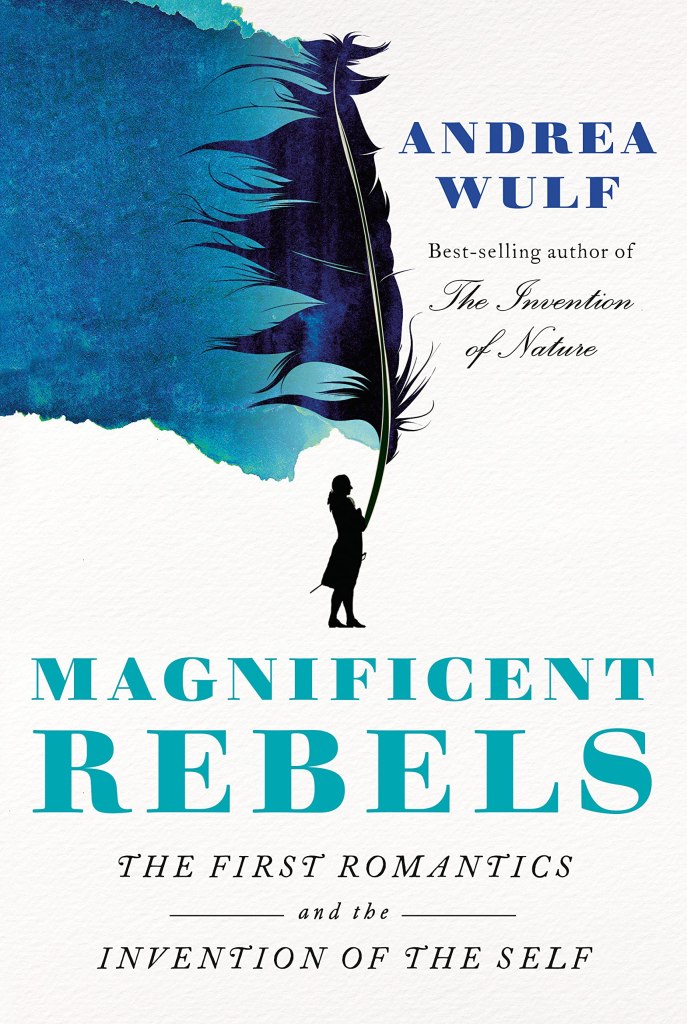 When did we begin to be as self-centered as we are today? At what point did we expect to have the right to determine our own lives? When did we first ask the question, How can I be free? It all began in Jena, a quiet university town in Germany, in the 1790s, when a group of playwrights, poets, and writers put the self at center stage in their thinking, their writing, and their lives. This brilliant circle included the famous poets Goethe, Schiller, and Novalis; the visionary philosophers Fichte, Schelling, and Hegel; the contentious Schlegel brothers; and, in a wonderful cameo, Alexander von Humboldt. And at the heart of this group was the formidable Caroline Schlegel, who sparked their dazzling conversations about the self, nature, identity, and freedom.
The French revolutionaries may have changed the political landscape of Europe, but the young Romantics incited a revolution of the mind that transformed our world forever. We are still empowered by their daring leap into the self, and by their radical notions of the creative potential of the individual, the highest aspirations of art and science, the unity of nature, and the true meaning of freedom. We also still walk the same tightrope between meaningful self-fulfillment and destructive narcissism, between the rights of the individual and our responsibilities toward our community and future generations. At the heart of this inspiring book is the extremely modern tension between the dangers of selfishness and the thrilling possibilities of free will.
Andrea Wulf was born in India and moved to Germany as a child. She is the author of Founding Gardeners, Brother Gardeners, and The New York Times best seller The Invention of Nature, which has been published in twenty-seven languages and won fifteen international literary awards. Wulf has written for many newspapers and magazines, including The New York Times, The Guardian, The Los Angeles Times, The Wall Street Journal, and The Atlantic. She is a member of PEN America and a fellow of the Royal Society of Literature. She lives in London.
When did we begin to be as self-centered as we are today? At what point did we expect to have the right to determine our own lives? When did we first ask the question, How can I be free? It all began in Jena, a quiet university town in Germany, in the 1790s, when a group of playwrights, poets, and writers put the self at center stage in their thinking, their writing, and their lives. This brilliant circle included the famous poets Goethe, Schiller, and Novalis; the visionary philosophers Fichte, Schelling, and Hegel; the contentious Schlegel brothers; and, in a wonderful cameo, Alexander von Humboldt. And at the heart of this group was the formidable Caroline Schlegel, who sparked their dazzling conversations about the self, nature, identity, and freedom.
The French revolutionaries may have changed the political landscape of Europe, but the young Romantics incited a revolution of the mind that transformed our world forever. We are still empowered by their daring leap into the self, and by their radical notions of the creative potential of the individual, the highest aspirations of art and science, the unity of nature, and the true meaning of freedom. We also still walk the same tightrope between meaningful self-fulfillment and destructive narcissism, between the rights of the individual and our responsibilities toward our community and future generations. At the heart of this inspiring book is the extremely modern tension between the dangers of selfishness and the thrilling possibilities of free will.
Andrea Wulf was born in India and moved to Germany as a child. She is the author of Founding Gardeners, Brother Gardeners, and The New York Times best seller The Invention of Nature, which has been published in twenty-seven languages and won fifteen international literary awards. Wulf has written for many newspapers and magazines, including The New York Times, The Guardian, The Los Angeles Times, The Wall Street Journal, and The Atlantic. She is a member of PEN America and a fellow of the Royal Society of Literature. She lives in London.
Huge New Discovery of Notes on Hegel’s Lectures
From The Guardian:
Sara Tor, “Manuscript Treasure Trove May Offer Fresh Understanding of Hegel,” The Guardian (29 November 2022).
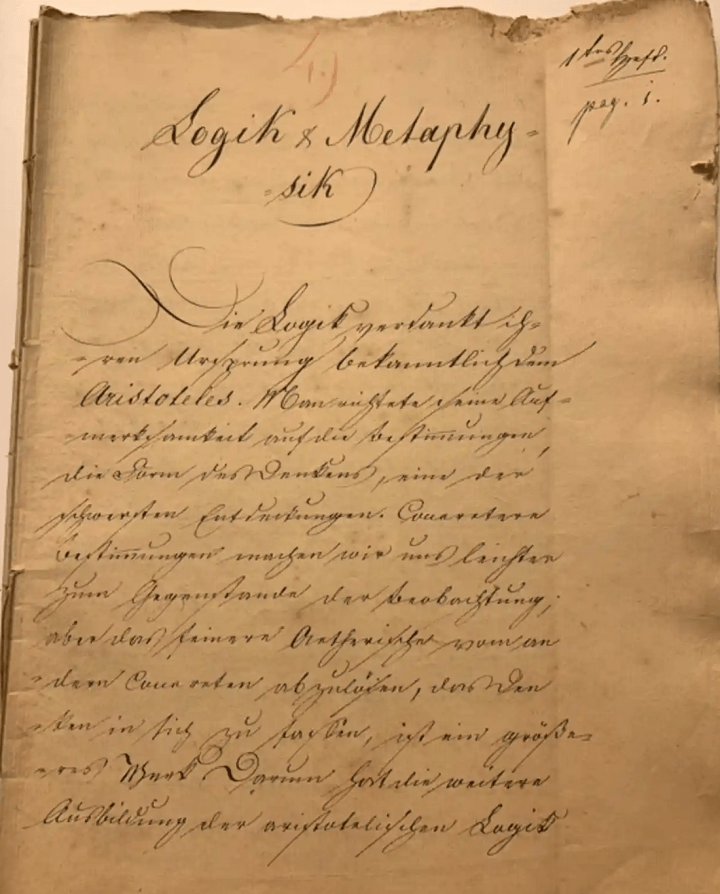
One of the papers from a trove of 4,000 notes on Hegel, found by Professor Klaus Vieweg (Photograph: Marko Fuchs/Copyright Archiv und Bibliothek des Erzbistums München und Freising).
Library discovery of undocumented transcripts of German philosopher’s lectures like ‘finding new Beethoven score’
A biographer researching the German philosopher Hegel (1770–1831) has uncovered a massive treasure trove of previously undocumented lectures that could change perceptions regarding one of the leading figures of modern western philosophy. More than 4,000 pages of notes on Georg Wilhelm Friedrich Hegel’s lectures were found by Klaus Vieweg in the library of the archdiocese of Munich and Freising.
“The discovery of these manuscripts is comparable to finding a new score by Beethoven or a previously unseen painting by Constable,” said Vieweg, a professor at the Friedrich Schiller University Jena in Germany.
He said an early reading of the notes had hinted at a fresh understanding of how Hegel formed his influential ideas on aesthetics, the philosophy around beauty and art, and how he analysed Shakespeare’s plays to help develop his ideas.
The transcripts are thought to have been written by Friedrich Wilhelm Carové, one of the first students at Heidelberg University to be taught by Hegel during the philosopher’s time there between 1816 and 1818. Hegel’s ideas and works are notable for their formidable difficulty. The British philosopher Bertrand Russell described him as “the hardest to understand of the great philosophers.” Vieweg hopes the new find might bring clarity. The papers will now be compiled into an annotated edition by a team of international experts, headed by Vieweg and Christian Illies, a professor of philosophy at the University of Bamberg.
“Major sections of Hegel’s work are only known through his lectures, so scholars have long been trying to find transcripts,” said Illies. “Several were found and published in the 19th and 20th centuries, but over the years uncovering new material has become less and less likely.”
Vieweg’s find is probably the single largest of its kind ever made. It was unearthed after a reader of his recent biography on Hegel pointed him to the archive of Friedrich Windischmann. Windischmann was a professor of Catholic theology in Munich whose father, Karl Joseph Hieronymous Windischmann, was a philosopher and friend of Hegel. A letter between Hegel and Karl Windischmann shows that Carové gave the set of manuscripts to the latter as a gift.
Although research on the material has only just begun, there has already been one significant find: the boxes contain a transcript from one of the very first lectures Hegel gave on aesthetics. Currently, any knowledge of Hegel’s thoughts on aesthetics originates from much later lectures given in Berlin. These were published after his death by his student Heinrich Gustav Hotho using a combination of lecture transcripts and Hegel’s own notes. As there have been no other sources to compare this with, questions have arisen as to how far this material was influenced by Hotho. The discovery of early lectures, therefore, could help to finally clear up the uncertainty. . . .
The full article is available here»
Exhibition Catalogue | Dare to Know
Now available for purchase, the catalogue for the exhibition is one of The New York Times’ ‘best art books of 2022’. Congratulations to everyone involved! The show is on view until 15 January 2023.
Edouard Kopp, Elizabeth Rudy, and Kristel Smentek, eds., Dare to Know: Prints and Drawings in the Age of Enlightenment (Cambridge: Harvard Art Museums, 2022), 334 pages, ISBN: 978-0300266726, $50.
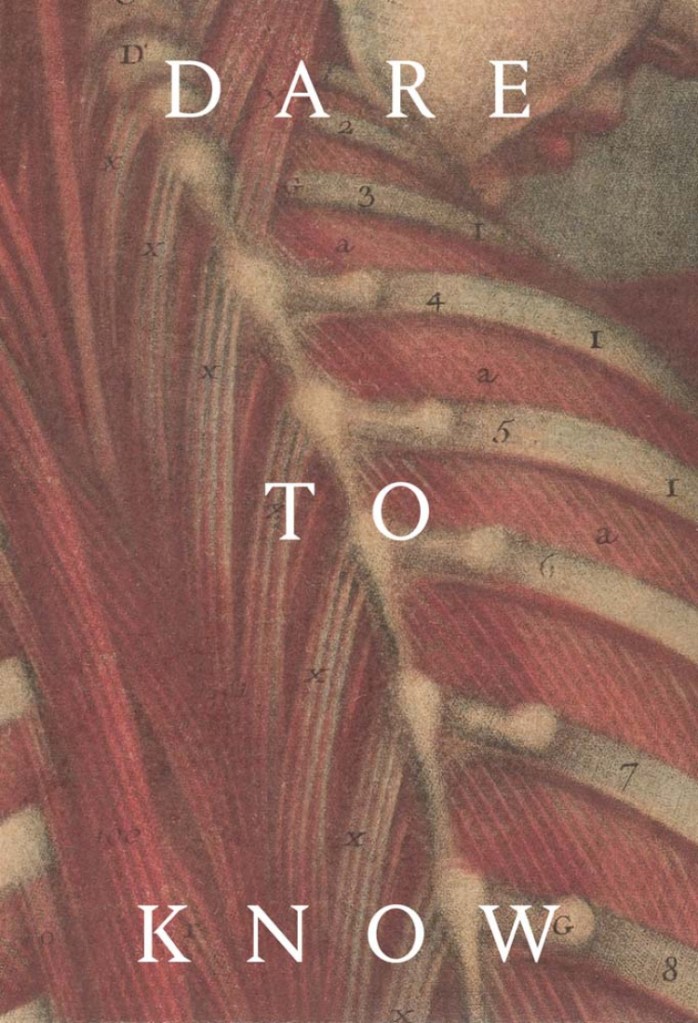 Are volcanoes punishment from God? What do a fly and a mulberry have in common? What utopias await in unexplored corners of the earth and beyond? During the Enlightenment, questions like these were brought to life through an astonishing array of prints and drawings, helping shape public opinion and stir political change. Dare to Know overturns common assumptions about the age, using the era’s proliferation of works on paper to tell a more nuanced story. Echoing the structure and sweep of Diderot’s Encyclopédie, the book contains 26 thematic essays, organized A to Z, providing an unprecedented perspective on more than 50 artists, including Henry Fuseli, Jean-Honoré Fragonard, Francisco Goya, Jean-Baptiste Greuze, William Hogarth, Giovanni Battista Piranesi, and Giambattista Tiepolo. With a multidisciplinary approach, the book probes developments in the natural sciences, technology, economics, and more—all through the lens of the graphic arts.
Edouard Kopp is the John R. Eckel, Jr., Foundation Chief Curator at the Menil Drawing Institute in Houston; Elizabeth M. Rudy is the Carl A. Weyerhaeuser Curator of Prints at the Harvard Art Museums, Cambridge, MA; and Kristel Smentek is associate professor of art history in the Department of Architecture at the Massachusetts Institute of Technology, Cambridge, MA.
With contributions by J. Cabelle Ahn, Elizabeth Saari Browne, Rachel Burke, Alvin L. Clark, Jr., Anne Driesse, Paul Friedland, Thea Goldring, Margaret Morgan Grasselli, Ashley Hannebrink, Joachim Homann, Kéla Jackson, Penley Knipe, Edouard Kopp, Ewa Lajer-Burcharth, Heather Linton, Austėja Mackelaitė, Tamar Mayer, Elizabeth Mitchell, Elizabeth M. Rudy, Brandon O. Scott, Kristel Smentek, Phoebe Springstubb, Gabriella Szalay, and Christina Taylor.










 Enfilade
leave a comment