New Book | Money and Materiality in the Golden Age of Graphic Satire
From the University of Delaware Press:
Amanda Lahikainen, Money and Materiality in the Golden Age of Graphic Satire (Newark: University of Delaware Press, 2022), 234 pages, ISBN: 978-1644532690 (cloth), $120 / ISBN: 978-1644532683 (paperback), $35.
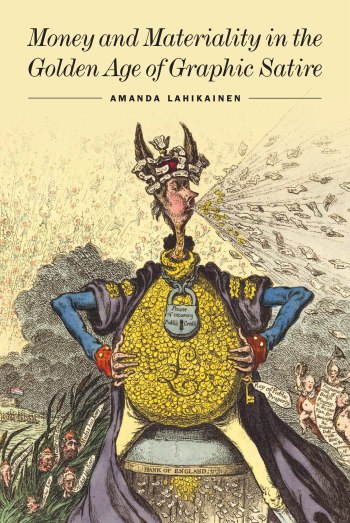 This book examines the entwined and simultaneous rise of graphic satire and cultures of paper money in late eighteenth- and early nineteenth-century Britain. Asking how Britons learned to value both graphic art and money, the book makes surprising connections between two types of engraved images that grew in popularity and influence during this time. Graphic satire grew in visual risk-taking, while paper money became a more standard carrier of financial value, courting controversy as a medium, moral problem, and factor in inflation. Through analysis of satirical prints, as well as case studies of monetary satires beyond London, this book demonstrates several key ways that cultures attach value to printed paper, accepting it as social reality and institutional fact. Thus, satirical banknotes were objects that broke down the distinction between paper money and graphic satire altogether.
Amanda Lahikainen is the executive director of the Ogunquit Museum of American Art in Ogunquit, Maine. Prior to joining OMAA, she served as an associate professor of art history and chairperson of the art department at Aquinas College in Grand Rapids, Michigan.
C O N T E N T S
Acknowledgments
List of Tables and Figures
Introduction: The Inflation of Georgian Graphic Satire
1 Money, Fact, and Value
2 Crisis
3 Subjectivity and Trust
4 Imitation and Immateriality
5 Materiality
6 The Deflation of Georgian Graphic Satire
Epilogue: Beyond Britain
Notes
Bibliography
Index
Online | Hogarth’s Topographies: ‘The Five-Day Peregrination’
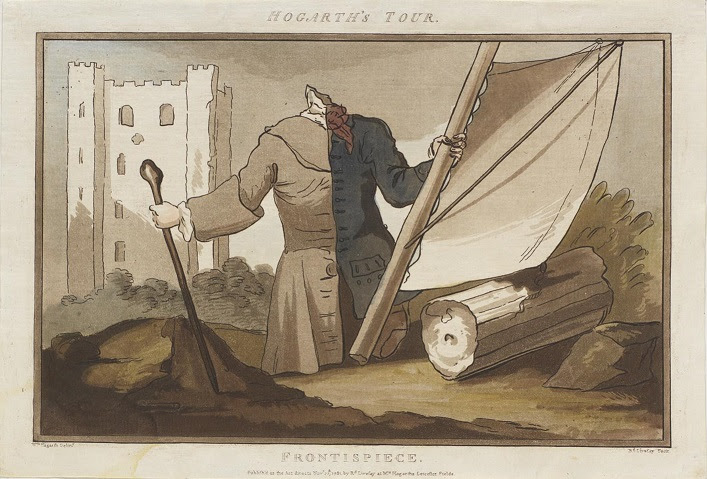
Hogarth’s Tour / Frontispiece, An Account of What Seemed Most Remarkable in the Five Days Peregrination, 27 November 1781, etching and aquatint in sepia ink with hand coloring on laid paper; sheet 23.6 × 34.5 cm (Lewis Walpole Library H67).
◊ ◊ ◊ ◊ ◊
From The Lewis Walpole Library, Yale Library:
Jacqueline Riding and Caroline Patey | ‘The Five-Day Peregrination’: A Dizzy Journey through the Topographical History of Kent
William Hogarth’s Topographies: A Series of Conversations
Online, The Lewis Walpole Library, Wednesday, 20 July 2022, noon (EDT)
Topography is central to William Hogarth’s canonical progress series in which London settings play a decisive narrative role. Lesser-known works by the artist, however, also engage with topographical representation. Pierre Von-Ow’s online exhibition William Hogarth’s Topographies considers the artist’s illustrations of national and colonized geographies beyond the metropole. The county of Kent is the site of a tour undertaken in May 1732 by Hogarth and a group of friends who collectively memorialized the adventure as The Five-Day Peregrination. The exhibition presents the peregrination as both a jesting imitation of the Grand Tour of the landscapes and monuments of Europe and as a satire of the British antiquarians who, since at least the sixteenth century, had minutely inventoried the country’s history and antiquities as a means of reclaiming a glorious past.
Jacqueline Riding and Caroline Patey will discuss the textual and visual representations recorded by Hogarth and his fellow travelers of their tour of Kent, first in manuscript (now in the British Museum) and later published as An Account of What Seemed Most Remarkable in the Five Days Peregrination (1782, etc.). The event seeks to explore the connections between this little-known project and the broader literature of actual and invented travels, as well as the history of Kent and its ties to the global expansion of the British Empire. Dr. Riding has structured her recent biography Hogarth: Life in Progress (2021) with eight interludes that address different aspects of The Peregrination. Dr. Patey is currently working on a translation of The Peregrination into Italian. Riding and Patey will share their thoughts about why the tour of Hogarth and his friends continues to demand attention bringing to this program insights from their recent and current work.
This program is organized by The Lewis Walpole Library, Yale University, in conjunction with the online exhibition William Hogarth’s Topographies curated by Pierre Von-Ow, PhD candidate in Yale’s Department of The History of Art.
This is an online event, and registration is required. Register here»
Professor Caroline Patey has studied English and Comparative literature in Paris (Paris III), Dublin UCD, and the Università degli Studi, Milan, where she was Chair and Professor of English Literature until 2018. Her interests and fields of research include Renaissance literature, late Victorian culture and Modernism with a special focus on intermediality, the intersection between art, museums and literature, and the cross-border circulation of cultures and aesthetic forms. She has edited and co-edited the outcome of various collective explorations of these topics and has published numerous book-length studies on subjects as diverse as Proust and Joyce (1991), Mannerism (1996), Shakespeare and history (1998), and Henry James (2004). Together with Cynthia Roman (Yale) and Georges Letissier (Nantes), she has recently co-edited the two volumes of Enduring Presence: William Hogarth’s Afterlives in British and European Culture (2021). Since her retirement in late 2018, Caroline has taught specialist seminars in Italy and Germany (Bard College, Berlin, 2020). She co-directs a collection of critical essays on British and Anglophone literature, Prismi, Classici nel tempo, Mimesis, Milano, and sits on the board of the journal of comparative literature, Letteratura e Letterature.
Dr Jacqueline Riding specializes in British history and art of the long eighteenth century. She is the author of Jacobites: A New History of the ’45 Rebellion (2016), Peterloo: The Story of the Manchester Massacre (2018), and Hogarth: Life in Progress (2021), which has been awarded the Sunday Times Art Book of the Year 2021 and a Times and Sunday Times Paperback of 2022. Former curator of the Palace of Westminster and director of the Handel House Museum, London, she is a historical adviser on feature films including Mike Leigh’s Mr. Turner (2014) and Peterloo (2018), a consultant for museums and historic buildings including Tate Britain and Historic Royal Palaces, and Books Editor for The Art Newspaper. Jacqueline is a fellow of the Royal Historical Society, the Society of Antiquaries of Scotland, the Paul Mellon Centre for Studies in British Art, the Department of the History of Art, University of York, and trustee of the Jacobite Studies Trust and [JMW] Turner’s House, London.
New Book | Enjoying Claret in Georgian Ireland
From Four Courts Press:
Patricia McCarthy, Enjoying Claret in Georgian Ireland: A History of Amiable Excess (Dublin: Four Courts Press, 2022), 224 pages, ISBN: 978-1801510134, €40.
 This book looks at Ireland’s love affair with claret, which began in earnest with the establishment of Irish families in the wine trade in Bordeaux in the early eighteenth century. So much red wine from Bordeaux was being consumed by Ireland’s nobility and gentry that Jonathan Swift referred to it as ‘Irish wine’, in the full knowledge that his correspondent would understand that he meant claret. One writer observed that ‘drinking had become so fashionable, that gentlemen competed eagerly to have the largest cellar and spend the most on hogsheads of wine every year’, and claret was the wine of choice. At Dublin Castle the amount of wine consumed was prodigious: it was acknowledged by all that balls, dinners and the contents of the Castle’s cellars played a major part in the popularity of the lord lieutenant and indeed resulted in the premature death of one. Not surprisingly, gout—referred to as ‘the Irish hospitality’ by one observer—was rampant and some of the rather bizarre ‘cures’ suggested are discussed. The book deals with questions such as how was the domestic wine cellar planned and used? When did connoisseurship in wine commence? What was the role of the merchant, apart from providing the wine? On the domestic front, to what lengths did men go in purchasing the many fashionable wine accoutrements used in the traditionally ‘male’ dining room? Why did ‘toasts’ figure so prominently, not just at dinner parties in mixed company, but particularly among male groups in clubs and associations? The ‘Irish Wine’ trade fostered not only a reputation for excessive conviviality, but created a healthy profit for its merchant importers.
Patricia McCarthy is an architectural historian and author of ‘A Favourite Study’ Building the King’s Inns (Dublin, 2006), and Life in the Country House in Georgian Ireland (Yale University Press, 2016).
Exhibition | The Revolutionary Landscape
From the Museum of the French Revolution:
The Revolutionary Landscape / Le paysage révolutionnaire
Musée de la Révolution française, Vizille, 1 July — 3 October 2022
Curated by Alain Chevalier
 The landscape genre experienced incredible success and significant development during the 1790s. Under the cross influences of several factors, whether philosophical (Rousseau), literary (Bernardin de Saint-Pierre) or artistic (Dutch painting of the 17th century century), this enthusiasm is manifested in the annual Salons as well as in the art trade and allows artists greater freedom, far from the political concerns that they nevertheless sometimes integrate in an allusive way. Deviating from the pleasant and pleasant landscapes of the reign of Louis XV, the revolutionary landscape by its descriptive realism anticipates the future of the genre in the 19th century century and satisfies a very large clientele wishing to rediscover Nature in their interiors. From the picturesque to the invitation to a distant journey, the landscape then plays on a wide range of emotions that the exhibition reveals.
The press kit (in French) is available here»
New Book | The Overseas Trade of British America
From Yale UP:
Thomas Truxes, The Overseas Trade of British America: A Narrative History (New Haven: Yale University Press, 2022), 464 pages, ISBN: 978-0300159882, $40.
 A sweeping history of early American trade and the foundation of the American economy
In a single, readily digestible, coherent narrative, historian Thomas M. Truxes presents the three hundred–year history of the overseas trade of British America. Born from seeds planted in Tudor England in the sixteenth century, Atlantic trade allowed the initial survival, economic expansion, and later prosperity of British America, and brought vastly different geographical regions, each with a distinctive identity and economic structure, into a single fabric. Truxes shows how colonial American prosperity was only possible because of the labor of enslaved Africans, how the colonial economy became dependent on free and open markets, and how the young United States owed its survival in the struggle of the American Revolution to Atlantic trade.
Thomas M. Truxes is Clinical Professor of Irish Studies and History at New York University. He is the author of Irish-American Trade, 1660–1783 and Defying Empire: Trading with the Enemy in Colonial New York, among other books.
C O N T E N T S
Preface
A Note on the Text
Introduction
1 Tudor Beginnings, 1485–1603
2 Emergence, 1603–1650
3 Shaping Atlantic Commerce, 1650–1696
4 Engines of Opportunity, 1696–1733
5 Testing the Limits of Empire, 1733–1763
6 Crisis, 1763–1773
7 Trade and Revolution, 1773–1783
Epilogue: The Empress at Sea
Conclusion
Appendix 1: The Balance of Payments of British America
Appendix 2: Statistical Tables
List of Abbreviations and Short Titles
Notes
Index
New Book | African Founders
From Simon & Schuster:
David Hackett Fischer, African Founders: How Enslaved People Expanded American Ideals (New York: Simon & Schuster, 2022), 960 pages, ISBN: 978-1982145095, $40.
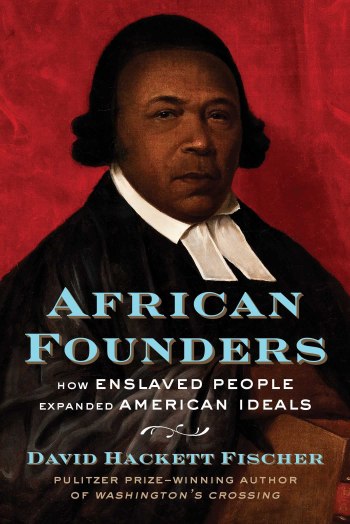 In this sweeping, foundational work, Pulitzer Prize–winning historian David Hackett Fischer draws on extensive research to show how enslaved Africans and their descendants enlarged American ideas of freedom in varying ways in different regions of the early United States.
African Founders explores the little-known history of how enslaved people from different regions of Africa interacted with colonists of European origins to create new regional cultures in the colonial United States. The Africans brought with them linguistic skills, novel techniques of animal husbandry and farming, and generations-old ethical principles, among other attributes. This startling history reveals how much our country was shaped by these African influences in its early years, producing a new, distinctly American culture. Drawing on decades of research, some of it in western Africa, Fischer recreates the diverse regional life that shaped the early American republic. He shows that there were varieties of slavery in America and varieties of new American culture, from Puritan New England to Dutch New York, Quaker Pennsylvania, cavalier Virginia, coastal Carolina, and Louisiana and Texas. This landmark work of history will transform our understanding of America’s origins.
David Hackett Fischer is a University Professor and Warren Professor of History emeritus at Brandeis University in Waltham, Massachusetts. He is the author of numerous books, including the 2005 Pulitzer Prize winner Washington’s Crossing and Champlain’s Dream. In 2015, he received the Pritzker Literature Award for Lifetime Achievement in Military Writing.
Call for Papers | Vivre la Révolution des Colonies, 1774–1804
From the Call for Papers:
Croisements, Métissages, Trajectoires: Vivre la Révolution des Colonies, 1774–1804
Musée de la Révolution Française, Vizille, 27–29 September 2023
Proposals due by 30 September 2022
L’histoire récente des espaces coloniaux et de leur intégration à la dynamique révolutionnaire a reçu une attention méritée et soutenue ces dernières années. Il n’est désormais plus possible d’écrire l’histoire des Révolutions de la fin du XVIIIe siècle sans intégrer l’héritage colonial de l’Ancien régime et sans comprendre les événements propres à ces espaces qui influencent plus que les métropoles, les grands équilibres géopolitiques de la planète encore prise dans le duel franco- britannique pour l’hégémonie mondiale dans un jeu d’alliances des plus complexes.
Ces travaux roboratifs et nécessaires, refondant une histoire de la mondialité, ont induit des formes d’appréhension du réel, où les êtres se trouvaient pris dans des logiques de groupes qui les dépassaient ou les entrainaient. Bien souvent leurs positions pouvaient être définies par leur appartenance à un groupe social précis, à une fonction professionnelle acquise ou bien aussi par la couleur de leur peau, autant d’éléments déterminants du statut des individus au sein de conflits mêlant émancipation, lutte de classes, conquête politique.
Le colloque proposé tente une autre approche. Celle des individus, celles des personnes dans leur intégrité propre, dans leurs témoignages d’actrices et d’acteurs d’une période qui voient des bouleversements majeurs transformer leur vie. Il s’agit de retrouver les personnes dans leur complexité et dans leur individualité et tenter d’approcher au plus près leur expérience vécue des révolutions successives qui les surplombent mais dans lesquelles elles se trouvent pleinement intégrées. Comment les personnes accueillent, perçoivent, vivent les formes de catégorisation qui leur sont imposées ou qu’elles reçoivent, ou qu’elles conquièrent ? Que sont les statuts sociaux, les couleurs, les fonctions, les genres, les âges de la vie, les transferts. Comment marquent-ils les existences ?
Partir de la subjectivité des acteurs et des actrices, lorsque les sources le permettent ne revient nullement à refuser l’ensemble du travail effectué pour comprendre les catégories dans lesquelles ils et elles évoluent, mais permet de reposer les questions différemment, d’une histoire au ras du sol, au plus près des personnes.
Ce sont donc les notions de destins historiques, de parcours individuels, de trajectoires personnelles, dans ce monde largement métissé que l’on souhaite interroger, pour rendre toute leur importance au vécu historique et à sa complexité, que l’on peut nuancer au-delà des oppositions binaires et comprendre dans son inextricable difficulté de société violente aspirant à de nouvelles formes de gouvernance pour chacun.
Le cadre chronologique tend à déplacer quelque peu les approches jusque-là classiques, séparant un avant et un après 1789, en intégrant pleinement la France de l’Ancien Régime, à l’avènement de Louis XVI en 1774, qui précède de peu la guerre d’indépendance américaine devenant une Révolution du Nouveau monde, un événement tout simplement inimaginable, impensable au moment où monte sur le trône le petit fils de Louis XV. Le questionnement se poursuit sur une période de trente ans jusqu’en 1804, date de l’indépendance d’Haïti. Ce sont ainsi trois Révolutions qui sont interrogées, si différentes, avec leur chronologie et leur spécificité et en même temps reliées entre elle par le littoral du vaste espace atlantique. Elle ne sont nullement identique pourtant elles dialoguent, s’observent, par les formes politiques qu’elles peuvent prendre, leur volonté de se conclure par une constitution, leur destin adverse de devoir affronter des guerres extérieures et civiles, et l’influence qu’elles ont eu les unes sur les autres en un jeu de miroir complexe.
En ce temps, la France d’Ancien Régime étend ses possessions au-delà des mers aux Antilles (Saint-Domingue, Guadeloupe, Martinique), en Guyane, aux Mascareignes (Réunion, Île Maurice). Les Révolutions qui secouent les rivages de l’Océan atlantique, provoquent un impact important en déclenchant des phénomènes politiques qui aboutissent à la fondation d’une république esclavagiste aux Etats-Unis mais aussi à la première abolition de l’esclavage le 4 février 1794, lors de la Première République française.
La particularité des sociétés coloniales est d’être formée de blancs ou réputés tels, de libres de couleur et des esclaves. Ces sociétés sont soumises à la servitude, au préjugé de couleur et à une dépendance étroite à l’égard de la métropole qui se manifeste par le système de l’Exclusif. Le vent de la liberté va bouleverser ce monde. Qu’en est-il de chacun et de chacune en particulier? Est-ce une ambition démesurée que d’essayer de retrouver ces vies pour les raconter dans leur transformation ? N’est-il pas temps, au contraire, d’aborder ces existences pour elles-mêmes et de les appréhender dans leur force, leur fragilité, leur humanité pleine et intègre ?
I — Sources et méthodologie
Dans un premier temps il s’agit de s’interroger sur les façons d’approcher ces destins si différents. Des communications pourront être proposées sur les sources utilisées pour écrire l’histoire des personnes dans les colonies en Révolution. Correspondance administrative, actes notariés, journaux personnels, correspondances privées, ouvrages imprimés sont les sources habituellement utilisées. Est-il possible d’en dresser une typologie ? De les repérer dans les fonds publics ou privés? Avec quelles précautions méthodologiques peut-on les employer ? D’en inventer d’autres ? À partir du repérage de ces sources et de leur dépouillement pour retrouver les destins individuels comment faire pour repenser la nature des phénomènes révolutionnaires dans les colonies ? Peut-on parler de révolutions coloniales, de révolutions dans les colonies, de colonies à l’ère des révolutions ? Comment l’étude des personnes et de leurs traces peut-elle aider à mieux concevoir une histoire globale ?
II — Trajectoires
Il s’agira de voir comment la Révolution a été reçue par des femmes et des hommes dans les colonies, mais aussi par les originaires des colonies qui vivaient sur le sol français. Certaines figures comme Julien Raimond et Vincent Ogé sont connues, mais le groupe des libres de couleur est particulièrement actif à Paris de 1789 à 1794 et nécessite encore de nouvelles études. Comment ces femmes et ces hommes mobilisent-ils le langage de la Révolution et notamment le langage des droits ?
Les communications pourront porter sur des trajectoires d’individus ou de groupes en Révolution ou en Contre-révolution. La question des récits de vie, sous la forme de biographie ou de portrait à des moments particuliers d’une existence ou de fragments de vie proposés permettraient de donner corps à l’enquête en croisant des trajectoires croisées, affrontées, adversaires mais aussi alliées, amies également. Un puzzle d’existences juxtaposées peut rendre compte d’une réalité complexe connectée, inter-sectionnelle. Il s’agirait clairement de remettre en valeur la notion de récit de vie dans une logique interprétative large des interactions entre colonies, dans les colonies et dans les métropoles.
III — Représentations
Du législateur célèbre à la plus inconnue des esclaves, l’ambition serait de dresser un ensemble de portraits qui donnerait à voir la chair et le sang de ces histoires incarnées par tant de personnes différentes. Quelle représentation la France a-t-elle de ses colonies ? Des tableaux célèbres comme le portrait de Belley (Girodet), député de Saint-Domingue à la Convention ou de Madeleine (Benoist) représentent des personnes issues des colonies. La Révolution engendre-t-elle une nouvelle représentation des individus ? Cette section peut se diviser en deux sous-parties. Le colloque entend s’ouvrir à des spécialistes de littérature et d’histoire de la littérature ainsi qu’à des historiens de l’art.
A. Littérature
Théâtre, romans… comment la fiction s’empare-t-elle des destinées entre les océans, sur les océans et quelle image façonne-t-elle des personnes dans des métropoles qui perçoivent largement ces espaces soit comme sauvages, soit comme exotiques, soit comme des espaces lucratifs, soit comme des espaces dangereux, autant d’images qu’un Victor Hugo écrivant Bug-Jargal peut véhiculer ou que madame de Duras peut décrire avec tant de finesse dans Ourika.
B. Histoire de l’art
Comment la peinture, le dessin, la sculpture se sont-ils emparés de la représentation des corps et des espaces antillais et tout particulièrement de ceux des métisses ou des noirs, par-delà le portait de Belley devenu plus que célèbre deux cents ans plus tard ! Quelles sont les possibilités de représenter les visages, l’histoire sur les corps ? Ou tout simplement les portraits des protagonistes connus ou moins connus qui ont retenu l’attention des artistes. En somme, ce colloque se propose de replacer l’individu au cours de cette histoire des révolutions des métropoles et des colonies entre 1774 et 1804 et tenter une nouvelle perception et écriture de cette histoire encore en chantier.
Comité d’organisation
Hélène Puig, Alain Chevalier, Frédéric Régent et Pierre Serna
helene.puig@isere.fr, Frederic.Regent@univ-paris1.fr, Pierreserna@wanadoo.fr
Comité Scientifique
Esther Bell, Hélène Cussac, Gusti Gaillard-Pourchet, Bernard Gainot, David Geggus, Olivier Meslay, Marie-Jeanne Rossignol, Jean-Pierre Sainton, Bertrand Van Ruymbeke .
Call for Papers | Revolutionary Speeches, Speeches about Revolutions
From the Call for Papers:
Revolutionary Speeches, Speeches about Revolutions: A Comparative Study of Revolutionary Eloquence in France and in the United States
Paris Nanterre University, 16–17 March 2023
Organized by Hélène Parent and Augustin Habran
Proposals due by 31 October 2022
“The eulogy for this American hero should be delivered by the most eloquent mouths,” Fontanes affirmed in the funeral oration he gave for George Washington in the temple of Mars on February 9, 1800. The revolutionary American hero and first president of the United States, who died in December 1799, was frequently used as a reference by the orators of the French Revolution from all political camps as a tool for various rhetorical strategies. Indeed, as they looked for founding myths and heroes that would suit the new nation, that was not founded from scratch, French revolutionaries kept convoking models from other times and spaces. The example of Washington perfectly illustrates this outstanding circulation of references. He was first celebrated in the United States as a modern Cincinnatus; and this myth was then reclaimed by French orators who had themselves been educated to classical culture.
It is this dynamic circulation of references and rhetorical and political models between these two spaces (the United States and France) at the time of their respective revolutions that this symposium aims at studying. We will focus more particularly on the representations and the founding myths that allowed for the emergence and definition of concepts including the nation, the political figure (as an ideal orator) and the people in political speeches. Furthermore, the way these two revolutionary events also became myths, symbols or models shall be analyzed through the study of their representations in literature and art more generally (painting, theater, cinema, etc.) from the time they occurred until today. As far as the American Revolution is concerned, we shall focus on the period spanning from the Declaration of Independence in 1776 to the ‘Revolution of 1800’, Thomas Jefferson’s election, that provided the ongoing debate over the very nature of federalism in the early republic with a temporary solution. Regarding the French Revolution, we shall consider the period spanning from the General Estates of 1789 to the suppression of the Tribunat, last deliberative assembly of the Empire, in 1807.
The study of these partly concurrent periods of democratic establishment will be carried out through the prism of the notion of eloquence, being defined here both as whatever has to do with the political speech per se (deliberative eloquence, parliamentary notably) and as the spaces where the latter circulates by means of imitation, repercussion or parody of the rhetorical forms and codes of the oratory genre: newspapers, essays, pamphlets, founding documents, etc.
The committee invites proposals that may address—but not limited to—the following questions:
1. The imaginary figures, symbols and models convoked in political speeches, laws, essays or newspapers of the French and American revolutions may be studied. Particular attention shall be paid to proposals allowing for a comparative perspective that will highlight the circulation of references between the two spaces (how the French Revolution reappropriates specific symbols of the American Revolution for instance) or potential similarities in the apprehension of symbols or models in both spaces. Besides the content, the question of style may also be addressed: What language(s), what style(s), what stylistic device(s) are used to express these imaginaries? What vision(s) of the ideal orator (and of the “political figure”) emerge(s) with the birth of these modern democracies? What is a representative of the people? How is this figure theorized and represented (and therefore, how is the “people” theorized and represented)? All these questions shall be addressed in the light of a striking paradox: How can one affirm inventing something new (a nation, a political regime) while using models and symbols from the past? How were those models adapted and transformed?
2. The question of the multiplicity of eloquence should also be tackled: in contrast with the parliamentary eloquence developed in dominant political spheres, where, how and through which figures does popular and minority eloquence emerge? (the eloquence of the people versus that of the elites; the eloquence of women, of African Americans, of Native Americans, etc.)
3. Ex post representations of public speaking in its plurality and of its diverse practitioners may also be studied: how are the great figures of both revolutionary periods (the Founding Fathers in the United States, the orators of the French Revolution, the figures of popular/minority eloquence, etc.) themselves turned into models or deterrents through their later (positive or negative) representations in literature and art until today? How do revolutions become new myths through the narratives developed around them? Here again, the comparative perspective will be favored.
Proposals in French or English (about 300 words) with a short bio should be sent before 31 October 2022 to Hélène Parent (hparent1404@gmail.com) and Augustin Habran (augustin.habran@gmail.com). Communications may be delivered in both French and English during the symposium.
Organizing Committee
Hélène Parent (Ph.D. in French Literature, CSLF, Paris Nanterre University) and Augustin Habran (Associate Professor of American History, REMELICE, University of Orléans)
Discours des révolutions, discours sur les révolutions: Une étude comparée de l’éloquence révolutionnaire aux États-Unis et en France
Held at Paris Nanterre University, on Thursday, 16 and Friday 17, March 2023, this symposium is part of the Dire / montrer l’éloquence, 1750–1850 project (University Paris Lumière – Paris Nanterre / Paris 8, 2021–2023).
[1] Louis de Fontanes, Éloge funèbre de Washington, prononcé dans le temple de Mars le 20 pluviôse an 8 [9 février 1800], Paris, Henri Agasse et Dupont, an VIII, p. 13.
[2] Voir par exemple Denis Lacorne, « Mémoire et amnésie : les fondateurs de la république américaine, Montesquieu et le modèle politique romain », in Revue française de science politique, N° 42-3, p. 363-374, ou encore Garry Wills, Cincinnatus : George Washington and the Enlightenment, New York, Doubleday, 1984.
[3] Voir Hélène Parent, Modernes Cicéron. La romanité des orateurs d’assemblée de la Révolution française et de l’Empire (1789-1807), thèse de doctorat soutenue à l’Université Paris Nanterre le 12 octobre 2020, 704 p.
[4] Par exemple, la Déclaration d’Indépendance, les constitutions, le Code civil, les journaux révolutionnaires, les Federalist Papers, etc.
Call for Papers, Panels, and Roundtables | ISECS 2023, Rome

Giovanni Paolo Panini, Préparation du feu d’artifice et de la décoration de la fête donnée sur la place Navone à l’occasion de la naissance du Dauphin, 30 Novembre 1729, 1729 oil on canvas, 42 × 98 inches (Paris: Musée du Louvre , 415)
◊ ◊ ◊ ◊ ◊
From ISECS:
International Society for Eighteenth-Century Studies (ISECS / SIEDS)
16th International Congress for Eighteenth-Century Studies
Rome, 3–7 July 2023
Proposals due 15 September 2022 and 31 January 2023
The Congress of the International Society for Eighteenth-Century Studies (ISECS / SIEDS) is the world’s largest meeting of specialists on all aspects of the eighteenth century, and takes place every four years. Recent ISECS congresses have been held in Montpellier (2007), Graz (2011), Rotterdam (2015), and Edinburgh (2019). The 16th ISECS Congress will be held in Rome, Italy, from Monday, 3 July to Friday, 7 July 2023. It is organized by the Italian Society for Eighteenth-Century Studies (Società Italiana di Studi sul Secolo Diciottesimo – SISSD) and hosted by Sapienza Università di Roma and Università degli Studi di Roma Tor Vergata.
While proposals for papers, panels, and roundtables on any topic relevant to the long eighteenth century (1670–1830) are warmly welcomed, we particularly invite contributions that address the Congress theme: Antiquity and the Shaping of the Future in the Age of Enlightenment.
In the 18th century, a new interpretation of the past radically innovated the dominating view of and approach to tradition. The legacy of antiquity was always there as shared memory, but the critical and analytical attitude that characterised 18th-century culture also transformed its relationship with antiquity, which was renegotiated and modernised. Indeed, the 1700s witnessed a reconstruction of the foundations of knowledge, considering not only the different forms of knowledge itself, but also the individual and his/her existence in the present. This change created a major break with the past and laid the groundwork for the new patterns of thought and expression that have developed in the subsequent ages and continue to do so, up to the present day. They build for the future, but in creative dialogue with a vanished Antiquity. The challenge that the Congress is to face lies precisely in the capturing of the deep sense and meaning of this transformation, which involves all branches of knowledge and can be approached from different perspectives and with different methodologies.
The programme will include theme-related keynote lectures, panels, round tables, and paper presentations. The congress languages are English, French, and Italian. As a first step in the scientific organization of the Congress, the online Call for Panels and Round Tables is now open from 30 April 2022 until 15 September 2022.
Please submit a proposal through https://www.isecs-roma2023.net. Panel organizers are asked to supply (1) a title, (2) a brief description of the theme of the proposed panel, and (3) a list of the panelists along with a title and abstract of their contributions. Panels have a duration of one and a half hours, and should consist of 3 to 4 speakers (depending on the amount of discussion time the panel organizer wants to provide). It is also possible to submit a panel proposal without panelists or only partly filled with panelists. A list of the accepted panels will published on the congress website before October 15.
When the online Call for individual Papers is open (from 15 October 2022 until 31 January 2023), it will be possible to submit proposals either for an already accepted open panel (i.e. a panel with fewer than 4 panelists) or for new panels to be set up by the congress organizers on the basis of the paper proposals received and selected.
Roundtable organizers are asked to supply (1) a title, (2) a brief description of the theme of the proposed round table, and (3) a list of the contributors to the round table. Please note that Panel organizers will be allowed to submit a proposal for a paper to be read in another panel if they do not contribute a paper to the panel they are chair of. Roundtable organizers and contributors will be allowed to submit a proposal for a paper anyway.
Call for Panel Proposals | HECAA at 30

Hannah Otis, View of Boston Common, about 1750
(Museum of Fine Arts, Boston, 1996.26)
◊ ◊ ◊ ◊ ◊
HECAA@30: Environments, Materials, and Futures of the Eighteenth Century
Boston, 12–15 October 2023
Proposald due by 1 September 2022
The Historians of Eighteenth-Century Art and Architecture (HECAA) announce an open call for panel proposals for our quinquennial conference, to be held in Boston, 12–15 October 2023.
On the land of the Massachusett and neighboring Wampanoag and Nipmuc peoples, Boston developed in the eighteenth century as a major colonized and colonizing site. Its status today as a cultural and intellectual hub is shaped by that context, making it a critical location to trace the cultural legacies of racism and social injustice between the eighteenth century and today. For whom is ‘eighteenth-century art and architecture’ a useful category? What eighteenth-century materials, spaces, and images offer tools or concepts for shaping our collective futures? In considering these questions, we aim to be deliberate about expanding HECAA’s traditional focus on Western European art and architecture and specifically encourage proposals from scholars working on Asia, Africa and the African diaspora, Indigenous cultures, and the Islamic world.
We invite proposals for panel topics that engage with any of the above questions from various cultural perspectives. Topics could focus on ‘environments’ (e.g., workshops, urban spaces, oceans, religious spaces, domestic spaces), ‘materials’ (e.g., silver, sugar, canvas, wood, paper), ‘futures’ (e.g., period visions of the future or new directions in the field); or ‘actors’ (e.g., artists, workers, makers, patrons). We encourage creative and expansive ways of thinking about these topics. We also welcome panel proposals addressing other questions and approaches that are vital to eighteenth-century art and architecture.
Selected organizers will be asked to form panels of 3–4 speakers delivering 15-minute papers, or a roundtable session, from a separate open call for papers that will be publicized widely in Fall 2022.
In addition to plenary sessions, the conference will feature visits to area museums and architectural sites; panels that connect to collections or places in or around Boston, Cambridge, Salem, and Providence are welcome. Panel organizers should expect to attend the conference in person.
Interested panel organizers should submit a one-page abstract describing the topic and proposed format to Stacey Sloboda (stacey.sloboda@umb.edu) and Susan Wager (susan.wager@unh.edu) by 1 September 2022. Organizers of successful panels will be asked to join HECAA if they are not already members.










 Enfilade
leave a comment