Exhibition | Bernardo Bellotto at the Court of Saxony
From the Staatliche Kunstsammlungen Dresden:
Enchantingly Real: Bernardo Bellotto at the Court of Saxony
Zwinger, Gemäldegalerie Alte Meister, Dresden, 21 May — 28 August 2022
Royal Castle, Warsaw, 23 September 2022 — 8 January 2023
 Coinciding with the 300th anniversary of his birth, the Gemäldegalerie Alte Meister is holding a major monographic exhibition in celebration of the work of Venetian painter Bernardo Bellotto (1722–1780). The artist—who, like his uncle and teacher Antonio Canal, also called himself Canaletto—ranks as one of the most important 18th-century painters of city views or vedute. The Dresden retrospective is the culmination of a years-long conservation project and results from a cooperation with the Royal Castle in Warsaw. It features the Gemäldegalerie’s own collection of Bellotto’s paintings, itself the largest in the world.
The show presents Bellotto’s life and work by tracing the most important phases and milestones of his career. After formative years in Venice, he came to Dresden in 1747 and painted large-scale vedute for the Saxon elector and Polish king, Augustus III, as well as for his prime minister, Count Heinrich von Brühl. Bellotto’s paintings continue to offer unique insights into the architecture and life of the royal capital of Saxony as well as the nearby town of Pirna and the fortresses of Sonnenstein and Königstein. After working briefly at the courts of Vienna and Munich, in 1766 Bellotto took up residency in the royal city of Warsaw, painting numerous views of that city until his death in 1780.
Several etchings by the master present another side to Bellotto as printmaker and entrepreneur. The prints stem from Dresden’s Kupferstich-Kabinett, which boasts a remarkably complete collection of the artist’s printmaking oeuvre. Further enriched with drawings loaned from Warsaw and Darmstadt, the survey show reveals the range of Bellotto’s lively pictorial innovations. Also on view are books, porcelain objects, sculptures, and scientific instruments that together create a vivid snapshot of an era that Bellotto, as an artist, helped define.
Stephan Koja and Iris Yvonne Wagner, Zauber des Realen: Bernardo Bellotto am sächsischen Hof (Dresden: Staatliche Kunstsammlungen Dresden, 2022), 256 pages, ISBN: 978-3954986774, €48.
Exhibition | The Key to Life: 500 Years of Mechanical Amusement

From the press release (30 May 2022) from the Staatliche Kunstsammlungen Dresden:
The Key to Life: 500 Years of Mechanical Amusement
Kunsthalle im Lipsiusbau, Dresden, 3 June — 25 September 2022
Automatons, androids and robots—they now dominate our professional and private environments and are expressions of the human desire to create artificial life. The Mathematisch-Physikalischer Salon and the Museum für Sächsische Volkskunst and Puppentheatersammlung of Staatliche Kunstsammlungen Dresden (SKD) are presenting roughly 70 of these artefacts in the exhibition The Key to Life: 500 Years of Mechanical Amusement on view from 3 June to 25 September 2022 in the Kunsthalle im Lipsiusbau.
 For the first time, the SKD is showing the full range of its unique collection of mechanical figurines and amusements in one exhibition, supplementing them with constructions of artificial life. Beside the unique wealth of mechanical objects spanning from the Renaissance to the present day from the inventory of the Mathematisch-Physikalischer Salons, the Grünes Gewölbe, and the Puppentheatersammlung, the exhibition also features selected loans from the Bayerisches Nationalmuseum, the Maximilianmuseum in Augsburg, and the Roentgen-Museum Neuwied, among others. Through several exhibition chapters on the mechanical figurines and tableaux from the period around 1600, 18th-century-androids and mechanical amusements in the 19th century, to the nickelodeons and slot machines of the early 20th century and contemporary moving art, the exhibition showcases how the mechanical has fascinated people for 500 years.
The items on display include complicated mechanical tableaux from the late 16th century that feature not only agile figurines and playing drummers, but also movements on the tableau itself. A fur-covered bear beats its drum every hour on the hour. The replica ‘iron hand’ of knight Götz von Berlichingen is an excellent example of early modern prosthetics. Contemporary research is also represented: the prototype ‘mika²’ from Dresden University of Technology’s historical acoustic and phonetic collection is a mechanical simulation of the main parts of the human vocal tract, which was developed at the Chair of Speech Technology and Cognitive Systems. The exhibition’s interactive design allows visitors to bring the amusements to life themselves and understand their movements. There will be a varied program of tours and workshops, including some during the school holidays and the Dresden Night of Museums.
Peter Plaßmeyer, Hagen Schönrich and Igor A. Jenzen, eds., Der Schlüssel zum Leben: 500 Jahre mechanische Figurenautomaten (Dresden: Sandstein Verlag, 2022), 224 pages, ISBN: 978-3954986828, €38.
Call for Papers | UAAC/AAUC 2022
From UAAC/AAUC:
Universities Art Association of Canada / l’association d’art des universités du Canada
In person, University of Toronto, 27–29 October 2022, and online, 4 November 2022
Proposals due by 30 June 2022
 Each fall, UAAC-AAUC hosts Canada’s professional conference for visual arts-based research by art historians, professors, artists, curators, and cultural workers. This year’s conference includes three days of in-person meetings at the University of Toronto and one day of online panels.
Submit proposals by using the Call for Papers Proposal Form. Proposals are sent directly to the chair(s) of the session. The deadline for submission is 30 June 2022.
A very limited selection of sessions potentially related to the eighteenth century, including the HECAA panel, is provided below. The full listing is available here.
◊ ◊ ◊ ◊ ◊
26 Made Up: An Art History of Cosmetics (in person)
Hana Nikcevic (University of Toronto) and Tara Allen-Flanagan (Independent scholar), hana.nikcevic@utoronto.ca and tara.allen-flanagan@mail.mcgill.ca
Art has been acknowledged for centuries as the business of deception and artifice—spanning trompe l’oeil to parafiction—but it shares this storied past with a less-celebrated, heavily-gendered counterpart: cosmetics. Fascination with feminine art/artifice underpins the corpus of toilette paintings, but in these portrayals as in later iterations—from Boucher’s Pompadour to Vogue Beauty Secrets—the face-painter’s agency has been, through analogy with the artist, variably recouped and contested. Cosmetics likewise represent the spoils and vectors of globalization and imperialism; if Queen Elizabeth I’s chalky visage, asserted through portraiture, already reflected and advanced England’s imperial efforts, Angela Rosenthal confirmed the eighteenth-century coalescence of racial theory and complexion. This session interrogates cosmetics’ aesthetics, asking after global and historical conflations of and disparities between art and make-up; cosmetics’ conflicting capacities to subjugate and subvert; the entwined histories of beauty, complexion, racialization, imperialism, and oppression; and, most broadly, the understudied visual and material cultures of cosmetics.
◊ ◊ ◊ ◊ ◊
27 Monuments and Their Futures in North America (in person)
Cody Barteet (Western University), cbarteet@uwo.ca
Recently, monuments have received significant attention. Whether connected to their removal, conservation, and construction, individuals and organizations have used monuments to promote varying ideological concepts. In Canada, most of this conversation has been limited to the removal and vandalism of monuments associated with the long colonial legacy and its impact on Indigenous peoples. However, this conversation changed radically in late January 2022 when the so-called Freedom Convoy descended upon Ottawa to protest existing COVID-19 policies. During the occupation, several of Ottawa’s monuments were vandalized including those to Terry Fox and to fallen Canadian soldiers. Unlike previous vandalisms in Canada, the backlash against their defacement was immediate and universal. Informed by this shifting context concerning monuments, this panels queries the future and purposes of monuments through diverse methodologies: nationalism, racism, environmentalism, etc. In so doing this panel analyzes the current “monument discourse” and queries the needs and purposes of monuments.
◊ ◊ ◊ ◊ ◊
28 ‘My Strength, My Comfort, My Intense Delight’: Women, Art, and Lifewriting in the Eighteenth and Nineteenth Centuries (in person)
Charles Reeve (OCAD University), creeve@ocadu.ca
Like her contemporary Eugène Delacroix, British watercolourist Elizabeth Murray left the ‘West’ in the early 1800s for the ‘Orient’, recording her adventures in extensive writings and images. However, while Delacroix’s journals and notebooks became widely celebrated, Murray’s account slid into obscurity—even though Delacroix’s journey lasted only six months and generated two articles, while Murray’s time in the region prompted her two-volume autobiography Sixteen Years of an Artist’s Life in Morocco, Spain, and the Canary Islands. Moreover, accounts by other women from that century—Élisabeth Vigée Le Brun and Elizabeth Butler—similarly languished, creating the sense that this era’s female artists neither left home nor published autobiographies. This panel aims to explode this misapprehension by convening discussions of lifewriting by women artists of the 1800s and earlier. We welcome proposals regarding all lifewriting forms (e.g. diaries, letters), with particular interest in accounts originating outside normative ‘Western’ narratives, and/or regarding now-obscure autobiographies.
◊ ◊ ◊ ◊ ◊
54 HECAA Open Session (online)
Christina Smylitopoulos (University of Guelph), csmylito@uoguelph.ca
HECAA works to stimulate, foster, and disseminate knowledge of all aspects of eighteenth-century visual culture. This open session welcomes papers that examine any aspect of art and visual culture from the 1680s to the 1830s. Special consideration will be given to proposals that demonstrate innovation in theoretical and/or methodological approaches.
◊ ◊ ◊ ◊ ◊
63 Women and the Arts in the Early Modern Period (online)
Andrea Morgan (Independent scholar), 14acm5@queensu.ca
Women have long faced challenges in pursuit of their engagement with the visual arts. While upper-class and aristocratic early modern women were often encouraged to dabble in or have some familiarity with the arts to make them amiable and polite companions, they were rarely afforded the same opportunities as their male counterparts. Yet, women such as Artemisia Gentileschi and Angelica Kauffmann excelled in their professional practice; still others persisted but remain relegated to the realm of the ‘amateur’. This panel seeks papers that highlight the life and work of both professional female artists as well as those lesser known, including women who worked in media other than painting. This session also encourages explorations of alternative ways women engaged with the art world in the early modern period, whether that be through art collecting or curating, broadly defined, and women in the commercial world who worked as art dealers or suppliers.
Lucky 13! Buy an Art Book
As Enfilade turns 13, you all know the drill!
1) Buy an art book this week. In the world of academic art history publishing, several hundred books sold over a few days is stellar. It’s an important way to communicate that the eighteenth century is a thriving field with a vital, engaged audience. The more people who buy books addressing the eighteenth century, the easier it will be to publish your next book on the eighteenth century. Great ideas are available here.
2) Renew your HECAA membership. In the normal world $30 doesn’t really count as philanthropy. For a small academic society it does. Student memberships are just $10. More information is here.
3) Send in news you’d like to see reported. I’m glad to post announcements about conferences, forthcoming books, journal articles, exhibitions, fellowship opportunities, &c.—just about anything except job listings. CraigAshleyHanson@gmail.com.
Most importantly, thanks to you all for reading (still).
-Craig Hanson
New Book | A Revolution on Canvas
Distributed by Yale UP:
Paris Spies-Gans, A Revolution on Canvas: The Rise of Women Artists in Britain and France, 1760–1830 (London: Paul Mellon Centre, 2022), 384 pages, ISBN: 978-1913107291, £45 / $55.
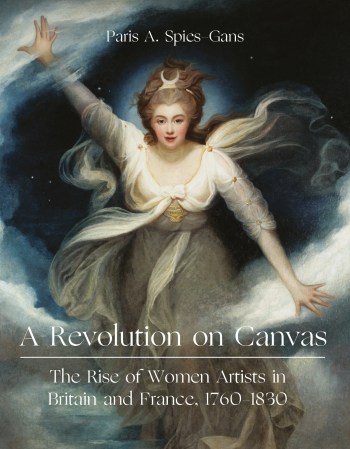 The first collective, critical historical study of women artists in Britain and France during the Revolutionary era
In the late eighteenth and early nineteenth centuries, hundreds of women in London and Paris became professional artists, exhibiting and selling their work in unprecedented numbers. Many rose to the top of their nations’ artistic spheres and earned substantial incomes from their work, regularly navigating institutional inequalities expressly designed to exclude members of their sex. In the first collective, critical history of women artists in Britain and France during the Revolutionary era, Paris Spies-Gans explores how they engaged with and influenced the mainstream cultural currents of their societies at pivotal moments of revolutionary change.
Through an interdisciplinary analysis of the experiences of these narrative painters, portraitists, sculptors, and draughtswomen, this book challenges longstanding assumptions about women in the history of art. Importantly, it demonstrates that women built profitable artistic careers by creating works in nearly every genre practiced by men, in similar proportions and to aesthetic acclaim. It also reveals that hundreds of women studied with male artists, and even learned to draw from the nude. Where traditional histories have left a void, this generously illustrated book illuminates a lively world of artistic production.
Featuring an extensive range of these artists’ paintings, drawings, sculptures, and writings, alongside contemporary prints, satires, and works by their male peers, A Revolution on Canvas transforms our understanding of the opportunities and identities of women artists of the past.
Paris A. Spies-Gans is a historian and an art historian. She has held fellowships at the Harvard Society of Fellows, the Paul Mellon Centre for Studies in British Art, the Getty Research Institute, the Lewis Walpole Library, and the Yale Center for British Art. Her research concentrates on the history of women, gender, and the politics of artistic expression.
◊ ◊ ◊ ◊ ◊
Note (added 17 January 2024) — As announced in January 2024, A Revolution on Canvas was awarded an HBA Book Prize, for a single-authored book with a subject between 1600 and 1800. It’s recognition to add to that which has already been heaped on the book by other organizations:
• Winner of the 2023 Stansky Book Prize, sponsored by NACBS
• Shortlisted for the 2023 Berger Prize, sponsored by The British Art Journal
• Received Honorable Mention from the Louis A. Gottschalk Prize, sponsored by ASECS
• Named one of the Top Art Books of 2022 by The Art Newspaper
• Named one of the Top Art Books of 2022 by The Conversation
Decorative Arts Trust Prize for Excellence and Innovation
From the Decorative Arts Trust:
Decorative Arts Trust Prize for Excellence and Innovation, $100,000
Application due by 30 June 2022
To further the Decorative Arts Trust’s mission to foster appreciation and study of the arts, the Trust established the $100,000 Decorative Arts Trust Prize for Excellence and Innovation. The Prize funds outstanding projects that advance the public’s appreciation of decorative art, fine art, architecture, or landscape.
The Prize is awarded to a non-profit organization in the United States or abroad for a scholarly endeavor, such as museum exhibitions, print and digital publications, and online databases. The Trust’s selection committee aims to recognize impactful and original projects that advance scholarship in the field while reaching a broad audience. The Black Craftspeople Digital Archive (BCDA) was the recipient of the 2021 Prize.
“This award advances the work of our talented mid- and late-career colleagues as a complement to our efforts to support young scholars through the Emerging Scholars Program,” states Matthew A. Thurlow, the Decorative Arts Trust’s Executive Director. “We have made a long-term commitment to furthering innovative scholarship in the arts while reinforcing the Trust’s mission and promoting our broader programs. We are grateful for the opportunity to celebrate exceptional endeavors in the arts.”
Nominations should be submitted to thetrust@decorativeartstrust.org by June 30. Projects can extend 1–5 years for final completion after the Prize is awarded, but no longer. Collaborative endeavors that unite multiple institutions are encouraged to submit nominations. Ongoing projects are suitable for nomination.
Nominations should include
• Cover letter (limited to two pages)
• Narrative stating the objectives and outcomes (limited to five pages)
• Budget
• Timeline
• CVs of institution’s key personnel (limited to two pages each)
• List of collaborating partners (if applicable)
• List of current funders and other potential fundraising sources (if applicable)
• Most recent 990
Finalists will be notified by the end of August. The recipient will be notified by the end of the year and will be required to submit additional content.
New Book | Women Healers
From Penn Press:
Susan Brandt, Women Healers: Gender, Authority, and Medicine in Early Philadelphia (Philadelphia: University of Pennsylvania Press, 2022), 312 pages, ISBN: 978-0812253863, $40.
 In her eighteenth-century medical recipe manuscript, the Philadelphia healer Elizabeth Coates Paschall asserted her ingenuity and authority with the bold strokes of her pen. Paschall developed an extensive healing practice, consulted medical texts, and conducted experiments based on personal observations. As British North America’s premier city of medicine and science, Philadelphia offered Paschall a nurturing environment enriched by diverse healing cultures and the Quaker values of gender equality and women’s education. She participated in transatlantic medical and scientific networks with her friend, Benjamin Franklin. Paschall was not unique, however. Women Healers recovers numerous women of European, African, and Native American descent who provided the bulk of health care in the greater Philadelphia area for centuries.
Although the history of women practitioners often begins with the 1850 founding of Philadelphia’s Female Medical College, the first women’s medical school in the United States, these students merely continued the legacies of women like Paschall. Remarkably, though, the lives and work of early American female practitioners have gone largely unexplored. While some sources depict these women as amateurs whose influence declined, Susan Brandt documents women’s authoritative medical work that continued well into the nineteenth century. Spanning a century and a half, Women Healers traces the transmission of European women’s medical remedies to the Delaware Valley where they blended with African and Indigenous women’s practices, forming hybrid healing cultures.
Drawing on extensive archival research, Brandt demonstrates that women healers were not inflexible traditional practitioners destined to fall victim to the onward march of Enlightenment science, capitalism, and medical professionalization. Instead, women of various classes and ethnicities found new sources of healing authority, engaged in the consumer medical marketplace, and resisted physicians’ attempts to marginalize them. Brandt reveals that women healers participated actively in medical and scientific knowledge production and the transition to market capitalism.
Susan H. Brandt is a Lecturer in the Department of History at University of Colorado, Colorado Springs.
Exhibition | A Taste of One’s Own Medicine
Now on view at the Royal College of Physicians:
A Taste of One’s Own Medicine: Medical satire at the Royal College of Physicians
Royal College of Physicians, London, 3 May — 2 December 2022
We see countless satirical images in our everyday lives, from commercial advertisements and newspaper cartoons, to magazine covers and humorous internet memes. Graphic satire has saturated all levels of society since it emerged as a skilled artform in the 17th century. It developed into a thriving industry in the 18th century, becoming a powerful tool for expressing political and social opinions.

A Consultation of Physicians, unknown artist (Royal College of Physicians, photography by John Chase).
The enduring appeal of satirical images encompassed the wealthy and poor alike. Reproduced in their tens, hundreds or even thousands, prints could be bought, viewed in shop windows and later newspapers, and put up in public places such as barber shops, billiard rooms, and brothels. Like many public figures, medical professionals such as doctors, apothecaries, and surgeons were targeted by satirists and caricaturists. These artists used public opinion and personal agendas to ridicule, reprimand and malign their subjects and the work they were involved in.
The Royal College of Physicians (RCP) cares for a unique collection of medical satire prints from the mid-18th century to the 1980s, selected and given by doctors and members over its 500-year history. Like all satire, these prints are closely tied to a particular time and place. They responded to contemporary events and were consumed by audiences who understood the circumstances of their creation. Join us as we explore the diverse social, political, and historical contexts in which our satirical prints were produced and seek to decipher the complex narratives they contain.
satire, n. A work of art which uses humour, irony, exaggeration or ridicule to expose and criticise prevailing immorality or foolishness, especially as a form of social or political commentary.
caricature, n. Grotesque or ludicrous representation of persons or things by exaggeration of their most characteristic and striking features.
lampoon, n. A virulent or scurrilous satire upon an individual.
New Book | Patterns of Plague
From MQUP:
Lori Jones, Patterns of Plague: Changing Ideas about Plague in England and France, 1348–1750 (Montreal: McGill-Queens University Press, 2022), 408 pages, ISBN 978-0228010791 (hardcover), $130 / ISBN: 978-0228010807 (paperback), $40.
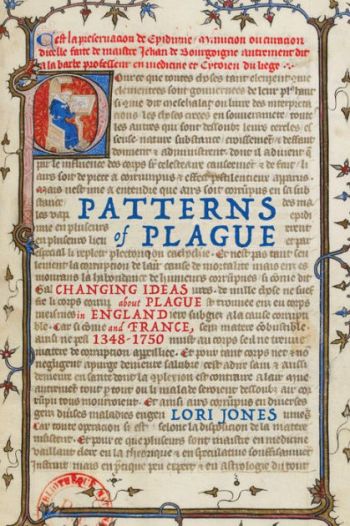 An innovative study of plague in medieval and early modern Europe reveals the changing perceptions surrounding epidemic disease over centuries and across national borders.
For centuries, recurrent plague outbreaks took a grim toll on populations across Europe and Asia. While medical interventions and treatments did not change significantly from the fourteenth century to the eighteenth century, understandings of where and how plague originated did. Through an innovative reading of medical advice literature produced in England and France, Patterns of Plague explores these changing perceptions across four centuries. When plague appeared in the Mediterranean region in 1348, physicians believed the epidemic’s timing and spread could be explained logically and the disease could be successfully treated. This confidence resulted in the widespread and long-term circulation of plague tracts, which described the causes and signs of the disease, offered advice for preventing infection, and recommended therapies in a largely consistent style. What, where, and especially who was blamed for plague outbreaks changed considerably, however, as political, religious, economic, intellectual, medical, and even publication circumstances evolved. Patterns of Plague sheds light on what was consistent about plague thinking and what was idiosyncratic to particular places and times, revealing the many factors that influence how people understand and respond to epidemic disease.
Lori Jones is a historian of medieval and early modern medicine at Carleton University and the University of Ottawa.
New Book | Rhetoric, Public Memory, and Campus History
From Clemson University Press in association with Liverpool University Press:
Rhondda Robinson Thomas, ed., Rhetoric, Public Memory, and Campus History (Clemson: Clemson University Press, 2022), 264 pages, ISBN: 978-1638040200, £95 / $130.
 This essay collection explores the inextricable link between rhetoric, public memory, and campus history projects. Since the early twentieth century after Brown University appointed its Steering Committee on Slavery and Justice, higher education institutions around the globe have launched initiatives to research, document, and share their connections to slavery and its legacies. Many of these explorations have led to investigations about the rhetorical nature of campus history projects, including the names of buildings, the installation of monuments, the publication of books, the production of resolutions, and the hosting of public programs. The essays in this collection examine the rhetorical nature of a range of initiatives, including the creation of land acknowledgement statements, the memorialization of universities’ historic financial ties to the slave trade, the installation and removal of monuments or historical markers, the development of curriculum for campus history projects. The book takes a chronological approach, beginning with the examination of a project at a university that was built on the site of a historic Native American town, moving through a series of essays about initiatives that grew out of universities’ associations with slavery and its legacies in the United Kingdom and America, and ending with a critique of several pedagological approaches in campus history courses designed for undergraduate students.
Rhondda Robinson Thomas is the Calhoun Lemon Professor of Literature at Clemson University where she teaches and researches early African American Literature. She is author of Call My Name, Clemson: Documenting the Black Experience in an American University Community and Faculty Director of the award-winning Call My Name Project for which she has received grants from the National Endowment for the Humanities. She has published articles and books with Cambridge University Press and Oxford University Press as well as in African American Review and American Literary History. She is also the research and community engagement coordinator for the Clemson’s Woodland Cemetery Project.
C O N T E N T S
Rhondda Robinson Thomas — Introduction: The Inextricable Link between Rhetoric and Remembrance in Campus History Projects
1 Andrew Denson — ‘Always Cherokee Land’: Campus History and Indigenous Placemaking in Western North Carolina
2 Stephen Mullen — Acknowledging the Legacies of Enslavement in British Universities: Slavery, Abolition, and the University of Glasgow
3 Christopher P. Lehman — Acknowledging Slavery’s Ties to Minnesota’s Public Universities through Historical Markers
4 Monet Lewis-Timmons — Beyond Kitty’s Cottage: The Double-Containment of Catherine ‘Miss Kitty’ Boyd and Black Commemoration Practices in Oxford, Georgia
5 Cecelia Moore — Reckoning with Silent Sam: The Confederate Monument at the University of North Carolina at Chapel Hill
6 Charles F. Irons — White Memory and White Violence at Elon University
7 Prithi Kanakamedala — ‘We Must Stand United’: Re-telling a Radical History of Bronx Community College at the City University of New York
8 Charissa Fryberger — Looking Racism in the Face at Clemson University










 Enfilade
leave a comment