Exhibition | Thomas Lawrence: Coming of Age
From The Holburne Museum:
Thomas Lawrence: Coming of Age
The Holburne Museum, Bath, 9 January — 3 May 2021 (currently closed)
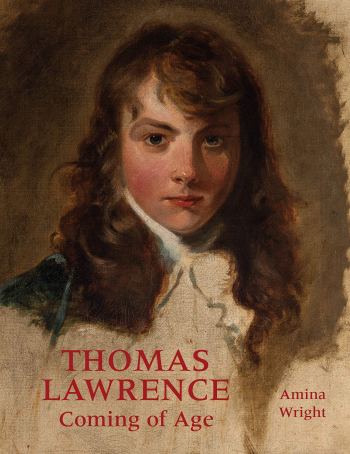 When he arrived in Bath in 1780, aged just eleven, Thomas Lawrence (1769–1830) was already being hailed as a prodigy in the mould of Renaissance masters such as Raphael, Dürer, and Michelangelo. The Holburne Museum’s new exhibition, Thomas Lawrence: Coming of Age, focuses on works made when the artist was between the ages of ten and twenty-two, giving visitors fresh insights into the early development of one of Britain’s greatest portrait painters and the range of his uniquely prodigious talent. The show includes some of Lawrence’s earliest and most brilliant works in pencil, pastel, and oil—several of which have been rarely seen in public.
When the Royal Academy’s 22nd annual exhibition opened in April 1790, its most sensational paintings included twelve portraits by Lawrence. Visitors and critics could scarcely believe that the artist was only 20 (he was due to celebrate his 21st birthday the following week); in fact, one reviewer published Lawrence’s birth certificate to prove that the creator of several of the exhibition’s most outstanding and original works had yet to come of age.
The Holburne exhibition presents fifteen works, following the future President of the Royal Academy over a period of twelve years, from childhood to his early-twenties. Seven of these years were spent in Bath, where he learned the professional skills of a portrait painter, and five in London where, despite his youth, he produced some of his most brilliant and memorable work. The show begins in 1779 as Lawrence, the Bristol-born son of an innkeeper from Devizes in Wiltshire, makes his debut as a child prodigy in Oxford. It follows him to the competitive and colourful world of Bath, where he made friends with actors such as David Garrick and writers, including the famed diarist Fanny Burney, and other influential patrons. Bath being Bath, his sitters included some of the most famous and glamorous members of British high society, including the legendary Georgiana Spencer, later Duchess of Devonshire, whose 1782 pastel on paper portrait has been kindly loaned to the exhibition by the Chatsworth House Trust. The story ends in the early 1790s shortly before his election as a full member of the Royal Academy, aged 25.
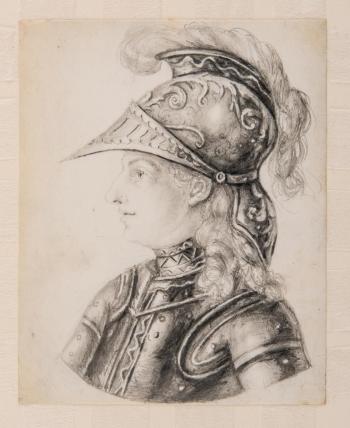
Thomas Lawrence, Head of Minerva, 1779, pencil drawing (Private Collection).
Lawrence had demonstrated an aptitude for sketching when he was around the age of four and had begun producing saleable work aged six. It is known from the few surviving early portraits that he began working in graphite pencil, drawing quick, small-scale head and shoulder profiles on vellum. Coming of Age features several such portraits: the earliest, a Head of Minerva (private collection) made in 1779 during his brief sojourn in Oxford; an accomplished and imaginative profile portrait of his sister Anne (British Museum), drawn in 1781; and a sketch of his cousin, Miss Hammond (British Museum), made in the same year, vividly capturing the young girl’s character and energy.
The artist’s father, recognising his son’s artistic gifts, had taken Thomas to Oxford and London on something of a promotional tour. It was in the capital that Lawrence met the preeminent English painter and President of the Royal Academy, Sir Joshua Reynolds, who is said to have pronounced the youngster as his successor and, according to Fanny Burney’s account from 1780: “The most promising genius he had ever met with.”
Lawrence’s father was declared bankrupt in 1779, and the family relocated to Bath, a thriving city with a wealthy and fashionable society, which would afford the putative artist ample opportunity to demonstrate his skills and make money.
Near the time of his eighteenth birthday, Lawrence moved to London where, despite his youth, he produced some of his most brilliant and memorable work, a fine example of which is the Holburne’s own preparatory sketch for a portrait (now in the Los Angeles County Museum of Art), of Arthur Atherley (1791). Five years after leaving Bath, Lawrence exhibited his final three-quarter-length portrait of Arthur Atherley at the Royal Academy. At the time, he was just three years older than his nineteen-year-old sitter, who had recently left Eton College. The Holburne portrait of Atherley is both striking and memorable, showing the determined the youngster as he launches into the adult world.

Thomas Lawrence, Portrait of Elizabeth Carter, pastel on vellum, ca. 1788–89, 35 × 30 cm (London: National Portrait Gallery).
Coming of Age charts Lawrence’s development as an artist, showing his use of different materials and burgeoning technical craft. As his ability in oil and chalk grew, he gradually abandoned pastel portraits. His last and best head in crayons is a likeness of the elderly classical scholar Elizabeth Carter (ca. 1788–89, National Portrait Gallery). Carter was renowned as a woman of exceptional intellectual powers and also possessed great warmth as a person, which Lawrence’s portrait evokes, revealing her combination of the cerebral and the grandmotherly, deftly using pastel to convey the soft plumpness of her face and the elaborately trimmed and starched cap, while her thoughtful expression suggests a mind tuned to higher things.
The Holburne’s Director, Chris Stephens, says: “Thomas Lawrence did as much as any other artist, before or after him, to define the age in which he lived. The Holburne is renowned for celebrating local creativity and bringing the best of world art to the region, and this is perfectly encapsulated in the study of Thomas Lawrence’s youthful works, a true Bath story. He is our very own answer to Raphael. The exhibition was inspired by our acquisition of one of Lawrence’s greatest works, his Portrait of Arthur Atherley, 1791. It is one of a number of portraits by Lawrence of young men, and women, in their late teens, on the cusp of adulthood. This is, perhaps, a unique phenomenon of an artist portraying young adulthood when he was, himself, not much older than the sitters. It is around this idea of young people facing a rite of passage, confronting the hopes and fears of leaving adolescence for adulthood, that we find some of the contemporary resonances in Lawrence’s art.”
◊ ◊ ◊ ◊ ◊
Amina Wright, Thomas Lawrence: Coming of Age (London: Philip Wilson Publishers, 2021), 112 pages, ISBN: 978-1781300947, £18.
C O N T E N T S
Acknowledgements
Foreword
Introduction
1 Portrait of the Artist as a Young Prodigy
2 Striking Likenesses
3 Old Masters and New Horizons
4 Risking my Reputation
5 The Most Hazardous Step
6 Gleams of Power
Notes
Select Bibliography
Image Credits
Index
Exhibition | Canaletto: Painting Venice
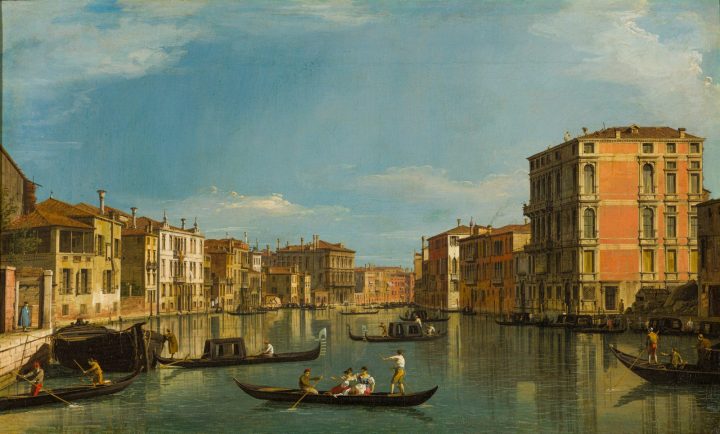
Canaletto, Grand Canal looking East from Palazzo Bembo to Palazzo Vendramin-Calergi, 1733–36
(Woburn Abbey Collection)
◊ ◊ ◊ ◊ ◊
From The Holburne Museum:
Canaletto: Painting Venice
The Holburne Museum, Bath, 22 January — 5 September 2021
National Maritime Museum, Greenwich, 1 April — 25 September 2022
In 2021, the Holburne Museum in Bath will present the most important set of paintings of Venice by Canaletto (1697–1768), which will leave their home at Woburn Abbey—one of world’s most important private art collections—for the first time in more than 70 years. This once in a lifetime exhibition will enable art lovers to enjoy and study up-close twenty-three beautiful paintings, in a fascinating exhibition that also explores Canaletto’s life and work, alongside themes of 18th-century Venice and the Grand Tour. This is one of the rare occasions that any of the successive Dukes of Bedford and Trustees of the Bedford Estates have lent the set of paintings since they arrived in Britain from Canaletto in the 1730s.
The pictures were commissioned by the 4th Duke of Bedford, who was evidently attracted by Canaletto’s burgeoning reputation for producing precise and atmospheric views of the Italian city’s most iconic views and landmarks. The Duke, then Lord John Russell, was in Venice on the Grand Tour in 1731, and presumably met Joseph Smith, Canaletto’s newly appointed agent, who was a Venetian resident and later British consul there. Three bills from Smith to the Duke survive in the family papers; dated 1733, 1735, and 1736, they add up to just over £188 (about £16,000 today), and must be incomplete, judging from what we know of the prices Canaletto commanded.
Created over a four-year period, when the artist was at the pinnacle of his career, the Woburn Abbey paintings are the largest set of paintings that Canaletto ever produced, and much the largest that has remained together. The Holburne exhibition provides a unique and unprecedented opportunity to see these exceptional paintings at viewing height, as they normally hang three high in the setting in the Dining Room they have occupied at Woburn since the late eighteenth century. The set features not only classic views of the Grand Canal and the Piazza S. Marco but also some of the city’s less well-known nooks and crannies, rarely captured by other artists and revealing new historical and cultural perspectives on Venice in its last decades as the ‘most serene Republic’.
Combining both his eye for accuracy and composition, Canaletto: Painting Venice celebrates some of La Serenissima’s most recognisable views, whilst also referring to the city’s historical importance as a trading centre, not least with the Ottoman Empire and other eastern nations.
To complement the show, the Holburne will also host Precious and Rare: Islamic Metalwork from The Courtauld, an exhibition of ten highlights from The Courtauld’s world-class collection of medieval Islamic metalwork. This exceptional group of objects date from the 13th to the 16th centuries and are some of the finest examples of this intricate craft from the Middle East. The most spectacular piece in the show is the Courtauld Bag, made in Mosul (present-day northern Iraq) in around 1300-30 for a noble lady of the Persian-Mongol court. It is recognised as one of the finest pieces of Islamic inlaid metalwork in existence and the only surviving object of its kind. The display will also include two Venetian artefacts, a dish with arms of the Giustiniani or Sagredo families (ca. 1530–50) and a pair of candlesticks (early 16th century), exploring the role of Venice as a pivotal juncture between the East and West.
“Woburn Abbey is currently undergoing its biggest refurbishment since it first opened to the public in 1955. The renovations have therefore provided an ideal opportunity for The Duke and Duchess of Bedford generously to share a selection of Woburn’s greatest treasures with a wider audience, so they can be enjoyed in a different context with new narratives,” explains the Holburne’s Director, Chris Stephens. “We are honoured that this wonderful, unrivalled set of Canaletto paintings will come to the Holburne, the perfect setting for visitors to study the paintings closely in way that has never been possible before. It is very exciting to think that they are leaving the dining room in Woburn Abbey for the first time in more than 70 years.”
◊ ◊ ◊ ◊ ◊
Note (added 5 July 2022) — The posting was updated to include Greenwich as a venue.
Online Panel | An Irish Odyssey
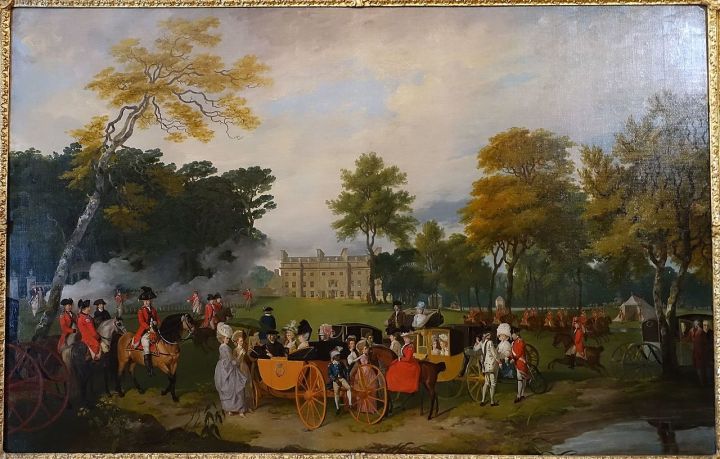
Francis Wheatley, The Earl of Aldborough Reviewing Volunteers at Belan House, County Kildare, 1782 (later changes ca.1787 and extended ca.1810), oil on canvas, 155 × 265 cm (National Trust, Waddesdon Manor, bequeathed by James de Rothschild, 1957).
◊ ◊ ◊ ◊ ◊
From The Attingham Trust’s spring lectures series:
An Irish Odyssey
The Attingham Trust for the Study of Historic Houses and Collections
Online, Tuesday, 16 March 2021, 6pm GMT
A virtual tour of Irish historic houses in film and music, followed by a live panel discussion with Terence Dooley (Centre for the Study of Historic Irish Houses and Estates), Mary Heffernan (Office of Public Works), Donough Cahill (Irish Georgian Society), and Fionnuala Ardee (Historic Houses of Ireland), hosted by Study Programme Director Elizabeth Jamieson
To register for this event, please click here. The event is free to attend, but there are options to purchase a donation ticket. All proceeds raised for The Attingham Trust will go directly to the Scholarship Fund and are gratefully received. You must be registered in order to receive the link.
NB. A day before the event the webinar link will come from The Attingham Trust, not Eventbrite. If you do not receive it or have any questions, please email Rebecca: rebecca.parker@attinghamtrust.org.
Print Quarterly, March 2021
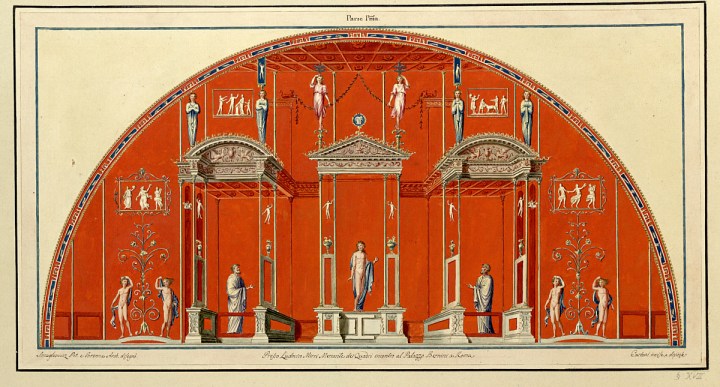
Marco Carloni, Franciszek Smuglewicz, and Vincenzo Brenna, plate nine from Vestigia delle Terme di Tito e Loro Interne Pitture, 1776–78, hand-coloured etching (London: The British Museum).
◊ ◊ ◊ ◊ ◊
The eighteenth century in the latest issue of Print Quarterly:
Print Quarterly 38.1 (March 2021)
A R T I C L E S
Francesca Guglielmini, “Ludovico Mirri’s Vestigia and Publishing in Eighteenth-Century Rome”, pp. 29–49.
This article is a detailed study of the publishing activities and business model of the erudite antiquarian, art dealer and print publisher Ludovico Mirri (1738–1786). His ambitious project Vestigia delle Terme di Tito e Loro Interne Pitture (The Remains of the Baths of Titus and Their Paintings) is discussed in detail alongside eight previous unpublished images of hand-coloured etchings of grotesque wall decorations taken from antique ruins in Rome and surroundings, now in the British Museum, here proposed as an extension of the original Vestigia. Four appendices contain a compilation of uncoloured and coloured impressions of the Vestigia etchings; a description of the contents of the Vestigia and Giuseppe Carletti’s accompanying booklet; known copies of the Vestigia in public collections; and a list of supplementary plates, including those eight mentioned in the British Museum collection.
David Stoker, “The Marshall Family’s Print Publishing Business”, pp. 50–63.
This article explores the little researched late activities of the Dicey print publishing business which was run by members of the Marshall family into the nineteenth century after Cluer Dicey (1715–1775) retired in 1770. The article discusses various publications produced by each member of the Marshall family, from Dicey’s partner Richard Marshall (d. 1779) to his grandson John II Marshall (b. 1793).
N O T E S A N D R E V I E W S
Antony Griffiths, Review of The Lost Library of the King of Portugal (2019), pp. 72–74.
This review sheds light on new research uncovered about the lost library of John V, King of Portugal, specifically archival documents. A significant portion of this review tells the fascinating story of how orders were sent to the Portuguese ambassadors in various European capitals in 1724 for an impression of every available print in those countries. These indeed happened but the various volumes of prints disappeared in the cataclysm of 1755, except for three volumes representing British, French, and Italian prints which were rediscovered in recent decades.
Domenico Pino, “Anton Maria Zanetti II and Limited Editions in Venice, c. 1734,” pp. 74–76.
This note seeks to interpret a handwritten inscription found on the verso of a print by Anton Maria Zanetti the Younger (1706–1778) in the British Museum. The inscription provides important evidence on early exploitation of limited editions in printmaking among the Zanetti clan and their contemporaries.
Antoinette Friedenthal, Review of La vita come opera d’arte: Anton Maria Zanetti e le sue collezioni (2018), pp. 108–14.
This review of an exhibition catalogue exploring Anton Maria Zanetti the Elder (1680–1767) offers an overview of his intellectual and artistic interests. His admiration for Parmigianino is discussed in detail, as well as his own reconstruction of the technique of chiaroscuro woodcuts. The review concludes with a few paragraphs on his forays into publishing.
Online Lecture | Women Artists at the Court of Catherine the Great
From the lecture series Collecting Art in Imperial Russia, organized by Princeton’s REEES program:
Polly Blakesley, Power and Paint: The Patronage of Women Artists at the Court of Catherine II
Online, Thursday, 18 March 2021, 12.00–1.30pm (ET)
 Catherine the Great’s passion for the arts served a vital role in her efforts to position herself as a paragon of the Enlightenment. With avaricious focus she snaffled celebrated art collections from under the noses of other European rulers, while the quest to establish professional artists led her to champion Russia’s new Academy of Arts. This lecture considers the role that women artists played in Catherine’s pursuit of her artistic ambitions, and the dynamic ways in which they energized Russian cultural life.
Catherine’s far-sighted patronage propelled renowned painters such as Angelica Kauffman to new heights. Just as important were the empress’s relations with lesser-known artists, among them the troubled painter Anna Dorothea Therbusch-Lisiewska and Catherine’s daughter-in-law Maria Fedorovna, who sculpted accomplished cameos and objets de vertu. With stories of extraordinary artistic endeavour, this lecture places these and other artists centre stage at one of Europe’s most thrilling courts.
Registration is available here»
Rosalind Polly Blakesley is Professor of Russian and European Art at the University of Cambridge and co-founder of the Cambridge Courtauld Russian Art Centre. She has served on the boards of various museums and galleries, among them the National Portrait Gallery in London, where she curated the acclaimed exhibition Russia and the Arts and advised on its partner exhibition at the State Tretyakov Gallery in Moscow. Other collaborations around the world include an exhibition of works by women artists from the Hermitage that took place at the National Museum of Women in the Arts in Washington, D.C. in 2003. Blakesley’s many books include The Russian Canvas: Painting in Imperial Russia (2016), which was awarded the Pushkin House Russian Book Prize and The Art Newspaper Russia Best Book Award. She currently holds a Leverhulme Major Research Fellowship for her new project, Russia, Empire and the Baltic Imagination. In 2017 Blakesley was awarded the Pushkin Medal by the Russian Federation for services to Anglo-Russian relations and Russian art. Blakesley is a Trustee of the National Portrait Gallery, London; a Syndic of the Fitzwilliam Museum, Cambridge; and serves on the advisory councils of the Hamilton Kerr Institute and Kettle’s Yard Gallery, as well as the advisory boards of academic journals and professional associations.
In Memoriam | Wilhelmina Cole Holladay (1922–2021)
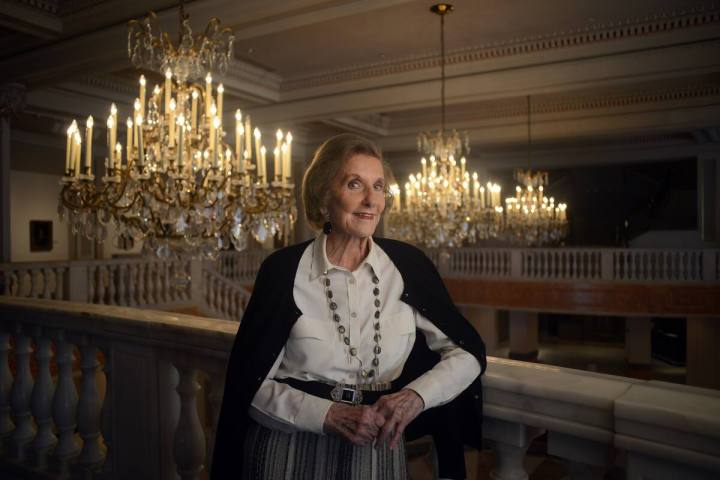
Press release (8 March 2021) from the NMWA:
Wilhelmina Cole Holladay, who founded the National Museum of Women in the Arts (NMWA), the first and only museum solely dedicated to championing women through the arts, died on Saturday, 6 March 2021, at the age of 98 in Washington, D.C. Against tremendous odds and with dedication, drive, and a singular vision, Holladay created a museum to help alleviate the underrepresentation of women artists in museums and galleries worldwide.
“For nearly 40 years, Wilhelmina Holladay has been the guiding light of our museum,” said Director Susan Fisher Sterling. “Mrs. Holladay knew the power of art and the importance of women in art and in the world. Her foresight in recognizing women artists of the past and championing women artists of the present by creating a new museum was visionary—even revolutionary—for the time. Her actions signaled a major shift in our thinking about art and society, and it is her genius and purpose we carry forward with us today.”
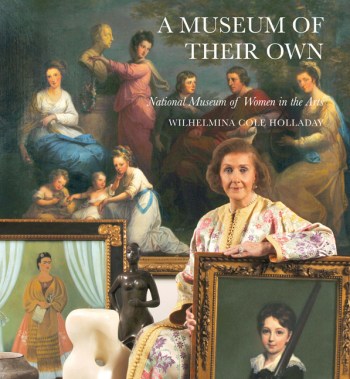
Wilhelmina Cole Holladay, A Museum of Their Own: National Museum of Women in the Arts (New York: Abbeville Press, 2008).
“Wilhelmina, ‘Billie’ as she was known to her friends, believed deeply in philanthropy and volunteerism,” said Board Vice-Chair and daughter-in-law Winton Smoot Holladay. “Her leadership and generosity established the museum, and she worked tirelessly to create an important institution where women artists could fully participate in and shape the national and international cultural conversation. Her unwavering sense of purpose and her love of art enriched the lives of all who were privileged to work alongside her.”
Holladay’s interest in art by women began in the 1970s, when she and her husband Wallace traveled widely to visit museums and galleries. They were particularly drawn to a painting they saw in Vienna, a 1594 still life by Flemish artist Clara Peeters. They saw additional paintings by Peeters at the Prado in Madrid. When Holladay attempted to learn more about the artist, she could find no information on Peeters—or any other female artist—in the standard art history textbook, H. W. Janson’s History of Art. Astonished by this discovery, the Holladays began to search for work by other women artists.
By the 1980s, the Holladay collection had grown to approximately 500 works by 150 artists, from the Renaissance to contemporary times. In addition to artwork, the Holladays kept an archive of catalogues, books, photographs, and biographical information on women artists. Nancy Hanks, then head of the National Endowment for the Arts, encouraged the Holladays to consider establishing a museum, and Holladay focused her considerable organizational and fundraising skills in this direction.
NMWA was incorporated in 1981, and for the next six years, Holladay opened her residence to the public for tours, traveled extensively to garner support for her idea, raised more than $20 million from public and private sources, purchased and renovated a historic building to house the collection, and donated her personal collection and library to the museum. On 7 April 1987, Barbara Bush, wife of the then-Vice President, cut the ribbon to open the museum in a 1907 Renaissance revival landmark building located two blocks from the White House.
NMWA’s collection has grown to include more than 5,500 works by approximately 1,000 artists, such as Louise Bourgeois, Mary Cassatt, Judy Chicago, Frida Kahlo, Georgia O’Keeffe, Faith Ringgold, and Élizabeth Louise Vigée-Lebrun. Special exhibitions have included premier solo showings of work by Camille Claudel (19th-century French), Remedios Varo (20th-century Mexican), Lavinia Fontana (16th-century Italian) and Carrie Mae Weems (contemporary American). The diversity of women’s artistic creativity has been showcased in exhibitions featuring treasures from the Hermitage, pottery by American Indians, theatrical creations by Julie Taymor, representations of the Virgin Mary in Western art, abstract art by Black women artists, and work by emerging artists in the museum’s signature Women to Watch series. These exhibitions have broadened the art historical canon to be more open and inclusive.
The museum is also a leader in online content and arts education, serving the local community through outreach to D.C. public and private charter schools as well as developing an arts education model for schools nationwide. NMWA’s Women, Arts, and Social Change public program initiative offers a platform for speakers and attendees to advance ideas and solutions to society’s most pressing issues—especially those affecting women and girls—and inspires action in the arts and beyond. NMWA also publishes a triennial magazine, serves as a center for the performing and literary arts, and maintains one of the foremost repositories of documents and materials on women artists.
In over 35 years, the museum’s budget has grown to $11 million, and the full-time staff numbers 50. NMWA members and donors—nearly 13,000 strong—come from all over the United States and 21 other countries. Its network of national and international committees has 25 outreach groups with more than 3,000 dedicated members throughout the United States and around the world, including Chile, France, Peru, and the United Kingdom. The committees host regional programs and serve as ambassadors for the museum.
Holladay was born on 10 October 1922, in Elmira, N.Y. She developed an early appreciation of art from her maternal grandmother. She earned a BA degree from Elmira College in 1944, studied art history at Cornell University, and completed postgraduate work in art history at the University of Paris in 1953–54. During World War II, Holladay worked in Washington, D.C., where she met her husband, an officer in the United States Navy. She worked as social secretary to Madame Chiang Kai-Shek from 1945 to 1948, but after the birth of her son Wallace Jr., she dedicated herself to volunteer projects.
In addition to serving as the museum’s chair of the board, Holladay was active in many other ventures, serving on the boards of the National Women’s Economic Alliance, the Adams National Bank, the Corcoran Gallery of Art, the World Service Council of the YWCA, the American Academy in Rome, the United States Capitol Historical Society, the National Gallery of Art’s Collector’s Committee, and the International Women’s Forum. In recognition of her service, Holladay received the National Medal of Arts as well as diplomatic orders from France and Norway. She also was regularly listed as one of the most powerful women in Washington, D.C. and received a lifetime achievement award from the District of Columbia. Among Holladay’s other awards for her service to women include induction into the National Women’s Hall of Fame, a lifetime achievement award from the Women’s Caucus for Art, the Women Who Make a Difference Award from the International Women’s Forum, and the Distinguished Achievement Award from the National League of American Pen Women. She received honorary doctorate degrees from four colleges.
Holladay was predeceased by a son, Scott Cole Holladay and her husband, Wallace F. Holladay. Holladay is survived by a son and daughter-in-law, Wallace ‘Hap’ Holladay Jr. and Winton Holladay; four grandchildren, Brook Holladay Peters (Brian), Fitz Holladay, Jessica Holladay Sterchi (Louis), and Addison Holladay (Eliza); and nine great-grandchildren.
A celebration of life will be announced at a future date. In lieu of flowers, the family requests contributions may be made to the National Museum of Women in the Arts.
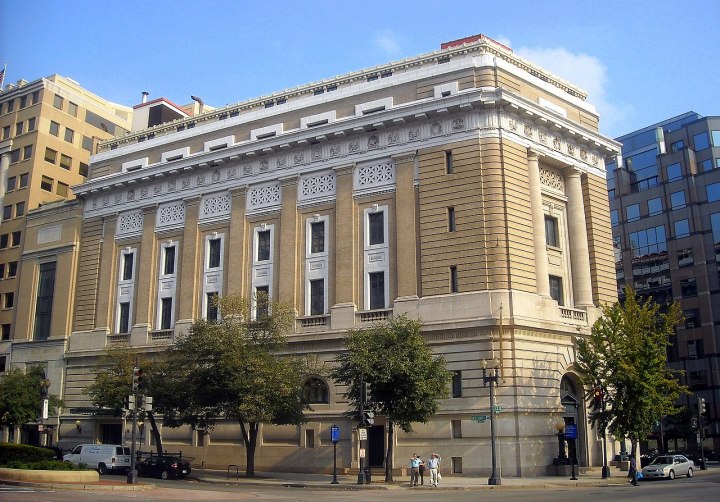
National Museum of Women in the Arts, at 1250 New York Avenue, NW in Washington, D.C. Built in 1908 as a Masonic Temple—to designs by Wood, Donn, and Deming—the Renaissance revival style building has been home to the NMWA for 34 years. Photo: Wikimedia Commons, 2008.
The French Porcelain Society’s Online Spring Symposium, 2021
From The French Porcelain Society:
Ceramics & Wanderlust: Curators & Castles
The French Porcelain Society’s Online Spring Symposium, 13–14 March 2021
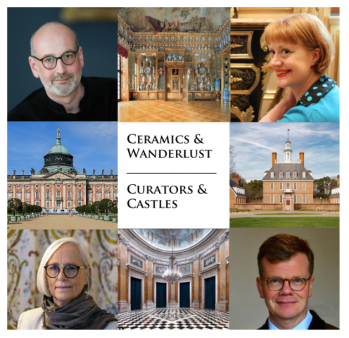 Wanderlust, our need to travel to study ceramic collections in museums and castles throughout Europe and Britain, is at the heart of the French Porcelain Society’s educational activities. It has been over a year since our last visit to France and our next visit may not be for several months. In order to share the pleasure of exploration, comradery, and discovery associated with these trips, Patricia Ferguson with the help of Félix Zorzo and other members of the French Porcelain Society committee have organised a two-day virtual symposium on the 13th and 14th of March. From the recently installed porcelain cabinet at the Château de Versailles to the stunning Porzellankabinett in Schloss Charlottenburg, as well as state, royal, and aristocratic collections from Lisbon, Kassel, and Colonial Williamsburg, their directors and curators have enthusiastically agreed to be part of our programme. We are extremely grateful to the knowledgeable custodians of some of our favourite castles and country houses, who have captured private tours for our global audience on video. Each unique and very personal tour has been pre-recorded, but there will be a live Q&A panel at the end of each day led by Dr. Caroline McCaffrey-Howarth.
Please do join us; the two-day symposium is free and open to all. For any questions, contact FPSenquiries@gmail.com. Please note that the programme is subject to change. Free links to the webinar are available here.
S A T U R D A Y , 1 3 M A R C H 2 0 2 1
16:00–18:30, UK GMT
Introduction — Caroline McCaffrey-Howarth
• Palácio Nacional da Ajuda, Lisbon — Cristina Neiva Correia, Conservadora
• Château de Versailles — Marie-Laure de Rochebrune, Conservateur en chef
• Schloss Wilhelmshöhe — Martin Eberle, Direktor, Museumslandschaft Hessen Kassel
• Museumslandschaft Hessen Kassel — Xenia Schürmann, Curatorial Assistant
Panel discussion
S U N D A Y , 1 4 M A R C H 2 0 2 1
16:00–18:30, UK GMT
Introduction — Caroline McCaffrey-Howarth
• Governor’s Palace in Colonial Williamsburg, Virginia — Angelika R. Kuettner, Associate Curator of Ceramics and Glass, and Janine Skerry, Senior Curator of Metals
• Waddesdon Manor — Mia Jackson, Curator of Decorative Arts
• Charlottenburg, Neues Palais and Belvedere — Samuel Wittwer, Direktor der Schlösser und Sammlungen, Stiftung Preußische Schlösser und Gärten Berlin-Brandenburg
Panel discussion
Online Seminars | O Gosto neoclássico: A Dimensão americana
I’m sorry for not posting news of these seminars much sooner. –CH
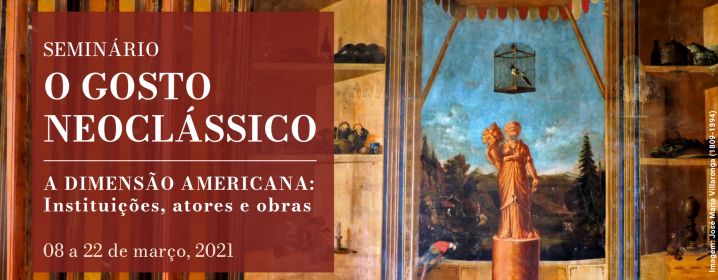
O Gosto neoclássico — A Dimensão americana: instituições, atores e obras
Online, 8–22 March 2021
O seminário O Gosto neoclássico — A Dimensão americana: instituições, atores e obras será realizado de 8 a 22 de março de 2021, às 2ª-feiras e 4ª-feiras, às 15h, em transmissão remota. É promoção do grupo de pesquisa “O gosto neoclássico”, conduzido pela Fundação Casa de Rui Barbosa e o leU/Prourb/FAU/UFRJ, com o apoio do Instituto Rui Barbosa de Altos Estudos – IRbae.
O evento dá continuidade a uma agenda sistemática de discussões públicas sobre arte, arquitetura, cidade e cultura sob o impacto da circulação das ideias neoclássicas no período compreendido entre o final do século XVIII e meados do XIX. Já foram discutidas temáticas relativas aos contextos brasileiro, português e francês. Em 2021, propõe-se uma pauta ainda inédita e que permita uma visão articulada e comparada sobre o fenômeno também nas Américas.
O Gosto neoclássico — A dimensão americana, se organiza em cinco sessões compostas por palestras e mesas redondas com especialistas brasileiros e estrangeiros. As palestras serão voltadas para aspectos da questão no México, França, Brasil, Portugal, Estados Unidos e Caribe. As mesas-redondas irão enfocar quatro eixos principais: as questões de ensino das artes nas academias: visões estéticas, padrões de gosto e formas de transmissão; mudanças e permanências nas culturas acadêmicas; as práticas projetuais e construtivas e o campo das visualidades, suas inovações e continuidades. O encerramento se dará com uma palestra concerto em torno das questões da música no período.
O evento será coordenado por Ana Pessoa (FCRB) e Margareth Pereira (leU/Prourb/UFRJ) e organizado por Ana Lúcia V. Santos (EAU/UFF), Karolyna Koppke (PROARQ-UFRJ/Ibmec RJ), Luiza Xavier (leU/Prourb/UFRJ), Ornella Savini (PIC-FCRB/CNPq). Arte e diagramação: Luiza Xavier (leU/Prourb/UFRJ). Fotografia: Ana Claudia P. Torem.
O seminário ocorrerá através da plataforma Zoom.
8 M A R C H 2 0 2 1
15.00 (BRT) Palestra
• Kelly Donahue-Wallace (CVAD-UNT, EUA), Good Taste within Reach: The Mexican Medals of Jerónimo Antonio Gil
16.00 (BRT) Mesa Redonda
• Renata Baesso (PUC-Campinas), O lugar do gosto, do gênio e da invenção nas preceptivas arquitetônicas
• Elaine Dias (UNIFESP), François-René Moreaux na Galeria e Escola de Pintura: a exposição da coleção italiana e a afirmação do artista
• Sonia Gomes Pereira (EBA-UFRJ), A Academia Imperial de Belas Artes e a longa duração da tradição clássica
1 0 M A R C H 2 0 2 1
15.00 (BRT) Palestra
• Jean Philippe Garric (Univ.Paris 1-França), Grandjean de Montigny et la polychromie architecturale à l’école de Percier
16.00 (BRT) Mesa Redonda
• Maria Luiza Zanatta (UFSM), O “tratado das ordens” de Vignola em S. Paulo: do Neoclassicismo ao Ecletismo
• Gustavo Rocha-Peixoto (PROARQ-UFRJ), Uma questão de gosto
• Karolyna Koppke (PROARQ-UFRJ/Ibmec RJ), A urbe imaginada: a Academia e o projeto para os paços Imperial e do Senado
1 5 M A R C H 2 0 2 1
15.00 (BRT) Palestra
• Margareth da Silva Pereira (PROURB-UFRJ), A ressignificação da ideia de arquitetura: A cena americana e a educação dos sentidos
16.00 (BRT) Mesa Redonda
• Ana Lucia V. dos Santos (EAU-UFF), A casa do Passeio – estudo de um edifício residencial de Grandjean de Montigny
• José Pessôa (PPGAU-UFF), A Praça Municipal de Grandjean de Montigny
• Nelson Pôrto (DAU/UFES), Os engenheiros e o neoclassicismo
1 7 M A R C H 2 0 2 1
15.00 (BRT) Palestra
• Helder Carita (FCSH-UNL), Neoclassicismo tardio em Portugal: da arquitectura às artes decorativas
16.00 (BRT) Mesa Redonda
• Paulo Knauss (UFF), O desafio da pedra: o gosto neoclássico e a escultura no Brasil
• Ana Pessoa (PPGMA/FCRB) e Ornella Savini (PIC/FCRB), Uma arcádia tropical? Vassouras, RJ, sec. XIX
• Júlio Bandeira (BN/MTur), Do Capitão Carlos Julião a Mauricio Rugendas, a camisola neoclássica no Brasil
2 2 M A R C H 2 0 2 1
15.00 (BRT) Palestras
• Dell Upton (AH-UCLA, CASVA/NGA), Politics of Neoclassicism in the United States
• Paul Niell (AH-FSU, USA), No Taste for Thatching: Value, Aesthetics, and Urban Reform in the Bohíos of Nineteenth-Century Puerto Rico
16.20 (BRT) Palestra-Concerto
• Rosana Lanzelotte (Musica Brasilis), Clássica: a nova música
Exhibition | The Great Divide: Footwear in the Age of Enlightenment
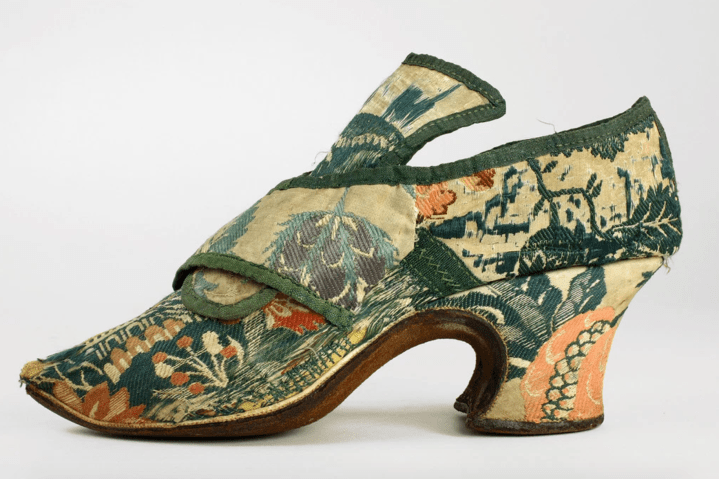
Woman’s Shoe, 1730–40, English (Toronto: Bata Shoe Museum). One way working women acquired footwear was through the cast-off clothing given to them by the people they served. These ‘gifts’ would often be altered by the new wearer. This shoe originally had thin latchets that most likely were tied with a bow over the tongue but were updated to feature more fashionable straps by a later wearer.
◊ ◊ ◊ ◊ ◊
From the press release (12 August 2020) for the exhibition at Toronto’s BSM (the museum is currently closed, but stay tuned). And a very happy International Women’s Day to everyone!
The Great Divide: Footwear in the Age of Enlightenment
Bata Shoe Museum, Toronto, 12 August 2020 — 28 February 2022
The Bata Shoe Museum is excited to announce its newest exhibition, The Great Divide: Footwear in the Age of Enlightenment. The first of three exhibitions in the museum’s 25th anniversary lineup, The Great Divide explores several timely issues from gender and race to imperialism and colonization. Featuring extraordinary 18th-century artefacts from the permanent collection, the exhibition highlights complex stories about privilege, oppression, danger, desire, revolution, and resistance that are as relevant today as they were 300 years ago.
 The Age of Enlightenment was a period in European history from the end of the 17th to the end of the 18th century when Western philosophers and scientists wrestled with concepts of ‘human nature’ and ‘natural rights’. Some argued that all people had inherent social and political rights, but many more advocated for the reordering of social hierarchies using ‘scientific’ proof to divide people through the identification of ‘natural’ differences such as gender and race. Much of the oppression and imperialism that marked the period was supported by these ideas.
“Throughout the 18th century, Western fashion, including footwear, was central to the ‘naturalization’ of difference in Europe,” says Elizabeth Semmelhack, Creative Director and Senior Curator at the Bata Shoe Museum. “Distinctions between men and women, children and adults, Europeans and ‘Others’ became increasingly codified through clothing. Yet, European fashion was also used to blur the lines between classes as social mobility and access to consumable goods grew as a result of imperialism.”
The exhibition was thoughtfully designed by the award-winning designers Arc + Co who focused on creating a space that engages with the powerful themes and issues of the 18th century explored in this gallery. With loans from Toronto’s Gardiner Museum, the design also includes a look at contemporary footwear, asking visitors to reflect on shoes and society today.
Highlights include:
• Moccasins said to have belonged to Myaamia leader Mishikinawa, also known as Little Turtle, who resisted the incursion into Myaami territory by delivering one of the worst defeats in U.S. history at the Battle of Wabash in 1791.
• Late 18th-century shoes that began as Indian jutti but were transformed into a pair of English women’s shoes that embody British Imperialism in India.
• An early 18th-century silver side-saddle stirrup made for a woman from a powerful colonial Spanish family in Peru. Roughly 85 percent of the world’s silver was mined by conscripted Indigenous people and imported enslaved Africans in Spanish-held South America.

Man’s Shoe, 1760–80, English (Toronto: Bata Shoe Museum). This shoe would have been used to express both gender and class. Its low heel conveyed that it was masculine and the expensive fabric and ostentatious bow conveyed that it was upper class. The use of pink might confuse us today, but in the 18th century pink was not gendered.
Call for Papers | Work, Rest, and Power
From the Call for Papers:
Work, Rest, and Power: Architecture, Space, and Political Life, 1500–1815
Online Workshop Hosted by the Humanities Research Centre at the University of York, 27 May 2021
Proposals due by 12 April 2021
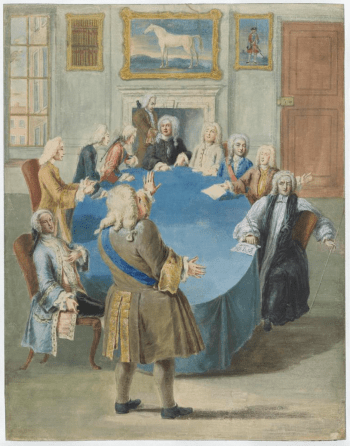
Joseph Goupy, Sir Robert Walpole Addressing the Cabinet, 1723–42, drawing, 36 × 29 cm (London: The British Museum, 1920,0214.4).
This workshop explores the role of the home in politics and political life, taking a broad view to explore the lived space of political figures, materiality, and the role of women and the household. The workshop will commence with a keynote paper from Dr Manolo Guerci, University of Kent, before leading into a series of panel discussions and optional thematic breakout sessions for those who wish to continue the discussion.
Interested scholars are invited to submit abstracts of no more than 250 words by 12 April 2021. We are seeking abstracts that relate to the home as a political space, broadly conceived, in any place or time period within the early modern era. We welcome submissions from all scholars, but particularly encourage postgraduate and early career researchers.
Topics may include, but are by no means limited to:
• Definitions: what makes a home political?
• Homes of political figures or homes located in political institutions
• Political sociability
• Materiality, art, architecture, and archaeology
• The household: wives, family, and servants
• Uses of space: orientation, gendered space, public and private
• Town and country houses
• Social history of the home: class, economics, and ritual
Please submit abstracts and any questions via email to the organisers Kirsty Wright (kmw532@york.ac.uk) or Murray Tremellen (mat550@york.ac.uk). For further information, please see our website.










 Enfilade
leave a comment