New Book | The Place of Many Moods: Udaipur’s Painted Lands
From Princeton UP:
Dipti Khera, The Place of Many Moods: Udaipur’s Painted Lands and India’s Eighteenth Century (Princeton: Princeton University Press, 2020), 232 pages, ISBN , $65 / £54.
 In the long eighteenth century, artists from Udaipur, a city of lakes in northwestern India, specialized in depicting the vivid sensory ambience of its historic palaces, reservoirs, temples, bazaars, and durbars. As Mughal imperial authority weakened by the late 1600s and the British colonial economy became paramount by the 1830s, new patrons and mobile professionals reshaped urban cultures and artistic genres across early modern India. The Place of Many Moods explores how Udaipur’s artworks—monumental court paintings, royal portraits, Jain letter scrolls, devotional manuscripts, cartographic artifacts, and architectural drawings—represent the period’s major aesthetic, intellectual, and political shifts. Dipti Khera shows that these immersive objects powerfully convey the bhava—the feel, emotion, and mood—of specific places, revealing visions of pleasure, plenitude, and praise. These memorialized moods confront the ways colonial histories have recounted Oriental decadence, shaping how a culture and time are perceived.
Illuminating the close relationship between painting and poetry, and the ties among art, architecture, literature, politics, ecology, trade, and religion, Khera examines how Udaipur’s painters aesthetically enticed audiences of courtly connoisseurs, itinerant monks, and mercantile collectives to forge bonds of belonging to real locales in the present and to long for idealized futures. Their pioneering pictures sought to stir such emotions as love, awe, abundance, and wonder, emphasizing the senses, spaces, and sociability essential to the efficacy of objects and expressions of territoriality.
The Place of Many Moods uncovers an influential creative legacy of evocative beauty that raises broader questions about how emotions and artifacts operate in constituting history and subjectivity, politics and place.
Dipti Khera is associate professor in the Department of Art History and the Institute of Fine Arts at New York University.
◊ ◊ ◊ ◊ ◊
Celebrating Dipti Khera’s The Place of Many Moods
Friday, 4 December 2020, live-streamed at 11:00am ET
Please join the Institute of Fine Arts in conversation with Dipti Khera about her new book The Place of Many Moods: Udaipur’s Painted Lands and India’s Eighteenth Century. Responding to the book will be Vittoria Di Palma, Associate Professor of Architectural History and Art History at the University of Southern California, and Kavita Singh, Professor of Art History at the School of Arts and Aesthetics of Jawaharlal Nehru University. RSVP to receive the webinar link for this live-streamed event.
◊ ◊ ◊ ◊ ◊
Note (added 23 November 2020) — The original posting did not include information on the live-streamed event.
New Book | Material Literacy in Eighteenth-Century Britain
From Bloomsbury:
Serena Dyer and Chloe Wigston Smith, eds., Material Literacy in Eighteenth-Century Britain: A Nation of Makers (New York: Bloomsbury, 2020), 328 pages, ISBN: 978-1501349614, $135.
 The eighteenth century has been hailed for its revolution in consumer culture, but Material Literacy in Eighteenth-Century Britain repositions Britain as a nation of makers. It brings new attention to eighteenth-century craftswomen and men with its focus on the material knowledge possessed not only by professional artisans and amateur makers, but also by skilled consumers. This edited collection gathers together a group of interdisciplinary scholars working in the fields of art history, history, literature, and museum studies to unearth the tactile and tacit knowledge that underpinned fashion, tailoring, and textile production. It invites us into the workshops, drawing rooms, and backrooms of a broad range of creators, and uncovers how production and tacit knowledge extended beyond the factories and machines which dominate industrial histories.
This book illuminates, for the first time, the material literacies learnt, enacted, and understood by British producers and consumers. The skills required for sewing, embroidering, and the textile arts were possessed by a large proportion of the British population: men, women and children, professional and amateur alike. Building on previous studies of shoppers and consumption in the period, as well as narratives of manufacture, these essays document the multiplicity of small producers behind Britain’s consumer revolution, reshaping our understanding of the dynamics between making and objects, consumption and production. It demonstrates how material knowledge formed an essential part of daily life for eighteenth-century Britons. Craft technique, practice, and production, the contributors show, constituted forms of tactile languages that joined makers together, whether they produced objects for profit or pleasure.
Serena Dyer is Lecturer in History of Design and Material Culture at De Montfort University. She has taught at the University of Warwick and the University of Hertfordshire, and was Postdoctoral Fellow at the Paul Mellon Centre for Studies in British Art. She was previously Curator of the Museum of Domestic Design and Architecture. She has published on albums, wallpaper, consumer culture, and childhood in the eighteenth century. Her book, Material Lives: Women Makers and Consumer Culture in the Eighteenth Century, is forthcoming with Bloomsbury.
Chloe Wigston Smith is Senior Lecturer in the Department of English and Related Literature and the Centre for Eighteenth Century Studies at the University of York. She is the author of Women, Work, and Clothes in the Eighteenth-Century Novel (Cambridge University Press, 2013), as well as articles on women in literature, material culture studies and fashion culture. Her current British Academy funded project looks at domestic crafts in the Atlantic world.
C O N T E N T S
List of Figures
List of Tables
Notes on Contributors
Acknowledgements
1 Serena Dyer (De Montfort University) and Chloe Wigston Smith (University of York), Introduction
2 Ariane Fennetaux (University of Paris), ‘Work’d pockets to my entire satisfaction’: Women and the Multiple Literacies of Making
3 Crystal B. Lake (Wright State University), Needlework Verse
4 Chloe Wigston Smith (University of York), Domestic Crafts at the School of Arts
5 Nicole Pohl (Oxford Brookes University), ‘To Embroider what is Wanting’: Making, Consuming and Mending Textiles in the Lives of the Bluestockings
6 Jon Stobart (Manchester Metropolitan University), Material Literacies of Home Comfort in Georgian England
7 Serena Dyer (De Montfort University), Stitching and Shopping: The Material Literacy of the Consumer
8 Alicia Kerfoot (SUNY Brockport), Stitching the It-Narrative in The History and Adventures of a Lady’s Slippers and Shoes
9 Sarah Howard (Independent Scholar, UK), Making, Measuring and Selling in Hampshire: The Provincial Tailor’s Accounts of George and Benjamin Ferrey
10 Emily Taylor (National Museums Scotland), Gendered Making and Material Knowledge: Tailors and Mantua-Makers, c. 1760–1820
11 Hilary Davidson (University of Sydney), Dress and Dressmaking: Material Evolution in Regency Dress Construction
12 Elisabeth Gernerd (Historic Royal Palaces), Fancy Feathers: The Feather Trade in Britain and the Atlantic World
13 Robbie Richardson (University of Kent), Tomahawks and Scalping Knives: Manufacturing Savagery in Britain
14 Laura Engel (Duquesne University), The Lady Vanishes: Madame Tussaud’s Self Portrait and Material Legacies
15 Beth Fowkes Tobin (University of Georgia), Learning to Craft
Select Bibliography
Index
Michael Yonan—Alan Templeton Professor of European Art, UC Davis
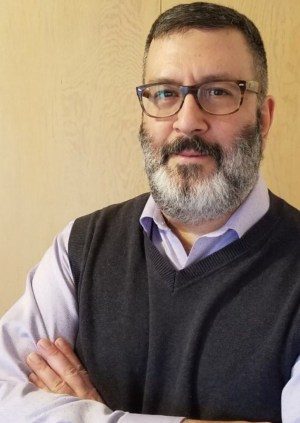 Michael Yonan has been named the inaugural Alan Templeton Endowed Professor of European Art, 1600–1830, at the University of California, Davis. Professor Yonan received his PhD from the University of North Carolina at Chapel Hill and taught previously at the University of Missouri. In 2019 he was visiting guest professor in the Department of Culture and Aesthetics, Stockholm University, Sweden.
Yonan is the author of Empress Maria Theresa and the Politics of Habsburg Imperial Art (Penn State, 2011) and Messerschmidt’s Character Heads: Maddening Sculpture and the Writing of Art History (Routledge, 2018). With Stacey Sloboda he co-edited the volume Eighteenth-Century Art Worlds: Global and Local Geographies of Art (Bloomsbury, 2019). His most recent articles are “Martin van Meytens’s Portrait of Johann Michael von Grosser (c. 1700–1784): The Business of Nobility,” which appeared in Art Bulletin of Nationalmuseum Stockholm (2019); and “Knowing the World through Rococo Ornamental Prints,” in Organic Supplements: Bodies, Objects, and the Natural World, 1580–1750, ed. Miriam Jacobson and Julie Park (University of Virginia Press, 2020). From 2012 to 2016 he was president of HECAA and now serves on the ASECS Executive Board.
Currently he is researching a book-length study of south German rococo design and with colleagues in Stockholm is planning a collection of essays on global material culture in early modern Sweden. He welcomes undergraduates interested in eighteenth-century art to apply to the MA program at UC Davis.
Walpole Library Pauses Visiting Fellowship and Travel Grant Program
The Lewis Walpole Library announces the temporary suspension of its Visiting Fellowship and Travel Grant program due to the pandemic.
The program has been postponed indefinitely, and we will not be accepting applications this year. We hope to be able to put out a call in the autumn of 2021 for applications with a deadline in January 2022 for Fellowships to be taken up between July 2022 and June 2023.
The Library is committed to ensuring that this postponement is temporary, and 2019–20 and 2020–21 Fellowship and Travel Grant award recipients who have not been able to come to the Library to take up their research know they will be accommodated when we are finally able to resume welcoming in-person residential non-Yale researchers.
Details of the Visiting Fellowship and Travel Grant program and information about application requirements are still on our website where we will post updates as we have them. Be sure to check the page from time to time to get the most current information.
We look forward to brighter days when we can restart our active Fellowship program. Please contact us at walpole@yale.edu with any questions.
New Book | Organic Supplements: Bodies and Things
From the University of Virginia Press:
Miriam Jacobson and Julie Park, eds., Organic Supplements: Bodies and Things of the Natural World, 1580–1790 (Charlottesville: University of Virginia Press, 2020), 296 pages, ISBN 978-0813944937 (hardback) / ISBN 978-0813944944 (paperback) / ISBN 978-0813944951 (Ebook), $35.
 From the hair of a famous dead poet to botanical ornaments and meat pies, the subjects of this book are dynamic, organic artifacts. A cross-disciplinary collection of essays, Organic Supplements examines the interlaced relationships between natural things and human beings in early modern and eighteenth-century Europe. The material qualities of things as living organisms–and things that originate from living organisms– enabled a range of critical actions and experiences to take place for the people who wore, used, consumed, or perceived them.
Miriam Jacobson is Associate Professor of English at the University of Georgia and author of Barbarous Antiquity: Reorienting the Past in the Poetry of Early Modern England.
Julie Park is Assistant Curator and Faculty Fellow at the Special Collections Center of Elmer Holmes Bobst Library, New York University, and author of The Self and It: Novel Objects in Eighteenth-Century England.
C O N T E N T S
Acknowledgments
Introduction: Process and Connection
Part 1. Inscription and Incorporation
• Julie Park, Feather, Flourish, and Flow: The Organic Technology of Early Modern Handwriting
• Rebecca Laroche, The Flower of Ointments and Early Modern Transcorporeality
• Kevin Lambert, The Paris Opéra as a Vibrating Body: Feeling Pygmalion’s Kiss
Part II. Interface and Merger
• Jessica Wolfe, Gorgonick Spirits: Myth, Figuration, and Mineral Vivency in the Writings of Thomas Browne
• Lynn Festa, Things with Kid Gloves
• Miriam Jacobson, Vegetable Loves: Botanical Enthrallment in Early Modern Poetry
Part III. Vitality and Decay
• Michael Yonan, Knowing the World through Rococo Ornamental Prints
• Diane Purkiss, Fingers in the Pie: Baked Meats, Adultery, and Adulteration
• Jayne Lewis, Milton’s Hair
• Julia Reinhard Lupton, Afterword: Virtuous Properties of the Organic Supplement
Notes on Contributors
Index
Call for Papers | ECRS Series, 2021
From ECRS:
The Eighteenth-Century Research Seminar Series
(Online) Fortnightly on Wednesdays, from 27 January to 7 April 2021
Proposals due by 15 December 2020
The Eighteenth-Century Research Seminar (ECRS) series invites proposals for twenty-minute papers from postgraduate and early career researchers addressing any aspect of eighteenth-century history, culture, literature, art, music, geography, religion, science, and philosophy. The seminar series seeks to provide a regular interdisciplinary forum for postgraduate and early career researchers working on the eighteenth century to meet and discuss their research.
ECRS will be hosted online by the University of Edinburgh. Seminars will take place on Wednesdays between 4:30 and 6:00pm on a fortnightly basis from 27 January to 7 April 2021. Each seminar will consist of two papers.
Abstracts of up to 300 words along with a brief biography and institutional affiliation should be submitted in a Word document to: edinburgh18thcentury@gmail.com. In your email, please also indicate any scheduling restrictions you may have. The closing date for submissions is Tuesday, 15 December 2020.
The Eighteenth-Century Research Seminar is kindly sponsored by the University of Edinburgh’s Eighteenth-Century and Enlightenment Studies Network.
Online Exhibition | Participez à la vie des académies d’art
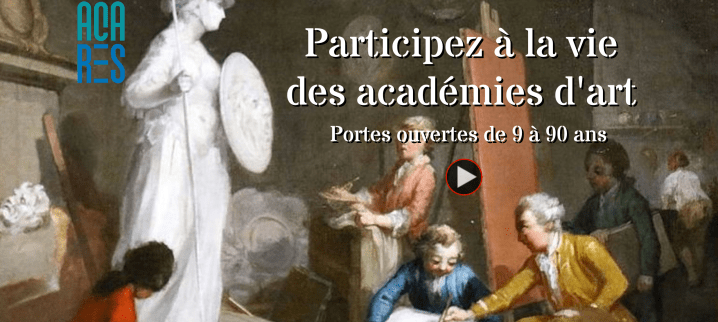
Announcing the exhibition:
Participez à la vie des académies d’art… Portes ouvertes de 9 à 90 ans
An online exhibition of the ACA-RES programme
Organized by Émilie Roffidal and Anne Perrin Khelissa
How were artists and craftsmen trained in French art academies in the age of Enlightenment? The virtual exhibition Participez à la vie des académies d’art. Portes ouvertes de 9 à 90 ans is now available online. The result of a collective work combining research and training, the exhibition presents a selection of works from the teaching material and artistic production of art academies and provincial art schools in the 18th century. Most of the collections from these institutions were dispersed during the French Revolution between city museums, libraries, and other heritage collections such as art schools. Painted portraits of teachers, pupils, or amateurs are included, providing a more vivid testimony of the institutions. A whole little-known part of French heritage is honoured here.
This exhibition has been developed within the framework of the ACA-RES research programme on art academies and their networks in pre-industrial France (Les Académies d’art et leurs réseaux dans la France préindustrielle) supported by the FRAMESPA UMR 5136 laboratory of the Toulouse-Jean Jaures University, the Labex SMS, the Deutsches Forum Für Kunstgeschichte of Paris and the Centre National d’Histoire de l’art.
Call for Papers | The [After]Lives of Objects
From ArtHist.net:
The [After]Lives of Objects: Transposition in the Material World
(Online) University of Virginia Art & Architectural History Graduate Symposium, 18–19 March 2021
Proposals due by 15 December 2020
Transposition involves the movement of people, objects, and ideas from one context to another. The reverberating impacts of such regional and transregional exchanges have shaped artistic expressions, systems of knowledge, and relationships among polities. Recently, scholarship has turned to the object as a material manifestation of cross-cultural, transregional, and imperial encounters. [After]Lives is an interdisciplinary symposium that explores how transposition has materialized throughout history. How are objects changed when they are activated as mediums of encounter? In what ways do makers and users negotiate their positionality between and within societies through objects? How have artists and other creators problematized binary ideas of encounter and exchange in their works? When should adaptations be considered cultural appropriation instead of cross-cultural connectors? Can they be both? What is at stake when materials, artistic techniques, and/or technologies originating from one region are duplicated outside of that region?
Possible topics include, but are not limited to:
• Mediation of transcultural encounters through visual and material objects
• Processes of adaptation and assimilation in visual and material culture
• History of looting, collecting, and the art market
• Role of institutions in the (re)contextualization of objects
• Studies that problematize notions of influence, exchange, and reception across social, cultural, and artistic hierarchies
• Imperial and colonial networks of collection, trade, and exchange
We welcome submissions from graduate students at all stages and areas of study. Papers should be 20 minutes in length and will be followed by a Q&A plenary session. Papers must be original and previously unpublished. Graduate students are invited to submit a CV and an abstract (250 words) in a single PDF file by 15 December 2020 to the symposium committee at uvaartandarch@gmail.com. Applicants will be notified of decisions by 15 January 2021. Limited funds will be available to cover expenses associated with presenting at the symposium.
Keynote Speaker: Kristel Smentek, Associate Professor of Art History, Department of Architecture, MIT | Author of Mariette and the Science of the Connoisseur in Eighteenth-Century Europe (2014) and Objects of Encounter: China in Eighteenth-Century France (forthcoming).
Call for Papers | New Directions in 18th- and 19th-Century Art, Season 3
From NDENCA:
New Directions in Eighteenth- and Nineteenth-Century, Art Season 3
Digital Seminar Series
Abstracts due by 30 November 2020
This digital seminar series seeks to showcase new and innovative research being undertaken on eighteenth- and nineteenth-century art and its histories. We invite contributions for papers investigating any aspect of the artistic, visual, and material cultures of this period, and produced across the globe. Sessions will be hosted via video conferencing software and will take the form of a 40-minute seminar, with time following for questions.
We welcome proposals from PhD researchers, early career academics and museum professionals, particularly those from underrepresented groups. Please send your abstracts to ndencaseminar@gmail.com.
Annibel Jenkins Prize in Performance and Theater Studies
Have you published an article on 18th-century performance studies or theater in the past two years? Consider submitting it for the Annibel Jenkins Prize in Performance and Theater Studies. From SEASECS:
Annibel Jenkins Prize in Performance and Theater Studies
Awarded under the auspices of SEASECS
Submissions due by 30 November 2020
In 2012, SEASECS established a prize in honor of its founding member, Annibel Jenkins. This biennial prize of $500 recognizes the best article in performance and theater studies published in a scholarly journal, annual, or collection. The Jenkins Prize will next be awarded at the 2021 SEASECS conference. Eligible publications for this award must have been published between 1 September 2018 and 31 August 2020. Authors must be members of SEASECS at the time of submission. Articles may be submitted by the author or by another member.
The deadline for submissions is 30 November 2020. Please send submissions as PDF files and address any queries about the prize to the Committee Chair, Diane Kelley, at dkelley@pugetsound.edu.
P A S T W I N N E R S
2019 Leah Benedict, “Impotence Made Public: Reading Sex on the Stage and in the Courtroom,” ELH 85 (Summer 2018): 441–69.
2018 Diana Solomon, “The Jolt of Jacobean Tragicomedy: Double Falsehood on the Eighteenth-Century English Stage,” in Revisiting Shakespeare’s Lost Play: Cardenio/Double Falsehood in the Eighteenth Century, edited by Deborah Payne (Palgrave, 2016).
2017 Terry F. Robinson, “Becoming Somebody: Refashioning the Body Politic in Mary Robinson’s Nobody,” Studies in Romanticism 55 (Summer 2016): 143–84.
2016 Heather McPherson, “Tragic Pallor and Siddons,” Eighteenth-Century Studies 48 (Summer 2015): 479–502.
2015 Daniel J. Ennis, “Christopher Smart, Mary Midnight and the Haymarket, 1755,” in Reading Christopher Smart in the 21st Century, edited by Min Wild and Noel Chevalier (Lewisburg: Bucknell University Press, 2013).
2014 Anne Greenfield, “D’Avenant’s Lady Macduff: Ideal Femininity and Subversive Politics,” Restoration 37 (Spring 2013): 39–60.










 Enfilade
leave a comment