New Book | Anglo-Saxonism and the Idea of Englishness
From Boydell & Brewer:
Dustin M. Frazier Wood, Anglo-Saxonism and the Idea of Englishness in Eighteenth-Century Britain (Martlesham, Suffolk: Boydell Press, 2020), 239 pages, ISBN: 978-1783275014, $99.
 Long before they appeared in the pages of Ivanhoe and nineteenth-century Old English scholarship, the Anglo-Saxons had become commonplace in Georgian Britain. The eighteenth century—closely associated with Neoclassicism and the Gothic and Celtic revivals—also witnessed the emergence of intertwined scholarly and popular Anglo-Saxonisms that helped to define what it meant to be English. This book explores scholarly Anglo-Saxon studies and imaginative Anglo-Saxonism during a century not normally associated with either. Early in the century, scholars and politicians devised a rhetoric of Anglo-Saxon inheritance in response to the Hanoverian succession, and participants in Britain’s burgeoning antiquarian culture adopted simultaneously affective and scientific approaches to Anglo-Saxon remains. Patriotism, imagination, and scholarship informed the writing of Enlightenment histories that presented England, its counties, and its towns as Anglo-Saxon landscapes. Those same histories encouraged English readers to imagine themselves as the descendants of Anglo-Saxon ancestors—as did history paintings, book illustrations, poetry, and drama that brought the Anglo-Saxon past to life. Drawing together these strands of scholarly and popular medievalism, this book identifies Anglo-Saxonism as a multifaceted, celebratory and inclusive idea of Englishness at work in eighteenth-century Britain.
Dustin M. Frazier Wood is a Lecturer in English at the University of Roehampton.
C O N T E N T S
Introduction: Anglo-Saxonism, Medievalism, and the Eighteenth Century
1 Anglo-Saxonisms of the Early Eighteenth Century
2 Antiquaries and Anglo-Saxons
3 Anglo-Saxon History and the English Landscape
4 Imaging and Imagining Anglo-Saxonness
5 Anglo-Saxonist Politics and Posterity
Conclusion: Sharon Turner’s History of the Anglo-Saxons
Bibliography
Call for Articles | Visual and Material Culture across the Baltic
From ArtHist.net:
Visual and Material Culture Exchange across the Baltic Sea Region, 1772–1918
Edited by Michelle Facos, Bart Pushaw, and Thor Mednick
Proposals due by 1 June 2020; final essays due by 31 December 2020
The long nineteenth century occupies a precarious place in the history of the visual and material culture of the Baltic Sea Region, at once containing the most popular and most obscured areas of art historical investigation. Since the 1990s, the concept of a Baltic Sea Region encompassing the sea and its surrounding land has fostered transnational thinking about the region, transcending Cold War binaries of ‘East’ and ‘West’ in an effort to view the area more holistically. Yet national funding schemes in these countries—Denmark, Estonia, Finland, Germany, Latvia, Lithuania, Norway, Poland, Sweden, and Russia—continue to foster a historiographical imbalance that downplays the region’s extraordinary significance as a cultural crossroads of the world. By contrast, our publication foregrounds visual and material exchanges and the ideological or pragmatic factors that motivated them in order to frame the Baltic Sea as a nexus of entangled individuals and cultures always in conversation across the long nineteenth century (ca. 1770–1920).The volume draws from selected papers from our series of conferences in Greifswald in 2017, Berlin in 2018, Tallinn in 2019, and a final, anticipated, conference in Copenhagen.
The publication focuses on the following themes:
• Travelling Artists and Craftsmen
• Art Academies as International Hubs
• Slavery, Serfdom, and the Colonial Turn
• Relationship between Art and Science
• Art Commerce: Agents, Dealers, Collectors, Advisers
• Foreign Artists at Royal Courts
• International Constructions of ‘National’ Styles
While our volume addresses the long nineteenth century, we are especially keen to receive contributions that approach material culture of the region at the turn of the nineteenth century (ca. 1770–1820) as well as the mid-nineteenth century (1840–1870). A paper proposal of 300 words, together with an accompanying short CV (max. 5-page), should be submitted to mfacos@indiana.edu, bcpushaw@gmail.com, and tmednick@hotmail.com by 1 June 2020. We will notify you by 1 July. The deadline for completed articles/chapters of 6,000–9,000 words will be 31 December 2020.
New Book | Lessons of Travel in Eighteenth-Century France
From Boydell & Brewer:
Gábor Gelléri, Lessons of Travel in Eighteenth-Century France: From Grand Tour to School Trips (Martlesham, Suffolk: Boydell Press, 2020), 245 pages, ISBN: 978-1783274369, $130.
 A study of the literature of the ‘art of travel’ in eighteenth-century France, showing how consideration of who should travel and for what purpose provided an occasion for wider debate about the social status quo.
Early modern educational travel is usually associated with the Grand Tour: a young nobleman’s journey through the established highlights of Europe. Lessons of Travel presents how, in eighteenth-century France, this practice was heavily contested, and the idea of educational travel had far wider implications. Through the study of a huge range of both canonical and little-known sources discussing ‘the art of travel’, from abbé Pluche’s educational best seller, The Spectacle of Nature, through Rousseau’s Émile to practical prospectuses for collective educational travel in the revolutionary period, Gabor Gelleri investigates what it meant to ‘think about travels’ in eighteenth-century France. Consideration of who should travel and for what purpose, he argues, contributed to an international intellectual tradition but also provided a pretext for debate on the social status quo, including such issues as the place of the merchant class, the necessity for professional training, the uses of travel for young women and the education of a new generation of citizens of the Revolution.
Gábor Gelléri is Lecturer in French at Aberystwyth University.
C O N T E N T S
Introduction: On Reading Arts of Travel
Defining the Grand Tour
From Touring to Training: The Case of Diplomacy, 1680–1830
Trading with Men, Dealing with God: Abbé Pluche’s Ideas on Travel
Travelling on a Moebius Strip: Émile’s Travels
The End of an Era? The Prize Contest of the Academy of Lyon, 1785–87
Inventing School Trips? Revolutionary Programmes of Collective Educational Travel
Conclusion
Bibliography
Call for Papers | Manor House Colloquium: Portugal, Brazil, and Goa

From the Call for Papers:
7th Manor House Colloquium — Portugal, Brasil, and Goa: Cultural Interactions
Fundação Oriente, Goa, 10–13 November 2020
Proposals due by 31 March 2020
The Casa Senhorial Portugal, Brasil & Goa project, hosted at the Instituto de História de Arte, Universidade Nova de Lisboa, in partnership with Fundação Casa Rui Barbosa in Rio de Janeiro, Brasil, promotes the 7th Manor House Colloquium at Fundação Oriente in Goa, from 10 to 13 November 2020. The colloquium aims to extend the study of manor houses to Goa and its territory and share the development of this research with the Brazilian and Portuguese team. Following distinct courses, the architectures of Portugal, Brazil, and Goa nonetheless traded experiences and influenced one another, giving birth to new solutions and models that were markedly original. This call for papers invites researchers to participate in the development and broadening of the debate by submitting an original article in the four themes of the ongoing research project:
• Patrons and artists, customs and rituals
• Distributive programs and functional and symbolic nomenclatures of each space
• Study of fixed ornamentation: ceilings, tiles, carvings, plaster, textiles, floors, chimneys, windows and doors, integrated furniture
• Furniture and equipment in its specific functions
Proposals should be submitted in English, as a Word file, with the following information: paper title, author’s institutional affiliation, thematic line abstract of 250 words, 3–5 key words, biography of 150 words. Send to manorhousesGoa2020@gmail.com by 31 March 2020.
Provisional Schedule
November 10 — Official opening
November 11 and 13 — Communications at the colloquium
November 12, 14, and 15 — Technical meetings and study visits to stately homes in Goa, Palácio
Meneses Bragança in Chandor, Casa Figueiredo in Lotulim, Palácio do Deão in Quepém, Palácio Santana da Silva in Margão, Museum of Christian Art at Monicas Convent in Old Goa
Scientific Committee
Ana Pessoa – Fundação Casa Rui Barbosa, Brasil
Ana Lucia Vieira – Universidade Federal Fluminense – RJ, Brasil
Fátima Gracias – Individual Researcher, India
Helder Carita – IHA/Universidade Nova de Lisboa, Portugal
José Belmont Pessoa -Universidade Federal Fluminense – RJ, Brasil
João Vieira Caldas – Instituto Superior Técnico, Portugal
Marize Malta – Universidade Federal do Rio de Janeiro, Brasil
Pedro Pombo – Goa University, India
Executive Committee
Ana Pessoa – Fundação Casa Rui Barbosa, Brasil
Helder Carita – IHA/Universidade Nova de Lisboa, Portugal
Ana Lucia Vieira – Universidade Federal Fulminense – RJ, Brasil
Joaquim Rodrigo dos Santos – ARTIS /Universidade de Lisboa
Tiago Molarinho Antunes – DINÂMIA’CET/ISCTE-Intituto Universitário de Lisboa
Publishing norms are detailed here»
New Book | Time and Place: Notes on the Art of Calendars
For any of you mindful today of the Calendar Act of 1750, which finally brought Britain into alignment with the Continent through its acceptance of the Gregorian calendar, thus beginning the New Year on January 1 rather than March 25 (the change, including a loss of eleven days, actually went into effect in September 1752). From Little Toller Books:
Alexandra Harris, Time and Place: Notes on the Art of Calendars (Dorset: Little Toller Books, 2019), 104 pages, ISBN: 978-1908213808, £12 / $18.
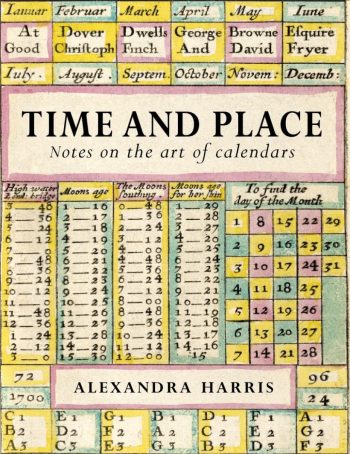 Dates are invented things. Nothing in nature decrees that today is today. But for millennia humans have divided time into portions, and given those portions names which are shared widely across cultures, creating a common agreement on the date. This convention is useful in practical ways: we can make arrangements and can communicate time elapsed or time ahead. But the calendar also makes a certain kind of truth and establishes that today is today. As calendars and almanacs developed, art from their specific time and place was naturally incorporated. In this small book showcasing the finest and most interesting art that has gone into almanacs, from the eight century onwards, Alexandra Harris brings in everything from Benedictine calendars to Old Moore’s Almanack.
Alexandra Harris is a renowned, prize-winning writer, critic, and cultural historian. Her books include Romantic Moderns, Weatherland, Modernism on Sea, and Virginia Woolf.
Amidst Pandemic
Note from the Editor
I’ve always wanted Enfilade to be an informative site for people who want to better understand the eighteenth century. Even more than that, I’ve hoped that it would also be a space that would cultivate intellectual pleasure. Amid the many pressures we all face—as academics, museum professionals, gallerists, dealers, independent scholars, writers, &c., &c.—news of exhibitions and new books, calls for papers and other opportunities were, I trusted, a welcome antidote to an inbox overflowing with countless, mind-numbing chores. With its very predictable, entirely out-dated format (it is still very much the web as things looked in 2009), the site has aimed to provide a small, incremental conception of where the field now finds itself—where you all have, as a community of scholars, taken it.
And now, of course, with the global spread of the Coronavirus, we all find ourselves displaced from our regular ways of working, living, and being. Upcoming events listed here weeks ago will not happen (I’m still stunned to have missed out on what promised to be a brilliant ASECS in St. Louis), it’s hard to know quite what to make of calls for papers (at least in the short-term), and all of those current exhibitions so carefully installed sit entirely quiet, waiting for when museums will again open their doors. I realize, in other words, that much of the regular content of Enfilade now takes on a strange hue.
With advanced apologies for anything that sounds tone-deaf or insensitive in the midst of a pandemic, I plan to keep at it, largely in hopes that the site might continue to offer useful information, as well as providing something that feels familiar when so much doesn’t. And I suspect news of forthcoming books will be more welcome than ever (please don’t be bashful in sending in news items). If you’ve not yet started following HECAA’s Instagram account, have a look: Katherine Iselin—who just recently defended her dissertation at Missouri under the direction of Michael Yonan—does a brilliant job with it. And in the coming weeks, HECAA will launch a new website exclusively for members. There is, then, a thriving community of dixhuitièmistes, even in these days of isolation.
Particularly in the weeks and months ahead, take care of yourselves and be well.
–Craig Hanson
ASECS 2020, St. Louis

Although this year’s ASECS conference was cancelled, I want to acknowledge the many interesting panels and talks that were planned for this past weekend. I was looking forward to it. And what a stunning cover for the program! –CH
2020 American Society for Eighteenth-Century Studies Conference
Hyatt Regency at the Arch, St. Louis, 19–21 March 2020
The 51st annual meeting of the American Society for Eighteenth-Century Studies was scheduled to take place at the Hyatt Regency at the Arch in St. Louis, before it was cancelled in response to the Coronavirus pandemic. HECAA was to be represented by the Anne Schroder New Scholars’ Session, chaired by Susanna Caviglia and scheduled for Friday morning. The annual business meeting was to take place Friday evening at 5:00. A selection of 29 additional panels is included here (of the 188 sessions scheduled, many others would, of course, have interested HECAA members). For the full slate of offerings, see the program.
W E D N E S D A Y , 1 8 M A R C H 2 0 2 0
Introduction to the St. Louis Art Museum Eighteenth-Century Collections
Wednesday, 1:00–5:00
Organizers: Amy TORBERT, Saint Louis Art Museum and Brittany LUBERDA, Baltimore Museum of Art
The pre-conference workshop will consist of dialogues among curators, field experts, and attendees on topics including global encounter, intermateriality, politics of empire, social histories, production processes, and curating the eighteenth century. These conversations will be held in the galleries in front of highlights such as colonial silver, European porcelain, Chinese bronzes and exportware, Peruvian textiles, and paintings including John Greenwood’s Sea Captains Carousing in Surinam (c.1752–58) and François-André Vincent’s Arria and Paetus (1784). The event will include the opportunity to study works from storage rarely on view and to visit the Print Study Room.
Participants must have pre-registered and must arrange their own transportation. The Museum is a 30-minute drive from the airport and a 20-minute drive from the hotel.
◊ ◊ ◊ ◊ ◊
T H U R S D A Y , 1 9 M A R C H 2 0 2 0
Burneys and Stuff: Material Culture and the Visual Arts (The Burney Society)
Thursday, 8:00–9:30am
Chair: Alicia KERFOOT, SUNY Brockport
1. Teri DOERKSEN, Mansfield University of Pennsylvania, ‘Soles to be saved; Soles not to be saved’: Humanizing the Material and Objectifying the Human in Edward Francis Burney’s Satirical Regency Watercolors
2. Cynthia KLEKAR-CUNNINGHAM, Western Michigan University, Objects and Absence: The Immaterial in Burney’s Fiction
3. Kristin M. DISTEL, Ohio University, ‘Tis some exquisite performer’: Juliet’s Harp and the Shame of Visibility in Burney’s The Wanderer
◊ ◊ ◊ ◊ ◊
The Particularity of Experience and the Art of Judgment
Thursday, 8:00–9:30am
Chair: Neil SACCAMANO, Cornell University
1. Vivasvan SONI, Northwestern University, Experience with(out) Judgment: Senses of Experience in Locke’s Essay, Sterne’s Tristram Shandy and Blake’s Songs
2. Johannes WANKHAMMER, Princeton University, The Senses Do Judge: A. G. Baumgarten’s Theory of Judgment and the Claims of Aesthetics
3. Karen VALIHORA, York University, Adam Smith’s Sublime and Beautiful
4. Patrick COLEMAN, UCLA, ‘Est-il bon, est-il méchant?’: Judgment, Action, and Aesthetics in Diderot
◊ ◊ ◊ ◊ ◊
Amateur or Professional? Reconsidering the Language of Artistic Status
Thursday, 8:00–9:30am
Chairs: Paris SPIES-GANS, Harvard Society of Fellows and Laurel PETERSON, The Morgan Library & Museum
1. Laura ENGEL, Duquesne University, Fashioning Fairies: Lady Diana Beauclerk’s Watercolors
2. Luke FREEMAN, University of Minnesota, Engraving Authority: Bernard Picart’s Status and the ‘Leading Hands of Europe’
3. Maura GLEESON, University of Florida, Picturing La Créatrice: Image, Imagination, and Artistic Practice in Napoleonic France
4. Cynthia ROMAN, The Lewis Walpole Library, Yale University, ‘Not Artists’: Horace Walpole’s Hyperbolic Praise of Prints by Persons of Rank and Quality
◊ ◊ ◊ ◊ ◊
Roundtable: How to Publish in an Eighteenth-Century Studies Journal
Thursday, 9:45–11:15am
Chair: Adam SCHOENE, Eighteenth-Century Studies
1. J. T. SCANLAN, The Age of Johnson
2. Eugenia ZUROSKI, Eighteenth-Century Fiction
3. Cedric D. REVERAND, Eighteenth-Century Life
4. Sean MOORE, Eighteenth-Century Studies
5. Jennifer THORN, Eighteenth-Century Studies
6. David A. BREWER, Studies in Eighteenth-Century Culture
◊ ◊ ◊ ◊ ◊
Mineralogy and Artful Metamorphosis
Thursday, 11:30–1:00
Chairs: Tara ZANARDI, Hunter College, CUNY and Christina LINDEMAN, University of South Alabama
1. Elisabeth C. RIVARD, Independent Scholar, The Handheld ‘Wunderkammer’: Mineralogical Snuffboxes in the Enlightenment
2. Jennifer GERMANN, Ithaca College, Peaches and Pearls: Materializing Metaphors of Race in Eighteenth-Century British Art
3. Eleanore NEUMANN, University of Virginia, Drifted Rocks: Gender and Geologic Time in the Early-Nineteenth-Century Landscapes of John Linnell, J.M.W. Turner, and Maria Graham
◊ ◊ ◊ ◊ ◊
Rethinking Turquerie: New Definitions and Approaches
Thursday, 11:30–1:00
Chair: Ashley BRUCKBAUER, Independent Scholar
1. Jonathan HADDAD, University of Georgia, Cooking the Books: The Marquis de Caumont’s Turkish Cauldrons and the Ottoman Incunabula
2. Katherine ARPEN, Auburn University, The ‘Hammam’ as a Model for Public Bathing in Late Eighteenth-Century France
◊ ◊ ◊ ◊ ◊
From ‘Tabula Rasa’ to ‘Terra Incognita’: Landscape and Identity in the Enlightenment
Thursday, 11:30–1:00
Chair: Shirley TUNG, Kansas State University
1. Michael BROWN, University of Aberdeen, Locating Britain: The English Geographies of Daniel Defoe
2. John DAVENPORT, Missouri Southern State University, Topographical Dialogues and Competing Claims to Selfhood in Eighteenth-Century Travel Writing
3. Kasie ALT, Georgia Southern University, Negotiating the Self through Landscape Design and Representation: Thomas Anson’s Estate at Shugborough
4. Julia SIENKEWICZ, Roanoke College, Landscape and Alterity: Encounters with Virginia and South Africa
◊ ◊ ◊ ◊ ◊
Roundtable: Surveying Social Media and Eighteenth-Century Studies
Thursday, 11:30–1:00
Chair: Crystal LAKE, Wright State University
1. Jenny DAVIDSON, Columbia University
2. Aaron HANLON, Colby College
3. Marguerite HAPPE, UCLA
4. Sarah Tindal KAREEM, UCLA and The Rambling
◊ ◊ ◊ ◊ ◊
‘Too political, too big, no good’: Picturing Politics
Thursday, 2:30–4:00
Chair: Jessica L. FRIPP, Texas Christian University
1. Alexandra CARDON, The Graduate Center, CUNY, Engaging the Public: The Rejection of Mythology in Royal Almanac Prints 1695–1715
2. J. Patrick MULLINS, Marquette University, Thomas Hollis’s ‘Liberty Prints’ and the Transatlantic Cult of Tyrannicide
3. Thomas BUSCIGLIO-RITTER, University of Delaware, Denis Volozan’s Portrait of George Washington in an Atlantic Context
4. Marina KLIGER, Institute of Fine Arts, New York University, From ‘Great Men’ to ‘Women’s Influence’: Retelling the Story of Louis Ducis’s Tasso and Eleonora d’Este from the Empire to the Restoration
◊ ◊ ◊ ◊ ◊
Roundtable: Engaging the Ottoman Empire
Chair: Ashley COHEN, University of South California
Thursday, Thursday, 4:15–5:45
1. Douglas FORDHAM, University of Virginia
2. Lynn FESTA, Rutgers University
3. Katherine CALVIN, University of North Carolina, Chapel Hill
4. Angelina DEL BALZO, Bilkent University
5. Humberto GARCIA, University of California, Merced
6. Charlotte SUSSMAN, Duke University
7. Gerald MACLEAN, University of Exeter
Respondent: Daniel O’QUINN, University of Guelph
◊ ◊ ◊ ◊ ◊
Colonial Matter in the Eighteenth-Century World
Thursday, Thursday, 4:15–5:45
Chairs: Danielle EZOR, Southern Methodist University and Kaitlin GRIMES, University of Missouri-Columbia
1. Amelia RAUSER, Franklin & Marshall College, Madras Cloth: Currency, Costume, and Enslavement
2. Kelly FLEMING, University of Virginia, Empire, Satire, and the Regency Cap in The Adventures of an Ostrich Feather of Quality (1812)
3. Yiyun HUANG, University of Tennessee, Knoxville, ‘Nothing but large potions of tea could extinguish it’: Chinese Knowledge and Discourse of Tea in Colonial America
◊ ◊ ◊ ◊ ◊
The Enlightened Mind: Education in the Long Eighteenth Century
Thursday, Thursday, 4:15–5:45
Chairs: Karissa BUSHMAN, Quinnipiac University and Amanda STRASIK, Eastern Kentucky University
1. Franny BROCK, University of North Carolina, Chapel Hill, Madame de Genlis’ ‘New Method’ and Teaching Drawing to Children in Eighteenth-Century France
2. Dorothy JOHNSON, University of Iowa, Bodies of Knowledge? Teaching Anatomy to Artists in Enlightenment France
3. Madeline SUTHERLAND-MEIER, University of Texas, Austin, Raising and Educating Children in Eighteenth-Century Spain: Padre Sarmiento’s Discurso sobre el método que debia guardarse en la primera educación de la juventud
4. Brigitte WELTMAN-ARON, University of Florida, The Pitfalls of Education: Madame de Genlis on Spoiled Children
◊ ◊ ◊ ◊ ◊
The Visual Gothic in the Long Eighteenth Century
Thursday, Thursday, 4:15–5:45
Chair: Kristin O’ROURKE, Dartmouth College
1. Aurélien DAVRIUS, Paris-Malaquais ENSA, Jacques-François Blondel, an Admirer of French Religious Architecture
2. Katherine HILLIARD, Princeton University, Behind the Veil: Gothic Secrecy and Epistemology in The Mysteries of Udolpho
3. Elizabeth HORNBECK, University of Missouri, Vetusta Monumenta and the Eighteenth-Century Remediation of Gothic Architecture
◊ ◊ ◊ ◊ ◊
F R I D A Y , 2 0 M A R C H 2 0 2 0
Anne Schroder New Scholars Session (HECAA)
Friday, 8:00–9:30am
Chair: Susanna CAVIGLIA, Duke University
1. Isabel BALDRICH, School of Art and Art History, University of Iowa, Black Skin, White Hands: Ambivalence in Girodet’s Portrait of Belley
2. Alicia CATICHA, University of Virginia, Sculpting Whiteness: Marble, Porcelain, and Sugar in Eighteenth-Century Paris
3. Philippe HALBERT, Yale University, Surface Encounters, Mirror Images, and Creole Body Politics in French Louisiana
4. Xena FITZGERALD, Southern Methodist University, Between Frame and Stage: Viewing a Historical Marriage in Eighteenth-Century Peru
◊ ◊ ◊ ◊ ◊
The Rise of the House Museum: Domestic Curatorial Practices
Friday, 9:45–11:15am
Chair: Teri FICKLING, University of Texas, Austin
1. Jane CELESTE, Rice University, Farnley Hall and Fairfaxiana: Collecting History, Displaying Politics
2. Kirsten HALL, University of Texas, Austin, Specters and Spectators: Charlotte Addison and the Making of an Archive at Bilton Hall
3. Fiona BRIDEOAKE, American University, Curation and Creation at A la Ronde
4. Lisa BRUNE, Washington University in St. Louis, ‘So artfully planted’: Women’s Utopian Curation in Sarah Scott’s Millenium Hall
◊ ◊ ◊ ◊ ◊
Visualizing Empire in the French Eighteenth Century
Friday, 9:45–11:15am
Chair: Philippe HALBERT, Yale University
1. Izabel GASS, Yale University, The Classical Body as ‘Dispositif’ in the French New World
2. Harry ADAMS, Tsinghua University, Kader Attia’s Cosmopolitan Enlightenment
3. Thomas BEACHDEL, Hostos Community College, The Sublime Future in Ruins
◊ ◊ ◊ ◊ ◊
Roundtable: The Global Eighteenth Century (Western Society for Eighteenth-Century Studies)
Friday, 9:45–11:15am
Chair: Sören HAMMERSCHMIDT, GateWay Community College
1. Samara CAHILL, Blinn College, The Propagation of Infidels
2. Norbert SCHÜRER, California State University, Long Beach, Found in Translation
3. James MULHOLLAND, North Carolina State University, Middle Reading
4. David MAZELLA, University of Houston, Wilkes, Whitefield, Woolman: The Global Attention Economy of the Eighteenth Century
5. Emily CASEY, Saint Mary’s College of Maryland, Decolonizing Colonial American Art Histories
6. Rebekah MITSEIN, Boston College, The Matter of Akan Metaphysics in Eighteenth-Century Thought
Respondent: Stephanie DEGOOYER, Willamette University
◊ ◊ ◊ ◊ ◊
Do-Overs: Repetition and Revision in the Long Eighteenth Century
Friday, 11:30–12:45
Chair: Elizabeth MANSFIELD, Pennsylvania State University
1. Servanne WOODWARD, University of Western Ontario, Transitions from Rococo to Neo-Classical Illustration with Moreau le jeune
2. Amy FREUND, Southern Methodist University, Jean-Baptiste Oudry and Canine Repetition
3. Daniella BERMAN, Institute of Fine Arts, New York University, ‘d’après David’: Variations on Portraiture
4. Wendy BELLION, University of Delaware, The Eighteenth Brumaire of King George III
◊ ◊ ◊ ◊ ◊
Presidential Session: Innovating the Next Fifty Years of ASECS
Friday, 4:30–6:00
Chair: Jeffrey RAVEL, MIT
1. Lisa FREEMAN, University of Illinois at Chicago, Trends in the Academic Job Market: What Can ASECS Do?
2. Emily FRIEDMAN, Auburn University, Digital Humanities and the Future of ASECS
3. Melissa J. GANZ, Marquette University and Peter ERICKSON, Colorado State University, Innovating ASECS: New Conference Formats
4. April FULLER, University of Maryland and Dylan LEWIS, University of Maryland, Humanities Beyond the Academy
◊ ◊ ◊ ◊ ◊
Workshop: Bringing Historical Maps into GIS
Friday, 4:30–6:00
Chairs: Erica HAYES, Villanova University and Kacie WILLS, Illinois College
This workshop will provide participants with the technical skills to align geographic coordinates to a digitized historical map in the eighteenth-century in order to create a georeferenced historical map. Participants will learn how to use simple tools like Map Warper, an open source image georeferencer tool, in order to overlay the digitized historical map on top of a GIS modern basemap for compar- ison and use in an interactive web mapping application. This workshop is ideal for scholars working with historical maps or interested in learning digital humanities GIS skills. Workshop participants need to bring their own laptops. No prior GIS or mapping experience is required. Contact the ASECS Business Office if you are interested in signing up for this workshop. Walk-ins are welcome if space permits but are encouraged to arrive early if they wish to participate in the hands-on activities of the workshop. Interested observers are also welcome if space permits.
◊ ◊ ◊ ◊ ◊
Roundtable: Scholarly Tourism: Traveling to Research the Eighteenth Century
Friday, 4:30–6:00
Chair: Ula Lukszo KLEIN, Kennesaw State University
1. Claudia SCHUMANN, Texas Tech University, In the Shadows — Researching Underrepresented Women Writers
2. Meg KOBZA, Newcastle University, Places of Privilege: Price and Practice in Private Archives
3. Caroline GONDA, University of Cambridge, Strawberry Hill and Shibden Hall: Anne Damer and Anne Lister
4. Fiona RITCHIE, McGill University, Mentoring Student Researchers in the Archives
5. Laura ENGEL, Duquesne University, The Archival Tourist
6. Leigh-Michil GEORGE, UCLA, ‘The Corruption of Mrs. Woodward’: A Story of Love and Betrayal, Lost and Found in the Kent Archives
7. Yvonne FUENTES, University of West Georgia, Eighteenth-Century Gossip and News: The Archives of Spanish Parish Churches, Cathedrals, and Basilicas
◊ ◊ ◊ ◊ ◊
Roundtable: Teaching Eighteenth-Century Health Humanities
Friday, 4:30–6:00
Chair: Rebecca MESSBARGER, University of Washington in St. Louis
1. Kate GUSTAFSON, Indiana University Northwest, Teaching Empathy Practices through Eighteenth-Century Text
2. Brittany PLADEK, Marquette University, Teaching Eighteenth-Century Medical Ethics in the Literature Classroom
3. Abigail ZITIN, Rutgers University, New Brunswick, Topics in Eighteenth-Century Literature and Culture: Fiction/Addiction
4. Andrew GRACIANO, University of South Carolina, Art, Anatomy, and Medicine, 1700–Present
5. C. C. WHARRAM, Eastern Illinois University, Introduction to the Health & Medical Humanities: Contagion
◊ ◊ ◊ ◊ ◊
Built Form
Friday, 4:30–6:00
Chair: Janet R. WHITE, University of Nevada, Las Vegas
1. Luis J. GORDO PELAEZ, California State University, Grain Architecture in Bourbon New Spain
2. Paul HOLMQUIST, Louisiana State University, Une autre nature: Aristotelian Strains in Ledoux’s Theory of Architecture as Legislation
3. Dylan Wayne SPIVEY, University of Virginia, Building from a Book: James Gibb’s Book of Architecture and the Commodification of Architectural Style
4. Miguel VALERIO, Washington University, Architecture of Devotions: The Churches Afro-Brazilian Religious Brotherhoods Built in the Eighteenth Century
◊ ◊ ◊ ◊ ◊
Experiencing the Past: Bringing Collections to Life through Experiment and Reconstruction
Friday, 4:30–6:00
Chair: Al COPPOLA, John Jay College, CUNY
1. Emily BECK, Wangensteen Historical Library of Biology and Medicine, Bentley GILLMAN and Jon KRIEDLER, Tattersall Distilling, Nicole LABOUFF, Minneapolis Institute of Art, Alcohol’s Empire: Distilled Spirits in the 1700s Atlantic World
2. Christine GRIFFITHS, Bard Graduate Center, Distilling Gardens and (Re)Materializing Eighteenth-Century Perfumes
3. Anna CHEN and Marguerite HAPPE, William Andrews Clark Memorial Library, UCLA, ‘Bad Taste’: A Pedagogy of Public-Facing Recipe Revival
Note: Room capacity is limited, so interested attendees may wish to arrive early. Attendees will be invited to sample scents and beverages but will not be involuntarily exposed to potential irritants/allergens.
◊ ◊ ◊ ◊ ◊
S A T U R D A Y , 2 1 M A R C H 2 0 2 0
Art Professions
Saturday, 8:00–9:30am
Chair: Carole PAUL, University of California, Santa Barbara
1. Heidi A. STROBEL, University of Evansville, Terminology and its Limitations
2. Anne NELLIS RICHTER, Independent Scholar, ‘Yr Obedient, Grateful, and Dutiful Servant’: Hierarchies of Work in a Private Art Gallery
3. Rachel HARMEYER, Rice University, Emulating Angelica: Decorative and Amateur Art after Kauffman
4. Kristin O’ROURKE, Dartmouth College, From Connoisseur to Professional: The Metamorphosis of Art Criticism
◊ ◊ ◊ ◊ ◊
Collecting, Antiquities, and Eighteenth-Century Art
Saturday, 9:45–11:15am
Chairs: Katherine A. P. ISELIN, University of Missouri-Columbia and Lauren DISALVO, Dixie State University
1. Nick STAGLIANO, Cooper Hewitt/Parsons School of Design, The New School, Expressions of Antiquity in Eighteenth-Century European Porcelain
2. Freya GOWRLEY, University of Derby, Classical Specimens and Fragmentary Histories: The Specimen Table as Part and Whole
3. Callum REID, University of Melbourne, Antiquities in Peter Leopold’s Uffizi Gallery
4. Josh HAINY, Truman State University, For Their Mutual Benefit: John Flaxman’s Recreation of the Belvedere Torso for Thomas Hope
◊ ◊ ◊ ◊ ◊
Herbarium: Illustration, Classification, Exchange
Saturday, 9:45–11:15am
Chair: Sarah BENHARRECH, University of Maryland
1. Maura FLANNERY, St. John’s University, New York, Erasures and Additions: The Herbarium as a Changing Document
2. J. Cabelle AHN, Harvard University, ‘Le cadavre desséché de plantes’: Herbaria and the Formation of the Muséum national d’Histoire naturelle in Paris
3. Nicole LABOUFF, Minneapolis Institute of Art, Fair-Sexing the Herbarium: Making Women Horticulturalists Visible in Late Eighteenth-Century Britain
4. Katie SAGAL, Cornell College, Naming is Not Knowing: Charlotte Smith’s ‘Flora’ and Vegetal Proliferation
◊ ◊ ◊ ◊ ◊
The 37th James L. Clifford Memorial Lecture
Saturday, 11:30–12:30
Anne LAFONT, École des hautes études en sciences sociales de Paris (EHESS), Winckelmann Congo: Blackness in the Age of White Marble
Presiding: Melissa HYDE, University of Florida
This lecture will address the rise of African Art History— in the broadest sense— during the long eighteenth-century. During this period, notions of African art and its history were entangled with the idea of diasporic Africa or Blackness, as conceptualized by a diverse ensemble of European textual sources, most of them not concerned with art. The line of argument to be pursued here is that many of these early modern texts, ought, nonetheless, to be understood as a historical discourse on art— whether they describe African geography, natural history or commerce; narrate African history or catalogue its objects in Cabinets de Curiosités. Of course, these narratives, which are more or less connected with African material culture and ritual performances, eventually would be articulated in art theoretical publications properly speaking, as eighteenth-century authors such as abbé du Bos or Winckelmann began to include Africa in their ambition to write a comprehensive, comparative art history grounded on a climatic explanation of style. This approach to art history understood artistic style, form and content as products of the natural climate and atmosphere in which art was created. Recent scholarship has demonstrated the centrality of Whiteness to archeology’s emergence in the mid-eighteenth century. Adding to our understanding of the racial implications of whiteness and color in art history, this lecture will show, how, at the very same historical moment, Blackness was being constructed, both as a counterpart to Whiteness but also, more generally as a means of inscribing African rites and objects into the domain of European Fine Arts.
◊ ◊ ◊ ◊ ◊
Roundtable: Global Enlightenment, Digital Humanities, and Collaborative Scholarship: Reflections on The Eighteenth Centuries: Global Networks of Enlightenment (2018), Edited by David Gies and Cynthia Wall
Saturday, 2:00–3:30
Chair: Elizabeth Franklin LEWIS, University of Mary Washington
1. Jeanne BRITTON, University of South Carolina, Using Global Networks of Enlightenment: Giovanni Piranesi and the Digital Eighteenth Centuries
2. Valentina TIKOFF, DePaul University, Using Global Networks of Enlightenment: How Interdisciplinary Perspectives, Multiple Geographies, and Linguistic Perspectives Help Us Navigate and Teach the Age of Enlightenment
3. Carol GUARNIERI, University of Virginia, Creating a Digital Companion to Global Networks of Enlightenment: The Digital Eighteenth Centuries on mapscholar.org
4. Cynthia WALL, University of Virginia, Editing Global Networks of Enlightenment
5. David GIES, University of Virginia, Editing Global Networks of Enlightenment
◊ ◊ ◊ ◊ ◊
Bio-Ethics
Saturday, 3:45–5:15
Chair: Rachel CARNELL, Cleveland State University
1. Alex SOLOMON, Ashoka University, Springs, Effluvia, and Action at a Distance
2. Andrew GRACIANO, University of South Carolina, Bioethics (and the Lack Thereof) in Art and Anatomy
3. Erin DREW, University of Mississippi, Usufruct: Towards an Eighteenth-Century Bio-Ethic
◊ ◊ ◊ ◊ ◊
The Triumph of Love
A comedy of intrigue, gender confusion, and love by Pierre Marivaux, translated by James Magruder
Friday and Saturday, 20 and 21 March at 8pm; Sunday, 22 March at 2pm.
.Zack Theatre, 3224 Locust Street, St. Louis
Tickets available at the door; $20
A co-production of Washington University in St. Louis and ASECS
Exhibition | Power Mode: The Force of Fashion
Now installed at the Fashion Institute of Technology:
Power Mode: The Force of Fashion
The Museum at FIT, New York, 10 December 2019 — 9 May 2020
Curated by Emma McClendon
 Today, we see a multitude of sartorial power symbols, from ‘power suits’ to ‘power heels’. But what makes a garment ‘powerful’? According to sociologist and political theorist Steven Lukes: “We speak and write about power, in innumerable situations, and we usually know, or think we know, perfectly well what we mean … And yet, among those who have reflected on the matter, there is no agreement about how to define it, how to conceive it, how to study it, and, if it can be measured, how to measure it.”
If we think of power in terms of kinetic force (for example, electrical power or a person’s physical power over another), clearly an inanimate item of clothing does not have actual power. The force of fashion is symbolic. It is social. It lies in the sphere of interpersonal relations and cultural dynamics. There is no single, universally accepted definition of power. Power means different things to different people at different times. As such, its connection to fashion is multifaceted, and a multifaceted approach is necessary for considering the role fashion plays in power dynamics both historically and today.
The exhibition is organized into five thematic sections, each devoted to a particular type of sartorial ‘power’. In each section, men’s and women’s clothing are considered side by side, and pieces from as early as the eighteenth century are juxtaposed with looks from contemporary collections.
The exhibition opens with a display of military and military-inspired ensembles, including a U.S. Army lieutenant colonel’s ‘dress blue’ uniform, a World War II–era ‘Ike’ jacket, and looks from Yves Saint Laurent, Burberry, and Ralph Lauren. Modern military uniforms combine tailoring with an elaborate code of patches, braiding, stripes, colors, and metalwork that makes the soldier a walking extension of the state’s power. In fashion, a company logo replaces the state’s seal, but uniform-inspired silhouettes, colors, textiles, and buttons become visual shorthand for the power, strength, and authority of the military. It is the power of association.
The next section focuses on different modes of status dressing that have emerged over the last 250 years, from ermine capes and luxurious brocade fabrics to contemporary “It” bags and logo-covered products. Aspiration, wealth, and Thorstein Veblen’s theory of “conspicuous consumption” are key to understanding the role status dressing plays in modern society. An 18th-century robe à la française demonstrates the importance of ornate, expensive textiles to courtly dress, while a Balenciaga puffer coat shows the way brand names have become crucial decorative elements in luxury fashion today.
From status dressing, the exhibition moves to consider the history of the suit. The sharply tailored suit is perhaps the most conventional example of ‘power dressing’. Indeed, the term power dressing was often used to describe the big-shouldered suits worn by upwardly mobile business men and women during the 1980s. However, the history of the suit is more nuanced. Anne Hollander points out, “Heads of state wear suits … and men accused of rape and murder wear them in court to help their chances of acquittal.” In court rooms and office spaces, the suit isn’t just a symbol of authority. It is also a sign of blending in—submitting to established norms and dress codes.
The fourth section considers the role of resistance dressing. Blue jeans, printed T-shirts, and black leather jackets have become some of the most common symbols of resistance in clothing. They signal a certain type of power that is subversive of established authority. It is the power of protest and rebellion. There is a tension between resistance clothing and ‘fashion’, with the later often being dismissed as surface-level commodification. But the relationship is not so simple—fashion can also be a vehicle for protest as seen in the recent work of Kerby Jean-Raymond for his label Pyer Moss.
Finally, the fifth section analyzes objects that are culturally coded as ‘sexy’. Corsets, leather, lingerie, and high-heeled boots are but a few examples. The power dynamics of these garments are inherently complex. How a garment is interpreted can fluctuate between dominance and subjugation. As fashion critic Holly Brubach once said of Versace’s famous 1992 bondage collection, it “riles women who think this is exploitative and appeals to women who think of his dominatrix look as a great Amazonian statement. It could go either way.”
Power Mode is a curatorial experiment. It aims to combine theory with history and object analysis in order to better understand the complex nature of power in fashion as well as the ways fashion can be key to a broader understanding of power dynamics in culture. The exhibition is organized by Emma McClendon, associate curator of costume.
Emma McClendon, ed., Power Mode: The Force of Fashion (Milan: Skira, 2019), 128 pages, ISBN: 978-8857239873, $45 / €39.
 A more in-depth discussion of the themes represented in the exhibition is articulated in the lavishly illustrated accompanying book, also titled Power Mode: The Force of Fashion, edited by exhibition curator Emma McClendon and published by Skira. The book delves deeper into theory and history to investigate how certain garments have come to be culturally associated with power, as well as how their meanings have evolved over time. It also examines how fashion designers have interpreted these stylistic archetypes—both to convey and to subvert power. Chapter texts by McClendon are joined by object-based essays from renowned fashion scholars Valerie Steele, Christopher Breward, Jennifer Craik, and Peter McNeil, as well as Pulitzer Prize–winning journalist Robin Givhan. The book also includes an essay by Kimberly M. Jenkins on the intersection of race, fashion, and power. This collection of texts will offer readers a variety of perspectives to help form a theoretical framework for considering the power dynamics inherent in fashion objects.
New Book | Artistische Wanderer
From Deutscher Kunstverlag (with thanks to the author for the English translations). . .
Gerrit Walczak, Artistische Wanderer: Die Künstler(e)migranten der Französischen Revolution (Berlin/Munich: Deutscher Kunstverlag, 2019), 448 pages, ISBN: 978-3422981201, €48.
 Dozens of painters were part of the emigration occasioned by the outbreak of the French Revolution in 1789. Whether French or foreigners established in France, these artists were driven out of the country by the rapid demise of the art market in the wake of political instability. Yet the dynamics of radicalization and war soon eroded distinction between economic migration and political exile.
Whether officially designated as émigrés or not, painters such as Élisabeth Vigée-Le Brun, Jean-Laurent Mosnier, Henri-Pierre Danloux, François-Xavier Fabre, and Louis Gauffier practiced their profession in Rome and Florence, London, Hamburg and Saint Petersburg. Whilst some of them established themselves in their host countries until the end of the Revolution, others successively transferred between the European metropoles. This first comprehensive study of the Revolution’s “artistic wanderers”—a term coined in Hamburg in 1799—traces their transnational itineraries and investigates productions shaped by transfer, acculturation, and innovation.
Gerrit Walczak is habilitated adjunct professor (Privatdozent) of art history at the Technical University Berlin, and has previously taught at the universities of Bochum, Köln, and Greifswald. He presently serves as interim editor of the Zeitschrift für Kunstgeschichte. His research focuses on the transnational migration of artists, on 18th-century art, its academies, and the art market. He is the author of Bürgerkünstler: Künstler, Staat und Öffentlichkeit im Paris der Aufklärung und Revolution (Deutscher Kunstverlag 2015).
C O N T E N T S
Here translated from the German
1 Introduction: Revolution and Mobility
Migration, Emigration, and Exile
Itinerant Artists and their Trajectories
Art Markets and Exile Art
2 Paris: The Initial Conditions of Artistic Emigration
The Fiction of Escape
Economy and Violence
Anti-Emigration Laws and Repression
3 Rome: The French Academy and the Revolution
Rome and Paris until the Fall of the Monarchy
Commissions and Appropriations
The End of the French Academy and its Fallout
4 Florence: Exiles, Tourists, and Occupiers
History Paintings for Foreigners
Tuscan Landscapes
French Grand Tour-Portraiture
5 London: Rivalries and Confrontations
Genius loci
Acculturation and its Limits
Political Stances
6 Hamburg: A Place of Passage
The Lure of Boom Economy
Tradesmen and other Clients
Reception and Receptivity
7 Saint Petersburg: Integration / Extraction
Providers to the Imperial Court
Modes of Transfer
Flux and Reflux
8 Coda: Re-migrations
The Salon of 1802
Humiliations
Souvenirs
Acknowledgements
Bibliography
Index
New Book | Luxe intime
From CTHS, with additional information available here:
Anne Perrin Khelissa, Luxe intime: Essai sur notre lien aux objets précieux (Aubervilliers: Comité des travaux historiques et scientifiques, 2020), 125 pages, ISBN: 978-2735509126, 14€.
 Notre rapport aux objets intimes (meubles, boîtes, tableaux, luminaires, services de table, vêtements, bijoux…) est historiquement daté. Sans une certaine conscience de soi, nous n’aurions pu leur accorder autant de sens : leur demander de satisfaire des besoins et des désirs, tout en les inscrivant dans des chaînes relationnelles et symboliques multiples. Ce changement advient au XVIIIe siècle et se perçoit actuellement encore dans nos sociétés de consommation. À l’heure où la planète croule sous les déchets et où l’objet du quotidien par excellence devient le téléphone portable, il semble important de s’interroger sur les fondements de notre être aux choses. Comment parler des objets intimes et du lien empathique que l’on tisse avec eux ? Quel langage et quelle sensibilité sont-ils les plus à même d’exprimer leur part technique et poétique, leur empreinte historique et leur aura transgénérationnelle ? Comment penser la culture matérielle occidentale au regard des contacts qu’elle a entretenu avec les autres cultures étrangères ? En puisant dans l’historiographie féconde de ce domaine, profondément renouvelée ces dix dernières années avec les apports des Cultural Studies et de la Global History, l’auteur esquisse une voie de rencontre où s’associent les discours, entre approche historique, sociale, littéraire, anthropologique et muséale.
Anne Perrin Khelissa est historienne de l’art, maître de conférences à l’université Toulouse – Jean-Jaurès et membre du Laboratoire de recherche FRAMESPA (UMR 5136 CNRS). Spécialiste du xviiie siècle, elle est l’auteur d’un ouvrage sur l’habitat aristocratique génois, Gênes au xviiie siècle : le décor d’un palais (CTHS-INHA, 2013), ainsi que de plusieurs publications sur les arts au Siècle des lumières.
T A B L E D E S M A T I È R E S
Introduction
L’objet domestique
• Culture matérielle
• Une approche par les sens
• Espace privé, espace public
• Agencer les intérieurs
• Circulations des objets
L’objet en société
• Du signe au sens
• Objets de distinction sociale
• Le luxe au service du politique
• Le présent diplomatique
• Appropriation et butin
Fabriquer l’objet
• Produire
• Savoir et savoir-faire
• Les arts et métiers
• Réminiscences
L’objet de notre imaginaire
• Utilité et fantaisie
• Histoire de l’art
• Prêter une âme aux objets
• Langage
Conclusion
Remerciements
Bibliographie sélective










 Enfilade
leave a comment