Call for Papers | ASECS 2020, St. Louis
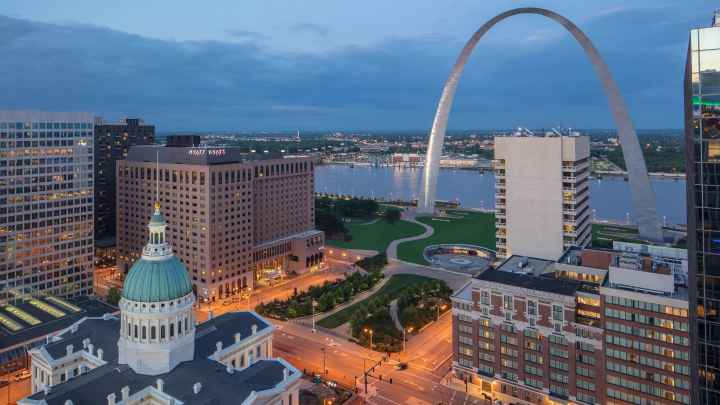
Just a reminder that that the due date for ASECS 2020 proposals is Sunday (15 September). Send them in!
2020 American Society for Eighteenth-Century Studies Conference
Hyatt Regency at the Arch, St. Louis, 19–21 March 2020
Proposals due by 15 September 2019
Proposals for papers to be presented at the 51st annual meeting of the American Society for Eighteenth-Century Studies, in St. Louis, are now being accepted. Along with our annual business meeting, HECAA will be represented with the Anne Schroder New Scholars’ Session, chaired by Susanna Caviglia. A selection of additional sessions that might be relevant for HECAA members is available here»
New Book | Painting and Calligraphy from the Islamic World
From PHP:
Will Kwiatkowski, Legacy of the Masters: Painting and Calligraphy from the Islamic World (London: Paul Holberton Publishing, 2019), 224 pages, ISBN: 978-1911300731, £50.
 Lavishly illustrated, this exquisite and scholarly book presents a collection of over sixty paintings, drawings, and calligraphic specimens mostly made in the Safavid, Uzbek, Ottoman and Mughal Empires in the period from the 16th through the early 19th century for inclusion in albums (muraqqa). The compilation of these albums, involving the collection and ordering of the works to be included as well as the design and execution of decorative borders, was an art form in itself and amounted to a broader cultural phenomenon that has increasingly become the focus of scholarly attention.
This was the age of the master artist, whose work was eagerly sought by collectors, imitated by admirers and forgers, taken as loot by invaders, and exchanged as gifts that had value across political borders. The international currency of a master artist’s work is particularly apparent in the case of the calligrapher Mir ‘Ali of Herat (d. 1544), whose calligraphies were almost obsessively sought out by the Mughal rulers of India and provided a model for subsequent generations of calligraphers in India and Iran.
In Iran, Shah ‘Abbas’ new capital of Isfahan was the breeding ground for a generation of artists specialized in single-page calligraphic compositions, paintings, and drawings, often working in distinctive styles. These included calligraphers such as Mir ‘Imad al-Hasani and ‘Ali Riza ‘Abbasi, and painters like Riza ‘Abbasi, Muhammad Qasim and, later, Mu’in Musavvir.
The processes of collection and compilation were complex, as albums were gifted and reassembled to suit the tastes and outlook of new owners. An eloquent example of this ongoing evolution is the famous St. Petersburg Album. Compiled and given decorative borders in Iran in the mid-18th century, the album contains a number of Mughal and Deccani paintings and drawings presumed to have been taken to Iran as plunder by Nadir Shah following the invasion of India in 1739. The end of this tradition is marked in the publication by a number of works from Mughal-style albums of calligraphy and painting acquired by officers and administrators of the British East India Company such as Warren Hastings and William Fraser.
Call for Essays | Insect Studies in the Long Eighteenth Century
From the CFP:
Critical Insect Studies in the Long Eighteenth Century, 1660–1830
Edited by Beth Fowkes Tobin and Beth Kowaleski Wallace
Abstracts due by 1 December 2019; final essays will be due 1 August 2020
We are seeking abstracts for an interdisciplinary collection of critical essays exploring insects in the long eighteenth century.
First, we are especially interested in work that explores the place of insects in eighteenth-century life: while we acknowledge the destructive capacity of insects, we also aim to consider how insect activity may have been crucial to human purposes, perhaps in invisible or unrecognized ways. Second, if indeed insects have always been useful to human thinking, how were they deployed in various forms of eighteenth-century literature and philosophy? Third, how were insects represented visually and to what degree were modes of picturing insects entangled with insects as collectable objects, specimens, and commodities? Fourth, our collection will engage with the history of science, acknowledging and exploring important (if at times problematic) processes of insect classification and taxonomy that occurred largely during the second half of the eighteenth century.
Our ultimate goal is to rethink human kinship with tiny terrestrial creatures, both in the eighteenth-century and now. Thus, we especially welcome work that showcases new materialist approaches, as well as other methodologies rooted in the environmental humanities. We seek in the process to find a way to knit together humanistic and scientific perception into a unified understanding of the agentic capacity of all materiality.
We especially welcome essays that address non-European texts and insect/human entanglements as well as essays from a range of disciplines, including art history, literary studies, the history of science, environmental history, and museum studies. Contact us if you have any questions about the collection at: btobin@uga.edu and kowalesk@bc.edu.
Please submit proposals (no more than 500 words) and a brief cv by December 1, 2019. Final essays should run about 6,000–8,000 words in length and are due by August 1, 2020.
Exhibition | America’s First Veterans
From The American Revolution Institute:
America’s First Veterans
The American Revolution Institute of the Society of the Cincinnati, Washington, D.C., 8 November 2019 — 5 April 2020

John Neagle, A Pensioner of the Revolution, 1830 (Washington, DC: The American Revolution Institute of the Society of the Cincinnati, museum purchase, 2017).
The tens of thousands of men who fought for American independence suffered extraordinary privations in the war and risked their lives and livelihoods to help establish the United States. They had gone unpaid for much of the war, and many of them returned home with little more than the honor of having served the nation and the satisfaction that comes from duty faithfully performed. The new republic, which struggled to pay its wartime debts, thanked them for their service but offered them scant compensation or reward.
America’s First Veterans brings together paintings, artifacts, prints and documents to address the post-war experiences of the men who won the Revolutionary War—not the famous generals and leading officers whose names appear in histories of the war, but rather the junior officers and enlisted men whose stories are less often told. The exhibition focuses on their return to civilian life, their reception by a country torn and bankrupted by eight years of war, and the nation’s gradual realization of its vast debt to the men who won our independence. A centerpiece of the show is John Neagle’s arresting portrait of a pensioner of the Revolution, painted in 1830 in the midst of the fight for comprehensive federal pensions for the remaining Revolutionary War veterans.
Conference | The American Revolution

From the Museum of the American Revolution:
2019 International Conference on the American Revolution
Museum of the American Revolution, Philadelphia, 3–5 October 2019
The Museum of the American Revolution, the Pritzker Military Museum & Library, and the Richard C. von Hess Foundation are pleased to present the 2019 International Conference on the American Revolution. This event will bring noted historians, writers, and curators from Ireland, Scotland, England, and the United States together to explore military, political, social, and artistic themes from the Age of Revolutions.
The conference will coincide with the opening of Cost of Revolution: The Life and Death of an Irish Soldier, the Museum’s first international loan exhibition. With more than one hundred works of art, historical objects, manuscripts, and maps from lenders across the globe, Cost of Revolution will explore the Age of Revolutions in America and Ireland through the life story of an Irish-born artist and officer in the British Army, Richard Mansergh St. George (1750s–1798).
Program highlights include an opening keynote by Dr. Eliga Gould, speaking on “Making Peace in Britain, Ireland, and America: 1778 to 1783,” and a closing keynote by Martin Mansergh, noted historian and former Irish diplomat and Fianna Fáil politician who played a key role in the Northern Ireland peace process. In addition to two days of engaging talks, panel discussions, and tours of Cost of Revolution, conference guests may register for an optional one-day guided bus trip to follow the footsteps of Richard St. George through the Philadelphia Campaign of 1777.
The full conference packet is available here»
Note (added 29 September 2019) — The posting has been updated to reflect the change in keynote speakers; originally Linda Colley was scheduled to speak but was forced to cancel due to unforeseen circumstances. The museum hopes to host her in the future.
The Burlington Magazine, August 2019
The August issue of The Burlington was especially rich for the eighteenth century; apologies for not posting it much sooner, but it’s worth noting. –CH
The Burlington Magazine 161 (August 2019)
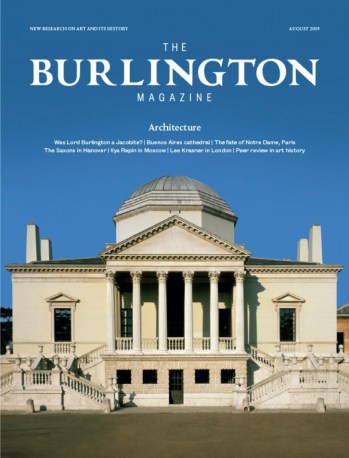 E D I T O R I A L
• “At the Yale Center for British Art,” p. 619. At the end of June Amy Meyers stepped down as Director of the Yale Center for British Art, New Haven, after seventeen years.
A R T I C L E S
• Sam Rose, “Peer Review in Art History,” pp. 621–25. A more recent development than is often realized, and historically imposed in a variety of ways, peer review is a fundamental but rarely discussed aspect of academic life. What impact does it have on publishing in art history?
• Alexander Echlin, “Was Lord Burlington a Jacobite?,” pp. 626–37. A thesis first put forward thirty years ago that Lord Burlington was a Jacobite, who used buildings and gardens to express his clandestine views, has won a measure of support. However, the biographical evidence is circumstantial and the architectural evidence is so ambiguous that it cannot sustain the argument.
• Gauvin Alexander Bailey, “Buenos Aires Cathedral in the Eighteenth Century,” pp. 638–47. Greatly altered in the early eighteenth century, the original appearance of the interior of Buenos Aires Cathedral, designed by Antonio Masella and completed by Manuel Álvarez de Rocha in 1771, is here reconstructed from newly identified visual sources, a watercolour of c.1830 and nineteenth-century photographs.
• Alexandra Gajewski and Michael Hall, “The Fate of Notre-Dame, Paris,” pp. 648–52. The first at Notre-Dame in April destroyed its largely medieval roof and the flèche designed by Violeet-le-Duc as well as badly damaging the vaults. Plans for repairs depend on an assessment of the long-term structural damage to the cathedral, despite which a five-year timetable for the restoration has been imposed by President Macron and a competition for a replacement flèche initiated.
• Giovan Battista Fidanza, “New Evidence for the ‘Barberini Apostles’ by Andrea Sacchi and Carlo Maratti,” pp. 653–59. Unpublished documents in the Barberini Archives in the Vatican Library clarify the patronage, authorship, and dating of a celebrated series of nine paintings of the Apostles commissioned from Andrea Sacchi and Carlo Maratti by Cardinals Antonio Barberini the Younger and Carlo Barberini.
R E V I E W S
• Simon Lee, Review of the exhibitions The Majesties’ Retiring Room and A Painting for a Nation: The Execution of Torrijos (Prado, 2019), pp. 673–76.
• John Bold, Review of Matthew Walker, Architects and Intellectual Culture in Post-Restoration England (Oxford University Press, 2017), pp. 688–89.
• Anthony Colantuono, Review of Claire Farago, Janis Bell and Carlo Vecce, The Fabrication of Leonardo da Vinci’s ‘Trattato della pittura’ (Brill, 2018), pp. 693–95.
• Sandra Miller, Review of Valerie Steele, ed., Pink: The History of a Punk, Pretty, Powerful Colour (Thames & Hudson, 2018), pp. 701–02.
Symposium | Scholarly Editing of Literary Texts
From the Lewis Walpole Library:
Scholarly Editing of Literary Texts from the Long Eighteenth Century
Lewis Walpole Library Symposium
The Graduate Club, Yale University, New Haven, 21 September 2019
Scholarly editions are fundamental to the development of scholarship for their respective authors, and their shelf-life is far longer than for many other academic texts. They provide the authoritative and annotated text to which readers and scholars ultimately refer, and the research required to produce them often results in the discovery of additional manuscript material or other bibliographical evidence, and the reconsideration of questions of attribution. This symposium will provide an opportunity to consider their past achievements, current issues in methodology and production, and their future prospects.
Given Yale’s association with the recently completed edition of the works of Samuel Johnson (1958–2018) and the ongoing work of The Yale Edition of the Private Papers of James Boswell (1950–), it is an appropriate venue for a symposium on the editorial issues and the future of scholarly editions of the collected works and correspondences of British writers from the long eighteenth century.
Chair: Katie Gemmill, Assistant Professor of English, Vassar College
Speakers
• Stephen Clarke, Curator of the Lewis Walpole Library’s 40th anniversary exhibition, Rescuing Horace Walpole: The Achievement of W.S. Lewis, and Honorary Research Fellow of the University of Liverpool (The Yale Edition of Horace Walpole’s Correspondence)
• Robert DeMaria Jr., Henry Noble MacCracken Professor of English, Vassar College (The Yale Edition of the Works of Samuel Johnson)
• Elaine Hobby, Professor of Seventeenth-Century Studies, University of Loughborough (Editing Aphra Behn in the Digital Age)
• Peter Sabor, Canada Research Chair, Director of the Burney Centre, Professor of English, McGill University (Editing Frances Burney’s Journals and Letters, 1972–2019)
• Michael F. Suarez, S.J., Director of Rare Book School, Professor of English, University Professor, University of Virginia (The Collected Works of Alexander Pope)
• Gordon Turnbull, General Editor of The Yale Editions of the Private Papers of James Boswell (Yale Boswell Editions)
Registration is requested for catering and space-planning purposes. Space is limited.
Exhibition | George Stubbs: ‘All Done from Nature’
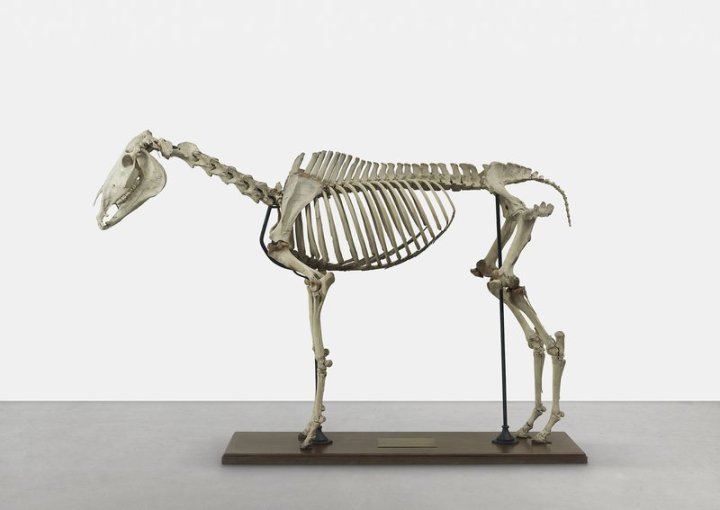
Skeleton of Eclipse (Collection of the Royal Veterinary College, University College London). Eclipse died in 1789 at the age of 25. The Veterinary College was built in 1791, with its first students enrolling in January of 1792.
◊ ◊ ◊ ◊ ◊
Opening next month at MK Gallery:
George Stubbs: ‘All Done from Nature’
MK Gallery, Milton Keynes, 12 October 2019 — 26 January 2020
Mauritshuis, The Hague, 20 February — 1 June 2020
George Stubbs: ‘All done from Nature’ presents the first significant overview of Stubbs’s work in Britain for more than 30 years and brings together 100 paintings, drawings, and publications—from the National Gallery’s Whistlejacket to pieces that have never been seen in public.
 Born in Liverpool in 1724, Stubbs was a quintessential product of the Enlightenment and embodied all of its core principles, questioning traditional authority and embracing the notion that humanity could be improved through the application of reason. Rather than trust to history and the untested example of his artistic and scientific precursors, Stubbs championed doing as a way of thinking and deployed pictorial representation as a form of knowledge and understanding. Today, he is recognised as one of the most original artists of the eighteenth century. His wide-ranging subjects included portraits, conversation pieces, and pictures of exotic and domestic animals—horses included—and his obsession with scientific exactitude has drawn comparison with the work of Leonardo da Vinci.
A major theme of the exhibition is anatomy. The show includes Stubbs’s contributions to a pioneering treatise on midwifery and his preliminary work on A Comparative Anatomical Exposition of the Structure of the Human Body with that of a Tiger and a Common Fowl. It also includes the detailed studies and drawings that led to The Anatomy of the Horse—the greatest coming together of art and science in British art—alongside the actual skeleton of the legendary racehorse Eclipse, which Stubbs depicted on several occasions.
A version of the show will tour to the Mauritshuis in The Hague where it will be the first-ever exhibition on the artist in the Netherlands. The exhibition is accompanied by a fully illustrated catalogue with major contributions from Alison Wright, Jenny Uglow, Martin Myrone, Martin Postle, and Nicholas Clee as well as new and existing poetry by Roger Robinson.
Anthony Spira, Martin Postle, and Paul Bonaventura, George Stubbs: ‘all done from Nature’ (London: Paul Holberton Publishing, 2019), 224 pages, ISBN: 978-1911300687, £35.
More information on the skeleton of Eclipse is available from this article by Mark Brown for The Guardian (6 July 2019).
Exhibition | Rescuing Horace Walpole
This fall at the Lewis Walpole Library:
Rescuing Horace Walpole: The Achievement of W.S. Lewis
Lewis Walpole Library, Farmington, CT, 20 September 2019 — 24 January 2020
Curated by Stephen Clarke
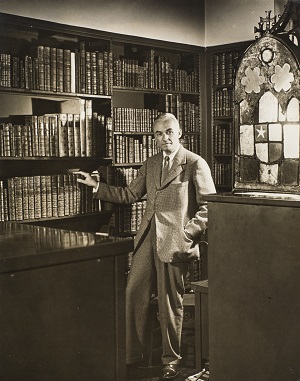 Wilmarth S. ‘Lefty’ Lewis (Yale Class of 1918) devoted the better part of his life to building the world’s greatest collection relating to Horace Walpole (1717–1797), the British writer, collector, and historian. He also championed Walpole’s importance as a figure in English eighteenth-century life, doing so most effectively as general editor and guiding spirit of the Yale Edition of Horace Walpole’s Correspondence (Yale University Press, 1937–83), whose 48 volumes are widely acknowledged to this day as a model of scholarship in historical editing.
This fall’s exhibition, Rescuing Horace Walpole: The Achievement of W.S. Lewis, pays tribute to Lewis’s life and legacy as a scholar-collector, on the 40th anniversary of his bequest of the Lewis Walpole Library to his alma mater, Yale University. Drawing heavily on the recently cataloged Lewis archives, the exhibition shows how the total dedication of the collector resulted in a collection of extraordinary range and depth, and expressed itself in some surprising ways. It also evolved into a monumental achievement of scholarship in the Yale-Walpole edition and, in the process, transformed perceptions of Walpole and his age.
A related symposium, Scholarly Editing of Literary Texts from the Long Eighteenth Century, on September 21st, in New Haven, will explore the past, present, and future of scholarly editions of the collected works and correspondences of early modern British writers, ranging from the Yale Horace Walpole (1717–1797) and Samuel Johnson (1709–1784) editions, via the Burney and Boswell papers to new editions now being planned for Alexander Pope (1688–1744) and Aphra Behn (1640?–1689).
Curator Stephen Clarke will give a talk on the exhibition at the Lewis Walpole Library on October 28 beginning at 7pm.
Exhibition | Trial by Media: The Queen Caroline Affair
From the Lewis Walpole Library:
Trial by Media: The Queen Caroline Affair
The Lillian Goldman Law Library, Yale Law School, New Haven, 9 September — 19 December 2019
Curated by Cynthia Roman and Mike Widener
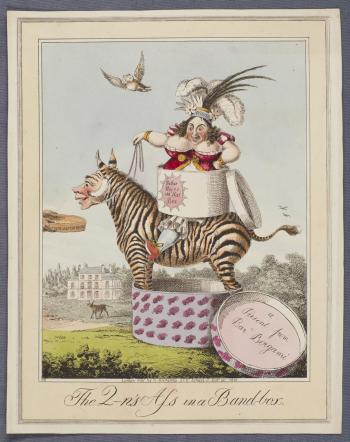
Attributed to Theodore Lane, The Q-n’s ass in a band-box, 22 January 1821; hand-colored etching with stipple (Lewis Walpole Library).
Trial by Media: The Queen Caroline Affair exhibition marks the bicentennial of the Queen Caroline divorce proceedings and focuses on the prolific media coverage around the 1820 trial. The trial is famous among cultural historians as a media event; in law it is remembered for Lord Brougham’s argument that a lawyer’s only duty is “to save that client by all means and expedients.”
There will be an online component following the physical exhibition. For the online exhibition, Cynthia Roman and Mike Widener have invited several scholars from diverse disciplines, at Yale and beyond, including many former research fellows, to contribute a short note focused on an object or group of objects of their choice from the Queen Caroline-related collections.
Trial by Media: The Queen Caroline Affair will enable visitors to explore the rich resources at Yale on the topic of Queen Caroline (1768–1821) and many scholarly perspectives from cultural and legal historians on this fascinating story. A mini-conference, in connection with exhibition, will be held on the afternoon of October 4.
The exhibition is curated by Cynthia Roman, Curator of Prints, Drawings and Paintings at the Lewis Walpole Library; and Mike Widener, Rare Book Librarian, Lillian Goldman Law Library.










 Enfilade
leave a comment