Call for Papers | CAA 2020, Chicago
In the following list, I’ve maintained CAA’s ordering of the panels, but please pay close attention to the HECAA session on ‘Race Beyond the Human Body’, chaired by Danielle Ezor and Michael Feinberg, and to the ASECS session on ‘Rulers, Consorts & Mothers: Queens in the Long 18th Century’, chaired by Kristin O’Rourke. Also note that CAA’s employment of alphabetical order doesn’t disregard definite or indefinite articles. And finally, the full list is available here. –CH
108th Annual Conference of the College Art Association
Hilton Chicago, 12–15 February 2020
Proposals due by 23 July 2018
The CAA Annual Conference is the largest gathering of visual arts professionals that celebrates and advances the accomplishments of members and provides opportunities to share research and creative work. Each year the conference offer a full breadth of sessions representing the vast range of scholarship and practice of our members, as well as professional development and art-making workshops, meetings, receptions, and more.
◊ ◊ ◊ ◊ ◊
Archive Unsettled: Indigenous Materials as Travellers, Ancestors, and Cultural Belongings
Gloria J. Bell (McGill University), gloria.bell@mcgill.ca
Drawing inspiration from Seneca historian Arthur Parker who described First Nations wampum as an “ancient archive” for Indigenous peoples in 1916, this session proposal invites historical and theoretical papers investigating Indigenous materiality and archival relations, beyond the colonial settler frame. Shifting from the margins of the art historical discipline, this panel will center Indigenous art and visual culture. How does engaging with Indigenous materials as ancestors as beyond-human kin, as travellers and cultural belongings, as mobile and sentient things, reframe our relationship with Indigenous artworks in colonial archives? For Indigenous and allied scholars, writing archival experiences into scholarship helps unsettle the expectations of colonial institutions and encourages respectful engagement with material things for Indigenous and settler communities. This session welcomes papers from a variety of disciplines with an engagement in Indigenous arts, Indigenous histories, and archival dynamics.
◊ ◊ ◊ ◊ ◊
Assembling a Mexican Past
Delia A. Cosentino, dcosent1@depaul.edu; and mundy@fordham.edu
More than any other nation in the Americas, Mexico has confronted the enduring artistic legacy of past eras—be they Zapotec sculptures unearthed in Oaxaca, sorrowing Virgins in side chapels of Baroque churches, or Porfirian-era public monuments—and from this has built narratives about the past. The selection and sequence takes on particular pressure during anniversaries–favored opportunities to think about the shape of time past. Given that the year 2020 marks a set of Mexican anniversaries—the years 1520 (Spanish-Aztec War), 1820 (Independence), and 1920 (Revolution)—we invite papers that examine how Greater Mexico’s past has been configured and reconfigured over time through specific assemblages of and/or within objects and artworks. In seeking papers that address a diversity of subject matters and moments across time, we invite reflection on these questions: How do choices of such assemblages by artists, scholars, leaders, and/or patrons reflect and reshape the politics of a given moment? What is the relation between archeological assemblage and art historical narrative? What is the role of the context [or frame]—be it tomb, church, home, or museum—on Mexico’s assembled past?
◊ ◊ ◊ ◊ ◊
Barriers, Borders, and Boundaries in the Early Modern World
Luis J. Gordo Pelaez (California State University Fresno), luisgordopelaez@csufresno.edu; and Cbarteet@gmail.com
Barriers are an ever present reality of human creation and they have often been used as a signifier of cultural evolution. From the creation of symbol embankments that served as foundations for early structures or to demarcate socially encoded spaces, barriers have served many purposes. In United States and Europe walls are used to establish clear binaries between the privileged ‘us’ and the demonized ‘other’. In both locations, thousands of miles of barriers have been built, or have been proposed, to define literally and symbolically boundaries that in turn are transforming the landscape of their borders.Whether ancient or contemporary, walls have contributed to create barriers and borders through the redefinition of spaces, creating a sense of place and identity, demarcating physical boundaries, and imposing socio-economic hierarchies of inclusion and exclusion. In the context of early modern cities, borders and boundaries emerged as a consequence of expanding empires and colonizing efforts, the development of warfare technology and new systems of fortification, and the implementation of directives regarding the use of urban space.Whether materialized or not, barriers were a common occurrence in designs proposed by urban planners, and an instrument for defining borders and boundaries in the political and socio-economic plans of powerful regimes. This session aims to examine the relationship between barriers, borders and boundaries in the early modern era from a global comparative perspective. Papers that address this interplay in any of its manifestations (conceptualization and building, notions of agency and perception, narrative and representation, materiality) are particularly welcome.
◊ ◊ ◊ ◊ ◊
Between Truth and Persuasion: Images and Historical Narration from the Sixteenth to the Nineteenth Century
Alessandra Di Croce (Columbia University), ad2516@columbia.edu; and fsoletta@princeton.edu
While images have often been used in Western art as effective storytelling tools, from religious paintings to photographic portfolios, their documentary value has always been far more ambiguous. On the one hand, images have been recognized as reliable historical evidence—along with material documents—since at least the middle of the sixteenth century. Additionally, the detailed vividness of a visual description was often perceived as more effective than a text. On the other hand, however, images could be simply dismissed as undecipherable records, relics of the past completely useless if not paired with written words. Moreover, images could be easily manipulated, through the use of specific visual and rhetorical strategies, and become instrumental in constructing and negotiating ideas of truth, ultimately shaping people’s beliefs. The uncanny power of images to create a tangible truth, or a convincing history has been always widely recognized—whether with fear (iconoclasm) or admiration (as in Plutarch’s admission that “the most effective historian is he who (…) makes his narration like a painting”). With the religious controversy and political disputations of the sixteenth century, the question of images as both historical evidence and powerful tool of narrative persuasions became intimately related with broader questions of historical method and historical narrative. This session welcomes papers that explore the agency of images and engage with the notions of truth, fiction and persuasion in the construction of historical narration and visual history (or histories), from the sixteenth to the nineteenth century.
◊ ◊ ◊ ◊ ◊
Black Artists in the Early Modern Americas
Rachel A. Zimmerman (Colorado State University – Pueblo), rachelz@udel.edu
People of African descent played a significant role in artistic production in the Americas in the early modern period. Their work ranged from personal creations to public commissions; their positions ranged from enslaved assistants in artists’ workshops to celebrated master artists. Despite their contributions to visual and material culture, black artists working in the Americas in this period have received relatively little scholarly attention. Furthermore, the few individuals to whom monographs and exhibitions have been dedicated are scarcely known outside the regions where they worked. This panel explores art-making by individuals of African descent throughout North and South America. Defining artistic production broadly and considering a wide geographic expanse elucidates parallels and divergences in these artists’ experiences. The artists had varying relationships with African cultures, indigenous peoples, religious, political, and commercial institutions, and lived in regions subject to distinct European cultures. Within these diverse contexts, black artists needed to navigate the complexities of creating within dominant cultures that viewed them as biologically destined for manual labor but largely incapable of intellectual labor. Even when born free, legal and social norms often restricted access to education, resources, and patronage. As a result, the herculean efforts necessary to acquire materials, develop skills, and produce art objects in the face of such obstacles were rarely acknowledged in their lifetimes.
◊ ◊ ◊ ◊ ◊
Decolonising Design History (Design History Society)
Daniel J. Huppatz (Swinburne University); dhuppatz@swin.edu.au; and Megha Rajguru (University of Brighton), M.Rajguru@brighton.ac.uk
Over the past two decades, the geographical spread of design history has become more inclusive of design from various parts of the world and practitioners beyond Europe and North America. While this represents some progress, it is only part of the promise of decolonial histories. The other part is a reassessment of historical methods and themes. Recent thinking on decolonising design has argued for a shift from the production of universalising narratives towards pluriversality (Arturo Escobar and Tony Fry) and the promise of a more inclusive and decolonial practice. For design historians, this challenge entails how to reframe the discipline, not only in its geographical reach but in its assumptions and foundations. This panel calls for papers that examine alternative approaches and critical perspectives towards canonisation, periodisation and designer-biographical work that have been the dominant frameworks for research and teaching in design history to date. We are interested in papers that explore new design historical methodologies and forms of knowledge that might create a more inclusive practice. In what ways can design history research and teaching undertake this task without being trapped in a traditional/modern binary framework? Does a decolonised design history require new periodisations, new artefacts, or new designers, or does it require challenging the core principles of design that are anchored to industrial modernity? We welcome critical and engaging papers that address these questions.
◊ ◊ ◊ ◊ ◊
Deconstructing the Myths of Islamic Art
Onur Ozturk (Columbia College Chicago), oozturk@colum.edu
In a time when divisive politics have become increasingly popular around the globe and white-supremacy, otherizing, and Islamophobia are on the rise, it is essential more than ever for scholars, curators, and artists to study, curate, and engage with incredibly rich and diverse historical and contemporary visual cultures of Islam. However, one major challenge is the fact that the term Islamic Art, an umbrella term used today to cover arts of many cultures and civilizations, is in fact a western construct originally created by European scholars. Many “exotic” objects brought by crusaders and travelers to Europe, were not even considered examples of Islamic Art until they were collected by the European museums. The continuous use of this term with its orientalist origins strengthens normative and homogeneous notions of Islam and Islamic Art. Yet today, the field of Islamic Art, with its own history for more than a century, has contributed to our understanding of the dynamic and diverse nature of cultures developed by various civilizations of Europe, Africa, Middle East, and Asia. This session invites papers addressing how universities, museums and other educational institutions can continue to challenge stereotypical notions of Islam and Islamic Art through scholarly research, special exhibitions, and art projects, while avoiding the creation of new myths and the encouragement of nationalistic and ethnic attitudes.
◊ ◊ ◊ ◊ ◊
Early Modern Women in the Streets? Women’s Visibility in the Public Sphere (Society for the Study of Early Modern Women)
Maria F. Maurer (University of Tulsa), maria-maurer@utulsa.edu
In light of the centennial anniversary of women’s suffrage in the United States, this panel seeks papers that investigate women’s visibility in the early modern world. Religious and literary discourses often admonished them to remain hidden from public view, but early modern women were skilled at negotiating social and cultural strictures. As artists, patrons, beholders and actors, and as individuals and groups, women used visual and material culture in order to proclaim their presence. This session therefore seeks papers that explore the visibility and agency of women in the early modern world. What roles did women play in artistic production and consumption, especially in highly visible locations such as the church or city square? Or, conversely, what strategies did women use to publicize artistic projects that may have been less visible? How did women negotiate, and at times violate, the boundaries between domestic or conventual space and civic space? How did women participate in early modern ritual and ceremonial life? We seek papers from any area of the globe from approximately 1400 to 1800. We especially welcome papers that take a global or transcultural approach to the question of women’s visibility and agency.
◊ ◊ ◊ ◊ ◊
Emerging Subjects: Portrait and Type in the Nineteenth-Century Americas
Phillip Troutman (The George Washington University), trout@gwu.edu
Scholars exploring the ‘slave portrait’ in early modern Europe and colonial America reveal it to be more paradox than oxymoron, occupying vexed territory shaped not only by convention and stereotype, but also idiosyncratic interactions among artists, sitters, and audiences. This panel extends that inquiry into the nineteenth century Americas. The explosion of print culture and genre painting brought many marginalized groups into the visual arts for the first time, but also promulgated a suite of tropes delimiting the depiction of race, gender, class, religion, and sexuality. Could socially and politically vulnerable individuals break through those representational constraints and emerge as pictorial subjects in their own right? We seek papers exploring this question along the spectrum from portrait to type, a broad cultural space where the idiosyncratic and the generic blur. How could portraitists’ use of conventions empower or undermine the signaling of individual sitters’ subjectivity? How did artists, illustrators, and publishers exploit portraiture’s realistic gestures to produce stereotypes authenticating social prejudice? Could image makers instead work through or against generic types to invoke the subjectivity of real persons? When and how did subjects actively participate in this process, revealing an awareness of how they might be perceived as individuals or as representatives of a group? In what ways did they respond to finished works, whether commissioned by themselves or others? We welcome case studies pursuing these questions in nineteenth-century paintings, prints, drawings, illustrations, photographs, sculptures, or material culture objects produced or circulating in North, Central, South America, or the Caribbean.
◊ ◊ ◊ ◊ ◊
From the Ground Up: Geology, Mineralogy, and Materiality in Art and Design
Antonia Behan (Bard Graduate Center), antonia.behan@bgc.bard.edu; Julie Bellemare (Bard Graduate Center), julie.bellemare@bgc.bard.edu; and Colin Fanning (Bard Graduate Center), colin.e.fanning@gmail.com
The workers dig and cut to get some mountain bones,
A labor of many long days.
A thousand wonderful scenes come to life from the stone;
How ignorant can people be not to see nature’s art.1
In words that could equally have been uttered by John Ruskin in the nineteenth century, eleventh-century Chinese scholar Ouyang Xiu captures the complex connections between geology, physical labor, and aesthetic enjoyment. Building on the material turn in art history, this panel responds to broader scholarly interests in the agency of matter. We posit that a focus on geological substances can challenge art-historical and museological conventions; for instance, whereas stone and metal are often considered distinct mediums, mineral and metal ores share certain characteristics that may undercut common artistic taxonomies. We invite submissions of papers that explore historical intersections between geological materials and the arts across historical periods and cultural contexts, with a particular interest in decorative arts, craft, and design. Themes and questions might include, among others: What cultural roles have stones, ores, or minerals played in specific times and places? How have artisans, designers, or manufacturers made use of geological materials or conceptualized their importance? What kinds of mediation have such materials (or objects made with them) performed? How might they resist or complicate binaries such as natural/artificial, organic/inorganic, or static/dynamic? And what can the histories of mining, geology, or the collection and display of rocks and minerals contribute to art and design history?
1. Ouyang Xiu (1007–1072), excerpted from Kemin Hu, The Suyuan Stone Catalogue (Weatherhill, 2002), 64.
◊ ◊ ◊ ◊ ◊
Landscape through a Sociopolitical Lens: Representing the Environment in Northern Europe, ca. 1430–1795 (Historians of Netherlandish Art)
Joanna Sheers Seidenstein, (Harvard Art Museums), joanna@seidenstein.com; and Sarah Walsh Mallory (Harvard University), sarahmallory@g.harvard.edu
Scarcely a news cycle passes without discussion of national borders, climate change, natural disasters, and globalization. This discourse has prompted new questions about the visual representation of the physical environment, making this an apt moment to reassess the extraordinary production and consumption of painted, drawn, and printed landscapes in Northern Europe in the early modern period. This session seeks to complicate existing understandings of this material by focusing on its intrinsic but diverse sociopolitical content. How, for example, did pictorial tactics and conventions function as inscriptions of power, control, identity, and otherness? What was the role of these images in shaping contemporary conversations about social ecologies, about land ownership and labor? How has the vision of nature provided by Northern artists informed or shifted understandings of ‘space’, ‘nature’, and ‘environment’? Can we understand historiographical models—the advent of global art history, for example—as a product of the study of Northern landscape? How can we think of landscapes as agents that actively shaped the way in which individuals viewed and lived in the world? This session hopes to attend to the concept of ‘world’, integrating considerations of ‘the Northern landscape’ with those of the landscape imagery produced by artists working in overseas territories, like the Dutch East Indies. We seek papers on all forms of landscape, including cityscapes, marine views, backgrounds of religious paintings, garden design, and city planning, produced in, or in connection with, the Northern Netherlands, Southern Netherlands, or Germany between the 15th and 18th centuries.
◊ ◊ ◊ ◊ ◊
Lost in Translation: Early Modern Global Art History and the Digital Humanities (Digital Art History Society)
Paul B. Jaskot (Duke University), paul.jaskot@duke.edu; and Meredith J. Gill (University of Maryland), mgill@umd.edu
This session seeks to draw on two current art historical issues: 1) that many leading digital art historical projects are centered on examples from the early modern world; and 2) that there is a widespread need across art historical fields to look to strong exemplars to help model the inevitable acts of translation between and across humanistic and computational scholarship. This panel seeks papers that address any aspect of digital humanities work on an early modern topic. From Latin America to East Asia, from the Mediterranean basin to the Black Atlantic, outstanding work has been done in bringing data-driven methods to bear on art historical evidence. How have art historians negotiated the intellectual world of ‘technologists’, and do we have successful examples of new ‘languages’ and other outcomes collaboratively forged by art historians and technologists? What have computational scholars found interesting or challenging in working with art historical datasets and questions? And, more broadly, why is the early modern world such a fecund area for art historical and computational discovery? In proposing these questions, we particularly encourage submissions from collaborative presenters and/or about collaborative projects that represent both digital and humanities’ perspectives. Our goal is to invite papers engaging crucial questions in early modern art histories—thus appealing to a large area of CAA interest—and papers that, in the process, also address the incorporation of computational methods. Proposals that emphasize the communication (or failure of communication) between digital and humanities’ approaches are especially welcome.
◊ ◊ ◊ ◊ ◊
Open Session for Emerging Scholars of Latin American Art (Association for Latin American Art)
Ana Maria Reyes, amreyes@bu.edu; and Ray Hernández-Durán (University of New Mexico), rhernand@unm.edu
The aim of the ALAA-sponsored open session is to provide a platform at the annual conference to highlight work produced by advanced graduate students and recent Ph.D.’s, who concentrate on the histories of Latin American and U.S. Latinx arts and/or visual and material cultures. Papers may focus on any region, period, or theme related to the Latin American and Latinx experience, including, Pre-Hispanic/Ancient American art, colonial/viceregal art, art of the nineteenth century, modern art, and contemporary art, including folk/popular art and craft studies, from Latin America, the Caribbean, and the U.S. In reviewing submissions and selecting the papers for the session, the co-chairs will be looking for strong proposals that cover a range of subjects across each of the noted areas. Association for Latin American Art (ALAA) membership is not required when submitting a paper proposal; however, all speakers must be active members at the time of the annual meeting.
◊ ◊ ◊ ◊ ◊
Past & Present: Britain and the Social History of Art (Historians of British Art)
Meredith J. Gamer (Columbia University), mg3704@columbia.edu; and Esther Alice Chadwick, (Courtauld Institute of Art), estherchadwick@gmail.com
What’s British about the social history of art? This panel joins ongoing conversations about what the social history of art is and what its stakes might be for us today. Specifically, it takes a ‘localized’ approach to this model of art history as it developed in and out of Britain and its former colonial territories. Whether of an ‘activist’ Marxist or more general ‘art and society’ cast (Clunas 1996), it is striking that key protagonists of the social history of art—from Hauser, Antal, and Klingender to Baxandall, Clark, and Pollock—were born, trained, or based in the UK. At the same time, the social history of art has been a dominant frame adopted by historians of British art itself, beginning with field-defining studies of landscape painting by John Barrell, David Solkin, and Ann Bermingham. How do we account for the strength of this distinctive art historical mode in Britain? Has it received peculiarly ‘British’ inflections? What impact has it had on the study of British art and on the writing of art history more broadly, in Britain and elsewhere? What possibilities has it generated? What others has it foreclosed? Topics could include, but are not limited to: histories of émigré and expatriate scholars; institutional, public, and popular histories; the relationship with feminist, postcolonial, and/or visual studies approaches; the social history of art in and after recent turns to empire and the global.
◊ ◊ ◊ ◊ ◊
Race Beyond the Human Body in the Long Eighteenth Century (Historians of Eighteenth-Century Art and Architecture)
Danielle Rebecca Ezor, dezor@smu.edu; and Michael Feinberg, mfeinberg@gm.slc.edu
Attempts to ossify conceptions of race by creating visual affinities between race and bodies emerged as a motif during the Enlightenment era. Our studies of art, visual, and material culture depend on racialized constructions and assumptions about the human form such as Winckelmann’s analysis of beauty that is grounded upon enwhitened sculptures of Greek boys. As Anne Lafont has recently argued, the study of visual and material culture is a “remarkably efficient tool” for understanding race. While Lafont’s research focuses primarily on depictions of the human, she also gestures toward the ways in which longer histories about color, light, shape, and depictions of fabrics played important roles in attempting to create race-based iconographies. Taking race less as a fixed iconography than as an elusive process that matters over time, this panel aims to investigate how objects and pictures that may not even be directly about race at all can problematize the relationship between race and the human form. How can the study of images and objects problematize or unsettle the triangulation about race, the human body, and the black/white binary? How does race matter, and how does it operate independently from the human figure?
◊ ◊ ◊ ◊ ◊
Rulers, Consorts & Mothers: Queens in the Long 18th Century (American Society for 18th Century Studies)
Kristin M. O’Rourke (Dartmouth College), kristin.o’rourke@dartmouth.edu
Judging by the success of films like The Favourite to TV series like The Crown and Victoria, contemporary viewing audiences are fascinated by the life and lifestyle of historical queens. These filmed portrayals fixate on sexual behavior and offer voyeuristic pleasure in sumptuous sets and costumes, whereas politics and power relations are figured primarily through sexuality, maternity, and personal relationships. This panel hopes to probe the image and characterization of queenship in the long 18th century as portrayed in visual arts and popular culture of the time and in relationship to our own era. Did queens have as much (or as little) power as we see in these films? How did the relationship of queens to luxury industries influence public opinion? How did the structure of courts and queenship change visibly as the century moved towards revolution? Topics might include: the body of the queen vs. the king in art, literature and the popular press; propaganda and slander; dress, makeup or ornament; the politics of reproduction; divinity and corporeality; caricatures and portraits; political marriages and alliances; patronage of the arts & architecture.
◊ ◊ ◊ ◊ ◊
Sensual Texts, Material Histories: Language in the Long Eighteenth Century
Elizabeth Bacon Eager (Southern Methodist University), eeager@smu.edu
Writing in 1781, English antiquarian Horace Walpole reflected on the Inka custom of knotted record-keeping known as the khipu, professing himself “so pleased with the idea of knotting verses…that if I were to begin life again, I would use a shuttle instead of a pen.” Going on to explore the linguistic implications of both the khipu’s feel and scent, Walpole’s discussion draws attention to concerns over the materiality of language in the eighteenth century. Over the course of the century, a burgeoning trade in encyclopedias, scientific atlases, and technical treatises gradually reordered the unruly logic of physical experience into a more systematized and largely textual form. In this context, the sensory capacity of language came increasingly under scrutiny. While a growing body of literature has sought to investigate this problem through the images that often accompany such texts, this panel explores the material form of the text itself. How did individual letter forms function as repositories of material knowledge? What can a material history of the word tell us about the relationship between language’s abstractions and sensory knowledge in the long eighteenth-century? Drawing inspiration from Walpole’s notion of the khipu as a “soft language,” this panel seeks contributions that explore the range of material practices through which text was produced in the eighteenth century—from the casting of type to the threading of needles. Papers that examine this notion of a tactile language from outside or in contact with the West are particularly encouraged.
◊ ◊ ◊ ◊ ◊
The Bounded Field: Landscape Models and Microcosms
Ruth Ezra, rezra@fas.harvard.edu
The groundbreaking 2014 exhibition, Silent Partners: Artist & Mannequin from Function to Fetish, brought renewed attention to the subject of the lay figure in Western art. The proposed panel will complement this and other recent scholarly contributions on artists’ models by considering how landscapes, rather than figures, were represented, miniaturized, and mocked-up in workshop settings. According to Johann Neudörffer, the late-medieval sculptor Veit Stoss likely relied upon a topographical relief of mountains and rivers when carving scenery, and in the eighteenth century, the painter Thomas Gainsborough famously constructed a table-top landscape consisting of “cork and coal,” “sand and clay,” “bushes of mosses,” and “distant woods of broccoli.” As these cases suggest, the purview for the session will be broad, comprising examples drawn from a range of geographies and time periods. The ontological uncertainty of the model—tool? work of art? both?—will also inform a wider discussion of why there are so few independent landscapes in the Western sculptural tradition. Topics explored may include naturalia and artificialia; the relationship between microcosm and macrocosm; dioramas and natural history; seriality; divisions of labor; and problems of scale. Finally, papers are also welcome on the subject of miniaturized landscapes not as models per se, but rather as they appear in the bases or backgrounds of finished sculpture.
◊ ◊ ◊ ◊ ◊
The Collector and Cultural Narratives
Julie Codell (Arizona State University), julie.codell@asu.edu
From the mid-19th century, a new kind of narrative about private collectors appeared in Europe and the US, e.g., Jameson’s Companion to the Most Celebrated Private Galleries (1844), Waagen’s Kunstwerke und Künstler (Berlin, 1837–39), trans. Elizabeth Eastlake as The Treasures of Art in Great Britain (4 vols. London, 1854, 1857); Dumesnil’s Histoire des plus célèbres amateurs (1853–60); F. G. Stephens’s 90 Athenaeum articles on British collectors (1873–87); Strahan’s (pseud. Earl Shinn) The Art Treasures of America (1879–82); and René Brimo’s The Evolution of Taste in American Collecting (1938), among others. To Oscar E. Vázquez, “collectors and collections…are a creation of the modern era” with “increased attention to…the collector over the collected object” (Inventing the Art Collection 57–58). Attention to collectors began in the 18th century; by the 19th century, collectors became cultural icons and national figures. Many gave their collections to museums, shaping public taste and the canon. This panel will examine the discourse around collectors’ activities, high profile and relation to museums and public taste. Panelists may consider questions about 18th, 19th and 20th-century collectors, such as (but not limited to):
• How did these narratives shape and revise collectors’ images over time?
• Did narratives about collectors inflect notions of the modern? of tradition?
• How were gender, class or national identity applied to collectors?
• Did narratives about collectors endorse cultural hierarchies?
• Were collectors tastemakers? public servants? cultural paradigms?
• How did collectors’ motives and desires affect their collections’ meanings?
◊ ◊ ◊ ◊ ◊
The Institution as Collector (Society for the History of Collecting)
Elizabeth A. Pergam, eapergam@gmail.com
Both the Museum of Fine Arts, Boston, and the Metropolitan Museum of Art celebrate their 150th anniversaries in 2020. Yet these two institutions began in very different ways. While the Boston museum was an outgrowth of that city’s Athenaeum, with an already extensive collection of works of art, New York’s museum was founded without a single object in its collection. These examples are a starting point to consider the ways in which museums act as collectors. The history of collecting is more usually positioned as driven by individuals or families. While house museums have garnered attention as expressions of their founders’ biographies and interests, municipal or encyclopedic museums have not in a comprehensive way. By focusing on institutions, our session seeks papers that expand our understanding of the nature of collecting. Papers might address any of the aspects of the collecting process: acquisition, installation and preservation, and de-accession. Questions that might arise for discussion are: How are acquisition policies of a museum articulated and how do they change with the growth of the institution? How and why have museums developed collectors’ committees? How do museums act as tastemakers? How are single collector bequests shown within a larger institution? What has been the impact of curators or directors on their institutions’ collections? Papers may consider institutions other than museums that collect works of art. For example, corporate collections, pension funds, or foundations have been little studied beyond self-produced volumes.
◊ ◊ ◊ ◊ ◊
“The Marketplace of the Flesh”: Coordinates for an Art History of Black Women’s Labor
C.C. McKee (Bryn Mawr College), cmckee1@brynmawr.edu; and Natalia Angeles Vieyra (Temple University), nataliavieyra@gmail.com
Theorist Hortense Spillers contends that black women’s enslavement “relegated them to the market place of the flesh, an act of commodification so thoroughgoing that the daughters labor even now under the outcome.” For Spillers, black femininity is an ontological position that constitutes “the principal point of passage between the human and non-human world.” Moreover, this commodification of the flesh did not end with emancipation, its vestiges live on in black women’s labor in the present. In the eighteenth and nineteenth centuries, artists working in the Atlantic World mobilized the picturesque to obfuscate the realities of chattel slavery and the work of black women in particular. The fungibility that conditioned black femininity under slavery and in its wake has all-too-often been elided in art historical scholarship. Taking Spillers’s provocation as our starting point, this panel asks: Where can black women’s labor be located in the visual record? How do black women’s artistic practices continue to interrogate the visual and material histories of labor at the violent nexus of the human and non-human?
We welcome proposals that take up the visual and material conditions of black labor and women’s work in the Atlantic World. This includes, but is by no means limited to: the intersecting histories of gender and race as they relate to the representation of labor or its objects; contemporary artistic, visual and material cultural treatments of black women’s labor; and capacious approaches to black femininity and labor untethered to binary gender, encompassing trans* and queer identities.
◊ ◊ ◊ ◊ ◊
Topographical Drawing
Cynthia Roman (The Lewis Walpole Library, Yale), cynthia.roman@yale.edu; and Patricia Mainardi (The Graduate Center – City University of New York), pmmainardi@gmail.com
In the modern era, landscape painting has been largely defined by Impressionism, favoring atmospheric visuality over fidelity to form. And yet this was not always the case. This session seeks to explore the parallel incentive, topographical drawing, in all its manifestations. We define topography as a pictorial description of a specific place in a wide array of forms with a diversity of functions and patrons or audiences. These might include travelers’ sketchbooks, architectural renderings, mapmaking, estate portraits, botanical illustration, etc. We are interested in the work of professional and amateur artists, scientists, architects, and engineers. Proposals could focus on scientific knowledge of space (detail/geology/geography); on making and learning strategies; on the functions of topographical projects (patron, creator, or audience expectations); methods of observing, recording, or conveying the desired ‘information’ about the place (choices of media, format, style, color, technique).
Building on recent scholarly attention given to the role and history of topographical views, most notably the British Library’s project Picturing Place and broadening the ongoing Yale University-wide project on topography sponsored by the Lewis Walpole Library, we seek to cast as wide a net as possible, not limited either geographically or chronologically. We have designed this session as an open call for proposals. Preference will be given to new participants because we hope that this session will follow the long-standing CAA tradition of identifying and making connections among scholars whom we do not yet know but who share our interests.
◊ ◊ ◊ ◊ ◊
Un-making Architecture
Jason Eugene Nguyen (Getty Research Institute), jason.e.nguyen@gmail.com; and Elizabeth J. Petcu (University of Edinburgh), ejpetcu@icoud.com
Architecture is enduringly conceived as an additive, building-oriented phenomenon. Nevertheless, the prelude to construction—as well as architecture’s emergence and aftermath—nearly always involve elements of destruction. The razing of built and natural landscapes, planned obsolescence, cycles of dismantling, iconoclasm, spoliation, and other forms of un-making condition architectural cultures across time and geographies. Destruction, in other words, undergirds architecture’s creative processes. This session seeks papers that investigate ways of un-making in architecture across any period or region. It asks how acts of destruction, whether deliberate, accidental, or caused by natural forces, produce architectural knowledge and inform the built environment in theory and practice. Although recent scholarship has privileged the making process, the acts of ‘un-making’ that inform most architectural projects work in profound but often overlooked ways. These includes the demolition of monuments and heritage sites, the flattening of settlements ensuing human displacement, the obliteration of natural and built landscapes due to environmental disaster, and the dismantling of buildings for renewal and restoration. Processes of architectural un-making also operate in architectural theory, as in Piranesi’s sublime depictions of ruination, or, more recently, Forensic Architecture’s analyses of urban and environmental devastation. How have acts, events, and theories of destruction altered our conceptions of architecture? What productive consequences have emerged from the rubble of architecture’s un-making? And how has the physical and theoretical disassembling of architecture prompted shifts in artistic thought and practice? We welcome histories of architecture that confront the materials, conditions, environments, things, and ideas that building practice and architectural theory un-make.
◊ ◊ ◊ ◊ ◊
What Can Art Say about Extinction?
Lily Woodruff (Michigan State University), lilywoodland@gmail.com; and Brianne Cohen (University of Colorado, Boulder), brianne.cohen@colorado.edu
Extinction of plant and animal species was discovered at the end of the 1700s even as its causes continued to be debated for centuries. Today, we are in the midst of a massive loss of biodiversity caused by human activities that include global warming, the destruction of habitats, and the slaughter of animals for reasons ranging from convenience to the market in exotic species. Not all groups are equally responsible, however, as extinction is driven by the development and consumer activities of the wealthy, while traditional ways of life are alternatively scapegoated and jeopardized. Emerging from the animal turn, recent publications on extinction have taken interdisciplinary approaches that multiply the stories that can be told in the face of great loss. This panel seeks to address this topic from across its history, and from diverse cultural perspectives. We aim to understand the ways that art and visual culture have reflected on and processed species loss in forms ranging from scientific illustration, to eco art, video, and protest. How does visual production allow us to understand the cultural, political, and economic causes of extinction, and conversely of conservation? Can it remediate the harm done by colonial exploitation? Do artistic practices provide an opportunity to conceptualize animal and plant subjectivity in a way that promotes human understanding of our ecological interdependence? How do they provide models for envisioning temporal scales of generational loss, the traumas of cataclysm and of slow violence, or investments in long-term sustainability?
◊ ◊ ◊ ◊ ◊
Working with Decolonial Theory in the Early Modern Period
Natalia Vargas Márquez (University of Minnesota), varga066@umn.edu; and Leslie Elise Todd, leslie.e.todd@gmail.com
Decolonial theory developed in the early 1990s as a renewed theoretical framework associated to critical theory that focuses on the concept of coloniality, a term that encompasses the expansion of colonial domination and its effects today. Scholars who have primarily written on and contributed to the development of the theory were and continue to be social scientists such as Aníbal Quijano and thinkers such as Walter Mignolo, as well as anthropologists and scholars of literature, philosophy, religion, and languages. Recently, art historians have explicitly drawn decolonial theory more directly into their work including Ananda Cohen-Aponte’s 2017 award-winning chapter “Decolonizing the Global Renaissance: A View from the Andes” in which she outlines a decolonial model of early modern art history, and Paul Niell’s preface to the 2018 exhibition catalogue Decolonizing Refinement: Contemporary Pursuits in the Art of Edouard Duval-Carrié in which he outlines a curatorial approach to decolonialism. This panel invites art historians of the early modern period to continue the conversation opened by Cohen-Aponte and Niell on decolonial models in art history. We seek to explore on a global scale how decolonial theory shapes our work, and in turn, what we can contribute to the theory. What is the applicability of this theoretical framework to art history of the early modern period? What are its blind spots? How do ideas and terms such as hybridity, mestizaje, and syncretism fold into or contrast against decolonial theory? We encourage papers that focus on historiographical, curatorial, and/or art historical ideas and questions.
Call for Papers | The Salon and the Senses
From the Call for Papers, for this conference aimed at graduate students and early-career scholars:
The Salon and the Senses in the Long Eighteenth Century: Interdisciplinary Perspectives
Rutgers University, New Brunswick, New Jersey, 2–3 April 2020
Proposals due by 15 September 2019
The conference The Salon and the Senses in the Long Eighteenth Century: Interdisciplinary Perspectives, seeks to join the intellectual heritage of the salons with their multidisciplinary, multisensory natures. We will explore the sights, sounds, smells, tastes, and tactile aspects of the salon, considering the arts and sensory pleasures of the salon alongside the verbal arts—the poetry, literature, theater, and conversation—that were cultivated there.
Salons of the 17th, 18th, and early 19th centuries knew no disciplinary boundaries. More than other institutions of the age, salons offered their habitués opportunities to engage with a wide range of social, cultural, artistic, literary, and verbal practices. A multidisciplinary approach requires that we—like salon hostesses and guests before us—open our minds across modern intellectual boundaries and reanimate the embodied practices of the institution. By bringing together scholars from numerous fields, we hope to shed new light on salons in all of their complexity. Above all, we seek to understand the multi-sensory nature of the salon: its sights, sounds, tastes, and smells; its conversations, texts, and subtexts.
We welcome proposals for conference presentations, performances, or interactive sessions.
Possible topics include, but are not limited to:
• Senses and sensory experience
• Material culture, furniture, and fashion
• Emotions and expressive culture
• Gender, sexuality, and the body
• Salons as sites of global or local cultural exchange
• Aesthetics and philosophy
• Natural philosophy, collecting, and experimentation
• Letters and other texts
• Music and visual art
• Poetry, theater, and the novel
• Games, food, and sociability
Abstracts of up to 350 words, as well as a one-page curriculum vitae, should be sent by September 15, 2019 to jemjones@sas.rutgers.edu. Graduate students and early-career scholars are encouraged to apply. Selected participants will be notified by the end of October. The conference will be hosted by the Center for Cultural Analysis (CCA) at Rutgers University and is convened by the CCA’s “Experiencing the Salon” working group, led by Jennifer Jones (Department of History, jemjones@sas.rutgers.edu) and Rebecca Cypess (Department of Music, rebecca.cypess@rutgers.edu). For more information, contact Jennifer or Rebecca.
Exhibition | Goya: Visions and Inventions
Now on view at The Dalí Museum in Florida:
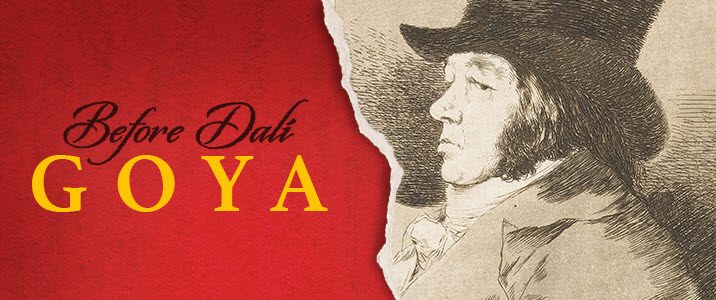
Before Dali — Goya: Visions and Inventions
The Dalí Museum, St. Petersburg, 15 June — 1 December 2019

Francisco José de Goya y Lucientes, Portrait of Francisco Sabatini, ca. 1775–79, oil on canvas, 33 × 25 inches (Dallas: Meadows Museum at SMU, MM.67.03).
Francisco José de Goya y Lucientes (1746–1828) is one of the most important Spanish artists of the late eighteenth and early nineteenth centuries, celebrated for his revolutionary paintings, drawings, and engravings. Goya’s life and works deeply influenced Salvador Dali in his early years and are considered by many scholars to be the basis for ‘modern’ art, bridging classicism and romanticism. Before Dali: Goya: Visions & Inventions, sponsored by Tampa International Airport, features two alternating suites of first-edition prints, published in Goya’s lifetime, alongside three significant paintings representing unique themes of Goya’s works. The works are on loan from the Meadows Museum in Dallas, home of one of the most substantial collections of Goya.
Los Caprichos
The Dalí Museum, 15 June — 15 September 2019
One of Goya’s most famous works, Los Caprichos (1799) is a series of 80 satirical prints exploring his visions of the superstitions and societal ills of his time. Goya sought to illustrate “the innumerable foibles and follies to be found in any civilized society, and from the common prejudices and deceitful practices which custom, ignorance, or self-interest have made usual.” Witchcraft and other superstitious beliefs were a prevalent subject matter in this series that meant to ridicule and critique the arrogance of the noble class and the corruption of human virtue. Because of their sensitive subjects—including anticlerical scenes—few people saw these works during Goya’s lifetime.
La Tauromaquia
The Dali Museum, 21 September — 1 December 2019
La Tauromaquia (1816) is a suite of prints depicting the evolution and history of bullfighting on the Iberian Peninsula. Goya created La Tauromaquia between 1815 and 1816, at the age of 69. Unlike the targets of Goya’s previous satirical series Los Caprichos, bullfighting was not politically sensitive, and La Tauromaquia was published in an edition of 320—for sale individually or in sets—without incident. The latter series, however, did not meet with critical or commercial success. The artist focuses on the violent scenes that take place in the bullring and the daring movements of the bullfighters. The events are not presented as they are viewed by a viewer in the stands, but in a more direct way.
sKBL International Summer School, 2020: Dutch Country Houses
This new program launches in 2020 with applications accepted between 1 August 2019 and 1 April 2020. From the program flyer:
sKBL International Summer School: Historic Country Houses in the Netherlands
The Netherlands, 3–11 July 2020
Applications due by 1 April 2020
 The first edition of the sKBL International Summer School will start in 2020. Many associate England, France, and Germany with beautiful castles and stretched-out rural estates. Within Europe, the Netherlands is not as often associated with this, even though it contains hundreds of special castles, historic country houses, and rural estates. The sKBL International Summer School wants to change this by focusing on this versatile Dutch monumental heritage with knowledgeable participants of various nationalities. The organisation also aspires to create an international network of connoisseurs and professionals, which can be of great use to Dutch castles, country houses, and rural estates.
The 2020 edition, which will be held from 3 to 11 July, is open for participants outside the Netherlands who are conducting professional research on topics that relate to the preservation and conservation of monumental heritage. It is important that we establish interaction between not only the participants, but also the owners of the domains to be visited. This way, knowledge, science, and stories come together, and we can learn and enrich ourselves.
This (pilot) 2020 edition focuses on the historic country houses that have been built in large numbers in the area around Amsterdam in earlier centuries by merchants and aristocrats. This study programme will bring the participants to Amsterdam and to country houses in Kennemerland, the Beemster Polder, ‘s-Graveland, and the Vechtstreek. Dutch experts and researchers will contribute with lectures and guided tours. Future editions may relate to the noble rural estates in Gelderland, the Noordelijke Lustwarande, castles in Limburg, the manors of Overijssel, and so forth. Furthermore, our organisation is searching for cooperation with Belgium, so that their monumental heritage can become part of this curriculum as well.
Practical Points
The language used during the Summer School is English. We aim to attract as many foreign participants as possible, therefore the number of Dutch participants will be limited. In the admission assessment, the Board of Governors will ensure that the composition of the group will be well-balanced. Students are also welcome. The substantive programme also offers opportunities for discussions and reflection. The programme may be changed due to circumstances. The organisation of the Summer School does not (yet) have scholarships.
A minimum of 25 and a maximum of 40 people can participate in the Summer School. You can sign up from 1 August 2019. The application period closes on 1 April 2020. All registered participants will be notified whether or not they have been admitted before 30 April 2020. The participation fee must be paid before 31 May 2020. After 1 June 2020, free cancellation is only possible if a participant on a (possible) waiting list is willing to take a vacant place. The Board of Governors has the decisive vote in this. We do not communicate about admissions and rejections of candidates.
Due to the preparatory stage all costs are not yet fully clear, and the participation fee will be definitively announced on 1 August 2019, but will likely be around € 2,400.- and will comprise supervision, entrance fees, lectures, overnight stays, transport during the programme and most meals. The programme will start with a welcome cocktail and dinner on 3 July 2020 and ends on 11 July 2020 after breakfast.
The Board of Governors regards this 2020 edition as an opportunity to gain experience. In doing so we can change or improve the admission requirements and/or future programmes. After the programme all participants are asked to fill out an evaluation before 30 September 2020.
Admission requirements for the sKBL Summer School 2020:
• Every participant is required to have a demonstrable professional involvement in fields that relate to the preservation or maintenance of castles, historic country houses and rural estates. This may be a scientific or other similarly professional or intellectual engagement. Other relevant (work) experience may also lead to admission. The Board of Governors of the sKBL Summer School will assess the admissions for the 2020 edition.
• All participants are required to submit a curriculum vitae with a motivation letter (in English).
• Every participant must be able to demonstrate that they speak English.
• Every participant must have completed, or must be currently enrolled in, higher professional education, academic education or a similar education. The Board of Governors reserves the right to deviate from this rule.
• Participants must be physically able to join this intensive programme.
• The sKBL Summer School is not in any way responsible for accidents or theft during this programme. We advise every participant to take an individual travel or cancellation insurance.
Applications can be sent to
sKBL International Summer School Board of Governors Attn. Mr. René W.Chr. Dessing
Veerpoortdijk 105
6981 LA DOESBURG
The Netherlands
or by email to rdessing@skbl.nl stating ‘application sKBL Intl. Summer School 2020’
Exhibition | Stubbs (1724–1806): Anatomist
Now on view at Palace House in Newmarket:
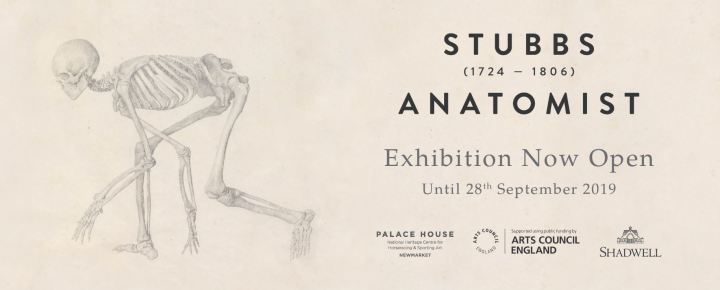
Stubbs (1724–1806): Anatomist
National Heritage Centre for Horseracing and Sporting Art, Newmarket, 27 June — 28 September 2019
In summer 2019, Palace House, The National Heritage Centre for Horseracing and Sporting Art will display a set of unique drawings by Britain’s most renowned animal painter, George Stubbs (1724–1806). The ten works, on loan from the Yale Center for British Art, have not been seen in the UK for many years. The drawings form the core of an exhibition that illuminate aspects of Stubbs’s life and interest which have previously been underexplored and highlights the exceptional nature of his painting and drawing techniques.
Stubbs was one of the most original and pioneering artists of the 18th century. His prowess as a painter of horses is well known, but his later study of the anatomy of a wide variety of animals to compare with the human figure is less widely documented.
His great reputation as an extraordinary painter of horses was forged in a remote Lincolnshire farmhouse. In his early thirties, Stubbs relocated from York to Horkstow, near Hull and spent the next 18 months (1756–58), unflinchingly and painstakingly dissecting up to a dozen horses, documenting their musculature, veins, and skeletons. The sheer effort it took to suspend the horses by a system of hooks, ropes, and planks attached to the farmhouse’s ceiling and then injecting their veins with wax in order to preserve them can only be imagined.The result was his celebrated book, The Anatomy of the Horse—a copy of which (from the Palace House collection) will be on display in the exhibition.
Following The Anatomy of the Horse, Stubbs moved to London, where he continued his interest in dissection and anatomy, alongside his increasingly successful career as a painter. He was 71-years old when he started working on Comparative Anatomical Exposition, a study reflecting ideas about fundamental structural characteristics shared by all living things.
Stubbs didn’t seek to make direct comparisons between species, as the title might suggest, but to apply empirical methods of observation and draftsmanship among dissimilar creatures—fowl, tiger, and man—to analyse a core set of similarities from which to make key conclusions. Just as his huge undertaking at Horkstow, this was another highly ambitious project, with the aim of a major publication with sixty plates. Stubbs sadly did not complete this as he died in 1806.
Acquired by the sporting art enthusiast, Paul Mellon, the completed Comparative Anatomical Exposition drawings underpin Mellon’s collecting habits and his deep passion for this subject. The display of comparative anatomy drawings joins numerous works at the National Heritage Centre which were donated by him to the National Horseracing Museum and British Sporting Art Trust collections.
Exhibition | Deconstructed: The NSLM Sporting Screen
From the NSLM:
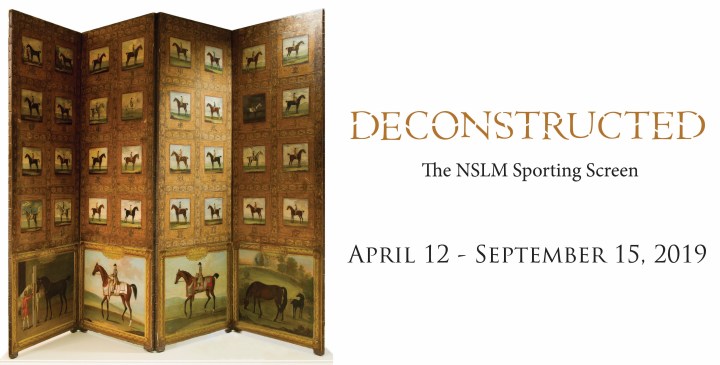
Deconstructed: The NSLM Sporting Screen
The National Sporting Library & Museum, Middleburg, Virginia, 12 April — 15 September 2019
Deconstructed: The NSLM Sporting Screen centers on a unique decorative object from the NSLM’s permanent collection. Recently conserved, the four-panel screen is comprised of paintings and prints showing 18th-century racing portraits on one side and manège training (an early form of dressage) on the other. The exhibit will cast light on a captivating era in British sport, art, and literature.
As noted in the Summer 2019 bulletin for the YCBA:
The exhibition features seven works from the Yale Center for British Art by John Vanderbank, including the painting A Young Gentleman Riding a Schooled Horse (1728–29).
New Books | Mazes and Labyrinths
A fair number of examples are drawn from the eighteenth century:
Charlotte Higgins, Red Thread: On Mazes and Labyrinths (London: Jonathan Cape, 2018), 224 pages, ISBN: 978-1910702390, £25.
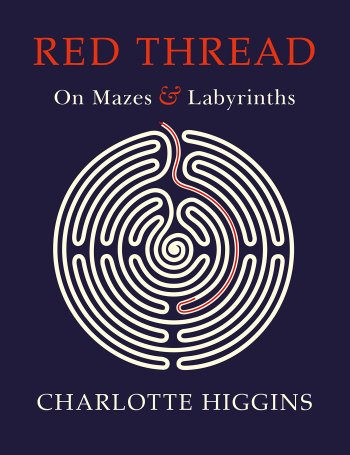 The tale of how the hero Theseus killed the Minotaur, finding his way out of the labyrinth using Ariadne’s ball of red thread, is one of the most intriguing, suggestive and persistent of all myths, and the labyrinth—the beautiful, confounding and terrifying building created for the half-man, half-bull monster—is one of the foundational symbols of human ingenuity and artistry.
Charlotte Higgins tracks the origins of the story of the labyrinth in the poems of Homer, Catullus, Virgil and Ovid, and with them builds an ingenious edifice of her own. She follows the idea of the labyrinth through the Cretan excavations of Sir Arthur Evans, the mysterious turf labyrinths of northern Europe, the church labyrinths of medieval French cathedrals and the hedge mazes of Renaissance gardens. Along the way, she traces the labyrinthine ideas of writers from Dante and Borges to George Eliot and Conan Doyle, and of artists from Titian and Velázquez to Picasso and Eva Hesse.
Her intricately constructed narrative asks what it is to be lost, what it is to find one’s way, and what it is to travel the confusing and circuitous path of a lived life. Red Thread is, above all, a winding and unpredictable route through the byways of the author’s imagination—one that leads the reader on a strange and intriguing journey, full of unexpected connections and surprising pleasures.
Charlotte Higgins’s previous books include the acclaimed Under Another Sky: Journeys in Roman Britain, which was shortlisted for awards including the Samuel Johnson (now Baillie Gifford) Prize for non-fiction. She is chief culture writer of The Guardian, a past winner of the Classical Association prize, and a fellow of the Society of Antiquaries. She lives in London.
From Laurence King:
Angus Hyland and Kendra Wilson, with illustrations by Thibaud Herem, The Maze: A Labyrinthine Compendium (London: Laurence King Publishing, 2018), 144 pages, $30.
 Mazes have been a part of civilization for at least 4,000 years, and there are more being built now than ever before. What is it about these magical life-size puzzles that continues to intrigue us? The idea of the maze taps into so many subconscious notions: the game, the quest, the spiritual journey. Perhaps this is the key to their enduring appeal. This beautifully illustrated book will delight lovers of mazes, acting as a guide, directory, and puzzle book combined. Specially commissioned illustrations by Thibaud Hérem represent 60 real and imagined mazes from around the world, with a bird’s eye view of each maze so that readers can make their own journey. Each maze is also accompanied by a fascinating and witty short history.
Thibaud Hérem is a French illustrator based in London. His published work includes Know Your Rodent (with Ziggy Hanaor, 2010), Draw me a House (2012) and London Deco (2013).
Angus Hyland is a graduate of the Royal College of Art and a partner at Pentagram Design London. His work for Laurence King includes (with Roanne Bell) Hand to Eye (2003), The Picture Book (2010), (with Steve Bateman) Symbol (2011), The Purple Book (2013) and The Book of the Dog (2015).
Kendra Wilson is a journalist, and author of My Garden is a Car Park and Other Design Dilemmas (2017), published by Laurence King. Collaborations with Angus Hyland include The Book of the Dog (2015) and The Book of the Bird (Laurence King, 2016).
From Penguin Random House:
Henry Eliot, Follow This Thread: A Maze Book to Get Lost In (New York: Three Rivers Press, 2019), 240 pages, ISBN: 978-1984824448, $18.
 Beautifully designed and gorgeously illustrated, this immersive, puzzle-like exploration of the history and psychology of mazes and labyrinths evokes the spirit of Choose Your Own Adventure, the textual inventiveness of Tom Stoppard, and the philosophical spirit of Jorge Luis Borges. Labyrinths are as old as humanity, the proving grounds of heroes, the paths of pilgrims, symbols of spiritual rebirth and pleasure gardens for pure entertainment. Henry Eliot leads us on a twisting journey through the world of mazes, real and imagined, unraveling our ancient, abiding relationship with them and exploring why they continue to fascinate us, from Kafka to Kubrick to the myth of the Minotaur and a quest to solve the disappearance of the legendary Maze King.
Henry Eliot is the creative editor of Penguin Classics. Having studied English Literature at Cambridge University, he has spent the past decade immersed in literature, creating a mass public pilgrimage for the National Trust inspired by William Morris, recreating Chaucer’s Canterbury Tales to raise money for the National Literacy Trust and leading a number of literary tours, including a Lake Poets tour of Cumbria and a quest for the Holy Grail based on Malory’s Morte Darthur. He was a Trustee of the William Blake literary society for three years. He is the author of Follow This Thread, a maze-like book about the history and psychology of mazes, and Curiocity, written with Matt Lloyd-Rose, an illustrated book of unexpected London journeys and experiences.
Exhibition | A Tea Journey

Richard Collins, The Tea Party, 1727
(London: Goldsmiths’ Company)
◊ ◊ ◊ ◊ ◊
From Compton Verney:
A Tea Journey: From the Mountains to the Table
Compton Verney Art Gallery & Park, 6 July — 22 September 2019
Visitors will follow the tea leaf from plant to pot, beginning with its roots in Chinese culture through to its adoption and appropriation into British society. A Tea Journey raises questions about what the humble cup of tea has evolved to represent in international, social, philosophical, and visual cultures. The exhibition combines rare, historic teaware from China, Japan, and India with responses by contemporary artists including Robin Best, Adam Buick, Phoebe Cummings, Charlotte Hodes, Takahiro Kondo, Ian McIntyre, Bruce Nuske, Selina Nwulu, Bouke de Vries, Hetain Patel, Paul Scott, Julian Stair, and Edmund de Waal. Visitors are also invited to explore The Tea Sensorium, which offers a multi-sensory appreciation of tea, from the leaf itself and art inspired by tea, as well as becoming a sight for artist-led workshops and discussions.
New Book | Iconoclasm in New York: Revolution to Reenactment
Scheduled for publication this fall from Penn State UP:
Wendy Bellion, Iconoclasm in New York: Revolution to Reenactment (University Park: The Pennsylvania State University Press, 2019), 280 pages, ISBN: 978-0271083643, $125.
 King George III will not stay on the ground. Ever since a crowd in New York City toppled his equestrian statue in 1776, burying some of the parts and melting the rest into bullets, the king has been riding back into American culture, raising his gilded head in visual representations and reappearing as fragments. In this book, Wendy Bellion asks why Americans destroyed the statue of George III—and why they keep bringing it back.
Locating the statue’s destruction in a transatlantic space of radical protest and material violence—and tracing its resurrection through pictures and performances—Bellion advances a history of American art that looks beyond familiar narratives of paintings and polite spectators to encompass a riotous cast of public sculptures and liberty poles, impassioned crowds and street protests, performative smashings and yearning re-creations. Bellion argues that iconoclasm mobilized a central paradox of the national imaginary: it was at once a destructive phenomenon through which Americans enacted their independence and a creative phenomenon through which they continued to enact British cultural identities. Persuasive and engaging, Iconoclasm in New York demonstrates how British monuments gave rise to an American creation story. This fascinating cultural history will captivate art historians, specialists in iconoclasm, and general readers interested in American history and New York City.
Wendy Bellion is Professor and Sewell C. Biggs Chair of American Art History at the University of Delaware. She is the author of the award-winning Citizen Spectator: Art, Illusion, and Visual Perception in Early National America.
Exhibition | Cost of Revolution: The Life and Death of an Irish Soldier
Press release (15 May 2019) for the exhibition:
Cost of Revolution: The Life and Death of an Irish Soldier
Museum of the American Revolution, Philadelphia, 28 September 2019 — 17 March 2020
Exploring the toll of war and revolution through the eyes of Irish soldier Richard St. George

Thomas Gainsborough, Portrait of Richard St. George, 1776 (Melbourne: National Gallery of Victoria).
Tickets are now on sale for the upcoming special exhibition Cost of Revolution: The Life and Death of an Irish Soldier, which opens on 28 September 2019 and runs through 17 February 2020 at the Museum of the American Revolution, the exhibition’s exclusive venue. Based on new discoveries made by the Museum’s curators, Cost of Revolution presents the untold story of Richard St. George, an Irish soldier and artist whose personal trauma and untimely death provide a window into the entangled histories of the American Revolution and the ensuing Irish Revolution of 1798.
“You may not have heard the name Richard St. George before, but you’ll be astonished by what his life can tell us about America and Ireland in the Age of Revolutions,” said Dr. R. Scott Stephenson, President and CEO of the Museum of the American Revolution. “This exhibit extends the Museum’s internationally acclaimed story-driven approach onto the global stage to examine the broader influence of the American Revolution through St. George’s remarkable personal journey.”
As a young officer in the British Army, Richard St. George crossed the Atlantic in 1776 to try and stop the growing American Revolution. He returned home to Ireland after surviving a severe head wound at the Battle of Germantown, near Philadelphia, in 1777. Back in Ireland, he found his native country roiled by the effects of the revolutionary spirit sweeping across America and Europe. St George became an outspoken critic of the growing movement to establish an Irish republic independent from the British Empire in the 1790s. A few months before the outbreak of the Irish Revolution of 1798, St. George’s tenants ambushed and killed him.
The 5,000-square-foot exhibition will chronicle St. George’s dramatic journey with more than 100 artifacts, manuscripts, and works of art from Australia, Ireland, England, and the United States, many of which will be on display in America for the first time. It will also present one of the largest collections of objects from Ireland’s 18th-century revolutionary history and war for independence ever displayed in Philadelphia.
Five portraits of Richard St. George—created over the span of 25 years—are known to survive and will be reunited in this exhibit for the first time since they left the possession of St. George’s descendants more than a century ago. Every known piece of surviving artwork by St. George himself—including cartoons, sketches from his military service in America, and a self-portrait—also will be assembled for the first time in this exhibit. Together, the portraits, cartoons, and sketches reveal the physical and emotional toll of revolution.
Key Artifacts

Xavier della Gatta, Painting of the Battle of Germantown, 1782 (Philadelphia: Museum of the American Revolution).
• A portrait of Richard St. George by Thomas Gainsborough (1776) depicting him just before he shipped out for New York to fight against the growing American Revolution, on loan from Australia’s National Gallery of Victoria (Melbourne).
• Three portraits of Richard St. George by Irish artist Hugh Douglas Hamilton (1790s) that show St. George as he struggled to manage the pain of the traumatic headwound he received during the American Revolutionary War. One of the portraits, on loan from the National Gallery of Ireland in Dublin, depicts him grief-stricken, mourning at his wife’s tomb. Hamilton painted this portrait as a movement for Irish independence, which St. George opposed, was on the rise.
• A signed self-portrait of Richard St. George, recently donated to the Museum, that depicts him in a forlorn landscape wearing a silk head wrap to cover the scars of his head wound. This portrait is a rare example of art created by a veteran of the American Revolutionary War that refers to personal pain sustained during the War.
• Paintings of the Battles of Paoli and Germantown by Italian artist Xavier della Gatta that St. George helped to create in 1782 to reflect on his participation in those battles. The paintings are in the Museum’s permanent collection.
• The British Army uniform coat and pistol that belonged to Richard St. George’s grandfather, on loan from the National Army Museum in London.
• The 1775 bound maps of the estate of Richard St. George in County Galway, on loan from the Galway County Council Archives in Galway, Ireland.
• A trephine, or skull saw, of the type that was used to operate on Richard St. George’s head following the Battle of Germantown, on loan from the Mütter Museum of the College of Physicians of Philadelphia.
• American illustrator Howard Pyle’s 1898 painting The Attack upon the Chew House, which depicts the carnage of the Battle of Germantown, on loan from the Delaware Art Museum.
• The red uniform coat worn by British Army Lieutenant Ely Dagworthy on loan from Dumbarton House and the National Society of The Colonial Dames of America.
• The August 24, 1776 Leinster Journal, one of the first printings of the American Declaration of Independence in an Irish newspaper, on loan from the National Library of Ireland in Dublin, Ireland.
• A green uniform coat worn by Irish Revolutionary Henry Joy McCracken and a pike head carried by the United Irishmen during Ireland’s fight for independence from Great Britain in 1798, on loan from the National Museums of Northern Ireland (Ulster Museum) in Belfast.
• A rare silk flag carried by the Delaware militia that the British light infantry captured during the Philadelphia Campaign of 1777, on loan from the Delaware Historical Society.
• Richard St. George’s personal sketches from the American Revolutionary War, on loan from a private collection. One sketch depicts St. George being carted off the battlefield following his wounding at the Battle of Germantown in 1777.
• Lord Edward Fitzgerald’s ribbon and Theobald Wolfe Tone’s membership certificate from the United Irishmen, on loan from the National Museum of Ireland in Dublin. Both Fitzgerald and Wolfe Tone died while helping to lead the United Irishmen in their struggle for Irish independence from Great Britain in 1798. The ribbon, taken from Fitzgerald’s body after his death, served as a memento of the Irish Revolution and was used to inspire later Revolutionaries in South America.
Programming Highlights
• Saturday, September 28 and Sunday, September 29, the exhibit’s opening weekend, the Museum’s flagship living history event, Occupied Philadelphia, will bring together dozens of costumed interpreters to recreate the 1777–78 British occupation of Philadelphia on the Museum’s outdoor plaza.
• Tuesday, October 1, the Museum will host an evening lecture by Martin Mansergh, a collateral descendant of Richard St. George and a noted historian who is a former Irish Fianna Fáil politician and played a key role in the Northern Ireland peace process.
• Friday, October 3 through Sunday, October 5, the Museum will host the 2019 International Conference on the American Revolution in partnership with the Pritzker Military Museum and Library. This event will bring noted historians, writers, and curators from Ireland, Scotland, England, and the United States together to explore military, political, social, and artistic themes from the Age of Revolutions.
• The exhibition will come to life with special events and daily programs exploring the artistic and cultural traditions of Richard St George’s world. Highlights include musical and theatrical performances, artisan workshops and demonstrations, talks by noted historians as part of the Museum’s Read the Revolution series, and tours of the exhibition.










 Enfilade
leave a comment