Call for Papers | Privacy at Early Modern Courts
Next year at the University of Giessen (as noted at ArtHist.net):
„Privatheit“ in der höfischen Kultur der Frühen Neuzeit
Justus-Liebig-Universität Gießen, 28–30 September 2020
Proposals due by 25 August 2019
Veranstaltet vom Institut für Kunstgeschichte der Justus-Liebig-Universität Gießen, dem Institut für Kunstgeschichte der Westfälischen Wilhelms-Universität Münster und dem Historischen Institut der Philipps-Universität Marburg
Leitung: Dr. Kristina Deutsch (Münster), Prof. Dr. Eva-Bettina Krems (Münster), Prof. Dr. Sigrid Ruby (Gießen), Prof. Dr. Inken Schmidt-Voges (Marburg)
Das gesellschaftliche Leben an den Höfen der Frühen Neuzeit habe ein „Doppelgesicht“, schrieb einst Norbert Elias: Da ein „Berufsleben“ nicht existierte, gab es noch keine Trennung zwischen privatem und öffentlichem Dasein im modernen Verständnis. Heute sind wir, so scheint es, erneut konfrontiert mit einer Aufweichung der Grenzen zwischen diesen beiden Sphären, die mit dem Wandel der sozialen Medien und einer Neudefinition des Raumes (spatial turn) einhergeht.
Angesichts dieser hochaktuellen Problematik lohnt es, das Thema aus der historischen Perspektive zu beleuchten. Was bisher in der Forschung unter „Privatheit“ diskutiert wurde, adressiert ganz unterschiedliche Verständnisse und Konzepte, die wir kritisch vergleichen, hinterfragen und systematisieren wollen. Damit ist es möglich, jenseits problematischer Forschungsbegriffe zu einem frühneuzeitlichen Verständnis dessen zu gelangen, was wir unter Privatheit fassen (können). Insbesondere für die höfische Kultur besteht Nachholbedarf, da die Diskussion bislang geprägt war von der eingangs angesprochenen, grundsätzlichen Infragestellung der Existenz höfischer Privatheit. Demgegenüber steht die Annahme eines anthropologischen Grundbedürfnisses nach Rückzug und Muße. Denn der stets gespannte Bogen reißt auch zu Hofe irgendwann. So betonte bereits Baldassare Castiglione im frühen 16. Jahrhundert die Notwendigkeit fürstlicher Entspannung. Zahlreiche Rückzugsräume zeugen von dieser Komplementarität von otium und negotium, von Repräsentation und Intimität, von Öffentlichkeit und Privatheit.
Die interdisziplinär ausgerichtete Tagung nimmt den soziokulturellen Raum des frühneuzeitlichen Hofes in den Blick. Hier sind höchst ausdifferenzierte Formen der Sichtbarmachung und Instrumentalisierung von Nähe und Distanz zu beobachten, die es als sinnvoll erscheinen lassen, von einer lediglich graduellen Opposition von privat und öffentlich auszugehen und so die dialektische Qualität des Begriffspaars beizubehalten. Handlungen, Räume und Darstellungen richten sich an eine von Fall zu Fall zu definierende, mehr oder weniger eingeschränkte Öffentlichkeit, und sie gestalten den höfischen ‚Nahraum‘, um Herrschaftsstrukturen zu stabilisieren, politische Ambitionen zu rechtfertigen etc. Diese Inszenierungen von Intimität, Nichtzugänglichkeit, Unverfügbarkeit, Exklusivität, Innerlichkeit, Luxus oder—im Gegenteil—Schlichtheit stehen im Zentrum der Tagung, die nach den individuellen (und zugleich strukturbildenden) Zielen, Adressierungen und Funktionsweisen von „Privatheit“ am Hofe fragt. Wer darf überhaupt (im oben erläuterten Sinne) privat sein, und wem nützt die Privatheit? Wen schließt sie wann und wie aus?
Einen Interessenschwerpunkt bildet die Performanz des Privaten, die sich innerhalb der Leerstellen des offiziellen Zeremoniells entfaltet. Sie verfestigt sich in Form von Räumen, Texten und Objekten (Miniaturporträts, abschließbare Möbel, Kleidung etc.), deren besondere Eigenschaften—Kleinheit, Verknappung, Enge, Verschachtelung—und Gebrauch sowie ihre Lage im innersten, geschützten Bereich zur körperlich-emotionalen Erfahrung höfischer Privatheit gehören. Gerade in der ambivalenten Sphäre höfischer Rückzugsorte entstehen schon im 16. Jahrhundert geistige und künstlerische Freiräume. „[S]olo in luoghi appartati e privati”, „nur in entlegenen und privaten Räumen“, so Gabriele Paleotti 1582, seien bestimmte Innovationen möglich. Ausgerechnet in der Enge und Abgeschiedenheit des Privaten wird in der mentalen Konzentration die intellektuelle Öffnung möglich.
Hinterfragt werden soll das Verhältnis der „verspielten Privatheit“, die Jürgen Habermas für den französischen Adel in der zweiten Hälfte des 18. Jahrhunderts feststellte, zur „dauerhaften Intimität des neuen Familienlebens“. Denn Habermas’ auf die bürgerliche Öffentlichkeit bezogenes Konzept wurde zumindest im deutschsprachigen Raum längst von komplexeren Modellen abgelöst. Hypothetisch zu erwägen ist eine ‚Veradeligung‘ des Bürgertums, also die Übernahme adeliger Modelle durch das Bürgertum. Die gesellschaftlichen Umbrüche am Ende des Ancien Régime sollen deshalb noch mit in den Blick genommen, d.h. der Untersuchungszeitraum bis zum Ende des 18. Jahrhunderts gefasst werden. Den Anfang bildet das 16. Jahrhundert mit der Residenzenbildung und der Ausdifferenzierung von Innenraumfolgen im Schloss, die als Handlungsräume die zeremonielle Bedeutung von Nähe und Distanz erfahrbar machen.
Erwünscht sind Beiträge aus allen Bereichen der Hofforschung und allen historischen Disziplinen. Mögliche Themenfelder sind:
• Informalität und Individualität — Welche Gestaltungsweisen konstituieren den informellen Raum, welche Regeln herrschen in ihm, wie wird (vermeintliche) Privatheit organisiert? Warum und mit welchen Mitteln wird das Private instrumentalisiert? Inwiefern können sich jenseits des Zeremoniells Individualität und Kreativität ‚frei‘ entfalten? Oder gibt es vielmehr einen ‚Kanon‘ des Privaten?
• Schutz und Sicherheit — Die Kleinheit und hintere Lage des Kabinetts, die verrätselte Sprache und Vertraulichkeit eines Briefes, die Abschließbarkeit eines Möbels: Welche Medien erzeugen Sicherheit, welche Mittel stellen diese her bzw. inszenieren sie, und warum muss das Private geschützt werden? Hat höfische Privatheit eine Schutzfunktion, wer profitiert davon, und was wird geschützt?
• Männlichkeit und Weiblichkeit — Gibt es spezifisch männliche, spezifisch weibliche Privatheit, und wie manifestiert diese sich jeweils? Inwiefern ist das höfische Frauenzimmer ein „privater“ Bereich? Ist das Weibliche ein Mittel der Inszenierung von Privatheit? Wie sieht im Gegensatz dazu weibliche Öffentlichkeit aus?
• Begriffsgeschichten und Definitionen — Wie wurde der Terminus „privat“ in der Frühen Neuzeit definiert? Was verstand die Zeremonialwissenschaft des 18. Jahrhunderts unter „Campagne Ceremoniel“? Was galt als ein Lustschloss, und wer hatte dort Zutritt?
Geplant sind Vorträge zu je dreißig Minuten. Nachwuchswissenschaftler*innen (Promovierende und Postdocs) werden ausdrücklich zur Bewerbung ermutigt. Einzureichen sind ein tabellarischer Lebenslauf mit Publikationsliste und ein kurzes Exposé (max. 3000 Zeichen inkl. Leerzeichen), das den Vortragsvorschlag darlegt und einen vorläufigen Titel nennt. Wir bitten um die Einreichung Ihrer Bewerbung (ein einziges pdf-Dokument!) bis zum 25. August 2019 an das Sekretariat des Instituts für Kunstgeschichte der JLU: Barbara.Stommel@kunstgeschichte.uni-giessen.de. Fragen beantworten wir gerne via kristina.deutsch@uni-muenster.de.
Call for Articles | The Materiality of Festivity
From H-Material-Culture:
Special issue of the Journal of Festive Studies on “The Materiality of Festivity”
Articles due by 31 December 2019
In previous issues, the Journal of Festive Studies explored the emerging academic sub-field of festive studies (broadly defined) and the politics of carnival. For this issue, we follow Peter-Paul Verbeek’s advice and look at “the things themselves,” i.e. at the material culture in which carnivals and other festivities are rooted (Verbeek, 2005).
The 1996 inaugural editorial for the Journal of Material Culture defined Material Culture Studies as “interdisciplinary research in ways in which artifacts are implicated in the construction, maintenance and transformation of social identities” and as the “investigation of the relationship between people and things irrespective of time and place” (Editorial,1996). More recent studies have expanded the scope of the discipline to look at the agency of things (Latour, 2005), thus rejecting “any absolute ontological distinction between humans and things” (Roberts, 2017). The field has also seen a shift from the exclusive focus on consumption to an investigation of the production of objects and materials (Adamson, 2013 and 2018 and Smith, 2012). Other approaches include investigations of ways in which the exchange of objects shapes social life and experiences; how that process is negotiated intra-cultures (Appadurai, 1986); and the environmental impact of those objects and materials (Clarke-Hazlett, 1997, Ingold, 2012, and Morton, 2013). Furthermore, there has been a move to understand the materiality of things beyond finished manufactured products, or the raw matter of which these objects consist of, in all of its socio-historical and political implications (Lange-Berndt, 2015, Ingold, 2012, and Rosler et al., 2013). Scholars of festivities have also paid attention to the “things” that constitute the phenomena they investigate, whether by poetically capturing in photos and in text the embodiment of Caribbean history and identity in Trinidadian mas (Adonis Browne, 2018); by analyzing how banners and flags display identity through color in Belfast’s Orange Parade (Jarman, 2003); or by questioning why we consume (or abstain from consuming) certain foods during festivities (Avieli, 2009).
Building on such scholarship, and taking the material record of celebrations from all time periods and geographical areas as a starting point, this special issue of Journal of Festive Studies seeks to explore the following themes/questions:
• The things themselves: costumes, jewelry, makeup, musical instruments, the body itself, posters, flags and banners, float designs, paintings, sheet music, photographs, food, etc. What does the material record of festivities include?
• The preservation of that material culture: What are the politics of curating and what are the material constraints bearing on archival sites?
• Objects as part of a mise-en-scène of identity: How is identity created-recreated-negotiated through masking, costumes, makeup, etc.? How is gender and sexual normativity created/expressed/challenged through interactions with objects in celebrations?
• Imagining communities: What is the role of these objects/materials/artifacts in the creation of imagined communities during these celebrations? How do individuals and communities relive and reinvent traumatic pasts through rituals and the artifacts used to physically manifest them?
• The evolution and circulation of things: How does the material record of celebrations change over time, reflecting different socio-historical moments? How do geopolitical realities, global capitalism, and the flow of ideas and things affect the material record of celebrations?
• What role do these objects play in current debates on decoloniality and cultural appropriation?
• The environmental problems caused by the objects/materials used in festivities (such as the plastic pollution of Mardi Gras beads in the U.S. Gulf Coast) and the environmental solutions encountered by festival organizers and revelers (such as the ban on glitter in Sydney’s LGBTQ Mardi Gras.)
Contributors may also choose to focus on some of the methodological issues faced by scholars researching festivities across the globe and how does material culture feature in these processes. For instance, how does equipment affect the way the researcher interacts with their subject? What sorts of objects, outfits, and accouterments are used in the researcher’s “performance of self” during fieldwork and how might that affect their relation to the people and environment they are observing?
In line with the interdisciplinary nature of the Journal of Festive Studies, we welcome submissions of original research and analysis rooted in a variety of fields including (but not limited to): social and cultural history, anthropology, archeology, cultural geography, art history, architecture, decorative arts, technology, folklore, musicology, consumption studies, labor studies, museum studies, and design studies. In addition to traditional academic essays, we invite contributions that incorporate digital media such as visualizations, interactive timelines and maps, video and imagery.
Documents should be between 6,000 and 12,000 words and should be uploaded by December 31, 2019 to the journal’s website, along with the author’s bio and an abstract of c. 250 words. Please consult the author’s guidelines under “Submissions” on the website for further submission specifications, such as citation methods. Contact Isabel Machado (isabelmchd@gmail.com or machadoisabel) with any questions.
Works Cited
“Editorial.” Journal of Material Culture 1, no. 1 (March 1996): 5–14.
Adamson, Glenn. The Craft Reader. London: Bloomsbury Visual Arts, 2010.
Adamson, Glenn. The Invention of Craft. London: Bloomsbury Visual Arts, 2013.
Appadurai, Arjun. “Disjuncture and Difference in the Global Cultural Economy.” Theory, Culture & Society 7, no. 2–3 (June 1990): 295–310.
Avieli, Nir. “‘At Christmas We Don’t Like Pork, Just Like the MacCabees’: Festive Food and Religious Identity at the Protestant Christmas Picnic in Hoi An.” Journal of Material Culture 14, no. 2 (June 2009): 219–41
Bauer, Arnold J. Somos lo que compramos: historia de la cultura material en América Latina. México: Taurus, 2002.
Browne, Kevin Adonis. High Mas: Carnival and the Poetics of Caribbean Photography. Jackson: University Press of Mississippi, 2018.
Clarke-Hazlett, Christopher. “Interpreting Environmental History through Material Culture.” Material Culture Review / Revue de la culture matérielle, [S.l.], June 1997.
Csikszentmihalyi, Mihaly, and Eugene Rochberg-Halton. The Meaning of Things: Domestic Symbols and the Self. Cambridge: Cambridge University Press, 2002.
Ingold, Tim. “Toward an Ecology of Materials.” Annual Review of Anthropology 41 (2012): 427–42.
Jarman, Neil. “Material of Culture, Fabric of identity.” In Material Cultures: Why Some Things Matter, edited by Daniel Miller, 121–45. London: Routledge, 2003.
Lange-Berndt, Petra. Materiality. London: Whitechapel Gallery, 2015.
Latour, Bruno. Reassembling the Social: An Introduction to Actor-Network-Theory. Oxford: Oxford University Press, 2005.
Madison, D. Soyini. Critical Ethnography: Method, Ethics, and Performance. Los Angeles, CA: Sage, 2012.
Roberts, Jennifer L. “Things: Material Turn, Transnational Turn.” American Art 31, no. 2 (Summer 2017): 64–69.
Rosler, Martha, Caroline Walker Bynum, Natasha Eaton, Michael Ann Holly, Amelia Jones, Michael Kelly, Robin Kelsey, Alisa LaGamma, Monika Wagner, Oliver Watson, and Tristan Weddigen. “Notes from the Field: Materiality.” The Art Bulletin 95, no. 1 (2013): 10–37.
Smith, Pamela H. “In the Workshop of History: Making, Writing, and Meaning.” West 86th: A Journal of Decorative Arts, Design History, and Material Culture 19, no. 1 (2012): 4–31.
Verbeek, Peter-Paul. What Things Do: Philosophical Reflections on Technology, Agency, and Design. Penn State: Penn State University Press, 2005.
Enfilade turns 10!
From the Editor
Ten years on and a million visits later, Enfilade continues to grow because of you! And by now, you know the routine for celebrating:
1) Buy an art book this week. In the world of academic art history publishing, several hundred books sold over a few days is stellar. It’s an important way to communicate that the eighteenth century is a thriving field with a vital, engaged audience.
2) Renew your HECAA membership. In the normal world $30 doesn’t really count as philanthropy. For a small academic society it does. Because of HECAA’s 501c3 status, all donations are tax deductible in the United States. So send in a contribution of $100 or $5. But donate something. We accept PayPal.
3) Finally, send in news you’d like to see reported! After a decade, I’m still not sure what surprises me more: how easy it is to know what’s going on in the field all over the world, or how difficult it is to know what’s going on in the field all over the world! I’m glad to post announcements about conferences, forthcoming books, journal articles, exhibitions, fellowship opportunities, &c. The postings readers most enjoy are inevitably original content, reports of interesting collections, house museums, resources, and the like. No reason to be shy.
Happy midsummer (to all of you in the Northern Hemisphere) and enjoy the long days!
Craig Hanson
Exhibition | Curieux Antiquaires: Les débuts de l’archéologie à Bavay
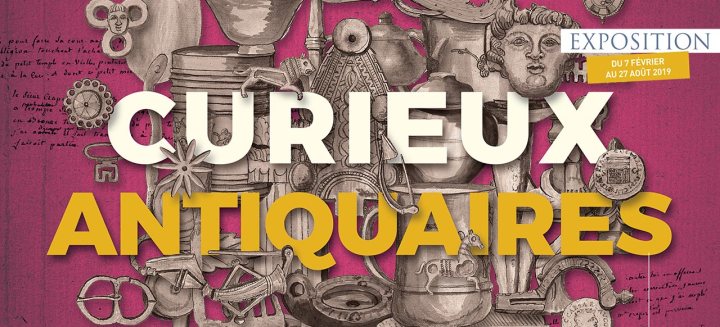
From the Forum Antique de Bavay:
Curieux Antiquaires: The Origins of Archaeology in Bavay in the 18th and 19th Centuries
Forum Antique, Bavay (Nord), 7 February — 27 August 2019
L’antiquaire est par définition un grand collectionneur… Mais, celui que nous connaissons aujourd’hui et celui des XVIIIe et XIXe siècles sont bien différents. Un antiquaire dans les années 1700 et 1800 est en réalité un précurseur de l’archéologie, il se passionne pour la collection d’objets antiques et s’intéresse à leur passé pour raconter notre Histoire. Avec l’exposition Curieux antiquaires, les débuts de l’archéologie à Bavay aux XVIIle et XIXe siècles, pénétrez au coeur du passé antique de Bavay avec les yeux de ces amateurs éclairés. Découvrez des érudits hauts en couleurs à travers leurs méthodes de travail, réseaux, collections et dessins.
Cette exposition grand public a pour but de faire part aux visiteurs des avancées dans la connaissance de l’histoire de l’archéologie à Bavay en mettant d’une part en avant des portraits des acteurs de cette histoire (l’abbé Carlier, J.B. Lambiez, Antoine Niveleau, Parent) et d’autre part leurs publications (Recueil de dessins de Carlier, Histoire monumentaire du Nord des Gaules de Lambiez, Bavay ancien et nouveau de Niveleau …). Il est aussi question de faire prendre conscience au public du fait que la manière de construire l’image de l’Antiquité est conditionnée par l’époque.
Curieux Antiquaires: Les débuts de l’archéologie à Bavay aux XVIIIe et XIXe siècles (Paris: Snoeck, 2019), 200 pages, ISBN: 978-9461614711, 22€.
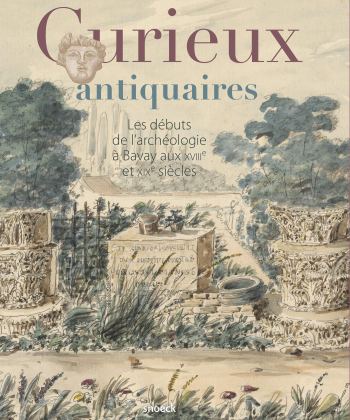 Si l’histoire de l’antique Bagacum est bien connue, la manière dont celle-ci s’est construite l’est moins. Curieux antiquaires, les débuts de l’archéologie à Bavay aux XVIIIe et XIXe siècles permet d’appréhender le patrimoine bavaisien sous un nouvel angle. Offrant une mise en perspective tant géographique que chronologique, ce catalogue apporte une vision nouvelle sur les premiers antiquaires bavaisiens. A travers les contributions d’Odile Parsis-Bazubé et d’Alain Schnapp, c’est la construction de l’antiquariate et de l’archéologie en France aux XVIIIe et XIXe siècles qui est mise en lumière. Plus loin, Véronique Beirnaert-Mary, Delphine Morana-Burlot et Véronique Krings détaillent l’exemple de Bavay. La première dresse le paysage bavaisien en présentant les acteurs locaux et leurs actions. Delphine Morana-Burlot propose ensuite une réflexion autour de la question du faux, Enfin, Véronique Krings ouvre une fenêtre sur la période du début du XXe siècle en s’attachant à relater la correspondance entre Franz Cumont et Raoul Warocqué autour des objets bavaisiens. Richement illustré, cet ouvrage rassemble toutes les pièces présentées à l’occasion de l’exposition. Des documents inédits sont ici publiés pour la première fois. La juxtaposition des objets archéologiques et de leur représentation dessinée est elle aussi inédite.
Exhibition | Thai Buddhist Tales

Extracts from the Pāli Canon (Tipiṭaka) and Qualities of the Buddha (Mahabuddhaguna), 18th century, Thailand
(Dublin: Chester Beatty Library, CBL Thi 1341)
◊ ◊ ◊ ◊ ◊
Press release (via Art Daily) for the exhibition, which includes an especially impressive virtual gallery:
Thai Buddhist Tales: Stories along the Path to Enlightenment
Chester Beatty Library, Dublin Castle, Dublin, 14 June 2019 — 26 January 2020
Curated by Laura Muldowney
The Chester Beatty has opened an exhibition of Thai Buddhist manuscripts dating to the 18th and 19th centuries. The world-renowned collection of beautifully illustrated books provides a rare opportunity to explore the Buddhist tales depicted within. Presented as colourful illustrations alongside sacred texts, some of the most popular Buddhist stories within the books are the birth tales of the Buddha and the legend of the monk Phra Malai.

Extracts from the Pāli Canon (Tipiṭaka) and Qualities of the Buddha (Mahabuddhaguna), 18th century, Thailand (Dublin: Chester Beatty Library, CBL Thi 1344).
Handsomely decorated folding books were used by monks as teaching aids and for chanting during religious ceremonies. Many were commissioned following the death of a relative and then donated to a temple. This earned religious merit for the donor as well as the deceased.
The Buddha had many past lives, but stories of his last ten are particularly important in Thai culture. Known as jatakas, or ‘birth tales’, these stories tell of the Buddha’s moral evolution over countless incarnations as he attained the ten perfections required for Buddhahood. Well-known scenes from these stories are featured in Thai folding books of the 18th and 19th centuries. They are presented as paired paintings, flanking the passages of sacred text. The life of the historical Buddha was much less frequently depicted in Thai folding books, but the museum has several examples that show scenes from his life before and after he became the Buddha.
The legend of a monk named Phra Malai was one of the most popular subjects of 19th-century Thai illustrated folding books. The pious monk Phra Malai visited heaven and hell using powers he earned through meditation and acts of merit. On his return to earth he reported what he had seen. The tale was often recited at wakes. Its detailed descriptions of hell and heaven served as powerful reminders that actions in this life determine one’s next life.
Illustrated folding books continued to be made in Thailand into the early twentieth century. However by the 1920s, the availability of inexpensive printing meant their production had almost completely come to an end. Introducing cherished stories and preserving the devotion of their makers and the communities who used them, these beautiful books offer a unique window onto Thai Buddhist heritage.
The exhibition is curated by Laura Muldowney, researcher of the museum’s East Asian collection.
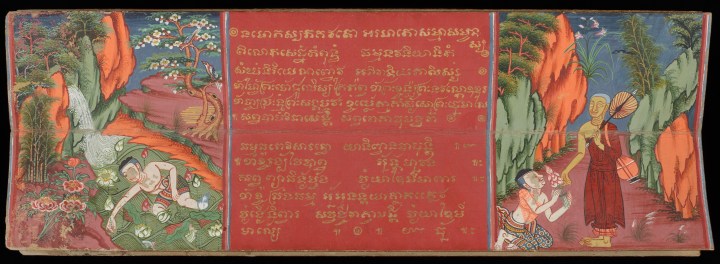
Extracts from the Pali Canon (Tipitaka) and Story of Phra Malai, late 18th century, Thailand
(Dublin: Chester Beatty Library, CBL Thi 1328)
Une journée d’étude | Blue / Bleu
In September at INHA, via ArtHist.net:
Blue: Intersecting Worlds of Colour in the 18th Century
Bleu: Les mondes croisés de la couleur au XVIIIe siècle
Institut national d’histoire de l’art, Paris, 6 September 2019
Organized by Charlotte Guichard, Anne-Solenn Le Hô, and Hannah Williams
Pigments, paints, and dyes. Made from organic and inorganic materials, derived from natural substances or synthetic processes, these chemical products are responsible for every artwork ever painted, drawn, printed, or woven. In the eighteenth century, at a moment just before the mass production and marketization of artists’ materials, colour became a vibrant space for scientific invention, artistic experimentation, technological advancement, and commercial success. Blue in particular—from Indigo to Prussian Blue—became a site of energetic entrepreneurship and innovation, leading from the macrocosms of global trade and the international circulation of scientific knowledge, to the microcosms of the laboratory, factory, shop, and studio. Encompassing a diverse range of actors, objects, and spaces, the intersecting worlds of colour present a fascinating space for inquiry into eighteenth-century relationships between art, chemistry, commerce, and industry, and into the materials, practices, and economies that brought them together.
Taking ‘blue’ as its focus, this workshop will explore the artistic, scientific, and social histories of colour in the eighteenth century, and above all, the intersections between them. What happens when artists’ colours are considered as interdisciplinary substances? What relationships exist, for instance, between a colour’s physico-chemical properties, its economic values, and its aesthetic qualities? How might these materials set histories of artworks in dialogue with histories of gesture and technique, or with social histories of the ‘art world’, in Howard Becker’s sense of the term? Where is colour in these multi-layered histories, and where do their narratives meet and diverge? Attending to Tim Ingold’s injunction to “follow the materials,” this workshop seeks micro-historical engagements that recontextualise the colour blue (as a material) by tracing it through the intersecting worlds of art, science, technology, and commerce across the long eighteenth century.
Concluding a research project—PaintItBlue—on ‘Matériaux anciens et patrimoniaux’, funded by the Île de France region, this interdisciplinary workshop will bring together art historians, historians, curators, scientists, and conservators in an effort to prompt new conversations about the histories of artists’ materials, while shaping rich methodological terrains through which to pursue them. This event is supported by a grant from the Ile-de-France Region – DIM ‘Matériaux anciens et patrimoniaux’ ».
Organising Committee
Charlotte Guichard (CNRS/ENS-PSL)
Anne-Solenn Le Hô (C2RMF/Chimie ParisTech-PSL)
Hannah Williams (Queen Mary University of London)
P R O G R A M M E
9.00 Accueil
9.20 Ouverture – Sigrid Mirabaud (INHA)
9.30 Bleu de Prusse: Les histoires d’une couleur — Le projet ‘PaintItBlue’ en contexte
• Charlotte Guichard (CNRS / ENS-PSL), Le bleu de Prusse comme ‘objet frontière’
• Anne-Solenn Le Hô (C2RMF / Chimie ParisTech, PSL), Le bleu de Prusse comme produit chimique
• Hannah Williams (Queen Mary University of London), Le bleu de Prusse comme matériau artistique
11.00 Pause café
11.20 Session 1 — Couleur: Art et Chimie
Modérateur: Michel Menu (C2RMF / Chimie ParisTech, PSL)
• Myriam Eveno (C2RMF / Chimie ParisTech, PSL), La palette de Watteau et de ses épigones: l’analyse des pigments bleus
• Alexandra Gent (National Portrait Gallery, London), Turchino, Azzurro, Blue: Joshua Reynolds’s Use of Blue Pigments
13.00 Déjeuner / Lunch
14.30 Session 2 — Couleur: Historicité et Matérialité
Modérateur: Guillaume Faroult (Musée du Louvre)
• Sven Dupré (Artechne ERC, Universiteit Utrecht), Re-working Recipes, Reconstructing Colour Worlds
• Marguerite Martin (Université Paris 1 Panthéon Sorbonne), Indigo: de la construction des savoirs sur un produit exotique à la définition commerciale du produit et de ses usages
• Yuriko Jackall (Wallace Collection, London), Greuze’s Greens: Colour and Biography in Eighteenth-Century Paris
16.30 Cocktail
Display | Pietre Dure

Depiction of the Tomb of Cecilia Metella, Grand Ducal workshop, Florence, 1795; marble, painted alabaster, pietre dure, gilt bronze
(Rosalinde and Arthur Gilbert Collection)
◊ ◊ ◊ ◊ ◊
Now on view at the V&A:
Pietre Dure: Highlights from the Rosalinde and Arthur Gilbert Collection
Victoria and Albert Museum, London, 22 March 2019 — 20 March 2020
In celebration of the highly skilled techniques of hardstone marquetry, this display showcases the wide range of pietre dure objects in the Gilbert Collection. With examples from the early seventeenth to the twentieth centuries, the display draws together objects produced on diverse scales and for a variety of functions, offering an insight into the history of pietre dure techniques, designs, and workshops.
Chippendale Tables and Mirrors Acquired for the UK

Thomas Chippendale, Set of pier tables and glasses, installed in the Music Room at Harewood House in West Yorkshire, ca. 1771.
◊ ◊ ◊ ◊ ◊
From the press release (via Art Daily, 18 June 2019) . . .
An important set of pier tables and glasses (mirrors) by Thomas Chippendale, often described as ‘the Shakespeare of English furniture-making’, has been accepted in lieu of inheritance tax for the nation and allocated to the V&A. Through the Acceptance in Lieu in situ loan agreement with Harewood House Trust, the pair will remain on public display in the Music Room, the most complete Robert Adam-designed room at Harewood House in West Yorkshire, and the room for which they were specifically designed.
Thomas Chippendale (1718–79) is the most famous name in 18th-century English furniture. His neo-classical and rococo furniture is some of the most acclaimed and sought-after ever produced. Dating from c.1771, these tables and glasses are among the most distinguished items from his important and most valuable commission for Edwin Lascelles, 1st Baron Harewood, at Harewood House. The pier tables, with exquisite marquetry tops, are of outstanding sophistication and quality. The large and impressive glasses, surmounted by fluted columns, represent the pinnacle of Chippendale’s craftsmanship.
The tables and glasses join the world’s most important collection of English furniture held at the V&A, alongside other examples of Chippendale furniture, including pieces commissioned for leading 18th-century actor David Garrick’s Thames-side villa in 1775. The tables and glasses will undergo a programme of conservation by the V&A’s conservators to restore the surface finish closer to Chippendale’s original intention.
Tristram Hunt, Director, V&A said: “It is exceptionally rare to find Thomas Chippendale furniture as well documented as that at Harewood House—the most lavish commission Chippendale ever received. Of superlative quality, the tables and glasses are welcome additions to the V&A’s world-class collection of English furniture. We are delighted that they can remain in their original location to be seen and appreciated by visitors to Harewood House for years to come.”
Rebecca Pow, Heritage Minister said: “Thomas Chippendale is one of the most talented and gifted furniture makers the country has ever produced. I am delighted that, thanks to the Acceptance in Lieu scheme, these important works now belong to the British public and will remain on display, continuing to inspire the next generation of crafts people.”
Jane Marriott, Director, Harewood House Trust said: “As an Independent Charitable Trust and Arts Council Accredited Museum, we are delighted these objects have been gifted to the nation and that we have been able to agree an in-situ loan with the V&A. This will enable us to continue to share examples of one of Chippendale’s largest and finest commissions in this country, with all of our visitors throughout the year. These pieces were designed specifically for the Music Room in this house and are an integral part of an important decorative scheme designed by Robert Adam and Thomas Chippendale still largely intact today.”
Edward Harley OBE, Chairman, Acceptance in Lieu Panel said: “I am delighted that the Acceptance in Lieu scheme has facilitated the retention of these Chippendale pier tables and glasses in situ at Harewood House. Harewood represents one of the most important commissions of the most important furniture maker of the eighteenth century. I am particularly grateful to the V&A for enabling the pier tables and glasses to remain in Harewood House, the house for which they were designed and where they form part of an ensemble of other pieces of furniture from the same commission.”
Exhibition | Romantic Germany
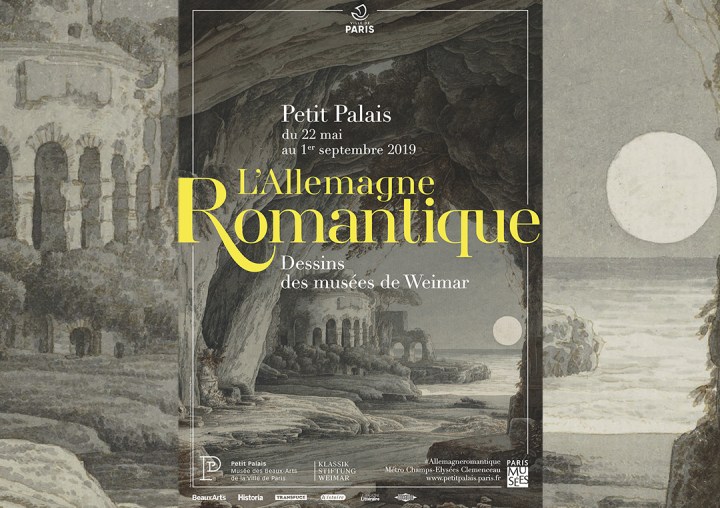
Now on view at the Petit Palais:
Romantic Germany: Drawings from the Museums of Weimar
Petit Palais, Paris, 22 May — 1 September 2019
Curated by Hermann Mildenberger, Gaëlle Rio, and Christophe Leribault
For the first time in France the Petit Palais is presenting a selection of 140 drawings from the lavish collections of Weimar’s museums. These remarkable images—initially chosen by Goethe (1749–1832) for the Grand Duke of Saxe-Weimar-Eisenach and his own collection—offer a spectacular overview of the golden age of German drawing (ca. 1780–1850).
In the late 18th century the city of Weimar, seat of the Dukes of Saxe-Weimar, was Germany’s intellectual hub. A key figure at this enlightened court, Goethe accumulated numerous posts of cultural responsibility, in addition to writing most of his works there. Himself a knowledgeable collector and draftsman, he built up for the Grand Duke a handsome collection representing every facet of German drawing.
At this time, literature, the visual arts, and music were undergoing profound upheavals in terms of their rules and practice. While the Romantic movement never had a leader as such, its artists unanimously stood for expression of the passions and subjectivity of vision; and in many cases this period saw a blossoming of drawing that made it the most innovative of the creative disciplines of the time.
Divided into seven sections, the exhibition combines the chronological and the aesthetic. As well as such emblematic figures as Caspar Friedrich, Philipp Runge, and Johann Füssli, visitors will discover some 35 artists who played vital parts in the history of drawing, among them Tischbein, Carstens, Fohr, Horny, von Schadow, Schinkel, von Schwind, Richter, and the Nazarenes Overbeck and Schnorr von Carolsfeld, driven by Christian spirituality and national feeling. Portraits and genre scenes, castles in ruins, compositions of biblical and medieval inspiration—but above all landscapes mingling idealism and naturalism in every imaginable media—offer viewers a sublime frisson in their illustration of the private, inner and sometimes flamboyant lives of the Romantic artists.
Curators
Hermann Mildenberger, professor and curator at Klassik Stiftung Weimar
Gaëlle Rio, director, Musée de la Vie romantique
Christophe Leribault, director, Petit Palais
L’Allemagne romantique: Les dessins du musée de Weimar (Paris: Éditions Paris Musées, 2019), 232 pages, ISBN: 978-2759604258, 40€.
Call for Papers | RSA 2020, Philadelphia
Next year’s RSA meeting takes place in Philadelphia, with a handful of panels welcoming late seventeenth- and early eighteenth-century topics. I’ve noted a few of these below, and the larger list of sessions is available at the RSA blog. –CH
Renaissance Society of America
Philadelphia, 2–4 April 2020
Proposals due by July 2019 (specific dates vary)
Accommodations and meeting rooms have been booked at the Philadelphia Marriott Downtown and the nearby Courtyard Philadelphia Downtown, both of them a short walk from the famed Reading Terminal Market and City Hall. The Philadelphia Historic District, which was the first World Heritage city in the US, is also within walking distance or accessible by a short cab, bus, or subway ride. The Library Company of Philadelphia houses collections on American society and culture dating from the seventeenth century. The majestic Philadelphia Museum of Art, originally chartered for the Centennial Exposition in 1876, with its main building on Fairmont Hill completed in 1928, has pay-as-you-wish evening hours on Wednesdays and evening hours on Fridays as well.
◊ ◊ ◊ ◊ ◊
Exhausted with Antiquity: A Symptom of Early Modern Invention
Organizers: Marisa Bass (Yale University) and Carolyn Yerkes (Princeton University)
Where and when did early modern artists, architects, and writers begin to show signs of fatigue with the models of the classical past, and what kinds of creative experiments developed in response? Renaissance scholarship has long since moved beyond an understanding of its period as one defined first and foremost by a revival of antiquity. Although the significance of antiquarianism and classicism to manifold developments in early modern art and culture remains incontrovertible, both of those projects also met with productive resistance.
We invite papers addressing works of art or literature that reveal an exhaustion with antiquity and a conscious attempt to develop alternative modes, forms, and principles of invention. Especially welcome are proposals for papers that consider competing notions of the past, the distinction between ‘antique’ and ‘modern’, the political and cultural implications of the choice to forgo classical models, and the reasons why antiquity may have come to be perceived as an exhausted source in the context of certain moments and localities.
To submit a paper proposal please provide the following by email to Marisa Bass (marisa.bass@yale.edu) and Carolyn Yerkes (yerkes@princeton.edu) by 22 July 2019:
• your name and institutional affiliation
• paper title (15-word maximum)
• abstract (150-word maximum)
• keywords
• curriculum vitae (up to 5 pages)
• PhD completion date (past or future)
◊ ◊ ◊ ◊ ◊
The Miniature and the Monumental in Early Modern Art, 1500–1700
Organizers: Isabelle Lecocq (Royal Institute for Cultural Heritage, Brussels) and Elizabeth Rice Mattison (University of Toronto)
This panel aims to examine the role of scale and size in early modern art (ca. 1500–1700). This period witnessed increasingly ambitious projects: massive tomb complexes, immense palaces, and large programs of stained glass. Meanwhile, diminutive arts became increasingly popular: collectible statuettes, tiny prints, portrait miniatures, and small painted glass (commonly known as ’roundels’). Scale and size affected the production and reception of the arts across media in the face of shifts in patronage, organization of artists’ workshops, and dissemination of objects.
Questions this panel considers include: What is the difference between scale and size in early modern art? What is the relationship between scale and size and the circulation of objects, ideas, and materials? How does choice of medium affect the scale of a work? What happens to scale in translations of an iconography across media, and how does scale transform that iconography? How are the miniature and monumental connected, as in instances of microarchitectural projects such as sacrament houses, altarpiece cases, or reliquaries? How did artists working on simultaneously small and large scales adapt their style accordingly? What is the role of scale in new cultures of collecting and display?
This panel invites papers of any geographic focus that explore aspects of scale between 1500 and about 1700. Please send proposals including a paper title (15 words), abstract (150 words), keywords, PhD completion date (past or expected), and CV (max. 5 pages) to the organizers: Isabelle Lecocq (isabelle.lecocq@kikirpa.be) and Elizabeth Rice Mattison (elizabeth.mattison@mail.utoronto.ca) by 15 July 2019.
◊ ◊ ◊ ◊ ◊
Art Theory and Global Dissemination of Early Modern Spain and Colonial Spanish America
Organizers: Livia Stoenescu (Texas A&M University) and Luis Javier Cuesta Hernández (Universidad Iberoamericana)
Papers are sought for panel presentations on the impact of art theory and the global dissemination of works of art from Early Modern Spain and the Hispanic territories of the New World. Spain’s visual culture and literary arts thrived amid a time of political turmoil, instability, and economic crisis. The theoretical discourses generated by Spain, the Hispanic Kingdoms, and Viceroyalties prompted new conceptions of art and unprecedented claims to artistic originality while producing an intense circulation of artistic works around the world.
We invite papers that examine sacred allegories, historical painting, philosophical and literary texts from Golden Age Spain, as well as architectural settings, public processions, miraculous relics and the venerated saints that were held up as symbols of the city and/or the kingdom. The presentations comprising this panel will provide an in-depth perspective on the interrelated issues of Early Modern Spain and the Hispanic territories, and on understudied aspects of the interaction with the arts of Colonial Spanish America in a global context.
500–1,000-word abstracts are invited for consideration on topics including but not limited to the following:
• Spanish paintings distributed in Peru, New Spain, and the rest of the Americas and the impact of the imported art on the art of the colony from the late sixteenth century to mid-eighteenth century.
• the majolicas of Spanish America and global distribution
• early global trade and lavish consumption in the Spanish America
• art theory and the circulation of works of art at the Court, and in the cities of Valencia and Naples as independent art centers, as well as in other major regional centers such as Toledo, Seville, Madrid
• art theory and art dissemination in the main centers of Colonial Spanish America such as Mexico and Lima, and their interrelation with Early Modern Spain
• the status of painting as a liberal art and the painter as its noble practitioner on both the Spanish national art scene and in the Hispanic territories
• the large body of art theory in Early Modern and Baroque Spain: Carducho, Pacheco, Jusepe Martínez, Lázaro Díaz del Valle, and Antonio Palomino (1724).
• Italian Renaissance ideas and Palomino’s theory of 1715 that Spanish artists should attend the schools of Spain, rather than the osterie of Rome where they experience only bewilderment and disorientation
• art theoretical positions by major artists such as Diego de Velázquez, Alonso Cano, Francisco Ribalta, Jusepe de Ribera, Felipe Gómez de Valenica, Bartolomé Esteban Murillo, and others that mark the historical and political events of the Siglo de Oro
• Spanish Baroque artists engaging the Italian Renaissance art, culture, architecture, and art theoretical discourse
• materials and techniques of polychrome sculpture as well as the important centers, clientele, and art theorists associated with its production
• innovative art theoretical approaches to the integration of painting and carving that characterize the complex medium of polychrome sculpture as a devotional art form
• old practices of processional statues, altarpieces, stalls, and their reassessment by art theorists
• the true portrait, or the Veras Imagos, sculpted likeness that stood on the church altar
• the dissemination and circulation of drawings in Colonial Spanish America
Abstracts, one-page CV (not in prose!), and keywords should be sent by 1 July 2019 to Dr. Livia Stoenescu livias@tamu.edu and to Dr. Luis Javier Cuesta Hernández luis.cuesta@ibero.mx.










 Enfilade
leave a comment